




Abstract
Selling through livestreaming has become a popular sales method and increasingly a preferred choice for retailers alongside traditional sales channels. Products that are intuitive and evoke purchasing emotions at first sight such as clothes, beauty products and household appliances are recorded with high revenue through livestream selling. This study aimed to evaluate the impact of various livestream sales elements including engaging sales content and sellers on customer attitude, trust and purchase intention for fashion products; investigate the factor of promotions moderating the relationship between the three factors above in the live shopping process. A linear structural model was used to analyze data from 324 customers shopping by livestream on TikTok. The results show that (1) Attractive content and streamers make significant contributions to the effectiveness of livestream sales. (2) engaging sales content, directly and indirectly, impacts purchasing intention through customer attitude and trust. (3) The influence of streamers does not have a direct impact but an indirect impact on purchase intention through customer attitude and trust. (4) Promotional programs influence purchase intention but do not moderate the relationship between trust and purchase intention and negatively moderate the relationship between attitude and purchase intention.
Plain language summary
The success of a livestream selling session depends on two main elements including engaging sales content and streamers. This study analyzes data from 324 customers shopping for fashion products through live-streaming on TikTok, a popular social networking platform combined with e-commerce in Vietnam. The research assesses how the quality of sales content and streamers influences the attitudes, beliefs, and purchase intentions of customers watching livestreams on TikTok. Additionally, the study examines the impact of promotions on attitudes, beliefs, and purchase intentions to gain insights into customer behavior when shopping online, particularly through livestream activities on TikTok. The study’s findings offer recommendations for businesses and individuals engaging in sales through livestreams.
Keywords
Introduction
TikTok’s recent rise in popularity coincides with the worldwide COVID-19 outbreak, which has resulted in an increasing number of people turning to their mobile devices to find new ways of shopping, working, entertaining, and socializing (Ganter, 2025; Zuo & Wang, 2019). In 2024, Vietnam ranks fifth among the 10 countries with the most TikTok users worldwide, with about 67.7 million users, and 86% of internet users in Vietnam having TikTok accounts (Statista, 2025); TikTok has become a popular social network trend in Vietnam with advertisements reaching 55.6% of Vietnamese adults (Datareportal, 2025). TikTok Shop’s overall revenue in Vietnam reached million USD in a recent survey period, capturing 22% of the e-commerce market share (Statista, 2024). TikTok Shop stands out with its algorithm that identifies user trends, helping to display information related to products customers are interested in.
The live-streaming feature is thought to enhance marketing campaigns, relationship marketing and e-commerce economies (H. Chen et al., 2023; Lai et al., 2025). A live-streaming selling involves streamers who host selling events provided by online retail platforms or social platforms and introduce the products to consumers through real-time interaction. TikTok is a social media platform that engages customers through short videos (Ardiyanti, 2023). This feature combines video viewing with live streaming, offering an advantage as influencers often share short videos or product lists in advance to attract viewers. During the events, streamers actively promote the products as opinion leaders (P. Zhang et al., 2023). Livestream enables multi-dimensional real-time experience, fostering enhanced social interactions and engagement among people (X. Bai et al., 2024). In live streaming, engaging content is considered an important factor influencing the behavior of customers through the significant improvement of visual content (Y. Chen et al., 2025; Pillai et al., 2023) and entertainment content (Luo et al., 2025; Wei et al., 2021; Wongkitrungrueng & Assarut, 2020) impact customer impulse buying (Alam et al., 2025). The professionalism of streamers in selling has significantly improved customer purchase intention and their repurchase decision (Kubat Dokumacı, 2024). Livestream shopping has a number of outstanding advantages over traditional shopping. While physical stores are limited in space, with live streaming, retailers, and brands can invite limitless customers to watch them virtually.
TGM Research Global E-Commerce Survey (2022) showed that clothing and accessories the most often purchased online goods across all age groups (62%). According to Metric eReport (2025), fashion ranks among the top three sectors in terms of revenue on e-commerce platforms in Vietnam, including Shopee, Lazada, Sendo, TikTok Shop, and others. The fashion retailing industry is highly dynamic, characterized by a continuously changing environment and technology, for example, a wide assortment of products, short product life cycles, high seasonality and volatility, and impulse purchasing (Cengiz & Şenel, 2024; Kaniati et al., 2024). Livestream shopping is considered suitable for the fashion industry because it has many advantages that adapt to the features of this field, such as requiring beautiful images and easy visual comparison (Pongratte et al., 2023). Additionally, live streaming of fashion products allows sellers to showcase clothing items in detail to a larger audience simultaneously. With effective consulting techniques, they can engage viewers and generate interest. The use of immersive experiences and giveaways also plays a significant role in promoting hedonic consumption within this industry (Zhou & Zhang, 2025).
In recent years, there has been a growing body of research examining the impact of livestreaming on customer behavior. A review of 28 studies related to livestreaming sales revealed that the influence of this activity on customer intentions and behaviors can be categorized into three main groups. First, factors related to streamers play a significant role. The higher the popularity of the streamers (Guo et al., 2025; Lu & Chen, 2021), the more attractive their image (Hou et al., 2020; Q. Zhang et al., 2024), the more engaging the shared content (Long et al., 2024), and the better their ability to interact with viewers (Zheng et al., 2023), the stronger the impact on customers’ purchase intentions. Second, studies focus on viewer-related factors, often analyzed through the S-O-R model. Emotions, cognitions, motivations, and the fear of missing out significantly influence customer behavior (Alam et al., 2025; C. Gu et al., 2025; Song et al., 2024; Yang et al., 2024; K. Zhang et al., 2025) and the likelihood of conversion from entertainment viewing to purchase (Alam et al., 2025). Finally, some research examines livestream viewing behavior and buyers’ social presence through the content transmitted by sellers (Y. Wang et al., 2025; Xue et al., 2025). Livestreamers create a sense of interaction and a strong social presence for viewers (H. Chen et al., 2023; N. Li et al., 2024; H. Shen et al., 2022), allowing them to simulate experiences without needing to go out (Ali et al., 2025). While the aforementioned studies have explored various aspects of livestreaming, they have not reached a consensus on the essential characteristics of livestreaming activities that captivate viewers and encourage purchasing behavior. In addition to considering factors related to sellers and buyers, it is crucial to consider platform-related elements, particularly as current livestreaming sales activities continue to prioritize pricing and promotions.
This study aims to analyze and generalize the two main factors of livestreaming, which include engaging sales content and the influence of streamers, as well as to evaluate the impact of promotions on the psychological development of customers during the livestream viewing process. It analyzes the behavior of Vietnamese customers when purchasing fashion items online and examines how TikTok’s live-stream shopping features may impact their online shopping intentions. Departing from previous research, the authors conduct an in-depth exploration of customer behavior in the fashion sector, focusing on the effect of live-stream shopping on the emerging e-commerce platform, TikTok Shop. The study provides new insights into the relationship between live-streaming and customer behavior. The authors investigated the indirect effects of these factors on customers’ intentions to purchase fashion items, considering the intermediary roles of attitude and trust during live-stream viewing. Finally, it analyzed how promotional programs can facilitate the conversion of customer attitudes and trust into purchase intentions while participating in streaming shopping on TikTok.
The authors employed a structural equation modeling (SEM) approach to examine the relationship between livestreaming activities on TikTok and the purchase intentions of 324 customers in Vietnam. The findings offer significant insights for business leaders regarding how live streaming influences purchasing decisions over time. Based on these results, the authors provide recommendations for companies to enhance their online streaming strategies on e-commerce platforms, enabling them to rapidly adapt to shifts in the market and consumer behavior. This research contributes to the theoretical framework surrounding the impact of live streaming on customer behavior by emphasizing two critical factors: sales content and streamers. These insights serve as a valuable reference point for future research on novel e-commerce sales methods. Furthermore, the study makes a novel contribution by delving deeper into how customer behavior evolves in response to promotional programs from TikTok and sellers, a topic not extensively explored in previous studies.
Literature Review
TikTok Live Streaming Shopping
TikTok is a dynamic and constantly evolving platform, with new features frequently updated swiftly. Although most recognized for entertainment-oriented videos, the platform hosts diverse content, including educational content (Bhandari & Bimo, 2022). In contrast to ByteDance’s other domestic short video products, which primarily target Gen Z users, TikTok, from its inception, has specifically aimed at teenagers and young adults, with a broad user distribution across all age groups (Zeng et al., 2021). Moreover, TikTok serves as an excellent platform for marketers in various ways. It provides numerous tools for both small and medium-sized enterprises, enabling them to easily market products without the need for professional equipment (Sharabati et al., 2022).
TikTok Shop is an e-commerce feature of the video hosting service TikTok. Launched in 2022, the feature enables users interested in starting a business and generating income to upload their curated products on TikTok for others to discover. Live streaming is one of the selling features of TikTok Shop, letting customers get the correct product information to get their attention and ultimately increase online purchases. Live streaming has its advantages over other online shopping strategies. First, it is difficult for customers to rely on information derived from static images on traditional e-commerce websites (Xu et al., 2022). Second, live streaming on TikTok can provide images, sound, motion and interaction to convey product information effectively and eliminate uncertainty in shopping (K. Bai & Tan, 2024; Lu & Chen, 2021). Furthermore, live streaming encourages spontaneous buying and offers a more engaging experience compared to traditional static online retail practices (Lyu et al., 2025).
As TikTok Shop is a relatively new e-commerce platform, research on live-stream shopping elements within this platform lags behind that of other social networks. Various researchers examining live streaming on TikTok have outlined key factors influencing live stream quality, such as content marketing (Lin & Nuangjamnong, 2022), brand image (Pongratte et al., 2023; Suarna, 2022), customer engagement levels, appealing promotional pricing (Ardiyanti, 2023; Chan & Asni, 2023), online customer reviews (Sonda & Balqiah, 2023), and streamers’ performance and suitability (X. Gu et al., 2024; Lawrence & Meivitawanli, 2023; H. Wang, 2024). In addition, consumers can learn more product information by interacting with streamers and other consumers (Y. Zhang & Xu, 2024).
Studies on live-stream shopping on other platforms have shown the importance of streamers in influencing consumer behavior. Streamers are the people who influence the attitudes and purchasing intentions of customers watching livestreams. Streamers require product fit, personal credibility, product knowledge, and the ability to emotionally connect with their viewers (K. Zhang et al., 2025). The interactive content between streamers and customers of the live stream is an important factor that determines viewer tipping and purchase behavior (Ma et al., 2024; L. Zhang et al., 2024). This content must be attractive, full of necessary information, and more importantly, create a lasting impression and excitement for viewers.
In fact, retailers on the TikTok platform often make changes in live-stream sales content and scripts, even before and after the sales session. They also seek to attract customers’ attention through a team of streamers who are celebrities, key opinion consumers (KOCs), or people who can create trends on TikTok to attract viewers and promote them as soon as possible. Help them quickly make purchasing decisions during the live stream session. Therefore, in this study, the authors selected two factors: engaging sales content and the influence of streamers to represent live stream selling on TikTok.
Engaging Sales Content
According to Godin (2005), compelling sales content is content that tells an engaging story, inspires, and establishes a connection with potential customers. People using TikTok are incentivized by potential benefits that help them access entertaining content, receive information, and enrich product-related information, thereby stimulating their demand (Walsh et al., 2024). Another important factor influencing compelling sales content is the message of scarcity, often expressed in terms of time limits, quantity limits, and promotional programs. Scarcity messages are valuable in driving impulse behavior, especially in online shopping (M. Shen et al., 2025).
Influence of Streamers
Q. Zhang et al. (2024) discovered that influencers, similar to experts engaging in live streams, significantly decrease consumers’ perception of risk toward products. Displaying expert endorsements during live broadcasts can boost customer trust. Well-presented visuals of influencers offer consumers reliable information, building rapport with streamers and boosting viewer trust (Liu, 2020; K. Zhang et al., 2025). Influencers often use various strategies to showcase products in videos or social media feeds, aiming to attract followers and influence their purchasing decisions. (X. Gu et al., 2024). In addition, streamers can also significantly influence the emotions of live-stream viewers through various means (Yan et al., 2023). Streamers may set explicit rules for shopping activities, the first buyers will earn additional prizes. Such competitions have positive influences on arousal during the decision-making process (Y. Wang et al., 2022).
Customer Attitude and Trust
Customer Attitude
According to the theory of planned behavior, attitude is one of the factors influencing behavioral intention (Ajzen, 1991; Mai et al., 2017). Attitude toward online shopping is defined as a consumer’s positive or negative expression related to transactions on the internet (Makhitha & Ngobeni, 2021). A consumer who trusts e-commerce will react differently from one who lacks confidence in it. Therefore, attitude directly influences the decisions and actions of consumers when shopping online. Customer attitude bridges consumer characteristics and the consumption that meets their needs (Kotler et al., 2000).
Customer Trust
Customer trust is a multidimensional concept encompassing aspects of perception and emotion. Trust is defined as the complete confidence that the partner in the exchange will behave ethically and socially and will not engage in opportunistic behaviors (Morgan et al., 1996). Online trust relates to consumers’ perceptions of the quality of the website in providing truthful information and meeting expectations, as well as users’ perceptions of the company and impressions of the website. Consumer trust in online commerce relates to trust in several entities such as the company, agents (sellers, salespersons, website, social media administrators), products, and market/channel (Potwora et al., 2023). Trust can be enhanced through the seller’s likeability and similarity in perception (shared interests, demographic characteristics, and personality traits) that buyers perceive about the seller (Ziegler & Golbeck, 2007). Trust in broadcasters of live streaming has a positive effect on trust in products and customer engagement (Alam et al., 2025).
The study conducted by Xin et al. (2023) demonstrated that online sales live streams on e-commerce platforms could enhance engagement, stimulate shopping desires, and improve conversion rates. Furthermore, Ali et al. (2025) revealed that online sales live streams can build strong relationships and enhance customer brand trust. In this study, the authors evaluated the impact of live streaming on customer attitudes and trust. This included the influence of engaging sales content and the impact of streamers on customer attitudes and trust. The study also examined how attitudes can impact customer trust, offering valuable insights on how live streaming can effectively shape consumer attitudes and trust, ultimately aiding online sales success. Therefore, this study proposes the following hypotheses:
Hypothesis H1: Engaging Sales Content has a positive impact on Customer Attitude
Hypothesis H2: Engaging Sales Content has a positive impact on Customer Trust
Hypothesis H3: Streamers have a positive impact on Customer Attitude
Hypothesis H4: Streamers have a positive impact on Customer Trust
Purchase Intention
In business psychology, Purchase intention is defined as a buyer’s readiness and intention to purchase a specific product or service (Engel et al., 1995). Purchase intention can be influenced by consumers’ knowledge, attitude toward specific brands under consideration, and intended future purchases of that product and/or brand (Howard & Sheth, 1969). Online customers’ intention to buy fashion products reflects the customer’s stimuli on the internet environment, it is faster than offline shopping (Syah & Olivia, 2022). Customer perceptions during and after watching live-stream shopping (product, seller, brand) influence purchase intention, product recommendation, and repeat purchases (H. Chen et al., 2022). In the fashion industry, livestream sales stimulation presents appealing images of clothing and offers attractive options in size, color, and design for customers, effectively encouraging them to add items to their carts and proceed to checkout (Sharma et al., 2024). Customers can connect with streamers and community members while viewing and visualizing actual products through live-streaming commerce, which promotes buyers’ attitudes and trust in both the sellers and the products (K. Zhang et al., 2025).
Fashion products sold through live streams on TikTok mostly have average or low prices, so the influence of customers’ trust and attitudes on purchasing intentions is also different from other products and should be researched. Therefore, the next hypotheses of the study are proposed below:
Hypothesis H5: Customer Attitude mediates the relationship between Engaging Sales Content and customer Purchase Intention
Hypothesis H6: Customer Attitude mediates the relationship between Streamers and customer Purchase Intention
Hypothesis H7: Customer Trust mediates the relationship between Engaging Sales Content and customer Purchase Intention
Hypothesis H8: Customer Trust mediates the relationship between Streamers and customer Purchase Intention
Promotion Programs
According to Lo and Salant (2016), promotions such as discounts and gifts create a sense of “being benefited” for customers, contributing to building trust in the value of the product and the ability to save. Attractive promotional programs attract attention, create positive impressions, and build trust in the brand’s credibility (Wiranata & Hananto, 2020). Promotions also help affirm the value of the product, thereby instilling trust in the quality and effectiveness of the product (Kaveh et al., 2021). They feel satisfied and happy to receive deals, leading to a more positive attitude toward the product and brand (Kaveh et al., 2021). Promotions during fashion livestream sales often include product discounts, free shipping, complimentary gifts, or minigames with rewards helping lower purchasing costs which diminishes barriers to purchase and creates better conditions for customers’ buying decisions (Linh & Park, 2025; Salsabila et al., 2024). From these impacts, it can be seen that promotions not only directly influence customers’ purchase intentions but also play a significant role in regulating the relationship between trust and intention, attitude, and purchase intention.
Promotions impact customer perceptions and emotions for fashion items marketed via live streams on TikTok. This research will assess how promotions moderate the conversion from attitude to purchase intent and belief to purchase intent. This novel aspect has not been explored in earlier studies on live-stream shopping. Consequently, the study puts forward the following hypotheses:
Hypothesis H9: Promotions moderate the relationship between Customer Attitude and customer Purchase Intention.
Hypothesis H10: Promotions moderate the relationship between Customer Trust and customer Purchase Intention.
From the above analysis, the authors proposed the following research model as the Figure 1 below:
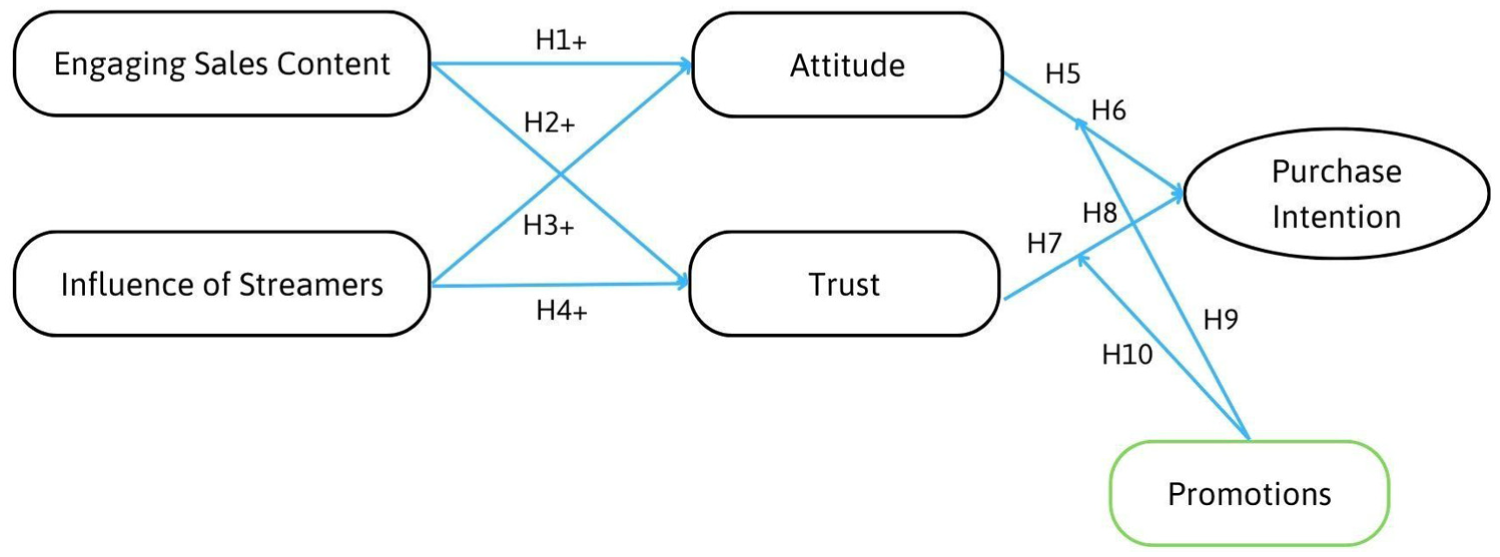
Proposed research model.
Methodology
Sample, Data Collection Methods and Data Analysis
Quantitative research method is conducted through a sample survey of customers aged 18 to 35 participating in online shopping at TikTok shop in Vietnam. The official survey phase was conducted through the online platform TikTok shop from January to March 2024. All human participation procedures in this study complied with ethical standards of (country) law; in accordance with the principles set forth in the 1964 Declaration of Helsinki and its subsequent amendments. Participants were thoroughly informed about the aims of the study and expressed their understanding and willingness to participate freely. The authors pledge to keep the information confidential and the response content will only be used for this study. These contents are presented on the first page of the questionnaire. Participants have read and agreed to provide information on the following pages of the questionnaire. Research complies with the regulations of the (organization) and (country) law.
The authors used convenience sampling techniques in this study. The questionnaire was sent to fans of key opinion leaders (KOLs) in the fashion field. 25 KOLs were selected in a convenient way, questionnaires were sent to their fans. The convenience sampling method used in this case comes from the fact that we do not have access to a list of all KOLs in the fashion industry as well as the total number of customers who buy fashion products on the Tiktok platform. To select reputable KOLs selling fashion products, the authors selected those who have more than 100,000 followers and have sold more than 500 products. Each KOL was asked to send 30 questionnaires via the sales message channel to the most recent customers who have purchased their fashion products on Tiktok shop. The research results on each customer group were analyzed statistically and shared separately for each KOL, which was the main motivation for them to participate in this study. The total number of questionnaires sent was 750, the number received was 518, the number of valid questionnaires for model analysis was 324.
In this study, exploratory factor analysis (EFA) was used, following the guidelines proposed by Gorsuch (1983), which recommends the number of samples five times larger than the number of observed variables. The model in this study includes 6 factors with 23 variables; Therefore, the number of samples required is 23 × 5 = 115 or more. Hoelter (1983) suggested that the sample size should be greater than 200 in quantitative factor analyses. Thus, the 324 questionnaires obtained met the sample size requirements in quantitative analysis. SPSS 22 and AMOS 25 software were used to analyze data, verify the reliability and validity of the scale, test reliability and validity, exploratory factor analysis (EFA), confirmatory factor analysis (CFA) and structural equation modeling (SEM), and the impact of moderating variables.
The choice of EFA analysis method in this study comes from the fact that the scale used has been developed by many different authors, so when conducting analysis in a model, it is necessary to perform exploratory factor analysis (EFA) to identify factors in the model as well as eliminate extraneous variables that do not meet the requirements of Cronbach’s Alpha testing and evaluate the quality of the model according to KMO and the Bartlett test. To perform SEM structural analysis in this study we use CFA, SEM technique using AMOS software because PLS-SEM is better suited for exploratory research and prediction, particularly with complex models and smaller sample sizes, while AMOS excels in confirmatory factor analysis and hypothesis testing with a strong emphasis on model fit within a covariance-based framework; essentially, PLS-SEM prioritizes predictive accuracy while AMOS prioritizes theoretical validation.
Measurement Instrument
The measurement instruments for this study were established scales from previous studies, adapted to fit the study setting. Four items of engaging sale contents factor and four items of streamers were modified from Kristi and Aruan (2023). The factor of customers trust iteams were adapted from Ahmadi and Hudrasyah (2022). The items of the factor of customer attitude were adapted from Elsholiha et al. (2023). Promotion was measured using three items, adapted from research of Kaveh et al. (2021). Purchase intention was measured using four items adapted from L. R. Chen et al. (2023), and Quang and Thuy (2022). Table 1 describes the contents of the items in detail. The questionnaire was back-translated to ensure semantic consistency and cultural adaptability of the content.
Measurable Scales.

Results
The research results are summarized by descriptive analysis; then General research model testing is performed by EFA and CFA; the next step is SEM analysis to evaluate the model quality and the causal relationships between independent, mediating and dependent factors; finally, the impact of the moderator factor is analyzed.
Descriptive Analysis
The study collected a total of 324 responses from the target group through online channel . Research results show that:
Female customers account for 63.2% of fashion product purchases via Livestream on the TikTok platform. This can be explained by the fact that women tend to be more interested in fashion products, regularly consume related content, and prefer online shopping. On the other hand, male customers show less interest in shopping via Livestream on this platform.
Regarding the frequency of usage, customers typically make purchases of fashion items through Livestream sales on TikTok 1 to 2 times per month (35.9%), followed by a considerable percentage using it less than once a month (31.4%). Additionally, there is a moderate percentage of customers using it more than 5 times per month (21.9%), and finally, those using it 3 to 4 times per month, with no significant difference in distribution among usage levels.
General Research Model Testing
To test the reliability of the research model, the researcher initially evaluates Cronbach’s Alpha coefficient using the official research data. The findings indicate that all Cronbach’s Alpha coefficients for the research variables exceed .6, indicating a satisfactory level of reliability and ensuring consistency. Research results show that all scales reach reliability.
The observed variables were evaluated for convergent and discriminant values by exploratory factor analysis (EFA). The data were used for exploratory factor analysis by varimax rotation. The author conducted EFA analysis separately for the independent, intermediate, and dependent variables. The smallest Cronbach’s α coefficient is .814; The KMO indices were all good (>.5), and the significance level of the Bartlett test was all below .05. Additionally, the Extraction Sums of Squared Loadings were all quite good, ranging from 52.2% to 73.556% (37.579% + 35.977%). Thus, the initial step indicates that the factor scale values are all acceptable (Table 2).
Exploratory Factor Analysis.

Independent factor is measured by two subcomponents: The first: Engaging sale contents (SC1-SC4), The second: Influence of streamers (IS1-IS4).
Intermediate factor is measured by two subcomponents: The first: Customers attitude (CA1-CA4), The second: Customers trust (CT1-CT4).
The CFA results after considering the correlation between the observed variable errors show that the model with Chi squared/df = 2.469 is good since it’s somewhere between 1 and 3; RMSEA = .067 is good (RMSEA < .08), PCLOSE = .017 > .001 is good; Important fit indices such as NFI = .902, RFI = .911, IFI = .931, TLI = .923, CFI = .944 and GFI = .939 (Figure 2). Therefore, the indicators are satisfactory. Thus, the model fits the market data.

CFA analysis.
Additionally, to thoroughly assess the quality and trustworthiness of the scale, the author examined the Composite Reliability (C.R.) and the Average Variance Extracted (A.V.E.) in Table 3. According to Hair et al. (2022), if the C.R. is above .7 and the A.V.E. exceeds .5, it indicates that the observed variable is associated with other variables in the same factor, suggesting convergent validity. Conversely, if the square root of A.V.E. surpasses the correlations between the two concepts, it suggests that the observed variable lacks correlation with other variables in different factors, indicating discriminant validity. The results in Table 3 show no validity concerns, so discriminant validity meets the required standards.
Reliability and Convergent Validity With Results of C.R and A.V.E..

Source. Author’s primary research.
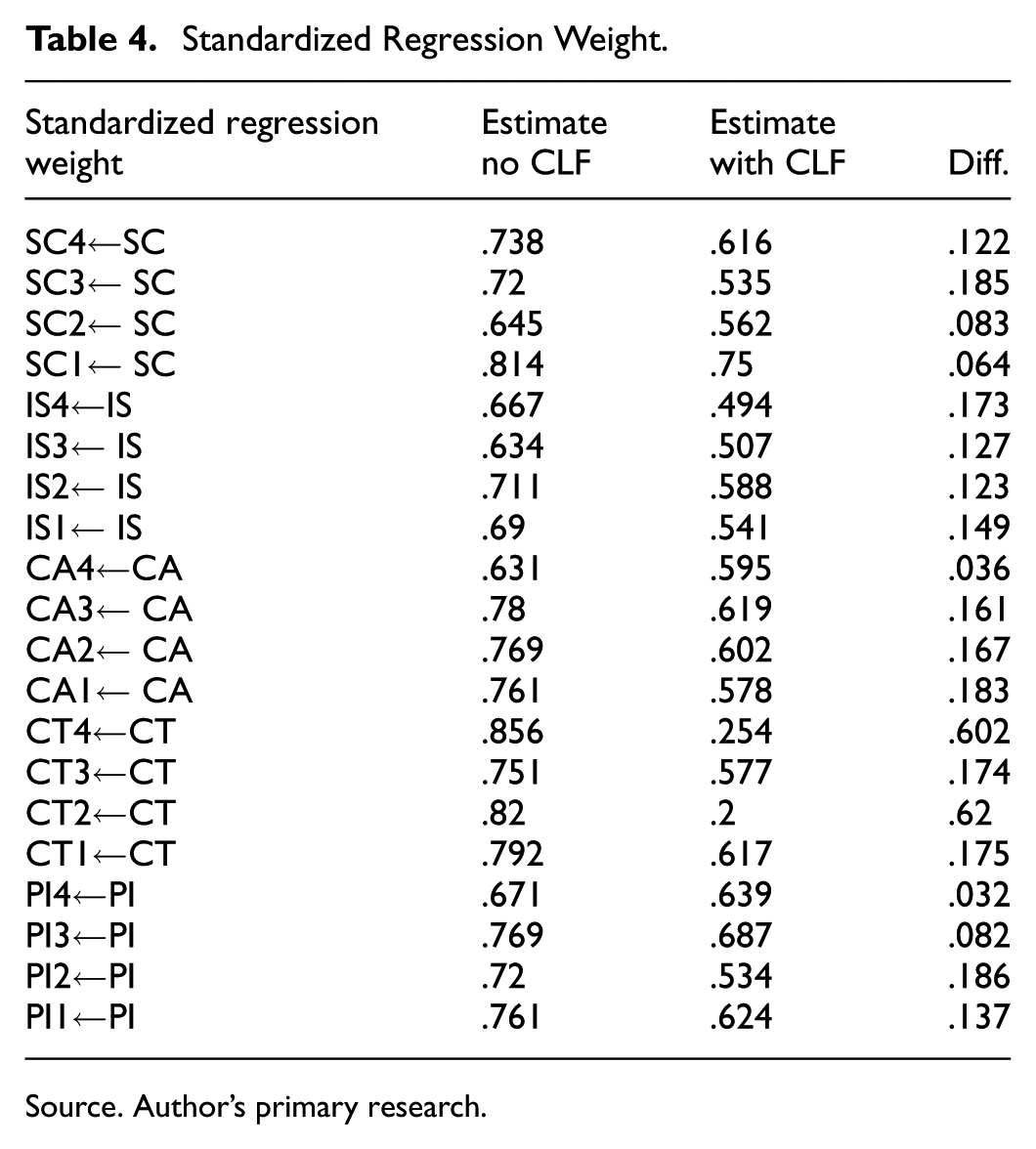
Common method bias is a major concern in questionnaire research (Kraus et al., 2020). This problem occurred when survey data were taken from a single source (Sun et al., 2022). This study used SPSS IBM 22 to examine the “Harman single-factor test,” for the existence of CMV among constructs as Harman (1976) suggested. The results showed that with principal axis factoring and extraction technique has shown 23 unique factors and the largest factor accounting for only 38.77% is less than 40% (Kraus et al., 2020). Furthermore, we used the common latent factor in structural equation modeling to test the common method bias. According to Lowry and Gaskin (2014), it is necessary to compare the standardized regression weight from constraint and unconstraint model. The standardized result from Amos defaulted and pasted on the Microsoft Excel table to calculate the difference between the estimate without common latent factor (CLF) and the estimate with it. If the difference between them is larger than .2, we can retain the common latent factor construct in a model. In this case, we find out that the common method bias does not exist in the model since all the observations are below .2 (Table 4).
Standardized Regression Weight.
Source. Author’s primary research.
Structural Equation Model
After conducting the scale test, it can be concluded that the scale used in the formal quantitative research is suitable for testing the research model and hypotheses. The method of linear structural equation model (SEM) analysis was employed to test the research model, using the same criteria as in the CFA analysis mentioned earlier. The results of the SEM analysis, shown in Figure 3, indicate the following: Chi-Square/df = 2.179; Important fit indices such as NFI = .917, RFI = .908, IFI = .954, TLI = .938, GFI = .915; CFI = .953, RMSEA = .060. This suggests that the model, without the influence of the moderating variable, matches with market data.

SEM analysis results.
Conclusions can be drawn from the results presented in Table 5. Through the table of results of testing the causal relationship between the research concepts and the reliability of the statistical estimates, it can be seen that all of the relationships in the research model (hypotheses 1–8) have statistical significance at the 5% level (p < .05). The regression weights of the supporting hypotheses are all positive, confirming that all factors have a positive influence. The results are shown in Table 5.
Model Testing Results.

Source. Author’s primary research.
Note. p: level of significance; ***p < .001.
The results of the SEM linear structural model show that two factors affect Customer Attitude and Customer Trust including Engaging sales content and the Influence of streamers. The results also show that both factors, Customer Attitude and Customer Trust, affect customers’ intention to purchase. The impact of all factors has positive values on customers’ purchase intention (Table 5). The results are as follows:
- Engaging sales content has a positive influence on Customer Attitude with a regression weight of .641.
- Engaging sales content has a positive influence on Customer Trust with a regression weight of .214.
- Influence of Streamers has a positive influence on Customer Attitude with a regression weight of .425.
- Influence of Streamers has a positive influence on Customer Trust with a regression weight of .581.
- Customer Attitude has a positive influence on customers’ purchase intention with a regression weight of .185.
- Customer Trust has a positive influence on customers’ purchase intention with a regression weight of .291.
The direct effect of engaging sales content (SC) on purchase intention (PI) is .218, indicating that effective sales content directly enhances purchase intention. Additionally, there is an indirect effect of .119, suggesting that SC positively shapes customer attitudes (CA), which further strengthens purchase intention. This leads to a total effect of .338, underscoring the significant role of engaging sales content in driving purchase behavior.
In the case of seller influence (IS), there is no significant direct effect on purchase intention (p = .551, p > .05), indicating that direct interactions with sellers do not have a clear impact on purchase decisions. However, the indirect effects are noteworthy, with IS influencing PI through customer attitude (.082) and especially through customer trust (.168). These indirect effects highlight that while there is no direct impact, the seller’s role in building trust and shaping customer attitudes is crucial, resulting in a total effect of .25 (.082 + .168) through trust and attitude.
Notably in the Table 6, the total effect of engaging sales content (.338) exceeds that of seller influence (.281), indicating that creating high-quality sales content remains a key factor in boosting purchase intention. However, the significant indirect effect of IS through trust (CT) on purchase intention (.168) suggests that sellers still play an important role in building long-term relationships and customer loyalty.
Direct – Indirect – Total Effect Hypothesis Results.

Source. Author’s primary research.
p = .06 > .05. No direct effect IS-PI.
Moderating Role of Promotions
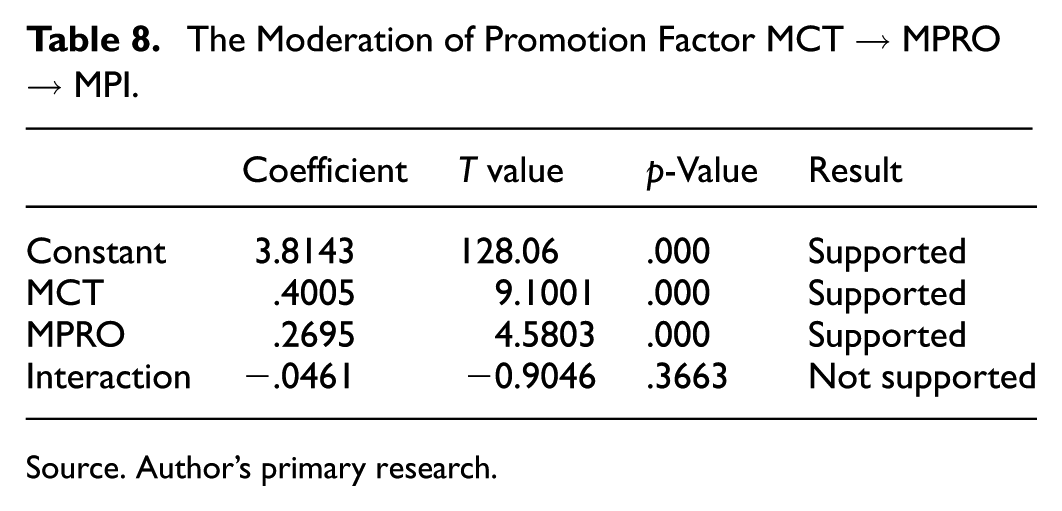
The moderation analysis process was conducted through the Hayes macro in SPSS, and the analysis results are presented in Tables 7 and 8. Testing model with the moderation participation coefficient showed that the R and R sq indices were both at a good level. The model MCA → MPRO → MPI has an R index of .642 and R sq of .412. The model MCT → MPRO → MPI also has an R = .628 and R sq = .394.
The Moderation of Promotion Factor MCA → MPRO → MPI.

Source. Author’s primary research.
The Moderation of Promotion Factor MCT → MPRO → MPI.
Source. Author’s primary research.
The test results in Table 7 show that the p-value of constant, MCA, MPRO, and Interaction<.05. Consequently, it can be concluded that Promotions (MPRO) play a moderating role in influencing and negatively driving the relationship between Customer Attitude (MCA) Customer Purchase Intention (PI), with corresponding path coefficients of −.1037. Thus, when customers receive many promotional activities, the impact of customer attitude (MCA) on purchase intention (MPI) tends to decrease slightly. It is important to note that the direct impact of promotion and customer attitude on purchase intention is positive with the regression weights of .222 and .4349, respectively. The hypothesis H9 is supported by the data.
The test results in Table 8 show that the p-value of constant, MCA, and MPRO < .05 But p-value of Interaction equals .3663. Consequently, it can be concluded that promotions (MPRO) does not moderate the relationship between customer trust (MCT) and customer purchase intention (MPI). It is important to note that the direct impact of promotion and customer trust on purchase intention is positive with the regression weights of .2695 and .4005, respectively. The hypothesis H10 is not supported by the data. In summary, the research results show that promotional activities can promote customers’ purchase intention but do not moderate or negatively moderate the corresponding relationship between customer trust, attitude and purchase intention.
Discussions
In general, through the quantitative analysis process, the research results can be drawn that customer purchase intention, especially among those aged 18 to 35, is influenced by various factors, exhibiting differences in influence levels compared to other age groups. In today’s saturated e-commerce market, innovative purchasing methods are essential for differentiation. Livestream shopping has emerged as a popular trend, especially in the fashion sector, helping businesses attract customer attention and boost sales.
After conducting quantitative research with 324 samples and analyzing the data using SPSS software, the regression results of all factors show adjusted beta coefficients > 0. The influence of engaging sales content on customer attitudes is the most important factor, with a beta coefficient of .641. This indicates that Vietnamese customers place a high value on creative sales content, clear product information, unique, and inspiring messages, as well as references to the scarcity of fashion products during streaming. This aligns with prior findings of Gao et al. (2021), X. Li et al. (2023), and Tian and Frank (2024). When comparing the impact on customer trust, streamers have a stronger effect (Beta = .581) than engaging sales content, which has a lesser effect (Beta = .214). This indicates that customers’ attitudes are more influenced by the seller’s interaction than by appealing and engaging sales content. Although creative and entertaining content built through live streaming can enhance customer experience, the seller’s interaction is crucial in shaping a positive customer attitude. This is in line with the findings of the study done by Ardiyanti (2023), Lin and Nuangjamnong (2022), and K. Zhang et al. (2025).
Research shows that customer trust significantly influences the intention to purchase fashion products (Beta = .291), more than the customer attitude factor (Beta = .185). Building long-term customer trust through various marketing strategies is essential for enhancing brand reputation. When Vietnamese customers feel confident, their positive attitudes toward livestreams selling fashion products increase, thereby boosting their buying behavior. This is similar to studies by Alam et al. (2025) and A. J. Kim and Ko (2010) on customer trust, attitude, and purchase intentions in the fashion sector.
A comparison of the direct, indirect, and total effects of sales content and streamers’ influence on fashion product purchase intention reveals interesting findings. Engaging sales contents, directly and indirectly impact purchasing intention through customer attitude and trust. Meanwhile, the streamers do not have a direct impact but an indirect impact on purchase intention via these two intermediary variables. In livestream sessions, engaging sales content has a stronger total impact than streamers’ influence on buying intentions. In general, engaging sales content is a very important factor that influences Vietnamese customers’ intention to buy fashion products through livestream. The content is engaging and entertaining, fostering immediate ownership and encouraging impulse buying behavior right after the livestream session. This is in line with the findings of the study done by Luo et al. (2025) and Qu et al. (2023). However, the role of streamers in fostering customer trust to encourage purchases is significant. They play a crucial role in attracting customers to participate in live streaming sessions that sell fashion products. Additionally, they act as a vital link between customers and fashion brands, helping to build long-term relationships. This fosters trust and brand loyalty, ultimately influencing customers’ shopping behaviors. This is similar to some previous studies by N. Li et al. (2024) and Q. Zhang et al. (2024), emphasizing the role of streamers.
In addition, research results indicate that promotions act as a moderator between customer attitudes, beliefs, and purchase intention, demonstrating its sensitivity. Promotional programs have a direct impact on customer purchasing intention. This means that offering more hot deals during livestream sessions boosts Vietnamese customers’ intentions for fashion products. This is in line with the findings of the study done by Y. Kim and Lee (2020), Linh and Park (2025), and Pongratte et al. (2023),. However, promotions have a negative moderating effect on the relationship between attitude and purchase intention (−.1037) and do not moderate the relationship between trust and purchase intention. This means that higher incentives are likely to erode customers’ favorable attitudes and not change their beliefs about the product. Analyzing the role of promotions as a moderating variable is a new point of the study, helping to gain insight into how customers react to online offers. Thereby, businesses refine marketing strategies to attract and retain customers effectively.
Theoretical Implications
Our research contributes to the existing body of knowledge on livestream shopping, a popular sales trend. The study examines two key factors that we believe significantly impact the effectiveness of a livestream session on TikTok: engaging sales content and the qualities of the streamers. Although streamers may not directly influence customer purchase intention, they do have an indirect impact through customer trust and attitudes. Meanwhile, the sales content directly influences customer purchase intention. This shows that customer behavior when making purchases through live streams is evolving and becoming increasingly intricate, especially at TikTok shop, an attractive social networking platform combined with e-commerce today. This aligns with the shift from traditional online shopping on static e-commerce platforms to more dynamic live stream shopping experiences. TikTok, in particular, has been very effective in supporting live stream sales activities, which have seen significant growth in the past year. The study provides new insights into the role of promotions as a moderating factor. As analyzed in the study, promotions are a sensitive variable for livestream shopping on TikTok. While promotions can encourage impulsive buying behavior, excessive use can also harm product and brand reputation. Customers generally love discounts, but if there are too many discounts and gifts, their attitude can change from positive to negative. They may no longer appreciate products sold via livestream and may lose trust in the brand if there are constant discount messages during livestream sessions on TikTok. This adds new insights into the impact of promotions on online shopping and livestream shopping.
Practical Implications
Effective sales content helps Vietnamese customers get a good experience with products and enhances their ability to buy. This suggests marketers focus on preparing live stream sessions carefully in advance. Sales content needs to be informative, creative, surprising, and interactive to stimulate curiosity, keep customers in the livestream session. TikTok shop livestreams are a new way to selling by combining the consumption of short video content with live contents. Therefore, to enhance the effectiveness of livestream selling for fashion products, sellers should develop a strategy to build a TikTok channel that attracts a large following. Additionally, it’s important to integrate multiple social media platforms, such as Facebook and Instagram, along with various e-commerce platforms. Vietnamese customers like quality sales content to give them a feeling of relaxation and trust, therefore, utilizing unique effects of TikTok or organizing interactive activities with viewers such as mini-games or giveaways, create a unique and connective experience.
The results of the study also show the important role of streamers in customers’ beliefs, attitudes and purchasing intentions during livestream sessions, it includes streamers’ knowledge, experience, and skills. Therefore, the business should collaborate with streamers who possess strong presentation skills, engaging voices, professional gestures, and appealing appearances. Another suggestion for selecting influencers is to choose someone with a strong personal fashion style, who can capture the attention of fans and maintain a positive reputation over time. Streamers’ knowledge of the fashion sector is also a factor that Vietnamese customers appreciate. Streamers need to improve their knowledge by carefully learning about product uses and clothes-using situations. Reputable personal brands clearly attract customers’ attention during livestream selling sessions. Streamers and businesses should implement strategies to enhance the seller’s brand on TikTok, which helps to increase customer trust in the business and the products being sold.
Promotional programs are effective for increasing purchase intention, but businesses must carefully consider their use. In online sales livestream sessions, promotions include discounts, gifts, product combos or vouchers for the next purchase. Businesses should select promotional strategies that are suitable for the characteristics of their customer segments. It is important not to run too many promotions within a short period, as this can negatively impact customers’ perceptions of the product, leading to skepticism about its quality and the positioning of the brand. Promotional programs should be integrated with customer loyalty initiatives to foster long-term relationships and loyalty.
In short, selling through livestream is a new development trend in Vietnam and many Asian countries. Therefore, enterprises that want to get a competitive advantage in this field need to change their business strategy, shifting from traditional sales methods to new ones that combine e-commerce and social media.
Limitations
This study proposes a model for the impact of fashion-livestream shopping through two factors including sales content and streamer influence. The degree of interaction between streamers and audiences is partly expressed in the factor of the influence of streamers, it does not fully capture the significant role of customer interactions in shaping their behavior. For example, some studies have mentioned the mechanism of interaction and entertainment, the degree and depth of the interaction, customer engagement In addition, this study has not mentioned several social factors that affect customers’ access to live stream shopping such as para-social relationships, social presence and sociability positively.
The analysis suggests further research into the interaction between customers and streamers as a key factor influencing the success of livestream sessions and audience behavior. Factors of social relationship characteristics, fashion trends and the concept of sustainable fashion can be researched as moderating variables that influence purchase intentions. These factors warrant further examination in future research to better understand the impact of direct selling activities within the social contexts of various markets. Furthermore, this research could be expanded to other sectors beyond fashion that are extensively marketed through live streaming, such as consumer goods, cosmetics, and fast food, enabling a comparison of customer behavior across various industries.
Conclusions
With the increasing trend of shopping through livestreams on social media platforms, this study examines the influence of various direct selling factors, such as compelling sales content and the effectiveness of sellers, on customers’ attitudes, trust, and purchase intentions regarding fashion products. Additionally, we assess the role of promotional activities, particularly price-focused incentives, in moderating the relationships among attitude, trust, and purchase intention during livestream viewing. The findings of this study reveal that sales content significantly influences customer attitudes, while livestreamers have a greater impact on building customer trust. Furthermore, customer trust strongly affects their attitudes toward purchasing during livestreams. Although promotions can influence purchase intention, they negatively affect the relationship between trust and intention, failing to enhance customer trust in relation to purchase intention. The study’s limitations indicate that additional research into the relationship between shoppers, livestreamers, and brands is essential moving forward. This is especially pertinent given that the phenomenon of livestream sales may be fleeting, as evolving trends consistently emerge to replace previous ones in response to shifts in consumer behavior.
Footnotes
Acknowledgements
The authors thank the journal editor and anonymous reviewers for their essential contributions to delivering this significant work.
Correction (October 2025):
The affiliation of one of the authors, Dao Cam Thu has been updated in the article.

Ethical Considerations
The study was conducted according to the guidelines of the Declaration of Helsinki and complies with the regulations of the Research Ethics Council at (hidden organization) and (country) law. Participants were thoroughly informed about the aims of the study and expressed their understanding and willingness to participate freely. The authors pledge to keep the information confidential and the response content will only be used for this study. These contents are presented on the first page of the questionnaire. Participants have read and agreed to provide information on the following pages of the questionnaire. Research complies with the regulations of the (organization) and (country) law.
Furthermore, this study used an anonymous questionnaire, the survey content related to attitudes and purchase intentions. This is consistent with section 8.05 “Dispensing with Informed Consent for Research” of the APA Ethical Principles of Psychologists and Code of Conduct.
Funding
The authors received no financial support for the research, authorship, and/or publication of this article.
Declaration of Conflicting Interests
The authors declared no potential conflicts of interest with respect to the research, authorship, and/or publication of this article.
Data Availability Statement
The data sets analyzed during the current study are available from the corresponding author upon reasonable request.