




Abstract
This study updates the existing knowledge on the Balanced Scorecard (BSC) through a bibliometric analysis, providing a comprehensive review of the scientific literature on the topic. The main objective is to refresh previous bibliometric research by examining the volume, quality, and structure of publications related to BSC. Data were collected from Scopus and Web of Science—two databases known for their accuracy and reliability—covering articles published from 1992, the year BSC was introduced, through January 2025. The final sample includes 2,215 articles from Scopus and 2,427 from Web of Science. The findings reveal a growing academic interest in BSC, reflected in an increasingly broad and diverse body of literature. Kaplan and Norton are identified as the most prolific authors, while the United States leads in terms of the number of publications and citations. “Balanced Scorecard” is the most frequently used keyword in this field. This study extends previous bibliometric analyses by incorporating more recent data and a wider set of indicators, which helps to identify emerging trends and developments in BSC research. However, the analysis is limited to articles indexed in Scopus and Web of Science, which may exclude relevant contributions from other sources. From a practical perspective, the research offers valuable insights into key contributors and emerging trends, guiding future research and applications of BSC in performance management. On a societal level, it underscores the BSC’s potential to enhance organizational performance and decision-making processes, contributing to improved efficiency and effectiveness across various sectors.
Keywords
Introduction
The Balance Scorecard (BSC) has been extensively studied and implemented since its introduction in 1992. As research on the BSC has matured, it is timely to assess its progress and outline future directions (Kumar et al., 2024). With the emergence of scientific databases like Scopus and Web of Science, researchers can now access large bibliometric datasets with relative ease. Additionally, recently developed bibliometric software, such as VOSviewer, facilitates convenient data analysis (Singh & Arora, 2023). This scenario allows for a bibliometric analysis of the BSC that contributes new insights and perspectives on its development.
The BSC has attracted significant interest from both academics and professionals since its inception. It has evolved into a flagship tool for business control and Business Intelligence, as evidenced by the growing number of publications and professional events dedicated to it. As a topic matures in the academic community, literature reviews often summarize the accumulated knowledge. Following this trend, the objective of this study is to assess the evolution of the BSC from 1992 to the present, using bibliometric techniques—a method recognized by the academic community (Spinak, 1998). This study aims to provide a different approach from traditional literature reviews by analyzing a period from June 1992 to January 2025.
To gain insight into the current landscape of the BSC, a comprehensive search was conducted in Scopus and Web of Science, chosen for its accessibility, reliability, and extensive publication coverage. This study aims to bridge the gap between traditional literature reviews and previous bibliometric studies by applying indicators of quantity, quality, and structural aspects.
The Balanced Scorecard
In an increasingly complex and dynamic world, business management is constantly evolving. Within this context, the concept of management control has gained relevance as a structured, performance-based system designed to monitor, compare, and adjust organizational actions. These systems use financial and non-financial indicators to assess whether strategic objectives are being effectively implemented and to support decision-making for future improvement.
From a scientific standpoint, numerous methodologies, models, and tools have been developed by scholars and institutions worldwide, contributing both theoretically and practically to organizational growth across public and private sectors. Notable contributions include Edward de Bono’s Lateral Thinking (1970), Michael Porter’s Competitive Advantage (1985) and Value Chain (2004), the Malcolm Baldrige Excellence Model (1987), the European Commission’s Integrated Approach and Logical Framework (1993), Fred Ponti’s The Creative Company (2001), SWOT analysis (Fred, 2003), Blue Ocean Strategy by Kim and Mauborgne (2005), the Business Model Canvas (Ash Maurya, 2010; Osterwalder & Pigneur, 2011), and the PESTEL analysis.
Among these, the Balanced Scorecard (BSC) developed by Kaplan and Norton stands out for its originality and practical value. Andrade Garda et al. (2009) trace its origins to the French Tableau de Bord of the 1960s and highlight its transformation in the seminal 1992 Harvard Business Review article. The BSC integrates financial and non-financial indicators to align strategic and operational objectives. It offers a comprehensive view of organizational performance, addressing the limitations of traditional systems that focused narrowly on financial outcomes and short-term results.
This study applies bibliometric analysis, defined by Verbeek et al. (2002) as “the collection, management, and analysis of quantitative bibliographic data derived from scientific publications” (p. 181). Bibliometric methods allow for the mapping and systematization of the literature on a given topic, identifying key authors, works, and citation patterns (Dzikowski, 2018; Ramos-Rodríguez & Ruíz-Navarro, 2008).
Through this approach, we explore the intellectual structure and evolution of the BSC since R. Kaplan and Norton’s (1992) publication. Using the Scopus and Web of Science (WoS) databases, 2,215 and 2,427 documents were retrieved, respectively. From these, 33 articles from Scopus and 30 from WoS, published between 1992 and 2025, were selected for in-depth analysis. These are detailed in Table 1 (Scopus) and Table 2 (WoS).
Sample of Works on the BSC Resulting From the Search in the Scopus Database (1992–2025).

Source. Prepared by the authors based on information obtained from Scopus (2025).
Sample of Works on the BSC Resulting From the Search in the WoS Database (1996–2025).
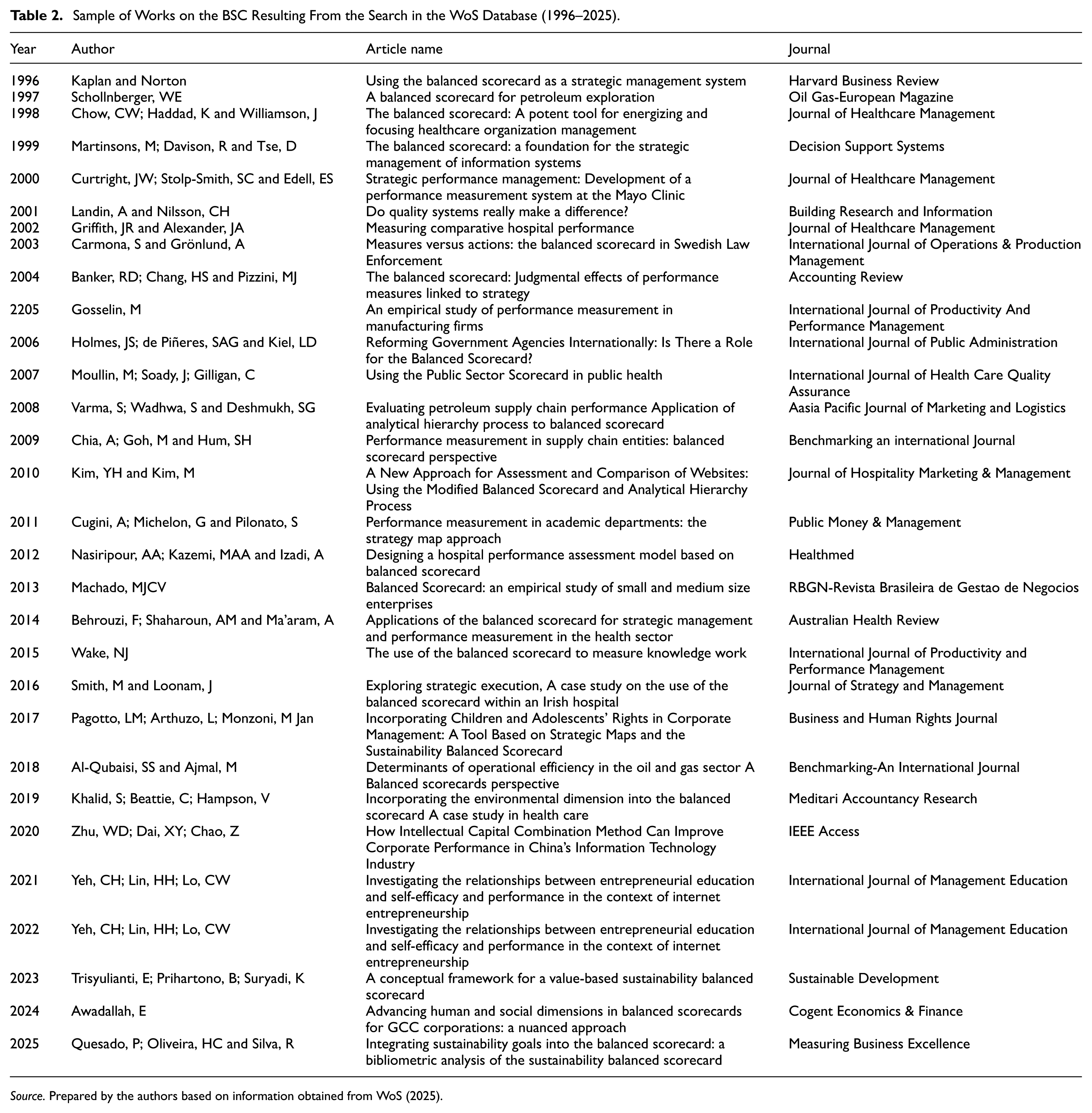
Source. Prepared by the authors based on information obtained from WoS (2025).
Once the relevant studies have been identified, we proceed with a thorough analysis and synthesis of their content to enhance the state of the art. For each selected work or author, a concise abstract is prepared, summarizing the objective, scope, and main findings. These summaries are presented in Table 3 (Scopus) and Table 4 (Web of Science). This process allows us to gain a comprehensive view of the prevailing trends in scientific research on the Balanced Scorecard (BSC). The resulting abstracts serve as the foundation for mapping and organizing the data obtained through bibliometric analysis, enabling the identification and interpretation of hidden patterns and insights.
Summary of Works on BSC Compiled From the Scopus Database.

Source. Prepared by the authors based on information obtained from Scopus (2025).
Summary of Works on BSC Compiled From the WoS Database.
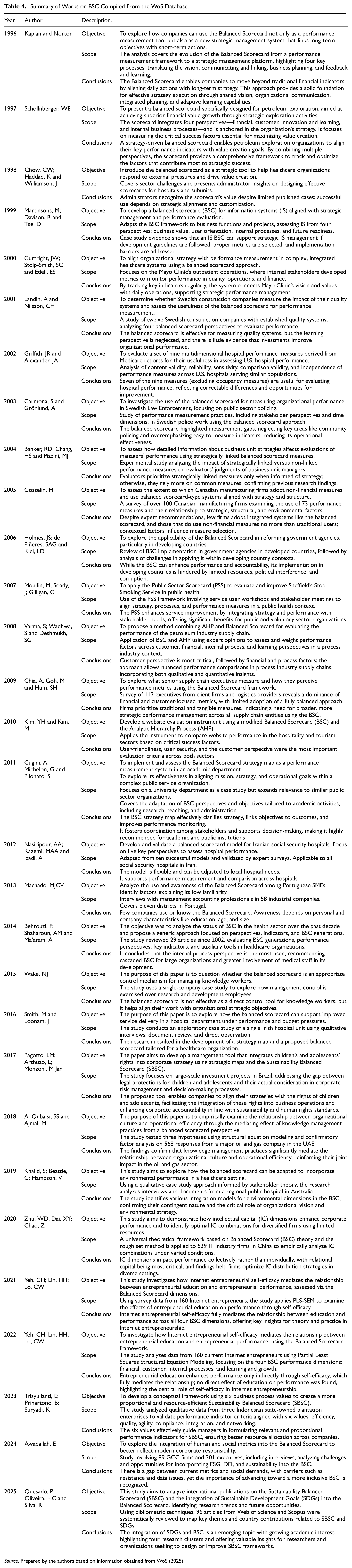
Source. Prepared by the authors based on information obtained from WoS (2025).
Method
A mixed-method study was conducted, specifically employing a content analysis based on a systematic literature review. According to Creswell (2014), mixed-method research involves gathering both quantitative and qualitative data, integrating them, and making interpretations by combining the strengths of both approaches. Consequently, our study adopts a longitudinal time frame, which spans an extensive period to focus on the evolution of the phenomenon under study, allowing for a clearer analysis of the process. This is primarily achieved using secondary sources, collecting information available from institutional websites, review articles, academic papers, and other scientific works. This approach establishes the origins, objectives, scope, and types of research in which the BSC has been applied.
Additionally, we draw on the work of Suárez-Gargallo and Zaragoza-Sáez (2023), who conducted a bibliometric study using Scopus and the Web of Science Core Collection database by Clarivate Analytics. Scopus, developed by Elsevier, is one of the largest abstract and citation databases of peer-reviewed literature, encompassing more than 27,000 active titles from over 7,000 international publishers, and covering disciplines in science, technology, medicine, social sciences, and arts and humanities. As of 2024, it contains over 87 million records dating back to 1788 and includes comprehensive metadata on documents such as citations, affiliations, keywords, and funding data. The inclusion of Scopus enables a broad and in-depth bibliometric analysis of scientific production related to the BSC, offering quantitative indicators (e.g., publication volume, citation counts), qualitative metrics (e.g., h-index, journal quartiles), and structural insights (e.g., co-authorship networks, institutional collaboration, and thematic clusters). This dual-database approach enhances the robustness of our findings by triangulating data across two of the most authoritative academic indexing platforms.
According to Bensman (2007), it is important to classify and evaluate the influence of research through reliable statistical measures. With the progress of technology and the emergence of extensive databases, bibliometrics has become an increasingly popular research approach (Bar-Ilan, 2008; Garfield, 1955). Its key advantage is the structured organization of scholarly information, encompassing data on publications, journals, researchers, institutions, and nations. Consequently, bibliometrics is particularly effective for examining patterns across subjects, journals, and academic disciplines.
Bibliometric techniques have been utilized in numerous fields, such as information and communication technology (Blažun Vošner et al., 2017) and knowledge management (Farooq, 2024).
The analysis was conducted in January 2025 and was carried out in two stages (Table 5). In the first stage, we searched for information, identifying available works using the keywords “Balanced Scorecard*” in two major academic databases: Scopus and Web of Science (WoS). The initial search yielded a total of 10,900 documents (5,217 from Scopus and 5,683 from WoS). We then refined the search by document type (limited to articles) and source type (journals), which resulted in 7,118 articles (3,227 from Scopus and 3,891 from WoS) after removing duplicates, previous versions, book chapters, communications, and conference papers. Subsequently, we applied a final filter, including only those documents that referenced the Balanced Scorecard in their title, abstract, and/or keywords. This yielded a final total of 4,642 relevant articles (2,215 from Scopus and 2,427 from WoS; Figure 1).
Stages Implemented in the Development of Bibliometric Analysis.

Source. Prepared by the authors based on Suárez-Gargallo and Zaragoza-Sáez (2023).
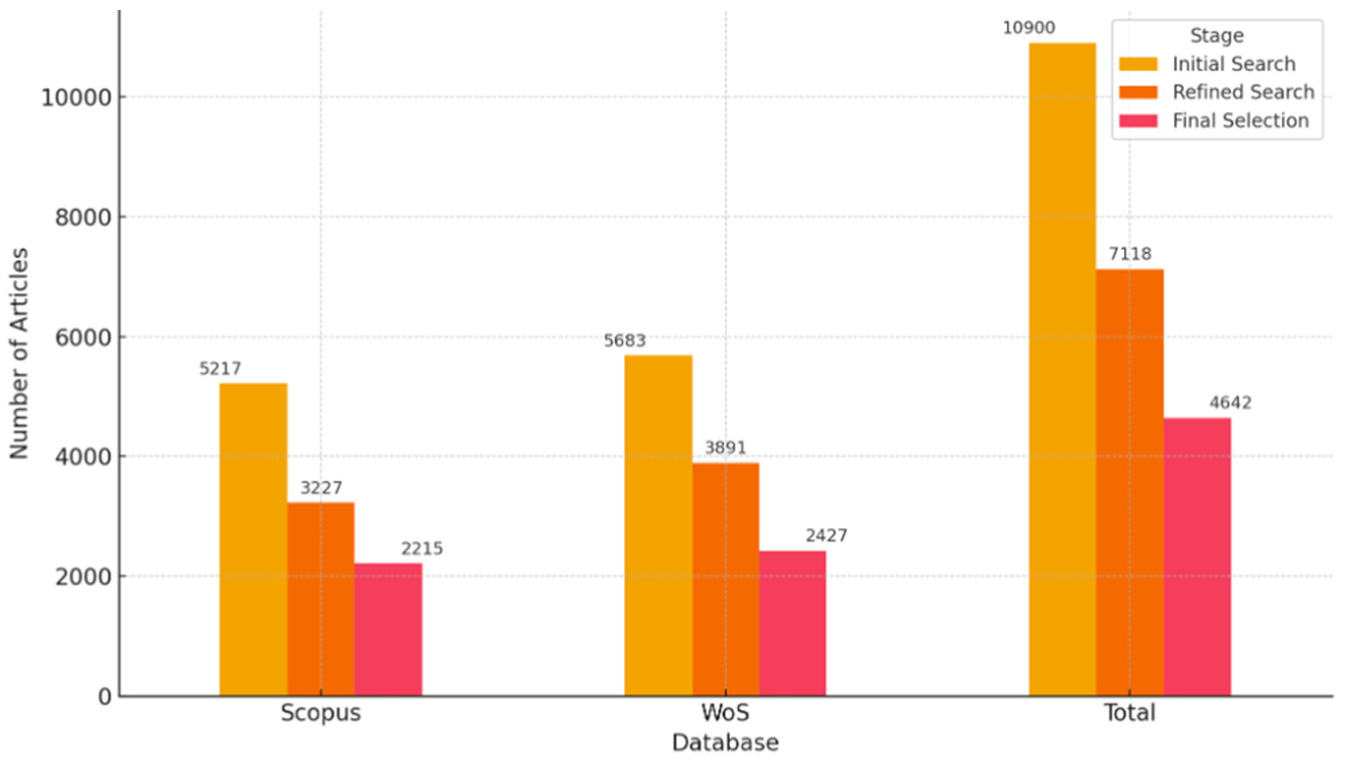
Document selection process for balanced scorecard publications.
This figure illustrates the systematic selection process used to identify relevant scientific articles for the bibliometric analysis. The total volume of documents was initially retrieved from two major databases—Scopus and WoS—yielding 10,900 records. Through a refinement process involving document type and source filters, and a final screening for direct reference to the Balanced Scorecard (BSC) in title, abstract, or keywords, a corpus of 4,642 articles was obtained for further analysis.
Bibliometric Mapping and Analysis
Following the document selection, a graphical analysis was conducted to explore the relationships and interconnections among key bibliometric indicators. Using VOSviewer software (version 1.6.20; van Eck & Waltman, 2010; Van Eck & Waltman, 2023), various visual mappings were developed. These included co-citation networks, document and citation volume representations, and keyword co-occurrence maps, all based on the Web of Science (WoS) Core Collection dataset.
VOSviewer was chosen for its robust visualization capabilities and clustering algorithms, which allow for the semantic structuring of citation behavior. This tool enables the identification of relational patterns among authors, journals, institutions, and conceptual domains within the Balanced Scorecard research field. Its widespread use and intuitive interface have been well documented in prior studies (Cobo et al., 2011; Moral-Muñoz et al., 2020).
Results
According to Cadavid-Higuita et al. (2012) and Albort-Morant and Leal-Rodríguez (2017), as cited in Suárez-Gargallo and Zaragoza-Sáez (2023), the bibliometric technique analyzes three distinct categories:
1) Quantity or Activity Indicators. These provide information on the volume of publications, most prominent authors, reviews, and countries.
2) Quality or Impact Indicators. These measure the effect a work has on other authors through the number of citations it receives.
3) Structural or Relationship Indicators. These identify and reveal the existing links between authors and their works. They also measure the connectivity between publications, authors, and areas of knowledge, typically associated with the construction and analysis of social networks, often referred to as sociograms (Rueda et al., 2007, cited in Suárez-Gargallo & Zaragoza-Sáez, 2023).
4) These categories are essential for understanding the overall landscape of research and its influence within a given field (Table 6).
List of Bibliometric Indicators of Quantity, Quality, and Structure.

Source. Prepared by the authors based on Cadavid-Higuita et al. (2012).
Global Distribution and Impact of Scientific Production: Scopus and Web of Science Overview
Figures 2 and 3 present a comparative overview of the geographical distribution and citation impact of scientific publications indexed in Scopus and Web of Science (WoS), respectively. These visualizations reflect the global relevance and academic interest in the research topic, with contributions from both developed and emerging regions.

Graphic representation of the volume of documents by country (Scopus).

Graphic representation of the volume of documents by country (WoS).
In Figure 2 (Scopus), the United States emerges as the leading contributor, with 299 documents and a total of 16,708 citations, underlining its central role in the field. England and Iran follow with 173 documents each, accumulating 2,633 citations, indicating a balanced scholarly presence across different regions. China contributes 128 documents and 1,648 citations, while Spain records 117 documents and 1,613 citations. Notably, Germany stands out with 1,843 citations from 89 documents, and India shows a particularly high citation impact with 3,204 citations across 86 documents, highlighting the quality and influence of its research outputs.
In Figure 3 (WoS), the United States maintains its leading position with 206 documents and 18,917 citations, demonstrating consistent global leadership. England follows with 118 documents and 6,215 citations, while Taiwan appears as a relevant actor with 82 documents and 2,154 citations. Australia contributes 75 documents with a notable 3,610 citations, and Canada with 61 documents and 1,977 citations, both showing strong citation performance relative to output.
Together, these figures reveal a broad and diverse international engagement with the topic, confirming its multidisciplinary and cross-regional appeal. The data also highlight regional strengths, with notable citation efficiencies in countries like India, Australia, and Germany, and reinforce the importance of examining both the volume and the impact of scientific output to better understand global research dynamics.
Keyword Analysis in BSC Research: Scopus and Web of Science Overview
Figures 4 and 5 provide a comparative visualization of the most frequently used keywords in scientific literature related to the Balanced Scorecard (BSC), based on data retrieved from the Scopus and Web of Science (WoS) databases, respectively. These keyword co-occurrence maps highlight the thematic focus and conceptual associations in the field over time.

Co-occurrence of keywords, prepared from the Scopus database, through the application of the VOSviewer program.
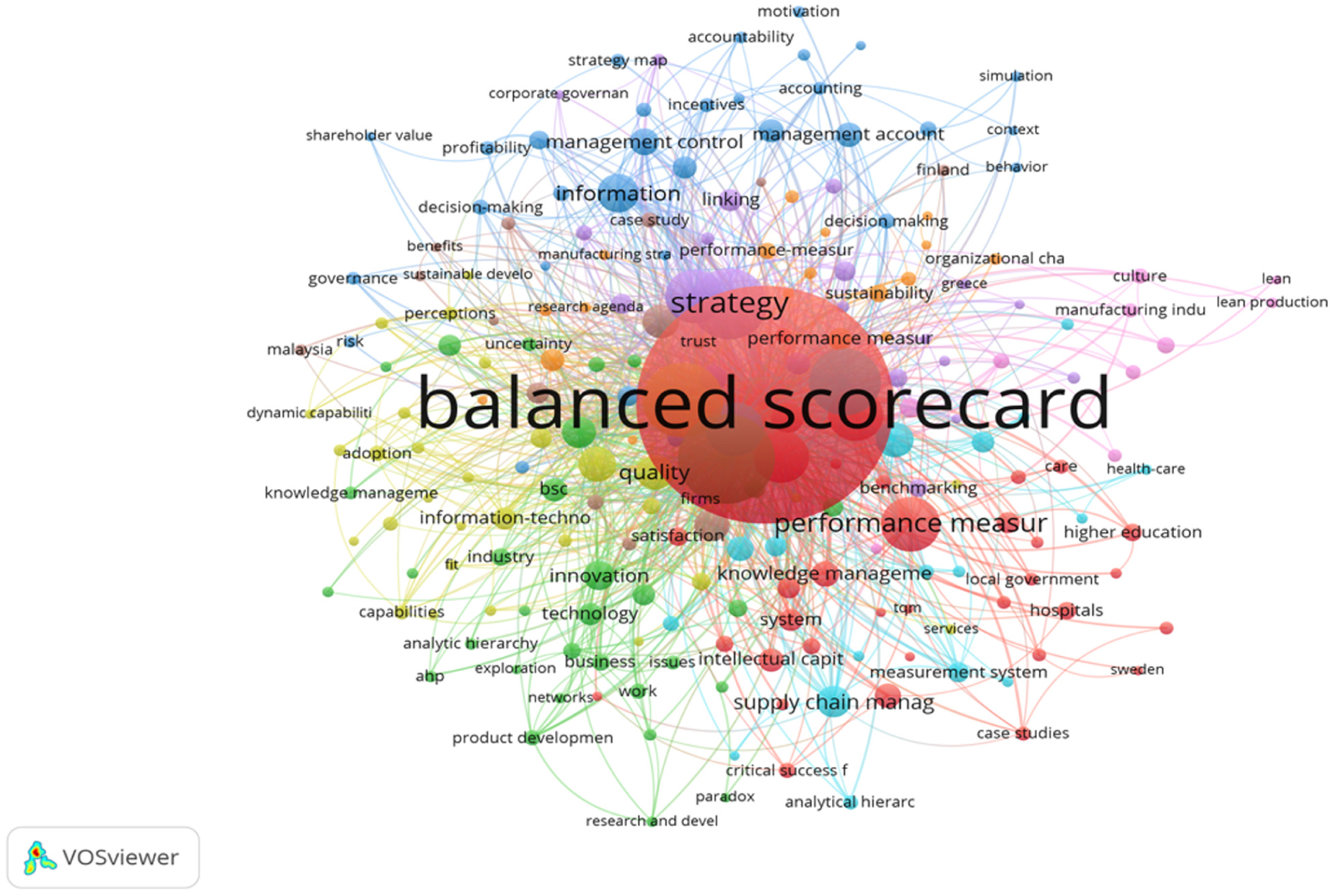
Co-occurrence of keywords, prepared from the WoS database, through the application of the VOSviewer program.
In Figure 4 (Scopus), the keyword “balanced scorecard” stands out as the most prominent, followed by “management” and “performance measurement.” These terms are frequently linked to related concepts such as “strategic planning,”“total quality management,”“benchmarking,”“performance management,”“organization and management,”“sustainable development,”“sustainability,” and “healthcare quality.”
Of a total of 13,623 keywords identified in 2,215 articles, the term “balanced scorecard” appears 2,349 times, representing 17.25% of the total, highlighting the central role of the BSC in the research landscape and its broad applicability in multiple fields.
In Figure 5 (WoS), the analysis reveals a similar pattern, where “balanced scorecard” is again the dominant keyword, followed by “management” and “performance.” These results are consistent with the Scopus findings and reinforce the relevance of the Balanced Scorecard (BSC) as a central concept in organizational and strategic management studies.
Among the 2,311 keywords extracted from 2,427 articles, the term “balanced scorecard” appears 647 times, representing 28.01% of the total, a proportion that underscores its high relevance and enduring importance in academic discourse.
Taken together, Figures 4 and 5 highlight the semantic and conceptual consistency of BSC-related research across major bibliographic databases. The recurring appearance of terms related to performance and strategic management illustrates the integrative role of BSC and its adaptability to diverse organizational contexts, such as sustainability, healthcare, and quality improvement initiatives.
Quality or Impact Indicators
Most Cited References
A critical measure of academic influence in bibliometric studies is the citation count per publication, which reflects the impact and relevance of foundational works within a field.
In the Scopus database, the most cited work is by R. Kaplan and Norton (1992), with an impressive 7,700 citations, underscoring its foundational role in the development and dissemination of the Balanced Scorecard (BSC) framework. Other notable works include R. S. Kaplan and Norton (2000) with 688 citations, Bhagwat and Sharma (2007) with 509 citations, and Ittner et al. (2003) with 482 citations. These contributions have played a pivotal role in both shaping theoretical and practical applications of performance measurement and strategic management.
In Web of Science (WoS), the citation landscape also highlights the foundational nature of Kaplan and Norton’s contributions. Their 1992 article leads with 5,071 citations, followed by their 1996 publication with 1,788 citations. Additional key references include Srivastava et al. (1998) with 1,214 citations and Jensen (2002) with 1,189 citations. These documents continue to be widely referenced, indicating their sustained influence across academic and professional domains.
Structural or Relationship Indicators
Article Co-Citation Analysis
Figure 6 (Scopus database) illustrates the article co-citation network, revealing proximity relationships among authors based on the frequency with which their works are cited together. Notably, the foundational contributions of Kaplan and Norton emerge as central nodes within the network, particularly the seminal texts: “The Balanced Scorecard: Translating Strategy into Action” (1996), “Strategy Maps: Converting Intangible Assets into Tangible Outcomes” (2004), and the influential article “Using the Balanced Scorecard as a Strategic Management System,” published in Harvard Business Review (1996). These key publications exhibit a high volume of co-citations, underscoring their pivotal role in shaping the theoretical and practical discourse surrounding the Balanced Scorecard (BSC).
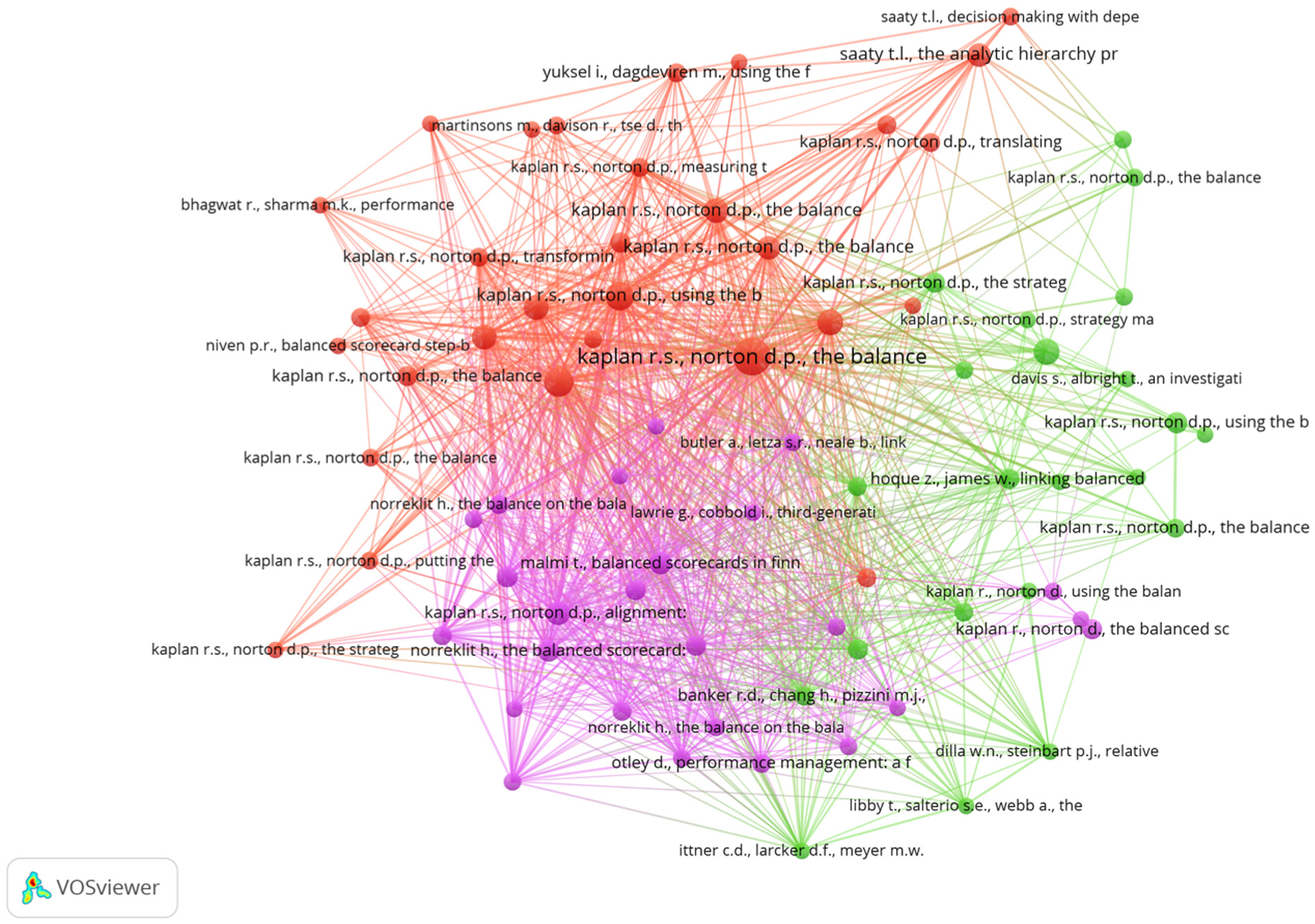
Article co-citation analysis database Scopus (77 items distributed in 3 clusters).
The network comprises 77 co-cited articles, grouped into three distinct clusters based on citation proximity:
Cluster 1 (Red): 30 articles
Cluster 2 (Purple): 25 articles
Cluster 3 (Green): 22 articles
Of particular significance is the enduring influence of R. S. Kaplan and Norton’s (1996) work, which exhibits the highest number of linkages within the network (
Regarding the Web of Science (WoS) database, Figure 7 presents a comparable co-citation analysis. Here again, the centrality of Kaplan’s contributions is evident, particularly the following landmark publications: “The Balanced Scorecard: Measures That Drive Performance” (1992), “Using the Balanced Scorecard as a Strategic Management System” (1996), and “Having Trouble with Your Strategy? Then Map It” (2000). These documents also demonstrate a high degree of co-citation frequency, reaffirming their foundational status in the literature.

Article co-citation analysis database WoS (132 items distributed in 5 clusters).
In the WoS network, a total of 132 co-cited articles are organized into five thematic clusters, as follows:
Cluster 1 (Red): 33 articles
Cluster 2 (Green): 33 articles
Cluster 3 (Purple): 32 articles
Cluster 4 (Yellow): 23 articles
Cluster 5 (Light Purple): 11 articles
These clusters represent cohesive research fronts, with Kaplan’s early works acting as intellectual anchors that shape the structure and evolution of Balanced Scorecard scholarship.
Intellectual Influence and Thematic Centrality of the BSC: Co-Citation Analysis in Scopus and WoS
Figures 8 and 9 provide a focused co-citation analysis based on the proximity of academic works to the influential publication “The Balanced Scorecard: Translating Strategy into Action” by R. S. Kaplan and Norton (1996). This approach allows for a more granular understanding of the intellectual structure surrounding this seminal work within two major bibliographic databases: Scopus and Web of Science (WoS).

Article co-citation analysis Scopus (proximity analysis of the paper by Kaplan and Norton: The Balanced Scorecard: Translating Strategy into Action, 1996).

Article co-citation analysis WoS (proximity analysis of the paper by Kaplan and Norton: The Balanced Scorecard: Translating Strategy into Action, 1996).
Figure 8 - Scopus database illustrates a densely connected co-citation network surrounding R. S. Kaplan and Norton’s (1996) work, underscoring its status as a foundational reference in studies related to strategic performance management. The tight clustering of nodes indicates a strong thematic cohesion, in which this publication is frequently co-cited alongside studies focused on management control systems, intangible asset measurement, and strategic alignment. This network structure reinforces the notion that the BSC has not only been widely cited but also internalized as a dominant conceptual framework across organizational research.
In contrast, Figure 9– Web of Science (WoS) database presents a more diversified co-citation network, highlighting the cross-disciplinary application of the BSC approach. Although R. S. Kaplan and Norton’s (1996) work remains the central hub, the peripheral nodes in this network connect to literature from fields such as corporate governance, innovation, public management, and strategic planning. This diversity in co-citation relationships suggests that the BSC has transcended its original context in business management to serve as a conceptual tool adopted across various disciplines. The presence of multiple thematic clusters in WoS also reflects an expanded scope of influence, signaling the BSC’s adaptability and relevance in emerging areas of research.
Comparative Insight: Although both Scopus and WoS analyses confirm the centrality and enduring influence of The Balanced Scorecard: Translating Strategy into Action (1996), they offer complementary perspectives:
Scopus emphasizes the work’s role within a tightly-knit body of literature focused on strategic performance frameworks.
WoS highlights a more interdisciplinary reach, underscoring its utility in diverse academic and applied fields.
Together, Figures 8 and 9 reaffirm the pivotal role of R. S. Kaplan and Norton’s (1996) publication in shaping not only the academic discourse but also managerial practice, as evidenced by its sustained prominence in co-citation networks across two of the most reputable citation databases.
Discussion
This bibliometric study on the Balanced Scorecard (BSC) represents a significant contribution to understanding the evolution, scope, and academic impact of this strategic management tool since its introduction by Kaplan and Norton. By adopting a mixed-methods approach with a longitudinal design, the study systematically examined the scientific interest in the BSC over time, as well as the dynamics of production, collaboration, and knowledge dissemination in this field.
One of the study’s main strengths lies in the combination of content analysis and visual bibliometric techniques using tools such as VOSviewer. This enabled the identification not only of the volume of published research but also its quality, thematic structure, and academic interconnection. A sustained growth in scientific production related to the BSC has been evidenced for more than three decades, reflecting its consolidation as a widely recognized tool in various organizational contexts. The concentration of publications in certain journals, countries, and institutions reveals the existence of knowledge hubs that lead the theoretical and applied development of the BSC, especially from prestigious business schools and research centers.
From a structural perspective, the co-citation network analysis revealed three well-defined but interrelated clusters centered around the foundational contributions of Kaplan and Norton. This configuration shows that the BSC has evolved beyond being merely a managerial control tool, positioning itself as an integrative framework that combines financial and non-financial perspectives. It has adapted to diverse domains such as sustainability, intellectual capital, innovation, healthcare, and education. Its growing use in applied research reinforces its relevance in complex, dynamic, and highly regulated environments.
However, the indicators of concentration in citations and authorship also reveal the presence of typical dynamics of academic canonization, where a small group of authors dominates the field. While this may represent a validation of authority, it also raises concerns about epistemological diversity and the emergence of critical or alternative approaches. There is a need to promote greater openness to regional perspectives, heterodox approaches, and new theoretical currents that can enrich the debate.
The collaboration patterns identified show robust subnetworks of authors and institutions, but also areas with low connectivity. This asymmetry underscores the need to foster greater interconnectivity between scientific communities to enhance interdisciplinary dialog. Additionally, the keyword co-occurrence analysis confirmed the BSC’s priority thematic domains, consolidating it as a versatile theoretical platform capable of articulating diverse research agendas.
A key methodological contribution was the clear delimitation of the analyzed corpus, focusing exclusively on peer-reviewed articles indexed in Scopus. This strategy ensured a minimum quality standard, although it limited the inclusion of seminal texts and gray literature. In the future, this limitation could be addressed with mixed methodologies that combine quantitative rigor with qualitative depth.
In summary, the findings affirm that the BSC has become a central node in modern organizational thinking—not only as a technical tool but as a dynamic concept subject to constant reinterpretation.
Conclusions
This study has demonstrated the relevance and potential of bibliometric analysis as a methodology to map the development, structure, and impact of knowledge on the Balanced Scorecard (BSC). Through a systematic review and advanced visualization techniques, it has been possible to identify patterns of production, collaboration, and academic influence, offering a comprehensive and updated overview of the field.
In general terms, the BSC continues to serve as a reference axis in strategic management research, with an expanding academic corpus and a highly specialized network of authors, institutions, and journals. The concentration of production and citations among certain actors highlights the established leadership of some schools of thought, while also opening opportunities to foster greater geographic, institutional, and epistemological diversity.
From a structural perspective, strong academic collaboration subnetworks were identified, although there are still areas with potential for greater integration and interconnection. These areas offer opportunities to strengthen editorial policies and international collaboration strategies that promote a more pluralistic, inclusive, and connected scientific ecosystem.
Thematically, the BSC has shown a remarkable capacity for expansion into new domains such as sustainability, health, education, and innovation. This evolution indicates that its utility is not limited to financial performance measurement but has become a flexible tool for addressing multidimensional challenges in complex and evolving contexts.
For future research, it is recommended to expand the scope of analysis to include other types of documents (books, theses, technical reports) and to conduct comparative studies across regions and disciplines. It is also proposed to combine bibliometric analysis with qualitative approaches that explore the implementation experiences of the BSC, examining its cultural, sectoral, and organizational adaptation.
Finally, this study invites reflection on the need to link scientific production with real-world strategic management practices, to ensure that theoretical models such as the BSC continue evolving in dialog with the emerging needs of organizations and society.
Footnotes

Ethical Considerations
This study did not involve human participants, personal data, or interventions requiring ethical approval. Therefore, approval from an ethics committee was not necessary.
Consent to Participate
Not applicable. This research is based exclusively on bibliometric data obtained from publicly available scientific databases (Scopus and Web of Science). No human subjects were involved.
Funding
The authors received no financial support for the research, authorship, and/or publication of this article.
Declaration of Conflicting Interests
The authors declared no potential conflicts of interest with respect to the research, authorship, and/or publication of this article.
Data Availability Statement
Data sharing not applicable to this article as no datasets were generated or analyzed during the current study.