




Abstract
This study investigated the impact of an intervention utilizing ChatGPT in literary translation on EFL student translators’ comfort level, proficiency in machine translation (MT) tools, openness to embrace AI technology, and self-efficacy in literary translation. Additionally, the study aimed to identify the benefits and limitations reported by the participants in using ChatGPT for literary translation. Using an experimental pre-post design and purposive non-probability sampling, 50 student translators participated in the study. Data collection instruments included a pre-post perceived self-efficacy questionnaire and follow-up semi-structured interviews. Quantitative data analysis indicated the effectiveness of the study intervention in enhancing student translators’ proficiency in using MT tools and their comfort level with them. Significant differences were observed in student translators’ self-efficacy beliefs before and after the intervention. Additional analysis demonstrated a significant difference in student translators’ confidence before and after the intervention, accompanied by a medium effect size. The analysis of participants’ responses to the questionnaire open questions revealed notable benefits and limitations associated with using ChatGPT in literary translation. Furthermore, the qualitative analysis of the interview data yielded valuable insights into the transformative effect of the ChatGPT intervention on students’ openness, comfort and confidence in using AI tools in literary translation.
Plain Language Summary
This study explored how using ChatGPT for literary translation affected student translators. It focused on their comfort with translation tools, skill level, willingness to use Artificial intelligence, and confidence in translating literature. The study also explored the benefits and challenges the students experienced in using ChatGPT. Fifty student translators took part in the study, which used surveys and interviews to gather data. The results showed that using ChatGPT improved the students’ skills and comfort with translation tools. There was a noticeable increase in their confidence and belief in their abilities after the study. The students also shared both positive and negative experiences with using ChatGPT. The interviews provided deeper insights into how ChatGPT changed their attitudes and confidence in using AI for literary translation.
Introduction
The intricacies inherent in literary translation necessitate a distinct approach compared to other types of translation, as many translators tend to overlook the implicit implications and intentions embedded within literary works. This specific form of translation has been a subject of extensive debates and discussions, emphasizing its intricate nature (Keshavarzi, 2013). While technical translations primarily focus on conveying content and information faithfully, literary translation encompasses a broader spectrum of considerations, including linguistic, cultural, pragmatic, aesthetic, and artistic elements (Baker & Saldanha, 2019).
The translation process involves a complex interplay of cognitive, emotional, behavioral, and social factors, highlighting the significance of the psychology of translators (Bolaños-Medina, 2016; Yang et al., 2021). Translation psychology, as described by Bolaños-Medina (2016), is a multidimensional concept within translatology that examines translators as complex individuals functioning as a whole. It encompasses the psychological states of translators during the translation process, skill acquisition, and professional development (Zhu, 2020).
In this context, Bandura’s concept of self-efficacy holds great relevance. Self-efficacy refers to an individual’s self-assessment of their ability to successfully accomplish a particular task using their existing skills (Bandura, 1997). It provides insights into the variations observed among individuals when facing similar challenges. Rooted in social cognitive theory, self-efficacy serves as a primary explanatory factor, emphasizing the significant impact of self-influence on human behavior. Despite the strong association between translators’ self-efficacy and various aspects of their performance, motivations, competences, skills, professional success, and job satisfaction indicated by studies in the translation field (Bolaños-Medina, 2014; Haro-Soler, 2018; Haro-Soler & Kiraly, 2019), there is a research gap in the cultivation of student interests and self-efficacy specifically in specialized translation, such as literary translation (Xianmin et al., 2016).
Additionally, previous studies conducted in the field of literary text translation have provided valuable insights into the acquisition of skills by translation students through various training techniques (Južnič et al., 2021; Slessor, 2020). They have explored the effectiveness of literary translation workshops in enabling students to identify and overcome translation problems, as well as develop problem-solving skills. While these contributions have advanced our understanding of student translators’ development, there is still a need to investigate novel approaches that can further enhance their skills and address the challenges posed by emerging technologies.
AI-powered translation tools, such as ChatGPT (Generative Pre-trained Transformer), have emerged as valuable resources that assist translators in various aspects of their work (Wu et al., 2023). By leveraging artificial intelligence (AI) capabilities, translators can increase their productivity, improve accuracy, and enhance overall translation quality. In order to succeed in the evolving translation industry, student translators are increasingly required to possess a strong grasp of technology and its related competencies. As a result, “translation technology competence” has gained considerable attention in the field of translation education (Bawa, 2021). By encompassing technology competence as a fundamental aspect of translation competence, translators gain the ability to attain improved outcomes in a shorter duration, while also benefiting from a wider array of options that are typically absent in conventional manual translation settings. Nevertheless, additional research is required to examine the impact of these technologies on the quality of translations and the performance of translators (Alotaibi & Salamah, 2023; Way et al., 2023; Zuo et al., 2024).
Despite the emergence of ChatGPT as one of the most utilized AI technologies by students, its impact on learning processes and outcomes in translation education remains largely unknown. Additionally, there is a dearth of studies investigating the effects of AI tools on student translators’ self-efficacy. Different aspects such as student proficiency in MT tools, comfort level, and openness to AI also remain largely unexplored. More importantly, the use of AI in literary translation with its unique challenges and intricacies seems to be absent in previous research. Therefore, this study aims to address these research gaps by examining the impact of a study intervention utilizing ChatGPT in literary translation. Specifically, the study aims to answer the following research questions:
To what extent does the study intervention, utilizing ChatGPT in literary translation, influence the comfort level, proficiency in MT tools, and openness to embrace new AI technology among EFL student translators, as assessed before and after the intervention?
How does the study intervention impact the self-efficacy in literary translation of EFL student translators, as measured by their confidence and persistence levels?
What are the perceived benefits and limitations of using ChatGPT in literary translation according to EFL student translators?
By answering these questions, the study contributes to the broader literature of AI and literary translation. The study intervention holds the potential for educators and training institutions to improve participants’ comfort level, proficiency in machine translation (MT) tools, willingness to embrace new AI technology, and self-efficacy in literary translation. It also offers valuable insights for the field of translation by exploring the perceived benefits and limitations EFL student translators experience when using ChatGPT in literary translation.
Literature Review
AI Technologies and Translation Education
The pervasive influence of artificial intelligence technologies, driven by machine learning, and natural language processing (NLP) techniques, has made them indispensable components of digital platforms, reshaping multiple aspects of human existence (Fang et al., 2023). Extensive research has demonstrated the positive impact of the integration of interactive AI supported technology and AI applications, including chatbots, in educational settings on enhancing students’ learning experiences (Lai et al., 2023; Ryong et al., 2023). In the field of translation, recent advances in information technology, particularly artificial intelligence, and natural language processing, have propelled machine translation to new heights (Zhao & Jiang, 2022). Neural machine translation (NMT) in particular has revolutionized the translation profession, transforming it into a highly technology-driven field (Gupta et al., 2022).
Developed and launched by OpenAI in November 2022, ChatGPT is an advanced AI chatbot and language model renowned for simulating human-like conversations across a wide range of subjects. Scholars have extensively explored the potential applications of ChatGPT in various academic domains. ChatGPT has been found to provide personalized feedback in response to learners’ academic inquiries, enhancing their learning experience and aiding in identifying areas for improvement (Ali et al., 2023; Javaid et al., 2023). Moreover, it serves as a cognitive tool, assisting learners in organizing and structuring their knowledge (Cooper, 2023; Javaid et al., 2023). Given these benefits and the growing acceptance of AI technology among student translators in Saudi universities (Abdelhalim, 2024), the popularity of ChatGPT is expected to rise.
In the Saudi context, various studies have examined AI’s role in translation, addressing topics such as improving translation competence (Alotaibi & Salamah, 2023), comparing AI and machine translation tools and their limitations (Abdelhalim et al, 2025), and addressing challenges in translating poetry using AI (Thabet & Qadha, 2024). In their study, Alotaibi and Salamah (2023) highlighted the importance of integrating AI-supported translation applications in translation training classrooms to enhance the translation competence of Saudi students. Their study aimed to assess the impact of an AI-supported translation application, specifically Reverso, on the performance of undergraduate translation students. The participants were divided into three groups: the first group did not utilize any translation application, the second group used Google Translate, and the third group utilized Reverso Context. The results revealed a statistically significant distinction in scores, with Reverso users outperforming the other groups. Students who utilized Reverso demonstrated fewer errors in lexical, cohesion, omission, and text-type areas compared to those who did not use any translation application. In a more recent study on literary translation, Abdelhalim et al. (2025) explored the perceptions of 63 Saudi EFL student translators (27 beginners, 36 advanced) regarding literary translation by Google Translate (GT) and ChatGPT. Using a mixed-methods design, data were collected through a pre-survey, a questionnaire, and reflection sheets. Findings generally showed no significant differences were found between the two groups’ perceptions of ChatGPT and GT except that beginner students trusted the accuracy of GT more than advanced students. Both groups preferred ChatGPT for literary translation. Qualitative data also revealed that both groups criticized GT for lacking linguistic and cultural representation, while appreciating ChatGPT’s ability to produce satisfactory translations. Although these studies highlight the importance of incorporating different translation applications in developing student translation performance and experience, they appear to overlook psychological factors, such as self-efficacy, which could provide deeper insights into the translators’ experiences and development.
Student Translators’ Self-Efficacy and AI Technologies
To gain a deeper understanding of self-efficacy, it is essential to distinguish this concept from related constructs such as self-concept, self-esteem, and self-evaluation of performance. While self-concept refers to an individual’s thoughts about the self, and self-esteem reflects positive or negative evaluations and feelings about oneself (Smith & Mackie, 2007), self-efficacy focuses on perceived competence in relation to specific goals and tasks, incorporating cognitive and behavioral aspects. It differs from self-concept by being more goal-oriented and influenced by social comparisons (Bong & Clark, 1999). The concept of self-efficacy in translation, as embraced in the current study, pertains to the student translators’ confidence in their abilities to effectively carry out translation tasks or fulfill their responsibilities (Haro-Soler & Kiraly, 2019), with a particular focus on the realm of literary translation.
Self-efficacy, as described by Bandura (1997), is influenced by four primary sources. The first source is enactive mastery experience, where students assess their ability to successfully complete tasks based on past accomplishments (Zhang & Ardasheva, 2019). These interpretations of previous achievements shape their belief in their capability to tackle future tasks (Dinther et al., 2011). The second source is vicarious experience, which involves observing others’ successes and failures as models for performance (Schunk & Hanson, 1985). Verbal persuasion, the third source, involves receiving feedback and comments about performance (Bandura, 1997). Positive remarks focusing on students’ abilities can boost self-efficacy, while negative comments emphasizing shortcomings may undermine it. The fourth source, physiological and emotional states, pertains to a student’s ability to manage physical and emotional stress during task execution. Stressful situations, complex activities, and negative mood states can potentially weaken self-efficacy beliefs.
Research has delved into the impact of self-efficacy on translators’ motivation, persistence and performance. For instance, Bolaños-Medina (2014) found positive correlations between students’ self-efficacy, their ability to comprehend the source language, and their aptitude for finding background information. Lee (2018) conducted a study to examine the relationship between Interpreting Self-Efficacy (ISE) and interpreting performance among undergraduate students. The study found a strong positive correlation between ISE and actual interpreting performance. However, the relationship between ISE and performance may be influenced by other psychological and socio-cognitive factors. A more recent study conducted by Cifuentes-Férez et al. (2024) focused on examining the interplay between translation trainees’ self-efficacy, their subjective responses to the stress of translating within strict time limits, and how this interplay influenced their actual translation performance. The findings of the study suggest that self-efficacy beliefs serve as a protective factor against stress, helping to alleviate the negative impacts of translating under time pressure.
High levels of translating self-efficacy were also associated with effective management and competency in translation technology (Araghian et al., 2018). Xiang et al. (2023) conducted an empirical study involving 663 college seniors in China to examine the correlations between critical thinking, academic self-efficacy, cultural intelligence, and translation technology competence. The results from the online survey showed that these psychological constructs had a significant and positive impact on students’ translation technology competence. It is true that these studies revealed the importance of self-efficacy for translation performance and translation technology competence, areas of specialized translation with its challenges seem to be overlooked in previous research.
In the Saudi context, there is a research gap regarding the relationship between self-efficacy and the performance of student translators, particularly in the field of literary translation. Previous studies have primarily focused on self-efficacy among Saudi English as a Foreign Language (EFL) learners. For instance, Alrabai (2018) explored the self-efficacy of EFL college-level students and its correlation with their English performance, revealing low self-efficacy levels among participants, which impacted their end-of-year exam results. Additionally, Al-khresheh and Alkursheh (2024) found a positive impact of self-efficacy on English language proficiency and overall academic achievement.
The above literature indicates that there is a clear need for measuring translation self-efficacy given the growing recognition of self-efficacy’s importance in translation. Existing research primarily focuses on the relationship of self-efficacy with translation performance or competence in general translation fields. This neglects the unique challenges and intricacies associated with literary translation, which is considered one of the most complex and demanding forms of translation. Moreover, considering the relevance of ICT (Information and Communication Technology) competencies in fostering self-efficacy, it is crucial to explore the potential impact of ChatGPT on the self-efficacy of student translators in the context of literary translation training and education. Most of the current translation self-efficacy research has been carried out in traditional offline environments, with only a few studies exploring the use of web-based platforms (Araghian et al., 2018; Xiang et al., 2023). To effectively address the challenges posed by complex literary translation tasks when provided with the aid of AI, it is imperative to thoroughly assess the self-efficacy of student-translators, encompassing their beliefs and attitudes regarding their own abilities, as well as their level of determination and persistence, and how these factors interact with one another.
Method
Research Design
The study employed a mixed-method single-sample experimental pre-post research design to investigate the impact of utilizing ChatGPT in literary translation training on EFL student translators’ self-efficacy. Using a mixed-method research design that incorporated qualitative and quantitative data collection method helped gain a deeper understanding of the effect of AI supported intervention on developing EFL student translators’ comfort level, proficiency in MT tools, willingness to embrace new AI technology, and self-efficacy beliefs represented by confidence and persistence efforts. Besides, the use of such a design assisted in enhancing the validity of the results through overcoming the limitations of using a single method only (Collins, 2016). Using a questionnaire allowed for collecting data from a large sample within a short time. The interview, at the same time, substantiated the quantitative data with in-depth data overcoming the shortcomings of potential bias of the self-report questionnaire. Thus, integrating the two data collection methods helped to provide a more robust and comprehensive understanding of the study findings, increasing its overall validity.
Context and Participants
The research was carried out among a group of EFL undergraduate students majoring in English at two large state universities in Riyadh, Saudi Arabia, as part of a larger project. These students were enrolled in a comprehensive study program that covered various aspects of language, literature, translation, and skill development. Throughout their 4-year Bachelor program, students were exposed to a wide range of translation courses including an introductory translation course and specialized courses. Based on purposive non-probability sampling, a sample of 50 students (46 female and 4 male) who met a specified criteria participated in the study. Purposive non-probability sampling was chosen as it ensures the inclusion of participants who are suitable for examining the study variables. For example, all participants had prior experience with AI-supported translation tools and reported utilizing them to some degree in their translation practices. Additionally, they had not received any formal AI-supported MT training prior to the investigation. More importantly, in terms of the participants’ translation competence, the participants had successfully completed at least two practical courses in translation (equivalent to a minimum of 4 credit hours) including an introductory course in Translation Theory. All participants were Arabic speakers who learned English as a foreign language. Although using purposive sampling is helpful in ensuring the relevance and specificity of the data collected, it is important to acknowledge its limited generalizability to the broader population. Thus, the results should be cautiously interpreted, particularly in the light of the gender imbalance present in the collected data.
Study Intervention
The study intervention encompassed five 3-hour online translation workshops designed to train participants in the effective use of ChatGPT for literary translation. The workshops were conducted synchronously via Microsoft Teams, which also served as a platform for announcements, discussions, and assignments. The workshop content emphasized interactivity and practical application of ChatGPT for different types of literary translation. Three professors collaboratively developed the workshop materials, guided by the following criteria: variation in language (English and Arabic), genre (e.g., poem, short story, drama, or novel excerpt), cultural, linguistic, and aesthetic features, as well as overall comprehensibility.
The intervention design was rooted in Bandura’s (1986, 1997) self-efficacy theory which identifies four main sources of self-efficacy: enactive mastery experiences, vicarious experiences, verbal persuasion, and self-regulation of affective and emotional responses. Fostering enactive mastery was accomplished by completing both in-class activities and home assignments. Participants were provided vicarious experiences through the discussion and critique of peer translations, both of which were at varying levels of success, thus providing students with models to either emulate or build upon. Under friendly supportive atmosphere, students received verbal encouragment and emotional support which was low-pressure and consistently positive, fostering a constructive environment. These combined elements raised student translators’ confidence and fostered motivation, leading to increased active effort and engagement with literary translation tasks.
The initial workshop introduced participants to ChatGPT, focusing on its features, capabilities, and limitations within the context of literary translation. Participants were guided on how to access and navigate the tool effectively, as well as how to formulate prompts using relevant real-world examples (Appendix A). They were also trained to assign ChatGPT specific roles and translation strategies aligned with their intended outcomes. The subsequent four workshops focused on practical, hands-on training, where participants actively participated in various literary translation tasks. Each task involved translating selected literary texts either from English to Arabic or vice versa. English texts included, for example, Shakespeare’s “Hamlet” and “The Raven” by Edgar Poe, while Arabic texts featured excerpts from popular literary works such as “Children of Gebelawi” by Naguib Mahfouz, and “Season of Migration to the North” by Tayeb Salih.
During these workshops, participants used ChatGPT to generate an initial draft of the translation, and then refined and developed the final draft throughout the session. They started by exploring the author’s background, literary style, and cultural references, and sought clarifications on challenging aspects before translating. They then worked on translating the text and improving the translation iteratively. The refinement process involved collaborative sharing and reflection in a supportive online environment. Feedback was consistently provided throughout the sessions. Furthermore, participants were encouraged to evaluate the tool’s effectiveness and reflect on their experiences throughout the training. As part of their coursework, they completed four translation tasks, adhering to the established procedures.
Data Collection Instruments
The Perceived Self-Efficacy Questionnaire
The purpose of this questionnaire was to evaluate participants’ self-efficacy in literary translation before and after the study intervention. The first section of the questionnaire gathered demographic information and essential background details, such as participants’ translation experience, comfort level in using technology for translation, self-rated proficiency in MT tools, and openness to adopting new AI technology. The second section consisted of 18 items divided into 2 categories: confidence and persistence. Such items were constructed after a thorough review of literature. Particularly, they were built based on Bandura’s (1986) concept of self-efficacy compromising two main constructs: the persistent effort one preserves in the face of challenges and the degree of confidence one brings to the task. Both categories utilized a 5-point Likert scale. The confidence category comprised 11 items, focusing on participants’ confidence in their abilities as literary translators and their overall self-perception in this role. It explored their beliefs in competence, effectiveness, and capabilities when performing literary translation tasks. The persistence category encompassed seven items, examining participants’ motivation, determination, and willingness to invest time and effort in enhancing their skills and achieving success in the field of literary translation. In addition, the questionnaire included two open-ended questions that prompted students to reflect on their experience throughout the intervention and identify the perceived benefits and limitations they experienced when using ChatGPT for literary translation (Appendix B). The questionnaire was reviewed by specialists in Applied Linguistics. Their suggested modifications were all taken into considerations. For example, in item 12, “I will do my best to find ways to translate it well” was modified to “I will do my best to select appropriate strategies to translate it well.” Additionally, Item 13 was modified from “I definitely do all my best to transfer the emotional impact and experience to the target audience” to “I make a conscious effort to convey the emotional impact and experience of the original literary text to the target audience.” For reliability, the questionnaire demonstrated high reliability, with a Cronbach’s alpha coefficient of .91.
Semi-Structured Interview
To delve deeper into participants’ individual experiences with ChatGPT and examine its influence on various aspects of their translation self-efficacy and practice, the researchers conducted a follow-up interview with nine participants. Carefully designed and reviewed interview questions were employed to explore and gain in-depth insights into participants’ perceptions and experiences regarding the use of AI, particularly ChatGPT, in the context of literary translation. The questions examined participants’ levels of openness, comfort, and confidence in utilizing AI-supported tools in literary translation both before and after the study intervention (Appendix C). The interviews complemented and cross-verified the questionnaire data broadening and enriching the study findings. Each interview lasted from 10 to 15 minutes. Data saturation was achieved with the nine interview participants because of the depth and richness of the data collected, and the homogeneity of the participants in terms of their academic background and shared experiences relevant to the study. All interview participants were female, which reflected the gender distribution of the overall sample. This gender representation is acknowledged as a limitation in the study.
Data Collection Procedures
The study began with the pre-administration of the questionnaire. Subsequently, participants engaged in the study’s 3-week intervention. Following the intervention, the same questionnaire was administered as a post-measure to evaluate any changes in the variables. Additionally, a follow-up interview was conducted with a subset of volunteered participants to gather further insights and complement the results of the questionnaire. The study design incorporated ethical considerations, including obtaining institutional approvals and participants’ informed consent, while ensuring confidentiality and privacy throughout the research process.
Data Analysis
The data analysis process employed to address the research questions involved analyzing both the questionnaire data and the interview data. Regarding research question 1, the data from the background information section of the study questionnaire, collected both before and after the intervention, were analyzed using descriptive statistics. Additionally, the Wilcoxon Signed Ranks Test was utilized, considering the ordinal nature of the data, to compare between the comfort level in using technology, self-rated proficiency in MT tools, and openness to adopting new AI technology before and after the study intervention.
Regarding research question 2, self-efficacy scores of the questionnaire were calculated based on participants’ responses to the items. The data met the assumptions of interval scale measurement and normal distribution (p > .05, as assessed by the Kolmogorov–Smirnov test). The self-efficacy scores were then analyzed using descriptive statistics and a parametric paired-sample test.
To examine research question 3, the open-ended responses from the questionnaire were analyzed to determine the frequencies of different themes and perspectives. Finally, to support the quantitative results, and to gain deeper insights into participants’ perceptions regarding the use of AI, specifically ChatGPT, in the context of literary translation, the interview data were analyzed thematically.
Thematic analysis was employed following Braun and Clarke’s (2006) six-phase framework. First, all interview transcripts and open-ended responses were read multiple times for familiarization. Initial codes were generated inductively from the data, focusing on recurring expressions, sentiments, and language related to students’ experiences with ChatGPT. Codes were then organized into broader categories and refined into overarching themes through constant comparison. Examples of themes include increased confidence, refined proficiency, transformation of attitudes, and perceived limitations. To ensure the reliability of coding, two researchers independently coded a subset of the data. Coding discrepancies were discussed and resolved through consensus, and the finalized coding scheme was applied to the full dataset. This process of investigator triangulation helped to enhance the credibility and trustworthiness of the findings. Direct quotations from participants were used in the results section to illustrate each theme and give voice to the participants’ experiences.
Results
Quantitative Results
Impact of ChatGPT Intervention on Comfort Levels, Proficiency in MT Tools, and Openness to Embrace AI Technology Among of EFL Student Translators
The results in Table 1 revealed that there was no significant difference in terms of openness to adopting new AI technologies (z = −1.663, p = .096) with a small effect size (d = .25), as students had already expressed openness for AI technologies in the background information section of the questionnaire. However, significant differences were observed in student translators’ self-rated proficiency in MT tools (z = −3.860, p = .000) before and after the study intervention, showing a medium effect size (d = .64). Additionally, a significant difference was found in the comfort level of using technology for translation (z = −2.149, p = .032) with a small effect size (d = .31). These results demonstrate the effectiveness of the study intervention in enhancing student translators’ proficiency in using MT tools and their comfort level with them.
Changes in Comfort level, Proficiency, and Openness to AI After ChatGPT Intervention.

Impact of ChatGPT Intervention on Self-Efficacy Beliefs of EFL Student Translators
To examine the impact of ChatGPT intervention on participants’ overall self-efficacy beliefs, a parametric paired-sample t-test was employed. The results presented in Table 2 reveal a modest yet statistically significant difference in student translators’ self-efficacy beliefs before (M = 3.50, SD = .65) and after (M = 3.72, SD = .66) the study intervention (t[49] = −2.030, p = .048). The modest significance is also reflected in the small effect size as measured by Cohen’s d (d = .28) indicating that although the intervention had a positive impact, it may need to be strengthened for better outcomes.
Results of the Paired Sample T-Test Regarding Student Translators’ Self-Efficacy Beliefs Before and After the Intervention.

More specifically, a significant difference was found in student translators’ confidence before (M = 2.98, SD = .51) and after (M = 3.35, SD = .66) the intervention (t[49] = −3.559, p = .001). Such a significant difference is also represented by a medium effect size (d = .50) indicating a noticeable moderate increase of student translators’ confidence after the intervention. However, no significant difference was observed in their persistence (t[49] = −.530, p = .599) with a negligible effect size (d = .07). This demonstrates that the intervention impact was clearly evident in student translators’ confidence more than in their persistence. Given the purely voluntary nature of the study and the heavy schedules of students, it seems that students did not have enough time to sustain consistent efforts. At the same time, this finding may imply that student translators need more training to help them challenge themselves and persist in the face of the difficulties and complexities of literary translation.
Perceived Benefits and Limitations of Using ChatGPT in Literary Translation
The analysis of participants’ questionnaire responses revealed notable benefits and limitations, as presented in Tables 3 and 4. The most prominent advantages of using ChatGPT in literary translation, based on the highest frequencies, were identified as time and effort saving (38 responses) and achieving accurate translations (37 responses). Students regarded the translations generated by ChatGPT as generally accurate and appreciated its ability to provide equivalents and synonyms, enriching their human translation. Despite investing time in refining prompts and employing various translation strategies, students acknowledged that ChatGPT significantly reduced the overall time and effort required. They valued the quality of the produced translations and recognized ChatGPT’s capability to handle a wide range of literary figurative language while preserving cultural meanings. Additionally, students positively perceived ChatGPT’s interactive nature, finding it beneficial to engage with the chatbot for refining literary translations. The tool was considered user-friendly and efficient, facilitating smooth navigation and usage.
Frequency of the Perceived Benefits of ChatGPT for Literary Translation.

Frequency of the Perceived Limitations of ChatGPT for Literary Translation.
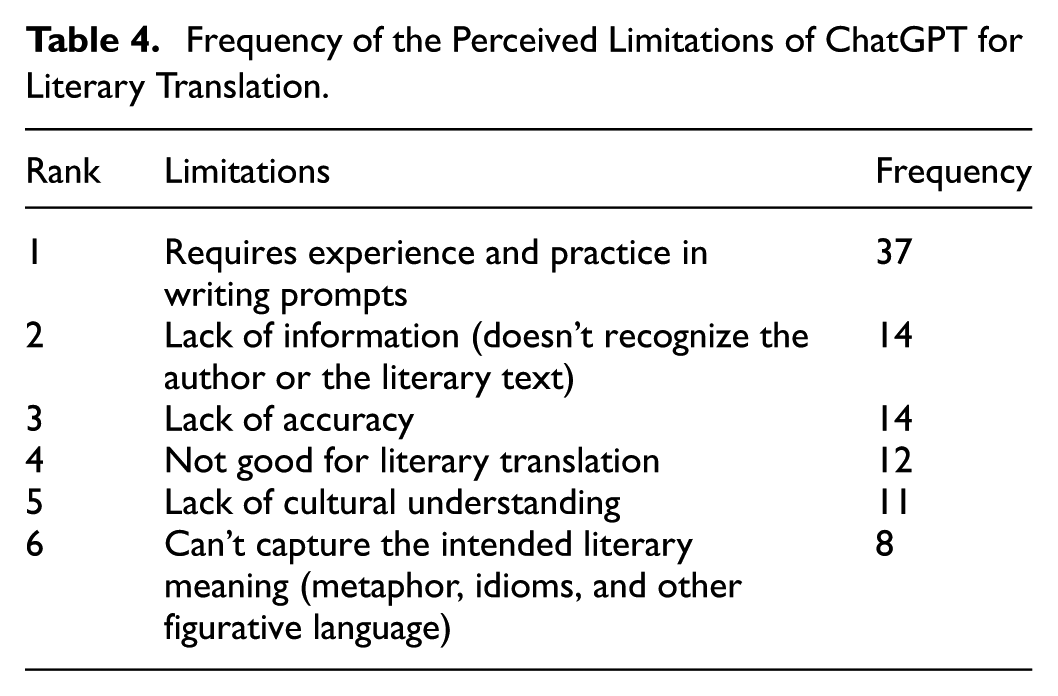
Regarding the limitations reported by the participants, they emphasized that one of the main hurdles encountered with ChatGPT is the requirement for expertise in formulating prompts. Students expressed the need to carefully craft prompts to achieve better translation results, often requiring multiple attempts. While ChatGPT offers the advantage of providing background information about authors and texts, students noted instances where the chatbot either failed to provide correct information or apologized for lacking the required details, limiting its potential in literary translation. Some students also highlighted limitations related to the accuracy and suitability of ChatGPT-generated translations for literary texts, as well as its inability to effectively handle the nuances of literary meaning. These limitations may be attributed to the necessity for experience in constructing context and crafting prompts when using ChatGPT for literary translation. Merely requesting ChatGPT to “translate the text” could lead to literal translations with reduced accuracy, similar to other machine translation tools.
Qualitative Results of the Interview
The interview analysis revealed that the study intervention played a crucial role in fostering students’ openness and comfort in utilizing AI tools in literary translation. Six students demonstrated hesitation and even a negative attitude towards AI tools before the study intervention. Students, for instance, stated “I usually thought it is an unreliable source,”“I hate it because it replaces human work,” and “I used to think of AI tools as robotic machines that were awful.” However, through interactive sessions and practical tasks, the students recognized the potential of ChatGPT to augment their literary translation process. Therefore, their initial skepticism turned into a newfound openness accompanied with comfort as they observed ChatGPT’s efficiency in translation. One student, for instance, stated, “After trying it during the workshops I am more open to incorporating it into my translation process,” another said, “After I attended the training workshops, I have learned so many amazing ways and techniques that simplified the process of using AI for me… I am now highly open to utilizing AI technology for translation purposes.”
In addition, the study intervention played a key role in increasing students’ confidence in utilizing ChatGPT for literary translation. Students, for example, noted that the structured training sessions equipped them with strategies in prompt writing that promoted a deeper understanding of ChatGPT’s possibilities and limitations. For example, a student reported, “My confidence in using AI has increased after the workshops. The knowledge gained and practical experience during the workshops have boosted my confidence in effectively employing AI tools for translation tasks.”
Students also highlighted how their proficiency in using AI tools has improved significantly. Before the intervention, students would just ask ChatGPT questions like “translate this text.” The structured training sessions provide students with techniques to promote writing that enhance the quality of the literary translation product. A student, for example, stated: “My proficiency is better after the workshops, I know what prompts to use and how to use it, and how to use AI to translate specific genres.”
By learning how to interact more effectively with AI tools, the students were able to exert more effort and achieve satisfying outcomes in their literary translation tasks. For instance, one student also mentioned that she had previously used AI but without fully recognizing its potentials. However, after the intervention, they were able to compose effective prompts that considered the literary aesthetic of the target language. This suggested a shift from using AI in an unskilled manner to using it more strategically. The students’ efforts in using AI improved as they gained the necessary knowledge and skills through the intervention. A student mentioned:
Before, I would only start the conversation with “translate this text” without building any sense of what type of text it is. Now, I can create a whole formula for ChatGPT to translate the best possible translation keeping the literary aesthetics of the target language.
Furthermore, the study intervention not only equipped the students with knowledge and skills but also fostered curiosity and motivation for continuous improvement. Students expressed a desire to explore different AI models, experiment with various strategies, and engage in ongoing professional development. This indicates a long-term commitment to enhancing their expertise in applying AI for translation, suggesting that the intervention had a lasting impact on their openness to adopting AI, efforts and professional growth. For instance, one student said “The [training] workshops have instilled in me a sense of curiosity and a drive to continuously improve my skills in using AI for translation. I am motivated to explore different AI models.”
Discussion
The results revealed several significant findings which provide empirical evidence of the positive impact of the ChatGPT intervention on student translators. First, the study intervention had a notable impact on the self-rated proficiency of student translators in using MT tools, with a significant improvement observed after the intervention. Similarly, there was a significant increase in students’ comfort level with technology for translation after the intervention. As for students’ openness to adopting new AI technologies, the participants already held a positive attitude towards embracing AI technology prior to the intervention and continued after the intervention (Q1). Complementing these quantitative results, the qualitative analysis yielded valuable insights into the transformative effect of the ChatGPT intervention on students’ attitudes and beliefs of using AI tools including ChatGPT in literary translation. Prior to the intervention, students expressed hesitation and even a negative attitude towards AI tools. However, through interactive training workshops and practical tasks, students recognized the potential of ChatGPT to augment their literary translation process, leading to a newfound comfort and trust of effectively using AI technology. Such positive outcomes of the study imply the need for effective incorporation of AI training in translation education. With efficient productive AI training that focuses on hands-on practical workshops, students can develop their skills and enhance their literary translations.
Regarding self-efficacy in literary translation (Q2), the quantitative analysis revealed a modest yet statistically significant difference in the overall self-efficacy beliefs of student translators before and after the intervention. Further analysis of the two constructs of self-efficacy demonstrated a significant difference in the confidence degree of student translators before and after the intervention. This aligns with Bandura’s (2001) suggestion that self-efficacy influences thoughts, feelings, and acts as a moderator of stressors associated with the task at hand. Students who demonstrated trust in their ability to utilize ChatGPT for literary translation experienced positive thoughts and a boost in their confidence. The use of ChatGPT and its advanced features in high-cognitive-load literary translation tasks contributed to enhancing students’ self-efficacy levels. These findings align with prior research on the positive impact of AI tools in higher education (Wang et al., 2023), emphasizing their influence on EFL students’ interest, participation, creativity, self-efficacy, and learning performance.
The ChatGPT intervention successfully enhanced the participants’ confidence in literary translation as an important self-efficacy component, in particular. The participants attributed this growth to the positive environment created by the integrated training network of the intervention, in which they had the opportunity to practice and receive feedback on their translation skills. The supportive and interactive nature of the intervention fostered a sense of competence and confidence among the participants. These findings align with that of Xianmin et al. (2016), which demonstrate that translation self-efficacy plays a significant role in mediating the relationship between online information seeking and translation performance.
Furthermore, the study intervention incorporated practices that effectively addressed the four sources of self-efficacy identified by Bandura (1997): enactive mastery experience, vicarious experience, verbal persuasion, and management of physiological and emotional states. As part of the intervention, enactive mastery experience was promoted through specific translation assignments accompanied by reflection. This deliberate approach provided students with the opportunity to assess their past achievements and develop a strong sense of confidence in their ability to successfully tackle forthcoming tasks. As an interactive Chatbot, the design of ChatGPT also encouraged students to advance at their own pace, receive immediate feedback, and revisit challenging content without the need for human intervention (Lai et al., 2023; Wu et al., 2023). Additionally, students gained vicarious experience by observing the outcomes of ChatGPT-generated translations, reinforcing their belief and confidence in their own translation abilities. In addition, the training workshops actively encouraged students to share their translations, creating valuable opportunities for them to observe and learn from the successes and failures of their peers. Verbal persuasion played a key role in fostering self-efficacy, as the trainer provided comments and feedback on students’ interactions with ChatGPT, highlighting their strengths and offering constructive suggestions. Furthermore, the intervention aimed to manage physiological and emotional states by creating a supportive and stress-free learning environment. The voluntary and online nature of the training helped reduce potential stress and foster a positive mood among the students. These practices collectively contributed to the intervention’s positive impact on students’ self-efficacy, raising student translators’ confidence and empowering them to believe in their abilities and perform effectively in literary translation tasks. As such, it is recommended that similar AI training practices based on Bandura’s four sources of self-efficacy be followed. Interactive and supportive workshops within translation institutions can provide translators with valuable experience, enhancing their self-efficacy beliefs and confidence in their translations.
However, in contrast to confidence, the results revealed no significant difference in students’ persistence. It is important to consider several factors that could contribute to this result. First and foremost, considering Bandura's definition of self-efficacy as the belief in one’s capabilities to organize and execute the actions required to achieve specific goals, this belief is crucial because it influences motivation, emotions, and behaviors, often more than actual skill levels (Bandura, 1997, 2001). A significant contributing factor in this regard is the perceived difficulty and complexity associated with literary translation. This is further influenced by the voluntary nature of participating in the intervention along with the demanding schedules of the students, both of which have a great effect on their persistence. Prior studies (Gurtueva & Arslan, 2013; Keshavarzi, 2013) have highlighted how literary translation tasks can be particularly challenging, requiring a deep understanding of cultural nuances, literary devices, and creative expressions. Secondly, persistence is influenced by a range of individual and contextual factors that extend beyond the scope of the study intervention. External factors, such as personal motivation, task difficulty, and time constraints, can significantly impact students’ persistence in utilizing AI tools for translation. Students’ motivation plays a crucial role in their decision-making and level of effort invested in tasks (Dörnyei & Ushioda, 2021). The study intervention may have provided students with the necessary knowledge and skills, but other factors beyond the intervention’s control might have influenced their level of persistence. Moreover, the duration of the intervention and the timeframe between pre- and post-intervention assessments may have played a role in the lack of a significant change in persistence efforts. It is possible that a longer intervention or a follow-up assessment after a certain period could have provided a clearer picture of any changes in persistence over time.
The analysis of participants’ responses to the questionnaire open-ended questions revealed notable perceived benefits and limitations of using ChatGPT in literary translation (Q3). According to the responses, the most prominent benefits included time and effort saving, as well as achieving accurate translations. Students appreciated the ability of ChatGPT to provide equivalents, synonyms, and handle literary figurative language while preserving cultural meanings. They also found the interactive nature of ChatGPT beneficial for refining translations, highlighting its user-friendliness and efficiency in facilitating smooth navigation and usage. These perceived benefits have been documented in previous research (Chan & Tang, 2024; Yin, 2024). On the other hand, students observed some limitations of ChatGPT as it sometimes failed to provide accurate information or apologized for missing details. They also noted issues with the accuracy and appropriateness of ChatGPT’s translations for literary texts. These limitations may stem from the need for expertise in creating context and crafting prompts, as simple translation requests can lead to less accurate literal translations. They also highlight the important implication of developing translators’ AI prompting skills in translation education and workplaces. Without skillful prompt techniques, translators will not benefit from the potentials of AI tools, limiting the opportunity to produce high-quality translations in a short time.
Pedagogical Implications
Based on the results of this study, there are several pedagogical implications that hold particular relevance to translation education, specifically within the realm of literary translation. Firstly, the integration of interactive Chatbots, such as ChatGPT, into translation education can yield significant benefits for aspiring literary translators. By offering immediate feedback and opportunities for independent exploration, Chatbots aid students in enhancing their translation skills and fostering self-efficacy within the field of literary translation. For example, translation teachers can allocate sessions for training students on the successful integration of AI in literary translation. This includes providing a background context for the chatbot, using various appropriate prompting techniques, continually refining the suggested translations, and critically evaluating the reflection of literary features in the suggested translations. Following these steps can help student translators to consider chatbots their loyal translator assistance that they can use in the classrooms or workplace. Secondly, literary translation involves subjective and creative decision-making processes. Therefore, utilizing peer observation and feedback is crucial for students to learn from the diverse interpretations and strategies of their peers. Establishing collaborative learning environments that foster discussions, workshops, and the sharing of translation work empowers students to refine their skills, broaden their perspectives, and build confidence in their literary translation capabilities. Additionally, to optimize the effective utilization of translation AI-supported tools, it is essential to equip translation students with proficient prompt writing skills. Mastery of prompt writing enables students to effectively harness tools like ChatGPT enabling them to produce excellent translations from original source texts capturing their unique characteristics and features.
Limitations and Recommendations for Future Research
The study exhibits some limitations that should be taken into consideration. Firstly, there may be insufficient representation of the diverse range of individuals who could potentially benefit from similar interventions because of sample size and participant characteristics. For example, the female participants who outnumbered the male participants might indicate gender imbalance in the study sample. The background of Arabic language and the Saudi culture of the student translators cannot be ignored, as well. Therefore, generalizing the findings to a broader population in different contexts may be limited. As a second problem, the study may have been relatively short-term in duration, and the outcome of the intervention may not have been evaluated on a long-term basis. Despite assessing how self-efficacy and performance were affected immediately, long-term effects remain uncertain. Long-term follow-up studies with control groups would yield a more comprehensive understanding of the impact of the intervention. Longitudinal studies focusing on other psychological factors in relation to developing student translators’ AI literary translation are important to explore. Thirdly, the study adopted a pre-post design without a control group using a questionnaire as a self-report measure along with interviews. Future research may enhance the findings with think-aloud measures and case studies that can provide richer data and overcome some confounding variables such as selection bias and time effect. Researchers could also explore additional interventions or strategies that specifically target and promote persistence in using AI tools for literary translation. Additionally, future research can address comparative analyses of different AI tools focusing on specific aspects of literary translation that might benefit most from AI assistance.
Supplemental Material
sj-docx-1-sgo-10.1177_21582440251374800 – Supplemental material for Empowering Student Translators: The Impact of ChatGPT Training on Self-Efficacy in Literary Translation
Supplemental material, sj-docx-1-sgo-10.1177_21582440251374800 for Empowering Student Translators: The Impact of ChatGPT Training on Self-Efficacy in Literary Translation by Safaa M. Abdelhalim, Zainab Alsuhaibani and Asma Alsahil in SAGE Open
Footnotes

Ethical Considerations
This study was completed in line with the ethical guidelines for conducting research, and after obtaining the approval from IMSIU Ethics Committee, Deanship of Scientific Research No: 638477158630996217.
Consent to Participate
Informed consent was obtained from all participants who took part in the study.
Author Contributions
Safaa M. Abdelhalim: Conceptualization, Resources, Methodology, Writing, Original Draft Preparation, Reviewing, and Editing. Zainab Alsuhaibani: Conceptualization, Resources, Methodology, Quantitative Analysis, Writing, Reviewing, and Editing. Asma Alsahil: Conceptualization, Resources, Methodology, Qualitative Analysis, Writing, Reviewing and Editing.
Funding
The authors disclosed receipt of the following financial support for the research, authorship, and/or publication of this article: This work was supported and funded by the Deanship of Scientific Research at Imam Mohammad Ibn Saud Islamic University (IMSIU; grant number IMSIU-DDRSP2504).
Declaration of Conflicting Interests
The authors declared no potential conflicts of interest with respect to the research, authorship, and/or publication of this article.
Data Availability Statement
The data set of this study shall be available upon request.
Supplemental Material
Supplemental material for this article is available online.
References
Supplementary Material
Please find the following supplemental material available below.
For Open Access articles published under a Creative Commons License, all supplemental material carries the same license as the article it is associated with.
For non-Open Access articles published, all supplemental material carries a non-exclusive license, and permission requests for re-use of supplemental material or any part of supplemental material shall be sent directly to the copyright owner as specified in the copyright notice associated with the article.
