




Abstract
This study explores the experiences of academics in Turkey who transition from teaching roles to administrative positions in higher education (HE), with a focus on the implications of this shift for their academic productivity and social relations. Employing a qualitative phenomenological research design, semi-structured interviews were conducted with 25 academics who had undertaken such transitions. The data were analyzed with thematic analysis method. Thematic analysis of the data revealed that motivations for assuming administrative roles include financial incentives, the desire to contribute to institutional development, the pursuit of job security, and the application of theoretical knowledge in practice. However, the findings also suggest that the transition process often overlooks essential administrative competencies, qualifications, and leadership experience, potentially undermining institutional effectiveness. The study concludes by emphasizing the need for a more structured and competency-based transition process, incorporating leadership development, mentoring, strategic planning, and human resource support to ensure sustainable and effective academic leadership.
“One day delivering lectures, the next making high-stakes decisions—academics are stepping into leadership roles with little warning and even less preparation.”
Introduction
The transition from great teacher to effective leader remains a critical challenge in education. The shift from educator to executive reveals both opportunity and upheaval in academia. The transition from academic teaching to university administration represents a significant professional and personal shift for many scholars in HE. Traditionally trained in pedagogy and research, faculty members are increasingly called upon to assume leadership roles such as department chairs, deans, and rectors-often with limited preparation for the managerial, political, and strategic responsibilities these positions entail. As the governance of HE institutions grows more complex, the ability to bridge academic expertise with administrative competence has become both a challenge and a necessity.
This role shift is rarely straightforward. While teaching emphasizes individual scholarly achievement and classroom engagement, administrative work demands collaboration, decision-making under institutional constraints, and the navigation of bureaucratic structures. The transition is further complicated by a lack of formal training or structured pathways to leadership, leaving many academics to learn on the job. Existing research has pointed to the professional tensions and identity renegotiation that arise during this process, yet there remains a need for deeper exploration into how academics experience and manage this transition in diverse HE contexts. Although the role of a leader and administrator overlaps, it is quite different.
To Stogdill (1974) there are almost as many different definitions of leadership as there are persons who have attempted to define the concept (p. 7). In 1950, he described leadership as the act of influencing the actions of an organized group as it works toward setting and achieving its goals. Similarly, Northouse (2021) defines leadership in a broad sense as the process of guiding others toward the accomplishment of shared goals and objectives. Zaleznik (1977) puts that leadership requires using power to influence the thoughts and actions of other people. In the context of organizational settings such as higher education, effective leadership is critical for aligning institutional vision with operational practices. Scholars have identified several distinct leadership styles that reflect different approaches to guiding and motivating teams. Transformational leadership, for instance, emphasizes vision, inspiration, and intellectual stimulation, fostering motivation and commitment among followers (Bass & Riggio, 2006). In contrast, transactional leadership is based on structured tasks, rewards, and performance monitoring, focusing on maintaining organizational stability (Burns, 1978). Another important model is servant leadership, which prioritizes the needs of others and aims to empower team members through empathy, ethical behavior, and shared decision-making (Greenleaf, 1977). Additionally, distributed leadership has gained prominence in educational settings, highlighting the importance of shared responsibilities and collaborative decision-making among various stakeholders (Spillane, 2006). Understanding these leadership types is essential for academic administrators, who must navigate complex institutional environments while fostering a culture of engagement, innovation, and accountability.
In HE institutions, the roles of leaders and managers, though often overlapping, reflect distinct functions and approaches. Leaders are primarily concerned with setting vision, inspiring change, and fostering innovation, while managers focus on maintaining systems, ensuring operational efficiency, and implementing policies (Kotter, 1990). Leaders in academia are expected to guide institutions through complex challenges, shape academic culture, and engage faculty in shared governance, whereas managers are responsible for budgeting, compliance, and administrative coordination (Bryman, 2007). According to Fullan and Scott (2009), effective academic leadership requires a balance of both sets of skills: the strategic foresight of a leader and the organizational acumen of a manager. However, many higher education administrators tend to be promoted from academic ranks without formal preparation for either role, often defaulting to managerial tasks due to immediate institutional demands (Gmelch & Buller, 2015). Recognizing and developing the complementary functions of leadership and management is thus essential for fostering sustainable and adaptive governance in universities.
In the field of HE, leadership roles encompass a wide array of responsibilities with various implications. Hoff (1999) lists these responsibilities as changing demographics of student, faculty populations, university-community relations, financial issues, technological change, diversity, staff’s professional development, equity, social justice, curriculum reform, and ethical considerations. As this role is leadership, they need to have leadership qualities and qualifications. Then what is leadership? As HE administrators make 80% of the decisions listed (Carroll & Wolverton, 2004), the roles of department chairs, deans, vice-rectors, and rectors are among the most important managerial positions at universities (Gmelch, 2019).
Comprehensive research conducted in 2016 by the University Council for Educational Administration (UCEA) shed light on the lack of training among newly appointed department chairs. The study revealed an inconsistency in the reported data percentages regarding prior training received by the chairs. A deficiency in training leads to prolonged feelings of incompetence among department chairs. Only 41% reported feeling competent by the ninth month, while a combined 59% took longer or never reached that point (Weaver et al., 2019, p. 178). Similarly, Gmelch (2019) observed that since academics primarily receive training in research and teaching, they seldom anticipate assuming roles as department chairs. According to his findings, 19% of HE administrators took longer and never felt competent in their administrative role. Despite the crucial nature of their positions, research indicates that only a small percentage of department chairs receive formal training in management. Additionally, a mere 3.3% of department chairs have taken courses in leadership techniques (R. E. Cipriano & Riccardi, 2013; Gmelch et al., 2002, 2017).
Moving into administrative positions in HE, often occurs without a full understanding of the ambiguity and complexity inherent in these roles, or an awareness of the transformative changes involved in transitioning from an academic to an academic leader. This lack of comprehension extends to the personal and academic costs involved (Gmelch, 2000).
When academics transition to leadership roles, they may not fully grasp the impact on their personal and professional lives (Gmelch, 2011). Despite potential reluctance among academics, driven by a desire to maintain their original motivations for entering higher education, some still volunteer for administrative roles. McCarthy (2003) specified that many professors are eager for administrative roles for various reasons, including noble aspirations such as to effect significant change, personal motivations like recognition, increased compensation, retirement benefits, or influence over conditions and individuals. While assuming administrative responsibilities out of a sense of duty, they also seek to create long-term value for their institutions and students, driving their ascent in the administrative hierarchy.
Transitioning into formal administrative roles offers numerous advantages. One significant advantage is the ability to influence and shape institutional policies (Gmelch & Miskin, 2004). Many administrators emphasize the advantages of collaboration with faculty and other stakeholders both within and outside their departments. These advantages include the ability to positively impact students and faculty through support and empowerment and to address challenging issues within departments and across academia, thereby contributing to the institution as a whole (Dezure et al., 2014). There are also personal reasons to move to these positions, such as getting recognized, having a private car, secretaries, and tenure status.
This role requires certain qualities and qualifications. Lucas (1994) emphasized the importance of communication, interpersonal relationships, and team-building skills for effective leadership in HE. Leaders, in particular, need the capability to inspire faculty members to improve performance in areas like teaching and research. Department chairs play especially vital roles as they oversee academic programs. According to Lees (2006), while chairs have traditionally held specific responsibilities, they are now also expected to develop innovative programs, seek alternative funding sources, and take an active role in student recruitment and retention (pp. 17–18). Also, Weaver et al. (2019) revealed that the role of department chairs has become increasingly complex, demanding a broader skill set. Despite the pressing need for leadership development, academic heads in many HE institutions they receive inadequate training. They often transition into administrative posts without undergoing any formal leadership training or possessing prior executive experience.
According to Bradley (2022), the traditional approach to ascending to academic administrative roles involved nurturing and promoting leaders from within the faculty ranks, a method deemed advantageous from both institutional and faculty perspectives. Indeed, for institutions to thrive, it is imperative that key administrative positions at all levels are filled by capable and accomplished leaders. As highlighted by Bisbee (2007), the pathway to administrative roles has evolved, with fewer faculty members serving as department chairs before assuming higher-level administrative positions within colleges or institutions. This deviation from hierarchical steps has posed challenges, as individuals appointed may lack familiarity with effective management practices, resulting in a decline in institutional effectiveness.
On the other hand, academic leadership requires time, dedication, and a thorough understanding of administrative responsibilities. Not all faculty members successfully navigate this transition, as it entails significant effort and adaptation. Bisbee (2007) underlined that formal programs aimed at identifying and training faculty members are essential for a successful transition into administrative roles. Such initiatives not only benefit individual academic institutions but also contribute to the enhancement of HE as a whole.
The Turkish Higher Education Context
In Turkey, where higher education governance is characterized by centralized control and evolving institutional dynamics, the transition from faculty positions to administrative leadership poses distinct challenges. This transition has long been a complex issue and has shown differences over time in the Turkish HE system. Historically, after the multi-party system in 1946, the government granted some institutional autonomy to universities and implemented elections for rectors and deans (Law 4936). After the new constitution in 1961, the system expanded universities’ institutional autonomy, and university boards elected their rectors, deans, and department heads (Article 120). The 1980 military coup had a devastating impact on university autonomy and academic freedom (Tekeli, 2010, 2019). The process of appointments was changed. Rector candidates were appointed based on a tendency election held at the university, but the Council of Higher Education (CoHE) and the president appointed them without considering the preferences of academics most of the time. With the recommendation of rectors, deans were appointed by CoHE. In 2016, the rector appointment process completely changed, and the president now appoints rectors directly without having an election. In the current system, once a vacancy for a rector position is publicized by the CoHE, academics apply to the CoHE. Only those who have the title of professor can apply for the post of rector, vice rector, and dean in Turkey. They are interviewed by the board of the CoHE first. Then, one of the candidates who is considered suitable for the post is presented to the president and finally appointed by the president himself (Resmî Gazete, 2016). Recent years have witnessed a departure from these established traditions, with appointments increasingly influenced by political considerations, disregarding academic norms. There are no other formal requirements required in this process. It is considered that leadership qualities, qualifications, and relevant experience become crucial elements for HE leaders, but it is a subject of inquiry to explore their experiences during their transitions.
In the Turkish higher education system, the appointment of rectors and other senior administrators has increasingly reflected the influence of political authority, particularly following legislative changes introduced in 2016. With the abolition of rector elections and the centralization of appointment powers under the presidency, the process has shifted from institutional autonomy to executive control (Resmî Gazete, 2016). This politicization has led to concerns about the erosion of academic freedom, institutional independence, and merit-based leadership. Alemdaroğlu (2022) argues that the university system in Turkey has entered a phase of “authoritarian transformation,” in which rectors are often selected based on political loyalty rather than academic qualifications or leadership competencies. Similarly, Güzelsarı (2019) emphasizes that appointments are frequently aligned with the ruling party’s ideology, fostering a climate of conformity and discouraging critical thought within universities. This situation not only compromises the integrity of university governance but also undermines public trust in the higher education system. As a result, administrative posts-once envisioned as scholarly leadership roles-are increasingly perceived as extensions of political machinery, raising serious implications for academic quality, institutional accountability, and democratic values within Turkish universities. Given the existing gap in the literature concerning the transition from academic roles to administrative positions—particularly within the context of Turkish higher education—there remains a lack of well-defined strategies and comprehensive understanding to support this process. By situating the inquiry within the Turkish higher education system, this research aims to generate critical insights into the lived experiences of academic leaders and to offer evidence-based recommendations for the development of more structured, transparent, and supportive pathways into administrative leadership.
Purpose of the Research
This study aimed to investigate the experiences of administrators who transitioned from lecturing to academic administration and examine the impacts of this transition on their academic productivity and social relations in the Turkish HE management context. To achieve this objective, the study sought the answers to the following questions:
What motivates academics to transition from lecturing to administration?
What are the administrators’ experiences and challenges?
What impacts does this transition have on their productivity and social relations?
What formal and informal criteria are asked while they are transiting to administration?
How well are academics prepared for administrative roles?
What model administrators they propose to facilitate this transition?
Method
This study utilized a qualitative research approach, incorporating methods like observation, interviews, and document analysis to investigate phenomena within their natural settings in a thorough and authentic way (Creswell, 2019). Specifically, a phenomenological research design was used, focusing on understanding the essence of experiences from individuals or groups undergoing a particular event (Büyüköztürk et al., 2020). Given the depth of insight required into academics’ transitions from teaching to administration, this research design was considered suitable for the study.
Study Group
In the research, 25 administrators who made this transition were interviewed. According to Creswell (2019), in phenomenological design, an adequate number of participants typically falls within the range of 7 to 9, and sampling may halt once data saturation is achieved. The data gathered from the interviews in this study exhibited repetition and reached a saturation point, indicating that further interviews beyond the initial 25 administrators were unnecessary.
The participants were chosen using the maximum variation method, which is a purposeful sampling technique (Yıldırım & Şimşek, 2008). In purposive sampling, participants willingly share their experiences to address research questions (Creswell, 2019). As noted by Creswell (2019), maximum variation sampling is one of the most widely used in qualitative research. This method is preferred when researchers aim to include diverse perspectives. To enhance the credibility and richness of the data, maximum variation sampling was employed in the participant selection process. This purposive sampling strategy was chosen to ensure a broad representation of perspectives across a range of relevant demographic and professional characteristics. In particular, efforts were made to include participants from both public and foundation universities in equal measure, thereby capturing institutional diversity. Furthermore, variation was systematically incorporated by considering factors such as gender, age, academic title, and years of professional experience. This approach allowed for the inclusion of diverse viewpoints and experiences, which in turn strengthened the transferability and depth of the findings. The final sample consisted of 25 academics, comprising 10 females and 15 males, who represented a wide spectrum of roles and backgrounds within the higher education context.
All participants in the study had, at some point in their academic careers, transitioned from faculty roles into administrative positions. This shared experience of moving from teaching to leadership provided valuable insights into the dual perspectives of academic and administrative responsibilities. Among the 25 participants, 16 were actively serving in administrative roles at the time of the study, while the remaining 9 had previously held administrative positions but had since returned to full-time academic duties. The majority of individuals transitioned into administrative roles only after accumulating a minimum of 10 years of experience in academic teaching, suggesting that substantial pedagogical engagement often precedes their movement into leadership positions. This variation allowed for a comparative understanding of both current and former administrators’ reflections on their transitions, as well as their views on the interplay between teaching and leadership within higher education institutions. Among the 25 participants, 20 had held senior administrative roles at various levels within their institutions. Specifically, 10 participants had served in top-level leadership positions such as rector or vice rector, while another 15 had taken on mid-level administrative responsibilities as heads of department. Each of these individuals had spent a minimum of 4 years in their respective administrative roles, indicating a substantial period of engagement in institutional governance and leadership. This depth of experience provided a robust foundation for reflecting on the complexities, challenges, and professional transformations associated with academic leadership.
Data Collection
Data for this study were gathered using a semi-structured interview method, which involved presenting participants with a set of predefined questions while allowing flexibility in the interview process (Yıldırım & Şimşek, 2008). To encourage detailed responses, the interview questions were designed to be open-ended. Before developing the interview form, a thorough review of relevant literature was conducted, and questions from previous similar studies were examined. These questions were then adapted to focus on specific subtopics relevant to the study, forming a pool of potential items. From this pool, selected questions were used to create an initial draft of the interview form. This draft was reviewed by experts in qualitative research, whose feedback led to several revisions. Ultimately, a final interview form consisting of six semi-structured questions was developed for data collection.
The interviews were conducted with 25 academic staff members who had administrative experience in higher education institutions. These in-depth, semi-structured interviews aimed to explore the participants’ experiences, perceptions, and insights regarding their transition from academic roles to administrative positions. An interview protocol was created to ensure consistency across interviews while allowing interviewers the flexibility to explore emerging themes in more depth. Before the main data collection, a pilot study was carried out with two academic administrators not included in the final sample. This pilot helped refine the clarity, wording, and sequence of the questions, ensuring that the protocol effectively prompted meaningful and relevant responses.
Each interview lasted between 45 and 60 min and was conducted either in person or via video conferencing, depending on participant preferences and availability. With participants’ consent, all interviews were audio-recorded and then transcribed verbatim for analysis. Participants also signed informed consent forms and were assured of the confidentiality of their identities. Ethical principles such as voluntary participation, confidentiality, and the right to withdraw at any time were strictly followed throughout the research process. The detailed narratives obtained from these interviews formed the foundation for the thematic analysis in the study.
Ethical standards were upheld at every stage of the research to protect participants’ rights and maintain the integrity of the study. Prior to data collection, ethical approval was obtained from the relevant institutional ethics committee. Participants received comprehensive information about the study’s purpose, scope, and procedures through an informed consent form. They were assured that participation was voluntary and that they could withdraw at any time without repercussions. To ensure confidentiality, participants’ identities were anonymized through coding, and any identifying details were removed from transcripts. All audio recordings, transcripts, and related data were securely stored in password-protected digital files accessible only to the researcher. Participants were also informed that the data would be used exclusively for academic purposes and presented in a way that safeguarded their anonymity. These steps ensured compliance with established ethical guidelines in social science research.
Data Analysis
The data collected through semi-structured interviews were analyzed using thematic analysis, following an inductive approach as outlined by Braun and Clarke (2006). This method allowed themes to emerge directly from the participants’ narratives, free from the constraints of pre-existing theoretical frameworks. The analysis began with a thorough familiarization process, during which the researcher closely engaged with the interview transcripts. Meaningful units of information were identified and coded inductively to reflect participants’ experiences and perspectives.
These codes were then reviewed, clustered, and refined into six overarching themes that captured significant aspects of the transition from academic roles to administrative leadership. NVivo software was employed to support the organization and management of the qualitative data, while a constant comparative approach ensured that the themes accurately represented the diversity within the sample. The identified themes were as follows:
This thematic framework enabled a structured and in-depth interpretation of the data, offering nuanced insights into the complex and diverse experiences of higher education administrators as they moved between teaching and leadership positions.
Credibility, Transferability, Consistency, and Confirmability of the Research
Ensuring the quality of qualitative research involves adhering to principles such as credibility, transferability, consistency, and confirmability (Başkale, 2016; Lincoln & Guba, 1985; Yıldırım & Şimşek, 2008). In this study, multiple strategies were employed to meet these criteria.
Credibility refers to the degree to which research findings accurately reflect participants’ experiences. To enhance credibility, the researcher engaged in prolonged engagement, expert review, and participant validation. Expert feedback was obtained at critical stages, such as the development of interview questions and during data analysis. Interview recordings were transcribed verbatim, and participants were given the opportunity to review and confirm the accuracy of their statements via email. Member checking further supported the trustworthiness of the interpretations (Lincoln & Guba, 1985).
These combined strategies contributed to the overall rigor and trustworthiness of the research, offering a nuanced and credible portrayal of the experiences of higher education administrators transitioning between academic and leadership roles.
Limitations
Like many studies, this research has certain limitations regarding the generalizability of its findings to the broader population. Firstly, the sample consisted of volunteer administrators who had personally experienced the shift from classroom teaching to administrative roles. As such, they may not accurately reflect the perspectives of administrators in other higher education settings. Therefore, the conclusions drawn from this study are applicable only to its participants, and researchers should exercise caution when interpreting the results. Secondly, the researchers themselves played a central role in analyzing the data. Consequently, the interpretations and evaluations presented are shaped by their personal perspectives. In line with the views of Bogdan and Biklen (2007) and Creswell (2019), different researchers analyzing the same data might highlight other significant aspects. Lastly, although the researchers aimed to achieve gender balance among interviewees, this was not feasible due to the predominance of male participants in the sample.
Role of the Researcher
The researchers have been working as lecturers and administrators at public HE institutions for more than 25 and 32 years. While moving from classroom to boardroom, they had similar experience of transition. For this reason, it is thought that researchers’ transition experience was effective in interpreting the participants’ statements in the current study. On the other hand, in order not to affect the research data, the researcher paid special attention to this during the data collection phase and did not become a participant, and in order not to create any prejudice during the interviews. The researchers showed special caution not to disrupt the participants’ sharing of their very personal experiences. In order not to be affected by some power relations, the interviews were conducted outside the institution. By doing so, they felt more comfortable.
Findings
This study aimed to explore the experiences of academics in Turkey who have transitioned from teaching roles to administrative positions in higher education (HE), with particular emphasis on the implications of this shift for their academic productivity and social relationships. In this section, the key findings derived from the research are presented.
Basic Motivation in Transitioning to Administrative Posts
Findings reveal that most academics of this sample move to administrative roles for certain reasons such as economic benefits, contributing to the university, ensuring their tenure status, and practicing their relevant theoretical background. The main and sub-themes are presented in Table 1.
The Basic Motivation for Moving to Administrative Posts.

As seen in Table 1, the participants have certain reasons to move from lecturing to administration. Economic incentives, including management compensation and bonuses that can match or exceed half a professor’s salary, were frequently cited as key motivators. Currently, rectors, vice-rectors, deans, vice-deans, and general secretaries receive management compensation, which is approximately half and can sometimes equal their salary. According to article 6 of the
Another basic reason for academics to become administrators is to ensure their tenure status, as tenure opportunities may be limited. By becoming administrators, they get their promotions more easily. Since 2019, a total of 6,000 academic statuses have been provided for all public universities each year (Resmî Gazete, 2018, Number: 30474). That means each university has nearly 25 to 30 tenure statuses. Considering there are many academic staff waiting for their promotions, this situation becomes a source of conflict. In such an atmosphere, academics are willing to be administrators to guarantee their tenured position. Here, a professor said, “Frankly speaking, I became a vice-dean to get my tenure. It worked, and I became a professor in a short time. Otherwise, it would take more time.” Another associate professor noted, “There were a lot of academics waiting for their tenure status, and there were limited positions.”I thought, if I became a vice department chair, I could take my promotion more easily. However, it is considered that financial and promotional incentives may reduce long-term work commitment; for instance, employees who are primarily motivated by bonuses or quick promotions might leave the organization once better offers arise elsewhere.
According to another result, some academics become administrators to apply their relevant theoretical knowledge. After acquiring relevant theoretical knowledge in educational administration and serving as a department head, vice dean, and a member of the faculty board for many years, it would be good to practice as a rector or vice-rector. In this sense, a vice rector said, “I wanted to practice my relevant theoretical knowledge, and I had that chance.” Another former dean underlined, “I lectured relevant theoretical knowledge for long years and I wanted to put it into practice as a dean. But it was not as I dreamed because there were other factors preventing it.” As Sturdy (2004) mentioned, it is not always possible to practice idealized managerial plans due to unseen organizational, cultural, and political dynamics.
In addition, some academics have noble motives for becoming administrators, such as contributing to their institutions, achieving their goals, and making a difference by improving unsatisfactory conditions. A study conducted by Floyd (2012) found that academics change career roles to make a difference and have more control over their work as well. A vice-dean claimed, “During the earthquake period, I wanted to help my university to recover the process and I am happy to do it.” Another institute director mentioned, “As my institution needed me, I became an administrator. However, after the earthquake, things did not go as I hoped.”
In conclusion, the transition from academic to administrative roles in Turkish higher education is shaped by a complex interplay of personal, institutional, and systemic factors. While economic incentives—such as management compensation and performance bonuses—serve as strong motivators, they also raise concerns about the sustainability of commitment when financial gain is the primary driver. Similarly, the pursuit of administrative posts as a strategic move to secure tenure reflects structural limitations in the allocation of academic promotions, potentially leading to a competitive and conflict-prone environment. On the other hand, some academics are motivated by professional aspirations, including the desire to apply their theoretical knowledge in practice or to contribute meaningfully to institutional development. Yet, as noted in the literature and participant experiences, the realities of university governance often fall short of such ideals due to bureaucratic and political constraints (Sturdy, 2004). Ultimately, while the reasons for pursuing administrative roles vary, a more transparent, equitable, and development-oriented system is needed—one that aligns institutional needs with individual capabilities and motivations, and that supports long-term commitment and ethical leadership in higher education.
The Experiences and Challenges During Administrative Posts
The findings of this research reveal that the academics of this sample specify certain experiences and challenges during their administrative roles. The main and sub themes are presented in Table 2.
The Administrators’ Experiences and Challenges.

As seen in Table 2, academics experienced a heavy workload, regarding their daily routines. Especially in big universities, where the number of students is high, administrators have to comply with numerous requests from the CoHE, focusing on extensive meetings, visits, phone calls, and coordination issues, leaving little time for new projects. In this regard, a vice rector says, “We carry out a lot of daily routines instead of answering endless orders dictated by the CoHE.” Another vice-rector said, “We have our routines which takes most of our time. Also, we make a lot of daily interviews with academic, administrative staff and students.”
Administrators underlined numerous challenges, as well. One of the basic challenges is a strict hierarchical body of the Higher Education (HE) system in Turkey. In this regard, a dean said, “I wanted to establish a new department, asked to employ academics from the CoHE, but it was rejected with non-sense reasons. We cannot overcome unseen walls and barriers.” Currently, the CoHE plans, coordinates, and decides every minute. That means Overly bureaucratic and centralized management system hinders managers’ creativity and autonomy and in such an environment they cannot decide freely. In Turkey, HE administrators have limited authority and are surrounded by many unseen walls.
The participants also noted the challenge of adapting to administration work as it is quite different from lecturing. A vice-rector underlined, “I did not receive training in leadership, but my undergraduate studies, and I faced many challenges adapting to the work.” Another vice-rector uttered, “I had a lot of challenges, and overcame these challenges by taking briefings.”In order to reduce the psychological pressure, I sought professional help. A vice-rector underlined, “At first, I was drowning.”I spent too much time learning the work. It was understood that almost all participants did not have any orientation when they became administrators. In this manner, a vice dean underlined: “I did not have any orientation, which was the main difficulty for me.” An institute director noted, “I did not receive any leadership training and mentorship.”It was difficult to manage people’s emotions without any training on it.
The complexity of administrative roles in educational institutions underscores the importance of both theoretical knowledge and practical experience in leadership preparation (Bush, 2008; Grogan, 2013). Without a clear understanding of institutional structures, interpersonal dynamics, and procedural workflows, newly appointed administrators may struggle to perform effectively (Bolman & Deal, 2017). The informal culture of an organization, often overlooked in formal training, plays a critical role in shaping decision-making, conflict resolution, and staff relations (Schein, 2010). Hence, leadership development programs should incorporate components that address both the formal and informal dimensions of organizational life (Lumby & English, 2009). Moreover, appointing individuals with prior experience in educational leadership or with academic backgrounds in educational management can contribute to smoother transitions and more effective governance (Bush & Glover, 2014). This approach not only minimizes the learning curve for new administrators but also promotes a more strategic and reflective leadership culture within institutions (Leithwood et al., 2008).
Impacts of this Transition on Academic Productivity and Social Relationships
In this sample, administrators underlined some influences on their work, academic productivity, and social relations. The main and sub-themes are presented in Table 3.
Impacts of this Transition on Academic Productivity and Social Relationships.
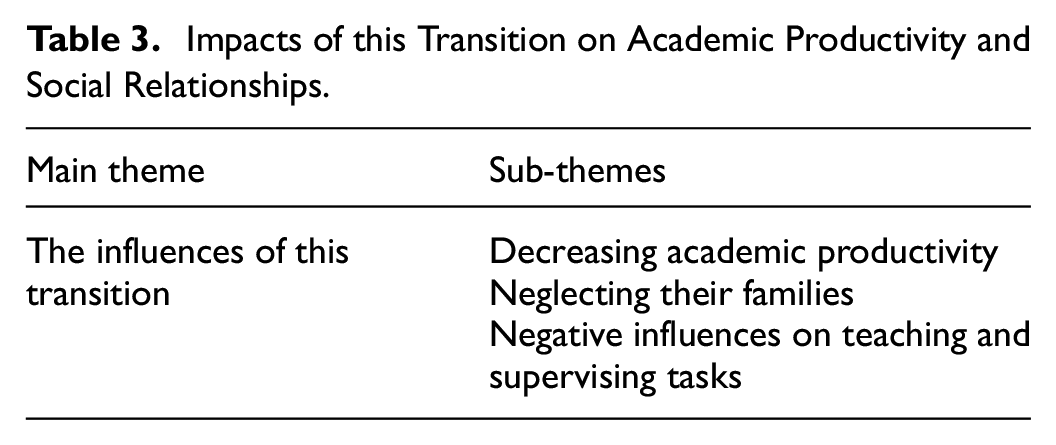
As shown in Table 3, their transition to academic posts negatively affected their academic productivity and social relations. Administrative responsibilities often diminished participants’ academic output and strained personal relationships, with many noting reduced class attendance, fewer publications, and limited time for family. Being a rector, vice-rector, dean, and vice dean is very intense work and demands much of their time. Their academic productivity and work were negatively affected. In this manner, an administrator said, “As daily routines took too much time, I could not even attend to my classes properly and produce any academic work while I was here.” Another dean said, “I was publishing 4-5 articles annually, but I could not publish a single article in two years.” In this regard, a vice rector said, “I had 10 hours of classes per week, but I could not even attend them, so I reduced these classes.”Management work prevented me from conducting studies, supervising my students, doing research, and writing articles A department head claimed, “The roles of academic staff and role of management are not compatible." The management role is more demanding, and I had to resign in the end.” In this context, an institute director said, “In fact, management work affected my main work negatively.”
The participant administrators also stressed negative influences that administrative work has on their family, and social relationships. An administrator claimed, “Even my best friends could not come to visit me because I was always busy doing something.” Another dean added, “I noticed that I had not been on holiday with my family for a long time.” A vice-rector said, “The time I spent with my wife and children decreased.” A department head said, “I spent less time with my children.” An administrator claimed, “There has been no change in social routines. The only problem was allocating time.”
Achieving a balance between administrative and academic roles is a critical concern for contemporary universities, as the increasing complexity of HE governance demands both efficient management and strong academic leadership. While academic staff are traditionally expected to focus on teaching and research, many are also required to assume administrative responsibilities, which can create tensions between their scholarly commitments and institutional obligations (Deem, 2004; Macfarlane, 2011). The managerialization of higher education has led to the expansion of administrative structures and a shift toward performance-based accountability, often resulting in role ambiguity and workload intensification for academic leaders (Kezar & Eckel, 2004). Striking an effective balance requires institutional strategies that recognize and support the dual nature of academic leadership, promoting collaboration between professional administrators and faculty leaders to ensure that academic values are not undermined by managerial priorities (Middlehurst, 2004). Such a balance fosters institutional effectiveness while safeguarding the core mission of the university: the advancement of knowledge through teaching and research.
The transition to leadership roles in universities often brings a significant increase in workload, responsibility, and time commitment, which can adversely affect the psychological and mental well-being of academic leaders. One of the most profound challenges is the erosion of work-life balance, as the demands of administrative duties frequently encroach upon personal time, reducing opportunities for social interaction with family and friends. This reduction in relational support networks may lead to increased feelings of isolation, emotional exhaustion, and chronic stress—factors commonly associated with burnout (Barkhuizen et al., 2014; Gmelch & Buller, 2015). Furthermore, the role ambiguity and constant pressure to meet institutional expectations can exacerbate anxiety and a sense of inadequacy, particularly for those unprepared for the complex interpersonal and political dynamics of university administration. Over time, such stressors may compromise not only leaders’ mental health but also their professional efficacy and decision-making capacity.
Addressing the psychological and mental health challenges faced by university leaders requires a multifaceted approach. Institutions should prioritize structured leadership development programs that include training in stress management, time management, and emotional resilience. Implementing formal mentoring and peer support systems can help reduce isolation and provide a safe space for sharing challenges. Moreover, universities should promote a culture that values work-life balance by setting realistic expectations, encouraging delegation, and offering flexible scheduling when possible. Providing access to confidential mental health services and ensuring leaders feel supported—not solely evaluated—can further mitigate the negative impacts of administrative transitions.
The Criteria Implemented While Moving to Administrative Posts
Administrators of this sample noted some formal and informal criteria implemented in the decision to move to an administrative post. The main and sub-themes are presented in Table 4.
The Criteria Implemented While Moving to Administrative Posts.

Table 4 shows the participants’ views regarding the criteria used in HE administrative posts. As can be understood, there are limited effects of formal criteria and excessive effects of informal criteria. Academics complain about the excessive effects of informal criteria and add that they need to find political connections for these posts. A department head, “When I wanted to apply for a rector post once, a senior administrator warned me to find a political connection first otherwise it is impossible. I was discouraged.” An institute director mentioned, “I can say that political considerations are more dominant, which is not good.” A vice rector underlined, “It is almost impossible to be appointed as a rector if you do not belong to a religious community or ruling political party these days.” A dean said, “In fact, there are no formal criteria such as education, training and experience in the field of administration except for having a professor title. Candidates start to search political connections when they want to be a rector or dean.”
The work of management requires certain skills such as leadership and communication. Political closeness does not guarantee these skills, and universities cannot go forward with administrators who were chosen primarily for political considerations. In Turkey, the transition to administrative posts in higher education—such as department chairs, deans, and rectors—is shaped by a combination of legal frameworks, institutional traditions, and political influences. According to the Higher Education Law No. 2547, administrative appointments are predominantly centralized and hierarchical, with key positions such as deans and rectors appointed by the President of the Republic upon recommendation by the Council of Higher Education (YOK, 1981). While academic qualifications such as professorship rank and scholarly achievements are formal prerequisites, these alone do not determine selection. In practice, loyalty to institutional leadership, political alignment, and informal networks often play a decisive role in appointments (Gür, 2011; Turan & Tunga, 2020).
This appointment system has been criticized for lacking transparency and for undermining meritocracy and democratic governance within universities (Aydın, 2013). Unlike in many Western systems where academic leadership involves competitive selection and stakeholder input, Turkey’s top-down approach can limit the development of visionary leadership and suppress diverse perspectives (Özkan, 2017). Moreover, the limited emphasis on leadership competencies, managerial experience, or emotional intelligence in selection criteria leads to the appointment of individuals who may be academically accomplished but administratively unprepared (Balyer, 2014). Consequently, newly appointed administrators often face difficulties navigating the complexities of institutional governance, managing staff, and responding to stakeholder expectations—challenges that could be mitigated through more rigorous and competency-based appointment processes.
In order to foster effective academic leadership, there is a growing need to reform the selection criteria to include not only academic excellence but also leadership potential, communication skills, strategic thinking, and prior administrative experience. Encouraging stakeholder participation, developing leadership pipelines, and institutionalizing leadership training programs may also enhance the effectiveness and legitimacy of administrative appointments in Turkish higher education.
How Well They are Prepared for Administrative Posts
Research results reveal striking insights concerning the preparation of administrators for administrative posts. The main and sub-themes are presented in Table 5.
How Well They Are Prepared for Administrative Posts.

Table 5 shows how well administrators are prepared for the administrative posts. In this regard, a finding shows that having a theoretical background and relevant experience leads to feeling well-prepared for administrative work. A vice rector said, “I was almost ready for the post because of having training and relevant experience made me feel comfortable.” A dean said, “As I was a vice-dean before, things went smoothly.” A department head underlined, “It was easy for me because I had received leadership education.” On the other hand, participants without theoretical background or prior experience reported difficulties in adapting, often expressing stress and uncertainty during the initial period of their roles. A vice-rector said, “At first, it was very difficult for me because I did not have any idea about most of the work.” An institute director underlined, “I did not receive any leadership training and it was quite hard for me. It caused a lot of stress on me at first.” A dean said, “I thought it would be easy. I did not know what to do first and had to ask everything to former administrators.” Some administrators reported a lack of preparedness. A vice dean said, “Most administrators are not aware of management and think it is like lecturing but it is quite different. So, before they are appointed to the post, they should have training in leadership at least in-service programs should be provided.”
In fact, the work of administration requires training, relevant theoretical background and experience. In the past, most of these qualities and qualifications were questioned, but in the last few years, these qualities and qualifications have been ignored, which has led to several issues. It is understood that most administrators struggled to learn new skills. When they are prepared for the administrative post beforehand, especially in leadership, communication, time, and human relations management, it goes more smoothly.
Despite the increasing complexity of governance in higher education, administrators in Turkish universities are often inadequately prepared for their roles. Most are appointed based on seniority or academic credentials, with little to no formal training in leadership, strategic planning, or institutional management (Aydın, 2013; Balyer, 2014). This academic-centric appointment approach assumes that scholarly excellence equates to administrative competence, overlooking essential managerial skills such as communication, conflict resolution, budgeting, and human resource management. As a result, many administrators face a steep learning curve, making critical decisions without sufficient preparation or support. Moreover, there is a lack of systematic leadership development programs or structured mentoring mechanisms within universities, which further exacerbates the issue (Turan & Tunga, 2020). The absence of a clear, merit-based, and competency-driven leadership pipeline undermines institutional effectiveness and limits the professionalization of university administration. In this context, the current model not only fails to equip administrators for the realities of the role but may also discourage capable academics from pursuing leadership positions due to the risks of failure and burnout.
A Proposed Model While Transiting to Administrative Posts
Research findings reveal that most administrators started to work without any education, background, and training in HE management. The main and sub-themes are presented in Table 6.
A Proposed Model While Transiting to Administrative Posts.

Table 6 shows themes and sub-themes regarding the participants’ views on a proposed model while transitioning to administrative posts. In this regard, the participants claimed that because they were not asked about administrative qualities, qualifications, and relevant experience, they had many challenges. They suggested a new appointment model. A vice-rector underlined, “University administrators should be trained in the management-leadership field before they are appointed.”Those who do not have leadership training shouldn’t be appointed. They should be trained in on-the-job, in-service training.”
In addition, administrators think that university leaders should be elected among their academic peers according to administrative qualifications, qualities and relevant experience. A head of department reported, “Not only rectors, but also deans, institute directors and college directors should be elected by university shareholders according to their management qualifications and qualities.” A dean said, “Current appointing process of rectors is problematic and should be stopped. The president cannot know who to manage university.” Department heads play a central role and they also conduct many duties. Especially their appointment should be handled with care. In this context, a vice rector said, “Although deans seem to have more power, in fact departments are stronger. For example, a dean cannot intervene in the distribution of courses due to the academic organization of the law. A vice-rector stressed, “Rectors, deans, and department heads should be determined in a more democratic way instead of being appointed by one person, with the president considering their training and relevant experience in administration.” A former dean said, “Management requires special training, education, and experience.”Democratic elections should be brought back.” A former dean said, “HE administrators should be trained by departments of educational administration.”
In general, most participants think that rectors, deans, and especially department heads should be elected by university staff, considering their relevant experience, quality and qualifications. Currently, political considerations are more effective than other factors. The legislation on HE management should be changed. Under the administration of unprofessional administrators, universities lose time and energy.
A more effective and sustainable model for transitioning to administrative posts in higher education in Turkey should be grounded in a merit-based, competency-oriented, and developmental framework. First, a structured leadership pipeline should be established within universities, identifying and mentoring potential academic leaders early in their careers through targeted training programs in areas such as strategic management, financial planning, organizational behavior, and higher education governance (Yükseköğretim Kurulu [YOK], 2023). Second, transparent and multi-dimensional selection criteria should be adopted, combining academic achievements with demonstrable leadership competencies, communication skills, ethical judgment, and a commitment to participatory governance (Özkan, 2017). Third, mandatory pre-service and in-service leadership development programs—offered collaboratively by universities and independent institutions—should become prerequisites for assuming key administrative roles (Gür, 2011). Lastly, the integration of 360° feedback mechanisms and performance evaluations during administrative service could help ensure continuous improvement and accountability. This proposed model would professionalize academic leadership, reduce role ambiguity, and ultimately contribute to more effective and responsive university governance in Turkey.
Discussion, Conclusion, and Recommendations
The transition from academic to administrative roles in Turkish higher education is shaped by a complex interplay of personal, institutional, and systemic factors. Economic incentives—such as management compensation and performance bonuses—serve as strong motivators, yet they also raise concerns about the sustainability of commitment when financial gain is the primary driver. Similarly, the pursuit of administrative posts as a strategic move to secure tenure reflects structural limitations in academic promotion, potentially fostering a competitive and conflict-prone environment. Conversely, some academics are motivated by professional aspirations, including applying theoretical knowledge in practice or contributing meaningfully to institutional development. However, as noted in both the literature and participant experiences, university governance realities often fall short of such ideals due to bureaucratic and political constraints (Sturdy, 2004).
The complexity of administrative roles highlights the importance of combining theoretical knowledge with practical leadership experience (Bush, 2008; Grogan, 2013). Without a clear understanding of institutional structures and interpersonal dynamics, newly appointed administrators may struggle to perform effectively (Bolman & Deal, 2017). Moreover, informal organizational culture plays a critical role in decision-making and staff relations, yet it is frequently neglected in formal leadership training (Schein, 2010). Thus, leadership development programs should address both formal and informal dimensions of university life (Lumby & English, 2009). Prioritizing appointments of individuals with prior educational leadership experience or academic backgrounds in educational management can facilitate smoother transitions and more strategic governance (Bush & Glover, 2014; Leithwood et al., 2008).
Balancing administrative and academic roles remains a critical challenge as higher education governance grows more complex. Academics are increasingly required to fulfill administrative duties alongside teaching and research, creating tensions and role ambiguity (Deem, 2004; Macfarlane, 2011). The managerialization trend has expanded administrative layers and shifted accountability toward performance metrics, intensifying workload and stress for academic leaders (Kezar & Eckel, 2004). Effective governance necessitates institutional strategies that recognize the dual nature of academic leadership, fostering collaboration between professional administrators and faculty to protect academic values amid managerial demands (Middlehurst, 2004).
The transition to leadership often leads to increased workload and responsibility, adversely affecting psychological well-being. The erosion of work-life balance reduces relational support, increasing risks of isolation, emotional exhaustion, and burnout (Barkhuizen et al., 2014; Gmelch & Buller, 2015). Role ambiguity and institutional pressures exacerbate anxiety, impairing decision-making and professional efficacy. Addressing these challenges requires structured leadership development encompassing stress and time management, emotional resilience, mentoring, peer support, and fostering a culture valuing work-life balance and confidential mental health services.
In Turkey, administrative appointments in higher education are influenced by legal frameworks, institutional traditions, and political considerations. According to Higher Education Law No. 2547, positions like deans and rectors are centrally appointed, with political loyalty and informal networks often overshadowing meritocratic criteria (Gür, 2011; Turan & Tunga, 2020; YOK, 1981). This top-down system is criticized for lacking transparency and undermining democratic governance and visionary leadership development (Aydın, 2013; Özkan, 2017). The limited focus on leadership competencies leads to appointments of academically accomplished but administratively unprepared individuals (Balyer, 2014), who then face steep learning curves without structured support or mentoring (Turan & Tunga, 2020).
To enhance academic leadership effectiveness, selection criteria should expand beyond scholarly achievements to include leadership potential, communication skills, strategic thinking, and administrative experience. Stakeholder participation, leadership pipelines, and institutionalized training programs are critical to legitimizing and professionalizing academic governance (Gür, 2011; Özkan, 2017).
Currently, political considerations prevail over merit in appointments, resulting in inefficient administration and wasted institutional resources. A shift toward a merit-based, competency-oriented, and developmental framework is necessary. This would involve establishing leadership pipelines with early identification and mentoring of potential leaders, transparent and multi-dimensional selection criteria, mandatory leadership training programs before and during service, and ongoing performance evaluations incorporating 360° feedback (Gür, 2011; Özkan, 2017; YOK, 2023). Such reforms would professionalize academic leadership, reduce role ambiguity, and improve governance responsiveness in universities all over the world.
Conclusion
The transition from academic to administrative roles in Turkish higher education reflects a multifaceted dynamic influenced by economic, institutional, political, and personal factors. While financial incentives and structural constraints shape motivations, professional aspirations and the desire for meaningful contribution also play vital roles. Nevertheless, bureaucratic and political realities often constrain governance effectiveness (Sturdy, 2004). Addressing these challenges requires a transparent, equitable, and development-oriented leadership system that aligns institutional needs with individual capabilities, supports ethical leadership, and fosters long-term commitment.
Leadership preparation must integrate theoretical knowledge with practical experience, emphasizing both formal organizational procedures and informal cultural dynamics (Bolman & Deal, 2017; Bush, 2008; Grogan, 2013; Schein, 2010). Balancing administrative and academic roles necessitates institutional strategies that uphold academic values alongside managerial demands (Deem, 2004; Middlehurst, 2004).
Moreover, the psychological well-being of academic leaders must be prioritized through comprehensive support systems to mitigate the adverse effects of increased workload and role ambiguity (Barkhuizen et al., 2014; Gmelch & Buller, 2015).
Finally, reforming appointment systems to be merit-based and competency-driven, incorporating leadership development and stakeholder involvement, will enhance governance quality and sustain university effectiveness in Turkey’s evolving higher education landscape.
Based on the results of this study, recommendations for enhancing the transition to administrative roles in Turkish HE are as followed:
A merit-based and transparent appointment system should be established, with clear, multi-dimensional selection criteria that combine academic achievements with leadership skills, communication abilities, and ethical judgment.
Stakeholder participation in appointment processes should be increased to enhance legitimacy and trust.
A structured leadership pipeline should be created by identifying and mentoring potential academic leaders early in their careers.
Targeted leadership development programs should focus on strategic management, financial planning, organizational behavior, and governance.
Mandatory leadership training must be implemented, including both pre-service and ongoing in-service components, covering formal governance and informal organizational culture.
Training should also address conflict resolution, communication, stress and time management, and emotional resilience.
Institutional strategies should foster collaboration between academic and professional administrators, supporting cooperation, and balancing academic values with managerial responsibilities to reduce role conflict.
Mentoring and peer support networks are needed to combat isolation and promote well-being among academic leaders.
A culture that values work-life balance should be promoted through flexible scheduling and manageable workload expectations.
Confidential mental health services should be made accessible to support psychological well-being.
Performance evaluation systems—including 360° feedback and regular reviews—should be adopted to ensure accountability and continuous improvement.
Evaluation outcomes should inform personalized professional development and help address skill gaps.
Leadership competency should be prioritized over political alignment in appointments, emphasizing qualifications, and potential.
Meritocratic advancement should be encouraged to improve both administrative effectiveness and institutional trust.
Higher education legislation and institutional policies should be reformed to decentralize appointments and increase autonomy.
Democratic governance models aligned with international best practices should be promoted.
Comparable studies could be conducted in different national contexts to examine how the transition from academic to administrative roles varies across countries.
Further research may also be carried out in both foundation and public universities to explore potential differences or similarities in this transition process.
Footnotes
Acknowledgements
The authors would like to thank all school administrators and teachers who voluntarily participated in this study for their valuable contributions.

Ethical Considerations
This study was conducted with ethical approval from the Yıldız Technical University Ethics Committee (Approval No: 2024/2214, Date: 21.03.2024).
Consent to Participate
All participants were informed about the study’s purpose, procedures, and their rights, and written consent was obtained before data collection.
Consent for Publication
All participants provided informed consent for the publication of their anonymized data and quotes, ensuring that no personally identifiable information would be disclosed.
Author Contributions
Arslan Bayram: Conceptualization, Methodology, Data Collection; Aydın Balyer: Writing – Original Draft; Supervision, Review & Editing; Kenan Özcan: Data Analysis, Zafer Kiraz: Validation.
Funding
The author(s) received no financial support for the research, authorship, and/or publication of this article.
Declaration of Conflicting Interests
The author(s) declared no potential conflicts of interest with respect to the research, authorship, and/or publication of this article.
Data Availability Statement
All data generated or analyzed during this study is available upon reasonable request from the corresponding authors (Assoc. Prof. Dr. Arslan Bayram, Prof. Dr. Aydın Balyer, and Prof. Dr. Kenan Özcan). The data were obtained from academic staff and administrators at various universities. Please note that access to certain parts of the dataset may be limited due to confidentiality agreements and ethical concerns.