




Abstract
Sustainable agricultural finance (SAF) has undergone significant evolution, reflecting the growing importance of sustainable farming practices and the need for financial mechanisms to support these initiatives. Since its inception, a comprehensive literature review has been lacking, hindering the creation of an in-depth understanding of the topic, including theoretical developments, existing trends, and identifying underexplored areas for future inquiry. Therefore, the current study conducted a bibliometric analysis to present a structured overview of SAF, mapping its intellectual structure and thematic evolution. Data were collected from the Scopus database from 1994 to 2023. The study identifies three distinct developmental phases: an early fragmented period, a consolidation phase, and recent shifts toward interdisciplinary and climate-resilient finance. The analysis highlights recurring themes, including microfinance, green lending, stakeholder engagement, and risk mitigation. It also reveals underexplored areas, such as Islamic green finance, climate risk tools, and sustainability performance metrics. The study provides a structured understanding of the SAF knowledge base by synthesizing theoretical frameworks, including institutional theory, finance theory, and stakeholder theory. It contributes to future research planning and helps inform the development of financial systems tailored to sustainable agriculture.
Keywords
Introduction
Humanity faces challenges such as an increasing number of individuals, limited resources, and global warming (Huang, 2017). Agriculture is crucial for eradicating poverty and hunger globally, and governments are investing in research and technological developments to achieve this goal. Rural areas, where three-quarters of the world’s poor reside, produce the majority of the agricultural products consumed in cities. Smallholder farmers are transitioning from traditional farming methods to modern technological processes to meet the growing population. Achieving this requires consistent funding, as smallholder farmers need consistent access to finance for growth in the agricultural sector. This shift requires a shift in agrarian financing to support the global farming community. Agricultural finance involves acquiring and using financial capital from agrarian sectors in developed and developing economies (Fadeyi, 2018). It includes elements of markets, management, and policy. Market elements involve institutions as financial intermediaries, while management involves investment analysis, capital structure, performance measurement, and risk management. Agricultural finance uses modern finance theory, adapted for agriculture’s unique characteristics, such as small-scale businesses and informal information exchanges (Werners et al., 2011). Thus, specialized financial institutions are created to address these challenges.
Agricultural practices and the history of financial processes date back to ancient times (Turvey, 2017). Financial processes that interact with sustainable agriculture farming have led to an approach for developing food security and preserving the environment in its original state (Marowa et al., 2023). Therefore, attaining sustainable agriculture is not an option but a necessity for excellence. It focused on environmental sustainability in agriculture and cautioned against farming at the cost of environmental deterioration. Sustainable agricultural finance (SAF) is more than just an area that promotes environmentally friendly farming practices; it also contributes to mitigating financial losses due to climate change and fluctuating market conditions (Fadeyi, 2018). It mobilizes financial resources and instruments to support agricultural practices that are economically viable, environmentally sound, and socially responsible. It encompasses a wide range of mechanisms, including green lending, blended finance, microfinance, impact investing, and risk-sharing tools (e.g., crop insurance and climate-linked bonds). These instruments not only aim to improve access to finance for smallholder farmers and agri-enterprises but also to influence behavior in ways that promote climate resilience, biodiversity, food security, and sustainable livelihoods. It shapes today’s agricultural practices to make them sustainable for future generations and more environmentally friendly. SAF ensures the economic viability, environmental sustainability, and social equity of agricultural systems. With the global population increasing and environmental challenges escalating, the necessity for sustainable financial mechanisms in agriculture becomes more pressing.
SAF has gotten the attention of numerous research scholars, and several studies have explored different research streams (Murungi et al., 2023). The research focuses on enhancing awareness to solve the world’s problems through sustainable agricultural practices. The previous studies investigated the digital technologies and supply chain management practices (Dvouletý & Blažková, 2021; Kalogeras et al., 2013), financial performance of agricultural co-operatives (Khanal & Omobitan, 2020), mergers and acquisitions (Trejo-Pech et al., 2021), and corporate social responsibility (Ali, 2023) in the context of agricultural finance. Moreover, prior literature has significantly focused on sustainable corporate finance (Bui et al., 2020), and few early studies have investigated SAF (Havemann et al., 2020). Despite the increasing interest in SAF, much of the literature still remains fragmented across disciplines, with limited efforts to unify findings under a systematic theoretical framework. Researchers believe a thorough review of the current literature is missing in modern agricultural and financial practices (Marcis et al., 2019). The gap highlights the importance of understanding the background of SAF to comprehend how financial activities intersect fully with environmental preservation.
This study aims to address this gap by identifying the most frequently applied theories and contextualizing them within the patterns of SAF research. It addresses the following research question: (1) What are SAF’s theoretical and historical perspectives? (2) What are the main contributing factors (articles, authors, institutions, countries) in the development of concepts in the literature? Moreover, what are the future trends and themes of the topic that suggest underlying areas for further research and development? The research examines the history and evolution of SAF, highlighting the transformational trends and significant breakthroughs that have changed financial practices in sustainable agriculture. The study sheds light on the successes achieved so far and the regions that remain unexplored in SAF, providing a comprehensive and well-structured review of the current research environment. Such an analysis would help to address a vacuum in the literature and offer significant insights to policymakers, scholars, and practitioners interested in the historical background and history of SAF. The primary goal of this comprehensive literature review is to provide a helpful resource for policymakers, academics, and practitioners working at the intersection of agriculture and finance.
Literature Review and Theoretical Perspective
Evolution of Sustainable Agricultural Finance
This section examines critical research studies and insights into the history and evolution of SAF to illuminate sustainable finance development in the farming sector. Sustainable agriculture can be traced back to ancient civilizations by observing the practices of enhancing soil fertility and crop health through different traditional techniques (Pe’er et al., 2020). In the ancient times of early civilization, people tended to buy/sell things through the Barter system (exchanging goods) without using the money/financial system, which is considered a seed for the evolution of SAF (Chen et al., 2015). However, the introduction of money and the rise of commerce led to the development of organized and structured financial systems, which help provide agricultural loans that are critically important for farmers, enabling them to acquire resources for their crops and cattle. Thus, using money is a defining moment in agrarian finance, opening avenues for modern financial systems (Martin & Clapp, 2015). The evolution of SAF is discussed in three phases (see Figure 1).

Overview of past developments, current trends, and future opportunities.
The Green Revolution revolutionized agriculture by providing crop varieties with high yields and introducing synthetic fertilizers and pesticides to the market. Surprisingly, the new technology has helped resolve the world’s long-standing food shortage problem, primarily due to significant gains in agricultural productivity. Meanwhile, technology also brings environmental repercussions, emphasizing the need for sustainable agrarian techniques (Tripathi et al., 2020). Sustainable agriculture emerged as a solution to environmental challenges during the era of the green revolution. In the past, sustainability was achieved through the rotation of crops and the utilization of organic materials, laying the groundwork for contemporary sustainable agricultural practices in the 21st century (Chen et al., 2015). These methods enhance crop production and foster resilience in the farm system to address agrarian challenges. Sustainable agriculture employs organic farming practices across various crops, preserves soil health through minimal tillage, and reduces the use of chemicals and fertilizers to achieve maximum production (Shrestha et al., 2020).
These practices aim to develop long-term ecological balance while retaining food production levels by integrating agricultural methods with natural processes (Shrestha et al., 2020). However, due to the high cost of sustainable farming methods, farmers faced several financial challenges during the transition, including the lack of infrastructure, education, and technological tools for these practices. Therefore, after realizing the situation, several financial institutions supported farmers with sustainable agrarian methods, resulting in the emergence of SAF (Rodriguez et al., 2009). Blended finance has gained popularity in achieving Sustainable Development Goals (SDGs) through meaningful agricultural investment (Havemann et al., 2020). Blended finance structures offer an opportunity to finance agricultural projects and leverage diverse funding sources to drive sustainable transitions in the agricultural sector.
Historically, agricultural financing was primarily informal, with farmers relying on moneylenders for credit to support their farming activities. However, these traditional credit systems often came with high interest rates and exploitative practices, leading to financial vulnerabilities among farmers (Oberholster et al., 2015). Agricultural finance has modernized in parallel with the development of civilizations. In the current scenario, the availability of interest-free credit has been a significant driver of innovation, revolutionizing agrarian practices and increasing farmers’ incomes. Interest-free credit has been recognized as one of the key factors in stimulating technological progress to facilitate sustainable finance, leading to quick supply response and higher farmers’ income in countries like Pakistan (Makkar et al., 2023). With time, agricultural finance began to formalize by establishing organizations like the Co-operative Extension System (in the USA) to facilitate agricultural development by providing agricultural financing and extension services (Sher et al., 2024).
Recently, the literature on SAF encompasses a variety of topics, ranging from evaluating financial performance to examining the impact of supply chain management practices on financial efficiency, delving into the financial performance of publicly traded agribusinesses (Katchova & Enlow, 2013). The future trends also lead to a financial decision-aid approach to assess the co-operative ownership models of agribusinesses (Kalogeras et al., 2013) and factors influencing Canadian credit unions’ financial performance (Almehdawe et al., 2021). Prior studies highlighted the need to explore key performance indicators of sustainable supply chain management in the agro-industry (B. B. Gardas et al., 2019) and analyzed risk, credit constraints, and financial efficiency in Peruvian agriculture (Diana et al., 2010). Researchers give importance to focusing on rural finance, capital-constrained small farms, and financial performance (Khanal & Omobitan, 2020) and examined the influence of US sugar prices on the financial performance of sugar-using firms (Trejo-Pech et al., 2020).
Theories and Concepts in Sustainable Agricultural Finance
Related Theories and Categorization
This section encompasses all the theories employed in the theoretical foundation of the selected research papers, as revealed by the bibliometric analysis, which uncovered various theories used to explain the concept. Multiple theories have been applied to interpret challenges in SAF. Each theory presents different perspectives within the context of SAF. The selected theories encompass all related fields, providing practical frameworks and viewpoints to understand various phenomena. The theories are listed in Table 1, along with their descriptions, relationships with SAF, and corresponding citations (including the frequency of citation in the selected literature for theoretical grounding). These theories are borrowed from related social science subjects, including economics, finance, management, sociology, and business.
Theories in Sustainable Agricultural Finance.

For instance, agency theory explains the dynamics of collaboration between academics and practitioners, such as farmers or institutional actors, in studies focusing on governance and funding models. Resource dependency theory aligns with frequent keywords related to external support and policy frameworks. The literature emphasizes internal capacities, such as knowledge, land, and human capital, as drivers of sustainable practices. It is also supported by clusters focusing on productivity, resilience, and technology adoption. Finance theory supports the understanding of financial performance analysis in SAF literature. The emphasis on asset pricing, cost of capital, and risk management frameworks aligns with highly cited studies evaluating financial structures and lending practices.
Arbitrage pricing theory is used to explain how environmental risks affect agricultural asset pricing. Public choice and risk-sharing theories provide the rationale for subsidized agricultural insurance or sovereign guarantee schemes. Trade-off theory evaluates capital structure decisions between debt and equity in agri-enterprises. Modern portfolio theory is relevant to the diversification of agri-lending portfolios. Due to asymmetric information, the pecking order theory has been applied to farmers’ financing choices. Similarly, game and stakeholder theories offer strategic perspectives on competing interests identified through keyword cluster analysis. Yet, despite their presence, these theories have not been consistently applied or critically synthesized in the SAF literature. Table 2 categorizes these frameworks by discipline, providing a roadmap for future theoretical alignment.
Theories Categorization.

The theories are further categorized by discipline or subject field, as shown in Table 2. Category A encompasses numerous notable economic theories, including transaction-cost economics, behavioral economics, and microeconomic theory. These concepts are crucial for understanding economic behavior, decision-making, and market dynamics. Political economics theory and public choice theory highlight the interdisciplinary nature of economic theories, including political and public policy aspects. The financial concepts in Category B are elucidated using finance theory, arbitrage pricing theory, and current portfolio theory. These theories are crucial in finance, as they provide frameworks for understanding asset pricing, investment strategies, and market efficiency. Incorporating financial deepening theory and market timing theory highlights the dynamic nature of financial markets and underlines the need for theoretical frameworks to comprehend these developments.
Table 2 presents various concepts under the organizational ideas category (Category F), including agency, resource-based, and corporate governance theories. The list and categorization of theories will be a valuable resource for researchers and academics in the social sciences, management studies, agribusiness, and agriculture. Moreover, the categorization will serve as an initial reference for conducting a more profound examination and analysis of these concepts within the framework of SAF. It helps contextualize the trends and research gaps identified through the bibliometric analysis.
Theoretical Underpinnings
This section systematically links clusters of studies to the corresponding theoretical frameworks. It expanded the literature review to group findings around core theoretical constructs such as agency, institutional, and stakeholder theories. These theories can further develop an understanding of the concept and enhance knowledge (Weick, 1995). Figure 2 presents the conceptual framework that links theoretical foundations with key variables in SAF and bibliometric findings. This framework clearly illustrates how each theory contributes to particular variables (e.g., institutional quality, risk metrics) and how these are reflected in SAF research trends, such as policy gaps, blended finance, or stakeholder collaboration.

Conceptual framework linking theories to SAF variables and bibliometric findings.
For instance, institutional theory sheds light on the observed focus on regulatory mechanisms and policy-driven financial models in developing countries. As seen in the literature, the limited institutional capacity in rural areas aligns with the gap related to weak financial systems and inconsistent policy enforcement. Similarly, stakeholder theory supports the emphasis on multi-actor collaboration, a concept frequently employed in high-citation studies, by highlighting the roles and expectations of stakeholders, including farmers, financial institutions, governments, and NGOs, in implementing SAF systems. The prominence of collaboration, co-operatives, and public-private partnerships in keyword co-occurrence maps reflects the relevance of this theory. Furthermore, resource dependency theory helps explain the trend of reliance on external funding and technical support in underdeveloped regions, exposing a gap in building internal financial resilience. Finance theory underpins the consistent trend of performance measurement and efficiency analysis across SAF studies, revealing a methodological gap in integrating risk-return trade-offs with sustainability metrics. These theoretical connections provide a structured lens for interpreting SAF evolution and inform the future research directions proposed in this study.
However, it has been observed that one theory relates to multiple concepts or variables and is also supported by prior literature. Figure 3 illustrates this interconnection and demonstrates how institutional and stakeholder theories inform policy and collaboration-driven themes. In contrast, resource dependency and finance theories inform financial access, performance, and risk variables. These, in turn, are mirrored in the thematic and keyword-based clusters observed during the bibliometric analysis. This visual synthesis supports the analytical structure of the study and provides a pathway for further theoretical and empirical investigations.
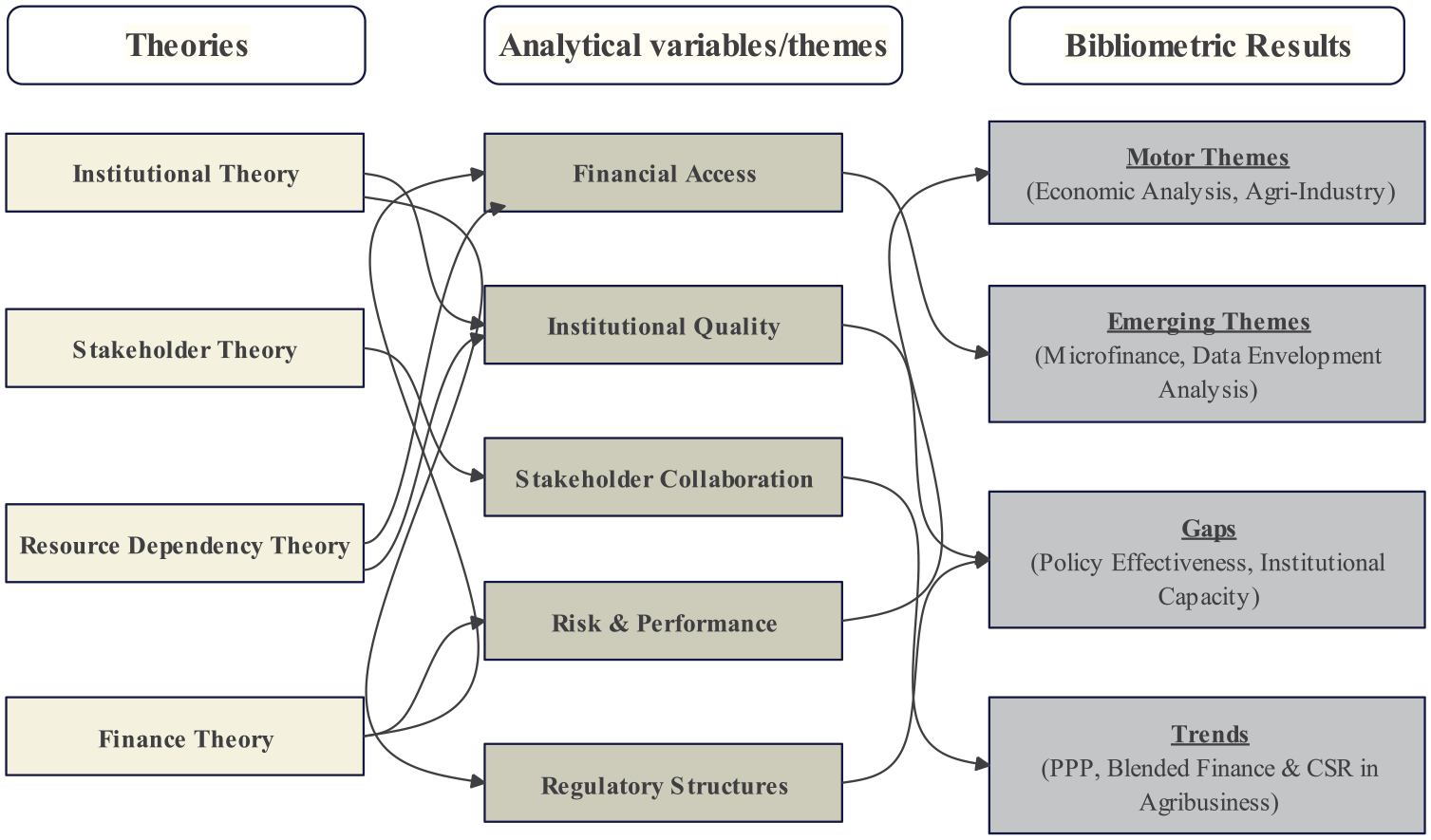
Interconnection of theories to SAF variables and bibliometric findings.
Material and Methods
The study aims to explore the relevant literature that significantly develops SAF through an extensive literature review and bibliometric analysis. It provides a platform to improve the existing knowledge structure about the evolution process, current conceptual development, and future trends for scholarly research and the growth of SAF (F. U. Khan et al., 2024). Data were retrieved from the Scopus database from January 1, 1994, to September 4, 2023, through an exhaustive search query. The query was generated using article titles, abstracts, and keyword search fields in three steps. In Step 1, all the relevant terms of SAF were added. The introduced terminologies were frequently used in the top journals, and help was also obtained from ChatGPT and Google Bard for synonymous words (Farooq et al., 2023).
In Step 2, the query was limited to the subject area. The subjects included were agricultural and biological sciences (44), business, management, and accounting (39), economics, econometrics, and finance (33), and social sciences (28). In step 4, further document type and language limitations were imposed on the extracted data. The final data included articles (78), conference papers (2), and book chapters (1). It added only documents available in English (73), while the papers available in Portuguese (8) and Spanish (1) were excluded. The query development process is explained in Table 3.
Query Development Process.

Data analysis is conducted using the VOS viewer and Biblioshiny of the R software. The final data represented single-authored (12), co-authored per document (2.67), and international co-authorships (16.44%). The descriptive findings also reveal an annual growth rate of 6.37%, with an average of 10.49 citations per document. The yearly publication output and mean total citations per year are stated in Figure 4. There was a slight decline in publication output after 2019. Still, the concept has recently gained significant importance, and its publications are increasing, which reflects the growing interest of researchers and practitioners in the emerging idea of SAF. However, there remains an increasing tendency in yearly mean citations, which suggests that scholars and practitioners believe in the positive outcomes of SAF in risk mitigation and achieving sustainable agricultural sector output.
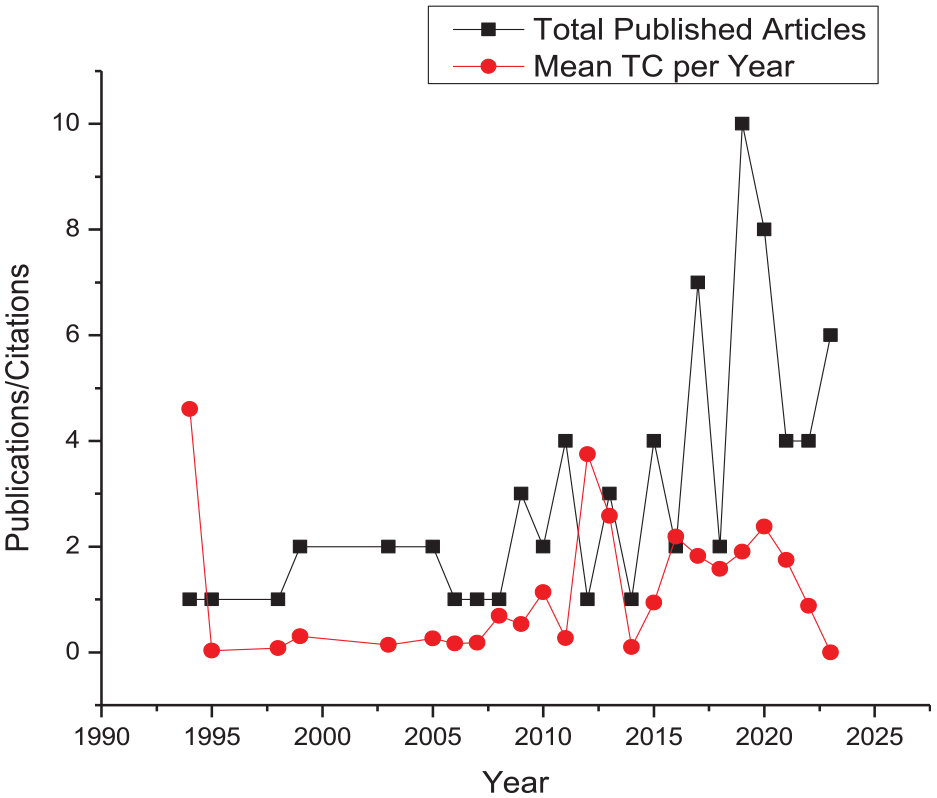
Year-Wiz publication and citations output.
Results
Performance Analysis
The performance analysis acknowledges the contributions of the researchers, their institutions, and the country-level contributions to the SAF literature. Table 4 presents the distribution of publications in agricultural finance according to Bradford Law. This bibliometric principle helps organize scientific journals or sources based on their productivity in a specific research area. It categorizes journals or sources into three zones based on their productivity. Zone 1 comprises the most reputable journals and sources in agricultural finance. The top four sources are in Zone 1, indicating that they have collectively published 25 articles. “International Food and Agribusiness Management Review” is the most productive source in this zone, with nine articles. The next set of journals falls into Zone 2. These sources are moderately productive, having published a total of 19 articles. Notable sources in this zone include “The British Food Journal,”“Journal of African Business,” and “Journal of Modelling in Management,” each with two articles.
Distribution of Publications by Bradford Law.
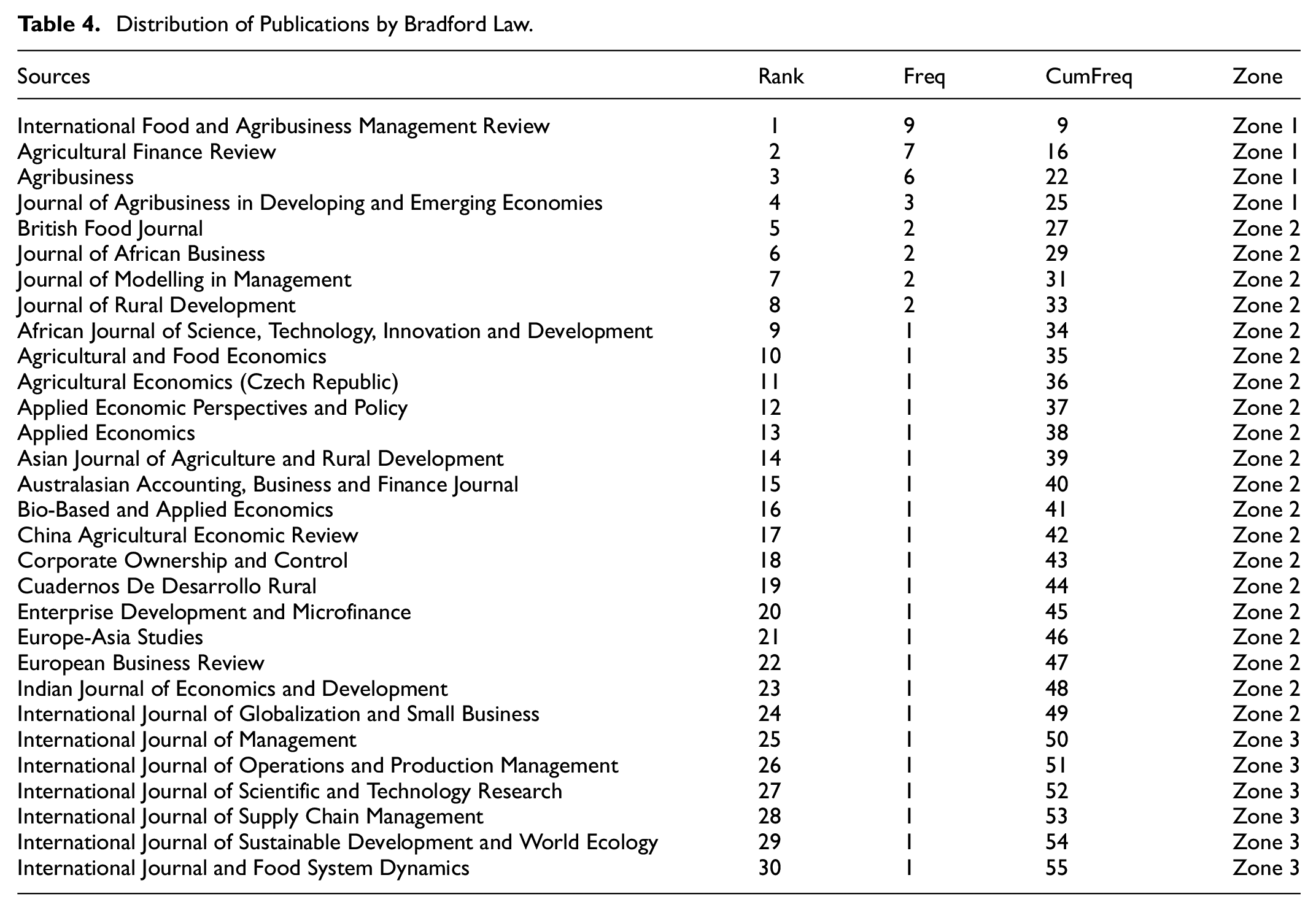
Zone 3 comprises journals or sources with lower productivity compared to Zones 1 and 2. These sources have published a total of 10 articles. Some examples in this zone include the “International Journal of Management,”“International Journal of Operations and Production Management,” and “International Journal of Scientific and Technology Research,” each featuring one article. Table 4 provides specific information about each source’s rank and the number of articles it has published. For instance, “Agricultural Finance Review” is ranked second and has published seven articles, placing it in Zone 1. It provides a structured view of the distribution of publications in agricultural finance, organized by Bradford Law zones. It highlights the most productive sources in Zone 1, followed by moderately productive sources in Zone 2, and less productive sources in Zone 3. Researchers and scholars in agricultural finance can utilize this information to identify key journals or sources that are prolific in the field, thereby aiding them in their literature reviews and research endeavors.
Table 5 provides valuable bibliometric insights into the impact and productivity of various sources in agricultural finance. It enables researchers and scholars to evaluate the relevance and impact of these sources in their literature reviews and research endeavors. Sources with higher h and g Index values and substantial Total Citations may be considered more influential and cited in the field, making them essential references for further research. It presents a set of bibliometric indicators for various sources in agricultural finance. These indicators help assess the scholarly impact and relevance of these sources. The key columns in Table 5 include “Sources” (the names of the journals or sources), “h Index,”“g Index,”“m Index,”“TC” (Total Citations), “NP” (Net Production), and “PY Start” (Publication Year Start). The “h Index” is a bibliometric indicator that measures the productivity and impact of a source based on the number of its articles and the number of citations it receives. It indicates that, for example, “Agricultural Finance Review” has an h-index of 5, which means it has published at least five articles that have received at least five citations each.
Most Relevant Sources Impact.

Note. N = publication output; TC = total citations; NP = net production; PY = publication.
The “g Index” measure considers the citation distribution across articles. It reflects the quality of citations rather than just the quantity. “Agricultural Finance Review” has a g Index of 7, indicating that its articles have collectively received seven high-quality citations. The “m Index” is a ratio that provides insights into the average number of citations an article from the source gets. For example, the “Agricultural Finance Review” has an m-Index of 0.26, suggesting that, on average, its articles receive approximately 0.26 citations each. Meanwhile, “Journal of Modelling in Management” received the highest m-index score, 0.40. The column of Total Citations (TC) represents the total number of citations received by all articles published by the source. “Agricultural Finance Review” has received a total of 94 citations. Net Production (NP) refers to the total number of articles published by the source. For instance, “The British Food Journal” has published nine articles, the highest among all included in the analysis. Publication Year Start (PY Start) refers to the year in which the source began its publication. For example, the “Agricultural Finance Review” started in 2005.
Table 6 provides valuable bibliometric insights into the impact and productivity of individual researchers in agricultural finance. It allows readers to identify researchers who have made notable contributions based on their h, g, and m Index values and Total Citations. The top 10 authors in Table 6 have the same value for the h and g index (2), and their net production is the same (2). However, they differ in terms of m-index, total citations, and year of publication. These researchers will likely be influential figures in the field and may serve as key references for further research and literature review purposes. Archer DW and Featherstone AM are the most productive authors who contributed to the same publications. They discussed the issue of financial stress among the cultivators, identified its causes, and gave recommendations to stakeholders to deal with it (Pokharel et al., 2019). They also reported the influence of the size and specialization on the financial performance of the agricultural co-operatives (Pokharel et al., 2020). They identified larger co-operatives with greater work specialization and attained more financial returns through economies of scale in the agricultural sector than the smaller ones.
Top Contributing Researchers.

Note. TC = total citations; NP = net production; PY = publication.
Gill et al. (2015) have emphasized the lack of financing opportunities for small farmers in the agricultural sector. They depend on private lending sources that charge high interest rates and are beyond the control of central banks (K. I. Khan et al., 2017). That is why they recommended providing easy access to financing so that their exploitation would be stopped and they could contribute to agricultural growth. Further, they found that new and established agri-businesses perform better if their families financially support them (Gill et al., 2018). Khanal also discussed the capital constraints in rural financing (Khanal & Omobitan, 2020). They explained the role of the Internet in improving the financial performance of small farmers (Khanal et al., 2016). They believe that through Internet knowledge, small farmers can explore more financing opportunities, easily find storage and transportation facilities at lower costs, approach a reasonable buyer, and reduce their purchasing and raw material costs.
Lambert stated that the increase in sugar prices could improve the financial performance of the industry but put a financial burden on the customers (Trejo-Pech et al., 2020). Lucato and Martins co-authored the same document that explained that there are multiple factors (area latitude, diversification, soil quality, operational time, etc.) other than economic and financial that can impact the production of agribusiness in Brazil (Martins & Lucato, 2018). The farmers and cultivators try to avoid the risk. They already bear the high-interest cost of financing, so they try to choose the best funding resource to diversify their risk (Mishra & Lence, 2005). SAF can help them manage risk and grow economically, benefiting agribusiness development.
Figure 5 explains the corresponding author country production, where the USA stands at the top with the highest SCP = 19 and MCP = 2. China has the highest MCP = 2, while all other countries, including those in the top 10 list (Brazil, Canada, and Indonesia), have MCP = 1. India, Italy, Czech, France, and Nigeria have only SCP, and India has the highest (14). Figure 6 shows the top 10 country’s scientific production and citations. The USA has the highest total citations (193) and country-level output (56), but its ACC is not the highest (12.10). Germany has the highest ACC (45) with the second highest citations (45), while only five papers have been published. China has the lowest ACC (6) from seven publications, whereas Spain published just one research paper and attained the lowest number of citations (17).

Corresponding author country production.

Country scientific production and citations.
Table 7 provides insights into the most prominent institutional affiliations of researchers in the field, the respective countries in which these institutions are located, and the number of articles associated with each institution. It helps identify the geographical distribution of research activity and highlights the institutions that have been particularly prolific in producing articles related to the subject of the research paper. Researchers and readers can use this information to understand the global landscape of research in the field and potentially explore collaborations with institutions with a strong presence in the area of interest. “Hanoi University of Science and Technology” and “Thuongmai University” are prominent institutes in Vietnam that have published 6 and 4 articles, respectively. Of 42 articles published by the world’s top 10 universities, 18 belonged to the USA (43%). The remaining educational institutions belong to Brazil, Canada, India, and Indonesia.
Top Institutional Affiliations and Their Countries.

Conceptual Analysis
Keyword Analysis
The study conducted a keyword analysis (titles, abstract, authors keywords, and keywords plus) highlighting the most prominent words related to the study (Mehmood et al., 2021). It is essential to describe the study-related concepts and words that make it easy for the scholars to develop the concept. Figure 7 reported that the most prominent words are: “financial performance,”“agribusiness,”“rural finance,”“agricultural development,” and “impact credit,” which existed in all keyword analyses. However, some social and economic factors like “corporate social responsibility,”“economic and social effects,”“employment generation,” and “economic development and growth” are shown in the keyword analysis. It is mainly focused on the agricultural sector, which is depicted through “farmers,”“supply chain management,”“food industry,” and “agro-industry” words along with financial terminology like “micro-finance,”“financial efficiency,”“credit provision,”“financial analysis,” and “profitability.”
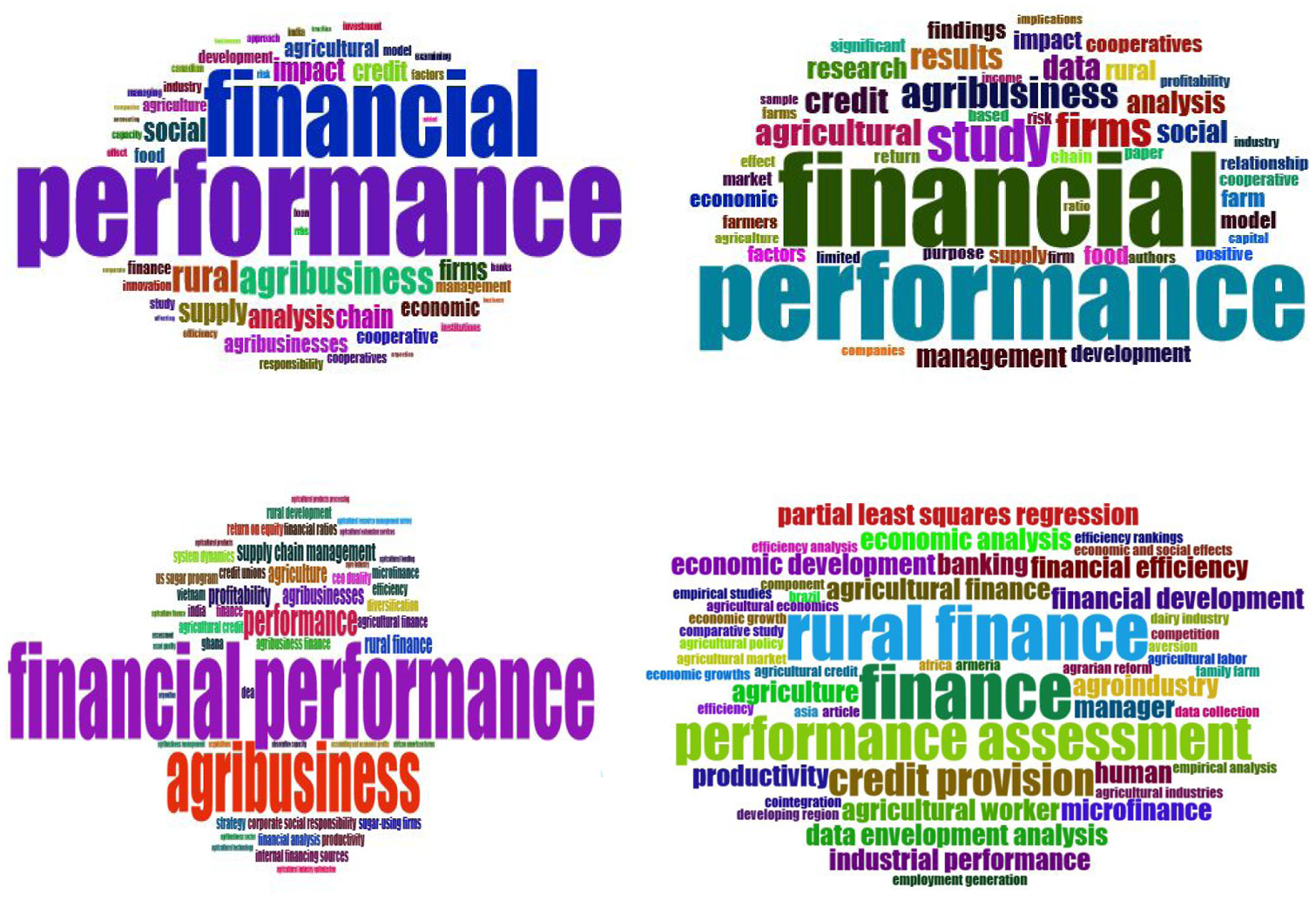
Keyword Analysis.
Citations Analysis
Researchers and scholars often refer to highly cited papers as key references when conducting literature reviews and research in the field. Table 8 presents a snapshot of the most cited global publications in the field, providing insight into their impact and ongoing relevance. It shows TC, ACY, and NGC. The NGC values give a relative measure of a paper’s impact compared to others in the same field, considering the average citation rates. Yaron (1994) is the most cited paper with a TC 138. It also has a relatively high ACY of 4.60, indicating that it continues to be cited frequently. He discussed the pros and cons of governmental and public support for rural financing. He stated that these funded projects often did not pay back the investment amount and had high transaction, risk, and monitoring costs. That is why it usually drains out public funding. But still, without agricultural support, it will be challenging to attain sustainable economic growth. Therefore, structural reforms are required for SAF.
Most Cited Global Publications.

Note. TC = total citations; ACY = average citations per year; NGC = normalized global citations.
Katchova and Enlow (2013) have relatively high ACY values, indicating their ongoing relevance in their respective fields. They emphasized creating a link between the farmers-retailers-consumers of the food processing industry. They found that the financial performance of agribusinesses is increased if an effective relationship between these parties is established. Heyder and Theuvsen (2012) analyzed a relationship between CSR activities and agribusiness performance. They found social activities enhance corporate reputation and financial and economic performance (Adeel et al., 2022). B. Gardas et al. (2019) have a notably high NGC of 3.47, suggesting that it is cited significantly more than the average paper in its field, despite being published in 2019. They suggested the role of GHRM in the agricultural sector and emphasized the availability of SAF for environmental protection.
Diana et al. (2010) evaluated the financial efficiency of agricultural credit and recommended an agrarian insurance system to mitigate unforeseen losses. Blažková and Dvouletý (2019) found a positive link between labor and agrarian productivity. However, if a firm increases the leverage ratio, it initially causes a decline in financial returns. Kalogeras et al. (2013) analyzed the capital structure of agricultural co-operatives and found that it cannot be a deceptive factor for estimating financial performance. Susanty et al. (2017) discussed the factors that influence business performance and motivate employees in the agricultural sector. Marotta et al. (2017) highlighted the role of sustainable agri-finance, which is socially and environmentally resilient and increases the financial returns of the industry.
Thematic Map
A thematic map visually represents the evolution structure, future trends, and themes of the concept under study (Nasir et al., 2023). It is an intellectual framework that explains the relationships between various topics and identifies emerging research areas for further development. Figure 8 categorizes the themes into motor, niche, fundamental, and emerging categories based on their contributions to SAF research. The motor theme encompasses developed and centralized concepts such as “finance,”“agriculture,”“economic analysis,”“agro-industry,” and “industrial performance.” They contain high density and centrality, proving their relevance and internal coherence to SAF. The niche themes, including “agricultural worker,”“economic development,” and “human,” are also well-developed but not central points in the SAF field. These topics particularly attracted the stakeholders to conduct more research in the area. The well-being of agricultural workers and its relationship with sectoral or economic development is a niche area for further exploration.

Thematic map.
The basic themes are “rural finance,”“performance assessment,” and “credit provision,” which underpin fundamental research fields that provide more background information on the concept. The reported themes are basic principles and techniques in SAF conceptualization. The emerging themes are related to “data envelopment analysis,”“microfinance,” and “agricultural finance.” These concepts are new and developing and are necessary for agricultural development. The themes are further segregated into two parts: Basic and motor themes deal with already established concepts and provide basic theoretical and empirical information for concept development. Meanwhile, niche and emerging themes are related to new exploration and development in the field. They deal with advanced and developing concepts that extend the area for further research in the SAF. Table 9 presents the trends in SAF after categorizing the literature based on recurring themes, methods, and policy lenses, regardless of the time period.
Thematic Trends in Sustainable Agricultural Finance Research.

Conclusion
This study presents a bibliometric analysis of SAF to trace its intellectual evolution, key thematic areas, and emerging research trends from 1994 to 2023. Using data extracted from the Scopus database and analyzed through VOSviewer and Biblioshiny, the study provides a theoretical synthesis of key frameworks (institutional, stakeholder, agency theory, etc.) underpinning trends and gaps in SAF research. It discussed the evolution process in three eras. First, past developments include emerging trends in SAF literature, such as a few authors, isolated keywords, and minimal co-citation patterns. The second era reflects current trends, as evidenced by citation spikes and the centrality of themes such as microfinance and green lending. The recent shifts and future directions were discussed in the third phase, which utilized recent burst keywords, growth in blended finance, or underrepresented clusters such as Islamic finance, inclusive finance, climate resilience, or climate risk tools. The findings show an increasing trend in publications and citations over the years, suggesting the consolidation of SAF frameworks.
The thematic map and keyword clusters reveal an uneven application of theoretical frameworks across SAF studies. While terms like “finance,”“investment,” and “performance” dominate, few studies explicitly ground their analyses in finance theory or institutional economics. This lack of theoretical anchoring hinders the formation of a cohesive research paradigm and presents a missed opportunity for cross-contextual learning. Although the findings highlight the mapping patterns, they still do not accurately predict future trends, which points out that the analysis is based on interpretive insights, such as low-density thematic clusters, burst keyword trajectories, and declining research in specific domains. These observations suggest the need for more localized, data-driven, and interdisciplinary approaches to SAF research, particularly in contexts where smallholder vulnerability and institutional constraints are high.
Implications of the Study
The study has important implications for researchers, policymakers, and financial sector stakeholders engaged in sustainable agriculture and rural development. (1) It contributes to the academic discourse by offering a systematic mapping of the SAF research landscape. It identifies the most influential authors, institutions, and journals while revealing emerging themes and underexplored areas. (2) By synthesizing the literature through theoretical frameworks such as agency theory, finance theory, and institutional theory, the study strengthens the conceptual foundations of SAF research. It also highlights the need for greater methodological diversity, including more quantitative, interdisciplinary, and regionally grounded studies. (3) The regional disparities and thematic gaps uncovered in the analysis have clear policy relevance. The underrepresentation of research from high-risk agricultural regions such as Sub-Saharan Africa and Southeast Asia indicates a disconnect between global research output and on-the-ground needs. (4) Policymakers can utilize these findings to inform the allocation of funding and capacity-building efforts toward more inclusive and context-specific Sustainable Agriculture and Food initiatives. (5) It emphasizes the importance of institutional support mechanisms, risk-sharing tools, and public–private partnerships in fostering sustainable financial systems for agriculture. (6) For development banks, microfinance providers, and agribusiness lenders, this study offers insights into the evolving demand for innovative financial instruments, including green bonds, blended finance, and climate risk insurance. Understanding the scholarly trends behind these instruments enables financial institutions to align their offerings with the Sustainable Development Goals and investor expectations. The identification of future research directions also informs product development, risk management, and impact evaluation strategies in the agricultural finance sector.
Limitations and Future Directions
While this study provides a comprehensive bibliometric overview of SAF, certain limitations must be acknowledged to contextualize its findings and inform future research. First, the analysis relies solely on the Scopus database, which, although reputable, may exclude relevant publications indexed in other databases such as Web of Science, AGRIS, or regional repositories. This may result in the underrepresentation of region-specific studies, particularly from developing countries where SAF is highly relevant. Second, bibliometric techniques primarily emphasize publication volume, citation frequency, and keyword co-occurrence. While helpful in mapping research trends, these methods do not assess the theoretical depth, empirical quality, or contextual nuances of individual studies. Consequently, the discussion of thematic gaps and future opportunities is based on interpretive synthesis rather than causal inference or predictive modeling. Third, there is an inherent temporal bias in citation-based analyses, as recently published. Still, potentially high-impact works may not yet have accumulated sufficient citations to be captured meaningfully in the results.
Despite these limitations, the study reveals several promising avenues for future research. There is a critical need to expand SAF scholarship in underrepresented regions such as Sub-Saharan Africa, Southeast Asia, and Latin America—areas that are highly vulnerable to climate change and financial exclusion. In addition, more attention should be given to alternative finance models, including Islamic green finance, ethical investing, and community-based financial systems, which are currently underrepresented in the literature. Future studies should also explore the integration of digital technologies and climate risk tools, such as blockchain, mobile credit scoring, and weather-indexed insurance, as enablers of inclusive and resilient SAF mechanisms. From a theoretical standpoint, researchers are encouraged to bridge traditional financial theories (e.g., portfolio theory, pecking order theory) with sustainability-oriented frameworks, such as stakeholder theory and institutional economics, to develop hybrid models that reflect the real-world complexity of both financial and environmental aspects. Finally, there is scope for applying advanced analytical methods, such as system dynamics, simulation modeling, and machine learning, to assess the performance and impacts of SAF instruments. Outcome-based research that links finance mechanisms to environmental, social, and resilience metrics will be particularly valuable in shaping effective, evidence-informed policies and financial systems for sustainable agriculture.
Footnotes

Funding
The author(s) received no financial support for the research, authorship, and/or publication of this article.
Declaration of Conflicting Interests
The author(s) declared no potential conflicts of interest with respect to the research, authorship, and/or publication of this article.
Data Availability Statement
Data is available and can be provided on request.