




Abstract
This research investigates the livelihood resilience of migrant workers in the context of local urbanization, with a focus on enhancing their quality of life through a sustainable development plan. Using a mixed-methods approach, the study combines survival rationality with the theoretical framework of livelihood resilience, which is specifically tailored to address the unique issues faced by migratory workers. We created a comprehensive index system to quantify livelihood resilience, which was quantitatively measured using firsthand survey data processed with principal component analysis (PCA). The results show that the strength of migrant workers is highly dependent on their capacity to adjust to urban settings, where housing, social security, and stable employment all play critical roles. The research findings indicate that the adoption of focused sustainable development tactics that address these crucial elements can significantly enhance the capacity of migratory workers to support themselves, thereby fostering more comprehensive urban development regulations. Empirical data validate this method, demonstrating its applicability and efficacy in enhancing the living conditions of migratory workers.
Keywords
Introduction
The group of migrant workers has been widely studied by academia. Various disciplines interpret and deeply analyze migrant workers from their perspectives. The UK International Development Agency proposed the framework theory of sustainable livelihood analysis and suggested that sustainable livelihoods should be the primary goal of poverty eradication in various countries (Vigoroso et al., 2020). Its role is to find the path to improve the livelihood of poor people. The theorization and systematization of sustainable livelihood have become a tool for academic circles to study poor farmers and have been adopted by many domestic organizations and scholars. It has become the guiding principle for many international organizations and non-governmental institutions in formulating development plans. Livelihood resilience theory originates from ecological resilience (Ronda-Pérez et al., 2019). It refers to the amount of disturbance that the system can absorb after adjusting its behavior control parameters and procedures to maintain its structure. It is a crucial factor in determining whether a system can develop in a favorable direction in the face of external shocks, as well as the ability to help socially vulnerable groups gradually overcome their difficulties. Migrant workers need to adapt to the new production and lifestyle in the local and nearby market environment (Paul, 2019). Migrant workers have several challenges, including problems with technology and concerns about survival. Without access to technology and digital literacy, individuals face greater challenges in accessing resources, career opportunities, and basic services. They frequently endure exploitation, poor working conditions, and insufficient healthcare. Ensuring the well-being and dignity of migrant workers requires improving their quality of life. It is imperative to address their livelihood resilience for their own sake as well as for the sake of long-term, sustainable economic growth and societal development. Improving migrant workers’ access to social safety, decent pay, healthcare, and education will empower them and promote inclusive growth (Hughes, 2005). Compared to nonmigrant rural residents, they face more external shocks and disturbances from the employment market, as well as land and homestead rights and interests. Their livelihoods must be adjusted to resist risks. Therefore, such a special-risk vulnerable group urgently needs social attention. Starting from the livelihood, research on migrant workers tends to be biased towards the current situation. Combined with the elastic thinking of resilience, the development ability of migrant workers can also be included in the research, making the research ideas more long-term. Research on livelihood resilience has just begun. Although research on the livelihood resilience of poor farmers at home and abroad is vibrant, given the specific national conditions and research objects, the reference value for research on the problem of migrant workers in China is limited. Therefore, it is of great significance to construct a powerful index system for the livelihood restoration of Chinese migrant workers (Yuan & Zhang, 2020). It is justified that principal component analysis, or PCA, was used in this study due to its effectiveness in the dimensionality reduction of big datasets and identification of significant variables influencing the resilience of migrant workers’ lives. Using principal component analysis (PCA), one can quantify and discover the underlying variables of variability without losing crucial information by breaking down complex data into its constituent parts. This strategy works exceptionally well for managing and explaining the factors that have a substantial impact on migrant workers’ ability to resist adversity in their livelihoods, since the data they provide is numerous and diversified (Abdi & Williams, 2010; Jolliffe, 2011; Wold et al., 1987). Employing an approach to improve the measurement of the livelihood resilience of migrant workers in the background of local urbanization, this paper explores the livelihood vulnerable links of socially vulnerable groups in the process of modernization and tries to find out the ways to improve their livelihood development ability, to provide policy reference for improving their living conditions.
Sustainable Development Strategy of Livelihood Resilience of Migrant Workers
Livelihood Impact Structure of Migrant Workers From the Perspective of Survival Rationality
With the development of local urbanization and the emergence of migrant workers returning home for employment, the gap between migrant workers in small and medium-sized cities and rural residents has gradually blurred (Poelma et al., 2021). With the decline of the proportion of land income in the family income of farmers and the new generation of migrant workers year by year, the landless phenomenon of farmers and the new generation of migrant workers’ families and the centralized large-scale operation of land weaken the security function of land to a certain extent, resulting in the virtual last defense line of farmers and migrant workers, making them become essentially agricultural transfer population. The division of migration patterns of urban and rural floating populations is shown in Figure 1.

Division of migration patterns of the urban and rural floating population.
Survival rationality is the process of making decisions that prioritize what is immediately necessary for survival in times of extreme stress or danger. This type of rationality may deviate from normative rational models by emphasizing immediate results that are essential for life, even though they might not be the best options in the long run. Livelihood resilience refers to the ability of individuals, families, or communities to sustain and improve their level of life in the face of shocks and strains. Preserving or enhancing their level of living necessitates adapting to changing environmental, economic, and social situations (Chambers & Conway, 1992; Williams, 2019).
Livelihood is a relatively broad concept that can represent not only the state of living but also be understood as a way of life, a livelihood strategy, and a result. Focusing on the empowerment and livelihood ability of poor farmers (Jannat et al., 2021). As an evaluation standard of development, livelihood transcends the singleness of income indicators. It has a richer meaning than “income,” aiming to more comprehensively describe the five components of life structure and system transformation, livelihood strategy, and livelihood outcomes of poor individuals and families. From the perspective of survival rationality, the current sustainable livelihood framework structure is shown in Figure 2.

Framework structure of sustainable livelihood from the perspective of survival rationality.
Sustainable livelihood approaches have been widely used in promoting rural development in China. Most of them employ livelihood analysis methods to assess how current development activities align with the livelihoods of the poor. Obtains the research findings and gives policy suggestions (Zhou et al., 2021). According to the British Agency for International Development DFID sustainable livelihood analysis framework, taking farmers in mountainous areas of a county as a representative, analyze the livelihood status of farmers in poor mountainous areas of China, and put forward livelihood strategy suggestions. When applying the perspective of survival rationality, the research object is still people in special areas. Proposed that the perspective of survival rationality can also be used in the livelihood research of migrant workers, expanding the application field of the perspective of survival rationality. In addition, the concept of sustainable livelihood has also evolved in the study of poverty (Melvani et al., 2020). By establishing a sustainable livelihood evaluation index system, Su Fang conducts a preliminary research and discussion on the status of farmers’ livelihood assets and the thus determined asset allocation mode, including livelihood strategies and the relationship between them, and proposes ways for farmers to achieve livelihood diversification. According to Carpenter’s description of system resilience, the attributes of resilience encompass three aspects: what the system can bear and remain in its original steady state, and the degree of system construction learning and adaptability (Hoq et al., 2021). The Resilience Alliance organization, dominated by Holling, adds resilience as the third dimension to the adaptability cycle. The goal of the research on resilience is to direct it in a favorable direction. Therefore, for the research subject of this paper, livelihood resilience refers to the inherent ability of migrant workers to face the external production and living environment, optimize or efficiently use their resources, cope with risks, gradually adapt to urban life, and maintain high self-awareness while ensuring usual living standards. Resilience essentially refers to a long-term ability to cope with and adapt to changes, thereby indirectly addressing the potential structural causes of vulnerability, making sexual factors inseparable from vulnerability (Dang et al., 2020). According to the survey results, the main risk factors faced by migrant workers who work locally and nearby include low economic income, a heavy burden on supporting their families, difficult employment, and a high unemployment rate. However, as a significant aspect of urbanization, local and nearby urbanization is closely tied to the survival and development of hundreds of millions of migrant workers’ families. In terms of individual characteristics and factors such as limited resource endowment and limited time to realize human capital under the constraints of the low development of the labor market and the reality of taking care of families, it is necessary to pay attention to the livelihood resilience of local migrant workers, workers, and farmers, which will help to understand the changes of family planning mode of nearby migrant workers, to lay a foundation for the smooth implementation of the rural revitalization strategy. The characteristic of livelihood resilience is that the main body uses capital and techniques to maintain and increase capital and self-reliance (Hai et al., 2020). Based on previous studies, this paper presents a comprehensive framework for livelihood resilience analysis for the first time. It explains the dimensions of buffer capacity, self-organization capacity, and learning capacity, as well as the specific indices, in detail, and provides particular measurement methods. Based on the theory, combined with the existing research experience and drawing lessons from the livelihood resilience analysis framework, this paper the risk disturbance factor of the Ministry is transformed into the restoration force factor, and the livelihood resilience evaluation index system of migrant workers is constructed from the three dimensions of buffer capacity, self-organization capacity, and learning capacity as shown in Figure 3.
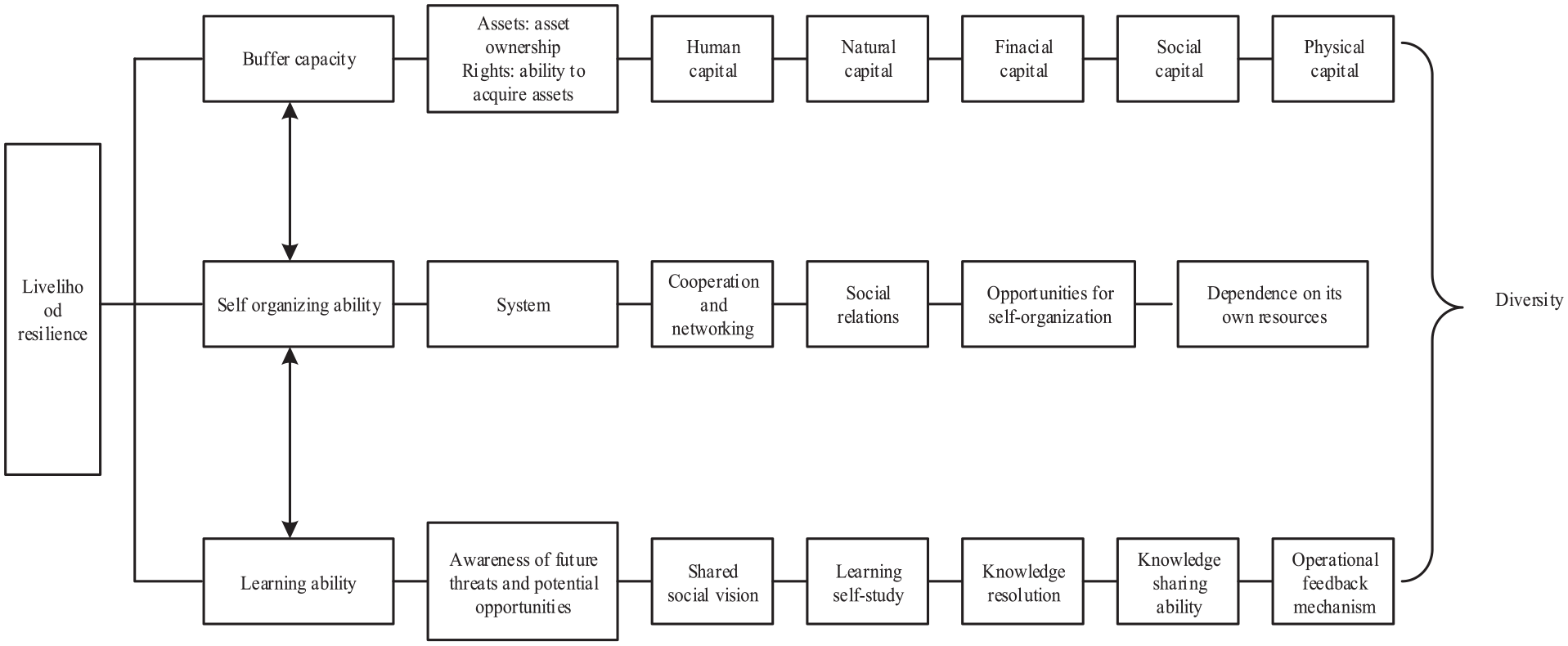
The conceptual and analytical framework used to characterize livelihood resilience.
Buffer capacity refers to the ability of a system or individual to absorb external changes and capitalize on existing opportunities to achieve better livelihood outcomes. It is defined from the perspective of livelihood, namely, the ability to utilize their livelihood resource endowment to mitigate external livelihood risks (Rauf et al., 2020). The research subject of this paper is to help them use their existing capital endowment to achieve the goal of improving their living status. According to the characteristics of migrant workers in local and nearby urbanization, the selected indicators are presented in (Yu et al., 2020). The measurement indicators of migrant workers’ buffer capacity under the condition of local and nearby urbanization are shown in Table 1.
Measurement Indicators of Buffer Capacity of Migrant Workers Under Local and Nearby Urbanization.

The analysis reveals that the livelihood resilience of migrant workers is generally low, with a large overall elasticity. There are significant differences in the strength of various livelihoods, indicating a need for internal optimization. Generally speaking, the learning ability is strong (Yiridomoh et al., 2021). There are also differences in multiple dimensions. Learning ability refers to the ability to integrate previous knowledge with current life activities and actively acquire new knowledge and skills in a new external environment (Wang et al., 2019). The ability to learn at both the individual and system levels is critical to building resilience. The accumulation of migrant workers’ learning ability primarily occurs during the education stage before entering the employment market and the re-learning stage in the employment process. The length of working hours and learning consciousness also significantly impact the learning ability of migrant workers during the employment process (Korah et al., 2019). Therefore, this paper selects education level, vocational training, working time, vocational self-efficacy, vocational information exchange, and future learning planning to measure learning ability, as shown in Table 2.
Measurement Indicators of the Learning Ability of Migrant Workers Under Local and Nearby Urbanization.
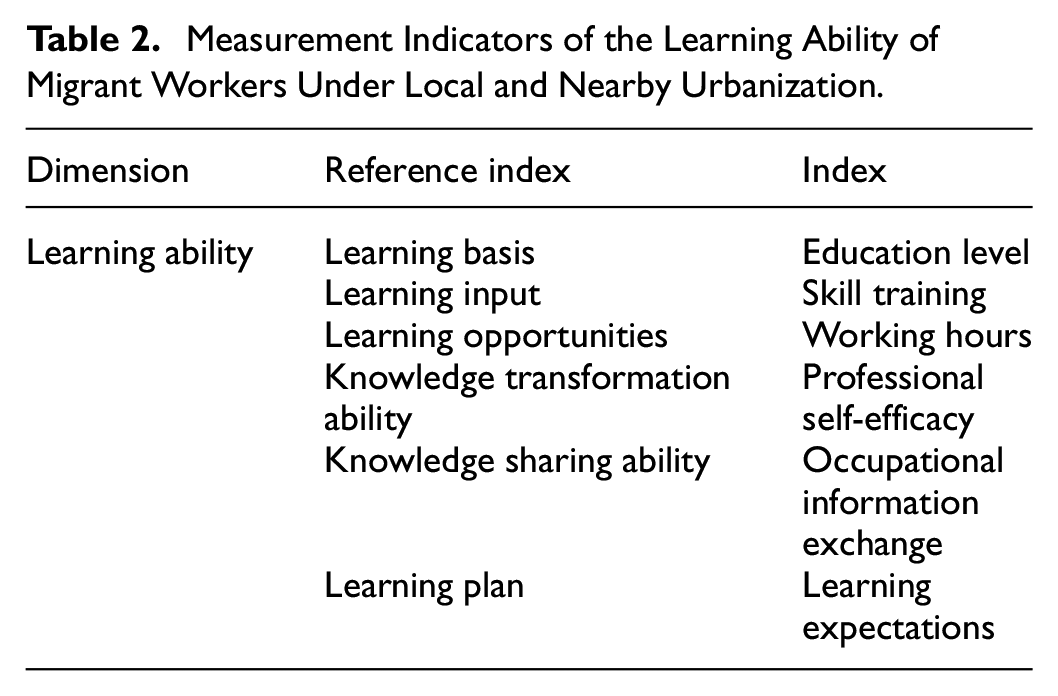
In conclusion, based on the existing livelihood resilience index system and the characteristics of migrant workers in local and nearby urban areas, the final test indicators for each dimension are constructed.
Provincial Resilience Algorithm Model of Migrant Workers
By constructing the resilience evaluation index system, the principal component analysis is used to calculate the livelihood resilience of farmers, and then the impact of new urbanization on livelihood resilience is analyzed by a multiple linear regression model (Nandi & Sarkar, 2021).
The following three steps are required to calculate the index weight with the results of principal component analysis:
Step 1: define the principal component index analysis model as

After obtaining the principal component analysis results, first calculate the coefficient corresponding to each index

Where

The coefficient corresponding to each index is multiplied by the contribution rate corresponding to the principal component, divided by the sum of the contribution rates, and the absolute value of the weighted average is calculated for the coefficient

Since the coefficient sum of the index

The calculation formula of the livelihood resilience index of migrant workers in this paper is as follows, where

The index system constructed above assigns a weight to each index of migrant workers’ livelihood resilience in the context of nearby urbanization, as shown in Table 3.
Livelihood Resilience of Migrant Workers.
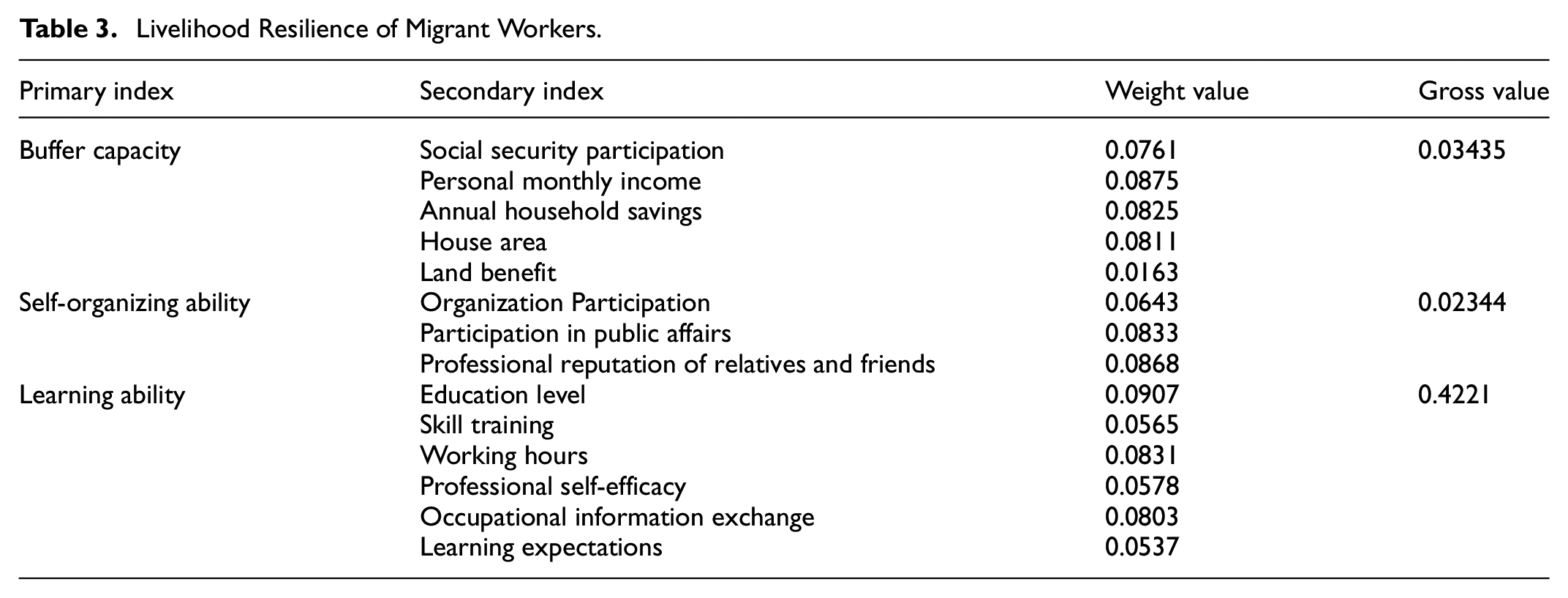
It can be seen that among the primary indicators, learning ability has the most decisive influence (0.4221), followed by buffer ability (0.3435) and self-organization ability (0.2344). It can be seen that learning ability, as the dimension with the most significant correlation with human capital in livelihood resilience, serves as the basis for local migrant workers to enhance their buffer capacity and self-organization ability, ultimately improving their overall livelihood resilience (Tran et al., 2021). It directly affects their job search type, employment position adaptability, and income level, thereby determining the overall level of livelihood capital. Buffer capacity encompasses the fundamental ability to withstand external shocks, reflects the accessibility of resource endowments, and plays a crucial role in the resilience of individual and family livelihoods, also affecting the strength of other dimensions to a certain extent (Shinbrot et al., 2019). Finally, the ability to self-organize is closely related to the social resources that individuals can utilize, enabling them to exchange material, energy, and information with various network subjects in the face of external shocks. It can also be transformed into other abilities (Addison et al., 2020). According to the standardized value and weight of each index in the previous text, the index value of each dimension of fertility can be calculated, and the formula is as follows:

Where,

Where,
Exploration of the Sustainable Development Path of Provincial Resilience of Migrant Workers
The government has taken several measures to promote the process of citizenization for migrant workers, including reducing barriers to registered residence and protecting the legitimate rights and interests of these workers. The citizenization of the agricultural transfer population is not only in line with the development trend of agricultural modernization and scale, but also the collective choice of the agricultural transfer population. Overall, the policy comprises three parts: material policy, equity policy, and spiritual and cultural policy. Based on the existing literature and the community attribute of China’s current citizenization environment and the agricultural transfer population, the material policy is divided into land policy, registered residence policy, and employment policy. Spiritual and cultural policies are divided into behavior style, cultural identity, and psychological attribution. Based on an analysis of existing operational policies, this paper evaluates them. It forecasts the future development direction of the citizenization policy for the agricultural transfer population, taking into account both existing policy theory and practical requirements. The micro policy level route for the sustainable development of migrant workers’ livelihood is shown in Figure 4.

Micro policy level road map for sustainable development of migrant workers’ livelihood.
To increase their income, farmers often choose to work in cities, while college students prefer to stay in cities to work and live after graduation. The new generation of migrant workers also tends to live in cities, indicating a strong desire for urbanization among the agricultural transfer population. Current practical experience and academic research suggest that the government has intensified its efforts to provide public services and explored the sharing mechanism of citizenization costs. More and more agricultural transfer population choose to work and live in cities. However, both the government and the agricultural transfer population have made great efforts to promote the process of citizenization. The geometric method of

After simplified calculation, the:

The score of livelihood resources directly reflects the sustainable development status of farmers’ livelihood. The author introduces the factor contribution model into the study of farmers’ ownership of livelihood resources, which will measure farmers’ livelihood capacity to a certain extent and reflect the sustainable development level and development trend of livelihoods. At the same time, combined with the amount of livelihood resources, the development state of livelihood sustainability is divided, to consider the sustainability of farmers’ livelihood and evaluate the future development trend. Through the classification of livelihood sustainability, the development status of farmers’ livelihood sustainability can be evaluated. Because the indicators in the evaluation system have different dimensions

Generally speaking, there are more than 10 common methods for determining weight, including the AHP method, Delphi method, Gulin method, entropy method, and principal component analysis, among others. Among these, the Delphi method and others are more subjective in nature. In contrast, the AHP method, Gulin method, and principal component analysis focus on quantitative operations and evaluate weights from a quantitative perspective. These methods can be divided into two categories: subjective weighting and objective weighting. Subjective weighting is based on experts’ subjective judgments, informed by their experience and expertise. Scholars generally believe that subjective empowerment is less critical than objective empowerment, and its objectivity and scientific validity are not strong. Scholars prefer to use quantitative calculations to evaluate the weight, thereby enhancing the objectivity and scientific rigor of the evaluation. The weights of prediction and evaluation indicators for the sustainable development of farmers’ livelihoods are shown in Table 4.
Weights of Prediction and Evaluation Indicators for the Development Status of Farmers’ Livelihood Sustainability.

Among many quantitative analysis weight determination methods, the entropy method can objectively reflect the index proportion and avoid information overlap. Based on recent research, the “entropy” theory, derived from the field of thermodynamics, has widely penetrated various fields, including science and technology, the humanities, and society, and has gained widespread recognition and popularity. In this paper, the method of quantitative

Where:

This paper systematically analyzes the cutinization policy of the agricultural transfer population, exploring the relationship between different levels and elements, and promotes the optimization of structure through the adjustment of elements to explore a third path of self-citizenization, distinct from government public service supply and the agricultural transfer population. The demand proportion of the agricultural transfer population for spiritual culture is expected to continue increasing. Based on this, this paper believes that future policy needs to further develop and improve policy research at the level of spiritual culture. At the same time, China’s policy research requires not only innovation and development in micro policy, but the basic theory and development framework of the policy also need to be further improved.
Analysis of Experimental Results
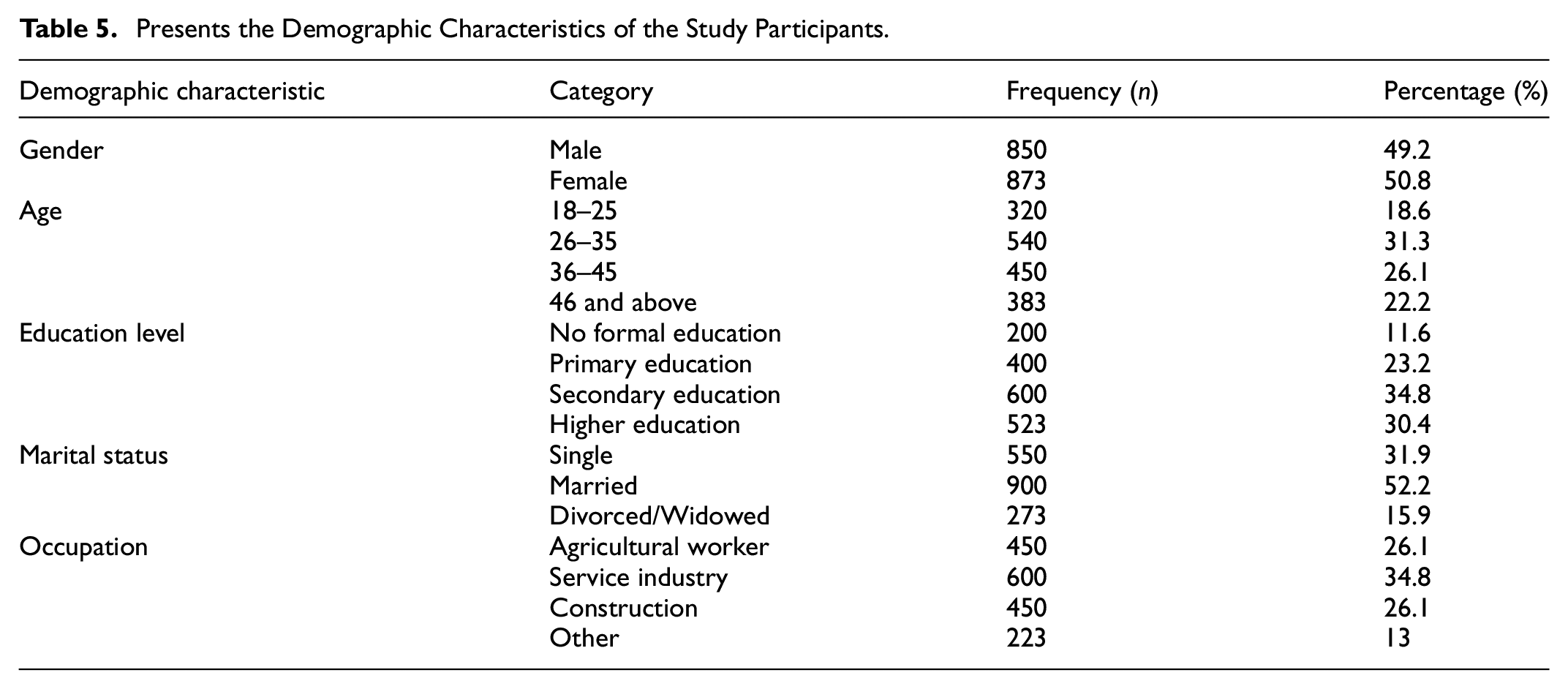
The sample size for the study was 1,723 migrant laborers. Participants had the following demographic characteristics: Participants ranged in age, including both young and senior migrant workers. The sample comprised both male and female participants, with a tendency indicating that women were more likely than men to relocate to cities for work or housing. Participants reported a range of land income and total household income, with a mean land income of 3.65 million yuan per year and a mean total household income of 2.815 million yuan per year. The study looked at education levels as a key predictor of learning ability among migrant workers. The number of non-agricultural occupational kinds among relatives and the number of non-agricultural occupations held by participants were documented. The demographic characteristics of the study participants are presented in Table 5.
Presents the Demographic Characteristics of the Study Participants.
Since the institutional and behavioral migration intentions of rural residents set in this study are binary variables, the models used in the study adopt the binary logit model:
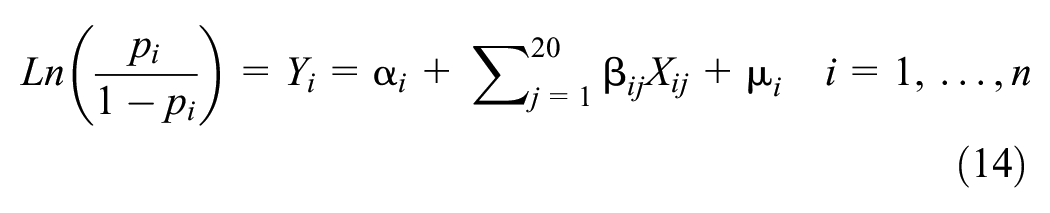
The formula,

Lorentz curve of net income of migrant workers in China in recent years.
According to the analysis of different migration intentions, a cross-tabulation of main demographic and sociological variables and citizenization intentions is compiled, as shown in Table 6.
Descriptive Statistical Results of Variables (n = 1,723).

According to the table, we can see that the proportion of city residents who tend to change their registered residence is only 17.53%, indicating a relatively high proportion of behavioral migration. Women tended to switch to city-registered residence or work in towns more often than men. At the same time, the behavior of migrant workers has a significant positive impact on the willingness to engage in institutional migration and behavioral migration. The agricultural transfer population working in nearby cities and towns is more inclined to change their living arrangements to accommodate family growth. The survey found that, during the process of nearby urbanization, the employment advantages of working early and returning late are prominent, with wage income comparable to that of working outside the city. With the effective improvement of the actual income level, the number of migrant workers returning home for employment is increasing, and they have become a group with high citizenization willingness. At the same time, the new and old generations of the agricultural transfer population show significant generational differences in migration intentions. The second generation of the agricultural transfer population is significantly lower than the first generation in terms of transfer household type and the choice of moving to cities and towns. This finding is inconsistent with previous studies. The new generation of the population has a more open mind and higher expectations for life opportunities, and thus tends to be more civic-minded. Even college students who change their Hukou because of entering a higher school have shown a downward trend. And there is no noticeable difference in each dimension of livelihood resilience. Through the calculation of each livelihood resilience index value, we can determine the specific size of the livelihood resilience index for migrant workers in local and nearby urban areas. The value of the livelihood elasticity index for migrant workers under conditions of local and surrounding urbanization is presented in Table 7.
Index Values of Livelihood Resilience of Migrant Workers Under Local and Nearby Urbanization.

As shown in the table, under local and nearby urbanization, the overall index value for migrant workers’ working time is significant, the occupational information exchange is good, and the housing area is satisfactory. Still, indicators such as public affairs participation, organizational participation, professional reputation among relatives and friends, professional self-efficacy, and land income are low. This shows that the time migrant workers working in cities affects their adaptability in all aspects of life and employment, and also lays a foundation for them to improve their ability.
This study examined the livelihood resilience of migrant workers in the context of local and nearby urbanization in China, providing a quantitative evaluation through a comprehensive index system and principal component analysis. Beyond summarizing empirical results, it is essential to interpret these findings within the broader framework of sustainability to thoroughly understand their implications for sustainable development theory and practice thoroughly.
Our results highlight three core dimensions: learning ability, buffer capacity, and self-organization ability, which collectively shape livelihood resilience. These dimensions align closely with the multidimensional concept of sustainability, which encompasses economic, social, and environmental components.
The prominent role of learning ability in enhancing resilience confirms the centrality of human capital development in sustainable livelihoods theory (Chambers & Conway, 1992). Investing in education, vocational training, and skill acquisition empowers migrant workers to navigate the complexities of urban labor markets better and adapt to evolving socioeconomic conditions. This capacity-building underpins the long-term adaptability and transformative potential necessary for sustainable development, echoing the principles of adaptive management in resilience theory (Folke et al., 2004).
Buffer capacity, comprising financial capital, social security participation, housing conditions, and land income, functions as an economic safety net that mitigates the impacts of shocks such as unemployment or health crises. This aligns with economic sustainability goals that emphasize stability, resource accessibility, and risk management. Our findings corroborate ecological resilience theory’s concept of “absorptive capacity,” whereby sufficient capital endowment allows individuals and households to maintain function despite external disturbances (Holling, 1973). Enhancing buffer capacity thus directly contributes to sustaining livelihoods by reducing vulnerability and promoting recovery.
The relatively weaker self-organization indicators reveal critical gaps in social capital and institutional integration. Social sustainability frameworks emphasize the importance of robust social networks, civic engagement, and inclusive governance in promoting resilience (Berkes & Ross, 2013). Migrant workers’ limited involvement in public affairs and organizational participation restricts their ability to influence policies and access collective resources, undermining social cohesion. Strengthening these social dimensions supports empowerment and collective efficacy, which are vital for resilient urban communities and inclusive development.
Placing our findings within the context of the Sustainable Development Goals (SDGs), particularly SDG 8 (Decent Work and Economic Growth) and SDG 11 (Sustainable Cities and Communities), reveals that enhancing the livelihood resilience of migrant workers requires integrated, multidimensional policy responses. These include:
Expanded access to education and lifelong learning opportunities to foster human capital development.
Strengthening social protection systems, housing security, and financial inclusion to build buffer capacity.
Promoting participatory platforms and community engagement to improve self-organization and social integration.
Such policies not only improve individual welfare but also contribute to more equitable, inclusive urbanization processes. This approach supports the vision of sustainable cities that accommodate diverse populations and reduce socioeconomic disparities. Our findings align with global studies that emphasize the interplay between human capital, social capital, and economic resources in shaping migrant resilience (Poelma et al., 2021). However, the observed generational differences in citizenization willingness highlight the evolving aspirations and challenges faced by newer cohorts of migrants, suggesting the need for nuanced, targeted interventions that consider sociocultural dynamics.
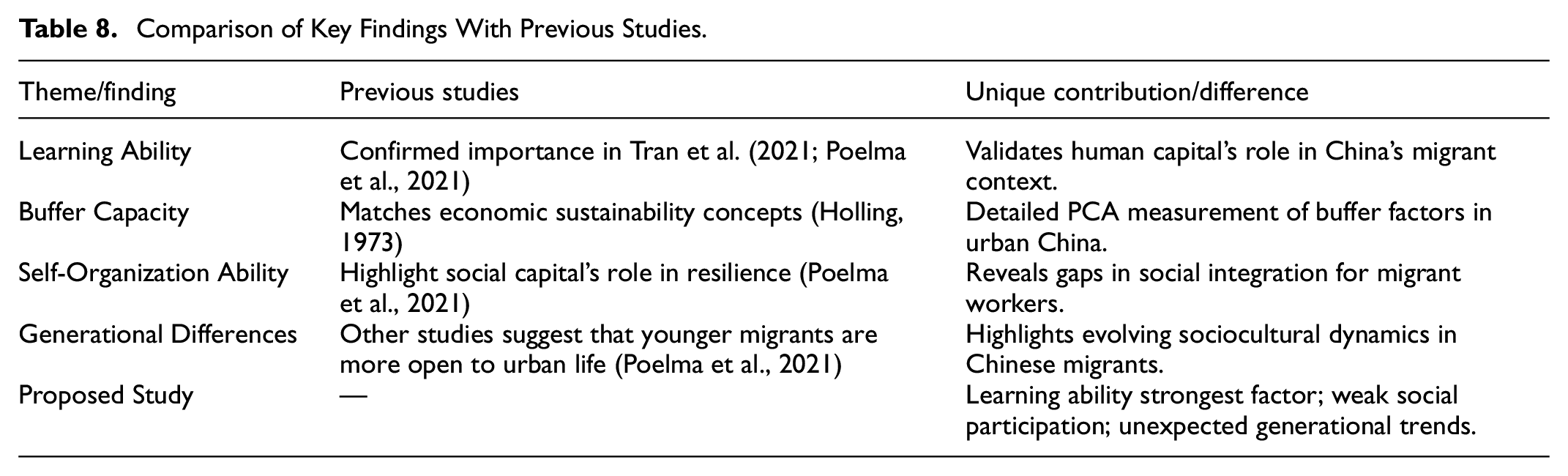
Table 8 summarizes major themes related to migrant workers’ livelihood resilience, contrasting findings from existing literature with the unique contributions of our study. It highlights the confirmation of human capital’s role, economic buffer capacities, social integration challenges, and generational differences in the context of China’s urbanization.
Comparison of Key Findings With Previous Studies.
The exchange between migrant workers and workers in the same industry is relatively close, and they can discuss each other’s post-related experience, But the sense of professional self-efficacy is poor; Which leads to their poor ability to resist the risk of the job market; The poor participation of social organizations and public affairs leads to the lack of institutional and policy connection between themselves and cities, and the livelihood system is relatively fragile when subjected to external shocks. Therefore, we should focus on enhancing the human capital of county migrant workers, strengthening skill training in all aspects, and providing them with more choices in the labor market. The livelihood resilience of individuals and groups is not fixed and static. It is easy to change under the influence of the external environment and policies, and then form its unique resilience intensity.
Conclusion
An extensive examination of migrant worker’ ability to sustain their livelihoods has been made possible by this study, especially in light of the surrounding and local urbanization. We have gained a deeper understanding of the variables influencing migrant workers’ ability to endure hardship in their livelihoods by developing a robust index system and employing principal component analysis. Our results emphasize the critical role that learning capacity plays in enhancing overall livelihood resilience, underscoring the need to invest in human capital development for migratory workers. Furthermore, buffer capacity and self-organizing ability were found to be essential characteristics that influence livelihood outcomes, interacting with learning ability. This research has implications that extend beyond scholarly discussions, providing stakeholders and policymakers with valuable insights. By understanding the various dynamics of migrant workers’ lives, legislators may create targeted policies to support their adjustment to urban environments and enhance their overall well-being. Even if the study we present has certain limitations, it does add to the body of knowledge on economic resilience. In the future, research may examine long-term data to better understand the dynamic nature of migrant worker resilience over time and to examine further the sociocultural factors influencing their subsistence strategies. The study underscores the importance of global approaches in addressing the complex challenges faced by migratory workers, thereby paving the way for more inclusive and sustainable development policies.
The study’s limitations include the following: the analysis is based on a specific sample of 1,723 migrant workers, which may not represent the total population across different locations or demographics. The use of cross-sectional data restricts the ability to evaluate changes in livelihood resilience across time. Using self-reported income and living conditions data may add bias and inaccuracy. The study may have failed to adequately account for sociocultural factors on migratory intentions and resilience, limiting the generalizability of the findings. The emphasis on quantitative measurements may obscure qualitative aspects of migrant workers’ experiences and issues. Future studies should address these limitations to gain a more comprehensive understanding of the challenges at hand.
Footnotes

Author Contributions
Yongyan Zhao and Jian Li: conceptualization, data curation, formal analysis, funding acquisition, investigation, methodology, project administration, resources, software, visualization, writing – original draft. Wenyuan Yang: supervision, funding acquisition, writing – review & editing.
Funding
The authors disclosed receipt of the following financial support for the research, authorship, and/or publication of this article: This research was supported by the Key Projects of Art and Science Planning in Heilongjiang Province (No. 2022A008).
Declaration of Conflicting Interests
The authors declared no potential conflicts of interest with respect to the research, authorship, and/or publication of this article.
Data Availability Statement
The data can be obtained by contacting the corresponding author.