




Abstract
The rapid proliferation of multiple terminals in online communities has significantly transformed user behavior, making the effective management of these terminals crucial for user acquisition, retention, activation, and conversion. Despite the growing importance of multi-terminal environments, existing research has largely overlooked the interaction effects among terminals. To address this gap, this study investigates how multiple terminals interact in an online channel, specifically focusing on user transfer behavior between PC terminals and mobile terminals in an online Question-and-Answer (Q&A) community. Grounded in brand extension and expectation confirmation theories, we propose a theoretical model to examine the interaction effects among multiple terminals in Zhihu, a representative online Q&A community in China. We use SEM to analyze the data. Findings indicate that both substitution and synergy effects exist among multiple terminals, with the synergy effect being significantly stronger than the substitution effect. Furthermore, the results reveal that perceived quality, perceptual fit, expectation confirmation, and relative advantages affect the interaction among multiple terminals. Specifically, perceived quality and perceptual fit play significant roles in generating the synergy effect, while expectation confirmation and relative advantages drive the substitution effect. This study proposes a comprehensive framework for understanding multi-terminal interactions. The model holds both theoretical and practical relevance, as it helps in understanding user behavior in multiple terminal environments and provides implications for the design of multiple terminal strategies.
Introduction
The advent of the internet and digital technologies has triggered a paradigm shift in how firms interact with their customers. The widespread adoption of these technologies has facilitated seamless interaction across multiple online and offline channels, effectively reshaping the dynamics of customer engagement (Gao & Huang, 2021). As a result, there is increasing attention from both researchers and practitioners regarding how businesses and consumers interact through various channels (Cui et al., 2022). As posited by Neslin et al. (2006), the multiple channel strategy constitutes a comprehensive approach to designing, implementing, managing, and evaluating multiple channels to enhance customer value across the customer lifecycle. Accordingly, channels can be regarded as customer contact points, encompassing both online platforms (e.g., web stores, mobile apps) and offline platforms (e.g., physical stores, catalogs, call centers) (Verhoef et al., 2015). In response to the growing prevalence of mobile internet, an increasing numer of enterprises have adopted multiple terminal (“multi-device” or “cross-device”) strategy. Whereas the multiple channels mainly focus on the interaction between online and offline channels, the multiple terminals put more emphasis on the interaction between different devices in the online channels. Consequently, multiple terminal strategy refers to user interactions with brands or services through various technological devices, such as smartphones, tablets, desktops, laptops, smart TVs, voice assistants, wearables devices, and other hardware devices, to cater to a variety of user scenarios. With the shift from the Internet era to the mobile Internet era, the transition from PC terminals to mobile terminals is gradually becoming a standard business strategy for Internet enterprises. This transformation has given rise to user transfer behavior, which refers to the patterns of users switching platforms based on their device preferences or contextual requirements. To align with this trend, online Q&A community providers have expanded into mobile terminals like apps and WeChat Mini-programs. According to the 2020 Research Report on China’s Online Knowledge Q&A Industry released by iResearch Consulting, a majority of users (66%) access online knowledge Q&A services through computer web browsers, while over half of the users (52.5%) express their intention to utilize dedicated online knowledge Q&A applications (iResearch, 2020). This suggests that within the context of online Q&A communities, multiple channel strategies typically manifest as multiple terminals, specifically PC terminals and mobile terminals. Therefore, the research findings on multiple channels research can provide valuable insights for multiple terminals research.
In previous studies, Empirical evidence reveals a fundamental paradox in multiple channel effects: the adoption of new channels manifesting as either synergistic complementarity (Kumar & Venkatesan, 2005; Kwon & Lennon, 2009) or competitive substitution (Falk et al., 2007), or hybrid manifestations (Pauwels & Neslin, 2015; Yang et al., 2013). It indicates that an increase in the number of channels does not necessarily generate a synergy effect, which refers to new channel as additional distribution channels enhancing the accessibility and service capabilities of products in both new and existing channels (Huang et al., 2016). Instead, it may result in a substitution effect, where the new channel replaces or diminishes the role of existing channels, potentially leading to a decline in sales through particular channels (Van Nierop et al., 2011). While the findings from multiple channels offer valuable insights for research on multiple terminals, the inconsistent conclusions present challenges for multiple terminals research. To address these issues, it is crucial to identify the factors influencing interactions among multiple terminals and understand their relationship with users’ behavioral intentions to transfer across multiple terminals.
Furthermore, a thorough literature review indicates that existing research on multiple channels predominantly centered on the interaction between online and offline channels (Fatema, 2024; Luo et al., 2020). Nevertheless, the emergence of new digital channels, with mobile being a key driver, has led to another disruptive change (Rigby, 2011). The online channel itself has undergone significant structural transformation through mobile fragmentation—a phenomenon where singular “online” channels have evolved into discrete subchannels (H. A. Li & Kannan, 2014; Verhoef et al., 2015). Consequently, different terminals in online channels, such as desktop, laptop, and mobile devices, could be regarded as separate research objects. Yet research attention remains disproportionately focused on macro-level channel interaction, neglecting the operational mechanics governing micro-level terminal interactions in online channels (Lemon & Verhoef, 2016; Verhoef et al., 2015). Given that channel interaction patterns observed in physical-digital contexts may not directly translate to purely digital environments, this study aims to systematically explore the interaction effects among multiple terminals within online channels. Specifically, this study examines the following questions:
This study extends the existing literature through the following contributions. First, this study empirically validates the existence of both synergy and substitution effects among multiple terminals in online channels. Second, this study identifies the factors influencing user behavior when transitioning between multiple terminals, including perceived quality, perceptual fit, expectation confirmation, and relative advantages. Third, this study demonstrates an underlying process in the relationship among multiple terminals. Specifically, perceived quality and perceptual fit play significant roles in generating the synergy effect, while expectation confirmation and relative advantages significantly contribute to the substitution effect. Consequently, the findings advance marketing research by providing empirical evidence on the interaction among multiple terminals within online channels and by developing a comprehensive framework for understanding multi-terminal interactions. The results not only facilitate a deeper understanding of user behavior within multi-terminal environments but also offer invaluable insights for formulating highly effective multi-terminal strategies.
Literature Review
Online Q&A Community
A comprehensive review of the literature indicates that research on online Q&A communities mainly focuses on four aspects: user characteristics (Lee et al., 2019), user behavior (L. Li et al., 2023; Wang et al., 2022), content quality evaluation (Zhao et al., 2021), and technical support (M. Li et al., 2020). The growing trend of users accessing information across PC and mobile terminals has led to increased research interest in comparing these two platforms (Zha et al., 2015). These studies primarily focus on contexts such as e-commerce and banking (Chen et al., 2018). However, there is a relative paucity of research focusing on multiple terminals within online Q&A communities. Given that mobile terminals have become an important tool for accessing online Q&A services, and user behavior in online Q&A communities significantly differs from other online services like e-commerce and entertainment, it remains necessary to further explore the interaction effects between PC and mobile terminals within the context of online Q&A communities.
Despite PC and mobile terminals offering similar capabilities for access to internet resources and services, they differ substantially in their characteristics, including screen size, portability, and interaction methods (Chen et al., 2018; Ghose et al., 2013; Wolf & Madlberger, 2025). Firstly, mobile terminals typically have smaller screens and lower processing capability compared to PC terminals (Wang et al., 2013), leading users to primarily browse rather than input information (Zhao et al., 2015). The smaller screen size on mobile termianls increases the cost for users to browse information, such as higher search costs (Ghose et al., 2013). It has been demonstrated that texts created on mobile terminals tend to be shorter, less diverse, and more emotional compared to those created on PC terminal, primarily due to differences in usability and accessibility (Wolf & Madlberger, 2025). In contrast, the larger PC screen is well-suited for multi-column designs and complex layouts, allowing for the display of more content and information hierarchies (Sun et al., 2016). Additionally, PC terminals generally update service functions more promptly than mobile terminals, as they provide adequate space for developers to implement these updates (Liu & Jansen, 2016). Secondly, mobile terminals are portable and not fixed to a location, allowing users to access timely information (Ghose et al., 2013). Immediate social media information are more engaging on mobile terminals than PC terminal (Chae et al., 2025). The portability of mobile terminals influences user behavior, leading them to prioritize answer responsiveness over answer quality (Chua & Banerjee, 2013). In addition, mobile terminals have tremendous potential in helping people transcend geographical and cultural boundaries, reducing the social distance among people, and linking workspace with personal space (Shankar et al., 2016). Thirdly, PC terminals primarily rely on keyboard and mouse fort precise interaction such as single-clicking, double-clicking, dragging, scrolling, and hovering. keyboards provide a comprehensive set of shortcut and function keys, enhancing input efficiency and precision. Consequently, PC terminals tend to have lower input costs and higher efficiency, making them well-suited for detailed and complex tasks. In contrast, mobile devices predominantly use touchscreens for interaction, supporting gestures like tapping, swiping, two-finger zooming, multi-finger gestures, and voice input. Compared to PC terminals, mobile terminals generally have lower input accuracy and higher input costs, making them more suitable for handling simple tasks that require immediacy, particularly during fragmented time periods. Given the differences between PC and mobile terminals, it is necessary to examine the interactions between different terminals within online channels.
This study takes Zhihu, a representative online Q&A community in China, as an example. Presently, Zhihu mobile terminals product ecosystem offers diverse products such as “Zhihu APP,”“Zhihu WeChat Mini program,” and “Zhihu WeChat official accounts,” catering to specific segments of user groups with differentiated information services. Among these options, the Zhihu APP stands out as the most comprehensive mobile terminal with functions closely resembling the Zhihu PC website. Therefore, this study selects the Zhihu PC Website as a representative terminal from the PC Internet era and its counterpart Zhihu APP from the mobile Internet era as research objects to explore the interaction effects among multiple terminals in an online Q&A community.
Multiple Channels Interaction
Multiple channels refers to retailers providing products through two or more channels (Levy & Weitz, 2012). In this study, the term “multiple terminals” is used to indicate that firms provide online channel services through more than one terminal. Multiple channels and multiple terminals both refer to the provision of information, products and services to consumers through more than one synchronized channel (e.g., physical channel, catalog channel, and Web channel) or terminal (e.g., smartphones, tablets, desktops, laptops, etc.) (Karray & Sigué, 2021; Lewis et al., 2014). Therefore, the findings of multiple channels have some implications for the research on multiple terminals.
The research on multiple channels indicates that the interaction among channels can be categorized into two primary domains: synergy effect and substitution effect (Levy & Weitz, 2012). The synergy effect refers to the new channel serving as an additional distribution channel to increase product accessibility and enhance the service capabilities of enterprises in both new and existing channels (Huang et al., 2016). Substitution effect refers to the new channel and existing channels being substitutes for each other, and the sales of a particular channel are likely to be gradually replaced (Van Nierop et al., 2011). However, the impacts of multiple channels are often uncertain, which means that adopting new channels may result in synergy effect, substitution effect, or a combination of both (Pauwels & Neslin, 2015; Yang et al., 2011, 2013). This remains to be further explored. In addition, existing research on multiple channels primarily focuses on investigating the relationship between online and offline channels (Fatema, 2024; Luo et al., 2020; Yang et al., 2013). However, limited attention has been given to the interaction among different terminals within the online channel (Lemon & Verhoef, 2016; Verhoef et al., 2015). Therefore, this study focuses on the interaction among multiple terminals in online channel, using Zhihu PC website (an early-emerging dominant terminal) and Zhihu APP (a late-emerging potential alternative terminal) as research objects, to explore their interaction relationship and their impact on user intention in online Q&A communities.
Brand Extension Theory (BET)
BET refers to using consumers’ associations with existing brands to introduce new products, aiming to shorten the time for consumer recognition, reduce market entry risks, and minimize investment failure (Aaker & Keller, 1990). The theory suggests that consumers’ evaluation of the extended brand is positively associated with their perceived quality of the existing brand (Aaker & Keller, 1990). Additionally, consumers’ emotions can be transferred between the existing brand and the extended brand, influenced by perceptual fit. This implies that higher degrees of perceptual fit facilitate easier emotional transfer for consumers (Seminar, 1987). Therefore, the perceived quality and perceptual fit of the existing brand are key factors influencing the effectiveness of brand extension. Previous studies have demonstrated that positive cognitive perceptions toward the existing brand enhance recognition of the extended brand, resulting in a synergistic effect on adoption (Yang et al., 2013).
The existing terminal in this study refers to the Zhihu PC website, while the extended terminal is Zhihu APP, both of which are digital products offered by the same company providing similar information services. The former has a large user base and a well-established brand image, while the latter maintains consistency through identical branding elements such as logo and interface design. Both terminals share similarities in terms of functionality and operations, establishing business connections between them. The strong correlation observed between the existing terminal and the extended terminal suggests a potential brand extension effect within the online Q&A community. Specifically, users’ favorable perception of the existing terminal enhances their intention to use the extended terminal due to their belief that a brand delivering excellent services through its existing terminal will likely provide similar quality through its extended terminals as well. Consequently, users are more inclined to extend their positive impression from the existing terminal to the extended terminal, ultimately generating a synergy effect among multiple terminals.
Expectation Confirmation Theory (ECT)
ECT posits that consumers establish initial expectations before purchasing a product and subsequently compare them with their perceived performance after use in order to achieve expectation confirmation. This confirmation then influences post-purchase satisfaction, ultimately impacting their repurchase intention (Oliver, 1980). The degree of expectation confirmation depends on the comparison between users’ actual perceived performance and initial expectations (Yang et al., 2013). Perceived quality plays a pivotal role in influencing perceived performance, thus serving as a crucial prerequisite for expectation confirmation (Bhattacherjee, 2001). High-quality services that exceed users’ initial expectations elicit positive expectation confirmation, enhancing user satisfaction and fostering continued service usage (Dağhan & Akkoyunlu, 2016). In summary, both perceived quality and expectation confirmation are key determinants of the overall expectation confirmation process. Previous research on multiple channels has found that when consumers’ positive expectations towards offline channels are confirmed, it may reduce their motivation to utilize online channels. This indicates that offline channels affirmation appears to negatively impact online channels adoption, potentially due to consumers not perceiving the relative advantages of online channels after their needs are met in offline channels. Therefore, positive expectations toward offline channels reinforce their continued usage while diminishing intentions to utilize online channels, resulting in a substitution effect (Yang et al., 2013).
In this study, the Zhihu PC website and the Zhihu APP are distinct online channels that offer similar services, each with unique characteristics in terms of mobility, response timeliness, input convenience, etc. Therefore, it is imperative to consider these terminals as having different advantages and substitutability. When deciding whether to continue using a particular terminal, users evaluate their satisfaction based on factors such as initial expectations, actual usage experience, and expectation confirmation. For example, if users perceive lower quality in the existing terminal and have lower expectation confirmation, it indicates inadequate fulfillment of their needs by the existing terminal. Consequently, they may discontinue its use and attempt to meet their expectations through utilizing the extended terminal instead. This leads to a substitution effect where the extended replaces the existing, or vice versa. Consequently, within the context of Zhihu, multiple terminals can exhibit a substitution effect due to expectation confirmation.
Hypothesis Development
According to the BET, extension brand tends to receive higher evaluations when the existing brand’s image is more positive (Aaker & Keller, 1990). In a multiple terminal service context, users tend to evaluate the new extended terminal based on their perception of the existing terminal, as they share the same brand image. In other words, users who evaluate the service quality higher in the Zhihu PC website are more likely to perceive a higher service quality in the Zhihu APP. Because in an environment characterized by incomplete and asymmetric information, users face uncertainty regarding the attributes of the extended terminal. Utilizing established evaluations for existing terminals effectively communicates the product attributes associated with the extended terminal, thereby mitigating users’ uncertainty and risk perception towards it, ultimately enhancing their expected utility and evaluation of the extended terminal. Therefore, we propose that the perceived quality of the Zhihu PC website (PQP) positively influences the perceived quality of the Zhihu APP (PQA).
The literature consistently indicates that quality positively influence behavior (Cronin et al., 2000). Perceived quality (PQ) is an important external motivation that influences user’s intention to use (IU) (Sharma & Sharma, 2019). Empirical evidence indicates that higher service quality is significantly associated with a stronger intention to use a product (Tse & Wilton, 1988). For instance, research in mobile shopping demonstrates that customers’ perception of online service quality have a positive impact on their intention to use the online channel (Montoya-Weiss et al., 2003). Therefore, we propose that:
Perceptual fit (PF) refers to whether a consumer perceives the new extended brand as consistent with the existing brand. Prior studies have demonstrated that perceptual fit is a crucial factor in predicting brand extension success, as perceived quality transfers more effectively when two product classes in some way fit together (Aaker & Keller, 1990). According to associate network memory model, existing terminal service quality affects perceptual fit via memory retrieval (Yang et al., 2011). That is, when users perceive a new extended terminal (e.g., Zhihu APP) as consistent with a familiar existing terminal (e.g., Zhihu PC website) in their memory, they will transfer their quality perception of the existing terminal to the new one through category-based processing (Aaker & Keller, 1990). In other words, when users perceive the service quality of Zhihu PC website to be high, they may infer from their prior positive experiences that the service provider is competent and professional in service delivery. This inference strengthens users’ belief that the provider can ensure consistency and seamless integration between extended and existing terminals in terms of quality, functionality, and user experience. Consequently, users develop higher expectations and confidence regarding the integration of extended and existing terminals, leading to a higher perceptual fit. Therefore, we propose that:
BET posits that greater perceived similarity between the existing and the extended brand facilitates a stronger transfer of affect (positive or negative) to the extended brand. Aaker and Keller (1990) suggest that a poor perceptual fit may not only fail to transfer positive associations but may also trigger undesirable beliefs and associations. In contrast, a strong perceptual fit would be expected to facilitate the transfer of positive associations and inhibit the formation of undesirable ones. Empirical evidence indicates that perceptual fit enhances evaluations of the extended target (Song et al., 2009). That is to say, the higher the PF between the Zhihu PC website and Zhihu APP, the more likely users are to categorize them as the same group in their memory. This facilitates transferring positive perceptions of the Zhihu PC website to the Zhihu APP, resulting in a more positive perceived quality of the Zhihu APP. Therefore, we propose that:
According to ECT, user satisfaction depends on the degree of expection confirmation (EC), the extent to which a product’s actual perceived performance aligns with expected performance. This is based on users’ post-use comparison of their actual experience with their initial expectations. If the actual experience exceeds expectations (high EC), users are likely to feel satisfied. Conversely, if the actual experience falls to meet expectations (low EC), dissatisfaction may arise (Yang et al., 2011). Consequently, perceived quality significantly impacts users’ perceived performance and serves as a key determinant of EC (Bhattacherjee, 2001). That is to say, users who perceive a higher quality of Zhihu PC website are more likely to find that its actual performance aligns with or surpasses their initial expectations. This alignment between experience and expectation positively impacts users’ EC of Zhihu PC website. Therefore, we propose that:
According to Rogers’ (2003) diffusion of innovations theory, relative advantage (RA) refers to the extent to which an innovation is perceived as superior to the existing solution it replaces. RA measures how much better users perceive an innovation to be compared to the old. When this perceived improvement is substantial, users are more inclined to try and accept the new innovation. Conversely, when users perceive a relatively low RA, they are more likely to maintain the status quo and stick with existing solution. Previous studies have demonstrated that a high evaluation of the primary channel’s performance correlates with a reduced intention to use the extended channel (Montoya-Weiss et al., 2003). In this study, the RA of Zhihu APP is defined as the extent to which it is perceived to provide superior benefits compared to the Zhihu PC website. According to ECT, when users’ EC of Zhihu PC website is low, meaning that actual experience does not meet expectations, it leads to cognitive dissonance, which causes psychological discomfort and contradiction. To alleviate this discomfort, users are more likely to seek new terminals, such as the Zhihu APP, expecting to achieve a better experience by switching products (Yang et al., 2013). Since the original terminal fails to meet expectations, users tend to focus more on the superior features of new terminals during evaluation, thereby perceiving the new terminals as having a higher RA. Consequently, the level of EC for the original terminal negatively influences the perception of the RA of new terminals, that is, the greater the disappointment with the Zhihu PC website, the stronger the perceived superiority of the Zhihu APP. In summary, low EC triggers cognitive dissonance, motivating users to explore new terminals and enhancing their perception of the RA of new terminals in comparison. Therefore, we propose that:
The positive relationship between RA and adoption is well researched and established (Choudhury & Karahanna, 2008). Empirical studies indicates that consumers are more likely to adopt online channels when these channels are perceived to have RA, such as interaction efficiency and convenience, compared to traditional channels (Yang et al., 2013). This is because the perceived RA reduces the perceived risks and uncertainties of adopting new channels, while simultaneously increasing the anticipated benefits. In multiple terminals context, Zhihu APP provides distinct advantages compared to Zhihu PC website. This is exemplified by its ability to enable users to access information during brief periods of available time, offer more efficient search capabilities, provide personalized content curation, and deliver timely notifications. The recognition that mobile terminals provide unique value, unavailable on PC terminals, increases users’ willingness to use mobile terminals. This increased perception of value plays a crucial role in strengthening users’ awareness of the RA of Zhihu APP, ultimately driving greater usage intention. Therefore, we propose that:
Numerous empirical studies have consistently demonstrated a positive relationship between service quality and perceived value in both offline and online contexts (Yang et al., 2011). This connection can be attributed to the fact that high-quality service enhances the utility consumers derive from their experiences. The greater the utility consumers derive from a product, the more likely they are to perceive the product as having a higher relative advantage. In the presence of substitutes, this relative advantage becomes particularly critical, as it directly influences consumers’ decisions to select this product over alternatives. In multiple terminals context, the Zhihu APP has the potential to enhances user utility through greater portability, responsiveness, and personalization. Given that users’ perceived value is largely derived from the advantages of mobile terminals, the more positively users perceive the service quality of the Zhihu APP, the more likely they are to consider it as better suited to their needs compared to Zhihu PC website. Consequently, their evaluation of its relative advantages becomes increasingly favorable. Therefore, we propose that:
The research model is shown in Figure 1.
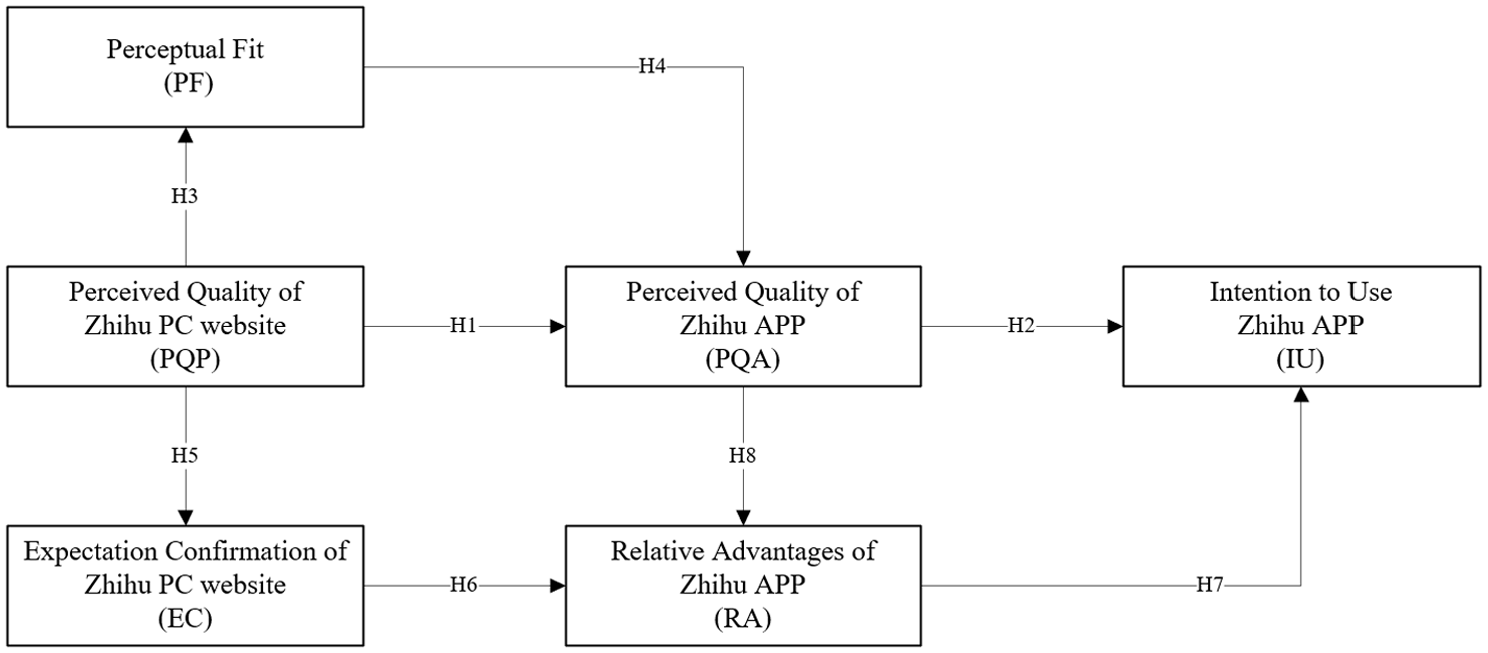
Research model.
Measures
Questionnaire Design
This study’s data collection instrument was a four-partquestionnaire. The first part clearly stated the research purpose, while the second part examined respondents’ multiple terminal experiences on Zhihu. The third part included 30 items measuring 6 variables (see Table A1 in Appendix A), using a 7-point Likert scale (1 = strong disagreement, 7 = strong agreement). These measurement instruments were adapted from prior studies fot this research context. Specificlly, the initial English version of the questionnaire was subjected to the back-translation procedure (Brislin, 1980) to develop a Chinese-language version, thereby ensuring that the items retained their original meaning and accuracy. The translated questionnaire was reviewed by four domain experts and three potential survey respondents, who provided modification suggestions. After incorporating these suggestions and making several minor adjustments, the final Chinese version was finalized. To ensure data accuracy, a pre-survey was conducted using the initial questionnaire, with 90 test samples. Based on the findings from this pre-survey, one item of PQA and one item of PF were removed. The fourth part collected respondents’ demographic informaiton.
Data Collection
This study investigates Zhihu users with experience using multiple terminals, collecting data through both offline and online questionnaires. The online questionnaires were distributed through So Jump’s survey platform for a 1-month data collection period. 296 responses were collected from both online and offline sources. To ensure reliability and validity, we manually screened and remove questionnaires containing missing data or exhibiting unreasonable response times. The final sample consisted 271 valid questionnaires (91.5% effective rate). Respondent demographics are presented in Table 1.
Demographic Characteristics of the Respondents (N = 271).

Common Method Bias
To address potential common method bias, we conducted Harman’s single factor test (Alzahrani et al., 2020; Andersen, 2024; Podsakoff et al., 2003). The analysis revealed that a single factor accounted for 37.19% of the total variance, which is lower than the recommended threshold of 50%, suggesting that common method bias is not a concern.
Results
Measurement Model
Reliability of the measurement model was assessed using Cronbach’s alpha (α) and Composite Reliability (CR) indices. As shown in Table 2, the Cronbach’s alpha values of each constructs exceeded the recommended threshold of 0.7, with an overall Cronbach’s alpha value of 0.934. The CR of each constructs also surpassed 0.7, ranging from 0.836 to 0.930. These results indicate a high level of internal consistency and overall reliability for the questionnaire (Bagozzi & Yi, 1988).
Statistics of Construct Items.

Validity can be tested through content validity, convergent validity, and discriminant validity (Bagozzi & Yi, 1988). The questionnaire used in this study is a well-established and highly reliable instrument extensively utilized in previous research. To align with the specific context of this study, it has been adapted into a scenario-based format, indicating its high content validity (Nguyen & Dao, 2024). Convergent validity was assessed using CR and AVE. The indicators meet the criteria for convergent validity, as evidenced by the AVE (0.516–0.688) and CR (0.836–0.930) values presented in Table 2, both of which surpass the recommended thresholds (AVE > 0.5; CR > 0.7) (Fornell & Larcker, 1981). Discriminant validity measures the extent to which a concept and its indicators differ from other factors (Yi et al., 2024). The criterion for assessing discriminant validity is that the AVE square root values for each variable should exceed the correlation coefficient between variables (Fornell & Larcker, 1981). From Table 3, the AVE square root values for each variable represent the maximum values within their respective columns, indicating the discriminant validity of the questionnaire is high.
Discriminant Validity Analysis.

Note. The bold values in the table (located on the diagonal) represent the square root of the Average Variance Extracted (AVE) for each construct. These values are compared with the correlation coefficients between that construct and other constructs. If the bold value is greater than the off-diagonal correlation coefficients in its column, it indicates good discriminant validity among the constructs.
Structural Model
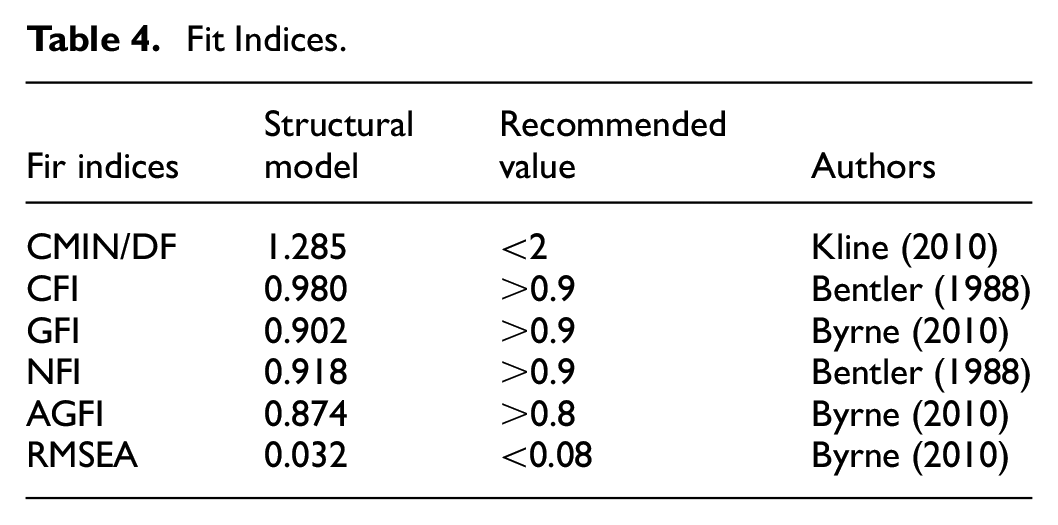
Structural path analysis was employed to evaluate the proposed model’s effectiveness. Table 4 reports the model fit indices for the proposed model, indicating an acceptable fit. The results meet the recommended criteria, with a CMIN/DF value of 1.285, CFI of 0.980, GFI of 0.902, AGFI of 0.874, NFI of 0.918, and RMSEA of 0.032.
Fit Indices.
All proposed hypotheses are robustly supported by the data. The research model, detailed in Figure 2 and Table 5, demonstrates significant predictive validity, explaining 51.6% of the variability in intention to use Zhihu APP.

Structural model.
Standardized Path Estimates.
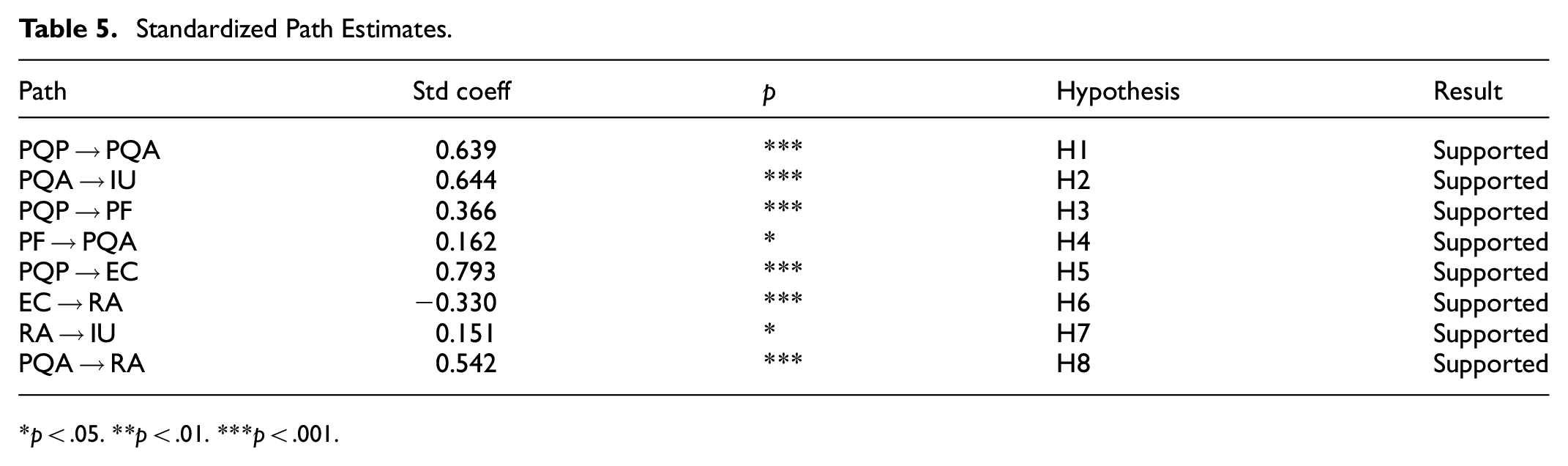
p < .05. **p < .01. ***p < .001.
Mediation Effect
The multiple terminals interaction model in Zhihu involves multiple mediating variables. In order to find out which effect is stronger among multiple terminals, we employed the Bootstrap method in MPLUS8 to test mediation effects. The judgment criterion for the Bootstrap is if the confidence interval of a tested mediating effect does not include zero, then it is considered significant (Lau & Cheung, 2012). As shown in Table 6, the confidence intervals of all five paths do not include zero, indicating the statistical significance of mediation effects. Path 3 exhibits a negative mediation effect, suggesting the presence of a substitution effect among multiple terminals. Conversely, the remaining four paths exhibit positive mediation effects, implying synergy effects among multiple terminals. In terms of comparative mediation effects, the positive mediation observed in path 1, path 2, path 4 and path 5 are significantly stronger than the negative mediation effect in path 3 with a notable level of significance, indicating that Zhihu experiences substantially higher synergy effect among multiple terminals compared to substitution effect.
Test Results of Meditation Effects.

Discussion
Based on BET and ECT, this study has empirically investigated the interaction relationships among multiple terminals in Zhihu. The results indicate that both synergy and substitution effects exist among multiple terminals, with the synergy effect being significantly stronger than the substitution effect. Furthermore, the research demonstrates that factors such as perceived quality, perceptual fit, expectation confirmation, and relative advantage influence users’ transfer behavior among multiple terminals. Specifically, perceived quality and perceptual fit are key determinants of the synergy effect, while expectation confirmation and relative advantage are critical determinants of the substitution effect. The following section provides a detailed discussion of the findings.
Firstly, both substitution and synergy effects exist among multiple terminals in Zhihu, with the synergy effect being significantly stronger than substitution effect. The structural model encompasses both positive and negative pathways, as shown in Table 5. Specifically, the EC of Zhihu PC website significantly produce negative impacts on the RA of Zhihu APP, while other paths have significant positive impacts. This indicates the presence of both substitution and synergy effects among multiple terminals in Zhihu. Moreover, as shown in Table 6, the paths with synergy effect (path 1, path 2, path 4, and path 5) exhibit a stronger mediation effect compared to the path with substitution effect (path 3). This indicates that the synergy effect is significantly stronger than the substitution effect, serving as the predominant interaction effect among multiple terminals in Zhihu. There are two factors contributing to the stronger synergy effect: on the one hand, Zhihu APP exhibits high mobility, usability, convenience, and timeliness, thereby enriching user scenarios. This improvement in service accessibility in terms of breadth and depth, leading to an increase in user scale and consequently generating stronger synergy effect. On the other hand, the distinctive features of Zhihu multiple terminals can form complementarity. Zhihu APP compensates for the limitations and lack of mobility associated with the Zhihu PC website, while the PC website addresses the constraints posed by a small screen on the mobile and inconvenient editing. By capitalizing on each terminal’s advantages to offset their respective drawbacks, users can seamlessly switch between multiple terminals based on their needs. This facilitates a stronger synergy effect across multiple terminals. The weak substitution effect among multiple terminals primarily stems from the inherent limitations of mobile apps, rendering them incapable of fully replacing PC websites. Previous studies have highlighted that the small screen size of mobile apps encourages users to browse information rather than input it (Chen et al., 2018). Given Zhihu’s positioning as a high-quality Q&A community, knowledge producers are more accustomed to editing answers with extensive length and rich forms of expression on the PC website. Consequently, the inherent drawbacks of Zhihu APP result in a weak substitution effect.
Secondly, this study reveals that perceived quality, perceptual fit, expectation confirmation, and relative advantage are key factors influencing the interaction among multiple terminals. Among the few studies undertaken on investigate differences between mobile and PC terminals, researchers tend to examine these differences from the perspectives of users’ individual characteristic, their perceptions of online service- related constructs (e.g., perceived benefits and risks), and their behaviors (e.g., user-generated content, browse information) (Chen et al., 2018; Wolf & Madlberger, 2025). However, few studies have identified the roles of key concepts such as perceived quality, perceived fit, expectation confirmation, and relative advantage in multiple terminals interaction. This study examines the applicability of BET and ECT in the multi-terminal interaction effects of Zhihu, providing new perspectives and identifying new constructs for researching the influencing factors of multiple terminals interaction effect in online channels.
Thirdly, this study reveals that users’ transfer behavior among multiple terminals in Zhihu is simultaneously influenced by two processes. On the one hand, from the perspective of BET, the synergy effect among multiple terminals is primarily influenced by PQ and PF. Specifically, PQP and PF positively influence PQA, thereby enhancing IU of Zhihu APP and generating a synergy effect. This finding aligns with previous research in the marketing field, which has consistently demonstrated that higher PQ of the existing brand leads to more favorable evaluations of extended brand and strengthens the association between them (Aaker & Keller, 1990). The positive perception users have towards the Zhihu PC website may generate a halo effect, thereby fostering analogous value recognition towards the Zhihu APP. When the multiple terminals offer consistent information or services, that is, when PF is high, users will tend to use their positive perception of the Zhihu PC website to explore the extended Zhihu APP. Therefore, PQP and PF positively influence PQA, thereby enhancing IU of Zhihu APP and generating a synergy effect. On the other hand, from the perspective of ECT, the substitution effect of multiple terminals is primarily influenced by EC and RA. Previous studies have identified that the substitution effect between multiple channels primarily arises from competition for scarce resources such as funds, personnel, and user traffic, as well as competition for customers with similar needs in the market. However, this study reveals that EC of Zhihu PC website and RA of Zhihu APP also serve as key drivers of the substitution effect. This implies that when users perceive the Zhihu PC website as capable of fulfilling their information service needs, that is, when EC of Zhihu PC website is high, they are inclined to maintain the status quo due to their preference and investment in mastering the PC website for knowledge acquisition and social interactions. Consequently, they may not find Zhihu APP more appealing, making it challenging to identify RA of Zhihu APP and reduce their intention to use them. Conversely, if users believe that Zhihu PC website fails to meet their expectations, they may opt for trying out Zhihu APP alternatives. Upon discovering significant advantages such as enhanced functionality and convenience offered by Zhihu APP, users are more likely to abandon using Zhihu PC website in favor of utilizing Zhihu APP. Therefore, EC leads to a negative influence on RA, thereby reducing IU of Zhihu APP and creating a substitution effect.
Conclusion
Theoretical Implications
Firstly, previous studies have predominantly explored the online-offline channel relationship, while paying less attention to the interaction among different terminals within the online channel. Additionally, previous studies found that the impacts of multiple channels are often uncertain, the findings of multiple channels have some implications for multiple terminals, but the conclusions are not consistent and still need to be further explored. This study’s key contribution lies in empirically validating the existence of both synergy and substitution effects between multiple terminals, with a particular emphasis on highlighting the dominant role played by the synergy effect.
Secondly, previous research on online Q&A communities has not yet thoroughly investigated users’ cognitive process in selecting multiple terminals, and the interaction between these terminals remains unclear. Therefore, the significance of this study lies in proposing a novel theoretical framework for comprehending the interaction among multiple terminals within Zhihu and investigating the interrelationships between various factors in the model. The findings derived from this study establish a theoretical foundation for effectively operating and managing multiple terminals.
Thirdly, this study applies the BET to online Q&A community, specifically focusing on the transfer of user behaviors from PC terminal to mobile terminals. BET has been extensively validated in the context of marketing and e-commerce research. However, its applicability within the context of multiple terminals in an online Q&A community remains untested. This study empirically examines the applicability of BET in Zhihu, expanding its application scope and demonstrating its relevance in the field of online communities while also enhancing related theories.
Practical Implications
The findings provide valuable guidance for online communities in effectively operating and managing multiple terminals, thereby offering suggestions to enhance market competitiveness and increase user engagement. Firstly, the synergy effect between multiple terminals indicates that it is necessary for service providers to establish new terminals. The new terminal and the original terminal complement each other’s deficiencies and leverage their respective strengths, thereby enhancing service quality and usability. This synergy effect can meet users’ information needs in diverse scenarios, expand user scale, and enhance user satisfaction.
Secondly, according to the interaction of multiple terminals, perceived quality and perceptual fit are the main factors of the synergy effect. In light of this, when establishing new terminals to expand service capacity, service providers should not only enhance the quality of the new terminals, but also pay attention to the maintenance and optimization of the existing terminals. This ensures that the existing terminals can consistently deliver high-quality information services, thereby facilitating users’ positive perception transferring from the existing terminals to the new terminals. Furthermore, service providers should implement strategies to enhance the similarity and business connection between the existing terminals and new terminals. This can be achieved by establishing stable and distinctive cultural concepts that foster unity and inclusiveness within the community. Additionally, it is crucial to establish a cognitive association between the existing terminals and the new terminals, thereby enhancing the perceptual fit of multiple terminals. This facilitates users’ association of the new terminals with the existing terminals in various scenarios, ultimately amplifying the synergy effect.
Finally, given the existence of the substitution effect among multiple terminals, service providers should focus on enhancing the correlation and similarity between these terminals while also avoiding excessive consistency that may lead to internal competition. To achieve a harmonious interaction among multiple terminals, service providers should also consider the distinctions between these terminals. They should enable different terminals to not only collaborate in maintaining the core brand positioning of the community but also offer differentiated information services based on various scenarios. By implementing a series of differentiation strategies, users can seamlessly switch between them according to their personalized needs. As similarity and difference are mutually paradoxical, service providers need to balance them carefully to attain a stable dynamic equilibrium that promotes the coordinated development of the multiple terminals within the community.
Limitations and Future Research
Despite our best efforts, we were unable to completely eliminate the drawbacks of the research. Zhihu is mainly used in China, so the study only focuses on Chinese users. In future studies, additional international online Q&A communities could be selected as research subjects, allowing for a broader collection of samples from international users to further validate the generalizability of the findings presented in this study. In addition, the constructs in this research model are applicable to both online Q&A communities and other types of online applications. Consequently, the study’s conclusions have significant implications for other online applications such as social media, instant messaging, etc. Future studies could examine the extent to which our findings can be applied across diverse online applications. Additionally, since online Q&A services are limited to the information space and do not encompass physical offline services, these differences may constrain the generalizability of our research findings to online applications that integrate both online and offline services. Therefore, future researches could explore the interaction among multiple terminals in such hybrid scenarios.
Footnotes
Appendix A
Variables’ Measuring Items and Source.

| Variables | Measuring items | Source |
|---|---|---|
| Perceived quality of Zhihu PC website (PQP) | PQP1: Zhihu PC website provides me with up-to-date information. | Zhou (2013) |
| PQP2: Zhihu PC website provides me with accurate information. | ||
| PQP3: Zhihu PC website provides me with sufficient information. | ||
| PQP4: Zhihu PC website provides on-time services. | ||
| PQP5: Zhihu PC website provides personalized services. | ||
| PQP6: Zhihu PC website is easy to use. | ||
| PQP7: Zhihu PC website is easy to navigate. | ||
| Perceived quality of Zhihu APP (PQA) | PQA1: Zhihu APP provides me with up-to-date information. | Zhou (2013) |
| PQA2: Zhihu APP provides me with accurate information. | ||
| PQA3: Zhihu APP provides me with sufficient information. | ||
| PQA4: Zhihu APP provides on-time services. | ||
| PQA5: Zhihu APP provides personalized services. | ||
| PQA6: Zhihu APP is easy to use. | ||
| PQA7: Zhihu APP is easy to navigate. | ||
| PQA8: Zhihu APP is visually attractive. | ||
| Perceptual fit (PF) | PF1: Zhihu APP and Zhihu PC website have a business relationship with one another. | Gong et al. (2020) |
| PF2: Zhihu PC website is likely to recommend an individual to use Zhihu APP. | ||
| PF3: Zhihu PC website an Zhihu APP are similar. | ||
| PF4: Zhihu APP has a lot common with Zhihu PC website. | ||
| PF5: Using Zhihu APP and Zhihu PC website can achieve similar functions. | ||
| Expectation confirmation of Zhihu PC website (EC) | EC1: My experience with using Zhihu PC website was better than what I expected. | Liang et al. (2019) |
| EC2: The service level provided by Zhihu PC website was better than what I expected. | ||
| EC3: Overall, most of my expectation from using Zhihu PC website were confirmed. | ||
| Relative advantages of Zhihu APP (RA) | RA1: Zhihu APP has more advantages than Zhihu PC website because services are not limited by location. | Manser Payne et al. (2018) |
| RA2: Zhihu APP is more convenient than Zhihu PC website. | ||
| RA3: Zhihu APP is more efficient than Zhihu PC website. | ||
| RA4: Compared to Zhihu PC website, Zhihu APP provides a wide range of services. | ||
| Intention to use Zhihu APP (IU) | IU1: I intend to continue using Zhihu APP rather than discontinue its use. | Zhou (2013) |
| IU2: My intentions are to continue using Zhihu APP than use any alternative means (Zhihu PC website). | ||
| IU3: I will recommend others to use Zhihu app. |

Ethical Considerations
The research adhered to the following instructions: (1) all participants were explained about the study and its procedures before taking the survey; (2) the research uses a simple questionnaire that collects non-identifiable data about participants (i.e., without name, address, or affiliation); (3) the research maintained absolute confidentiality of the obtained data; and (4) the questionnaire and methodology of this study have been evaluated as appropriate by the author’s institution. However, this type of research does not require ethical approval as it does not contain sensitive or private information. Ethical approval was therefore not provided, and the author’s institution did not issue an ethical number.
Author Contributions
Zhao Ying contributed to the research design, provided crucial intellectual input, and played a key role in revisions. Li Jia significantly contributed to manuscript writing and revisions, conducted literature reviews, assisted in data interpretation and statistical analysis. Zhou Liang made significant contributions to the research design and theoretical construction, as well as actively participated in critical revisions. Zhou Sijia conducted data collection and analysis, drafted the manuscript. All authors approved the final version of the manuscript for submission.
Funding
This research is supported by “the Fundamental Research Funds for the Central Universities 3142024043”.
Declaration of Conflicting Interests
The authors declared no potential conflicts of interest with respect to the research, authorship, and/or publication of this article.
Data Availability Statement
The datasets generated during and/or analyzed during the current study are available from the corresponding author on reasonable request.