




Abstract
Anchored in persuasion theory, this research investigates youth consumer behavior on Douyin (TikTok). It proposes a model to explore the interplay among livestreamers’ physical attractiveness, expertise, and trustworthiness, and their involvement with featured products. Drawing on data collected from young consumers on the Douyin platform, the study addresses three core inquiries: (a) the influence of livestreamers’ physical attractiveness on perceived trustworthiness and its subsequent impact on purchase intentions; (b) the moderating role of livestreamer expertise in the relationships between attractiveness, trustworthiness, and purchase intentions; and (c) the moderating effects of product involvement on these relationships. The findings highlight the importance of Douyin livestreamers investing in their aesthetic appeal and domain-specific knowledge to elevate the quality of their livestream content and drive sales. These insights provide broader implications for social media marketing strategies.
Plain language summary
This study investigates the effect of Douyin (TikTok, internationally) influencers’ physical appearance and expertise on the purchasing decisions of young consumers. The results show that attractive and knowledgeable influencers are likelier to gain trust and influence their followers’ purchasing behaviors. For example, a skincare brand may see better results by choosing an influencer who is not only attractive but also has a deep understanding of skincare products and routines. This suggests that brands should carefully consider these traits when selecting influencers for marketing campaigns. By applying these insights, companies can create more effective social media strategies that increase immediate sales and build long-term consumer trust and loyalty.
Keywords
Introduction
Live-streaming e-commerce has emerged as a leading marketing strategy, especially in China (Liu et al., 2022). It has significantly transformed sales methods of e-tailers, enhanced online shopping experiences (Zheng et al., 2022), and become crucial for implementing value-driven marketing initiatives (Xie et al., 2022). The interactive nature of live marketing establishes it as a key channel for consumer engagement and a focal point for academic and industrial research (Clement Addo et al., 2021).
Livestreaming began to develop rapidly in 2019, experiencing significant growth (Tang et al., 2022). Live shopping has become a widely used method for online purchasing (Wu et al., 2023). Previous research has demonstrated that consumers’ ongoing engagement with live streams is influenced by a sense of social presence and charisma of livestreamers (Wiedmann & Von Mettenheim, 2021). While scholars have largely focused on the physical attractiveness and social appeal of livestreamers (Chen & Liao, 2022; Masuda et al., 2022; Vrontis et al., 2021; Zaichkowsky, 1994; L. Zhu et al., 2021), limited attention has been given to their expertise and skills.
Persuasion theory suggests that influencing purchase decisions is a form of persuasion intended to change individual consumption attitudes or behaviors (Dotson & Hyatt, 2000). Within the framework of the Central and Peripheral Routes to Persuasion, the Central Route entails a high level of cognitive engagement and thorough evaluation of arguments, leading to enduring changes in attitudes. In contrast, the Peripheral Route depends on minimal cognitive involvement and heuristic cues, such as source credibility, resulting in more temporary attitude shifts (Petty & Cacioppo, 1984). When individuals engage in the central route, they allocate significant cognitive effort to processing information. However, on the peripheral route, individuals apply minimal cognitive effort, largely relying on heuristic cues to quickly form judgments and attitudes (Petty & Cacioppo, 1986). Short-form video platforms like Douyin effectively transcend temporal and spatial constraints, capturing the attention of younger audiences (Dong & Wang, 2021). Aligned with the peripheral route in persuasion theory, young consumers in the Douyin livestream environment primarily depend on heuristic cues from livestreamers, who significantly influence their purchase intentions.
This study targets the young consumer demographic on the Douyin platform. Utilizing empirical research methods, we propose a model suggesting that a livestreamer’s physical attractiveness enhances their perceived trustworthiness, thereby influencing young consumers’ purchase intentions. Additionally, we introduce the concept of “knowledge-driven sales” as a positive moderating variable. Knowledge-driven sales influence the relationships between a livestreamer’s physical attractiveness and trustworthiness, as well as between trustworthiness and purchase intention, through the moderating effects of expertise and product involvement. Accordingly, we propose a hypothetical model in which expertise and product involvement moderate the link between a livestreamer’s physical attractiveness and trustworthiness, and between trustworthiness and purchase intention.
Theoretical Background and Hypotheses
Physical Attractiveness
Consumer focus on physical appearance represents a significant value orientation, with attention to and perceptions of physical aesthetics profoundly influencing various consumption-related decisions and behaviors (Burton et al., 1995). Evolutionary and socialization theories highlight the importance of attractiveness in human development and interactions. Individuals perceived as attractive often receive more favorable evaluations compared to those considered less attractive (Langlois et al., 2000). Moreover, physical attractiveness can elicit diverse judgments and reactions from observers (Langlois et al., 2000).
In the context of digital livestreaming, “physical attractiveness” enhances visibility and visual appeal, transforming it into not only a consumable trait but also a marketable asset. Livestreamers with aesthetic appeal often garner greater admiration and attract larger consumer followings (Zhang, 2021). The advantages of physical attractiveness are rooted in taste-based discrimination, suggesting that attractive individuals disproportionately benefit from higher economic productivity and enjoy distinct advantages in social capital (Nault et al., 2020). The economic value of physical attractiveness is particularly pronounced in decision-making scenarios where stakeholders operate with limited information (Colombo et al., 2022).
Expertise and Product Involvement
Livestreams focused on knowledge dissemination have deeply resonated with audiences by integrating cultural and educational content to market products and share cultural insights. These streams foster interactive dialogues, evoking shared emotional responses among followers. Their success lies in delivering in-depth content and promoting cultural identification through nuanced distinctions in taste (Li & Liu, 2023).
Distinguished by their blend of “knowledge, culture, talent, humor, and intrigue,” livestreamers integrate knowledge consumption with shopping, marking a significant departure from traditional “sales-pitch” livestream models (Cheng, 2022). These livestreamers adeptly address diverse user needs, encompassing products, entertainment, knowledge acquisition, emotional engagement, and value alignment. By incorporating knowledge into sales, they add new dimensions to the livestreaming ecosystem (Li, 2023), meeting the quality expectations of middle-income consumers (Li & Liu, 2023). As social allure signifies trustworthiness, followers often associate high social capital with this allure, resulting in favorable evaluations of the livestreamer’s expertise (Masuda et al., 2022). Product involvement plays a significant role in shaping cognitive processes such as attention and memory. Consequently, emotional responses—such as attitudes and behaviors, including information-seeking and purchase intention (Fu et al., 2020; Li & Liu, 2017)—as well as consumer cognition, vary depending on the level of product involvement (Peng et al., 2019). For high-involvement products, consumers typically seek extensive information, engage in complex decision-making, and carefully process details to mitigate potential risks (Fazio, 1990).
The Relationships Among Livestreamers’ Physical Attractiveness, Trustworthiness, and Consumer Purchase Intentions
Persuasion involves deliberate efforts to influence another person’s thoughts or actions (Bettinghaus & Cody, 1968). Persuasion theory delineates the principles and techniques for convincing oneself or others through reasoned arguments. These efforts can be channeled through either the Central Route, which involves careful consideration and in-depth information processing, or the Peripheral Route, which relies on emotional cues, social identification, and other non-content-based factors, such as appealing language or attractive sources (Petty & Cacioppo, 1984). Broadly, persuasive communication encompasses information intended to shape, reinforce, or alter others’ responses (Miller, 2012).
Influencer marketing has grown significantly, as consumers tend to perceive influencers as authentic, trustworthy, and practical sources of information, providing them with distinct advantages (Boerman, 2020). Within this domain, attractiveness serves as a critical visual factor (Ki & Kim, 2019) and is central to interpersonal development and interactions (Langlois et al., 2000). Individuals often attribute moral virtues to physical attractiveness, associating attractive individuals with higher moral standards, trustworthiness, and sociability, adhering to the notion that “beauty is goodness” (Dion et al., 1972; Langlois et al., 2000).
According to persuasion theory, the physical attractiveness of livestreamers influences consumer purchase intentions by increasing perceived trustworthiness and fostering interpersonal interactions. Based on this, the following hypotheses are proposed:
H1: Livestreamers’ physical attractiveness on Douyin will be positively associated with consumer purchase intent.
H2: Livestreamers’ physical attractiveness on Douyin will be positively associated with perceived trustworthiness.
Social comparison theory posits that individuals often evaluate their abilities, attitudes, and opinions by comparing themselves to others. Notably, it is generally easier to change someone’s viewpoint than to alter their behavior or performance (Festinger, 1954). People are more inclined to heed the advice and opinions of those they trust, making word-of-mouth marketing a critical tool for encouraging consumers to make purchase decisions based on recommendations. From a marketing communication perspective, social media influencers are perceived as more approachable and trustworthy than traditional celebrities (Schouten et al., 2020). These influencers are particularly effective in engaging younger consumers and shaping their brand attitudes and purchasing behaviors (Djafarova & Rushworth, 2017). Based on these insights, the following hypothesis is proposed:
H3: The perceived trustworthiness of Douyin livestreamers will be positively associated with consumer purchase intent.
According to persuasion theory, peripheral route persuasion suggests that individual characteristics such as attitude homogeneity, physical attractiveness, and social allure can shape consumer perceptions of trustworthiness, ultimately influencing purchase intent (Masuda et al., 2022). This study defines attractiveness as the visual or aesthetic appeal that consumers perceive in Douyin livestreamers, a perception inherently tied to individual aesthetics and preferences (Ki & Kim, 2019). Furthermore, social media influencers’ perceived trustworthiness and their role in driving social commerce intentions are critical factors in enhancing consumer purchase intent (Alam et al., 2022). Based on these considerations, the following hypothesis is formulated:
H4: The perceived trustworthiness of Douyin livestreamers will serve as a mediator between their physical attractiveness and consumer purchase intent.
Building on the research by Masuda et al. (2022), a theoretical framework is proposed, as illustrated in Figure 1.

A theoretical framework for persuasion.
The Moderating Role of Expertise
In the context of social media, influencers have a substantial impact on and appeal to consumers. This allure is not solely rooted in physical appearance but often stems from factors such as familiarity and likability, which shape consumer attitudes and purchase intentions (Torres et al., 2019). Influencers are regarded as content creators with expertise in specific domains, leveraging their knowledge to influence followers’ attitudes and purchasing behaviors (Freberg et al., 2011; Lou & Kim, 2019).
By establishing a credible social media presence, influencers share specialized knowledge and skills, fostering consumer trust and significantly shaping their followers’ decisions (Ki & Kim, 2019). Based on these insights, the following hypothesis is proposed:
H5. Douyin livestreamers’ expertise will positively moderate the relationship between physical attractiveness and trustworthiness.
Within the digital landscape, the informational and entertainment value of influencers’ content is positively correlated with the development of parasocial relationships (PSRs). An influencer’s expertise and perceived trustworthiness are particularly influential in fostering PSRs with younger viewers (Lou & Kim, 2019). Experts in a given field hold a distinct advantage over influencers primarily known for their physical attractiveness (Trivedi & Sama, 2020). Factors such as informational value, trustworthiness, attractiveness, and perceived similarity to fans contribute positively to brand trust, which, in turn, enhances brand awareness and purchase intentions. The trustworthiness of an information source is strongly tied to an influencer’s domain-specific expertise (Lou & Yuan, 2019).
Additionally, influencer expertise is positively associated with materialistic tendencies among adolescents, while their physical attractiveness correlates with the purchasing intentions of this demographic (Lou & Kim, 2019). Knowledge-oriented livestreamers combine elements of entertainment, expertise, culture, life experiences, emotional support, and ideals (Li & Liu, 2023). By leveraging their specialized knowledge and insights into products and market trends, they foster trust and influence within large social media audiences, thereby shaping purchasing decisions (Harrigan et al., 2021).
The relationship between an online host’s trustworthiness and consumers’ purchase intentions is supported by psychological mechanisms and consumer behavior patterns (Fink et al., 2020). In the context of Douyin livestreams, consumers’ perceptions of utility and ease of use significantly affect their perceived value. Livestream engagement and this perceived value positively influence purchase intentions (Wang et al., 2022). Based on these insights, the following hypothesis is proposed:
H6. The expertise exhibited by Douyin livestreamers will positively moderate the relationship between trustworthiness and purchase intentions.
The Moderating Role of Product Involvement
Product involvement refers to consumers’ cognitive perceptions of how well a product aligns with their values, intrinsic needs, lifestyle, and interests (Zaichkowsky, 1985, 1994). This concept emphasizes the level of attention and concern that consumers devote to a product or service (Peng et al., 2019). It represents the relationship between an individual and a product, reflecting the degree of emphasis, commitment, or inclination toward it, which in turn fosters greater interest (Kim, 2005; Mittal, 1989). Increased product involvement can elevate perceptions of the importance of a product category or a specific brand preference. As a result, higher product involvement leads consumers to focus more on the intrinsic quality or services of the product. Based on this, we propose the following hypothesis:
H7: Product involvement will have a negative moderating effect on the relationship between Douyin livestreamers’ physical attractiveness and trustworthiness.
Notably, as product involvement increases, so does the likelihood of purchasing and using the product (Strubel & Petrie, 2016). Higher levels of product involvement enhance the sense of immersion and satisfaction that individuals derive from social media, subsequently boosting their purchasing intentions (Joo & Yang, 2023). Brand trustworthiness positively influences followers’ attitudes, with product involvement serving as a crucial moderating factor in the relationship between consumers’ perceived brand value and their subsequent behaviors (Gong, 2021). Based on these insights, we propose the following hypothesis:
H8: Product involvement will positively moderate the relationship between the trustworthiness of Douyin livestreamers and purchase intentions.
The proposed research model is shown in Figure 2.
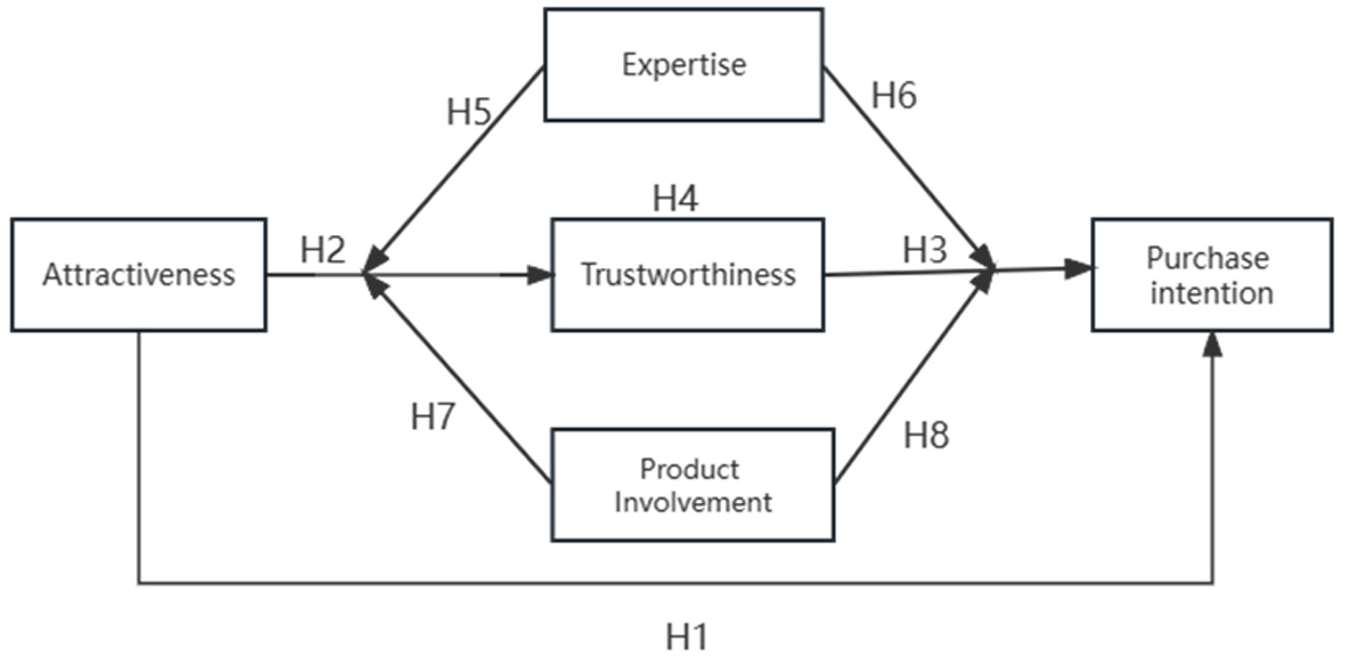
Proposed research model.
Research Method
Sample and Measurement
This study primarily examines the relationships between the physical attractiveness, professional expertise, product involvement, and trustworthiness of Douyin livestreamers, as well as consumers’ purchase intentions. The target population consists of young consumers from Mainland China who have previous experience purchasing products and services on Douyin.
In August 2023, a pre-test was conducted with 37 participants recruited via the WeChat platform. Of these, 70.27% were male and 29.73% were female. Ages ranged from 20 to 35 years, with 89.19% holding a university degree or higher. Validity and reliability tests indicated that all variables achieved a Cronbach’s α value greater than .75, a KMO value above 0.7, and a significance level (p-value) of .000.
For the survey, we adapted existing scales from prior social media research. The scale for physical attractiveness was modified from Ohanian (1990), Sokolova et al. (2022), and Masuda et al. (2022), with the terms “YouTubers” and “Instagram influencers” replaced by “Douyin livestreamers.” The purchase intention scale was adapted from Dodds et al. (1991), with “livestream influencers” replaced by “Douyin livestreamers.” The perceived professional expertise scale was sourced from Lou and Kim (2019), and the trustworthiness scale was derived from Ohanian (1990), Lou and Kim (2019), and Masuda et al. (2022). The product involvement scale was adapted from Zaichkowsky (1985) and Zaichkowsky (1994). All survey items utilized a 7-point Likert scale, where 1 indicated “strongly disagree” and 7 indicated “strongly agree.”
The formal research used a virtual, scenario-based online survey distributed via the “Questionnaire Star” platform (https://www.wjx.cn). Respondents were instructed: “Please imagine you are interested in purchasing a product. While browsing Douyin, you encounter a livestream featuring one of your favorite hosts discussing a related product. Based on your experience with watching livestreams and making purchases, please answer the subsequent questions.”
The study focused on consumers aged 20 to 35 with prior purchasing experience on Douyin, targeting six economically prosperous coastal provinces: Beijing, Shanghai, Shandong, Jiangsu, Zhejiang, and Guangdong. Each question was configured to have a minimum response time of 5 s. In total, 303 questionnaires were distributed. After outlier detection, 29 questionnaires were deemed invalid, resulting in 274 valid responses. Further details are provided in Table 1.
Descriptive Statistics of the Research Sample Characteristics (N = 274).

Reliability and Validity
This study conducted an exploratory factor analysis and assessed reliability using Cronbach’s Alpha. As shown in Table 2, the Cronbach’s Alpha values for all five factors exceeded .8, indicating a high level of reliability. The Corrected Item-Total Correlation (CITC) values between the observed variables and their corresponding latent factors predominantly ranged from .6 to .8, suggesting that the latent variables were well-defined for each survey item. Overall, the questionnaire demonstrated robust reliability, as detailed in Table 2.
Scale Reliability Analysis.

The structural integrity of each dimension was examined using SPSS version 27. As shown in Table 3, the Kaiser-Meyer-Olkin (KMO) measure was 0.915, exceeding the commonly accepted threshold of 0.70, which confirms the appropriateness of the dataset for factor analysis. Additionally, Bartlett’s Test of Sphericity yielded a significant approximate chi-square value of 3,434.689, with a significance level of .000 (p < .01), affirming the robustness of the validity structure. Through principal component analysis, factors with eigenvalues greater than 1 were extracted. As presented in Table 4, five common factors were identified. The cumulative variance explained after rotation was 76.393%, surpassing the critical threshold of 60%, further supporting the model’s validity.
KMO Measure and Bartlett’s Test of Sphericity.

Factor Rotation Matrix.

Note. Factor loadings greater than 0.70 are shown in bold, representing the primary component on which each item is loaded. These values indicate the strongest association between each observed variable and its underlying construct.
This study conducted a confirmatory factor analysis to evaluate the model’s fit. According to Fornell and Larcker (1981), standardized factor loadings should be greater than 0.5, Composite reliability (CR) should exceed 0.6. The average variance extracted (AVE) should be above 0.5. As show in Figure 3, Table 5, the model fit indices are χ2/df = 1.652, indicating a satisfactory model fit. GFI = 0.913, AGFI = 0.884, NFI = 0.933, TLI = 0.967, CFI = 0.972, and RMSEA = 0.049. Given these fit indices, the confirmatory factor analysis in this study fulfills the requisite criteria, and the overall model demonstrates an excellent fit.
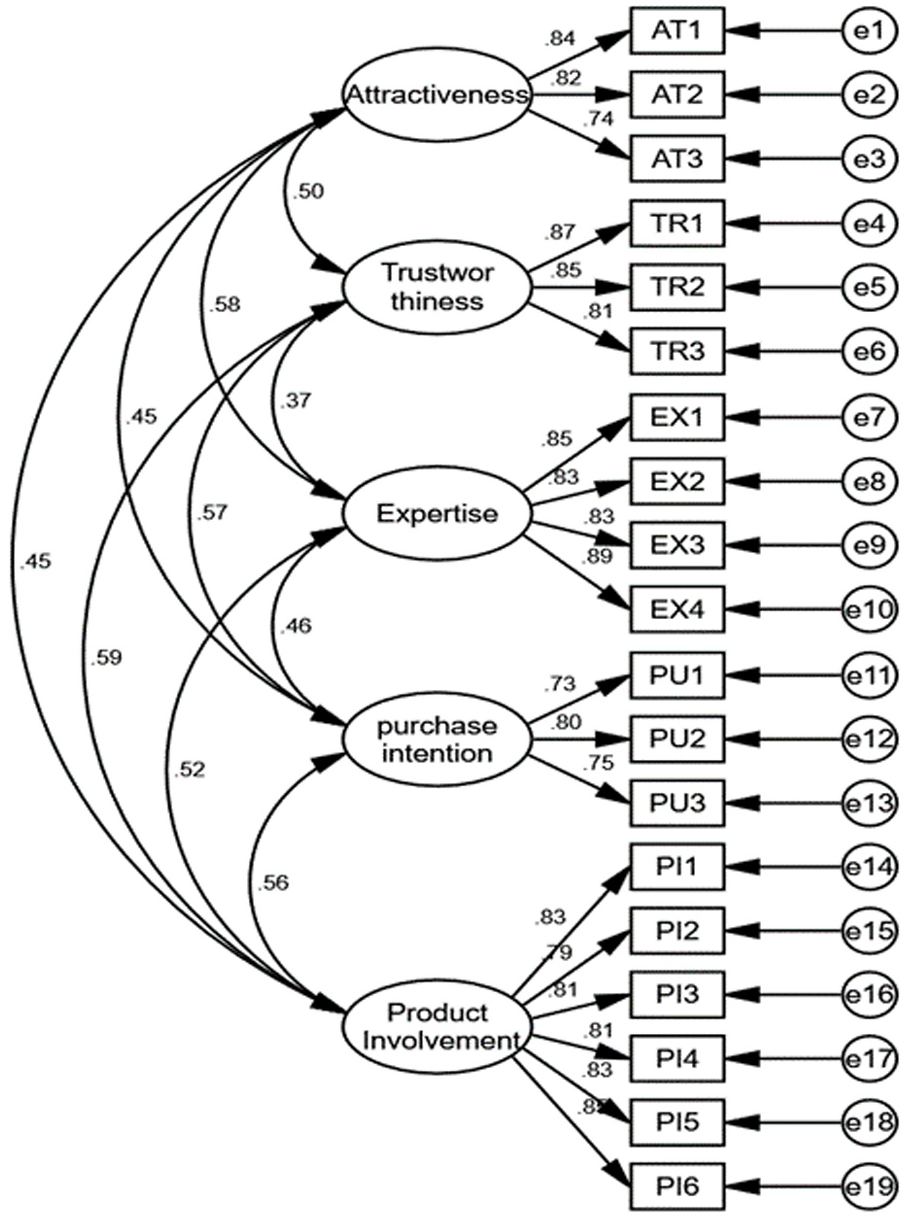
Confirmatory factor analysis (CFA).
Model Fit Indices.

Note. ***p < .001.
CR and AVE were utilized as metrics to evaluate convergent validity in this study. As indetailed in Table 6, the standardized factor loadings for all five items surpass the 0.5 threshold. This suggests that each observed variable effectively accounts for a substantial portion of the variance in its corresponding latent construct. The CR measures are above 0.8, significantly exceeding the standard benchmark of 0.7. This indicates that the observed variables within each construct are highly reliable indicators of that construct. Consequently, the strong convergent validity of the constructs under investigation is confirmed.
Convergent Validity Analysis Outcomes.

Note. **p < .001.
We conducted assessments of convergent and discriminant validity. As shown in Table 7, the AVE values for each dimension exceed 0.5. When comparing the correlation coefficients with the square roots of the AVEs, the latter are greater, indicating that the scale demonstrates strong convergent and discriminant validity.
Discriminant Validity Analysis Test.

Note. The square roots of the AVEs are shown in bold on the diagonal.
This study used Pearson’s correlation analysis to assess the relationships among the variables. As shown in Table 8, the p-values for all five variables were below .01, indicating statistically significant relationships. These findings highlight the significant interconnections among all variables. In Table 8, the “**” symbols denote that the correlation coefficients are significant at the p < .01 level (two-tailed), confirming the robustness of the observed associations among the constructs.
Correlation Analysis Results.
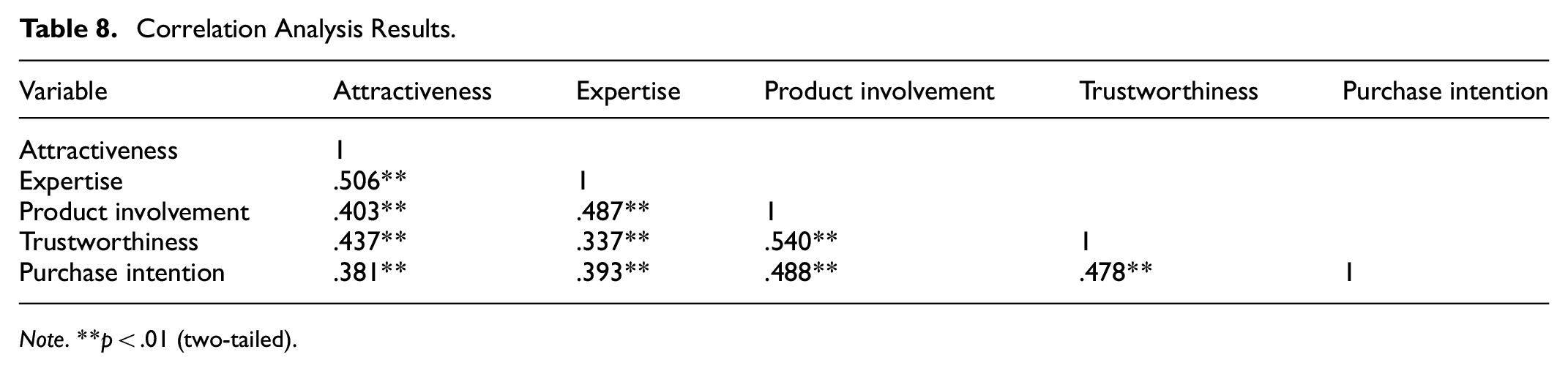
Note. **p < .01 (two-tailed).
Results
Relationships Between Livestreamers’ Attractiveness, Trustworthiness, and Consumer Purchase Intentions
In line with the theoretical framework, this study employed Amos 21 to construct a Structural Equation Model (SEM) to analyze the behavior of young consumers based on livestreamers’ attractiveness. As shown in Table 9 and Figure 4, the χ2/df ratio was 1.545, falling below the threshold of 3. The Goodness of Fit Index (GFI) was 0.972, and the Adjusted Goodness of Fit Index (AGFI) was 0.947, both exceeding the 0.8 benchmark. The Normed Fit Index (NFI) was 0.969, and the Comparative Fit Index (CFI) was 0.989, both surpassing the 0.9 threshold. The Root Mean Square Error of Approximation (RMSEA) was 0.045, below the recommended benchmark of 0.08. These metrics collectively indicate that the model demonstrates a satisfactory fit.
Model Fit Indices or Goodness of Fit Indices.


Standardized path estimates in structural equation modeling (SEM).
Path Analysis
The following observations can be made from Table 10. The standardized path coefficient from attractiveness to purchase intention is 0.220 (t-value = 2.840, p = .005 < .01), indicating that attractiveness significantly and positively influences purchase intention. In other words, greater attractiveness increases purchase intentions, confirming H1. The standardized path coefficient from attractiveness to trustworthiness is 0.506 (t-value = 7.359, p = .000 < .01), suggesting that attractiveness significantly and positively impacts trustworthiness. Specifically, as attractiveness increases, trustworthiness rises, supporting H2. The standardized path coefficient from trustworthiness to purchase intention is 0.462 (t-value = 5.725, p = .000 < .01), indicating that trustworthiness significantly and positively impacts purchase intention. Therefore, as trustworthiness increases, so does purchase intention, confirming H3.
The Path Coefficients Between the Variables.

Note. **p < .01. ***p < .001.
Mediation Effect Test
The mediation effect was tested using the bootstrap method, resampling 5,000 times to calculate the 95% confidence interval with bias-corrected tests. AMOS software’s built-in syntax was used to assign values to the relevant paths. Furthermore, non-standardized and standardized specific mediation effects were computed.
The confidence interval did not include zero for the path linking attractiveness to trustworthiness and subsequently to purchase intention, and the p-value was less than .05, supporting H4 and confirming the mediation effect. Similarly, the direct and total effects of attractiveness on purchase intention yielded confidence intervals that did not include zero, with a p-value less than .05, supporting the corresponding hypothesis. Further details can be found in Table 11.
Mediation Effect Test.

Note. AT = attractiveness; TR = trustworthiness; PU = purchase intention.
The Moderating Effect of Professional Expertise on the Relationship Between Attractiveness and Trustworthiness
Linear regression analysis was conducted using SPSS version 27 to test the moderating effect. Three models were constructed: Model 1 introduced basic demographic information, Model 2 included the independent variable and the moderator, and Model 3 incorporated the interaction term. The moderating role of professional expertise in the relationship between attractiveness and trustworthiness was primarily examined through regression modeling. Demographic variables were included as control variables to enhance the model’s explanatory power.
In Model 1, the control variables, specifically education and frequency, significantly influenced trustworthiness. In Model 2, the independent variable, attractiveness, had a significant and positive effect on trustworthiness (β = .338, p = .000). In Model 3, the regression coefficient for the interaction term between the independent variable and the moderator was (β = .222, p = .009), indicating a significant moderating effect of professional expertise on the relationship between attractiveness and trustworthiness. Additionally, the R2 value for Model 2 was .252, while for Model 3, it increased to .271, reflecting an enhancement in explanatory power. This improvement supports the conclusion that professional expertise significantly moderates the relationship between attractiveness and trustworthiness. Therefore, H5 is supported, with the details presented in Table 12 and Figure 5.
The Moderating Effect of Professional Expertise on the Relationship Between Physical Attractiveness and Trustworthiness.
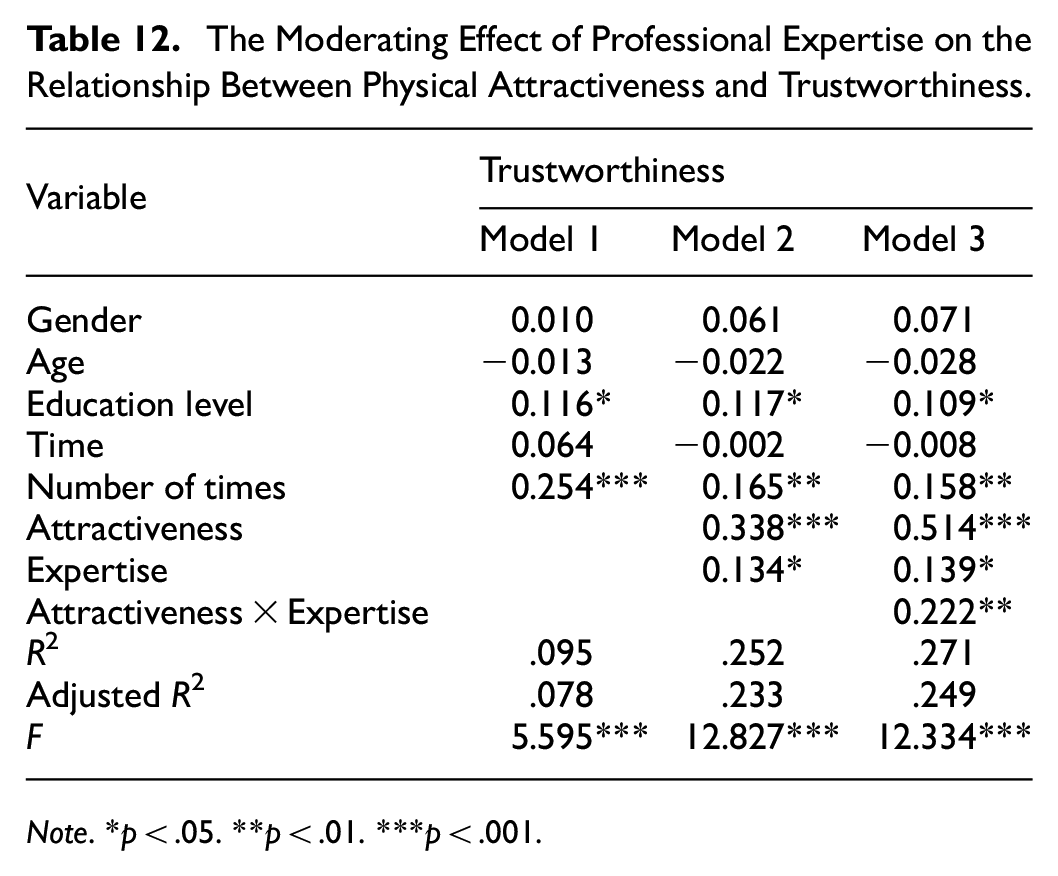
Note. *p < .05. **p < .01. ***p < .001.
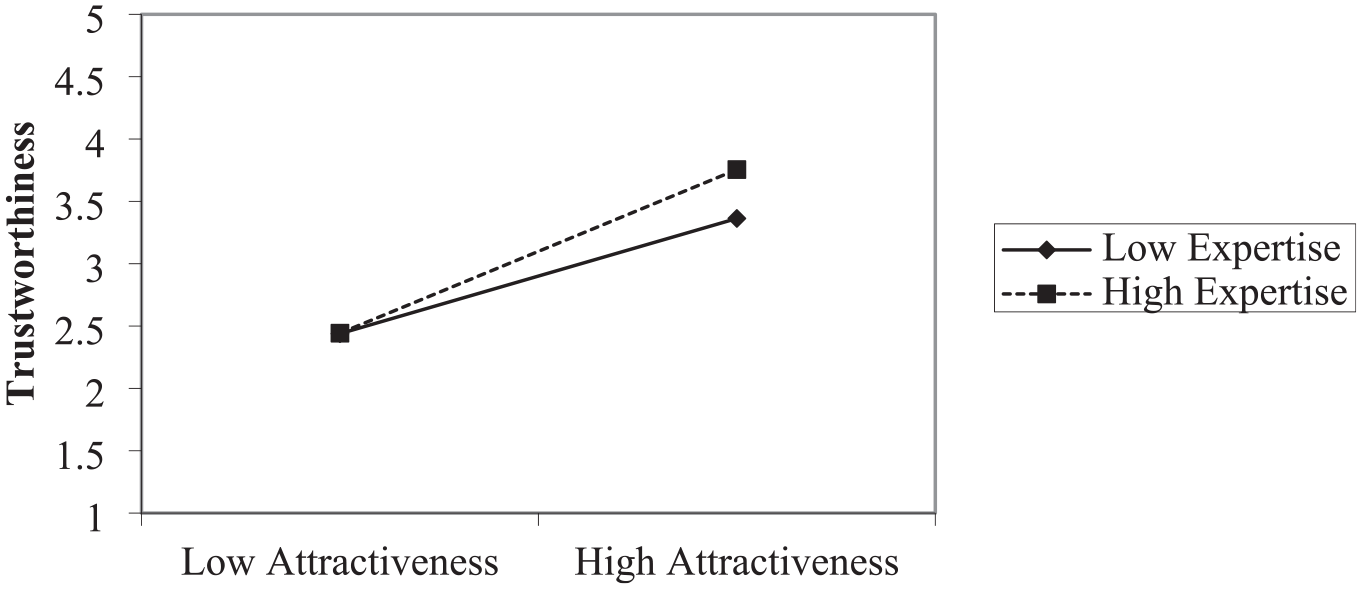
Graph of the moderating effect of professional expertise on the relationship between physical attractiveness and trustworthiness.
The Moderating Effect of Professional Expertise on the Relationship Between Trustworthiness and Purchase Intention
The moderating role of professional expertise in influencing the impact of trustworthiness on purchase intention was primarily validated through regression modeling. In Model 1, the control variable, frequency, significantly impacted purchase intention. In Model 2, trustworthiness as the independent variable had a significant and positive effect on purchase intention (β = .367, p = .000). In Model 3, the regression coefficient for the interaction term between trustworthiness and professional expertise was (β = .230, p = .000), indicating a significant moderating effect on purchase intention. Additionally, the R2 value for Model 2 was .318, which increased to .344 in Model 3, reflecting a notable improvement. This evidence supports H6, suggesting that professional expertise significantly moderates the effect of trustworthiness on purchase intention. Further details are available in Table 13 and Figure 6.
The Moderating Effect of Professional Expertise on the Relationship Between Trustworthiness and Purchase Intention.

Note. *p < .05. ***p < .001.
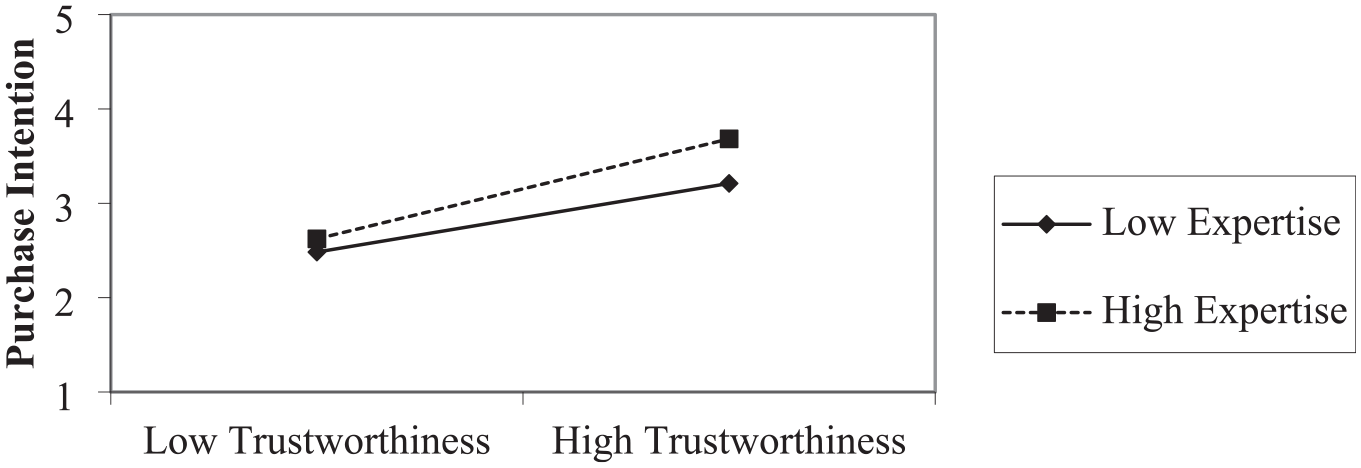
Graph of the moderating effect of professional expertise on the relationship between trustworthiness and purchase intention.
The Moderating Effect of Product Involvement on the Relationship Between Attractiveness and Trustworthiness
The role of product involvement as a moderator in the relationship between attractiveness and trustworthiness was primarily examined through regression modeling. To enhance the model’s explanatory power, the demographic variables of gender, age, education, duration, and frequency were incorporated as control variables. In Model 1, a multivariate regression model was established with the demographic variables as independent variables and trustworthiness as the dependent variable. In Model 2, the set of independent variables was expanded to include attractiveness and product involvement, with trustworthiness remaining as the dependent variable. Model 3 introduced an interaction term between attractiveness and product involvement.
In Model 1, the control variables of education and frequency significantly impacted trustworthiness. In Model 2, the independent variable, attractiveness, significantly and positively affected trustworthiness (β = .249, p = .000). However, in Model 3, the regression coefficient for the interaction term between attractiveness and product involvement was (β = −.055, p = .320), suggesting no significant impact on trustworthiness. Furthermore, the R2 value was .371 for Model 2 and .373 for Model 3, showing no significant improvement. This indicates that product involvement does not significantly moderate the relationship between attractiveness and trustworthiness; thus, H7 is unsupported. Further details can be found in Table 14 and Figure 7.
The Moderating Effect of Product Involvement on the Relationship Between Physical Attractiveness and Trustworthiness.

Note. *p < .05. ***p < .001.
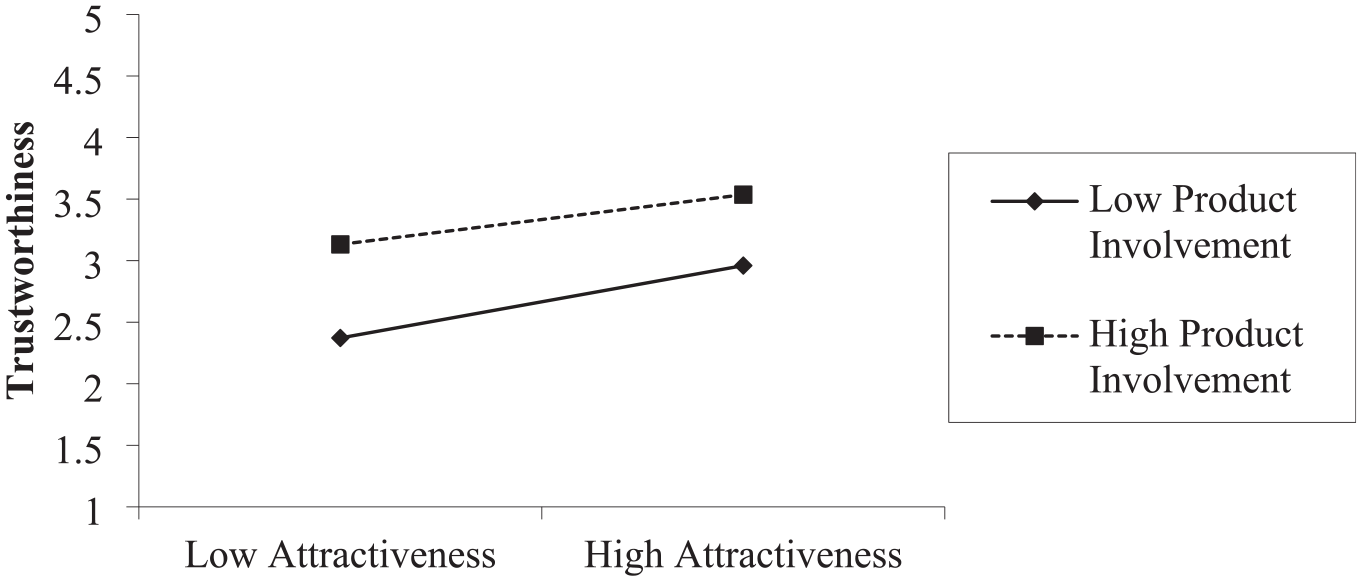
Graph of the moderating effect of product involvement on the relationship between attractiveness and trustworthiness.
The Moderating Effect of Product Involvement on the Relationship Between Trustworthiness and Purchase Intention
The potential moderating role of product involvement in trustworthiness’ influence on purchase intention was rigorously assessed through regression modeling. Demographic variables were integrated as controls to bolster the model’s explanatory power.
In Model 1, a multivariate regression model was constructed with gender, age, education, duration, and frequency as independent variables and purchase intention as the dependent variable. Model 2 incorporated gender, age, education, duration, frequency, trustworthiness, and product involvement as independent variables, with purchase intention as the dependent outcome. Alongside the previous independent variables, Model 3 was extended to include an interaction term between trustworthiness and product involvement to predict purchase intention.
In Model 1, frequency, the control variable, significantly influenced purchase intention. In Model 2, trustworthiness, the independent variable, exerted a notable positive effect on purchase intention (β = .291, p = .000). Model 3’s regression coefficient for the interaction term between the independent variable and the moderator was (β = .218, p = .000), pointing to the interaction term’s significant impact on purchase intention. Moreover, the R2 value for Model 2 was .327 and rose to .356 for Model 3, suggesting an enhanced model fit. These findings underscore the significant moderating role of product involvement in the relationship between trustworthiness and purchase intention. Therefore, H8 is supported, with detailed insights provided in Table 15 and Figure 8.
The Moderating Effect of Product Involvement on the Relationship Between Trustworthiness and Purchase Intention.

Note. *p < .05. ***p < .001.

Graph of the moderating effect of product involvement on the relationship between trustworthiness and purchase intention.
Discussion
This study aimed to examine how the attractiveness, expertise, and trustworthiness of influencers on the Douyin (TikTok) platform influence the purchase intentions of young consumers. Most advertising messages share a common goal: persuading consumers to adopt a particular product, service, or ideology (Meyers-Levy & Malaviya, 1999). Based on the principles of persuasion theory, we hypothesized that these factors would significantly affect consumers’ purchasing intentions. This study explores the impact of Douyin influencers’ attractiveness, expertise, and trustworthiness on consumers’ purchase intentions.
Society tends to place a high value on physical attractiveness. “Vanity” regarding physical appearance refers to the emphasis individuals place on the looks of others and the evaluation or perception of their own appearance (Burton et al., 1995). Influencers can use their allure, social magnetism, and professional competence to encourage consumers to follow their recommendations during live broadcasts and to share them with others (L. Zhu et al., 2021).
Our findings reveal that young consumers on the Douyin platform place significant emphasis on influencers’ attractiveness. The empirical results demonstrate that consumer purchasing behaviors are influenced by both the influencer’s physical attractiveness and trustworthiness. Additionally, these relationships are further shaped by the influencer’s expertise and the consumer’s level of product involvement. Notably, the moderating role of the influencer’s expertise and professional skills emerges as a key factor. Social media influencers are individuals who, through their knowledge and expertise in a specific domain or subject, exert significant influence over the decisions of their followers and peer consumers (Ki & Kim, 2019). In today’s age of knowledge sharing, influencers can leverage social media platforms to easily gather and disseminate market information, becoming hubs of expert insight that shape the behaviors of their followers (Aljukhadar et al., 2020). For social media marketers, it is essential to expand their professional knowledge and skills, especially in relation to knowledge-based products and content creation, in order to attract consumer attention and build trust.
Our research findings suggest that influencers on the Douyin platform should combine appealing aesthetics with substantial expertise and skills. This combination significantly enhances consumer trust in the influencer, driving their purchase intentions. Both the direct and total effects of attractiveness on purchase intention are significant, highlighting its positive impact. Furthermore, expertise plays a significant moderating role in the effect of trustworthiness on purchase intentions. Social Identity Theory posits that individuals tend to identify with those similar to themselves, which enhances their subjective certainty. They believe that shared attitudes reflect external reality and objective truth. As a result, identity cues like physical attractiveness and professional expertise help individuals categorize and identify with those they perceive as similar, leading them to support their viewpoints (Taylor et al., 2022). According to the Chinese Live E-commerce Industry Research Report, China’s live e-commerce market reached a size of 4.9 trillion yuan in 2023, with a 35.2% year-on-year growth. Given the rapid growth of the live e-commerce sector, it is essential that influencer management includes training in professional knowledge and skills.
Product involvement is defined as consumers’ cognitive perceptions of the relevance between a product and its intrinsic value, personal needs, lifestyle, and interests (Zaichkowsky, 1985, 1994). According to Zaichkowsky’s theoretical propositions, as product involvement increases, consumers are likely to focus more on the product’s inherent value, which could exert a negative moderating effect on the relationship between attractiveness and trustworthiness. However, our empirical analysis shows that product involvement does not significantly moderate the relationship between attractiveness and credibility on the Douyin platform. One possible explanation for this is the demographic composition of our sample: urban, young consumers from economically prosperous regions of mainland China, with 97% holding at least a university degree. On the Douyin platform, factors such as the influencer’s physical appeal, live broadcast content, and other elements may outweigh the effects of product involvement. Therefore, attractiveness and professional expertise appear to have a more significant impact on consumers’ purchase decisions than product involvement, making the moderating effect of product involvement on the relationship between attractiveness and credibility insignificant.
This study provides a fresh perspective on the realm of live-stream e-commerce, particularly on platforms like Douyin, highlighting the crucial roles of attractiveness and expertise in enhancing an influencer’s trustworthiness and influencing consumers’ purchase intentions. These insights contribute to the academic discourse on live-stream e-commerce and offer a deeper understanding of the practical implications of online influencers’ appeal to young consumers.
According to the 2023 Douyin Annual Observation Report, Douyin users in 2023 showed a strong interest in learning, with 94% expressing satisfaction with the platform’s knowledge content. In the first half of the year alone, over 160 million users engaged with educational content on Douyin (Ocean Engine, 2022). The 2023 Douyin E-commerce Book Consumption Data Report reveals that in 2023, book live streams on the Douyin e-commerce platform garnered over 11.3 billion cumulative views, with book merchants and publishers’ self-broadcasting amassing more than 1.46 million hours and surpassing 2.4 billion cumulative views. Consumers have increasingly turned to short videos for learning about and purchasing books, with book-related short videos on the platform generating over 101.3 billion views and receiving more than 1 billion likes. Additionally, the book transaction volume driven by short videos experienced a 69% year-on-year growth (Douyin E-commerce, 2024).
Both the report data and the findings of this study demonstrate that knowledge-based live streams and products are increasingly favored and valued by consumers on the Douyin platform. As a result, the professional knowledge of hosts, rather than just their appearance, represents a new area of research and a developing trend. This trend is crucial for the future direction and content development of e-commerce hosts. Therefore, e-commerce companies should prioritize managing livestream hosts’ images and enhancing their professional expertise to improve the effectiveness of livestreaming and build consumer trust.
In the corporate landscape, when selecting influencers for live broadcasts, there should be a preference for individuals who possess significant aesthetic appeal, product knowledge, and interactive skills (L. Zhu et al., 2021). This highlights the need for targeted training programs designed to enhance influencers’ professional expertise. From a practical perspective, the findings of this research can serve as a cornerstone for media marketers in the era of integrated media, helping them redefine their management strategies. The study emphasizes the importance of a comprehensive understanding of consumers, particularly the younger demographic, with a focus on their purchasing psychology and habits, and a greater emphasis on the content shared through live-stream platforms.
Conclusion
This study explored the effect of livestreamers’ attractiveness on the purchasing behavior of young Chinese consumers by enhancing trustworthiness. It also examined the moderating role of professional expertise and product involvement, offering valuable insights for effectively implementing social media marketing strategies. However, the study has certain limitations that present opportunities for future research.
First, this study focused on the moderating effects of professional expertise and product involvement, while other factors, such as narrative style and live-stream interactions, may also influence the effectiveness of livestreamers’ attractiveness. Future studies could investigate these additional factors. Second, the research predominantly focused on tangible products promoted by influencers. Extending the scope to include intangible products (e.g., online courses, digital content subscriptions, or consultancy services) could provide interesting comparisons regarding the role of expertise in marketing digital services versus physical products. Third, the sample for this study consisted of educated youth from China’s economically advanced coastal provinces. Expanding the sample to include diverse age groups, socio-economic backgrounds, and geographical regions would help assess the broader applicability of the findings. Lastly, to generalize the findings and explore broader applications in global live-streaming markets beyond Douyin, future research could examine other prominent live-streaming platforms such as Instagram Live, Twitch, YouTube Live, and Facebook Live. Comparing the influence of influencer traits across these platforms may reveal platform-specific differences and cultural variations in how these factors impact consumer behavior.
Footnotes

Funding
The authors disclosed receipt of the following financial support for the research, authorship, and/or publication of this article: Funding from “2025 Zhejiang provincial Philosophy and Social Science Planning Project” (NO. 25GXSZ053YB).
Declaration of Conflicting Interests
The authors declared no potential conflicts of interest with respect to the research, authorship, and/or publication of this article.
Data Availability Statement
The data that support the findings of this research are available from the corresponding author upon reasonable request. The data are not publicly available due to privacy and ethical restrictions.