



Abstract
This study explores the relationship between innovation capability, different types of innovation (marketing, product/service, process, and organizational), and innovation performance in 157 Foreign Direct Investment (FDI) enterprises in Laos, selected through random sampling. Using Structural Equation Modeling (SEM) and Fuzzy-Set Qualitative Comparative Analysis (FSQCA), the study finds that innovation capability, particularly in process and organizational innovation, plays a key role in driving high innovation performance. SEM analysis reveals that innovation capability positively influences all types of innovation, which in turn significantly impacts innovation performance. FSQCA identifies two configurational solutions for achieving high innovation performance: the first involves product/service and process innovation, without marketing and organizational factors; the second includes marketing, product/service, and process innovations. Both solutions are sufficient for high performance, with marketing and product/service innovations emerging as core drivers, while process and organizational innovations are considered peripheral. However, the study is limited by its focus on FDI enterprises within Laos, potentially constraining the generalizability of the findings. The findings emphasize the importance of a holistic innovation strategy, integrating key innovation activities, to enhance competitiveness in the global market.
Plain language summary
This study examines how innovation capability and different types of innovation (marketing, product/service, process, and organizational) impact the performance of 157 Foreign Direct Investment (FDI) companies in Laos. The research uses advanced analysis methods to identify key factors that drive strong innovation performance. It finds that process and organizational innovations are particularly important, and two effective strategies are identified: one focusing on product/service and process innovation, and another combining marketing, product/service, and process innovations. While the results provide valuable insights, the study is limited to FDI companies in Laos, which may not make the findings applicable to other contexts. Overall, the study highlights the need for a well-rounded approach to innovation to stay competitive in the global market.
Keywords
Introduction
Innovation is widely regarded as a critical determinant of organizational sustainability, global competitiveness, and improved performance outcomes (Malek et al., 2024). A substantial body of research on innovation management has consistently associated innovation with enhanced economic and strategic advantages at both national and regional scales (Spanjol et al., 2024), for example, emphasized historical economic growth patterns by analyzing innovation trends in Britain during the 18th century, the United States in the late 19th century, and other countries advancing economically throughout the 20th century. In Germany, the ZEW Economic Research Institute collected innovation-related data from 1980 to 2000, offering meaningful insights into industrial innovation trends (ZEW, 2003). A large-scale innovation study in Italy, involving more than 20,000 small and medium-sized enterprises, represented one of the most in-depth national surveys on innovation (Bianchi, 2008). In addition, the OECD—working in collaboration with the European Commission—introduced the OSLO Manual in 1992 to standardize the collection and analysis of technological innovation data. This framework was later updated in 1997 (Eurostat, 2018; Singler, 2023). The OSLO Manual also shaped Eurostat’s approach for the Community Innovation Survey (CIS), which has facilitated large-scale innovation data collection across European countries and has also been applied in Laos. In 2018, the Lao Ministry of Science and Technology, following the OSLO framework, conducted a comprehensive innovation study with support from ASEAN policy frameworks. This survey yielded valuable cross-national innovation insights relevant to public policy development in Southeast Asia (OECD, 2023).
Laos is an emerging economy experiencing rapid growth, which has drawn significant foreign direct investment (FDI) from international investors. The country’s increasing industrial competitiveness and dynamic market have spurred enterprises to focus more on innovation. As a result, innovative activities have become a critical component of enterprise development strategies. These activities are essential for reasons such as enhancing production efficiency, entering new markets, and establishing strong reputations to build sustainable competitive advantages. Innovation also serves as a means to address various business challenges encountered by enterprises (Güneş & Şekerdil, 2024; Ireland & Webb, 2007; Moore & Manring, 2009; Weerawardena, 2003). The growing presence of FDI enterprises is expected to improve the competitiveness of local Lao businesses. Furthermore, domestic enterprises can enhance their global competitiveness by integrating into international production networks and participating in business linkage chains. Thus, examining innovation within FDI enterprises offers valuable insights that can benefit Lao enterprises.
This research aims to address a significant gap in the literature by exploring how innovation capability (IC) impacts the innovation performance of foreign direct investment (FDI) firms operating in Laos. To date, no study has directly replicated the empirical framework established by (Yam et al., 2004) in assessing IC within FDI enterprises in the Laotian context. Although IC research in Laos is still emerging, the majority of related studies in Southeast Asia have concentrated on countries such as Thailand, Vietnam, and Malaysia (Degelsegger et al., 2014; OECD, 2023). Presently, there is a lack of comprehensive assessments examining IC across various business functions or integrated processes within FDI firms in Laos. This study contributes to filling that void by offering empirical evidence on the IC of FDI firms in Laos—an area that remains comparatively underexplored within the broader regional innovation landscape.
This study primarily aims to examine how innovation capabilities and various innovation types affect innovation performance in FDI firms in Laos, while also exploring their individual contributions. It expands current knowledge by analyzing the role of IC in FDI firms in Laos, addressing a key gap in Southeast Asian literature. Although IC’s impact on performance is well-researched in advanced Asian countries (Chen et al., 2021; Cheng & Lin, 2012; Dutta et al., 2021; You et al., 2022),studies on Laos are limited. The country’s innovation environment is still growing (OECD, 2023), and while FDI has improved, Laos still falls behind regional peers in innovation output and competitiveness. The FDI sector in Laos has experienced growth in recent years, with a focus on technology adoption, resource allocation, and workforce development (Norasingh, 2013). However, challenges related to innovation capabilities, such as limited R&D investments, insufficient infrastructure, and a skills gap, continue to hinder innovation performance. Overcoming these challenges could significantly enhance innovation outcomes and strengthen the sector’s competitiveness in the region.
This study offers meaningful insights into how innovation capability (IC) impacts the innovation performance of FDI firms in Laos, addressing a gap in current research. Evidence from nearby countries shows that many FDI firms in developing regions face technological challenges, often relying on low-cost labor and resource-heavy methods (Lebdioui et al., 2021). As Bourdet (1998), notes Laos trails behind ASEAN countries like Thailand and Malaysia in innovation capability and infrastructure. Improving IC is essential for maintaining competitiveness. By identifying critical IC factors, this study offers useful recommendations to enhance innovation outcomes in Laotian FDI firms, especially in R&D, planning, and resource allocation—key drivers for growth and regional competitiveness.
The growing acknowledgment of innovation as a critical factor for organizational success has made it an essential strategy for improving business performance (Garrido-Moreno et al., 2024). However, many previous studies have not clearly separated the concepts of innovation capability and innovation types within firms. This study addresses this limitation by exploring how innovation capability influences different innovation types and the overall performance of FDI firms in Laos. The research intends to offer meaningful theoretical contributions and actionable insights for both scholars and practitioners working in the field of innovation management.
Literature Review
Research Background and Hypothesis
The existing body of literature on innovation highlights its fundamental role as a key factor for a firm’s success and sustainability, especially in today’s increasingly competitive, complex, and knowledge-driven landscape (Abbing, 2010). Despite its significance, the study of innovation in specific sectors, such as FDI enterprises, has been underexplored. A significant gap exists in research addressing the distinctive challenges and characteristics of innovation within FDI enterprises, particularly in Laos, in comparison to other industries like banking. Business services, being diverse and context-dependent, present unique challenges in innovation, as a one-size-fits-all approach is not applicable when creating new products, services, processes, or business models. For example, the nature of the service or the degree of interaction between service providers and customers can significantly influence innovation (Johne & Davies, 2000). The introduction of innovative business strategies encourages adaptive and flexible operations (Omowole et al., 2024), which can result in transformative changes to existing practices. Innovations in areas such as risk assessment, or the categorization of risks, often lead to developments in marketing strategies, organizational structures, and product creation. These innovations can give rise to entirely new product categories or even entirely new sectors designed to meet the demands of emerging risks (Barras, 1990).
Many researchers highlight divergent perspectives in the field. Some argue that innovation in service sectors is fundamentally different from that in manufacturing sectors, often being non-technological and highly reliant on human factors (González-Blanco et al., 2019). Conversely, others contend that digitalization is bridging this gap, enabling service firms to adopt product-centric innovation strategies effectively (Gupta & Ramachandran, 2021). This divergence points to an ongoing debate about the adaptability of traditional innovation frameworks to service-oriented industries.
Scholarly consensus emphasizes that innovation in the service sector differs significantly from that in the manufacturing sector (Hipp & Grupp, 2005), often being categorized as non-technological (De Jong, 2003). In services, innovation is typically viewed through two lenses: the introduction of entirely new products or services for individuals or companies and the enhancement or reconfiguration of existing services (De Jong, 2003). These innovations can be either radical or incremental, (Verganti, 2009) asserts that in manufacturing, innovation generally involves changes to the goods a company offers, as well as modifications to the processes used to create and deliver them, classifying them as product and process innovations. However, in the service industry, the distinction between product and process innovations is often blurred, with both occurring simultaneously. This framework’s applicability can vary by industry. While some service sectors may effectively adopt it, others may find it less relevant or applicable only to a limited extent (Cusumano et al., 2015). For instance, adding extra features or benefits to a product, such as offering bonuses or international trips, would be considered product innovation. On the other hand, enhancing internal processes like improving claim management, customer service, or operational efficiency falls under process innovation.
Furthermore, studies reveal divergent views on the outcomes of innovation. While (Rosenbusch et al., 2011) emphasize the importance of incremental innovation for sustained growth, (O’Connor & Rice, 2013) argue that breakthrough innovation is often more critical, particularly in competitive markets. These contrasting viewpoints highlight the complexity and adaptability of innovation strategies across various sectors. Innovation is only feasible if a company possesses the ability to innovate (Andriyani et al., 2024). In this study, innovation capability is a central theoretical concept, helping to explain how organizations sustain competitive advantages and achieve innovation outcomes. Innovation capability is considered an essential asset, enabling firms to maintain their competitive edge and implement strategic initiatives. It evolves through core internal processes (Lawson & Samson, 2001) and is closely intertwined with other organizational practices. Moreover, it is tacit, non-replicable, and deeply connected to experiential learning and internal knowledge (Nkowa Njampa, 2024; Rajapathirana & Hui, 2018).
This research leverages the Resource-Based View (RBV) theory alongside the Oslo Manual framework (OECD, 2023) to investigate how innovation capabilities evolve in FDI enterprises within Laos. As per the RBV theory, companies achieve a competitive edge by strategically utilizing distinct, irreplaceable resources, such as human capital, organizational knowledge, and innovation processes. This perspective provides a solid foundation for understanding how innovation capabilities shape organizational outcomes. The capability to innovate allows firms to introduce new products swiftly and adopt new systems, which is vital for maintaining competitiveness. Innovation performance is seen as a blend of resources and assets, requiring diverse capabilities to thrive in fast-changing environments (Christensen, 1995). Adler (1990) defines innovation capability as: (a) the ability to apply suitable process technologies to produce these products; (b) the capacity to create products that meet market demands; (c) the ability to develop and integrate new products and technologies to meet future demands; and (d) the capacity to react to unexpected technological changes and opportunities presented by competitors. The study extends Dynamic Capability Theory by conceptualizing innovation capability as a dynamic construct, enabling firms to adapt and thrive in volatile markets by reorganizing resources and strategies. (Abbas & Kumari, 2023; Venkatraman & Ramanujam, 1986) argue that organizational performance encompasses both financial and operational dimensions, such as market share and product quality. Several studies have examined the relationship between innovation and firm performance, producing mixed results. Innovative performance acts as a mediator between types of innovation and performance outcomes. Innovation significantly impacts organizational performance, with financial, market, and production performance being positively influenced by innovation. In this context, innovative performance mediates the direct positive influence of innovation on these dimensions. These theoretical concepts, supported by empirical research, form the basis for developing hypotheses regarding the relationship between innovation types and their impact.
Development of Hypothesis and Research Framework
The Innovation Capability (IC)
Innovation capability (IC) has been described by scholars such as (Galadanchi & Katsina, 2024) and (Nascimento et al., 2024) as a broad set of organizational features that promote and support innovative behavior. IC includes a range of specialized assets such as technologies, intellectual property, and organizational knowledge, along with skills, experience, and competencies that help firms innovate effectively (Dinu, 2025). Hashem (2024) emphasize that IC involves the capacity to absorb, develop, and enhance existing technologies while also facilitating the creation of new innovations. Additionally, research and development (R&D) efforts are considered central to technological advancement within firms and reflect essential intangible resources invested in innovation (Wei et al., 2025).
Effective innovation extends beyond technical skills and must incorporate broader organizational competencies, including areas such as marketing, manufacturing, learning, strategic management, and effective resource planning (Yam et al., 2004).Firms must develop integrated capabilities that not only support product development but also improve internal processes and adapt to external market shifts. According to (Adler, 1990) key components of technological innovation capability include: (i) The ability to meet evolving customer demands through innovative product offerings. (ii) The efficiency in delivering those products using advanced process technologies. (iii) The foresight to forecast market changes and proactively innovate. (iv) The agility to respond quickly to competitive pressures and technological disruptions in the industry.
The elements that comprise innovation capability (IC) are fundamental to the internal functioning of an organization. As noted by Almashhadani and Almashhadani (2023), the strategic use of resources such as skilled personnel, technological infrastructure, and financial capital can greatly influence a firm’s performance by enhancing revenue growth and competitive standing. Recognizing the importance of aligning resources with performance, firms may choose to strengthen their existing IC or invest in complementary capabilities to achieve similar market advantages (Sun & Abdullahi Usman, 2025). Developing strong IC is often linked to meaningful business outcomes. For example, studies by Immadisetty (2024) and Manafe et al. (2024) suggest that technological innovation contributes significantly to competitive positioning and long-term success. More recent findings (Chen et al., 2021) confirm a strong relationship between IC and the successful commercialization of new products, which directly supports improved revenue through innovation.
This study utilizes a conceptual framework adapted from the works of Rajapathirana and Hui (2018; Yam et al. (2004) aimed at examining how innovation capability (IC) influences the innovation outcomes of FDI firms operating in Laos. The model was derived from an extensive review of existing literature (Chiesa et al., 1996), and further refined based on expert input from senior leaders within innovation-driven organizations. It was subsequently validated through a structured questionnaire survey (Rajapathirana & Hui, 2018; Yam et al., 2004). In accordance with the specific requirements of this study, modifications were made to the original framework to better suit the context of FDI enterprises in Laos.
Recent studies have emphasized the significance of innovation capability in driving innovation performance in FDI enterprises, particularly in emerging economies (Oanh, 2019). Innovation capability is examined in relation to organizational innovation, process innovation, product/service innovation, and marketing innovation. This approach builds on earlier studies, such as (Christensen, 1995; Rajapathirana & Hui, 2018; Yam et al., 2004), which explored the role of innovation across these dimensions in driving firm performance. These types of innovation are essential for accumulating internal knowledge, fostering learning, and facilitating exploration to sustain a competitive advantage (Forés & Camisón, 2016).
Recent research by (Kocoglu et al., 2012) highlights the role of process and product innovation in enhancing firm innovation performance, with a focus on R&D capability and strategic alignment within FDI contexts. Similarly, (Nguyen-Van & Chang, 2021) examine the impact of organizational and marketing innovation in the ASEAN region, stressing the importance of adapting innovation strategies to local and industry-specific conditions. Furthermore, the (OECD, 2023) updated framework for evaluating innovation capability underscores the need for firms to integrate strategic planning, resource allocation, and innovation processes to achieve sustainable innovation performance, particularly in the context of FDI enterprises.
(Burgelman et al., 2018; Rajapathirana & Hui, 2018) introduced a diagnostic framework that incorporates innovation capabilities and highlights five major dimensions: resource distribution and availability, changes within the industry, analysis of competitor strategies, organizational structure and culture, awareness of technological progress, and the ability to manage strategically. Based on this foundation, the present study investigates how innovation capability affects various forms of innovation and overall performance in foreign direct investment (FDI) enterprises operating in Laos. The conceptual model developed for this research is constructed and refined through the integration of existing theoretical perspectives and empirical studies (Figure 1).

Research model.
Organizational Innovation
Organizational innovation refers to the integration of novel approaches into a company’s operations, workplace structure, or external relationships (Armbruster et al., 2008; Tidd & Bessant, 2018). It can enhance business outcomes by lowering management and transaction costs. This form of innovation encompasses administrative strategies that revamp organizational frameworks, processes, and routines to encourage teamwork, coordination, information sharing, and collective learning (Edmondson, 2012).
Process Innovation
Process innovation entails the introduction of new or significantly enhanced production or service delivery methods, often involving notable changes in technology, equipment, or software (Edwards-Schachter, 2018; Opazo-Basáez et al., 2022; Suriati, 2014). It can substantially influence a business’s productivity, expansion, and profitability (Akinwale et al., 2017; Edwards-Schachter, 2018; Jin & Choi, 2019). By implementing innovative processes, businesses can optimize their supply chain operations without directly increasing customer costs. Hence, process innovation should be a continuous effort aimed at improving productivity and increasing value for stakeholders (Raymond & St-Pierre, 2010; Tidd & Bessant, 2018; Van Ark & Inklaar, 2006).
Product/Service Innovation
Product/service innovation involves launching entirely new or significantly improved products or services, characterized by advancements in technical specifications, components, materials, software integration, ease of use, or other functional attributes (Galindo-Rueda, 2019). This strategy enables businesses to tap into new markets and sectors (Dominguez, 2018; Larina, 2017; Lopes et al., 2022). Developing innovative products and services requires continuous adaptation to shifting consumer demands and changing business models. This includes updating existing product ranges, upgrading outdated systems, and refining business processes to enhance revenue, ensure financial resilience, improve customer experience, and stay competitive against new offerings (Tidd & Bessant, 2020).
Marketing Innovation
Marketing innovation refers to the implementation of novel marketing strategies that lead to significant changes in product design, packaging, distribution, promotion, or pricing (Gamal et al., 2011). The primary goal of marketing innovation is to better meet customer demands, expand into new markets, and reposition products to drive sales growth.
Innovation Performance
A growing body of research has shown increasing interest in evaluating indicators of innovation performance. Nevertheless, a notable research void persists—especially regarding foreign direct investment (FDI) enterprises in Laos. Although prior literature has examined how innovation capability affects factors like profitability, growth, and competitive standing, limited empirical work has directly targeted the Laotian FDI context. Scholars have consistently recognized innovation capability as a key driver of organizational effectiveness across diverse environments. For example, empirical findings by (Liao et al., 2020; Zhou & Wu, 2010) suggest that firms with high innovation competence tend to attain enhanced revenue and respond more effectively to changing market needs. Similarly, Kotabe and Kothari (2016); Liu and Atuahene-Gima (2018) found that innovation strategies in developing economies can deliver strategic benefits by improving efficiency and operational readiness. In more advanced markets, researchers such as (Ferreira et al., 2021; J.-S. Lee & Hsieh, 2010)emphasized that internal innovation capacity contributes to maintaining competitive edge through better product development aligned with consumer expectations. Additionaly, S. H. Lee et al. (2018); Muthuswamy and Sudhakar (2023) provided empirical validation that firms with strong innovation infrastructure often outperform competitors in terms of market positioning and differentiation. Yet, despite such findings, the association between innovation capability and its various forms—organizational, technological, and product/service innovation—within Laotian FDI firms remains insufficiently addressed, underscoring a key knowledge gap that this study aims to fill.
Although prior studies provide useful insights, there is still a notable absence of in-depth examinations specifically addressing Laos. In particular, the dynamic relationship between innovation capabilities and the performance of foreign direct investment (FDI) firms has not been thoroughly investigated. According to the OECD (2023), the Oslo Manual stresses the importance of developing innovation metrics that are customized to fit unique national and industrial settings. This is especially critical because performance outcomes may vary widely depending on the industry sector. The current body of research concerning innovation within the Laotian context is limited, signaling an urgent need to explore how innovation capacities influence firm performance among FDI enterprises operating in Laos.
To address these research gaps, this study aims to explore the effects of innovation capabilities and various innovation types on the performance of FDI firms in Laos. The investigation emphasizes how these capabilities shape firm outcomes in the local setting. As highlighted by (Yam et al., 2011), innovation output can be gauged by the ratio of newly introduced commercial products to the total output within the past 3 years. However Galindo-Rueda (2019) cautions that relying solely on the number of innovations may be misleading due to cross-industry variability. A more insightful indicator is the innovation rate, as it reflects a firm’s relative competitiveness and innovation strength. Companies that effectively use resources and continuously develop new products can secure strategic advantages (Friar, 1995; Porter, 2008).An increase in innovation rate is generally associated with stronger internal competencies and enhanced innovation results (Zhou & Wu, 2010). Firms demonstrating higher innovation performance often possess more mature and efficient innovation capabilities compared to their less successful peers. Thus, this research intends to deliver fresh perspectives on the role of innovation capabilities in boosting the performance of FDI firms in Laos, providing a strong foundation for further research and guiding innovation-driven policy development in the region.
Research Hypotheses
Relationship Between Innovation Capability and Types of Innovation
The ability of an organization to effectively utilize and transform its resources through processes, organizational strategies, or resource combinations is known as innovation capability, which drives the innovation process. Enterprises can pursue various types of innovation, each contributing uniquely to their growth and competitiveness. According to Ogliastri and Zúñiga (2016), innovation can be categorized into four primary types: (1) organizational, (2) process, (3) product/services, and (4) marketing. These types reflect the diverse ways in which firms can innovate to achieve strategic goals and adapt to changing markets.
Innovation Capability and Organizational innovation
Innovation capability is the ability of an organization to generate and implement new ideas, processes, or technologies that enhance organizational performance and competitiveness, especially in the context of FDI enterprises (Teece, 2018). It involves leveraging resources, knowledge, and creativity to address market challenges and foster growth. Organizational innovation, in this context, refers to the introduction of new practices, strategies, or methods that improve organizational outcomes. Studies by Nieto (2004) and Caloghirou et al. (2004) highlight that firms with strong innovation capabilities are better equipped to drive organizational innovation and maintain competitive advantage. Similarly Freeman (2002) emphasized that firms with robust innovation capabilities are more adaptable to market changes, enabling them to introduce novel solutions that enhance both performance and growth. Recent research suggests that organizations with higher innovation capabilities can effectively implement organizational innovations that allow them to thrive in dynamic and competitive environments (Schoemaker et al., 2018). Thus, the following hypothesis is presented:
Innovation Capability and Process Innovation
Firms with strong innovation capabilities are better positioned to develop and implement new processes that improve operational efficiency, reduce costs, and enhance overall product quality. Studies show a clear connection between innovation capability and process innovation. Piening and Salge (2015) found that companies investing in innovation capabilities are more likely to introduce process improvements that significantly enhance operational performance. Chirumalla (2021) emphasized that firms with strong innovation capabilities can adopt new methodologies and technologies that streamline processes and maintain a competitive edge. Additionally Nieto (2004) highlighted that firms with greater innovation capacity are more successful in implementing process innovations, leading to increased productivity and sustained growth.
Thus, the subsequent hypothesis is presented:
Innovation Capability and Product/Service Innovation
Robust innovation capabilities allow firms to create new products or services, or make substantial improvements to existing ones, thereby helping them maintain a competitive edge in ever-changing markets. Research has shown that organizations with high innovation capabilities are more successful in introducing innovative products and services. For example, Andriopoulos and Lewis (2010) found that firms with robust innovation practices are more likely to introduce market-leading products that meet customer needs and drive growth. Similarly, Tidd and Bessant (2020) emphasized that organizations with strong innovation capacity are better able to adapt to technological changes and consumer trends, leading to successful product and service innovations. Nieto (2004) also highlighted that firms with greater innovation capacity tend to develop products and services that enhance customer satisfaction and differentiate them in competitive markets.
Thus, the subsequent hypothesis is presented:
Innovation Capability and marketing innovation
In FDI enterprises, strong innovation capabilities are crucial for developing new marketing strategies, techniques, and practices that enhance customer engagement and market performance. Companies with strong innovation capabilities are more agile in responding to shifting market dynamics and changing customer preferences. Research indicates that organizations with robust innovation capacities are more adept at executing marketing innovations that enhance their competitive positioning. For instance, Weerawardena (2003) found that firms with greater innovation capacity are more likely to adopt advanced marketing strategies, leading to increased customer loyalty and improved brand positioning. Similarly, Freeman (2002) emphasized that firms with robust innovation practices can leverage marketing innovations to differentiate themselves in the market, ultimately boosting sales and market share. Thus, the subsequent hypothesis is presented:
H4: Innovation capability has a positive influence on marketing innovation
Relationship Between Types of Innovation and Innovation Performance
Organizational Innovation and Innovation Performance
The connection between organizational innovation and innovation performance is vital for FDI enterprises, as they continually evolve to meet shifting market demands. Organizational innovation refers to the adoption of new practices, strategies, or methods aimed at improving organizational effectiveness and performance. Research suggests that firms with robust organizational innovation capabilities are more likely to achieve superior innovation performance. For instance, studies by Santos-Vijande & Álvarez-González, 2007) indicate that organizations with innovative practices tend to outperform their competitors by enhancing internal processes, improving decision-making, and cultivating a culture of continuous improvement. Furthermore King et al., 2001) argue that companies with strong organizational innovation capabilities are better equipped to maintain a competitive advantage by introducing innovative solutions that spur business growth and improve operational efficiency.
Therefore, the following hypothesis is proposed:
H5: Organizational innovation has a positive impact on the innovative performance of enterprises.
Process Innovation and Innovation Performance
Process innovation plays important role in boosting the overall performance of FDI enterprises by enhancing operational efficiency and cutting costs. Firms that implement new or significantly improved processes are more likely to achieve favorable innovation outcomes, such as increased productivity, higher-quality products, and faster time-to-market. Research by Möldner et al., (2020) demonstrates that companies focusing on process innovation can streamline their operations and significantly enhance performance. Additionally, Lewis (2000) found that businesses investing in process innovation are better positioned to sustain their competitive advantage through improved efficiency and productivity.
Thus, the following hypothesis is proposed:
H6: Process innovation positively influences innovation performance in enterprises.
Product/Service Innovation and Innovation Performance
Product and service innovation are crucial drivers of innovation performance, enabling companies to respond to market dynamics and address customer demands with distinct offerings. By launching new products or improving existing services, businesses can enhance their market performance, such as increasing customer satisfaction and boosting sales. Research by Nijssen et al., 2006) indicates that organizations focusing on product and service innovation are more likely to see better innovation outcomes, including improved competitive positioning. Similarly, (Bustinza et al., 2018) emphasized that firms dedicated to product and service innovation can more effectively adapt to changing market needs, leading to sustained innovation performance.
Thus, the following hypothesis is proposed:
H7: Product/service innovation positively influences the innovation performance of enterprises.
Marketing Innovation and Innovation Performance
Marketing innovation, which involves the introduction of novel marketing strategies, practices, or techniques, significantly influences innovation performance, particularly in FDI enterprises. By adopting innovative marketing strategies, firms can boost customer engagement, strengthen brand positioning, and differentiate themselves in competitive markets. Previous research has consistently highlighted the positive link between marketing innovation and innovation performance. For example, Caloghirou et al. (2004) found that firms with strong marketing innovation capabilities tend to achieve better market performance, resulting in higher sales and increased customer loyalty. Gök and Peker (2017) also emphasized that FDI companies investing in marketing innovation are better positioned to respond to shifting consumer demands and technological trends, ultimately leading to improved overall performance.
Therefore, the following hypothesis is proposed:
H8: Marketing innovation positively affects the innovation performance of enterprises.
Methodology
Sampling and Research Instruments
This study employs a quantitative approach to assess innovation capability and its impact on innovation performance in foreign direct investment (FDI) enterprises within Laos. The study is structured to provide a detailed explanation of the methodology used, including sampling techniques, data collection methods, and statistical tools applied to test hypotheses, ensuring transparency and replicability. Given the region’s economic significance, FDI enterprises play a crucial role in driving technological advancements, knowledge transfer, and innovation performance across various sectors.
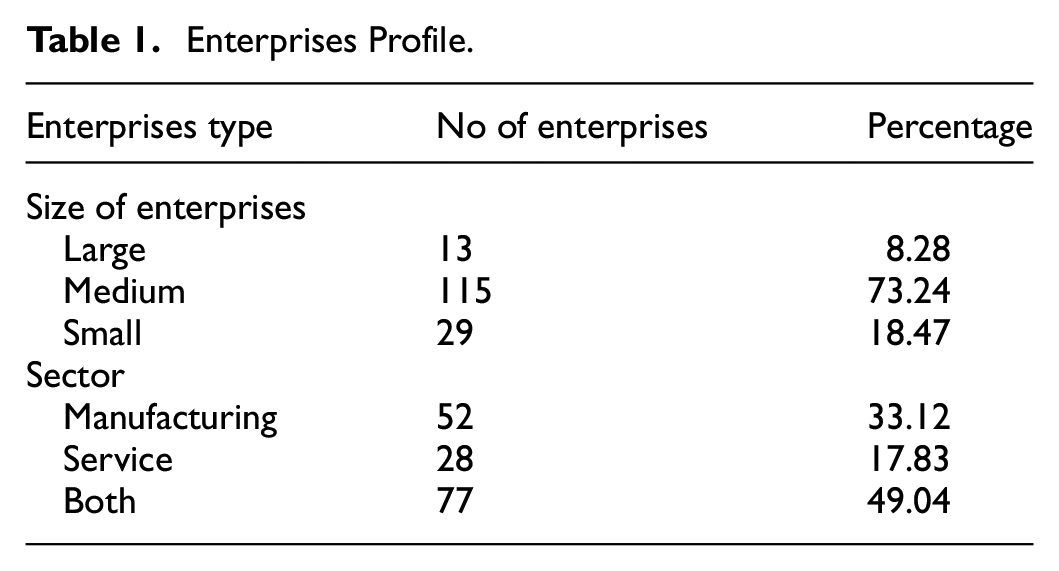
FDI enterprises play a significant role in Laos’ economy, contributing to economic growth, employment generation, and technological advancements. These enterprises operate across diverse sectors, including manufacturing, services, construction, and agribusiness, fostering development and knowledge transfer. Key areas of FDI activity are concentrated in economically significant regions such as Vientiane, Khammouane, Bolikhamxai, Savannakhet, Salavon, and Champasak, particularly along the Mekong River corridor. The distribution of enterprises by size and sector is summarized in Table 1. The Mekong River and its tributaries provide critical infrastructure support, facilitating sustainable operations and enabling productivity, especially in sectors reliant on resources, transportation, and energy (Asian Development Bank, 2023; Mekong River Commission, 2022; Morton & Olson, 2018).To evaluates innovation performance effectively, the research employed random sampling to select 270 properly licensed and registered FDI enterprises managed by young individuals. The selection of geographic locations was based on their economic significance and concentration of FDI activities in Laos. Targeting senior managers of licensed and registered FDI enterprises. No individuals or organizations received incentives to participate in the study, ensuring unbiased responses. This sample size ensures representativeness and statistical adequacy for rigorous analysis (Dattalo, 2008; Marshall et al., 2013). While literature reflects varying viewpoints on ideal sample sizes, Chege & Wang 2020b) suggest that a sample size of 10% to 30% is sufficient for populations exceeding 30 elements. Using Israel (2012) formula:

N = sample size
N = population size (270)
e = margin error (0.05) Thus,

Enterprises Profile.
Questionnaire Design, Data Collection, and Variable Measurement
This study used a quantitative research method, with a semi-structured questionnaire serving as the primary instrument for data collection. The design of the questionnaire was informed by previous research (Babin, 2010; Yam et al., 2004). It underwent a review and refinement process through consultations with industry professionals to ensure its suitability for the context of FDI enterprises in Laos. The questions were crafted specifically to align with the circumstances of foreign direct investment (FDI) businesses operating in Laos, with a particular emphasis on innovation capability and innovation performance. Participants were asked to assess their level of agreement with statements related to their company’s technical innovation capability (TIC) and various forms of innovation, including marketing, product/service, process, and organizational innovation. Innovation performance measures were drawn from Chege and Wang (2020a) and (Lau et al., 2010), while the constructs for the independent variables were adapted from (Yam et al., 2004).
The researcher used 5-point Likert scale to assess most variables, with values ranging from 1 (“strongly disagree”) to 5 (“strongly agree”), where higher ratings indicated a higher intensity of the measured construct. In addition, the questionnaire gathered demographic information, including age, gender, experience, education level, enterprise size, and business type. Gender denoted as a binary variable (“1” for male, “0” for female), and age was recorded in years, following (Jankowicz, 2011). To confirm the validity and reliability of the tool, the questionnaire’s structure and variables were carefully reviewed by industry experts, field professionals, and academic reviewers, incorporating their feedback into the final version. A total of 161 questionnaires were distributed, with 159 responses received. After screening and validation, 157 responses were confirmed as valid for analysis (Table 2). According to Jankowicz (2011), a 70% response rate is considered adequate to conduct a robust statistical analysis.
Sample Profile.

SEM and Qualitative Comparative Analysis
This study initially utilizes Structural Equation Modeling (SEM) to test the hypotheses concerning the innovation capabilities of FDI enterprises in Laos. In line with the recommendations of Kent (2008), the study also conducts a contrarian case analysis to explore asymmetric scenarios and identify contrasting patterns that could uncover varying configurations of innovation capabilities within these enterprises. The study acknowledges the limitations of traditional quantitative methods, such as multiple regression analysis, particularly in accounting for the complex interactions between variables (Shalev, 2007). To address the limitations of traditional statistical analysis, this study incorporates fuzzy set qualitative comparative analysis (fsQCA), a method that evaluates the interrelationships between various factors influencing innovation capability within FDI enterprises in Laos.
Before applying fsQCA, the study uses Structural Equation Modeling (SEM) to validate the hypotheses related to the connection between innovation capability and performance. SEM is particularly effective for analyzing complex relationships and testing theoretical frameworks. Unlike multiple regression analysis, fsQCA integrates fuzzy and Boolean logic (Ragin, 2009), which makes it more appropriate for identifying asymmetric relationships and uncovering intricate configurations (Woodside, 2013).
The fsQCA process begins by calibrating the data on a scale from 0.0 to 1.0, where 0.0 represents full non-membership and 1.0 represents full membership. This calibration is well-suited for the semi-qualitative data in this study. Afterward, fsQCA identifies “causal recipes,” which are Boolean combinations of antecedent conditions that are sufficient to lead to the outcome variable. Given the relatively small sample size (n = 38), the use of multiple regression analysis was deemed unsuitable. For the variable calibration, the study follows the transformation procedure outlined by (Pappas & Woodside, 2021). For example, on a 5-point Likert scale, a score of 5 is set as the threshold for full membership (fuzzy-score = 0.95), a score of 4 as the threshold for full non-membership (fuzzy-score = 0.05), and a score of 3 as the cross-over point (fuzzy-score = 0.50). A minimum of 2 cases is required to consider a solution, with a consistency threshold set at 0.90.
Results
Common Method Bias
To assess common method variance, the study applied Harman’s Single-Factor Test, which was conducted through Principal Component Analysis (PCA), where 24 items were loaded onto a single factor. The results of the factor analysis revealed that less than 25% of the variance was explained, with only 15% being extracted. Furthermore, half of the items had weak factor loadings, which were significantly lower than the 0.5 threshold. These findings suggest that common method variance does not represent a significant issue in this dataset.
Reliability and Validity
The data were first analyzed to assess the quality of the measurement tool, focusing on both convergent and discriminant validity. Principal Component Analysis (PCA) was conducted using SPSS to explore the underlying dimensions of the 24 items. Construct validity was assessed using Bartlett’s Test of Sphericity and the Kaiser-Meyer-Olkin (KMO) measure for sampling adequacy. According to Özdamar (2002), the KMO value should ideally be above 0.6 for factor analysis to proceed. The results from Bartlett’s Test of Sphericity and the KMO measure indicated that both tests were significant and appropriate for factor analysis (see Table 3). The cumulative variance explained was 67.51%, which exceeded the acceptable threshold of 60% (Özdamar, 2002). Bartlett’s Test of Sphericity yielded a value of 4306.83 and significance level of p < 0.000, confirming a strong correlation among the variables. Factor loadings exceeded 0.5 (Cudeck & O’dell, 1994), with most factors loading above 0.6 (see Table 4), confirming the convergent validity. The composite reliability of the constructs was assessed and must meet a threshold of at least 0.6 (Fornell & Larcker, 1981). The results indicated that all latent variables had composite reliability values ranging from .809 to .88, meeting or exceeding this standard. Additionally, the reliability of the constructs was further assessed using Cronbach’s alpha. The Cronbach’s alpha values for the overall scales ranged from .72 to .82 (see Table 4), which aligns with the threshold of 0.7 set by (Chung, Pillsbury, Walters, & Hayward, 1998). A Cronbach’s alpha value of .7 or above indicates good reliability (Izah et al., 2023). The Cronbach’s alpha values for the six factors also ranged from .72 to .82, confirming their reliability.
KMO Bartlett’s test.

Factors Loading and Reliability Analysis.

Lastly, both convergent and discriminant validity were evaluated using the Average Variance Extracted (AVE). According to Cheung et al. (2024), the AVE for each construct should be at least 0.5. In this study, the AVE values for all constructs ranged from .68 to .726, exceeding the .5 threshold (Bagozzi et al., 1988). This indicates that the study successfully achieved satisfactory levels of both convergent and discriminant validity.
Hypothesis Testing
The study employed Structural Equation Modeling (SEM) to analyze the relationships among the various constructions established in the research. The SEM analysis was conducted using AMOS 24, and several goodness-of-fit indices were evaluated to assess the model’s accuracy. The results demonstrated a robust fit, as evidenced by the following indices: Chi-square/df = 1.152, CFI = 0.981, TLI = 0.989, IFI = 0.984, GFI = 0.932, RMSEA = 0.200, and SRMR = 0.45 (see Table 5). According to Hu and Bentler (1999), RMSEA, TLI, and CFI values are critical for determining the overall model fit. The study used SEM to explore the effects of innovation capability and innovation efforts on the performance of FDI enterprises. The analysis revealed that all relationships were statistically significant (p < .05). Innovation capability was found to have a direct and positive impact on organizational, process, product, and marketing innovation activities, with all paths showing significance at p < .000. Specifically, H1, which proposed that innovation capability positively influences organizational innovation efforts in FDI enterprises, was supported with a significance level of p < .000. Likewise, H2, which suggested that innovation capability positively affects process innovation efforts, was confirmed with a p-value of p < .000. The influence of innovation capability on product innovation was also found to be direct and significant, supporting H3, while H4, predicting a positive effect of innovation capability on marketing innovation, was confirmed with significance at p < .000 (see Table 6). Additionally, the results demonstrated that organizational, marketing, and product innovations had a strong and direct impact on innovation performance through the enhancement of innovation capability. The structural relationships indicated that the connection between organizational innovation and innovation performance was notably strong, providing support for H5. Although the relationship between process innovation and innovation performance was initially significant, the results showed that process innovation had a substantial and positive effect on innovation performance, leading to the acceptance of H6. Both marketing innovation and product innovation were found to have a significant and powerful impact on innovation performance, leading to the acceptance of H7 and H8, with both showing p < .000.
Model Fit.

Standard Estimation.

The results suggest that innovation capability directly and positively influences product, process, marketing, and organizational innovations, and it plays a crucial role in stimulating innovation performance through innovation efforts. The hypothesized relationships of the model are presented in (Figure 2). Table 6 provides the standard path estimates and p-values for the SEM model .

Degree of relationship between innovation capability, innovation type and Innovation performance.
FsQCA
FsQCA 2.5 provides three solutions for the sufficient configurations of innovation capability and performance in FDI enterprises: a complex solution, an intermediate solution, and a parsimonious solution. In this case, the complex and intermediate solutions yield identical outcomes. To identify asymmetric relationships between the variables, Table 7 highlights the presence of contrarian cases that contradict the main effect between innovation capabilities and innovation performance.
Configurational Solutions for Innovation Capability and Performance in FDI Enterprises.

Note. • Filled circles denote conditions that exceed the threshold levels, while ○ unfilled circles represent negative conditions. Large circles indicate core conditions, and small circles represent peripheral conditions. Blank cells signify conditions that are not considered
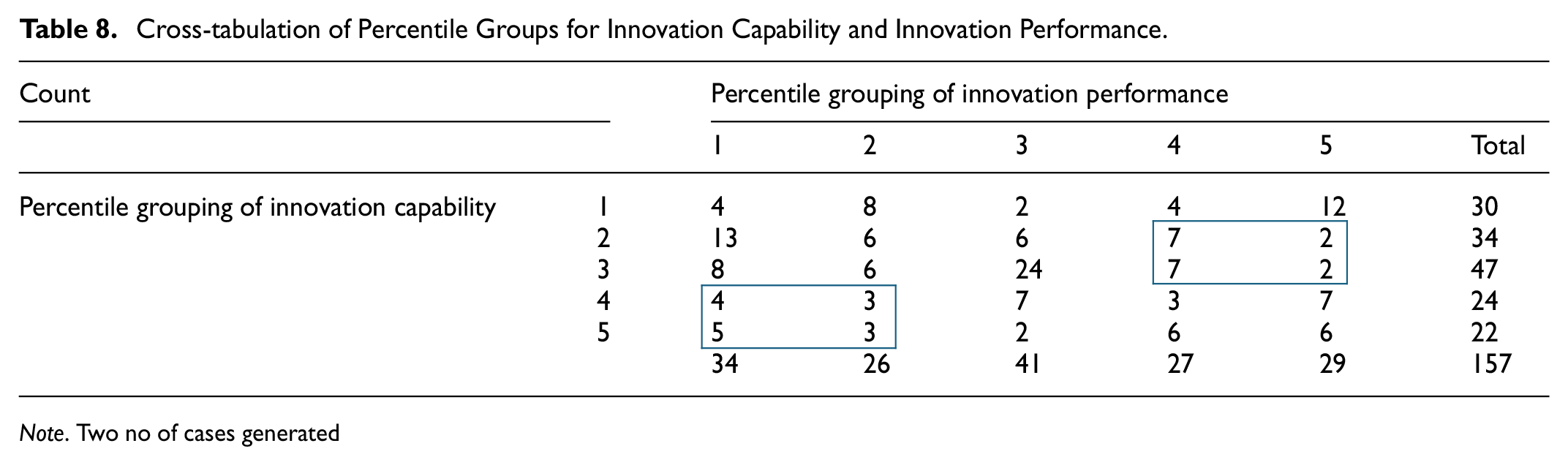
Table 8 presents a quintile analysis of innovation capabilities and innovation performance. It reveals 18 cases with high innovation performance but low innovation capability, and 15 cases with low innovation performance but high innovation capability. Following Woodside (2013) recommendation for innovative approaches to analyzing such datasets, this study employs fuzzy set qualitative comparative analysis (fsQCA). Table 7 outlines the solutions for causal relationships among four key factors: marketing, product/services, process, and organizational factors, in relation to innovation capability and performance. In the table, filled solid (black) circles indicate the presence of a condition, unfilled (white) circles indicate the negation of causal conditions, and empty cells denote the absence of a condition.
Cross-tabulation of Percentile Groups for Innovation Capability and Innovation Performance.

Note. Two no of cases generated
Solutions 1 and 2 in Table 7 illustrate two distinct configurations that lead to high innovation performance. Both configurations demonstrate high consistency (≥0.90) and substantial coverage (0.65). Solution 1 suggests that the combination of product/service and process factors, when marketing and organizational factors are absent, is a key configuration for achieving high innovation performance. In contrast, Solution 2 highlights that the concurrent presence of marketing, product/service, and process factors leads to a 92% consistency rate for all firms exhibiting strong innovation capability and performance, with a unique coverage contribution of 22%. These findings emphasize two distinct configurational pathways to high innovation performance. The first pathway involves the presence of product/service and process factors, alongside the absence of marketing and organizational factors. The second pathway, on the other hand, requires the combined presence of marketing, product/service, and process factors. Both solutions provide sufficient conditions for achieving high innovation performance, suggesting that high innovation capability is influenced by marketing, product/service, and process factors, while the absence of organizational factors and the inclusion of marketing in Solution 2 emerge as crucial drivers for enhanced performance. The parsimonious solutions identify two configurations with an overall solution coverage of 0.67 and a consistency of 0.92. These configurations indicate that the presence of either product/service or marketing factors is integral to achieving high innovation performance, positioning these factors as essential conditions. The other two factors, process and organizational, do not appear in the parsimonious solutions and are therefore considered as secondary conditions (Fiss, 2011). Furthermore, the analysis of the negation of innovation performance did not reveal any significant configurations. Marketing and product/service were identified as necessary conditions since they appear in both configurations.
Discussion
The findings of this study confirm the significant and positive impact of innovation capability on various types of innovation within FDI enterprises. Hypotheses H1, H2, H3, and H4 were supported, showing that innovation capability plays a critical role in fostering product, process, marketing, and organizational innovation. These results underscore the importance of innovation capability as a key factor in enhancing a firm’s innovation activities. It facilitates knowledge sharing, motivates employees, and nurtures creative thinking, all of which are essential for establishing an effective and strategic approach to innovation. These findings align with previous research, such as Oanh (2019), which also found a positive relationship between innovation capability and different types of innovation.
A key takeaway from the research is that firms with a culture that promotes innovation, backed by the right personnel and processes, are better positioned to generate diverse ideas and transform them into profitable business concepts. This is particularly true when business ideas are scaled effectively and supported with adequate resources. Achieving both superior idea generation and successful commercialization is vital for driving business growth. Innovation capability provides valuable insight into a firm’s innovation potential, highlighting strengths and areas for improvement, and helping to shape future development strategies. Similarly, Hanaysha et al. (2022), Migdadi (2022), Rajapathirana and Hui (2018) emphasized the positive influence of innovation capability on various types of innovation, reinforcing the results found in this study. In addition, innovation capability plays a vital role in driving successful innovation outcomes. It not only facilitates the effective deployment of resources but also supports the continuous transformation of knowledge and skills into tangible products, processes, and systems that benefit both the company and its stakeholders. This conclusion is consistent with the findings of Saunila et al. (2014), who found that the link between innovation capability and firm performance is significant, suggesting that performance measurement can be used as a tool for improving the performance of SMEs through innovation capability. Another important finding from the study is the positive effect that different types of innovation have on organizational performance. The results indicate that innovations in product, process, and marketing are all positively linked with improved firm performance, supporting hypotheses H5, H6, H7, and H8. Among these, product and marketing innovations were particularly highlighted as key contributors to a firm’s innovation capability. This suggests that enhancing a firm’s innovation capacity is likely to result in better overall innovation performance, as supported by YuSheng and Ibrahim (2020), who showed a positive relationship between innovation capability and the four dimensions of innovation: organizational, product, process, and marketing.
Furthermore, the strong connection between marketing innovation and innovation performance underscores the critical importance of nurturing an organizational culture that encourages innovation. Such a culture provides critical insights into customer needs and expectations, enabling firms to generate more effective marketing strategies and, ultimately, improve overall performance. This is consistent with the findings of (Migdadi, 2022; Oanh, 2019; Rajapathirana & Hui, 2018), who showed that a strong organizational culture significantly enhances innovation performance through better customer insights and marketing strategies. While process innovation is often associated with reducing cycle time and improving operational efficiency, the study reveals that firms with successful process innovations can also enhance their product and marketing efforts. This aligns with (Rajapathirana & Hui, 2018), who found that process innovation not only improves internal operations but also boosts other types of innovation within a firm. This indicates that process innovation not only leads to internal improvements but also positively impacts other innovation areas. By streamlining processes, firms can reduce workloads and increase efficiency, which, when coupled with an innovative culture and technological infrastructure, significantly boosts performance.
The fsQCA analysis identifies certain combinations of factors—such as marketing, product/service, and process innovations—as essential for driving high innovation performance in FDI enterprises (Sulton & Sawabi, 2022). These core factors consistently appear in configurations leading to higher innovation outcomes, suggesting that firms that emphasize these areas are more likely to perform well in terms of innovation capability. Although organizational factors do not emerge as core conditions in the parsimonious solution, they still play an important supporting role in certain configurations, highlighting their peripheral but still valuable contribution to the innovation process.
Table 8 provides further insights into the distribution of cases across different percentile groupings of innovation capability and performance. This suggests that high innovation capability does not always result in high innovation performance, as some firms with strong capabilities still display lower performance. This indicates the complexity of the factors influencing innovation performance (Huynh et al., 2023). While a high innovation capability is crucial, it is not a guarantee of superior performance on its own. Other factors, such as government policies, institutional support, and the broader business environment, likely contribute to this discrepancy.
These findings emphasize the need for a holistic approach to innovation management in FDI enterprises. For innovation capability to translate into tangible performance outcomes, multiple factors must be aligned. The study proposes that both core conditions (e.g., marketing, product/service, and process innovations) and peripheral conditions (e.g., organizational factors) should be incorporated into the strategic and operational planning of FDI enterprises in Laos. Future research could further investigate how external factors, such as national innovation policies and market dynamics, influence the effectiveness of these configurations in driving innovation outcomes.
Conclusion
This study aimed to examine the impact of innovation capability, types of innovation, and innovation performance within FDI enterprises in Laos. The findings demonstrate that firms with higher innovation capabilities show a strong positive influence on their innovation performance. Consequently, enhancing innovation capability is critical for FDI enterprises to successfully define and achieve innovation outcomes. However, a lack of capabilities, particularly in small and medium-sized FDI organizations—remains a significant barrier to innovation (KPM). Overcoming this requires transitioning from a traditionally risk-averse culture to one that embraces experimentation while managing financial risks judiciously. This shift involves tapping into new sources of innovation, integrating ideas from employees, customers, investors, and partners, and promoting progressive leadership at the organizational level. Innovation capability, as defined in this study, refers to a firm’s ability to anticipate and respond to customer needs, expectations, and emerging markets. This capability involves leveraging both internal knowledge (e.g., employee expertise) and external insights to foster an innovation-supportive culture. Understanding and addressing future customer demands is vital for organizational success, as it allows firms to identify opportunities and translate ideas into actionable outcomes (De Brentani, 2001).
The study shows that the creativity of employees is closely linked to innovation capability. Firms with an innovative culture are better equipped to foster creative thinking and turn novel ideas into successful outcomes. Establishing such a culture requires consensus among leadership and a systematic approach to organizational design. In today’s business environment, traditional hierarchical structures can hinder innovation. Therefore, organizational reform should focus on integration and cohesion across processes, promoting an innovative-supporting culture and enhancing inter-departmental collaboration. This approach helps firms identify external opportunities and turn them into successful innovations. Innovation capability thus becomes a critical factor for managers to cultivate. It acts as a catalyst, enabling employees to innovate and create superior products, services, and business models. In this way, innovation capability serves as a driving force for organizational progress.
The FDI sector, unlike others, is characterized by its focus on managing risks, particularly intangible risks. As competition intensifies and differentiation becomes minimal, the industry faces the challenge of staying competitive. Studies suggest that product and market innovation significantly impact firm performance. Therefore, companies must diversify their investment products to attract customers and focus on innovative marketing strategies.
However, many companies in emerging markets like Laos prioritize consolidation over new market initiatives or advertising campaigns. As public awareness of products remains low, businesses can grow by increasing customer awareness. Achieving consistent and higher growth rates remains a challenge, especially in sectors like property and casualty, where market risks often lie beyond the firms’ control. Instead of merely adjusting systems, firms must take transformative steps to strengthen competitiveness and evolve their business models, which is crucial for competing in Laos and differentiating their brands. Product innovation is identified as a key driver of innovation performance, making it essential for FDI enterprises to prioritize enhancing innovation capability. Innovation should be embedded across all dimensions—product, process, organizational, and marketing. The results highlight that innovation performance is central to improving both market and financial outcomes. Innovation, therefore, serves as a strategic cornerstone, driving long-term growth, profitability, and organizational survival. This is particularly important for managers in competitive environments, who must align innovation with broader business strategies to foster organizational success.
The fsQCA analysis further underscores the importance of specific combinations of factors, such as marketing, product/service, and process innovation, for achieving high innovation performance. While organizational factors are not central in the parsimonious solution, they still play a supportive role in the innovation process. Cross-tabulation analysis also indicates that innovation performance does not always align with innovation capability. This highlights the complexity of the factors involved in innovation performance. Although high innovation capability is necessary, it does not guarantee superior performance without the right conditions. External factors, such as government policy incentives, institutional support, and the overall business environment, contribute to this variability. These findings call for a comprehensive approach to innovation management in FDI enterprises. A wide range of factors must align to ensure innovation capability translates into tangible performance outcomes. Future research could explore how external factors—such as national innovation policies and market dynamics—affect the effectiveness of these configurations in driving innovation success.
Limitations and Future Research Directions
As with any empirical study, this research has limitations. First, innovation capability is treated as a unidimensional construct, but it is inherently multifaceted. Future research could explore other influential factors, including customer orientation, market orientation, and technology orientation, which are crucial in shaping innovation capability. Second, the reliance on self-reported data introduces the potential for respondent bias, which could affect the results. Lastly, the focus on FDI enterprises means that other sectors, such as banking, were not included. Expanding the scope to include various industries would provide further insights. Moreover, applying this framework to countries with different economic growth levels and service-sector dynamics would offer a broader understanding of how innovation interacts with market conditions.
Footnotes

Ethical Considerations
Ethical approval for this study was obtained from the Ethics Committee of Kunming University of Science and Technology, according to ethical standards of the 1964 Helsinki Declaration.
JEL classification codes.
Consent to Participate
Informed consent was obtained from all individual participants included in the study
Funding
The author(s) received no financial support for the research, authorship, and/or publication of this article.
Declaration of Conflicting Interests
The author(s) declared no potential conflicts of interest with respect to the research, authorship, and/or publication of this article.
Data Availability Statement
The data supporting the findings of this study are available from the corresponding author upon reasonable request.