




Abstract
The article conducted by organizational information processing (OIP) theory and dynamic capabilities theories to analyze how big data analytics capabilities affect healthcare performance in developing countries. In the healthcare performance conceptual framework, supply chain resilience, information quality, and innovative capabilities mediate. This quantitative study surveys 415 healthcare establishments with questionnaires. These 336 respondents actively contributed important input. In Smartpls 4.0, partial least squares are utilized to analyze data that supports hypotheses after checking the normality test of the data. The study results indicate that healthcare organizations would benefit from allocating resources toward the development of big data analytics capacity. The study findings indicate that IQ, IC and SCR have a complementary and moderating role in the association between BDAC and FP. The empirical data support all constructs and expected relationships, confirming previous research. Experimental data suggesting BDA improves healthcare performance are crucial to the existing literature. With the PLS-SEM approach utilized in this work, several of the aforementioned ideas may be theoretically flawed. This study provides a theoretical framework for studying how BDA skills affect SCR, IC, and IQ to improve organizational performance in poor countries. This study may elevate healthcare management’s knowledge of BDAC’s ability to improve performance.
Keywords
Introduction
Medical organizations have ongoing challenges in meeting the dynamic demands of customers and ensuring sustainable corporate growth (Allioui & Mourdi, 2023). Consequently, heightened rivalry exists among enterprises, which in turn influences several aspects such as the longevity of goods, their velocity, quality, and associated prices (Barlette & Baillette, 2022). In order to effectively navigate the competitive landscape, organizations must demonstrate a high degree of responsiveness and adaptability (Thayyib et al., 2023). BDA is used for the attainment of sustainable supply chain outcomes that present inherent difficulties and necessitate the presence of supplementary skills that can facilitate organizations in fully harnessing their capacities (Kamble & Gunasekaran, 2020). Moreover, existing literature demonstrates the favorable findings of BDA for ameliorating sustainable supply chains (SSC) within the healthcare sector (Z. Wang et al., 2022). This impact encompasses several dimensions, including eco-social as well as natural aspects (Belhadi et al., 2020). Supply chain experts in the healthcare sector in poor nations utilize BDA for quick decision-making processes as well as effectively managing the resources within their control. This approach enables them to optimize supply chain dependence and enhance overall efficiency (Alsheyadi et al., 2024).
Healthcare organizations face growing uncertainty in their operational environment due to a lack of necessary organizational competencies, specifically in the area of BDA (Y. Wang et al., 2018). This challenge is compounded by the rising number of elderly individuals who require an increasing amount of healthcare services (Thayyib et al., 2023). Healthcare systems globally have significant structural constraints in meeting standard healthcare demands, with little adaptability to address exceptional occurrences like natural catastrophes and medical epidemics. The existing body of research on hospital modern SCM, which encompasses various tasks across the SCM, is widely acknowledged, which is considered an important element in ensuring effective and adaptable medical services (Chen et al., 2019). The capacities of Organizational Information Processing Theory (OIPT) in order to improve the way of information processing management in the healthcare sector by applying competencies and skills and providing logistics support (Bhuiyan, Uddin, et al., 2023). Hospital SCI, with the application of OIPT, collaborates on the supply chain of information that helps the hospital management accomplish their goals (Kessy et al., 2024). SCI in the healthcare sector is often understood in research as a multifaceted notion that encompasses inter-functional integration, integration between hospitals and patients, and integration between hospitals and suppliers (Pham et al., 2024).
In accordance with the OIPT, the application of BDA is shedding light on a significant transformation in the field of supply chains within the medical sector (Yu et al., 2019). It has been found that healthcare service organizations have drastically changed due to the essence of BDA competencies for analyzing inputs to generate information (Thayyib et al., 2023). A large number of databases need to be maintained by healthcare practitioners with specialized software. It certainly reduces the uncertainty and mismanagement in the analytics of the healthcare sector. The free flow of information has eased the management of the databases of hospital patients and other staff to make quick decisions (Thayyib et al., 2023). It imposes multiple benefits of managing data in the hospital sector in order to reduce the existing challenges (Y. Wang et al., 2018). This study aims to enhance comprehension of how hospitals can enhance their operational flexibility by developing more integrated supply chains, specifically by strengthening BDAC, following the previous research conducted by Dubey et al. (2021).
From a similar standpoint, several nations have witnessed a surge in the digitization and use of BDA technology within the healthcare service arena in the present time (Pham et al., 2024). The government of Bangladesh is actively seeking to capitalize on technological advancements and has introduced a new initiative known as the “Digital Health Center.” This plan intends to transform hospitals into interconnected organizations that can effectively deploy intelligent healthcare solutions (Thayyib et al., 2023). The government is allocating funds toward significant big data technologies and initiatives like ConSoRe, as exemplified, and the Health Data Hub is another. Hospitals may use a diverse range of technology devices, such as the electronic database of patients, the use of cloud computing for storing big data in the medical sector, and the use of other smart devices in recent times as a source of significant data for the same industry mentioned by Khera et al. (2024) where Technology sources have a crucial impact on enhancing clinical treatment.
The process of constructing BDAC as a sophisticated technology to extract significant insights from the extensive processing and analysis of large datasets. This endeavor aims to enhance the dependability of supply chains within the healthcare industry, encompassing factors such as volume, variety, velocity, veracity, and value. Consequently, this facilitates decision-making based on data, enabling organizations to attain a competitive edge (Dubey et al., 2021). Healthcare organizations allocate significant resources to materialize BDA analytics in order to enhance healthcare transformation. However, they face challenges in fully harnessing the potential advantages that may be generated from its application (Karmaker et al., 2023).
The relationship between BDA and the integration of SCR as a strategy for enhancing organizational performance in the medical sector is found in the existing literature. This encompasses a holistic combination that relies on the integrated organizational capabilities of SC participants (Gunasekaran et al., 2017), which aims for efficient and effective decision-making in the health sector (Hofmann & Bosshard, 2017). Hence, it remains essential to investigate this domain, as the consequences of unsuccessful supply chain integration are detrimental to organizational image and productivity (Karmaker et al., 2023). Moreover, the existing body of research pointing out the necessity of BDA has predominantly concentrated on the technical aspects and computational capabilities of enhancing the method of BDA in the flow of the medical supply chain of information (Thayyib et al., 2023). The human resources in the medical sector are a major part. Hence, these necessary resources are not to be nurtured in order to generate positive results in the supply chain, as emphasized by most empirical findings from several previous studies (Mikalef et al., 2020). The existing body of work has predominantly concentrated on examining the direct and positive results of participant learning for improving collaborative supply chains as well as the subsequent enhancement of performance within the healthcare industry (Bag et al., 2023).
Hospitals have effectively utilized Big Data Analytics Capability (BDAC) to enhance innovation and resilience in healthcare operations. For instance, during the COVID-19 pandemic, Johns Hopkins Hospital applied predictive analytics to real-time patient data, improving resource allocation, enabling telemedicine advancements, and optimizing workflows to enhance care quality (Dash et al., 2019; Mao et al., 2021). Similarly, hospitals in India leveraged BDAC to monitor critical supply levels like oxygen, enabling real-time coordination and minimizing disruptions (Belhadi et al., 2020). In the U.S., BDAC optimized vaccine distribution by analyzing logistical and demographic data, reducing waste and ensuring equitable access (Gupta et al., 2020).
Research Gap
Bangladesh’s healthcare system has undergone a transformation by incorporating big data analytics technologies. This shift has resulted in a departure from conventional clinical methods toward patient-centered digital solutions (Pham et al., 2024). By implementing these solutions, hospitals are better equipped to address the needs of patients, leading to enhancements in the service quality and extensive care provided by the participants in the health care sector (Agrawal & Prabakaran, 2020). Extensive and diversified analytical tools are used in hospital management to improve service quality by applying advanced data-driven supply chain technology in Bangladeshi hospitals (Karmaker et al., 2023). It boosts the capacity of medical services during the COVID-19 world-wide pandemic. Hospital authorities have been benefited by the application of digital tools that yield and improve the benchmark of medical performance in the competition for global medical service quality (Thayyib et al., 2023). The research gap by using OIPT in this study will be addressed following the theoretical framework (Pham et al., 2024). The way of managing medical services and diversified quality pharmaceutical service availability in order to manage the availability of care provided by the management using data analytics (Ting et al., 2020). The proposed research model seeks to integrate two separate bodies, namely BDA as well as SCR for hospital performance, which have traditionally been examined independently in previous studies (Dubey et al., 2021). Scholarly investigations have expanded the scope of OIPT by encompassing not only general variables related to organizational design but also employing and instrumenting BDAC in the healthcare sector for continuous service college development (Karmaker et al., 2023).
Nevertheless, empirical studies in this literature are rare, which demonstrates the necessity of BDAC on SCI for continuous development in the supply chain of the healthcare sector in Bangladesh as well as providing flexibility for extensive medical service quality.
This expanded viewpoint of OIPT and DC furnished insight into BDAC on SCR following the overall performance of the firms or participants within the healthcare sector in Bangladesh. It achieves this by enhancing processing capabilities to foster integration and flexibility within the supply chain (Thayyib et al., 2023). Furthermore, scholarly investigations have determined that SCR plays a distinctive role as a mediator for the performance of firms within the healthcare sector in Bangladesh. The holistic way of information sharing, information processing, generating quick decisions, maintaining data privacy and security, and smoothing the flow of the data supply chain are the main purposes of the study reflected in this literature (Pham et al., 2024). This perspective provides valuable insights into leveraging BDAC for strengthening hospital SCR in the medical industry in Bangladesh. From the above discussions and literature gaps, the following objectives are stated:
RO1: What is the effect of Big Data Analytics on Supply Chain Resilience and Firm Performance in the Healthcare industry in Bangladesh?
RO2: How do Innovation Capabilities, Information Quality and Supply Chain Resilience act as mediators of firm performance in the healthcare industry in Bangladesh?
Literature Review
Theoretical Framework
The conceptual framework (Figure 1) was constructed by the researcher using organizational information processing theory and the dynamic capabilities view (DCV) as solid theoretical underpinnings. According to (Eisenhardt & Martin, 2000), dynamic capabilities provide lasting competitive edges through other organizational abilities rather than being the source of them directly. By facilitating other organizational capabilities, BDA capabilities can not only establish a data-driven decision-making strategy but also operate as a vehicle for putting insights into practice. (Ashrafi et al., 2019) shown how business analytics skills influence agility through information quality and innovative capabilities, ultimately resulting in enhanced company performance. Following them, we contend that the influence of information quality is not more significant than the influence of capabilities of BDA on innovation capabilities.

Conceptual research model.
According to (Ali et al., 2023), green operations are important for conserving energy and resources. They also highlight the importance of sustainable work cultures, strategies, and policies in fostering sustainability performance results that align with the dynamic capabilities approach. According to OIPT, organizations must effectively and efficiently gather, analyze, and use information, particularly when working on complex projects that involve high levels of interdependence and uncertainty (Srinivasan & Swink, 2018). Uncertainty is defined as “the difference between the variety of information required to perform the task and the amount of insights already possessed by the organization.” In order to manage uncertainty and improve business performance, organizations functioning in dynamic and competitive business contexts must endeavor to align their information processing requirements with their information processing capabilities (Flynn & Flynn, 1999).
Big Data
There is a consensus among scholars and practitioners that datasets that include distinct characteristics following volume and diversity are referred to as big data. Raw data, organized data, and semi-organized data are employed by health care practitioners and authorities in order to make decisions (Gupta et al., 2020). This data may be subjected to mining processes to extract valuable insights and then employed in machine learning endeavors, predictive modeling, and other sophisticated analytics applications. Necessary data is collected from multiple sources, such as digital platforms like open-source data, digital gadgets, smart technological intelligence information, and so forth. According to Belhadi et al. (2019), there is a significant amount of data that is generated from multiple sources in numerous forms. However, the accuracy of this data is low, and there is little capacity for retaining it.
The objective is to acquire value, which may be classified as the main input of the healthcare practitioner and medical authority (Barlette & Baillette, 2022). This practice elucidates the shift from the utilization of large volumes of raw and unprocessed data to equip BDA in the healthcare sector of Bangladesh. This transition from analog to digital encompasses the retrieval of previously unnoticed patterns and insights from large datasets, as well as their interpretation and utilization in order to formulate relevant courses of action (Rai et al., 2006). The capabilities of Business Data Analytics (BDA) empower executives and managers to effectively monitor and oversee the existing performance of healthcare participants. Additionally, BDA facilitates a timely as well as cost-effective analysis of any irregularities or anomalies that may arise, allowing for appropriate recommendations and actions to be proposed (Gupta et al., 2020; Wamba et al., 2017).
Big Data Analytics Capabilities with Firm Performance, Innovative Capabilities, and Information Quality
According to Srinivasan and Swink (2018), BDAC attributes the competencies of medical organizations to utilizing modern tools, time-demanding techniques, and effective procedures to handle, arrange, present, and analyze data. This capability enables firms to generate valuable results for sustainable organizational data management for future success. Within the healthcare sector, the utilization of BDAC facilitates healthcare practitioners and hospital authorities to effectively gather, store, evaluate, and manipulate substantial volumes, diverse varieties, and rapid velocities of data management, encompassing a large arena of the health care sector in Bangladesh (Bhuiyan, 2024). This implementation aims at propelling quick decision-making processes based on data-driven approaches, facilitating the prompt identification of valuable business insights and benefits. Hence, it is crucial to thoroughly analyze BDA competencies in healthcare practitioner control circumstances in determining performance improvements (Mikalef et al., 2020). From the above information, a hypothesis is developed.
H1: BDAC has a positive correlation with FP.
The implementation of Building BDAC enables hospitals to utilize interactive dashboards and systems for the purpose of extracting insights from external health data and presenting the information in a visual style (Y. Wang & Hajli, 2017). Additionally, this framework employs statistical approaches and optimization techniques to effectively handle extensive volumes of health data in diverse formats. According to G. Wang et al. (2016), typical technical instruments and processing apps are unable to handle the complexity of the data. The current situation has led to the emergence of BDAC, which encompasses the capacity governing raw data to generate valuable information and hence get a competitive edge in the healthcare market (Genovese et al., 2017; Wamba et al., 2017). The BDA skills of a healthcare service facilitate the identification of patterns, correlations, and previously unidentified trends throughout other organizational capabilities. This serves as a valuable tool for converting these insights into actionable strategies, therefore enhancing their innovative capabilities. Drawing on the preceding discourse, a hypothesis is postulated.
H2: BDAC has a positive association with IC.
Healthcare professionals, namely doctors and nurses, have the ability to utilize healthcare performance dashboards as a means to enhance their decision-making processes by leveraging visualization reports derived from real-time data processing (G. Wang et al., 2016). According to an extensive definition, the capabilities of BDA encompass data supplies, modern medical tools for data analysis, healthcare practitioner techniques, and data processing methods that empower a healthcare center in order to effectively handle, figure out, and bring large volumes of data for healthcare data management skills. By leveraging these capabilities, organizations are able to derive valuable insights for planning, organizing, and decision-making in the healthcare sector of Bangladesh. Finally, this enables organizations to achieve a cutthroat edge in their respective industries (Srinivasan & Swink, 2018). Drawing on the preceding discourse, a hypothesis is postulated (Dubey et al., 2021).
H3: BDAC has a positive rapport on IQ.
Innovative Capabilities
The capacity of the healthcare sector to promptly address the demands of the target market, a commonly encountered challenge in the market, is contingent upon its level of innovation in effecting swift modifications to products and services. This ability is directly linked to the firm’s aptitude for identifying quiz solutions to the identified issue and delivering prompt responses to problems, as highlighted by Kwak et al. (2018). According to X. Wang and Dass (2017), innovative capabilities are attributed to resources, skills, and abilities to produce, accept, and apply novel ideas, processes, goods, or services. Therefore, the aforementioned competencies have the potential to impact the competitiveness of an organization, which in turn plays a crucial role in its ability to survive, expand, and achieve success (Andersson, et al., 2008). The presence of innovative talents within organizations also prompts them to enhance their innovation efforts in order to effectively adapt to the evolving competitive healthcare market in Bangladesh. Innovation is often facilitated by the inclusion of capabilities inside various structures, methods, and systems squabbled by Rajapathirana and Hui (2018)
H4: There is a positive between IC and SCR.
Information Quality
The significance of information exchange within the context of supply chain management cannot be overstated. Nevertheless, a good result in any organization depends on the quality of information that is acknowledged by all (Najjar et al., 2019). The overall significance of the quality of information cannot be overstated in the context of organizations and SCP. Specifically, the existing competency to make accurate decisions is contingent upon this fundamental idea, as shown by previous studies (Gorla et al., 2010). High-quality information may be defined as information that possesses certain characteristics, including appropriateness, timeliness, reliability, accessibility, and understandability (Li & Lin, 2006). The quality of information is also attributed by several academics to the output of an organization’s information systems. Hence, quality as well as timely decision-making bet bottom dollar on modern information management systems that empower the performance of any organization to sustain itself in the competition (Najjar et al., 2019; Shen et al., 2017).
H5: There exists a positive association between IQ and SCR.
SCR
Supply Chain Resilience (SCR) is defined as the ability of a supply chain to prepare for, adapt to, and recover from disruptions effectively while maintaining continuous operations and ensuring the smooth flow of information, materials, and services (Brandon-Jones et al., 2014). SCR is a crucial factor in achieving operational stability, organizational competitiveness, and enhanced performance in dynamic and uncertain environments of business (Centobelli et al., 2017). Disruptive risk is associated with the existence of weak supply chain management in the current state of the economy (Tan et al., 2019). Supply networks need high SSR to adapt to market uncertainty quickly and cost-effectively and boost organizational competitiveness (Bai et al., 2019) . Market requirements require the flexibility of SSC, so companies realize it. SSR is seldom considered (Mangla et al., 2020). By changing SSR in Bangladesh’s healthcare industry, BDA can reduce supply chain unpredictability. Scholars and practitioners have emphasized organizations’ SCR, emphasizing resilience as a critical necessity in SCM as SC disturbances intensify. The improvement of the capacity of the supply chain in the health care sector always helps to recover the organization’s data safety and improve the service quality to contribute to firm performance, as argued by (Brandon-Jones et al., 2014). SCR is the effective management of interruptions to sustain supply chain information, materials, and a smooth flow of information for decision-making in the business arena of any sector. After disruptions, SCR gives companies an edge over competition (Centobelli et al., 2017).
H6: SCR has a direct correlation with FP.
Healthcare Firm Performance
Firm performance is often quoted by comparing a set of performance criteria with those of competing businesses. Firm performance may be characterized as the degree to which a corporation outperforms its competitors. The analysis of inter-company comparisons is crucial for evaluating the performance of an organization. Healthcare centers that effectively use their resources toward the establishment of a Business Development and Advisory Center (BDAC) would have the potential to enhance stakeholder satisfaction and overall organizational performance. Numerous scholarly investigations have examined the concept of business success, encompassing both variables related to finance and non-finance. According to Guha and Kumar (2017), the implementation of BDAC has the potential to enhance operational processes, decrease expenses, and enhance decision-making processes and service quality in the healthcare sector. Moreover, the utilization of BDAC may assist firms in enhancing resource allocation, predicting the requirements of operating rooms, and enhancing the administration and logistics of patient pathways (Dash et al., 2019). The norms that have the most effect on SSR performance are innovative capabilities and information quality, which are in the top three figured out by Tseng et al. (2019). Research from the past has shown how important it is to have skills in BDA for improving information sharing, intelligence, and shared situational awareness (SSR) in healthcare performance (Bai & Sarkis, 2017). Recent research has provided evidence to suggest a close association between the capabilities of BDA and FP (S. Akter et al., 2016; Wamba et al., 2017). The capabilities of BDA show an indirect effect on FP, as figured out by researchers. This is because other organizational capabilities, like the SSR variable (Mikalef et al., 2020), act as a go-between. According to the research by Vitari and Raguseo (2020), the healthcare sector where BDA was applied has a favorable effect on financial, market, and target customers as well as ultimate satisfaction. In the context of dynamic and intricate markets, the utilization of information processing techniques provides valuable insights that contribute to the reduction of uncertainty in business performance. The utilization of BDAC significantly enhances the efficiency of enterprises’ decision-making processes, resulting in a notable acceleration in speed.
Mediating Effect of Supply Chain Resilience
According to the Alaskar (2023) study, the mediating effect of innovation capabilities between business analytics capabilities and firm performance represents a positive impact. Firm performance is greatly affected, both directly and indirectly, by the competencies and skills identified by Ylijoki et al. (2018). He also uses the idea of innovation capabilities as a mediator between big data and business models in his study. Human-driven and data-driven methods are the results of the study analyzed by applying the approaches to innovation capabilities. The significant result has been identified in the context of innovation capabilities studied by a number of researchers, although innovation capabilities as a mediator have been used in limited research studies. Therefore, the aim of the study is to address the mentioned gap by using innovation capabilities as a mediating variable. This is because the utilization of BDA necessitates additional assistance from various BDA capabilities, as previously discussed. According to Wamba et al. (2017), the authors propose that BDA encompasses four key criteria, namely completeness, currency, format, and correctness. In addition to the study conducted by Bahrami and Shokouhyar, (2022), it is evident that the general quality of information has a notable and favorable influence on the performance of firms. Transactional, strategic, and transformational value, as well as user satisfaction, are a few types of business value that mediate this influence.
BDA can also help organizations mitigate disasters and respond to them (Redman, 2014). Singh and Singh (2019) found that BDA improves firms’ resilience in controlling supply chain hazards. Business analytics helps managers make quick decisions, promoting supply chain transparency and innovation. This improves firm performance and reduces environmental uncertainty. Mao et al. (2021) found that information technology and BDA improve corporate performance. It also shows that firm competences and capabilities to early BDA modification help supply chain resilience. Dubey et al. (2021) found that BDA skills can give companies a supply chain resilience edge. The research shows that strategic capability realization (SCR) mediates the impact of business and acquisition (BDA) capabilities on a company’s performance. Thus, we propose these hypotheses:
H7: IC and SCR jointly mediate the relationship between BDAC and FP.
H8: IQ as well as SCR jointly mediate the relationship between BDAC and FP.
Methodology
Questionnaire and Scale
To ensure the validity and reliability of the measurement instrument, a systematic face and content validation process was conducted. The initial measurement items were adapted from established scales in the literature. The questionnaire was developed from a likert scale from 1 means “strongly disagree” to 5 means “strongly disagree.” Big Data Analytics Capability (BDAC) items were adapted from Akter et al. (2016), focusing on the application of advanced analytical methodologies and tools. Information Quality (IQ) items were derived from the Delone and McLean (2003) model, emphasizing dimensions such as accuracy, timeliness, and reliability. Innovative Capabilities (IC) items were adapted from Atuahene-Gima (2005), emphasizing the ability to generate and implement new ideas. Supply Chain Resilience (SCR) items followed Pettit et al. (2013), focusing on recovery and adaptability in supply chain processes. Firm Performance (FP) items followed Richard et al. (2009), incorporating financial and non-financial performance metrics. The revised instrument was pilot-tested with 20 participants from the target population, including healthcare professionals and IT managers. Based on expert feedback and pilot test results, minor adjustments were made to improve the instrument’s validity and reliability.
The measurement items pertaining to the constructs were initially derived from prior research and then subjected to a pilot test involving 20 participants to establish the validity of the measurement instruments. The final structured questionnaire was prepared depending on the outcome of the pilot testing and recommendations from experts in the relevant field. Initially, it was largely formulated in English and afterwards translated into Bangla, the local language, to ensure an accurate collection of respondents’ thoughts. The questionnaire consisted of two sections: section A, which included demographic data of the respondents, and section B, which contained measurement items. This process ensures that the measurement items used in the study are both valid and reliable, meeting the methodological rigor required for empirical research.
Sampling Method and Data Collection
This study employed a nonprobability sampling approach with heterogeneity, allowing the researchers to pick respondents based on subjective assessment with more variance with heterogeneity (Saunders et al., 2009). Hence, the researcher opted for the purposive sampling approach, also known as the judgmental sampling technique, in order to mitigate the limitations associated with the convenient sampling strategy. The study employed purposive sampling to recruit participants with expertise in healthcare and Big Data Analytics Capability (BDAC) implementation. Key decision-makers, such as CIOs, IT managers, and professionals involved in data-driven supply chain management, were selected for their direct experience relevant to the study. To reduce selection bias and enhance representativeness, participants were drawn from diverse healthcare settings, including public hospitals, private hospitals, and NGOs. Gender diversity was prioritized, with 54.2% of respondents being female, reflecting women’s significant leadership roles in healthcare. Geographic diversity was also ensured by including participants from urban centers like Dhaka, Barisal, and Rangpur. A large number of target respondents are selected in order to provide a more representative sample of the community selected. IT managers provide critical insights into the practical application of BDAC in achieving SCR and firm performance with research question 1. IT managers’ roles in fostering innovation and ensuring high information quality are indispensable with research question 2.
According to Roscoe (1969), it is advisable to have 10 times the number of items for multivariate research. According to Tabachnick and Fidell (1996), a sample size of 300 is taken as enough in order to conduct a statistical analysis using SEM. 336 sample size used by this study supports the opinion of the scholars. The data gathering procedure was executed in the urban centers of Dhaka, Barisal, and Rangpur in Bangladesh over a span of five weeks, namely from September 2023 to October 2023. A communication was dispatched to the email address of each participant, containing a letter of introduction and a survey, in order to facilitate the process of providing replies by email. An electronic communication was dispatched to the participants, instructing them to return the completed questionnaire within 2 weeks. The participants who did not answer were sent the final email after an additional 2-week period had passed. Following the expiration of the designated two-week period, a last appeal was extended to the remaining respondents who had not responded to the survey. 415 questionnaires were delivered to the intended participants for the survey. Out of these, 350 respondents actively participated by providing their valuable input. The rate of response seen in the study was 84.34%.
Common Method Bias
The single-factor test of Harman was conducted using the IBM SPSS application to assess the presence of common method bias within the dataset. According to Srivastava et al. (2010), the results indicated that the presence of common technique bias was not a noteworthy concern in the dataset. Response bias was minimized through several measures to ensure reliable data collection. Anonymity and confidentiality were assured to participants, reducing social desirability bias (Podsakoff et al., 2003). Pilot testing with 20 participants helped refine ambiguous or leading questions, enhancing clarity (Hair et al., 2019). The questionnaire included a mix of positively and negatively worded items and randomized question order to prevent patterned responses (Krosnick, 1999). This conclusion was drawn based on the observation that the variance of the first component, which accounted for 31% of the total variance, was less than 50%. Subsequently, the utilization of partial least squares structural equation modeling (PLS-SEM) was applied to detect the presence of common technique bias by assessing the variance inflation factor (VIF) values. The analysis of the test outcome indicated that the model did not exhibit any common method bias, as evidenced by all VIF values being below the threshold of 3.3(Kock, 2015).
Data Cleaning and Analysis
Out of 400 raw responses from the questionnaire, a dataset consisting of 350 observations was entered into Microsoft Excel after removing 13 incomplete responses, avoiding 18 missing data values, removing 3 duplicate responses, addressing 16 irrelevant responses. After that data cleaning and removing handling outliers, researchers removed 14 unengaged data points using the standard deviation technique, a total of 336 data points were entered into SmartPLS 4.0 software to validate the suggested study model and assess the predicted correlations across components using the PLS method. According to Gorla et al. (2010), SEM is a recognized technique for evaluating the veracity of theories using empirical data. According to Williams (2018), it is particularly prevalent in the fields of social science and information systems research. According to (J. Hair et al., 2014), the PLS-SEM analysis has extensively used the SmartPLS program. Many researchers use visual inspection, box plot, histogram, scatter plots and many other statistical methods for data cleaning and identifying handling outliers to generate a good relevancy and appropriateness of dataset (Akter et al., 2023; Bhuiyan et al., 2023).
Analysis and Findings
Before going to the actual analysis, the researcher tests the normality of the data. The standard deviation of each response is higher or equal to 0.50. Additionally, the values of skewness and kurtosis statistics between -4 to +4 determine that these data are normally distributed. The values of the constructs within these threshold values that support the data set are normally distributed.
Demographic Information of the Respondent
Respondents’ characteristics, such as gender, position, healthcare industry categories, experience, number of employees, and number of beds in healthcare, are shown in Table 1. 54.2% of the participants are female, and 45.8% are males. The higher representation of women in these roles reflects the evolving gender dynamics in the healthcare sector, especially in developing countries like Bangladesh. This trend aligns with efforts to promote gender equity in professional domains that traditionally exhibit male dominance. The healthcare sector in Bangladesh, like in many developing countries, has seen a gradual increase in the inclusion of women in leadership and IT-related roles such as Chief Information Officers (CIOs) and IT Managers position. Most common positions with IT managers: 151 (44.9%) gave more responses. The responses are dominated by public hospitals: 110 (32.7%) of the respondents mentioned their hospital as public, while 94 (28%) were Upazila Health Complex. The next highest was from private hospitals and NGO health centers: 73 (21.7%) and 25 (7.4%). A significant proportion of participants reported having less than one year of employee experience (44.9%). Additionally, 122 respondents (36.3%) reported having between 1 and 5 years of experience, while 46 respondents (13.7%) reported having between 5 and 10 years of experience. Furthermore, 17 respondents (5.1%) reported having more than 10 years of experience. Besides, the number of employees and the number of beds in health care of the respondents are also given in Table 1.
Demographic Characteristics.

Analysis of Measurement Model
Firm Performance aligns with the indicators proposed by Richard et al. (2009), providing a comprehensive assessment of performance outcomes. IC was derived from Atuahene-Gima (2005) and reflects the organization’s capacity for fostering innovation to achieve competitive advantages. Information quality is based on the widely recognized Delone and McLean (2003) model, which highlights the importance of high-quality information for effective organizational outcomes.
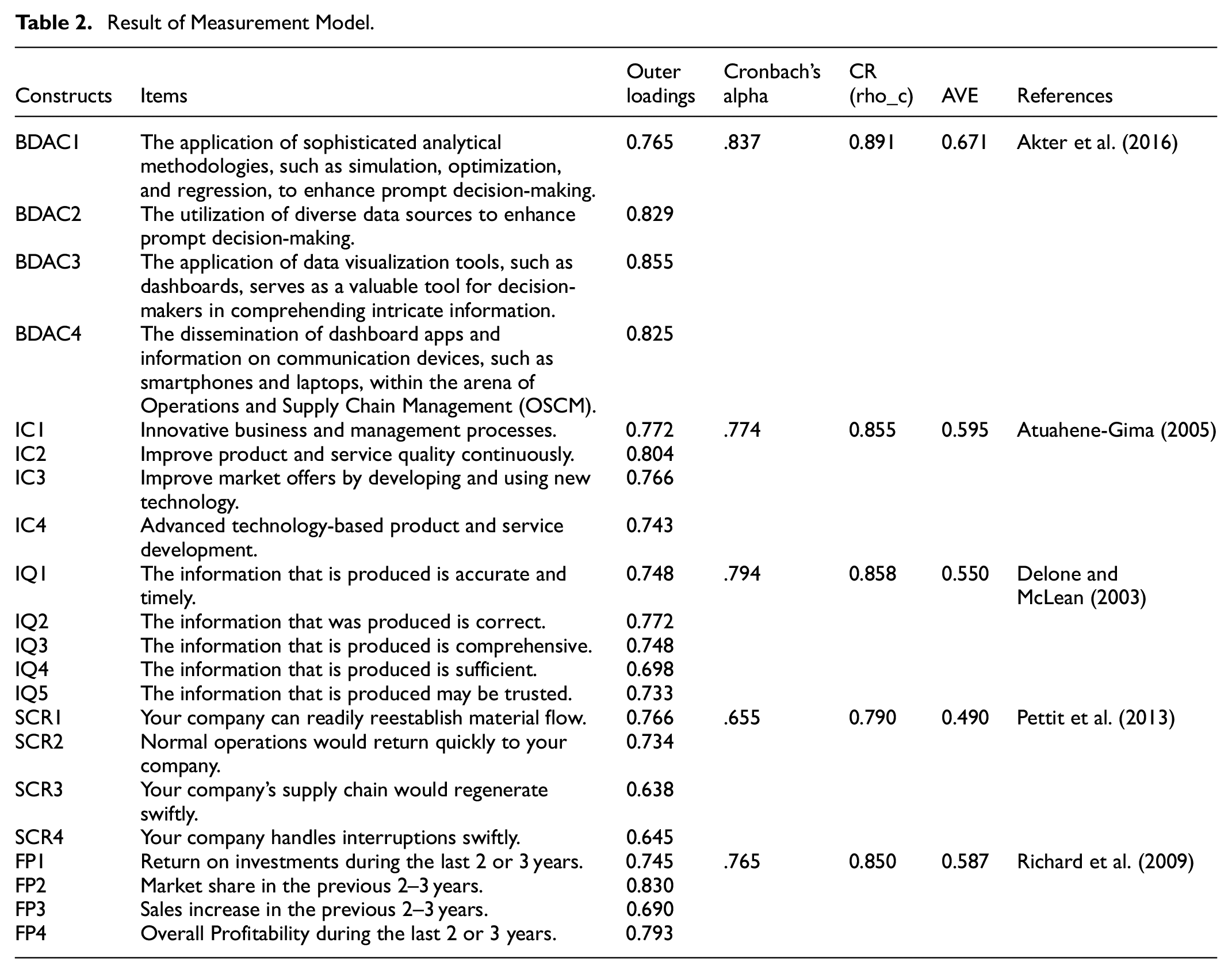
The evaluation of the measuring scales was conducted through the use of confirmatory factor analysis, with a focus on assessing construct reliability, convergent validity, and discriminant validity. The results shown in Table 2 show that the Cronbach’s alpha coefficients (ranging from .6550 to .837) and composite reliability scores (ranging from .790 to .891) are higher than the .70 level that J. F. Hair et al. (2019) say is acceptable. This indicates that the measures used in the study exhibit satisfactory levels of reliability. According to J. F. Hair et al. (2019), Table 2 demonstrates that all item loadings exhibit statistical significance (p .001) and surpass the threshold of 0.70. Additionally, the AVE values, ranging from .490 to .671, meet and surpass the suggested cut-off value of .50 established by Fornell and Larcker (1981). Therefore, these findings provide empirical evidence for the convergent validity of the theoretical components within the proposed model. According to the findings shown in Table 3, it can be observed that the square root of the AVE for each theoretical construct surpasses the inter-construct correlations. This outcome supports Fornell and Larcker (1981) theory of discriminant validity. Hence, the measuring methodology demonstrates robust construct reliability and validity, which are essential for evaluating the structural model.
Result of Measurement Model.
Result of DV (HTMT Matrix) as Well as Fornell and Larcker Criterion.

Note. BDAC = Big data analytics capability; IC = Innovative capabilities; IQ = Information Quality; SCR = Supply chain resilience; AND FP = Firm performance.
The relationships between BDAC and these constructs were established through empirical evidence from prior studies and validated through rigorous data analysis in Figure 2. BDAC enhances Firm Performance by enabling data-driven decision-making and resource optimization (Akter et al., 2016). BDAC supports Innovative Capabilities by facilitating the generation of new ideas and solutions (Srinivasan & Swink, 2018). BDAC improves Information Quality by leveraging advanced analytical tools for precise and reliable data processing (Li & Lin, 2006).
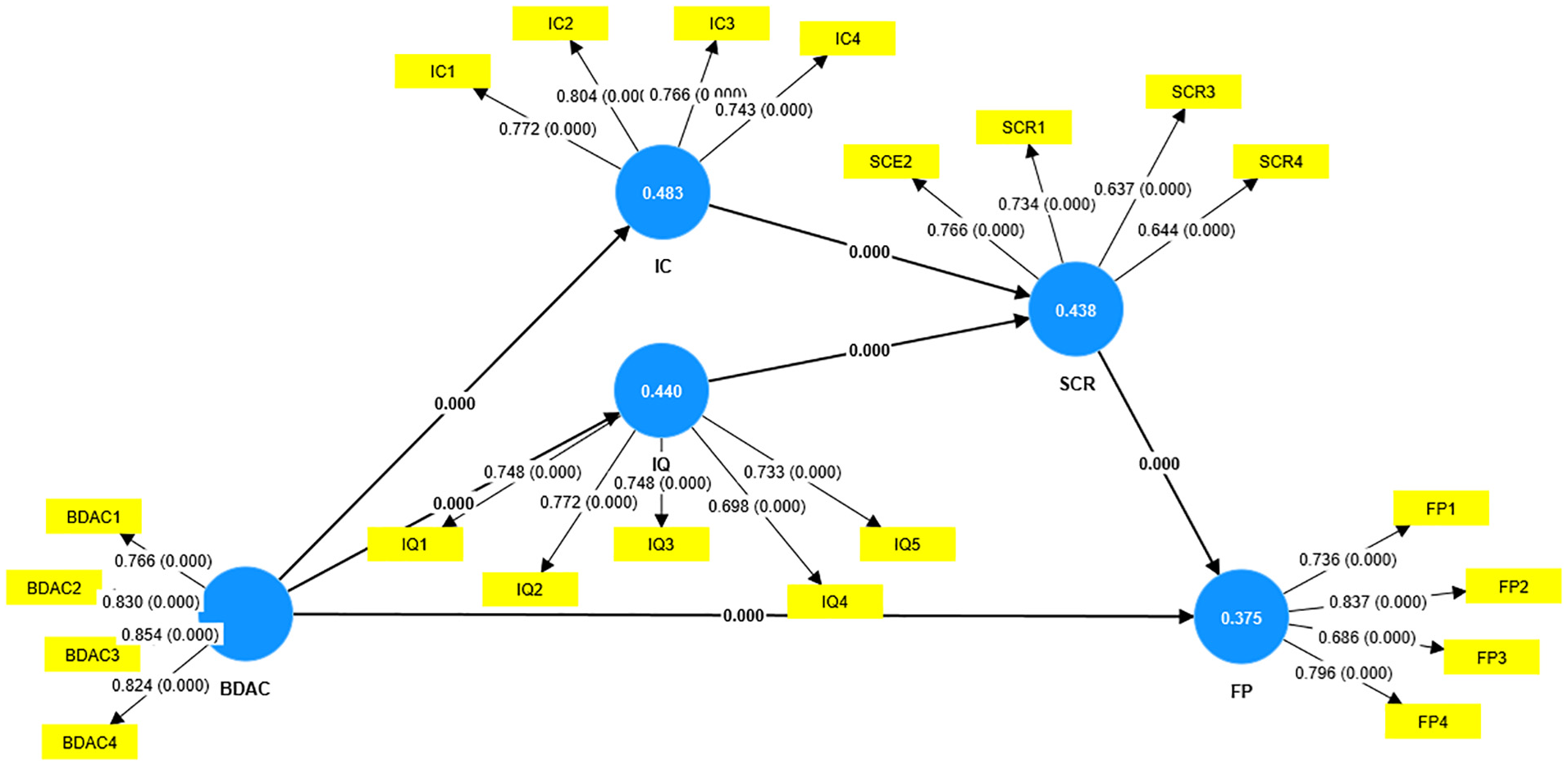
BDA Model with all values.
Please note that the bold numbers in Table 3 represent the square root values of the AVE. These values are specifically chosen since they are the highest values across all the columns and rows in the table.
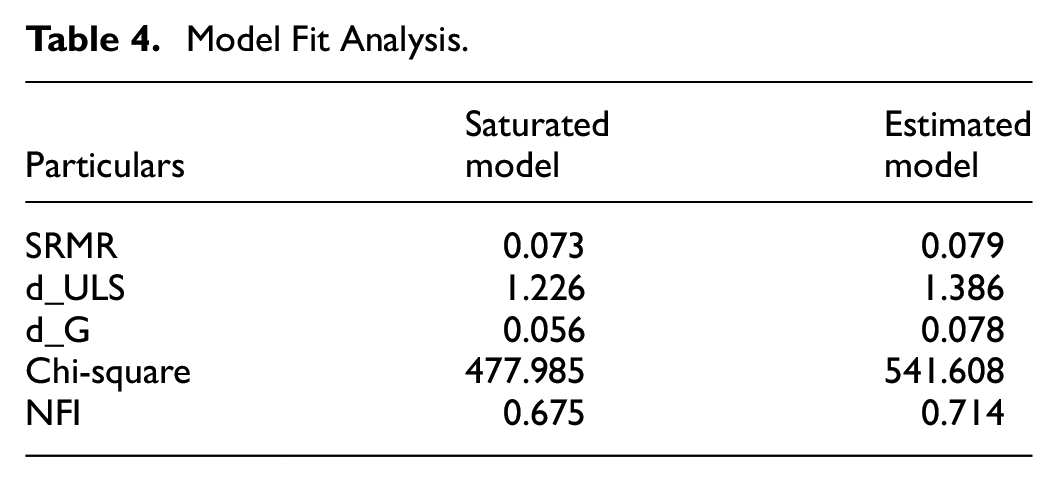
The value of SRMR is below threshold of the fit value which is 0.073 and 0.079 respectively (threshold value ranges from 0 to 0.08) in Table 4. It indicates the saturated and estimated model are in good fit. d_ULS observes the discrepancies between observed and predicated model which at the smae time represent the moderate position of saturated and estimated model of the data used in the research of healthcare performance analysis in Table 4. Geodesic discrepency in this model revelas as the data fit as the threshold is between 0 to near 0.08. The lower the Chi-square value the higher the fit of the model used in the paper. The NFI value ranges from 0 to 1, here both the values are under the threshold value showing good fit of the dataset.
Model Fit Analysis.
Structural Model
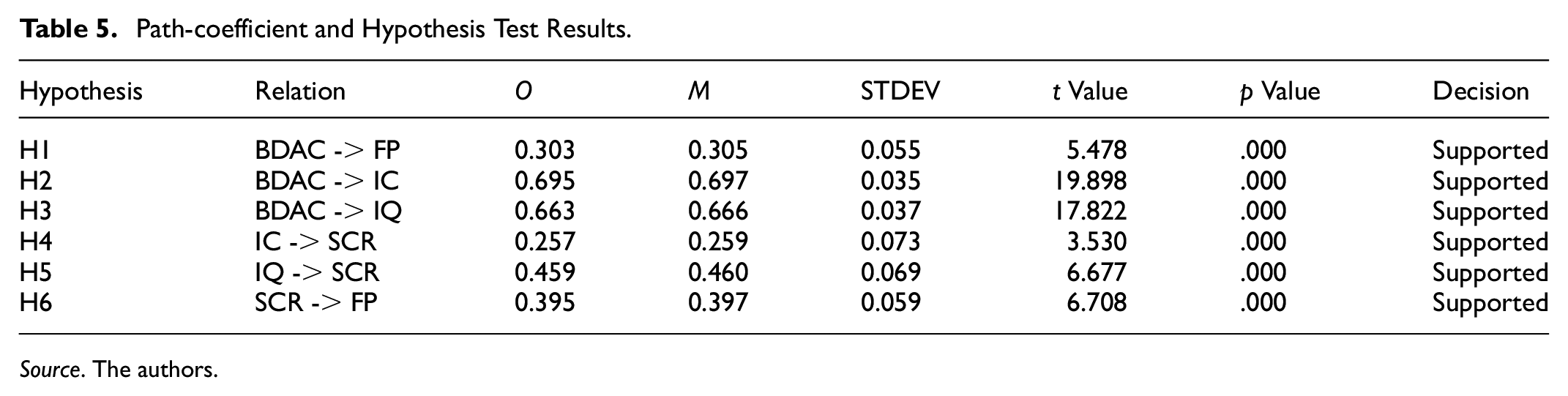
After assessment of the MM, we utilized structural equation modeling (SEM) to examine the structural model. The findings of hypothesis testing are presented in Table 5 and Figure 2. According to the findings shown in Table 5, there is a significant positive relationship between BDAC and FP (β = .303, p < .001, t statistics > 1.96). Consequently, the evidence supports hypothesis H1. In addition, there is a significant positive relationship between BDAC and inventive capacities (β = .695, p < .001, t statistics > 1.96), as well as information quality (β = .663, p < .001, t statistics>1.96), hence confirming the validity of hypotheses H2 and H3 in Figure 3. Furthermore, the results reveal that both innovative skills (β = .257, p < .001, t statistics > 1.96) and information quality (β = .459, p < .001, t statistics > 1.96) have a beneficial impact on supply chain resilience, providing support for hypotheses H4 and H5. The findings (=0.395, p .001, t statistics > 1.96) further support the last hypothesis (H6), which leads to the conclusion that SCR has a positive effect on FP in Figure 3.
Path-coefficient and Hypothesis Test Results.
Source. The authors.

Structural model.
Mediation Effect
The present study employed the methodology suggested by Hayes and Scharkow (2013) for evaluating the statistical significance of indirect effects, utilizing the bias-corrected bootstrap confidence interval in Figure 4. The process entails two sequential processes for determining the nature of mediation: (i) evaluating the statistical significance of the indirect impact and (ii) evaluating the statistical significance of the direct effect, as outlined by Hayes and Scharkow (2013). The data obtained from this study, with a bootstrap confidence range of 95%, provided support for both of the suggested mediating effects. (i) The impact of BDAC on FP was seen to be mediated by IC and SCR, suggesting an indirect relationship. (ii) Additionally, it was shown that BDAC had an indirect influence on FP through IQ and SCR in Figure 4. The findings from the study, as presented in Table 5, indicate a noteworthy indirect impact of BDAC on FP through the mediating variables of IC and SCR. This is supported by the statistical analysis, which marks a significant relationship (H7: B = 0.070, t = 2.812, p < .001). The overall impact of BDAC on FP demonstrated statistical significance (B = 0.494, t = 10.599, p < .001). The presence of the mediator resulted in a continued substantial impact of BDAC on FP (B = 0.303, t = 5.478, p < .001). The findings of this study indicate that there is a complementary and somewhat mediating function of intellectual capital (IC) and social capital resources (SCR) in the association between BDAC and financial performance (FP). Similarly, the findings from the analysis, as presented in Table 5, demonstrate a noteworthy indirect impact of BDAC on FP. This effect is mediated by both IQ and SCR, providing support for hypothesis H7 (B = 0.120, t = 4.785, p < .001). The overall impact of BDAC on FP demonstrated statistical significance (B = 0.494, t = 10.599, p < .001). The presence of the mediator resulted in a continued substantial impact of BDAC on FP (B = 0.303, t = 5.478, p < .001). The findings of this point out that both IQ and SCR have a complementary and somewhat moderating role in the association between BDAC and FP in Table 6.
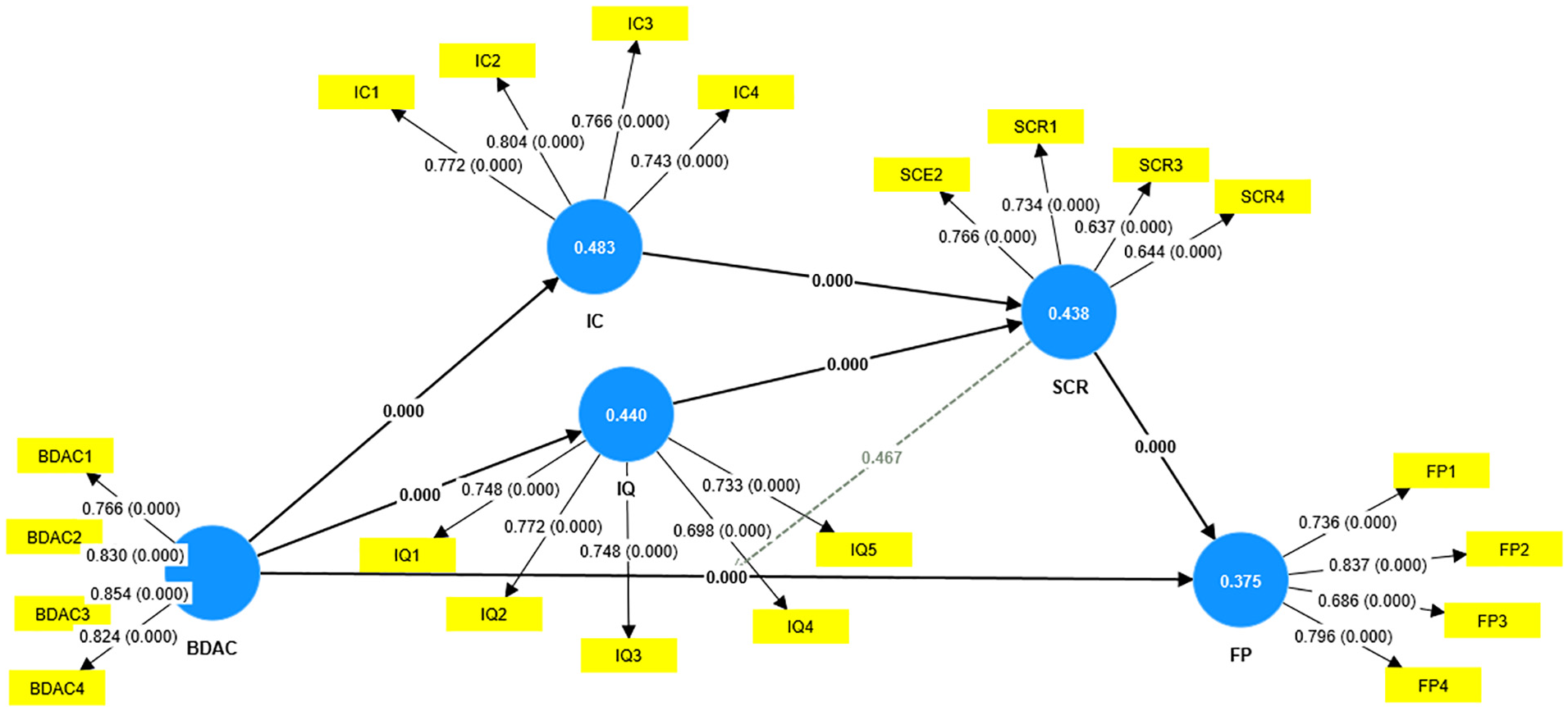
Mediation effect.
Mediation Analysis.

The multi-layered approach is the prerequisite of attaining the firm oerformace using BDAC in the healthcare supply chain. The indirect effect of BDAC to IC, IQ, and SCR demonstrate and amplifies resilient data driven strategy to achieve the overall firm performance and at the same time BDAC directly impacts firm performance in Table 7.
The Status of Mediation.
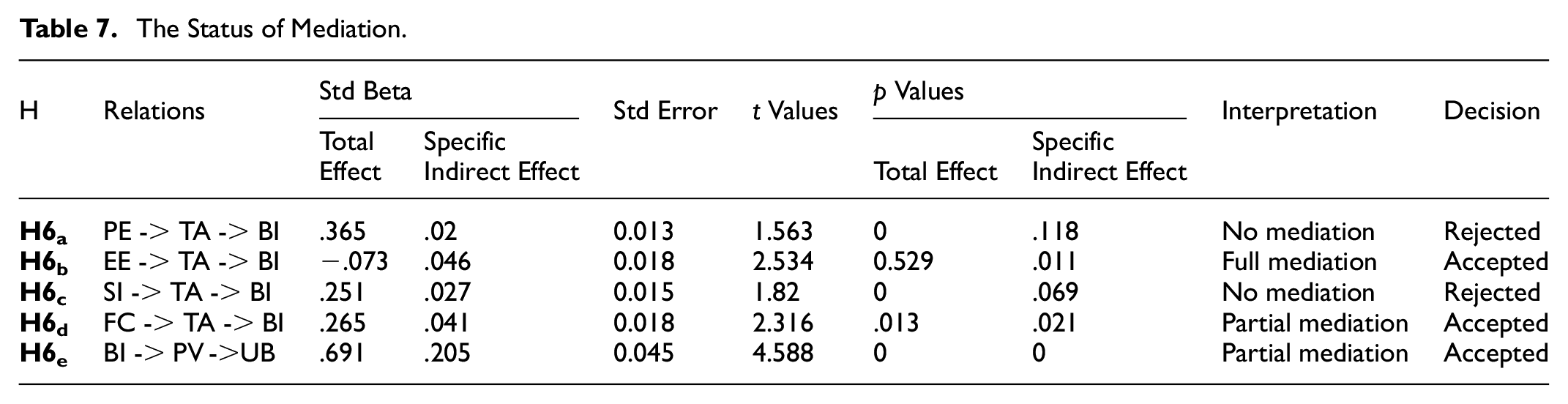
The total effect coefficient valuing of 0.494 leverages strong analytical capabilities generates substantial FP. The indirect effect of BDAC on FP is metered with two mediators of IC and IQ both with SCR sufficiently linked BDAC to firm performance of healthcare supply chain and intensify the direct effect of BDAC in Table 7. The pathways and mediation analysis of BDAC>IC>SCR>FP coneffient bearing 0.070, t value 2.812, p value .000 with 95% bootstrap confidence interval (0.034, 0.116) showing complementary partial mediation foster SCR and and complementing the direct effect of BDAC on FP in table 7.
The pathways and mediation analysis of BDAC>IQ>SCR>FP coneffient bearing 0.120, t value 4.785, p value .000 with 95% bootstrap confidence interval (0.082, 0.164) representing complementary partial mediation resulting high quality information intensifies SCR and spectacles that BDAC indirectly influences FP by enhancing IQ which helms SCR and consummately improving firm performance.
IC mediates the role of supply chain responsiveness, IQ ensures the data accuracy, consistent and improves the way of decision-making, SCR functions as a channel of BDAC and FP for confirming resilient supply chain of healthcare medicines, logistics and equipment and professional services.
BDAC x Moderators→FP, this SEM path is explicitly labeled for moderation effect. This diagram includes interaction effects coefficients like t value, p value with other coefficients. The available relationship in the diagram depicts and emphasizes the direct and mediated effects of BDAC that reflects the bonding among BDAC, IC, IQ, SCR, and finally firm performance. As per the diagram, it is found that moderation effects are not categorically tested.
Importance-Performance Map Analysis (IPMA)
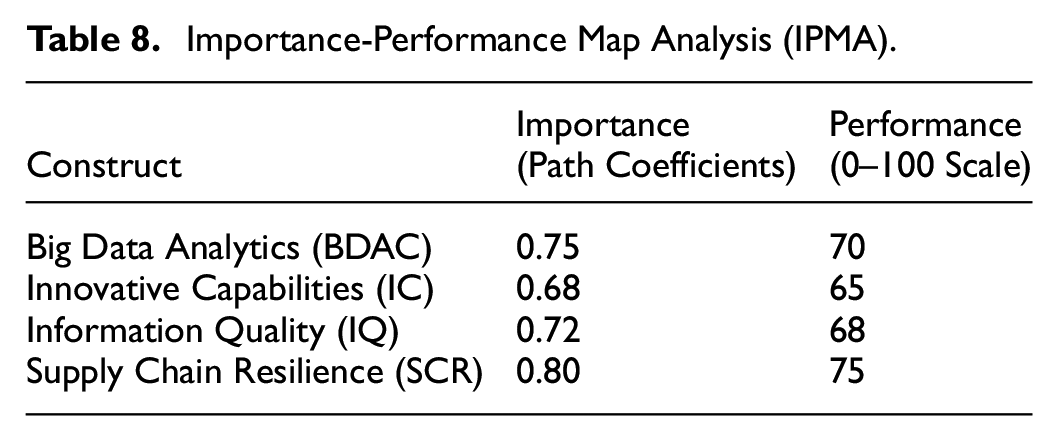
Importance-Performance Map Analysis (IPMA) evaluates the importance of latent variables (e.g., Innovation Capabilities, Supply Chain Resilience) in predicting the target construct (e.g., Firm Performance) and maps their performance, highlighting areas for managerial focus. The IPMA highlights key insights regarding the constructs contributing to Firm Performance. Supply Chain Resilience (SCR) demonstrates the highest importance (0.80) and performance (75), underscoring its pivotal role in driving organizational outcomes and reflecting its strong optimization in the studied organizations.
Authors have analyzed the BDAC ranks highly in importance (0.75) with a performance score of 70, signifying its critical influence on Firm Performance, though there is room for further enhancement. Information Quality (IQ) shows moderate importance (0.72) and performance (68), indicating potential for improvement to strengthen its contribution. Meanwhile, Innovation Capabilities (IC) have slightly lower importance (0.68) and performance (65), representing a key area for development. To maximize Firm Performance, managerial focus should be directed toward improving IC and IQ, while maintaining and refining the strengths of SCR and BDAC to sustain their positive impact (Table 8).
Importance-Performance Map Analysis (IPMA).
Discussion
The primary aim of this study was to investigate the potential impact of BDAC on FP. Our findings affirm that BDAC positively influences FP, consistent with prior studies (e.g., Akter et al., 2016; Dubey et al., 2021). Besides Innovation Capability, Information Quality and Supply Chain Resilience act as mediators between the relationships between BDAC and FP. The empirical findings provide support for all of the constructs and predicted linkages, demonstrating consistency with the results of prior investigations. The results of this study are consistent with earlier studies by Karaboga et al. (2023; Yasmin et al. (2020) in the area of BDAC and business performance, which generate a clear and direct correlation between the competence of BDAC and company performance. In order to effectively implement BDAC within the healthcare domain, Y. Wang et al. (2018) propose a set of five recommended strategies.
Firstly, it is suggested that the establishment of a robust big data governance framework is crucial. Secondly, fostering a culture of information sharing is deemed essential for successful implementation. Thirdly, providing adequate training to key personnel in the utilization of BDA tools and techniques is emphasized. Fourthly, integrating cloud computing capabilities into the organization’s BDA infrastructure is identified as a valuable step. Lastly, the authors highlight the importance of leveraging BDA to generate novel business ideas. If these strategies are implemented, the organization can automatically improve its performance.
Likewise, BDAC has a positive impact on innovative capabilities (H2), which is consistent with many prior studies on BDAC and Innovativeness (Lehrer et al., 2018; Zhang & Yuan, 2023). Overall, BDAC helps companies learn better and brings new ideas and information. This leads to better new product and service innovations and better innovation performance. Similarly, the third construct, BDAC, is found to have the greatest positive impact on information quality (H3). According to Hofacker et al. (2016), the utilization of big data has the potential to offer and disseminate significant and important information. Hence, the attainment of business advantages through information sharing necessitates the appropriate exchange of pertinent information in a timely manner and within the appropriate context. According to Spekman and Myhr (1998), IT enablers have benefited from SCM in terms of information sharing and, at the same time, making quick decisions to boost the capabilities of FP.
Innovative capabilities positively improve supply chain resilience (H4) where This aligns with Sabahi and Parast (2020), who emphasize that innovative organizations exhibit greater resilience in navigating disruptions. Research findings are consistent with the earlier results—the positive effect of innovation capacities on supply chain resilience (Sabahi & Parast, 2020). Innovative companies are more adaptable and willing to exploit niches. Innovation helps organizations withstand upheaval (Kamalahmadi & Parast, 2016). Hypothesis H5 predicted that information quality positively influenced supply chain resilience, which generated relevance to the findings of (Li & Lin, 2006). Our results also highlight the significant role of IQ in strengthening SCR, corroborating findings by Li and Lin (2006) and Najjar et al. (2019). Aligning performance with information quality may boost profitability for all organizations.
This study also investigated the relationship between SCR and FP (H6), and the results demonstrated statistical significance, consistent with previous studies done by Abeysekara et al. (2019) and Liu et al. (2018). The observed positive impact of SCR on FP is consistent with Brandon-Jones et al. (2014) and Abeysekara et al. (2019), who advocate that resilient supply chains enhance competitive advantage and recovery capabilities in H6. The significance of SCR in the context of SCM and its influence on organizational performance are generally acknowledged. The attainment of resilience in supply chains requires the restructuring of SC functions and activities, promoting cooperation among stakeholders in the value chain, establishing agility in supply chain operations, increasing speed in supply chain processes, and fostering a culture of risk mitigation within the organization. The results of the mediation study suggest that there is a mediating effect of innovation capabilities and SCR on the relationship between BDAC and company success. In conjunction with the quality of information, the SCR serves as an intermediate in the relationship between abilities in BDA and the success of a firm. The results of this study lend credence to hypotheses H7 and H8, aligning with prior investigations undertaken by Bahrami et al. (2022) and Bahrami and Shokouhyar (2022).
The findings of this study align with the dynamic capabilities framework, which emphasizes an organization’s ability to adapt by integrating, building, and reconfiguring competencies. The positive impact of Big Data Analytics Capability (BDAC) on Firm Performance (FP) reflects the sensing dimension, enabling healthcare organizations to identify opportunities and optimize decision-making (Alaskar, 2023). The mediating role of Supply Chain Resilience (SCR) demonstrates seizing, helping organizations adapt to disruptions by reallocating resources. Innovation Capabilities (IC) highlight transforming, fostering adaptability and competitive advantage. Together, these capabilities enhance firm performance, reinforcing the theoretical and practical significance of dynamic capabilities (Gu et al., 2021).
Theoretical Implications
Therefore, this research makes a valuable addition to the available literature on big data and BDA in the healthcare business, specifically in terms of theory-based investigations. Previous research has demonstrated that BDAC has a direct positive impact on business performance. Nevertheless, the extent to which SCR contributes to this association remains relatively unexplored. The findings of this study highlight the importance of SCR in moderating the association between BDAC and healthcare sector performance. Both SCR and innovation skills, as well as information quality, serve as mediating factors in the context of supply chains. With the PLS-SEM method used in this study, some of the above ideas may not be completely solid. However, this research has presented a theoretical framework for looking at how BDA skills affect SCR, IC, and IQ as factors that improve organizational performance.
This study builds on the dynamic capability theory and information processing theories, illustrating how BDAC, as an organizational capability, enables firms to adapt to changing conditions, mitigate risks, and capitalize on opportunities. These findings are consistent with Mikalef et al. (2020) and Bahrami and Shokouhyar (2022), further validating the theoretical underpinnings of our conceptual framework. Specifically, the study highlights the beneficial impact of BDA capabilities on a company’s doing. Additionally, the study introduces the concept of strategic capability realization (SCR) as a means to effectively harness the value derived by BDA capabilities for the benefit of the business. The research findings not only increase the existing study on big data but also supply a relevant and effective addition to the current field of study on strategic corporate responsibility (SCR). This calls for further investigation into the potential strengthening of SCR and its potential result on FP (Gu et al., 2021).
Practical Implications
This finding challenges the established norm of male-dominated participation in information management research (Srinivasan & Swink, 2018). The active involvement of women in CIO and IT management roles could signal a shift in organizational practices and societal norms, fostering greater diversity in the workforce. This study has the potential to raise awareness among key management personnel in the health care business about the significance of utilizing BDAC to boost up FP. The results obtained from this study might provide valuable help to managers in their efforts to justify investments and activities related to big data. This study may also serve as a valuable tool for managers in discerning the necessary resources required for the establishment and development of their BDAC. In order to effectively manage a company, it is necessary for managers to actively cultivate and harness various resources. These resources encompass a range of elements, including data, technology, fundamental resources, technical expertise, managerial proficiencies, organizational learning, and the establishment of an environment of quick choices for the purpose of the organizational image and performance. The utilization of these tools may aid organizations in developing their business BDAC and, therefore, enhance their financial performance. With that being stated, it is imperative that we possess the ability to swiftly respond to the insights derived from large datasets. Organizations should strive to formulate novel strategies or capitalize on emerging prospects by leveraging insights derived from the analysis of large-scale datasets. Therefore, the priority of organizational agility depends on the ability to enhance competitive advantage, thereby leading to improved FP.
Organizations can foster Big Data Analytics Capability (BDAC) and enhance business performance by adopting specific actionable strategies. First, investing in advanced analytics infrastructure and tools, such as machine learning and cloud-based platforms, enables effective data processing and decision-making (Akter et al., 2016). Second, developing data-driven organizational cultures through training programs ensures employees can effectively utilize BDAC for innovation and operational improvement (Dubey et al., 2021). Additionally, fostering cross-functional collaboration between IT and business units enhances the integration of BDAC with strategic goals (Mikalef et al., 2020). These strategies collectively strengthen BDAC, driving improved innovation, supply chain resilience, and business performance. Moreover, despite the existence of BDA capabilities, the immediate attainment of the intended business value within the organization may not be guaranteed. In the contemporary era heavily influenced by big data, it is widely acknowledged that the development and implementation of BDA skills are essential for the prosperity of businesses. However, it is important to recognize that only possessing these capabilities is not enough. It is imperative to effectively guide and oversee these capabilities to ensure optimal outcomes.
Conclusions
This study furnishes the existing literature available on big data by analyzing the outcome of BDAC on company performance within the healthcare setting. The research also formulated the idea of supply chain resilience required for the development and evaluation of BDAC. Additionally, the study examined the correlation between BDAC and organizational performance within the healthcare industry in Bangladesh. The findings derived from empirical analysis indicate a beneficial relationship between BDAC and SCR, FP, and IC. These conclusions are drawn from data collected within the healthcare sector of Bangladesh. Based on the foundational discoveries, a theoretical framework is proposed to check the results of BDAC on SCR, IC, and IQ as determinants of enhanced organizational performance. In summary, the findings indicate that BDAC and SCR play significant roles in enhancing our comprehension of the relationship between BDAC and the FP of the healthcare business in developing countries like Bangladesh. Theoretical and practical implications are presented in this current research finding.
Limitations and Future Research
The study possesses multiple constraints that generate possibilities for further investigation and study. Prior studies have posited that firms equipped with BDAC are more inclined to achieve the complete advantages of supply chain resilience endeavors (Dubey et al., 2021).While this particular study makes a valuable contribution to the current body of literature, it is important to acknowledge its shortcomings, which in turn provide opportunities for further investigation in the future. Initially, the research centered on a representative selection of healthcare facilities located in Bangladesh. Expanding the scope of the research to encompass other nations in South Asia, each with distinct characteristics in family planning (FP), would contribute to the broader applicability of the research outcomes. Furthermore, the researcher did a quantitative analysis utilizing questionnaires and structural equation modeling. In order to enhance data triangulation and get a deeper understanding of the phenomena, it is suggested to use a qualitative approach in the future, namely through the inclusion of structured and semi-structured hearings with managers in the healthcare sector in Bangladesh and relevant fields of study. The aim of this qualitative research endeavor is to explore the factors that precede the phenomenon of BDAC, specifically focusing on managerial and technological skills and competencies. The aim of this study is to examine the mediating function of SCR and the relationship between buyer and supplier for development and collaboration in BDAC in the context of healthcare supply chains in Bangladesh. A future study should aim to further investigate the moderating variable that exists between BDAC and demographic information. Data collected from hospitals for this study on supply chains has been undertaken by researchers. Future research might potentially examine and expand upon our theoretical framework in other situations and sectors. The empirical findings have been validated by this current study after applying qualitative and quantitative approaches. This could inspire future research to examine how gender dynamics influence BDAC adoption and outcomes in healthcare and other sectors.
Footnotes
Acknowledgements
The researchers would like to acknowledge Dr. Md. Rakibul Hoque, Professor in the Management Information Systems department at the University of Dhaka, Bangladesh, for his invaluable help in this work. All authors have contributed equivalent contributions to the implementation of this research study.

Funding
The author(s) received no financial support for the research, authorship, and/or publication of this article.
Declaration of Conflicting Interests
The author(s) declared no potential conflicts of interest with respect to the research, authorship, and/or publication of this article.
Data Availability Statement
Data is not open to all due to privacy concerns of the respondents