




Abstract
The rapid transformation of Nglanggeran, an Indonesian rural village, from poor to globally popular demonstrates how multi-stakeholder collaborations and strategic corporate social responsibility (CSR) drive sustainable tourism. This case study explored how developing a comprehensive CSR program led by Bank Indonesia, the Central Bank, helped Nglanggeran overcome its economic and environmental challenges and emerge as a global leader in community-based tourism. Selin and Chavez’s tourism partnership model, alongside the CSR framework; a strategic “cluster management and zone assessment,” and the community’s social capital were used to investigate a tourism initiative’s development in Nglanggeran. An intrinsic case study, observations, semi-structured and in-depth interviews, and content analysis were used to explore multi-stakeholder collaboration and CSR initiative implementation targeting sustainable village tourism. The CSR program, which was more than philanthropic, was crucial in Nglanggeran’s success. Moreover, active participation and synergistic contributions of diverse stakeholders, each providing unique assets and expertise, were important for Nglanggeran’s transformation. This study provides a promising model for local and international rural communities, demonstrating how strategic CSR initiatives and collaborative approaches favor sustainable tourism in villages via multi-stakeholder collaboration, involving private sectors, local governments, academia, and communities. Further research should explore collaboration dynamics in CSR practices and integrate emerging technologies (e.g., virtual reality and artificial intelligence) to better promote and manage sustainable tourism villages. Bank Indonesia’s CSR program could identify the village’s unique strengths and tailor interventions accordingly. This included facilitating the development of a thriving cocoa-based tourism product closely aligned with the local environment and expertise.
Plain language summary
In this paper, we report show that issue form of multi-stakeholder collaborative approach in village tourism challenges its sustainability in the long run. Most of corporate social responsibility program runs as an-ad-hoc basis. Through the lens of Selin and Chavez’s tourism partnership model and corporate social responsibility concept, the study examines the development of tourism initiative in Nglanggeran village, Java island, Indonesia. We use the qualitative approach The study deploys the intrinsic case study method coupled with observation, a semi-structured and in-depth interview, as well as content analysis to explore the implementation of multi-stakeholder partnerships and corporate social responsibility programs in developing sustainable village tourism. Despite its physical environmental challenges and poor economic performance of the area, the youth initiative in reforestation helps to realize the potential of Nglanggeran as tourism village, which is also rich in natural resources and social values, customs and traditional values that strengthen by the existence of local groups. The result, contribute to the construction of social values for the long-term survival of multi-stakeholder collaboration. This social aspect determines the selection basis for long-term support of corporate social responsibility program which facilitate and determine the direction for development of the area and contribute to the success of Nglanggeran as a world village for tourism.
Keywords
Introduction
The development of the Nglanggeran Tourism Village represents a collaborative effort among various organizations to stimulate economic growth while prioritizing environmental sustainability. Located on Java Island, Indonesia, Nglanggeran has historically been regarded as one of the poorest villages in a mountainous region, largely because of its challenging karst landscape, poor soil conditions, and reliance on traditional farming practices. However, since 2000, local youth have initiated reforestation efforts, recognizing the immense potential of Mount Ancient’s natural resources and scenic beauty for tourism. Over time, local organizations began engaging in tourism-related activities to enhance the local economy, supporting initiatives such as homestays, local restaurants, improved transportation access, and training for tourist guides through ongoing capacity building. Mount Ancient’s Nglanggeran has also been integrated into the Mount Sewu UNESCO Global Geoparks network.
In this context, formalizing and institutionalizing the interests of various groups involved in tourism is crucial. Government facilitation of community-based tourism (CBT) fosters a more professional approach through multi-stakeholder collaboration. Collaboration encompasses contributions from corporate social responsibility (CSR), whether on an ad-hoc basis or through sustained engagement. By directing tourism activities toward sustainable practices, the village can better align their development objectives with environmental stewardship and community well-being.
Networking and collaboration are essential in this process, enabling businesses and stakeholders to share ideas and cooperate for mutual benefit. Such interactions reflect stakeholders’ commitment to the success of tourism initiatives and the longevity of their associated products (Awa et al., 2024). The success of tourism villages depends heavily on the commitment, attitudes, and performance of diverse stakeholders, including local communities, government authorities, academic institutions, local businesses, media, the private sector, and tourists.
Freeman & McVea (2001) defined a stakeholder as any individual or group capable of influencing or being influenced by an organization’s objectives. An organization’s survival and growth rely on effective stakeholder engagement. For businesses to thrive and meet Sustainable Development Goals, they must fulfill the formal obligations and expectations of their stakeholders (Khuong et al., 2021). Modern stakeholder theory, based on Freeman’s conceptual model, emphasizes the importance of considering the interests of all affected parties (Cordeiro & Tewari, 2015; Richards & Zen, 2016; Zen, 2018, 2020).
This study utilized a slightly different interpretation of “stakeholders,” compared to that in other literature, examining how stakeholder theory applies to regional development decisions made in collaboration with government entities to enhance the tourism potential of Nglanggeran. The multi-stakeholder collaboration framework developed by Selin and Chavez (1995) serves as a foundation for understanding how partnerships can support sustainable village tourism development. This study employed five phases of development—antecedents, problem-setting, direction-setting, structuring, and outcomes (Graci, 2013; Plummer et al., 2006; Selin & Chavez, 1995)—to evaluate this process.
The multi-stakeholder collaboration model underscores the strategic importance of cooperation among six key sectors: government, business, academia, community, media, and tourism. Community participation in managing tourist villages and implementing training programs to enhance human capacity is crucial for success. Resources within the tourism sector are vital for integrating programs promoting sustainable tourism village development (Kartika et al., 2024). However, the collaboration process faces several challenges, including a lack of trust among stakeholders (Greenwood & Van Buren, 2010), differing objectives that can lead to misunderstandings (Kuvan & Akan, 2012), power imbalances (Colvin et al., 2020), and time and resource demands for establishing effective partnerships (Margerum & Robinson, 2015).
In this context, CSR plays a considerable role in the tourism industry by funding or initiating projects that foster economic growth, create employment, and preserve the environment. An organization’s reputation can be affected by how well its operations align with stakeholders’ environmental concerns and its historical environmental performance. Conversely, community engagement tends to enhance reputation, as stakeholders expect high-quality performance from organizations (Pérez, 2015).
A notable example of a successful CSR initiative is found in Kampung Warna-Warni in Jodipan, Malang, where efforts have transformed a slum village into a vibrant tourist destination (Amanda & Agfianto, 2021). CSR is commonly understood as a company’s obligation to support the communities in which it operates, yielding both direct and indirect benefits (Bergman et al., 2017). Businesses also leverage CSR to promote community-based rural tourism (Manaf et al., 2018) and fund regional conservation initiatives to ensure long-term viability of both the environment and the rural tourism sector (Madanaguli et al., 2022).
This study explored the dynamics of multi-stakeholder collaboration in Nglanggeran, focusing on how CSR initiatives can enhance tourism development while fostering community empowerment and environmental sustainability.
Literature Review
Developing a tourism village program requires the support of various stakeholders, including lodging providers, attractions, transportation services, tour operators, and regional destination organizations. This necessitates a multi-stakeholder collaboration approach. Gracy (2013) defined collaboration as an interactive process in which diverse stakeholders work together using shared rules and standards to address domain-specific issues. Such collaboration is characterized by long-term agreements fostering tolerance, cooperation, and joint initiatives, enabling stakeholders to share resources and best practices, ultimately contributing to the success of programs such as the homesickness initiative.
The Penta Helix strategy effectively promotes local community empowerment (Azwar et al., 2023). It emphasizes that the success of a tourist village rests on the commitment of various stakeholders, including local communities, academic institutions, businesses, media, and tourists. The attitudes and performance of these stakeholders are important, as initiating and implementing cooperation and innovation are essential for successfully achieving outcomes (Azwar et al., 2023; Byrd, 2007).
Remarkable collaboration has emerged in the tourism sector to ensure the delivery of high-quality goods and services. For example, the Beishan Village development strategy in China exemplifies how collaboration can support rural development by enhancing digital infrastructure, strengthening institutional management, promoting local brand culture, and creating platforms for a rural sharing economy (J. Yin et al., 2024). Similarly, the Nautical Resorts Association in Portugal successfully promoted nautical tourism as a travel strategy (Amaral et al., 2020).
Collaboration in small island developing states has yielded numerous benefits, including improved access to clean water and sanitation, increased enrollment in financial services, and enhanced community resilience. Additionally, collaborative efforts have facilitated knowledge sharing regarding disaster management and environmental sustainability, leading to better training programs and enhanced coordination among agencies (Amaral et al., 2020).
CSR plays a pivotal role in the tourism industry’s success and expansion. Although previous studies have identified various tourism framework holders, the roles of the tourism framework holders remain poorly understood (Madanaguli et al., 2022). Bradly and Nathan (2018) highlighted that many governments in developing economies struggle to effectively deliver public goods and services (Aaronson, 2009; Margolis & Walsh, 2003). In such contexts, private companies often assume responsibility, either voluntarily or because of societal norms (Matten & Moon, 2008). Some organizations have even emerged as alternatives to government (Blowfield & Frynas, 2005; Bradly & Nathan, 2018).
Madanaguli et al. (2022) developed a framework emphasizing the role of CSR in fostering collaboration among stakeholders. Their study identified two primary typologies: Typology 1 examined the direct impact of CSR on employee and business performance, while Typology 2 focused on customer trust and value, which mediate and moderate CSR collaboration. However, this study did not examine how these collaborations develop or how CSR initiatives impact tourism operators and local communities.
Selin and Chavez (1995) created a tourism partnership evolutionary model delineating five developmental phases: antecedents, problem-setting, direction-setting, structuring, and outcomes. The model illustrates how crises—such as the loss of biodiversity—can catalyze the formation of tourism alliances. It emphasizes the importance of a shared vision among stakeholders, and it advocates for a leader who can act as a catalyst for collaboration. Successful partnerships rely on open communication and mutual respect, allowing stakeholders to leverage their unique resources and expertise for collective benefit (Ferdian et al., 2024; Gracy, 2015; Samal & Dash, 2024).
This multi-stakeholder collaboration framework has been adapted to various contexts, including environmental planning and tourism management (Chen et al., 2021; Park & Kohler, 2019; Streimikiene et al., 2021). This underscores the need for cooperation among local, regional, and national entities to balance economic growth, environmental sustainability, and social responsibility. The model, ultimately, aims to create jobs and income opportunities for local communities, while enhancing their capacity to participate in tourism planning (Khartishvili et al., 2019).
CSR initiatives have also proven to be effective in transforming underdeveloped areas into tourist attractions. For instance, community-led programs in Malang City, Central Java, Indonesia, have successfully revitalized slum areas (Amanda & Agfianto, 2021). These initiatives promote the three pillars of sustainability: economic, social, and environmental. Other examples include the development of local entrepreneurship in Bali (Arjaya et al., 2021) and the concept of “tourist social responsibility” in Fiji and Zambia (Chilufya et al., 2019). The Penta Helix collaboration model, incorporating private, public, community, educational, and media stakeholders, accelerated sustainable tourism in Bali post-COVID-19 (Novianti, 2020) and contributed to tourism development in South Sumatra, Indonesia (Yasir et al., 2021). Despite the inclusion of various stakeholders during development, gaps remain in communities’ engagement in CSR programs. Further research is needed to elucidate these engagement processes and to understand how CSR initiatives can effectively align with local community needs and enhance tourism development.
Multi-Stakeholder Model Development
Selin and Chavez (1995) developed an evolutionary model for tourism partnerships that outlined five key phases: antecedents, problem-setting, direction-setting, structuring, and outcomes. The model begins with the antecedent phase, where crises, often marked by a decline in biodiversity, serve as catalysts for forming tourism alliances. As stakeholders engage in problem-solving and goal-setting, collaboration deepens, leading to the establishment of partnerships. This model underscores the need for a shared vision among stakeholders in creating effective tourism collaborations. Professional and social networks foster genuine connections, enhancing past and present collaborations to achieve common objectives (Selin & Chavez, 1995) (Figure 1).
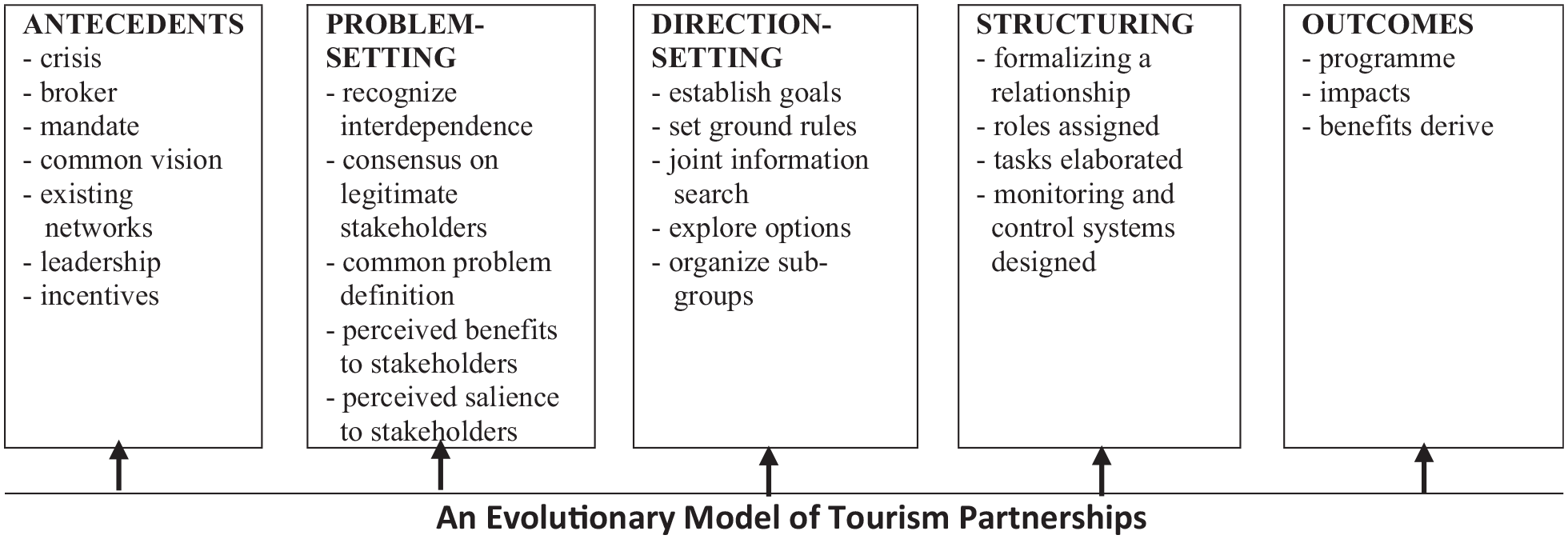
Collaborative model for multi-stakeholder collaboration tourism model by Selin and Chavez (1995).
The model also indicates that effective leadership is crucial. A leader should act as a catalyst, demonstrating enthusiasm and commitment to fostering collaboration within the tourism sector. Successful partnerships are expected to promote community participation, facilitating open communication and strong connections among stakeholders to address common challenges. By appreciating and respecting local cultures, stakeholders can build trust and cooperation. Each stakeholder brings unique resources—such as capital, knowledge, and expertise—making collaborative efforts more fruitful than isolated actions. Stakeholders who collaborate effectively can share knowledge, learn from one another, craft innovative policies, adapt to changing conditions, and channel collective energy for mutual benefit (Ferdian et al., 2024; Gracy, 2015; Samal & Dash, 2024)
Originally designed for environmental planning and management, this collaborative multi-stakeholder framework has been adapted for tourism planning (Chen et al., 2021; Streimikiene et al., 2021) and strategic collaboration (Park & Kohler, 2019). The model supports the development of rural tourism through cooperative efforts toward shared goals. To enhance sustainable tourism practices in rural areas, greater collaboration and participation from local tourism operators, as well as conservation initiatives, are needed, alongside a commitment to the principles of reduction, reuse, and recycling (Chan, 2023).
Therefore, promoting enduring and eco-friendly tourism through collaboration is vital. By valuing the local community culture, stakeholders can form partnerships based on mutual respect and trust, leading to the co-creation of sustainable tourism strategies that align with community values and objectives. Gossling et al. (2012) emphasized that community culture is essential for bridging the gap between stakeholder commitment and the implementation of sustainable tourism strategies, ultimately balancing economic growth with social and environmental responsibilities (Buzinde et al., 2020; Ciornei, 2023; Khuong et al., 2021).
The collaborative model proposed by Selin and Chavez (1995) encourages cooperation among local, regional, and national governments, private sector partners, and civil society organizations. Sustainable tourism development requires a careful balance between economic growth, environmental conservation, and social responsibility. This involves considering the long-term impacts of tourism on communities and ecosystems, while adopting strategies that promote sustainability across all dimensions (Streimikiene et al., 2021). The sustainable management of tourism activities can create jobs and income opportunities for local residents (Geoffrey et al., 2021). Implementing this model can enhance community capacity and motivate active participation in tourism planning and decision-making (Khartishvili et al., 2019). Furthermore, sustainable tourism initiatives aim to positively affect the social, cultural, and economic fabrics of local communities by actively involving them in planning and execution (Eslami et al., 2019; Smiley et al., 2010).
However, the model has not adequately addressed the role of the private sector in the context of CSR, which has recently gained traction for advancing village economic development (Wijijayanti et al., 2020). CSR initiatives are instrumental in building essential infrastructure, and they are an important focus of this study. CSR serves as a mechanism for sustainable village development (Hatipoglu et al., 2019), as exemplified by efforts in Malang City, Central Java, where community-led projects transformed slum areas into vibrant tourist destinations by enhancing the esthetic appeal of neighborhoods (Amanda & Agfianto, 2021). These CSR initiatives promote the three pillars of sustainability, namely economic, social, and environmental, in the local context (Hendrayani et al., 2019), which promotes participatory activity for cross-sectoral interaction (Hendrayani & Hashim, 2018).
Moreover, CSR has facilitated entrepreneurship development in rural areas, such as those in Bali (Arjaya et al., 2021). In Fiji and Zambia, hotels have engaged tourists in financing local initiatives, coining the term “tourist social responsibility” (Chilufya et al., 2019). The Penta Helix collaboration model, which includes five stakeholder types—private sector, public administration, local community, educational institutions, and social media—has accelerated sustainable village tourism in Bali following COVID-19 (Novianti, 2020). This model also fostered the development of a cultural tourism village in Koto Sentajo, South Sumatra, by enhancing communication and synergy among different stakeholders (Yasir et al., 2021). Despite the involvement of various stakeholders in development, studies have not thoroughly assessed the engagement between CSR programs and village stakeholders. Further investigation is needed to understand these dynamics and enhance the effectiveness of collaborative efforts in promoting sustainable tourism.
Study Area
Nglanggeran Village, located in the Yogyakarta Special Region of Java Island, Indonesia, has a large area of 762.79 hectares (Karyatun et al., 2021). It is part of the Patuk District within the Gunungkidul Regency and is home to the remarkable 48-hectare Nglanggeran Ancient Mount, which was formed 60 to 70 million years ago. Rising 700 m above sea level, Mount Nglanggeran is composed of volcanic material and is situated within the Baturagung Karst area, further enhancing its geological importance. In 2016, this mountain range received the prestigious UNESCO Global Geopark designation, solidifying its status as a prime tourism destination (Soviana et al., 2020). The village is located approximately 26 km, or a 40 to 50-min drive, southeast of Yogyakarta.
Demographically, Nglanggeran comprises 878 households, totaling approximately 2,859 residents (Nglanggeran Village Governance, 2023). Notably, approximately 45% of the villagers, aged between 40 and 69 years, engage in agriculture (Karyatun et al., 2021).
The village’s primary tourist attractions include the ancient Mount Nglanggeran, Nglanggeran Embung (a scenic water reservoir), and Kedung Kandang Waterfall. In recent years, outdoor physical activities, such as climbing, rappelling, and flying fox rides, have been introduced, further diversifying the village’s appeal to adventure-seeking tourists.
Culturally, Nglanggeran is rich in traditions, prominently featuring the “Mpu Pitu” or “Seven Elders,” a group of seven families who continue to uphold the village’s heritage. The community also preserves traditional Javanese performances, including the “karawitan” orchestra, the pantomime dance known as “Jatilan,” and the “reog” masked dance.
In recognition of its efforts, Nglanggeran received the Cipta Award in 2011 for the outstanding management of natural tourism attractions and environmental awareness at the national level. The village’s commitment to CBT was further acknowledged in 2017 when it won the ASEAN CBT award. This accolade highlighted the active participation of local residents in enhancing community well-being, improving environmental quality, engaging with tourists, providing quality services, and offering tasty food and accommodation (Rohaini, 2020).
The UNESCO Global Geopark status of the ancient mountain has remarkably increased the village’s appeal to international tourists. In 2021, Nglanggeran was honored as the World’s Best Tourist Village by the World Tourism Organization (UNWTO, 2021), marking a major milestone in its journey toward sustainable tourism development.
Methodology
This study was based on fieldwork conducted in Nglanggeran Tourism Village, Yogyakarta, Indonesia, during visits from May to July 2022, October to November 2022, and December 2022. A qualitative methodology was employed, which is particularly suitable for exploring broad perspectives within complex systems and capturing field realities based on observations (Creswell, 2014). This approach focused on understanding the intricate and dynamic interactions among various stakeholders.
In-depth, semi-structured interviews were conducted with key informants, including local community leaders, members of POKDARWIS (a local tourism awareness group), and representatives from the Central Bank of Indonesia’s CSR section. The study included 20 key informants: three informal local leaders, five POKDARWIS tourism village managers, four youth organization members from Karang Taruna, two officials from the Department of Culture and Tourism in Gunungkidul Regency, two academicians from the State Islamic University of Jogjakarta, one local business owner, one employee from Griya Chocolate, and two travelers.
These in-depth interviews constituted the third phase of the analysis and aimed to clarify the governance and execution of the Bank Indonesia (BI) CSR initiatives. This study explored the development of CSR programs designed to enhance collaboration within the village and support sustainable development in Indonesia. The interviews sought to uncover the reasons behind the slower implementation of sustainable tourism strategies and identify additional methods that could facilitate adoption. Emerging issues related to the mountain’s ecosystem were also considered during this phase.
Key informants were selected using snowball sampling, in which the initial informants recruited potential participants from their social networks. This approach is commonly used in social science to construct representative samples. The case study method, as outlined by Creswell (2014) and R. K. Yin (2014), proved effective for thoroughly examining processes through the evaluation of programs, activities, and events. This method has enabled a detailed investigation of the unique characteristics of Nglanggeran with respect to rural tourism growth (Creswell, 2014; R. K. Yin, 2014). Throughout the various phases of this study, multi-stakeholder collaboration was established, leading to the introduction of sustainability initiatives across the region.
Using a case study methodology, all facets related to stakeholder collaboration and sustainable tourism development were analyzed. Moreover, the multi-stakeholder collaboration model developed by Selin and Chavez (1995) was applied to assess the steps involved in transforming a low-income community into a leading global tourist destination. By integrating CSR activities into this framework, Selin and Chavez’s model provided a structured approach to evaluate the development phases of the tourism model in Nglanggeran by targeting sustainable tourism growth. The five phases of this collaboration model are antecedents, problem-setting, direction-setting, structuring, and outcomes.
Result and Discussion
This study used Selin and Chavez’s (1995) model to evaluate the development of village-based tourism through multi-stakeholder collaboration. The methods used included document analysis, observation, and in-depth semi-structured interviews. Analysis was further performed to reveal the important role of BI’s CSR programs in promoting rural-based tourism. As a communication tool, this program facilitated harmony and engagement among stakeholders. The results are presented based on the five phases of the multi-stakeholder collaboration model developed by Shelin and Chavez: antecedent, problem-setting, direction-setting, structuring, and outcomes.
Antecedent Phase (Mandate, Broker, Leadership, Common Vision, Existing Network, Incentives, and Crisis)
Nglanggeran Village is situated at the edge of the forest beneath Mount Nglanggeran and is known for its ancient karst rock formations. The village faces several considerable challenges, including a scarcity of natural resources, insufficient water for crop irrigation, and poor access to roads connecting it to nearby areas. These obstacles have hindered the overall development of the village. Additionally, many residents aged 20 to 30 have limited educational and employment opportunities, leading the community to rely heavily on agriculture to meet their basic needs.
In 1999, under the leadership of the youth group Karang Taruna, the local community began developing tourism to supplement their agricultural livelihoods. To enhance the moisture content of the area and preserve the natural river, Karang Taruna initiated reforestation efforts. These initiatives align with Selin and Chavez’s (1995) collaboration model, which emphasizes that environmental challenges can drive communities to work together in problem-solving. Furthermore, local efforts to protect the environment have laid the foundation for CBT (Suyanto et al., 2019). The approach is also consistent with Graci’s (2013) model for collaborative development aimed at supporting sustainable tourism (Graci, 2013).
Traditional environmental planning methodologies often prioritize ecological impact assessments but frequently overlook the importance of antecedent processes shaping community responses to environmental challenges. By focusing on collaboration and grassroot initiatives, Nglanggeran Village is taking important steps toward sustainable development and tourism growth.
……One of the criteria selected for this area to become a pilot project CSR of the Central Bank of Indonesia is the social capital of the local people. The people here have a great sense of responsibility, good work ethic, and cooperative work. This characteristic is crucial for the sustenance of our CSR project in the long run……… (Informant A, July 2022).
The regular Tuesday Kliwon night religious gatherings have evolved into a vital platform for strengthening the diverse network of subgroups within Nglanggeran. It offers villagers the opportunity to discuss pressing community issues, while featuring a local food festival. The primary focus of the gatherings is the recitation of the Quran, which initiates a collective effort to foster cooperation among attendees (Selin & Chavez, 1995). According to a leader from POKDARWIS, the Tuesday Kliwon night gatherings have sparked important discussions among villagers regarding complex problems, particularly water crises and economic challenges. These conversations have played a crucial role in uniting communities to seek solutions collaboratively.
Problem-Setting Phase
The problem-setting phase encompasses the recognition of issues, interdependence among stakeholders, a consensus on legitimate participants, and the definition of common problems, perceived benefits, and their importance to stakeholders. This phase serves as a forum for various stakeholders to share their concerns regarding tourism in Nglanggeran. Key stakeholders include the Karang Taruna Bukit Putera Mandiri farmer group, tourism department, local leaders, the community association of women (PKK), homestay owners, traders, and youth organizations. Additionally, numerous private organizations and government bodies work to address the challenges faced by the village.
Informal discussions among these interest groups provide a platform for tackling common tourism management issues, such as the lack of knowledge and expertise in operating homestays, ensuring food hygiene, implementing effective tourist navigation systems, and adopting modern farming techniques. These challenges emerged as Nglanggeran gained popularity as a tourist destination, attracting various organizations eager to provide support through CSR programs.
Through internal organizational strengthening, the Nglanggeran Tourism Village organization developed a robust structure. The Tourism Awareness Group holds weekly meetings in the Nglanggeran Ancient Volcano Area, along with regular gatherings every 35 days at the designated location of the group. External strengthening was also achieved by integrating a feasibility organization into a local government decree.
A pressing issue facing Nglanggeran Village is water scarcity, which adversely affects agricultural activities and results in low farming productivity. This challenge has become a top priority that requires solving in BI’s CSR program, prompting meetings with Karang Taruna and POKDARWIS. Additionally, the Ministry of Agriculture has expressed considerable concerns regarding traditional farming practices in the area.
In 2011, Pertamina, a state oil company, initiated discussions with villagers through its CSR program to address these challenges. These sessions successfully aligned villagers’ expectations with the CSR initiatives, fostering a strong relationship between funders and the community. Furthermore, the Farmer Empowerment Center Program aimed to educate farmers on modern agricultural practices and sustainable plantations. Improved communication between POKDARWIS and Nglanggeran Village tourism governance enhanced the coordination of CSR programs.
Local tourism governance demonstrated remarkable self-help efforts by constructing pavilions, developing trekking routes, and building gazebos. They also promoted local arts and organized cultural festivals. Informants began to openly acknowledge the challenges faced by village tourism, and regular stakeholder meetings facilitated the resolution of local issues.
Physical development was complemented by economic empowerment initiatives and capacity-building training for CBT awareness groups (POKDARWIS) and local farming organizations. Through these initiatives, BI’s CSR programs positively affected the lives of at least 4,200 villagers, with average monthly incomes ranging from IDR 1.5 million to IDR 11.5 million. Each household was allocated 2,000 m2 of land for farming, where modern agricultural techniques were implemented to cultivate at least 4,500 durian trees, generating annual incomes of up to IDR 140 million.
This study highlights the importance of interdependence, reaching a consensus on legitimate stakeholders, defining common problems, perceived benefits for stakeholders, and stakeholder engagement (Selin & Chavez, 1995). In Nglanggeran, interdependence between local groups managing village tourism, such as homestay owners, food vendors, and restaurants, has been clearly recognized.
Direction-Setting Phase
The direction-setting phase was crucial in establishing the objectives, ground rules, and organizational structure for the development of Nglanggeran Tourism Village. This phase involved the engagement of various stakeholders, including local organizations, the local government, and the tourism department, leading to the establishment of the Tourism Awareness Group (POKDARWIS) as the primary governance body.
A recent study by Satiani et al. (2022) highlighted the evolution of local organizations from informal grassroots groups into more formal entities, such as the Karang Taruna Bukit Putra Mandiri. This organization’s reforestation efforts were recognized by the Green Reforestation Competition of Gunungkidul Regency, validating the community’s environmental protection efforts and encouraging villagers to take tourism more seriously.
The tourism village’s direction further solidified in 2003 when the tourism office of Gunungkidul Municipality integrated the CBT development concept. This integration facilitated the alignment of local leaders and various stakeholder groups around a shared vision for the community’s development.
The CSR program of the Central Bank of Indonesia played a crucial role in this direction-setting phase. According to Informant B (July 2022), the CSR program not only focused on infrastructure development, such as the creation of water ponds, but also included interventions to facilitate CBT through training and facilitation efforts. This program helped establish ground rules, set objectives, and organize subgroups, as described by Selin and Chavez (1995).
……..The CSR program of the Central Bank of Indonesia not only focused on infrastructure development, such as creating water ponds, but also included interventions to facilitate CBT through training and facilitation efforts……. (Informant B, July 2022).
Strong social ties and values within the Nglanggeran community, such as a sense of responsibility, work ethics, and cooperation across groups, contributed to the formation of social capital during the selection of pilot project sites to facilitate BI’s CSR, as highlighted by Informant C (July 2022). This social capital was a critical component of the smooth transition of the village’s economic development, as supported by Selin and Chavez (1995).
The Ministry of Agriculture’s support for the primary activity of Nglanggeran Tourism Village—agriculture—by establishing the Technology Park Nglanggeran Agriculture in 2006 further strengthened the direction-setting and the integration of tourism with the village’s economic activities. The establishment of the Travel Awareness Group (POKDARWIS) in 2013 marked an important turning point, leading to more professional management practices and the transformation of several tourist destinations in Nglanggeran (Hermawan, 2016). This initiative exemplifies effective multi-stakeholder cooperation at the village level, as described by Selin (1999).
In summary, the direction-setting phase in Nglanggeran involved the engagement of various stakeholders, establishment of formal governance structures, integration of CBT, and strategic interventions by external actors, such as the Central Bank of Indonesia and the Ministry of Agriculture. Strong social capital within the community and the alignment of various groups around a shared vision for the village’s development were critical factors in the success of this phase.
Nglanggeran Tourism Village in Gunungkidul Regency, Yogyakarta, Indonesia, has undergone a remarkable transformation from a simple irrigation reservoir to a popular tourist destination. Initially intended for agricultural purposes, the reservoir’s picturesque setting, particularly during sunrise and sunset, soon attracted visitors, transforming the site into a natural attraction (Informant A, July 2022).
……..The strong social values within the community, such as a sense of responsibility, work ethic, and cooperation across groups, contributed to the formation of social capital during the selection of pilot project sites for the Bank Indonesia CSR facilitation…….(Informant C, ….July 2022).
The BI CSR program played a pivotal role in facilitating the village’s economic development. The program’s success was largely attributed to the strong social capital within the Nglanggeran community, which was characterized by a sense of responsibility, robust work ethics, and effective cooperation across various stakeholder groups. (Informant C, July 2022). This social cohesion has enabled a smooth transition from the village’s traditional agricultural focus to a thriving tourism-based economy (Putnam, 1995; Woolcock, 1998).
Since 2006, the Indonesian Ministry of Agriculture has actively supported Nglanggeran’s primary economic activity, namely, agriculture. In partnership with the Yogyakarta Agricultural Technology Assessment Center (BPTP), the ministry established the Nglanggeran Agriculture Technology Park, which focuses on goat milk production, hydroponic vegetable cultivation, and integrated cocoa processing (Taman Teknologi Pertanian Nglanggeran). This initiative diversified the village’s agricultural offerings and integrated them into tourism, providing a holistic experience for visitors (Dredge, 2006).
The year 2013 marked a major milestone in Nglanggeran’s tourism development with the establishment of an official management organization, the Travel Awareness Group (POKDARWIS). This professionalization of tourism management has led to the development of various ecotourism areas, community empowerment initiatives, and capacity-building programs, such as entrepreneurship training for locals (Hermawan, 2016). These efforts have fostered a multi-stakeholder approach to tourism development, engaging diverse groups, including homestay operators, women’s groups, farmers, and restaurateurs (Jamal & Getz, 1995).
The BI CSR program’s comprehensive approach, which encompassed not only infrastructure development and technical assistance but also capacity building, has been instrumental in the economic growth of Nglanggeran Village (Informant C). BI’s specific tools for assessing CSR initiatives, evaluating community collaboration, and identifying potential business funding have enabled the program to align with the village’s unique needs and aspirations (Peredo & Chrisman, 2006).
Furthermore, the BI CSR program’s facilitation of external collaborations with the media, local communities, academics, government entities, the private sector, state-owned enterprises, and NGOs has amplified the program’s impact and fostered a broader network of support for Nglanggeran’s development (Plummer et al., 2006). Establishing Nglanggeran Mart, a local store selling regional goods and enabling online transactions, has not only generated income for the community but also expanded its economic opportunities (Dredge, 2006).
In conclusion, Nglanggeran’s transformation from an irrigation reservoir to a thriving tourism destination has been driven by an interplay of different factors, including the village’s strong social capital, the Ministry of Agriculture’s agricultural initiatives, the professionalization of tourism management through POKDARWIS, and the comprehensive CSR program implemented by the Bank of Indonesia. These multifaceted efforts have enabled Nglanggeran to leverage its natural assets, cultural heritage, and community-based entrepreneurship to achieve sustainable economic development.
Structuring Phase
The development of Nglanggeran Tourism Village in Gunungkidul Regency, Yogyakarta, Indonesia, involved a formalized and collaborative approach among various stakeholders, including different levels of government, sectoral ministries, and the private sector through CSR initiatives (Selin & Chavez, 1995). The collaborative framework was structured with specific duties and tasks assigned to subgroups. These subgroups included representatives from the federal, provincial, and local governments, as well as ministries responsible for tourism, agriculture, and public works (Jamal & Getz, 1995). This multi-stakeholder involvement was crucial for navigating the complex challenges faced by the Nglanggeran community, such as poverty, harsh environmental conditions, low agricultural productivity, and water scarcity.
………In monitoring the CSR program, interventions were made based on the community’s needs. For example, when sales at Griya Coklat declined, steps were taken to understand and address the reasons behind the decline………Therefore, monitoring and facilitation went hand in hand to aid local economic district development…… (Informant D, July 2022).
Nationally, the Ministry of Tourism provided training to empower locals to become retailers and homestay hosts, while the provincial DIY Yogyakarta government offered non-physical assistance, such as granting the right to use Mount Nglanggeran and establishing a designated track route to the mountain. Locally, the Gunungkidul Regency government provided legal support to facilitate community initiatives (Utomo et al., 2022). The private sector also played a crucial role through various CSR initiatives. For instance, Bank Mandiri, a state-owned company, allocated funding for the construction of Nglanggeran Mart, an important venue for local businesses to sell their products (Manaf et al., 2018). Pertamina, another state-owned enterprise, provided technical support for agricultural training and program execution in the Embung (reservoir) area (Manaf et al., 2018). Since 2011, BI, the national bank, has supported PKK (Family Welfare Program) training in cocoa processing and the development of Griya Coklat, further enhancing the community’s economic opportunities (Informant D, July 2022).
The CSR programs adopted a dedicated cluster management strategy, uniting various parties with vested interests to achieve a common objective through government collaboration (Juniari & Mahyuni, 2020; Mahuni, 2017; Zen et al., 2013). Although challenging, this strategy proved to be essential for the success of the CSR initiatives, as collaboration and participation among stakeholders were crucial. The development of Nglanggeran as part of the Gunung Sewu Geopark, a UNESCO Global Geopark Network member, further strengthened collaborative efforts and institutional arrangements in the area (United Nations Educational, Scientific and Cultural Organization, 2006). The nature of geopark governance, which includes diverse local community groups working toward a common objective, aligned with the multi-stakeholder approach already implemented (Guo & Chung, 2019). This collaboration, combined with academic studies on carrying capacity, helped minimize the negative impacts of tourism development (Ruban, 2018).
Moreover, the evolution of multi-stakeholder collaboration in Nglanggeran was deeply rooted in strong Javanese values, such as “Sangkan Paraning Dumadi” (the origin and final destination of human life), “Manunggaling Kawula Gusti” (maintaining harmonious relations between God, other humans, and nature), and “Hamemayu Hayuning Bawono” (aiming to make the world beautiful and peaceful) (Informant E, July 2022). These cultural and social values, combined with Islamic religious practices, have facilitated harmonious collaboration among various groups and supported the implementation of CSR programs and government initiatives over the years.
Nglanggeran Tourism Village has become a model for developing rural tourism in Indonesia, inspiring other areas to adopt similar strategies (Arcana & Wiweka, 2016; Luo et al., 2021). The collaborative approach, which leverages the strengths of different stakeholders, along with the community’s strong cultural and social values, has been instrumental in the village’s successful transformation from an agricultural area to a thriving tourism destination.
Outcome Phase
The growing interest in tourism, particularly among the youth in Nglanggeran, has provided an important example of social tourism business practices. Since 2010, the number of annual tourists that visited Mount Nglanggeran has grown remarkably, with over 7,000 individuals recorded in 2018 (Febrinastri, 2019). This surge in tourism has also led to the flourishing of social entrepreneurship within the community, with ecotourism managers generating 424 million rupiahs in 2013, which increased to 1.4 billion rupiahs in 2014 (Febrinastri, 2019). The existence of POKDARWIS (Tourism Awareness Group) has highlighted the organizational capacity and the empowerment of the Nglanggeran community. POKDARWIS acts as a forum for local organizations, enhancing community participation in developing the tourist village and increasing the benefits of tourism for public welfare. The group has 154 members, including core administrators, and has been instrumental in the village’s success (Informant F, July 2023).
The CSR initiatives by various organizations, such as PT Pertamina and BI, have been crucial to transforming Nglanggeran Tourism Village. Pertamina’s CSR program led to the construction of a reservoir, which has become a tourism icon, as well as tree planting and the construction of a training center guesthouse (Fajri et al., 2021). This collaboration contributed to Nglanggeran Tourism Village being named the best tourism village in ASEAN in 2017 (Fajri et al., 2021).
……….In Nglanggeran, there is a person in charge (PIC) for specific field projects for output orientation and also outcome. Subsequently, infrastructure was spoken about the aspect that needs to be changed, and what type of intervention model needs to be developed by the Central Bank of Indonesia. For example, in the execution of CBT, there is training in the second phase, facilitation in the third phase, and back to the Central Bank. This tool is in line with our project file planning…… (Informant E. July 2023)
BI’s CSR program provided dedicated tourism managers who regularly visited and maintained an office in Nglanggeran. These employees acted as intermediaries, connecting with residents and various stakeholder organizations within the village (Informant E, July 2023). The program also facilitated technical support and training for the community, particularly in developing chocolate plantations (Informant E, July 2023). Nglanggeran’s recognition as part of the Global Top 100 Sustainable Destinations in 2018 and winning of the ASEAN Sustainable Tourism Award in 2018 highlight the success of the collaborative efforts (Purba, 2018). The intensive collaboration program between BI and POKDARWIS from 2020 to 2022 aimed to enhance sustainable tourism in the village through technical training, improving service quality, strengthening governance structures, providing facilitation, certifying tourism maintenance, and upgrading infrastructure and facilities (Informant E, July 2023).
The marketing of Nglanggeran’s ecotourism centered on Mount Nglanggeran has extended both locally and internationally, with various tourism facilities and package experiences being offered to attract more tourists (Graci, 2020). Local participation in managing tourism has become a unique advantage of Nglanggeran Village, contributing to the economic sustainability of the community (Poverty Rate in Gunungkidul Decreases as Tourism Rises, 2017) (Government of Gunung Kidul Regency, 2017).
The success of Nglanggeran as one of the world’s best tourist villages has required continued efforts, including proactive innovation in long-term planning, collaboration, training, and dialog systems, creating a cohesive vision for sustainable development (Graci, 2020). Effective stakeholder management, empowering stakeholders, and instilling a sense of ownership during development have been crucial to the village’s success (Graci, 2020) The synergy in collaboration among multi-stakeholder tourism villages, with active participation from the local community, has been a key factor in Nglanggeran’s transformation (Graci, 2020).
Recommendations of the Model
This study examined multi-stakeholder collaborations including businesses, communities, and external parties, that is, the government. Each stakeholder contributed unique assets such as capital, knowledge, and expertise, and achieved greater success through collaboration. Comprehension of the communication between the three parties fostered harmony and communicated perceptions of sustainability to outsiders.
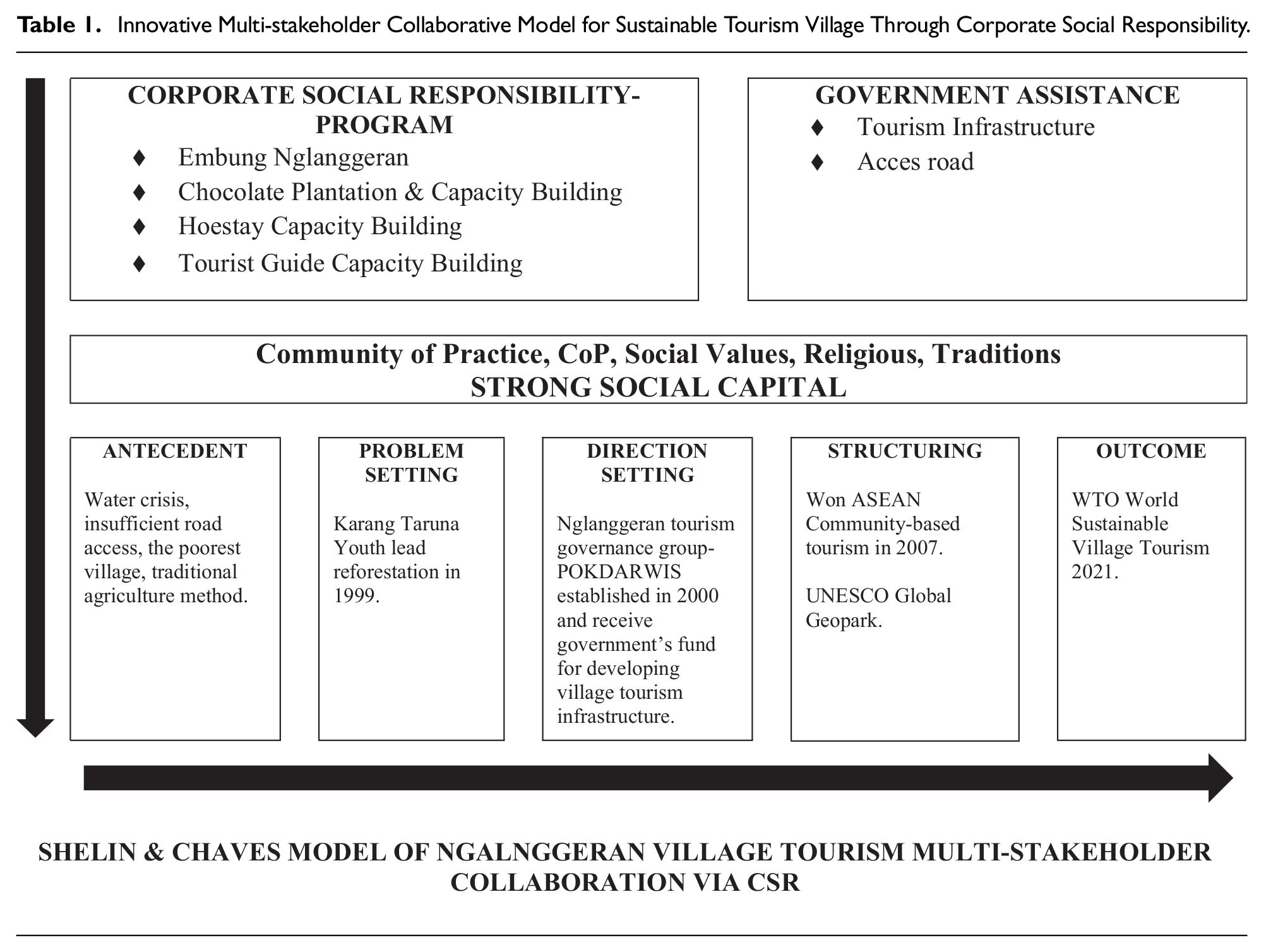
Since 2006, the Ministry of Agriculture has supported Nglanggeran Tourism Village’s primary activity, agriculture. The Indonesian Ministry of Agriculture established the Nglanggeran Agriculture Technology Park by assisting the Yogyakarta Agricultural Technology Assessment Center (BPTP). This development accelerated the focus on agriculture by introducing goat milk production from Etawa farms, hydroponically grown vegetables, and integrated cocoa processing. The facility provided comprehensive resources, including meeting and discussion rooms, training rooms, processing plants, and study and internship centers (https://chogerttp.wixsite.com/home). It also offered training on the processing of goat’s milk from Etawa and cocoa. By 2018, TTP had become a part of Gunungkidul Regency’s Agriculture and Food Service. Moreover, the technology park became an integral part of the Nglanggeran Village Tourism package and the Nglanggeran Embung tourism area. This model focused on five phases in the tourism development process: antecedents, problem-setting, direction-setting, structuring, and outcomes. CSR placement, communication, and dialog processes promoting sustainability required integration into the model to address the gaps in the tourism Partnership Model developed by Selin and Chavez (1995) The increased focus on CSR and the key elements of ongoing communication processes aimed to enhance existing models (Table 1).
Innovative Multi-stakeholder Collaborative Model for Sustainable Tourism Village Through Corporate Social Responsibility.

Conclusion
In conclusion, the rapid transformation of Nglanggeran from a poor village into a popular tourist destination was made possible by deploying multi-stakeholder collaborations for CBT through CSR. Although different CSR programs operated as needed, the Central Bank, BI, was responsible for developing a comprehensive plan to identify gaps that additional CSR programs could fill. Consequently, a more holistic CSR program could be achieved by including other local banks, such as Bank Mandiri and Bank Rakyat Indonesia, fostering greater synergy and providing a coordinated approach to village development.
Through BI’s CSR program, the private sector was actively involved, demonstrating a strategic partnership with the government and local community. As part of BI’s commitment to strengthening the local economy and locating financial resources for community welfare, the bank has continuously pursued new opportunities for the Economic Development Program, particularly in Gunung Kidul. This proactive approach by the private sector in including various stakeholders has set strong precedents for effective collaboration.
The BI CSR program extended beyond the philanthropic model, considering a strategic “cluster management and zone assessment” approach, along with an assessment of the community’s social capital, when creating a long-term strategy for Nglanggeran Village Tourism. The CSR program was a crucial part of BI’s strategic plan for village development and was not implemented ad hoc. Careful analysis and strategic planning should serve as a model for other CSR initiatives targeting sustainable tourism development.
Collaboration through development, using CSR as a driving force, was essential for addressing common issues arising from tourism activities. This included fostering effective communication and facilitation between stakeholders, including Nglanggeran residents, local governments, academia, and tourism offices. Each stakeholder provided unique assets, and the collaborative approach achieved greater success than did individual efforts.
This study had some methodological limitations that must be acknowledged. First, as the case study design did not allow for the creation of a causal relationship, there was no observable correlation between collaboration and CSR. Consequently, we could not determine the exact direction of causality. Stronger CSR involvement may improve the well-being of Nglanggeran villagers. Second, this study examined only one tourist village area: Nglanggeran in Gunungkidul Regency, Yogjakarta, Indonesia, which the UNWTO named the world’s best tourist village in 2021. As the number of Indonesian tourist villages is still growing (6,016 as of 2024), this study is considered minimalistic.
This study focused on the implementation of collaboration at the community level as the manager of a tourism village, not at the government level, because a tourism village is a CBT model whose initiatives develop from the bottom up. The relationship between other variables that can influence collaboration success in tourism villages was overlooked to concentrate solely on the multi-stakeholder collaboration method in this study.
More detailed research would be beneficial to gain a better understanding of the dynamics of collaboration on CSR practices, examining causal relationships, and evaluating the impact on community well-being. Similar studies should also be conducted at various locations within tourism villages. This is necessary to illustrate multi-stakeholder collaborations in tourist villages. Because the theme was sustainability, the importance of future research in this area was highlighted. Second, future studies should examine the effectiveness of collaborations by examining their impact on villagers’ welfare, through case studies and direct feedback. Further tourism partnerships should be analyzed to identify the factors influencing the effectiveness of collaboration, which is beneficial for sustainable tourism. Ultimately, the Nglanggeran case study provides a promising model for other regions in Indonesia and beyond, highlighting the effectiveness of multi-stakeholder collaboration and strategic CSR initiatives in transforming rural communities through sustainable tourism.
Footnotes

Funding
The authors disclosed receipt of the following financial support for the research, authorship, and/or publication of this article: This work was supported by Universitas Pembangunan Nasional Veteran Jakarta.
Declaration of Conflicting Interests
The authors declared no potential conflicts of interest with respect to the research, authorship, and/or publication of this article.
Data Availability Statement
The data that support the findings of this study are available from the corresponding author upon reasonable request.