




Abstract
Guided by the onion model theory of language policy, this study aims to investigate the multi-level implementation of the English Curriculum Standards for Compulsory Education (2022 Edition) in China. Data were collected from both macro and micro-level policy texts, along with interviews with English teachers in five middle schools. One school was selected as the primary site for an in-depth field investigation. Policy texts were examined through critical discourse analysis (CDA), while interviews were systematically coded and analyzed using Nvivo 14.0. The findings revealed that: (1) The national-to-local policy texts exhibit alignment, whereas a disjuncture exists between the upper and school-level practices; (2) English teachers, caught in the tension between policy mandates and practical teaching constraints, further deepens the disjuncture; (3) The implementation of the new curriculum standards in county-level middle schools remains suboptimal, shaped by a complex interplay of factors including the policy text itself, the county education bureau, schools, teachers, and students. Notably, female English teachers faced significant teaching and family pressures while striving to implement the new policy. On one hand, this study unveils a Chinese theoretical model of English language education policy implementation. On the other hand, it underscores the urgent need for targeted support mechanisms to facilitate more effective policy implementation in county-level schools.
Plain Language Summary
This study explores how China’s new English curriculum standards policy is being carried out in county-level middle schools, focusing on Dancheng County in Henan Province. Using interviews and textual analysis, the research found that while the national and local policies are aligned, major challenges occur at the school level. Although the policy promotes students’ overall English abilities, its classroom implementation is limited. English teachers often focus on test preparation due to exam pressure, limited teach training, and lack of teaching resources. As a result, key goals like building students’ cultural understanding and thinking ability are often overlooked. The findings suggest that teacher training should be more practical, and the policy explanations should better connect with classroom needs. More support is also needed for middle schools in the under-resourced areas. This research offers valuable insights for improving how English language education policies are applied in practice.
Introduction
For individuals, English may be just a skill, but for the nation, it represents national strength (Cai, 2015). English education plays a pivotal role in enhancing the citizens’ language proficiency and bolstering the nation’s linguistic capacity (Li et al., 2025). Recognizing its significance, China has prioritized English language education by formulating a series of targeted policies. Particularly, the “English Curriculum Standards” series constitutes a strategic initiative within China’s fundamental education development framework. In 2001, the Ministry of Education (2001) promulgated the Common High School English Curriculum Standards for Full-Time Compulsory Education (Experimental Draft), followed by a refined version for senior high schools in 2003. A major turning point occured in 2011 with the release of the English Curriculum Standards for Compulsory Education (2011 Edition), which redefined the curriculum’s nature by emphasizing both the instrumental and humanistic dimensions of English education (Ministry of Education, 2012). Nonetheless, the English Curriculum Standards for Compulsory Education (2022 Edition)—the new curriculum standards policy holds epoch-making significance compared to the version from 10 years ago (Ministry of Education, 2022a). It introduces the innovative concept of English core competencies, encompassing language proficiency, cultural awareness, thinking quality, and learning ability, which are expected to profoundly impact English teaching (Q. Li & Yang, 2024).
Existing research has demonstrated that the new curriculum standards policy is reshaping the landscape of English education in China (L. Li & Wang, 2023; M. Li, 2025). It not only emphasizes a shift toward communicative and learner-centered approaches (M. Li, 2025), but also refines interactive teaching methods (Q. Li & Yang, 2024), addresses practical challenges faced by educators (L. Li, 2022), and provides a reference for English teachers to grasp the core objectives of the updated educational framework. Specifically, recent studies primarily concentrate on clarifying, assessing, and recommending ways for improvement of the main content of the new curriculum standards (Cai, 2024; Wang et al., 2022). Nonetheless, there is a lack of studies investigating the implementation of the new curriculum standards in middle schools and examining how English teachers are applying the English core competencies in classroom practices.
It is noteworthy that the lack of effective implementation of English language education policies can trigger cascading effects (Liao et al., 2025). In China, urban administrative divisions are categorized into seven tiers: municipalities directly under the central government, sub-provincial cities, provincial capitals, prefecture-level cities, county-level cities, counties, and towns (Wei, 2014). Among these, there are 1,482 counties, where achieving balanced compulsory education development remains a critical task in China’s ongoing educational modernization efforts (Ministry of Education, 2022b). Compared to prefecture-level cities and above, counties face pronounced challenges in education, including overcrowded classrooms, acute disparities in public service provision, and underdeveloped teaching-research systems. These issues represent the “last mile” of basic education reform (H. Chu & Chu, 2018). Therefore, English education in China’s counties warrants focused attention, and the localized implementation of the new curriculum standards demands urgent investigation.
To date, drawing on Ricento and Hornberger’s (1996) onion model theory of language policy, this study examines the implementation of the new curriculum standards in counties and how English teachers execute it in teaching. To gain deeper insights, the middle schools in Dancheng County, located in eastern Henan province, China, were selected as the field site for this research. Obvious issues persisted in Dancheng County, such as the prevalence of large class sizes, an inability of the revised school layout to adequately align with economic development, and pressing concerns related to the aging of teaching faculty and subject-specific shortages (Dancheng County People’s Government, 2022). Hence, investigating the implementation of the new curriculum standards in Dancheng County is essential for understanding how county-level regions in China adapt to English educational reforms. The findings will provide insights into the multi-layered dynamics of English language education policy implementation in China, and illuminate the challenges faced by English teachers.
Literature Review
Language Education Policy
Language education policy constitutes a critical branch of the language policy and planning field, characterized by its distinctly interdisciplinary nature that integrates perspectives from applied linguistics, anthropology, sociology, economics, and political science (Johnson, 2013; Ricento, 2006). At its core, language education policy represents a dynamic, multi-layered process (Spolsky, 2017; Wiley & García, 2016), whose formulation and implementation are shaped by diverse stakeholders operating across various levels and contexts. As the primary policymaker, the government typically specifies in official language education policies the linguistic competencies required for younger generations to ensure their full societal participation (Cooper, 1989; Kaplan & Baldauf, 1997). Simultaneously, language education policy exhibits a dual nature: it serves both as an authoritative framework regulating linguistic practices in education and as a reflection of the ongoing negotiation between state-mandated policies and grassroots implementation (Shohamy, 2006). Due to the heightened globalization, English has been assumed as the second or official language in a multitude of countries, leading to a widespread equation of foreign language education policy with the teaching and learning of English (Liddicoat, 2022).
Research Developments in Western Language Education Policies
The exploration of language education policies has a long history, with scholars from countries such as the United States, the United Kingdom, and Canada leading the way to conduct relevant studies since the 1960s (Shan & Yin, 2022). Over the decades, research has expanded to address diverse aspects of language education policy, including policy design, implementation challenges, and socio-political implications (Teigland & Gazzola, 2025; Vanbuel, 2022).
As for the policy design, researchers have explored analytical frameworks that incorporate distinct socio-political and educational contexts (Cardiff et al., 2024; Harklau et al., 2022; Teigland & Gazzola, 2025). Harklau et al. (2022) employed an interpretive policy analysis framework to examine U.S. English language education policies for English learners and instructors across macro-, meso-, and micro-level contexts. Through document analysis, Teigland and Gazzola (2025) evaluated the design of official language policies in Norwegian higher education. Cardiff et al. (2024) utilized a case study methodology to explicate sustainable development in English language education within tertiary institutions. Existing studies have also investigated the implementation processes and challenges of language education policies at various levels (Mahoney et al., 2022; Simoes Loureiro & Hadjar, 2025; Vanbuel, 2022). A Q-methodology study revealed that all stakeholders involved in policy implementation (both within and outside educational institutions) compete to reinterpret and adapt official policies according to their understandings (Vanbuel, 2022). A mixed-methods study by Simoes Loureiro and Hadjar (2025) identified facilitating and constraining factors in implementing multilingual policies in Luxembourg’s early childhood education. Additionally, a cross-sectional study assessed the efficacy of Arizona’s English Learner program twelve years post-implementation of Proposition 203, determining its compliance with the “third prong” criterion of Castaneda v. Pickard (1981), which mandates empirical validation of program effectiveness (Mahoney et al., 2022).
Teachers, as central actors in language education policy, have been examined by a limited number of researchers regarding their pivotal role in policy implementation. Johnson et al. (2024) analyzed how Spanish teachers in U.S. high schools interpret and appropriate Iowa’s language education policies, alongside their perspectives on traditional language instruction. Their findings suggest that language teachers are not mere cogs in the machinery—instead, they serve as crucial policy arbiters who shape educational opportunities for students. Through the case study, Her (2024) demonstrated that teachers’ varying ideological stances lead to divergent interpretations and implementations of language policies, thereby creating distinct power dynamics for their students. However, Chang-Bacon (2022) questions teachers’ capacity as policy interpreters, noting that while some prioritize policy compliance, others engage in complex discursive practices to circumvent policy discussions. Further studies have identified multiple challenges teachers face in policy implementation. Firstly, their linguistic proficiency and pedagogical skills may prove inadequate to meet policy demands, particularly among rural educators (Izquierdo et al., 2021). Secondly, insufficient resources and institutional support, including teaching materials, professional development opportunities, and time constraints, often hinder effective classroom implementation (Bier & Lasagabaster, 2025). Finally, teachers must frequently negotiate between policy requirements and students’ cultural backgrounds, especially in multilingual classrooms where strategies like translanguaging become essential for supporting learning (Lima Becker et al., 2022).
In summary, the Western research on language education policies has yielded substantial findings regarding policy formulation, implementation, and evaluation. These studies have not only examined the alignment between policy design and local contextual needs but have also provided in-depth analyses of implementation challenges and teachers’ central role in policy implementation. However, given China’s distinct sociocultural, economic, and educational contexts (B. Liu et al., 2014), coupled with the limited comprehensive research examining language policy implementation across the national, local, school, and teacher levels, investigating the design, implementation, and outcomes of recent English language education policy in China holds significant theoretical and practical implications.
Research Progress on English Language Education Policies in China
China’s English language education policies have undergone successive refinements since the Reform and Opening-up era to align with global trends and enhance national competitiveness (T. Zhang, 2021a). The policy evolution comprises four distinct phases: the exploratory phase (1949-1977), developmental phase (1978–1998), accelerated phase (1999–2011), and contemporary phase (2012–present) (Wen, 2019).
The contemporary phase is characterized by proactive integration with national strategic objectives and systematic standardization of English education frameworks (T. Zhang, 2021a). The promulgation of the new curriculum standards inaugurated a core competencies era, shifting the policy focus from discrete knowledge transmission to cultivating students’ integrated language proficiency, cultural awareness, thinking qualities, and autonomous learning abilities (Ministry of Education, 2022a). This paradigm shift reflects a synthesis of instrumental and humanistic educational philosophies, while simultaneously elevating pedagogical emphasis on listening and speaking competencies to meet growing demands for intercultural communication in globalized contexts.
Current research on English language education policies in China primarily focuses on comparative analyses of domestic and Western policies (Chang, 2025; T. Zhang, 2021b). T. Zhang (2021b) conducted case studies of foreign language education policies in countries such as the United States and Germany, elucidating their distinctive features and disparities, while offering policy recommendations based on China’s current English education framework. Chang (2025) systematically examined fundamental concepts and terminology related to foreign language curriculum and pedagogy, addressing theoretical inheritance and development issues in international foreign language education theories. Then, several studies have undertaken interpretive and evaluative analyses of China’s English language education policies (L. Li, 2022; M. Li, 2025; Q. Li & Yang, 2024). M. Li (2025) employed textual analysis to investigate the alignment of talent cultivation objectives across different educational stages in English curriculum standards and teaching guidelines, providing insights for policy revision and pedagogical practice. Q. Li and Yang (2024) analyzed the design logic of English curriculum content in basic education, exploring its structural characteristics, organizational principles, and developmental trajectories. L. Li (2022) examined the objectives, content, and methodologies of teaching, learning, and assessment as outlined in the new curriculum standards from a tripartite perspective. Furthermore, scholars have investigated the challenges and dilemmas in implementing China’s English language education policies, proposing corresponding recommendations (H. Zhang & Shi, 2023; T. Zhang, 2021a; W. Zhang & Zou, 2023). Within the framework of foreign language education studies, T. Zhang (2021a) identified key issues in policy implementation, including governance structures and strategic planning. W. Zhang and Zou (2023) further analyzed critical implementation challenges, such as insufficient and unevenly distributed English education resources, and weak policy enforcement, suggesting targeted countermeasures. H. Zhang and Shi (2023) utilized the corpus-based research method and Cooper’s (1989) analytical framework to trace the evolution of China’s official English education policies from 2000 to 2021, offering new recommendations for policy development. Scholars generally concur that while China’s English language education policies are well-directed, their implementation still faces significant challenges and shortcomings.
In conclusion, current research on China’s English language education policies primarily focuses on the comparative analyses of domestic and international policies, policy interpretation and implementation evaluation, as well as challenges and countermeasures. However, few studies have conducted empirical investigations to explore the concrete effects, problems, and underlying causes of English language education policy implementation at the county level. Moreover, in terms of the target groups examined in the existing research, most studies concentrate on preschool children (X. Li & J. Li, 2024), high school students (L. Li & Wang, 2023), and university students (Sang, 2023). Yet, middle school students, as a crucial cohort in China’s compulsory education system, remain under-researched regarding the implementation and effectiveness of English language education policies. Therefore, it is imperative to investigate the implementation status and practical effectiveness of the new curriculum standards at the secondary school level in the new era.
Theoretical Framework
The onion model theory of language policy, proposed by Ricento and Hornberger (1996), is utilized to explicate the implementation process of language policy. The model, through its concentric circles, illustrates the multiple layers involved in the implementation of language policy, ranging from the macro to the micro levels, as depicted in Figure 1. Taking English language education as an example, Ricento and Hornberger (1996) divided the implementation levels of language policy into international organizations, countries or governments, administrative agencies, schools and teachers. Each level is not closely connected, but has a certain adjustable gap, namely language policy implementational space (Hornberger & Johnson, 2007). In other words, policy participants at each level do not strictly abide by the implementation of the policy, instead, they have a certain degree of initiative. Additionally, it is worth noting that the policy will be interpreted and modified differently when it penetrates from one level to the next level (Ricento & Hornberger, 1996).

The Onion Model Theory of Language Policy by Ricento and Hornberger (1996).
Several studies have developed and applied the onion model theory of language policy to various contexts to analyze the complexities of language policy implementation (Johnson, 2011; Pulinx et al., 2017; Van Oss et al., 2023). Hornberger and Johnson (2007) integrated this framework with an ethnographic approach to advocate a more multi-layered perspective on language policy and planning research. Johnson (2011) explored how to combine the onion model theory with critical discourse analysis (CDA) for better revealing connections among multiple levels of policy implementation activities. Pulinx et al. (2017) also focused on the connections among three layers of the onion model theory of language policy, and examined the interactions between Belgium’s strict monolingual education policy (macro level), school characteristics (meso level), and teachers’ beliefs about monolingualism (micro level). Furthermore, Van Oss et al. (2023) adopted the structure of the onion model theory to investigate the factors that shape how childhood professionals provide multilingual parenting advice to families.
The aforementioned studies demonstrate that the onion model theory provides a comprehensive framework for analyzing language education policy implementation. Nonetheless, empirical research employing the framework remains relatively limited internationally and is almost absent in the Chinese context. Additionally, most existing studies predominantly rely on singular qualitative methods, with insufficient integration of diverse approaches such as field investigations, CDA, and interviews to holistically examine the multi-layered processes of English language education policy implementation. Therefore, this study seeks to apply Ricento and Hornberger’s (1996) onion model theory of language policy with multiple qualitative methods to investigate the implementation of the new curriculum standards in county-level regions in China.
Research Questions
The study is based on Ricento and Hornberger’s (1996) onion model theory of language policy to examine the specific implementation of the new curriculum standards in middle schools of Dancheng, Henan Province. Research questions include:
(1) How is the new curriculum standards policy understood and carried out at various levels (national, local, school and teacher)?
(2) How effective is the implementation of the new curriculum standards policy by English teachers?
(3) What are the factors influencing the implementation of the new curriculum standards policy?
Research Methodology
Research Context and Site
This study was conducted in Dancheng County, Henan Province, China. It is located in the eastern Henan plain with relatively underdeveloped economic conditions and uneven distribution of educational resources (Dancheng County People’s Government, 2022). Dancheng County faces multiple challenges in improving English teaching quality, optimizing classroom instruction structures, and promoting balanced student development. There are 550 compulsory education schools in Dancheng County with a total enrollment of 193,000 students, including 45 middle schools, 494 primary schools, 10 nine-year consistent schools, and one special education school, with 66,000 middle school students and 127,000 primary school students (Dancheng County Local History Office, 2020). As a representative county-level administrative unit in central China, Dancheng County can effectively reflect the implementation status of the new curriculum standards in county-level areas across the country.
The study employed purposive sampling (Campbel et al., 2020) to select five representative schools from the 45 middle schools in Dancheng County as research samples, including three public schools (School A, B, C) and two private schools (School D, E). The sample selection was primarily based on three criteria: firstly, to ensure coverage of different school types (public and private) reflecting the typical structure of county-level secondary education; secondly, all selected schools maintain complete grade levels (7th to 9th grades) to guarantee research data applicability; thirdly, all participating schools’ administrations demonstrated openness to the research and willingness to provide necessary support. Among these, School A, the largest public school in the sample with 53 English teachers (accounting for 30% of the total English faculty across all five schools), serves as an ideal observation window for local English education quality due to its long-established history (founded in 1958) and comprehensive teaching facilities. The school operates 47 teaching classes (17 seventh-grade, 15 eighth-grade, and 15 ninth-grade classes), each staffed with dedicated English teachers. This scale and organizational structure enable its teaching practices to substantially reflect the overall level and features of English education in Dancheng County’s middle schools (Figure 2).
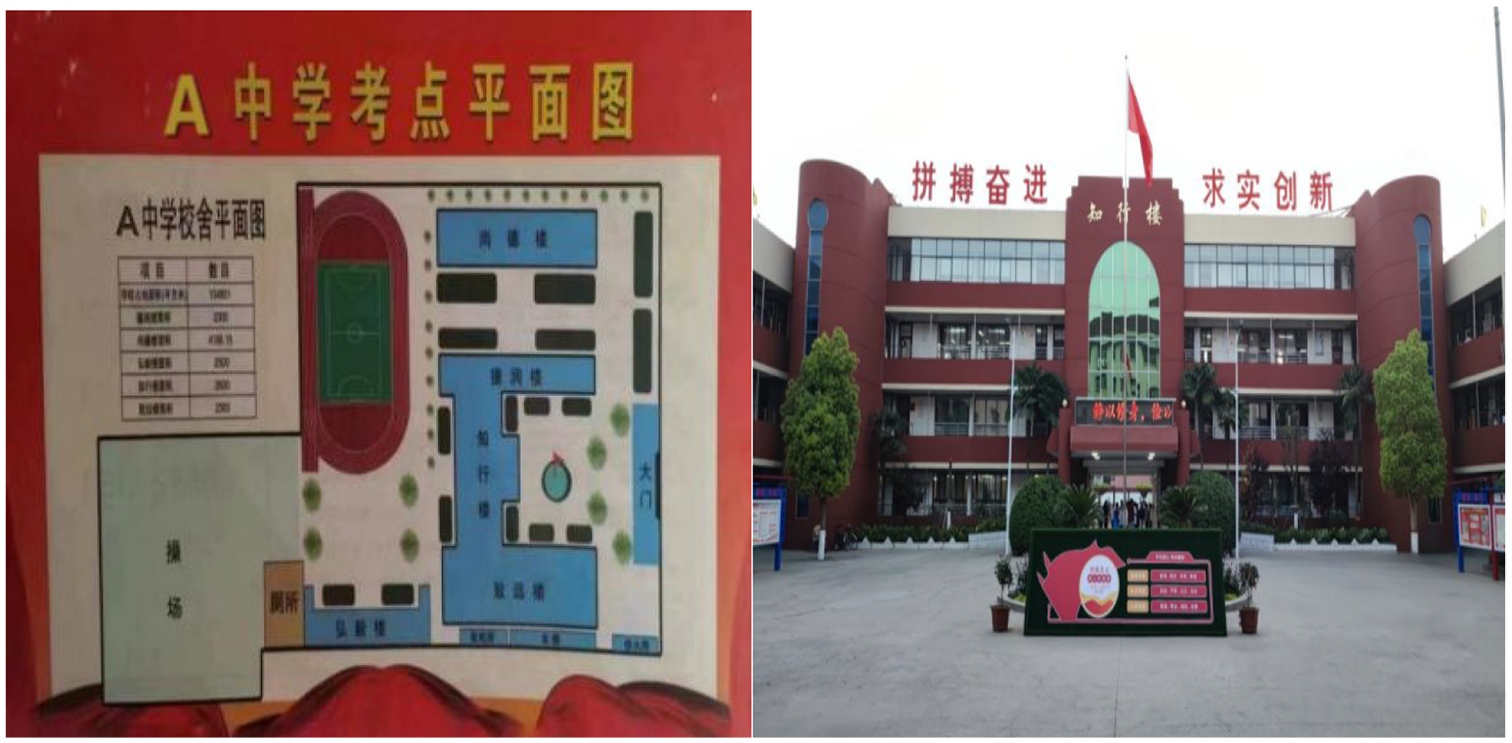
Campus Layout of School A.
Data Collection
This study adopted a field investigation with a triangulation design to ensure the reliability and validity of the research (Xu & Li, 2020). The investigation was conducted during the critical period from April to August 2023, when Henan Province was fully rolling out the new curriculum standards, providing a unique window to observe the policy implementation process. The researcher constructed a multi-dimensional data collection system by first serving as a teaching intern at School A to participate in daily teaching activities, obtaining first-hand information about the implementation of the new curriculum standards through school meetings and classroom observations. Simultaneously, semi-structured interviews were conducted with 20 English teachers (4 from each school A-E). This method maintained the core questions while allowing sufficient expression for respondents (Shen, 2012). Each interview lasted at least 30 minutes, focusing on teachers’ understanding of the new curriculum standards’ core content and implementation challenges. Additionally, the study collected multi-source materials related to the new curriculum standards, including the national policy text, local implementation plan, and school document. Through continuous analysis of data from different sources, the study achieved methodological triangulation (participant observation, interviews, and textual analysis) and data triangulation (policy texts, meeting records, and interview data), which not only provided an in-depth understanding of case characteristics but also revealed commonalities in the implementation process of the new curriculum standards.
Data Analysis
This study employed systematic qualitative data analysis methods, utilizing multiple analytical techniques to ensure the credibility and consistency of the findings (Patton, 1999). The interview recordings from 20 English teachers were professionally transcribed, resulting in approximately 40,000 words of textual data. Thematic analysis was conducted using Nvivo 14.0 software, following Braun and Clarke’s (2006) six-phase analytical framework: (a) familiarizing with data; (b) generating initial codes; (c) searching for themes; (d) reviewing themes; (e) defining and naming themes; and (f) producing the report. This approach effectively identifies core themes and underlying patterns in qualitative data, particularly suited for understanding the complex implementation process of the new curriculum standards. To ensure analytical rigor, the study adopted member checking (Lincoln & Guba, 1985), inviting three experts with qualitative research experience to independently review and provide feedback on 20% of the interview transcripts and preliminary thematic analysis. The inter-coder reliability reached 0.82, indicating high reliability of the analytical results.
Building upon thematic analysis, this study further utilized critical discourse analysis (CDA; Fairclough, 1993, 1995) to conduct multi-level discourse deconstruction of the national policy text, local implementation plan, and school document. The analysis focused on four key aspects: (a) lexical selection and classification systems; (b) transitivity analysis; (c) modality expressions; and (d) intertextuality features. CDA of language policy can be particularly useful for “finding connections between language policy texts and the discourses within and surrounding the texts” (Johnson, 2009, p.151). Furthermore, through Fairclough’s (1992a) three-dimensional analytical framework (text—discursive practice—social practice), the study systematically examined the discursive representations and power operation mechanisms of the new curriculum standards at different implementation levels.
Results
Discourse Power Construction at the National Level
The new curriculum standards document is an English language education policy primarily targeting compulsory education schools, teachers, and local education administrative departments. Through a binary complementary terminology system, the new curriculum standards policy establishes the fundamental orientation of English curriculum: “English serves as both an important tool for international communication and a crucial vehicle for humanistic education” (Ministry of Education, 2022a, p. 1). This dual positioning reflects both the instrumental value of English and its educational function. The policy further proposes the English core competencies comprising four dimensions: “language ability, cultural awareness, thinking quality, and learning ability” (p. 2). Through specialized terms like essential character and key competencies, it constructs a scientific educational system. Authoritative positioning is achieved through modal verbs like “shall” and definitive expressions like “centrally embody,” establishing the policy’s authoritative status (Fairclough, 2001), as exemplified by: “Core competencies centrally embody the educational value of the curriculum … students shall achieve the following objectives through this curriculum” (pp. 4–5).
The policy text frequently employs subjectless constructions to obscure policy-makers’ agency (Fairclough, 2001), as seen in phrases like “following foreign language learning principles, drawing on international experience, and basing on China’s realities” (p. 2). Transitivity analysis reveals hierarchical power relations: teachers are positioned with verbs like “guide,” while students with “develop”; policy subjects wield strong transitive verbs like “establish” and “deepen.” A stratified modality system governs teacher roles: high-obligation modals like “must implement moral education as English teaching’s fundamental task” (p. 47) and “shall adhere to the principle of unifying form, meaning and use” (p. 36) coexist with consultative expressions like “recommend” and “encourage.” This dual regulatory mechanism delineates teachers’ core responsibilities while preserving pedagogical autonomy.
The policy document constructs a sophisticated power network through discursive design. Textually, the “core competencies-academic achievement-instructional assessment” terminology chain forms closed logic, decomposing abstract concepts like “cultural awareness” into measurable indicators: “Cultural awareness refers to understanding Chinese/foreign cultures and appreciating excellent cultures, manifesting as students’ cross-cultural cognition, attitudes and behavioral choices in the new era” (p. 5). This operationalization ensures policy clarity and evaluability (Fang & Zhang, 2021). At the discursive practice level, teacher training is constructed as a policy transmission instrument, requiring training programs to cultivate teachers’ “acute analytical skills for identifying key issues” (p. 76), while textbook compilation must “align with the new curriculum standards” (p. 71). This dual emphasis on enhancing English teachers’ professional competence while maintaining the policy consistency reflects the specialization and standardization characteristics of modern educational governance.
Discursive Practices of Policy Transmission at the Local Level
The policy notice issued by Henan Provincial Department of Education, titled Implementation Measures for Compulsory Education Curriculum in Henan Province (Trial), demonstrates distinct policy-oriented and lexical features. The document frequently employs policy terms such as “curriculum reform” and “competency orientation” to construct the framework for policy implementation. Simultaneously, it utilizes numerous action-oriented verbs including “implement,” “promote,” “strengthen,” and “execute” to emphasize the necessity of policy enforcement. Additionally, evaluative terms like “scientificity,” “systematicity,” and “comprehensiveness” appear throughout the text to enhance the legitimacy and rationality of the policy. Such lexical choices not only reflect the formality of the policy document but also establish the policy authority through technical discourse construction (Fairclough, 2004).
In terms of transitivity, the Henan provincial policy text predominantly employs material processes, highlighting the action-oriented nature of policy implementation. For instance, expressions like “promote effective curriculum implementation” and “optimize examination schemes” demonstrate proactive policy actions, while “improve teacher training mechanisms” underscores policy requirements for teaching professionals, and “deepen teaching reform” emphasizes ultimate policy objectives. The relative scarcity of mental processes in the text suggests a greater focus on “what to do” rather than “how to think,” revealing the directive characteristics of policy discourse. In addition, the Henan provincial policy text exhibits strong intertextuality, primarily manifested through its connection with the national policy discourse. Numerous expressions maintain consistency with the new curriculum standards, particularly through the recurrence of terminology chains like “core competencies” and “academic achievement”. This intertextual feature not only reinforces the legitimacy of local policy texts but also constrains autonomous local interpretation, thereby strengthening the central-local policy transmission relationship (Fairclough, 1992b).
It is noteworthy that Zhoukou City and Dancheng County Education Bureau adopted a strategy of directly forwarding the new curriculum standards, without formulating local English education policies. Taking Dancheng County as an example, the local education authorities achieved “verbatim reproduction” of policy transmission by republishing expert interpretations from Guangming Online and emphasizing policy significance through government social media platforms. This implementation mode positions local education departments as mere transmission nodes, narrowing their function to “accurate transmission” rather than “local adaptation.” In practice, local agency is limited to technical operations like organizing training sessions and convening meetings, while substantive areas such as curriculum localization and evaluation system innovation remain conspicuously absent. Consequently, the implementation chain from the national to local levels demonstrates characteristics of “rigid transmission-passive reception.” The design and implementation space for English language education policy has been compressed into pure executive processes, contrasting with Ricento and Hornberger’s (1996) onion model theory of language policy, which advocates for policy initiative at different administrative levels. In China, the implementation of the new curriculum standards primarily involves overlapping administrative layers that mechanically transmit the superior policy document without substantive adaptation.
Policy Implementation Disjuncture at the School Level
At School A’s mid-term summary meeting, the implementation logic of the new curriculum standards revealed complex, multi-dimensional fractures. The instructional director’s (L) speech demonstrated both the persistence of traditional teaching practices and limited attempts at innovation:
We always emphasize our school’s ‘Three-Link Six-Step’ teaching method…educational philosophy must highlight student-centeredness with teacher guidance, emphasizing student learning…If English teaching isn’t effective, we should focus on improving students’
While labeled as “student-centered,” the “Three-Link Six-Step” teaching method actually reconstructs the classroom as a teacher-dominated knowledge transmission space through standardized procedures. The director’s speech exposes conceptual drift in local practice, the “English core competencies” goal being reduced to “grammar and vocabulary drills,” and “formative assessment” distorted into quantified “monthly exam rankings.”
From a discourse-power perspective, the meeting followed a strict hierarchical sequence (instructional director → vice principal → principal), with ordinary teachers remaining silent, creating structural voicelessness. In this context, the identities and statuses of these participants determine their language order (Fairclough, 2001). Notably, the director’s proposed “teaching journal” and “cross-disciplinary exchange” attempted to create professional dialogue within teachers, but their effectiveness was constrained by the “thousand-point evaluation” performance (The teacher evaluation criteria at School A). Teacher development was simplified into accumulating symbolic capital like “ethics speech competitions” and “master teacher certifications,” reflecting how administrative logic erodes professional autonomy in the principal’s (M) speech:
Our subject research will be
This implementation mode reveals structural contradictions: textually, “student-centeredness” becomes surveillance techniques like “monitoring classroom engagement”; discursively, teaching innovation reduces to superficial tasks like “compiling teaching journals”; socially, county-wide exams prioritize language knowledge over cultural awareness and thinking quality assessment. Ultimately, school-level practice at the policy implementation chain’s end reflects deeper paradoxes in educational governance. When the new curriculum standards’ ideals encounter local realities, reform energy gets absorbed into the existing exam-oriented system, diverging from the original policy intentions (W. Zhang & Zou, 2023).
Policy Implementation Tensions at the Teacher Level
Through multiple rounds of observation and reflection, along with in-depth analysis of interviews with 20 English teachers, three major thematic categories were ultimately identified as shown in Table 1, with rigorous frequency statistics conducted for each open coding item.
(1)
Themes Coding.

The degree to which English teachers in Dancheng County value the new curriculum standards mainly depends on their understanding of it, their channels for learning about it, and their cognition of concepts related to English core competencies. Post-class interviews revealed that although most teachers show relatively high attention to the new curriculum standards, there are significant differences in their actual level of comprehension. A small number of English teachers can accurately grasp the essence of the policy, while most English teachers do not fully understand the intentions and objectives of the national English language education policy (W. Zhang & Zou, 2023). As Teacher A1 mentioned in the interview:
To be honest, I
Teacher A1’s understanding of the English core competencies in the new curriculum standards remains at the level of traditional knowledge input. In terms of learning channels, teachers’ study of the new curriculum standards shows clear administrative-driven characteristics. Only a few English teachers proactively read the policy document, while most English teachers’ learning behaviors stem from requirements by the county education bureau and schools. This passive learning mode directly affects the depth of policy understanding, particularly evident in county-level schools. Regarding the cognition of core competencies, the study found three prominent issues: firstly, the narrowing of concepts, such as Teacher B3 simplifying core competencies to “self-directed learning + patriotic education”; secondly, the omission of dimensions, where most English teachers neglect the important dimension of thinking quality cultivation; and thirdly, practical deviations, where although teachers like Teacher A1 recognize the interconnectedness of the four dimensions, they still emphasize language skills training in actual teaching. This disconnection between cognition and practice reflects the challenges of aligning policy ideals with teaching realities in the current English curriculum reform process (Hu & Zhao, 2024). Overall, although middle school English teachers in Dancheng County generally value the new curriculum standards, their understanding of English core competencies remains incomplete, and there are still some deviations from the requirements of the policy.
(2)
The implementation of the new curriculum standards in English teaching is primarily evaluated through four aspects: student classroom engagement, teaching effectiveness, pedagogical changes, and cultivation of English core competencies. Student classroom engagement significantly impacts learning outcomes and teaching quality, encompassing active involvement, critical thinking, and learning attitudes (Ye, 2002). Post-class interviews revealed a distinct passive tendency in student classroom engagement. Teacher B2 expressed frustration:
Don’t even ask … Every time I pose an open-ended question like ‘What do you think about the protagonist’s choice in this text?’- you know what happens? All the students immediately lower their heads. Some pretend to flip through their books, others stare blankly at their erasers-
This phenomenon is particularly pronounced among graduating classes, reflecting the profound influence of exam-oriented culture on students’ thinking patterns (C. Liu & Ma, 2025). Consequently, classroom teaching effectiveness is somewhat constrained. Furthermore, teaching method reforms exhibit superficial characteristics. While a minority of teachers actively promote pedagogical transformation, over half remain in passive compliance mode. Most teachers adopt “embedded” adjustment strategies, such as partially incorporating core competency elements into traditional teaching. Although this approach maintains teaching stability, it falls short of genuine pedagogical transformation. The deeper issue lies in most English teachers, pressured by exam requirements, reducing teaching method changes to technical adjustments rather than fundamental shifts in teaching philosophy, resulting in superficial core competencies cultivation. Teacher A2’s daily teaching arrangements clearly reflect this tendency:
I’ll incorporate some cultural background, such as holiday customs, during the text explanation, but the timing has to be very precise so it doesn’t affect the overall teaching progress … Sometimes, I try new approaches, but
It reveals a fundamental conflict between the long-term nature of English core competencies cultivation and the immediate demands of exam evaluation. While developing core competencies requires time and deep integration, exam evaluation emphasizes short-term academic performance, focusing on outcomes rather than process. Thus, the implementation effectiveness of the new curriculum standards remains suboptimal. Limited student engagement, unremarkable improvement in teaching effectiveness, and constrained teaching method adjustments collectively challenge core competencies cultivation while somewhat undermining teachers’ confidence in the English curriculum reform, as they struggle to balance the new curriculum standards requirements with exam expectations.
(3)
This study has identified multi-dimensional challenges in implementing the new curriculum standards, reflecting both universal issues in the educational reform and unique difficulties in the county-level education. Firstly, most English teachers reported that the content of the new curriculum standards is overly abstract, and lacks concrete implementation pathways. Teacher C1 expressed helplessness:
The concept of English core competencies sounds wonderful, at least in theory. We’re told to cultivate students’ language proficiency, thinking quality, learning ability, and cultural awareness—but how exactly are we supposed to do that in our daily teaching? The new policy doesn’t provide us with
This sentiment was echoed by several other teachers, who emphasized that while the goals of the new curriculum standards are ambitious and progressive, the lack of practical guidance leaves them uncertain about how to align their classroom practices with the policy directives. The management approaches of the county education bureau and schools impose a dual burden on frontline teachers. Interviews revealed that the imbalance between administrative supervision and professional support significantly dampens teachers’ enthusiasm for reform. Specifically, frequent formalistic inspections consume substantial teaching energy. Teachers reported handling 4–6 special inspections per semester, with preparatory work occupying nearly 30% of their workload. Teacher D1 lamented:
Pulling all-nighters to prepare inspection materials has become routine, leaving little time for actual lesson preparation … I feel like
Meanwhile, professional support remains inadequate. Although 2–3 centralized training sessions are organized each semester, 58% of teachers consider the content disconnected from actual teaching contexts. The teaching resources provided by higher-level authorities are often outdated or misaligned with the new curriculum standards’ pedagogical focus, placing additional pressure on English teachers to implement the new curriculum standards effectively. Additionally, female teachers (85% of respondents) face particularly acute role conflicts. Teacher D2 (female, 38) described a typical routine:
To meet both the rigid curriculum schedule, I have to sacrifice all personal time. My day begins at 6:30 a.m. when I prepare breakfast for my children before rushing to school. Leave home at
As Teacher D2 described, female teachers must simultaneously confront traditional societal expectations of motherhood and domestic roles while grappling with the dual pressures of classroom teaching and implementing the new curriculum standards. The aging composition and limited renewal of English teaching teams in county-level schools present another implementation barrier. English teaching staff in the county-level middle schools, are predominantly aged between 40 and 50, with a relatively small proportion of young teachers. A multitude of teachers feel their professional competence falls short of the new curriculum standards’ demands. Teacher D1 (aged 25) and Teacher B3 (aged 51) shared contrasting yet mutually reflective perspectives:
As a new teacher, I feel It’s not that I reject the new curriculum standards’ call for pedagogical reform, and I understand the importance of adapting to new educational demands. But I’ve been teaching for decades, and I can’t help but wonder:
Young teachers feel they lack sufficient experience yet have limited opportunities to learn from veteran colleagues, while senior teachers remain constrained by the traditional exam-oriented assessment system and their professional competency gaps. Both voices reflect a deeper issue: the absence of effective professional dialogue, mentorship, and mutual trust across generations in English teaching teams, which hinder sustained pedagogical innovation, exposing challenges in the county-level teacher development (Qin, 2015). Furthermore, disparities in student foundations create unique challenges. With most students coming from rural areas with significantly lower English proficiency than urban peers, Teacher E1 remarked: “Balancing core competencies cultivation with pass rate requirements is extremely difficult.” This reflects the maladaptation of uniform reform models in county schools (W. Zhang & Zou, 2023). These intertwined challenges form a complex web of dilemmas: the disconnect between high-standard requirements and inadequate foundational conditions, the clash between reform ideals and entrenched institutional inertia, and the tension between professional development needs and practical constraints (T. Zhang, 2021a). As one teacher analogized: “We’re walking a tightrope-pursuing ideals while grounded in reality, where any misstep means losing balance.” This dilemma not only exacerbates the implementation disjunctures of the new curriculum standards but profoundly impacts the teachers’ professional motivation.
Discussion
This study reveals systemic disjunctures in the implementation of the new curriculum standards from the national to school levels. The Ministry of Education (2022a) emphasizes the critical importance of cultivating students’ English core competencies in the new era, advocating for a pedagogical reform centered on communicative competence, intercultural understanding, and autonomous learning capacity. However, while the provincial and local education authorities largely maintained the core content of the new curriculum standards during the policy dissemination, their implementation at the county school level reveals complex multi-dimensional fractures. Although schools demonstrate compliance with the national English education reform at the policy level, their actual practices remain constrained by the entrenched examination-oriented system. These findings align with prior research (Harklau & Ford, 2022; Simoes Loureiro & Hadjar, 2025; Vanbuel, 2022), showing how different stakeholders reinterpret and adapt official policies during implementation, leading to the policy differentiation. Dancheng County’s middle schools face dual pressures: complying with the national reform directions emphasizing English core competencies, while simultaneously meeting evaluation requirements from the superior education departments and school-level demands for improved exam scores. Consequently, the implementation of the new curriculum standards becomes reconstructed within exam-oriented frameworks, creating structural disjunctures. The study also confirms Ricento and Hornberger’s (1996) onion model theory of language policy regarding schools’ adaptive adjustments during implementation. However, it diverges in finding near-overlapping policy transmission between macro and meso levels. The provincial and local authorities in China predominantly forward the new curriculum standards verbatim without contextual interpretation or concrete guidance (W. Zhang & Zou, 2023), leaving the county schools limited to marginal adjustments within existing frameworks rather than achieving substantive pedagogical transformation. Furthermore, the findings differ from Western studies (Ambroso, 2022; Simoes Loureiro & Hadjar, 2025), reflecting China’s centralized education system. While ensuring unified direction, the top-down policy transmission weakens local adaptive capacity (W. Zhang & Zou, 2023) and can not guarantee the uniform implementation quality (Wilkins, 2020).
The middle school English teachers demonstrate further deviation from the new curriculum standards’ requirements in classroom instruction, failing to effectively implement its core objectives. Constrained by the institutional and practical teaching dilemmas, teachers often struggle to transcend the exam-oriented framework, resulting in growing disjunctures between teaching practices and the new curriculum standards’ requirements (W. Zhang & Zou, 2023). The study reveals that although English teachers generally value the new curriculum standards, their understanding of English core competencies remains incomplete and misaligned with the policy expectations. The implementation effectiveness proves limited, characterized by low student engagement in class and superficial pedagogical adjustments by teachers. These findings align with previous studies (Her, 2024; Johnson et al., 2024), indicating that while teachers interpret and adapt the language education policy based on their teaching backgrounds and experience, such adaptations remain superficial rather than transformative in terms of pedagogical approaches. Consistent with Ricento and Hornberger’s (1996) onion model theory of language policy, teachers occupy the central position in policy implementation and directly influence its implementation outcomes. In this study, the instructional beliefs and methods of English teachers in Dancheng County fundamentally shape the implementation of the new curriculum standards. However, these teachers remain entrenched in traditional exam-oriented practices, caught in the tension between the authoritative discourse of the policy and the realities of classroom constraints, ultimately hindering the achievement of core objectives such as English core competencies. Based on these insights, this studypresents a distinct theoretical model of English language education policy implementation in China that differs from Western frameworks in Figure 3, comprehensively explaining the unique dynamics of English language education policy implementation in the Chinese context.

The Chinese Theoretical Model of English Language Education Policy Implementation.
The effective implementation of the new curriculum standards by teachers is influenced by multiple factors, including policy content, county education bureau and school administration, as well as teacher and student characteristics. The study reveals that the clarity and practicality of the policy content fundamentally determine the teachers’ implementation challenges. Overly macro-level policy guidance lacking concrete implementation pathways makes it difficult for English teachers to translate the policy into practice (W. Zhang & Wang, 2022). This finding echoes previous research (W. Zhang & Wang, 2022; W. Zhang & Zou, 2023), demonstrating a direct correlation between policy specificity and teacher implementation capacity. In this study, English teachers in Dancheng County consistently reported that the new curriculum standards’ abstract nature and lack of detailed teaching guidance or exemplary cases hindered their accurate grasp of requirements. While the policy emphasizes cultivating English core competencies, the absence of model teaching plans makes practical implementation challenging. Furthermore, the county education bureau’s emphasis on the document forwarding rather than contextual interpretation, combined with schools’ limited capacity for the autonomous policy adaptation, exacerbates the implementation difficulties. Particularly problematic is the lack of targeted training and resource support, coupled with local administrative pressures, leaving English teachers to implement the new curriculum standards through trial and error, consistent with prior research (Bier & Lasagabaster, 2025; W. Zhang & Zou, 2023). Without systematic professional development and teaching resources, policy ideals rarely transform into classroom practice. Accordingly, English teachers in Dancheng County reported struggling to move beyond exam-oriented approaches despite endorsing the reform direction, citing insufficient exemplary models, resources, and appropriate evaluation mechanisms. Teacher-related factors also significantly impact the implementation of the new curriculum standards, especially in the county schools. This resonates with existing research findings (Izquierdo et al., 2021; T. Zhang, 2021a) about how teachers’ professional backgrounds and reform adaptability affect the policy implementation. While most English teachers in Dancheng County conceptually accept the new curriculum standards’ core content, their professional capabilities often fall short in practice. Veteran teachers particularly struggle with innovative pedagogies due to entrenched disciplinary knowledge and teaching habits, defaulting to traditional grammar-translation methods and mechanical drills. Additionally, female teachers’ dual pressures of career development and family responsibilities further diminish their capacity for the in-depth policy study and pedagogical innovation. Finally, students’ language proficiency levels significantly constrain the effective implementation of the new curriculum standards, consistent with the previous research (Sanfo et al., 2024). Teacher interviews revealed significant disparities in students’ English abilities across Dancheng schools, with many lacking basic English communication skills, and severely limiting their English core competencies cultivation. Unlike W. Zhang and Wang (2022), who highlight student needs as a key element in school-based language planning. Their research, based on reform in Singapore, a developed context with greater curricular flexibility, does not align with China’s current educational structure, where large class sizes and a fixed teaching model limit the individualized instruction. Consequently, students’ language proficiency has emerged as a more critical barrier to the implementation of English language education policy in the Chinese context.
Conclusions
This study examines the implementation of the new curriculum standards in county-level middle schools through an in-depth case study of Dancheng County, Henan Province, China. Grounded in Ricento and Hornberger’s (1996) onion model theory of language policy, the research employs a multi-method approach involving five representative schools, combining the field investigation, semi-structured interviews, and textual analysis to systematically trace the complete policy implementation chain from the national to teacher levels. The results reveal a significant “policy attenuation” phenomenon during implementation. While the national policy design is forward-looking and emphasizes developing students’ English core competencies, the local implementation mainly involves the direct forwarding of the new curriculum standards without the contextual interpretation or specific guidance. At the school level, the ideal vision of the new curriculum standards conflicts with the reality of exam-oriented education, leading to the structural disjunctures in the policy implementation. Specific manifestations include deviations in teachers’ understanding of the new curriculum standards, superficial classroom teaching reforms, and imbalanced development of English core competencies where language skills training remains dominant while the cultivation of cultural awareness and thinking quality is relatively weak. This phenomenon is closely related to multiple factors, including overly broad policy design, inflexible local implementation, insufficient teacher professional capacity, and significant variations in student foundations.
The theoretical significance of this study lies in enriching the theoretical framework of language education policy and constructing a Chinese theoretical model of English language education policy implementation. Based on Ricento & Hornberger’s (1996) onion model theory of language policy, the research reveals that the policy transmission within China’s education system exhibits a pattern of “high alignment at macro and meso levels but significant deviation at micro levels.” While the national and local policy documents demonstrate a high degree of consistency, substantial deviations occur at the school level due to practical constraints. Teachers, constrained by the school management, assessment orientations of county-level education bureaus, and limited teaching resources, find it difficult to fully implement the requirements of the new curriculum standards in their teaching practices, thereby further exacerbating the policy deviations. This finding provides new empirical evidence for understanding the “structural disjunctures” in the top-down language education policy transmission processes. Furthermore, through CDA and thematic analysis, the study uncovers the tension between the authoritative discourse of the policy texts and the practical dilemmas faced by grassroots teachers, offering methodological insights for educational policy research. At the practical level, this study provides important references for the educational administrative departments. The results highlight the severity of the “last-mile problem” in language education policy implementation and call for strengthened localized interpretation and school-based implementation during policy dissemination by local governments and schools. Simultaneously, the study points out that the current teacher training suffers from several issues such as the content being disconnected from reality and excessive formalism, suggesting that future training should emphasize the connection between policy interpretation and teaching practice while providing more operational teaching cases. Additionally, the research reveals how uneven distribution of educational resources at the county level constrains the language education policy implementation, including gaps in teacher quantity and quality, as well as students’ weak English foundations. These findings provide a basis for equitable allocation of educational resources and targeted policy support. Future efforts should increase investment in educational resources in county areas, particularly by providing precise support in teacher training, teaching facilities, and curriculum resources.
While this study has yielded meaningful findings, several limitations should be acknowledged. Firstly, the research sample was confined to five middle schools in Dancheng County, Henan Province, with restricted sample size and geographical coverage. Secondly, the methodology predominantly employed qualitative approaches without quantitative data support, making it difficult to precisely measure variations in policy implementation effectiveness. Additionally, the study primarily adopted teachers’ perspectives while insufficiently incorporating diverse stakeholders’ views (e.g., parents), potentially resulting in an incomplete understanding of policy implementation complexity. To address these limitations, future research could be enhanced in the following aspects: (1) expanding the research scope by increasing sample size and geographical coverage to compare policy implementation disparities across regions with different economic development levels; (2) adopting the mixed-methods approaches that integrate quantitative and qualitative data through large-scale surveys and longitudinal tracking for more comprehensive policy evaluation; (3) incorporating multi-stakeholder perspectives to examine different groups’ perceptions and interaction mechanisms regarding policy implementation.
Footnotes

Ethical Considerations
This study was conducted in accordance with the Declaration of Helsinki and approved by the Ethics Committee of Shandong University.
Consent to Participate
Informed consent was obtained from all participants involved in the study.
Funding
The author received no financial support for the research, authorship, and/or publication of this article.
Declaration of Conflicting Interests
The author declared no potential conflicts of interest with respect to the research, authorship, and/or publication of this article.
Data Availability Statement
The data that support the findings of this study are available from the corresponding author upon reasonable request.