




Abstract
This study examined the effectiveness of a group counseling program designed to support Korean university students (KUS) facing academic warnings. These students often navigate newfound independence amidst intense academic pressure, presenting significant challenges. The program, grounded in positive psychology and Adlerian individual psychology, aimed to empower KUS by enhancing their academic self-efficacy and self-determined learning motivation. Forty KUS with academic warnings participated, randomly assigned to either an experimental group (n = 20) or a control group (n = 20). The 8-week intervention consisted of eight 120-min sessions focusing on character strengths development, reframing narratives to cultivate a growth mindset, and fostering intrinsic motivation. Assessments measured changes in academic self-efficacy, self-determined learning motivation, and GPA. Significant enhancements in academic self-efficacy (p < .001) and self-determined learning motivation (p < .001) were observed in the intervention group compared to the control group, indicating the program’s promise for KUS. The program equips students with essential tools to navigate academic challenges and enhance their confidence, motivation, and academic success. These findings imply the program’s effectiveness in empowering students facing academic challenges and underscore its potential to foster positive academic outcomes. Further research is needed to explore the long-term impact of the intervention and its applicability across diverse university settings.
Plain language summary
This study explores how group counseling can help university students who are struggling academically. The program was designed to improve students’ confidence in their abilities (self-efficacy) and their motivation to learn. By focusing on positive thinking and personal strengths, the counseling sessions showed promising results, helping students perform better and feel more confident in their studies.
Keywords
Introduction
Access to higher education is widely regarded as an equalizing force, offering individuals a path to upward social mobility (Blankenship, 2021). Educational attainment is a global priority, often viewed as essential for securing a better future, not only by individuals but by society as a whole (B. D. An & Cho, 2017). In many societies, academic achievement has become a cornerstone, deeply ingrained as a measure of success.
However, the transition to university presents significant challenges for many students, affecting their well-being and mental health. The transition from high school to university introduces newfound independence, academic pressures, and lifestyle changes, which can contribute to mental health concerns among university students globally (H. Cho et al., 2021; Sanci et al., 2022). As students enter university, they encounter novel experiences and health risks, such as increased alcohol consumption, tobacco use, and risky sexual behaviors, all of which can impact their physical and mental well-being (Deshpande et al., 2023; Wold et al., 2021). These factors often lead to academic difficulties during this critical period.
Many students struggle to adapt to university life and fulfill academic obligations. Those unable to fully utilize campus resources and confront challenges while simultaneously adjusting to university life may fail to reach their full potential (Yang et al., 2013). Although university students across the globe encounter common challenges, the unique stressors and cultural factors faced by Korean university students (KUS) deserve particular attention. In South Korea, academic achievement is highly valued, and societal pressures, driven by Confucian norms and expectations of family honor, can exacerbate the stress experienced by KUS (S. J. L. An & Kim, 2024; Kang, 2021). For students receiving academic warnings, the imposed pressures can result in feelings of shame, social stigma, and even jeopardize their future career prospects (H. Cho et al., 2021; S.-Y. Lee, 2017).
Academic warnings at Korean universities are issued when students receive failing grades or low academic performance across multiple courses, additionally repeated warnings can lead to dismissal (Kang, 2021; S.-Y. Lee, 2017). These warnings signal broader issues of adaptation to university life, and recurring struggles often lead to feelings of inadequacy, impacting both academic performance and overall well-being (Nam & Ryu, 2017). While some Korean universities have introduced mandatory academic support programs such as academic skills workshops, study strategy sessions, or tutoring services, these interventions focus solely on cognitive skills, neglecting the psychological and motivational components that are crucial for long-term success (Lim, 2020; Vanacore & Dahan, 2021).
Several researchers have developed academic support programs aimed at improving study habits and learning strategies (E. A. Cho et al., 2014; Kang, 2021; M. Kim, 2006; S.-Y. Lee, 2017; J. Y. Lee et al., 2013; Lim, 2020; Nam & Ryu, 2017). These programs, primarily coaching-based interventions, emphasize skill acquisition but often lack a psychological framework to address students’ intrinsic motivation and self-perception. While studies by Kang (2021) and J. Y. Lee et al. (2013) have attempted to explore the multifaceted reasons behind academic struggles—including psychological factors such as self-esteem and emotional regulation—these studies primarily relied on individual counseling or survey-based interventions. Moreover, these studies utilized a one-group pretest-posttest design, limiting the ability to isolate treatment effects from other external factors. Despite these efforts, there remains a significant gap in comprehensive interventions that integrate both psychological resilience and academic skill development within a culturally relevant, group-based format.
In contrast, universities in Western contexts, such as the United States, have increasingly recognized the need to provide comprehensive support to underachieving students, leading to more holistic interventions (Lim, 2020; Lindin & Stuart, 2020; Yang et al., 2013). Despite these efforts, the number of students facing academic challenges continues to rise, highlighting the limitations of existing academic support systems (Seo, 2018). South Korean universities lack these institutional support systems for students on academic warnings, who face potential risks of dismissal (Lim, 2020; Yang et al., 2013). This gap is further reflected in the limited research on this topic compared to the extensive literature in western culture, such as the United States.
Some scholars recognized this gap and introduced one-on-one counseling based on positive psychology, allowing for a personalized exploration of the student’s unique challenges (Yang et al., 2013). However, even these approaches may not fully engage students due to their individualized nature, limited scope, resource-intensive and may not be readily available to all students. Korean culture places a strong emphasis on collectivism and conformity, which can constrain individuality and self-expression and intensify peer pressure. Moreover, the prevailing patriarchal Confucian culture acts as an additional hindrance to students’ ability to mold their identities and make independent decisions (S. J. L. An & Kim, 2024). Given these cultural dynamics, group counseling represents a promising alternative, offering a supportive and structured environment where students can build confidence, share experiences, and develop self-regulated learning strategies within a communal setting.
This study addresses these gaps by integrating both psychological resilience and academic skill development in a group-based, culturally relevant intervention format. This approach sets our study apart from previous research, as it combines both psychological and academic elements in a more holistic and robust manner, offering a more comprehensive solution to addressing academic struggles.
This study investigates the potential of a group counseling program grounded in positive psychology and Adlerian individual psychology to address these shortcomings. This program aims to equip students with not only practical academic skills but also the psychological tools required to navigate academic challenges. By fostering intrinsic motivation and academic self-efficacy, the program seeks to provide a more comprehensive and effective intervention for students on academic warning.
A critical component of this intervention is the application of Bandura’s Self-Efficacy Theory, which asserts that individuals’ belief in their abilities significantly influences their motivation, learning behaviors, and academic achievement (Bandura, 2013). According to Bandura, self-efficacy is the belief in one’s capacity to perform a specific task and is influenced by four primary sources: mastery experiences, vicarious experiences, social persuasion, and physiological and emotional states (Bandura, 2013). This theory highlights how individuals with higher self-efficacy are more likely to engage in challenging tasks, persevere through difficulties, and view setbacks as opportunities for growth.
In the context of our intervention, we aim to enhance students’ self-efficacy by providing mastery experiences through structured academic tasks and challenges, vicarious experiences by observing peers’ successes, and social persuasion through positive feedback and encouragement from counselors and peers. Additionally, physiological and emotional states such as stress and anxiety will be addressed through mindfulness and relaxation techniques to reduce negative emotions that may hinder academic performance. The integration of self-efficacy theory into this program ensures that students will not only acquire the skills necessary for academic success but will also build confidence in their ability to overcome challenges and achieve their goals.
Rooted in positive psychology and Adlerian individual psychology, our program is designed to address these limitations by integrating key principles. Positive psychology focuses on leveraging individual strengths to foster resilience, emotional well-being, and academic success (Kalamatianos et al., 2023; Kounenou et al., 2022; Seligman & Csikszentmihalyi, 2000). Unlike previous interventions, which primarily focus on study habits and cognitive skills, this program uniquely integrates structured activities that emphasize both academic self-efficacy and emotional resilience. In this program, character strengths such as creativity, curiosity, and perseverance are emphasized as key resources that students can draw upon to boost self-efficacy and motivation (E. A. Cho et al., 2014; J. I. Park, 2015; M. K. Park & Lee, 2011). These strengths are integrated into activities like the “Personality Strengths Checklist” in Week 5 of the program, where students identify and connect their personal traits to academic success, and the “Hope Tree” exercise, where participants visualize their goals and resources for future achievement.
Adlerian psychology provides a framework for understanding and overcoming feelings of inferiority (Lundin, 2015). Adlerian theory posits that feelings of inferiority are natural but can drive individuals toward self-improvement and mastery (Strano & Petrocelli, 2005; Watts, 2015). In Week 2, students engage in exercises such as identifying “the person I want to be and the self I don’t like” and discussing experiences of superiority and inferiority to better understand these feelings and their impact on academic attitudes. By integrating these principles, this program aims to help students facing academic warnings confront their self-imposed academic inferiority, identify and maximize their strengths. The program encourages students to view their efforts as a path to academic excellence and personal growth in self-efficacy, resilience, confidence, and self-motivation (J. Y. Lee et al., 2013). By incorporating Adlerian psychology’s emphasis on overcoming feelings of inferiority, the program distinguishes itself from previous studies that primarily relied on cognitive interventions or one-on-one counseling.
Adlerian psychology aligns with the principles from Carol Dweck’s growth mindset theory, which emphasizes the importance of effort and persistence in the face of challenges (Dweck & Yeager, 2020). As described by Dweck (2015), a growth mindset refers to the belief that abilities and intelligence can be developed through dedication and hard work. Thus this program integrates the growth mindset concept which aligns with Adlerian psychology and encourages individuals to view challenges not as failures but opportunities for growth (Haimovitz & Dweck, 2017). According to the theory of self-determined learning motivation, an individual’s intrinsic motivation is a key determinant of success or failure in learning (Deci & Ryan, 2000). Enhancing intrinsic motivation is crucial and fostering a growth mindset is one pathway to achieving this, as it increases the belief that abilities can develop through sustained effort, thus influencing motivation and perseverance in learning (Dweck, 2015).
The program reinforces a growth mindset by providing effort-based feedback, similar to how parents and teachers praise a child’s efforts to motivate growth. This type of feedback, focused on the process rather than outcomes, strengthens the belief that progress and improvement are attainable through sustained effort. This aligns with the principles of positive psychology, which emphasize the identification and cultivation of strengths, such as perseverance, self-regulation, and optimism, all of which are critical for personal and academic growth. In this way, the growth mindset concept connects with Adlerian psychology’s emphasis on encouragement and positive psychology’s focus on identifying and building upon strengths.
In practice, the program encourages students to confront their academic inferiority complex, recognize their strengths, and pursue academic excellence. For example, when students participate in the “Personality Strengths Checklist,” they are praised not only for identifying their strengths but also for their ongoing efforts to enhance and apply these strengths in their academic work. This approach fosters the development of a growth mindset, motivating students to persist and grow academically through continuous effort and self-improvement.
We hypothesize that our program, designed to foster academic self-efficacy, intrinsic motivation, and a growth mindset, will lead to improved academic outcomes for KUS on academic warnings. The findings from this study can inform the development of more effective interventions not only in South Korea but also in other educational contexts facing similar challenges in supporting students.
By examining the impact of this program on psychological factors that influence academic success, this research has the potential to contribute to a broader understanding of how universities can better support students from diverse cultural backgrounds.
Methods
This study was approved by the Institutional Review Board (IRB) of the corresponding university and all procedures adhered to the relevant ethical guidelines and regulations.
Participants
In recognition of the challenges faced by students with academic warnings, K University (a pseudonym used to maintain participant confidentiality) established a mandatory group counseling program, designed as a support system to address academic challenges. Forty undergraduate students at K University who received academic warnings (failing grade or grade below 1.75 out of 4.5) in either the first or second semester of 2021 were enrolled in the mandatory group counseling program established by the university. Due to space limitations, the program was implemented in two consecutive semesters, with 20 students participating in each semester. Each semester had two smaller groups of 10 participants, for a total of four groups (two experimental and two control). The division into groups was based on the participants’ availability to ensure compatibility with their schedules.
Table 1 presents the demographics of the participants. The experimental group consisted of 20 students, with 14 male students and 6 female students. These students were enrolled in various academic disciplines, including humanities, social sciences, natural sciences, and engineering. The distribution of students across academic years ranged from the first to the third year. Participants’ ages ranged from 20 to 27 years (Korean age), with an average age of 25 years (approximately 23 years in Western age). This relatively high average age reflects the presence of students who had completed mandatory military service, taken a gap year, repeat the university entrance exam, or transferred from other institutions. The pre-intervention mean GPA for the experimental group was 1.14 (Table 3).
Demographic Information of Participants.

The control group was comparable to the experimental group in terms of gender distribution, academic disciplines, academic year, and age. Matching participants between the experimental and control groups aimed to ensure baseline equivalence on relevant demographic characteristics, thus minimizing potential confounding variables that could impact the study’s outcomes. The pre-intervention mean GPA for the control group was 1.18 (Table 3).
Both the experimental and control groups were comparable across key demographic characteristics, with an independent samples t-test showing no statistically significant differences in pre-intervention GPA, academic self-efficacy, or self-determined learning motivation (p > .05). Notably, since this was a mandatory program, there was no attrition, ensuring that all participants completed the intervention.
Procedure
Upon receiving informed consent, participants were randomly assigned to either the experimental group (intervention in Semester 1) or the control group (intervention in Semester 2) using computer-generated randomization. To ensure manageable group sizes and accommodate scheduling constraints, each group was further divided into two subgroups of 10 students, resulting in a total of four subgroups across the experimental and control groups. This structure allowed for greater interaction between participants and more personalized attention during sessions.
The group consultation program took place in the university counseling center, in a dedicated seminar room equipped with the necessary materials for group activities (e.g., flip charts, whiteboards). The intervention occurred over an 8-week period during Semester 1, with 120-min sessions held once a week. These sessions were scheduled on a weekday afternoons (Tuesday from 3:00PM to 5:00PM) to ensure consistency and accommodate participants’ academic schedules.
Before the intervention began, baseline data was collected, including academic grades, self-reported evaluations on academic self-efficacy, self-determined learning motivation, and demographic data (e.g., age, year in school, major). The experimental group participated in the 8-week group therapy intervention, which followed a structured curriculum designed by the facilitator. Each session was interactive, incorporating discussion, group activities, and self-reflection exercises.
The control group did not receive any intervention during the experimental group’s treatment period but was scheduled to receive the same program in Semester 2, after the completion of the study’s follow-up phase.
The program was facilitated by a licensed counselor who holds multiple certifications: Level 1 professional counselor, Level 1 counseling psychologist, and certified instructor with the Korean Adler Association. The facilitator had extensive experience in conducting group counseling sessions for university students and received ongoing supervision to ensure the quality and effectiveness of the intervention.
Upon completion of the 8-week intervention, all participants completed post-intervention evaluations using the same self-report measures. Following a 4-week resting period, participants underwent follow-up assessments to measure the sustained effects of the intervention. Academic grades for all participants were also collected at the end of the first semester. Figure 1 illustrates the research process.

Flow diagram of the research process.
Group Counseling Intervention
The experimental group participated in an 8-week group therapy intervention, with 120-min sessions held once a week. This program, specifically designed for K University students who had received academic warnings, aimed to enhance academic self-efficacy, motivation, and personal growth. Drawing upon established evidence for the effectiveness of group counseling in academic settings (Amundson, 2012; Gysbers & Henderson, 2000; Heppner et al., 2010), the program integrated principles from positive psychology and Adlerian individual psychology (Corey, 2017).
The structured program included activities focused on self-exploration, lifestyle assessment, strength recognition, and goal setting. Weekly objectives and activities are outlined in Table 2, with Week 1 focusing on orientation and rapport-building, followed by sessions designed to help participants confront feelings of inferiority, reframe negative academic experiences, and develop strategies for success. Adlerian principles like social interest and overcoming inferiority were combined with positive psychology techniques such as leveraging character strengths and fostering intrinsic motivation.
The Group Program for the Intervention Group.
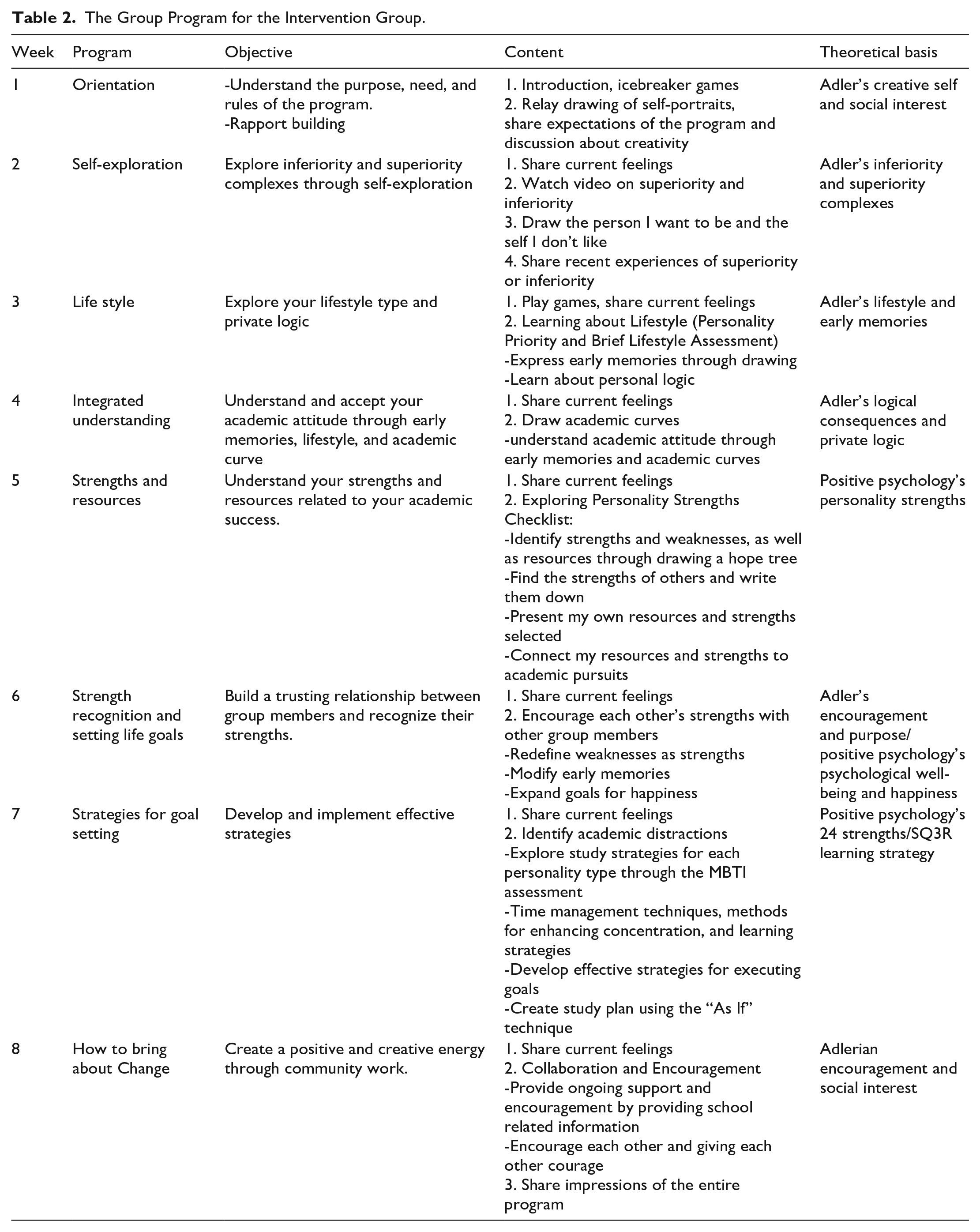
The program aimed to foster personal responsibility by helping students recognize their personal strengths and apply them to academic challenges (Lopez & Snyder, 2016). Each session began with a personal check-in, encouraging participants to reflect on their experiences and progress. Group discussions concluded each session, reinforcing key concepts such as goal setting, time management, and stress management. This blend of personal reflection and group support empowered students to harness their strengths for academic improvement.
Outcome Measures
Academic Self-Efficacy Scale
Academic self-efficacy was measured using the Academic Self-Efficacy Scale developed by A. Y. Kim and Park (2001) and modified by You and Hong (2010) for the Korean context. This modification aimed to better capture the specific challenges faced by Korean university students. The scale is a 5-point Likert scale with 28 items divided into three subscales: task difficulty (10 items), self-regulation efficacy (10 items), and confidence (8 items). Higher scores indicate a greater level of academic self-efficacy. Sample items include: “I enjoy challenging myself with complex and difficult problems” (task difficulty), “I can finish assigned tasks within the set time” (self-regulation efficacy), and “When an exam is approaching, I feel so anxious that I can’t sleep” (confidence). In our study, Cronbach’s alpha coefficients for the subscales ranged from .71 (task difficulty) to .79 (confidence), demonstrating acceptable internal consistency
Self-Determined Learning Motivation Scale
Self-determined learning motivation was assessed using a modified version of the “Self-Regulation Questionnaire for Academic Performance” (SRQ-A) developed by Ryan (2004) and adapted for the Korean context by Bak et al. (2005). This modification focused on capturing the intrinsic value of learning for Korean university students. The scale uses a 5-point Likert scale and comprises two subscales: identified regulation (6 items) and intrinsic motivation (6 items). Higher scores indicate a stronger level of self-determined learning motivation. Example items include: “I study because the subjects I learn in school are important” (identified regulation) and “I study because I enjoy the challenges and the sense of accomplishment that comes from overcoming them” (intrinsic motivation). Cronbach’s alpha coefficients in this study were .75 for identified regulation and .76 for intrinsic motivation, demonstrating acceptable internal consistency.
Demographic Questionnaire
A demographic questionnaire was administered to gather background information about the participants. This included questions on age, gender, academic year, major, and previous academic standing (e.g., whether the student had received academic warnings in prior semesters). The demographic data provided context for interpreting the study’s findings, particularly when examining how different student characteristics may influence the effectiveness of the intervention.
Data Analysis
The data analysis for this study employed a split-plot factorial design with two factors:
Group (between-subjects): Experimental versus Control
Measurement Time (within-subjects): Pre-intervention, Post-intervention, Follow-up
The independent variable was the group counseling program based on positive psychology and Adler’s theory. The dependent variables were scores on academic self-efficacy, self-determined learning motivation, and academic grades. Analysis was performed using IBM SPSS version 22.
Independent samples t-tests were conducted to compare the baseline scores (pre-intervention) of the experimental and control groups on the three measures: academic grades, academic self-efficacy, and self-determined learning motivation. This analysis aimed to verify if there were any significant differences between the groups at the outset of the study, ensuring their comparability for the intervention.
Subsequently, to evaluate the effects of the intervention program, a two-way repeated measures analysis of variance (ANOVA) was employed. This analysis aimed to assess whether statistically significant interactions existed between the factors of measurement time (pre, post, follow-up) and group (experimental, control) regarding the scores on the dependent variables. Specifically, this analysis aimed to determine if there were any significant changes in scores over time and whether these changes differed between the experimental and control groups.
Results
Preliminary Analysis
Table 3 presents the means and standard deviations of academic self-efficacy, self-determined learning motivation, and GPA for both the experimental and control groups at three measurement points: baseline (pre-intervention), post-intervention, and follow-up. The t-statistics in this table indicate the differences between the experimental and control groups at each of the three time points. Specifically, the t values reflect the comparisons between groups at pre-test, post-test, and follow-up for each variable, helping to illuminate changes over the course of the study. This comprehensive overview allows for a detailed examination of how these variables evolved throughout the intervention (Table 3).
Means and Standard Deviations of Outcome Variables of Experimental Group and Control Group at Baseline, Post-Intervention, and Follow-Up.

Note. ( ) = standard deviation.
After the intervention, the experimental group exhibited significantly higher scores on academic self-efficacy, self-determined learning motivation, and GPA at post-intervention. While follow-up scores showed a slight decrease, they remained significantly higher than pre-intervention levels, indicating the program’s lasting positive impact on student academic confidence and motivation (Figures 2–4).

The graph of academic self-efficacy scores.
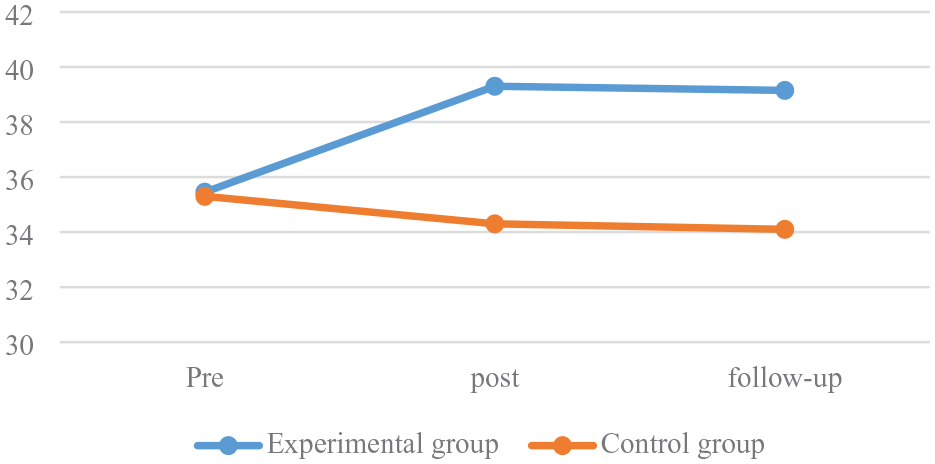
The graph of self-determination learning motivation scores.

The graph of the GPA.
A repeated measures ANOVA was used to compare how academic self-efficacy and self-determined learning motivation changed over time in both groups. The results showed that the two groups changed differently over time for both academic self-efficacy and self-determined learning motivation.
Academic Self-Efficacy
The experimental group exhibited significantly higher scores on academic self-efficacy post-intervention compared to the control group. This improvement was maintained at the follow-up assessment, indicating a lasting positive impact (Figure 2). A repeated measures ANOVA confirmed a statistically significant interaction effect of group type (experimental, control) and measurement time (pre, post, follow-up) on overall academic self-efficacy (F(2, 76) = 55.253, p < .001). Similar significant interactions were found for the subdomains of task (F(2, 76) = 48.691, p < .001), control (F(2, 76) = 28.832, p < .001), and confidence (F(2, 76) = 57.109, p < .001).
Simple main effects tests revealed that the experimental group’s scores on overall academic self-efficacy and all subdomains significantly increased from baseline to both post-intervention and follow-up assessments (Tables 4 and 5). In contrast, the control group did not exhibit any significant changes across measurement times. These findings suggest the group counseling program positively impacted students’ academic self-efficacy.
Results of Simple Main Effects and Multiple Comparison Analysis for Academic Self-Efficacy Scores.
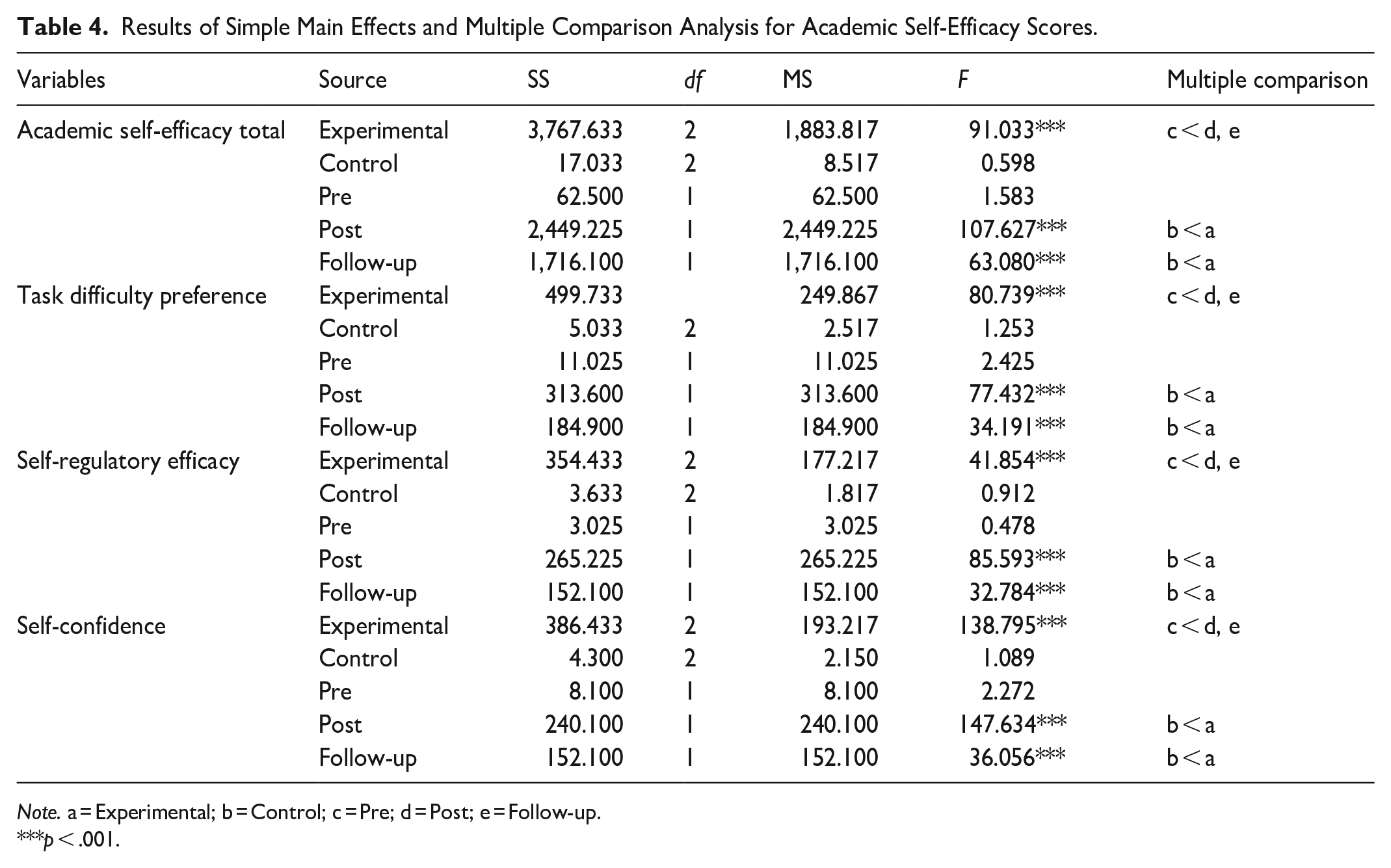
Note. a = Experimental; b = Control; c = Pre; d = Post; e = Follow-up.
***p < .001.
Simple Main Effects and Multiple Comparison Analysis Results for Self-Determined Learning Motivation Scores.
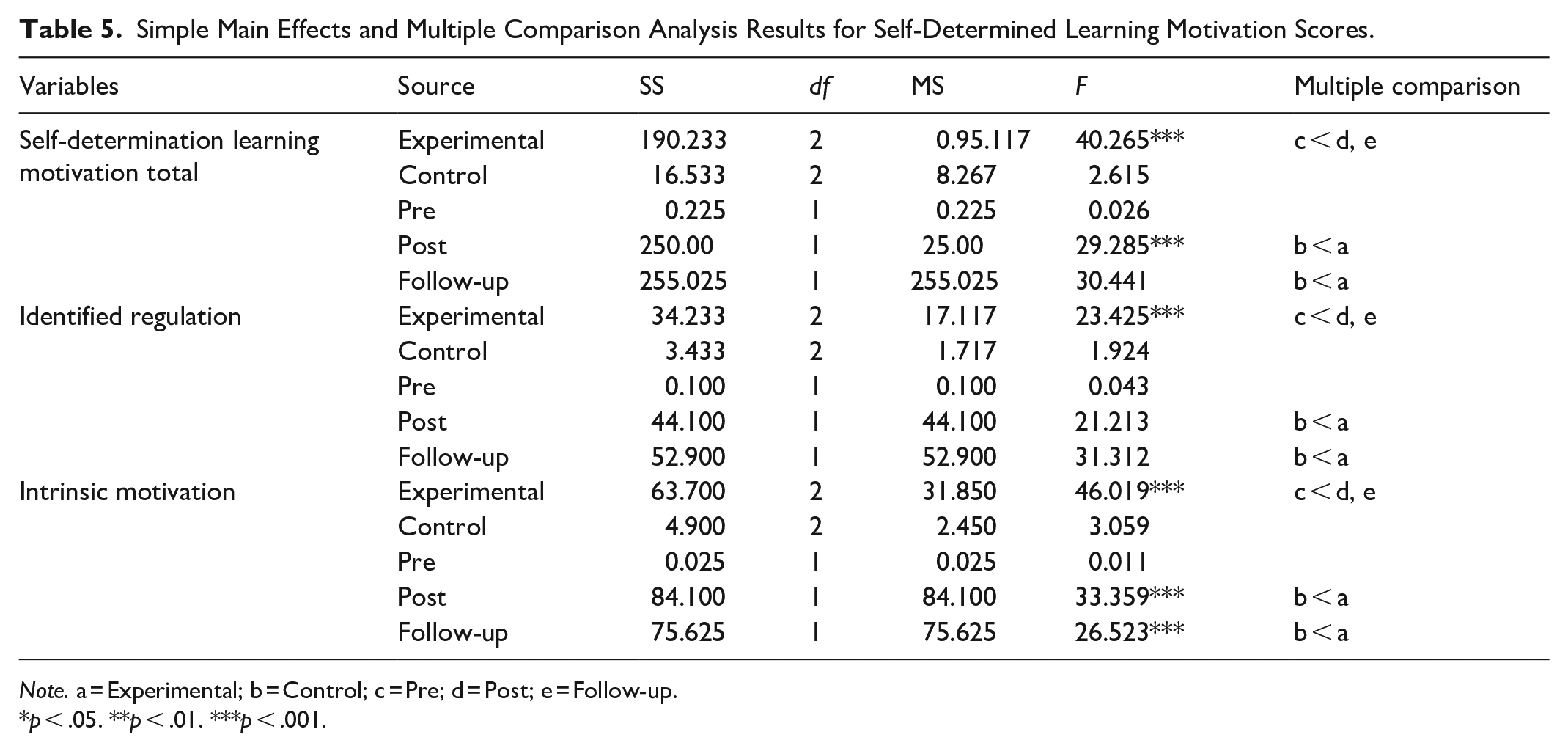
Note. a = Experimental; b = Control; c = Pre; d = Post; e = Follow-up.
p < .05. **p < .01. ***p < .001.
Self-Determined Learning Motivation
The experimental group also demonstrated significantly higher self-determined learning motivation scores compared to the control group at post-intervention (Figure 3). Similar to academic self-efficacy, this improvement was sustained at follow-up. The repeated measures ANOVA indicated a statistically significant interaction effect for group type and measurement time on overall self-determined learning motivation (F(2, 76) = 28.686, p < .001). Further analysis revealed significant interactions for the subdomains of situational control (F(2, 76) = 18.240, p < .001) and intrinsic motivation (F(2, 76) = 34.461, p < .001).
Simple main effects tests (Tables 4 and 5) showed that the experimental group’s scores on overall self-determined learning motivation and both subdomains (situational control & intrinsic motivation) significantly increased from baseline to both post-intervention and follow-up assessments. The control group, however, exhibited no significant changes across measurement times. This pattern suggests the program positively influenced students’ self-determined learning motivation.
To summarize the results above, the results of the simple main effects test by group and measurement time showed that there were statistically significant differences in the scores of the experimental group for overall academic self-efficacy and its sub-factors (task difficulty, self-regulatory efficacy, and self-confidence). Post-intervention and follow-up scores were significantly higher than baseline scores in experimental group. In contrast, for the control group, there were no statistically significant differences in scores across different measurement times. Additionally, the examination of simple main effects for each group at different measurement times did not reveal statistically significant differences in group performance. This pattern of results was consistent across the entire self-determined learning motivation score and its subdomains (identified regulation and intrinsic motivation).
These findings collectively suggest that, in the experimental group, the intervention had a significant positive impact on academic self-efficacy and its subdomains, as well as self-determined learning motivation and its subdomains. However, the control group did not exhibit statistically significant changes over different measurement times, indicating that the observed effects are likely attributed to the group counseling program based on positive psychology and Adler’s individual psychology.
Discussion
The group counseling program, grounded in positive psychology and Adlerian individual psychology, effectively enhanced academic self-efficacy, self-determined learning motivation, and GPA in Korean university students (KUS) on academic warning. These findings hold particular significance for KUS who often face unique challenges due to the intense pressure to achieve academic excellence (S.-Y. Lee, 2017).
The program’s focus on identifying strengths, fostering a sense of community, and encouraging goal-setting directly addresses these challenges. Korean university culture often emphasizes competition and individual achievement, potentially neglecting the importance of identifying and celebrating individual strengths (Jeon, 2017; Shin et al., 2008). The program’s emphasis on strengths-based psychology can help KUS cultivate a more positive self-perception and develop a growth mindset, crucial for navigating academic setbacks.
This study adds to the existing evidence supporting group counseling for improving academic outcomes in undergraduate students (Amundson, 2012; Gysbers & Henderson, 2000; Heppner et al., 2010). However, it breaks new ground by utilizing positive psychology and Adler’s individual psychology as the theoretical foundation for the intervention program. Unlike traditional group counseling models that may focus primarily on problem-solving strategies (Gysbers & Henderson, 2000), this program actively incorporated principles from both frameworks.
For instance, exercises drawing on positive psychology principles helped students identify their strengths and develop a growth mindset (Seligman & Csikszentmihalyi, 2000). This is particularly relevant for KUS who may struggle with feelings of inadequacy or self-doubt due to academic pressure. By equipping students with essential tools to navigate academic challenges, the program empowers KUS to view challenges as opportunities for learning and development with confidence and motivation.
Adlerian psychology principles were woven into the program by fostering a sense of belonging and encouraging students to connect their academic goals to their personal values and sense of purpose (Adler, 1938). This unique integration distinguishes this program from traditional approaches and can be especially beneficial for KUS facing academic warnings. The intense pressure to succeed can lead to feelings of isolation and a disconnect between studies and personal goals. The program’s emphasis on community and purpose can help KUS develop a stronger support network and find intrinsic value in their academic pursuits.
The program’s effectiveness in improving self-determined learning motivation, a key predictor of academic success (Cordova & Lepper, 2017), is particularly noteworthy. Intrinsically motivated students persevere through challenges, set challenging goals, and engage in deep learning. Notably, the program also enhanced identified regulation, a form of motivation linked to higher achievement than external pressures (Cordova & Lepper, 2017). This internalized value of learning fosters student commitment to their goals, which can be especially valuable for KUS who may be accustomed to studying primarily for external validation.
The findings of this study are also consistent with previous research on the importance of self-determined learning motivation and identified regulation for academic success (Cordova & Lepper, 2017; Ryan & Deci, 2000). Students driven by these internal forces are more engaged, persistent, and likely to achieve their goals. The group counseling program likely fostered self-determined learning motivation and identified regulation by creating a supportive environment where students could explore their thoughts and feelings, learn from each other, and celebrate successes. This environment facilitated the development of a growth mindset and helped students identify their personal values and goals, ultimately leading them to connect learning to these goals and internalize the value of education (Cordova & Lepper, 2017).
The findings of this study hold particular significance in the context of Korean university students’ challenges, as outlined in the introduction. Korean university students, under significant societal pressure and facing cultural expectations of academic excellence (S. J. L. An & Kim, 2024), often grapple with high levels of stress and a fear of academic failure (H. Cho et al., 2021). The group counseling program’s focus on fostering academic self-efficacy and self-determined learning motivation directly addresses these challenges by providing students with the psychological tools necessary to navigate academic difficulties and overcome cultural barriers to success.
The 8-week group counseling program implemented in this study brought about significant changes in students’ self-efficacy and self-determined learning motivation. For instance, one student, initially showing helplessness due to academic failure, gradually regained academic confidence through recognizing his strengths and adjusting learning strategies. This change aligns with Bandura’s (2013) self-efficacy theory, which suggests that success experiences and positive feedback can enhance self-efficacy. Moreover, in line with Dweck’s (2015) growth mindset concept, this study showed that abilities can be developed through effort and strategy, which was reflected in students’ positive changes in academic motivation and attitudes. Therefore, the findings of this study suggest that psychological interventions promoting intrinsic motivation can be effective for students with academic failure experiences in the long term.
A more detailed examination of the group members’ reflections showed that, initially, they reported a lack of academic confidence due to past failures. This study aimed to explore their private logic and shift it toward a more positive direction by providing successful experiences. As outlined in the program development process, the group counseling stages based on individual psychology and positive psychology included activities such as identifying inferiority feelings, exploring early memories, finding strengths, setting life goals, taking goal-oriented actions, and mutual encouragement. These techniques and activities were designed to shift negative thinking to positive thinking. This was achieved by connecting the individual’s private logic and negative early memories to academic responses, thereby transforming negative reactions into positive ones. A distinctive feature of this study was the use of the “as if” practice, commonly used in Adlerian group counseling, where participants acted as if they were someone else to gain positive experiences (Watts, 2003). The participants also utilized their strengths, which set this program apart from others. Reflections after sessions, such as “I now understand why I didn’t study. I was moved by seeing myself do better than my sister in the early memory revision task,” and “Now I believe I can study well,” show the potential for transformation in academic attitudes and experiences. This program can be seen as an effective way to shift negative academic beliefs and attitudes toward a more positive direction, enhancing academic self-efficacy.
Unlike previous studies that simply designed dreams and provided learning strategies to increase self-determined learning motivation, this study focused on setting life tasks based on individual counseling theory, helping students understand how their goals influence their academic situation. At the same time, they were encouraged to solve their personal problems by using their strengths and potential, an approach grounded in positive psychology. These activities likely enhanced intrinsic motivation by helping students continuously strive for their goals. Additionally, mutual encouragement throughout each session is predicted to have increased intrinsic motivation, a subfactor of self-determined learning motivation. M. Kim’s (2006) study supports this by showing that Adlerian encouragement helps individuals build self-confidence and passion, thereby enhancing self-determined learning motivation.
Implications and Recommendations
This study highlights the importance of group counseling programs grounded in positive psychology and Adlerian individual psychology for supporting students on academic warning. The findings suggest that fostering academic self-efficacy and self-determined learning motivation can significantly improve student outcomes. Given the widespread academic pressures faced by university students globally, these insights can be applied beyond the specific cultural context of Korean universities.
Implications
Holistic Student Support: Universities should integrate psychological well-being with academic strategies to provide comprehensive student support services. A focus on strengths-based interventions can help students navigate academic challenges with resilience.
Theoretical Contributions: The study validates the application of positive psychology and Adlerian individual psychology in academic counseling, highlighting their role in enhancing motivation and self-efficacy.
Global Applicability: While this study focused on Korean university students, the program principles can be adapted for diverse student populations facing similar academic pressures.
Recommendations
1. Structured Group Counseling Programs
Universities should implement structured, evidence-based group counseling programs to support students on academic warning. Programs should be tailored to students’ specific needs and emphasize academic self-efficacy, growth mindset, and motivation.
2. Early Intervention and Monitoring Systems
Institutions should establish data-driven monitoring systems to track student progress and adjust interventions accordingly. Regular assessments of academic performance, motivation, and psychological well-being can enhance program effectiveness.
3. Integration with Peer Mentoring and Academic Support
Combining group counseling with peer mentoring programs can provide additional support. Upper-year students who have successfully overcome academic difficulties can mentor at-risk students, offering guidance on study strategies, time management, and emotional resilience.
4. Incentives for Engagement
Universities should consider offering achievement-based incentives such as scholarships or recognition awards for students who actively participate in counseling programs and demonstrate academic improvement.
5. Cultural and Contextual Adaptation
While the core principles of the program are broadly applicable, universities should adapt interventions to their specific student populations, considering cultural and institutional contexts. Special attention should be given to marginalized or disadvantaged students who may face additional academic barriers.
By implementing these recommendations, universities can create a supportive academic environment that empowers students to overcome challenges, improve their motivation, and achieve long-term academic success.
Limitations and Future Directions
A key limitation of this study is its pilot nature and small sample size, which may limit the generalizability of the findings. While the results provide valuable insights, future research involving larger and more diverse participant groups is essential to validate and extend the conclusions. This would help establish broader applicability, especially in similar educational and cultural contexts. Additionally, the study did not assess the long-term effects of the program, underscoring the need for follow-up studies to evaluate its sustained impact on both academic performance and student well-being.
Another limitation is the potential for self-selection bias in the sample, as participants may have been more motivated to engage in the intervention. Future studies should aim to address this by using random sampling to ensure a more representative participant group.
Future studies should aim to address these limitations by including larger, more varied samples, which would improve generalizability and provide more robust evidence of the program’s efficacy. Longitudinal research would be beneficial for tracking participants’ progress over time, assessing key outcomes such as grade point averages, retention rates, self-esteem, stress levels, and academic motivation. Furthermore, understanding the mechanisms that underpin the program’s effectiveness will be crucial for refining its approach.
Qualitative interviews with participants could offer deeper insights into their experiences, while mediation models could help clarify the indirect pathways through which the program influences different outcomes. By addressing these limitations and pursuing these future directions, we can enhance our understanding of the program’s potential to improve student success beyond initial academic warnings.
Conclusion
In conclusion, the findings of this study indicate that a group counseling program grounded in positive psychology and Adler’s individual psychology holds promise as an intervention for improving the academic performance of undergraduate students on academic warning, particularly KUS. By effectively enhancing academic self-efficacy and self-determined learning motivation, the program demonstrates its potential to support students in overcoming academic challenges.
However, further research is warranted to validate these findings and investigate the long-term effects of the program. Longitudinal studies tracking participants’ progress over time will provide valuable insights into the sustained impact of the intervention on academic performance and well-being. Additionally, exploring the underlying mechanisms of the program’s effectiveness will enhance our understanding of how it facilitates positive outcomes for students. By continuing to study and refine this approach, we can better support undergraduate students facing academic difficulties and ultimately contribute to their success in higher education.
Footnotes

Funding
The author(s) received no financial support for the research, authorship, and/or publication of this article.
Declaration of Conflicting Interests
The author(s) declared no potential conflicts of interest with respect to the research, authorship, and/or publication of this article.
Data Availability Statement
The data that support the findings of this study are not publicly available due to privacy and ethical considerations. However, de-identified data may be made available from the corresponding author upon reasonable request and with the permission of the institutional review board.