



Abstract
To measure the international scholarly impact of researchers and institutions and develop effective predictive models, this study assesses the impact of English-language scholarly exchanges (English-language publication opportunities, international collaborations, and international tenure) on academic impact in non-native English-speaking countries through data analysis. Data were obtained from a database of academic exchanges published by a national research institution in China that focuses on science and engineering research, and the English-language exchange records of 1,889 researchers were statistically analyzed. The guiding research questions aimed to explore the extent to which the subcomponents included in English-language academic exchanges affect academic impact, and the correlations and principal component weights among the components. The statistical results show that the degree and frequency of English academic communication significantly impact influence the academic impact of researchers/institutions. An evaluation model of academic impact based on English academic exchanges (English academic publication opportunities, international academic cooperation, and international academic tenure) was further developed, and the weights and contributions of each influential element were characterized using a normalized evaluation index. The evaluation model is of reference significance for optimizing the evaluation of the academic influence of scholars/research institutes from non-native English-speaking countries and enhancing international exchanges. It further provides necessary solutions for sustainable academic innovation.
Keywords
Introduction
With increasing globalization, academic communication and cooperation have become an important part of scientific research development. As English is the common language of international academia, the relationship between academic exchange and influence has become more urgent. The influence of English in the international academic arena is increasing, and countries are paying more attention to academic exchanges and cooperation; thus, the correlation between English academic exchanges and influence must be studied (Caprario, 2020; Peng, 2021; Pérez-Llantada, 2018; Wolf et al., 2024).
Academic exchanges are the activities and processes through which researchers share knowledge, collaborate on projects, and participate in conferences and publications across academic communities. These exchanges enable the dissemination of research findings and foster international collaboration. Academic influence is the extent to which a scholar or research institution is recognized and respected in the academic community, which can be measured through indicators including citation counts, publication frequency, and participation in influential networks. Academic exchanges aim to share and transfer experiences and knowledge among academic communities, and academic influence is related to scholar’s degree of exposure and recognition in the academic field (Jensen et al., 2008). As a main media language for academic exchanges, the popularity of English as a global common language highlights its academic influence. Therefore, examining the correlation between English-language academic exchanges and academic impact is important in understanding the functioning of the global academic ecosystem, promoting transnational academic collaboration, and enhancing the status of scholars and research institutions from non-native English-speaking countries in the academic arena (Awang et al., 2015).
While academic impact has been evaluated, discussion on its relevance to English-language academic exchanges is limited. For example, comparing the weights of various impact factors in the context of academic impact has not been explored (Wróblewska, 2021). Thus, this study aimed to measure the relationship between the language used in academic publications, number of publications in English, participation in English-language academic conferences, frequency of collaborative efforts, English-language academic journals, organizational tenure, and the resulting academic impact of research institutions in non-native English-speaking countries. In addition, variables such as academic paper publication opportunities, academic cooperation, and academic tenure included in English-language academic exchanges are analyzed to determine the trend of academic exposure and recognition, which forms the evaluation index of academic influence.
Therefore, to raise the awareness of scholars and research support institutions in non-native English-speaking countries regarding the association between English academic exchanges and academic influence, this study explores the correlation between the two and analyzes opportunities to publish academic results in English, international academic cooperation and exchanges, and international academic tenure. By investigating existing studies and empirical data, the study explores the main performance of scholars and research institutions from non-native English-speaking countries in English academic exchanges, such as changes in the number and grade of English-language journal publications, English-language academic reports, the frequency of conferences, and scholars’ tenure in important international academic organizations and journals. Furthermore, the study examines the impact of English-language academic exchanges on the academic influence of scholars/research institutions in non-native English-speaking countries, and the mechanisms driving this influence. In so doing, this study reveals the importance of academic exchanges and encourages scholars to participate more actively in the international academic arena and promote the comprehensive dissemination of academic achievements.
Research Status
Academic Impact Assessment
Prathap (2013) proposes indicators to measure the extent to which co-publishing through international collaboration increases the value of the scientific output of organizations or institutions conducting academic research. The scale and unevenness of the role of international collaborations in academic output are demonstrated by defining collaboration and homogeneity indexes. Peer review is also a classic method in academic impact analysis, but its effectiveness is rarely investigated using quantitative analytical metrics (Ma et al., 2012; Weimer et al., 2023). Roessner et al. (2013) tested 28 academic journals using a sampling experiment to establish parameters that reflect their academic impact. They assessed the scope of their impact and degree of influence. Focusing on two interdisciplinary academic institutional studies, the key performance indicators of research interdisciplinarity and productivity were validated. Huang et al. (2015) investigated the correlation between the academic patent impact index, patent index, and number of citations of patents to evaluate the impact of academics’ publication of patents. Huang et al. (2019) examined the new perspective of journal editors, using data from 738 team members of 21 well-known journals in the library and information sciences to combine academic performance with titles. They analyzed the publication of academic results to provide alternative indicators for evaluating academic levels.
English-Language Academic Exchanges
In academic exchanges, scholars use English as the common language of communication and work together to improve standards and promote progress through publishing academic results, conducting collaborative research, co-authoring papers, organizing international conferences, participating in international organizations, and through academic tenure. English-language academic cooperation is important because it provides an internationalized platform that enables scholars from different countries and regions to strengthen interdisciplinary and cross-cultural exchanges and cooperation through joint collaboration (Bo et al., 2022; Q. Xu & Boudouaia, 2023). Through transnational academic cooperation, scholars can share their research results, resources, and experiences; broaden their horizons; jointly explore complex academic issues; learn from and complement each other’s research methods and technical means; and improve the quality and impact of their research.
Publication of Academic Results in English
Published academic results in English include international journal articles, conference proceedings, and other academic publications. Academic impact is an important indicator of scholars’ academic contributions and reflects their reputation, citation rate, and influence on the academic community. Many studies confirmed the relationship between English-language academic publications and academic impact (Premru et al., 2022). Specifically, English-language academic publications can increase scholars’ academic impact for the following reasons.
First, publishing academic results in English makes it easier for scholars’ research to be noticed and accepted by the international academic community (Jia et al., 2017). With globalization and the highspeed flow of information, English, the main language of international academic communication, is crucial for communicating, and sharing research results with a higher number of scholars (Cerejo, 2014; Kratoska, 2007), giving more peers the opportunity to understand and cite their work and thereby enhancing their academic impact.
Second, by publishing academic results in English journals or conferences, scholars expand the scope of their research impact. English-language academic journals and conference papers have a wider readership and higher academic reputation, meaning that more scholars and researchers will pay attention to and cite the results, further expanding scholars’ academic influence (Bao et al., 2013; Tian et al., 2016; J. Xu et al., 2018).
In addition, publishing academic work in English can increase opportunities for collaboration between scholars and the international academic community. In academia, cooperation is an important way to promote research innovation and sustainable development. Publishing research in English attracts the attention of international scholars, establishes an international research network for scholars, strengthens collaboration with other scholars, and enhances academic impact. The journal impact factor is a measure of the average number of citations received by articles published in a particular journal over the past 2 years, and it is still widely used in academic evaluation (Else, 2019; Kaur et al., 2015).
Academic Cooperation
Mutual collaboration among researchers can drive academic career advancement and academic status (Acedo et al., 2006; Gbobaniyi et al., 2023; Liu et al., 2022; Zhao & Liu, 2022). Holley (1977) argued that collaborating with scientists who have already achieved high levels of academic success is an effective way for junior researchers to improve their academic status.
English-language academic research collaborations expand the scope of scholars’ research and facilitate cross-field and interdisciplinary research (Bordons et al., 1993). Guerrero Bote et al. (2013) analyzed the impact of academic collaboration between researchers from different countries, finding that the more countries collaborated, the greater the impact. Freeman et al. (2015) investigated the citation of international collaborations in biotechnology in the US using papers in the Web of Science database, discovering that international collaborations were more highly cited than domestic ones. This further confirms the impact of international cooperation in English academic exchanges on academic influence.
Academic Positions
Many studies also showed a strong positive correlation between international academic tenure and academic excellence. One found that researchers holding international academic tenure have higher levels of academic achievement and reputation than their non-tenured counterparts. Scholars with international tenure typically have wider recognition in the international academic community, are able to participate in high-level academic research projects, collaborate with leading international scholars, and enjoy greater access to academic resources and opportunities (Braun et al., 2007; Forschungsgemeinschaft & Publikationswesen, 2022). In addition, international academic tenure can lead to opportunities for international research collaboration, which can positively impact the depth and breadth of academic research. Furthermore, international tenure can prompt scholars to familiarize themselves with international cutting-edge academic dynamics and research trends, broaden their academic horizons, learn about other academic systems and methodologies, and diversify thinking about different research issues. Such globalized academic cooperation and interdisciplinary exchanges help to promote innovation and progress in academic research (Lu et al., 2018; Waham et al., 2023).
Methodology and Assumptions
Target Groups
Drawing on published academic exchange data from a national research institute focusing on science and engineering research, this study explores the English-language academic exchange practices of 1,889 researchers working in basic mechanics, engineering mechanics, and mechanics-derived disciplines in a research-intensive institution in a non-native English-speaking country. These researchers were selected because of their high level of engagement in academic exchange activities, making them suitable for exploring the practices and impact of English-language academic exchanges. Multiple categories of data related to English-language academic exchanges were statistically analyzed to understand scholars’ English-language academic exchange practices and impact.
The dataset for this analysis includes publicly available academic exchange records such as presentations, collaborations, and conference participation attributed to researchers previously or currently affiliated with this institution. Data were selected based on accessibility, reliability, and the comprehensiveness of the institution’s documentation in these subject areas. Data for this study were primarily collected from the Web of Science database and supplemented with that from Scopus and Google Scholar to ensure the comprehensiveness and accuracy of the literature. Using specific keywords and subject tags, we conducted a systematic search of the literature in relevant fields. These databases provide a range of academic resources in high-impact journals across multiple disciplines, thus providing a solid literature foundation for our research. While this single-site approach provides a focused lens on the institution’s academic exchange practices, it limits the generalizability of findings to other institutions or regions with different research cultures or priorities. Each record of an English-language academic exchange was treated as an individual “variable,” and the findings were specific to the type of record, particular discipline, and supporting institution. The study is aligned with the research tradition of analyzing and categorizing the potential value in individual variables to capture and elucidate key elements of a particular phenomenon that may have been overlooked. However, given that data were obtained from only one research institution, sample bias is possible. This institution’s focus and the national policies governing its funding may influence the volume and types of exchanges recorded. Thus, while this dataset is robust in detailing specific exchanges within these fields, the findings may not fully reflect the broader academic exchange landscape for similar disciplines in other institutions or countries.
As such, further studies incorporating additional datasets and institutional contexts could deepen understanding of English-language academic exchanges and their academic impact.
Research Questions
First, it is assumed that English academic exchanges significantly affect academic influence. Second, the model is based on an assumed positive correlation between academic recognition and academic exposure and takes these as the main expressions of academic influence. Researchers with higher academic influence should have higher academic recognition and frequent academic exposure. In addition, English academic exchange is the macro variable used to evaluate academic influence, which contains multiple subfactor types (English academic publication opportunities, international academic cooperation, and international academic tenure). The study expects to find a correlation between the subfactors and a close relationship with academic influence. As English is the common language in many fields, a low number of academic exchanges in English among scholars or groups may decrease their academic exposure, as their research results cannot be widely read, and disseminated internationally. This will render it difficult to develop academic recognition and impact these researchers’ academic influence in the international arena.
Research showed that English-language academic publication opportunities, academic collaborations, and academic tenure are closely related to academic exposure and recognition (Van Raan, 1998). Therefore, systematically analyzing the records of these types of English-language academic exchanges may lead to an intuitive understanding of academic exposure and recognition to enable building an evaluation model of academic impact. Exploring these different but interrelated variables can enrich research in the field of research impact assessment. To this end, the following research questions are addressed in this study:
(1) How and why do scholars at the Institute of Science and Technology in this non-native English-speaking country use English in their academic research?
(2) What are the main types of English-language academic exchanges included and trends over time?
(3) What is the correlation between English-language academic exchanges and academic impact of scholars from non-native English-speaking countries?
The datasets used are listed below:
(1) A detailed record of the Institute’s published scholarship from 1950 to the present, including categories of academic exchanges in English, time trajectories, research publication profiles, and statistics on the sources of scholarship funding.
(2) Statistical data on the results of English-language academic cooperation and exchange and cooperation programs in which the researchers of the scientific institution participated from 1950 to the present.
(3) Reports on successful international academic exchanges the scientific institution organized and participated in in the last 10 years.
(4) The number of scholars in the research institution who participated in important international journals, conferences, and so on in the past 10 years and distribution of their disciplines.
Research Methodology
This study proposes a preliminary research model to describe how English-language academic exchange variables affect academic progress and academic influence (see Figure 1). The research subjects are scholars from non-native English-speaking countries. The evaluation of English academic influence in this study focuses on English-language academic exchanges, academic exposure, and academic recognition. For English academic exchanges, the variables considered are academic publication, international cooperation, and international academic tenure. This enables qualitative and quantitative assessments of the impact of these exchanges. The analysis focuses on records of English academic publications, the number of collaborative achievements and reported exchanges, and statistics on tenure in international organizations and journals. As noted, the study investigates the influence of different dimensions of English academic exchange records on the academic impact of researchers from non-native English-speaking countries.
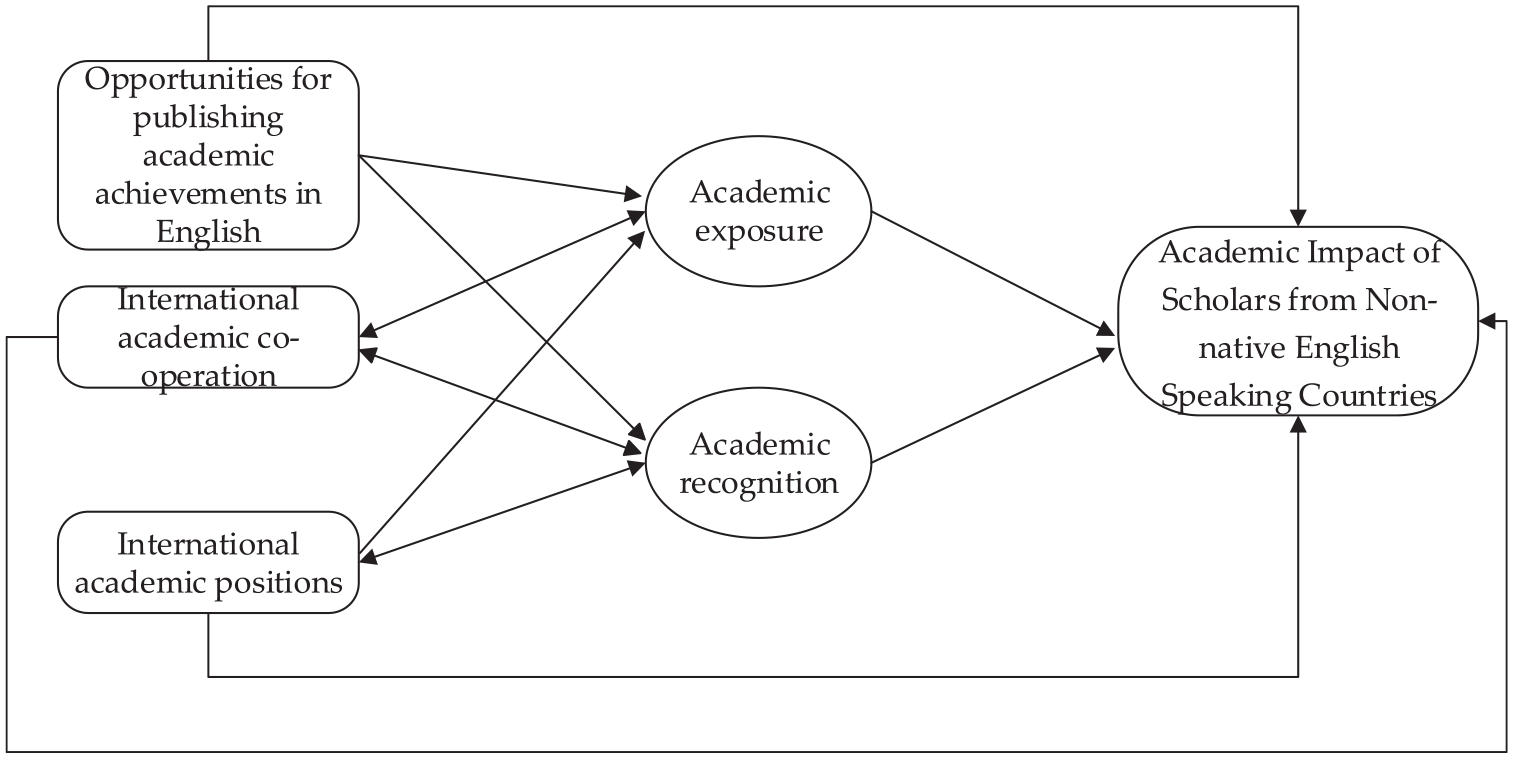
Hypothetical process model of variables to assess academic impact.
Results and Discussion
This section analyzes academic influence through various dimensions. First, key elements like language outcomes and collaboration practices are examined. A subsequent correlation analysis highlights the relationships among these factors and their impact on academic influence. An evaluation model is then presented that assigns weights to these elements, and the implications for non-native English-speaking regions, particularly in Japan, and Germany, are discussed. Finally, strategic recommendations are offered for enhancing academic influence, providing insights for improving academic exchanges and communication.
The study combines presurvey statistics to systematically analyze trends in English academic exchange data and derive their correlation with academic exposure and recognition. Data fitting, analysis of variance (ANOVA), a similarity discussion, and principal component analysis were used to answer the research questions. The study performed the ANOVA in SPSS 26.0 and determined the weight distribution of the evaluation indicators through a similarity analysis and principal component analysis to develop the academic impact evaluation model. A multifactor ANOVA was used to examine the main effects of English-language academic exchanges on academic impact, which was used to confirm the multiple and complex relationships among the variables.
Empirical Analysis of Academic Influence Elements
Analysis of Academic Impact and Outcome Languages
Scholars from non-native English-speaking countries may be influenced by their local language and culture when engaging in academic research, which could affect their understanding of and participation in the international academic arena. English is usually the main language of international academic exchange, and preferred by many international journals and conferences. Therefore, English academic exchange implies the transmission of information and results. The use of English for academic exchanges can broaden opportunities for publication and cooperation in the academic field for scholars from non-native English-speaking countries, and promote their visibility and influence internationally.
Although the use of non-English languages in academic exchanges in non-native English-speaking countries poses some challenges, these effects are gradually being mitigated as the international academic community focuses on multilingual exchanges. Emphasizing multilingual and cross-cultural communication, some international academic organizations and journals have begun to promote multilingual publications and provide multilingual translation services to bridge the language barrier for scholars.
As Figure 2 shows, in the classification of the number of academic exchanges for this research institution up to 2023, more than half the results are publicly published in the native language and more than 40% in English. The statistics for journal articles indicate that the number of English results published exceeds that of those in the native language. This shows that journal articles serve as the most direct and widespread means of communicating and disseminating research results in the international academic community. This highlights the pivotal role of English occupies in the academic field in non-native English-speaking countries.

Percentage of languages used in academic exchange among science and engineering research institutions in non-native English-speaking countries.
The curve of changes in the number of publications using English as the language of academic exchange in this polytechnic research institute from 1990 to the present was analyzed (see Figure 3). The results show that the number of English-language publications has increased each year over the past 30 years. Since the establishment of this research institute in the mid-1990s, predecessor scientists who studied abroad laid the foundation of English academic exchange. Since the internationalization and integration of the academic field, the institute’s annual output of English-language academic results is 15 times the initial number, a clear exponential growth trend. This shows that research institutions and scholars from non-native English-speaking countries are focusing on presenting and disseminating English-language academic results.

Trends in English-language academic exchange output.
As English has become the most widely used medium for academic exchanges in scientific research, government agencies and research institutions in non-native English-speaking countries have increased their support for scholars to carry out academic exchanges in English. This is reflected in the various projects and grants available to support the publication of academic results and provide more opportunities for international cooperation and exchange in English. Figure 4 summarizes the support for English-language academic exchange by the relevant laboratories of the research institution, the system it belongs to, and various state departments. The results highlight the dominant position of national institutions in all funding sources, demonstrating the state’s strong encouragement of English exchanges. This will increase the academic exposure of the research institution and its personnel, which will facilitate the dissemination and promotion of research results internationally.

English academic exchange funding.
Analysis of Academic Influence and English Academic Exchange Categories
According to the classification statistics for this research institution, the main types of academic results published in English include journal articles, conference papers, monographs, book chapters, and research reports. As Figure 5 shows, the number of published journal articles, as the most extensive form of academic exchange, occupies an obvious major position. Conference papers, which have a higher publication volume, represent the frequency of participation in international academic conferences. Finally, there are a smaller number of other forms of English academic exchanges, which have a smaller impact on the assessment of the academic exposure of our research subjects.
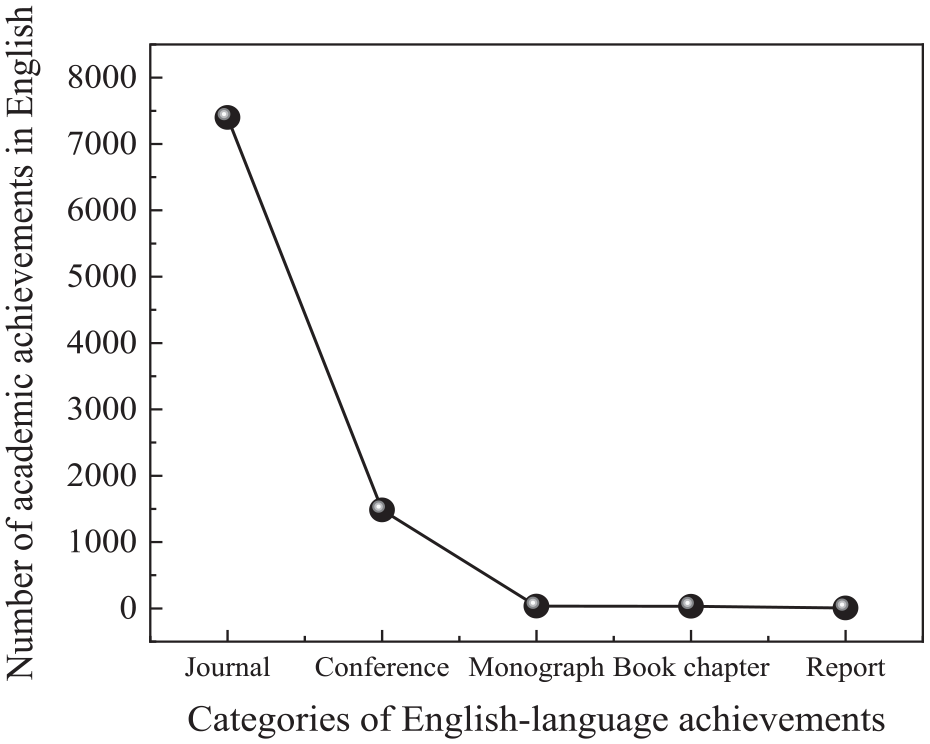
Percentage of English academic exchanges by category.
Based on this, the English-language journal articles published by this research institution were analyzed by category (see Figure 6). The results show that more than 50% of the academic results are included in the Science Citation Index (SCI) database. Nearly 40% of the English-language academic results are included in the Engineering Index (EI) database. This indicates the overall level and academic recognition of the scientific research of the research institution and scholars, especially for basic and applied engineering research. Further, the rank of published SCI papers was analyzed based on the Journal Citation Reports (JCR). The results show that the highest number of academic papers are in the Q1 division, and more than 70% are published in the Q1 and Q2 divisions (see Figure 7). This demonstrates the academic recognition and exposure of the researchers of this institution, which highlights its high academic influence.
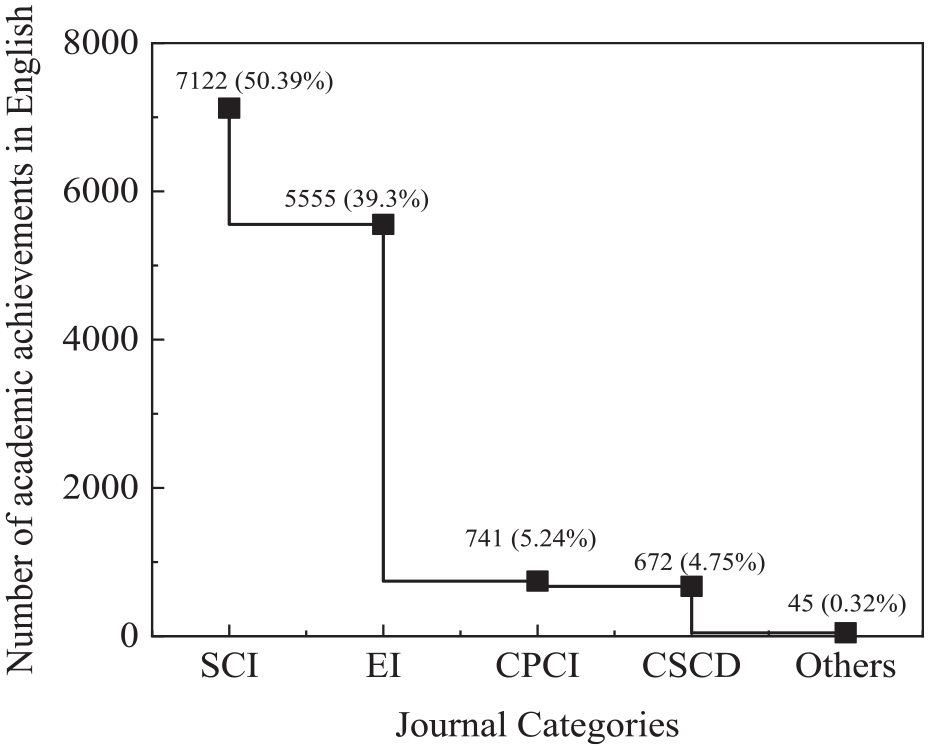
English academic journal paper publishing categories.

Number of English academic paper grades.
Figure 8 presents the statistics of the discipline classification of the English language scholarship of the surveyed research institution. The results show that it dominates academic output in mechanics, physics, and engineering. Furthermore, an impact factor time series analysis was conducted of the three journals with the highest number of published academic papers from this institution (see Figure 9). The results show that the top three journals for mechanics, physics, and engineering had the highest number of publications, exhibiting significant exponential growth in terms of impact factor from 2015 to the present. This indicates these journals’ increased international influence.

Disciplinary classification of English academic achievements.

Change in impact factor of the top three journals in terms of number of issues.
Analysis of Academic Influence and English Language Academic Collaboration
Academic cooperation is another important manifestation of academic exchange. The statistics for this scientific research institution from 2005 to the present show that the number of English academic exchanges increased each year (see Figure 10). During the period 2005 to 2015, the frequency of English academic cooperation and exchange increased slowly, but since 2015, this has shown sudden growth, indicating a significant increase in the overall academic exposure of this institution. This is related to the cooperation and exchange encouragement policies introduced by the local government, further promoting the wide dissemination of and attention to the academic achievements of the researchers of this non-native English-speaking country internationally. Furthermore, the research results obtained through English academic cooperation indicate the level of exchange. As Figure 11 shows, the number of paper grades located in the Q1 and Q2 divisions in the SCI publication records is more than 70% of the total number, indicating the high impact of the papers published by this scientific research organization based on academic exchanges.

Changes in the number of English-language academic co-operation outcomes.

Grade distribution of English academic cooperation achievements.
In addition, academic reports are an important form of expression of academic exchange in the English literature. This study analyzes and discusses the English academic reports developed by the focal research institution in the past 3 years (see Figure 12). The results show that the number of English academic reports has increased each year, and the frequency of exchange has also increased. The scholars invited to attend academic report exchange lectures at the research organization come from mainly the US, UK, and France (Figure 13). This further demonstrates the globalization of the English-language academic exchanges at the research institution and increased academic exposure.
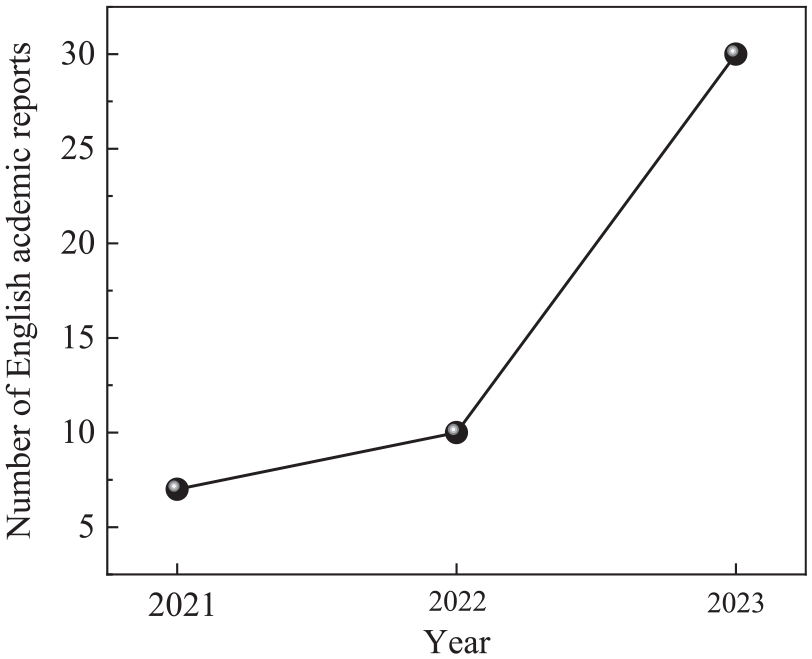
Academic reports in English in the past 3 years.

Countries of the scholars invited to attend English academic exchange presentations.
Analysis of Academic Impact and Academic Tenure
Figure 14 illustrates the per capita situation of English academic output in each discipline in the surveyed research institution. According to the statistics for the English academic achievements of researchers with a full and associate senior title, the results show a greater number of publications per capita for researchers with a full senior title in all disciplines. This means that English academic exchange results are related to the researcher’s rank, and further analyses thereof may clarify the academic influence of researchers and their institutions.

Per capita academic exchange results by discipline for the studied research institution.
Academic tenure in international academic societies and organizations as well as in international journals reflects researchers’ academic level and recognition. Figure 15 shows the tenure of the investigated research institution in domestic and international organizations and journals in recent years. Accordingly, the scholars in this research institution have served in more academic organizations and journals in China, and are more evenly distributed in the different subdisciplines of mechanics. This confirms the research institution’s significant position in mechanics research in the country. Scholars from this institution also serve in international academic organizations and journals, mainly in the field of basic mechanics, which also reflects the achievements, and high recognition of this scientific research institution in that field internationally. In terms of international academic organizations, most scholars at this institution serve in disciplines related to high-temperature gas dynamics, and they have high academic influence and recognition in the fields of high-temperature pneumatics and aerospace. Analyzing these scholars’ international positions emphasizes the institute’s research strengths and academic influence.

Scholars in the research institution hold positions in important national and international organizations and journals.
Correlation Analysis
Overall Analysis of Academic Impact Evaluation Elements
This study analyzes the academic influence evaluation indicators for scientific and technological research institutions in non-native English-speaking countries using time series as the control variable. Statistics were calculated for 13 academic influence evaluation indicators including the number of academic achievements in the native language and of academic exchanges in English in various forms. Overall descriptive statistics for each factor of the current database were determined, as Table 1 shows. The analysis of the highest and mean values of the statistical results shows that the number of academic results and of journal articles published in English are the most significant elements among all indicators. Furthermore, national funding status and cooperation in English are the main evaluation elements affecting academic influence.
Descriptive Statistics of Academic Impact Evaluation Elements.

In the significance analysis of the sample test, if the value is less than 0.05, the difference is significant. The results in Table 2 show a significant correlation between the evaluation factors of academic publication opportunities (publication of native-language and English-language results, publication of journal articles, top three impact factors of published journals), English academic cooperation (publication of English-language collaborative results, top individual collaborative results), national funding, exchange of English-language academic presentations, international projects, and tenure in important international organizations and journals, but the strength of the effect differs. Further, the factors publication opportunities, impact factor of publications, frequency of collaboration, national funding, and international appointments are mutually reinforcing. This may be because more collaborations in academic achievements will obtain higher funding, and a larger number of academic achievements indicates higher academic exposure of the researchers and institutions, especially since English academic achievements promote the dissemination of international academic exchanges. In addition, international academic tenure promotes the dissemination and exposure of research results, which reflects the higher recognition of scholars’ work. This contributes to publication opportunities, international co-operation, and funding.
Single-Sample Test of Academic Influence Evaluation Elements.

Relevance of Academic Impact Evaluation Indicators
Previous studies analyzed the correlation of each evaluation index of academic impact, finding that the degree of significance of the impact varies among indices. In this study, to explore the correlation between the evaluation indices of academic influence and English academic exchanges, a Pearson correlation test was performed on the elements of English academic exchanges with the value of the academic influence indices. Tables 3 and 4 present the results. The results show a linear correlation between the 12 academic exchange indices selected and academic influence. A negative linear correlation is evident between the indices of the number of the highest number of collaborative achievements of individual scholars, English academic achievements published, and international tenure. There is also a negative linear correlation between the highest number of collaborative achievements of individual scholars and publication of two academic achievements in English, and between this indicator and international tenure.
Pearson’s Correlation Test of Academic Impact Evaluation Indicators.

Note. Statistical significance: * — significant, ** — highly significant.
Pearson’s Correlation Test of Academic Influence Evaluation Indicators.

Note. Statistical significance: * — significant, ** — highly significant.
The significance coefficients for the impact factors of the top 1, 2, and 3 journals in terms of the number of English-language publications and articles, and number of positions in international academic organizations and journals are all greater than 0.01, indicating a significant positive correlation between the English academic achievements of non-native English-speaking countries and publication volume of English journal articles, impact factor of the top three articles, and number of international academic organizations and journals. The correlation with the publication volume of English journal articles is the largest, meaning that English journal articles are the most important manifestation of the results of English academic exchanges. The number of English academic achievements is negatively correlated with the number of English academic reports and individual cooperation achievements, which may be because the academic exchange report itself is a form of academic exchange and generally does not form academic publication results. Similarly, the number of individual cooperation results is negatively correlated with the number of English academic exchanges, and while cooperation promotes exchange, academic exchanges may be achieved in the form of reports, conferences, and other forms of exchange, decreasing the number of publications.
Academic Impact Evaluation Model
Weighting of Academic Impact Elements
To further examine the existence of a common degree between the elements of academic influence, common factor variance is employed to calculate the indicators, as per Table 5. The value interval of the common degree is [0,1]: the closer the value is to 1, the more it can reflect the original information of the indicators. The extracted value of each indicator in Table 5 is more than 0.5, which indicates that the extracted common factor can reflect the information of each indicator.
Common Factor Variance for Each Factor.

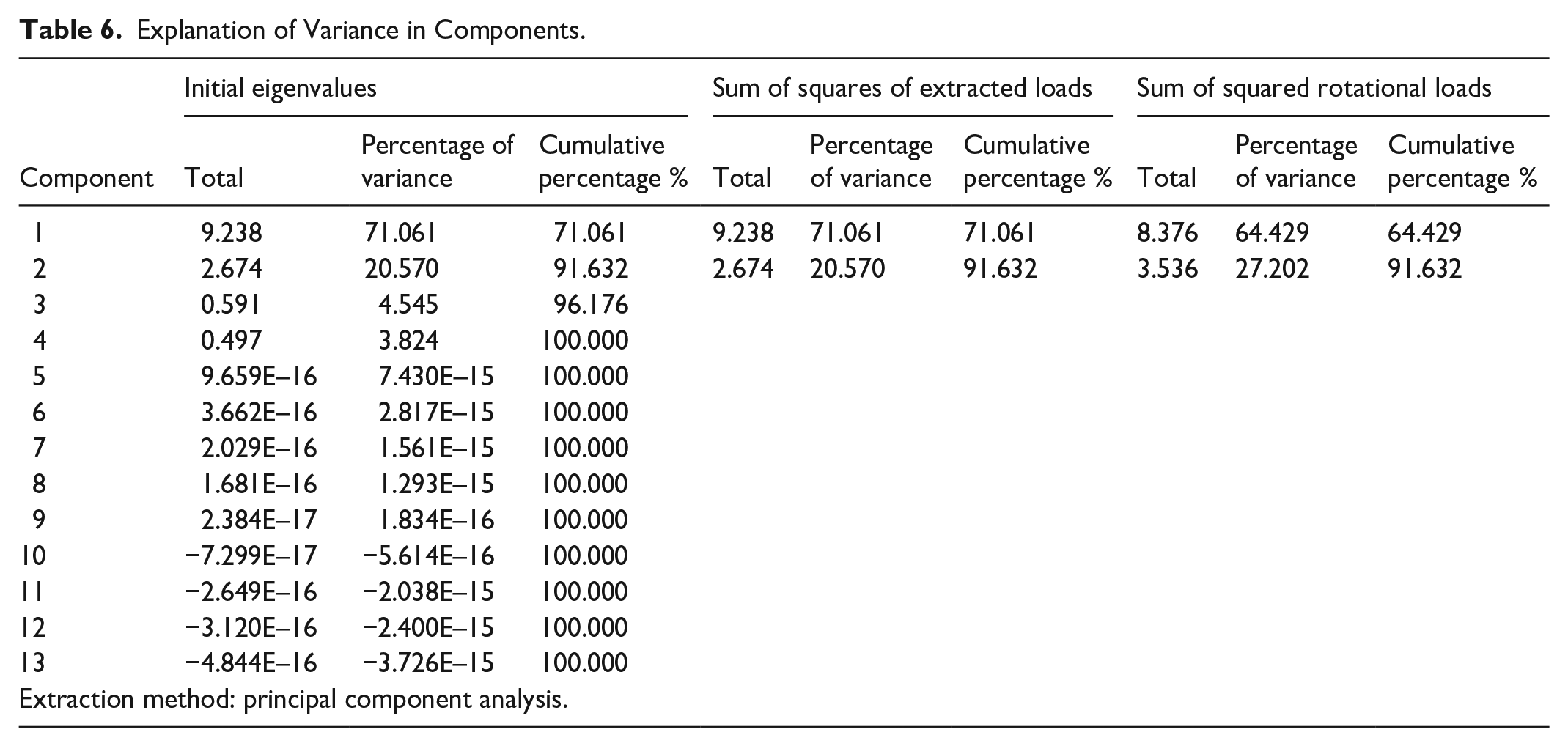
To extract the common factor between the indicators, the factors are derived by interpreting the variance of each indicator. Table 6 shows that the initial eigenvalue is greater than 1. There are two components, and the first 2 components of the variance value of the total of 91.632% is greater than 50%, so the number of factors is set to 2. The extraction of the squared and loaded column indicates that the two unrotated, extracted public factor variance contribution information values are the same as the initial eigenvalue of the first two columns of the same value. This indicates that the first 2 factors can explain the total variance of 91.632%. The last column of the rotated sum of squares loaded indicates the variance contribution value, variance contribution rate, and cumulative variance contribution rate of the new public factors obtained after factor rotation, which changes the variance contribution value of each factor compared to the unrotated one. However, the final cumulative variance contribution rate remains unchanged. According to the interpretation of the variance of each component, as per Table 6, the sum of squares was extracted and loaded into the data, and the original 13 indicators were divided into two main components.
Explanation of Variance in Components.
Construction of the Academic Influence Evaluation Models
For reclassification, the 13 indicators were assigned to two components according to the variance interpretation table. For the reasonableness of the indicator assignment, the correlation coefficients of the variables were obtained using the loading matrix of the factor analysis, and the indicators included in the two components were determined according to the magnitude of the coefficient value. The scoring coefficient matrix of each component was obtained through a principal component analysis (see Table 7). From this, the scoring formula of each component can be derived. In this study, the academic impact assessment index of scholars/research institutes from non-native English-speaking countries based on English academic exchanges was recorded as AI (academic impact), and the factors were recorded as AI1 and AI2, respectively. The 13 indicators were substituted with abbreviated letters of the English name; for example, N indicates that the number of academic publications in the native language is labeled in the table.
Matrix of Coefficients to Evaluate Principal Components.

From Table 7, the formulas for the metrics of AI1 and AI2 can be obtained, respectively, as follows:


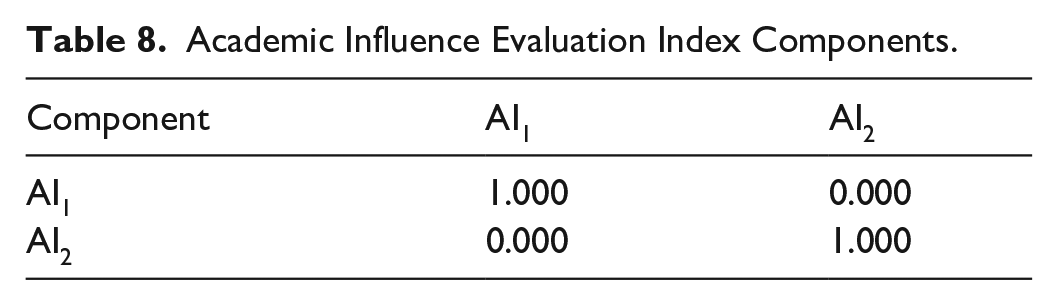
To further validate the correlation of the extracted components, the covariance matrix of the two components is calculated, as per Table 8. Table 8 shows that the correlation coefficient of each component is 0, indicating no correlation between the two components, and that each component reflects a different aspect of the academic impact of scholars/research organizations from non-native English-speaking countries.
Academic Influence Evaluation Index Components.
The analysis revealed that the comprehensive evaluation indicators for academic impact can be represented by two principal components, and the weighting coefficients of each component can be calculated to predict/evaluate the academic impact of science and engineering (S&E) researchers/institutions from non-native English-speaking countries. The weighting coefficients of each component were calculated by rotating the squares and loading the variance ratios according to the factorial variance interpretation table. The weighting coefficients were 0.703 for component one and 0.297 for component two.
In summary, the model for evaluating the academic impact of S&E researchers/institutions in non-native English-speaking countries can be constructed as:

In the formula, AI is the comprehensive influence of Chinese scholars’ international cooperation academic papers, which consists of 13 evaluation indices. It can be used to calculate an academic influence score through the comprehensive evaluation model of the influence of the papers of scholars from non-native English-speaking countries. This then enables comparing the weights of the evaluation elements of academic and comprehensive influence.
Broader Implications in Other Non-native English-Speaking Regions
While China serves as a primary example in this study, similar trends and challenges are observed in other non-native English-speaking regions such as Germany and Japan. Thus, this work also selected two representative S&E research institutions, one in Japan (Asia) and one in Germany (Europe), to determine the impact of English-language academic communication on scholarly influence. Scholars from these regions also face barriers related to language proficiency and access to English-dominated publishing venues, impacting their global academic visibility and citation rates. This suggests a broader, cross-regional issue in academic communication for non-native English-speaking scholars.
Statistical Analysis of Japanese Researchers’ Academic Exchange Activities
This study compiles records of academic exchange activities for researchers in the School of Engineering and Science at a representative university in Japan. These records are drawn from publicly available data. An analysis of academic publications over the past decade (2015–2024) shows a steady upward trend in total publications (see Figure 16). In 2015, the total number of publications was below 200, but it gradually increased over the following years, surpassing 1,400 by 2024, with continued growth projected for 2025. This increase in publication output reflects the research group’s growing scientific activity and annual rise in academic productivity.

Statistical analysis of academic publication output.
Compared to the total number of publications, the quantity of academic publications in English is relatively low, but exhibits consistent year-on-year growth. From 2015 to 2024, the number of English academic publications has increased. Although the growth rate has been slower, it totaled approximately 1,200 articles by 2024. This indicates that the research community is intensifying its efforts to engage in international academic exchanges. The proportion of English academic publications within the total publication count is gradually rising, indicating an improvement in the research community’s influence globally.
As Figure 17 shows, the impact factors of the top three English academic journals by publication volume in this research community have increased year-on-year. The rising impact factors reflect the deepening connections between this community and international research arena. The analysis of Figure 18 suggests that researchers are actively participating in international conferences and seminars, collaborating with global peers on research initiatives, and enhancing the frequency and breadth of academic exchanges. Collaboration among researchers may lead to more innovative and comprehensive research outcomes, thereby increasing the likelihood of publication and the journals’ impact factors. Furthermore, these researchers’ work has received wider recognition and citation, facilitating subsequent research and creating a positive feedback loop.

Yearly changes in the impact factors of the top three English journals by publication volume.

Trend of academic exchanges in international projects and roles.
The academic exchange of this university’s S&E research community in Japan can be further analyzed in terms of the average number of international project participation per researcher and academic positions held. These two indicators reflect researchers’ degree of internationalization and their influence and professional reputation in the academic community.
First, the average number of international project participation per researcher is an indicator for measuring their international exchange and collaboration. Increasing globalization has significantly increased opportunities to participate in international research projects. Second, researchers’ positions in domestic and international academic institutions, organizations, and editorial boards are also important aspects for assessing academic exchange. Serving as editors or reviewers for high-impact journals, being a member of the organizing committee for academic conferences, or holding positions in professional societies indicate researchers’ academic recognition and leadership in their field. Furthermore, active academic positions may attract more international projects and collaboration opportunities, thereby continually expanding the research community’s international influence.
Data shows fluctuations in the average number of international project participation; however, there is an overall upward trend. Various factors contribute to these fluctuations including changes in funding availability, adjustments in research priorities, and global events (e.g., the COVID-19 pandemic) affecting international travel and collaboration. Nevertheless, the overall upward trend indicates that the community’s commitment to engaging in global research projects is continuously strengthening. Increased participation in international projects enables researchers to access diverse expertise and resources, and enhances the international visibility and impact of their research.
In addition, although the number of international project participation consistently exceeds the number of academic positions, this disparity highlights an important aspect of the community’s academic engagement. The overall increase in international project participation, alongside a relatively lower but steadily rising number of academic positions, underscores the community’s strategic approach to academic exchange. By participating in international projects, researchers are likely to have established valuable networks and collaborations, which may lead to more opportunities for academic positions in the future.
Statistical Analysis of German Researchers’ Academic Exchange Activities
To explore academic exchange in non-English-speaking countries from different regions, this study analyzed the academic visibility and recognition of professors at an industrial university’s engineering school in Germany. The focus was on aspects such as the quantity of published results and participation in international collaborative projects to clarify the influence of researchers from non-English-speaking backgrounds.
The statistical results indicate that from 2005 to 2015, the number of English academic publications by this German research community significantly increased, approximately 2.5 times the initial quantity. This rapid growth may reflect the community’s increased investment in international academic exchange and emphasis on the internationalization of research outcomes. However, from 2015 to the present, the total number of English academic publications has remained stable, showing no significant upward trend (see Figure 19).
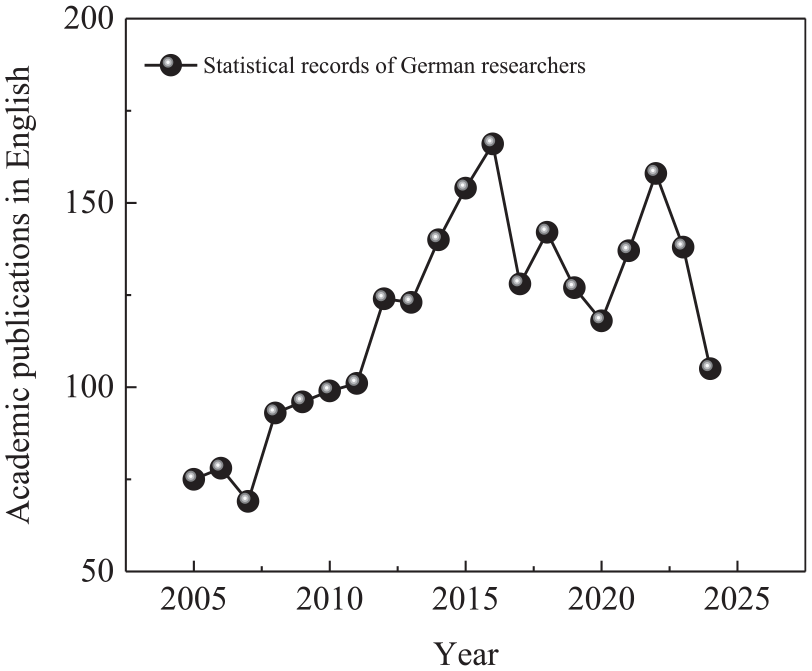
Yearly changes in the total number of English papers published by German researchers.
Once a certain level of academic output is achieved, research communities may focus more on enhancing the depth and impact of their research rather than merely increasing quantity. They may allocate more resources to deep research projects with long-term significance, which typically require more time to produce results and publish findings. The stable situation over the past decade may reflect adjustments in aspects including resources, policy direction, and the academic competitive environment. This change indicates that they may be prioritizing improving the impact and quality of their research and the long-term development of scientific inquiry. This hypothesis can be supported by the shift in European academic attention from industrial development to areas such as globalization and resources.
Figure 20 analyzes the situation from the perspective of international collaborative projects. It compares the funding received by this research community in Germany for domestic projects versus international projects.

Statistical analysis of funding received by German researchers from domestic and international sources.
The statistical data shows that this academic community received significantly more international (primarily from the EU) than domestic funding for its projects. This disparity indicates that the community’s research projects possess strong international competitiveness and their research direction may align with the EU’s research priorities and funding policies. Furthermore, from 2015 to 2024, the overall trend indicates no significant growth in the number of projects funded, domestic or international. However, after 2022, the number of both types of funded projects has shown a steady upward trend, suggesting that the external funding environment may be improving or that the community’s ability to apply for projects has strengthened. Furthermore, the relatively low number of funded projects during from 2019 to 2021 may be related to the economic or policy environment at that time, such as the economic slowdown caused by the global pandemic and tightening of research funding allocations.
Cross-Regional Analysis of Academic Impact in English-Language Communication
The data indicates that while Chinese scholars increased their output in English publications, Japanese and German institutions maintained distinct publication practices, each with varying visibility, and citation impact in global academic networks.
In recent years, the number of English academic publications by Chinese researchers has significantly increased. This can be attributed to China’s ongoing investment in scientific research and emphasis on the internationalization of research outcomes. Many universities and research institutions have implemented incentive measures to encourage researchers to publish English papers in international journals, enhancing their global academic influence. However, some researchers still face challenges in English writing and expression, which can result in relatively low international recognition and citation rates for certain papers.
The overall number of English academic publications by Japanese researchers has shown a steady growth trend. As a country that has long participated in international academic exchanges, Japanese researchers have maintained a certain level of publication in high-impact international journals. However, with the intensification of global research competition, the growth rate of publications in Japan has slowed. This may reflect limitations in Japan’s allocation of research funding and academic resources.
German researchers have also demonstrated stable growth in the publication of English academic papers. Since 2015, their English academic publications have remained at a relatively high level thanks to research funding support from the German government and EU. Both the quantity and impact of publications by German researchers in English have remained stable over the past decade.
In addition, this study analyzed the records of international funding acquisition by countries in different regions (see Figure 21). As shown, the international project funding received by China, Japan, and Germany from 2020 to 2024 varies, demonstrating a distinct change trend. During these 5 years, the number of international project fundings in China has significantly increased from nearly 15 in 2020 to more than 40 in 2024. This rapid growth may reflect China’s increasing emphasis on international academic cooperation and a gradual improvement in the recognition of China’s research capabilities in the international academic community.

Comparative statistics of the number of international funding projects received.
The international project funding numbers for the German research community show some fluctuations but remain stable overall at around 20 to 30 despite small peaks in 2021 and 2022. This fluctuation may indicate the cyclical characteristics of international cooperation within Germany’s research funding projects and its stable foundation in obtaining international project funding. Its competitiveness in international projects is relatively solid, and the increase in English academic exchange is limited, likely due to the maturity and stability of the country’s research system.
In contrast, Japan’s international project funding growth has been slow. However, the funding for Japanese researchers is similar to that of China, showing a steady upward trend. Nevertheless, Japan’s international academic exchange activities appear more subdued. The growth rate of international project funding is relatively low, which may be constrained by the allocation of research funding and number of international project applications.
Analysis of Strategies to Improve Academic Impact
In summary, this study conducted an in-depth analysis of the English academic exchange situation of researchers at a research institution in China. The conclusions and trends derived are to some extent applicable to other non-English-speaking Asian countries. Overall, although there are barriers to English language use in Asian countries, the increasing convenience of international academic exchanges and emphasis on the internationalization of research have gradually enhanced the participation of non-English-speaking Asian countries in the global academic community. While countries like China started relatively late in their English academic exchanges, a rapid growth trend is evident in recent years. This trend is influenced by the increased convenience of international academic exchanges and geographic factors, and reflect the importance Asian countries place on the internationalization of research. In contrast, non-English-speaking European countries like Germany have consistently maintained a high quality of academic exchange due to their language proficiency, academic traditions, and support from the EU. The academic impact evaluation model proposed in this paper is applicable to research communities in different regions. It focuses on the significant aspects of English academic publications and international project funding. However, the degree of influence of various factors and their trends over time depend on a country’s geographic location and historical development of their academic standards.
Based on the analysis of the evaluation indices, the correlation between English-language academic exchanges and academic influence can be intuitively shown. Therefore, the following strategies can be adopted to improve the academic influence of scholars and research institutions in non-native English-speaking countries:
(1) Improve English communication skills: Good English language skills are the basis for English academic exchanges. Scholars can participate in English training programs to improve their English skills in listening, speaking, reading, writing, and translation, and should actively participate in English academic discussions and exchange activities to enhance their English communication.
(2) Publish academic results in English: Publishing high-quality academic papers in English in influential international journals is an important way to improve the level of scientific research. Scholars can write English papers based on their own research results and choose the most appropriate journals for their field for submission. This can increase their academic reputation, expand the scope of exchange, and enhance their influence.
(3) Increase awareness of international exchange: Academics should participate in international conferences, seminars, lectures, and other activities to make contact and exchange information with scholars worldwide. Through these opportunities, they can learn about the research dynamics of internationally emerging fields, present their research results, and obtain feedback and guidance from international scholars. At the national level, actively encouraging scholars to participate in English-language academic exchanges and providing the necessary support can raise their awareness of international exchanges.
(4) Establish cooperation: Using international resources and platforms like international cooperation funds, research projects, and experimental equipment can improve research efficiency and quality. Scholars can take the initiative to apply for international financial support and join international research projects to obtain more resources and support and conduct research with international influence. Actively establishing academic partnerships with international scholars to conduct collaborative research projects is another effective approach. Through collaborative research, scholars can share resources, experience, and expertise, and expand their own research area and orientation.
In summary, strategies such as improving English language proficiency, actively participating in international exchanges, cultivating awareness of international exchanges and cooperation, publishing academic results in English, using international resources and academic platforms to establish international cooperative relationships, and actively seeking international academic tenure contribute to the expansion of academic exposure and recognition. This will effectively enhance scholar’s level of influence and that of their scientific research institute. These strategies can broaden academic horizons, promote academic exchange and resource sharing, enhance academic reputation and influence, and provide new opportunities and innovative ideas for research.
Conclusions
In this study, we systematically analyzed time-varying data on the categories and quantities of English-language academic exchanges publicly released by scientific and technological research institutions in non-native English-speaking countries. This analysis is important in the context of accelerating globalization and dominance of English in academic research. The paper also discussed the time-varying characteristics of the categories, grades, and journal impact factors of English academic achievements, and number of English academic collaborations and tenure to clarify the interrelationships and changing trends among the influencing elements. Based on this, the statistical principles of ANOVA, a significance analysis, and principal component analysis were applied to the elements of academic influence. Furthermore, factors were extracted from the variance interpretation of each element, leading to the division of the original 13 indicators into two principal components. Correlation tests were then conducted on these components, and an academic influence evaluation model was formulated based on the findings.
The following are important findings of the study. First, there is a significant correlation between the academic impact of S&E researchers and research organizations in non-native English-speaking countries and English-language academic exchanges. Second, factors such as academic publication opportunities, academic collaborations, and international academic tenure covered by English-language academic exchanges significantly impact researchers’ academic exposure and recognition, which are dual factors comprising academic influence. Finally, academic influence improvement strategies were proposed by constructing the evaluation model.
The study also examined other regions. In the analysis, we found that although there are differences in participation rates in English-language academic exchanges among various countries and regions, the overall trend indicates that an increasing number of non-native English-speaking countries are actively enhancing their academic influence. This underscores the importance of global academic exchanges and the necessity of supporting research institutions and scholars from non-English speaking countries. The results of our study not only apply to China, but also provide a reference for academic exchange practices in other Asian non-native English-speaking countries and some European nations. The efforts and achievements of these regions in engaging in international academic cooperation emphasize the value of transnational exchanges and highlight the urgency of enhancing academic influence on the global academic stage.
Finally, our findings confirm the hypothesized model, indicating that elements of English academic exchange—academic publication opportunities, international conference and project cooperation, and international academic tenure—are correlated with academic impact. By statistically establishing an academic impact calculation model, we predicted and evaluated academic impact, thereby reinforcing the discussion in the introduction regarding the crucial role of English in promoting academic collaboration, and influence.
Footnotes
Acknowledgements
The authors acknowledge the Open Literature Publication Database of the Chinese Academy of Sciences.

Funding
The authors received no financial support for the research, authorship, and/or publication of this article.
Declaration of Conflicting Interests
The authors declare that the research was conducted in the absence of any commercial or financial relationships that could be construed as a potential conflict of interest.