




Abstract
The COVID-19 pandemic and the resulting lockdowns increased access to specific social media usage, underscoring the importance of health science communicators sharing accurate information on popular platforms. This study aimed to investigate social media information-seeking behaviors during the COVID-19 outbreak when states were under lockdown orders. The study described respondents’ perceptions of COVID-19 information on social media, types of social media platforms used, people respondents connected with, and the relationship between social media use and the groups respondents connected with. An online survey was administered to 1,048 respondents in the United States via Qualtrics using non-probability opt-in sampling to capture information-seeking behaviors using researcher-adapted scales. The information could help determine the potential of leveraging online social networks to communicate credible health science messages. The results showed that over 70% of the respondents felt overwhelmed while searching for COVID-19 information, had difficulty accessing or interpreting additional information, and sometimes avoided news about COVID-19. Also, Facebook, Instagram, and Twitter were the most popular social media platforms for COVID-19 information. Notably, Facebook was the most widely used platform during lockdowns. Meanwhile, respondents primarily used Facebook to connect with friends and family during the pandemic, and those with more social networks accessed social media platforms more frequently. The findings emphasize the crucial role of Facebook in sharing trustworthy information during the COVID-19 pandemic. They also underscore the need for strategies to help individuals navigate the overwhelming volume of information, including misinformation on social media platforms, especially in times of crisis.
Plain language summary
This study utilized a non-experimental descriptive survey design to examine social media information-seeking behaviors during the COVID-19 outbreak, particularly during lockdown periods. The objectives were to describe perceptions of COVID-19 information on social media, explore the platforms used during lockdown, identify groups of connections on social media, and determine if platform use varied based on connected groups. An online survey was administered via Qualtrics to gather data on information-seeking behaviors, reaching 1,048 respondents in the United States through non-probability opt-in sampling. The survey included the perceptions of the information availability scale and information-seeking behavior scale the information availability scale, and some researcher-adapted Likert-type scales. The results revealed that more than 70% of respondents felt overwhelmed while searching for COVID-19 information, encountered difficulties accessing and interpreting additional information, and sometimes even avoided news about the pandemic. Among social media platforms, Facebook, Instagram, and Twitter were the most popular for obtaining COVID-19 information. Notably, Facebook emerged as the most widely used platform during lockdowns. Furthermore, respondents primarily utilized Facebook to connect with friends and family during the pandemic, and those with larger social networks tended to access social media platforms more frequently. These findings highlight the significant role of Facebook in disseminating reliable information during the COVID-19 pandemic. They also emphasize the importance of implementing strategies to help individuals navigate the overwhelming amount of information, including misinformation, on social media platforms, particularly during times of crisis. It is worth noting that there is limited generalizability due to the US-centric sample.
Keywords
Introduction
The emergence of COVID-19 in 2020 sparked significant public concern and confusion regarding its transmission, safety measures, diagnosis, and treatment, as acknowledged by most scholars (González-Padilla & Tortolero-Blanco, 2020; Jiang, 2022; Neely et al., 2021). Scientists and health experts made concerted efforts to disseminate crucial information through various news outlets at the beginning of the pandemic but were unable to meet the COVID-19 information needs of the public (Jiang, 2022). Consequently, individuals turned to various social media platforms for pandemic updates, news, and guidance (González-Padilla & Tortolero-Blanco, 2020; Neely et al., 2021). Multiple scholars agree that social media played a significant role during the COVID-19 pandemic and that people were reliant on it (Neely et al., 2021; Wang et al., 2021). Neely et al. (2021) showed that more than 75% of respondents used social media at least “a little,” and 59.2% said they read information about COVID-19 on social media at least once a week.
For a significant time, information on social media platforms was conflicting and often lacked scientific support (Erku et al., 2020; Poonia & Rajasekaran, 2020; van Dijck & Alinejad, 2020). Allahverdipour (2020) stated that as the fight against the COVID-19 pandemic progressed, the general public also dealt with an overwhelming infodemic. According to Allahverdipour, false information spreads rapidly across social media, necessitating continued efforts to counter the dissemination of fake news throughout the pandemic. In the United States, political ideologies significantly shaped how the general public perceived the government and scientific response to the COVID-19 pandemic, with Democrats exhibiting greater confidence in scientists than Republicans (Gibson et al., 2021). Furthermore, Republicans were less likely to participate in social distancing practices than Democrats, suggesting that partisan opinions and beliefs influenced individuals’ reactions to the pandemic (Gibson et al., 2021).
Nevertheless, people continued to use the internet primarily to search for COVID-19-related information mainly because of its convenience, speed, and ease of access to global health information (e.g., Auxier & Anderson, 2021; Marton & Wei Choo, 2012; Mayer et al., 2007). The relative advantages of social media platforms continue to make them potential key sources of information during health crises that science communicators and health experts could leverage to disseminate accurate and timely information to the public (González-Padilla & Tortolero-Blanco, 2020; Neely et al., 2021). Before the emergence of COVID-19, research studies revealed that individuals relied on social media during a health crisis to access information that could help them make critical health-related decisions (Case & Given, 2016; Halder et al., 2010). In addition, the more life-threatening a crisis was, the more people searched for information online (Mayer et al., 2007). Before the emergence of COVID-19, research evidence showed that approximately 33% of the U.S. public used the internet to look for health-related information to help them diagnose and treat various diseases (Jacobs et al., 2017). Some earlier scholars also found that more people used the internet to try and understand more about critical or highly stigmatized health conditions (De Choudhury et al., 2014; Zhang, 2014).
When COVID-19 struck, governments worldwide implemented strict measures such as quarantines, social isolation, and lockdowns to mitigate contact and curb the spread of the virus. As a result, the Internet has become the most convenient way for people to communicate with their loved ones, with many business and social gatherings moving online (Neely et al., 2021; Vogels et al., 2020). Social media had become a crucial source of diversified information (Erku et al., 2020). According to Tang et al. (2020), people searched for information about the symptoms, prevention methods, treatment options for the virus, and the latest statistics on the number of cases and fatalities globally (Tang et al., 2020). Others used social media for emotional support and coping mechanisms (Chou et al., 2020). According to Chou et al. (2020), individuals sought a supportive environment to engage with others experiencing similar situations. Luo et al. (2021) conducted a semantic analysis of social media platforms. They found that Americans were more concerned about the transmission and prevention of the virus, government policies and guidelines, and the impact of the pandemic on mental health. Social media was crucial for spreading news and offering moral support during the pandemic.
Overall, the pandemic significantly impacted the use of social media, with platforms such as TikTok, Twitter, and Facebook becoming essential tools for individuals looking to stay connected, informed, and entertained during a time of uncertainty (C. H. Liu et al., 2020; Pew Research Center, 2020; Vogels et al., 2020). Over half of adults in the United States used social media to access information between August and September 2020, with Facebook being the most popular news source (Vogels et al.,2020). Facebook was the most widely used social media platform, with 69% of U.S. adults using it, followed by YouTube (73%) and Instagram (40%) (Pew Research Center, 2020).
One platform that saw a significant increase in usage during the pandemic was TikTok, a social media app that allows individuals of all ages to connect and share short-form videos (Zeng & Abidin, 2021). With lockdowns and social distancing measures in place, TikTok became a popular source of entertainment and a way to connect with others online. According to Sensor Tower, TikTok was downloaded over 2 billion times globally in April 2020 alone, marking a significant increase in usage from previous months. Twitter, a platform primarily focused on news and current events, also saw a surge in usage during the pandemic (Statista, 2020). It became an essential tool for individuals looking to stay informed about the latest developments relating to the pandemic, including updates on case numbers, government responses, and medical research (Statista, 2020). Statista reported that Twitter saw a surge in daily active users during the pandemic, with the platform reporting 166 million daily active users in Q1 of 2020, up from 134 million in Q1 of 2019. Nonetheless, Facebook saw increased usage during the pandemic, serving as a means for individuals to stay in touch with loved ones separated from them during lockdowns or social distancing measures (C. H. Liu et al., 2020). Facebook groups have also become a popular way for individuals to connect with others experiencing similar challenges during the pandemic (C. H. Liu et al., 2020).
In addition, Americans mentioned other types of communication media that benefited them. Approximately 44% of respondents stated that text messages or group messaging apps greatly helped them maintain contact with friends and family, 38% attributed the same benefit to voice calls, and 30%, to video calls, while email (19%) and social media (20%) were mentioned less frequently as sources of benefit (Atske, 2021). Auxier and Anderson (2021) found that many Americans, particularly younger Americans, use YouTube despite most claiming that they use Facebook more. Additionally, Auxier and Anderson’s study showed that people use social media sites such as WhatsApp, Pinterest, Reddit, and Nextdoor. The findings from these studies suggest that various age groups and platforms exhibit distinct patterns in their use of social media, emphasizing the need for science communicators to comprehend these differences to reach their target audiences effectively. Moreover, the findings emphasize the need for science communicators to expand their presence beyond Facebook and establish a strong presence on other social media platforms, particularly during crisis communication. This underscores the significance of diversifying communication channels to disseminate scientific information effectively.
Although social media platforms were convenient and accessible during the COVID-19 pandemic, people were wary of misinformation, as most sites were unvetted by professional journalists and preferred credible sources such as government and health organizations (Jahng, 2021). P. L. Liu (2020) reported that public consumption of COVID-19-related information from social media platforms, mobile social networking apps, digital news media, and live streaming induced anxiety but motivated individuals to take proactive measures against contracting COVID-19. On the one hand, Pulido et al. (2020) found that people tried to make informed decisions about the information they shared through their social networks. Gruzd et al. (2023) reported misinformation through anti-COVID-19-vaccine videos on Facebook and YouTube. Madziva et al. (2022) mentioned unfounded claims linking the development of 5G technology to the emergence and prevalence of the pandemic, which gained traction on social media platforms. Despite widespread skepticism about COVID-19 information on social media, most Americans (63.6%) were still unlikely to double-check online information with a health professional (Neely et al., 2021).
The spread of false information and conspiracy theories about the cause and effects of COVID-19 on the internet made it nearly impossible for the public to find, identify, and use credible scientific information sources to make health decisions about COVID-19. Meanwhile, most Americans felt that the information obtained through social media did not help them understand and deal with the pandemic appropriately (Vogels et al., 2020). To tackle this problem, Facebook, Google, and YouTube removed false information about the COVID-19 pandemic driven by rumors or conspiracy theories (Ghaffary & Heilweil, 2020). However, there were flaws with regard to the platform-led initiatives aimed at combating false information (Gruzd et al., 2023). Moreover, to fight the infodemic, the World Health Organization (WHO) collaborated with major social media platforms to try and disseminate verified and reliable information about the COVID-19 pandemic (Allahverdipour, 2020). Nevertheless, the world grappled with unverified news and global confusion surrounding the pandemic.
Despite the challenges of misinformation, social media holds immense potential as a valuable mass communication channel after the COVID-19 pandemic. However, it is essential that science and health communicators skillfully navigate between preserving individuals’ freedom to express their opinions and ideas and their responsibility to curtail the dissemination of misleading and harmful misinformation (see Madziva et al., 2022). Furthermore, social media companies should take decisive actions toward combating misinformation while promoting accurate information (Kouzy et al., 2020; Lovari et al., 2020). Johnson and Kaye (2019) proposed that health communicators adopt a user-centered approach and tailor their strategies to effectively reach and engage with people, ultimately fostering a more informed and connected society. An opportunity to achieve this exists because scientists have outlined a clear path forward, emphasizing the significance of open communication, establishing public trust, and engaging with the public through various digital platforms (Lovari et al., 2020; Nisbet & Scheufele, 2009).
Nevertheless, understanding the target audience’s information-seeking behaviors is the first step in realizing effective communication. Correspondingly, studying the information-seeking behaviors of the U.S. public during the COVID-19 pandemic provides valuable insights that can inform communication strategies, help to address challenges, and enhance public health response efforts during crises. The findings from this study can inform the design and implementation of crisis communication strategies by identifying the most effective channels, formats, and sources of information. This research adds to the knowledge base utilizable by health authorities, media organizations, and other stakeholders involved in disseminating information during public health emergencies.
Conceptual Framework
Information seeking is an intentional and continuous process until a specific knowledge void is filled (Case & Given, 2016; Krikelas, 1983). The behavior of seeking information commences with an urge to fill a knowledge gap and concludes when that gap is filled (Krikelas, 1983). Cognitive abilities, familiarity with the subject matter, accessible information sources, and individual and contextual aspects influence people’s information-seeking tendencies (Al-Samarraie et al., 2017; Soroya et al., 2021). In forming opinions about scientific facts or policy matters, most individuals depend on cognitive shortcuts and heuristic judgments (Nisbet & Scheufele, 2009). On the other hand, the duration of information seeking and the sources utilized are contingent upon a person’s attachment to the outcome of obtaining the information and the nature of the situation necessitating the information (McKay et al., 2020). Regrettably, people often leap to conclusions without thoroughly exploring diverse information sources and explanations when the information gap directly affects their lives (Jost & Krochik, 2014).
Krikelas (1983) delineated four stages in the information-seeking process. The first stage is the initiation stage, where the individual acknowledges the need for information. The second stage involves selecting sources, during which the individual determines where to find information. The third stage comprises acquiring information, where relevant information is retrieved from the chosen sources. The final stage is the evaluation of information, during which the individual appraises the quality and relevance of the obtained information. These stages ensure that individuals acquire accurate and pertinent information that satisfies their requirements (Krikelas, 1983). Krikela’s stages in the information-seeking process also apply to information-seeking on social media during the COVID-19 pandemic. Krikela underscored the importance of recognizing information needs, devising a search strategy, and assessing the relevance and credibility of the gathered information. Building on Krikela’s theory, it is postulated that, given the role social media platforms play in shaping information-seeking behavior, individuals must critically evaluate the sources and credibility of information disseminated on these platforms. This is particularly pertinent to the COVID-19 pandemic, during which misinformation and fake news were widespread on social media platforms (Vogels et al., 2020).
Purpose and Research Objectives
Drawing from Krikelas’ (1983) model for understanding and navigating information-seeking on social media, the present study aimed to explore public COVID-19 online information-seeking behaviors in the U.S. while most states were under lockdown. The research objectives were as follows:
Describe respondents’ perceptions of available COVID-19 information on social media.
Describe social media platforms used when states were under COVID-19 shelter-in-place orders.
Identify the groups of people who respondents connected with through social media when states were under COVID-19 shelter-in-place orders.
Determine how respondents’ social media platform use differed based on the groups of people they connected with when states were under COVID-19 shelter-in-place orders.
Methods
This exploratory quantitative research study was part of a larger study investigating the public use of scientific information when making COVID-19-related decisions during shelter-in-place orders.
Data Collection
An online survey was administered to 1,048 respondents via Qualtrics using nonprobability opt-in sampling (Armstrong et al., 2020). Qualtrics enabled access to over one million registered participants and recruited a nationally representative sample (Armstrong et al., 2020; Boas et al., 2020). Furthermore, the researchers intentionally reached Americans with diverse political and religious ideologies and beliefs (Boas et al., 2020). Since the study occurred during high political turpitude (the 2020 presidential election), Qualtrics was the most appropriate method of reaching the desired respondents. To ensure the representativeness of the respondents within the target population, the data were weighted using 2010 census data, considering geographic location, gender, age, and race/ethnicity (Baker et al., 2013; A. J. Lamm & Lamm, 2019). The weighting procedure accounted for potential biases and provided a more accurate reflection of the broader population (see Table 1). Before actual data collection, a panel of experts reviewed the survey for face and content validity, including an extension evaluation specialist with over 20 years of experience in survey design, an Assistant Professor of Science Communication, and two Associate Professors of Agricultural Communication. The Institutional Review Board approved the study at the [University]. The instrument was pilot-tested with 50 respondents, representative of the study population, and reliability analysis results confirmed the internal consistency of the instrument items (Nunnally, 1978).
Demographics of Respondents (N = 1,048).

Instrumentation
The researchers adopted and modified the perceptions of the information availability scale (Woolley & Propst, 2005) and an information-seeking behavior scale (Timmers & Glas, 2010). The information availability scale (Woolley & Propst, 2005) included six five-point Likert-type scale items designed to assess respondents’ opinions toward available COVID-19 information (1 = None at all, 2 = A little, 3 = A moderate amount, 4 = A lot, 5 = A great deal). The information-seeking behavior scale (Timmers & Glas, 2010) had seven seven-point Likert-type scale statements designed to assess respondents’ perceptions of social media platforms. A series of yes or no questions were posed to identify respondents’ social media ties/connections (Timmers & Glas, 2010).
There were seven social media platforms: Facebook, Instagram, Snapchat, Twitter, Google, Pinterest, and TikTok. The people with whom respondents connected or communicated on social media represented their social ties or connections (Timmers & Glas, 2010). There were six social connections/ties, including friends, family, colleagues face-to-face, colleagues unknown, people whose opinions were of value (noncelebrities), and celebrities. These social connections were regrouped to form possible clusters of social ties to answer objective four. The regrouped social connections included None (0); family only (1); family and friends (2); family, friends, and colleagues (3); family, friends, colleagues, and those whose opinion mattered, including celebrities (4); friends, those whose opinion mattered including and or colleagues and celebrities only (5); and family and or friends, opinion mattered and celebrities (6). There were also questions about respondents’ demographic characteristics, such as gender, age, education level, and economic status. Table 1 presents the demographic profile of the respondents.
Data Analysis
SPSS version 26 was used to run descriptive statistics to answer the study objectives. The first three objectives that described respondents’ perceptions of available COVID-19 information, social connections, and social media use were analyzed using frequencies and proportions (%). Frequencies represent the number of times a particular category or response occurs in a dataset and therefore help determine any notable differences or similarities between groups (Field, 2017). The fourth objective examined associations between social connections and social media using a chi-square test of independence with a .05 alpha level set a priori. The chi-square test of association determines if there is a statistically significant association between the observed frequencies in different categories or groups (Agresti, 2013; Field, 2017). To validate the test statistic (χ2), the assumption of adequate cell size was assessed to determine if all cells had expected values greater than zero and if at least 80% of cells had expected values of at least five (Agresti, 2013).
Results
Perceptions of Available COVID-19 Information
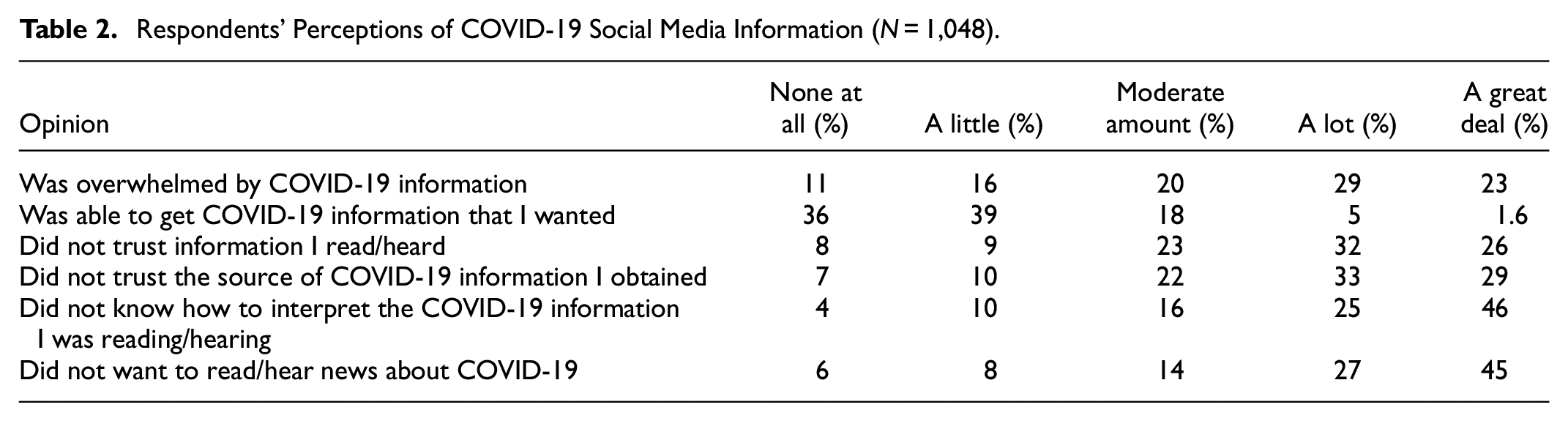
The large majority (75%) felt they either were unable or could only access a little of what they wanted to know about the COVID-19 pandemic. Respondents also indicated (71%) that they did not know how to interpret the COVID-19 information they read or heard (they felt this way a lot or a great deal). In addition, 72% indicated (a lot or a great deal) that they did not want to read or hear news about COVID-19 (see Table 2).
Respondents’ Perceptions of COVID-19 Social Media Information (N = 1,048).
Social Media Platforms Used
Facebook was the most frequently used social media platform during the COVID-19 shelter-in-place orders (see Table 3). Over two-thirds (72.8%) reported using Facebook at least once daily, and 29% said they used it almost constantly while states were under shelter in place orders. Additionally, nearly half of those surveyed (49.3%) reported using Instagram at least once daily, with 19.7% doing so almost constantly. Other social media platforms were also used, with TikTok being the least popular.
Perceived Weekly Social Media Use (N = 1,048).
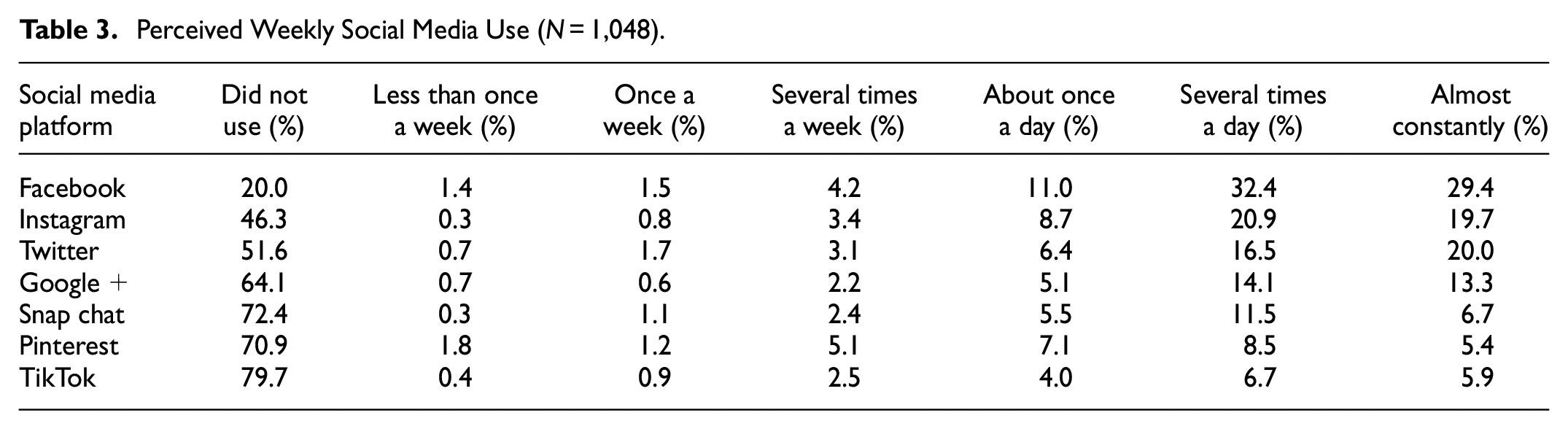
Figure 1 visually illustrates that Facebook, Instagram, and Twitter were the most utilized platforms, while TikTok and Pinterest were the least used in searching for information on COVID-19. The use of Google+ was somewhere in between.
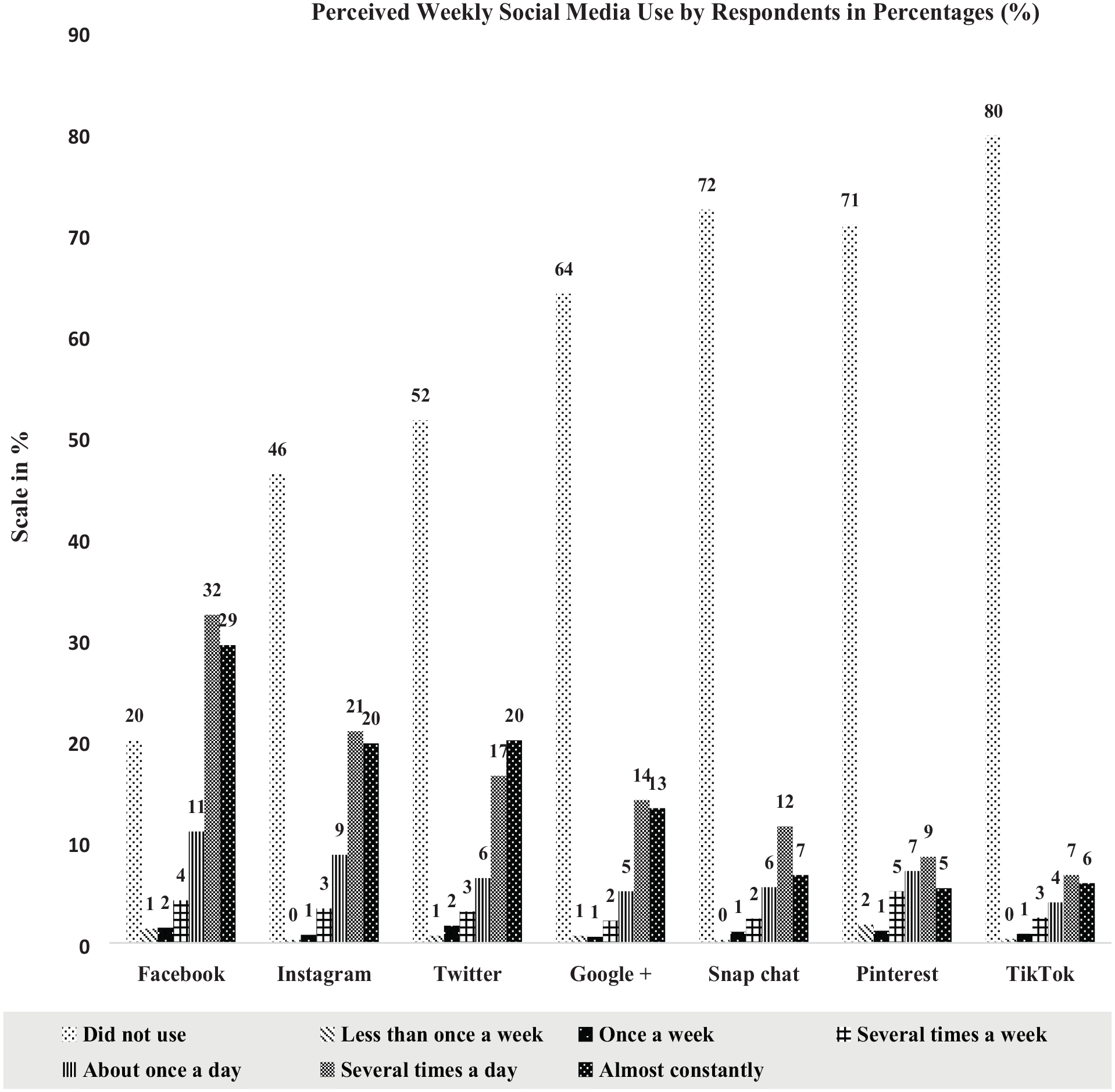
Respondents’ perceived weekly social media use (N = 1,048).
Respondents’ Social Connections on Social Media
When examining the groups with whom respondents communicated on social media when their states were under shelter in place orders the most, 81.2% indicated they communicated primarily with friends, followed closely by family (80.8%). The smallest percentage of respondents (20.2%) indicated that they used social media to connect with celebrities (see Table 4).
Groups of People Connected with Through Social Media (N = 1,048).

When social connections were examined across social media platforms, respondents primarily connected with friends (72%) and family (72%) via Facebook (see Table 5). Likewise, the few people who connected with celebrities did so primarily via Facebook (19%), Instagram (18%), and Twitter (18%) in comparison to Google+, Snap Chat, Pinterest, and TikTok (see Table 5).
Social Connections by Social Media Platforms Used (N = 1,048).

Variability in Social Connections and Social Media Use
A chi-square test of independence was used to identify statistically significant associations between social connections and social media use. Chi-square tests of independence were significant for Facebook, Instagram, and Twitter with large Cramer’s V values (Cohen, 1988). Facebook use during the COVID-19 pandemic was statistically and significantly associated with social networks, α = .05, χ2(6) = 385.62, p < .001, Cramer’s V = .607. Social networks consisting of family, friends, colleagues, those with valued opinions, celebrities, family and friends, and family friends and colleagues were the most frequent users of Facebook. Instagram use was statistically and significantly associated with communication networks during the COVID-19 pandemic, α = .05, χ2(6) = 295.07, p < .001, Cramer’s V = .531. On Instagram, connections of family, friends, colleagues, opinion leaders, and celebrities received the most use, followed by connections of families, friends, and colleagues. Snapchat use was significantly associated with social networks during the COVID-19 pandemic, α = .05, χ2(6) = 117.50, p < .001, Cramer’s V = .335. Snapchat also received the most use with the connections of family, friends, colleagues, opinion leaders, and celebrities than other connection types. Twitter use during the COVID-19 pandemic was also statistically significantly associated with social connections, α = .05, χ2(6) = 325.41, p < .001, Cramer’s V = .557. Again, social networks of family, friends, colleagues, opinion leaders, and celebrities received the most use on Twitter. Last, TikTok use was statistically and significantly dependent on social connections, α = .05, χ2(6) = 135.76, p < .001, Cramer’s V = .360 (see Table 6).
Chi-Square Association of Respondents’ Social Connections and Social Media Use During COVID-19 (N = 1,048).
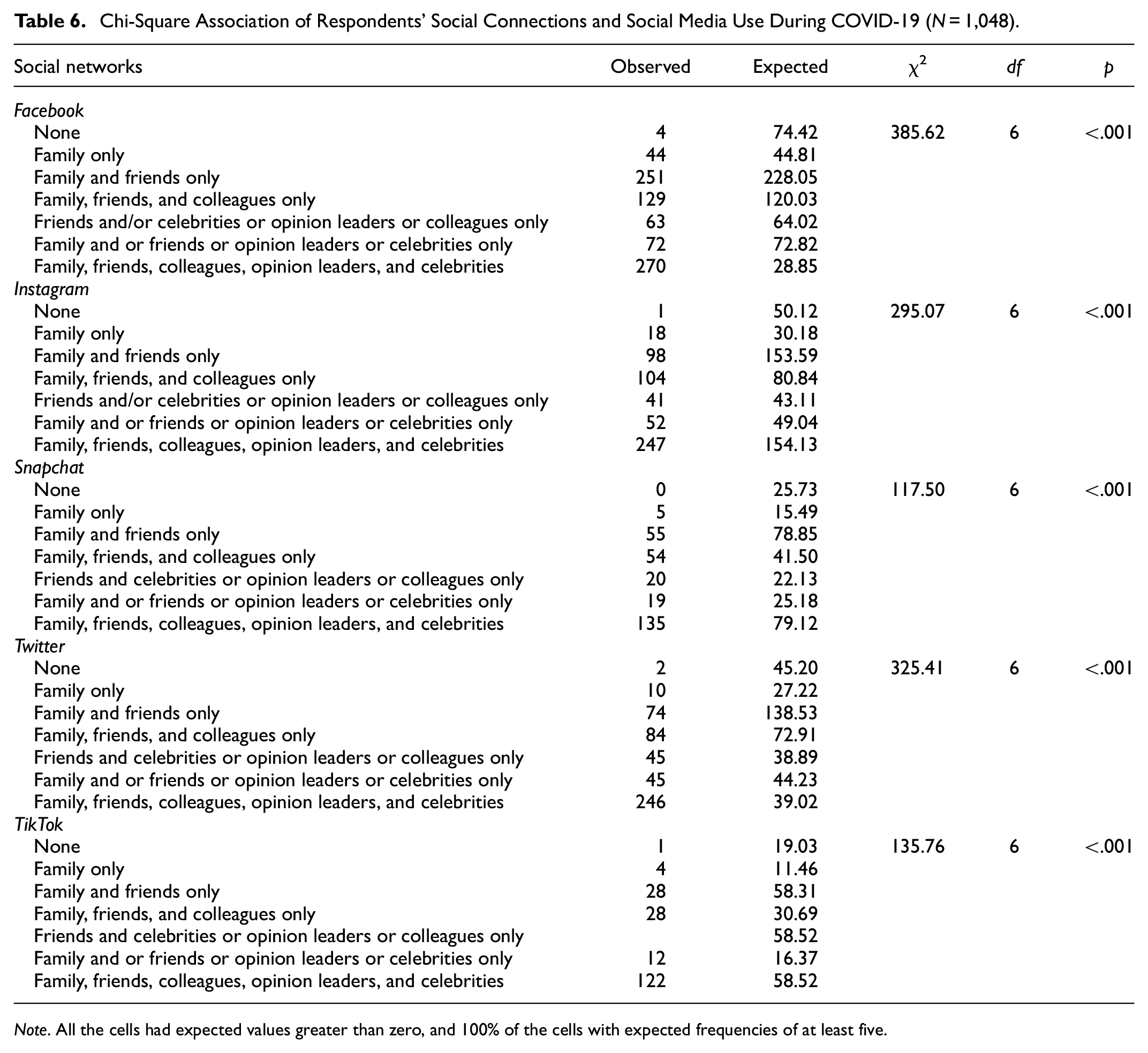
Note. All the cells had expected values greater than zero, and 100% of the cells with expected frequencies of at least five.
Conclusions and Discussion
The results indicated that over 70% of the respondents felt overwhelmed, were unable to access or interpret additional information, and did not want to read or hear news about COVID-19. In a crisis such as COVID-19, research has shown that people receive massive amounts of conflicting digital news and, in the process, change their attitudes and behaviors (McClain, 2017). To some extent, people may also avoid helpful information during a crisis if they are overwhelmed (Case et al., 2005). Krikelas’ (1983) theory postulates that information-seeking behavior begins with a desire to close a knowledge gap and ends when the gap is closed. Drawing from Krikela’s theoretical suppositions, respondents in this study might have stopped consuming COVID-19-related information after determining they had consumed enough to find the answers or solutions. Another possibility is that massive amounts of COVID-19 information from multiple sources heightens perceptions of danger and fear (Soroya et al., 2021).
Research indicates that people tend to avoid seeking additional information when they become aware of the influx of fake and genuine news on social media platforms, highlighting the impact of unverified information streams (Soroya et al., 2021). In the case of COVID-19, other than the challenges posed by the pandemic, the public also had to confront an insidious infodemic characterized by a wave of false information, intensifying the existing confusion and uncertainty (Allahverdipour, 2020). In support of this, Madziva et al. (2022) argue that the surge of COVID-19 misinformation generated confusion and eroded trust in health authorities, undermining the collective ability to respond to the pandemic effectively. Madziva et al. (2022) added that individuals are often left adrift in a chaotic information landscape, grappling with the challenge of navigating through obscure channels in their quest for dependable sources and authoritative guidance during a crisis.
Despite respondents avoiding COVID-19 information in the present study, they still accessed various social media platforms in large numbers, which corroborated prior research evidence that Americans actively seek information during a crisis (De Choudhury et al., 2014; Jacobs et al., 2017; Zhang, 2014). The proportionate use of social media during this time indicates that people sought information from numerous sources for many reasons, such as those shown by Soroya et al. (2021), possibly to alleviate anxiety, make sense of the situation, and learn possible countermeasures during a crisis. Mayer et al. (2007) found that the more people encounter life-threatening situations such as illnesses, the more they seek relevant information, partly explaining the high number of social media users in this study.
The present study showed that people used Facebook, Instagram, and Twitter more than other social media platforms examined in this study. However, Facebook received the highest public use during the COVID-19 lockdowns, supporting prior researchers who found it to be the most utilized information source during a health pandemic (Ahmad & Murad, 2020; McClain, 2017; Saud et al., 2020; Shearer & Mitchell, 2021). Similar to the present study, these scholars did not explore much about the type of information sought. However, Saud et al. (2020) indicated that friends and families utilized digital news platforms, including Facebook, to share social distancing experiences, curb the virus, boost their immune systems, and extend help. Similar to the present study, respondents in Saud et al.’s (2020) study used Facebook most to connect with friends and family during the COVID-19 pandemic lockdown. Previously, Dijck (2013) reported that people use Facebook primarily for personal relationships. Additionally, research has shown that Facebook attracts people who share similar interests (K. W. Lamm et al., 2019).
The findings of the current study revealed that while Instagram and Twitter had a relatively smaller user base compared to Snapchat, Pinterest, and TikTok, they still surpassed these platforms in terms of usage, aligning with Ahmad and Murad’s (2020) previous research that highlighted lower usage of these digital news platforms in comparison to Facebook. Additionally, the level of Instagram and Twitter usage confirmed the findings of a study conducted during the Zika virus crisis by Lee and Jin (2019), which identified Instagram and Twitter as primary sources of information for the U.S. public.
Moreover, the chi-square tests conducted in the present study indicated a significant association between the diversity or extent of respondents’ social networks and their usage of social media platforms. In other words, individuals with more diverse or extensive social networks tended to utilize social media platforms to a greater extent.
Recommendations
Recommendations for Practitioners
The findings from this study echo the need to develop and implement targeted communication strategies to manage and disseminate critical information during crises, considering the potential for information overload and avoidance. A well-thought-out communication plan could help combat the effects of fake news and deliberate misinformation on popular digital platforms while increasing public trust and the adoption of science-based information regarding a crisis.
Similarly, researchers, science communicators, and health experts should join forces and create guidelines to help social media platforms vet and filter news related to crises, ensuring the credibility and reliability of information shared with users. Message targeting could enhance public trust, utility, and interest in what is communicated (Stone et al., 1999). Besides, there is need for open dialogue and respectful debate spaces to enhance critical awareness. Health officials could facilitate discussions through livestreams, where participants can exchange ideas, challenge assumptions, and evaluate evidence. Encouraging diverse voices and perspectives could help individuals develop critical thinking skills and effectively deal with infodemic by exposure to different knowledge and viewpoints.
Insights from this study should be utilized to inform the design of public health interventions and strategies, ensuring that relevant information is effectively communicated to diverse audiences through their most preferred channels. During a pandemic, making informed decisions about which social media platforms to use and with whom to connect requires scientific and health communicators to think beyond their usual corporate or government channels. It becomes crucial for these communicators to identify and utilize preferred communication channels during a crisis. The present study found that people tend to connect more with those to whom they have personal ties on Facebook. This implies that science and health communicators should reconsider their approach to sharing credible health-related news on their existing social media networks to reach broader public segments.
As mentioned earlier, a recommended strategy for science and health communicators is to share their organization’s health-related news through their personal Facebook accounts and encourage their social connections to adopt and share the information within their networks. By leveraging these social networks, communicators can tap into established connections and trust while minimizing the spread of misleading information. Many scientists have friends and family on Facebook who hold their opinions in high regard, making it likely that scientific messages shared on their personal pages will be trusted and believed. In essence, by utilizing social networks in this manner, science and health communicators can harness the power of personal connections to effectively disseminate accurate and reliable information during a pandemic.
In addition, science communicators and policy-makers should consider adopting a proximate structure for disseminating information to the public through live-streaming events. For example, Facebook Live allows for one-on-one communication and greater public engagement while minimizing the probability of selective exposure to health or crisis-related messages (Stone et al., 1999). The communication process via Facebook Live emphasizes a two-way information flow that can enhance cognitive consistency and agreement on crisis-related information (Stone et al., 1999).
Recommendations for Future Research
Much needs to be explored to understand fully why and how people use social media during a crisis. Researchers should conduct in-depth studies on the type of information sought on various social media platforms during health crises and how individuals use this information to make sense of the situation and alleviate anxiety. Key informant interviews or focus groups could further elucidate how social media platforms can be best utilized in the future to communicate science and health information during a crisis.
Future research should examine the influence of fear and perceived danger on information-seeking behavior, particularly in the context of an unvetted stream of fake and real news on social media platforms during a crisis such as the COVID-19 pandemic. Specifically, researchers should conduct in-depth studies on the type of information sought on various social media platforms during health crises and how individuals use this information to make sense of the situation and alleviate anxiety.
There is a need to research the motivations that drove the high usage of Facebook, Instagram, and Twitter during the COVID-19 pandemic. This research should explore the differences in social media usage patterns and focus on understanding the reasons behind the popularity of specific platforms such as Facebook, Instagram, and Twitter.
Furthermore, communication scholars and other relevant stakeholders should conduct proactive research to identify the best anti-pseudoscience and disinformation measures in the most affected sectors to ensure they are prepared when a health concern occurs. While many new questions emerged as a result of this exploration into the use, social dynamics occurring across social media platforms, and concerns during the COVID-19 shelter-in-place orders, the findings provide insights into what channels were being used the most and how they were being utilized to guide communication strategies now and into the future.
Footnotes
Acknowledgements
There are no acknowledgments to address for this manuscript.
Declaration of Conflicting Interests
The author(s) declared no potential conflicts of interest with respect to the research, authorship, and/or publication of this article.
Funding
The author(s) disclosed receipt of the following financial support for the research, authorship, and/or publication of this article: The research presented here was funded by USDA NIFA Hatch Project #1021735. Any opinions, findings, conclusions, or recommendations expressed in this publication are those of the author(s) and do not necessarily reflect the views of the National Institute of Food and Agriculture or the United States Department of Agriculture.
Ethical Approval
The research design was approved by the University of Georgia Institutional Review Board (IRB # 00006482)
