




Abstract
This research aims to determine university students’ health literacy level and to investigate its relationship with physical activity level and sleep quality. Turkey Health Literacy Scale-32 questionnaire was used to examine health literacy levels, taking into account sociodemographic and academic variables physical activity levels were measured using the “International Physical Activity Survey Short Form,” and sleep quality was assessed using the “Pittsburgh Sleep Quality Index.” The study included 417 students with an average age of 24.9 years. Among them, 50.1% were enrolled in occupational therapy programs, 26.4% in physiotherapy programs, 11% in other health-related fields, and 12.5% in non-health-related fields. 19.7% of participants were classified as proficient in health literacy. It was found that physiotherapy students had significantly higher health literacy scores compared to students studying occupational therapy and those in non-health-related departments (p1:.026; p2:.021; p < .05). Physiotherapy students achieved the highest results, excelling in the healthcare subfield compared to their scores in disease prevention and health promotion. A statistically significant relationship was found between health literacy, physical activity level and sleep quality (p < .05). Including health literacy courses in the curriculums of university students, especially those studying in health departments, can be very beneficial both for their health and for setting an example as a role model for society.
Introduction
COVID-19, the novel coronavirus disease, was first identified in China in late 2019. It rapidly spread worldwide, leading to a global epidemic, and was declared a pandemic by the World Health Organization on March 11, 2020 (World Health Organization, 2020). Countries implemented various measures to reduce the spread of the COVID-19 epidemic and protect people from the virüs. In many countries, it was decided to transition to distance learning (online education) as a means to prevent the further spread of the virus among students (Wang et al., 2020). Many countries decided to transition to distance learning (online education) to prevent further spread among students (Wang et al., 2020). This shift, along with extended curfews, dramatically restricted the outdoor activities of university students, interrupting their education and training routines. For this reason, students’ daily routine activities, including regular physical activity and sleep patterns have changed (Ercan & Keklicek, 2020; Ercümen, 2020).
Health Literacy (HL) refers to an individual’s cognitive and social skills to access, understand and use health information to protect and enhance their health (WHO, 2021). Health literacy is highlighted as a multidimensional concept closely linked to general literacy. It involves individuals’ knowledge, motivation, and competence in accessing, understanding, evaluating, and applying health information to make informed decisions about healthcare, disease prevention, and health promotion in their daily lives (Sørensen, 2020). In northeastern Spain, the percentage of the population with inadequate levels of health literacy is 10.3% and the percentage with problematic levels of health literacy is 5.1% (Garcia-Codina et al., 2019). It was determined that 93% of 224 students enrolled in the Faculty of Science and Health Sciences in Asia had insufficient health literacy (Runk et al., 2016). A study conducted in Turkey concluded that 29.3% of nursing students had insufficient health literacy and it was emphasized that health literacy should be integrated into the curriculum of nursing students (Ozen et al., 2019).
During the pandemic, a vast amount of accurate and inaccurate information about COVID-19, including protective measures and expert advice, was disseminated through digital sources such as the internet and social media (Dwivedi et al., 2020; Paakkari & Okan, 2020; Sørensen, 2020). Therefore, the effectiveness of the pandemic may be greater because people with low health literacy have insufficient knowledge and awareness levels and are not effective in adopting protective behavior (Sentell et al., 2020). A study presenting an opposing view revealed that individuals have the potential to exhibit sufficient and quality health literacy, use resources correctly and obtain information and that they can make accurate plans about their health with reliable and accurate information, especially in restrictive environments during the pandemic (Okan et al., 2020). Health literacy can be considered an important action tool in public health practices to counter the negative effects of the epidemic (Okan et al., 2022). While academics investigate the economic and political effects of pandemics and health crises on personal, social and community life, they also emphasize the need to discuss how university students face the challenges brought by information and epidemics and how this affects their knowledge (Dadaczynski et al., 2021). Studies conducted in European countries such as Germany (Dadaczynski et al., 2021) and Slovenia (Vrdelja et al., 2021) have shown that almost half of students have difficulty judging the reliability of digital information. A study conducted in Germany found that 58.5% of university students had limited HL (Dadaczynski et al., 2021).
Physical activity is defined as physical movements that cause energy expenditure, such as housework, shopping, walking, cycling, dancing, and yoga (Mattioli & Ballerini Puviani, 2020). In order to prevent the spread of the epidemic, most of these activities were banned in Turkey, as in other countries. Extended curfews were implemented. Literature has shown that physical activity is crucial during the pandemic due to its short- and long-term benefits on morbidity and immunological factors, as well as its role in reducing stress and improving mental health (Adıgüzel et al., 2021; Burtscher et al., 2020; Yuan et al., 2022). The COVID-19 pandemic and related measures have negatively affected young people’s behavior regarding physical activity. Physical activity and sedentary time/behavior estimates have become a major public health issue, further exacerbated by restrictions implemented to control COVID-19 (Knight et al., 2021; Yuan et al., 2022). In particular, the deterioration in students’ physical activity levels varied depending on the duration, location and severity of the measures.
Sleep problems may occur due to many factors experienced during the pandemic (Çitak & Pekdemir 2020; Dinler et al., 2020). Physical inactivity and poor sleep quality have been found to have detrimental effects on various aspects of health, with a 20% to 30% higher risk of death among sedentary individuals (Ercan & Keklicek, 2020; Yorguner et al., 2021). Unfortunately, current research shows that there is a widespread lack of interest in physical exercise and sleep quality, which are essential for maintaining a healthy lifestyle. During Covid 19 in Turkey, factors such as limited space, social constraints and technological distractions contribute to reduced sleep levels and physical activity among young people (Alaca et al., 2022; Dinler et al., 2020; Ercan & Keklicek, 2020). This decline is particularly concerning among college students, as physical activity not only affects mental well-being but also impacts academic performance and cognitive functioning (Çıtak & Pekdemir, 2020; Ozdemir & Kızıl, 2022). Health behavior among young adults affects life expectancy as well as lifelong health and well-being (Alaca et al., 2022; Dinler et al., 2020). Considering the crucial role of higher education in shaping future opportunities, it is essential to understand and intervene to address the sleep and physical activity levels of university students in health-related fields. However, research assessing physical activity and sleep levels among students in health-related majors has shown concerningly low levels of activity and suggests that interventions are needed to promote healthier behaviors (Alaca et al., 2022; Kızkın et al., 2022; Uysal et al., 2020). Therefore, exploring predictors and modifiers of youth health behavior is an important step toward effective early prevention of poor health outcomes. Since health literacy is “the combination of personal competencies and situational resources needed for people to access, understand, evaluate and use information and services to make decisions about health,” this means that the level of health literacy of students studying in health schools is important for the capacity to communicate, assert, and act on these decisions (Peksoy Kaya & Kaplan, 2020). Their high level of health literacy constitutes their individual competence and capacity. It is important for students who will work in the health field to guide their patients toward healthy behaviors. Low health literacy is associated with poor health outcomes and affects the effectiveness of self-management interventions. Therefore, the aim was to investigate the relationship between physical activity, sleep quality and health literacy among students studying in the health field in Turkey. There is limited research addressing other factors such as healthy lifestyle factors (diet, alcohol, smoking, sleep and physical activity). This represents an important gap in knowledge, as a better understanding of the relationship between these factors and health literacy would provide critical information for the development of targeted interventions to increase physical activity level and sleep quality. The results of this study provide critical insight into healthy lifestyle determinants, which is important in reviewing and revising interventions to increase healthy behaviors and improve quality of life (Alp et al., 2020; Uysal et al., 2020).
The study focused on the relationship between physical activity levels, sleep quality, and health literacy in university students, as well as the impact of health literacy on physical activity and sleep quality.
Methods
Design
A total of 417 students, aged between 18 and 25 and enrolled in both health-related and non-health-related departments, including physiotherapy, occupational therapy, and other fields, from faculties, high schools, and vocational schools of two universities, participated in this descriptive research project between November 21 and December 21, 2020. Participants were recruited using the snowball sampling method. The principal researcher, who is also the students’ advisor, held an online group meeting during counseling hours to inform the students about the study. The principal researcher prepared an online questionnaire and sent it to the students via mobile phones and e-mails. All participants were informed about the purpose and procedure of the study before the evaluation. Access to the questionnaire database remained open for 4 weeks and data were collected from individuals who agreed to volunteer. Information was shared in student WhatsApp groups belonging to different departments. While volunteering young students aged between 18 and 25 were included in the study, students who had cognitive or neurological disorders or those who did not accept to be a part of the study were excluded from the study.
Sample
Sample size calculation was done with the G*Power 3.2.9.4 package program. The software tool G*Power (Version 3.2.9.4) was used for the purpose of determining the appropriate sample size in this research (Faul et al., 2007, 2009). The number of participants required for the study was calculated as 417 with medium effect size, Type I error, and 90% power.
Ethical Considerations
The required ethics committee approval was obtained before initiating the project. The study was conducted in compliance with the Helsinki Declaration (Nguyen et al., 2020).
Data Collection Tools
The TPAS can be reported either in categories (low, moderate, or high activity levels) or as a continuous variable (MET minutes per week) for continuous monitoring. MET minutes represent the amount of energy expended by a person during physical activity. One MET is the energy expended at rest. Walking is considered to be 3.3 METs, moderate physical activity is 4 METs, and vigorous physical activity is 8 METs. For example, if a student reported walking for 40 min, 6 days a week, the Walking Score (MET minutes/week) would be 3.3 × 40 × 6 = 792 MET minutes per week. The TPAS is obtained by summing the MET minutes for walking, moderate activity, and vigorous activity.
Students with TPAS ≥ 3,000 are assigned to the high activity category. Physical activity levels were classified as physically inactive (<600 MET-min/week), low physical activity (600–3,000 MET-min/week) and adequate physical activity (>3,000 MET-min/week).
Statistical Analysis
Mean and standard deviation (Mean ± SD) for continuous data and frequency and percentage for categorical data were used as descriptive statistics. The compatibility of continuous data with normal distribution was checked by Kolmogorov-Smirnov test. The distribution of continuous variables that conformed to the normal distribution in two groups were compared with Student’s t test and those that did not conform to the normal distribution were compared with Mann-Whitney U test. The distribution of continuous variables that fit the normal distribution in three or more groups was tested with One-way ANOVA and those that did not fit the normal distribution were tested with Kruskal-Wallis test. Dunn-Bonferronni test was used to find the source of the significant difference. The relationships between variables were evaluated by Spearman correlation analysis.
Linear Regression analysis was applied with Stepwise variable selection method to obtain the prediction model. Among the assumptions of Linear Regression; conformity to normal distribution was examined by Kolmogorov-Smirnov test and linear relationship was examined by Scatter Plot. To evaluate the adequacy of the model; Goldfeld-Quandt test was used for homogeneity of variance (homoscedasticity), Durbin-Watson test was used for autocorrelation between errors, and Variance inflation factor (VIF) was used for multicollinearity. Effective and distant observations were examined with Cook’s distance and Covariance Ratio, and extreme outlier observations were examined with standardized residual plots. The conformity of the errors to the normal distribution was determined by the Kolmogorov-Smirnov test of the standardized residuals. IBM SPSS 21 (IBM SPSS Inc, Chicago, IL) package programs were used for data evaluation. Statistical decisions were made according to .05 significance level (Göktaş et al., 2025).
Table 6 shows the results of the linear regression analysis using the Backward Elimination variable selection method. The Kolmogorov-Smirnov test of the standardized residuals showed that the errors were normally distributed. The Goldfeld-Quandt test (p = .462) showed that there was no heteroscedasticity and the Durbin-Watson test (D-W = 2.01, p = .992) showed that there was no autocorrelation between the errors (Fox & Weisberg, 2019). Five extremely distant and influential observations (observations 119, 221, 225, 331, and 393) were removed from the data set. The model found as a result of the linear regression analysis performed with the remaining 142 observations in the data set was statistically significant and no multicollinearity was found (VIF < 10; Field, 2013). In Göktaş’s study, distant observations were similarly examined using Cook’s distance values, and unlike in our study, two extreme and influential observations (observations 51 and 64) were removed from the dataset (Göktaş et al., 2025).
Results
Participant Rate
The study included a total of 417 university students, comprising 72 males (17.3%) and 345 females (82.7%), aged between 17 and 25. Among the participants, 62.4% were in their first year, 27.6% in their third year, and 10.1% in their fourth year.
Descriptive Information
It was determined that among the 417 students, 20.9% had inadequate health literacy, 41% had problematic-limited health literacy, 19.7% had adequate health literacy, and 18.5% had excellent health literacy. The study found that 60 participants (14.38%) had an adequate level of physical activity, 194 participants (46.5%) had a low level of physical activity, and 163 participants (39.1%) were not physically active. The average total PSQI score of the participants was 8.67 ± 3.79, indicating that, in general, the participants had poor sleep quality (Table 1).
Minimum, Maximum, Mean, Standard Deviation and Median Values of the Scale Scores.
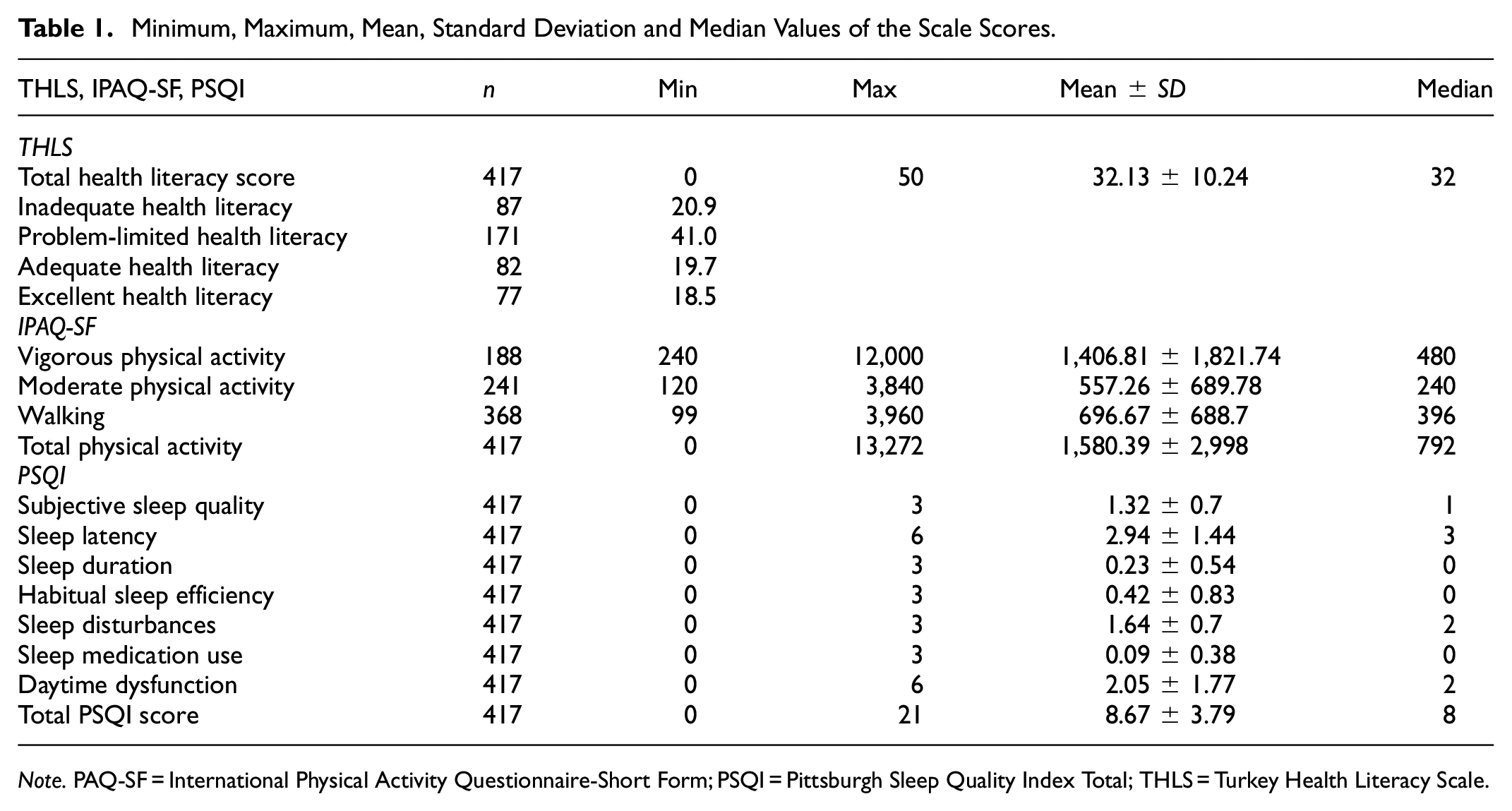
Note. PAQ-SF = International Physical Activity Questionnaire-Short Form; PSQI = Pittsburgh Sleep Quality Index Total; THLS = Turkey Health Literacy Scale.
Comparison of the Score by Groups
There is no statistically significant difference in the total health literacy scores between male and female students (p = .978). A significant difference was found in the physical activity levels of male and female students (<.05).
Male students had significantly higher total physical activity scores (p = .015), moderate physical activity levels (p = .024), and vigorous physical activity levels (p = .021) compared to female students. Female students had significantly higher sleep latency scores (p = .012) and sleep disorder scores (p = .000) than male students. Conversely, male students had significantly higher sleep duration scores than female students (p = .003; Table 2).
Evaluation of Total THLS Score and IPAQ-SF and PSQI Scores According to Gender.

Note. Mann Whitney U Test *p < .05. IPAQ-SF = International Physical Activity Questionnaire-Short Form; PSQI = Pittsburgh Sleep Quality Index.
There is a statistically significant difference in health literacy scores based on the department (p = .045). The health literacy scores of physiotherapy students were significantly higher than those of students in occupational therapy (p = .026) and non-health-related departments (p = .021). However, there is no statistically significant difference in the IPAQ-SF total scores according to the department (p = .455; Table 3).
Evaluation of Total THLS Score and IPAQ-SF and PSQI Scores by Departments.

Note. Kruskal Wallis Test *p < .05. IPAQ-SF = International Physical Activity Questionnaire-Short Form; PSQI = Pittsburgh Sleep Quality Index.
There is a statistically significant difference in the daytime PSQI total scores according to the department (p = .005). Students in non-health-related departments had significantly higher PSQI total scores than those in Ergotherapy, Physiotherapy, and other Health departments (p = .023, p = .017, p = .006, respectively; Table 3). Additionally, there is a statistically significant difference in sleep latency scores according to the department (p = .001). Students in other health-related departments had significantly lower sleep latency scores compared to those in Occupational Therapy, Physiotherapy, and non-health-related departments (p = .001, p = .048, p = .007, respectively; Table 3).
Health literacy scores differed significantly by class level (p = .001). First-year students had significantly lower health literacy scores compared to third and fourth-year students (p = .001, p = .021). Additionally, there was a significant difference in moderate physical activity scores by class (p = .008). Third-year students had significantly higher moderate physical activity scores compared to first and fourth-year students (p = .005, p = .018).
Third-year students had higher total physical activity scores and health literacy scores compared to other grades. There is a statistically significant difference in total physical activity scores by class (p = .043), with third-year students scoring significantly higher than first and fourth-year students (p = .031, p = .036). However, there are no statistically significant differences in PSQI sub-dimension component scores and PSQI total scores by class (p > .05; Table 4).
Evaluation of Total THLS Score and IPAQ-SF and PSQI Scores According to Grades.

Note. Kruskal Wallis Test *p < .05, Moderate MET m/w, Vigorous MET m/w, Walking MET m/w, Total MET m/w. IPAQ-SF = International Physical Activity Questionnaire-Short Form; PSQI = Pittsburgh Sleep Quality Index.
Correlation Analysis Results
There is a positive, but statistically weak correlation between health literacy total score and walking physical activity score (r = .126, p = .016). A positive, weak but statistically significant correlation was found between health literacy total score and total physical activity score (r = .115, p = .024). There is an inverse, weak (r = −.128 p = .009) relationship between health literacy total score and subjective sleep quality score, and an inverse, weak (r = −.215 p = .000) but statistically significant relationship between health literacy total score and daytime dysfunction score. A negative, weak (r = −.134, p = .006) but statistically significant correlation was found between the total health literacy score and the total PSQI score (p < .05; Table 5).
Correlation of Total THLS Score and IPAQ-SF and PSQI Scores.
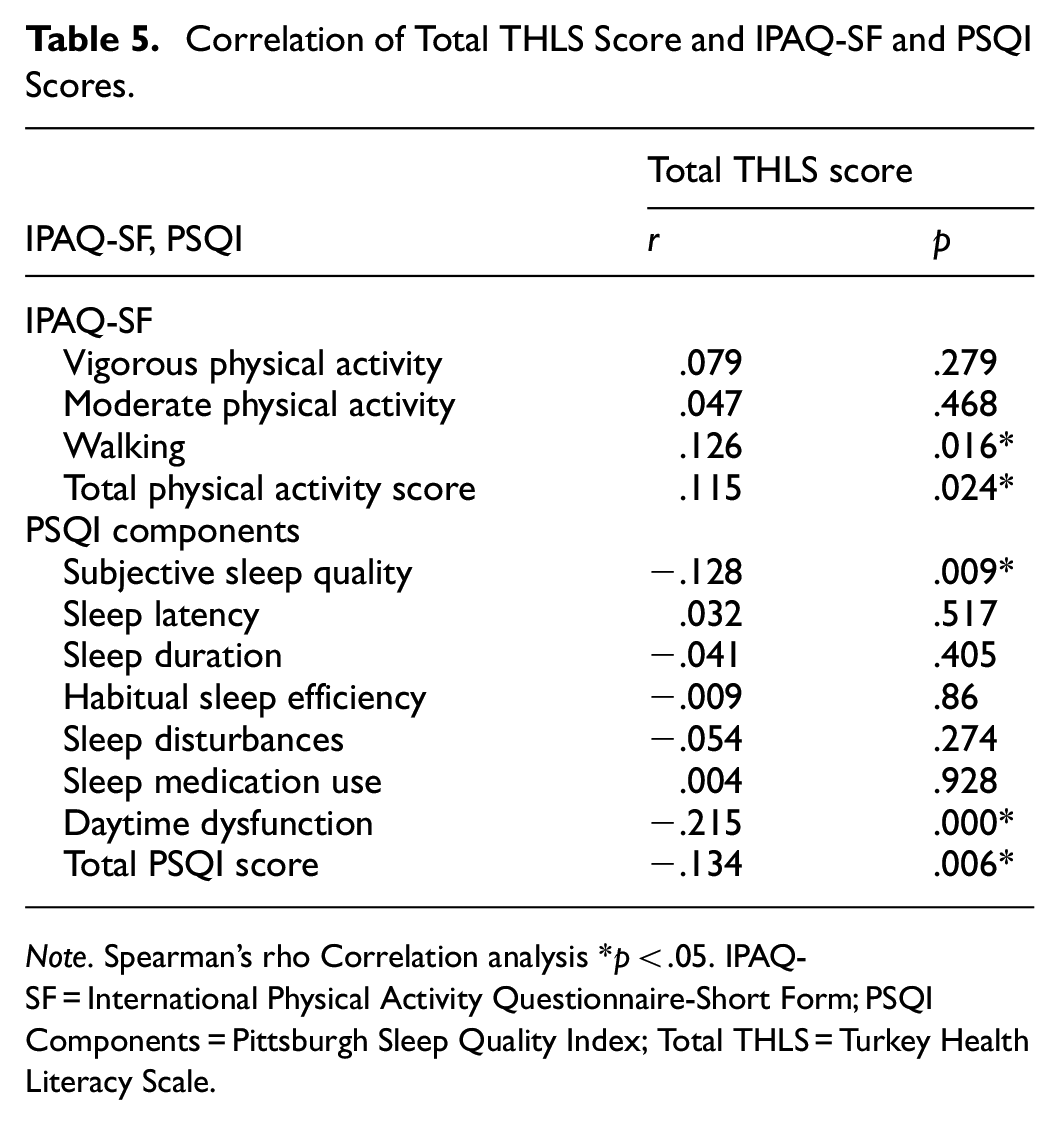
Note. Spearman’s rho Correlation analysis *p < .05. IPAQ-SF = International Physical Activity Questionnaire-Short Form; PSQI Components = Pittsburgh Sleep Quality Index; Total THLS = Turkey Health Literacy Scale.
Regression Analysis Results
Physical activity explained 1.2% of the total variance. In other words, the dependent variable (Physical activity) is explained by the independent variable (Health Literacy) included in the model. According to the standardized regression coefficients (β), a 1 unit increase in Health Literacy level causes an 11.0% increase in physical activity. When the t-test results regarding the significance of the regression coefficients are analyzed, it is observed that Health Literacy has a significant and positive effect on physical activity.
Sleep quality explained 1.2% of the total variance. According to the standardized regression coefficients (β), a 1 unit increase in Health Literacy level causes a 10.8% increase in Sleep quality. When the t-test results regarding of the regression coefficients are considered, it is observed that Health Literacy has a negative effect on Sleep quality score (Jobson, 1991; Table 6).
Multiple Linear Regression Analysis Results of Nothimgam Score.

Note. THLS = Turkey Health Literacy Scale; IPAQ-SF = International Physical Activity Questionnaire-Short Form; PSQI = Pittsburgh Sleep Quality Index.
Discussion
This study aimed to determine the health literacy levels of health sciences university students during the pandemic and investigate its effects on physical activity and sleep quality. The results indicated that more than half of the participating students had limited or problematic health literacy, low physical activity levels, and poor sleep quality.
Health literacy, which includes steps such as reading, analyzing, and applying health-related information, has gained special importance during the pandemic process. A recent study found that digital health literacy and health information behaviors reduced pandemic-related fears and improved student well-being during university quarantines in 45 countries (Dadaczynski et al., 2021). Another study in Denmark reported that over half of the university student participants had sufficient digital health literacy (Bak et al., 2022). The ability of university students with high health literacy and eHealth literacy to more actively adopt COVID-19-related health behaviors highlights the significance of health literacy (Tran et al., 2022). Conversely, some studies indicate a higher prevalence of students with limited health literacy (LHL). For example, it has been noted that a significant number of college students in the United States have limited health literacy, with most university students in the USA (Patil et al., 2021) and Germany (Dadaczynski et al., 2021) demonstrating limited health literacy, suggesting potential health issues. The COVID-19 pandemic has further emphasized the impact of limited health literacy, revealing how this problem is often underestimated globally (Do et al., 2020; Paakkari & Okan, 2020).
Health literacy should not be understood simply as a mental phenomenon or a set of skills, but as a set of social practices placed in a specific context (Pinheiro, 2021). It has been shown that individuals with high health literacy can more accurately distinguish the authenticity and accuracy of COVID-19-related information on media platforms and have more accurate information about health information in general (Baines & Elliott, 2020; Zarocostas, 2020). In Turkey, a study conducted with 905 students from nursing, law, and Islamic sciences departments found that 45% of the students had problematic levels of health literacy (Uysal et al., 2020). Another notable study on the revision and adaptation of health literacy according to current conditions identified a relationship between COVID-19 infection awareness, healthy lifestyle behaviors, and health literacy among nursing students. It was recommended that health literacy be adapted to daily life, considering the conditions of the pandemic, and updated information should be used for adaptation (Peksoy Kaya & Kaplan, 2020). During the pandemic, as daily routines were largely replaced by individual home activities and social interactions moved to digital platforms, students experienced significantly high levels of anxiety and distress about the various potential negative consequences of COVID-19. These concerns, alongside government policies, highlighted that health literacy is crucial in determining students’ knowledge about COVID-19, their attitudes toward the disease, and their adherence to health measures (Yorguner et al., 2021). The results of this study align with these findings, revealing that about half of the university students have problematic or limited health literacy. Surprisingly, students studying health-related fields differ from others in accessing and using health-related information. However, the sudden emergence of the COVID-19 pandemic, along with uncertainties and a lack of preparedness, affected all students. Given that these health students are likely to play active roles in the field of digital health in the future, it is crucial to emphasize health literacy in their education.
A study conducted in Portugal revealed gender differences, reporting that male university students had significantly lower health literacy levels (Rosário et al., 2020). During the pandemic, another study found that female students at the Faculty of Sports Sciences had significantly higher literacy in accessing, understanding, and evaluating information in the treatment and service sub-dimension compared to male students (Acar, 2023). In our study, no gender differences were found, as young people faced similar conditions during the pandemic. However, by the time of Acar et al.’s study in 2023, the uncertainty of the pandemic had subsided. It is possible that female students experienced more distress during the pandemic and became more attentive to their health status afterward.
The study emphasizes that the training healthcare professionals receive in health literacy can help them communicate more effectively and serve individuals with limited health literacy, which is an important point in line with our study (Kaper et al., 2020). In this study, the health literacy level of physiotherapy students was higher than occupational therapy and other non-health department students. This indicate that students can become more effective in both managing their health during the pandemic and guiding the groups they will serve in the future. In another study, where the health literacy of nursing students was high, the importance of the health literacy of healthcare professionals was shown, both in themselves and in the field they serve (Balmer et al., 2020). Health professional students should be considered as a relevant target group for health and health competence promotion from the beginning of their studies. The concepts of health literacy and e-health literacy should be considered in the context of health promotion. This is particularly important because aim is not only improving the well-being of students, but is also improving understanding of potential of healthcare workers who will then work directly with patients and thus have a direct impact on the health of others (Jürgensen et al., 2024). Evidence shows that healthcare providers equipped with health literacy and communication skills contribute positively to reducing barriers to health promotion and improving healthcare quality as well as patients’ health outcomes (Kaper et al., 2020; Tavakoly Sany et al., 2020). In a different study, it was shown that medical students with high health literacy were less afraid of COVID-19 (Nguyen et al., 2020). This shows that health literacy can be an important factor in overcoming uncertainties correctly and healthily during pandemic. Changes in physical activity, nutrition and sleep patterns have been revealed as the most salient variables during the pandemic (Altena et al., 2020; Galli et al., 2020).
The findings of a review demonstrating a decline in physical activity levels among university students in various countries during the pandemic align with the results of our study (López-Valenciano et al., 2020). Another comparable study reported a decline in regular physical activity rates among students. Additionally, it noted an increase in the number of students who do not participate in any physical activity beyond their daily routines (Ercan & Keklicek, 2020; Kosendiak et al., 2023). It was emphasized that social restrictions due to the CoViD-19 pandemic reduced PA among Italian undergraduate students. The positive association between active lifestyle before the pandemic and active lifestyle during quarantine was emphasized, therefore, it was stated that it is important to encourage active lifestyles at all times (Gallè et al., 2020). In a study involving university students studying sports and medicine, it was reported that the immobilization time of medical students during the pandemic was significantly higher than that of students studying sports (Souza et al., 2021). This may be due to the effect of the theoretical and practical curricula of students studying in the field of Sport, which are more intensively oriented towards physical activity.
It has been observed that the physical activity levels of university students from various departments have decreased due to the COVID-19 pandemic. Those who continue to engage in physical activity tend to prefer exercises that can be done at home (Ercan & Keklicek, 2020).
The literature indicates that male students tend to have higher physical activity levels than female students (Kosendiak et al., 2023). During the COVID-19 restrictions, it was reported that sedentary time among Chinese university students increased significantly, with female students experiencing higher levels of inactivity (Yu et al., 2022). In this study, it is believed that the physical activity of most individuals was negatively impacted during the isolation period, leading to a lack of motivation to engage in physical activities. A study on physical activity during the pandemic suggested that the stress experienced during quarantine reduced the motivation and readiness to engage in physical activities, creating a vicious cycle (Burtscher et al., 2020).
In Turkey, it was reported that students were less active and commonly experienced musculoskeletal disorders during the pandemic, with female students being more affected than male students (Kandemir et al., 2023). A study examining the relationship between physical activity level, gender, and BMI in healthy university students during the pandemic found decreases in vigorous, moderate, and walking activities, alongside an increase in sedentary behavior. Although not statistically significant, physical activity levels were found to be higher in males (Kızkın et al., 2022).
Consistent with the literature, this study found that male students had higher physical activity levels than female students. This result may be explained by the cultural characteristics of the country, where male students may have continued their exercise habits, which are important to them, despite social isolation. A study conducted on university students in Turkey during the pandemic reported that many students largely abandoned their normal physical activities, with some even ceasing physical activities in their daily routines. The study emphasized the need to increase students’ awareness of the importance of a healthy lifestyle (Ercan & Keklicek, 2020).
Evidence suggests that nursing students experienced mental health problems and sleep disorders during the COVID-19 pandemic, highlighting the need for effective strategies to manage their health during pandemics and similar periods (Mulyadi et al., 2021). During the pandemic, insomnia among students became particularly pronounced with the implementation of home isolation policies (Altena et al., 2020). A study revealed that although individuals increased their sleep duration, they experienced more sleep disturbances, and their overall sleep quality declined compared to pre-pandemic levels (Marelli et al., 2021; Ozdemir & Kızıl, 2022). The positive relationship between health literacy and behaviors such as physical exercise, diet, and sleep has been emphasized (Klinker et al., 2020). Social restriction measures during the COVID-19 pandemic have been observed to negatively impact sleep health, underscoring the importance of providing information on sleep health and sleep hygiene to the student population. Therefore, enhancing health literacy is considered one of the most crucial initiatives for improving sleep quality (Alp et al., 2020).
In this study, it was found that sleep quality, sleep duration, and daytime dysfunction were worse among students in non-health-related departments compared to those in Occupational Therapy, Physiotherapy, and other health-related departments. However, there were no significant differences between departments in terms of subjective sleep quality, sleep efficiency, sleep disturbances, and the use of sleeping pills. Providing health literacy training, particularly to students in non-health-related departments, could guide them in managing their health. In health-related departments, higher health literacy may have played a role in managing behaviors such as stress management, which is related to sleep quality.
In a study examining the sleep patterns, psychological states, and exercise habits of third-year nursing students taking the Public Health Nursing course during the COVID-19 pandemic, it was found that female students experienced significantly higher rates of decreased sleep quality, changes in sleep hours, and increased negative psychological reactions (Yüksel Kaçan et al., 2021). Another study revealed that 95.59% of student participants had significantly poor sleep quality, while only 4.41% had good sleep quality, with more sleep disorders observed in upper-grade students (Tan et al., 2023). As expected, in this study, female students exhibited higher sleep latency and sleep disorder rates compared to males. The lower physical activity levels among female students may have also negatively impacted their sleep performance.
A study on the inclusion of nursing faculty students in the health literacy curriculum reported that the health literacy rates of third and fourth-year students were higher than those of first-year students (Balmer et al., 2020). Similar findings were observed in another study conducted with nursing students (Ayaz-Alkaya & Terzi, 2019), which aligns with the results of this study. In this study, the health literacy of physiotherapy students was found to be higher than that of students in occupational therapy and other non-health-related departments. This may indicate that these students are better equipped to manage their own health and to guide the groups they will serve in the future during pandemics and similar situations. Additionally, it is encouraging that this outcome was achieved despite the absence of a specific health literacy program in the physiotherapy curriculum.
During the COVID-19 pandemic, it was found that 72.48% of students in the Physiotherapy and Rehabilitation (FTR) department had poor sleep quality, 27.43% were inactive, and only 22.82% engaged in sufficient physical activity. Although female students had a lower body mass index, their physical activity levels, time management abilities, and sleep quality were negatively affected, and they spent more time sitting compared to male students (Alaca et al., 2022; Dinler et al., 2020). When examining physical activity levels by grade, it was observed that the total and moderate-intensity physical activity levels of third-year students were higher than those of other grades. Given that the majority of participants in this study were health students, it was expected that those in their final year of education would adopt a healthier and more active lifestyle. However, upon completion of the study, it was found that the physical activity levels of first and fourth-year students were generally similar, and contrary to expectations, moderate-intensity physical activity levels decreased in the final year.
Health assessment and management are closely tied to access to health information. As individuals increase their health awareness, they can also improve their physical activity levels, which are fundamental for maintaining good health. While the findings of this study are related to previous research, they do not entirely align with earlier results. One key factor motivating students to engage in physical activity is their level of motivation, which is influenced by social and psychological factors. Consequently, social restrictions during the pandemic may have made it more challenging to engage in physical activity at home and, importantly, to take personal responsibility for it. One outcome of the pandemic is the realization that individuals can maintain physical activity despite physical restrictions. When physical activity is limited due to the pandemic or other reasons, creative and engaging strategies can be employed to encourage university students to participate in physical activity and share their experiences with others (López-Valenciano et al., 2020). Suggestions for home-based exercise on electronic platforms such as YouTube, Facebook, Twitter, and TV highlight the importance of home-based education (Dwyer et al., 2020).
Similarly, there is a strong relationship between health literacy and sleep quality. The pandemic has impacted various aspects of sleep, including latency, duration, efficiency, and overall sleep quality (Romero-Blanco et al., 2020; Xiao et al., 2020). The results of this study indicate that as students’ health literacy levels increase, so do their levels of physical activity and sleep quality. According to the regression analysis in this study, a 1-unit increase in health literacy leads to an 11% increase in physical activity participation and a 10.8% increase in sleep quality. The prevalence of poor sleep quality among university students in this study aligns with findings from other studies conducted in Turkey (Alp et al., 2020; Çıtak & Pekdemir, 2020). In studies consistent with our findings, it was observed that during the pandemic, the average time to fall asleep was about half an hour, and the average sleep duration exceeded 7 hr among university students. However, despite these sleep durations, the overall sleep quality of participants was generally poor (Alp et al., 2020). Among all participants, it was noted that as sleep duration increased, sleep quality and consistency decreased. Stress and lifestyle changes likely contributed to these shifts in young people’s sleep patterns. Decreased daytime activities and increased time spent on the internet are potential factors influencing changes in sleep duration. Given that a significant portion of the participants had below-average health literacy levels, improving health literacy could positively affect sleep-related variables.
Conclusion
The results of this study underscore the importance of integrating health literacy into educational programs focused on health services, disease prevention, and health promotion. Such integration is crucial for fostering both personal and social health. Developing strategies to enhance health literacy at the university level, and to strengthen attitudes and competencies toward health information, will significantly contribute to better personal and social health management. Consequently, further research is necessary to explore effective methods for incorporating health literacy into education. Health literacy should also be a key consideration in public health responses to pandemics and other potential crises.
Moreover, print and visual media, government institutions, civil society organizations, and academia should all play active roles in the development and implementation of health literacy policies. Addressing the unprecedented health, economic, and cultural challenges posed by the pandemic, and the potential future impacts on the health system and workforce, requires a multidimensional approach encompassing health information, services, promotion, and prevention.
For university students, particularly females, the social environment and motivation are essential factors in encouraging physical activity. Greater efforts should be directed toward developing strategies that raise awareness among students about the importance of participating in physical activity and reducing sedentary behavior. The findings of this study suggest that health literacy may be one of the most effective strategies for achieving these goals. Enhanced health literacy could have a positive impact on both physical activity and sleep quality.
Limitations
The current study has some limitations. First, the surveys used to assess health literacy, sleep quality, and physical activity levels were conducted in summary form. Future research could benefit from utilizing more detailed clinical rating scales for physical activity and sleep quality. Secondly, there were differences in the number of participants per group between men and women, which may have impacted the results. Additionally, the lack of significance in some of the analyses may be due to insufficient statistical power, as some groups had a low number of participants. Another limitation is that it remains unclear whether the observed changes in physical activity levels would be sustained if the quarantine period were extended.
Despite these limitations, this study has several strengths. Notably, it is one of the few studies examining the effects of health literacy on physical activity and sleep quality among university students in the health sciences, both before and during the pandemic.
Footnotes

Ethical Considerations
This study was performed in line with the principles of the Declaration of Helsinki. The study was approved by the İstanbul Okan University Health Sciences Research Ethics Committee with the decision no: 20, date: 1.11, 2020.
Consent to Participate
Written consent was obtained from the participants in accordance with the principles of the Helsinki Declaration.
Funding
The author(s) received no financial support for the research, authorship, and/or publication of this article.
Declaration of Conflicting Interests
The author(s) declared no potential conflicts of interest with respect to the research, authorship, and/or publication of this article.
Data Availability Statement
Data sharing not applicable to this article as no datasets were generated or analyzed during the current study.