




Abstract
With the rapid expansion and growing influence of global cross-border e-commerce trade, the significance of trade facilitation in this context has become increasingly evident. To comprehensively examine the specific pathways through which trade facilitation impacts cross-border e-commerce trade, this paper focuses on the cross-border e-commerce trade activities within China’s cross-border e-commerce trade comprehensive experimental zone. We employ the differences-in-differences method to analyze pertinent issues. The explanatory variables consist of the effects of trade facilitation policies, while the mediating variables encompass information technology capability and economic scale. The conclusions of this paper are as follows: (1) The implementation of trade facilitation measures within the cross-border e-commerce comprehensive experimental zone has been found to enhance the sustainability of cross-border e-commerce trade. (2) The development of information technology capabilities has proven to be beneficial for the growth of cross-border e-commerce trade. (3) Trade facilitation measures show a more pronounced impact on promoting cross-border e-commerce trade in regions with higher levels of economic development. Conversely, regions with lower levels of economic development exhibit a relatively weaker influence of trade facilitation on cross-border e-commerce trade. The conclusions are expected to offer valuable insights and guidance for governmental authorities and enterprises involved in cross-border e-commerce trade when making informed management decisions.
Plain language summary
With the rapid expansion and growing influence of global cross-border e-commerce (CBEC) trade, the significance of trade facilitation in this context has become increasingly evident. To comprehensively examine the specific pathways through which trade facilitation impacts CBEC trade, this study focuses on the CBEC trade activities within China’s CBEC trade comprehensive experimental zone. We employ the differences-in-differences (DID) method to analyze pertinent issues. In this study, the explanatory variables consist of the effects of trade facilitation policies, while the mediating variables encompass information technology capability and economic scale. The key findings of this study are as follows: (1) The implementation of trade facilitation measures within the CBEC comprehensive experimental zone has been found to enhance the sustainability of CBEC trade. (2) The development of information technology capabilities has proven to be beneficial for the growth of CBEC trade. (3) Trade facilitation measures show a more pronounced impact on promoting CBEC trade in regions with higher levels of economic development. Conversely, regions with lower levels of economic development exhibit a relatively weaker influence of trade facilitation on CBEC trade. The findings of this study are expected to offer valuable insights and guidance for governmental authorities and enterprises involved in CBEC trade when making informed management decisions. Research deficiencies: (1) This study is lack of a long-term perspective. (2) This study haven’t separated analysis of export and import trade. (3) This study doesn’t comparative study with other countries.
Keywords
Introduction
With the continuous expansion of global cross-border e-commerce (CBEC) trade, it has become a significant component of global trade. Particularly in the context of the Covid-19 pandemic, there has been a notable increase in the participation of individuals and businesses in CBEC trade. China, as the world’s largest trader of goods, has also witnessed the expansion of its CBEC trade due to its robust export capacity for industrial products and import demand. According to China Customs statistics, in 2021, China’s total CBEC trade volume reached 2.11 trillion yuan, marking a year-on-year increase of 9.8%. Among this, the export trade volume amounted to 1.55 trillion yuan, reflecting a year-on-year increase of 11.7%. Notably, China’s CBEC trade accounted for 5.1% of its total trade in goods, setting a new record in terms of this ratio. To foster the sustainability of CBEC trade, China has established 165 comprehensive experimental zones for CBEC trade as of December 2022. These zones serve as experimental urban areas with a comprehensive focus on CBEC (Jiang et al., 2021). The CBEC comprehensive experimental zones have been established with the aim of taking the lead in setting technical standards, business processes, supervision modes for CBEC transactions. In addition, the goal of these zones is also to set payment systems, logistics operations, customs clearance procedures, tax refund mechanisms, and foreign exchange settlement practices. These zones address the underlying contradictions in the development of CBEC and facilitate the creation of a complete industrial and ecological chain for CBEC. Moreover, they gradually develop a series of management systems and rules that are adaptable to the global CBEC landscape (Y. Xu et al., 2022). The establishment of these experimental zones provides valuable insights and experiences for promoting the healthy development of CBEC in China.
Given the relatively late start of China’s CBEC trade, the various policy guarantees associated with CBEC trade have become crucial. Specifically, the impact of trade facilitation management policies on CBEC trade has been increasingly evident (Abdulkarem & Hou, 2022). Trade facilitation aims to establish a coordinated, transparent, and predictable environment for international trade transactions. Moreover, it encompasses the simplification of procedures and formalities, the harmonization of applicable regulations, and the standardization of infrastructure (Dumor et al., 2021). Additionally, CBEC trade facilitation measures also include customs clearance facilitation, cargo transportation facilitation, and trade communication facilitation. It also includes trade dispute settlement facilitation and trade after-sales service facilitation. Furthermore, within China’s CBEC comprehensive experimental zone, the influence of trade facilitation on CBEC trade has grown increasingly significant (Luo, 2022). In this context, the authors want to further explore the impact of China’s trade facilitation on CBEC trade. Thus, this paper focuses on trade policies and CBEC trade activities within China’s CBEC comprehensive experimental zone and employs the differences-in-differences (DID) method for analysis.
The research objectives of this paper are as follows: (1) We want to reveal the impact patterns of trade facilitation on CBEC trade. The impact process of trade facilitation on CBEC is complex. Through theoretical and empirical research, we aim to comprehensively uncover the intricate impact process of trade facilitation on CBEC trade. (2) We hope to reveal the role of mediating variables. Relevant mediating variables would be introduced in this paper. During this study, the impact process of different mediating variables would also be revealed. (3) We plan to uncover the impact patterns of trade facilitation on CBEC trade under different control variables. The impact process of trade facilitation on CBEC trade varies under different control variables. This paper would further uncover the relevant impact patterns.
The marginal contributions of this paper are as follows: (1) This paper enriches the research content of CBEC trade issues. It contributes to the existing body of research on CBEC trade by combining the topics of trade facilitation and CBEC trade. Furthermore, it reveals the relationship and influence between these two factors. Previous studies have rarely explored this specific aspect, making it a valuable addition to the research content on CBEC trade. (2) This paper extends the application scenarios of relevant research methods. By employing the DID method, this paper expands the application scenarios for research methods in the field. The use of the DID method to examine the relationship between trade facilitation and CBEC trade is a novel approach that has not been extensively explored in previous studies. Consequently, it enhances the range of application scenarios for the DID method. (3) This paper offers valuable insights for management disciplines, aiding in informed decision-making. The findings of this paper could provide crucial support in enhancing the effectiveness of trade facilitation in China and promoting the long-term sustainability of CBEC trade. The proposed countermeasures could serve as a significant reference for optimizing regional management policies related to CBEC trade development. Moreover, these countermeasures could provide valuable guidance for other developing countries engaged in CBEC trade management activities.
The follow-up research structure is arranged as follows: (1) Literature review. Conduct a comprehensive review of existing literature on trade facilitation, CBEC trade activities, and their bilateral relations. (2) Research methods and data sources. Describe the research methods that would be employed in this paper, including the rationale for selecting these methods. (3) Empirical testing. This part performs various empirical tests to validate the robustness of the findings. These tests include parallel trend tests to assess the validity of the control group, fixed effects tests to account for unobserved heterogeneity, and representative area tests to ensure the generalization of the results. (4) Results. This part presents the empirical analysis, including the results obtained from the analysis. It also discusses the findings in detail and provides explanations for the observed outcomes. Additionally, this part conducts a mechanism analysis to explore the underlying mechanisms driving the relationship between trade facilitation and CBEC trade. Consider conducting a regional difference analysis to examine variations in the relationship across different regions. (5) Conclusions, practical implications and research deficiencies. This part summarizes the main conclusions, practical implications and the research deficiencies.
Literature Review
The Trade Facilitation
The term “trade facilitation” encompasses various aspects related to the simplification of trade procedures, cost reduction, and the acceleration of the flow of factors to enhance trade efficiency. Additionally, trade facilitation brings significant benefits to the participating countries. It primarily involves the implementation of relevant policies (Iwanow & Kirkpatrick, 2010). Furthermore, numerous scholars have conducted research on the measurement of trade facilitation levels (Le et al., 2023). In a narrower sense, the measurement of trade facilitation primarily focuses on trade costs, particularly the time costs involved. Additionally, researchers have also examined the impact of time delays on international trade (Shepherd & Dennis, 2011). This narrower measurement approach remains highly valuable for researching customs department policies. However, as the scope of trade facilitation expands, scholars are increasingly employing more comprehensive calculation methods. One of the most notable methods is Shepherd and Wilson’s (2009) classification approach, which divides trade facilitation into four secondary index systems. It includes the port efficiency, customs environment, regulatory environment, and e-commerce application. Within each system, the relevant variables are selected as three-level indicators. Moreover, the trade facilitation index is derived from these indicators, and the division method proposed by Shepherd and Wilson (2009) is currently considered the most comprehensive and measurable approach. Numerous scholars have conducted research based on this division method, exploring various issues related to trade facilitation (Liang, 2020).
Some scholars have also researched the impact and evaluation of the trade facilitation. Trade facilitation shows a significant impact on various aspects of international trade. It includes the customs clearance efficiency, the business environment, and the establishment of trade-related information systems. By promoting trade facilitation, transparency in trade could be enhanced, time costs could be reduced, and business opportunities could be increased. Additionally, trade facilitation also plays a crucial role in shaping the trade environment (M. Chen et al., 2021). Therefore, when implementing trade facilitation measures, it is essential for relevant stakeholders to consider the need for coordinated development with the overall trade environment. However, many studies still primarily focus on quantitatively assessing the impact of trade facilitation. Furthermore, as the measurement of trade facilitation has become less controversial, the available indicators have significantly expanded (Rudahigwa & Tombola, 2021). Different countries may adopt different sets of indicators and evaluation methods. Moreover, the evaluation conclusions generally align with the specific conditions of each country (Safaeimanesh & Jenkins, 2021). There is also a trend in trade facilitation evaluation toward expanding the coverage and providing more detailed divisions of indicators. Indeed, the availability of data and the disparity in trade levels among emerging countries pose significant challenges (Hosein et al., 2021). Many current studies primarily focus on measuring the level of trade facilitation and quantitatively assessing its welfare effects (Hu & Xu, 2022). When examining the specific welfare effects of trade facilitation, two commonly used methods are employed for estimation (Tavengerwei, 2018). The first method involves analyzing the gravity model, while the second method utilizes the general equilibrium model (Sidorov & Sidorova, 2021).
The CBEC Trade
The connotation of CBEC trade refers to a modern trade model that enables the circulation of goods across different countries through online e-commerce platforms (He et al., 2021). It involves transaction entities from various customs borders engaging in transactions via e-commerce platforms. It conducts payment and settlement processes, and delivers goods through cross-border logistics. Therefore, it facilitates complete international trade activities (Asosheh et al., 2012). Particularly in the current global economic landscape and social environment, the scale of CBEC trade transactions has experienced rapid growth. CBEC trade has emerged as a new driving force for the development of the global trade. Compared to traditional international trade, CBEC trade involves significantly more complex elements of information technology. It requires robust internet infrastructure, skilled information technology professionals, and electronic equipment (Gessner & Snodgrass, 2015). Furthermore, the development of CBEC trade is influenced by various factors. These factors include the trade policies, regional economic conditions, corporate financial capabilities, logistics efficiency, social culture, and communication facilities (W. Zhang et al., 2023).
The characteristics of CBEC trade are very abundant. CBEC is built upon the foundation of the Internet. In contrast to physical space, cyberspace represents a novel realm, a virtual yet objective world consisting of URLs and passwords (Zaninovic et al., 2023). The distinctive value standards and behavioral patterns exhibited within cyberspace exert a profound influence on CBEC. It is set apart from traditional transaction methods and given rise to unique characteristics. Notably, CBEC trade encompasses the following features: intangibility, anonymity, immediacy, paperless transactions, and rapid evolution (Martí et al., 2014). Simultaneously, CBEC serves as a catalyst for transcending trade barriers and propels international trade toward a borderless landscape. Consequently, it brings about significant shifts in the global trade pattern (J. Zhang et al., 2021; Z. J. Zhang et al., 2021). Moreover, CBEC facilitates effortless access to product information from various countries, empowering consumers to purchase high-quality and cost-effective goods (Zhan, 2021).
The Relationship Between the Trade Facilitation and CBEC Trade
Trade facilitation plays a crucial role in establishing a favorable international trade environment for international trade activities. Simultaneously, the development of CBEC trade significantly impacts the formulation of trade facilitation policies (M. Wu et al., 2022). Thus, since the emergence of CBEC trade activities, trade facilitation and CBEC trade have developed an interactive relationship. The specific interactions could be summarized as follows:
(1) Trade facilitation plays a crucial role in promoting the development of CBEC trade. Trade facilitation measures could lead to the continuous optimization of the CBEC trade policy environment (Ding & Zhao, 2021). As a result, trade facilitation promotes the development of CBEC trade by improving the trade policy environment. Additionally, trade facilitation could simplify customs clearance procedures, establish green customs clearance channels. It could also standardize the customs clearance process, and reduce customs clearance audit time. By improving the efficiency of trade clearance, trade facilitation stimulates the development of CBEC trade (Greenleaf & Park, 2014).
(2) The development of CBEC trade guides the formulation of trade facilitation measures. CBEC trade is characterized by its dynamic nature, with constant changes in product categories, trading platforms, logistics channels, and trade disputes (Alqaryouti & Shaalan, 2020). As CBEC trade continues to evolve, the relevant trade facilitation policies must adapt accordingly (Huang, 2021). This is especially evident in CBEC comprehensive experimental zones, where trade facilitation measures are formulated based on the practical needs of CBEC trade development (Li, 2022). It is evident that there is a clear interactive relationship between trade facilitation and CBEC trade. The dynamic nature of CBEC trade necessitates continuous adjustments and updates to trade facilitation measures to accommodate changing circumstances and support the growth of CBEC trade.
Research Gaps
To sum up, we find that scholars have carried out certain research on the trade facilitation, CBEC trade and their interaction, which has laid an important research foundation for subsequent research. However, there are still some limitations in previous studies as follows.
(1) There is limited empirical research on the interaction between China’s trade facilitation and CBEC trade. Some scholars have studied China’s trade facilitation implementation, evolution, and policy evaluation. At the same time, some scholars have focused on the influencing factors, development trends, and relationship with traditional trade of CBEC. However, research specifically on the interaction between trade facilitation and CBEC trade is relatively scarce.
(2) Few scholars consider the regional differences in CBEC trade when examining the impact of trade facilitation. Most studies concentrate on the macro-level relationship between trade facilitation and CBEC trade, or they focus on specific regions. There is little research that explores the relationship between the two across different regions on a national scale.
(3) Scholars have not utilized the DID method to study the impact path of trade facilitation on CBEC trade. Previous research has predominantly relied on multiple linear regression, structural equation modeling, and robustness tests. However, the DID method, which allows for causal inference, has not been employed to investigate these issues. Consequently, there is a gap in research methods within the existing literature.
This paper aims to address research gaps by focusing on the impact of trade facilitation in China’s CBEC comprehensive experimental zone on CBEC trade. It would consider regional differences, information capabilities, and economic scale. This research would enrich research content, provide new perspectives, and offer valuable references for management departments in formulating policies.
Methods and Data Sources
Research Methods
The objective of this paper is to investigate the impact of trade facilitation on CBEC trade activities in China’s CBEC comprehensive experimental zones. Currently, CBEC trade transactions in China primarily occur within these zones across different cities. The Chinese government places significant emphasis on developing and enhancing these CBEC comprehensive experimental zones. Furthermore, the scale of China’s CBEC trade and the number of these zones continue to grow. Hence, studying the impact of trade facilitation in China’s CBEC comprehensive experimental zones on CBEC trade holds substantial practical significance.
The research methodology employed in this paper is the DID method. This method is widely used by scholars to examine issues related to public policy. The DID method involves dividing the entire sample into two groups: the policy-affected group and the policy-unaffected control group. Once the economic indicators to be analyzed are determined, this paper conducts a first difference analysis before and after the policy implementation, resulting in two sets of changes. Additionally, efforts are made to eliminate time-invariant heterogeneity among individuals. Subsequently, a second difference analysis is performed on the two groups of changes to eliminate the time-related incremental changes. This process allows us to obtain the net effect of policy implementation (H. Zhang & Thurber, 2003).
China’s CBEC comprehensive experimental zones and sample data used in this paper meet the standers of the DID method. The relevant policies of China’s CBEC comprehensive experimental zones are formulated by the State Council, signifying their exogenous nature. This ensures that there is no reverse causality problem and helps to mitigate potential endogeneity issues to a significant extent. Furthermore, up until December 2022, China has established six batches of CBEC comprehensive experimental zones. This implies that the policy experimental process in these areas is more aligned with the evaluation requirements of the DID method. However, it should be noted that the latter two batches of comprehensive experimental zones have a relatively short establishment time. It may limit the effective collection and utilization of data in those areas. Therefore, we want to ensure the scientific utilization of relevant data and policy contents from the CBEC comprehensive experimental zones. We focus on using data from the first four batches. These batches provide a substantial amount of relevant data from the established CBEC comprehensive experimental zones. Therefore, the study’s scope is determined to encompass 59 cities within the CBEC comprehensive experimental zone. This approach allows for a more comprehensive and representative analysis of the CBEC policies and their impact. Furthermore, these 59 cities have been identified as the policy-affected group, while an additional 59 cities that are not included in the CBEC comprehensive experimental zones form the policy-unaffected control group as shown in Figure 1. The cities in the policy-unaffected control group exhibit the following three characteristics: (1) They have not been directly affected by the preferential policies associated with the CBEC comprehensive experimental zones. (2) Geographically, these cities are relatively close to the CBEC comprehensive experimental zones, typically within a distance of 300 km. (3) These cities are generally comparable to their neighboring CBEC comprehensive experimental zones in terms of GDP, total population, and trade volume.

Experimental group versus control group.
In addition, the Chinese Ministry of Commerce, General Administration of Customs, and State Taxation Administration have introduced policy measures to support the development of the CBEC comprehensive experimental zones. These policies mainly include the following four aspects:(1) Duty-free for Goods without Valid Purchase Certificates. The policy of “duty-free for goods without valid purchase certificates” applies to the retail export of CBEC. In the CBEC comprehensive experimental zones, there are some preferential policies. If the goods of CBEC retail export enterprises do not have valid purchase certificates but meet the specified conditions, they are exempt from value-added tax (VAT) and consumption tax upon export. (2) Presumptive Taxation for Income Tax. The policy of presumptive taxation for income tax applies to CBEC retail export enterprises. Export enterprises that meet certain conditions within the experimental zones can adopt the method of presumptive taxation for income tax, with a uniform tax rate of 4% applied to the taxable income. Enterprises that meet the criteria for small and micro-profit enterprises can enjoy preferential policies for the enterprise income tax or enjoy preferential policies for tax-exempt income. (3) Facilitation of Customs Clearance. The policy of customs clearance facilitation applies to CBEC. For CBEC retail goods exports that meet the conditions within the CBEC comprehensive experimental zones, customs implements convenient measures for supervision through the “list-based release and summary declaration” approach. This improves the efficiency of enterprise customs clearance and reduces clearance costs. (4) Relaxation of Import Supervision. The policy of relaxing import supervision conditions applies to CBEC retail imports. For CBEC retail import goods, the requirement for initial import permits, registration, or filing is waived, and they are subject to the supervision of personal-use imported goods.
Moreover, the differences in urban characteristics between the experimental group and the control group are quite pronounced. Firstly, regarding geographical proximity, all cities in the experimental group are located in coastal or riverside areas, facilitating convenient maritime transportation. These cities are more conducive to the transportation of goods for B2B CBEC. In contrast, the cities in the control group are predominantly inland, making them more suitable for B2C CBEC, which frequently relies on air transport. Secondly, in terms of economic conditions, the cities in the experimental group generally exhibit a higher level of economic development. They predominantly situate in China’s economically advanced regions. However, the cities in the control group tend to have relatively lower levels of economic development. The economic foundations of these two types of cities show a distinctly different impact on the development of CBEC trade. Finally, in terms of trade development, whether in traditional trade or CBEC, the cities in the experimental group exhibit relatively larger trade scales. Conversely, the overall trade scale of the cities in the control group is relatively smaller. Consequently, there exists a significant disparity in trade development conditions between the two groups of cities.
Therefore, we employ the DID method to analysis the “differences” at two levels: time and region. This approach allows us to assess the precise impact of trade facilitation measures on CBEC trade (W. Wu et al., 2020). The baseline model settings employed in this paper are outlined below:

In formula (1),
In this paper, we introduce a temporal trend variable referred to as “CBEC market size.” This variable evolves over time, allowing us to isolate the effects of temporal trends from the error term, thereby reducing serial correlation. We first estimate the model parameters using ordinary least squares (OLS). Subsequently, this paper computes the autocorrelation coefficients based on the estimated residuals. Furthermore, this paper performs a generalized differencing transformation of the model to re-estimate the parameters. This process is repeated until the autocorrelation coefficients converge or meet specific convergence criteria. This approach effectively mitigates the issue of serial correlation in the error terms.
Variable Design
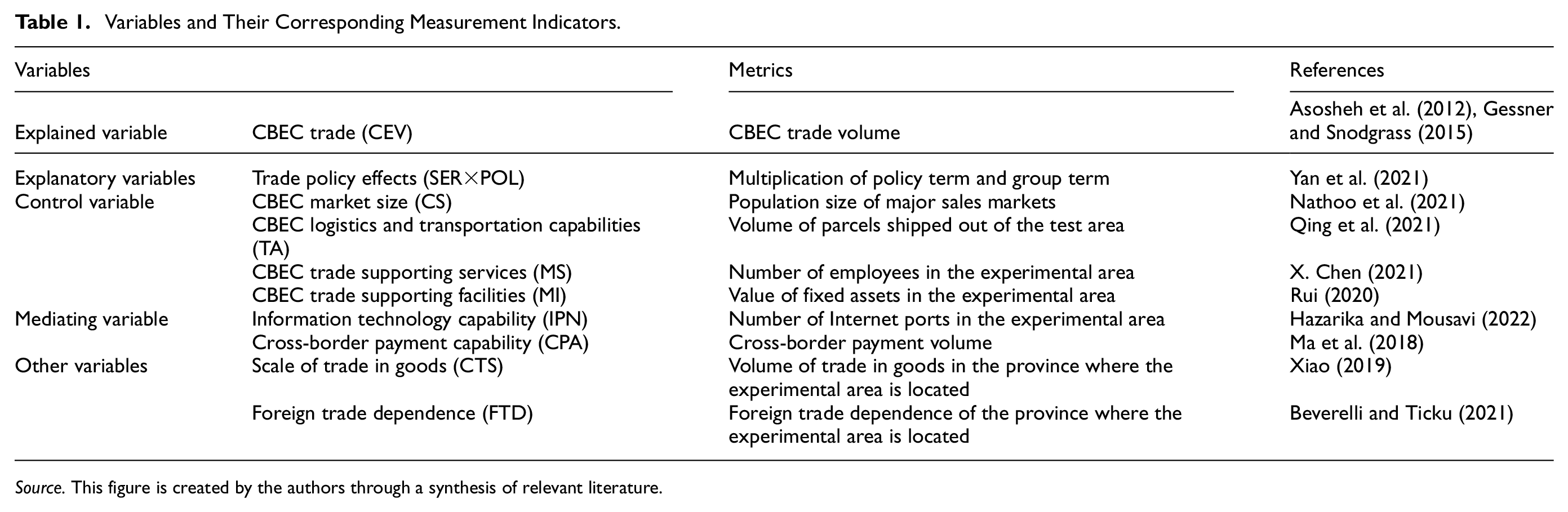
Based on the literature of previous scholars, the explained variables, the explanatory variables and the control variables in this paper are determined. The specific variables and their measurement indices are presented in Table 1.
(1) Explained variables. We determine CBEC trade (CEV) as the explained variable. We select the CBEC trade volume as an index to indicate the developmental status of China’s CBEC comprehensive experimental zone, reflecting the progress of CBEC trade across different regions in China.
(2) Explanatory variables. Drawing from relevant literature, we identify the explanatory variables for this paper. The key explanatory variable is the interaction term between the policy variable (SER) and the policy implementation (POL). The coefficient of this interaction term (SER × POL) captures the net impact of policy implementation, making it the focal point of our research.
(3) Control variables. In order to control for the influence of other factors on the development of Chinese CBEC pilot zones, we select a series of economic indicators as control variables. The selection of relevant control variables is based on the research literature of relevant scholars. The specific control variables are as follows: (a) CBEC Market Size (CS). Changes in socio-economic development trends can significantly impact the market size of CBEC. Generally, there is a positive correlation between the two. This is mainly due to improved socio-economic conditions and increased per capita income. They can drive the purchasing demand in the CBEC market and expand its size. Therefore, we use the population engaged in CBEC transactions to measure the CBEC market size. (b) CBEC Logistics Capacity (TA). CBEC relies heavily on logistics and transportation. Thus, we need to examine the different impacts of varying levels of CBEC logistics capacity on CBEC trade. We measure CBEC logistics capacity by the volume of packages shipped from the pilot zones. (c) CBEC Supporting Services (MS). During the CBEC transaction process, the level of supporting services significantly affects CBEC trade. Therefore, we aim to study the development of CBEC trade by controlling for the supporting services involved in CBEC transactions. We measure this variable by the number of employees engaged in supporting services within the pilot zones. (d) CBEC Trade Infrastructure (MI). Basic supporting infrastructure for CBEC trade is a crucial foundation for transactions. Therefore, we want to investigate how the condition of supporting infrastructure affects CBEC trade. We measure CBEC trade infrastructure by the value of fixed assets in the pilot zones.
(4) Mediating variables. Considering the distinctive attributes of these variables, we identify two mediating variables: information technology capability (IPN) and cross-border payment capability (CPA). The scientific validity of these two variables has been corroborated by previous scholarly research.
(5) Other variables. We want to gain deeper insights into the status of CBEC trade across various regions. Thus, we additionally incorporate two other variables: scale of trade in goods (CTS) and degree of foreign trade dependence (FTD).
Variables and Their Corresponding Measurement Indicators.
Source. This figure is created by the authors through a synthesis of relevant literature.
Data
The data utilized in this paper are sourced from official government departments, ensuring accuracy and representing the development of relevant issues. The data covers the period from 2016 to 2021. The specific data sources are as follows: (a) The data on CBEC trade volume primarily originates from the data released by the provincial department of commerce. Furthermore, the CBEC trade policies are sourced from relevant trade policies announced by the provincial governments of the respective regions. (b) The data concerning the population size of the main sales markets mainly comes from population data released by the National Bureau of Statistics of the countries where the target markets are located. (c) The data pertaining to the shipment volume of parcels in the CBEC trade comprehensive experimental zone primarily comes from express delivery volume data announced by the local post office. (d) The data regarding the number of employees and the value of fixed assets primarily originate from the data released by the management committee of the CBEC comprehensive experimental zone. (e) The data on the total volume of trade in goods in the province where the CBEC trade comprehensive experimental zone is located mainly comes from the data released by the local provincial statistics bureau. The foreign trade dependence of the province and the CPA of the province where the CBEC trade comprehensive experimental zone is located are sourced from data released by the local provincial government. (f) The data related to the number of Internet ports in the CBEC trade comprehensive experimental zone primarily comes from the data released by the Ministry of Industry and Information Technology of China.
In general, if the values of the means and standard deviations of two samples are relatively close, this indicates that there may be no systematic differences between the samples. The descriptive statistical results of the data used in this paper are shown in Table 2. It could be observed that the data from the experimental group and the control group have small differences in terms of means and standard deviations. This shows that there is no systematic difference between the experimental group and the control group. Therefore, we could proceed to further analyze the data.
Descriptive Statistical Analysis.

Results
Parallel Trend Test
According to the requirements of the DID policy evaluation method, there must be no systematic differences between the two groups in the sample before the implementation of the policy (Zhao et al., 2021). That is to say, before the policies related to CBEC trade are fully implemented, the regions where the experimental group and the control group are located should show similar development trends. In this way, the estimation of the DID policy evaluation model would be accurate. Therefore, we firstly conduct a parallel trend test on the sample data. We use the regression model to test for parallel tendencies. The specific regression model is designed as follows:
According to the requirements of the DID policy evaluation method, it is essential to ensure that there are no systematic differences between the policy-affected group and the policy-unaffected group in the sample before the policy implementation (Zhao et al., 2021). In other words, the regions where the policy-affected group and the policy-unaffected group are located should exhibit similar development trends prior to the full implementation of the CBEC trade-related policies. This similarity in trends is crucial for accurate estimation using the DID policy evaluation model. Therefore, our first step is to conduct a parallel trend test on the sample data. We would employ a regression model to test for parallel tendencies. The specific regression model is designed as follows:

In formula (2), SER represents the grouping dummy variable, and
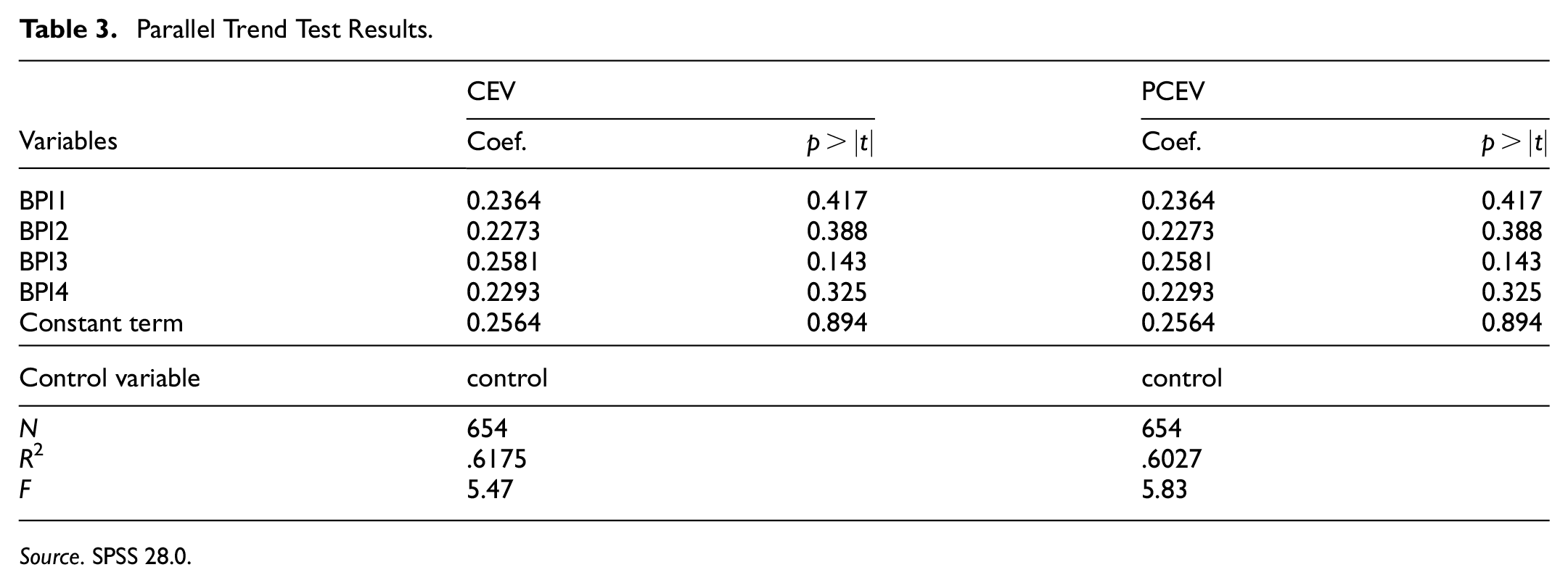
Table 3 presents the results of the parallel trend test on the data. BPI1 to BPI4 represent the differences between the two groups in each year before implementing CBEC trade-related policies. None of the BPI1 to BPI4 variables showed significant results, indicating no significant difference between the groups pre-policy. It confirms the effectiveness of the parallel trend hypothesis. Consequently, the DID method could be utilized to evaluate the impact of trade facilitation policies in China’s CBEC comprehensive experimental zone.
Parallel Trend Test Results.
Source. SPSS 28.0.
Fixed Effects Test
In the regression analysis, we employ the ordinary least squares method to estimate the empirical model. However, it is important to acknowledge that there might be omitted variables that could impact the accuracy of the regression results (Mutl & Pfaffermayr, 2011). To mitigate potential estimation bias, we include controls for various omitted variables that could be associated with individuals in each city. Additionally, we incorporate controls for different omitted variables that are strongly correlated with time, utilizing time fixed effects and individual fixed effects in a two-way fixed effects regression analysis. The regression model is formulated as follows:

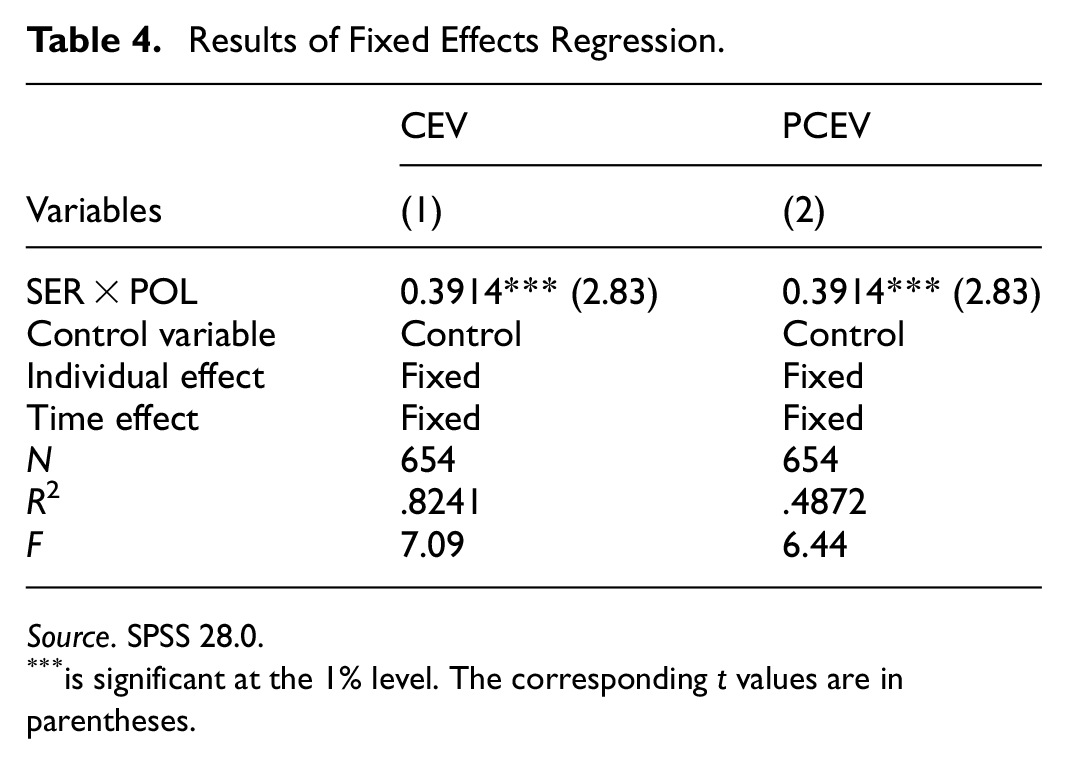
In model (3), δi represents the region fixed effect and γt represents the time fixed effect. Table 4 displays the empirical results of the two-way fixed effects regression. The results indicate that the regression coefficients have passed the significance test. It suggests that the observed policy effects of CBEC trade facilitation are robust and statistically significant. Therefore, it could be concluded that the model used does not suffer from a significant problem of omitted variables. At the same time, we could also rule out that there is no reverse causal effect in this paper.
Results of Fixed Effects Regression.
Source. SPSS 28.0.
is significant at the 1% level. The corresponding t values are in parentheses.
Nonlinear Test
Based on the previous analysis, we construct the following econometric model for further analysis:

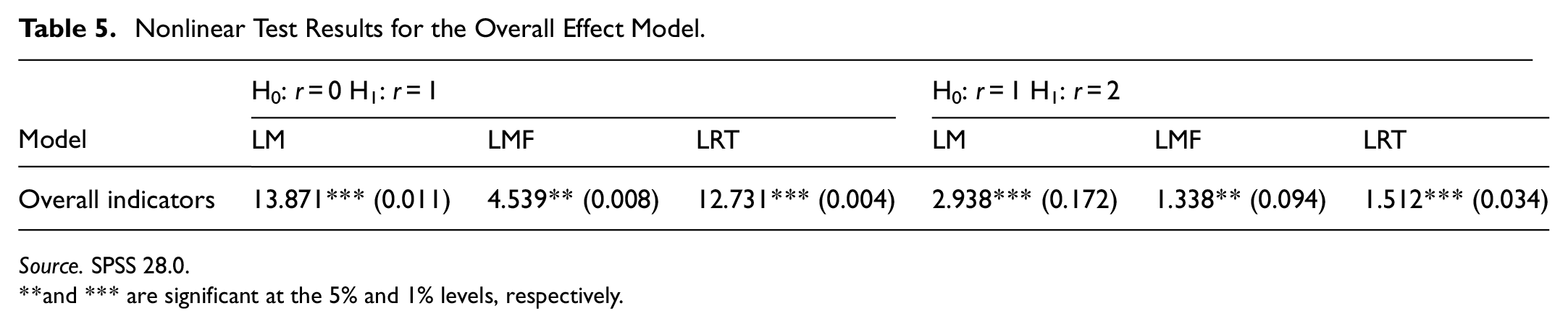
In Equation 4, the explained variable is CEV, the explanatory variable is SER × POL, and the control variables are CS, TA, and MI. By conducting a nonlinear test on the model, we could analyze the overall impact of trade policy on CBEC trade. The results of the nonlinear test on the model are presented in Table 5. Table 5 displays the results of the nonlinear test on the model. The results indicate that the null hypothesis of the model being linear is rejected based on both the LM and LMF test statistics, as well as the LRT test statistic. Among them, the LM and LRT test statistics reject the null hypothesis at a significance level of 1%, while the LMF test statistic rejects the null hypothesis at a significance level of 5%. This result indicates a significant nonlinear relationship between CBEC trade and the trade policy effect. In other words, the model used in this paper has passed the nonlinear test, and the relevant variables could be used for further research.
Nonlinear Test Results for the Overall Effect Model.
Source. SPSS 28.0.
and *** are significant at the 5% and 1% levels, respectively.
Representative Area Test
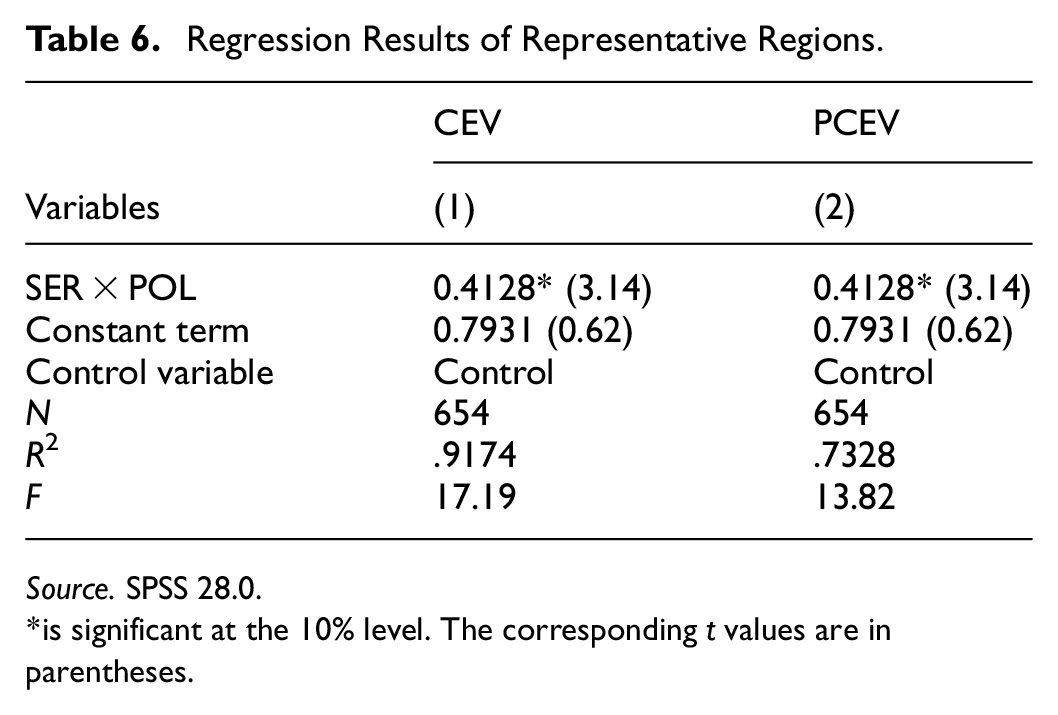
The variations in economic development across different regions could potentially impact the accuracy of evaluating local CBEC trade policies (Škorput et al., 2010). To mitigate the potential adverse effects of regional economic disparities on the empirical findings, we have excluded cities with exceptionally high or low levels of development from our sample. Furthermore, we aim to ensure that our analysis is not unduly influenced by extreme cases and that the results are more representative of the overall trends and patterns. Additionally, we performed robustness tests on representative regions after excluding cities such as Shanghai, Beijing, Heihe, and Chifeng. The regression results for these tests are presented in Table 6. Notably, all the cross-term coefficients in the regression results are statistically significant. This indicates that, even after removing the influence of extreme values, the CBEC trade facilitation policy remains effective and passes the significance test. Therefore, we could conclude that the impact of the CBEC trade facilitation policy is consistent and stable across different regions.
Regression Results of Representative Regions.
Source. SPSS 28.0.
is significant at the 10% level. The corresponding t values are in parentheses.
T-test
In order to clarify the impact of economic trends on the effectiveness of policies, we conduct a t-test. The results of the t-test are shown in Table 7. The mean values of the increase in the experimental group and the control group are 9.72 and 11.04, respectively. Additionally, the p-values of the t-test are not significant. This indicates that changes in economic trends do not show a significant impact on the effectiveness of trade policies. Therefore, in subsequent research, we would exclude the influence of economic trends on trade facilitation policies and proceed with further empirical analysis.
Results of t-Test.

Source. SPSS 28.0.
Empirical Analysis
Benchmark Regression
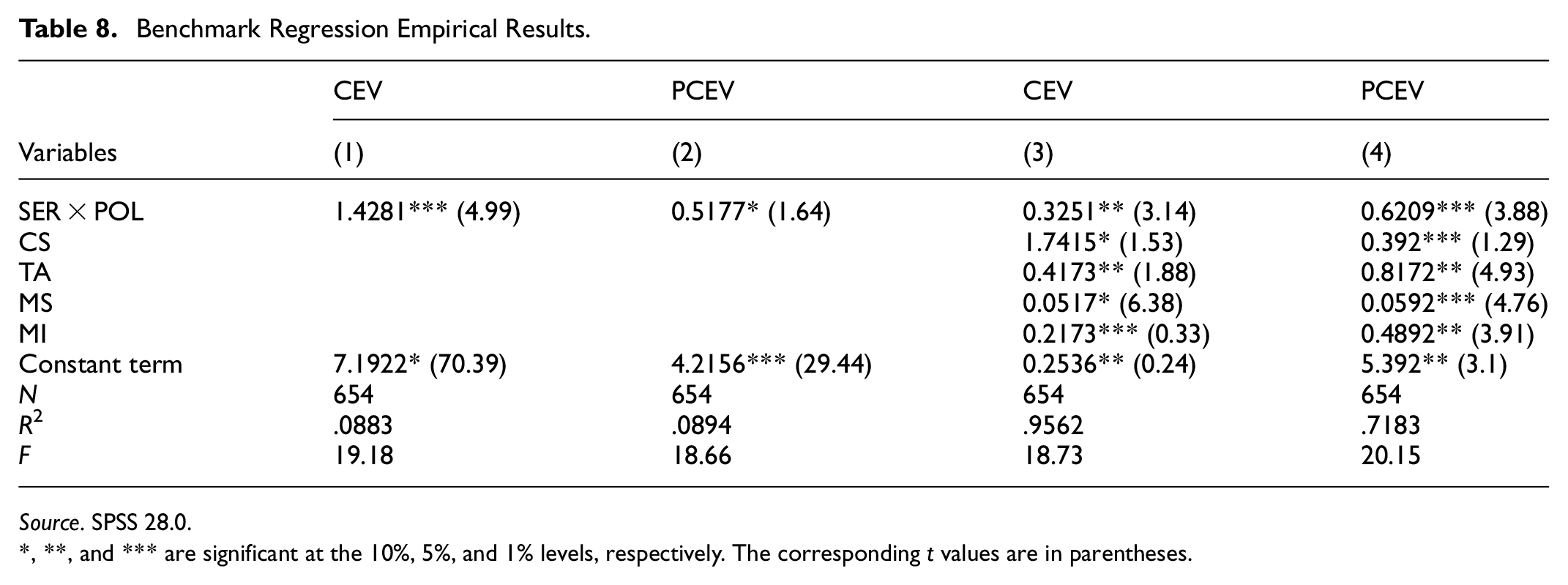
Table 8 presents the results of ordinary least squares estimation. Columns (1) and (2) do not include control variables, while columns (3) and (4) incorporate them. Adding control variables significantly improves the goodness of fit, indicating their necessity. This aligns with studies by Greenleaf & Park (2014), Rudahigwa & Tombola (2021), and Sidorov & Sidorova (2021), highlighting the importance of CS, TA, MS, and MI variables in the impact of trade policy on CBEC trade development. Managers should focus on these factors for effective management.
Benchmark Regression Empirical Results.
Source. SPSS 28.0.
, **, and *** are significant at the 10%, 5%, and 1% levels, respectively. The corresponding t values are in parentheses.
Moreover, regardless of control variables, the cross-term coefficients between policy and grouping variables are positive. Significance tests confirm that policy types adhere to market economy development principles. China’s CBEC industry exhibits a significant policy promotion effect, extending the findings of Iwanow and Kirkpatrick (2010), Nathoo et al. (2021), and Hazarika and Mousavi (2022). This underscores the substantial impact of relevant trade policies on China’s CBEC trade, emphasizing its vulnerability to external policy influences.
Mechanism Analysis
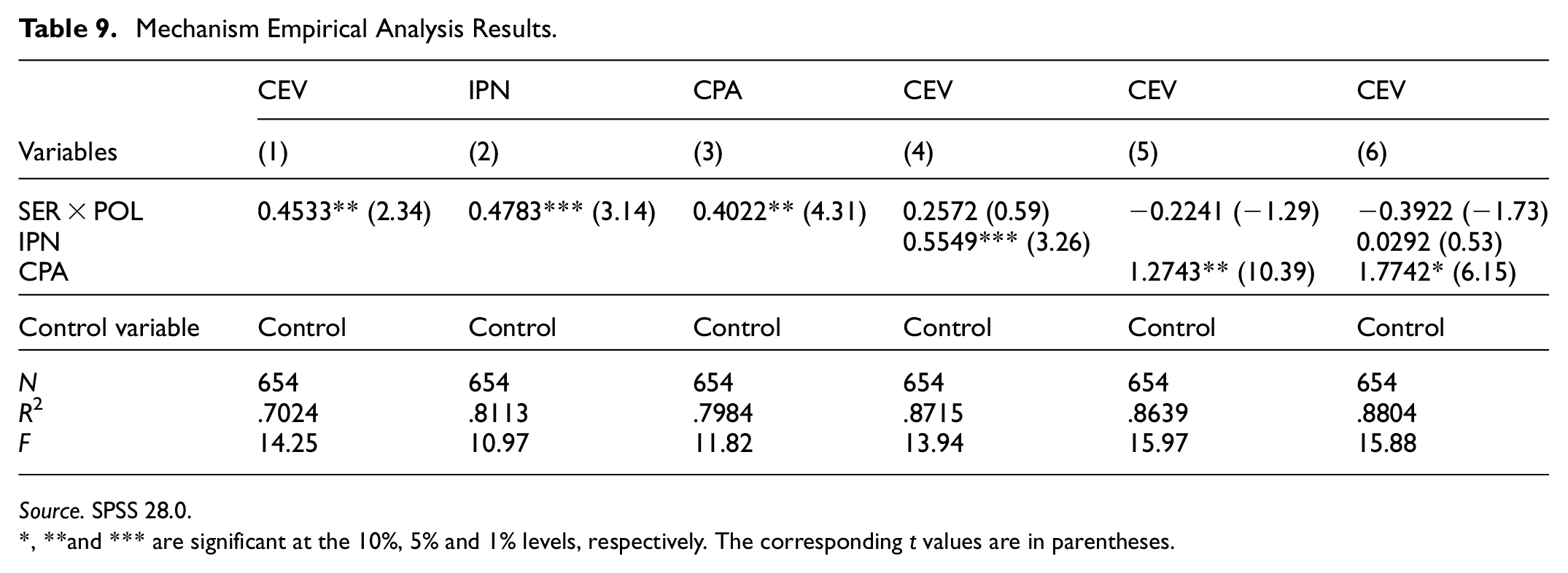
In the previous empirical analysis, we find that establishing a comprehensive experimental zone for CBEC trade shows a substantial positive impact on the long-term development of China’s CBEC trade. The two key mechanisms of the promotion policies are enhancing regional information infrastructure and improving overall economic scale. Additionally, adopting a “mediation effect” perspective, we consider information infrastructure and total economic scale as mediating variables. The inspection sequence is as follows: (1) Regression analysis is conducted on the intersection of policy and the development level of CBEC trade. A significant regression coefficient would indicate that constructing a comprehensive experimental zone for CBEC trade effectively promotes CBEC trade development. (2) Regression analysis is performed on the intersection of policy and information technology capabilities. If the regression coefficient is significant, it suggests that constructing a comprehensive experimental zone for CBEC trade effectively enhances information technology capabilities. (3) We include both the policy intersection variable and information technology capability variable in the model and regress them against the development level of CBEC trade. If the coefficient of the policy cross-term variable decreases, it indicates that constructing a comprehensive experimental zone for CBEC trade has promoted the development of local CBEC trade.
Based on the aforementioned research findings, the proposed mechanism verification model in this paper is formulated as follows:


The empirical analysis results of the mechanism are presented in Table 9. The results in columns (1) to (5) demonstrate that constructing a comprehensive experimental zone for CBEC trade shows a significant positive impact on the development of CBEC trade. Furthermore, the regression coefficients for the construction of comprehensive experimental zones for CBEC trade and information technology capabilities are positive. It indicates that constructing a comprehensive experimental zone for CBEC trade significantly promotes the enhancement of information technology capabilities. At the same time, the coefficient of relevant policies in the CBEC trade comprehensive experimental zone is not statistically significant. In addition, even when the total economic scale and information technology capability variables are included in the model, the trade policy variables remain insignificant. These results indicate a notable characteristic of the mediating effect.
Mechanism Empirical Analysis Results.
Source. SPSS 28.0.
, **and *** are significant at the 10%, 5% and 1% levels, respectively. The corresponding t values are in parentheses.
In summary, the mechanism hypothesis has been effectively verified. These results suggest that the comprehensive experimental zone plays a crucial role in enhancing CBEC trade and its long-term viability.
Heterogeneity Analysis
China’s economic development, information capability, and the development status of CBEC trade vary significantly across different regions. The eastern region generally exhibits higher levels of economic development and more advanced CBEC trade development compared to the central and western regions. This difference could be attributed to factors such as infrastructure, market size, consumer purchasing power, and investment opportunities, which tend to be more favorable in the eastern region. The central and western regions, on the other hand, may face challenges related to infrastructure development, market access, and consumer awareness, which could impact the growth and development of CBEC trade in those areas. This is mainly due to the relatively complete policies and supporting infrastructure related to CBEC trade in the eastern region. In the eastern region, the information technology is developed. In addition, the transportation is also convenient. Relevant talent reserves are abundant. There are many deficiencies in the supply of conditions necessary for the development of CBEC trade in the central and western regions of China (X. Zhang, 2022). In different regions of China, there are great differences in the level of trade facilitation and the development of CBEC trade. Therefore, it is necessary to analyze regional differences in the development practice of CBEC trade in different regions. To explore the differences in the policy effects of trade facilitation on the development of CBEC trade, we would further explore it from the perspective of regional differences.
The sample of this paper is divided into eastern regions and non-eastern regions, representing the economically developed regions and the economically underdeveloped regions, respectively. The empirical analysis results of the assessment of regional differences in trade facilitation policies are shown in Table 10. The coefficient of the cross-term in the eastern region passed the significance test. However, the policy effect in the non-eastern region does not pass the significance test. It means that in the economically developed areas of eastern China, driven by the active promotion of perfect trade facilitation measures, CBEC trade could achieve a higher level of development. Furthermore, in less developed regions with low levels of trade facilitation, the establishment of comprehensive experimental zones for CBEC trade has not achieved a significant promotion effect. Therefore, China has sharply increased the proportion of cities in non-eastern regions in the newly established comprehensive experimental zones for CBEC trade. Due to the low spatial requirements of CBEC trade development, cities in non-eastern regions have the opportunity to leverage the potential of CBEC trade to effectively stimulate local economic growth. By embracing CBEC trade, these cities could tap into new development opportunities and drive economic progress in their respective regions.
The Results of the Empirical Analysis of Regional Differences.

Source. SPSS 28.0 software.
and *** are significant at the 5% and 1% levels, respectively. The corresponding t values are in parentheses.
Endogeneity Test
We conduct an endogeneity test on the model to prevent potential endogeneity issues in the empirical model. Instrumental variable analysis can effectively address endogeneity issues (Rudahigwa, 2021). We select several instrumental variables for analysis. These variables include local economic conditions, technological infrastructure, regulatory environment, demographic factors, geographical factors, and pre-existing trade relationships. The results of instrumental variable analysis are shown in Table 11. The data indicate that, even after considering endogenous factors, trade facilitation still shows a positive and significant impact on CBEC trade at the 10% level. Moreover, in the first-stage regression, the F-statistic is greater than 60, suggesting the absence of weak instrumental variables. Additionally, the p-value of the Sargan test is greater than .44, indicating that the instrumental variables meet the exogeneity condition. Therefore, there are no endogeneity issues in the empirical model of this paper, and the research findings are reliable.
Results of Two-stage Least Square Method for Instrumental Variables.

Source. SPSS 28.0 software.
and *** are significant at the 5% and 1% levels, respectively. The corresponding t values are in parentheses.
Placebo Test
In order to eliminate the impact of policy timing on empirical results, this paper randomly samples the establishment time of the CBEC pilot zone. It also reconstructs the “policy timing” dummy variable to examine whether the establishment of the pilot zone still had a promotional effect on enterprise CBEC trade. The specific procedure is as follows: while keeping the pilot cities constant, a time is randomly selected from the variable “year” as the “policy timing”. Furthermore, an interaction term is generated for regression analysis, repeating this operation 500 times. The results, as shown in Figure 2, indicate that the estimated coefficients of the randomly generated interaction terms are concentrated around the value of 0. At the same time, the vast majority of their p-values are greater than .1. Therefore, it can be concluded that the CBEC pilot zone policy did indeed promote the development of CBEC enterprises, further confirming the reliability of the conclusions.

Placebo test results.
Conclusions, Policy Implications, and Research Deficiencies
Conclusions
(1) The trade facilitation measures implemented in the CBEC comprehensive experimental zones play a crucial role in ensuring the sustainability of CBEC trade. The China’s government has established the CBEC experimental zone, where various management authorities have implemented numerous policies aimed at enhancing trade facilitation (Abdulkarem & Hou, 2022; Liang et al., 2021). These management policies have created a favorable environment for the growth of CBEC trade, thereby promoting its sustainable development in China.
(2) The development of CBEC trade is significantly influenced by information technology capabilities. In fact, information technology capability has become a crucial pillar supporting the growth of CBEC trade. This finding aligns with the research conducted by Škorput et al. (2010), Alqaryouti and Shaalan (2020), and Cai et al. (2022). This paper also highlights the mediating role of information technology capabilities in the relationship between trade facilitation and CBEC trade. Specifically, in CBEC comprehensive experimental area where information technology capacity has been effectively enhanced, trade facilitation measures could promote the CBEC trade. In other words, improving information technology capabilities would strengthen the impact of trade facilitation policies on CBEC trade.
(3) In regions characterized by significant disparities in economic development, the levels of CBEC trade development also vary greatly. Through an examination of the implementation of trade facilitation measures, it has been observed that in economically developed areas. Furthermore, the trade facilitation measures in the CBEC comprehensive experimental area show a more pronounced impact on CBEC trade. However, in regions with lower levels of economic development, the trade facilitation measures in the CBEC comprehensive experimental area do not exert a significant influence on CBEC trade. Therefore, it is crucial for regions with lower levels of economic development to enhance their management mechanisms and strengthen the promotional role of trade facilitation policies in CBEC trade development. This paper further complements the findings of Xiao (2019) and Rudahigwa (2021).
Policy Implications
(1) We offer valuable references for formulating trade facilitation policies in China’s CBEC comprehensive experimental zones. This paper reveals that these policies can promote CBEC trade development. Therefore, the relevant managers should actively optimize trade facilitation policies and implement targeted management measures. It would benefit CBEC trading companies by reducing operating costs and enhancing trade efficiency, ultimately fostering long-term CBEC trade growth.
(2) We offer crucial references for formulating management measures to achieve balanced development in China’s CBEC comprehensive experimental zones. This paper highlights the varying impact of trade facilitation policies on CBEC trade across regions with different economic development levels. Particularly in less developed regions, managers must enhance trade facilitation policies, actively implement measures, and strengthen policy implementation supervision to promote CBEC trade effectively.
(3) Other developing countries, like China, should establish comprehensive experimental zones for CBEC trade and formulate policies that integrate trade facilitation. Currently, many countries, such as India, Brazil, South Africa, have similar CBEC trade development patterns to China. These countries still face various challenges in CBEC trade development, and overall progress in this area needs improvement. Therefore, the research findings could serve as a significant reference for managing CBEC trade in these developing countries, offering valuable insights and guidance.
Research Deficiencies and Future Research Directions
There are still some research deficiencies in this paper as follows: (1)This paper is lack of a long-term perspective. The study acknowledges the relatively short time span of available data due to the late start of China’s CBEC trade. It suggests that future research should delve into more in-depth and systematic studies to explore the long-term impact of CBEC trade facilitation on CBEC trade. (2) This paper haven’t separated analysis of export and import trade. This paper recognizes that it mainly focuses on the overall situation of China’s CBEC trade and does not separately analyze CBEC export and import trade. Future studies could consider conducting separate analyses to gain a better understanding of these specific aspects of CBEC trade. (3) This paper doesn’t comparative study with other countries. This paper acknowledges the limitation of not comparing the development status of China’s CBEC trade with other countries. Future research could include a comparative analysis of CBEC development between China and other countries. It would provide valuable insights into the similarities and differences in CBEC trade across different nations. These suggestions provide directions for future research to enhance the understanding and analysis of CBEC trade in China and its comparison with other countries. (4) Due to limitations in the authors’ energy and the length of the paper, this paper did not propose specific research hypotheses nor conduct empirical testing of hypotheses. At the same time, we did not study the potential for spillover effects between the treatment and control groups. In future research, we would continue to enrich the discussion and empirical testing of research hypotheses and the spillover effects.
Footnotes

Author Contributions
All authors contributed equally to this work.
Funding
The author(s) disclosed receipt of the following financial support for the research, authorship, and/or publication of this article: The work was supported by the Philosophy and Social Science Research Planning Project of Heilongjiang Province (No. 22GJB127), Basic Research Business Expenses Research Project of Provincial Colleges and Universities in the Heilongjiang Province (No. 2022-KYYWF-1208), the National Social Science Fund of China (No. 22CGL030).
Declaration of Conflicting Interests
The author(s) declared no potential conflicts of interest with respect to the research, authorship, and/or publication of this article.
Data Availability Statement
Data sharing not applicable to this article as no datasets were generated or analyzed during the current study.