




Abstract
In the absence of appropriate transition planning practices to promote a smooth transition process, successful transition from vocational education to post-school settings can be particularly challenging for students with disabilities (SWDs). This study was conducted to explore vocational teachers’ perceptions on challenges related to the effective implementation of transition supports and services for SWDs in Botswana. The study examined vocational teachers’ knowledge of transition challenges, the influence of gender and teaching experience on vocational teachers’ perceptions of transition challenges, and differences of vocational teachers’ perceptions in two school regions. A cross-sectional survey was used to collect data from 158 participants. Factorial ANOVA was used to compare means across vocational teachers based on gender and teaching experience. Also, t-tests were run to determine differences of participants’ perceptions of transition challenges between the two school regions. Among others, participants perceived that there was limited training of teachers, shortage of staff in schools, and limited funding to support the transition planning process. Generally, participants varied on the influence of gender and teaching experience on perceived transition challenges. Kgatleng region vocational teachers agreed more than their counterparts in Sout-East region that poor collaboration with external entities, unclear transition guidelines, and mismatch between vocational courses and employment goals negatively impacted the transition planning process. This calls for vocational schools to take deliberate action to devise strategies for bridging the disparities in participants’ transition perceptions. Strategies include teachers’ increased participation in professional development activities, increased collaborative efforts, and development of a legal framework on transition.
Plain language summary
It is important for all people to progress to and participate in adult-life activities even if they have some form of disability. However, people with some form of disability may find it more challenging to live independently than those without a disability. One way for people with some form of disability to find profitable jobs is to go through vocational education and training. This means that there is need for vocational teachers to plan properly to help learners with some disability to progress successfully to other settings beyond vocational schools. Therefore, the aim of this investigation was to find out the views of vocational teachers about challenges that impeded proper support of learners with some form of disability to progress smoothly beyond vocational schools. The investigation considered how much knowledge vocational teachers had about challenges towards successful progression, how being male or female and teaching experience influenced teachers’ views, as well as how teachers in Kgatleng and South-East differed in their views. Vocational teachers were given questionnaires with close-ended questions to complete, and 158 teachers participated in this exercise. Among others, teachers indicated that there was limited training of teachers, shortage of teachers in schools, and limited funding to support learners’ successful progression from vocational schools. Overall, vocational teachers differed on how being a male or female teacher and teaching experience influenced their views about learners’ progression challenges. This means that vocational schools should take decisive steps to come up with ways of reducing the differences among teachers’ views. This will lead to a common understanding of learners’ progression challenges, thereby supporting learners’ needs appropriately.
Introduction
Post-School Transition and Vocational Education
Transition to adulthood is necessary for all individuals including those living with disabilities. One of the highly emphasised post-school transition outcomes for students with disabilities (SWDs) is securing of gainful employment. Participation in gainful employment is a foundational step for experiencing a fruitful life in society for all individuals. The benefits of participation in employment include positively contributing to the economy as one is enabled to purchase goods and services and pay taxes, consequently resulting in an enhanced self-worth and engagement in the community and minimising the need to entirely rely on the government’s support (Mazzotti et al., 2021; Test et al., 2015). Nonetheless, it may be more difficult for individuals with disabilities to maintain successful independent lives than their counterparts without disabilities (Ryan et al., 2019). This may result from limited exposure to equal opportunities to participate in societal activities and limited range of choices, degree of freedom, autonomy, and self-determination in daily living.
One of the important pathways to obtaining gainful employment is vocational education and training. Successful transition from vocational education to post-school settings can be particularly challenging for SWDs in the absence of appropriate transition planning practices to promote a seamless transition process (Brunetti & Corsini, 2019). Vocational education and training are critical for helping students with disabilities to develop values, skills, competencies, social networks, and positive attitudes towards life (Delubom et al., 2020). Vocational education is primarily geared towards equipping students with requisite practical skills for effective participation in gainful employment. Vocational education entails the enrolment of students in courses that help them to acquire occupational skills that form part of a structured career and technical education training (Lopez-Mayan & Nicodemo, 2015). Moreover, vocational education courses give students multiple opportunities to engage in robust programmes that are key for attaining their occupational goals. Vocational education comprises of coursework that includes opportunities for gaining work experience from business enterprises in the community. Evidence suggests that a combination of work-experience activities and vocational education courses are critical for attaining desired post-school outcomes (Mazzotti et al., 2021). Participation of SWDs in career and technical education, and/or securing a part-time job while undergoing training increases the likelihood of getting a full-time job in the future (Haber et al., 2016; Roessler et al., 2015; Wagner et al., 2017).
Vocational Transition Challenges for SWDs
It is imperative to ensure that when SWDs are about to exit from vocational schools, planning and preparations to progress successfully to assume adult roles are well advanced. Nonetheless, teachers continue to experience difficulties regarding ensuring appropriate delivery of transition services to SWDs to allow them full participation in post-school environments after completing vocational education (Ookeditse, 2018). One way of resolving this concern is to ascertain that teachers are adequately equipped with requisite knowledge, skills, and experiences to plan and deliver transition supports and services effectively and efficiently (Adnyani, 2015; Harvey et al., 2020; Koca, 2016). Teachers’ possession of adequate knowledge and skills for successful implementation of transition programmes is a stepping stone towards SWDs’ attainment of successful post-school outcomes. Unfortunately, only a limited number of educators have the knowledge and skills required for supporting SWDs’ transition goals (Morningstar & Mazzotti, 2014; Rowe et al., 2021; Shogren et al., 2016). For example, Dogbe (2015) conducted a study in which 228 teachers were examined to determine their transition perceptions, knowledge, involvement, and relevance of transition skills. The researcher noted that teachers perceived themselves as having moderate knowledge of essential transition practices and principles, transition policy, and transition barriers.
Several challenges have been noted from research that hinder SWDs from transitioning successfully from vocational schools to post-school settings. Most of these challenges are linked to failure of schools to incorporate essential transition components in the transition planning process as stipulated in Kohler’s Taxonomy for Transition Programming (KTTP; Ookeditse, 2022). Kohler (1996) identified five components that are critical for ensuring effective delivery of transition services for SWDs namely student-focused planning, student development, programme structure, family participation, and interagency collaboration. Failure to implement one or more of KTTP components is detrimental to the smooth transition of SWDs across all levels (Morningstar & Mazzotti, 2014). In addition, the absence of clear transition guidelines and procedures makes it especially difficult for SWDs to successfully reach their transition goals (Rowe et al., 2015). Other transition challenges for SWDs identified in the literature include flawed secondary and vocational preparation programmes (Boakye & Ampiah, 2017; Lindsay et al., 2021; Strand, 2020); a disconnect between transition services that secondary schools and vocational schools provide (Miller-Warren, 2015); and students’ limitations in self-advocacy skills that are necessary to help them to survive the challenges related to vocational education (Lindsay et al., 2021). A flawed training programme is one that fails to consider students’ individual differences, does not pay attention to students’ abilities, strengths, needs, and interests, disregards collaborating with parents and families of SWDs, and rejects evidence-based interventions that are critical for successful transition to post-school environments (Morningstar & Mazzotti, 2014). Evidence also suggests that the mismatch of vocational education programmes and post-school goals is usually a result of misalignment between transition services delivery practices at vocational schools and post-school settings (Mazzotti et al., 2016). Furthermore, SWDs are often enrolled in vocational education programmes that are less comprehensive and with limited quality that students need after completion of their education (McCoy et al., 2020; Ressa, 2016).
Educational Policies and Vocational Transition for SWDs in Botswana
Given the need to overcome transition challenges for SWDs and the critical role of vocational education in preparing SWDs for adulthood, the government of Botswana developed several policies and statutes to facilitate effective implementation of vocational education and training for all students enrolled in vocational schools. Of keynote is the Revised National Policy on Education (RNPE) of 1994, which stipulated the importance of vocational education and training to assist Botswana to transform successfully from an agricultural-reliant economy to an economy that is industrial-based (Government Of Botswana, 1994). The RNPE paved way for the development of the National Policy on Vocational Education and Training (NPVET) in 1997. This policy focused on the need to expand access to vocational education and to make it more inclusive and equitable whilst addressing issues of quality and cost-efficiency (Government Of Botswana, 1997). The policy noted that traditional delivery methods did not meet the needs of the broader profile of vocational students existing in the country. The policy continued to indicate that traditional modes of programme delivery were widely used but their exclusive application did not always meet the requirements of a modern labour force and were not adequate for certain target groups, hence the need to diversify modes of delivery. Whilst the NPVET is somewhat not so direct about special education provision, the government of Botswana’s Vision 2036 captures all aspects of what would drive provision for learners’ special educational needs and inclusivity in the context of Botswana. The vision emphasises ensuring that all citizens including those with disability enjoy social inclusion and equality, to empower them to positively contribute to the country’s development, and to enjoy a good quality of life (Government of Botswana, 2016). Specific to education and skills development, Vision 2036 calls for the need to have a knowledgeable society with appropriate outcome-based quality education that focuses on equipping students with both academic and vocational skills.
It is also worth noting that in 2011, the government of Botswana introduced the Inclusive Policy on Education (IPE) with the aim of ensuring that all learners are provided with relevant educational services and supports for effective learning in general education classrooms or other appropriate placement alternatives as well as overcoming challenges that prevent students’ smooth transition to postsecondary settings (Government of Botswana, 2015). The first goal of the IPE is to ascertain that all learners complete basic education and transition as appropriate to senior secondary education (senior high school) and/or higher education or to vocational training (Government of Botswana, 2011). Unfortunately, this policy lacks specific guidelines pertaining to what educators and other stakeholders ought to do to satisfy this policy goal. In addition, the government developed the Education and Training Sector Strategic Plan (ETSSP 2015–2020) which sought to build a more diversified and knowledge-based economy via a deliberate intention to develop human capital by refocusing the education and training to attain social and economic goals stipulated in existing education, development, and economic policies (Government of Botswana, 2015). More specifically, the strategy aimed at enhancing the match between education qualifications and labour market demands, thus making it a point that education outputs are more relevant to future employment requirements. However, the ETSSP reported that although vocational education institutions were not fully utilised, they were unable to accommodate SWDs (Government of Botswana, 2015). Again, there were no indications of robust and deliberate plans to recruit SWDs and other disadvantaged groups into vocational education schools in the strategy. Furthermore, existing school facilities were not in a good state to accommodate SWDs, learning programmes and delivery methods were somewhat inappropriate for SWDs, and there were no specific pathways from secondary schools to vocational education institutions (Government of Botswana, 2015).
Although it is evident that Botswana has a vested interest in improving special education as well as inclusive education at all levels of the educational structures, there is more that needs to be done in transition services delivery for SWDs. Some commendable efforts are notable pertaining to implementation of various policies with particular attention to education accessibility, equity, and improved quality of education in Botswana. However, available policy documents lack clear guidelines on transition planning and principles for SWDs. Moreover, there is a paucity of research on transition planning and programming for SWDs including those enrolled at vocational education institutions. The few transition studies conducted in Botswana include among others Ookeditse (2018, 2022) and Ookeditse et al. (2022) in which the researchers examined teachers’ perceptions of postsecondary planning for SWDs, teachers’ transition attitudes, and postsecondary transition barriers for SWDs respectively. It is worth noting that these studies focused mainly on transition practices at secondary schools. The postsecondary transition challenges identified in Ookeditse (2022) included inadequately trained teachers, shortage of personnel and funding, inadequate professional development activities, heavy teaching loads, poor collaborative efforts, and unclear transition guidelines to support the transition planning process. The one vocational transition study conducted in Botswana –Ookeditse et al. (2022) examined transition components and the extent to which the curriculum was relevant in promoting students’ successful transition to employment. The researcher found that teachers had somewhat positive views about transition components and perceived that the curriculum was somewhat lacking in enhancing smooth transition of SWDs to the world of work. Hence, the inadequacy of transition research in Botswana is testament to the need to increase efforts and resources to conduct research in this area for SWDs, especially at vocational schools.
Notwithstanding the government of Botswana’s current attempts to safeguard the creation of equal opportunities for all individuals to get involved across various spheres of life, SWDs continue to encounter lower rates of involvement in vocational education and/or employment than their peers without disabilities just like in developed nations. The United States recorded 17.9% of employed people with disabilities compared to 61.8% employed peers without disabilities (Bureau of Labor Statistics, 2021). Looking at the proportion of people aged from 16 to 64 years, there were only 29.1% of people with disabilities in the workforce than 70% of those without disabilities in the workforce. In addition, Snyder et al. (2019) reported that the proportions of SWDs and those without disabilities who participated in vocational and higher education programmes from 2015 to 2016 totalled 19.4% and 80.6% respectively.
Like the United States findings, the results of a survey carried out in Botswana showed that out of a population of 2.1 million, nearly 2.7% people had a disability of some sort (Statistics Botswana, 2018). The proportion of persons with disabilities in the workforce was found to be 34.9% against 82.5% of economically active people aged at least 18 years in the workforce. Focusing on employment rates with respect to education level, nearly 5.2% of people with disabilities in the workforce graduated from higher education institutions, while 31.1% and 32.5% completed primary and secondary education respectively. It is worth noting that vocational education institutions were captured as part of higher education in the national survey. The national survey results also showed that in Botswana, considering children above 6 years, most of them (35.5%) never enrolled in any school while only 0.4% managed to graduate from higher education institutions. These results point primarily to limitations in education policy regarding access to education for SWDs and somewhat to the unsatisfactory post-school outcomes of individuals with disabilities in Botswana, thus calling for examining and resolving of challenges that these people find themselves facing. Hence, the need for effective transitional services delivery for SWDs cannot be overemphasised, including at vocational education level.
Purpose of Study
Undoubtedly, there is evidence of some research that has been conducted in developed countries with respect to vocational transition challenges for youths with disabilities. However, not much is known in Botswana concerning what teachers perceive as vocational transition challenges and the extent to which these challenges are congruent with available literature from developed countries. It is when the perceptions of vocational teachers who are expected to play a crucial role in transition planning and services delivery for SWDs are clearly understood that educational gaps that constitute students’ poor academic performance and unsatisfactory post-school outcomes can be identified (Morningstar & Mazzotti, 2014). It takes comprehensive knowledge and proper understanding of transition challenges to devise appropriate strategies to eradicate their unpleasant influence on students’ education and post-school outcomes (Dogbe, 2015). Furthermore, investigating vocational teachers’ perceptions, opinions, and dissatisfactions is necessary to work out purposeful strategies for meeting the transition needs of SWDs and enhance their post-school outcomes (Ookeditse et al., 2022)). Thus, the results of this study will add to transition literature past developed countries such as the United States.
The current state in Botswana is the absence of research that has been carried out particularly to examine challenges that hinder the successful delivery of transition services to SWDs in vocational schools. Hence, this study was conducted to explore vocational teachers’ perceptions on challenges related to the effective implementation of transition supports and services for SWDs in Botswana’s vocational schools. The study examined vocational teachers’ perceptions of transition challenges focusing on the research questions that follow: (a) What is the knowledge of vocational teachers about transition challenges for SWDs in Botswana?; (b) What is the influence of gender and teaching experience on vocational teachers’ perceptions of transition challenges for SWDs in Botswana?; and (c) What differences exist between vocational teachers in Kgatleng and South East regions on their perceptions of transition challenges for SWDs?
Method
Research Approach
The purpose of this study was to explore vocational teachers’ perceptions on challenges related to the effective implementation of transition supports and services for SWDs in Botswana’s vocational schools. Hence, the researcher used a quantitative research approach to examine the degree to which differences occurred among vocational teachers with respect to gender and/or teaching experience. It is worth noting that studies that have been conducted on these variables have primarily focused on students’ performance with limited emphasis on how teachers perceive the effectiveness of school programmes and related challenges (Ookeditse, 2022). This approach was useful for the researcher to establish the existence of relationships between variables, thereby resulting in obtaining information with ease using a survey (Creswell, 2015). Thus, this study focused on examining vocational teachers on the sorts of challenges that they believed vocational schools needed to overcome regarding the transition planning process of SWDs. The study further sought to understand whether vocational teachers’ gender and teaching experience influenced their views of transition challenges for SWDs.
Research Design
The researcher used a survey design in this study given its cost effectiveness and usefulness in providing a quantitative or numeric description of trends, phenomena, or views of a population through studying a sample of that population. With appropriate recruitment of participants, data from surveys can be used to make generalisations from a sample to a population to reach conclusions on specific characteristics, thoughts, or views of the population relying on the chosen sample (Story & Tait, 2019). Moreover, the anonymity of surveys is important as it leads to enhanced reliability and motivates participants to provide sincere answers than in the case of interviews (Jain, 2021). Also, surveys have standardised measurements that make it possible for researchers to make comparisons of participants’ responses (Fowler, 2014). This study used a cross-sectional survey to collect data from vocational teachers at a single point in time. Data was collected through paper surveys rather than online surveys which would not be practicable given frequent power cuts and poor internet.
Research Setting and Participants
The research setting for this study encompassed public vocational education schools found in rural, semi-urban, and urban geographical regions of Botswana. In Botswana, vocational school represents a study period of 2 to 3 years wherein students are equipped with requisite knowledge and vocational skills to enable them to transition successfully to employment, community involvement, and independent living. Once students have completed junior secondary education (middle school) and senior secondary education (high school) successfully, they are persuaded to progress to vocational or higher education institutions respectively depending on their career interests and future aspirations. In most cases, students with poor academic performance in final junior and senior secondary school examinations apply for admission to technical and vocational education institutions.
Table 1 exhibits the demographic characteristics of participants in this study. Most participants were male teachers. The age range for most participants was 31 to 40 years. A diploma was the highest educational qualification for most participants. It is also worth noting that no participant had a doctoral degree qualification. Regarding teaching experience, most participants had taught for a period of 1 to 10 years. There were more vocational teachers in South-East region than in Kgatleng. Moreover, the number of vocational teachers who taught in schools found in semi-urban regions surpassed that of teachers who taught in rural and urban areas. All participants reported that they had taught a student with disability in the past and almost half of the participants indicated that they were teaching at least one student with a disability at the time of data collection. Notwithstanding that some teachers had no students with a disability in their classes during data collection, they had the privilege of teaching such students in the past.
Participants’ Demographic Information (N = 158).
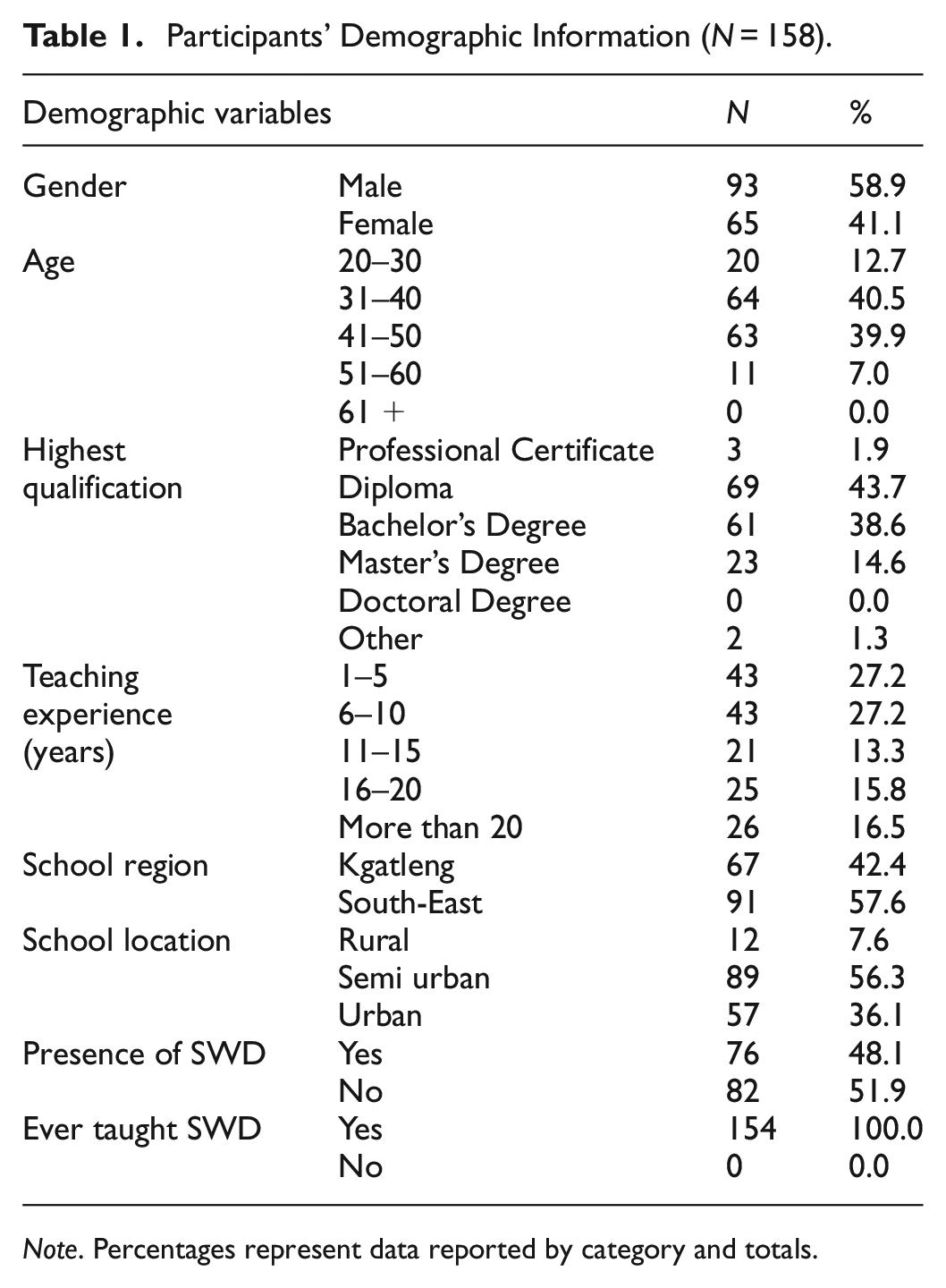
Note. Percentages represent data reported by category and totals.
The two education regions that participated in this study, namely Kgatleng and North-East were chosen through purposeful sampling. These regions were chosen from a total of 10 education regions. Purposive sampling was key in this study because it allows the researcher to select a sample paying attention to specific characteristics and elements of a population including the purpose of a study (Obilor, 2023). It was critical to select Kgatleng region because it is the oldest region in Botswana to deliver special education services to SWDs, thus having a rich history of providing education supports particularly to students with visual impairments. There is only one vocational school in Kgatleng region which formed part of this study. The reason for choosing the South-East region emanated from the centrality of the location of the capital city in this region, leading to an increased likelihood of the presence of vocational schools. The number of vocational schools from the South-East region that participated in this study was five, resulting in a total of six vocational schools taking part in this study. A total of 213 vocational teachers were targeted as potential participants but only 158 vocational teachers responded to the survey, producing a response rate of 74.2%. The reasons for non-participation of the 55 potential participants are that they were absent from schools and were engaged with other commitments during the scheduled data collection days.
Instrument
The researcher developed the survey instrument with reference to the KTTP model, present transition planning and programming research, and incorporated feedback from seven career development and transition experts. The experts rated survey items as ‘relevant’ or ‘irrelevant’ and their input was instrumental in improving the questionnaire, thus enhancing the face validity of the instrument. Furthermore, permission was obtained to embrace some elements of Dogbe (2015) survey into the current survey. Also, the researcher conducted a pilot study on a smaller scale of conveniently selected sample of 30 participants from three vocational schools in Central education region to establish how user-friendly the survey was before using it on a large scale of participants. This was an important step for establishing the content validity of scores on the data collection instrument and for improvement of survey items, format, and scale. This step led to making minor adjustments on the survey instrument in response to the feedback from the convenient sample. The pilot study data were also helpful in testing the analytic plan. Hence, the survey for this study encompassed participants’ demographic information, participants’ knowledge and perceptions of transition planning, participants’ perceptions of transition service delivery practices, participants’ perceptions of vocational programme of study and related coursework, as well as participants’ perceptions of transition challenges for SWDs. It was important to consider the unique educational and cultural contexts of Botswana during survey development stage.
The survey instrument had close-ended questions which used a five-point Likert-type scale where items ranged from strongly disagree to do not know. The Likert-type scale was represented as follows: 1 = Strongly Disagree; 2 = Disagree; 3 = Agree; 4 = Strongly Agree; and 5 = Do Not Know. Despite that in some cases Do Not Know fits naturally in a neutral position on a five-point Likert-type scale, this does not necessarily apply in all instances as it depends on the subject under investigation (Dolnicar & Grün, 2014). Using Do Not Know as a midpoint brings questions of whether it is indeed a midpoint of view between disagreement and agreement or whether it must be treated as a missing view (Chyung et al., 2017). Therefore, the Do Not Know option was kept at the end of the scale due to increased chances of finding teachers lacking knowledge of certain transition questions (Dogbe, 2015; Sprunger et al., 2018) considering the absence of a transition policy or statute in Botswana. The Do Not Know items were separated as system missing leading to a true four-point scale for analysis. Nonetheless, this study targeted specifically the fifth and final sections of the survey relating to participants’ perceptions of transition challenges for SWDs. Since this was an exploratory study, the researcher did not gather qualitative data.
Data Collection Procedure
A total of seven career development and transition experts were engaged to review the survey instrument and give feedback that would help to improve content and face validity. Minor changes relating to phrasing and ordering of a few survey items were incorporated following feedback from the seven experts. In addition, reliability tests of the survey were conducted namely Cronbach’s alpha and McDonald’s omega. A Cronbach’s alpha of .87 and McDonald’s omega of .82 were found based on the correlation between questions and a factor analytic approach respectively. It is worth noting that the researcher did not use any of the data gathered from the pilot study in this final study. Before collecting data for this study, ethical clearance was sought from a university IRB where the researcher was a student at the time. After securing ethical approval from the university, permission to conduct the study was also sought from two government ministries in Botswana and from vocational principals of the chosen schools. During data collection day, which was communicated in advance through vocational school principals, the researcher reminded participants of the purpose of the study. Furthermore, participants were informed that participation was voluntary, and they were given informed consent forms to state if they rejected or agreed to complete the survey. Regarding vocational teachers who declined participating in the study, they were thanked and allowed to leave the meeting place without questioning why they chose not to participate. Teachers who agreed to participate were then issued paper surveys, asked to read the cover page and items carefully as well as use a pen to respond to the survey items in 25 min. The researcher was able to collect data from all six vocational schools within a period of 3 months.
Data Analysis
The survey items and responses were coded, and data analysis was conducted using SPSS Version 29. The initial data analysis focused on descriptive statistics (i.e., frequencies, percentages, means, standard deviations) to provide basic information about variables in the dataset. Given participants’ lack of knowledge on some survey items, the researcher decided to recode Do Not Know responses as system missing so that a true four-point Likert scale remained for analysis. Moreover, inferential statistics were conducted using an alpha level of .05. The researcher used a Factorial ANOVA to compare means across vocational teachers based on gender and teaching experience in determining significant differences in participants’ perceptions of transition challenges for SWDs. When a significant difference was identified among groups, a Tukey follow-up test was run to decide which group(s) differed significantly from which other group(s). After noting significant differences on specific items regarding the interaction of gender and teaching experience, the researcher did not run any further analysis on the differences within each of the two factors. In addition, t-tests were run to determine differences of vocational teachers’ perceptions of transition challenges between Kgatleng and South-East.
Results
Knowledge of Vocational Teachers About Transition Challenges for SWDs in Botswana
The first research question in this study examined the knowledge of vocational teachers about transition challenges for SWDs in Botswana. Descriptive statistics results of this study revealed the presence of some participants who lacked knowledge of certain items relating to vocational transition challenges for SWDs. Participants indicated their lack of knowledge through the selection of Do Not Know responses to these survey items. Items where participants selected Do Not Know were recoded as system missing and then analysed as descriptive data. The proportion of participants who did not have knowledge of some items ranged from 6.3% to 24.1%. Thus, a 25% cut-off point was not surpassed that would call for participants’ engagement in professional development activities before they completed the survey.
Participants agreed that vocational transition challenges for SWDs included (a) limited training of teachers to support the transition planning process (M = 2.73, SD = 1.01); (b) shortage of staff in schools to participate in the transition planning process (M = 3.04, SD = 1.00); (c) limited funding in schools to support the transition planning process (M = 3.09, SD = 0.93); (d) inadequate transition support from school administrators (M = 3.09, SD = 0.97); (e) shortage of transition-related professional development activities (M = 3.24, SD = 0.91); (f) large class sizes reduce transition support levels (M = 3.12, SD = 0.97); (g) poor collaboration with external entities (M = 2.88, SD = 1.18); (h) absence of explicit transition guidelines in schools (M = 2.98, SD = 1.14); and (i) mismatch between vocational courses and employment goals (M = 2.76, SD = 1.13).
The Influence of Gender and Teaching Experience on Vocational Teachers’ Perceptions of Transition Challenges for SWDs in Botswana
The second research question in this study examined the influence of gender and teaching experience on vocational teachers’ perceptions of transition challenges for SWDs in Botswana. Table 2 presents cross tabulations of participants’ mean scores concerning their perceptions about vocational transition challenges for SWDs based on gender and teaching experience. Generally, mean scores suggest that participants mostly agreed that the listed vocational transition challenges negatively impacted the transition planning process, service delivery, and therefore post-school outcomes for SWDs given participants’ gender and teaching experience.
Mean Scores of Participants’ Perceptions of Vocational Transition Challenges by Gender and Teaching Experience (N = 158).
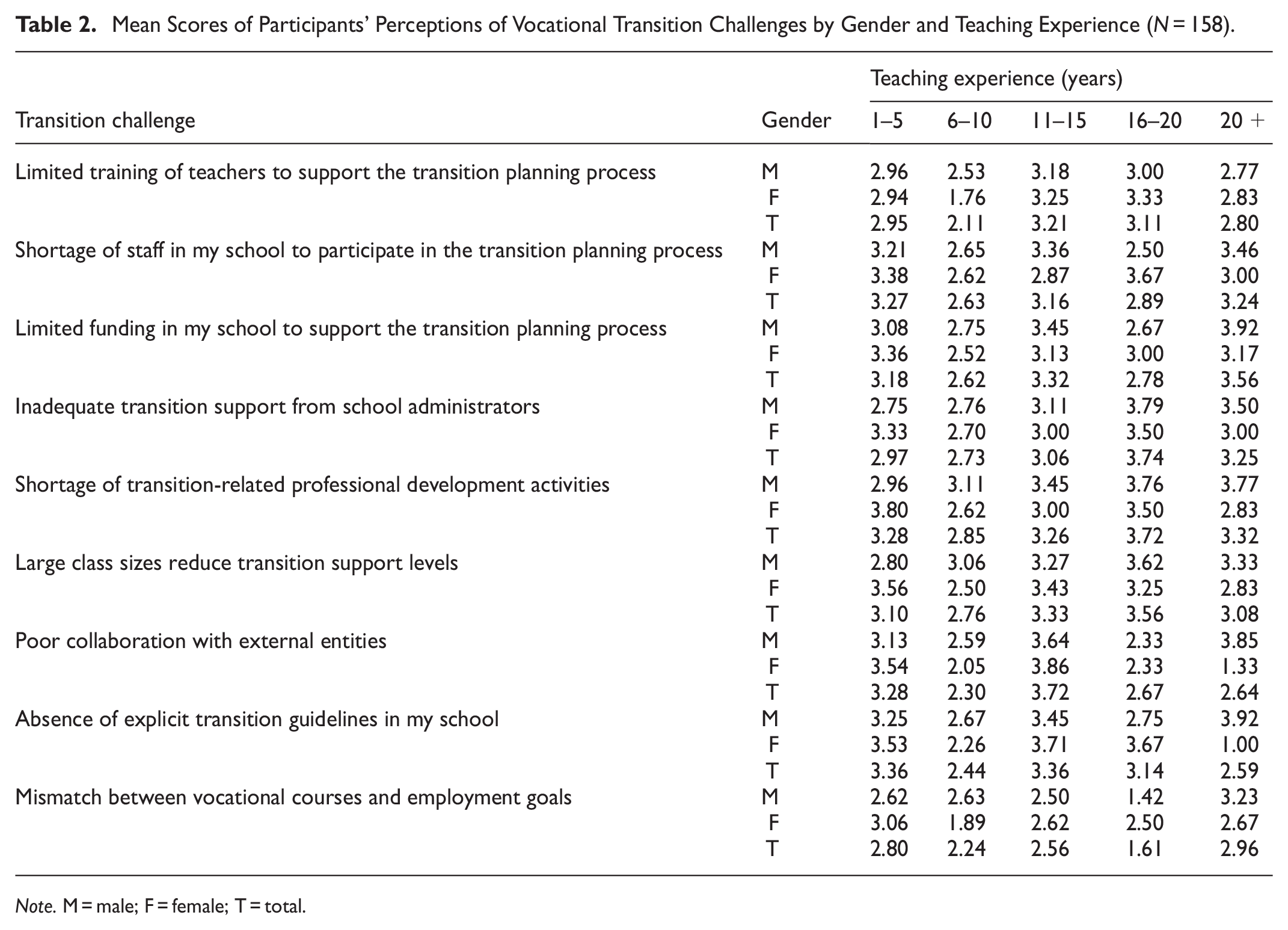
Note. M = male; F = female; T = total.
A Factorial ANOVA was run on participants’ perceptions of vocational transition challenges that impede the transition planning process, service delivery, and post-school outcomes for SWDs (see Table 3). A significant difference was found on the main effect for teaching experience in that there was limited training of teachers to support the transition planning process for SWDs. A Tukey post-hoc test revealed numerous significant differences between distinct teaching experience groups (see Table 4). In addition, there was a significant difference in the main effect for teaching experience on the shortage of staff in vocational schools to participate in the transition planning process. Multiple comparisons of the different teaching experience classes also showed significant differences between various vocational teachers’ groups based on teaching experience. Regarding the transition challenge of limited funding in vocational schools to support the transition planning process, a significant difference on the main effect of teaching experience was noted with a Tukey follow-up test demonstrating numerous significant differences between distinct groups of teachers based on teaching experience.
Factorial ANOVA on Participants’ Perceptions of Vocational Transition Challenges by Gender and Teaching Experience (N = 158).

Note. A = gender; B = teaching experience; A × B = gender and teaching experience interaction.
Multiple Comparisons Results on Participants’ Perceptions of Vocational Transition Challenges by Gender and Teaching Experience (N = 158).

Note. M = male; F = female.
Moreover, a significant difference was found on the main effect of teaching experience on the transition challenge that there was inadequate transition support from school administrators. Some differences were noted between distinct groups of vocational teachers based on teaching experience as revealed from a Tukey follow-up test. A significant difference was found on the interaction of gender and teaching experience concerning the shortage of transition-related professional development activities in schools. Thus, the effect of gender on this vocational transition challenge differed at distinct levels of vocational teachers’ teaching experience. Similarly, there was a significant difference noted on the interaction of gender and teaching experience concerning the transition challenge that large class sizes reduced transition support levels for SWDs.
It is also worth noting that another significant difference was found on the interaction of gender and teaching experience concerning the poor collaboration of vocational schools with external entities. Likewise, the results of this study revealed a significant difference on the interaction of gender and teaching experience regarding the transition challenge that there was absence of explicit transition guidelines in vocational schools. Last, another significant difference was found on the effect of teaching experience for male and female participants regarding participants’ perception of a mismatch between vocational courses and employment goals.
Differences Between Vocational Teachers in Kgatleng and South East Regions on Their Perceptions of Transition Challenges for SWDs
The last research question examined differences that existed between vocational teachers in Kgatleng and South East regions on their perceptions of transition challenges for SWDs. Table 5 presents participants’ perceptions of vocational transition challenges based on school region. The results of t-tests showed that Kgatleng region vocational teachers differed with South-East vocational teachers regarding their perceptions of transition challenges on the following:
Poor collaboration with external entities.
Absence of explicit transition guidelines in schools.
Mismatch between vocational courses and employment goals.
T-test Analysis for Participants’ Perceptions of Vocational Transition Challenges by School Region (N = 158).
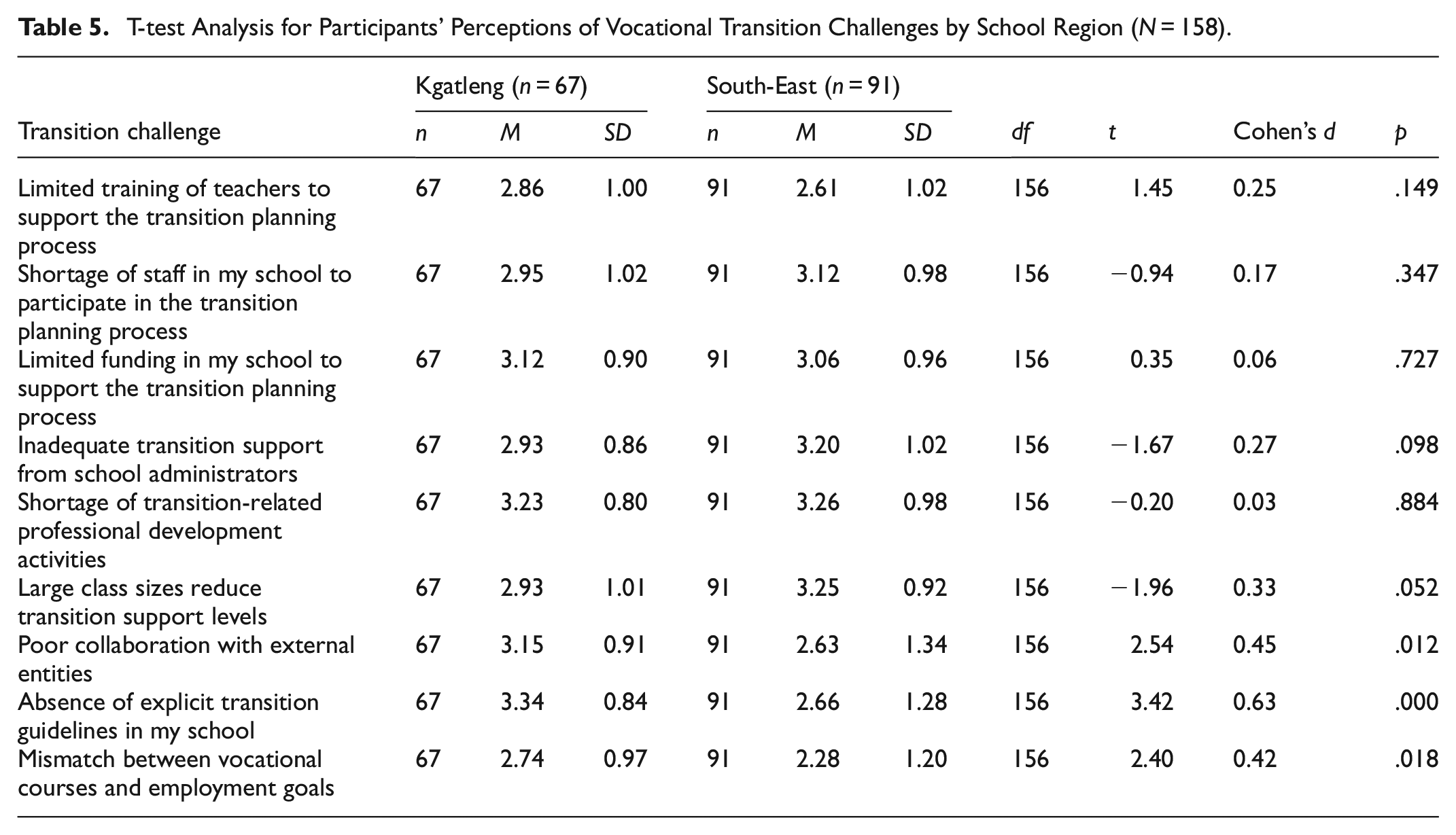
Thus, Kgatleng region vocational teachers agreed more than Sout-East region vocational teachers that these transition challenges negatively impacted the transition planning process, service delivery, and therefore post-school outcomes for SWDs.
Discussion
The purpose of this study was to explore vocational teachers’ perceptions on challenges related to the effective implementation of transition supports and services for SWDs in Botswana’s vocational schools. Participants perceived that there was limited training of teachers to support the transition planning process, shortage of staff in schools to participate in the transition planning process, and limited funding in schools to support the transition planning process. Also, participants perceived that there was inadequate transition support from school administrators, shortage of transition-related professional development activities, and large class sizes that reduced transition support levels. Furthermore, participants perceived that there was poor collaboration with external entities, absence of explicit transition guidelines in schools, and mismatch between vocational courses and employment goals.
There is consistency in the vocational transition challenges noted in this study and those reported in transition literature. For example, one important transition component that research emphasises with respect to preparation of SWDs to enjoy positive post-school outcomes is adequate training of teachers. Mukhopadhyay et al. (2012) found that challenges that are linked to the poor delivery of services and supports for SWDs in schools in Botswana entailed inadequate preparation and training of special education teachers, shortage of resources, and high student-teacher ratios. High student-teacher ratios translate to large class sizes as found in this study. In addition, Kang and Martin (2018) found that special education teachers were insufficiently trained and prepared to help SWDs transition successfully to post-school settings.
Even though Botswana’s national policies promote students’ increased access to vocational education and training for SWDs, only a few students have been able to enrol in vocational institutions, given the inadequately trained teachers and limited funding for vocational schools (Ookeditse, 2022; Government of Botswana, 2015, 2016). Since this study reported limited funding in schools to support the transition process, the importance of adequate funding cannot be underscored regarding the purchase of assistive technology devices and services for SWDs (D’Aprile, 2017), which are especially crucial for reaching students’ educational needs and goals.
Regarding collaborative work between postsecondary schools and external entities, Polesel et al. (2017) contended that there were limited partnerships with businesses and that vocational schools’ ability to work with external agencies relied on the ability of the school leadership to explain and communicate the roles of vocational schools within the education system and the wider community. Thus, vocational teachers and administrators have an important role to play concerning preparation of students for the world of work through provision of work opportunities with external business partners. The lack of support from school administrators in this study makes it especially difficult to develop meaningful relationships with agencies outside the school. All teachers, including school administrators are expected to participate in the effective delivery of transition services for SWDs through demonstration of knowledge and understanding of students’ supports at different levels of the transition planning process. Nonetheless, meeting the transition needs of SWDs also requires that all school staff and leadership have a clear understanding of ways of assessing and enhancing transition programmes to ascertain regular programme improvementss (Morningstar & Mazzotti, 2014).
In addition, considering that several researchers have noted schools’ limited interagency collaboration despite being identified as an evidence-based intervention and a post-school outcome for SWDs (Hauge & Wan, 2019; Mazzotti et al., 2021), it is not surprising to have observed a similar trend in this study. Polesel et al. (2017) also pointed out the difference between the perceived needs of vocational schools and those of business enterprises. This calls for flexibility of vocational schools on decisions about programmes that are offered as well as organisation of work placements and timetabling. Lack of flexibility on decisions about vocational school programmes may also explain the mismatch between vocational courses and employment goals reported in this study. Again, lack of collaboration between vocational schools and entities may be a result of shortage of professional development activities to support the transition planning process as observed in this study. Like many educational institutions in Botswana, vocational schools often find it difficult to organise workshops and seminars to upskill teachers with transition knowledge due to limited funding and budgetary constraints.
Given the results of this study, it is not surprising that teachers perceived that there was an absence of explicit transition guidelines in schools. Although education policies in Botswana such as the RNPE and the IPE mention the need to help SWDs to transition successfully to postsecondary education, employment, and independent living, these policies do not have clear guidelines and procedures on how students should be prepared for post-school settings (Government of Botswana, 2015, 2016). Clear transition guidelines in education policies are necessary for effective delivery of transition services and supports for SWDs.
Generally, participants varied on the influence of gender and teaching experience on perceived transition challenges. The lower the teaching experience, the more teachers indicated limited training to support the transition planning process. A possible explanation may be that beginning and moderately experienced teachers who have not been in the teaching field for a long time lack the skills required to combat transition challenges for SWDs, hence magnify the extent of the challenges. These results are consistent with McKay (2016) who argued that although that beginning teachers were often zealous, idealistic, and naive about their profession, they lacked the necessary skills that come with experience to overcome obstacles in their work. Therefore, professional development activities become necessary to expose them to new trends in special education to avoid lagging behind on serving SWDs (Dogbe, 2015).
The same argument above may be advanced regarding teachers’ perceptions of shortage of staff in schools to participate in the transition planning process, limited funding in schools, and inadequate transition support from school administrators, considering that the least experienced teachers rated transition challenges higher than those with more teaching experience. On the flipside, it may be that teachers with more than 10 years of teaching experience in this study lacked knowledge of the evolving trends in special education and transition for SWDs partly because of shortage of professional development activities in schools than newly employed teachers with current knowledge of special education and transition. It is regrettable that, teachers in Botswana who were trained in special education more than two decades ago and have not been sufficiently exposed to professional development activities are likely to be left behind on effective ways of supporting the transition needs of SWDs.
It is worth noting that male teachers rated five out of nine transition challenges higher than their female counterparts across all age groups. In Botswana, there are more male teachers than female teachers in vocational schools as was the case in this study. Therefore, the results that male teachers rated most transition challenges higher than female teachers may not be surprising. The long-standing dominance of male teachers in Botswana’s vocational schools may imply that they have gained more knowledge and understanding of the vocational school system and students’ needs over the years than the limited number of female teachers who may lack adequate exposure to countless opportunities to work with students to develop a clear view of their needs and challenges (Mosalagae & Lukusa, 2016).
Last, it is crucial to note that Kgatleng region has a rich history of special education and addressing the needs of SWDs. Hence, it is not surprising that Katleng region vocational teachers rated three out of nine challenges higher than South-East vocational teachers. The higher agreement level may reflect the extent to which Kgatleng region is more sensitive to the needs and challenges of SWDs given the knowledge and understanding of special education developed over the years. The results are in line with Ookeditse (2018) who reported that secondary and vocational teachers from Kgatleng had more knowledge of transition service delivery for SWDs than South-East teachers.
Limitations
One of the limitations of this study is that the final number of participants (N = 158) was not further analysed in terms of individual and professional characteristics to ascertain how different they were from those who did not participate (N = 55) given the potential for such differences to be statistically significant and become determinative concerning what conclusions could be drawn or not drawn from the study’s results. Not conducting such analyses of the sample is likely to present a source of bias in the study’s design, thus limiting the conclusions that are drawn from the results. Moreover, there were unequal groups of participants with respect to gender and teaching experience. Given the unequal groups, it is likely that the power of the study was reduced as well as that type I error was inflated or reduced, consequently decreasing the generalisability of the findings. Furthermore, although the researcher used purposive sampling technique to choose participants in this study, a random sample across all education regions in Botswana would be more appropriate in future studies. A more randomised sampling method could enhance the generalisability of the findings to the population of vocational teachers in Botswana in future research. Another limitation is that this study focused only on quantitative ways of gathering information from participants, presenting a challenge relating to providing credible explanations of findings. This led to the researcher making several assumptions of observed trends or incorporating relevant literature to support findings where possible. Mixed methods research would have been more meaningful in addressing this challenge given the collection of qualitative information to close gaps related to quantitative data. Finally, perceptions of SWDs were not considered in this study. Such data would have been helpful for the researcher to appreciate students’ views who are the central focus of the transition planning process.
Conclusion
Participants in this study were aware of challenges related to the effective implementation of transition supports and services for SWDs in Botswana’s vocational schools. Notwithstanding that the findings of this study corroborate with what is known about transition challenges in developed countries, there is still inadequate research in developing countries to establish the same. This study was crucial to make reasonable conclusions about transition challenges considering the distinct educational and social environments between developed and developing countries. The interactions of gender and teaching experience were also considered in this study of which most transition studies have not explored. Thus, variations were found regarding vocational teachers’ perceptions about transition challenges for SWDs in their schools.
Given that participants’ perceptions were inconsistent concerning transition challenges for SWDs, there is need for vocational schools to take deliberate action to devise strategies for bridging the disparities in participants’ transition perceptions based on gender and teaching experience. It is the responsibility of every vocational teacher to work tirelessly to improve transition services and supports for SWDs. Considering the shortage of professional development activities in schools, such activities become key in ascertaining effective delivery of transition services. It is through regular professional development activities such as conferences, workshops, and seminars that vocational teachers can be equipped with current transition knowledge and skills, thereby minimising inconsistencies among vocational teachers based on gender and/or teaching experience regarding transition knowledge and challenges for SWDs. This step will ensure that vocational teachers are ever ready to combat transition challenges and effectively support students’ transition needs. It is also important for vocational schools to develop long lasting collaborative teamwork with external entities for enhancement of vocational students’ post-school outcomes. Moreover, vocational schools need to develop vocational programmes that are consistent with industry needs and responsive to the demands of the economy. This calls for vocational schools to improve their flexibility in programme offerings, work placements, and scheduling based on the unique needs of SWDs and availability of resources to better meet students’ needs. This could help in reducing the mismatch between vocational courses and employment goals. Furthermore, the absence of explicit transition guidelines in vocational schools warrants vocational teachers to collaborate among themselves and with other practitioners to develop relevant policy with explicit transition guidelines as well as advocacy approaches that align with current vocational education needs for SWDs. The time is now that vocational schools increase the number of female teachers to minimise the present dominance of male vocational teachers and provide an enabling atmosphere for female vocational teachers to have an enhanced understanding of the needs of vocational SWDs through frequent interactions, hence develop more concise perspectives of how to support students’ unique needs more effectively.
It is especially worth noting that the lack of a statute on transition for SWDs, makes it even more challenging to have explicit and legally binding transition regulations and guidelines that vocational schools need to follow for the sake of improving post-school outcomes for SWDs. In the interim, there is need for institutions of higher learning to introduce comprehensive transition courses for trainees with interest in teaching at vocational schools. As noted, the need for professional development activities cannot be overemphasised, especially for in-service vocational teachers. This calls for strategic alliances and partnerships between vocational schools, SWDs, students’ parents and/or families, organisations for people with disabilities, civic societies, parastatals, private sector, and the government to ascertain that SWDs are adequately trained and prepared to transition into the world of work, actively engage in community life, and live independently. Given the shortage of resources in vocational schools, it is imperative for schools to secure additional funding from private entities as well as engage in innovative fundraising events to alleviate the problem and acquire more resources. Having acceded to the United Nations Convention on the Rights of Persons with Disabilities (UNCRPD) and the newly developed Persons with Disabilities Act of 2024 in Botswana are encouraging steps for addressing the needs of people with disabilities across the lifespan.
Footnotes
Acknowledgements
I would like to thank and appreciate God Almighty for guidance, my family for their unwavering support and encouragement, as well as all colleagues who provided technical assistance and contributed in distinct ways towards the writing of this article.

Ethical Considerations
This study received ethical approval from Ball State University Institutional Review Board. All participants provided written informed consent prior to participating.
Funding
The author received no financial support for the research, authorship, and/or publication of this article.
Declaration of Conflicting Interests
The author declared no potential conflicts of interest with respect to the research, authorship, and/or publication of this article.
Data Availability Statement
Data sharing not applicable to this article as no datasets were generated or analysed during the current study.