




Abstract
Eco-industrial Parks (EIPs) have become a global industrial development trend that attracted many concerns of governments. The main aim of this research is to introduce an innovative framework that combines Data Envelopment Analysis (DEA) with the Analytic Hierarchy Process (AHP) for the assessment of eco-efficiency in industrial parks (IPs). The study focuses on Vietnam, where 35 industrial parks were assessed through a two-stage evaluation process. In the first stage of the model, IPs are selected with pre-conditions and DEA models evaluate these IPs on four input and three output indicators. In the second stage, nine IPs having top efficiency performance scores are reviewed and evaluated through the AHP process by the relevant experts. The findings have shown that the Khanh Phu Industrial Zone obtained the most eco-efficiency performance among 35 industrial zones in this study. The study contributed to not only a novel research methodology in the eco-industrial literature but also a good reference to practice for developing EIPs.
Keywords
Introduction
Eco-industrial park (EIP) has become a global trend in developing sustainable industrial zones that balance economic, social, and environmental goals. Under the pressing need to reduce climate change, many governments have considered the concepts of EIP which provides larger-scope and comprehensive solutions (Nguyen et al., 2021). The EIP involves many ecological concepts such as resource efficiency, cleaner production, industrial symbiosis, green industry, etc.
The rapid industrialization process leads to unsustainable economic growth in ASIA nations such as China, Thailand, Malaysia, Indonesia, and Vietnam (Vu et al., 2021). The EIP has been implemented to mitigate the negative environmental impact as well as improve economic and social welfare. However, such a model requires many efforts from different stakeholders such as governments, firms, and local communities. It is necessary to have regulations on criteria and management with more detailed guidelines as well as action plans for firms and industrial parks.
There is an international framework for developing eco-industrial parks proposed by the United Nations Industrial Development Organization (UNIDO) and the Work Bank Group. However, it is not a common formula and does not guarantee that the success of a developed country is repeated in a developing nation. Hence, the problem statement of the research is how to modify and build up an appropriate model for developing eco-industrial zones in Vietnam.
Vietnam is a typical example of rapid economic growth driven mainly by the manufacturing sectors. According to the Report on National Environment, the Vietnam Government developed many industrial zones (IZs), which account for about 38% of the total GDP (Ministry of Natural Resources and Environment [MONRE], 2009). In Vietnam, the economic value of IZs has increased by 15% year-on-year with a total exceeding 165 Bil. $ and 3.12 million labours working in industrial parks (Ministry of Planning and Investment [MPI], 2018). In addition, Vietnam experienced rapid growth in the number and size of industrial parks (IPs), from 131 (IPs) with a total of 26,986 (ha) to 300 (IPs) with a total of 84,450 (ha) over the 10 years (2005–2015), and by 2025 the number of operating industrial parks increased to 429 covering 14,2162 (ha) (HouseLink, 2024) Along with a green growth orientation by the government, it is necessary to have a model for assessing the eco-efficiency of operating and developing EIPs model in Vietnam.
The process of selecting and evaluating eco-industrial zones is a challenging and complicated problem. The process of selecting and evaluating eco-industrial zones can be challenging and intricate. There are numerous factors to consider, including economic, environmental, and social factors. Determining the appropriate criteria for evaluating the performance of eco-industrial zones is one of the primary obstacles. The criteria must be exhaustive and applicable to the particular region or industry. The availability and quality of data represent a further obstacle. Collecting accurate data on environmental performance, resource consumption, and economic impact can be challenging, particularly in developing nations. Moreover, the implementation and management of eco-industrial zones require the participation of numerous stakeholders, such as governments, businesses, and local communities. Ensuring that all stakeholders are engaged and invested in the process can also be a formidable obstacle. Despite these obstacles, numerous studies have developed various approaches to evaluate the eco-efficiency of industrial parks, including the use of multiple-criteria decision-making (MCDM) models (Wei et al., 2015) and the evaluation of environmental location planning of industrial zones via the analytical hierarchy process (AHP) and geographic information system (GIS) (Hadipour and Maryam, 2014). These studies can provide valuable guidance and insights for selecting and evaluating eco-industrial zones in a variety of regions and contexts.
To deal with such issues, the multiple-criteria decision-making (MCDM) models have been recently applied in many studies. For example, Hadipour and Maryam (2014) used the Analytical hierarchy process (AHP) and Geographic Information System (GIS) to assess the environmental location planning of IZs in Iran (Hadipour & Maryam, 2014). Wei et.al (2015) implemented Data Envelopment Analysis (DEA) model to evaluate the eco-industrial parks in China (Wei et al., 2015). In 2018, Pai et al applied DEA to estimate the eco-efficiency of IPs in Taiwan (Pai et al., 2018). However, very few studies implement a hybrid approach of different MCDM models in evaluating the eco-efficiency performance of IPs.
The main aim of this research is to introduce an innovative framework that combines Data Envelopment Analysis (DEA) with the Analytic Hierarchy Process (AHP) for the assessment of eco-efficiency in industrial parks (IPs). This research seeks to deliver a thorough evaluation of eco-efficiency through the integration of objective, data-driven DEA models alongside expert-informed AHP assessments. The study focuses on Vietnam, where 35 industrial parks were assessed through a two-stage evaluation process. In the initial phase, DEA models are employed to evaluate the efficiency of industrial parks utilizing input-output indicators. In the subsequent phase, the parks that have demonstrated superior performance as determined by Data Envelopment Analysis (DEA) undergo a more detailed assessment utilizing the Analytic Hierarchy Process (AHP) model. This model integrates expert evaluations to systematically rank the parks according to their environmental, social, and economic performance metrics.
This research presents a novel and significant contribution through its hybrid methodology, integrating DEA and AHP models to provide a comprehensive and rigorous evaluation of eco-efficiency. This study integrates the strengths of both methodologies, as previous research has utilized either DEA or AHP in isolation. DEA facilitates an objective and quantitative assessment of efficiency, whereas AHP contributes a qualitative, expert-informed evaluation of multi-dimensional criteria. This integration addresses gaps in the literature and offers a practical, adaptable model for policymakers and industrial park managers seeking to enhance sustainability efforts in developing countries like Vietnam.
In the next section, the relevant works of literature are reviewed. In section “Methodology and Data Collection,” the methodology and data collection are presented. Section “Case Study” shows how the proposed research framework was applied in the case study, then the results are discussed in Section “Results and Discussion.” The final section is the conclusion.
Literature Review
Eco-Industrial Park and Eco-Efficiency
The Eco-Industrial Park (EIP) is defined as a community composed of enterprises, residents, and resources to achieve sustainable development of economic, environmental, and social aspects (Pai et al., 2018; Roberts, 2004). A global trend in developing industrial zones around the world is regarded as an economy with natural and economic resources. It is accompanied by a concept of eco-efficiency which means using less input, producing more desirable outputs, and minimizing the environmental impacts (OECD, 2002). Eco-efficiency is not limited at the firm level but also extended to the macro level (i.e., national government level). There are recent studies on the eco-industrial Park, eco-efficiency, the relationships, and its applications in industrial environmental management systems. For example, Stucki et al. (2019) have presented the results and key insights from UNIDO’s EIP project implemented in Vietnam. Vu et al. (2021) have conducted a study to compare the criteria for building eco-industrial parks among different countries. However, studies on models or indicators in evaluating the eco-efficiency value are lacking (Lo et al., 2023).
Multiple Criteria Decision-Making
The evaluation of eco-industrial parks as well as estimating the eco-efficiency value are complex problems. There are many different approaches to deal with such issues, including Life cycle assessment (LCA), Substance Flow Analysis (SFA), or Multi-criteria decision-making (MCDM) techniques. However, the LCA model cannot deal with a problem with many aspects as well as assessing multiple objects or the SFA cannot reflect the relationship between the environment and the economy in evaluating eco-efficiency (Pai et al., 2018). The advantage of MCDM is to consider the evaluation of multi-projects with objective perspectives and reduce the subjective influence.
In the 1950s, Neumann and Morgenstern introduced the procedure of multi-criteria decision-making methods (MCDM) including four stages. All criteria and their weights are defined in the first and the second stage, respectively. The third stage is related to assigning individual performance to each option on each measure. The final stage is to evaluate the alternatives’ aggregate performance based on all criteria.
Many different MCDM models have been developed in recent decades, for example, Data Envelopment Analysis (DEA) (Charnes, 1978; Nguyen & Nguyen, 2020; Wang, Nguyen, & Wang, 2021); the Analytic Hierarchy Process (AHP) (Saaty, 2008; Wang, Nguyen, & Wang, 2021); the Analytic Network Process (ANP); Technique for Order of Preference by Similarity to Ideal Solution (TOPSIS) (Wang, Nguyen, Dang, et al., 2021). Recently, the MCDM models have attracted many concerns in research and practices. For example, Hu et al. (2009) applied CCR-DEA and BCC-DEA models to measure the efficiency of industrial parks in Taiwan; Chen et al. (2017) implemented super-efficiency DEA model to assess the environmental efficiency of 11 provinces and 131 cities in the Yangtze River Economic Zone in China; Pai et al. (2018) applied DEA to estimate eco-efficiency of 60 industrial parks in Taiwan; Wang, Nguyen, & Wang (2021) used SBM- DEA to evaluate environmental efficiency of ASEAN nations. Yu (2023) based on non-desired output and non-radial DEA model to assess the green development efficiency of IP in China or (Yang et al., 2024) integrated DEA model to reassess the industrial eco-efficiency in China under the sustainable development goals.
The Analytic Hierarchy Process (AHP) is a widely employed multiple criteria decision-making (MCDM) tool that is appropriate for assessing the eco-efficiency of industrial parks. A significant advantage of AHP is its ability to deal with subjective and complex decision-making problems by decomposing them into smaller, more manageable components. Using a hierarchical structure, the decision criteria are broken down into a series of sub-criteria and alternatives, making it easier for decision-makers to compare and rank the various options based on their performance against each criterion. This hierarchical structure can also facilitate consistency and openness in the decision-making procedure. In addition, AHP permits the incorporation of both quantitative and qualitative data and offers a clear and logical framework for the interpretation of results, which can be useful for communicating findings to stakeholders. Numerous studies have used the AHP method to assess eco-efficiency performance, such as the works of Zhang et al. (2018) applied AHP in the selection of sustainable development indicators for eco-industrial parks, and Wen et al. (2019) used AHP to evaluate the environmental performance of industrial parks in China.
Saaty (2008) recommended the AHP method is suitable for solving complex decision-making problems relating to strategic or policy-making. By comparing elements with the absolute judgment scale, the AHP is applied in various fields. For example, Reisi et al. (2018) combined AHP and ANP to select the industrial sites in Iran. Wang, Nguyen, and Wang (2021) combined DEA and AHP to select wind power plants in Vietnam. In AHP models, the major criteria and sub-criteria should be determined carefully. In terms of eco-industrial parks evaluation, the United Nations Industrial Development Organization (UNIDO) and the Work Bank Group have conducted a standard framework for developing and transitioning to Eco-industrial parks. There are four dimensions, namely Park management performance, Environmental performance, Social Performance, and Economic Performance (Vu et al., 2021). Hence, the set of criteria used for the AHP model is based on these pillars and reviewed by experts.
While sustainable development strategies have gained traction, research using the Analytic Hierarchy Process (AHP) to evaluate alternatives in eco-efficiency remains limited, particularly in the context of industrial parks. Moreover, no studies to date have integrated multiple Multiple-Criteria Decision-Making (MCDM) models, such as Data Envelopment Analysis (DEA) and AHP, to comprehensively estimate eco-efficiency scores. Although DEA and AHP have each been recognized as effective optimization tools for performance evaluation and decision-making, their combined application within the eco-industrial sector is largely unexplored. This gap in the literature highlights the need for a more robust and multidimensional approach. To address this research gap, the present study introduces a hybrid DEA-AHP model to assess and rank the eco-efficiency of industrial parks, offering a more holistic evaluation that incorporates both quantitative efficiency metrics and expert-driven qualitative assessments.
Methodology and Data Collection
The research framework is divided into three stages, each with specific steps aimed at evaluating the eco-efficiency of industrial parks (IPs) using a combination of DEA (Data Envelopment Analysis) and AHP (Analytic Hierarchy Process) models as Figure 1.
Stage 1: The research begins with a Literature Review to establish relevant inputs and outputs for eco-efficiency analysis. Once identified, DEA models are applied to assess efficiency. Various models are utilized: CCR-I (Charnes, Cooper and Rhodes—Input-oriented), CCR-O (Output-oriented), BCC-I (Banker, Charnes andCooper—Input-oriented), BCC-O (Output-oriented), and SBM-I-C (Slacks-based Measure—Input-oriented and Constant returns to scale). This stage is focused on determining the top efficiency performance of IPs.
Stage 2: The top-performing industrial parks are analyzed further by creating a List of Criteria relevant for eco-efficiency. These criteria are used in an AHP model to prioritize the IPs based on a structured decision-making process. The results are checked; if unsatisfactory, the criteria or weights may be adjusted and the AHP model re-run until the results meet expectations.
Stage 3: Once the AHP model yields satisfactory results, the best-performing eco-efficient industrial park is identified. The research concludes with a final analysis and report of findings, highlighting the most eco-efficient industrial park and providing insights for future research or policy recommendations.

The research framework.
Data Envelopment Analysis
Charnes et al. (1978) proposed Data Envelopment Analysis (DEA) to calculate technical efficiency by solving a problem of nonlinear programming.
With n “decision-making unit” (DMUs), for each DMU, there are m inputs aij (i = 1, 2,…, m, j = 1,2,…n) and s outputs brj (r = 1, 2,…, s), the general formula as below:

There are some advantages of DEA models in the synthetic evaluation of the effectiveness of multiple input-output. In addition, there is a non-dimensional treatment of data or requirement of any assumptions about the exact functional relationship between inputs and outputs (Nguyen and Nguyen, 2020; Hoang and Quang, 2019; Seiford and Thrall, 1990).
In addition, there are some reasons to consider implementing several DEA model in this proposed research framework. First, the distinct attributes and constraints of each model need the use of all six DEA models for a more thorough assessment of eco-efficiency. The CCR model presumes constant returns to scale (CRS), rendering it appropriate when the manufacturing process is anticipated to demonstrate proportionate scalability. Nevertheless, in several instances, industrial parks may not function under CRS circumstances. The BCC model incorporates variable returns to scale (VRS), offering a more adaptable method for assessing efficiency in the presence of scale inefficiencies (Banker et al., 1984). The Slacks-Based Measure (SBM) model effectively mitigates a significant weakness by including input and output slacks that are inadequately addressed in the CCR and BCC models. It addresses slack concerns, which are residual inefficiencies that might occur despite the maximization of technological efficiency (Tone, 2001). Furthermore, the input- and output-oriented variants of these models provide the evaluation of efficiency from distinct viewpoints, contingent upon whether the decision-maker seeks to reduce resource use (input orientation) or to maximize results (output orientation). This study employed all six models to encompass a wider range of operating settings. Hence, augmenting robustness and offering more profound insights into the comparative efficiency of industrial parks.
The literature presents several DEA models, including the Charnes-Cooper-Rhodes Model, which can be input-oriented (CCR-I) or output-oriented (CCR-O) (Charnes, 1978); the Banker-Charnes-Cooper Model, available in input-oriented (BCC-I) or output-oriented (BCC-O) forms (Wang, Nguyen, & Wang, 2021); and the Slacks-Based Measure Model, which operates under a constant returns-to-scale assumption and is categorized as input-oriented (SBM-I-C) or output-oriented (SBM-O-C) (Wang, Nguyen, Dang, et al. 2021).
The following equations from Equation 1 to Equation 6 present models respectively.
In which,
n: number of decision-making units (DMUs)
DMU i : the ith DMU, i = 1, 2, . . ., n
DMU 0: the target unit
a 0 = (a01, a02, …, a0p): input vector of DMU0
b 0 = (b01, b02, …, b0q): output vector of DMU0
a i = (ai1, ai2, …, a ip ): input vector of DMU i
b i = (bi1, bi2, …, b iq ): output vector of DMU i ,
u∈Rp×1: weight-input vector
v∈Rq×1: weight-output vector
Equation (1): Charnes-Cooper-Rhodes Model input-oriented (CCR-I) (Charnes, 1978)

Such that

Equation (2): Charnes-Cooper-Rhodes Model output-oriented (CCR-O) (Charnes, 1978)

Such that

Equation (3): Banker-Charnes-Cooper Model input-oriented (BCC-I) (Wang, Nguyen, & Chang, 2021)

In which,

Equation (4): Banker-Charnes-Cooper Model output-oriented (BCC-O) (Wang, Nguyen, & Chang, 2021)

In which,
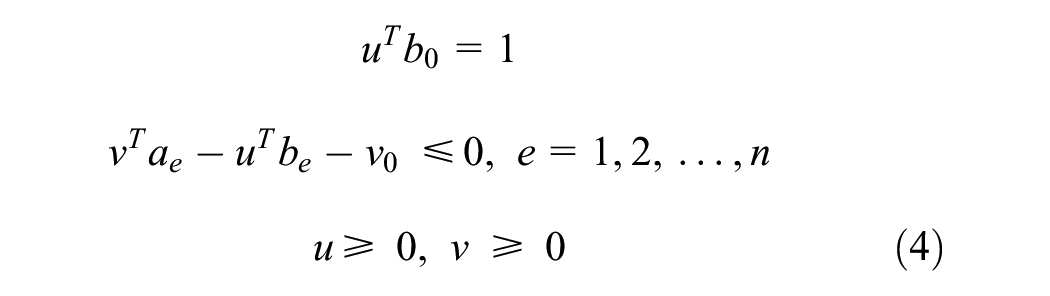
Equation (5): Input-oriented SBM under the assumption of constant returns to scale (SBM-I-C) (Wang, Nguyen, Dang, et al. 2021)

In which,

Equation (6): Output-oriented SBM under the assumption of constant returns-to-scale (SBM-O-C) (Wang, Nguyen, Dang, et al. 2021)

In which,

Analytic Hierarchy Process
The six-step process of implementing the AHP is presented below:
The experts in this field utilize the 9-point scale in Table 1 to determine the relative significance of the criteria and sub-criteria.
The Judgment Number Scale.

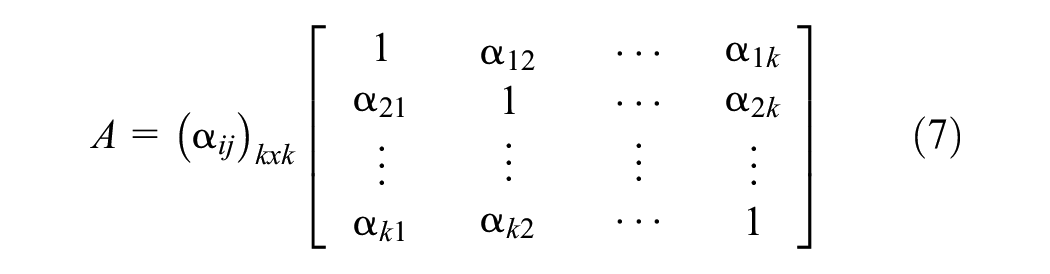
The matrix A (kxk) includes the aij relative judgments between the ith row alternatives and jth column alternatives (Wang, Nguyen, Dang, et al. 2021)
Calculating the total of each column and then dividing each value in a column by its respective sum.
The relevant priorities are calculated by the priority vector (f) matching to the largest eigenvector (

Equation 9 presents the estimation formula of the consistency index (CI)

And Equation 10 calculates the consistency ratio (CR):

where Random index (RI) is the value in Table 2 below.
Random Index.

The results of the AHP model are excellent with a CR value of ≤0.1. Otherwise, the matrix for comparing pairs needs to be reassessed.


In which, wu represents the weight of uth criterion, while Fvu represents the weight of the vth item according to the uth criterion.
Case Study
In the past decade, Viet Nam has experienced significant economic growth in the East Asia region, particularly in the processing and manufacturing sectors. Industrial zones have played a crucial role in driving economic growth in emerging countries across the globe, including Viet Nam. On the other hand, industrial activities can have detrimental effects on the environment and give rise to social concerns, including human health. In 2018, the Vietnamese Government issued the first national standard requirements for Eco-industrial parks under Decision 82/2018/ND-CP. It means that the evaluating efficiency performance of industrial parks has been a significant aspect of developing industrial parks.
The study proposes a hybrid approach of DEA and AHP to evaluate the eco-efficiency of industrial parks (IP) in Viet Nam as a case study. There are 328 Ips in total as of 2018, located in 56 Vietnamese provinces. To choose the IPs, the authors create some requirements to pre-select decision-making units (DMU) such as land size (>300 hectares), number of operating firms (≥40 companies), labor force (≥10,000 workers). In total, there are 35 Ips collected data to implement the proposed model in this study.
The process of study includes two stages below:
Data Envelopment Analysis
The relevant works of literature are reviewed to select input-output indicators for running DEA model. There are some key factors used by many previous studies such as Land size, Labor force, Capital, and Revenue that are also used in this study. In addition, the authors added the energy cost as an input indicator and recategorized it into wastewater; solid waste, CO2, and SO2 emission into Waste Material, and Air pollution as output indicators. The details of input-outputs are presented below.
Inputs
(I1) Land size: Total area used by manufacturers in industrial parks to indicate the optimal area of IPs, it is considered as an input indicator (Pai et al., 2018).
(I2) Labor force: Total number of employees working in the IP to understand the degree of human capital.
(I3) Investment: The total monetary resources committed to the development, infrastructure, and operational improvement of the industrial park. This input reflects the park’s financial capacity to enhance both economic and environmental performance.
(I4) Energy Consumption: Total electricity consumed per day by the IP to measure the park’s power consumption situation. This indicator is minimized to be better, as it is considered an input indicator (Fan et al., 2017).
Outputs
(O1) Revenue: The industrial value-added or operating income of manufacturers to measure the degree of activity in the IP. This is more to increase the performance efficiency of IP; it is a desirable output indicator.
(O2) Waste Material: The total amount of waste excluding temporary storage is collected to determine the status of waste dumps. It is given priority to minimize waste, hence, the authors set it as an undesirable output indicator.
(O3) Air Pollution: The average amount of particulate matter and greenhouse gas (GHG) in the airborne such as PM10 (fine particles below 10 microns), SO2, and CO2 emission is used to understand air pollution (Pai et al., 2018). The environment and local society are impacted directly by this undesirable output indicator.
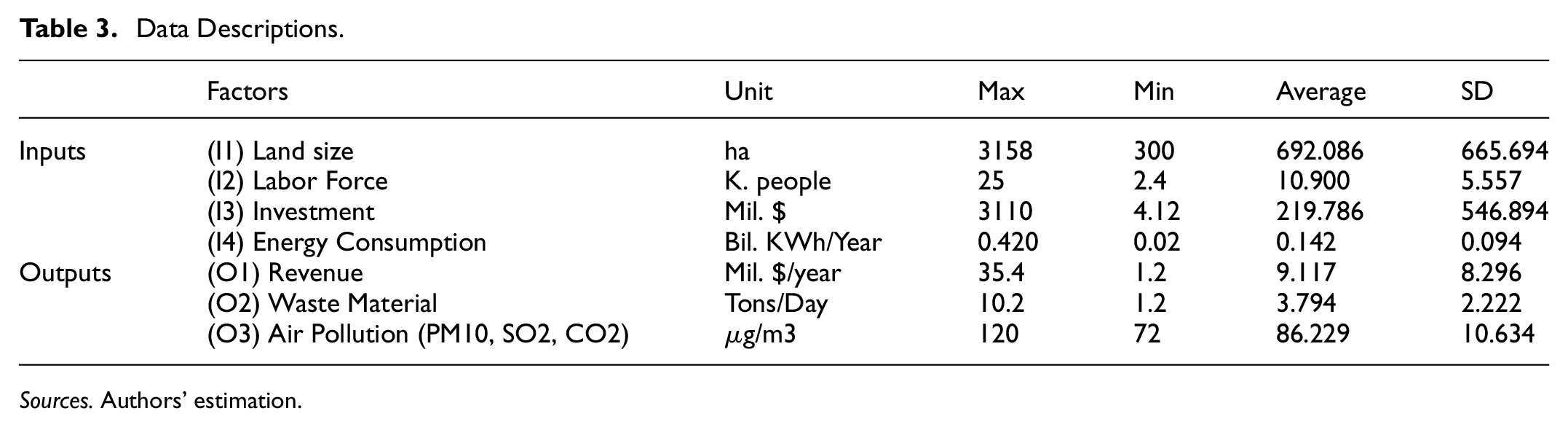
The data for inputs and outputs of 46 Industrial Parks are collected from reliable sources, including the General Statistics Office of Vietnam (gso.gov.vn), reports from the United Nations Industrial Development Organisation (UNIDO) and the Ministry of Planning and Investment (MPI) of Vietnam, as well as yearly reports of IPs by 2020. Table 3 presents a statistical description and the details are showed in Table A1 (in Appendix). Afterwards, the DEA models, that is, CCR-I, CCR-O, BCC-I, BCC-O, SBM-I-C, and SBM-O-C, are implemented by the DEA-Solver software to estimate the performance efficiency scores of all Industrial Parks, that is, DMUs. The authors evaluate and determine the top-performance DMUs. Then, the AHP model is carried out to analyze the Eco-efficiency of the selected IPs in the next stage.
Data Descriptions.
Sources. Authors’ estimation.
Determining the Best Eco-efficiency Industrial Park with AHP Model
In the next stage, the authors utilize the AHP model to analyze and evaluate the IPs that were selected from the results of DEA in the first stage. This process is carried out as follows::
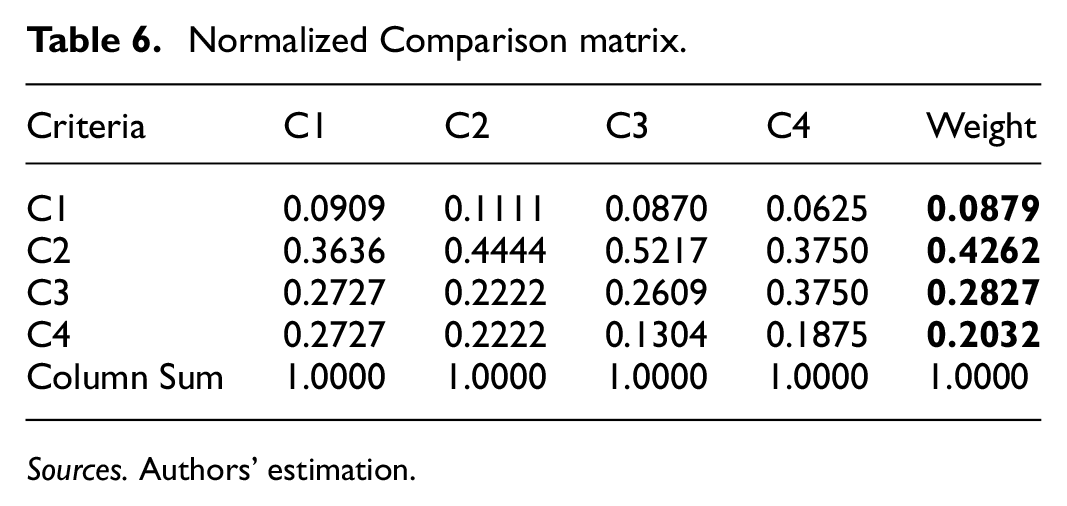
Taking the division between the value of each comparison and the sum of the columns to normalize the matrix, then calculating the average of the row entries to have the priority vector (f). The results of steps third and fourth are presented in Table 6.
The largest eigenvector (

Then, the value of the eigenvector

With n = 4, the random index (RI) = 0.9 (in Table 2), and then, the consistency ratio (CR) =
Criteria and Sub-criteria Description.

Note. Referenced by Huang et al. (2019), van Beers et al. (2020), and Vu et al. (2021).
Pairwise Comparison Matrix among Criteria.

Sources. Authors’ estimation.
Normalized Comparison matrix.
Sources. Authors’ estimation.
In a similar manner, the procedure mentioned above is replicated to calculate the weights of the criteria, sub-criteria, and alternatives. The details of comparison matrices are presented in Table A2–A5 (in Appendix).
Results and Discussion
The First Stage- DEA Results
After pre-selecting industrial parks with some requirements (i.e., land size, number of operating firms, and number of employees), the authors consider 35 Industrial Parks located in Vietnam to run DEA for evaluating the performance efficiency. With four input indicators (i.e., Land size, Labor force, Investment, and Energy Consumption) and three output indicators (i.e., Revenue, Waste material, and Air Pollution), the efficiency scores of DMUs are estimated.
A high-performance efficiency industrial park should optimize the inputs, maximize desirable outputs and minimize the undesirable outputs. The results of various DEA models are presented in Table 7. The value of score equals “1” does not mean that the IP has perfect performance, but it shows that the operation of IP is more efficient than others.
Efficiency Scores of DMUs.

Sources: Authors’ estimation.
In total, nine IPs achieved an efficiency score of 1 including IP6, IP7, IP12, IP17, IP18, IP22, IP23, IP26, IP31. On the data collection and DEA results, these industrial parks are evaluated as better operating than others. In addition, the authors decide to choose these IPs having an efficiency score of “1” consistently over different DEA models for the next stage.
The Second Stage- AHP Results
To have a comprehensive evaluation under both subjective and objective aspects, the AHP model is implemented in the second stage to assess the eco-efficiency level of nine industrial parks selected in the first stage. Four experts in the field of developing Industrial Parks are invited to participate in this stage. The first expert is a person who is in charge of a project from UNIDO Vietnam; The second expert is working at the Department for Economic Zones Management of Vietnam’s Ministry of Planning and Investment; the third expert is a general director of an industrial zone join the stock company; the fourth expert is working for an environmental protection fund. The advantage of this study is that the authors invited experts from different organizations to have an overview and insight perspectives of various stakeholders. After the experts reviewed and revised the list of criteria, there are four major criteria and 14 sub-criteria in total presented in Figure A1 (in the Appendix). Based on the hierarchy structure, the experts used the important scale to make comparison matrices among criteria. The results of the AHP model show all priorities and synthesized priorities in Table 8. Among the main criteria, the “Environmental performance” scored the highest weight of 0.4262. It means that criteria C3 (i.e., social performance) plays the most important factor in evaluating eco-efficiency for Industrial Parks. It is accompanied by the “Social performance” with a weight of 0.2827. In terms of the synthesized priorities, Table 8 has shown the top five most important sub-criteria namely “Social management systems” (C3.1); “Environmental management system” (C2.1); “Energy Efficiency” (C2.2); “Employment generation” (C4.1); “Social infrastructure” (C3.2) in respectively.
Priorities and Synthesized Priorities of Criteria and Sub-criteria.

Sources. Authors’ estimation.
Park Management Performance (C1) is fundamental but earns a lower synthesized priority score (0.0879). The sub-criteria under this category, such as Monitoring (C1.2) and Risk Management (C1.4), indicate operational resilience and frequent evaluation, however their impact in the final ranking is rather minor. This suggests that while competent park management is crucial, other variables such as environmental and social elements are paramount in promoting eco-efficiency.
Environmental Performance (C2) is a significant factor, shown by its elevated synthesized priority score of 0.4262. Sub-criteria like Energy Efficiency (C2.2) and Environmental Management Systems (C2.1) have considerable significance (0.162 each), highlighting the critical role of sustainable energy use and environmental governance in enhancing the eco-efficiency of industrial parks. This discovery corresponds with the worldwide trend that prioritizes energy efficiency and waste minimization as essential for sustainable industrial advancement.
Social Performance (C3) significantly contributes, with a consolidated priority of 0.2827. Within its sub-criteria, Social Management Systems (C3.1) has the highest ranking (0.180), suggesting that industrial parks that emphasize social infrastructure and community involvement are seen as more eco-efficient. This indicates that social inclusion and wellbeing in industrial environments play a crucial role in the overall sustainability framework.
The Economic Performance (C4) criterion, while essential, is assigned the lowest synthesized priority of 0.2032. Under this criteria, Employment Generation (C4.1) is the most significant sub-criterion (0.127), followed by Economic Value Creation (C4.3). The diminished significance of economic considerations indicates that, while job creation and company development are vital, they are less directly associated with the ecological sustainability of industrial parks compared to environmental or social initiatives.
Then, the experts used the scale from 1 (i.e., strongly disagree) to 5 (i.e., strongly agree) to assess each sub-criterion for nine DMUs. The final eco-efficiency scores of each industrial park are presented in Table 9. The 31st IP (i.e., the Khanh Phu Industrial Zone) is evaluated as the most eco-efficient industrial park with a score of 4.1017. It indicates IP31 has a strong eco-efficiency, possibly due to balanced performance across all criteria. The Long Hau Industrial Park (i.e. IP 18) and Tan Khai Industrial Park (i.e., IP 7) are respectively ranked in the second and third position in Table 9. Conversely, IP26 ranked lowest with the final score of 2.8045, highlighting areas for improvement, particularly in environmental and social factors.
The Final Ranking Order of Eco-efficiency Industrial Parks in Vietnam.

Sources. Authors’ estimation.
The findings of the study are consistent with the UNIDO framework for eco-industrial parks, highlighting the significance of environmental, social, and economic performance. The present investigation substantiates this framework by illustrating that environmental performance, such as energy efficiency and waste management, alongside social performance, including social management systems, is pivotal in fostering eco-efficiency, as evidenced by the AHP analysis. This aligns with research conducted by Wen et al. (2019), which employed the Analytic Hierarchy Process (AHP) to assess the environmental performance of industrial parks in China. The findings indicate that environmental criteria, especially waste reduction and energy management, play a vital role in attaining elevated levels of eco-efficiency.
The findings of this study are consistent with the work that has been undertaken as part of the project entitled “Implementation of eco-industrial park initiative for sustainable industrial zones in Viet Nam” through the Global Eco-industrial Parks (EIP) Programme. Stucki et al. (2019) presented key results from implementing EIP principles, policies, and guidelines of MPI and UNIDO. There are five existing industrial zones in the project, including the Khanh Phu Industrial Zone located in the Ninh Binh province. It proves that the implementation of the eco-industrial park guideline project has brought an extent level of success in improving eco-efficiency operating industrial parks.
This result challenges the emphasis on purely economic measures in earlier studies, such as those by Chen et al. (2017), Lo et al. (2023) and Wang, Nguyen, and Wang (2021), which prioritized economic outputs when assessing industrial park efficiency. The findings suggest that in the context of sustainable development, eco-efficiency requires a balanced focus on environmental and social outcomes rather than a predominant emphasis on economic growth alone. This shift reflects the broader global trend toward integrating environmental sustainability and social welfare into industrial development strategies, as highlighted by international organizations like the World Bank and OECD.
Conclusion
Industrial parks are key drivers of economic growth, especially in developing countries like Vietnam, where they significantly contribute to national GDP and employment. However, their rapid expansion often leads to negative environmental and social impacts, such as increased pollution, resource depletion, and social inequalities. The concept of eco-efficiency, which aims to maximize economic benefits while minimizing environmental impacts, provides a solution to this challenge by promoting sustainable practices within industrial parks. Studying eco-efficiency in industrial parks is crucial due to the growing global emphasis on sustainable industrial development. This research is timely and relevant in the context of global industrial development trends for several reasons. First, with increasing concerns about climate change and environmental degradation, governments and organizations worldwide are adopting more sustainable approaches to industrial development. The United Nations Industrial Development Organization (UNIDO) and the World Bank have introduced international frameworks for developing eco-industrial parks (EIPs) that balance economic, social, and environmental goals. This study aligns with these global efforts, offering a model for assessing eco-efficiency in line with international guidelines. Secondly, as industrial parks consume vast amounts of land, energy, and raw materials, improving resource efficiency is a pressing concern. Eco-efficiency initiatives, such as reducing energy consumption, optimizing land use, and minimizing waste, are becoming integral to sustainable industrial practices. This research contributes to these goals by evaluating the efficiency of industrial parks in terms of both resource inputs and environmental outputs. Thirdly, Vietnam has seen a dramatic increase in the number and size of industrial parks, which has spurred economic growth but also raised environmental and social concerns. As the country continues to industrialize, it faces the challenge of balancing economic development with environmental sustainability. This research addresses that need by providing a framework for evaluating the eco-efficiency of industrial parks in Vietnam, making it highly relevant for policymakers and stakeholders involved in sustainable industrial development. Last, while numerous studies have focused on assessing industrial park performance, few have employed a hybrid approach combining Data Envelopment Analysis (DEA) and Analytic Hierarchy Process (AHP). By integrating these two methodologies, this research offers a more comprehensive evaluation of eco-efficiency, incorporating both quantitative data and expert judgments. This innovation is particularly valuable as it reflects the complexity of sustainable industrial development, which requires consideration of multiple criteria, including economic performance, environmental impact, and social well-being.
The proposed approach involves two MCDM models, DEA and AHP, which are widely utilized for evaluating the efficiency performance of units across various levels, including companies, organizations, and governments. In the DEA stage, the authors have considered four input indicators (i.e., Land size, Labor force, Investment, Energy Consumption) and three output indicators (i.e., Revenue, Waste material, and Air Pollution) to run algorithm functions. As the result, nine industrial parks are evaluated as having the most efficient performance over 35 industrial zones in the sample. They are the My Phuoc 3 (IP6), Tan Khai (IP7), Loc An-Binh Son (IP12), Ham Kiem II (IP17), Long Hau (IP18), Tam Diep II (IP22), Tram Vang (IP23), Phu Tai (IP26), and Khanh Phu (IP31). These industrial parks have been chosen as alternative options in the second phase of the research model. In the stage of the AHP model, the authors have proposed a list of four main criteria and 14 sub-criteria to evaluate the eco-efficiency scores of the alternatives above. The relevant field experts are invited to review and finalize the set of criteria, and then assess the IPs by using the Likert scale. The AHP model is implemented to calculate the weights of all criteria that help to estimate the final eco-efficiency scores of all nine alternatives. The findings have shown that the Khanh Phu Industrial Zone has obtained the most eco-efficiency performance (4.1017) among 35 industrial zones in this study.
In terms of policy implications, this study serves as a valuable reference for policymakers and decision-makers focused on sustainable development. Specifically, industrial park managers can use the weighted criteria from this research to identify the most critical factors influencing eco-efficiency and pinpoint weaker aspects of their operations. This insight enables them to make targeted investments and implement strategies to enhance the environmental performance of their industrial zones. Moreover, the findings can inform national and regional environmental policies by providing data-driven evidence for improving industrial park regulations, particularly in developing economies. By combining these two models, the study offers a more comprehensive evaluation framework that balances both quantitative efficiency metrics and expert-driven qualitative assessments. Policymakers could leverage this approach to design more holistic sustainability assessments across different sectors, thereby aligning industrial development goals with broader sustainability targets such as the UN Sustainable Development Goals (SDGs). Moreover, these findings highlight the global applicability of the framework, particularly for developing countries where sustainable industrialization is crucial but often faces resource and data limitations. This framework to create incentive structures (e.g., tax breaks, subsidies) for industrial parks that perform well on eco-efficiency metrics, encouraging broader adoption of sustainable practices.
There are several potential limitations to consider in this study. First, a sample of 35 industrial parks is not representative of all industrial parks in Vietnam which may limit the applicability of the findings to other nations or regions. Additionally, the use of expert opinions to determine the weights of criteria in the AHP model may be susceptible to biases or personal preferences. Despite these limitations, the proposed framework and findings of this study offer important insights into the evaluation of eco-efficiency in industrial parks and serve as a foundation for future research in this area.
Footnotes
Appendix
Comparison matrix for Economic Performance (C4).

| Sub-criteria | C4.1 | C4.2 | C4.3 | Weight |
|---|---|---|---|---|
| C4.1 | 1 | 5 | 3 | 0.627 |
| C4.2 | 1/5 | 1 | 1/4 | 0.094 |
| C4.3 | 1/3 | 4 | 1 | 0.279 |
| Total | 1 | |||
| CR = 0.054 | ||||

Funding
The author(s) disclosed receipt of the following financial support for the research, authorship, and/or publication of this article: This research is funded by Vietnam National University HoChi Minh City (VNU-HCM) under grant number C2024-28-19
Declaration of Conflicting Interests
The author(s) declared no potential conflicts of interest with respect to the research, authorship, and/or publication of this article.
Data Availability Statement
The datasets generated during and/or analyzed during the current study are available from the corresponding author on reasonable request.