



Abstract
Climate change issues require collaboration in large-scale problem-solving initiatives like environmental volunteering. Environmental volunteerism can reduce environmental management costs, improve environmental quality and personal development of environmental volunteers. In this regard, it is essential to investigate factors leading to volunteers’ dropping out of these programmes. This can be done by examining volunteers’ sustainability intention toward environmental volunteering participation. Therefore, this study examined the dominant factors that contribute to the sustainability intention in environmental volunteering through values orientation, society norms, and perceived well-being. 356 youth environmental volunteers from Klang Valley, Malaysia, were selected as respondents. Through structural equation modeling (SEM) analysis, our findings validated three dimensions of values orientation (egoistic, altruistic and biospheric), three dimensions of society norms (requirement, cultures, and social influence) and three dimensions of environmental volunteers’ well-being (positive emotion, relationship, and achievement). The study’s findings showed that predictor variables (values orientation, society norms, and perceived well-being) contributing 72% to the intention to sustain environmental volunteering. Volunteers’ well-being is the main factor contributing to intention. Mediating analysis shows that perceived well-being was a half mediator in the relationship between values and intention. However, perceived well-being does not mediate the relationship between society norms and intention. Therefore, the environmental volunteering programmes developed need to align with youths’ values and well-being such as focusing on fun activities, competency development and expanding the network to attract volunteers to sustain their participation. This study has implications for environmental stakeholders, especially the government, environmental non-government organisations (NGOs), and education institutions in recruiting and engaging volunteers.
Keywords
Introduction
Climate change causes severe environmental issues, such as extreme weather, extinctions of animals and plant species, soil erosion, the spread of infectious diseases and low food security (García-Vinuesa et al., 2022). Science and technology alone cannot solve climate change, as this issue requires climate change mitigation behavior. Issues related to climate change need large-scale solutions such as environmental volunteering. The Paris Agreement, Sustainable Development Goals (SDGs), and the Conference of the Parties (COP) have emerged as pivotal frameworks on the global stage and uniting nations in a shared commitment to combat climate change. Specifically, the 13th goal of the SGDs highlights the critical role of environmental volunteering in fostering individual and collective climate action.
Environmental volunteers are vital in helping public and non-profit organisations accomplish their environmental conservation goals. While the agencies could get essential works completed, the volunteers in return benefit through personal development, expanded social networks with people of similar values, and improvements to physical and mental health (Ding & Schuett, 2020; Okun et al., 2017; Teixeira et al., 2023). Volunteerism is more common among youth due to their greater energy and availability, in contrast to elderly populations that are predominantly motivated by health considerations in their participation in environmental volunteering (Hsiao et al., 2020). In certain instances, their involvement in volunteering is shaped by employer expectations to fulfil Corporate Social Responsibility (CSR) as a component of corporate mandates (Man & Rameli, 2019).
In Malaysia, Kelab Rakan Muda (youth club) is a government initiative to promote involvement as environmental volunteers while addressing broader social issues among youth. In addition, there are many other registered environmental NGOs in Malaysia that share the same goal of improving the quality of the environment through environmental philanthropy, including environmental volunteering activities. Despite the efforts, high dropout rates and turnover among volunteers remain significant challenges, disrupting organizational efforts and requiring continuous recruitment and training of new participants (Gulliver et al., 2023).
Increasing volunteers’ long-term commitment is crucial. However, it is equally important to explore the factors that contribute to the dropout and turnover. Previous research has extensively explored factors such as motivation, satisfaction, and generativity in fostering volunteer commitment (Ding & Schuett, 2020). However, society influences, including norms and cultural factors, remain underexplored in this context. Factors driving one’s involvement in environmental volunteerism are also closely tied to personal development, such as increasing knowledge, skills, and emotional growth, expanding networks, enhancing communication abilities, and preparing for future careers (Abd Rahman et al., 2021; Omoto & Packard, 2016). Additionally, existing theoretical models, such as the Theory of Planned Behavior and the Value-Belief-Norm framework, predominantly offer general predictions of environmental volunteering without considering the unique backgrounds and psychological factors of volunteers (Cho et al., 2020; Han et al., 2020; Woosnam et al., 2019). These gaps necessitate a more holistic approach to understanding the factors influencing environmental volunteering, particularly among youth.
This study addresses these gaps by investigating the complex interplay between individual values orientation, society influences, and perceived well-being in shaping youths’ intentions to sustain environmental volunteering. Well-being is viewed as a factor that contributes to the long-term viability of environmental volunteerism (Abd Rahman et al., 2021; Huang, 2018; Kragh et al., 2016; O’Brien et al., 2010). The well-being experienced by environmental volunteers varies depending on their backgrounds. Therefore, the research also incorporates the unique backgrounds and psychological factors of youth volunteers, particularly university students and young working adults, who represent a highly active demographic in environmental conservation.
The researchers formulate the following research question to guide the study: What are the dominant factors influencing youth volunteers’ sustainability intention in environmental volunteering, particularly concerning values orientation, society norms, and perceived well-being? By conducting research to answer this research question, the study highlights the critical role of understanding the sustainability of involvement in environmental volunteering, which has broader implications for the effectiveness of both formal and non-formal environmental education. The findings underscore the importance of designing volunteering activities that align with volunteers’ needs and experiences to ensure program effectiveness (Hyde et al., 2016; Terry et al., 2013; Winch et al., 2021). By incorporating the self-assessment of environmental volunteers’ experiences, this study provides a more nuanced approach to predicting behavior, addressing gaps in previous research that often overlooked this dimension (Cho & Joo, 2022).
The study’s contributions are particularly relevant in the Malaysian context, where youth play a significant role in environmental sustainability efforts. By identifying dominant factors influencing the intention to sustain participation in environmental volunteering, the study aligns with SDG-13 (climate action) and SDG-3 (good health and well-being). These findings are valuable for government agencies, educational institutions, and NGOs in their efforts to organize and manage environmental volunteering programs. Furthermore, the insights from this research can help reduce environmental conservation costs while fostering youth potential through personal and professional development. The study also promotes a culture of collaboration and mutual support within communities to address large-scale environmental challenges. Importantly, it emphasizes the value of experience-based and active learning approaches in environmental education, encouraging the involvement of environmentally conscious citizens in environmental monitoring and management. This integrated model offers a comprehensive framework for enhancing the sustainability of environmental volunteering programs and their broader societal impact.
Theory of Environmental Volunteering Behavior
Various factors can encourage individuals to provide their time and effort in environmental volunteering. Researchers have attempted to understand motivating factors in the context of volunteering based on several theories. Past studies have combined the theories of environmental behavior in predicting participation in environmental volunteering. However, studies that predict the sustainability of participating in environmental volunteering are limited.
Clary et al. (1996) developed the Volunteer Function Inventory (VFI) and proposed six types of functions for volunteerism: the expression of altruistic values, learning and understanding, social goals, career development, protecting the ego from negative feelings, and seeking personal growth. There is evidence to suggest that people volunteer in environmental stewardship activities to fulfil these intentions as well as protect the environment.
Theoretical and model support is important to ensure that the factors studied align with psychology and human behavior. Based on past studies, the Volunteer Process Model (VPM) is often referenced by researchers in understanding and predicting the sustainability of involvement in environmental volunteering (Aydinli-Karakulak et al., 2016; Pages et al., 2018; Trauntvein et al., 2018). The VPM, founded by Omoto and Snyder (1995), identifies three stages in understanding a person’s involvement in volunteering. The antecedent stage considers personal characteristics, demographic differences, culture, society norms and motivation that influence an individual’s decision to engage as a volunteer (Omoto and Snyder, 1995).
The VPM posits that volunteering can satisfy six motives, as assessed through the Volunteer Functions Inventory (VFI). These motives are (a) values, which highlight the function of volunteering as a way to express altruistic and humanitarian concerns; (b) understanding, which highlights the opportunity to gain new experiences and practice knowledge, skills, and abilities through volunteering; (c) social, which reflects the possibility to spend time with friends and engage in an activity viewed favourably by others; (d) career, which involves using volunteering to establish career opportunities and networks and develop career-related skills; (e) protective, which enables volunteers to escape from negative feelings related to themselves; and (f) enhancement, which captures the possibility of experiencing personal growth and satisfaction through volunteering (Clary et al., 1996). According to the VPM, when volunteers’ experiences match their motives, their satisfaction with volunteering increases, leading to sustained engagement (Aydinli-Karakulak et al., 2016).
Previous studies have predicted involvement in environmental volunteering by adapting environmental conservation behavior theories such as the value-belief-norm theory (Han et al., 2020; Woosnam et al., 2019). Value-belief-norm reveals how personal values, environmental worldview, awareness of consequences, ascription of responsibility, and personal norms factored into individuals’intentions to engage in pro-environmental behavior (Stern, 2000). The value-belief-norm (VBN) theory was most recently tested in the context of sustainability behaviors by Whitley et al. (2018).
Numerous studies applied the theory of planned behavior, founded by Ajzen (2006), in predicting involvement as environmental volunteers (Cho et al., 2020; Han et al., 2020; Woosnam et al., 2019). In the theory of planned behavior, humans consciously behave, and their intention influences their behavior toward environmental conservation. According to the theory of planned behavior model, attitudes are judgments people make about behaviors they like or dislike. These attitudes are based on the environmental values held by individuals. Hence, a more positive attitude toward a behavior leads to a higher intention to engage in that behavior. Subjective norms refer to the influence of one’s close social circle, such as parents, family, friends, teachers, and peers; perceived behavioral control is an individual’s belief that their behavior is necessary and can lead to change based on the desired goal. Ajzen (2006) stated some people consciously engage in environmental volunteering without their willingness due to several factors, including environmental factors like cultural norms or social pressure. Furthermore, volunteers’ well-being emphasizing the psychological and emotional benefits derived from volunteering, which enhance their perceived ability to contribute effectively. The selection of these theories is justified by their proven effectiveness in environmental psychology research, their adaptability to the unique context of environmental volunteering, and their ability to capture the intricate interplay of individual motivations and society influences. The subtopic further describes each of the constructs involved and their relationship to each other, leading to the formation of a research hypothesis that will be tested in this study.
Intention to Sustain in Environmental Volunteering
Understanding the determinants of volunteer motivation is important for effective volunteer management, as these motivations influence a volunteer’s intention to sustain their engagement in environmental volunteering. High levels of sustained volunteer engagement indicate successful environmental volunteer programs when volunteers feel happy, valued, and able to learn and develop in their tasks (Beirne & Lambin, 2013; Cho et al., 2020). According to a study by Woosnam et al. (2019), youth who reported past participation in environmental volunteering were generally more inclined to participate in future environmental projects than those without prior experiences in environmental volunteering. One factor contributing to their sustained involvement in environmental volunteering is that individuals involved in environmental volunteering projects are linked to more environmentally conscious behavior afterwards (Sumarmi et al., 2022).
Ajzen (2006) argued that intention is the strongest predictor of behavior. Volunteers are more likely intent to stay when their volunteer coordinators exhibit a transformational leadership style, and this relationship is partially influenced by their job satisfaction, commitment to the organisation, and personality traits (Almas et al. 2020; Cho et al. 2024). Similarly, Cho et al. (2020) found that volunteer management practices such as orientation and training, social interaction, rewards and recognition, empowerment, and schedule flexibility positively influence volunteers’ intention to continue volunteering.
In addition, the strongest internal motivations for sustaining environmental volunteering are rooted in the desire to protect the environment, gain knowledge about nature, improve areas that volunteers use or enjoy, and express respect and personal values (Ding & Schuett, 2020). However, this line of research remains limited and does not sufficiently explore the dynamic and sustainable aspects of volunteerism (Ding & Schuett, 2020). Therefore, the factors affecting the intention to sustain environmental volunteering investigated in this research include values, society norms, and volunteers’ well-being. This study aims to address these gaps by further investigating the interplay between personal values, society norms, and well-being in shaping sustained commitment to environmental volunteering.
Values Orientation in Environmental Volunteering
Values related to culture could become habitual in society. Norms are customary standards or rules that have become part of life and serve as a guide for how members of society should behave (Schwartz, 2012). Values are used to characterise a culture, society, and individuals to explain the basis for motivation, attitudes, and behavior. Culture has advocated positive traits like being helpful and kind as norms in the community which subconsciously drive individuals to engage in environmental volunteer activities. Society roles indicate how an individual perceives themselves within a group. At the same time, volunteerism entails a community-building component which helps NGOs, environmental clubs, university associations or neighbourhood communities to foster a sense of community (Carpenter, 2016). Culture plays a large role in this and can be viewed by reflecting on the norms of society. People often base their actions on individualistic or collectivistic values that related to society norms without consciously knowing it (Gammoh et al., 2019). Therefore, values have correlation with the norms in the society. Based on that, we formulate the hypothesis 1 (H1): Volunteers’ values correlate with the society norms.
Schwartz (2012) found 10 theories of basic human values, namely power, achievement, hedonism, stimulation, self-direction, universalism, benevolence, tradition, conformity, and security which can be integrated in the context of environmental conservation behavior. Moreover, Stern (2000) proposed three environmental values: egoistic, altruistic, and biospheric. The values proposed by Schwartz (2012) can also be categorised according to the values expressed by Stern (2000), where power, achievement, hedonism, and self-direction are values related to egocentric while universalism, benevolence, tradition, conformity and security values are related to altruistic, while biospheric and spiritual values. Based on past studies, some of the personal values or egoistic values that influence individuals to engage in environmental volunteering activities include skill enhancement (Measham & Barnett, 2007), gaining experience (Pages et al., 2018), increasing social interactions such as networking (Measham & Barnett, 2007; McDougle et al., 2011), and learning about the environment (Measham & Barnett, 2007).
Meanwhile, altruistic values focus on caring for others, such as family members, friends, and humanity. Studies by Omoto and Packard (2016) and Foster (2018) showed that a sense of responsibility toward the community significantly influences involvement as a volunteer in environmental activities. Biospheric values, on the other hand, focus on the well-being of all living beings, such as plants, animals, and ecosystems (Measham & Barnett, 2007). A high sense of responsibility for the environment can foster more environmentally friendly attitudes and behaviors, leading to environmental activism (Paco & Rodrigues, 2016). Studies by Lee et al. (2014) and Van der Werff et al. (2014) found that environmental or biospheric values among volunteers were better predictors of environmentally friendly behaviors than variables such as social structure, demographics, or early life socialisation experiences of individuals. Finkelstein (2010) examined the constructs of individualism and collectivism values among a group of undergraduate students in the Southeastern United States, where he found that collectivism strongly related to altruistic values, strengthening social ties, and the development of role identity. Individualism or egoistic values, on the other hand, was closely linked with career-related objectives. Therefore, volunteers’ values orientation fundamentally shapes their decision to sustain in environmental volunteering as we formulate the hypothesis 2 (H2): Volunteers’ values positively affect intention to sustain in environmental volunteering.
Volunteers’ values not only contribute to the intention to sustain engagement in environmental volunteering but also significantly influence personal well-being (Hyde et al., 2016). Research indicates that when volunteers participate in activities that resonate with their altruistic or biospheric values, their psychological well-being improves (Lee et al., 2014; Van der Werff et al., 2014). This connection arises from the fulfillment derived from acting in accordance with one’s values, which fosters a deeper sense of purpose and belonging. As volunteers witness the positive impact of their efforts on the environment and community, they experience increased life satisfaction and emotional resilience. This alignment between personal values and volunteer activities can lead to enhanced motivation to continue volunteering, creating a virtuous cycle of engagement and well-being. Therefore, this leads to the formulation of hypothesis 3 (H3): Volunteers’ values positively affect perceived well-being.
Role of Society Norms in Environmental Volunteering
Society norms refer to the practices of most other individuals in the same environment that can unconsciously influence human behavior (Fang et al., 2017). It is important to understand society norms to determine the type of social interaction with behavior accepted in society. However, society norms are not widely explored, although they are significant in understanding behavior from a social psychology perspective (Fang et al., 2017). The theory of planned behavior assumes that pro-environmental behavior is also influenced by perceived social pressure or subjective norms as the main element to indicate pro-environmental behavior (Ajzen, 2006; Fang et al., 2017). Two concepts in norms are “ought” and “how to do it.” Normative values are also related to actions that are “mandatory, justified, and prohibited,” leading to judgments of behavior as common, normal, effective, and appropriate based on the specific behavior shown by people around them (Fang et al., 2017). In the theory of planned behavior, subjective norms are also influenced by social influences such as friends, family, teachers, and close individuals (Ajzen, 2006).
Research reveals that youths from families with a stronger civic orientation and open family communication and those whose peers and parents volunteer frequently are more likely to volunteer in environmental activities (Van Goethem et al., 2014). Parents are important figures to youths as they are the first adult role models who provide context for socialisation for them (Van Goethem et al., 2014). The importance of parental influence in volunteering participation increases as youths develop their moral conscience and identity. This implies that parents impact volunteerism among youths, compared to peers. Studies found that parents have a stronger influence on life-long aspects like morality, education and occupation (Smetana et al., 2006), while friends and peers have more influence on present life situations like leisure time and friendship (Van Goethem et al., 2014).
Educators play an important role in encouraging undergraduates to engage in environmental volunteerism activities as community service and act as change agents. The influence of close school and university personnel (teachers and lecturers) is also indispensable as teenagers and youths spend most of their time in schools or universities. A school environment that promotes environmental volunteerism among youths affects subsequent participation directly (Law et al., 2013). For example, in live animal volunteering experience, educators consistently articulated the value of the animal (values), specific beliefs for care (beliefs), threats to the animal (awareness of the impacts), and suitable activities that could be executed by an individual or group (individual responsibility leading into behavioral norms) (Caplow, 2018). Social support from government and teachers as role models can strengthen society norms and inform students about positive perceptions, efficacy, and behavior toward environmental volunteering (Abdul Rahman et al., 2020; Steg & Vlek 2009). Furthermore, according to Culiberg and Elgaaied-Gambier (2016), social support from role models helps develop norms that shape one’s behavior. Volunteers often continue their efforts due to the reinforcement they receive from society expectations (Aydinli-Karakulak et al., 2016; Smetana et al., 2006; Van Goethem et al., 2014). Thus, we formulated hypothesis 4 (H4): Volunteers’ society norms positively affect their intention to sustain environmental volunteering.
Environmental Volunteers’ Perceived Well-Being
Although many volunteers donate their time and energy to environmental conservation, little research has addressed the psychological aspects of volunteering in environmental stewardship activities (Ding & Schuett, 2020). A lack of knowledge about their psychology, especially in perceived well-being, can restrict an organiser’s ability to manage environmental volunteering programs efficiently and sustain volunteers’ participation (Gulliver et al., 2023). Volunteers should properly train through courses on environmental issues to attain the full benefits of volunteering activities. In addition, program managers should be more familiar with certain psychological aspects of their volunteers, such as the reasons that motivate individuals to donate their time and effort (Ding & Schuett, 2020), expectations regarding the volunteering experience (Cho & Joo, 2022; Hyde et al., 2016; Cho et al., 2020), and how well volunteers emotionally bond with the organisers (Winch et al., 2021).
Individuals will perform a behavior more frequently if they perceive the behavior will benefit them (O’Brien et al., 2008). Research by Kragh et al. (2016) showed that environmental volunteering immediately improved participants’ well-being regarding engagement, relationship meaning, positive emotion and health. Volunteers exhibit greater physical health (O’Brien et al., 2010), show a higher sense of belonging in a community (Foster, 2018; Fairley et al., 2013; Omoto & Packard, 2016), express more pro-social attitudes (Winch et al., 2021) and social responsibility (Martin & Czellar, 2017; Paco & Rodrigues, 2016). Environmental volunteering can have a positive effect, increasing positive indices of well-being and reducing negative indices such as stress and depression (Kragh et al., 2016). Environmental volunteering offers the added benefit of providing opportunities for volunteers to spend time in nature, which can lead to a better connection with nature (Kragh et al., 2016; Teixeira et al., 2023). It can also lead to volunteers gaining an increased understanding of the natural environment and, subsequently, an enhanced sense of community (Kragh et al., 2016).
Practical conservation volunteering requires stamina and physical strength, providing a way to exercise and improve fitness (Kragh et al., 2016). Volunteering is seen as a way to ensure health and build sustainable communities. Respondents in the study by O’Brien et al. (2010) described various benefits they gained from their involvement, such as improving mental and physical health, socialising with others, and reducing stress levels. This was also found in the study by Kragh et al. (2016), where environmental volunteering activities have improved the well-being of participants. Pillemer et al. (2010) found that environmental volunteering was significantly associated with physical activity, self-reported health, and depressive symptoms.
Previous studies have used different definitions of well-being and have therefore measured different constructs, often including only some aspects of well-being instead of a holistic approach (Kragh et al. 2016). According to the Environmental Volunteer Well-being Model by Seligman (2011), known as the PERMA model, there are five factors of well-being for environmental volunteers, that is, (a) “Positive emotion,” which encompass present positive feelings, life satisfaction and positive emotions about the future; (b) “engagement,” which is employing one’s strengths to a task, becoming fully absorbed in the task and therefore completely losing track of time, also referred to as getting into “flow” (c) “positive relationships,” which are fundamental to a good life and as a basic human need that is essential for well-being; (d) “meaning,” which includes feelings of doing something worthwhile and having a purpose and direction in life and (e) “achievement,” often pursued individuals setting their personal goals or striving to achieve recognition in the wider world, for example, winning an award or accumulating wealth (Kragh et al. 2016).
Butler and Kern (2016) subsequently developed the PERMA-Profiler (PERMA-P), a scale based on the PERMA model, which also includes additional elements of well-being. The additional elements in the PERMA-P are (a) “negative emotion” from the concept of subjective well-being acknowledging the importance of both positive and negative aspects of well-being; (b) “health,” which can be considered a core part of well-being; (c) “loneliness,” which is a strong predictor of many negative life outcomes; and (d) “overall happiness,” which allows an overall assessment after reflecting on specific elements of well-being (Butler & Kern, 2016). Wright et al. (2015) employed the Environmental Volunteer Functions Inventory (EVFI), which was tested for assessing volunteer motivations and scales for assessing volunteer satisfaction and level of advocacy. Other studies examined the positive relationship between the level of volunteer activity. They perceive well-being as a positive emotion leading to a perception of a meaningful life, physical health, engagement with nature, satisfaction with human relationships, meaningful work, opportunities for creativity, and positive contributions to the human community (Huang, 2018; Liarakou, 2011; Measham & Barnett, 2007; Molsher & Townsend 2016).
Therefore, literature review showed that improved well-being directly contributes to long-term volunteer commitment (Meneghini & Colledani, 2024; Pillemer et al., 2010; Teixeira et al., 2023). Volunteers who perceive a direct benefit to their well-being are more likely to remain engaged in volunteer efforts (Butler & Kern, 2016; O’Brien et al., 2010). We formulated the hypothesis 5 (H5): Volunteers’ perceived well-being positively affect intention to sustain in environmental volunteering.
However, sometimes social or society norms positively impact the volunteers’ well-being (Steg & Vlek, 2009; Law et al., 2013). Volunteers often continue their efforts due to the reinforcement they receive from society expectations (Smetana et al., 2006; Van Goethem et al., 2014). This also plays a critical role in determining sustained engagement in environmental volunteering. Therefore, we formulated the hypothesis 6 (H6): Volunteers’ society norms positively affect perceived well-being.
In addition, perceived well-being serves as a psychological mechanism linking values to the intention to sustain environmental volunteering. Individuals with strong pro-environmental values often experience personal fulfillment, a sense of purpose, and emotional satisfaction from their engagement, which in turn reinforces their long-term commitment. According to Self-Determination Theory (Deci & Ryan, 2008), aligning actions with deeply held values fosters intrinsic motivation and enhances well-being, leading to sustained participation. Empirical studies further support this relationship, demonstrating that values orientation can influence personal well-being, which in turn affects environmental intentions (Kragh et al., 2016; Maricchiolo et al., 2021). These findings indicate that fostering values alone may not be sufficient to sustain long-term engagement in environmental volunteering. Instead, perceived well-being is crucial for strengthening volunteers’ commitment to staying involved in environmental volunteering. Therefore, we formulated the hypothesis 7 (H7): Perceived well-being mediate the relationship between values and intention to sustain in environmental volunteering.
Society norms as external reinforcement are critical in maintaining long-term volunteer engagement. Previous studies have demonstrated that when individuals believe their contributions align with socially supported norms, it enhances their sense of well-being. Consequently, increasing their intention to sustain involvement in environmental volunteering (Hyde et al. 2016). Thus, we formulated the hypothesis 8 (H8): Perceived well-being mediates the relationship between society norms and its intention to sustain environmental volunteering. Based on established theories and prior empirical findings, Figure 1 presents the conceptual framework for understanding the intention to sustain in environmental volunteering among youths.

Research conceptual framework.
Method
Subject and Procedure
This study adopted the quantitative survey research design, using a questionnaire as the research instrument. The survey was conducted in Klang Valley, Malaysia, and the respondents were chosen through purposive sampling. The questionnaires were administered to 356 volunteers aged 15 to 30 who participated in at least one environmental volunteering programme. However, only 353 questionnaires were usable for the inferential statistical analysis; 3 were dropped due to outlier’s data.
Instrument Development
This study used a questionnaire as the research instrument. The instrument contained a total of 42 items after undergoing the CFA procedure. The survey instrument was constructed by researchers based on interviews and adapted from the theory of planned behavior (Ajzen, 2006) and the PERMA theory by Seligman (2011). Table 1 summarises the number of items and presents examples for each construct and subconstruct tested in this study.
Constructs and Subconstructs of the Questionnaire.

This study measured the environmental volunteering values, that is, egoistic, altruistic and biospheric, through items developed based on inputs from interviews with environmental volunteers and the theory of environmental values by Stern (2000). Society norms were measured using items related to social influences, cultures, and fulfilling the university or employer requirements. These items were constructed based on interviews and adapted from the theory of planned behavior (Ajzen 2006). Similarly, the construct of intention was constructed based on the theory of planned environmental behavior (Ajzen 2006), while the construct and subconstructs of Environmental volunteers’ well-being were established based on interview findings and the PERMA theory by Seligman (2011).
Validity and Reliability
The instrument’s content validity and construct validity were tested in this study. The content validity of the questionnaire was verified by an expert in the field of environmental education and an expert in the field of outdoor education. In addition, the study used both exploratory factor analysis (EFA) and confirmatory factor analysis (CFA) as statistical techniques to rigorously assess and ensure the construct validity of the questionnaire. A pilot test was conducted to determine whether the respondents could comprehend the items. The pilot questionnaires were randomly distributed to 267 environmental volunteers in Klang Valley, Malaysia.
Construct validity is the extent to which a set of measured items reflect the theoretical latent construct they are designed to measure. Construct validity consists of convergent and discriminant components (Awang, 2015). The convergent validity of a construct can be assessed using three approaches factor loadings, average variance extracted (AVE), and composite reliability (CR). The construct validity was determined through EFA using SPSS, while the CFA was conducted using SEM-AMOS, using the data from the real study. SEM was chosen for the CFA analysis to confirm the underlying factor structure and model fit of the data. Figure 2 presents the measuremant model of sustainability in environmental volunteering participation among youth.

Measurement model of sustainability in environmental volunteering participation among youth.
Based on the CFA, 1 subconstruct of society norms, that is, university/employer requirement, was dropped (3 items), and 14 items were deleted due to lower factor loadings. These included 2 items on egoistic values, 1 item from altruistic values, 1 item from culture, 2 items from social influences, 2 items from achievements, 2 items from relationships and 1 item from construct intention. The AVE and CR values are presented in Table 2; AVE above 0.5 indicates that the items possess adequate convergent validity, and CR above 0.7 indicates adequate internal consistency (Awang, 2015; Hair et al., 2010).
Results of the Confirmatory Factor Analysis (CFA).

The square root of the AVE was tested against the intercorrelations of the construct with the other constructs in the model to ensure discriminant validity (Awang, 2015). As indicated in Table 3, for the entire construct, the square root of the AVE exceeded the correlations with other constructs. Hence, the measurement model was considered satisfactory as the study found adequate reliability, convergent validity, and discriminant validity.
Discriminant Validity.

Note. Bold indicates to highlight the value of square root of the AVE exceeded the correlations with other variables.
Structural Equation Modeling Analysis
A structural equation modeling analysis was carried out to test the relationship between the study constructs which was used to test the hypothesised model. In this study we examined the relationship between values orientation, society norms, perceived well-being and intention to sustain in environmental volunteering. In addition, we test the perceived well-being as a mediator in the relationship between values and intention and the relationship between society norms and intention using the bootstrapping technique with 5,000 samples. Based on these constructs, we formulated eight hypotheses.
For maximum likelihood estimate, a set of goodness-of-fit indices was used to evaluate model fit: chi-square (λ2), root mean square error of approximation (RMSEA), comparative fit index (CFI), Tucker–Lewis index (TLI) and Incremental Fit Index (IFI). The significant p-value was used to explain the causal directional relationship. Moreover, the regression weight or beta value (β) was used to explain the strength of the relationship and the squared (r 2) value was used to explain the variation of the model. All analyses were performed using AMOS version 23.
Findings
The result showed the normed chi-square, λ2 of 3.079. The model is compatible with the survey data as λ2 is greater than 1 and less than 5 and is considered good as the Root Mean Square Error of Approximation (RMSEA) is 0.077, which is less than 0.08. Moreover, the Comparative Fit Index (CFI) is 0.908, the Tucker-Lewis Index (TLI) is 0.902, and the Incremental Fit Index (IFI) is 0.909. Each value is larger than the suggested value of 0.90, which shows a well-fit model (Byrne, 2010; Hair et al., 2010).
Thus, from the above findings, we can conclude that the structural model fits the data well. The result of the structural equation model path analysis indicated that perceived well-being, society norms and values of environmental volunteering predict 72% of the variance in intention. This means that the remaining 28% of the variance for intention is attributed to other factors not investigated in this study, while 63% of the variance in perceived well-being is predicted by values and society norms. Figure 3 shows the structural model of sustainability in environmental volunteering participation among youth.

Structural model of sustainability in environmental volunteering participation among youth.
The overall findings from the hypothesis testing showed that four out of six hypotheses were supported, as presented through hypothesis testing results for hypotheses 1 to 6 (direct effect path coefficient) in Table 4. This study also found that values orientation significantly correlated with society norms (r = .673, p < .001). Based on the beta (β) standard value, the factor of perceived well-being is the most significant contributor to the intention to sustain in environmental volunteering (β = .581; p < .001), followed by society norms (β = .281; p < .001). However, values orientation does not significantly affect intention (β = .079; p > .001). The findings also showed that values orientation significantly affects perceived well-being among volunteers (β = .715; p < .001), while society norms do not significantly affect perceived well-being (β = .110; p > .001).
Significant Effect Path Coefficient (Direct Effect).

Significant at level p = .001.
Table 5 presents the results of the mediation analysis, evaluating the indirect effects of values and society norms on the intention to sustain environmental volunteering, with perceived well-being as the mediating variable. The analysis reveals that the direct effect of society norms on well-being is positive (β = .111), indicating a potential influence. However, the p-value of .105 exceeds the significance threshold of .05, meaning this effect is not statistically significant. With an insignificant direct effect and no indirect effect (β = .00), society norms do not serve as a mediator in this model. In other words, society norms do not have a meaningful impact on well-being.
Test of Mediator: Significant Effect Path Coefficient (Indirect Effect).

The direct effect of values on well-being is strong (β = .714) and highly significant with a p-value of .000, indicating a robust positive relationship between the two constructs. However, the absence of an indirect effect (β = .00) suggests that the influence of values on well-being without mediation. Therefore, values act as a “half mediator” in this model.
The direct effect of well-being on intention is moderate (β = .573) and statistically significant, with a p-value of .000, indicating a meaningful and positive influence of well-being on intention. Since the indirect effect is zero (β = .00), this suggests that the relationship between well-being and intention is purely direct, without being mediated by another variable. Thus, well-being be as a “half mediator.”
Overall, the SEM analysis demonstrates that society norms do not serve as a mediator since they do not significantly affect well-being. However, values have a strong direct impact on well-being but do not mediate through other constructs. Well-being directly influences intention without additional mediation.
Discussion
Overall, values orientation, society norms, and volunteers’ well-being contribute 72% to the intention to continue environmental volunteering. In addition, values orientation and society norms contribute 63% to volunteers’ well-being. The values of environmental volunteerism held by environmental volunteers are seen as an initial factor that drives them to engage in environmental volunteer activities. The identified values of environmental volunteerism are egoistic, altruistic, and biospheric. Torkar and Bognes et al. (2019) stated that altruistic and biospheric values affect long-term environmental involvement, while egoistic values affect short-term involvement. Egoistic values increase involvement as an environmental volunteer if the results of volunteer activities are the same as the goals targeted by the volunteers (Torkar & Bognes et al., 2019). Therefore, it is important to identify youth volunteers’ needs in organising environmental volunteer programs.
The study by Omoto and Packard (2016) and Foster (2018) showed that a sense of responsibility toward the community significantly influences involvement in environmental volunteering. In addition, empathy has a significant relationship with involvement as a volunteer (Omoto & Packard 2016). In this context, the factors identified by Omoto and Packard (2016), such as a sense of responsibility toward the community and empathy, arise after individuals have been involved and experienced volunteering in the environment. This situation relates to altruistic values, which prioritise the welfare of others, including the well-being of future generations.
The biospheric value held by environmental volunteers also contributes to their involvement in environmental volunteering. Studies have found individuals interested in outdoor recreational activities usually hold this value (Alcock et al., 2020). In this regard, their desire to see a clean environment and their love for animals drive them to participate in environmental volunteering activities (Andow et al., 2016). Although individuals hold multiple values, this study shows that the biospheric value contributes the most to involvement in environmental volunteering, followed by altruistic and egoistic values. Therefore, environmental volunteering campaigns and programs should be based on these values to attract environmental volunteers. In the context of this study, environmental volunteering and awareness campaign promotions should highlight how volunteering can impact the quality of the environment, especially for future generations (Sumarmi et al., 2022).
Regarding society norms, it has been found that the influence of friends is a strong factor in influencing involvement in environmental volunteering. McDougle et al. (2011) survey in a Canadian university found that the main driver behind environmental volunteering involvement is expanding one’s social network. Additionally, cultural and society factors, such as kindness and helping others, make involvement in environmental volunteering an unconscious practice due to the actions of most individuals in the same environment (Fang et al. 2017). Previous findings are aligned with the Malaysian culture, where individual decisions are influenced by those closest to the individuals. In the context of this study, friends, family, and lecturers are individuals who can influence involvement in environmental volunteering. Malaysians are known for their “gotong-royong” (communal work) culture, where community members work together to clean residential areas and hold big feasts or events. This culture aligns with the concept of environmental volunteering that emphasises the element of cooperation.
Ensuring the sustainability of involvement in environmental volunteering requires considering the well-being experienced after participating as environmental volunteers (Cho & Joo, 2022). In the context of this study, the well-being experienced by environmental volunteers is related to positive emotions, relationships, and achievement. The well-being aspect of the sense of achievement among youths relates to personal development. This includes acquiring communication skills, leadership, missionary work, animal handling, problem-solving, social skills, self-confidence, increasing environmental knowledge, and being useful for their health (Huang, 2018; Kragh et al., 2016; Liarakou, Kostelou, Lu & Schuett, 2013; Molsher & Townsend 2016; Pillemer et al., 2010). The well-being experienced by youths is also related to feeling close to the community involved, such as recognising new places and cultures during environmental volunteering activities. The well-being experienced by environmental volunteers varies according to the background of the target group, specifically youths. Therefore, environmental volunteering activities benefit the environment, the local community, and the volunteers.
A comprehensive understanding of environmental volunteering emerges from several geographical studies. In South Korea, one study highlights the importance of collective values, emphasizing that a sense of community predicts volunteer satisfaction. In Hong Kong, Aydinli-Karakulak et al. (2016) find that satisfaction, which is deeply linked to cultural values, fully mediates the relationship between volunteer motives and sustained volunteering. Meanwhile, Finkelstein’s (2010) research in the Southeastern United States reveals that collectivism is strongly associated with altruistic values, social ties, and role identity development, while individualism is closely tied to career-related goals that emphasize autonomy and self-actualization. Interestingly, a comparative note is introduced, noting that individuals in developing countries such as Indonesia tend to prioritize personal needs over environmental concerns, which differs from the trend observed in developed countries such as Korea. These findings underscore the importance of considering cultural nuances and geographic differences in shaping motivations and satisfaction in environmental volunteerism.
Overall, based on the model developed, it was found that the environmental values held by environmental volunteers are related to society norms. This is because environmental factors influence values, including the people closest to them. Values can affect the well-being experienced by environmental volunteers and subsequently affect their intention to sustain involvement as environmental volunteers. At the same time, society norms directly impact the intention to sustain involvement as environmental volunteers. Therefore, this model developed could be considered in determining interventions to increase the involvement of environmental volunteers.
The well-being of volunteers influences the intention to preserve environmental volunteering. Therefore, focusing on improving the environmental volunteers’ well-being is important. The role of organisers and management of environmental volunteers is crucial in determining the success of environmental volunteering programs (Gulliver et al., 2023). Environmental education that starts at school should encourage environmental volunteer activities and behavior toward environmental conservation that can be implemented individually. Environmental education should involve environmental volunteering as hands-on activities, and youths should be trained as environmental citizens to help record data related to environmental management.
This study indicates that perceived well-being is a mediator between values and intention. The internalization of environmental values appears to improve volunteers’ perceived well-being, which in turn strengthens their intention to sustain environmental volunteering that aligns with these values. Volunteers will feel positive emotions if environmental volunteering programmes align with the egoistic, biospheric, and altruistic values they hold. In this light, egoistic values only affect short-term involvement, while biospheric and altruistic values can affect long-term involvement. Therefore, organisers of environmental volunteering programmes must reconsider the needs of environmental volunteers. Three important aspects are related to the well-being of environmental volunteers: relationship, achievement, and emotion. Thus, programmes involving experts in the field of environmental conservation, community leaders, and environmental NGO experts should be organised to foster relationships. Organisers must provide training to environmental volunteers to acquire knowledge and skills, and recognition or certificates must be given to them for their involvement (Gulliver et al., 2023).
However, this study found that perceived well-being does not mediate the relationship between society norms and intention. Society norms exert a direct influence on intention. Therefore, support from family, teachers, or lecturers is needed to encourage youths’ involvement in environmental volunteering activities. Family participation can be used as a campaign to encourage participation in environmental volunteering activities. Based on previous research, parental involvement in environmental activities with their children can foster environmental engagement (Jia & Yu, 2022). In addition, engaging in environmental activities with parents can nurture youths’ environmental awareness and encourage their participation in environmental volunteering (Orejudo & Burgo, 2022). Culture also plays a crucial role in promoting behavior toward environmental conservation, particularly environmental volunteering. In Malaysia, where community spirit is strong, the practice of communal work, gotong-royong, should be expanded to include environmental volunteering instead of weddings or other social events. Based on the final results, Figure 4 shows the latest model of sustainability in environmental volunteering participation among youth.
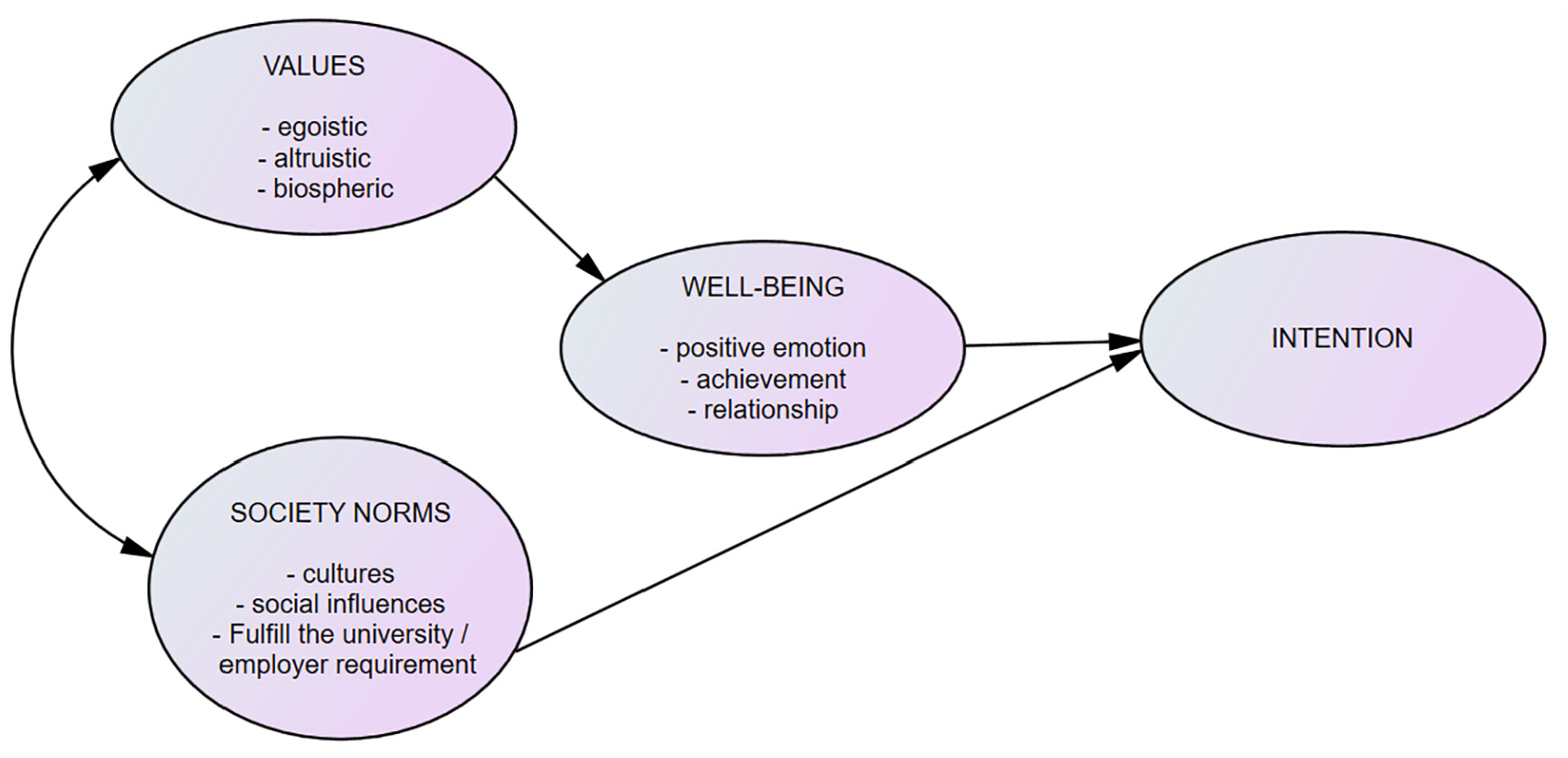
Model of sustainability in environmental volunteering participation among youth.
Conclusion
This study aims to develop a sustainability model of youths’ participation in environmental volunteering. The predictive factors examined were based on the theory of planned behavior and the value-belief-norm (VBN) theory. The study found that values orientation, society norms, and volunteers’ well-being contribute 72% to the intention to remain involved in environmental volunteering. Values orientation and society norms contribute 63% to volunteers’ well-being. Perceived well-being was a mediator in the relationship between values and intention. Therefore, this study highlights crucial policy measures and practical considerations to enhance volunteers’ values that align with the volunteers’ well-being. Governments can encourage youth participation through incentive programs, including tax benefits and educational recognition. The integration of environmental volunteering into formal education is recommended to instill environmental responsibility early on. Partnerships between government bodies such as higher education institutions, Ministry of Natural Resources, Environment and Climate Change of Malaysia and environmental NGOs are essential for amplifying the impact of youth engagement initiatives.
The study emphasizes the importance of practical skill development for youth through targeted training programs and stresses effective communication strategies, such as social media campaigns, to raise awareness and mobilize youth involvement. Robust monitoring and evaluation mechanisms are deemed crucial for assessing program impacts and ensuring ongoing effectiveness. The study also advocates for community involvement, supporting local initiatives, and multi-stakeholder engagement to strengthen the influence of youth-led environmental efforts. Continuous research, supported by policymakers, is proposed to monitor trends and impacts, ensuring adaptive policies, and prioritizing data accessibility for evidence-based decision-making at all levels. Through the incorporation of these measures and implications, stakeholders can collaboratively build a sustainable framework for youth engagement in environmental volunteering, making significant contributions to long-term environmental conservation efforts.
The limitation of this study lies in its exclusive focus on youth participants and reliance on self-reported findings. While the study provides valuable insights into the engagement of young individuals in environmental volunteering, the generalizability of its conclusions to other age groups may be restricted. To address this limitation, future research should consider adopting longitudinal methods, enabling a more in-depth exploration of the sustainability of involvement as environmental volunteers over time.
Footnotes
Acknowledgements
This research was funded by Ministry of Higher Education and Universiti Kebangsaan Malaysia. Research code: FRGS/1/2018/SSI12/UKM/03/1 entitled “Model of volunteering values and society norms toward environmental volunteers’ well-being.”

Ethical Considerations
Ethical review and approval were waived for this study, as this study involves no more than minimal risk to subjects.
Consent to Participate
Informed consent was obtained from all subjects involved in the study.
Funding
The author(s) disclosed receipt of the following financial support for the research, authorship, and/or publication of this article: From Ministry of Higher Education and Universiti Kebangsaan Malaysia. Research code: FRGS/1/2018/SSI12/UKM/03/1 entitled “Model of volunteering values and society norms toward environmental volunteers’ well-being”.
Declaration of Conflicting Interests
The author(s) declared no potential conflicts of interest with respect to the research, authorship, and/or publication of this article.
Data Availability Statement
Data sharing not applicable to this article as no datasets were generated or analyzed during the current study.