




Abstract
The study investigates the underlying motives facilitating users’ continuance intention for digital content in academic settings. Extending the expectation confirmation model of IS continuance (ECM-ISC), the study proposes a conceptual model by incorporating personal and technological antecedents of users’ continuance intention for digital content. In addition, users’ environmental concerns and price value are considered as potential moderators in the relationship between their satisfaction and continuance intention for digital content. An online survey was used to collect data from 311 digital content users of a large public university in Saudi Arabia. Structural equation modeling was used to test the relationships in the conceptual model. The results obtained from SmartPLS 3.2 confirm that compatibility, convenience, self-efficacy, and facilitating conditions are the predictors of confirmation and usefulness of digital content. The confirmation of expectations and perceived usefulness result in greater satisfaction with the digital content, which in turn leads to users’ continuance intention. In addition, the article provides empirical evidence for the impact of environmental concerns on the satisfaction–continuance intention relationship, thus opening a novel research debate. The study is expected to offer new insights both for academicians and managers of digital content.
Introduction
Broadband internet and the availability of portable smart devices have changed the way of life in almost every aspect, and the field of education is one of the most transformed ones. Nowadays, high-speed internet connectivity has made digital content accessible to users anywhere, anytime, and at a relatively lower cost compared with the traditional print version. Digital content refers to any electronic data and information in a digital form that can be retrieved and read through computer screens or smart devices (Rockinson-Szapkiw et al., 2013; Sehn & Fragoso, 2015). It has also attracted the attention of publishers who are making efforts to provide ubiquitous digital material that may be used without time and space constraints (Chen et al., 2012). Moreover, the publishers also have an opportunity for global access and easy dissemination of digital content.
Recently, the increased demand of digital content has resulted in more revenue generation for digital content publishers (Weinstein, 2010). In spite of the high investments by publishers and the considerable availability of resources for the users, the adoption rate of digital content has been slower than expected (Lee, 2010; Stone & Baker-Eveleth, 2013). The literature has identified various reasons for this slow adoption of digital content (Arshad & Akram, 2018). First, most people believe that digital content resolution leads to eye strain and fatigue (Bennett, 2005). Second, the industry is lacking a universal technology standard for sharing digital content among various users having different devices with different platforms such as Android, iOS, and Windows (Weisberg, 2011). Third, printed copies are the preferred choice over the digital ones if reading is continued for longer times (Stone & Baker-Eveleth, 2013). Fourth, the literature also identifies long-term and continued usage of digital content as a critical issue, because the success of e-learning processes is contingent on its continued usage rather than initial adoption (Joo et al., 2017; Lee, 2010; Stone & Baker-Eveleth, 2013).
The convenience of wireless handheld devices has provided many learning opportunities (Cheng, 2015). This has also affected users’ information-seeking behavior as literature indicates people’s increased preference for digital material over the traditional printed material (Berger, 2017; Hsiao & Chen, 2017; Jin, 2014). Tveit and Mangen (2014) argued that until recently, digital reading habits were mainly happening outside the literary domain (such as online news and articles); however, they speculated that literary reading is bound to increasingly rely on the screen as compared with paper. They further addressed various research questions that arise due to the increasing literary habits of digital platform users. Moreover, Jin (2014) argues that understanding the behaviors of e-book readers and users of digital devices is significant for both the academicians and the publishers of electronic academic material. However, apart from obvious reasons such as ease of access and navigation, there may be a number of technological and personal characteristics that may influence users’ attitude toward continued usage of digital content. This study attempts to identify those characteristics and the mechanism through which individuals are involved in such behaviors.
Another important aspect of digital content adoption is the users’ environment-friendly nature (Haytko & Matulich, 2008). Dagher and Itan (2012) observed that environmental concerns affect users’ behaviors and the users having environment-friendly attitudes are more inclined toward digital content. The literature has advocated for investigations of users’ attitude toward digital content which has valuable effects on the environment (Hsiao & Chen, 2017; Hsu et al., 2017). Though the literature points out the significance of users’ environment-friendly behaviors in digital content adoption yet, it is not clear how the various levels of environmental concerns may affect the link between user’s satisfaction and continuance intention for digital content. Another major reason for digital content preference is its relatively lower price as compared with the printed material. Hsiao and Chen (2017) argued that price is a key measure of user’s decision to acquire a product. Although users’ attitude toward adoption/ continuation is also dependent on the price of the product, the price value may differ for different consumers. Researchers have tested the direct and indirect impacts of environmental concerns and price value on users’ intention/continuance intention in the context of digital books and green purchasing behavior (Dagher et al., 2015; Hsiao & Chen, 2017; Terpend et al., 2014). Although the direct impact of environmental concerns and price value have been discussed in the literature (Dagher & Itan, 2012), it is not clear how much higher/lower environmental concerns or higher/lower price value may affect satisfaction–continuance intention relationship. This study contributes to the literature by undertaking the issues of higher/lower levels of environmental concerns and price value and investigates the moderating role of these variables on the users’ satisfaction–continuance intention relationship.
Therefore, building on the above arguments, this study attempts to investigate users’ continuance intention for digital content and makes following contributions. First, this study contributes to the existing literature by incorporating external technology (compatibility and convenience) and personality-related drivers (self-efficacy and facilitating conditions) to explain users’ digital content continuance intentions. Along with the drivers of users’ digital content continuance intentions, the study also reveals the underlying mechanism through which users’ continuance intention for digital content is shaped. Second, users’ environmental concerns and price value have been identified as major predictors of individuals’ intentions toward digital books and digital devices (Degirmenci & Breitner, 2017; Hsiao & Chen, 2017). However, little is known how the various price value levels and environmental concerns may affect the relationship between the users’ satisfaction with the digital content and their continuance intention for digital content. This study empirically tested price value and environmental concerns as moderating variables on the relationship between users’ satisfaction and their continuance intention for digital content.
Following the above objective, this study attempts to address the following research questions:
The remainder of the paper is organized as follows: The theoretical background and hypotheses are discussed in the following section. This is followed by research methodology and data analysis. Finally, the article concludes with the discussion, theoretical and managerial implications, and the limitations of the study.
Theoretical Background and Hypotheses
Historically, a number of theories such as Theory of Planned Behavior (TPB; Ajzen, 1991); Technology Acceptance Model (TAM; Davis, 1989); Diffusion of Innovation Theory (DIT; Rogers, 1995); Unified Theory of Acceptance and Use of Technology (UTAUT; Venkatesh et al., 2003); and expectation confirmation model (ECM) for IS continuance (ECM-ISC; Bhattacherjee, 2001) have been used to investigate users acceptance and adoption of information systems. Concerning digital content usage behavior, empirical studies have mostly relied on these theoretical frameworks to identify the relationships among various underlying behavioral and psychological constructs. Most of these theories focus on the pre-adoption phase of technology, except for ECM-ISC which addresses post-adoption behaviors, that is, the continuance usage. This study focuses on the post-adoption of digital content; so, ECM-ISC is natural choice to explain users’ continuance intention for digital content.
ECM-ISC has been widely acknowledged for its predicting power to explain users continuance usage behaviors. However, due to rapid technological and behavioral changes, there have been several calls for the extension of such theories (Akram et al., 2019). In this effort to extend ECM-ISC for digital content, we followed an iterative approach. First, a comprehensive IS adoption/continuance literature review helped us identify a list of predictors, mediators, and moderators playing a role in users’ decision-making toward continuous usage of digital content. Second, the list was shared with a group of experts in the field and users of digital content. This process helped us further refine the list. Third, on the basis of the expert’s opinion and relevant literature, a theoretical framework reflecting various relationships among these variables was proposed. The following section provides an explanation of various constructs and their relationship in the conceptual model.
Digital Content
The availability of sophisticated and efficient hardware and software platforms has significantly contributed toward digital content generation (Lai & Ulhas, 2012). The academicians are using various types of digital content such as e-books, e-journal articles, and e-dictionaries. Limited research has focused on digital or digital content acceptance and continuance at the university level. Researchers have mainly focused on the features of e-books (Ani et al., 2015; Hsiao & Chen, 2017; Jin, 2014; Joo et al., 2017; Stone & Baker-Eveleth, 2013), whereas this study considers digital content generally as any academic material in electronic format (e.g., books, journal articles, case studies) that may be used through computer screens or mobile devices. According to Carreiro (2010), an e-book is equipped with features similar to a book, but it can be provided digitally. Digital books provide more learning support features and convenience to the learner. Some of the important features of digital books listed by researchers are user-friendly interface, multimedia functions, interactivity, and diversity of learning material (Joo et al., 2017).
Various attempts have been made to explore digital book adoption from various aspects and in different contexts (Arshad & Akram, 2018). Weisberg (2011) conducted a longitudinal study in a business school in the United States over 2 years to measure students’ attitude toward e-textbooks. He concluded that the students’ attitude toward e-textbooks is becoming more receptive with time. Lai and Ulhas (2012) studied the motivating factors behind e-book applications acceptance. With a sample from university students in Taiwan, they suggested that perceived usefulness (PU), convenience, compatibility, and perceived enjoyment have a significant effect on e-books acceptance among university students. Jin (2014) proposed a framework based on TAM (Davis, 1989) integrating some external factors such as compatibility, relative advantage, subjective norm, and self-efficacy. He found significant impacts of compatibility, self-efficacy, and subjective norm on the perceived ease of use and PU.
Stone and Baker-Eveleth (2013) examined e-textbook adoption and continuance intention by university students. The results of their students’ survey, from a university in the United States, indicated a positive impact of confirmation on PU and satisfaction, which subsequently affects continuance intention for e-textbooks. Hsiao and Chen (2017) studied e-book, considering the value-based concerns, subscriptions by university students in Taiwan. They suggested that the perceived price plays a significant role in creating individuals’ perceived value, which consequently leads to their decision for subscription to electronic books. In addition, they found that environmental concerns have a significant positive impact on the user’s attitude, which subsequently affects their intention to pay for e-books.
ECM-ISC
According to Expectation Confirmation Theory (ECT), the user’s repurchase intention depends upon their satisfaction, which is contingent on the perceived performance and confirmation/disconfirmation of expectations (Oliver, 1980). By integrating constructs from ECT with that of TAM (Davis, 1989), Bhattacherjee (2001) proposed that ECM explains post-acceptance of IS continuance (Joo et al., 2017). Bhattacherjee (2001) argued that unlike initial use or acceptance, continuance refers to the role of IS. Therefore, Continuance Intention for digital content would be users repurchase intention or intention to continue the use of digital content. Bhattacherjee (2001) reasoned that information system continuance and repurchase decisions are analogous, because both of them follow the same procedure. According to ECM-ISC, users’ satisfaction is determined by their expectation of confirmation and PU of IS; subsequently, satisfaction positively leads to their continuance intention for IS. The ECM-ISC is composed of four constructs: confirmation, PU, satisfaction, and continuance intention. Confirmation is the extent to which users’ expectations are met (Bhattacherjee, 2001; Oliver, 1980). PU is the degree to which the users perceive the technology to be useful based on their experiences (Davis, 1989). Satisfaction is a pleasant feeling of a user after confirmation of the expectations, and continuance intention means the repurchase intention or the intention to continue using the technology (Bhattacherjee, 2001). Due to its high explanatory power, ECM-ISC has been frequently employed to assess IS continuance (Joo et al., 2017; Sørebø et al., 2009; Stone & Baker-Eveleth, 2013). As the current study intends to measure digital content adoption, ECM-ISC is the natural choice for this study.
Literature has confirmed that satisfaction with IT is a key determinant of continuance intention, while satisfaction is predicted by confirmation of expectations and PU (Bhattacherjee, 2001; Jin, 2014; Joo et al., 2017; Stone & Baker-Eveleth, 2013). PU also plays a significant role in determining the intention of the user for future usage. PU of IT is adjusted by a positive confirmation of the user’s expectations, especially if the users are uncertain about the usefulness of IT (Bhattacherjee, 2001; Lee, 2010; Stone & Baker-Eveleth, 2013).
Researchers have applied ECM-ISC to the learning and education context as well to an investigation of users’ behaviors for adopting and continuing these learning technologies. Sørebø et al. (2009) used ECM-ISC with self-determination to explain teachers’ motivation toward e-learning technology. Empirical results of their study confirmed the positive impacts of PU and satisfaction on the intention to continue. Other studies have also utilized ECM-ISC to analyze e-book and e-textbook adoption and confirmed similar results showing the high explanatory power of ECM-ISC in these contexts (Joo et al., 2017; Lee, 2010; Stone & Baker-Eveleth, 2013).
This study investigates the behaviors of university students toward digital content acquisition. The students have some expectations from digital content such as multimedia, navigation, convenience, and user interface. Because of this, they prefer digital content over the traditional printed material. In this study, the confirmation of expectations refers to the extent to which users’ expectations are satisfied with the experience of using digital content (Bhattacherjee et al., 2008; Joo et al., 2017). Positive confirmation of users’ expectations results in increased perceptions of usefulness (Nascimento et al., 2018). Moreover, if the users’ expectation is less than their actual usage experience, their satisfaction level is increased, and dissatisfaction will occur if their expectations are not met (Bhattacherjee, 2001; Nascimento et al., 2018). Therefore, positive confirmation of their expectations will enhance their perceptions about the usefulness of digital content and lead to higher satisfaction levels. Consequently, usefulness and satisfaction will motivate them for the continuation of digital content usage. Therefore, our hypotheses in the context of digital content are as follows:
Drivers of Digital Content Adoption
Compatibility
Compatibility has been proposed to be one of the major causes of IS success/adoption in the DIT proposed by Rogers (1995). According to DIT, individuals adopt innovations to different degrees, and the population which adopts an innovation is normally distributed over time. In DIT, compatibility is defined as “the extent to which the adopters perceive the innovation is consistent with their beliefs, lifestyle, existing values, experience, and existing needs” (Rogers, 1995). In the context of digital content, the compatibility of digital content would be the extent to which digital content is appropriate and compatible and does not have any conflicts with the users’ education/research activities.
A high level of compatibility leads to the preferable adoption of innovation (Cheng, 2015; Rogers, 1995). Literature has provided evidence for significant effects of compatibility on PU (Cheng, 2015; Lai & Ulhas, 2012). Some of the studies have integrated the compatibility construct with ECM-ISC to study users’ information systems adoption and continuance intention (e.g., Cheng, 2015; Jin, 2014; Lai & Ulhas, 2012; Tung & Chang, 2008). Such integrations have produced a stronger model with more explanatory power. For e-textbooks adoption, a significant relationship between compatibility and intention has been confirmed (Lai & Ulhas, 2012). Tung and Chang (2008) also confirmed the positive effect of compatibility on PU and behavioral intention to use online courses by the nursing students in Taiwan. Jin (2014) integrated TAM with DIT to study e-book adoption among college students and confirmed significant effects of compatibility on PU. Cheng (2015) conducted a study to investigate the role of technology characteristics on the adoption of mobile learning, and their results showed strong effects of compatibility on PU and intention to use mobile learning. In the pre-adoption stage, if users of the digital content find the digital content to be consistent with their beliefs and expectations, their perceptions about the usefulness of the digital content are enhanced. In the post-adoption stage, positive fulfillment of their expectations from the digital content leads them to continue using digital content. Based on these arguments, it is posited that if the users find the digital content consistent with their expectations of the digital content, then their expectations are confirmed and they perceive it to be more useful. Hence, the following is hypothesized:
Convenience
Convenience is the degree to which users find the e-service easy and convenient with regard to saving their time and effort (Brown, 1990). So, in case of digital content, convenience would be the degree to which the users perceive digital content to be time saving and effortless (Lai & Ulhas, 2012). Generally, users find digital content more convenient relative to printed material, because they find it easy to use due to certain characteristics such as its ability to acquire, search, copy, transfer, and store. Some of the major reasons that digital content is preferred over paper textbooks are its greater convenience, portability, lower cost, and search facility (Weisberg, 2011). Lai and Ulhas (2012) study students’ readiness to accept the dedicated e-textbook applications for learning and confirm that convenience has a positive impact on PU and intention to use. Another study made to understand m-learning acceptance has also produced similar results; that is, convenience has a positive effect on PU (Cheng, 2015).
The use of digital content provides convenience in time and location to users, and this convenience can increase effectiveness (Cheng, 2015). Moreover, it is expected that convenience also results in a confirmation of users’ expectations. The users’ confirmation of their expectations due to the convenience of the digital content may finally lead to their higher satisfaction and continued usage intention. The convenience of modern portable digital devices such as laptops, tablets, and smartphones has dramatically changed the users’ paper-based reading habits. This is especially true in the educational context, where users have access to both digital devices and digital content. Various convenience characteristics of digital content such as the ability to search for needed information without much effort and time constraints play a significant role in forming users’ confirmation of expectations and the usefulness of this medium. Hence, the following is hypothesized:
Self-efficacy
According to Venkatesh et al. (2003), self-efficacy refers to the judgment of one’s ability to use technology for the accomplishment of a particular task. Therefore, in the case of digital content, self-efficacy will be a user’s ability to use digital content for the accomplishment of his or her particular tasks. Individuals having higher ability to use technology are more likely to accept and adopt educational information systems (Sawang et al., 2013). Prior studies have confirmed that self-efficacy is a key predictor of technology adoption and continuation intention (Chiu & Wang, 2008; Lwoga & Komba, 2015; Stone & Baker-Eveleth, 2013; Tung & Chang, 2008). Jin (2014) studied e-book adoption by college students and confirmed a positive effect of self-efficacy on PU. Also, self-efficacy has been observed to positively influence outcome expectations (Compeau et al., 1999). Literature also offers some findings that are contradictory to these results (Abdullah et al., 2016; Chang et al., 2017). Therefore, further investigation is required to fully understand the role of users’ self-efficacy in the context of digital content continuance.
In the context of this study, it is expected that students having high self-efficacy will perceive digital content to be more useful. Moreover, in the post-adoption stage, students feel more experienced and trained to use the system. Thus, their self-efficacy will also result in the greater fulfillment of expectations. Hence, the following is hypothesized:
Facilitating conditions
According to Venkatesh et al. (2003), facilitating conditions refer to “the degree to which an individual perceives that a technical and organizational infrastructure exists to support the use of the system” (p. 453). In this study, facilitating conditions refer to the degree to which students believe that the resources and technical infrastructure exist to support the use of digital content. In the context of web-learning and e-learning, researchers have confirmed the positive role of facilitating conditions in individuals’ continuance intention (Chiu & Wang, 2008). Briz-Ponce et al. (2016) have studied students’ behaviors for learning with mobile technologies and have argued that facilitating conditions positively influence PU. Moreover, facilitating conditions are also expected to positively influence users’ expectations, because this, along with the availability of resources, might enable them to conveniently complete their tasks. Naranjo-Zolotov et al. (2019) have posited that proper facilitating conditions increase the usage intention and frequency of using electronic content.
Based on the above arguments, we argue that facilitating conditions such as availability of digital resources will positively impact users’ PU. Moreover, the availability of digital resources (facilitating conditions) will positively confirm users’ expectations. That, in turn, leads to the continued use of digital content. Moreover, after an initial use of digital content, the user gets more knowledge and experience about the required infrastructure supporting digital content usage, which means that the positive confirmation of facilitating conditions leads to PU and satisfaction that, in turn, affect continuance intention. Hence, the following is hypothesized:
Moderating Variables
Environmental concerns
Environmental values are a growing concern in the well-educated societies. Academic communities, in particular, are found to be more concerned about green values and are determined to use environmentally friendly products and services. Digital resource adoption may be considered to be a positive step toward a greener environment. E-book usage reduces the emission of carbon dioxide and is considered to be environmental friendly (Chowdhury, 2012). Over the last decade, users have become more sensitive toward the environment, and they want to stop the damaging attitude of humans toward the environment (Leonidou et al., 2010). Environmental consciousness affects user behavior, and their environmental concerns are expressed by the purchase of environmentally friendly goods and services (Fisher et al., 2012; Follows & Jobber, 2000). The literature confirms users’ attitude toward e-book subscriptions, and their intention to pay for digital books is also dependent on the user’s environmental concerns (Hsiao & Chen, 2017). In comparison with printed books, digital books are environmental friendly (Hsu et al., 2017). The environmentally friendly people consider green values to be an important issue, and this important factor affects their decisions and behaviors (Belanche et al., 2012). Since the use of e-books reduces paper consumption and contributes to a green way of reading, environmentally-friendly users consider it to be an important factor in making the decision for digital versus paper-based academic resources.
Prior research provides some evidence for environmental concerns/consciousness in relation to a user’s decision for environmentally friendly products (Belanche et al., 2012; Fernández-Guzmán & Bravo, 2018). Fernández-Guzmán and Bravo (2018) used ECM framework to study the continuous usage of natural gas, and they confirmed significant effects of environmental consciousness on the Intention of Continued Use. While investigating e-book subscriptions, Hsiao and Chen (2017) confirmed that a positive attitude about the environment indirectly influenced users’ intention to pay for digital book subscriptions. In studying adoption of e-government services, Belanche et al. (2012) used TAM framework and tested the moderating effects of environmental concerns on three relationships, namely, PU—Intention to Use; Attitude—Intention to Use; and Trust—Intention to Use, and they found that the relationship between Attitude and Intention to Use was stronger for the citizens with higher environmental concerns.
It is expected that the users with higher environmental concerns will consider digital content because of its environment-friendly features such as paper reduction. However, different users may express different levels of environmental concerns depending upon their own personal reasoning and circumstances. So, measuring the direct effects of environmental concerns on users’ continuance intentions may not provide a complete understanding of users’ decision-making for digital content. Particularly, for the relationship between satisfaction and continuance, intention may vary depending upon varying levels of environmental concerns. Therefore following a similar approach to that of Belanche et al. (2012), we argue that environmental concerns will play a moderating role in the relationship between users’ satisfaction and their continuance intention for digital content. Hence, we hypothesize the following:
Price value
Price value is usually used as the key measure representing what users must sacrifice to obtain a product/service. According to Venkatesh et al. (2012), price value is the “users’ cognitive trade-off between the perceived benefits of the applications and the monetary cost for using them” (p. 161). In the e-books context, Hsiao and Chen (2017) have argued that perceived price is the extent to which the users believe an e-book subscription is worth the monetary cost. Following these reflexions, we can define price value in the context of digital content as the users’ cognitive trade-off between the perceived benefits of using digital content and the associated monetary cost. In case of digital content, it is expected that when users’ perceive higher benefits—such as availability, portability, or convenience—in comparison with the associated price, then their price value will be positive.
Historically, price value has played an important role in users’ purchase decisions. Generally, users’ perceived lower price of digital material is linked with their favorable attitude toward digital material (Hsiao & Chen, 2017; Robinson, 2011; Tung & Chang, 2008). According to Terpend et al. (2014), price difference between the digital and paper-based materials is also a significant factor affecting users’ decision-making. As digital books/literature are generally perceived to offer competitive prices in comparison with paper-based material, price value, being a key factor especially for students, may play a substantial role in the adoption and continuance of such material.
We can find certain examples in the literature where the price value construct has been studied as a predictor of users continuance intentions (Fernández-Guzmán & Bravo, 2018; Tam et al., 2020). For example, Tam et al. (2020) used ECM framework to investigate the critical factors that influence the continuance intention to use mobile apps, and they confirmed that the effect of price value on continuance intention is not significant. According to Fernández-Guzmán and Bravo (2018), perceived price has significant impacts on the intention of continued use. These contradictory results indicate the need to further investigate the role of price value to predict continuance intentions, particularly in the context of digital content. Moreover, none of the studies have considered perceived values to be a moderating construct. This is important because users’ perception of price value may vary depending upon the product as well as personal characteristics. For these reasons, we consider price value to be potential moderator in the relationship between the users’ satisfaction with digital content and their continuance intention. Hence, we posit the following:
To portray above stated hypotheses, following conceptual model (Figure 1) has been proposed.

Conceptual model.
Method
Instrument Development
All of the scales used in this study have been derived from the well-established literature and carefully adapted into the current research. The items used to measure ECM’s constructs, that is, confirmation, PU, satisfaction, and continuance intention have been measured with three to four items each as adapted from Bhattacherjee (2001). Convenience, compatibility, and environmental concerns have been measured using four items each adapted from Lai and Ulhas (2012), Jin (2014), and Hsiao and Chen (2017), respectively. Whereas self-efficacy, facilitating conditions, and price value are measured using three items each adapted from Bhattacherjee et al.(2008), Venkatesh et al. (2003), and Lallmahomed et al. (2017), respectively. Scale was pretested for any issues related to face validity with a sample of 50 subjects sharing similar characteristics with the main survey participants. Minor changes in the wording of some items were suggested and addressed before the final survey (see Appendix).
Sample
In view the study’s objective, the participants consisted of university students at a large public-sector university in Saudi Arabia. Unlike other contexts, the student sample is appropriate for this study, because it investigates their attitude and continuance intention of digital content. All of the subjects had sufficient experience in using digital content in their studies and research. In addition, to ensure the respondents continued usage of digital content, a screening question was added at the start of the survey. Since the objective was to investigate individuals’ continuance intention to use digital content, only the subjects who responded yes to the screening question were invited to participate in the survey. Moreover, to ensure diversification in the sample, the subjects were selected from cross-faculty modules. The online survey resulted in 311 usable responses with 63.3 males and 36.7 females (see Table 1).
Sample Demographics.

There were several subjects who were using multiple devices.
Results
PLS-based structural equation modeling (PLS-SEM)—an extensively used theory testing method and extensively used method—has been used to test the proposed relationships (Ringle et al., 2015). PLS-SEM is preferable over covariance-based SEM, because PLS-SEM has the ability to handle small samples and complicated structural models containing a large number of variables (Urbach & Ahlemann, 2010). Data were analyzed through SmartPLS 3.2 following a two-stage approach, that is, the psychometric analysis followed by hypotheses testing (Akram et al., 2019; Ringle et al., 2015).
Psychometric Properties
The robustness of the scale was tested through a measurement model which allowed us to test the reliability and validity of each scale. Both the internal consistency (Cronbach’s α) and composite reliability (CR) measures for each scale were well above the cut-off values of .70 (Hair et al., 2016), indicating the reliability of the scale (Table 2).
Constructs Reliability Statistics.
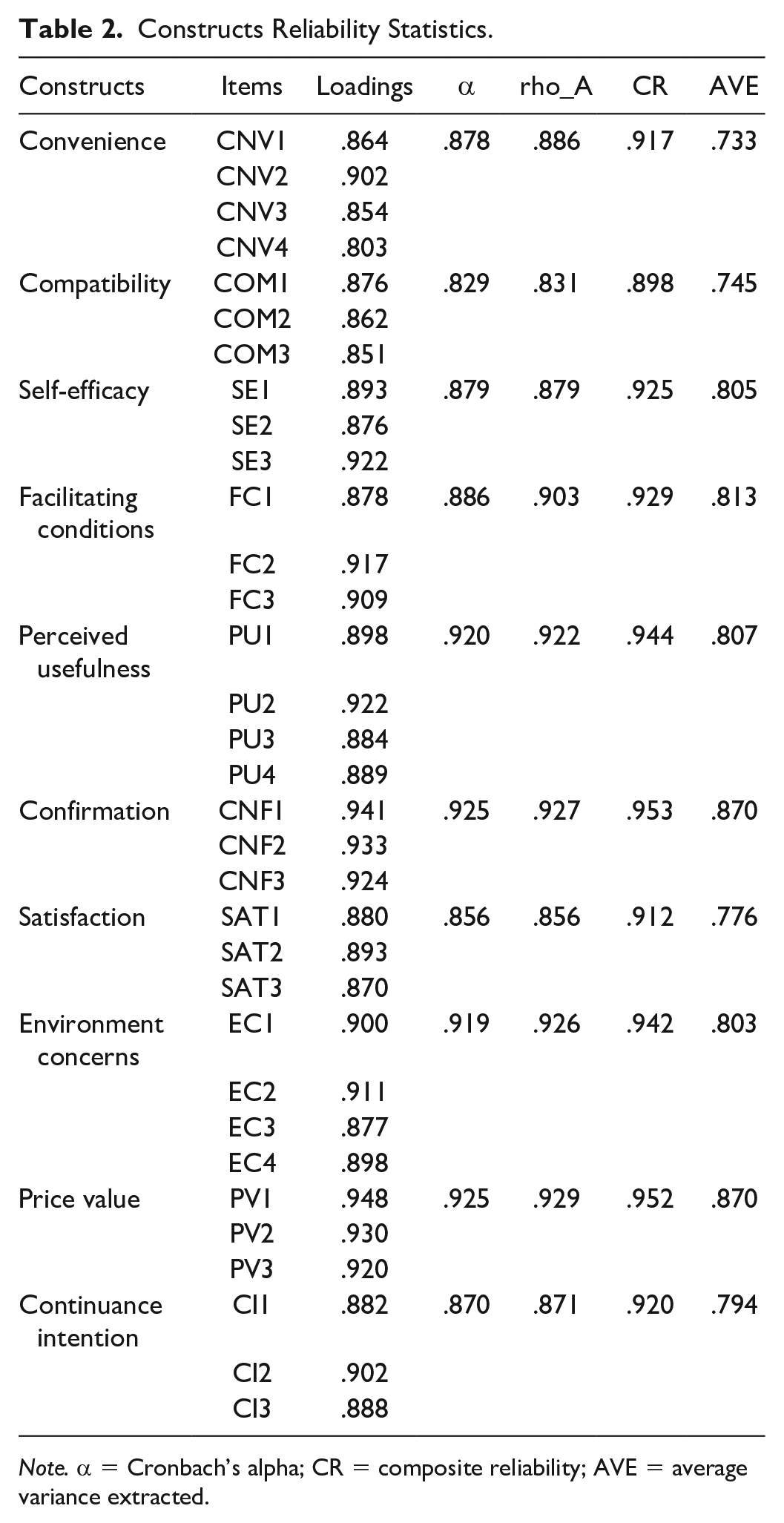
Note. α = Cronbach’s alpha; CR = composite reliability; AVE = average variance extracted.
Following Fornell and Larcker (1981) and Henseler et al. (2015), the scale was tested for convergent and discriminant validity. To hold discriminant validity, Fornell and Larcker (1981) suggested that the average variance extracted should be greater than the shared variance of each construct; whereas Henseler et al. (2015) recommended that the heterotrait-monotrait (HTMT) values between any two constructs should be lower than .90. Both of these conditions were adequately met, exhibiting the discriminant validity of the scale (Table 3).
Discriminant Validity.

Note. Diagonal values are the square-root of AVE. Below the diagonal are the inter-construct correlations, whereas values above diagonal are HTMT ratios. HTMT = heterotrait-monotrait.
Common Method Variance (CMV)
Various procedural and statistical steps were taken to avoid potential CMV which is mainly caused by a single source of data for both the predictor and criterion variables (Podsakoff et al., 2003). First, the subjects were assured about their anonymity. Second, well-established scales used in this research, and before the final survey, they were pretested for any issues related to face validity. Third, from the statistical viewpoint, no extremely high correlations (r > .9) were found. Fourth, Harman’s single factor test did not result in a single factor explaining a large amount of variance, as the maximum variance explained was 32.41%. This suggests that CMV is not an issue with the data.
Hypotheses Testing
The results were evaluated by considering path coefficients with the relevant t and p values. To measure the significance and t values of the proposed relationships, bootstrap with 5,000 subsamples was employed. R2 values were observed to evaluate the predictive power of each variable. Each of the endogenous variables (PU, confirmation, satisfaction, and continuance intention) depicts R2 values greater than .3. Specifically, the dependent variable continuance intention has an R2 value of more than .66. Thus, the conceptual model exhibits fairly good explanatory power.
The technological characteristics (i.e., compatibility and convenience) of digital content significantly affect confirmation of expectation and PU. Compatibility (β = .30, p < .001) has a stronger impact on confirmation of expectations than the PU (β = .15, p < .01). Whereas convenience has a stronger impact on PU (β = .26, p < .001) as compared with confirmation of expectations (β = .22, p < .001). Regarding the personal characteristics (i.e., self-efficacy and facilitating conditions), a significant positive impact was found on both the confirmation of expectations and PU. Self-efficacy is found to have a stronger impact on PU (β = .20, p < .001), whereas facilitating conditions has a stronger impact on confirmation of expectations (β = .26, p < .001).
Confirmation of expectations is found to have a strong positive impact on both PU (β = .28, p < .001) and satisfaction (β = .26, p < .001); PU has positive impact on satisfaction (β = .45, p < .001) and continuance intention (β = .24, p < .001). Furthermore, a positive impact of satisfaction on continuance intention (β = .43, p < .001) is also confirmed. In addition, environmental concerns (β = .11, p < .001) and price value (β = .14, p < .001) were also found to have a significant impact on the continuance usage intention for the digital content. The results establish no significant impact on demographic variables, that is, gender and education. Figure 2 summarizes the path model results.
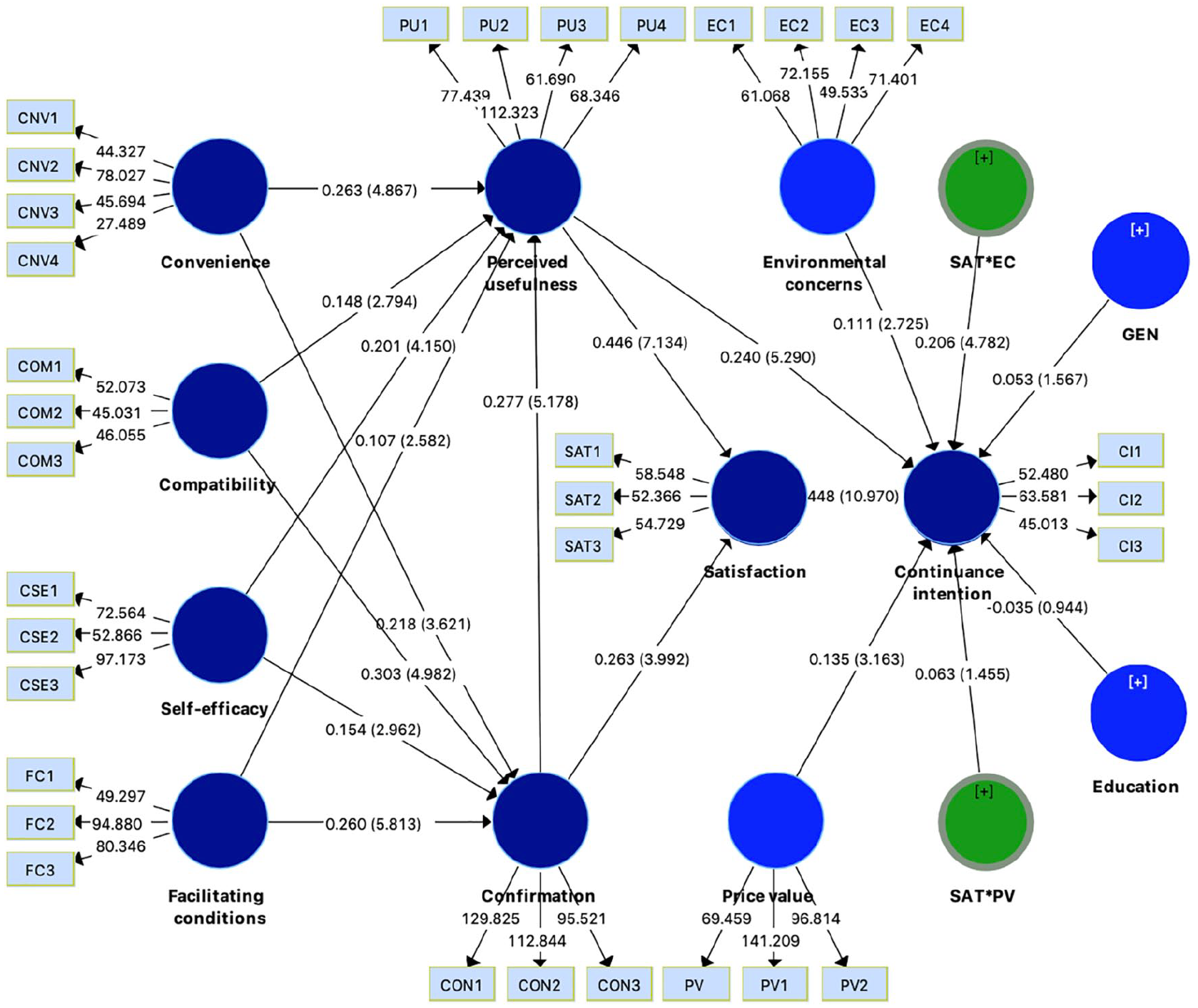
SmartPLS results.
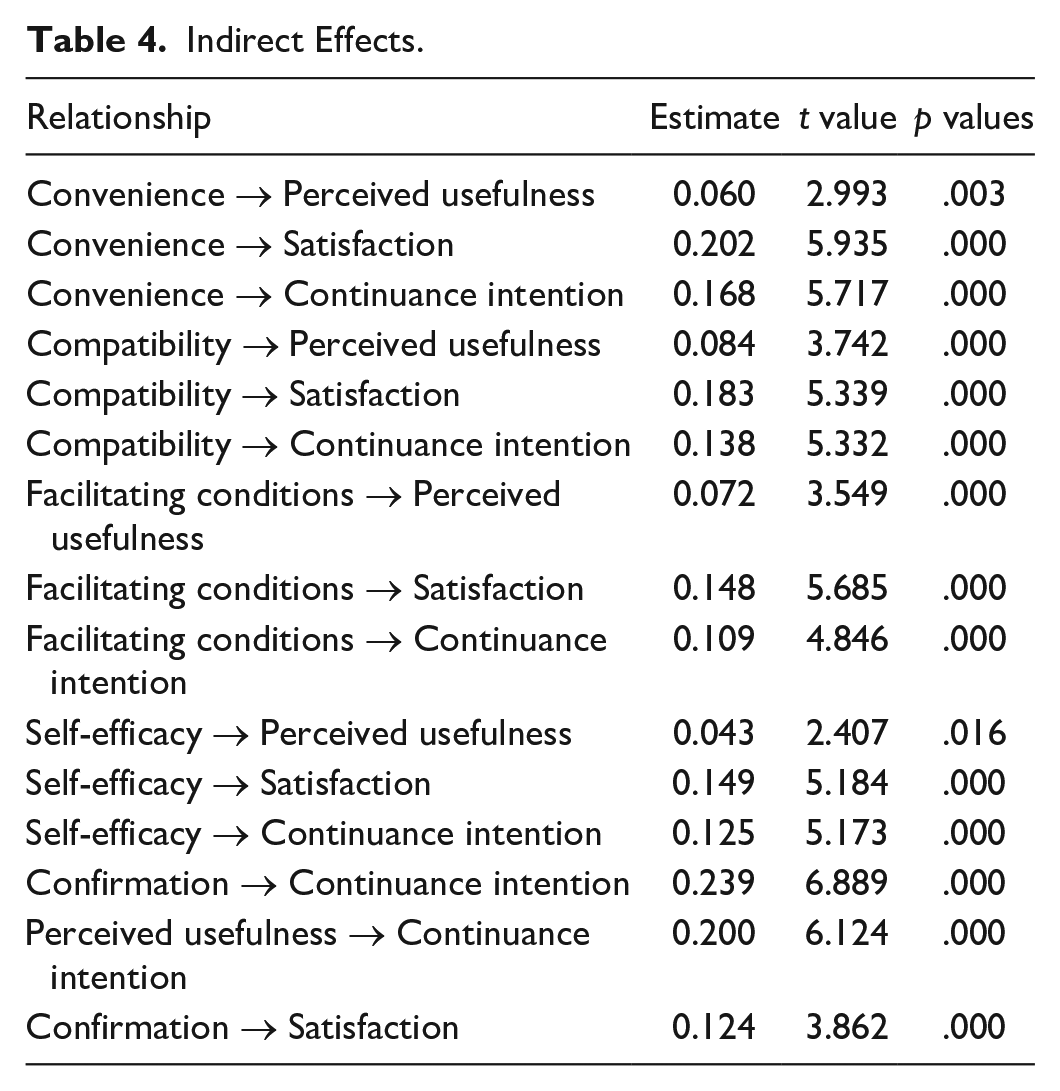
Table 4 summarizes the total indirect effect of each of the drivers of digital content acquisition on the PU, satisfaction, and continuance intention. Significant direct and indirect effects of each of the construct’s compatibility, convenience, self-efficacy, and facilitating conditions on PU, satisfaction, and continuance intention indicate that each of these variables play a considerable role in forming users’ positive attitude toward digital content.
Indirect Effects.
Moderating effects
In H8 and H9, we hypothesized that the users’ environmental concerns and price value moderate the relationship between their satisfaction and continuance intention for digital content. We found significant positive effects of environmental concerns (β = .111, p < .05) and price value (β = .135, p < .05) on the continuance intention. The significant interaction effect (β = .206, p < .001) of satisfaction and environmental concerns on continuance intention indicates that the effect of satisfaction on continuance intention is contingent upon environments concerns. The slope of the line, presenting the relationship between satisfaction and continuance intention, is greater for higher environmental concerns as compared with lower environmental concerns (see Figure 3). Thus, for higher environmental concerns, the relationship between satisfaction and continuance intention is stronger and vice versa. This provides evidence for the moderating effect of environmental concerns

Moderating effect of EC on the relationship between SAT and continuance intention.
In contrast, although we find a significant direct effect of price value on the continuance intention, the interaction effect of price value and satisfaction is not significant (β =.063, p = .185). This result suggests that although users consider price to a significant factor in their digital content adoption, there is no significant change in the effect of satisfaction on continuance intention due to higher or lower price value of the respondents; the same is evident from Figure 4.

Moderating effect of PV on the relationship between SAT and continuance intention.
Discussion and Conclusion
Building on the ECM-ISC, this study enhances the understanding of motives behind individuals’ continuance intention for digital content and consequently offers implications for the academicians and managers of the digital content providers. The study advances the ECM-ISC by integrating external technology and personality-related variables with environmental concerns and price value as moderating variables, thus making a valuable contribution to the digital content literature.
The results suggest that the technological characteristics (i.e., convenience, compatibility) along with individuals’ personal characteristics (i.e., self-efficacy and facilitating conditions) act as driving forces to the continuance intention for digital content. The empirical results also confirm that convenience and compatibility coupled with individuals’ self-efficacy and facilitating conditions significantly contribute to their expectation of confirmation and PU, which in turn results in their satisfaction with the digital content. Users’ satisfaction subsequently leads to their continuance intention.
These results imply that if users find the digital content to be convenient to use and compatible with their existing information and knowledge, then they are more likely to continue using it. In addition, individuals’ self-efficacy in using digital content and the availability of resources such as appropriate devices and internet play a significant role in forming their positive attitude toward continuous usage of the digital content. The convenience and compatibility of the digital content enhance the likelihood of users’ continuous use of digital content. In addition, if users’ expectations from digital content are fulfilled, then the chances of their continuous usage of digital content will increase. The compatibility and convenience of the digital content will boost users’ satisfaction and ultimately enhance the likelihood of their continued usages intentions. The users’ satisfaction levels will increase if they find the digital content meeting their expectations for acquiring the required information. The results overwhelmingly support the hypothesized relationships in the conceptual model and are consistent with the prior research (Cheng, 2015; Dagher et al., 2015; D’Ambra et al., 2013; Hsiao & Chen, 2017; Jin, 2014; Joo et al., 2017; Stone & Baker-Eveleth, 2013). Specifically, the empirical results not only confirm the role of ECM-ISC to explain digital content’s continuance usage intention but also extend it with the inclusion of external predictors (i.e., compatibility, convenience, self-efficacy, and facilitating conditions) and moderators (i.e., environmental concerns and price value). Empirical results further reinforce the impact of confirmation on PU and satisfaction. This suggests that the users’ PU and satisfaction with the digital content is contingent on their confirmation of expectations. Therefore, the publishers of digital content should develop material according to the users’ demand and meet their expectations.
Environmental concerns and the price value are hypothesized to moderate the satisfaction–continuance intention relationship. Both the environmental concerns and price value are positively related to continuance intention. Thus, the environment-friendly and price-conscious users have more tendency toward continuous usage of digital content. These findings are in line with the previous literature (Chowdhury, 2012; Hsiao & Chen, 2017). The empirical results further confirm the moderating effect of environmental concerns on the satisfaction–continuance intention relationship as the impact is different for high versus low levels of environmental concerns. At a higher level of environmental concerns, the relationship is stronger as compared with that of lower level of environmental concerns. This implies that individuals with more environment-friendly attitudes are more likely to use digital content as compared with those with lower environmental concerns. Regarding the moderating impact of price value, though the price value has a significant positive impact on the continuance intention, the interaction effect is not significant. Thus, no evidence for moderation of price value is confirmed.
Theoretical and Managerial Implications
Digital content such as electronic books or research articles has become an integral part of modern higher educational institutions. However, there are varied findings on the usage of digital versus print materials. Therefore, it is important to understand the dynamics of digital content adoption and continuance (Yoo & Roh, 2019) both from academic and practical perspectives. To better understand users’ behavior toward digital content and their continuance intentions for such content, this study offers some useful implications for the academicians and practitioners.
The research on digital content was mainly focused on the pre-adoption phase of such content. However, the post-adoption phase has gained little attention. Therefore, this study contributes to the digital content literature by investigating users’ post-adoption behavior, that is, continuance intention toward digital content. In this effort, we integrated both technological (i.e., convenience, compatibility) and personal (i.e., self-efficacy and facilitating conditions) antecedents of digital content acquisition. Moreover, the study considers the users’ environmental concerns and price value as moderators on the relationship between their satisfaction and continuance intention for the digital content. Thus, this enhances the current understanding of the role of environmental concern and price value in this mechanism. The results show that the proposed integrated conceptual model has substantial exploratory power to explain users’ continuance usage intention for digital content (R2 = 66%). Thus, from the theoretical standpoint, this research extends ECM-ISC by integrating related external constructs, and hence augments the current understanding of digital content continuance intention.
These findings have several practical implications. The findings confirm that compatibility, convenience, self-efficacy, and facilitating conditions are predictors for confirmation of expectations and PU. The results suggest that the digital material should be designed in such a way so that it can be easily accessed, and it should be widely compatible with the users’ abilities and various platforms. The digital content should be developed in a way that it is easy to navigate, it is compatible with the educational activities, it does not require a lot of effort to use, and it is compatible with the available resources. If the digital content meets the users’ expectations and they find it useful, the degree of their satisfaction will increase and that will lead to their continuance intention. As portable devices are becoming popular, so digital content should be compatible with portable devices such as laptops, tablets, and smartphones. The publishers should also ensure online customer support so that queries from the customers can be answered promptly. It will be helpful to enhance their confidence in the system; in turn, that will lead them to continuous use of the digital content.
The moderating impact of environmental concerns was confirmed. Nevertheless, the direct effect of both the environmental concerns and the price value are significant. This implies that both of these variables are critical in explaining users’ attitude toward digital content. However, few studies have investigated the role of users environmental concerns on their attitude toward digital content (Chowdhury, 2012). This study extends the current understanding of this particular issue by considering the moderating effects of environmental concerns. The results confirm not only strong positive effects of environmental concerns on user’s continuance intention for digital content but also suggest that the satisfaction−continuance relationship is contingent on the level of users’ environmental concerns. Therefore, users’ environmental concern is a significant variable in understanding their continuance intention toward digital content.
In the recent past, there has been an increasing awareness of the benefits of the green environment in the academic community. So, a publisher of digital content may highlight the paperless and environment-friendly nature of the electronic material to help environmentally conscious people develop a positive attitude toward their digital offerings. This further implies that the digital content creators and publishers need to develop digital content to be compatible with portable digital devices and platforms which are considered to be more energy efficient and environment friendly.
Limitations and Future Research
Although the proposed framework enhances the current understanding of digital content adoption by offering theoretical and empirical insights, there are certain limitations which provide an opportunity for the future research. First, this study is based on a cross-sectional sample drawn from only one public sector university. Further research may use a longitudinal approach by including a more diversified sample. Second, the study has not investigated the continued usage intention from various platforms such as mobile, desktops, and tablet. Further research may investigate continued usage intention across diverse hardware and software platforms. Third, this research has corroborated technological and personal characteristics to explain PU and confirmation; however, there may be other causes besides the ones discussed in this study. Fourth, individuals’ environmental knowledge and preferences may vary among males and females (Dagher & Itan, 2012) as well as over a period of time; future research may address these issues. Fifth, in the survey, only the respondents already having an experience with digital content were considered for participation, so nonresponse bias cannot be precluded.
Footnotes
Appendix
Acknowledgements
The authors are thankful to the Deanship of Scientific Research at King Saud University represented by the Research Center in the College of Business Administration for financially supporting this research.
Author Note
Muhammad Asif Khan is now affiliated to Marketing Department, College of Business-Rabigh, King Abdulaziz University, KSA.
Declaration of Conflicting Interests
The author(s) declared no potential conflicts of interest with respect to the research, authorship, and/or publication of this article.
Funding
The author(s) received no financial support for the research, authorship, and/or publication of this article.
