



Abstract
This research investigates the link between adopting green practices and export performance among exporting SMEs in Vietnam, a booming export-oriented economy. Utilising the natural resource-based view (NRBV), it investigates if green practices directly influence SMEs’ export performance and the mediating role of incremental and radical green innovation in this relationship. The sample consists of 319 Vietnamese exporting SMEs. PLS-SEM was employed for model testing, and Harman’s single-factor test and t-tests were utilised to evaluate potential biases. Green practices positively impact export performance directly and are partially mediated by both types of green innovation. This study applies the NRBV to exporting SMEs in Vietnam to illustrate that adopting green practices, directly and indirectly, enhances export performance through incremental and radical green innovation. Secondly, the study tackles methodological limitations by conceptualising EP as a reflective-formative higher-order construct and concentrating on SMEs. It offers a more refined comprehension of how environmental commitments enhance performance in smaller exporting enterprises. This study integrates the ambidexterity framework into the green innovation literature, demonstrating that the balance of exploitative and explorative actions through green practices’ adoption enhances export performance in both financial and non-financial aspects.
Introduction
Leonidou et al. (2015) emphasised that the challenges that exporters face due to the emerging global environmental concerns include stricter environmental regulations, the rise of eco-conscious consumers, competition using green initiatives for differentiation and the role of social media in highlighting firms’ green practices. Due to these challenges, exporting SMEs increasingly incorporate green practices (GPs) into their global strategies (Tsukanova, 2023). Adopting GPs is expected to improve competitiveness in global markets and result in high export performance (EP; Al-Ghwayeen & Abdallah, 2018; R. K. Singh et al., 2016). However, GPs’ adoption in SMEs is sufficiently challenged due to resource constraints such as limited finance, knowledge, awareness, and technology accessibility, as well as collaboration with external actors in the supply chain (Q. H. Ngo, 2023b; Y. Song et al., 2017). This adoption potentially caused additional burdens to export SMEs besides the challenges caused by dynamic landscapes when expanding destinated markets due to the limited resources and lack of expertise (Brammer et al., 2012; Gani et al., 2023; Paul et al., 2017).
The literature has no light on empirical evidence relating to the GPs-EP relationship. The natural resource-based view (NRBV) is a theoretical lens that sheds light on this relationship. According to this view, the harmony between a firm’s operations and the environment significantly secures competitiveness through cost saving, reputation enhancement, and a future position gained, resulting in long-term growth (Hart, 1995). This alignment enables firms to obtain strategic green capabilities, which are valuable, rare, imitable and non-substitutable in the market, and therefore, effectively address environmental issues while securing and advancing competitiveness (Huang & Chen, 2023). GPs are emphasised as strategic capabilities due to encompassing three main activities within NRBV: pollution prevention, product stewardship, and sustainable development policies (Abdulaziz-al-Humaidan & Almaiman, 2024). From this view, GPs are expected to directly increase the EP of exporting SMEs.
The ‘Does it pay to be green?’ literature highlights a complex relationship between SMEs’ green commitments and their performance in terms of financial and economic benefits (Haddoud et al., 2021). Recently, scholars (Agyabeng-Mensah & Tang, 2021; AlNuaimi et al., 2021; Asamoah et al., 2022) suggested the examination of the indirect impact of a firm’s green commitment on performance outcomes in addition to direct effects based on NRBV. This view emphasises the crucial role of innovation obtained from the utilisation of existing green capabilities to sustain competitiveness (Hart et al., 2010; Kraus et al., 2020). Similarly, in the export literature, despite the mixed influence on EP, innovation plays a crucial role in assisting exporters to stay competitive in the international market (Bıçakcıoğlu-Peynirci et al., 2020). Green innovation (GI) addresses environmental issues while maintaining and increasing firm competitiveness (Cuerva et al., 2014; Padilla-Lozano & Collazzo, 2022). The ambidexterity approach categorises GI into incremental green innovation (IGI) and radical green innovation (RGI) based on the degree of novelty (Al-Khatib, 2022; Shehzad et al., 2023). Grounded by NRBV, IGI and RGI are expected to mediate the link between GPs and EP. Despite this expectation, limited empirical evidence supports these mediating effects, particularly in export contexts. It limits the expansion of existing knowledge on the antecedents and consequences of GI in exporting contexts.
Furthermore, the prior discussion reveals the significant gaps in the literature, which also hinders the practical implications of exporting SMEs in Vietnam. Vietnam, a transitional country, has become a critical export-driven economy and significantly integrates into global markets with trade volumes exceeding 170% of GDP, which highlights the shift towards a major industrial manufacturing hub and attracting significant foreign investment (Dayley, 2019; Ges-Kualalumpur, 2022; Q.-H. Ngo, 2023a; Zou & Stan, 1998). With an export growth rate of about 18% annually, significantly surpassing its GDP growth, Vietnam’s exports reached US$341.58 billion in 2021, which allows Vietnam to become a leading global exporter (Dang & Yeo, 2018; Nguyen & Wu, 2020; World Bank, 2021). Small and medium-sized enterprises (SMEs), which form 88% of its exporters and contribute more than a third of Vietnamese exports, play a pivotal role in Vietnam’s export success (Le & Phuong, 2021; Ngo-Thi-Ngoc & Nguyen-Viet, 2021; OECD, 2021). In the export, the manufacturing sector contributes significantly to Vietnam’s exports in terms of volume and value (Hoang et al., 2024). Despite that, the emergence of stringent environmental regulation and high customer environmental preferences in the destined export markets requires Vietnamese exporters to significantly modify and disrupt their existing operations to meet environmental demands to secure their exporting positions (Q.-H. Ngo, 2021; Vietnam News, 2023). The practical implications are significantly useful in guiding managers in effectively dealing with emerging environmental concerns while maintaining competitiveness in the destined export markets.
Hence, this study aims to shed light on the following research questions.
RQ1: Is there a positive impact of GPs’ adoption on increasing the EP of Vietnamese exporting SMEs?
RQ2: Does IGI mediate the relationship between GPs and the EP of Vietnamese exporting SMEs?
RQ3: Does RGI mediate the relationship between GPs and the EP of Vietnamese exporting SMEs?
To do so, this study collects data from 319 exporting and manufacturing SMEs currently operating in Vietnam. It finds that GPs directly improve EP and that IGI and RGI partially mediate this relationship. This research makes several contributions to the literature. First, this study applies NRBV to exporting SMEs in Vietnam, demonstrating that adopting GPs directly and indirectly enhances EP through IGI and RGI. Second, by operationalising EP as a reflect-formative higher-order construct and focusing on SMEs, the research addresses methodological gaps and provides a more nuanced understanding of how green commitments drive performance in smaller firms despite resource constraints. Third, this study incorporates the ambidexterity framework into GI literature, showing that balancing exploitative and explorative activities through GPs’ adoption improves EP across financial and non-financial dimensions.
Finally, this research highlights essential practical implications for policymakers and managers/owners of exporting SMEs in Vietnam as well as other countries sharing much similarity to adopt GPs and gain EP through IGI and RGI effectively. Adopting these practices within exporting SMEs presents challenges due to resource constraints, requiring support from policymakers and strategic interventions from managers/owners. Thus, this study offers actionable recommendations for policymakers to establish supportive actions and for managers to follow necessary guidelines to reduce adoption challenges and achieve success in export markets.
Theoretical Background and Research Hypotheses
Green Practices
GPs, also called as eco-friendly practices, aim to reduce businesses’ environmental impacts through strategies like eco-friendly product design, energy efficiency, lean green policies, low carbon policies and comprehensive environmental management, including ISO 14001 certification and sustainable procurement (Abeyratne & Arachchi, 2021; Ali, Kaur, & Khan, 2023; Q.-H. Ngo, 2024; Prajogo et al., 2014; K. Tsai et al., 2020). These practices improve sustainability and enhance manufacturing performance, product longevity and resource use efficiency (Dües et al., 2013; Umar et al., 2022). Beyond environmental benefits, GPs offer competitive advantages by reducing costs, improving quality, and fostering innovation, ultimately leading to better business performance and economic success (Hollos et al., 2012; Q.-H. Ngo, 2022b; Yang et al., 2010).
Roxas and Chadee (2016) highlighted that SMEs in emerging countries adopt GP, including waste management, pollution control, conserving water and electricity, environmental training, participating in green programmes, using sustainable manufacturing technologies, engaging customers on environmental issues and embedding sustainability in business strategies. These practices are also prevalent among SMEs in developed nations, affirming a global trend towards environmental responsibility (Cassells & Lewis, 2011; Lawrence et al., 2006; Purwandani & Michaud, 2021).
Ambidextrous Green Innovation
GI addresses environmental issues, emphasising environmental harmonisation (Cuerva et al., 2014). Unlike conventional innovation, which primarily focuses on gaining a competitive advantage, GI fundamentally changes the perception of innovation by asserting that it should simultaneously benefit the environment and enhance the firm’s competitiveness (Khalil & Nimmanunta, 2023). It enhances firms’ competitive advantages and performance by fostering creativity, improving efficiency in resource use, opening new markets and ultimately boosting both environmental and business outcomes(Cai & Li, 2018; Kiranantawat & Ahmad, 2022; Liao, 2018; Loučanová et al., 2021; Mady et al., 2021, 2023; S. K. Singh et al., 2020; K. Tsai & Liao, 2017). The dual focus on GI ensures that innovation serves ecological sustainability and business growth objectives.
According to the ambidexterity framework, firms adopting an ambidextrous approach to GI, including both incremental (exploitative) and radical (explorative) approaches, allow them to effectively tackle environmental challenges while simultaneously pursuing new opportunities to enhance existing competitiveness (Demirel & Kesidou, 2019; Shehzad et al., 2023). Based on this framework, incremental GI (IGI) is characterised by minor enhancements to current products, services and organisational elements for environmental gains, whereas radical GI (RGI) involve profound, transformative shifts that deliver substantial environmental benefits (Q.-H. Ngo, 2022a). Incremental approaches aim to refine, strengthen, or augment present green technologies, whereas radical approaches necessitate the development of disruptive green technologies (Guo et al., 2020). Moreover, incremental approaches leverage existing knowledge, while radical approaches require discovering new insights (Y.-S. Chen et al., 2014). Compared to their incremental counterparts, radical approaches are typically more complex, uncertain, and time-consuming (Liao & Zhang, 2020). Consequently, firms often search for incremental over radical approaches to gain GI. Nevertheless, from a long-term perspective, radical approaches in GI enable firms to capitalise on continuous green technological advancements, maintain lasting competitiveness, and position themselves as pioneers in green technologies (Wu et al., 2024).
Export Performance
EP is crucial for evaluating a firm’s ability to sell products in foreign markets, which measures the achievement of export goals and identifies key factors that contribute to its success (Ferreira & Ganao Simoes, 2016; Oliveira et al., 2012). Research reveals inconsistencies in EP definitions and measurements, challenging the prior results (Acikdilli et al., 2022; J. Chen et al., 2016; C. M. P. Sousa et al., 2008). For instance, financial measures, such as international sales, profit, market share, and growth measures, are considered part of export performance (Madsen & Moen, 2018). In addition, non-financial measures, such as management satisfaction with exporting and goal achievement, were parts of export performance metrics (Katsikeas et al., 2000; Zou & Stan, 1998). Both financial outcomes and non-financial aspects should be included in a comprehensive EP assessment (Asseraf & Gnizy, 2022; J. Chen et al., 2016; Jusoh & Parnell, 2008; Lee & Choi, 2014; Maldonado et al., 2023).
EP literature debates the use of objective (actual performance data) versus subjective (perceptions of performance) metrics, although both types are often correlated (Diamantopoulos & Kakkos, 2007; Madsen & Moen, 2018; Sadeghi et al., 2021; Shoham, 1998; C. M. Sousa, 2004). Subjective measures are favoured for their practicality, especially in SMEs, due to challenges in accessing objective data and varying accounting practices across countries (Haluk Köksal & Kettaneh, 2011; Sadeghi et al., 2021; C. M. Sousa, 2004; Stoian et al., 2011).
Recent discussions advocate for recognising EP as a multidimensional construct, which utilises scales like EXPERF (Zou et al., 1998) for its validity and comprehensive approach combining both objective and subjective measures (Acikdilli et al., 2022; J. Chen et al., 2016; Papadopoulos & Martín, 2010; Ringo et al., 2022). Additionally, the debate on EP measurement models suggests a shift towards a reflective-formative approach to accurately capture the complexity of EP in order to address potential misapplications of measurement methods (Diamantopoulos, 2008; Diamantopoulos & Siguaw, 2006; Navarro et al., 2010; Papadopoulos & Martín, 2010).
Natural Resource-Based View
Hart (1995) proposed the NRBV, which highlights the crucial role of an organisation’s capabilities in managing its relationship with the natural environment to sustain competitive advantages. This view suggests that specific organisational capabilities are essential for survival because organisations must constantly pursue and renew these capabilities to adapt to the changing business environment (Demirel & Kesidou, 2019). NRBV underscores the importance of organisations perpetually innovating and seeking new capabilities to craft environmental solutions to enhance their capacity to adapt to the growing environmental demands (Menguc & Ozanne, 2005). Such endeavours lead to cultivating valuable, rare, and difficult-to-imitate organisational capabilities, which fosters significant competitive advantages and superior performance outcomes (Chan, 2005). NRBV identifies three core competitive advantages derived from proactive environmental activities: cost reduction, the preemption of competitors, and securing advantageous future positions (Hart, 1995).
This study considers the adoption of GPs in exporting SMEs’ behaviours to align business operations with the environment. In such a regard, these SMEs gain competitive advantages based on NRBV. GPs permit cost reduction significantly (Ahinful & Tauringana, 2019). According to Sheth (2011), firms in emerging countries execute low-cost advantage to preempt local firms in developed markets. Furthermore, firms committing to the environment secure their future position because of the assessment of exclusive resources (R. Chen & Cao, 2023). Such an assessment is argued to improve competitive advantages in exporting, resulting in high export expansion (Zamberi Ahmad, 2014). Through the NRBV lens, exporting SMEs are expected to enhance EP by adopting GPs.
Furthermore, Hart et al. (2010) suggested that innovation is key in connecting the commitment to environmental conservation and a firm’s competitive advantages. When firms successfully align their operations with environmental harmonisation, they achieve a high level of innovation. This innovation enables continuous improvement, thereby attaining sustainable competitive advantages.
Similarly, this study posits that both IGI and RGI mediate the relationship between the adoption of GPs and EP. Adopting GPs fosters green knowledge, which is essential for achieving IGI and RGI in SMEs (Malik et al., 2023; Polas et al., 2023; Rubel et al., 2021). These forms of GI provide SMEs with competitive advantages, including cost reduction, preemption of competitors and securing advantageous positions for the future (Q.-H. Ngo, 2022a). Therefore, this research anticipates that IGI and RGI will mediate the relationship between GPs and EP (Figure 1).

Research framework.
Hypothesis Development
Green Practices-Export Performance Association
Recent findings suggest GPs boost export intensity (Tsukanova, 2023). This finding suggests that exporting SMEs gain export success through the adoption. GPs’ adoption allows the integration of environmentally friendly measures (Novacka et al., 2019). By using these measures to meet environmental regulations and customers’ green preferences in destined export markets, exporting SMEs increase their entrant significantly, which secures competitiveness in those markets (Shershunovich & Mirzabaev, 2024). Besides, the adoption significantly builds brand reputation, which appeals to eco-conscious customers in the destination markets, thereby increasing export sales (Abdulaziz-al-Humaidan & Almaiman, 2024). Additionally, green practices reduce resource costs, enhance operational efficiency, and contributing to low-cost product export (Leonidou et al., 2015). Hence, adopting GPs significantly enhances exporting SMEs’ export success.
In this study, GPs are expected to directly benefit three EP’s dimensions as follows. First, GPs enhance SMEs’ financial performance by promoting cost efficiency and regulatory compliance, thereby reducing waste, consumption, and legal costs (Ahinful & Tauringana, 2019; P. H. Chen et al., 2016; Leonidou et al., 2015). Second, adopting GPs opens up new, green markets, which enhances competitiveness and brand equity (Durmuşoğlu et al., 2012; Famiyeh et al., 2018; Namkung & Jang, 2013). Lastly, GPs are linked to higher export intensity and competitiveness and improved satisfaction with EP (Al-Ghwayeen & Abdallah, 2018; R. K. Singh et al., 2016; Tsukanova, 2023). Hence, these three views suggest that GPs significantly enhance EP.
H1: The adoption of GPs directly and positively influences the EP of Vietnamese exporting SMEs.
Green Practices-Green Innovation Association
Adopting GPs is anticipated to boost both IGI and RGI. GPs focus on reducing environmental issues through waste management, pollution control, conserving resources, fostering environmental consciousness among staff and embedding environmental harmonisation into business strategies (Roxas & Chadee, 2016). GPs like waste management and resource conservation enhance environmental friendliness and cost-efficiency, leading to IGI (Wong et al., 2020; Yacob et al., 2019). Additionally, GPs like green training boost employee awareness and motivation towards GPs, fostering green creativity to gain IGI (Ali & Kaur, 2021; Joshi & Dhar, 2020; Usman et al., 2023).
On the other hand, adopting cutting-edge, low-impact technologies challenges and innovates business models, which promotes RGI. For example, Tesla’s shift to electric vehicles illustrates how new technologies can revolutionise industries with sustainable solutions (Roxas & Chadee, 2016). Proactive GPs’ adoption also cultivates a deeper understanding of environmental challenges, which leads to groundbreaking environmental solutions beyond traditional approaches (Li & Leonas, 2022; J. Wang et al., 2020). Together, GPs are expected to be pivotal in fostering IGI and RGI.
H2: The adoption of GPs positively influences IGI in Vietnamese exporting SMEs.
H3: The adoption of GPs positively influences RGI in Vietnamese exporting SMEs.
Green Innovation-Export Performance Association
IGI and RGI are poised to enhance three EP dimensions: financial, strategic, and satisfactory. Firstly, GI enhances SMEs’ financial performance by promoting efficient resource use and developing cost-efficient products, which leads to significant cost savings (Aguilera-Caracuel & Ortiz-de-Mandojana, 2013; Centobelli et al., 2019; Wong et al., 2020). Secondly, GI secures low-cost and differentiation advantages, as well as improves international competitiveness and brand awareness through effective green marketing strategies, thereby facilitating market entry and credibility advantages (Aguilera-Caracuel & Ortiz-de-Mandojana, 2013; Barforoush et al., 2021; Bıçakcıoğlu, 2018; Hu et al., 2021; Majeed, 2022; Yao et al., 2021; Yusr et al., 2020). Lastly, GI increases export intensity and quality underpins, bolstering international competitiveness (Chai, 2023; Galbreath, 2019; Hu et al., 2021). Based on the ambidexterity framework, this study expects that two forms of GI, IGI and RGI, significantly increase EP.
H4: IGI positively impacts the EP of Vietnamese exporting SMEs.
H5: RGI positively impacts the EP of Vietnamese exporting SMEs.
Intervening Role of Incremental and Radical Green Innovation
This study posits that IGI and RGI mediate between GPs and EP. In particular, the energy-saving of GPs reduces the need for non-renewable resources and promotes energy efficiency through new technologies (S. Wang et al., 2018). Likewise, implementing solar panels in warehousing and transport in GPs shifts firms from coal to renewable solar energy (Q.-H. Ngo, 2022a). According to the NRBV, green capabilities, characterised by value, rarity, inimitability, and non-substitutability, provide economic and environmental benefits (Huang et al., 2021). Andersén (2021) contends that leveraging green capabilities for innovation significantly secures competitive advantages and environmental improvements. Evidence indicates that exploiting green capabilities and resources for innovation yields indirect economic and environmental gains (Makhloufi et al., 2022; Q.-H. Ngo, 2022a). Therefore, this study formulates the last two hypotheses.
H6: IGI mediates the relationship between GPs and EP in Vietnamese exporting SMEs.
H7: RGI mediates the relationship between GPs and EP in Vietnamese exporting SMEs.
Methodology
Sampling and Data Collection
The research utilised established sampling methods drawn from the Vietnam Yellow Pages (2022). This approach aligns with prior studies (Beka Be Nguema et al., 2021; Q. H. Ngo, 2023c; Yu et al., 2021), which suggest that it provides a sufficient pool for representative sampling. The directory lists over 250,000 businesses currently operating in Vietnam. From this pool, 2,000 manufacturing SMEs involved in exports were randomly selected.
This study considers the following criteria for selecting appropriate respondents. First, the targeted respondents were business owners or managers of the exporting SMEs operating in the manufacturing sector because this sector considerably contributes to Vietnam’s exports in terms of volume and value (Hoang et al., 2024). Second, in alignment with the Vietnamese Government’s categorisation of small and medium enterprises, the target enterprises operating in manufacturing sectors should employ between 10 and 299 employees (Vietnamese Government, 2018). Third, the target SMEs should have more than 5 years of experience in exporting (Morgan et al., 2004).
Data collection began in August 2022, with the initial outreach and a reminder after 2 months. By November 2022, the survey achieved a 15.95% response rate, with 319 completed responses. To mitigate potential biases in the study, Harman’s single-factor test was applied to evaluate common-method bias (Podsakoff & Organ, 1986). Additionally, a t-test was conducted comparing early and late respondents to assess non-response bias (A. Clottey & J. Grawe, 2014). The findings indicate that such biases do not pose a concern.
Variables and Measures
Two managers reviewed the questionnaire from exporting SMEs to ensure its relevance and clarity for practical application (Olson, 2010). Their insights helped refine the questions to better align with real-world exporting challenges, thus enhancing the validity of the questionnaire for capturing accurate data from SME participants.
This research incorporates validated scales from previous studies. The instrument of GPs was adopted from Roxas and Chadee (2016), while the instrument for assessing both IGI and RGI was derived from Juo and Wang (2022). The utilisation of the EXPERF scale (Zou et al., 1998) was chosen for its proven reliability and applicability across different nations. This scale encompasses financial (FEP) and strategic (SEP) dimensions, in addition to non-financial dimensions, such as managerial satisfaction with the outcomes of export activities (SAT_EP). This variable is conceptualised as a reflective-formative higher-order construct, which aligns with prior studies on SMEs (Haddoud et al., 2017; Kolbe et al., 2022; Oura et al., 2016). A five-point Likert scale was used to measure survey items, with responses ranging from strongly disagree (1) to strongly agree (5) (see Appendix 1).
Aligning with previous research (Cadogan et al., 2012); (Gkypali et al., 2021); (Saridakis et al., 2019), this study includes control variables, which are firm age (F_AGE), firm size (F_SIZE) and export experience (F_EE), to account for their potential impact on EP. These variables control for firm-specific characteristics, which may influence EP and provide a clearer understanding of the relationships under investigation. Firm age reflects stability and maturity, which can improve EP because experienced firms tend to operate with refined processes. Firm size correlates with resource availability, which affects EP because larger firms can allocate greater resources for export growth. Export experience indicates knowledge and adaptability in international markets, influencing EP because familiarity with foreign markets helps firms navigate challenges and optimise strategies.
Statistical Methods
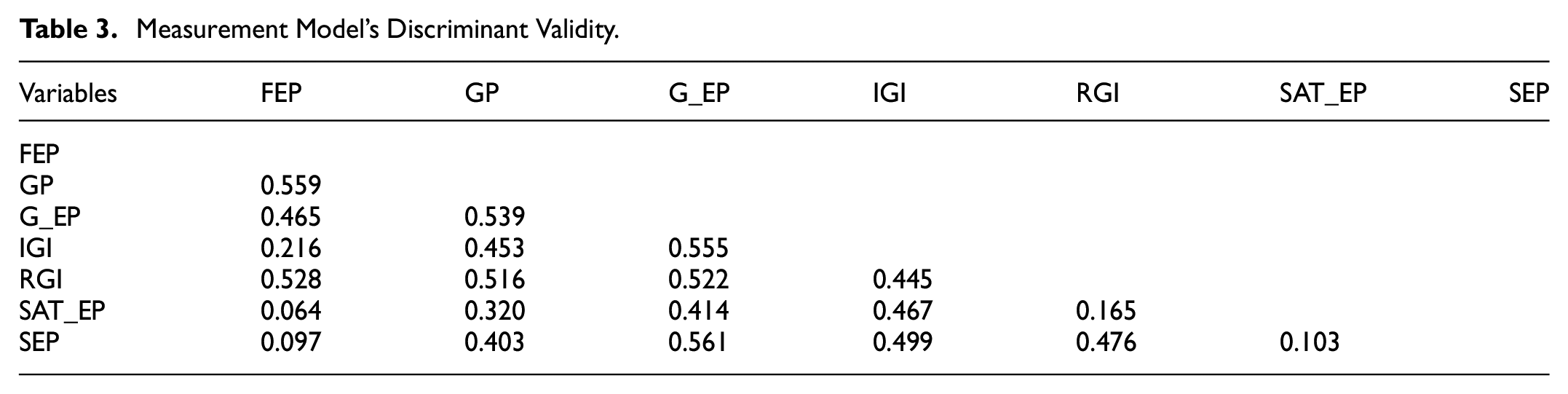
Following Hair et al. (2019), employing PLS-SEM involves two main steps: assessing the measurement model for reliability and validity and then evaluating the structural model’s validity. For the measurement model, factor loadings should be over 0.708, composite reliability and Cronbach’s Alpha should be above .7 for internal consistency. The Average Variance Extracted (AVE) must be at least 0.5 to ensure convergent validity. Discriminant validity is checked through the HTMT ratio, which needs to be below 0.85 (Sarstedt et al., 2019). R2 values above .25 indicate good explanatory power for the structural model, while positive Stone–Geisser Q2 values signal predictive relevance. The Variance Inflation Factor (VIF) should stay below 5 to avoid collinearity issues. Mediating effects were analysed using Zhao et al. (2010) approaches, following the practice of several PLS-SEM scholars (e.g., Carrión et al., 2017; Nitzl, 2016).
Analysis and Results
Exporting SME’s Demographics
Table 1 presents the demographics of the SMEs. It highlights that the majority fall into the 20 to 29 age bracket, suggesting they have attained maturity. Most usually have 50 to 299 employees, suggesting they fall into the medium-sized category. Additionally, the export history of these SMEs is notable, with a majority having 10 to 14 years of exporting experience, indicating a well-established position in international trade.
SME’s Demographics (n = 319).

Measurement Model
Based on Sarstedt et al. (2019), the measurement was evaluated using a two-stage approach. The initial stage focused on assessing the lower-order constructs such as GP, IGI, RGI, FEP, SEP and SAT_EP. The second stage then concentrated on assessing the higher-order construct as EP.
Lower-Order Constructs
Tables 2 and 3 indicate the value of Cronbach’s Alpha, composite reliability, AVE and HTMT ratio. Two items, GP_2 and GP_9, were removed. After removal, the test was re-run, and these values were sufficient. Thus, the first-ordered constructs’ reliability and validity are adequate.
Measurement Model’s Reliability and Validity.

Measurement Model’s Discriminant Validity.
Higher-Order Constructs
EP is a higher-level construct, evaluated by examining its convergent validity, the collinearity among its indicators and the significance and relevance of its outer weights. For convergent validity, the EP formative measure should correlate strongly (path coefficient > 0.7) with a single-item measure of EP, a criterion met (β = .729, p < .001) and a confidence interval of [0.664, 0.781] (Hair et al., 2021, p. 93). Additionally, VIFs must be below 3, outer weights must be significant, and requirements must be satisfied, as shown in Table 4. Therefore, the EP construct is validated (Sarstedt et al., 2019).
Higher-Order Construct’s Assessment.

Structural Model
A bootstrapping method with 5,000 replacements was used to evaluate the model’s explanatory power, predictive accuracy and collinearity issues. According to Table 5, the model’s evaluation meets the required standards.
Structural Model Assessment.

Hypothesis Testing
Figure 2 and Table 6 indicate significant positive relationships between GPs and EP (β = .386, p < .001). Additionally, GPs are positively and significantly associated with both IGI (β = .388, p < .001) and RGI (β = .443, p < .001). IGI also shows a positive relationship with EP (β = .257, p < .001), as does RGI with EP (β = .299, p < .001). These results collectively support H1, H2, H3, H4 and H5.

Research results.
Hypothesis Testing.

A mediation analysis examined the mediating effects of IGI and RGI on the relationship between GPs and EP. Table 6 shows that both IGI (β = .100, p = .002, CI [0.043, 0.168]) and RGI (β = .132, p < .001, CI [0.075, 0.192]) significantly mediate this relationship, as indicated by path coefficients and confidence intervals that do not include zero. The direct link between GPs and EP remains significant even after accounting for IGI and RGI, indicating partial mediation. These findings provide support for H6 and H7.
Discussions and Research Implications
Discussions
First, this study demonstrates that exporting SMEs in Vietnam that adopt GPs significantly enhances their EP. This finding aligns with NRBV, which posits that green capabilities are critical determinants of competitive advantage. By providing empirical evidence from an international context, this study underscores the relevance of NRBV beyond domestic markets. The results also echo R. K. Singh et al. (2016) and Al-Ghwayeen and Abdallah (2018), who reported that green supply chain practices bolster firm competitiveness and EP in large enterprises. Green commitments lead to substantial success in international markets, even in small firms facing resource constraints and adoption challenges.
Second, the study reveals that exporting SMEs in Vietnam that adopt GPs significantly enhances IGI and RGI. Specifically, these findings support NRBV by illustrating how firms utilise their existing green capabilities to drive innovation. By integrating the ambidexterity framework, this study extends NRBV by demonstrating that GPs enable firms to balance exploitative activities (which drive IGI) and explorative activities (which foster RGI). Consistent with S. K. Singh et al. (2020) and Bag et al. (2022), who found that large firms adopting green human resource (HR) and supply chain management practices significantly increase green innovation (GI), this study indicates that despite challenges such as limited resources, green commitments in SMEs substantially enhance both types of innovation in international settings.
Third, this study establishes that in Vietnam, both IGI and RGI significantly enable exporting SMEs to gain high EP. These findings support NRBV in international settings, which argues that firms possessing a sufficient degree of innovation towards environmental conservation enhance the sustainability of their competitive advantages. Additionally, by integrating with the ambidexterity framework, this study extends that balancing exploitative and explorative approaches to GI significantly achieves this goal. These findings align with Galbreath (2019), Chai (2023) and Zhang (2022), who demonstrated that large firms sufficiently increase export intensity and improve product quality. It showcases that, despite limited resources, GI significantly enables exporting SMEs to gain performance advantages in international settings.
Lastly, this study reveals the mediating roles of IGI and RGI in the GPs-EP relationship. The findings are similar to Juo and Wang (2022) and Q.-H. Ngo (2022a), who showed the mediating role of GI in the link between green commitment and performance outcomes in domestic contexts. They support NRBV in international settings by demonstrating the intervening role of GI in translating green capabilities into the sustainability of competitiveness in international settings. By providing empirical evidence from an international context, this study underscores the relevance of NRBV and highlights the critical role of GI in enhancing EP through both IGI and RGI.
Lastly, this study revealed the mediating roles of IGI and RGI in the GPs-EP and direct relationships. This finding supports NRBV in international settings by showing the intervening role of GI in translating green capabilities to the sustainability of competitiveness. The findings are similar with Juo and Wang (2022) and Q.-H. Ngo (2022a), who showed the mediating role of GI on the link between green commitment and performance outcomes in domestic contexts. Hence, this study extends prior research by integrating the ambidexterity framework to highlight the mediating roles of IGI and RGI.
Theoretical Implications
The findings suggest that adopting GPs allows exporting SMEs in Vietnam to gain high EP directly and indirectly. These findings illustrate the significant role of GPs’ adoption in these exporting enterprises to find innovation and gain export success. However, there is limited empirical evidence supporting the NRBV’s arguments internationally. In contrast with the domestic market, firms operating in global markets face more challenges due to political, legal and cultural gaps between their origin country and those they export to (Gani et al., 2023). It challenges NRBV to the extent that limited evidence supports this view in international settings. This study positioned itself as a pioneering exploration of NRBV in export settings. NRBV argues that three strategic capabilities, such as pollution prevention, product stewardship and sustainable development policies, significantly enable firms to simultaneously address environmental issues and increase competitiveness. It also posits that the utilisation and leverage of green capabilities significantly drive innovation and, in turn, sustain competitiveness. This study illustrates this view by showing that GPs, which encompass the three mentioned strategic capabilities (Abdulaziz-al-Humaidan & Almaiman, 2024), permit exporting SMEs in Vietnam to gain high EP directly and indirectly through the enhancement of both IGI and RGI with the sample of exporting SMEs in Vietnam. By doing so, this study adds empirical evidence supporting NRBV’s relevance in international contexts.
Secondly, scholars (e.g., Al-Ghwayeen & Abdallah, 2018; Birn & Stone, 2021; Leonidou et al., 2015) have paid more attention to the link between firm’s green commitment and EP since the call of Zeriti et al. (2014). However, there are two concerns relating to those recent studies. The first concern is the operationalisation of EP, which employs a lower-order construct approach; thereby, it oversimplifies the multifaceted nature of the EP construct (Sadeghi et al., 2021). Following the approach guided Papadopoulos and Martín (2010), this study operationalised EP as reflect-formative higher-order constructs and, therefore, overcoming this concern. The second concern is that prior studies only examined larger enterprises, which have abundant resources such as sufficient finance, extensive knowledge, heightened awareness and access to advanced technology, and their strong collaboration with external actors in the supply chain enhances their green commitment (Q. H. Ngo, 2023b; Y. Song et al., 2017). This study shows that despite those challenges, the adoption of GPs enables SMEs to significantly enhance EP. It contributes to the growing body of the literature (Haddoud et al., 2021; Silva et al., 2023), which examines the link between green commitment and EP in the context of small exporters.
Thirdly, the ambidexterity framework in GI has faced criticism because it is largely overlooked, with prior studies often emphasising classifications of GI based on types, such as process, product, management, and organisational GI, over its strategic balance (Sun & Sun, 2021). In contrast, the ambidexterity framework in GI provides insights into how firms balance exploitative activities to achieve IGI for immediate gains and explorative activities to support RGI for long-term advantages. Because firm capabilities significantly shape GI’s success, Tariq et al. (2017) advocated for further investigation into their role in converting GI into success outcomes. Additionally, Soewarno et al. (2019) highlight the need for research evaluating GI’s impact on financial and non-financial performance metrics. This study contributes to GI literature by addressing GPs as firm capabilities that foster IGI and RGI, enhancing EP across financial and non-financial dimensions.
Practical Implications
The findings suggest that adopting GPs allows exporting SMEs in Vietnam to gain high EP directly and indirectly. These findings illustrate the significant role of GPs’ adoption in these exporting enterprises to find innovation and gain export success. However, in small firms, the adoption is challenging due to resource constraints such as limited finance, knowledge, awareness, and technology accessibility, as well as collaboration with external actors in the supply chain (Q. H. Ngo, 2023b; Y. Song et al., 2017). Therefore, the managers and policymakers in Vietnam should consider the following recommendations to increase the degree of adoption.
Policymakers in Vietnam can significantly enhance the adoption of GPs among exporting SMEs by integrating the following recommendations into policies. First, providing financial incentives such as grants, low-interest loans, and tax credits can minimise financial barriers and facilitate adoption (Rajapakse et al., 2022). Secondly, developing and promoting green certification programmes incentivises SMEs to adopt these practices because they enhance their marketability in international markets where consumers increasingly prefer sustainable products (Bellesi et al., 2005; J.-F. Tsai et al., 2021). Lastly, implementing clear regulatory frameworks and industry-specific standards, which closely relate to international environmental standards, can guide SMEs in adopting GPs, which reduces uncertainty and ensures compliance, thereby enhancing their environmental credibility in global markets (M. X. Chen et al., 2008; Costantini & Crespi, 2008).
The managers of exporting SMEs can overcome barriers to GP’s adoption by following recommendations. Firstly, leveraging partnerships and collaborations with larger firms, NGOs, and academic institutions provides SMEs access to expertise, training, and shared resources, facilitating the effective adoption of GPs (Lewis et al., 2015). Secondly, utilising technology and digital tools streamlines the implementation of GPs, which makes it more cost-effective and less resource-intensive (L. Wang et al., 2021). Digital tools such as cloud services, artificial intelligence, big data analytics, blockchain technology and the internet of things enhance the efficiency and effectiveness of green practices, which enables SMEs to manage resources more effectively and innovate continuously (Goli et al., 2023; Liu et al., 2023; Lotfi et al., 2023). Furthermore, the integration of a newly developed analytical framework with those digital tools significantly increases capabilities for adopting green practices through a low-cost approach (Ali, Paksoy et al., 2020; Alnounou et al., 2022; Lotfi, MohajerAnsari et al., 2024; Samar Ali et al., 2019). Lastly, participating in green business networks and industry associations allows SMEs to stay updated on best practices, emerging trends, and regulatory changes, and therefore, adopting GPs is more effective (Jämsä et al., 2011).
In response to pressing policies and growing stakeholder awareness in emerging countries, firms are prioritising GPs to address climate risks caused by manufacturing activities to gain green development goals (Ali et al., 2021; Ali, Kaur et al., 2020). Therefore, the recommendations enable exporting SMEs to play a pivotal role in advancing green development in Vietnam. Through adopting GPs, these SMEs can reduce their environmental impact, allowing them to conserve resources and minimise waste. These green actions enable existing operations to shift incrementally towards environmental conservation at a local level. Moreover, they help establish new environmentally friendly business models that actively support the environment. Consequently, these SMEs contribute significantly to Vietnam’s broader green development goals by creating a foundation for a cleaner, more sustainable economy while simultaneously enhancing their competitiveness in export markets.
The direct impact of GPs on EP suggests the following implication. Adopting GPs allows exporting SMEs to enhance their operational efficiency and lower compliance risk relating to environmental regulations, increasing export success financially (Ahinful & Tauringana, 2019; P. H. Chen et al., 2016; Leonidou et al., 2015). Besides, the adoption permits exporting SMEs to enter green markets and attract eco-conscious customers in the destinated exporting markets, and therefore improve their competitiveness and brand equity in these markets (Durmuşoğlu et al., 2012; Famiyeh et al., 2018; Namkung & Jang, 2013). Hence, GPs’ adoption financially increases export success and significantly secures export market competitiveness.
The mediating effects of IGI and RGI on the impact also provide the following practical implications. Adopting GPs permits SMEs to gain IGI and RGI significantly. While IGI allows the modification of current processes and products towards environmental conservation, RGI introduces cutting-edge environmentally friendly technologies as well as groundbreaking business models (J. Wang et al., 2020). The modification of current processes and products, as well as the introduction of novel technologies and business models, significantly increase low-cost and differentiate advantages and therefore, increasing the performance implications of the exporting SMEs (Rua et al., 2018; Skordoulis et al., 2022; J. Wang et al., 2020). As a result, both types of GI significantly contribute to export success financially and secure competitiveness in the destinated exporting markets.
Limitations and Future Research
Like any research, this study has certain limitations, suggesting future research directions. First, the sample consists of export SMEs operating within the Vietnamese manufacturing sector, limiting generalisability to other countries and sectors. Variations in economic development, cultural context and operational characteristic may affect the applicability of these results across different settings. Future studies should replicate this model with samples from non-manufacturing enterprises and regions outside Vietnam. Second, data were collected at a single point in time, constraining the ability to establish causation. Future research could address this limitation by adopting a longitudinal approach. Third, although there is no concern about non-response bias, the response rate remains relatively low. Future studies should consider the survey methodology recommended by Dillman et al. (2014) to improve response rates.
Besides, this study also expects future studies to extend the findings. One research avenue aims to shed light on what leads to the GPs’ adoption of exporting SMEs. Institutional and stakeholder theories potentially shed light on this (Ali, Kaur, Persis, et al., 2023; Jakhar, 2017; Q. H. Ngo, 2023b). This study suggests future studies should examine whether the pressures from coercion, norms and mimesis, as well as stakeholders in the destined exporting markets, potentially cause exporting SMEs to adopt GPs. Besides, the literature suggests that cultural distance significantly impacts the international strategy of export firms (Azar & Drogendijk, 2016). National culture dimensions have been shown to influence the adoption of GPs (F. Song et al., 2018). Therefore, future research can examine whether cultural distance impacts the adoption of exporting SMEs. Another research avenue is to examine the role of specific types of competitive advantages, such as low-cost and differentiation advantages based on generic frameworks. The literature documents the significant role of these advantages on performance outcomes in domestic contexts when firms exert high green commitment (Abubakar et al., 2024; Q.-H. Ngo, 2022b). Therefore, it is noteworthy for future research to address whether exporting SMEs observe the same effects in international contexts. Lastly, Lotfi, Khanbaba et al. (2024) demonstrated that adopting green practices through a green-oriented approach enhances a firm’s resilience, as shown through a case study analysis. Future research should empirically investigate whether implementing green practices improves firm resilience and leads to higher environmental performance.
Footnotes
Appendix 1

| Green practices | |
| GP_1 | Our company minimises the environmental impact of its activities. |
| GP_2 | Our company designs products and packaging that can be reused, repaired or recycled. |
| GP_3 | Our company voluntarily exceeds legal environmental regulations. |
| GP_4 | Our company makes investments to save energy. |
| GP_5 | Our company reuses and recycles materials. |
| GP_6 | Our company adopts measures for ecological design in products/services. |
| GP_7 | Our company implements programs to use alternative energy. |
| GP_8 | Our company implements programs to reduce water consumption. |
| GP_9 | Our company regularly conducts environmental audits. |
| Incremental green innovation | |
| IGI_1 | In our enterprise, we frequently refine the provision of existing green products. |
| IGI_2 | In our enterprise, we regularly implement small adoptions to existing green products. |
| IGI_3 | In our enterprise, we introduce improved existing products and services for our green market. |
| IGI_4 | In our enterprise, we improve our provision’s efficiency of green products. |
| IGI_5 | In our enterprise, we increase economies of scale in existing environmental markets. |
| Radical green innovation | |
| RGI_1 | In our enterprise, we accept demands that go beyond existing green products. |
| RGI_2 | In our enterprise, we invent new green products and services. |
| RGI_3 | In our enterprise, we experiment with new green products in our local and international markets. |
| RGI_4 | In our enterprise, we commercialise green products that are completely new to our enterprise. |
| RGI_5 | In our enterprise, we frequently utilise new opportunities in new environmental markets. |
| Export performance | |
| Financial aspect of export performance | |
| FEP_1 | Our company’s export has been very profitable. |
| FEP_2 | Our company’s export has generated a high sales volume. |
| FEP_3 | Our company’s export has achieved rapid growth. |
| Strategic aspect of export performance | |
| SEP_1 | Our company’s export improved our global competitiveness. |
| SEP_2 | Our company’s export has strengthened our strategic position. |
| SEP_3 | Our company’s export increased our global market share. |
| Satisfaction with export performance | |
| SATEP_1 | Our company’s export performance has been satisfactory. |
| SATEP_2 | Our company’s export has been successful. |
| SATEP_3 | Our company’s export has fully met our expectation. |
| Overall export performance | |
| Overall, our company’s export performance is excellent. | |

Ethical Considerations
For several reasons, this study does not require the approval of the ethical committee. Firstly, it is a management study, not a medical one, so it is less likely to be governed by the Declaration of Helsinki. Secondly, it focuses on the characteristics of exporting SMEs, not on individuals’s characteristics. Therefore, the surveys are conducted with enterprises, making an ethical review unnecessary. Finally, no personal information of the respondents is revealed, as indicated in the questionnaire.
Consent to Participate
Before data collection, informed consent was obtained from all participants. They were informed about their rights, the purpose of the study and measures to safeguard their personal information. Participation in the research was voluntary. Data was collected using a Google form, which included an introduction outlining the research goals. Additionally, participants were informed that their responses would be anonymised throughout the survey.
Funding
The author(s) received no financial support for the research, authorship, and/or publication of this article.
Declaration of Conflicting Interests
The author(s) declared no potential conflicts of interest with respect to the research, authorship, and/or publication of this article.
Declaration of AI and AI-Assisted Technologies in the Writing Process
During the preparation of this work, the author used chatGPT and Grammarly to correct grammar and structure and improve the readability of the manuscript. After using this tool/service, the author(s) reviewed and edited the content as needed and take(s) full responsibility for the content of the publication.
Data Availability Statement
The data supporting this study’s findings are available from the corresponding author upon reasonable request.