




Abstract
With the growing popularity of the Metaverse, the integration of technology with natural experiences has emerged as a focal point for both research and practical applications. Traditional activities, such as outdoor sports and exploration, have long provided people with significant benefits and enjoyment. With the advent of the Metaverse, these natural experiences are being enriched by adding a new virtual dimension. This study explores how technology is reshaping natural sport experiences within the context of the Metaverse. By employing the Analytic Hierarchy Process (AHP), the study analyzes two primary dimensions: interactive interfaces and technological information, along with their ten first-level sub-dimensions and thirty-eight secondary-level sub-dimensions. The results highlight that interactive interfaces, particularly experience types, play a central role in shaping user engagement in technology-assisted natural sports. Additionally, the construction of supplemental dimensions within technological information is a crucial factor in ensuring an immersive experience. However, the study also identifies significant variations in expert evaluations, emphasizing the need to address differences in professional perspectives and the rapid evolution of technology. To effectively integrate technology into natural sports, the study recommends prioritizing user experience, fostering cross-disciplinary collaboration, and maintaining continuous adaptation to emerging technologies. These strategies will help ensure that technology enhances, rather than replaces, the authenticity and benefits of natural sports, aligning with evolving user needs.
Plain language summary
As the digital world evolves, especially with the growing interest in virtual spaces known as the Metaverse, we’re seeing new ways to blend technology with the great outdoors. This study dives into how these technological advancements can change the way we experience nature through sports and outdoor activities. At the heart of our investigation, we use a special method called the Analytic Hierarchy Process (AHP) to look closely at two main areas: how we interact with these virtual natural spaces and the kind of information technology provides to enhance these experiences. We break these down into more detailed categories to really understand what makes a virtual outdoor experience feel real and meaningful. The findings show that interactive experiences play a crucial role in shaping user engagement. Meanwhile, technological enhancements—such as augmented reality (AR) and virtual reality (VR)—must be carefully designed to maintain a sense of realism and immersion. However, experts had varying opinions on which factors matter most, reflecting different perspectives across industries and ongoing technological advancements. To ensure that technology benefits natural sports, the study suggests: 1.Focusing on user experience – Designing intuitive and engaging virtual interactions. 2. Encouraging collaboration – Bringing together experts in technology, sports science, and psychology. 3. Keeping up with technology – Adapting to new developments in AR, VR, and immersive experiences. By balancing technology with authentic outdoor experiences, these strategies can enhance accessibility, engagement, and enjoyment in natural sports without replacing real-world connections with nature.
Keywords
Introduction
Continuous advancements in technology have led to revolutionary changes across various fields. With its ever-increasing integration into our daily lives, technology is reshaping the relationship between humans and nature, making the connection between sports and the natural environment richer and more diverse. Technology has opened new perspectives and opportunities for nature-based sports. This not only brings physical and mental health benefits to individuals but also injects innovation and vitality into the entire society. Traditional research on natural sports often focuses on how natural environments provide venues for sports, the challenges faced by athletes, and which natural factors can promote participation (Lahart et al., 2019; Mackintosh et al., 2018). The conversation has now expanded to how technology chemically reacts with natural sports.
The integration of technology has greatly promoted the fusion and evolution of sports with the natural environment, especially in making sports more accessible and enjoyable. The application of technology has lowered the barriers to participation, enticing more people to try activities that interact with nature (Ahn et al., 2016; Birendra and Leung, 2021; Browning, Mimnaugh, van Riper, et al., 2020; Chan et al., 2021; van Houwelingen-Snippe et al., 2020). The concept and practice of the metaverse have also accelerated this process, skillfully combining outdoor activities with video games, offering users physical activity and a deeper understanding of the natural environment. Calogiuri et al. (2022) emphasized the potential of virtual reality technology, its influence on individual physical activity in replicating natural environments, and the willingness to sport outdoors in the future. This suggests that technology not only provides us with new ways to communicate with the natural environment but also strengthens our connection with it. The concept of the Metaverse is formed from “meta,” indicating transcendence, and “verse,” referring to a hypothetical environment related to the physical world (Duan et al., 2021). Since the proliferation of the internet in the 1990s, different virtual environments have been created, such as social networks, video conferences, 3D virtual realities, and augmented realities. The relationship between virtual and physical worlds has been analyzed into three modes: twinning, genesis, and symbiosis (Lee et al., 2021). Twinning in the virtual and physical worlds means existing in the same way in both, whether in identity, social role, etc.; Genesis means the virtual world and reality have different settings; Symbiosis means they are interconnected and influence each other. Especially due to the maturity of hardware and software development, led by the gaming industry, and the affordable equipment costs for the public (Sparkes, 2021), the Metaverse has garnered significant attention. The construction of diverse and convenient networks realizes new social models and can directly interact with the physical world, constructing new business models and consumer behaviors.
Within the backdrop of the metaverse, we have the ability to digitize natural environmental factors with even greater detail. Ranging from meteorology, records of fauna and flora observations, to astronomical observations and the accumulation of motion data, we can now gather and integrate various types of information. Such integration is achieved not only through advanced AI algorithms but also by incorporating user data into blockchain, thereby constructing shared values and circulation mechanisms. This aims to replicate the natural sport ecology of the real world in cyberspace. This digital approach offers countless possibilities for both direct and passive natural experiences. It can amplify natural elements in direct experiences, filter out harmful environmental factors in passive experiences, provide opportunities for simulated learning, and introduce entertaining aspects in virtual natural experiences. The rapid development of the metaverse provides a novel experiential dimension for natural sports like Head Mounted Displays, projectors, smartphones, broadcasting, and VR/AR. In promoting sports and serving fans, the metaverse offers us a brand-new perspective and approach. Goebert (2020) emphasized the importance of designing sports products to enhance visual appeal and immersive experiences. While the metaverse’s primary intent is for gaming and social interaction, its features and potential extend far beyond these realms (Ko et al., 2021). Game-based metaverses, can offer players not only entertainment but also spaces for communication, support in game production and sales, shopping, and sustainable development. Dorward et al. (2017) also noted that the design and topic selection of games could influence the promotion effectiveness of natural sports. The metaverse rooted in community interaction originated from communication software, later evolving in the form of social media, integrating functions such as messaging, meetings, shopping, and gaming. The development of such natural sports will foster tighter connections between offline and online participants (Tabacof et al., 2021). The rise of the metaverse is driven by various factors, including technology, society, and economics. This environment, which blends the virtual and the real, offers unprecedented experiences and interactions. It also brings forth new challenges, such as issues related to privacy, data security, and ethics. The metaverse will undoubtedly continue to shape our future in various aspects, be it social, economic, or cultural.
The confluence of the Metaverse with natural sports delineates an emerging research domain that seeks to enrich outdoor experiences through advanced digital interfaces. Calogiuri et al. (2022) and Yeo et al. (2020) have underscored the potential of virtual reality (VR) and augmented reality (AR) to augment physical activities, yet their investigations stop short of addressing the multifaceted challenges associated with deploying Metaverse technologies in the sports arena. This research gap offers a critical juncture for our study to elucidate how Metaverse technologies can extend beyond traditional VR and AR modalities to forge immersive, interactive, and interconnected athletic experiences that both replicate and enhance natural environments. Furthermore, current literature lacks a comprehensive framework that intertwines technological advancements with the psychological and social facets of participating in natural sports within a Metaverse framework. Noteworthy contributions advocate for the efficacy of simulated natural experiences in ameliorating psychological stress (Calogiuri et al., 2018; Loureiro et al., 2021; Rogerson et al., 2020; Wooller et al., 2018), yet they do not extrapolate these findings to Metaverse-enhanced environments which could bolster well-being and environmental connectivity. Similarly, Litleskare, Calogiuri, Keegan, et al. (2020) explore the benefits of natural sports but refrain from exploring their potential amplification within the Metaverse.
This study aims to bridge this lacuna by proposing an interdisciplinary framework that not only contemplates the technological dimensions but also incorporates psychological, ecological, and sociological perspectives pertinent to sports within the Metaverse. The nexus between technology and natural sports is increasingly palpable, yet extensive research is needed to fully harness technological innovations to enhance natural interactions and sports experiences, particularly within the Metaverse context. The COVID-19 pandemic has intensified the interface between technology and nature, heightening recognition of the salutary effects of nature interactions on mental health (Soga et al., 2021). This underscores an exigent need for continued research into how technology can advance natural experiences and exercise, tailored to distinct scenarios (Li, 2023). Grounded in the burgeoning trend of the Metaverse, this study leverages technological assistance to probe the developmental prospects of natural sports, aiming to furnish robust guidance for future technological applications in environmental stewardship.
This study aims to fill this scholarly void, offering valuable insights for the academic world and practical strategy suggestions for practitioners to better meet the challenges and opportunities of today’s era. The main contributions of this research are: (a) New Dimensions in Technology-Nature Interaction: This study explores how technology influences the interaction patterns between individuals and nature, proposing a new perspective on technology-assisted natural sports. This perspective offers researchers a novel approach to comprehensively understand and interpret the complexities and multidimensional characteristics of technology-nature interactions.; (b) Integration of the Metaverse and Natural Sport: While the concept of the Metaverse has received considerable attention, its integration with natural sports represents an innovative research avenue. This study investigates how the Metaverse facilitates interactions with nature, providing a distilled summary of insights from experts across industry, government, and academia. These insights aim to guide practitioners in effectively utilizing Metaverse technologies to enrich sporting experiences (c) Interdisciplinary Research Perspectives: This study merges concept from multiple disciplines, including technology, psychology, ecology, and sociology, to provide researchers with a multidisciplinary perspective that facilitates a deeper understanding of the intricate relationship between the Metaverse and natural sports; (d) Strategic Guidance for Policymakers and Businesses: Drawing from the insights of this research, we offer strategic directions for policymakers and businesses to optimally leverage technology for enhancing interactions with nature, elevating sports experiences, and tackling potential challenges.
Metaverse Approach to Technological Assistance in Natural Sports
Natural sport is receiving increasing attention in today’s society, emphasizing the essential role of natural elements in sports (Krein, 2015). Nature can be both a challenge to overcome or an ally supporting athletes (Krein, 2014). This interaction is not limited to the physical domain but also includes subjective experiences that connect athletes more deeply with nature. Rooted in sustainability principles, natural sport fosters harmonious coexistence with the environment, linking closely to health, education, and ecological awareness (Melo & Gomes, 2017).Growing concepts such as “green exercise” and “blue exercise” highlight the dual benefits of nature for physical and mental well-being (Gladwell et al., 2013; Thompson & Wilkie, 2021). Their increasing popularity reflects a societal shift toward sustainable living, where environmental conservation and human health are interconnected. Natural sport extends beyond traditional exercise, encompassing varied relationships with nature, shaping how individuals engage with natural settings, experiences, and environmental challenges (Zylstra et al., 2014).Unlike conventional sports, natural sport expands venue choices beyond conservation areas to include rural farmlands, production forests, urban parks, and gardens (Barton, Griffin, & Pretty, 2012). It is non-competitive, emphasizing subjective experience and interaction with nature over rigid regulations. Its focus is on physical adaptability and skill enhancement, training individuals to navigate dynamic natural environments (Melo et al., 2020).
Natural experiences can be categorized into: (a) Active Experience: Directly engaging with the natural environment through activities closely tied to environmental factors, like games, exploratory learning, sports, sensory stimulation, thereby further assessing the value of nature (Beery & Lekies, 2021); (b) Passive Experience: Introducing specific natural elements into non-natural settings, like playing ocean sounds indoors, using floral essential oils, or enjoying nature views from windows to enhance the activity’s value (Soga et al., 2021); (c) Simulated Experience: Analogies based on facts, building scenarios using actual data for experimental simulation and experience accumulation, enhancing skills like agility, communication, decision-making, and control (Ören, 2020); (d) Virtual Experience: Based partly on facts or imagination, experiences are formed through creativity (Lee & Jung, 2005). These four kinds of natural experiences can occur independently or coexist. With the advancement of virtual reality technology, studies indicate participants’ interest in systems with virtual natural scenarios and anticipate its multifaceted development and impact. However, a debate arises regarding the difference between mediated and actively engaged natural experiences, especially since media influence might mask or amplify environmental impacts of natural factors, affecting participants’ environmental support and assessment methods.
Calogiuri et al. (2022) illustrates the Metaverse as an immersive platform capable of promoting physical activity through simulated outdoor environments, breaking down the barriers between the physical and digital worlds. This highlights the potential of the Metaverse in the realm of natural sports, offering users novel ways to interact with nature. Such technology-facilitated interactions become particularly crucial under restrictive conditions, such as the COVID-19 lockdowns, allowing sports enthusiasts to experience natural sports through the Metaverse amidst technological advancements. Browning et al. (2020) further emphasizes the role of Metaverse technologies in replicating and even enhancing natural sports experiences. By comparing virtual natural experiences with actual outdoor experiences, the study reveals how technology supports psychological health when natural environments are inaccessible. This finding underscores the deep connection between the Metaverse and natural sports, showcasing how technology serves as a bridge between nature and human activity. Virtual reality sports have been shown to enhance motivation and engagement through gamification and presence effects (Richlan et al., 2023). Psychological studies indicate that immersive VR environments can stimulate real-world physical activity by increasing self-efficacy and perceived competence (Geisen et al., 2023). Yeo et al. (2020) presents the diversity in expert group evaluations of dimensions related to technology integration and natural sports experiences. The variability in these evaluations reveals the complexity and layered nature of applying the Metaverse in natural sports, reflecting the differing expectations and needs of various user groups towards technological integration experiences. Rauschnabel et al. (2017) point out ethical and social considerations in the development of Metaverse technologies, highlighting challenges in maintaining the fidelity of real natural sports experiences and application compatibility amidst rapid technological evolution. These discussions not only spotlight potential issues in combining the Metaverse with natural sports but also direct future research towards how continuous technological innovation and user feedback can overcome limitations to enhance the simulation quality of natural sports experiences. Litleskare, Calogiuri, Keegan, et al. (2020) recognize that the future development of combining the Metaverse with natural sports necessitates not only technological innovation but also interdisciplinary cooperation, theoretical depth, and optimization of user experiences. These elements, working together, not only aid in understanding the complex relationship between the Metaverse and natural sports but also promote the development of relevant policies and health promotion measures.
Through the integration of key studies (Calogiuri et al., 2022; Browning et al., 2020; Geisen et al., 2023; Richlan et al., 2023; Yeo et al., 2020), this research strengthens the theoretical foundation of the relationship between the Metaverse and natural sports while addressing potential challenges. The synergy between technology and natural sports remains controversial in empirical research, particularly in assessing the interaction between sports and environmental factors and its impact on user experience. This study examines how interactive interfaces bridge the physical and virtual worlds through infrastructure and digital ecosystems. The seamless integration of natural environmental elements into Metaverse sports influences motivation, user experience, and perceptions of nature, creating a paradigm where sports, nature, and technology intertwine. By analyzing these aspects through interactive interfaces and information technology, this study provides a multidisciplinary framework that incorporates technological, psychological, ecological, and sociological perspectives, offering insights for policy development and health promotion.
Interactive Interface
Types of Experiences
The notion of experience has transcended traditional concepts in today’s tech-driven world, especially under the emerging technology of Virtual Reality (VR). The immersive experiences provided by VR have opened a new door for users, allowing them to break free from conventional constraints and step into a completely new world. Firstly, it is crucial to clarify the definitions and distinctions of experience types within virtual reality. Different sensory inputs in virtual reality, such as auditory and visual impacts, have their influences (Naef et al., 2022). In a VR setting, a passive experience refers to scenarios where users are passive recipients in the experience. In this mode, they don’t need to perform any actions or interactions but instead quietly observe and listen to virtual natural scenes, akin to watching a movie or listening to music. This form of experience is particularly suited for users who merely want to relax without much desire for activity (Yeo et al., 2020). In contrast, active experiences offer users more opportunities for engagement and interaction. Here, users are not just passive observers but become active participants. They might need to accomplish specific tasks within a virtual environment or interact with other elements in the virtual setting. Mostajeran et al. (2022) noted that active experiences require users to engage in more cognitive and perceptual activities, making them potentially more challenging and appealing. Furthermore, the immersive experiences offered by VR technology are vastly different from traditional 2D media. In VR environments, users not only see a scene but also hear, feel, and interact with it, making the VR experience more realistic and captivating. Research by Li, Zhang, Wang, et al. (2021) also indicates that such immersive experiences can help individuals relax, enhance their focus, improve cognitive performance, and assist in pain relief. The types of experiences within virtual reality are diverse, with each having its unique charm and advantages. Whether passive or active, VR provides users with an unprecedented new experience. With further advancement and refinement in VR technology, we believe there will be even more astonishing VR experiences awaiting our exploration and enjoyment in the future.
2. Sensory Types
In the realm of virtual reality, sensory input is not just a representation of visual and auditory experiences but an interactive experience involving multiple senses. Studies by Naef et al. and Smalley et al. (2022) provide us with deep insights into this multisensory experience. Especially when assessing immersive experiences, sensory inputs play a crucial role in users’ psychological and physiological responses. Vision is the most dominant sensory input in VR, offering rich visual stimuli, such as realistic images, environmental details, and dynamic effects. High-resolution graphics and videos, as well as potential 3D effects, contribute to enhancing the user’s sense of immersion. This visual authenticity makes users feel they are truly in the virtual environment, achieving a higher level of immersive experience. Auditory input, meanwhile, is a powerful supplement that can further enhance immersion. Natural soundscapes mentioned in Smalley et al.’s (2022) study, like bird calls and the sound of water, bring a more authentic virtual nature experience to users. These sounds are not just background noise but evoke memories and emotional responses to real natural environments. Besides visual and auditory senses, other senses like touch, smell, and taste are also gradually being incorporated into VR experiences. Garcia-Ruiz et al. (2022) pointed out that although these senses are not mainstream yet, they have enormous potential to bring a richer and more profound immersive experience for users. Haptic technology can simulate the feeling of wind or raindrops, olfactory technology can recreate the scents of forests or fields of flowers, and gustatory technology can even allow users to taste virtual food. Chan et al. (2021) further emphasized the importance of multisensory experiences in virtual reality. When all senses are stimulated simultaneously, the user’s immersion and sense of reality are greatly enhanced. This comprehensive sensory experience not only increases user engagement but also can help improve their emotional state and relieve stress. Sensory input in virtual reality has evolved beyond just visual or auditory experiences, moving towards multisensory interaction. This all-encompassing immersive experience offers users an unprecedented level of realism and depth, heralding the infinite possibilities of virtual reality technology in the future.
3. Visual Distance
Visual distance is a core element in the VR experience. When considering the contrast between natural and urban landscapes, we must acknowledge that these environments offer vastly different visual stimuli and spatial perceptions. Visual distance affects not only our spatial perception but also our emotional and psychological responses (Franěk & Petružálek, 2021; Rygal & Swami, 2021). In natural landscapes, a wide field of vision, distant mountains, and endless grasslands provide a sense of extensive visual distance, making us feel free, relaxed, and eased. In contrast, urban landscapes, especially areas with dense high-rise buildings, may restrict our visual distance, leading to feelings of oppression, tension, or confinement. The setting of visual distance in VR experiences needs to consider these variations in perception and response. For VR simulations of natural environments, offering a broad visual distance can enhance users’ feelings of relaxation and comfort. For urban or indoor scenes, it may be necessary at times to limit visual distance to mimic real spatial sensations. Li et al.’s (2021) research further explains that computer-generated scenes and 360° videos differ in how they handle visual distance. Computer-generated scenes can more freely adjust visual distances, offering a more authentic experience, while 360° videos are limited by the shooting environment. Technological advancements provide more possibilities for simulating visual distance. Modern VR systems can not only mimic real-world visual distances but also adjust them technologically to suit users’ needs and experience goals. Visual distance is a key factor in VR experiences, and how it is set and managed directly affects users’ spatial perception and emotional responses. Looking forward, with continuous technological advancements, we anticipate that VR can provide even more realistic, natural, and flexible visual distance experiences.
4. Auditory Distance
Auditory sense, one of the human five senses, plays a vital role in our interaction with the external world. It serves not merely as a sensor but also as a bridge connecting us with the outside environment. In virtual reality, the simulation and realization of auditory experiences are crucial for a user’s immersive experience. Buxton et al. (2021) further emphasized the benefits of natural soundscapes for human health. In parks or other natural settings, the sounds of a gentle breeze, flowing water, birdsong, and insect hums stand in stark contrast to the hustle and bustle of city life. These sounds not only alleviate tension and anxiety but also provide an environment conducive to meditation and self-reflection. Indeed, the sounds of nature often correlate closely with tranquility and relaxation of the human spirit. However, the auditory experience is not limited to the types and quality of sounds; auditory distance also plays a key role. This concept refers to how far we can hear and how these sounds relate to our spatial location. Simulating auditory distance in VR is a technical challenge. Research by Yeo et al. (2020) indicates that with technological advancements, auditory simulation in VR is becoming more realistic, accurately reproducing sounds, whether they are distant roars or subtle noises nearby. In virtual natural environments, simulating the authentic sounds of wind, water, birds, etc., becomes particularly important. Chan et al. (2021) noted that these sounds not only enhance the user’s immersive experience but also bring deep relaxation and stress reduction. The details, direction, and distance of these sounds directly influence the user’s sense of immersion. Auditory distance is more than just a technical parameter; it’s intimately connected with our psychological and emotional states. Realistic and delicate auditory simulations can bring users a profound sense of immersion, making them feel truly present in that environment. In this immersive experience, the sounds of nature evidently play an irreplaceable role.
5. Olfactory Modality
Among human senses, the sense of smell plays an incredibly significant role, especially in triggering emotions and memories. A familiar scent can quickly evoke memories, transporting a person back to a specific moment in the past. This powerful connection with emotions and memories makes olfaction a field of great potential in virtual reality experiences. Calogiuri et al. (2018) suggested that simulating natural scents could not only increase user immersion but also offer a novel way for users to connect with nature. When we are in nature, it’s not just our eyes and ears experiencing the surroundings; our noses also play a critical part. The fresh air of the mountains, the scent of soil after rain, the saltiness by the sea—all these are essential elements connecting us with nature. However, simulating scents in VR is not easy. Compared to vision and hearing, replicating smells requires more complex technology and hardware support. Scent molecules must be accurately released and delivered to the user’s nose, which typically necessitates specialized equipment. But with technological advancements, innovative methods have started to be applied in virtual reality, allowing users to experience authentic scents in immersive environments. Additionally, the role of scents in psychotherapy and relaxation has shown potential. Simulating such scents in virtual environments could be beneficial for mental health. While olfactory modality in VR experiences is still in its infancy, its potential in enhancing user immersion and connection with nature is immense. With technological evolution, we can anticipate that scents will become an indispensable part of virtual reality experiences in the future.
The exploration of interactive interfaces in the Metaverse reveals that experience type—whether passive or active—greatly impacts immersion and user satisfaction in natural sports. Active experiences, requiring greater cognitive and physical engagement, offer more rewarding interactions than passive ones. The multisensory integration of visual, auditory, tactile, and olfactory inputs is crucial for realism, with visual and auditory distances shaping emotional responses—natural landscapes evoke relaxation, while urban settings induce tension. Though still developing, olfactory inputs hold promise for deepening immersion and emotional connection. These insights highlight the need for Metaverse designs that go beyond visual and auditory replication, incorporating diverse sensory modalities to enhance authenticity and engagement. Such innovations can broaden opportunities for physical activity and mental well-being in both virtual and real-world contexts.
Technology Information
1. Type of Technology
Virtual Reality (VR) technology, with the rapid development of technology, has become increasingly mainstream and is widely used in various fields, ranging from gaming and entertainment to medicine, education, and psychotherapy. This has prompted more researchers to explore its applications in different domains and its potential benefits. Li et al. (2023) emphasized the importance of immersive virtual environments for user emotional responses and cognitive benefits. Meanwhile, Calogiuri et al. (2022) discussed harnessing VR technology to provide users with experiences of natural environments and studied its positive effects on health and well-being. Head-mounted displays are central to VR technology, allowing users to enter a three-dimensional, computer-generated environment. At the same time, 360° video technology offers users a panoramic view, enabling them to view their surroundings from a fixed point. Computer-generated environments offer a higher degree of freedom and interactivity, where users can walk, interact, or even complete certain tasks. Moreover, with technological advancements, gesture recognition, eye-tracking, and skin sensing have been integrated into VR systems, enhancing the interaction experience to feel more realistic and natural. Kumar et al. (2016) explored the application of eye-tracking technology in VR, finding that this technology can offer designers crucial information about user attention and interest. Notably, Augmented Reality (AR) and Mixed Reality (MR) are gradually becoming part of everyday life. Both technologies add virtual elements based on the real world. Unlike VR, they emphasize combining and interacting with the real world rather than fully replacing it. Virtual reality technology has evolved from an early concept into a mature and widely applied tool. With the accumulation of more research and practical experiences, we can anticipate these technologies bringing more convenience and novel experiences to our lives and work in the future.
2. Supplementary Dimensions
To more comprehensively evaluate and understand the effects and impact of virtual reality technology in simulating natural environments, researchers often combine a series of supplementary dimensions. These dimensions are not just limited to technical implementation but also cover physiological, psychological, and behavioral reactions. Physiological reactions are vital for assessing the impact of VR experiences. As demonstrated by Naef et al. (2022), through metrics like heart rate, respiratory rate, and blood pressure, one can deeply understand the effects of VR experiences on relaxation and stress. Technical performance dimensions, including frame rate, latency, resolution, and system stability, are essential in VR research. These technical dimensions directly impact user immersion and the quality of the VR experience. The popularity and practicality of virtual reality technology depend in part on advancements in hardware and software. In Li et al. (2023)’s study, they employed highly realistic 3D models and sound analogies to create an immersive natural environment experience, showcasing the maturity and feasibility of current technology. Research design and technical implementation are crucial when evaluating VR experiences. The concepts and research designs mentioned by Joseph et al. (2020) offer clear guidance for researchers, while the choice of software systems and tools affects the creation and realization of the virtual environment. In summary, evaluating virtual reality experiences requires considering multiple dimensions. Through these supplementary dimensions, researchers can better understand the effects and potential impacts of VR technology in simulating natural environments, providing robust support for future applications and studies.
3. Perceptual Benefits
Natural environments simulated through VR technology offer us a unique window to reconnect with and experience the beauty and tranquility of nature. Individuals react perceptually and emotionally to these simulated natural settings. These experiences also deepen emotional connections with nature, making individuals more appreciative of real-world natural environments (Li et al., 2023; Franěk & Petružálek, 2021; Rygal & Swami, 2021). Additionally, VR technology provides a platform for people to share these experiences, thereby enhancing community connectivity. This sense of connection helps reduce feelings of loneliness, highlighting the importance of digital nature experiences in enhancing perceptual benefits (van Houwelingen-Snippe et al., 2020). VR technology not only offers people a new way to experience and appreciate nature but also helps strengthen their emotional ties with the real world and their ability to connect with others.
4. Auxiliary Information
In the digital world, the interaction between technology and nature is becoming increasingly common. Research by Litleskare, MacIntyre, Calogiuri (2020) provides an in-depth perspective, revealing how advanced technologies like virtual reality interact with real natural environments. This fusion not only offers people an immersive way to experience nature but also stimulates their curiosity and creativity, providing a new perspective and tools to better understand, experience, and protect the natural environment.
5. Information Sources
To simulate an environment authentically, development teams often visit real scenes for field studies. For example, creating a virtual rainforest experience requires capturing genuine aspects of the rainforest, such as sounds, colors, and animal and plant behaviors. Lindner et al. (2019) successfully replicated a realistic rainforest environment in a virtual experience through real rainforest exploration. Besides field studies, scientific research is an indispensable source of information for VR experiences. For virtual applications in facial emotion recognition, Lindner et al. (2019)’s research provides a scientific basis for analyzing facial expressions, making the experience more realistic. Users are the final audience for virtual experiences. Their feedback is crucial for improving and optimizing VR experiences. By collecting user sentiments, suggestions, and issues during the experience, development teams can continuously refine virtual scenarios to meet user needs and expectations. Ensuring the authenticity and accuracy of virtual experiences requires a synthesis of various information sources. These sources support virtual experiences on scientific, cultural, and social levels, ensuring their wide application and promotional potential.
The integration of Virtual Reality (VR), Augmented Reality (AR), and Mixed Reality (MR) in the Metaverse is transforming natural sports experiences. VR immerses users in interactive three-dimensional environments, while supplementary dimensions such as physiological and psychological metrics help evaluate engagement and realism. These technologies not only enhance immersion but also foster a deeper emotional connection with nature, offering new perspectives for environmental appreciation and sustainable outdoor recreation.
Methodology
Measurement
This study conducted an in-depth academic literature review, selecting relevant keywords for comprehensive data collection. These materials primarily came from academic databases and professional search engines. The study identified key types of technology-assisted experiences and developed a corresponding questionnaire. This questionnaire focused on two main dimensions: “Interactive Interface” and “Technology Information,” further divided into ten primary sub-dimensions and thirty-eight secondary sub-dimensions. To ensure the questionnaire’s validity and reliability, we solicited expert opinions using the Delphi method. Experts were carefully selected based on their domain expertise, geographic diversity, and prior experience in related studies, representing professionals, government officials, and scholars. Two rounds of Delphi surveys were conducted, during which we calculated the harmony coefficient to evaluate the consistency of expert responses. This study utilized the Delphi method, conducting data collection through two rounds of expert questionnaires. The first round of the Delphi method invited experts to evaluate environmental standards for natural sports in the Metaverse, categorizing each as “suitable,”“delete,” or “modify.” Experts could also provide additional comments to refine the questionnaire. In the second round, a revised questionnaire was distributed, asking experts to rate the importance of different standards using a 4-point Likert scale (4 = very important, 3 = important, 2 = unimportant, 1 = very unimportant). The average scores and consistency index were calculated to ensure validity and reliability. To further verify data consistency, the consistency ratio (CR) was calculated after each round. A CR below 0.1 ensured the results were reliable with minimal bias. Additionally, anonymous data review and blind analysis were implemented to prevent researcher bias, strengthening the study’s credibility. These measures enhanced the robustness of the findings, providing a strong foundation for the study’s conclusions. In the “Interactive Interface” dimension, the study explored how to connect the physical and virtual worlds effectively. This included optimizing interactive interfaces, creating digital identities, and developing immersive content (Duan et al., 2021). The key sub-dimensions included experience types, sensory types, visual distance, auditory distance, and olfactory patterns. The “Technology Information” dimension considered the rapid advancements in hardware and software and the increasing convenience of the internet. These developments have strengthened the interaction between the physical and virtual worlds, leading to new business models and consumer behaviors (Sparkes, 2021). This dimension examined how technology reshapes natural sports, with key sub-dimensions including types of technology, supplementary dimensions, perceptual benefits, auxiliary information, and information sources.
Focus Group in the AHP Process
Focus groups are a well-established mechanism for data collection in qualitative, mixed methods, and quantitative methodologies (Peason & Vossler, 2016). Focus group interviews can serve as a supplementary means of gathering quantitative data, with the primary goal centered on specific tasks while reviewing methodological assumptions (Luke & Kiweewa, 2010). The Analytic Hierarchy Process (AHP) is a multi-level analysis method used to deconstruct issues at the hierarchical level of a tree structure, establishing levels of classification that influence each other, helping to make accurate decisions when faced with multiple problem-solving options (Crouch & Ritchie, 2005). During the problem evaluation phase, group members consider the weight of the solutions as a reference for decision-making (Siomon, 1997). Each level’s two projects are compared using different measurement standards and then paired to establish a comparison matrix and calculate the number of eigenvectors, representing the priority order of key elements at the structural level (Saaty, 2008). The eigenvalues are then calculated, forming the basis for assessing the level of consistency and degree of influence of each comparison matrix (Chen et al., 2017). This method studies the relative weights of a set of variables related to the research topic by establishing an expert system (Saaty, 2008).
The AHP provided a structured approach to breaking down the decision-making process into a hierarchy. This allowed us to prioritize various factors influencing technology’s role in natural sports, ensuring a systematic and consensus-driven evaluation. The Delphi method was used to gather expert opinions, helping to achieve agreement on these priorities. By combining these methods, the study integrated quantitative analysis with qualitative insights, strengthening its methodological rigor. To minimize potential biases—particularly in expert selection for the Delphi method and AHP result interpretation—we carefully selected experts from diverse domains and geographic locations. This ensured a broad range of perspectives. The expert selection criteria were rigorously defined and consistently applied, reducing the risk of bias.
This study used the AHP to determine each group member’s views on the applications of technology-assisted natural sport collected through the questionnaire. When conducting the AHP, decision fatigue due to excessive weight comparisons among group members should be avoided. There are a maximum of seven questions for each dimension (Chen et al., 2017). The four steps of the AHP are as follows: (a) final determination of the evaluation criteria system; (b) questionnaire evaluation; (c) allocation of weights and clarification of consistency; (d) calculation of the weighted value of each evaluation (Lee & Li, 2019; Saaty, 1998). The AHP’s evaluation scale mode involves pairwise comparisons of factors in each dimension, with five equidistant categories: equal importance, weak importance, essential importance, very strong importance, and absolute importance, assigned scale measures of one, three, five, seven, and nine, respectively. There are also four items in between the five basic scales, assigned measures of two, four, six, and eight. For example, in one of the sessions, the discussion centered around the integration of virtual reality (VR) technologies in enhancing the hiking experience. The experts from sport industry debated on several aspects such as the realism offered by VR, safety, comfort, attractiveness, convenience, accessibility, and effectiveness of perceptual benefits of technology information dimension. Based on these discussions, a consensus was reached that attractiveness should be given a higher priority within the AHP framework, as it directly affects user immersion—a critical component for successful sports experiences in the Metaverse. This adjustment was directly reflected in the AHP matrix, where attractiveness was assigned a higher weight compared to other factors like safety, or comfort. The focus group allowed for a dynamic reassessment of priorities based on expert discussions, ensuring that the AHP model was both reflective of current expert consensus and adaptable to incorporate nuanced understanding of technological integration in natural sports.
Result and Discussion
Consistency Ratios of the Questionnaire
The subjects of this study came from three sectors: industry, professional, and academia. However, during the AHP, the number was reduced to twelve experts for structured interviews. Specifically, from June 1 to 30, 2023, opinions were collected from four representatives each from the industrial, professional, or academic. From the industrial sector, I1 specializes in artificial intelligence and game development; I2 focuses primarily on virtual currency trading and the issuance and application of Non-Fungible Tokens; I3 has in-depth research and experience in blockchain applications and digital curation; I4 is an expert in healthcare management and smart healthcare. From the professional sector, P1 focuses on environmental education and recreational resource management; P2 specializes in health promotion, adaptive sports, and has an in-depth study of intergenerational learning; P3 is an expert in sports education with extensive knowledge of sports equipment; P4 specializes in precision sports, sports technology, and technological innovation. From the academic sector, A1 specializes in sports management, organizational governance, and cultural studies; A2 is an expert with profound experience in smart tourism, health technology, and business management; A3 focuses on landscape resource surveying and analysis as well as smart tourism; A4 has rich research and experience in internet behavior and information management.
This study strictly adhered to ethical research standards, ensuring that all participants’ rights and well-being were fully protected. Before the study began, approval was obtained from the Research Ethics Committee, confirming compliance with ethical guidelines. Participants were fully informed about the study’s objectives, procedures, and privacy rights before providing informed consent. To prevent conflicts of interest, particularly among industry participants, the study implemented a screening and disclosure procedure. All participants were required to declare any potential conflicts of interest that could influence research outcomes. Additionally, the research team conducted a thorough review to identify and mitigate biases caused by conflicts of interest, ensuring the objectivity and reliability of the findings. These measures upheld high ethical standards while maintaining the integrity and transparency of the research.
The “Power Choice V4.1” used for AHP method analysis, a comparative matrix for testing dimension consistency, was employed to integrate the perspectives of professional, official, and scholar on the application of technology-assisted natural sport. After conducting in-depth discussions on the importance and impact factors of each dimension’s development during focus group interviews, the weights of each dimension were calculated based on their importance. For example, the process of using the Power Choice V4.1 application for the AHP questionnaire is as follows: paired comparisons are made on the two primary dimensions of interactive interface and technology, which is divided into types of experiences, sensory types, visual distance, auditory distance, olfactory modality, type of technology, supplementary dimensions, perceptual benefits, auxiliary information, and information sources. Respondents defined the importance and hierarchy through paired comparisons between the two primary dimensions and ten first-dimensions. The primary dimension is the Consistency Ratio (CR) value, which should be less than 0.1 to indicate acceptable reliability. Experts evaluated the AHP questionnaire survey related to health tourism destinations. There were two primary group dimensions, ten first-level sub-dimensions, and thirty-eight second-level sub-dimensions for determining the Consistency Ratio (CR). Because the CR was less than 0.1, consistency was considered. The results of consistency determination indicated that all twelve surveys were valid and applicable.
Technology Assistance Reshaping of Natural Sport
Among the two primary dimensions and ten first-level dimensions, all experts rated the interactive interface indicators as the highest-weighted dimension (52%, 65%, and 61% respectively), while experts were more concerned with the natural environment dimension (45.13%). All experts believed that the dimension of technological information ranked second (47%, 35%, and 39%). The Median Absolute Deviation (MAD) could determine the varying degrees of evaluation of the technology-assisted natural sport index by different expert groups. Lower scores indicated a high consistency with expert opinions, whereas a high MAD corresponded to greater divergence from expert opinions. Within the first-level indicators, interactive interfaces for types of experiences, sensory types, and olfactory types had high consistency (MAD = 0.00, 0.44, 0.44), with types of experiences ranking highest, sensory types ranking 2nd and 3rd, and olfactory types ranking 9th and 10th. In contrast, information sources and technology types under technological information had higher ambiguity (MAD = 2.44, 2.22), with information sources ranking between 3rd and 9th, and technology types between 4th and 10th. Under the application of technology-assisted natural sport, all experts agree that types of experiences and sensory types in interactive interfaces are more important and should be considered first, while the importance of olfactory modalities is lower. Regarding information types and technology types in the technological interface, academic experts consider them a priority, while professional and industrial experts view them as less urgent (Table 1).
Weights of Key Dimensions in Reshaping Technology-Assisted Natural Sport.

GPS technology and other interactive technologies can significantly enhance user activity levels (Robinson & Hardcastle, 2016). Geocaching technology proved to be an effective way to encourage people to engage in physical activities. Similarly, interactive interfaces played a key role in enhancing user interaction with nature (Robinson & Hardcastle, 2016). All experts place high importance on interactive interfaces because they represent the front line of direct interaction between technology and users. An effective interactive interface can provide users with intuitive, comfortable, and efficient experiences. This is why it has received such high ratings in terms of weight. Although technological information is also critical, it is seen as secondary, possibly because the details and information of technology tend to be hidden in the background when providing immersive experiences. Users are primarily concerned with the quality and content of the experience, not the technology driving it. The lower importance of olfactory simulation in virtual environments must also consider current technological trends, as simulating olfactory remains a challenge in the field of virtual reality.
Interactive Interfaces of Technology Assistance Reshape Natural Sports
In the seventeen secondary dimensions of the interactive interface, all experts simultaneously rated the experience type indicator as the dimension with the highest weight (respectively 30%, 40%, 50%). Every expert rated the order of importance the same, following the sensory type, visual distance, auditory distance, and finally, the olfactory modality (11%, 4%, 4%). There was a high degree of consensus among all experts on the sensory type of vision, the foreground and middle ground of visual distance, and the strong smell (MAD = 0.00, 0.44, 0.44, 0.44), with vision ranking 2nd and 3rd, foreground shots all at 6th, middle ground ranking 3rd and 4th, and strong odor ranking 16th and 17th. Dimensions with higher ambiguity included the active experience and virtual experience of the experience type, clear conversation of auditory distance, and faint odor of olfactory modality (MAD = 3.33, 2.67, 2.00, 2.22). Active experiences ranked between 1st and 9th, virtual experiences ranked from 1st to 9th, clear conversations ranked 7th and 13th, and faint odors ranked 7th and 13th (Table 2).
Weights of Interactive Interface Dimension in Reshaping Technology-Assisted Natural Sport.
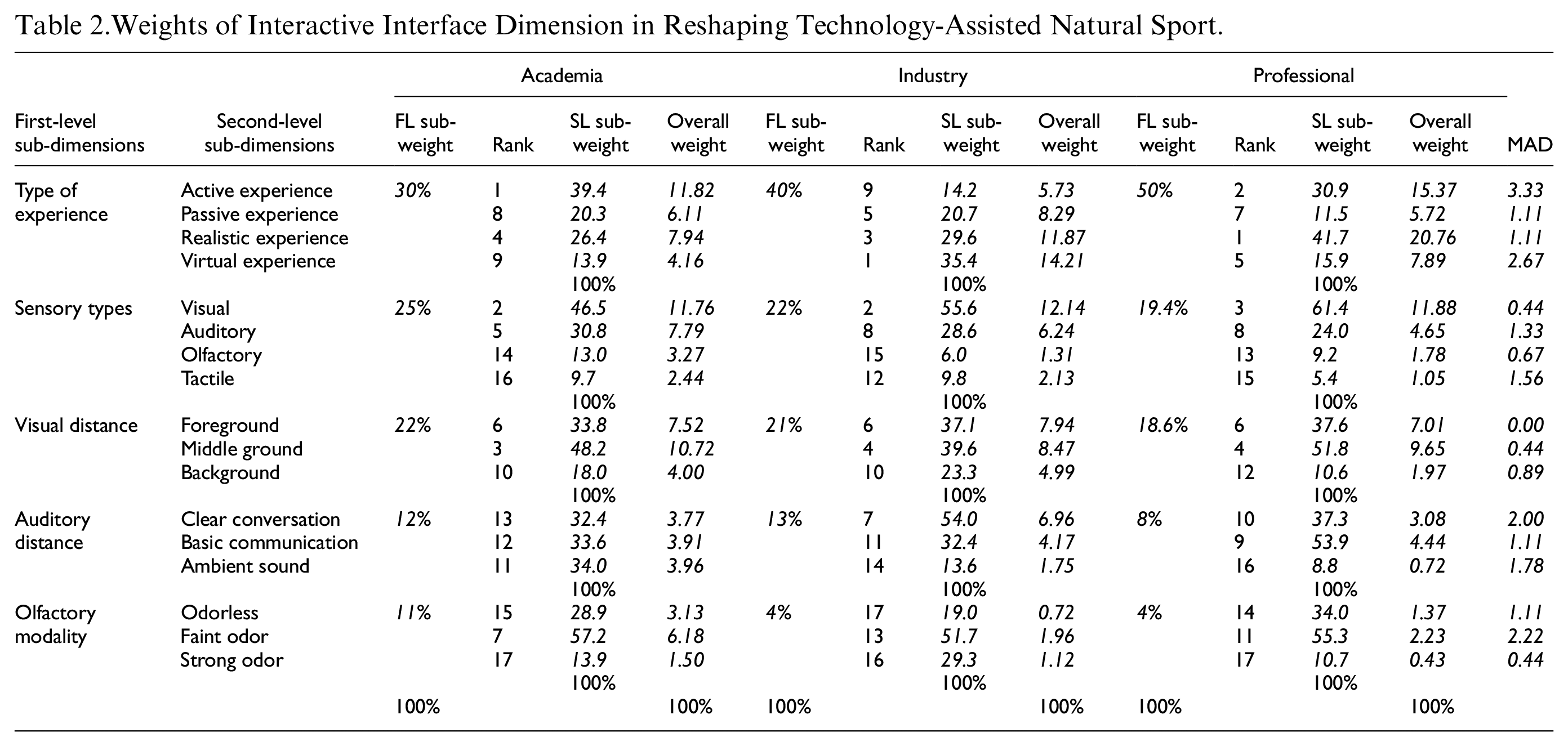
In the interactive interface of technology-assisted natural sport, all experts gave a higher weight of recognition to the visual type and the foreground and middle ground of visual distance, while a strong odor form was given the last weight order. Additionally, academic and professional experts gave the highest priority to active experience types, and professional experts gave slightly later middle rankings. In contrast, industrial experts gave the highest ranking to virtual experience types, while academic and professional experts gave later rankings. Considering the practical application of technology-assisted natural sports, this study found that experts generally believe that the experience types and sensory types of interactive interfaces are of the highest importance. This was consistent with the research results of Chan et al. (2021) and Lindner et al. (2019). Virtual nature can improve mental health, further emphasizing the importance of providing users with high-quality experiences, as mentioned in the study by Calogiuri et al. (2022) regarding the similarity between virtual and real experiences. The progress in technology had enabled more profound immersive experiences in the metaverse. The distinction between “active experiences” and “virtual experiences” in their essence within the metaverse might have contributed to the divergence in views between academic and industrial practitioners. Scholars’ emphasis on active experiences could have stemmed from their focus on the conceptual, fundamental aspects of technology, and its implications on human psychology and behavior. From scholar perspective, active experiences might have been considered a better reflection of the interaction and immersion between individuals and the virtual environment, crucial for analyzing human behavior and psychological responses in such settings. Conversely, industrial practitioners, more concerned with virtual experiences, might have been driven by the practical applications of the products, user acceptability, and commercial profitability. They might have deemed virtual experiences as more achievable, cost-effective, and adequately satisfactory for most users, negating the necessity for profound interactivity and immersion. Thus, while active and virtual experiences in the metaverse somewhat mirrored those in actual and virtual natural settings, determining the optimal degree of interaction and immersion remained an exploratory subject.
Technology Information of Technology Assistance Reshaping Natural Sport
In the twenty-one secondary dimensions of technology information, experts had varying sequences of evaluation. Academic experts rated the dimensions as follows: information sources, technology types, supplement dimensions, sensory benefits, and auxiliary information (27%, 26%, 22%, 17%, 8%). Industrial experts’ ratings were sensory benefits, supplement dimensions, auxiliary information, information sources, and technology types (37%, 23%, 20%, 14%, 6%). Professional experts rated them as supplement dimension, sensory benefits, technology types, auxiliary information, information sources (36%, 27%, 16%, 11%, 10%). There was a high degree of consensus among all experts on the universality of supplement dimension (MAD = 0.44), with the universality of supplement dimension ranked 2nd and 3rd. The highest ambiguity in weight rating was the attractiveness of sensory benefits (MAD = 7.33), universally ranked between 1st and 19th. The second most ambiguous was the MR technology type (MAD = 6.00), with rankings between 2nd and 19th. The third was the auto-generated AI in information sources (MAD = 5.55), ranked between 4th and 18th. Fourth were the VR in technology types and motion indicators in auxiliary information (MAD = 5.11), with VR ranked between 9th and 21st and motion indicators between 5th and 17th. All experts acknowledged the universality of supplement dimensions with more advanced ranking recognition (Table 3). In contrast, for the attractiveness in sensory benefits and motion indicators in auxiliary information, professional and industrial experts gave more advanced rankings than scholar. Conversely, in dimensions like AR, VR, MR technology types, and auto-generated AI information sources, academic experts assigned more advanced rankings than professional experts.
Weights of Technology Information Dimension in Reshaping Technology-Assisted Natural Sport.

The differences in ranking were inferred to be due to the metaverse and virtual reality technologies still being in the development stage, making enhancing user immersion and experiential attractiveness a key issue. Lindner et al. (2019) had pointed out that experiences in virtual environments differ from those in the real world. Specific technologies, such as visual, auditory, and olfactory analogs, affect user sensory benefits. This explained why “attractiveness” received a higher weight in sensory benefits. Chan et al. (2021) also acknowledged that natural experiences in virtual reality across the different technology types could offer users varying levels of immersion and authenticity. These differences might have led to the discrepancy in how academic and industrial experts weighed these technology types. Academic experts tended to value theories, research methodologies, and the long-term impact of technology, leading them to favor factors affecting the direction of technological development, such as technology types and information sources. conversely, industrial experts were concerned with the practical application of technology, market acceptability, and commercial value, making “sensory benefits” and “auxiliary information” possibly more important to them. Professional experts, likely seeking balance, considered policy-making, public interest, and the societal impacts of technology.
Conclusions and Recommendations
Balancing Real and Virtual Natural Sport
In the dimension of interactive interfaces, the type of experience occupies a central position. This implies that within the virtual natural sports of the metaverse, users seek a sense of realism and immersion. It goes beyond intuitive sensory analogies like sight, hearing, or smell; what’s crucial is establishing an emotional and psychological connection with real natural sports. This concept is rooted in the profound connection between humans and natural sports. Even in the digitalized metaverse, this instinctive bond remains strong. The research explores how to maximize the replication of genuine natural sport sensations in virtual environments within various sub-dimensions of ’interactive interfaces. Essentially, it represents the challenge of seeking authentic natural sport experiences in fully digital environments. The core of the research lies in maintaining cutting-edge technology while ensuring that users receive an authentic, direct, and profound experience of natural sports.
The rapid advancement of technology today has made the application of virtual and augmented reality in natural sports possible. A challenge arises in sustaining authentic natural experiences within these high-tech applications. Within this dimension, we underline the significance of authenticity and immersion in experiences. However, further research is needed on how to maintain an experience that aligns with real nature in technologically enhanced scenarios. It is recommended that future researchers focus on harmoniously integrating natural sports with technological advancements. It’s crucial to ensure that while enhancing the experience with technology, the authenticity of the experience isn’t compromised. This might require interdisciplinary collaboration, such as ecology, environmental science, and computer engineering, to consider these factors during the development process.
For the authentic experience of users, researchers need to refine evaluation mechanisms. Different user groups may have varied expectations and needs regarding natural sport experiences. For instance, younger users might focus more on the novelty and creativity of tech interactions, while older users may prioritize authenticity and comfort. Addressing these diverse needs, future research should further segment user groups, conducting targeted, in-depth studies and analyses to offer more personalized products and services that meet user demands.
The Integration and Evolution of Technology With Natural Sports
The technological information dimension emphasizes the indispensable role of technology in enhancing natural sport experiences. Genuine natural sport experiences are not just mere simulations of nature but involve deep interactions with real natural sports. The selection and application of technology must exhibit high analogical capabilities to ensure that natural sports in virtual environments are authentically reproduced. In this dimension, everything from types of technology to information sources’ automated generation by AI demonstrates technology’s adaptability and evolution in simulating and enhancing natural sports. This adaptability and evolution are evident not only in technology but also reflect our deepening understanding and experiences of natural sports.
While technology has indeed introduced many innovations in simulating natural sports, it also has its limitations. No matter how advanced, it’s challenging for technology to replicate every detail of real natural sports fully. Additionally, the rapid evolution of technology might render some applications obsolete or incompatible with newer technologies. To address these issues, future research and development need to concentrate more on continuous technological innovation and optimization. Through persistent feedback loops and testing, R&D teams can better comprehend which technologies are most effective in simulating natural sports and make adjustments based on this feedback.
In development and application processes, user feedback and experiences are crucial. They provide valuable information that can help researchers better understand user needs and expectations. Therefore, it’s recommended that R&D teams establish an effective feedback mechanism to ensure the timely capture of user feedback and suggestions. This real-time feedback can not only guide quick product improvements and upgrades but also ensure that products remain consistent with market and user needs.
Diverse Perspectives in Technology-Assisted Natural Sports
Experts from different backgrounds have varying emphases in evaluating the two primary dimensions and their sub-dimensions, revealing their perspectives on the relationship between natural sports and technology. These diverse viewpoints offer rich insights for research and deep implications for future studies and applications in natural sports.
Due to these differences in expert backgrounds, their understanding and perspectives on natural sports and technology may vary. This fragmentation of viewpoints could lead to a scattered focus in research and development directions. To discuss the integration of natural sports and technology more systematically and comprehensively, it is recommended to encourage interdisciplinary collaborations. This approach will not only integrate knowledge from different fields but also provide a more holistic and in-depth research perspective. Moreover, with continuous advancements and innovations in technology, new techniques and approaches will emerge, offering new possibilities for natural sport experiences. To keep pace with this development, researchers should remain open to new technologies and methods, actively seek and explore new collaboration opportunities, and ensure they are always at the forefront of integrating technology and natural sports.
In our exploration of technological integration within natural sports, the emphasis on expert insights has underscored the necessity for a broader examination of user experiences to fully grasp the dynamics of this integration. The current research, primarily focused on expert perspectives, offers a foundational understanding and potential pathways for leveraging technology in enhancing natural sports experiences. However, to achieve a comprehensive appreciation of how technological advancements influence diverse user groups, it is imperative to extend our research scope to encompass detailed user experience surveys. A pivotal direction for future research involves the systematic deployment of user experience surveys, aiming to dissect and understand the variegated impacts of technology on participants in natural sports settings. Such an approach should meticulously investigate user perceptions, preferences, and the satisfaction derived from engaging in technologically augmented natural sports activities. Additionally, the continuous cycle of technological innovation, coupled with an effective mechanism for gathering and acting on user feedback, stands as a cornerstone for refining and enhancing the natural sports experience. By prioritizing these areas, future investigations can not only bridge the current research gaps but also pave the way for innovative strategies that align with evolving user expectations and technological landscapes. This integrated focus on user-centered research and iterative technology development promises to enrich our understanding of the interface between technology and natural sports, ensuring that the advancements in this field are both relevant and responsive to the needs of its participants.
This study underscores the importance of continuous technological innovation and user feedback in refining virtual and augmented reality applications in natural sports. By integrating expert insights with detailed user experience surveys, we aim to advance the understanding of how different user groups interact with these enhanced natural sports experiences. Future research should focus on systematically gathering user data to optimize these experiences, ensuring that technological advancements align with evolving user expectations and contribute meaningfully to the natural sports domain. However, the integration of VR/AR technologies in natural sports also presents several real-world challenges: (a) Cost and Infrastructure: High development and deployment costs limit accessibility, especially in lower-income communities; (b) User Acceptance: Some users may struggle with motion sickness or discomfort in VR environments, requiring additional research on usability and adaptation strategies; (c) Accessibility and Digital Divide: Limited access to VR/AR equipment may exclude certain demographics, necessitating policy interventions to bridge the gap. The practical implications of this study can be summarized as follows:
Policymakers: For environmental conservation policies, the findings highlight how virtual reality (VR) and augmented reality (AR) can serve as educational tools in promoting environmental conservation. Policymakers can use these insights to craft policies that incorporate VR/AR into public education programs aimed at increasing awareness and fostering sustainable practices. For public health initiatives, this study demonstrates the mental and emotional benefits of engaging in natural sports through virtual platforms. Policymakers could incorporate these findings into public health initiatives, especially targeting populations with limited access to natural environments, ensuring they benefit from the positive effects of nature-inspired virtual experiences.
Developers: For innovative product design, developers can leverage the research insights to create more immersive VR/AR applications that cater to a diverse range of users. By focusing on the multi-sensory elements emphasized in the study, developers can design products that enhance the user’s connection to nature, even in virtual settings. For User-centric development, the emphasis on different user needs in the findings suggests a move towards personalized VR/AR experiences. Developers should consider creating customizable features that address the specific preferences of various user groups, such as younger audiences seeking novelty and older users valuing authenticity and comfort.
Educational Institutions: The study provides a basis for incorporating VR/AR technologies into environmental science and sports management curricula. Educators can design hands-on projects where students develop virtual natural environments, exploring the interplay between technology and nature.
Health and Wellness Organizations: The study underscores the potential for VR/AR applications to support mental health through simulated natural environments. Health organizations can apply these findings to develop therapeutic programs that utilize virtual nature experiences as a means of stress reduction and rehabilitation.
To enhance the practical implications of this study, we propose the following specific research directions:
Longitudinal Studies on User Experience: One proposed study involves conducting longitudinal research to track changes in user perceptions, satisfaction, and engagement with technologically enhanced natural sports over time. This study would gather data from diverse user groups across different age ranges, experience levels, and geographic locations. The objective would be to identify trends in user behavior and preferences, assessing how continuous technological innovations influence the long-term adoption and satisfaction of virtual natural sports experiences. The findings could offer valuable insights into the sustainability and evolving needs of users in this rapidly changing field.
Comparative Analysis of Technological Modalities: Another recommended study is a comparative analysis of different technological modalities—such as VR, AR, and mixed reality (MR)—and their respective impacts on user immersion, emotional connection, and physical engagement in natural sports. This study could involve experimental designs where participants engage in identical natural sports activities across different technological platforms. The aim would be to assess which technologies most effectively replicate or enhance real-world natural experiences and why. The outcomes would provide developers and stakeholders with evidence-based guidance on the optimal use of specific technologies in creating immersive and authentic natural sport experiences.
Interdisciplinary Collaborative Research: Considering the need for interdisciplinary approaches highlighted in the conclusions, a future research direction could involve collaborative projects that bring together experts from fields such as ecology, psychology, sports science, and computer engineering. These studies could focus on developing integrated frameworks that address the psychological, ecological, and technological dimensions of natural sports within the metaverse. Such interdisciplinary research would not only enhance the theoretical understanding of this complex interaction but also offer practical solutions for creating more holistic and sustainable natural sport experiences in virtual environments.
User-Centered Design and Feedback Mechanisms: Future studies should explore the implementation of user-centered design processes and real-time feedback mechanisms in the development of virtual natural sports platforms. This research would involve creating and testing feedback systems that allow users to continuously provide input on their experiences, preferences, and suggestions for improvement. By analyzing this data, researchers could refine the design and functionality of these platforms, ensuring that they remain aligned with user expectations and technological advancements.
Enhancing the Rigor of AHP in Virtual Natural Sports Research: Future research should address the inherent limitations of the AHP to improve its objectivity and applicability in evaluating virtual natural sports experiences. AHP heavily relies on subjective expert judgments for weight assignment, which may introduce bias. To mitigate this, future studies can integrate machine learning techniques to dynamically adjust weight distributions based on empirical data, reducing the impact of individual biases. Moreover, expanding expert diversity, including representatives from academia, industry, and policymakers, to provide a more comprehensive evaluation of technological adoption in natural sports.
Footnotes

Ethical Considerations
This study was conducted in accordance with the ethical standards outlined in the APA Ethical Principles of Psychologists and Code of Conduct (Section 8.05) and the Publication Ethics and Research Integrity Policy of Sage Open. Ethical approval for this study was obtained from Research Ethics Committee of the National Taiwan Normal University (Approval No: [202112HS035]).
Consent to Participate
All participants provided written informed consent before participating in the study. The anonymity and confidentiality of participants’ responses were strictly maintained. In cases where written consent was not feasible, verbal informed consent was obtained and documented as per the REC-approved protocol.
Funding
The author disclosed receipt of the following financial support for the research, authorship, and/or publication of this article: The part of data was corrected from the project: Metaverses approaches, the development of nature sport constructed with the elements of nature, society and technology, No. MOST-111-2410-H-003-148, Ministry of Science and Technology, Taiwan.
Declaration of Conflicting Interests
The author(s) declared no potential conflicts of interest with respect to the research, authorship, and/or publication of this article.
Data Availability Statement
The data that support the findings of this study are not publicly available due to privacy or ethical restrictions.