




Abstract
This paper examines the impact of Internet courts on firm innovation, emphasizing the role of digital judicial protection. Using a staggered difference-in-differences (DID) approach and data from Chinese listed companies, we find that the establishment of Internet courts significantly enhances firm innovation, a result robust across multiple tests. Mechanism analysis reveals that Internet courts promote innovation by increasing firms’ willingness to innovate and accelerating digital transformation. Heterogeneity analysis highlights stronger effects in Internet-related services, industrial digitization sectors, private firms, and firms facing high litigation risks, likely due to their greater reliance on digital justice systems. These findings provide novel evidence linking digital justice systems to firm innovation and offer actionable insights for fostering innovation through judicial reforms in the digital era.
Introduction
Driven by the global new round of technological revolution and industrial transformation, digital technologies are increasingly integrated into various fields of economic and social governance. In response to the legal challenges brought by the rapid development of the digital economy, countries are actively exploring digital judicial solutions. Notably, China has taken the lead in becoming the first country in the world to establish a pilot internet court, a specialized court aimed at exploring new technologies, mechanisms, and models of digital justice. This pioneering initiative not only demonstrates China’s foresight in addressing digital governance challenges but may also provide valuable lessons for global digital judicial development. Therefore, studying whether digital judicial reform can encourage enterprise innovation by optimizing the rule-of-law-based business environment has become an increasingly important issue.
The institutional environment of a country is a primary factor influencing economic activity (Commons, 1931; North, 1971; Porta et al., 1997, 1998). The legal environment, as a formal institution, is essential for firm innovation (Chadee & Roxas, 2013; Jiao et al., 2015; Julio & Yook, 2012; van Waarden, 2001). Many scholars argue that China has established an intellectual property legal system in line with international standards. However, the gap between de facto judicial protection and the expectations of innovators may be due to the lack of governance capacity within the judicial system (Ang et al., 2014; Cao, 2014; Heath, 2021; Hu & Jefferson, 2009; Wyzycka & Hasmath, 2017). Therefore, improving the judicial capacity of the courts may be more important to ensure firm innovation.
The existing literature has found that the establishment of many specialized courts has a significant impact on firm innovation, such as intellectual property courts (Y. F. Zhang et al., 2022; Zheng et al., 2023), circuit courts (Gao & Kong, 2024; Lai et al., 2023), and environmental courts (Qi et al., 2023; Zhou et al., 2023). International research also supports the notion that specialized courts can positively influence firm innovation by offering faster and more focused legal processes, particularly in sectors like intellectual property (Galasso & Schankerman, 2010, 2015). In contrast, the literature on the impact of court digitalization and informatization on firm innovation remains sparse and relatively underexplored. While some studies suggest that digital judicial systems, including online courts and electronic case management systems, have the potential to enhance legal processes and reduce transaction costs—thereby benefiting firms’ innovation capacity (Katsh & Rabinovich-Einy, 2017; Prescott, 2017; Sourdin et al., 2020), these studies predominantly rely on qualitative analyses grounded in theories and case studies, and they lack robust empirical research utilizing systematic data, including the identification of causal effects and the empirical investigation of mechanisms linking digital justice to firm innovation. Therefore, our aim is to fill this gap by investigating the role of Internet courts, which can examine the relationship between the strengthening of judicial protection and firm innovation from the perspective of digital justice.
The Internet Court has created a unique digital justice model characterized by electronic data information, online litigation, intelligent judicial adjudication, and rule innovation (Guo, 2021; Rusakova et al., 2021; Sung, 2020). In China, Internet courts have played a vital role in the development of the economy, particularly the digital economy. Firstly, they strengthen the judicial protection of intellectual property rights in the online environment. Secondly, they effectively maintain the fair competition in the online market. Thirdly, they set application standards for digital technologies such as big data, blockchain, and artificial intelligence. Therefore, the digital justice reform represented by Internet courts provides a valuable opportunity to study the relationship between digital justice and firm innovation.
We find that, firstly, the establishment of the Internet Court has significantly increased both the number of invention patents filed by firms and R&D investment by firms. Secondly, the online litigation model of the Internet Court enhances judicial efficiency and encourages firms to innovate independently. By actively leveraging digital technology for smart justice, the Internet Court incentivizes firms to undergo digital transformation, and both mechanisms contribute to firm innovation. Thirdly, with respect to industry, the Internet Court mainly promotes innovation in Internet-related service industries and industrial digitization sectors. In terms of ownership, it primarily fosters innovation in private firms. Regarding litigation, it mainly encourages innovation in firms with high litigation risks.
This paper contributes to the relevant literature in several ways. Firstly, it presents novel empirical evidence demonstrating the causal linkage between the enhancement of judicial protection and firm innovation, specifically from the perspective of digital justice. This perspective enriches the current understanding by integrating the role of digital technology in judicial processes and its impact on firm innovation. Secondly, we identify the promotion of digital transformation within firms as a distinctive pathway through which digital justice influences innovation. This mechanism underscores the importance of digitalization not only as a technological upgrade but also as a strategic response to enhanced judicial protections. By elucidating this unique mechanism, our research provides a deeper understanding of how legal and digital frameworks interact to spur innovation. Thirdly, our findings underscore the pivotal role of digital judicial protection in fostering innovation within both the digital and private economies. This insight is crucial as it highlights the broader economic implications of judicial reforms in the digital era, emphasizing the necessity for robust legal frameworks to support technological advancement and entrepreneurial activities.
The remainder of this paper is organized as follows: Section 2 introduces the institutional background. Section 3 constructs the theoretical analysis framework and presents the research hypotheses and theoretical hypotheses. Section 4 explains the identification strategies, main variables, and data sources. Section 5 examines the impact of Internet courts on firm innovation and presents robustness tests. Section 6 discusses and tests the mechanisms through which Internet courts affect firm innovation. Section 7 analyzes the heterogeneity among enterprises regarding the innovation effects of Internet courts. Finally, Section 8 presents the conclusions.
Institutional Background
The Purpose of Establishing Internet Courts
The establishment of Internet courts represents a crucial component of China’s digital justice reform. On one hand, drawing from China’s historical experience in justice system construction, the establishment of Internet courts pioneers exploration into potential pathways for smart court reforms and embodies the culmination of China’s efforts in court informatization. On the other hand, considering China’s historical experience in constructing the judicial service economy, urgent measures are necessary to establish Internet Courts to address emerging legal challenges stemming from the rapid growth of the digital economy. These courts are pivotal in resolving online disputes, regulating network behavior, combating online infringements, and facilitating the stable and orderly growth of the digital economy.
The Process of Establishing Internet Courts
On June 26, 2017, the 36th conference of the Central Leading Committee for Comprehensively Deepening Reform approved plans to establish the Hangzhou Internet Court, signifying the acceptance of the reform plan originating from Hangzhou by the central administration. The meeting assigned four tasks to the Hangzhou Internet Court: (1) to explore the rules of trial procedures for internet-related legal cases; (2) to improve court management; (3) to enhance the trial mechanism and efficiency; (4) to provide judicial guarantees for resolving internet-related disputes and promoting the deep integration of the internet with society and the economy.
Subsequently, on August 8, 2017, the Supreme People’s Court issued the “Plans for Setting up the Hangzhou Internet Court,” mandating the establishment of an internet court in Hangzhou with centralized jurisdiction over internet-related disputes. The Hangzhou Internet Court is tasked with hearing six types of internet-related cases that occur within the administrative area of Hangzhou City. These include disputes related to (1) internet shopping and small financial loan contracts; (2) copyright conflicts; (3) infringement of personality rights; (4) product liability; (5) domain name disputes; and (6) administrative disputes arising from network management.
Following a successful trial operation of the Hangzhou Internet Court for a year, the Supreme People’s Court decided to establish two new Internet courts in Guangzhou and Beijing on August 9, 2018, where internet-related disputes are concentrated. These three Internet courts share similar goals and functions.
The Digital Judicial Model of Internet Courts
Digital justice comprises three main components: (1) the online litigation system, which reflects the uniqueness of the Internet and encompasses electronic litigation rules and evidence regulations tailored for online proceedings; (2) the Intelligent Trial Model, which upgrades and transforms the traditional trial process through the integration of digital technology to improve efficiency and effectiveness; and (3) the Digital Technology Application Rules, which are crucial for judicial adjudication to maintain order in cyberspace in accordance with the law, ensure timely and proper handling of emerging Internet disputes, and support the rapid development of the digital economy.
Compared to the traditional judicial model, the Internet Court has achieved centralized jurisdiction over Internet-related cases within its jurisdiction. In terms of the litigation system, the Internet Court is the first to realize fully online litigation. In terms of trial mode, the Internet Court pioneered the asynchronous trial mode. In terms of judicial adjudication, the Internet Court utilizes digital technology to empower the comprehensive management of network disputes. It can be seen that China’s digital justice presents new features such as networked litigation activities, centralized jurisdiction, streamlined processes, digitalized trials, intelligent trials, and specialized judgments.
Theoretical Analysis
Theoretical Framework
This study takes digital justice as the core mechanism, integrating transaction cost theory, the technology acceptance model (TAM), and innovation theory to construct a comprehensive framework explaining how digital justice promotes corporate innovation.
Digital Justice and Transaction Cost Theory
Based on transaction cost theory (Williamson, 1998), digital justice significantly reduces the costs of information acquisition, contract enforcement, and dispute resolution by introducing digital tools and platforms such as online litigation and smart contracts. Traditional litigation often consumes substantial time and resources, whereas digital methods shorten the adjudication process and mitigate litigation uncertainty and financial burdens (Guerriero, 2016; Hadfield, 2008). This enables businesses to allocate more resources toward R&D, unlocking their innovation potential (van Waarden, 2001; J. Wang & Mao, 2019).
Digital Justice and the Technology Acceptance Model (TAM)
Leveraging the technology acceptance model (TAM; Davis et al., 1989), this study further explores how technological applications in digital justice stimulate technology adoption and innovation among enterprises. Digital justice, characterized by its usability and efficiency—such as AI-assisted adjudication systems and blockchain-based evidence preservation—enhances the transparency and fairness of judicial systems. It also provides businesses with a more standardized and efficient legal environment (Comin & Hobijn, 2004; Teece, 2018). This environment bolsters corporate confidence in digital technology, fostering technological upgrades across industry value chains.
Digital Justice and Innovation Theory
Drawing on intellectual property and innovation theory, digital justice safeguards innovation in digital industries by offering clear and forward-looking legal frameworks (May, 2015). In areas such as intellectual property protection, data transaction regulation, and antitrust enforcement, the technological support of digital justice ensures more precise and effective legal execution, encouraging businesses to engage in technological development and market expansion (Papageorgiadis & Sharma, 2016).
In summary, by integrating the above three theories, this study proposes an innovation-driven framework centered on digital justice, shaped by the interplay of judicial efficiency, technology acceptance, and legal rule-making. As shown in Figure 1, this theoretical framework demonstrates that digital justice is not merely an extension of traditional justice but also a crucial component of the innovation ecosystem in the digital economy era. It plays an indispensable role in reducing institutional costs, promoting technological diffusion, and optimizing regulatory design.

The framework of the Internet Court’s influence on firm innovation.
Judicial Efficiency and Firm Independent R&D
An Internet court is a new type of court that utilizes an online litigation model to resolve disputes and provide judicial services. This approach significantly enhances judicial efficiency and yields two principal benefits. Firstly, Internet courts provide a convenient platform for dispute resolution, enabling businesses to address contract disputes, intellectual property issues, and other legal matters with greater ease. This streamlined process reduces resource expenditure associated with prolonged litigation, allowing businesses to redirect their focus and resources toward innovative activities. For example, a study by the China Academy of Information and Communications Technology found that businesses using the Hangzhou Internet Court have reported saving an average of 30% in legal costs, enabling these resources to be reinvested in R&D projects.
Secondly, Internet courts promote transparency and efficiency in the trial process. By providing clear visibility into case acceptance, investigation, and trial procedures through online platforms, Internet courts enhance trust in the judicial system among businesses. This heightened trust fosters confidence in investing in innovative ventures. For instance, the transparent resolution of digital copyright disputes in the Hangzhou Internet Court has reduced the average time to settle cases by 40%, which has motivated digital content firms to increase their investment in original product development.
As shown in Figure 2, the full-process online litigation and asynchronous trial modes enable Internet courts to overcome the limitations of time and space. These modes separate various phases of Internet-related cases and streamline the main processes and key components of the trial using digital and standardized methods. Each stage is equipped with prompts, and judges, plaintiffs, defendants, and other litigants can log in to the platform within a specified period at their convenience. They complete the trial process asynchronously, allowing the core content of the trial to be handled during free time. This approach ensures the quality of the trial while improving judicial efficiency. News reports indicate that the case adjudication cycle in Internet courts is 50% shorter than that of traditional adjudication models, with the average adjudication period reduced to approximately 42 days. Additionally, the duration of online trials in Internet courts is 70% shorter than traditional trials, with the average online trial lasting about 29 min.

Efficiency improvement of asynchronous trial mode in Internet courts.
The psychological and procedural benefits perceived by firms engaging with digital courts are significant. The asynchronous trial mode, for example, allows businesses to manage legal proceedings without disrupting their daily operations, which is crucial for maintaining productivity and innovation momentum. A case study of Alibaba Group, one of the first companies to engage with the Hangzhou Internet Court, showed that the company was able to resolve a series of intellectual property disputes more quickly and efficiently, freeing up resources to focus on new product development and market expansion.
Enterprises are significantly influenced by the judicial protection environment when deciding whether to file patents independently or jointly. Existing studies have demonstrated that in a more robust judicial protection environment, enterprises are more inclined to apply for patents independently rather than jointly with other entities.
Firstly, a stronger judicial protection environment effectively safeguards intellectual property rights, boosting enterprises’ confidence in protecting their independent innovations. An efficient judicial protection system, including a streamlined dispute resolution mechanism, reduces the cost and uncertainty associated with protecting patents. This enhanced confidence encourages firms to take the risk of innovating independently to fully capitalize on their patents (Hadfield, 2008; N. Wang et al., 2023).
Secondly, joint patenting allows for the sharing of R&D costs and external risks, including judicial risks. However, with improved judicial protection, enterprises are less compelled to choose joint filings out of fear of intellectual property rights disputes (Cooke & Leydesdorff, 2006; Katila & Mang, 2003). In summary, we believe that the establishment of Internet courts has significantly enhanced local enterprises’ trust in the legal system and reduced legal uncertainty, which is likely to encourage higher R&D investment and independent patent applications, so we propose research hypothesis 1.
Hypothesis 1: Internet courts might influence firm innovation by enhancing the willingness of firms to conduct independent R&D.
Digital Technology Rules and Firm Digital Transformation
An Internet courts is also a new type of court that utilizes digital technology to resolve disputes and provide judicial services. The application of digital technology in Internet courts is evident in two main facets. Firstly, these courts utilize electronic evidence, blockchain technology, and explore big data and artificial intelligence to aid judicial decision-making processes, fostering a stable legal environment for enterprises and facilitating long-term innovation planning. Secondly, as specialized institutions handling Internet-related cases, including digital intellectual property, Internet courts prioritize digital technology to ensure judges understand both technological advancements and legal frameworks, enhancing digital intellectual property rights protection. For example, the Hangzhou Internet Court established behavioral norms for data resource rights, while the Beijing Internet Court recognized AI-generated works’ copyright, pioneering the Copyright Chain-Tianping Chain platform, fortifying intellectual property protection and fostering an innovation-friendly legal environment.
As depicted in Figure 3, the Internet Court has established two pivotal platforms leveraging digital technology. Firstly, the Electronic Evidence Platform stands as the nation’s pioneering initiative, standardizing the format, retrieval, transmission, and storage of electronic evidence. This platform seamlessly integrates with diverse electronic data sources, providing an auxiliary means of verification to detect any tampering with electronic evidence post-extraction. Secondly, the Smart Contract Platform primarily utilizes blockchain technology to efficiently manage default behavior, minimizing human intervention and mitigating interference from uncontrollable factors. By encompassing the entire process of network behavior—from voluntary signing and automatic performance to the inability to perform, intelligent filing, trial, and execution—this platform ensures a streamlined and reliable mechanism for contract enforcement within the Internet Court system.

The application of digital technology in Internet courts.
In summary, Internet courts have the potential to catalyze the digital transformation of businesses for several compelling reasons. Firstly, the digitization of firms facilitates the seamless access and provision of electronic evidence, thereby streamlining the legal process and enhancing procedural efficiency. Secondly, the Internet Court serves as a regulatory authority, setting forth norms for the utilization of digital technology and providing clear guidelines for businesses to navigate and optimize their use of digital tools. Thirdly, digital intellectual property resulting from the digital transformation of businesses stands to benefit from heightened protection under the jurisdiction of the Internet Court, fostering innovation and safeguarding digital assets. Collectively, these factors foster an environment conducive to the digital development of enterprises.
Existing research indicates that enterprise digital transformation significantly influences innovation. Firstly, digital technology expedites the flow of information and knowledge while reducing storage costs, facilitating effective collaboration among employees and departments. Consequently, this fosters the generation of innovative solutions and products (S. Li et al., 2023; Vial, 2019; Yoo et al., 2010). Secondly, digital transformation empowers enterprises to manage and analyze vast datasets, optimizing resource allocation, process management, and market understanding. This enhances R&D efficiency and innovation capacity (Bharadwaj et al., 2013; Y. Wu & Li, 2024). Thirdly, digital technology bolsters enterprises’ Environmental, Social, and Governance (ESG) performance, elevating their social value and market competitiveness through the innovation of green products and services (Chen et al., 2024; Zhao et al., 2024). Thus, we propose research hypothesis 2.
Hypothesis 2: Internet courts might influence firm innovation by promoting digital transformation.
Empirical Design
Methods
This paper considers the establishment of Internet courts as a quasi-natural experiment and intends to utilize the staggered Difference-in-Differences (DID) method to test the impact of the establishment of Internet courts on the innovation of listed enterprises. The staggered DID method is particularly well-suited to address causality and selection bias issues in this study. By leveraging the variation in both time and location of policy implementation—specifically, the establishment of Internet courts in Hangzhou, Guangzhou, and Beijing—it enables the analysis to isolate the causal effect of the courts from other confounding factors. By comparing the changes in innovation performance of listed enterprises in the experimental group (cities with Internet courts) with those in the control group (cities without Internet courts) before and after the courts’ establishment, the method ensures a robust estimation of the Internet courts’ governance effectiveness. Additionally, the staggered nature of the courts’ establishment (Hangzhou in 2017, Beijing and Guangzhou in 2018) allows the study to capture dynamic and region-specific effects over time while assuming parallel trends in the absence of the policy intervention.
Spatially, this study considers listed companies located in Hangzhou, Guangzhou, and Beijing as the experimental group, as these cities are directly affected by the establishment of Internet courts, while companies in other cities serve as the control group. Temporally, the governance effectiveness of the Internet Court in Hangzhou is analyzed starting from 2017, while the starting point for the courts in Beijing and Guangzhou is set in 2018. Accordingly, the staggered DID model is specified as follows:

Variables
The index i denotes listed enterprises, c denotes the city where the listed enterprises are situated, and t denotes the year. Innovationi,c,t is the explained variable, measured by patent applications to indicate the level of innovation of listed firms. Invention patents refer to new technological solutions proposed for products, methods, and improvements, requiring substantive examination and possessing high technical value. Therefore, we choose ln(Independent invention patent application + 1) as the main measurement indicator. Additionally, independent applications for invention patents, utility patents, design patents, the total number of patent applications, and R&D investment by listed companies are selected as proxy variables for the explanatory variable for robustness testing.
Courtc,t is the dependent variable, indicating whether city c where the listed companies are located is governed by Internet courts in year t. If it is subject to jurisdiction, it is set to 1; otherwise, it is set to 0. β1 represents the value of the policy effect.
Firmcontroli,t are company-level control variables, including enterprise size (Size, the logarithms of the enterprise’s gross assets), gearing (Lev, the ratio of the enterprise’s gross debt to gross assets), return on assets (Roa, the ratio of net income to gross assets), and enterprise age (Age, the firm’s years of existence).
Citycontrolc,t are city-level control variables where the listed firms are located, including the economic development level (lnpgdp, the logarithms of GDP per capita), and industrial structure (Si, the percentage of GDP in the tertiary industry in each city). Meanwhile, we use a two-way fixed effects model: µi represents fixed effects for the industry, γt represents fixed effects for the time, and εi,c,t represents the random disturbance terms.
We use the mediation effect model to conduct mechanism tests. In this paper, we choose innovation willingness (IW) and digital technology application (DT) as mediating variables. An enterprise’s willingness to innovate can be measured by the proportion of independently applied invention patents to the total number of invention patent applications. Generally, the larger the proportion of independently applied invention patents, the stronger the enterprise’s willingness to innovate. Drawing on F. Wu et al. (2021), we have organized the annual report texts of listed companies from 2010 to 2021 into panel data, extracting the Management Discussion and Analysis (MD&A) section. From five dimensions—artificial intelligence, big data, cloud computing, blockchain, and digitalization—we constructed a digital technology terminology dictionary for the listed companies. We then counted the frequency of occurrence of these digital technology terms and used it as a proxy variable for the level of digital technology adoption.
Data
The study samples consist of listed enterprises in China from 2010 to 2021. The data for each variable are obtained from the China Stock Market Accounting Research (CSMAR) database, the China City Statistical Yearbook, and the annual reports of listed enterprises. After removing samples with missing variables, we obtained a total of 4,066 listed companies with 30,194 annual observations. To avoid the interference of extreme values, Lev and Roa are winsorized at the 1% level. Table 1 shows the basic statistics for the major variables.
Statistical Characteristics of Major Variables.
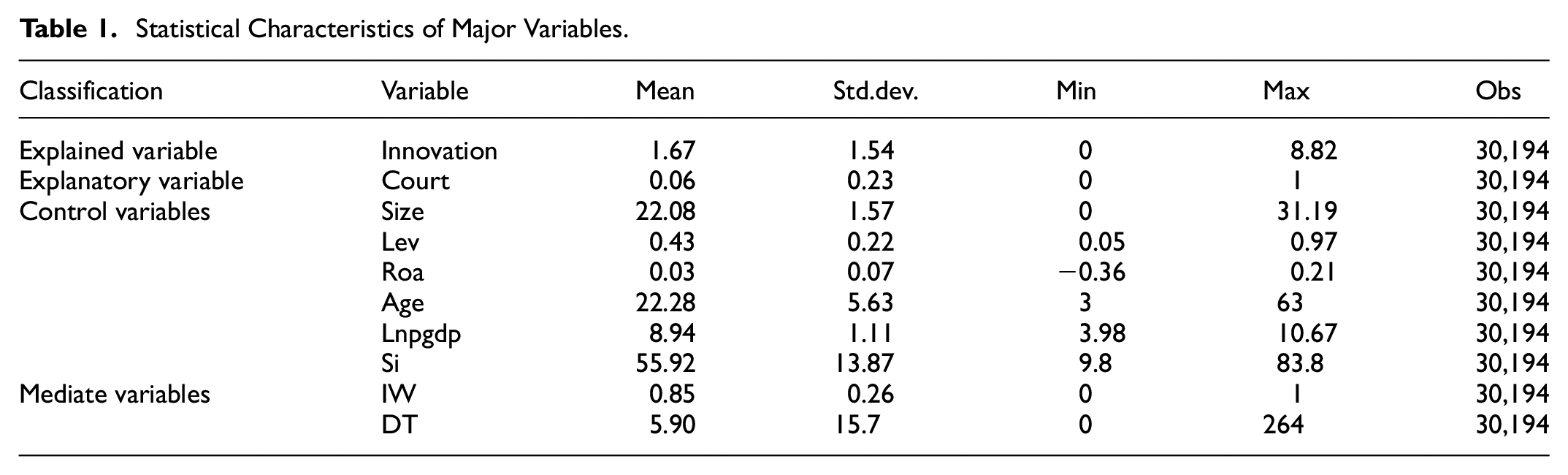
Table 2 shows the impact of the Internet Court policy on the number of invention patents of firms. The treatment group (543 firms affected by the policy) saw their number of invention patents increase from 33.3 to 60.7, an increase of 27.4 patents. The control group (3,523 firms unaffected by the policy) saw an increase from 20.3 to 34.7, an increase of 14.4 patents. The difference in changes between the two groups is 13. The DID result indicates that the treatment group filed 13 more invention patents than the control group, suggesting that the Internet Court policy significantly promoted innovation activities in the treatment group firms.
Group Statistics of the Number of Invention Patents.

Empirical Results
Baseline Regression
Table 3 shows the results of the baseline regressions. In column (1), we do not include any control variables. Considering that the city where the listed company is located and its specific circumstances may impact corporate innovation, we include city-level and firm-level control variables in columns (2) and (3), respectively. Additionally, we include year fixed effects in column (4). From the regression results in columns (1) through (4), although the regression coefficients for the Internet Court decrease gradually, they remain significantly positive. This indicates that the positive impact of the establishment of the Internet Court on the innovation of listed firms is relatively stable. The economic implication is that the establishment of the Internet Court increases the number of invention patent applications by the affected listed firms by an average of 15.3%. This suggests that the Internet Court helps promote innovation among local firms.
The Impact of Internet Courts on Innovation in Listed Companies.

Note. Robust standard errors clustered at the firm level are reported in parentheses.
p < .01. **p < .05. *p < .1.
Parallel Trend Test
The DID model is based on the assumption of parallel trends, but parallel trends are difficult to observe (Huntington-Klein, 2021). So we did time trend chart and dynamic effects tests to look at parallel trends. The time trend is shown in Figure 4. Prior to 2017, the average number of invention patent applications by firms in internet court pilot cities (treatment group) and non-pilot cities (control group) exhibited a parallel trend. However, following the establishment of internet courts in 2017 and 2018, firms in internet court pilot cities (treatment group) experienced a higher level of growth in average invention patent applications compared to firms in non-pilot cities (control group), with the gap between the two groups gradually widening. This provides preliminary evidence that the establishment of internet courts has promoted local firm innovation.

Time trend.
In dynamic effects tests, we first generated the interaction term of the year dummy variables and the experimental group’s dummy variables and used the interaction items as an explanatory variable for regression. The coefficients of the interaction items show the differences between the experimental groups and the control groups in a specific year. If the coefficients of the interaction terms between the dummy variables of the experimental group and the dummy variables before the policy implementation are not statistically significant, it indicates that there is no difference in trends between the experimental and control groups before the policy was put into effect. In other words, the parallel trend test may have been passed.
The regression results are displayed in Figure 5. We exclude the period before policy implementation as the base period. The coefficients for the pre-policy implementation period are not significant, implying a parallel trend prior to the policy implementation. In the year when Internet courts officially began exercising jurisdiction and trying cases, the difference in coefficients between the experimental and control groups was not significant, but it gradually became positively significant over time, showing an upward trend. This suggests that there may be a lag in the innovative effects of Internet courts.

Dynamic effect test.
Robustness Tests
Exclude IP Courts Interference
To strengthen the protection of intellectual property rights, China established intellectual property (IP) courts in Shanghai, Guangzhou, and Beijing in 2014. These courts focus on the fair and efficient trials of highly specialized, technical, major, difficult, and complex intellectual property cases. This policy may impact the empirical results of this paper. To exclude the disturbance caused by the IP courts, we remove the sample of listed firms in the IP court regions from the regressions in Table 4, column (1). The regression results show that the effect of the internet court on listed firms’ innovation remains significantly positive. In columns (2) and (3) of Table 5, we construct the policy variable for the IP court and add it to the regression equation as a control variable. The regression results still indicate that the influence of internet courts on the innovation of listed enterprises is significantly positive.
Exclude Other Policy Interference.

Note. Robust standard errors clustered at the firm level are reported in parentheses.
p < .01. **p < .05.
Replace the Dependent Variable.

Note. Robust standard errors clustered at the firm level are reported in parentheses.
p < .01. **p < .05. *p < .1.
Different Innovation Indicators
The innovation of listed companies can be measured by various indicators. In our regression, we use the number of invention patent applications, utility patents, design patents, total patents, and R&D investment of listed companies in the current year as proxy indicators of innovation. Since Cohn et al. (2022) found that using the log(x + 1) specification for patent counts may produce erroneous results, we directly use the number of patents in our regression. The regression results are presented in Table 5. The coefficients for all proxy indicators are positive and significant, indicating that the positive impact of the Internet Court on corporate innovation is robust.
Placebo Test
We conduct a placebo test by randomizing the locations and timings of Internet courts. This was achieved by conducting DID estimation based on the random assignment of Internet court pilots, recording the coefficients of the interaction terms, and repeating this process 500 times. As depicted in Figure 6, the coefficients of the interaction terms generally follow a normal distribution with a mean of 0. Most of these coefficients are significantly smaller than the benchmark value of the regression coefficients, which is .15, and the corresponding p-values are mostly greater than .1. It is evident that the likelihood of obtaining benchmark regression estimation coefficients based on random samples is low, indicating that the innovation effect of the Internet court is relatively robust.

Placebo test.
Optimizing Estimation Methods
The location and timing of the establishment of Internet courts may not have been random. The Internet Court was initially piloted in Hangzhou, Guangzhou, and Beijing, where the digital economy is relatively developed. Therefore, the selectivity of policy pilots may introduce some bias in identifying policy effects. To address this concern, drawing on the approach proposed by Arkhangelsky et al. (2021), this paper employs a synthetic DID approach to estimate the innovation effects of Internet courts.
As indicated in Table 6, with staggered policy implementation, the Average Treatment Effect on Treated (ATT) is 0.194, which is significantly positive at the 1% level and consistent with the results of the baseline regression. Illustrated in Figure 7, the trend between the actual treatment group and the synthetic control group remains largely consistent before policy implementation. However, the gap widens after policy implementation, with the actual treatment group demonstrating better innovation performance compared to the synthetic control group. These empirical findings further substantiate the conclusion that the establishment of Internet courts promotes innovation among local listed companies.
Synthetic DID Estimator.

Note. Standard error is estimated based on bootstrap.

Synthetic difference-in-difference.
Mechanism Tests
Innovation Willingness
As shown in Table 7, the regression results of the first column show that the Internet court has a significant positive impact on firm innovation willingness; the regression results of the second column show that the innovation willingness has a significant positive impact on firm innovation, and the decrease of the coefficient of the Internet court shows that the innovation willingness has played a mediating effect. The results of sobel test and bootstrap test also show that the mediating effect does exist. The proportion of natural indirect effect (NIE) to total effects (TE) is 17.4%.
Innovation Willingness Mechanism Test.
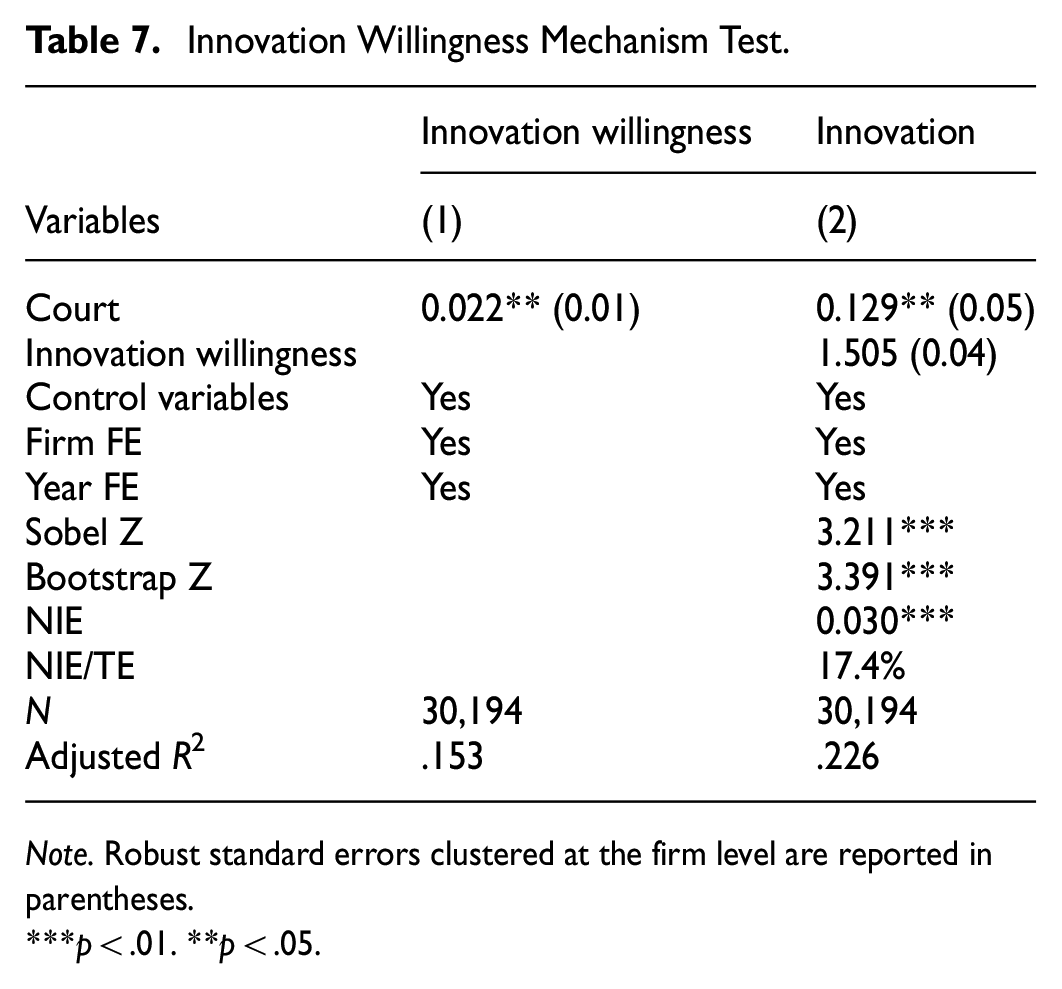
Note. Robust standard errors clustered at the firm level are reported in parentheses.
p < .01. **p < .05.
Digitization
As shown in Table 8, the regression results of the first column show that the Internet court has a significant positive impact on the firm digitization; the regression results of the third column show that digitization has a significant positive impact on firm innovation, and the decrease of the coefficient of the Internet court shows that the firm digitization has played a mediating effect. The results of sobel test and bootstrap test also show that the mediating effect does exist. The proportion of natural indirect effect (NIE) to total effects (TE) is 16.5%.
Digitization Mechanism Test.

Note. Robust standard errors clustered at the firm level are reported in parentheses.
p < .01.
Heterogeneity Analysis
Digital Economy Classification
As shown in Table 9, based on the “Statistical Classification of Digital Economy and Its Core Industries (2021)” published by the China National Bureau of Statistics, we classified listed firms into two categories: core digital industries and industrial digitalization. The regression results reveal that Internet courts do not have a significant impact on core digital industries but do show a positive impact on firms in the industrial digitalization sector. This indicates that the Internet Court has a more pronounced effect on firms involved in the digital transformation of traditional industries. Further, in Table 10, we subdivided the core digital industry into four segments. The regression results indicate that Internet courts have a significant positive impact only on the Internet-related services industry. This is consistent with the jurisdiction of Internet courts, which primarily focuses on internet-related cases.
Industry-based Group Regression.

Note. Robust standard errors clustered at the firm level are reported in parentheses.
p < .01.
Core Digital Industry Group Regression.

Note. Robust standard errors clustered at the firm level are reported in parentheses.
p < .05.
The heterogeneity analysis highlights that firms in industrial digitalization sectors often face greater competitive pressures and operational challenges. These factors may lead them to rely more on efficient legal mechanisms, such as those offered by Internet courts, to resolve disputes quickly and support innovation. In contrast, judicial protection for other traditional digital industries, which may already be handled by specialized IP courts, does not derive as much benefit from the Internet courts. This indicates that the marginal effect of the Internet Court is stronger for firms in industrial digitalization sectors, where digital transformation is still ongoing. It also suggests that the Internet Court plays a key role in fostering a favorable rule of law environment for cyberspace governance and development.
Firm Ownership
Enterprises of different ownership may be affected by Internet courts to varying degrees. Numerous studies show that state-owned and foreign-owned enterprises in China enjoy stronger judicial protection compared to private enterprises. State-owned enterprises (SOEs) hold a significant position in China’s economy, benefiting from strong political connections, which often result in favorable legal outcomes (Jiao et al., 2015; Lu et al., 2015). The Chinese government also provides robust protection for foreign enterprises to attract investment and ensure economic stability, leading to quicker and fairer resolutions in legal disputes, particularly in international arbitration and intellectual property cases (Sauvant & Nolan, 2015; S. Zhang, 2022). Conversely, private enterprises, despite their growing economic role, frequently face unfair treatment in legal disputes due to their lack of policy support and international influence, encountering difficulties in winning disputes and enforcing judgments, often exacerbated by local protectionism (H. Li et al., 2008; Fang et al., 2017; Liu et al., 2022; Long & Wang, 2015).
As shown in Table 11, the Internet Court has a significant innovation promotion effect on private enterprises, but not on different types of state-owned enterprises or foreign-owned enterprises.This finding aligns with the theoretical expectation that private enterprises, given their relatively weaker judicial protection and higher exposure to legal uncertainties, stand to benefit more from the enhanced judicial environment provided by Internet courts.
Ownership-based Group Regression.

Note. Robust standard errors clustered at the firm level are reported in parentheses.
p < .05.
This heterogeneity analysis reveals that SOEs, with their established connections and institutional advantages, may already operate in an environment of relative judicial certainty, reducing their reliance on the additional protections offered by Internet courts. Foreign enterprises, on the other hand, might benefit from targeted legal safeguards established through international agreements or government priorities, making the incremental effect of Internet courts less pronounced. In contrast, private enterprises face greater pressure to navigate complex legal landscapes with limited institutional support, making the streamlined and transparent processes of Internet courts particularly impactful for their operations.
Firm Litigation Risk
Major litigation can pose significant risks to business operations. Research has shown that litigation risk significantly impacts firm innovation. Litigation can damage a firm’s reputation and hinder innovation (Mezzanotti, 2021), but higher litigation risk can also drive investment in innovation by increasing competitive pressure (Hassan et al., 2021).
As shown in Table 12, using litigation information disclosed in the annual and interim reports of listed companies, we categorized them into those experiencing significant litigation and those not experiencing significant litigation. The results show that for companies experiencing major litigation, Internet courts have a significantly positive effect on corporate innovation. In contrast, for companies not experiencing major litigation, the effect of Internet courts on innovation is not significant.
Litigation-based Group Regression.

Note. Robust standard errors clustered at the firm level are reported in parentheses.
p < .01.
This heterogeneity analysis reveals that firms experiencing significant litigation often face heightened reputational concerns and resource constraints, which may amplify the efficiency gains brought by Internet courts. Conversely, firms with lower litigation exposure may lack sufficient external pressure to leverage these judicial reforms for innovation. These findings underscore the importance of tailoring digital justice policies to address the varying needs of firms based on their litigation profiles and competitive environments, thereby optimizing the reform’s broader economic impact.
Conclusions
Key Findings and Contributions
Digital judicial reform has a profound impact on firm innovation. The establishment of Internet Court pilots represents a strategic initiative for China to explore digital judicial reform. This initiative aims to create a fair and efficient business environment governed by the rule of law, thereby fostering a conducive atmosphere for enterprise innovation and supporting the digital transformation of businesses. Importantly, these efforts not only provide valuable insights for the ongoing digital reform of the judicial system but also support the sustained and healthy development of the digital economy.
While this study primarily addresses the Chinese context, the insights gained from the digital judicial reforms in China can be extended to other jurisdictions with varying economic and legal contexts. In countries where digital transformation is gaining momentum, digital justice reforms can provide a framework for fostering innovation through efficient dispute resolution and enhanced legal protections for digital enterprises. However, the design and impact of such reforms should be tailored to the unique legal structures, market dynamics, and innovation ecosystems of each country. For example, in developing economies, where digital infrastructure may be less advanced, digital justice reforms can help bridge the gap in access to justice, promote fair competition, and encourage local innovation. In contrast, in more mature digital economies, the emphasis may shift toward strengthening legal protections for emerging technologies such as artificial intelligence and blockchain. By considering these variations, digital justice reforms can be leveraged to promote innovation across diverse global contexts, making the lessons from China’s Internet Courts relevant to a broader international audience.
Limitations
In this study, we used digital judicial data from China’s Internet Courts to explore the impact of digital justice on firm innovation. However, it is important to recognize that digital judicial records and their databases may have inherent limitations and biases, which could affect the conclusions and generalizability of the study to some extent. First, the data from Internet Courts primarily come from litigation cases, which may not necessarily capture the innovation activities of all firms, particularly those not involved in legal disputes. Moreover, influenced by national policies on judicial data transparency, the process of digital record-keeping, including data entry, classification, and processing, may introduce errors, leading to incomplete or biased case data, which could in turn affect the representativeness of the sample., the cases heard by Internet Courts often focus on specific types of disputes (e.g., intellectual property and e-commerce issues), which may limit the applicability of the findings to other types of innovation activities. To improve the transparency of the study and enhance academic rigor, future research should consider further exploring these data limitations and make adjustments or controls for their potential impact during analysis, ensuring that the research findings are more robust and comprehensive.
Policy Implications
For Policymakers
(1) Enhance Digital Judicial Models: Policymakers should adopt the digital judicial models of Internet Courts, tailoring them to the specific needs of each country’s legal context. This approach will modernize the judiciary while providing flexible legal protection for domestic enterprise innovation.
(2) Strengthen Digital Justice for Innovation: Policymakers should focus on digital justice’s role in supporting innovation and digital economic growth. This includes enhancing intellectual property protection in cyberspace, combating IP infringement, and safeguarding digital economy innovations.
(3) Promote Legal Frameworks for Digital Industries: To ensure fair and transparent growth in the digital economy, policymakers must foster the rule of law in cyberspace. This will create a conducive legal environment for emerging digital industries, ensuring that innovation thrives within a just legal system.
For Judicial Bodies
(1) Leverage Advanced Technologies in Judiciary: Judicial institutions should explore advanced technologies like AI, big data, blockchain, and cloud computing in judicial processes. These technologies will enhance the judiciary’s digital capabilities and drive the adoption of digital standards, speeding up litigation enterprises’ digital transformation.
(2) Integrate Judicial and Enterprise Data Systems: Strengthening the integration of judicial information platforms with enterprise data systems will streamline evidence collection and safeguard enterprise innovations from infringement.
(3) Support Legal Precedents for Technology Disputes: Internet courts should play a leading role in establishing case law regarding technology applications, ownership disputes, and innovation rights. This will clarify the legal consequences of unlawful practices and provide stronger legal protection for digital economy developments.
For Private Sector Firms
(1) Stay Informed and Ensure Compliance: Private enterprises should keep up-to-date with legal developments in digital justice to mitigate legal risks and ensure compliance with laws. They should also leverage digital justice measures to protect intellectual property and safeguard innovation.
(2) Engage in Standard-Setting: Enterprises should actively participate in setting digital justice-related standards for emerging technologies, ensuring these standards support their digital transformation and the industry’s standardized development.
(3) Collaborate with Judicial Institutions: Private enterprises should engage in regular communication with judicial bodies, providing practical insights to help refine laws and regulations. This collaboration will ensure that the legal framework better aligns with the needs of innovation-driven businesses.
Footnotes

Ethical Considerations
Not applicable.
Author Contributions
Conceptualization, Yang Feng; Methodology, Huaxing Wang; Software, Huaxing Wang; Validation,Liangcong Fan; Formal Analysis, Yang Feng; Investigation, Liangcong Fan; Resources, Yang Feng and Liangcong Fan; Data Curation, Huaxing Wang; Writing – Original Draft Preparation, Huaxing Wang and Weiwei Li; Writing – Review & Editing, Huaxing Wang and and Yang Feng; Visualization, Huaxing Wang; Supervision, Yang Feng and Liangcong Fan; Project Administration, Yang Feng and Liangcong Fan; Funding Acquisition, Yang Feng. All authors reviewed the manuscript.
Funding
The author(s) disclosed receipt of the following financial support for the research, authorship, and/or publication of this article: This work was supported by the special project of the Internet Rule of Law Research Institute (Hangzhou) and Major Humanities and Social Sciences Research Projects in Zhejiang Higher Education Institutions (2024QN066).
Declaration of Conflicting Interests
The author(s) declared no potential conflicts of interest with respect to the research, authorship, and/or publication of this article.
Data Availability Statement
The data that support the findings of this study are available from the corresponding author upon reasonable request.