



Abstract
In this study, empirical research was conducted in the field of civic and moral education using a real problem-oriented learning methodology. The effectiveness of the methodology in enhancing students’ civic awareness and moral behavior was assessed through a randomized controlled trial (RCT). The study combined quantitative and qualitative methods to explore the impact of the instruction on students’ moral cognition and behavior. The results showed that the real problem-oriented model significantly enhanced students’ moral awareness and behavior, especially their moral judgment and problem-solving abilities, by engaging them in discussions and activities on real social issues, which provides a new practical idea for moral education. It should be noted that moral behavior is assessed mainly by observing students’ performance in social activities, while problem-solving ability is evaluated by analyzing their strategies for coping with moral dilemmas.
Introduction
In today’s fast-changing social environment, the importance of civic and moral education has become increasingly prominent (Wong, 2020). It involves not only the transmission of knowledge but, more importantly, the development of moral judgment, a sense of social responsibility and a positive attitude toward participation in social life (Sinnott-Armstrong & Wheatley, 2014). While traditional methods of civic education have been effective to a certain extent, they face many challenges as educational needs evolve and students’ needs diversify, especially in terms of stimulating students’ interest, promoting deeper learning, and developing practical application skills (Yoder et al., 2021). Specifically, students often lack effective critical thinking and problem-solving skills when faced with complex social issues (Herman et al., 2021). This lack of ability may lead to stagnation in students’ perceptions of social responsibility and civic participation, affecting their ability to make moral judgments and their attitudes toward social participation (Hawkman et al., 2022). Therefore, there is an urgent need to find new educational approaches to better accommodate the diverse needs of students and enhance their civic literacy.
Real problem-oriented learning (RPOL), as a student-centered teaching method, has been widely used in various educational fields in recent years (Hu et al., 2023; Weiss, 2017). Real problem-oriented learning requires students to actively learn and apply knowledge in the process of seeking solutions to problems by placing them in real-life complex problem situations (Kohler, 2000). This approach, which emphasizes critical thinking, collaborative problem-solving, and self-directed learning, is considered an effective way to increase students’ motivation and learning effectiveness (Bai et al., 2022). Real problem-oriented learning is closely related to Kolb’s Experiential Learning Theory, Jean Piaget’s Cognitive Development Theory, and Vygotsky’s Constructivism Theory. Kolb emphasizes the promotion of learning through a cyclical process of experience, reflection, conceptualization, and experimentation (Almalag et al., 2022); Piaget focuses on how students progressively develop thinking skills through interaction with the environment (Winstanley, 2023); and Vygotsky emphasizes the impact of social interaction and culture on learning, stating that learning is the process of constructing knowledge in a social environment (Tilak & Glassman, 2022). These theories not only provide contextual support for the effectiveness of real problem-oriented learning but also emphasize the importance of practice and reflection in the learning process, and the core concepts of all three are complementary to real problem-oriented learning.
This study will focus on answering the following research questions:
How does real problem-oriented learning affect students’ civic awareness?
How effective is real problem-oriented learning in the development of moral judgment?
How does real problem-oriented learning change students’ attitudes toward social participation?
The research hypothesis is that real problem-oriented learning will be more effective in increasing students’ civic awareness and improving their moral behavior than traditional teaching methods.
The significance of this paper is to explore and verify the practical effects and application value of real problem-oriented learning in civic moral education through empirical research. The findings will provide educators with new perspectives and methods for more effective implementation of civic moral education while offering a scientific basis for relevant educational policies and practices. Additionally, the findings of this study will also contribute to the development of pedagogical theories, especially in exploring more effective strategies for moral education and improving the quality of education. It is worth noting that there are relatively few empirical studies on real problem-oriented learning in the civic and moral education literature; thus, this study will fill this gap and promote the development of theory and practice in this area.
Literature Review
Civic and moral education aims to cultivate citizens with good moral qualities and emphasizes the responsibilities and duties of individuals toward society (Peterson & Civil, 2022). It involves not only the teaching of traditional moral values, such as honesty, fairness, and respect, but also the cultivation of students’ civic awareness, which includes the awareness and ability to understand public affairs, participate in social activities and safeguard the public interest (Erickson & Thompson, 2021). The goal of civic education is to promote the all-round development of students so that they become individuals with both a sense of morality and a sense of social responsibility (Malin et al., 2015).
Pedagogical Approaches and Theoretical Foundations of Real Problem-Oriented Learning
Real Problem-Oriented Learning has received much attention in recent years as an innovative educational approach (Chu et al., 2011; Mu et al., 2024). It is not only a teaching method but also an educational philosophy that aims to stimulate students’ interest in learning and their potential by addressing and solving real-world problems (Liu et al., 2023). Several studies have shown that the core of Real Problem-Oriented Learning lies in applying abstract theoretical knowledge to concrete practice and helping students establish a connection between knowledge and the real world (Bai et al., 2021; Gaudet et al., 2021; Servant-Miklos & Noordzij, 2021). For example, Belcher and Hughes (2021) noted that Real Problem-Oriented Learning operates through course content centered around real problems, where students find solutions in group discussions and collaborations—a process that not only promotes active exploration and critical thinking but also significantly enhances learning outcomes and skills.
Further analysis of different studies revealed that the individualized nature of Real Problem-Oriented Learning enables students to engage in learning according to their interests and abilities, which leads to increased motivation and satisfaction (Yu, 2023). At the same time, many studies have emphasized the social and contextual nature of Real Problem-Oriented Learning, whereby interacting with peers allows students to view problems from different perspectives and develop more holistic solutions (Belcher & Hughes, 2021). This approach not only encourages students to apply what they have learned in real-world situations but also enhances their understanding of and ability to cope with real-world challenges (Gaudet et al., 2021). Thus, the widespread use of Real Problem-Oriented Learning in education not only improves students’ learning outcomes but also enhances their critical thinking and teamwork skills, laying the foundation for the development of socially responsible citizens.
In addition, to enhance the theoretical foundation of Real Problem-Oriented Learning, this study integrated three related theories: Kolb’s Experiential Learning Theory, Jean Piaget’s Cognitive Development Theory, and Vygotsky’s Constructivism Theory. The combination of these three provides solid theoretical support for Real Problem-Oriented Learning. Kolb’s Experiential Learning Theory emphasizes deepening the learning experience through reflective practice (Radović et al., 2021). While this theory provides important support for Real Problem-Oriented Learning, its emphasis on the reflective process may overlook the challenges students actually face in complex social situations (Quibrantar & Ezezika, 2023). Therefore, Real Problem-Oriented Learning needs to incorporate the complexity of real problems when applying Kolb’s theory to ensure that students do not just remain at the reflective level but are more able to actually respond to and solve problems; Jean Piaget’s Cognitive Development Theory focuses on students’ ability to think at different stages of development (Winstanley, 2021). Although this theory helps educators design Real Problem-Oriented Learning lessons more effectively, it may overemphasize the cognitive development of the individual without sufficiently taking into account the influence of the socio-cultural context(Ratcliff, 2023). Therefore, this study needs to integrate Piaget’s theory with Vygotsky’s socio-cultural theory to more fully understand students’ cognitive processes in social problem-solving; Vygotsky’s Constructivism Theory emphasizes the influence of social interaction and culture on learning (van der Veer, 2021). this theory provides a solid foundation for the social and contextual nature of Real Problem-Oriented Learning. However, overreliance on social interaction may lead to the neglect of individual differences (Tilak & Glassman, 2022), so Real Problem-Oriented Learning should be implemented while focusing on the unique needs and backgrounds of each student to achieve a more inclusive learning experience.
Existing Research on the Integration of Civic and Moral Education With Real Problem-Oriented Learning and Its Limitations
In civic and moral education, moral judgment refers to the decisions and evaluations made by individuals when facing moral dilemmas, involving the understanding and judgment of right and wrong (McHugh et al., 2022), while civic consciousness refers to individuals’ awareness of social public affairs, their participation in them, and their sense of responsibility (Mitic, 2022). The combination of these concepts with Real Problem-Oriented Learning can cultivate students’ sense of social responsibility and civic awareness, help them improve their moral judgment in solving real problems, and stimulate their willingness to actively participate in social activities (Acton, 2023). For example, students can study and discuss real-life problems such as community environmental protection, social justice and equity, and gain a deeper understanding of the complexity and solutions of these problems through hands-on participation and practice (Kidd et al., 2020). Such a learning process not only develops students’ critical thinking and problem-solving skills, but also enhances their civic awareness and sense of social responsibility (Rullo et al., 2022).
Although real problem-oriented learning has been successful in a number of pedagogical areas, its application and effectiveness in civic and moral education is still a relatively new area of research (Na, 2023;Surapaneni, 2024). This situation is clearly detrimental to the development of citizens with a high sense of moral responsibility and social participation. Therefore, there is an urgent need for more extensive and systematic empirical research to assess the actual effects of real problem-oriented learning in civic and moral education, and to explore how to effectively integrate real problem-oriented learning into the teaching practices of civic and moral education.
H1: Students in real problem-oriented learning will demonstrate a higher level of civic awareness compared to students who receive traditional civic and moral education.
H2: Students’ moral behavior will improve under the real problem-oriented learning teaching model.
H3: Real problem-oriented learning increases students’ moral judgment and problem-solving skills compared to traditional teaching methods.
Methodology
A “Problem Set” of Real Problems at a Public University
The real problems of a Public University “problem set” system aim to provide a rich resource for academic research and teaching activities by systematically collecting and organizing real problems in the social, economic, scientific, and technological fields. This “problem set” system supports the experimental group as an interdisciplinary information platform.
The operation of the “problem set” system relies on a dynamic updating mechanism that is key to ensuring that the content is relevant to the real world. Firstly, the public university has established a jury of faculty, industry experts, and academic researchers to review the question bank on a quarterly basis to ensure that all questions are based on the latest social, economic and technological developments. At the same time, collaborative relationships have been established with several industry partners, community organizations, and government departments, and these partner organizations regularly contribute new problem cases to the problem bank based on the challenges and solutions they encounter in practice (Figure 1). In addition, the public university has developed an online platform, ChopMelon Net (Figure 2), to support partner organizations in uploading new problems directly, and to automatically categorize and label the problems through back-end algorithms, making them easily accessible to teachers and students. Students and teachers can provide feedback through the system to indicate which questions are no longer relevant or which questions need further adjustments, and this feedback is transmitted directly to the editorial team as an important basis for question updates. In addition, the dynamic updating mechanism places special emphasis on the integration of interdisciplinary issues to promote the cross-application of knowledge from different fields and the cultivation of students’ innovation abilities. Through the implementation of this mechanism, the real-time relevance of issues is ensured.

Schematic diagram of partner agencies feeding new issues into the question bank.

The web interface of the ChopMelon Net website (Supplemental Appendix A).
In addition, for students, this problem set provides a valuable resource that enables them to come into direct contact with real problems in society and to apply the theoretical knowledge they have learned in the classroom to think about, analyze and solve these real problems. This learning approach not only enhances students’ critical thinking and problem-solving skills but also their sense of social responsibility and practical skills. For teachers, this problem set provides a flexible teaching tool; they can design lessons and projects based on the problems in the database, making classroom learning more relevant and enhancing the attractiveness and effectiveness of teaching. By incorporating these real problems into their teaching, teachers are able to stimulate students’ interest in learning and promote active learning and in-depth exploration.
Experimental Design
This study uses a randomized controlled trial (RCT) design with the aim of evaluating the effectiveness of the application of real problem-oriented learning in civic and moral education. The experimental group will receive a civic and moral education intervention based on real problem-oriented learning, while the control group will receive traditional teaching methods. This design will help to determine the causal relationship between the real problem-oriented learning intervention and students’ civic awareness and moral behavior.
Sample Selection
A number of participants were randomly selected from a public university (undergraduate and postgraduate) for the study and the participants were randomly assigned to the experimental and control groups with 100 participants in each group. To ensure that the sample size was sufficient to detect significant differences between the experimental and control groups, an efficacy analysis was conducted in this study. Using G*Power software, with an alpha level set at .05 and an effect size prediction of .5, the efficacy analysis indicated that a minimum of 85 participants per group was required to achieve 80% statistical power. The experimental and control groups in this study each had 100 participants, which met the sample size requirement for testing the expected effect. Additionally, blinding was not used in this study due to the fact that the real problem-oriented learning intervention involves specific activities that require informed student participation, making it difficult to achieve complete blinding of participants. This could introduce observer bias, as students may adjust their behavior after becoming aware of the experimental intent. Therefore, we maintained assessor blinding for both the experimental and control groups during the data analysis phase to minimize subjective bias in data processing.
The recruitment period for this study was from 15th May 2023 to 15th August 2023, a period of 3 months. We adopted several strategies to recruit participants. Firstly, we contacted the school and publicized the study to teachers, students, and parents through school newsletters, class bulletin boards, and parent-teacher meetings, introducing the study to students and parents during school talks or activities. Secondly, we posted notices in school libraries and activity centers to inform parents and students about the study and invite them to participate. In addition, we posted recruitment advertisements through social media platforms (WeChat and QQ groups). During the recruitment process, we provided potential participants with detailed information about the study and invited them to participate. During face-to-face or telephone communication, the researcher briefed potential participants on the purpose of the study, the process, the expected duration, and the possible risks and benefits, and answered any questions they might have. Participants were informed that their participation was voluntary and that they could choose to withdraw from the study at any time without penalty or loss. For adult participants, we asked them to sign a written informed consent form before participating in the study, confirming that they were fully aware of the study and agreed to participate. For minor participants, we asked their parents or guardians to sign the consent form. In some cases, we also discussed the study with the parents or guardians face-to-face or over the phone and ensured that they understood and agreed to their children’s participation in the study. In certain instances, due to the nature and design of the study, we submitted an application for a waiver of consent to the research ethics committee. The Ethics Committee reviewed our research program and recruitment procedures and concluded that the risks of the study were very low.
Intervention
In this study, a simple randomization procedure was used to randomly assign participants to the experimental and control groups. At the end of recruitment, all eligible participants were assigned to either the experimental or control group, with 100 in each, through a computer-generated random number table to ensure that the two groups were balanced in terms of basic characteristics such as gender and age. Prior to the intervention, the composite civic education scores of the experimental and control groups did not show significant differences, thus ensuring comparability of the two groups at the baseline level. Table 1 shows the basic information of the representative sample.
Basic Information on Participating Students (the Following Is Information on 20 of Them).

Note. Social Involvement - Frequency and extent of student participation in social activities or community service. Undergraduate Year 1-4:UGY1-4; Graduate Year 1-3:GY1-3.
The intervention in this study involved participants in the experimental group receiving a civic and moral education intervention centered on real problems. This process incorporates three theories to ensure that learning activities are adapted to students’ cognitive levels and promote deep learning. Specifically, participants will confront real-world social issues through exploration, teamwork, problem-solving, reflection, and discussion, as implemented in the following process:
Students select the most interesting social issue through voting in the kick-off session, a process that takes into account their stage of cognitive development to ensure that the complexity of the selected issues is appropriate for their comprehension (Issue Identification and Selection). Under the guidance of the teacher, students conduct in-depth research on the selected issue using a variety of means, including library resources, the Internet and expert interviews. This process emphasizes theory of experiential learning, which encourages students to gather information through reflective practice in real situations (Information Collection and Research). Based on the information from the research, students work in teams to come up with a solution and consider its feasibility and potential impacts, incorporating cognitive development theory to help them understand different perspectives and develop comprehensive solutions (Teamwork and Programme Design). Students attempt to apply the solution in practice or demonstrate the project plan through a simulation exercise, a process that corresponds to the “concrete experience” component of theory of experiential learning and facilitates learning by doing (Practical Activity). After completing the project, students conduct a reflection meeting to discuss the learning experience and challenges, during which the teacher facilitates an in-depth discussion of civic moral and social responsibility, echoing theory of experiential learning’s “reflective observation” phase, which reinforces students’ reflection on the learning process (Reflection and Discussion); Finally, students gain a comprehensive understanding of the impact of the project and the effectiveness of the learning process through self-assessment, peer assessment, and teacher assessment, which contributes to the enhancement of cognitive skills (Evaluation and Feedback). Detailed examples of the implementation process can be found in Reference Supplemental Appendix B.
Participants in the control group, on the other hand, continued to receive traditional civics education, primarily through lectures, textbook study, and instructor-led discussions. Refer to Supplemental Appendix C for the specific schedule of course lectures
Data Collection
This study used a variety of data collection techniques to comprehensively assess the intervention effects, specifically questionnaires, standardized tests (DIT2 and MJT), and semi-structured interviews. Questionnaires were used to measure students’ civic awareness, moral judgment, and attitudes toward social participation; standardized tests were employed to verify the reliability of the intervention effects; and semi-structured interviews were designed to gain insights into the effects of different instructional modes on the students. The combination of these techniques aimed to provide comprehensive quantitative and qualitative data to support the study. Next, each data collection method is described in detail.
About the Questionnaire
Questionnaires were administered to both groups of students before and after the intervention to assess changes in their civic awareness, moral judgment and social participation attitudes. In terms of civic awareness, we measured respondents’ sense of responsibility for social issues, cultural understanding, political awareness, and concern for global events. Each question has a response scale of 1 to 5, where 1 means completely disagree and 5 means completely agree. For example, for the question “Is it my responsibility to be aware of current social issues and events,” the item count is 5. Examples include “I do not think it is my responsibility to be aware of social issues” with a 1 and “I think it is every citizen’s responsibility to be aware of social issues, and I will try my best to be aware of and pay attention to current social issues and events” with a 5. In terms of moral judgment and social participation attitudes, we also adopted a similar design to get a comprehensive understanding of respondents’ attitudes and behavioral tendencies (see Supplemental Appendix D for a detailed version of the questionnaire). The design of the questionnaire followed cognitive development theory to ensure that the questions matched the comprehension levels of students at different cognitive stages.
About the Test
In order to reduce social desirability bias in the questionnaire study and to further validate the reliability of the findings, we administered the Defining Issues Test 2 (DIT2) and Moral Judgment Test (MJT) before and after the implementation of the intervention in both the control and experimental groups. This approach ensured that an accurate measure could be obtained from the before and after changes when assessing the effect of the intervention. It is important to note that the scoring indicator for DIT2 is the Moral Cognitive Ability Score, which is a score obtained by scoring the subjects’ responses that match the answers in Stages 5 and 6 and dividing it by the total score, which is 50 points for each story and 100 points for the two stories. The formula is: P = (Stage 5 score + Stage 6 score)/20 × 100%. Moral stage determination scores were based on Gungordu et al. (2023) study 0% to 20% as pre-customary level, 21% to 50% as customary level and 51% to 100% as post-customary level. The scoring index of the MJT is the moral judgment score, or C-score, which is a numerical value ranging from 1 to 100, and whose statistical significance is the proportion of all the total variance in the subject’s response that is accounted for by the variance determined by the moral elements contained in the individual arguments themselves. According to Bataglia (2010), C-scores can sometimes be categorized into the following grades, with 1 to 20 being the pre-customary level, 21 to 50 being the customary level, and 51 to 100 being the post-customary level. Implementing DIT2 and MJT ensures the reliability of assessments in cognitive enhancement, which is consistent with the validation of learning outcomes in experiential learning theory.
About the Interview
Thirty students from each of the two groups were selected for online semi-structured interviews to gain insights into the impact of the two different modes of intervention and the students’ perceptions. It is worth stating that these students were selected based on the unique insights and diversity of backgrounds they demonstrated during the intervention process and questionnaires, ensuring the depth and breadth of perspectives in this study. The interview questions were designed to incorporate cognitive development theory, experiential learning theory, and constructivist theory to explore students’ authentic feelings during the learning process.
To ensure fairness and consistency in the interview process, the following steps were taken to develop an interview code and assess inter-rater reliability. Firstly, we organized a group of professionals and members of the research team to develop the interview codes. This group gathered interview codes relevant to the study’s purpose and questions and developed an initial list of interview questions. These codes and question lists were then reviewed and discussed within the group to ensure that they covered key aspects of the study and allowed for the full exploration of participants’ views and experiences. Once the codes had been finalized, we organized a training session for raters involved in the interviews to ensure that they understood and were able to apply the codes accurately. During the training session, we emphasized the importance of the codes and provided practical examples and mock interviews to help familiarize raters with the application of the codes.
Inter-rater reliability assessment is an important part of the evaluation interview process. To assess inter-rater agreement, both internal consistency assessments and external consistency assessments were conducted. The internal consistency assessment involved each rater rating the same interview material and calculating the consistency between their ratings. The external consistency assessment, on the other hand, involves inviting external raters to independently score portions of the interview material and comparing them to the internal scores to assess consistency between internal and external raters (see Supplemental Appendix E).
Data Analysis
Both quantitative and qualitative data analysis techniques were used in this study. Quantitative data analysis employed SPSS software to conduct descriptive statistics, independent samples t-tests, and analysis of variance (ANOVA) on the data from the questionnaires and standardized tests in order to compare the differences in scores between the experimental group and the control group. Additionally, the results of the standardized tests were subjected to the corresponding statistical analyses to verify the reliability of the intervention effects. Qualitative data analysis, on the other hand, involved transcribing the audio recordings of the semi-structured interviews and using coding and thematic analysis methods to distil key themes and patterns to explore students’ experiences and feedback in depth.
Results
Prior to conducting t-tests and effect size calculations, this study performed hypothesis testing on the data to ensure the reliability of the statistical analysis. Specifically, the Shapiro-Wilk test was used to assess the normality of the data, and the results showed that the data distribution did not significantly deviate from normality. In addition, the homogeneity of variance across groups was tested using the Levene test, and the results supported the assumption of homogeneity of variance. Therefore, the subsequent t-tests and calculations of effect sizes are in accordance with the statistical assumptions, and the results obtained have a high level of confidence.
Quantitative Results
Results of the Questionnaire
From Table 2, according to the formula
Changes in the Values of the Experimental and Control Groups Before and After the Intervention of Different Indicators.

We can clearly see the data of the experimental group and the control group’s pre-test, post-test, and change scores in the three categories of civic awareness, moral judgment, and social participation. Specifically, the experimental group’s mean score on the pre-test in civic awareness was 2.80, the mean score on the post-test rose to 3.46, and the change score was 0.66, showing a significant effect of the experimental intervention. In contrast, the control group’s pre-test and post-test scores in the same category remained virtually unchanged, increasing from 2.78 to 2.80, with a change score of only 0.02, indicating little change in the absence of the intervention; in the moral judgment category, the experimental group’s mean pre-test score of 3.26 increased to 3.58 in the post-test, with a change score of 0.32, again reflecting the positive effect of the intervention. The control group also showed less change in their scores in this category, with a mean score of 2.76 on the pre-test and 2.77 on the post-test, with a change score of 0.01; and in the area of social participation, the experimental group’s mean score on the pre-test was 2.69, which improved to 3.04 on the post-test, with a change score of 0.35, showing the effectiveness of the intervention in increasing awareness of social participation. The control group, on the other hand, showed a more limited change, with a mean score of 2.78 on the pre-test and 2.80 on the post-test, with a change score of 0.02. Overall, this table reveals the effectiveness of the experimental intervention in enhancing civic awareness, moral judgment and social participation. Compared to the control group, the experimental group showed a more pronounced improvement in all measured categories, which emphasizes the importance and effectiveness of implementing real problem-oriented learning education and training procedures.
According to the formula,
t-Test for Change Scores of Different Indicators Between Experimental and Control Groups.

Figure 3 shows that the mean change scores of the experimental group were significantly higher than those of the control group in all three dimensions, which suggests that the implemented intervention was significantly effective in improving civic awareness, moral judgment, and social participation. The error bars in the chart represent the standard deviation of the data for each group, from which it can be seen that the experimental group had greater variability in civic awareness, which may indicate that participants responded differently to the intervention, reflecting differences in the degree of participation or effectiveness of the intervention among different participants. In addition, the improvement in civic awareness was particularly significant in the experimental group, whereas the improvement in moral judgment and social participation improved, but to a relatively small extent. These results not only confirm the overall effectiveness of the intervention, but also suggest that the strategies can be further optimized and adapted to suit a wider group of participants in future educational and social practices to ensure that all participants derive maximum benefit from them.

Change scores by category and group with error bars.
In addition, the effect size was calculated according to the formula
To further understand the significance of each effect size in educational practice, we interpreted the different effect sizes. First, Cohen’s d-values of 0.506 and 0.806 for civic awareness and moral judgment, respectively, imply that real problem-oriented learning had a moderate to significant effect on these two competencies, suggesting that students made cognitive and attitudinal progress through real problem-oriented learning that would have been difficult to achieve under traditional instructional methods. This result is significant in the context of educational interventions because effect sizes of moderate and above tend to indicate that the intervention has had a real and visible impact on students, suggesting that the model offers unique advantages in enhancing students’ civic awareness and moral judgment. On the other hand, the effect size for social engagement attitudes was 0.210, which is in the small effect range. Small effect sizes are often seen as potentially significant in educational research.
A number of students in the experimental group said that the real problem-oriented learning model enhanced their understanding of civic awareness and social responsibility, and many realized that “as citizens, each of us bears a social responsibility” by discussing real social issues. One student mentioned, “These discussions made me realize for the first time that we can’t just be bystanders to social issues.” In terms of moral judgment, students generally agreed that the model increased their confidence in addressing moral dilemmas, with another student noting, “The case discussions taught me how to make ethical decisions in complex situations.” Additionally, although social engagement improved to a lesser extent, some students reported an increased interest in community activities, reflecting the positive effect of real problem-oriented learning in stimulating a sense of social engagement.
Results of the Test
As can be seen from Table 4, in Moral Judgment Test 2 (DIT2), the mean score of the experimental group improved from 43 to 71, indicating that the real problem-oriented learning intervention significantly enhanced students’ moral judgment, while the score of the control group improved only from 42 to 48, a smaller improvement, indicating that the traditional educational methods have limited effectiveness in enhancing the ability to make moral judgment; in Moral Judgment Test (MJT). the experimental group’s scores improved from 50 to 74, a significant improvement that further validates the effectiveness of real problem-oriented learning in enhancing students’ moral judgment, while the control group’s scores improved insignificantly (from 48 to 52), suggesting that traditional methods have a more limited effect on developing students’ moral judgment.
Comparison of Pre and Post Test Results Between Experimental and Control Groups.

As can be seen in Figure 4, the experimental group’s scores on both the Defining Issues Test (DIT2) and Moral Judgment Test (MJT) increased significantly, indicating that the implemented intervention of real problem oriented learning was effective. The control group, on the other hand, showed less change in their scores, further proving the effectiveness of the intervention in the experimental group.

Score Changes for Experiment and Control Groups.
DIT2 and MJT data showed that the real problem-oriented learning model effectively enhanced students’ moral judgment and problem-solving skills. One student mentioned, “I used to think that moral judgment was just a theory, but through the real problem-oriented learning, I realized that it is important in daily life and can help me face complex decisions.” In addition, students reported that group discussions improved their practical problem-solving skills, with another student noting, “We not only discuss problems, but also come up with practical solutions.” This feedback suggests that RPOL promotes the practical application of knowledge.
Results of the Interviews
As can be seen from Table 5, the students in the experimental group showed significant improvement in civic awareness and moral behavior as well as moral judgment and problem-solving ability through the real problem-oriented teaching mode. Their frequent references to discussions, real-life case studies and active participation in community activities indicate that this teaching approach effectively promoted their civic awareness and moral behavior. Students in the control group, on the other hand, mentioned more often that the course content was boring and that there were few opportunities for practical application, showing that traditional civic and moral education had limited effects in these areas. These comparative results support H1, H2, and H3. In addition, further quantification was conducted for the interview data, as shown in Table 6.
Interview Analysis Table: Experimental Group Versus Control Group.

Note. Example of experimental group responses: show typical responses to interview questions from students in the experimental group; Control Group Response Example: Demonstrates typical responses to the interview questions from students in the control group; Analysis and coding: Coding based on the interview responses and analyzing the differences in performance between the experimental and control groups under each hypothesis to support the hypothesis. Coding examples include C1 (Increased civic awareness), C2 (Increased social participation), C3 (Increased moral behavior), C4 (Increased moral judgment), and C5 (Increased problem-solving).
Frequency Table for Coding Interview Data.
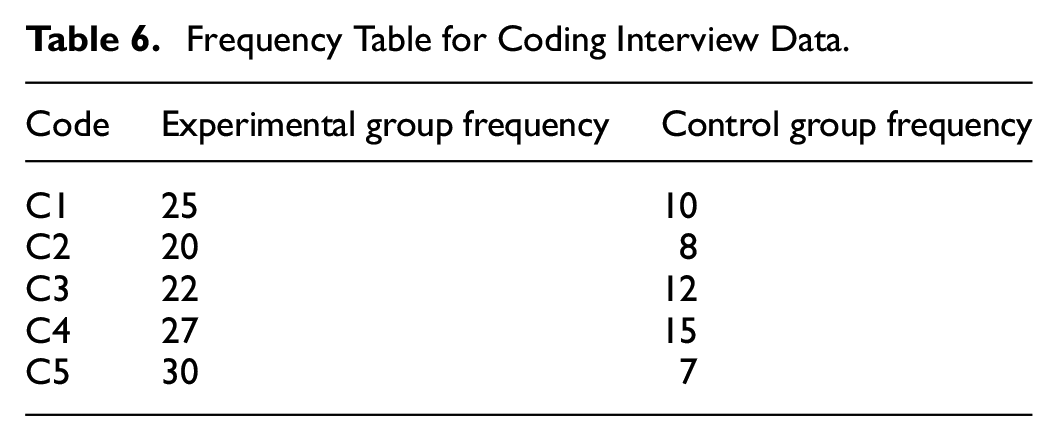
As can be seen from Table 6, C1(Increased civic awareness), 25 occurrences in the experimental group and 10 occurrences in the control group, the expected frequency
It can be seen that the high frequency of occurrence of the experimental group on each code through the quantitative and quantitative analysis of the codes indicates that the real problem-oriented learning model has a significant effect in enhancing students’ civic awareness, moral behaviors, moral judgment, and problem-solving abilities, supporting H1, H2 and H3.
Discussion
The results of this study significantly indicate that Real Problem Oriented Learning is effective in enhancing students’ civic awareness, moral judgment, and social engagement. This is consistent with previous findings that show a student-centered learning approach is effective in promoting moral education (Greenberg et al., 2023). The following is an in-depth discussion of the findings.
The first research question of this study is: How does real problem-oriented learning affect students’ civic awareness? The results showed that the experimental group significantly improved in the area of civic awareness, with a Cohen’s d value of 0.506. This result suggests that the model enhances students’ understanding of and concern for social issues by encouraging them to participate in discussions and analyze real-life cases. This is consistent with the study by Yoder et al (2021). Therefore, it is recommended that teachers introduce more discussions and case studies of actual social problems into their courses to further enhance students’ sense of social responsibility.
To address the second research question: How effective is real problem-oriented learning in the development of moral judgment? The experimental group showed a significant increase in moral judgment, with a Cohen’s d value of 0.806. This finding aligns with Klebl et al.’s (2020) study, suggesting that the model not only improved students’ moral judgment but also enhanced their ability to apply this knowledge in real-life contexts. Therefore, it is recommended that educators design more moral dilemma situations for students to practice moral judgment in real-life scenarios.
Regarding the third research question: How does real problem-oriented learning change students’ attitudes toward social participation? The experimental group’s Cohen’s d value of 0.210 in social participation showed a relatively small improvement, which may be attributed to several factors. First, the real problem-oriented learning intervention mainly focused on enhancing theoretical knowledge and moral judgment, lacking direct opportunities for community service and social activities, thus limiting the improvement in students’ attitudes toward social participation. Second, the criteria used to measure social participation may also affect the results. Finally, the questionnaire in this study primarily focused on attitude change and failed to comprehensively assess students’ actual participatory behaviors, which may account for the lower assessment of the effect on social participation. To improve the effectiveness of the real problem-oriented learning model in terms of social participation, future research could consider adding direct social participation opportunities, such as organizing community service, public welfare activities, or social surveys. Additionally, future research could develop more comprehensive assessment tools to accurately evaluate the overall effectiveness of the real problem-oriented learning model regarding social participation. Although the effect on social participation in this experiment was not as significant as the enhancement of civic awareness and moral judgment, it is evident that opportunities to engage in community activities positively impact the development of students’ social responsibility. This finding aligns with Zurbriggen’s (2023) study, which emphasized the positive impact of hands-on activities on developing students’ sense of social responsibility and participation. Therefore, it is recommended that schools and community organizations strengthen their cooperation to create more volunteer opportunities, motivating students to become more socially active.
Conclusion
This study investigated the effectiveness of the application of Real Problem-Oriented Learning(RPOL) in civic and moral education by means of a randomized controlled trial (RCT) and compared it with traditional teaching methods. The results of the study, based on questionnaires, test results, and interview analyses, show that RPOL has a significant effect in enhancing students’ civic awareness, moral judgment and social participation attitudes.
Analysis of the data in the questionnaire showed that students in the experimental group scored significantly higher than the control group in the areas of civic awareness, moral judgment and social participation attitudes. Specifically, the experimental group’s score on civic awareness increased from a mean of 2.80 before the intervention to 3.46 after the intervention, with a significant increase in score and a change score of 0.66. This result suggests that RPOL significantly increased students’ awareness and sensitivity to social responsibility by allowing them to explore and address real social issues in depth; for moral judgment, the experimental group’s mean score increased from 3.26 before the intervention to 3.58 after the intervention, with a change score of 0.32. This suggests that the RPOL model effectively enhances students’ judgment and decision-making ability when facing moral dilemmas. Students better understood the moral theories learned in class and were able to apply them to complex social and personal situations by applying moral principles in real-life situations; in terms of social participation attitudes, the mean score of the experimental group on the pre-test was 2.69, and it improved to 3.04 on the post-test, with a change score of 0.35. This result proves that the RPOL teaching model, through practical participation in social activities, effectively increased students’ awareness of social participation and sense of responsibility. Students were more actively involved in social welfare activities and showed a higher level of concern and participation in community and social issues.
The findings of the questionnaire were further supported by the results of Defining Issues Test (DIT2) and Moral Judgment Test (MJT). In the Defining Issues Test (DIT2), the mean score of the experimental group increased from 43 to 71, while the score of the control group only increased from 42 to 48. This significant increase in scores reflects the reinforcing effect of the RPOL on the students’ moral cognitive skills. By confronting and solving concrete ethical problems, students learn how to apply ethical principles in real-life situations rather than just understanding them at a theoretical level; on the Moral Judgment Test (MJT), the experimental group’s scores improved from 50 to 74 while the control group’s scores improved from 48 to 52 only. This result shows that RPOL not only enhanced students’ moral judgment skills, but also significantly enhanced their ability to solve complex problems. Through teamwork and hands-on practice, students applied what they learned in real-world problem situations, and this learning style significantly improved their problem-solving skills and creativity.
Interview analyses provided qualitative support for the questionnaire and test results. During the interviews, students in the experimental group generally reflected that the RPOL model had greatly enhanced their civic awareness and sense of social responsibility. Students shared how they understood and practiced civic ethics through their involvement in solving community problems, which not only enhanced their moral judgment, but also allowed them to play a more active role in social activities. In particular, students mentioned that by working with the community, they were able to see the direct impact of their actions on society, which enhanced their motivation to continue to participate in socially beneficial activities. In addition, interviews also reflected that students learn how to negotiate solutions to problems through teamwork, which not only enhanced their communication and collaboration skills, but also strengthened their leadership abilities. By discussing and solving real problems together, students learn to respect different opinions and perspectives, which is crucial for them to grow into citizens with inclusive and diverse perspectives.
In summary, this study clearly demonstrates the significant value and application potential of real problem-oriented learning in civic and moral education. In educational settings, teachers can draw on the principles of real problem-oriented learning model to design real-world problem-based curricula that enable students to apply what they have learned to solve actual social problems. Educational policymakers may consider incorporating real problem-oriented learning model into the core content of civic education to encourage reform and innovation in the education system, better addressing the demand for civic literacy in the 21st century. However, there are some limitations to this study. First, the sample size is relatively small, which may affect the generalizability of the results. Second, the study primarily focuses on short-term effects and has not yet explored the long-term impact of real problem-oriented learning model on moral and civic development. Therefore, future studies may consider expanding the sample size to assess the effectiveness of real problem-oriented learning model in different cultural or educational settings. In conclusion, this study demonstrated the significant effects of the real problem-oriented learning model intervention in enhancing students’ civic awareness, moral judgment, and social participation. Future research could employ a longitudinal design to examine whether these effects are sustained over time, further understanding the potential for real problem-oriented learning model to be applied in long-term education.
Supplemental Material
sj-docx-1-sgo-10.1177_21582440251338948 – Supplemental material for From Awareness to Behavior: The Empirical Effects of Real Problem-Oriented Learning in Civic and Moral Education
Supplemental material, sj-docx-1-sgo-10.1177_21582440251338948 for From Awareness to Behavior: The Empirical Effects of Real Problem-Oriented Learning in Civic and Moral Education by Xianghui Tian and Yanlin Tang in SAGE Open
Footnotes
Acknowledgements
We thank all the individuals and organizations that participated in this study. Special thanks to Liaoning University for providing us with facility support.

Ethical Considerations
The Ethics Review Committee of Liaoning University approved our questionnaires and interviews on 5 May 2023, in which respondents submitted informed consent prior to the start of the interviews.
Author Contributions
Conceptualization, Tian, X.H.; Methodology, Tang, Y.L.; Formal analysis, Tian, X.H.; Investigation, Tian, X.H.; Resources, Tang, Y.L.; Data curation, Tian, X.H.; Writing—original draft, Tian, X.H; Writing—review & editing, Tang, Y.L.; Funding acquisition, Tang, Y.L.
Funding
The author(s) disclosed receipt of the following financial support for the research, authorship, and/or publication of this article: This research was financially supported by the Key Project of Social Science Foundation of Liaoning Province, China (Grant No. L22AWT015).
Declaration of Conflicting Interests
The author(s) declared no potential conflicts of interest with respect to the research, authorship, and/or publication of this article.
Data Availability Statement
The data presented in this study are available on request from the corresponding author.
Consent Details
Written informed consent was obtained from all participants prior to data collection. Participants received detailed information about the study objectives, procedures (including online questionnaires, semi-structured interviews, DIT-2, and MJT assessments), confidentiality protections, and their right to withdraw without penalty. The research protocol was approved by the Institutional Review Board, and all procedures complied with ethical guidelines for human subjects research. Participants were informed that data would be anonymized and securely stored.
Research Procedures
1. Online questionnaire: Participants will complete the questionnaire via a secure online platform, which is expected to take approximately 15 min.
2. Semi-structured interviews: Interviews will be conducted by trained researchers and each interview is expected to last 30-45 minutes. The interviews will be recorded in audio format and transcribed verbatim for subsequent analysis.
3. Defined Issues Test 2 (DIT-2): Participants will complete the DIT-2 test online, which is expected to take approximately 20 min.
4. Moral Judgment Test (MJT): Participants will complete the MJT online, which is expected to take approximately 15 min.
Participants’ Rights
1. Voluntary participation: You are free to choose whether or not to participate in this study. You may withdraw at any time, even after the study has started, without giving any reason and without any adverse effects.
2. Privacy: All your personal information will be kept strictly confidential and the study data will be anonymized. Data will be stored on encrypted devices and will be used only by the research team.
3. Informed Consent: Prior to participating in this study, you will be provided with a detailed description of the purpose of the study, the procedures, the possible risks and benefits, the privacy measures, and your rights.
Risks and benefits
1. Risks: there are no significant risks associated with this study. There may be minor discomforts associated with participation, such as the cost of time to discuss personal views or fill out questionnaires.
2. Benefits: Participation in this study will contribute to the scientific understanding of moral judgment and ethical decision-making processes and may indirectly contribute to education and policy improvement in related areas.
Data processing and protection
All data collected will be kept strictly confidential and restricted to the research team. Data will be stored on encrypted devices and will not be used for any other purpose without your consent.
Supplemental Material
Supplemental material for this article is available online.
References
Supplementary Material
Please find the following supplemental material available below.
For Open Access articles published under a Creative Commons License, all supplemental material carries the same license as the article it is associated with.
For non-Open Access articles published, all supplemental material carries a non-exclusive license, and permission requests for re-use of supplemental material or any part of supplemental material shall be sent directly to the copyright owner as specified in the copyright notice associated with the article.
