



Abstract
Projects are means used by companies to achieve their strategies. Often, the success of a project depends on the ability of its members to access, absorb, and apply the multiple knowledge opportunities that exist within and through the projects. Considering the importance of knowledge for project management in project-based organizations, as well as the role that learning processes of absorptive capacity play in the organization, this study aims to characterize the main learning processes within absorptive capacity in project-based organizations, focusing on how these processes manifest and impact project management practices. A qualitative approach was employed through multiple case studies of two project-based organizations. Data collection involved semi-structured interviews and document analysis, allowing a comprehensive view of absorptive capacity in real project settings. Findings reveal that project-based organizations utilize four primary learning processes in absorptive capacity: exploratory, assimilative, transformative, and exploitative learning. Notably, there is a tendency toward exploratory learning, resulting in an imbalance across learning processes that affects absorptive capacity’s effectiveness. This study contributes to the absorptive capacity literature by detailing practices associated with each learning process in project-based organizations, thus offering insights into their role in managing knowledge within dynamic project environments.
Plain language summary
Companies use projects to achieve their goals, and a project’s success often depends on how well its members can use different kinds of knowledge. This study looked into how companies that work on projects learn and improve their ability to use knowledge. It used interviews and case studies from two companies to see how they learn in four key areas: exploring new ideas, understanding these ideas, changing them to fit their needs, and using them to get better results. The study found that these companies are good at exploring new ideas but need to balance this with the other types of learning. This research adds to our understanding of how companies learn and manage projects.
Introduction
Projects are fundamental mechanisms through which organizations achieve their strategic objectives and drive innovation (Akkermans et al., 2020; Shenhar et al., 2001). These temporary organizations enhance dynamic capabilities like innovative capacity and strategic flexibility (Spanuth et al., 2020), while requiring careful integration with permanent organizational structures (Sydow & Windeler, 2020). Without effective project management, organizations risk becoming obsolete and irrelevant in competitive environments (Shenhar et al., 2001). The increasing complexity of projects influences management strategies and necessitates different organizational learning processes (Boonstra & Reezigt, 2023; Toni & Pessot, 2021), positioning project management as a complex process that aims to ensure an optimal balance between internal organizational design and emerging strategies (Ajmal & Koskinen, 2008).
Given the increasing complexity in projects, rapid market changes, and technological uncertainties, project-based organizations (PBOs) represent an ideal form to manage this complex and growing project context (Hobday, 2000). Organizations are classified as PBOs when most of their products or services are delivered through projects for internal or external clients (Pemsel & Müller, 2012), making the project the main unit for value creation, innovation, and competition (Hobday, 2000). Studies have identified that PBOs face significant challenges in managing complexity, knowledge transfer, and learning in dynamic project contexts, with absorptive capacity and organizational learning being crucial for improving project performance (Singh et al., 2023; Toni & Pessot, 2021). While PBOs rely heavily on knowledge transfer to maintain competitiveness and manage complex projects (Pemsel & Müller, 2012; Wiewiora et al., 2020), they must develop dynamic capabilities and absorptive capacity to effectively build project capabilities and achieve organizational goals (Lee et al., 2021).
In this environment, learning is enhanced when the receiving organization demonstrates high levels of absorptive capacity (ACAP; Lane & Lubatkin, 1998; Szulanski, 1996), which represents the ability to identify, assimilate, and apply external knowledge to business operations (Cohen & Levinthal, 1990). ACAP plays a recognized role in organizational learning, innovation, and performance, particularly in project-based organizations (Mehreen et al., 2022; Singh et al., 2023), positively contributing to knowledge transfer in projects (Lane & Lubatkin, 1998). Conceptualized as having both potential and realized components, ACAP enhances project performance and innovation capabilities (Bouguerra et al., 2020; Singh et al., 2023), while being influenced by organizational learning orientation, environmental dynamism, and social processes (Bouguerra et al., 2020; Stelmaszczyk, 2020). Furthermore, ACAP proves to be an important capacity for the learning process (Sun & Anderson, 2010) and organizational performance (Zahra & George, 2002).
Some studies empirically examine the influence of ACAP learning processes on company performance. For instance, Lichtenthaler (2009) found that ACAP learning processes influence companies’ innovative capacity and performance through exploratory, transformative, and exploitative learning processes (Darwish et al., 2018). Leadership styles, particularly transformational leadership, play a crucial mediating role between ACAP learning processes and innovation outcomes (Darwish et al., 2018; Zadeh et al., 2022). From a strategic innovation perspective, Gebauer et al. (2012) propose that transformative learning contributes to strategic innovation, while recent research has revealed non-linear relationships between ACAP and performance. Additionally, studies analyze various antecedents of learning processes, such as knowledge management (Selivanovskikh et al., 2020), leadership styles (Darwish et al., 2018), strategic alliances (Flatten et al., 2011), and knowledge search strategy (Ferreras-Méndez et al., 2016).
Recent research on absorptive capacity (ACAP) highlights its diverse nature and the challenges in capturing its complexity. Studies emphasize the importance of leadership styles in facilitating ACAP learning processes (Zadeh et al., 2022) and propose contextualized measures for SMEs in collaborative networks (Benhayoun et al., 2020). The dynamic nature of ACAP is explored across network stages, revealing its impact on innovation performance (Benhayoun et al., 2021). Researchers advocate for interdisciplinary approaches to enhance critical thinking and sustainable learning in academia (Christensen et al., 2021). The role of ACAP in fostering organizational resilience is examined, while the need for empirically successful theories in inclusive education is highlighted (Nilholm, 2020). Methodological advancements include the use of formative models and cumulative measurement approaches to better represent ACAP dimensions (Knoppen et al., 2022), addressing the limitations of traditional quantitative methods in capturing ACAP’s complexity.
Given the importance of absorptive capacity in organizational learning and performance (Mehreen et al., 2022; Singh et al., 2023), and the need to deepen understanding of ACAP learning processes specifically in project management contexts (Lee et al., 2021; Pemsel & Wiewiora, 2013), this study addresses a gap in our knowledge. While research has established ACAP’s significance for project-based organizations (Pemsel & Müller, 2012), the specific learning processes through which ACAP manifests in these organizations remain underexplored (Butler & Ferlie, 2020; Wiewiora et al., 2020). Understanding these processes is particularly crucial as PBOs face increasing challenges in managing knowledge transfer and learning in dynamic project contexts (Singh et al., 2023; Toni & Pessot, 2021). Therefore, this study seeks to characterize the main learning processes present in the absorptive capacity of project-based organizations. In this line, the research question that guided this work was: How do the learning processes present in absorptive capacity occur in project-based organizations?
To answer the research question, a qualitative study was conducted in project-based organizations. Two technology companies were selected to compose the research corpus: Alpha, a consulting firm focused on supporting clients in digital transformation through incremental innovation in processes, and Beta, a pioneer in developing innovative mainframe technology solutions. Through interviews with 17 participants across different organizational levels and document analysis, it was possible to identify the practices developed in the exploratory, assimilative, transformative, and exploitative learning processes.
The study contributes to both theory and practice by detailing how absorptive capacity learning processes manifest in project-based organizations. The findings reveal that learning processes operate at two distinct levels: within project boundaries for operational problem-solving, and at the organizational level when knowledge requires strategic decisions and additional resources. Additionally, the study provides a comprehensive framework of absorptive capacity learning processes in project-based organizations, offering practitioners insights for managing knowledge within dynamic project environments. These insights are particularly relevant for organizations seeking to enhance their ability to identify, assimilate, and apply knowledge effectively across project boundaries.
Literature Review
Project-Based Organizations (PBOs)
Project-based organizations (PBOs) have been presented as an ideal way to manage the increasing complexity of projects, environments with rapid changes, customer-focused innovation, and markets, and environments with technological uncertainties (Boonstra & Reezigt, 2023; Hobday, 2000; Toni & Pessot, 2021). PBOs are defined as organizations where most of the products or services are produced through projects for internal or external clients (Pemsel & Müller, 2012; Spanuth et al., 2020), where the project is the main unit for production, innovation, and competition (Hobday, 2000; Melo et al., 2020).
The organizational model of PBOs is widespread across various industrial segments, especially those serving customized products (Di Vincenzo & Mascia, 2012). This organizational model is found in traditional industries, such as construction, shipbuilding, and large capital projects, or industries that have been regenerated by new technologies, such as aerospace and communications (Hobday, 2000; Sydow & Windeler, 2020).
Project-Based Organizations strive to create knowledge processes among projects and between projects and the subunits of the organization, such as marketing, finance, and others (Mahura & Birollo, 2021; Pemsel & Müller, 2012; Wiewiora et al., 2020). Companies dealing with multiple projects face particular challenges that need to be explored (Pemsel et al., 2014; Singh et al., 2023), including the challenges of acquiring, retaining, and applying knowledge.
Although project-based structures facilitate the creation of knowledge (Lee et al., 2021; Nonaka, 1994), they can hinder the retention and sharing of knowledge when they lack adequate governance mechanisms (Butler & Ferlie, 2020; Peltokorpi & Tsuyuki, 2006). The proper use of governance mechanisms is the indicated path to improve knowledge retention in PBOs (Mehreen et al., 2022; Pemsel & Müller, 2012). Furthermore, there is a need for the company to have a developed absorptive capacity to absorb the knowledge produced in the project (Lane & Lubatkin, 1998).
Absorptive Capacity
The concept of absorptive capacity gained prominence in 1989 with the article by Cohen and Levinthal (1989), in which they defined absorptive capacity as the ability of a firm to identify, assimilate, and exploit knowledge from the environment. Revising the concept, Zahra and George (2002) defined ACAP as a set of routines and processes by which an organization acquires, assimilates, transforms, and exploits knowledge, producing a dynamic organizational capability (Bouguerra et al., 2020; Singh et al., 2023).
In this concept, ACAP is presented under two subsets: potential absorptive capacity and realized absorptive capacity. Potential ACAP refers to the acquisition and assimilation of knowledge, while realized ACAP focuses on the transformation and exploitation of knowledge (Mehreen et al., 2022; Singh et al., 2023; Zahra & George, 2002). In another classification presented in the literature, ACAP is conceptualized as the ability of a firm to use external knowledge through three learning processes: (a) the capacity to recognize and understand valuable external knowledge through exploratory learning, (b) the capacity to assimilate new valuable knowledge through transformative learning, and (c) the capacity to use the assimilated knowledge to create new knowledge and commercial outcomes through exploitative learning (Darwish et al., 2018; Lane et al., 2006).
In exploratory learning, many companies adopt mechanisms to scan the environment to recognize sources of external knowledge (Cohen & Levinthal, 1989; Stelmaszczyk, 2020). Scanning the environment is understood as the process of monitoring and providing environmental data to managers, strongly related to data collection (Benhayoun et al., 2020; Daft & Weick, 1984). Exploratory learning, in the context of absorptive capacity, involves two primary processes: recognizing and assimilating external knowledge (Lee et al., 2021; Lichtenthaler, 2009).
The efficiency of the exploratory learning process is influenced by the individual’s prior knowledge, as the broader the knowledge base, the greater the ability to explore new sources of knowledge (Lane et al., 2006). It also depends on the individual’s intuition (Crossan et al., 1999; Sun & Anderson, 2012) and the company’s knowledge of the market (Benhayoun et al., 2021; Lichtenthaler, 2009).
Intuition can be understood as expert intuition and entrepreneurial intuition, where the former is a process of recognizing past patterns, while the latter is related to innovation and change (Crossan et al., 1999; Darwish et al., 2018). Expert intuition provides individuals with important insight into the pattern recognition process, while entrepreneurial intuition enables individuals to make new connections, perceive new or emerging relationships, and discern possibilities that have not been previously identified. Thus, expert intuition is oriented toward past patterns, and entrepreneurial intuition is a future-oriented possibility (Crossan et al., 1999; Zadeh et al., 2022).
Transformative learning serves to link exploratory learning with exploitative learning (Bouguerra et al., 2020; Gebauer et al., 2012). Exploratory and exploitative learning alone are insufficient to sustain superior performance when accumulated knowledge is involved (Argote et al., 2003; Singh et al., 2023). Therefore, to avoid the loss of skills and routines, companies need to manage the retention of knowledge, keeping it active (Lichtenthaler, 2009; Wiewiora et al., 2020). Furthermore, transformative learning of absorptive capacity can be understood in two stages: maintaining assimilated knowledge and reactivating this knowledge (Butler & Ferlie, 2020; Lichtenthaler, 2009).
To successfully retain knowledge, a company needs to have technological and market knowledge (Teece, 2007), as both components contribute to the path dependency of transformative learning in the company, but they are not always present in a balanced and sufficient level in companies (Lichtenthaler, 2009; Toni & Pessot, 2021). The imbalance affects transformative learning (Garud & Nayyar, 1994; Lee et al., 2021).
Alternatively, the process of exploratory learning and exploitation can be integrated by assimilative learning (Gebauer et al., 2012; Mahura & Birollo, 2021). Assimilation is more related to the integration of knowledge into the existing knowledge base of the organization, without the transformation of the structure (Benhayoun et al., 2021; Todorova & Durisin, 2007). Despite this capacity being part of the absorptive capacity process, it is not evidenced by Lane et al. (2006) and Lichtenthaler (2009) as one of the learning processes, but it appears in the works of Sun and Anderson (2010) and Gebauer et al. (2012), and more recently in studies by Stelmaszczyk (2020) and Singh et al. (2023). Assimilation emerges with practices related to team dialog, team composition, discussion of acquired knowledge in the team, among others.
Completing the cycle of absorptive capacity learning processes, there is exploitative learning. This learning allows companies to use assimilated knowledge to create knowledge and commercial outcomes (Lane et al., 2006), leveraging existing competencies and incorporating acquired and transformed knowledge into their operations (Zahra & George, 2002). This learning is associated with routinization, incremental development, and short-term orientation (Liu et al., 2021; Mehreen et al., 2022).
Projects and Absorptive Capacity
Projects and ACAP (Absorptive Capacity) represent an important research area (Singh et al., 2023; Teixeira & Scafuto, 2020). These authors, through systematic reviews, found a prevalence of research in the area of knowledge transfer and performance in projects. Although research in this field is still emerging, the literature on project management can be strengthened by the high explanatory power and solidity of strategic management theories, among them absorptive capacity (Killen et al., 2012).
From a performance perspective, when ACAP is observed from the viewpoint of dynamic capabilities (Zahra & George, 2002), it has an important influence on project performance (Leal-Rodríguez et al., 2014; Lee et al., 2021). Potential ACAP influences long-term outcomes, while realized ACAP contributes to short-term results (Bouguerra et al., 2020; Popaitoon & Siengthai, 2014). It is noted that potential and realized ACAP have different and complementary roles, yet both contribute to competitive advantage (Leal-Rodríguez et al., 2014; Mehreen et al., 2022).
On the other hand, when the focus is on knowledge transfer, ACAP is seen as an important factor for successful sharing (Wei & Miraglia, 2017; Wiewiora et al., 2020). ACAP is a predominant factor for knowledge transfer in projects (Mahura & Birollo, 2021; Teixeira & Scafuto, 2020). Lane et al. (1998) highlighted the importance of a recipient with a high level of ACAP in absorbing knowledge passed by the transmitter. Thus, when knowledge transfer occurs between the project team and the organization, the success of the knowledge transfer depends on the organization’s ACAP (Bakker et al., 2011; Toni & Pessot, 2021).
Given the importance of ACAP in knowledge transfer and project performance, studies seek to understand the mechanisms that contribute to the construction of ACAP in projects (Butler & Ferlie, 2020; Di Vincenzo & Mascia, 2012; Howell, 2020). One of the mechanisms studied relates to organizational structure, more precisely the project office (Müller et al., 2013), where it was found that knowledge transfer occurs in groups of project managers and members of the project office, forming small networks. Although not explored in the study of Müller et al. (2013), the formation of these groups may correspond to the social relations built between project managers and members of the project office (Bartsch et al., 2013; Benhayoun et al., 2021).
Social integration mechanisms also influence the ACAP process (Stelmaszczyk, 2020; Todorova & Durisin, 2007; Zahra & George, 2002) and project outcome. Thus, the social capital of the project team facilitates learning within and across project boundaries (Bartsch et al., 2013). However, the relationship between the cohesion of social capital and project performance shows an inverted “U” relationship, meaning there is an optimal point to be achieved, as beyond this point the influence on project performance is reduced (Darwish et al., 2018; Di Vincenzo & Mascia, 2012).
On the other hand, given the particular characteristic of projects, knowledge transfer within and across project boundaries is a challenge (Bartsch et al., 2013; Zadeh et al., 2022). One of the factors influencing this process is organizational culture (Singh et al., 2023; Wei & Miraglia, 2017). Cultural elements, at different organizational levels, determine not only the type of knowledge to be transferred and shared, but also the extent and circumstances under which knowledge can be shared and stored (Benhayoun et al., 2020; Wei & Miraglia, 2017). Another factor is knowledge concealment, which has shown to have a negative impact on the learning of the project team (Lee et al., 2021; Zhang & Min, 2019). Concealment can occur due to a lack of motivation and trust among project team members (Bakker et al., 2011; Bouguerra et al., 2020).
Although the project management literature pays attention to the construct of absorptive capacity in projects (Mehreen et al., 2022; Teixeira & Scafuto, 2020), there is a lack of studies that explain the role of ACAP learning processes in project-based organizations. Studying the learning process in this type of company is a challenge (Bakker et al., 2011), as it needs to make the knowledge created in the project available to the organization, through sharing, transferring, retaining, and utilizing it (Bartsch et al., 2013; Wiewiora et al., 2020).
Method
A qualitative approach was employed in this study to capture the holistic and significant aspects of real-life events (Yin, 2010) and to explore the dynamics within their contextual settings (Eisenhardt, 1989). This method allows for an in-depth understanding of absorptive capacity processes in project-based organizations.
The research followed a model adapted from Eisenhardt’s (1989) proposal for a case study approach. The first step corresponds to the initial definition of the research question, which in this study aimed to understand: How do the learning processes present in absorptive capacity occur in project-based organizations? This question arises from the literature review, which showed the need to deepen knowledge in learning processes related to absorptive capacity (Sun & Anderson, 2010), as well as the need to recognize them to better explain the construct (Lane et al., 2006; Zhang & Min, 2019), since ACAP is still considered a “black box” in terms of setting routines and practices (Lewin et al., 2020).
To achieve the intended objective, two private organizations that operate in the area of software development and implementation were used as the unit of analysis. These organizations, named Alpha and Beta, operate through projects, which are the main source of added value. According to Eisenhardt (1989), the qualitative study can be conducted to test a theory, extend an emerging theory, or to fill theoretical categories. In this research, the method was used to fill theoretical categories in the field of absorptive capacity and to extend knowledge of learning in project-based organizations.
We selected Alpha and Beta for our study because they are both project-based organizations (PBOs). PBOs primarily operate through projects to deliver products or services to clients, with projects being the core of their value creation. Alpha is a consulting firm that uses projects to assist clients with digital transformation, while Beta is a technology company that develops innovative software solutions through projects. We specifically chose PBOs for this research to explore how these organizations acquire, assimilate, transform, and exploit knowledge—key learning processes of absorptive capacity. The Table 1 below provides an overview of both companies, highlighting essential details relevant to our study.
Overview of Participating Companies.

This study was conducted with the formal authorization of the participating companies, which granted permission for the analysis of knowledge absorption processes in projects.
Additionally, all interviewees provided verbal consent for the interviews, which were recorded and subsequently transcribed. The final content was reviewed by the participants, and only after their final validation were the data included in the research sample.
To ensure the confidentiality of the information, the author signed a confidentiality agreement with the participating companies, committing not to disclose names or strategic secrets of the studied organizations.
Data Collection
Primary and secondary sources were collected (Martins & Theóphilo, 2009). The primary sources were gathered through interviews, while project documents, norms and work procedures, historical information of the organization constituted the secondary data.
The semi-structured interviews were conducted from September 24 to November 23, 2021, with various organizational actors, including the CEO, senior managers, project managers, and project teams. All interviews were conducted remotely via video conference using Microsoft Teams, recorded, and subsequently transcribed. In total, 17 interviews were conducted, each lasting approximately 40 min, resulting in 340 pages of transcribed material.
Regarding document analysis, project reports or other mechanisms for recording knowledge acquired in projects were collected, as well as information from internal reports. To ensure the validity and reliability of the research, aiming to increase the fidelity of the study, triangulation of primary and secondary data was conducted (Eisenhardt, 1989), and the construction of the research corpus, where the sample size is not as important as long as there is data saturation, which was respected in both companies.
Data triangulation was achieved through interviews with 17 participants across different organizational levels, combined with document analysis including project documentation, status reports, and access to knowledge management systems. For Beta, the researchers had direct access to the GIRA system, which was demonstrated during interviews, allowing verification of project documentation practices. For Alpha, project documents and status reports were analyzed to corroborate interview findings.
Data Analysis
The data analysis began with the compilation of records obtained in the data collection phase, culminating in a database (Yin, 2016), which was organized before formal analysis. In this study, the database was formed and organized using MaxQda software, version 2020.
With the data organized, a systematic coding process was initiated to classify the items. The coding process began with establishing an initial code structure based on the four learning processes of absorptive capacity identified in the literature (Lane et al., 2006; Lichtenthaler, 2009; Sun & Anderson, 2012): exploratory learning, assimilative learning, transformative learning, and exploitative learning.
Within each learning process, specific practices were identified and coded. For example, the exploratory process included codes for “relations with external sources” and “acquisition strategies,” while the assimilative process contained codes such as “knowledge internalization” and “knowledge exchange.” The transformative process encompassed codes like “knowledge repository” and “collective integration,” and the exploitative process included “product innovation” and “process innovation.”
The coding was further refined to capture specific actions performed by the companies within each practice. For instance, within “relations with external sources,” actions such as client meetings, supplier communications, industry event participation, and competitor monitoring were coded. This coding structure was continuously validated through triangulation with different data sources (interviews, documents, and reports) and constant comparison between the studied cases.
The process was iterative, with codes being refined as new patterns emerged from the data. Similar codes were grouped when they represented related practices, while new codes were created when distinct practices were identified. This approach continued until theoretical saturation was reached, when new data no longer generated significant new codes.
With the coded data, the results were presented using explanatory interpretation for individual cases, allowing for a unique pattern of each case and the construction of a conceptual framework (Eisenhardt, 1989).
With the data organized, the coding process was initiated to classify the items. Coding allowed the researcher to reorganize and group the data that were fragmented. In this study, the data were grouped according to the learning processes of absorptive capacity (Lane et al., 2006; Lichtenthaler, 2009; Sun & Anderson, 2012). Subsequently, the learning practices involved within these processes were coded.
With the coded data, the results were presented, using explanatory interpretation for individual cases, allowing for a unique pattern of each case and the construction of a conceptual framework (Eisenhardt, 1989).
Results
The results indicate how the learning processes present in absorptive capacity occur in the project-based organizations studied. It was observed, through the interviews, that when the search for knowledge occurs to solve project execution problems, the learning processes take place within the project environment. Conversely, when the acquired knowledge presents facts that extend beyond the project boundaries, requiring new resources and more strategic decisions, the learning processes become integrated into the organization.
Alpha Company
As noted in the methodology (Table 1), Alpha is a consulting firm focused on supporting clients in digital transformation through incremental innovation in processes. The company demonstrates a balanced distribution in the learning processes of absorptive capacity, with an emphasis on exploratory learning, moderate engagement in assimilative and transformative learning, and a lesser focus on exploitative learning. This alignment reflects Alpha’s goal of refining existing processes rather than pursuing disruptive innovation. Figure 1 illustrates the proportional distribution of these learning processes.
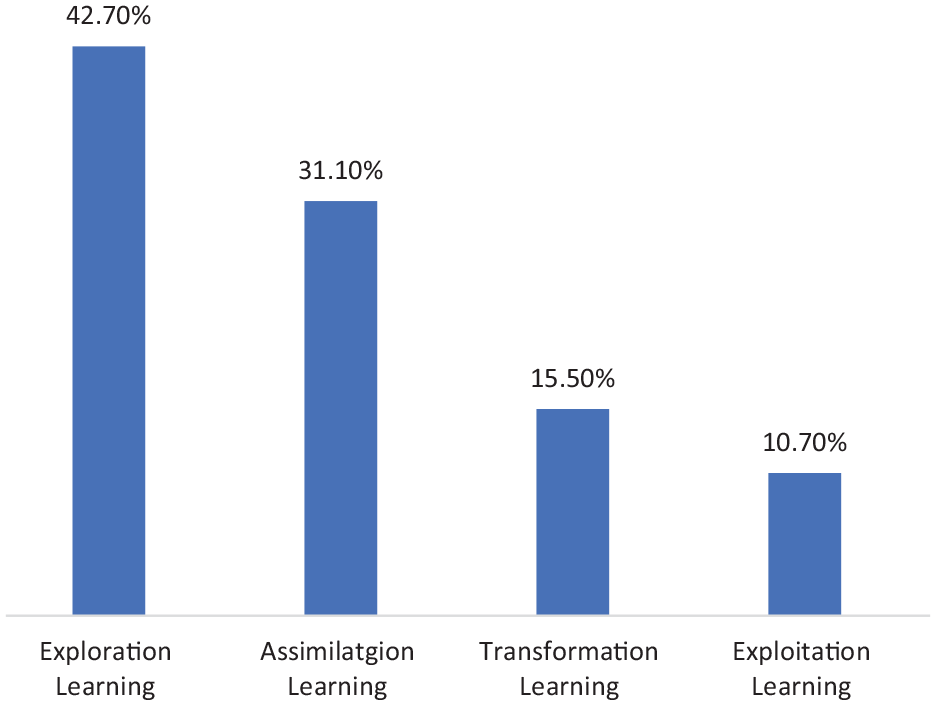
Distribution of the learning processes of absorptive capacity in alpha. Source: Authors.
The practice of continuous client interaction was evidenced not only through interviews but also confirmed in project documents and company status reports, demonstrating a consistent approach to customer relationship management.
The balance between exploration and exploitation of knowledge is a source of competitive advantage for companies (March, 1991). This balance between different learning processes is an important factor for absorptive capacity, as they play independent yet complementary roles (Zahra & George, 2002). Although balance is pointed out as important, it does not necessarily mean having an equal number of exploration and exploitation activities (Brix, 2019), which may justify the findings.
Exploratory Learning
The exploratory learning process is characterized by the activity of knowledge acquisition, representing the company’s ability to identify, value, and acquire external knowledge critical to its operations (Camisón & Forés, 2010; Zahra & George, 2002). This process highlights the practices of recognizing and understanding external knowledge (Lane et al., 2006), addressed in the literature of organizational learning as the scanning process (Daft & Weick, 1984; Huber, 1991). This process involves monitoring the environment and collecting environmental data.
In the interviews, it was identified that Alpha company exhibited four processes for knowledge acquisition: customer relationships, supplier relationships, market mapping, and organizational strategies for knowledge acquisition.
The first process, “customer relationships,” is marked by constant interaction between the sales and project teams with the customers. The project team’s closeness to the customer allows the company to acquire new knowledge for the Customer Relationship Management (CRM) tools they implement. As explained by a project manager: We end up assimilating some of our clients’ management approach, because as we get into larger projects, we end up assimilating how they manage their projects… we look for solutions in technical literature, but this interface with the client helps a lot, we end up learning quite a bit (Interviewee 9).
This knowledge acquisition typically stems from the needs raised by the customers and occurs through constant meetings and discussions about the projects and technological solutions. The importance of client relationships for knowledge acquisition was further emphasized by a director: We had a client who was very satisfied with our work but wasn’t satisfied with the [solution name omitted]… this client said: for us [product name] is the only one that has native Instagram integration, no other has it… and that’s exactly where the partnership was born, along with a strategy to stay with a client (Interviewee 2).
Regarding the training relationship with suppliers, it is observed that Alpha’s project team acquires a lot of technical knowledge for implementing CRM tools in clients, with the suppliers themselves. Study materials were presented and confirm the results found in the interviews.
Not only do the supplying companies provide courses and study material, but they also open communication channels for problem-solving and clarifications in the tool customization process. In some cases, they provide a laboratory for exploring knowledge in a safe environment without impacting clients.
Concerning the third process, “market mapping,” defined by monitoring the context in which the company is involved in the business world, it is perceived that the project teams, when embedded in clients, perceive business opportunities beyond the boundaries of the project they are working on, bringing these opportunities into the company to elevate organizational performance. The perception of the environment and the valuation of information acquired from clients are relevant practices for knowledge acquisition. However, it is identified that the project team perceives learning opportunities in the environment when they have deep knowledge of the tools they work with and of their company’s business.
However, new business opportunities and partnerships with other companies are not perceived by the project team. The company’s board executes the role of monitoring the market of the technological tools they work with and conducts benchmarking.
The fourth process was the “company strategy for knowledge acquisition,” which emerged from the company’s posture with its employees to acquire new knowledge. It is noted that Alpha company showed a flexible behavior with its workers, allowing them to research and study to obtain certifications in the tools installed at clients.
Besides this flexibility with working hours, knowledge acquisition occurs through the exchange of workers between projects, as well as by integrating experienced people from the job market into the team, who brought with them extensive knowledge.
Assimilative Learning
Assimilative learning occurs when the needs and technological trends are relatively simple and can be assimilated into existing knowledge (Gebauer et al., 2012).
The results show that assimilative learning can be represented by two processes: knowledge internalization and knowledge exchange. Additionally, the findings point to the influence of maintaining collaborative leadership, open to team discussions, as well as mechanisms of social integrations, through social networks of instant communication.
Knowledge internalization represents the routines and practices performed to ensure that the acquired knowledge is incorporated into different units of the company. This is highlighted by the practices of multi-sectoral meetings to discuss and/or expose the acquired knowledge.
Knowledge exchange corresponds to the interchange of information to solve challenges in projects.
At Alpha, knowledge exchange was shown to be exclusively focused on obtaining solutions for challenges encountered in the implementation and customization of tools for clients. The results of the interviews indicated that this exchange of knowledge occurs through formal channels with tool suppliers. As one consultant explained: When the client needs something… when creating a sale, they need to have a notification that goes to the manager, sends an email or something like that. So, we try to find what the tool already does. If we can’t find anything in the tool that does it, we exchange ideas with [company name]. We have some communication channels with them. Usually, we either open a support ticket or discuss with their sales team (Interviewee 7).
The knowledge exchange also occurs extensively between different project teams within the company through social communication networks. A project leader described this process: We have groups [WhatsApp] with Alpha teams, teams working in all other clients, so when there’s a more serious problem, a more difficult problem, we share in this team, in this group. And there’s always someone who says: Oh, I did it this way,”“I did it that way” and then we exchange ideas and reach a solution (Interviewee 3),
Furthermore, the interviews revealed a significant presence of knowledge exchange between different project teams within the company. These internalizations of knowledge among project teams occur through formal and informal social communication networks, such as Teams, WhatsApp, among others.
Transformative Learning
Assimilative learning occurs when the needs and technological trends are relatively simple and can be assimilated into existing knowledge (Gebauer et al., 2012).
The results show that assimilative learning can be represented by two processes: knowledge internalization and knowledge exchange. Additionally, the findings point to the influence of maintaining collaborative leadership, open to team discussions, as well as mechanisms of social integrations, through social networks of instant communication.
Knowledge internalization represents the routines and practices performed to ensure that the acquired knowledge is incorporated into different units of the company. This is highlighted by the practices of multi-sectoral meetings to discuss and/or expose the acquired knowledge.
Knowledge exchange corresponds to the interchange of information to solve challenges in projects.
In Alpha, transformative learning was found to be less explored, possibly due to the company’s focus on implementing partner-developed tools rather than product innovation. However, the company maintains a knowledge repository, though without evidence of a formal knowledge management process. The executive director explained their current approach: We have Google Drive, and we use Clock Fine for time tracking, but we use it for project control. We’re not using it as we’d like, but we intend to do exactly that, use Clock Fine… and employee assignments within projects to identify which project activities we’re getting wrong in estimates, pricing, things like that (Interviewee 2).
The ability to reactivate this knowledge was demonstrated particularly at the project level. One manager described how even a financially unsuccessful project provided valuable learning opportunities: That’s where the idea came from to redo, or redesign the internal processes, and do a general review of how the company operates so we could take advantage of the good things this project brought us. I mean, despite being an unsuccessful project from a delivery perspective, and financially too - we had a loss with the project. But we learned a lot from it. The technical team learned, management learned, the management team learned. I mean, the project was good (Interviewee 9).
Furthermore, the interviews revealed a significant presence of knowledge exchange between different project teams within the company. These internalizations of knowledge among project teams occur through formal and informal social communication networks, such as Teams, WhatsApp, among others.
Exploitative Learning
Exploitative learning is the company’s ability to incorporate acquired, assimilated, or transformed knowledge into its operations and routine, not just to refine and expand its competencies, but also to explore new operations, products, competencies, and organizational forms (Camisón & Forés, 2010; Zahra & George, 2002). In this context, two processes were identified in Alpha: Process Innovation and Organizational Performance.
Regarding process innovation, which refers to the company’s ability to reorganize its work processes, it was noted that these occurred specifically in the field of project management and under the deliberation of top management. This innovation in project management practices was clearly illustrated by a project manager: What we’ve been doing, even in these projects, even if we don’t deliver for the client to test, we show, we have weekly follow-up meetings, and we effectively show the project progress, show the screens, show the solutions, show how the project is progressing. This encourages interaction and encourages the client to give us feedback so we can make corrections. So this is a practice that was born, that came from some projects and we ended up extending it to all (Interviewee 9).
This approach was further reinforced by the executive director: In all weekly status report meetings, we’ll have one of our consultants, a developer, who sometimes didn’t even participate in this meeting, but they’ll be there… Ricardo will do the status report where we’ll open the tool and show what was done that week… This way, we’re already getting feedback and insights from them in real-time - weekly - and not waiting to get the problem only at the end of that project. This was something we brought in and we felt a significant improvement in the projects we’re currently handling in terms of client satisfaction and the project evolution itself (Interviewee 2).
The analysis also identified that organizational performance correlated with exploitative learning, as evidenced in interviews when project leaders elucidated the possibility of selling new systems to integrate into the developing project, securing a new business for the company.
The analysis also identified that organizational performance correlated with exploitative learning, as evidenced in interviews when project leaders elucidated the possibility of selling new systems to integrate into the developing project, securing a new business for the company.
The analysis of the learning processes conducted in Alpha—demonstrating the processes and actions identified in interviews—can be observed in Table 2.
ACAP Learning Practices at Alpha Company.
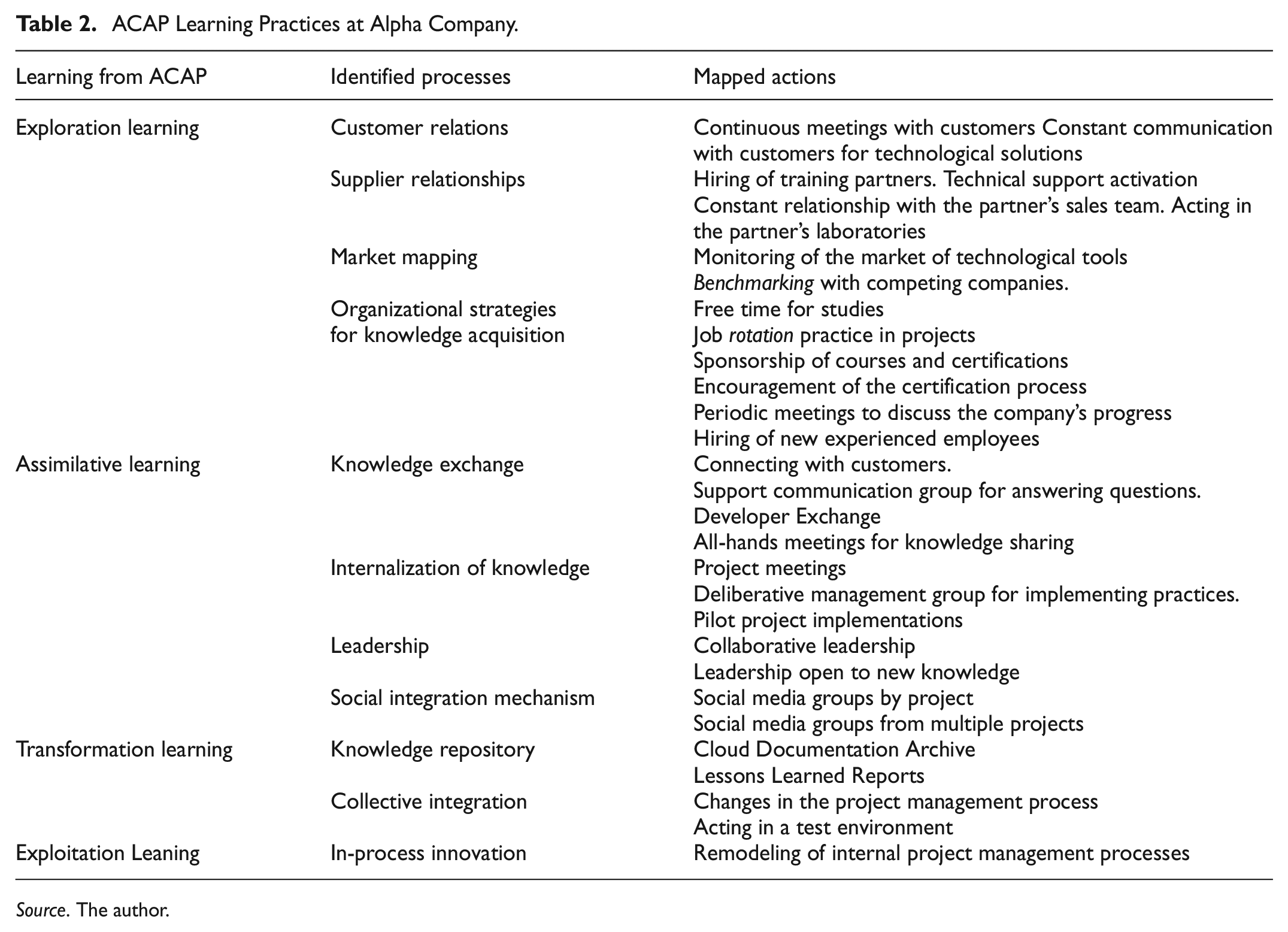
Source. The author.
Beta Company
As outlined in the methodology (Table 1), Beta is a pioneer in developing innovative mainframe technology solutions, with a focus on automation and DevOps for software development. With over 30 years in the technology market, Beta operates nationally and internationally from its headquarters in São Paulo.
In terms of absorptive capacity, Beta’s learning processes reflect an emphasis on exploitative learning, with less focus on transformative learning. This distribution suggests that Beta prioritizes applying acquired knowledge to enhance and innovate its product offerings rather than balancing all learning processes equally. The proportions of these learning processes are depicted in Figure 2.

Distribution of the learning processes of absorptive capacity in beta.
The knowledge storage practices were directly verified through examination of the GIRA system during interviews, with documented evidence of project recording practices supporting the interview findings.
Exploratory Learning
Considering the definitions of learning presented previously, the interviews conducted at Beta company revealed four exploratory learning processes: customer relationships, people development, market mapping, and organizational strategies for knowledge acquisition.
The process named “customer relations” is marked by constant communication with clients and monitoring of clients. Beta has a project team that is constantly allocated at the client’s site, which allows for a strong relationship between the companies, ensuring effective capture of client information. As one solutions architect explained: When we observe something that might affect us, we already pass it internally. Of course, we’re still a small company, with few clients, so we manage to be a much more personalized company (Interviewee 14).
Regarding people development, Beta company seeks to participate in events such as congresses to follow and acquire new knowledge. The operations manager highlighted this practice: One of the goals we set is that at least once per quarter someone from the company… has to be participating in events about our business…. We took one person from each front, a technician, a pre-sales person, a business person, they attended the same lecture which was actually a two-day event, and each one brought us a different vision of what Beta could do (Interviewee 15).
In addition to promoting employee participation in events, Beta also develops an internal and external training program. The internal training is provided by the company’s CEO to less experienced employees, offering technical courses. For the external training program, the company hires various courses for its employees, including language courses, as the company’s strategy is to act more emphatically in the foreign market.
Regarding market mapping, Beta company maintains a constant practice of monitoring market-leading companies in mainframe, as they dictate changes. Thus, Beta stays alert to publications of materials and announcements of commercial events related to mainframe. The monitoring occurs both at the project level and in administrative areas, as it was noted that developers, as well as managers and the CEO, follow the launches of new releases of mainframe platforms.
Another evidenced process was organizational strategies for knowledge acquisition. In this process, Beta promotes a reward program for employees who present valuable ideas to the company. The author of the chosen idea is awarded a trip with their family.
Moreover, Beta company showed openness to new ideas, not only through the reward program but also by creating space for anyone in the company to present suggestions to the management.
Assimilative Learning
Regarding assimilative learning, the interviews demonstrated that the company engages in learning through the practices of internalization and dissemination of knowledge. The CEO explained their approach to knowledge internalization: Something that we do before doing, we have several rounds of conversation until consolidating. Even if there’s documentation, humans have difficulty putting things on paper, it’s not easy, especially for very technical people, people more from exact sciences… So we have many meetings, like workshops: ‘Is this really what needs to be done?’‘Did everyone understand this?’ And it’s common for me to ask them to rephrase: ‘Explain what you understood needs to be done’ (Interviewee 10).
Furthermore, the company promotes knowledge dissemination, as described by the commercial manager: If it’s a very relevant topic that has a big match with our technology, we usually open internal discussion forums. Nothing formal, we send an email, publish the material on the network, each one gives their opinion, then we sit down and say: ‘Are we on the right track? What can we use to improve our technology?’ (Interviewee 11).
There is evidence that these practices are influenced by mechanisms of social integration.
In terms of knowledge internalization, it was identified that Beta operates through constant discussions promoted by the company, configuring the practice of knowledge internalization. These discussions organized by the operations manager occur through brainstorming sessions. The origin of these discussions is materials collected at industry events and customer demands not anticipated in the software developed by the company. In these cases, the assimilation of new knowledge begins, along with that already mastered by the organization.
Furthermore, the company promotes the dissemination of knowledge, albeit informally, in which managers and developers are free to share files with the entire company. Dissemination occurs through collective email sending, discussion forums using social networks, and meetings.
Transformative Learning
Transformative learning is characterized by the company’s ability to maintain and reactivate acquired and assimilated knowledge (Lichtenthaler, 2009), as well as by the capacity to integrate knowledge collectively (Crossan et al., 1999; Sun & Anderson, 2010). This form of learning at Beta was elucidated in the interviews through two practices: maintaining the knowledge repository and collective integration of knowledge.
Transformative learning at Beta was evidenced through maintaining knowledge repositories and collective integration. The sales and project teams record project documentation in the GIRA software. However, some interviewees noted challenges with the system: Look, we have some documentation, a lot of old stuff gets piled up, a bit messy, people were trying to improve with tools, like the knowledge base part, for example, as we don’t have this implemented yet, so we end up having a directory with old stuff and sometimes you need information it’s hard to find, but it’s there (Interviewee 14).
The collective integration of knowledge is emphasized through team alignment, as the CEO described: Usually we make a document, because it needs to go to the sales area, needs to go to the channels and partners area… Then you need to make a press release to announce to the market, you often need to put it in the manual, they’re online manuals, but you have to put it in the manual, often you have to give internal training to who’s on the front line, which is the solutions team, need to give training to the client (Interviewee 10).
Another way to ensure the integration of knowledge is by documenting advancements in projects that generate new products, creating a sort of descriptive manual for the product, which is later used in various areas of the company, such as marketing, sales, among others.
Exploitative Learning
transformed knowledge into its operations and routines, not just to refine and expand its competencies, but also to develop new operations, products, competencies, and organizational forms (Camisón & Forés, 2010; Zahra & George, 2002). At Beta, process innovation arises from market and customer pressure, as one developer explained: The market, let’s say, gave us a shake, and we got into this wave. So, we’re doing the Agile methodology part… to reduce the time we used to take. Instead of a small project taking a month, we can now make two deliverables in one to two weeks (Interviewee 13).
The company’s product innovation was often driven by market and client needs, as the commercial manager described: When you have a new feature, something new in a product, you have some ways to approach it. Either it’s a customer request or because you saw something in the market that can be implemented in your product… Recently we launched a new module of our products that was a customer request. It came in, went to the technical area, they developed it (Interviewee 16).
Regarding the practice of process innovation, which refers to the company’s ability to reorganize its work processes, it was noted that these occur specifically in the field of project management. At Beta, process innovation arises from market and customer pressure, exerting a coercive force, such as the implementation of agile methods in the development of its projects.
Concerning the exploitation of knowledge for product innovation, the interviews made it clear that the technological knowledge derived from monitoring mainframe tools in the market contributes to Beta’s exploitative learning in absorptive capacity.
The interviews revealed that Beta’s exploitative learning depends on the CEO’s decision. In addition to determining which products will be developed, he also controls the project development with the project manager.
The analysis of the material collected at Beta, indicating the processes related to the learning processes present in absorptive capacity, can be observed in Table 3.
ACAP Learning Processes in the Beta Enterprise.
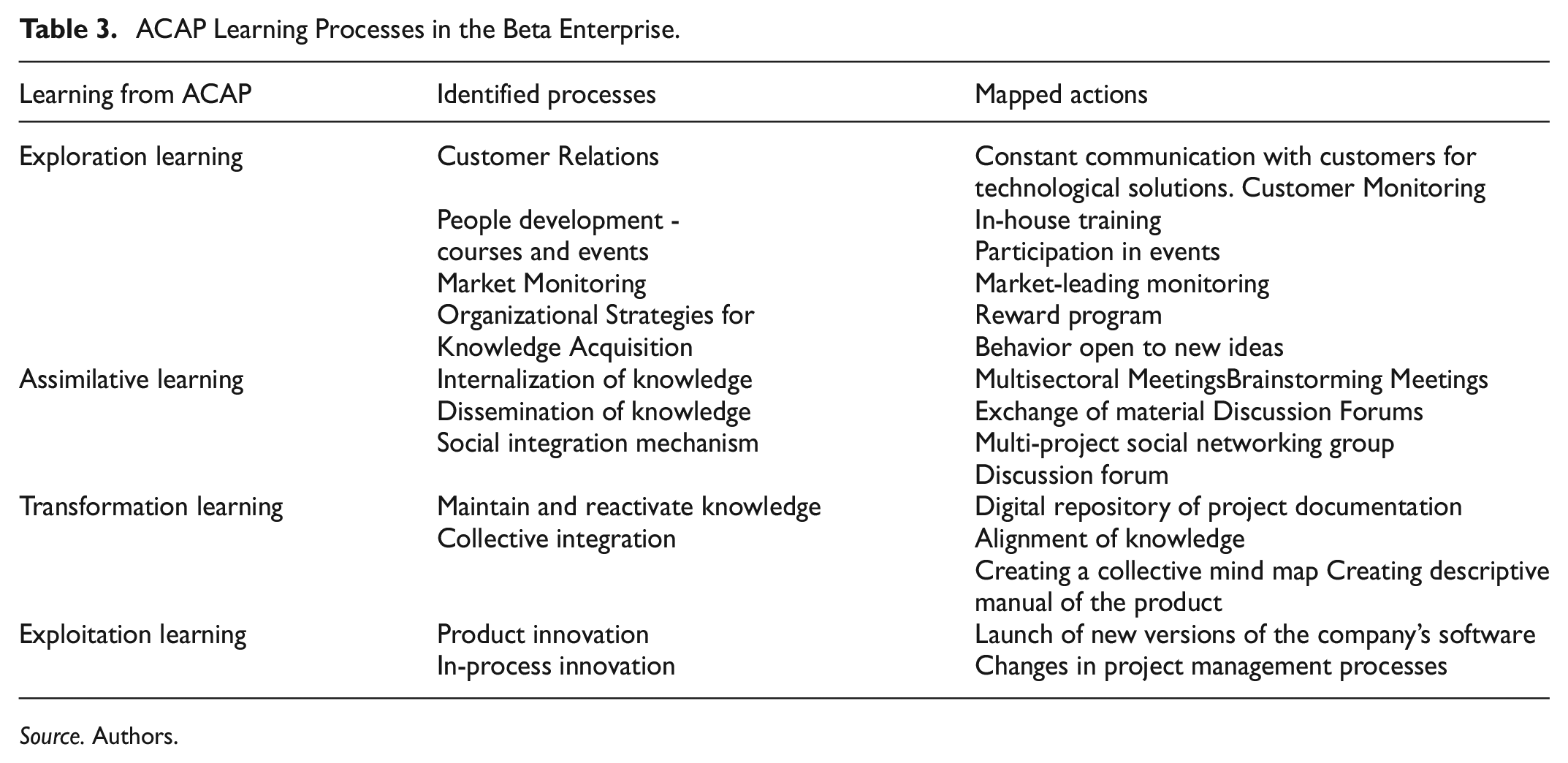
Source. Authors.
Cross-Case Analysis
The analysis of both Alpha and Beta companies reveals patterns in how project-based organizations develop their absorptive capacity through different learning processes. While both organizations indicate all four learning processes identified in the literature, they exhibit distinct emphases and implementation approaches that reflect their strategic orientations and market positions. Table 4 provides a systematic comparison of how these learning processes manifest in each organization, highlighting key differences in their approaches to knowledge management.
Cross-Case Comparison of Learning Processes.

Source. Authors.
In terms of exploratory learning, both organizations place significant emphasis on customer relationships as a primary source of knowledge acquisition. However, they differ in their approach. Alpha maintains strong relationships with both customers and suppliers, creating a triangular knowledge flow that enriches their learning process. In contrast, Beta focuses primarily on customer relationships and internal development, with their CEO playing a central role in knowledge transfer through internal training programs. This difference appears to stem from their business models—Alpha as a consulting firm implementing third-party solutions versus Beta as a software developer creating proprietary solutions.
The assimilative learning process in both organizations is facilitated through formal and informal mechanisms, though their implementation varies significantly. Alpha’s assimilation process is heavily influenced by their relationship with suppliers and clients, creating a rich external knowledge network. Their use of social integration mechanisms, particularly through digital platforms like Teams and WhatsApp, enables rapid knowledge dissemination across project teams. Beta, meanwhile, emphasizes internal brainstorming sessions and formal discussion forums, reflecting their focus on product development and innovation. This difference highlights how business model and strategic orientation influence the choice of assimilation mechanisms.
Transformative learning processes show interesting parallels and contrasts between the organizations. Both maintain knowledge repositories, but their approaches differ markedly. Alpha employs cloud-based documentation and lessons learned reports, focusing on project-level knowledge transformation. Beta utilizes the GIRA software system for systematic knowledge storage, though interviews revealed challenges in knowledge retrieval efficiency. The collective integration of knowledge also differs: Alpha emphasizes project-based transformation, while Beta focuses on product-based knowledge integration through detailed documentation and descriptive manuals.
In exploitative learning, the most striking difference emerges in the focus of innovation. Alpha primarily demonstrates process innovation, particularly in project management methodologies, while Beta exhibits strong product innovation capabilities, regularly launching new versions of their software solutions. This distinction aligns with their respective business models and market positions. The decision-making structure for exploitation also differs, with Beta showing more centralized control through CEO involvement in product development decisions.
These findings reveal how project-based organizations can develop different configurations of absorptive capacity learning processes while achieving effective knowledge management. The analysis demonstrates that while the fundamental learning processes remain consistent across organizations, their implementation and emphasis vary according to strategic orientation, business model, and market position. This understanding provides the foundation for a comprehensive framework of absorptive capacity learning processes in project-based organizations, which will be explored in the discussion section.
Discussion
The findings indicated an imbalance in the learning processes of absorptive capacity in both Alpha and Beta companies. However, literature has shown the need to maintain a balance between learning processes (Gebauer et al., 2012; Singh et al., 2023), as this positively affects performance and innovation in both stable and dynamic environments (Bouguerra et al., 2020; Lichtenthaler, 2009). This implies a combination of efforts focused on exploring new ideas and processes with the exploitation of mature knowledge and technologies (Toni & Pessot, 2021; Vasconcelos et al., 2019).
In the exploratory learning process, specifically in customer and supplier relationship processes, the project team demonstrated playing a significant role. Learning in a project environment depends on the project team’s ability to capitalize on knowledge acquired during the project and share it within the organization (Swan et al., 2010; Wiewiora et al., 2020). Moreover, these practices showed that knowledge seeking occurred within a similar area to their field of operation. This finding corroborates arguments by Lane and Lubatkin (1998) and recent studies (Mehreen et al., 2022), who show that knowledge absorption depends on the similarity in the knowledge base and organizational structures of companies.
Furthermore, the companies demonstrated acting in the process of monitoring the environment, performing benchmarking practices with competitors, following the evolution of tools, and monitoring global market leaders. These practices correspond to environmental scanning mechanisms, a relevant means of recognizing external knowledge sources and generating exploratory learning (Cohen & Levinthal, 1989; Stelmaszczyk, 2020). Scanning the environment is understood as the process of monitoring and providing environmental data to managers and is strongly related to data collection (Benhayoun et al., 2020; Daft & Weick, 1984).
Both customer and supplier relationship processes and the environmental monitoring process are similar to findings in the research by Cassol (2018) and recent studies (Lee et al., 2021; Mahura & Birollo, 2021), who studied absorptive capacity processes in organizations. These studies presented that knowledge absorption occurs through processes such as relationship practices with external sources, market performance review practices for new opportunities, and knowledge construction practices.
Lichtenthaler (2009) and more recent researchers (Bouguerra et al., 2020; Darwish et al., 2018) argued that exploratory learning is transferred to exploitative learning through transformative learning. However, the results of this study showed that some practices are assimilated through internalization, dissemination, and knowledge exchange practices. Assimilative learning involves the ability to analyze, process, and interpret, representing its collective understanding and contextualization (Vasconcelos et al., 2019).
Regarding assimilative learning, both companies exhibited practices focused on the assimilation of knowledge, occurring at the level of project teams and with integration between projects and administrative areas of the company. Both companies use the process of knowledge internalization through meetings and discussions with multidisciplinary teams, involving administrative areas and project teams. Sun and Anderson (2010) and recent studies (Butler & Ferlie, 2020; Singh et al., 2023) present that assimilative learning capacity occurs in groups and uses socio-psychological learning of interpretation to reach a consensus or shared understanding at the group level about what was absorbed (Crossan et al., 1999).
The internalization of knowledge through meetings and discussions aligns with theoretical aspects presenting that knowledge assimilation occurs through processes that allow new information to be analyzed, interpreted, and internalized (Camisón & Forés, 2010; Wiewiora et al., 2020). When related to the interpretation process of Crossan et al.’s (1999) 4I learning model, Sun and Anderson (2010).
Another highlighted practice in the study was the dissemination of knowledge through exchanges of materials with new knowledge and promoting discussion forums presented by Beta, aiming for a common interpretation of the acquired knowledge. For Kim (1998) and recent studies (Benhayoun et al., 2021), interpretation is the process of translating external events, developing models for understanding, making sense, and conceiving schemas among key managers. These activities leverage the assimilation process influenced by dialog and the diversity of experiences of team members, articulating innovative ideas and breaking structures (Sun & Anderson, 2010; Toni & Pessot, 2021).
Concerning transformative learning, this study found activities related to the existence of a knowledge repository fed by project teams and commercial areas. The forms of archiving are digital and derive from projects that produced new knowledge for the companies. This finding corresponds to the stages of process presented by Lichtenthaler (2009) and reinforced by recent research (Lee et al., 2021; Zadeh et al., 2022): maintaining and reactivating knowledge, creating a knowledge stockpile. The stockpile of knowledge can be applied to exploitative learning, being imperative to achieve superior innovation (Garud & Nayyar, 1994; Mehreen et al., 2022).
Another perspective in the literature presents that transformative learning occurs through a process of bisociation, where the organization recognizes two incompatible pieces of knowledge and is able to combine them, leading to a new organizational schema (Bouguerra et al., 2020; Camisón & Forés, 2010; Jansen et al., 2005; Zahra & George, 2002). In practice, these cognitive and structural changes are not so evident, but the process of collective knowledge integration was identified, associating with the model presented by Sun and Anderson (2010) and extended by recent studies (Stelmaszczyk, 2020) in which shared understanding in the team is driven to the organizational level.
Exploitative learning is a capacity that involves the process of institutionalization and occurs at the organizational level (Singh et al., 2023; Sun & Anderson, 2010). Knowledge institutionalization enables the company to achieve commercial objectives, particularly in the context of processes and products (Lane et al., 2006; Mahura & Birollo, 2021). In this learning process, the study identified that the companies achieved innovation in products and processes.
The innovation achieved in both companies occurred under the influence of the CEO, diverging from the literature, which states that knowledge exploitation is influenced by middle-level managers due to their direct role in controlling daily activities (Wiewiora et al., 2020; Zadeh et al., 2022). One justification is that the studied companies are small, and the CEOs are at the forefront of the developed actions.
Conceptual Framework
Based on the results and discussions, we present a conceptual framework (Supplemental figure 3) that provides an overall understanding of the learning processes present in ACAP in project-based companies. The framework includes the four capabilities involved in ACAP, showing a recursive relationship between the assimilation and transformation processes.
In project-based organizations, the learning processes of absorptive capacity occur at the levels of individual, project, and organization. It is noted in the Framework that the different applied learning processes generate performance in projects and organization, as well as elevate the level of knowledge. These results in turn feed back into the capabilities of ACAP.
Final Remarks
The present study aimed to characterize the main learning processes of absorptive capacity in project-based organizations, seeking to contribute to the literature on absorptive capacity and project management. To achieve the results, a case study was conducted with two companies characterized as project-based organizations, maintaining projects as the main activity of the company.
Based on the studied cases, it was possible to identify that knowledge absorption in project-based organizations occurs through four learning processes of absorptive capacity: exploratory, assimilative, transformative, and exploitative. Regarding exploratory learning, the importance of relationships with clients and suppliers, people development, and market monitoring was highlighted. These practices are supported by strategic actions of the companies that facilitate the absorption of external knowledge.
Assimilative learning was also present in both companies, highlighting practices of knowledge internalization, knowledge dissemination, and knowledge exchange with external audiences. These practices are fully performed through mechanisms of social integration. Concerning transformative learning, although the practice of maintaining and reactivating knowledge was identified, the process of bisociation of knowledge was not evident.
Regarding exploitative learning, it was identified that the companies, according to the nature of their business, showed process and product innovation. Concerning process innovation, it was found that innovations occur mainly in project management practices, an expected result for companies classified as project-based organizations.
Nevertheless, despite strictly following its methodology, some limitations are evident. One of them relates to the case study method itself, which featured only two companies, both operating in the information technology sector. Therefore, new studies could expand or contradict the findings of this study by conducting research with a larger number of companies, ensuring a diversity of sectors, such as Information Technology, Construction, Consultancy, among others.
Supplemental Material
sj-docx-1-sgo-10.1177_21582440251336555 – Supplemental material for Learning Processes in Absorptive Capacity in Project-Based Organizations
Supplemental material, sj-docx-1-sgo-10.1177_21582440251336555 for Learning Processes in Absorptive Capacity in Project-Based Organizations by Rodrigo Teixeira, Isabel Cristina Scafuto, Roberto Lima Ruas, Fernando Ribeiro Serra and Carlos Ricardo Rossetto in SAGE Open
Footnotes
Acknowledgements
The authors would like to thank the Program Phd of the University Nine of Jully—UNIOVE for their support and assistance throughout this research. We also appreciate the valuable feedback and suggestions from our colleagues during the development of this manuscript.

Ethical Considerations
This study did not involve any human participants or animals, and therefore, ethical approval was not required.
Funding
The author(s) received no financial support for the research, authorship, and/or publication of this article.
Declaration of Conflicting Interests
The author(s) declared no potential conflicts of interest with respect to the research, authorship, and/or publication of this article.
Data Availability Statement
Data sharing not applicable to this article as no datasets were generated or analyzed during the current study.
Supplemental Material
Supplemental material for this article is available online.
References
Supplementary Material
Please find the following supplemental material available below.
For Open Access articles published under a Creative Commons License, all supplemental material carries the same license as the article it is associated with.
For non-Open Access articles published, all supplemental material carries a non-exclusive license, and permission requests for re-use of supplemental material or any part of supplemental material shall be sent directly to the copyright owner as specified in the copyright notice associated with the article.
