




Abstract
This study evaluates the factors influencing the digital transformation of small- and medium-sized manufacturing enterprises (SMMEs) in China, introducing a hybrid evaluation framework that integrates multiple dimensions through the Grey-DANP method. Unlike previous descriptive studies, this research quantifies factor weights and maps their interrelationships across economic, environmental, socio-cultural, personal, and technological dimensions. The empirical analysis identifies five key determinants: talent team, internal organizational change, employee work style, digital infrastructure, and business model innovation. The findings reveal that economic and socio-cultural factors initiate transformation, while technological and environmental factors serve as crucial implementation channels. Successful digital transformation requires balancing internal capabilities with external support measures. This study provides practical management recommendations, including establishing cross-functional digital transformation teams, implementing phased digital upgrades, investing in talent and technology development, and creating robust evaluation and risk mitigation systems. The framework contributes to existing literature by offering both theoretical insights and actionable guidelines for resource-constrained SMMEs, bridging the gap between academic research and practical implementation.
Introduction
With the rapid changes in technological innovation, customer demand, and external environmental factors, the integration of digital technology with the manufacturing industry is becoming increasingly close, accelerating the digital transformation of manufacturing enterprises (Guo & Chen, 2023). In 2024, the added value of China’s manufacturing sector reached 33.55 trillion yuan, accounting for 24.9% of the country’s GDP. This marks the 15th consecutive year that China has ranked first globally in terms of manufacturing scale (National Bureau of Statistics, 2024). However, compared with developed countries such as Germany and the United States, China’s manufacturing still lags in advanced technology, innovation, and efficiency (Melo et al., 2023). Small- and medium-sized enterprises (SMEs) play a vital role in China’s industry. SMEs make up around 90% of businesses, and provide about 50% of employment (X. Gao, 2024). However, these enterprises, and especially small- and medium-sized manufacturing enterprises (SMMEs), are generally weak in terms of technology, funding, talent, and management capabilities. Given these challenges, it is necessary to explore how SMMEs can overcome these obstacles to achieve digital transformation, which is increasingly vital in today’s competitive environment.
Meanwhile, existing research has generally highlighted that some companies, due to a lack of in-depth understanding of digital transformation, often focus solely on surface-level digital tools and applications, while neglecting deeper management changes, organizational restructuring, and corporate culture shaping (Seppänen et al., 2025). This oversight frequently results in ineffective transformation efforts. This difficulty hinders their ability to grasp the key elements and strategic choices for digital transformation (Li, 2022). Moreover, a significant number of corporate managers lack sufficient understanding of digital transformation, and their companies often struggle with integrating and innovating effectively, which frequently results in failed transformation initiatives (Chouki et al., 2020). As a result, the success of digital transformation requires not just technological adoption but also a comprehensive understanding of organizational and managerial factors, which are often overlooked.
Given these challenges, the turbulence in market demand and the competitive environment forces SMMEs to focus on digital transformation. By leveraging digital technology to improve production efficiency, they can enhance product innovation and management capabilities, thereby seizing fleeting market opportunities (Li, 2022). Therefore, promoting the digital transformation and upgrading of SMMEs is crucial for comprehensively advancing the digital revolution and high-quality development of the manufacturing industry (J. Gao et al., 2023). However, some enterprises approach digital transformation by focusing only on flashy digital technologies and tool applications, or piling up new concepts, while rarely addressing deeper management issues such as industrial upgrading, organizational structure, and corporate culture. The digital transformation of the manufacturing industry is complex system engineering, which involves many production factors, including people, organization, management, technology, knowledge and environment (Brodeur et al., 2022; Zhou & Liu, 2024). Therefore, how to promote the digital transformation of SMMEs has become the focus of current research in various circles.
Starting from internal factors of enterprises, some scholars believed that technology application (Vial, 2019), employee skills (Eller et al., 2020), high-level support (Sun et al., 2020), and corporate culture (Hinings et al., 2018) were important internal influencing factors for the digital transformation of enterprises. Another group of scholars started from the external factors of SMMEs, considering government support (C. L. Chen et al., 2021), competitive market environment (Roblek et al., 2021), and changes in consumer demand (Vuţă et al., 2022) as important external influences on the digital transformation of enterprises. While these studies provide valuable insights, their fragmented focus on either internal or external factors underscores the need for a more integrated framework that captures the interplay between these dimensions.
In terms of paths, Battistoni et al. (2023) elucidated the paths for SMMEs to achieve digital transformation in different industries and with different digital technologies. Previous literature on digital transformation has primarily focused on either technological drivers or management changes, with some scholars highlighting the role of external policies and market environment. While these studies offer a multidimensional view, they remain largely descriptive and lack a systematic synthesis of the interactions and contradictions among various factors. For instance, there is disagreement on whether digital infrastructure or internal organizational change is more critical for transformation. Additionally, there is no unified definition of the relationship between policy support and corporate innovation. These gaps highlight the need for further research. Addressing these gaps requires a comprehensive framework that integrates internal and external factors to guide SMMEs in their digital transformation journey.
This study aimed to yield unique insights into several key questions: (1) What are the fundamental factors driving the digital transformation of SMMEs? (2) How do these factors interact and influence each other in the process of promoting digital transformation? and (3) What factors should enterprises prioritize when implementing digital transformation strategies? By addressing these questions, this research aimed to bridge the gaps in the existing literature and provide actionable recommendations for SMMEs to succeed in their digital transformation efforts.
The research objective of this study was to observe and classify the existing literature to extract the influencing factors for SMMEs to realize digital transformation. Driven by rapid technological innovation and fierce market competition, digital transformation has become crucial for manufacturing firms to enhance their competitiveness. SMMEs are in urgent need of upgrading and transforming. However, their transformation outcomes are often affected by limitations in talent, capital, technology, and management experience. Digital transformation is not just the introduction of new technological tools, but also a profound change in organizational structure, operating models, and management philosophies. Dynamic capabilities theory (DCT) offers a robust framework for understanding how firms can adapt and innovate in rapidly changing environments, providing a strategic edge in competitive markets (Baden-Fuller & Teece, 2020). This study applied DCT to the digital transformation of SMMEs, revealing the mechanisms of sensing, seizing, and reconfiguration capabilities in the transformation process, thereby extending the application of the theory in the digital economy. Previous studies have mostly explained digital transformation from a single perspective. By integrating this classic theory, this study provides a deeper theoretical foundation for the digital transformation of SMMEs. It further explains how these enterprises can build, renew, and utilize their resources and capabilities in the rapidly changing digital economy to achieve a competitive advantage.
As we know, assessing the key influencing factors to realize digital transformation is a typical multi-attribute decision-making problem (Chang et al., 2021). Meanwhile, due to the limited information available to decision makers, uncertainty and ambiguity are usually included in the decision-making process (Deng, 1982). This study applied a new hybrid multiple criteria decision-making (MCDM) model, which combines grey theory, the Decision-making Trial and Evaluation Laboratory (DEMATEL), and the Analytic Network Process (ANP), to comprehensively assess the impacts of SMMEs. It can comprehensively assess the key factors affecting the digital transformation of SMMEs, fill the gap of single factor independent analysis in the existing literature, and provide empirical evidence to reveal the internal and external interaction mechanisms in enterprise digital transformation, provide reference for the future digital transformation, and put forward valuable suggestions and strategies.
The contributions of this paper are summarized as follows.
Construction of a Comprehensive Framework of the Mechanisms for SMMEs to Achieve Digital Transformation
This framework encompasses five key dimensions—economic factors, environmental factors, sociocultural factors, individual factors, and technological factors. Compared with previous studies that focused on a single dimension (such as technology-driven or management-oriented approaches), this framework integrates these dimensions for the first time, thus providing a more comprehensive understanding of the driving mechanisms of digital transformation. The framework was further refined into 15 specific indicators (digital infrastructure, leadership mindset, economic development status, etc.). These indicators not only cover internal and external factors, but also take into account the resource limitations and cultural barriers that enterprises may face during the digital transformation process. The greatest innovation of this framework lies in interconnecting complex factors and clarifying the causal relationships between different dimensions and indicators. For example, this study reveals the bidirectional influence mechanism between economic factors (such as financial investment) and technological factors (such as digital technologies), providing a new theoretical basis for enterprises’ priority allocation and resource scheduling.
Use of the Grey-DANP Method to Obtain the Weights of Various Factors, and Identification of the Key Factors Affecting the Digital Transformation of SMMEs
Traditional multi-criterion decision-making methods (such as AHP and TOPSIS) usually cannot handle causal relationships and weight-allocation issues simultaneously. This study integrated grey system theory with the DANP method, which not only quantifies the relative importance of each factor, but also reveals the causal relationships among them. The introduction of grey theory enables the model to conduct reliable assessments in environments with high levels of uncertainty and ambiguity, such as when relying on expert subjective judgments or facing a lack of data. This feature is particularly suitable for the complex transformation scenarios of SMMEs, providing decision-makers with more precise data support.
Provision of Suggestions for the Transformation of SMMEs and Assisting in Their Digital Transformation
This study, combining the weights and causal relationships of key factors, suggests that SMMEs adopt a phased transformation strategy. For example, enterprises can first focus on building digital infrastructure and developing talent teams, which are the foundation for all transformation efforts. Subsequently, they should advance internal organizational changes and business model innovations to ensure the efficient synergy of resources and capabilities. The recommendations in this paper are not only highly practical but also provide actionable guidance for SMMEs, helping them to more effectively plan and implement digital transformation. Moreover, these suggestions are highly applicable in other developing countries, and offer references for enterprises to remain competitive in the global digital economy.
Literature Review
On the basis of clarifying the concept of digital transformation, this section summarizes the influencing factors and relevant indicators of digital transformation in small- and medium-sized manufacturing industries.
The Concept of Digital Transformation
The concept of digitalization originated from a series of explorations of digitalization after the impact of the Internet on the traditional media industry. Compared with traditional technology, digital technology is characterized by reprogrammable, data homogenization and positive network externalities, which is profoundly changing the economy and society, and making researchers in the field of management pay more attention to digital transformation to create more efficient economic value for enterprises. However, at present, there are different views on the subjects and dimensions involved in the process, and the definition of digital transformation has not yet been unified. From the perspective of technological support, Lin and Xie (2023) believed that digital transformation is a fundamental change in applying technological means to improve operational efficiency and achieve business performance. Seppänen et al. (2025) believed that digital transformation involves not only the adoption of technology but also a comprehensive reassessment of management functions, practices, and operational roles. Digital transformation is considered a disruptive change across the entire industry, requiring companies to develop strategies to respond to changes in the environment. C. Zhang and Wang (2024) suggested that enterprise digital transformation is the use of emerging digital technologies by an enterprise to achieve breakthrough improvements in its business to optimize its operating model and enhance customer experience. Scholars who define digital transformation from a technological perspective focus more on showing the specific effects that digital technologies have on the internal organization. However, digital technology is only a means to achieve its goals, and the integration and optimization of digital resources is the ultimate goal of enterprise transformation (You & Yi, 2021). From the perspective of organizational change, scholars mainly explore the depth of organizational change that occurs at the level of the enterprise business model, that is, the value creation process. Verhoef et al. (2021) argued that digital transformation of enterprises is not just about converting analog information into digital information, but also about changes in the overall business processes, organizational structure, and strategic models of the enterprise. Digital transformation is a change in the overall business process of the enterprise and the organizational structure and strategic model, which can be divided into three stages: digitalization of information forms, digitalization of business processes, and digital change of business models (Fan et al., 2024). Ning and Xiong (2024) pointed out that digital transformation is a continuous process, which requires enterprises to continuously adjust their processes, services, and products according to the market environment.
Based on the thoughts of the industry and academia mentioned above, this article summarizes three core elements of digital transformation, (1) Digital infrastructure is the supportive starting point for digital transformation strategies. (2) Digital transformation has brought profound changes to the skills of enterprise employees, organizational management styles, industry business models, and value chains. (3) The implementation of digital transformation by enterprises may bring both positive and negative impacts. This paper argues that digital transformation refers to the full consideration of economic, environmental, socio-cultural, personal and technological factors. This is based on the premise of the enterprise receiving national government policy support, as well as improvements in management technology, digital infrastructure, and talent. By timely utilizing digital technology, the enterprise can promote internal changes and thus contribute to its digital transformation.
Influencing Factors of Digital Transformation Based on DCT
With the deepening of corporate digital transformation practices, it has become evident that the success of digital transformation is influenced by numerous internal and external factors. Scholars have thus conducted research from various perspectives. Chanias et al. (2019) explored the influencing factors of digital transformation from the organizational and service levels, finding that factors such as organizational structure, information technology application, and product/service value creation can prompt enterprises to adjust their business models to achieve digital transformation. Lassnig et al. (2021) discovered through multi-case studies that cooperation between enterprises and partners in the value chain, including customers and suppliers, is a crucial factor for successful digital transformation. Verhoef et al. (2021) highlighted that information technology is a key factor for digital transformation. Furr and Shipilov (2019) emphasized that digital transformation is not just about integrating digital tools but involves a strategic overhaul of the business core, including strategy formulation, business model innovation, customer engagement, organizational structure and processes, talent development, cultural alignment, and IT infrastructure. W. Luo et al. (2024) argued that the political and economic environment significantly impacts the implementation of digital transformation, while Holmström (2022) proposed a framework to measure organizational readiness for AI, quantifying it into four key dimensions: technology, activities, boundaries, and goals.
Overall, existing research primarily focused on conceptual explanations of digital transformation, often supported by case studies. However, there is still a significant gap in studies addressing the complex dynamics and unique needs of SMMEs. Moreover, the literature lacks a comprehensive synthesis of critical considerations and strategic pathways for SMMEs to effectively achieve and sustain digital transformation. In this study, we constructed a comprehensive framework covering economic, environmental, socio-cultural, individual, and technological factors. The DCT further enhanced the explanatory power of this framework, providing a theoretical basis for SMMEs to address the complex environment and rapid changes during digital transformation, as shown in Figure 1. Specifically, the sensing capability of enterprises is reflected in identifying changes in the external environment, such as market demand and policy support in economic factors, as well as the potential impact of emerging digital technologies on production efficiency and business model optimization. This capability determines whether enterprises can adopt new technologies ahead of competitors. The seizing capability of enterprises emphasizes the transformation of perceived opportunities into concrete actions, with the digital mindset and decision-making ability of leaders being crucial. They promote digital transformation through resource integration and strategic decision-making, while breaking traditional organizational cultural inertia and fully utilizing external resources. The reconfiguration capability of enterprises is reflected in dynamically adjusting and optimizing resource allocation to meet the demands of digitalization, including optimizing internal operational processes, integrating advanced technologies, and promoting the digital upgrade of the supply chain. Meanwhile, enterprises need to build efficient digital teams and reshape core competitiveness through continuous digital skills training and talent development.
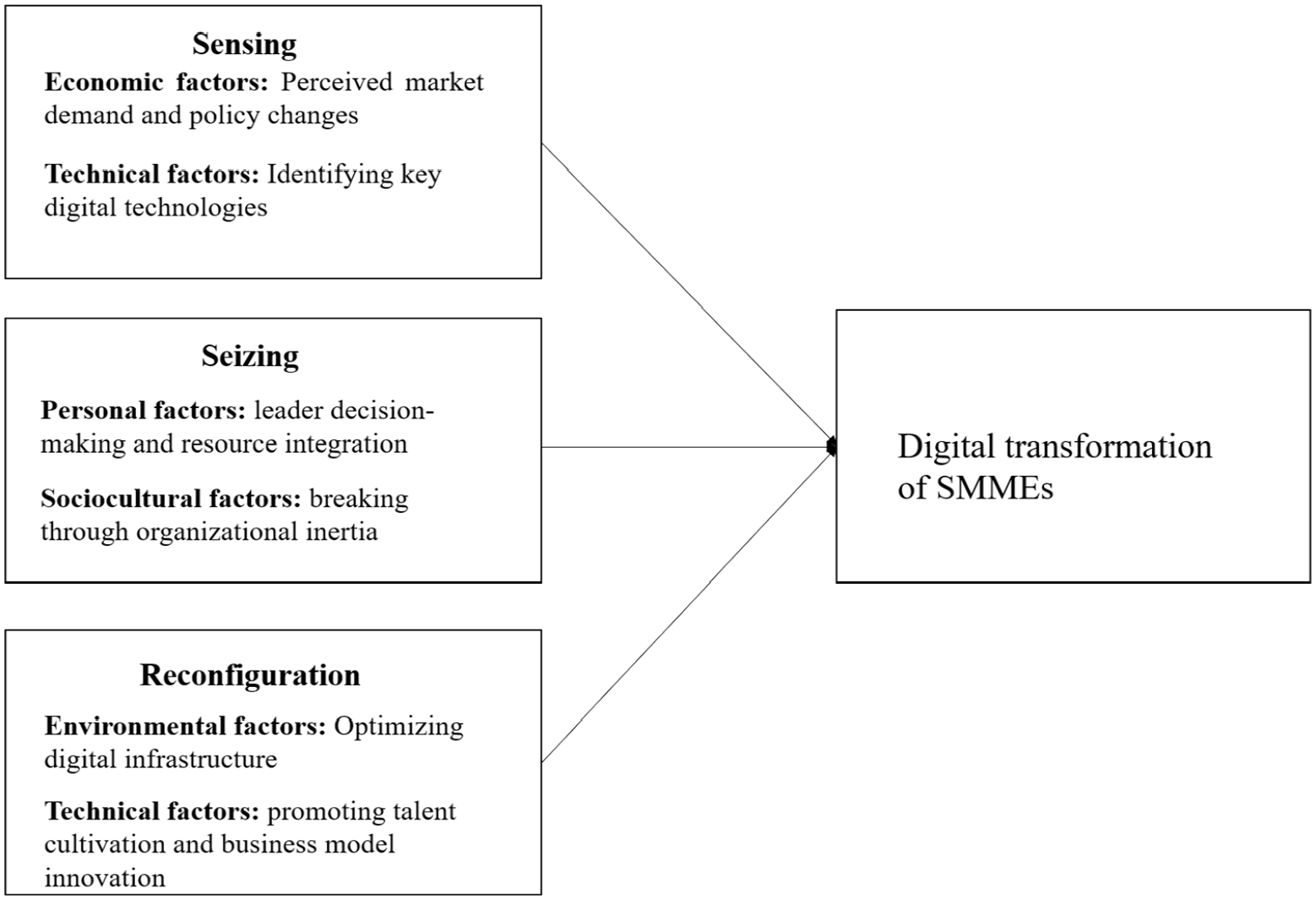
SMMEs’ digital transformation framework based on DCT.
The Dynamic Capabilities Theory provides comprehensive theoretical support for the digital transformation of SMMEs by systematically analyzing sensing, seizing, and reconfiguring capabilities, helping enterprises identify key factors and formulate effective strategies to cope with the complex market environment.
Economic Factors
In terms of economic factors, the state of economic development (EC1), capital investment (EC2), and governmental financial and fiscal policies (EC3) will drive the digital transformation of enterprises. Amidst the burgeoning digital economy, the resurgence of international trade protectionism, and the increasing economic pressures, businesses are confronted with the rising costs of labor, raw materials, and rents. These escalating expenses are significantly impacting the financial capabilities of enterprises, thus influencing their inclination and capacity to invest in digital technologies essential for driving digital transformation (Dossou et al., 2022; Nguyen et al., 2023). Moreover, digital transformation is recognized as a protracted and progressive endeavor. In this regard, capital investment (EC2) stands out as a critical factor influencing a firm’s ability to undertake digital initiatives. Enhanced capital investment typically signals a firm’s heightened dedication to digital transformation, which is often associated with the adoption of cutting-edge equipment and the utilization of sophisticated production technologies (Le Viet & Dang Quoc, 2023). Government financial and fiscal policies (EC3) aid the manufacturing industry by easing financing difficulties, which in turn fosters greater investment in digital transformation. Simultaneously, these policies also stimulate the industry to enhance its commitment to research and innovation, contributing significantly to the digital transformation of enterprises (Y. Luo et al., 2023).
Environmental Factors
Digital transformation significantly reshapes the organizational landscape of businesses. SMMEs, in particular, should seize this as a pivotal moment to actively pursue organizational restructuring and strategic alignment. By doing so, they can harness the full potential of digital transformation to drive innovation and growth within their organizations. SMMEs, with their smaller workforce, flatter organizational structures, and more cohesive goals, are well-positioned to effectively initiate digital strategy reforms. This advantage allows them to be agile in the face of change. Consequently, SMMEs must prioritize the development and implementation of comprehensive digital strategies to effectively support and drive their enterprise transformation (Shirwa et al., 2025). Franco et al. (2024) emphasized the importance of adopting a balanced approach tesource management in the context of digital transformation. They argued that enterprises should not only focus on developing new resources but also on effectively leveraging their existing ones. This dual strategy is key to harnessing the full potential of digital initiatives and ensuring sustainable growth. The core elements of digital infrastructure and ecosystems are stabilized by slow innovation and underpinned by user-oriented elements (Fu et al., 2024). Santarsiero et al. (2024) argued that business model innovation is the core driving force of digital transformation, while digital transformation provides the technological support and practical pathways for business model innovation. The two are complementary, jointly shaping the competitive advantage and sustainable development capabilities of enterprises. Such strategic innovation is pivotal for bolstering operational efficiency and elevating the overall performance of their organizations.
Socio-Cultural Factors
Social and cultural factors play a crucial role in the digital transformation process of SMMEs. They not only shape the internal values and behavioral norms of the enterprise, but also influence the way the enterprise interacts with the external environment. Internal organizational change (SC1) in enterprises reshapes management structures, optimizes workflows, and enhances employees’ digital literacy, thereby providing the necessary cultural foundation and implementation support for digital transformation. This accelerates the transformation process and improves its effectiveness (Guerra & Valle, 2024). From an internal organizational perspective, digital transformation helps overcome organizational inertia and achieve internal reshaping of organizational strategies, governance mechanisms, and more. G. Liu et al. (2024) revealed a theoretical framework for the triggering mechanism of digital transformation in manufacturing enterprises, which helps them identify key triggering scenarios and mechanisms for their digital transformation, and provides theoretical support for the digital strategic transformation of manufacturing enterprises. From the viewpoint of the external environment of enterprises, favorable institutions and policies will have a significant promotion effect on the digital transformation of SMMEs (Wang, 2023). National policy support such as “Made in China 2025,”“Guidelines for the Construction of National Intelligent Manufacturing Standard System,”“Twelfth Five-Year Plan for the Development of Intelligent Manufacturing Science and Technology,” and increased support for the manufacturing industry in terms of finance and taxation have made the focus and direction of the development of manufacturing industry intelligence clear, and have greatly increased the opportunities for the development of manufacturing industry intelligence.
Personal Factors
Leaders’ thinking concept (PE1) plays a decisive role in the implementation of digital transformation in SMMEs. In most firms, the level of managers’ awareness of digitization significantly affects the firms’ ability to conduct digital transformation exploration (Sharif et al., 2024). Those executives who have a digital transformation mindset and are more sensitive to the future trends of the market can accelerate the process of digital transformation in their firms (Alabdali et al., 2024). Meanwhile, under the impact of the digitalization wave, the way employees work (PE2) has to be changed accordingly to reduce information asymmetry between different business units and collaboratively solve cross-dimensional problems (Blanka et al., 2022). In light of the varying degrees of digitalization across industries, enterprises are tasked with fostering innovative thinking and capabilities (PE3). This involves aligning their digital transformation strategies with their unique circumstances and industry-specific characteristics. By drawing upon the best global practices and adapting them to their context, companies can design and implement digital transformation programs that are both innovative and tailored to their capabilities, ensuring a step-by-step approach that aligns with their existing strengths (Caputo et al., 2023).
Technical Factors
The scale of industrial data is growing exponentially, and how to utilize this massive amount of data is a challenge for every industry. Management technologies and capabilities (TE1), especially data processing capabilities, have become key factors for manufacturing companies to carry out digital transformation. The intrinsic momentum for enterprise development is significantly amplified by the capability to process data effectively. This capability is essential for the comprehensive application of digitalization throughout an organization (Luu, 2023). Emerging digital technologies like the Internet of Things (IoT) and Big Data are propelling manufacturing companies to modernize their networks and production equipment. They are also accelerating the incorporation of these technologies into their manufacturing processes, thereby enhancing their market resilience. Digital technology (TE2) has a significant positive contribution to the digital transformation of manufacturing firms (C. Liu et al., 2025). In addition, the digital transformation of manufacturing enterprises requires the promotion and implementation of high-quality talents, and the state of talent team building (TE3) is an important reflection of the quality level of the workforce (Guerra et al., 2023).
As seen in Table 1, this paper proposes an evaluation system that includes five dimensions and 15 indicators to evaluate the effectiveness of digital transformation in SMMEs.
Influencing Factors of Digital Transformation in SMMEs.

Research Method
The DANP (Decision-making Trial and Evaluation Laboratory—Analytical Network Process) method utilizes diagrams to illustrate the causal relationships between elements, and measures these relationships based on correlation values. Additionally, it assesses the relative importance of factors by their significant values. Other multi-criteria decision analysis techniques such as AHP (analytic hierarchy process) and TOPSIS (Technique for Order Preference by Similarity to an Ideal Solution) do not allow the determination of causal relationships. In addition, in terms of real-world scenarios, unpredictable environments may lead to imprecise human judgments, and the usual DANP techniques are not able to handle these uncertainties. In such cases, grey theory can be used to solve multi-attribute decision-making problems in uncertain environments. Deng (1982) proposed the grey number theory, which can deal with the errors caused by the subjectivity present in the expert judgment process. The advantage of grey theory over modal theory is that it can effectively combine with decision-making situations without requiring any robust fuzzy membership functions, thereby improving the accuracy of judgments. Therefore, this paper proposes a decision model that combines DANP with grey technology. The advantage of grey DANP is that it maintains the effectiveness of DEMATEL operations in analyzing systems with uncertain factor relationships, but also compensates for the limitation of the inability to quantify factor weights in the system (Du & Li, 2023; Esangbedo et al., 2021; Kumar & Anbanandam, 2020).
In this study, we conducted an expert questionnaire survey on the influencing factors of digital transformation of SMMEs, and use the Grey-DANP method to conduct empirical analysis. The Grey-DANP method faces limitations such as subjectivity in expert judgments, complexity in data processing, limited sample size, the static nature of the model, and difficulty in handling large-scale data. To address these issues, we adopted strategies such as using structured questionnaires, automated calculation tools, selecting representative experts, integrating case studies, and focusing on key factors. These measures effectively enhanced the reliability and validity of our research, making it a valuable tool for analyzing the key factors of digital transformation in SMMEs. The specific analysis steps are described as follows.
Grey-DEMATEL
Step 1: Establish the Evaluation System and Check the Consistency
Each expert in related fields is invited to compare the influential degree between any two indicators, as seen in Equation 1, where


Step 2: Convert to Grey Direct Relation Matrix
The initial set of k evaluation matrices is transformed into grey-scale for enhanced decision-making clarity. As seen in Table 2, the value of influential degree can be divided into the five levels: “no impact,”“very low impact,”“low impact,”“high impact,” and “very high impact.” As seen in Equation 3,

Grey Linguistic Scale.

Step 3: Get the Average Direct Grey Relation Matrix (ADRM)
The average direct grey relation matrix

Step 4: Normalize the Average Direct Grey Relation Matrix


where
Step 5: Obtain the Normalized Crisp Value



Step 6: Determine the Normalized Direct Crisp Relational Matrix
The initial relationship of indicators can be quantified using a normalized crisp matrix, which is calculated by the following Equation 11.

where M is a normalization factor and can be computed by Equation 12, and n represents the number of indicators:

Step 7: Get the Total Relation Matrix
The total relation matrix

where
Step 8: Calculate the Sum of Each Row and Column of the Total Relation Matrix T


where
Step 9: Calculate the Net effect (NE) and Total effect (TE) of Each Indicator
When i = j, we calculate the net effect and total effect according to Equations 16–17


where TE reflects the total effect given and received by indicator i, it indicates the importance of indicator i in the entire evaluation system. Similarity, NE shows the overall effect that indicator i contributes to the system.
Step 10: Plot the Influence Relationship Map (INRM)
First, the threshold value can be calculated by averaging the elements values in the total relation matrix T. Then, we compare the NE of each indicator with the threshold value. If NE is less than the threshold value, it is the result indicator of the system, and vice versa is the cause indicator. Lastly, the INRM can be plotted with the help of NE and TE.
Grey-DANP
Step 1. Get the Total Influence Matrix Tc
The matrix Tc is obtained by dividing the total relation matrix T, as seen in Equation 18. where Dj is the j-th dimension, and Cjnj is the n-th criterion under the j-th dimension.
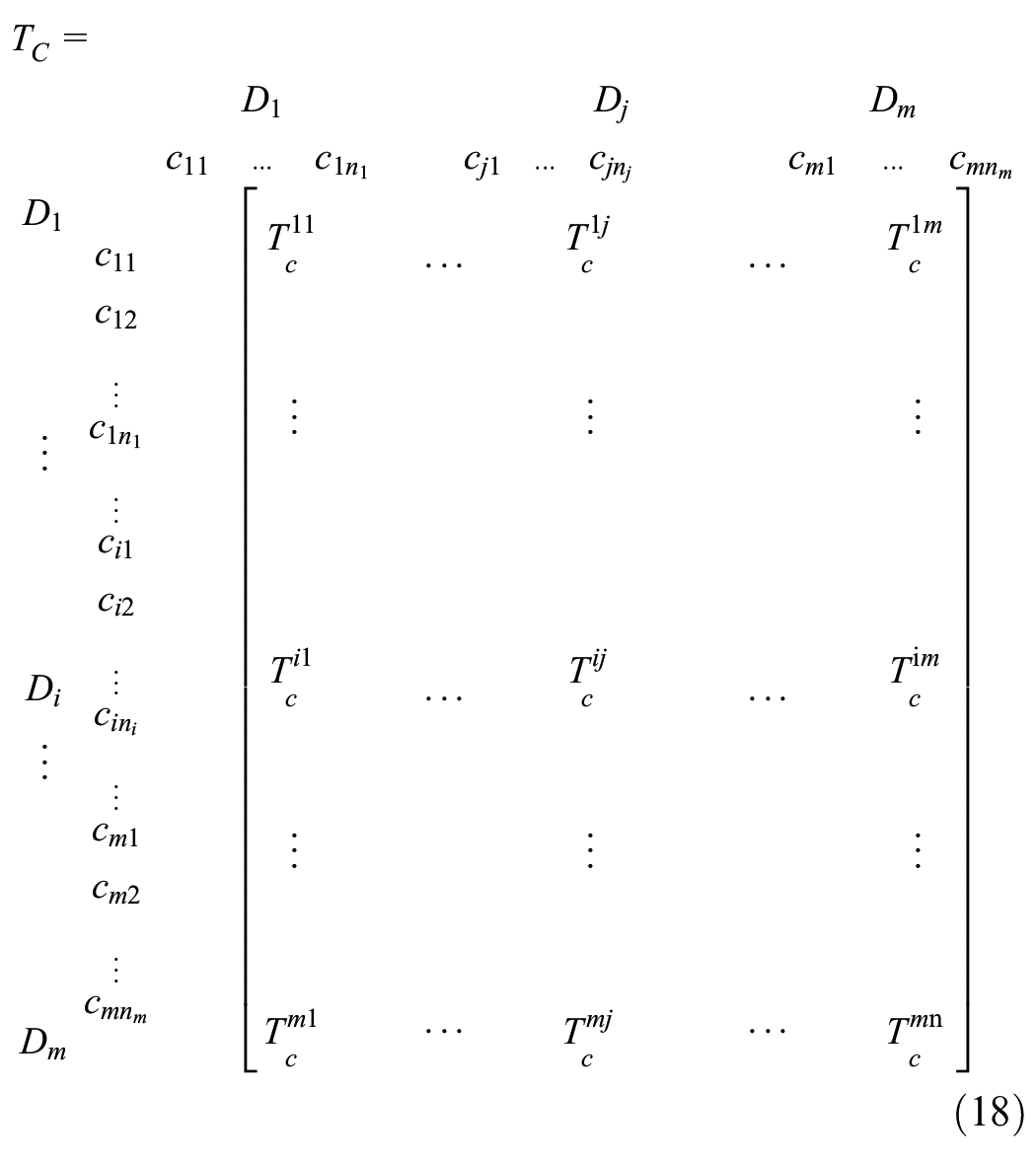
Normalization is performed, and


The unweighted supermatrix Wc can be obtained by transposing the normalized influence relation matrix
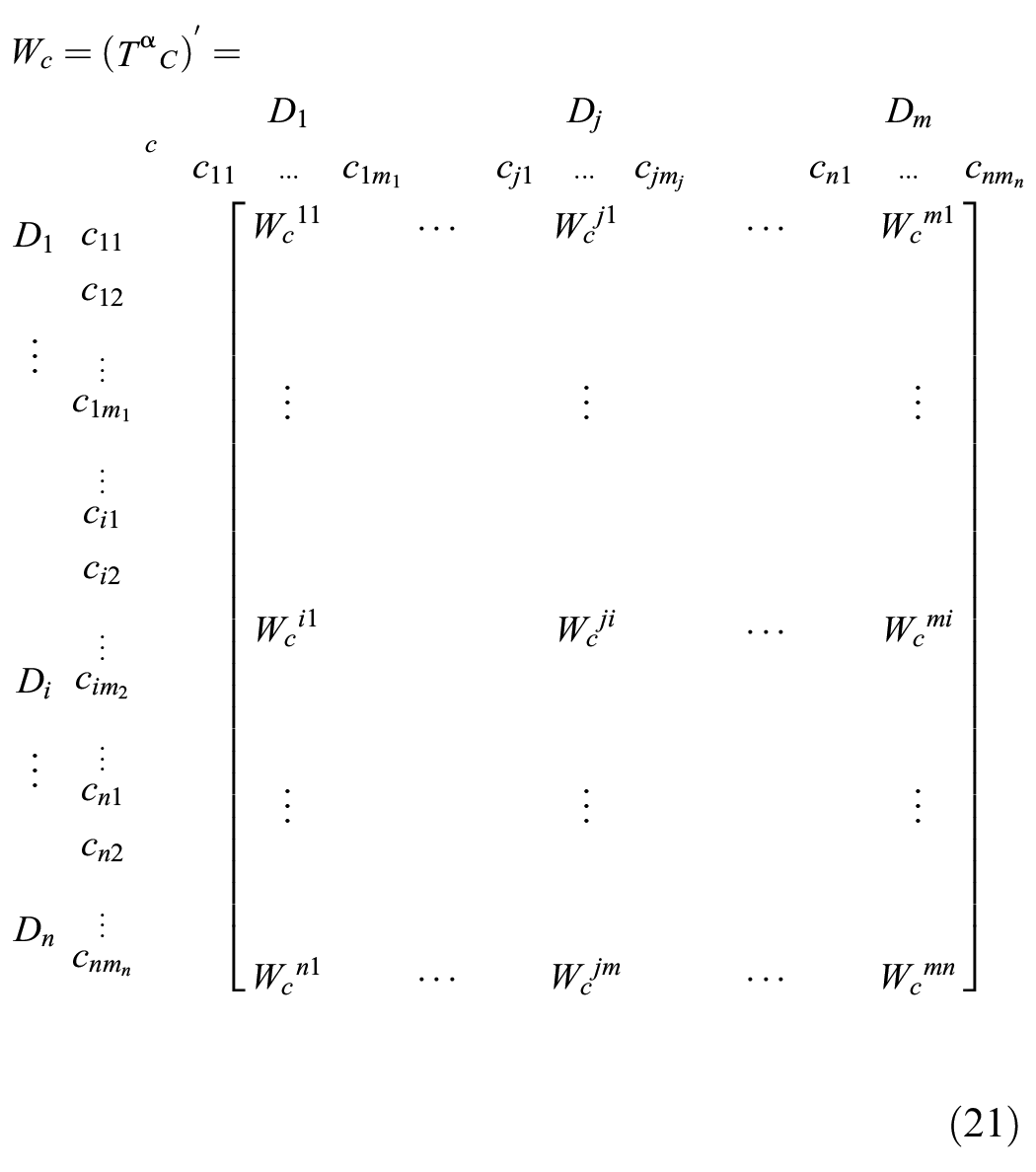
Step 2: Construct the Weighted Super-Matrix
The matrix

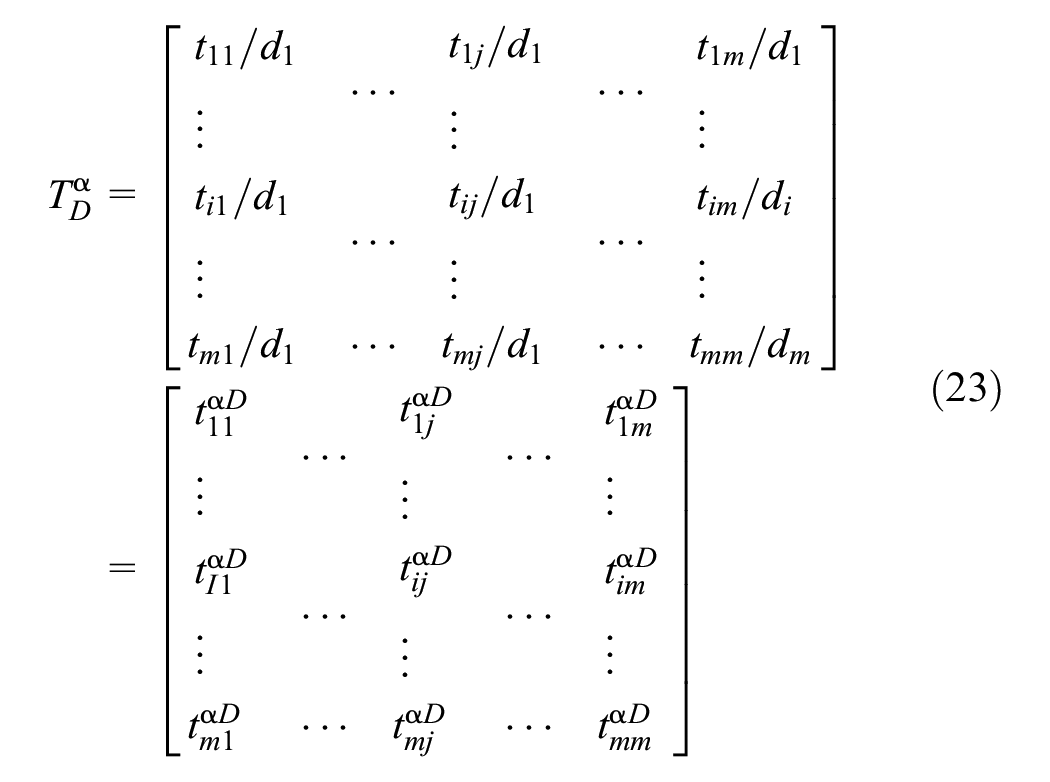

Step 3: Get the Weights of Each Criterion
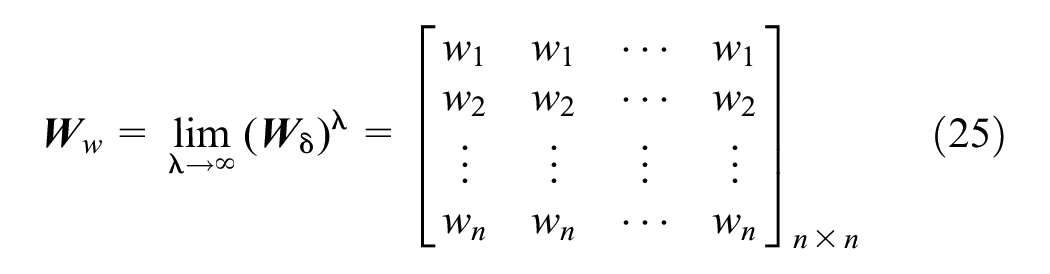
Limit the weighted super-matrix
Data Analysis
A total of 15 influencing factors for SMMEs to realize digital transformation were identified, as shown in Table 2. This section introduces the design of a questionnaire based on the influencing factors assessment system, and then how the Grey-DANP method was used to explore the causal association between the influencing factors for SMMEs. The influencing weights of the factors were then obtained to identify the key influencing factors for SMMEs to realize digital transformation.
Questionnaire Design and Collection
This paper provides an in-depth exploration of the manufacturing industry, incorporating the insights of prominent experts from various sectors within this field in China. It is imperative to emphasize that for the machinery manufacturing sector, the adoption of digital transformation has become a critical necessity, driven by China’s growing environmental awareness and stringent regulatory requirements. This shift is essential for ensuring sustainable development and maintaining a competitive edge in the market.
We identified 10 experts with specialized knowledge in the field of corporate digital transformation to assess the factors influencing the digital transformation of SMEs. To ensure the diversity and representativeness of the expert sample, we adopted a rigorous selection process based on the following criteria:
Expertise and Experience
Experts were selected based on their extensive experience and knowledge in the field of digital transformation, particularly within the context of SMMEs. We prioritized individuals with a minimum of 10 years of experience in either academia or industry, ensuring they had a deep understanding of the challenges and opportunities associated with digital transformation.
Diverse Backgrounds
To capture a wide range of perspectives, we included experts from various sectors, including academia, industry, and government. The academic experts were selected from well-known universities in China, specializing in fields such as industrial economics, business management, and information systems. Industry experts were chosen from different manufacturing sectors, including apparel, pharmaceuticals, and infrastructure, to ensure a broad representation of SMMEs.
Geographical Representation
Experts were selected from different regions of China to account for regional variations in economic development, policy support, and technological adoption. This helped us capture a more comprehensive view of the digital transformation landscape across the country.
Balanced Representation
We ensured a balanced representation of experts from both academia and industry. Of the 10 selected experts, five were university professors with significant research contributions in digital transformation, and the remaining five were practitioners from SMMEs who had firsthand experience of implementing digital transformation strategies.
Validation of Expertise
The expertise of each selected expert was validated through their published work, professional affiliations, and contributions to the field. We also conducted preliminary interviews to confirm their familiarity with the specific challenges faced by SMMEs in digital transformation.
By following these criteria, we ensured that the expert sample was not only diverse but also representative of the key stakeholders involved in the digital transformation of SMMEs. This approach allowed us to gather insights that are both theoretically grounded and practically relevant. A total of 63 questionnaires were distributed in this survey. The questionnaire data were primarily sourced from the China Knowledge Network, where we conducted keyword searches for “digital transformation” to identify relevant scholarly articles, and subsequently extracted the email addresses of experts from these publications. For SMMEs, we were fortunate to connect with practitioners in the digital transformation field through a mutual acquaintance. Subsequently, we created a WeChat group where the experts shared their professional affiliations and personal details. They dedicated approximately 45 min to complete the questionnaire and conduct the necessary searches. A total of 12 questionnaires were collected, and 10 valid questionnaires were selected based on the completeness of the information filled out by the experts as data references for this study. The questionnaire was distributed and collected over a period of 2 months, from February to April 2023.
As seen in Table 3, the group consists of five university professors (including the School of Economics and Management of Qingdao University of Science and Technology, the School of Education of Shanghai Normal University, the School of Management of Fudan University, the School of Information Management of Wuhan University and other well-known universities in China) and five SMME practitioners.
Background Information of Experts.

Data Processing
This section describes the causality of the factors influencing the realization of digital transformation in SMMEs. The steps involved in the grey DEMATEL are applicable to the above scenario as described in Section 3.
Firstly, experts were asked to compare the degree of influence between criteria in pairs, ranging from “no impact” (0) to “very high impact” (4), and to answer the sample questions for evaluation of the mutual influence between any two factors. As illustrated in Table 4, a value of 4 should be entered in the corresponding cell if the economic development status (EC1) exerts a very high influence on capital investment (EC2). Conversely, if the impact of capital investment on economic development status is low, a value of 2 should be recorded in the respective cell. It should be noted that this article assumes that the initial impact of the factor on itself is 0.
Example of the Factor Interdependence Evaluation Table.

The consistency gap of all questionnaires was 4.9% which, calculated according to Equation 2, is smaller than the benchmark of 5%. A 15 × 15 average initial direct influential matrix was acquired by averaging all experts’ opinions, as seen in Table 5. The average direct grey influential matrix could be obtained according to Equations 3–4, as seen in Table A1. The normalized direct grey influential matrix was calculated following Equations 5–7, as seen in Table A2. After that, a normalized direct crisp influential matrix could be obtained by Equations 8–12, as seen in Table 6. The total influential matrix
Initial Direct Influential Matrix.

Normalized Direct Crisp Influential Matrix.

Influence Among Each Dimension and Criterion.

Based on the total effect and net effect of each dimension and criterion, the influence relationship of dimensions and criteria under each dimension could be drawn, as seen in Figure 2.

Influential relationship map of dimensions and criteria.
This study applied the DANP method to obtain influence weights of each dimension and criterion. The unweighted super matrix could be calculated by applying Equations 18–21, and the weighted super matrix was generated by Equations 22–24. Then, the weights of each criterion could be obtained by Equation 25. The influential weights of each dimension and criterion can be seen in Table 8.
The Weights of Dimensions and Criteria.

Discussion
Comprehensive Analysis of Cause and Effect
As can be seen from Table 7, economic factor, personal factor and social culture are subject to cause category, while environmental factor and technological factor are categorized under effect. This relationship indicates that the economic factor, personal factor and social culture factor had an impact on the environment and technological factors. The total effect values from Table 7 indicate that the economic factor scored the highest (0.910). A high prominence score for the factor reflects its major influence. Consequently, the economic factor should be regarded as the key determinant for enhancing the digital transformation of SMMEs in developing countries. Similarity, net effect values showed that the economic factor, social culture factor and personal factor were classified into a cause group, while the environment factor and technological factor comprised an effect group. These findings show that the digital transformation efficiency of SMMEs can be enhanced through the provision of financial investment, the cultivation of talent, and adaptation to the local culture. Similar findings were reported by X. Chen and Yang (2024). Figure 2 represents the graphical causal relationship of five dimensions and the criteria under each dimension. The preceding examination determined that the poor economic situation of enterprises, chaotic business models, insufficient policy support from local governments, inadequate execution ability of enterprise leaders, and insufficient level of digital technology management are important reasons that hinder the digital transformation of SMMEs, and this also confirmed the viewpoint of Hassan et al. (2024).
Cause and Effect Analysis Under Each Dimension
Economic Factor
As shown in Figure 2, the economic dimension (0.910, 0.035) had the highest total and net effect, with economic development status (2.797, 0.174) being the primary driver. From the perspective of DCT, economic factors enable enterprises to sense opportunities for recovery and growth, particularly through post-pandemic fiscal policies that provide financial support, tax relief, and rent abatements (Y. Luo et al., 2023). These policies enhance firms’ ability to seize digital transformation opportunities by accumulating the necessary resources. Furthermore, government macro-control, including fiscal incentives and market supervision, helps enterprises mitigate risks, align resources, and make informed strategic decisions, ultimately bolstering their ability to reconfigure operations for efficiency and innovation (Peng & Tao, 2022).
Personal Factor
The personal factor category includes two cause indicators and one effect indicator (refer to Table 7). DCT highlights the role of leadership and employees in seizing digital transformation opportunities. Responsible leadership drives strategic decisions, while employee innovative thinking and flexible working methods enhance adaptability and operational efficiency (Wrede et al., 2020). By integrating digital transformation with business processes, leaders and employees collectively develop the ability to reconfigure workflows, improving profits, and ensuring long-term sustainability.
Social Culture
In the social culture dimension (Table 7), national policy support is the primary cause, while internal organizational change and trigger mechanisms fall into the effect group. From a dynamic capabilities perspective, policy support helps enterprises sense opportunities for transformation by diagnosing pain points and analyzing industry-specific challenges. These insights enable firms to seize opportunities for restructuring by reshaping organizational mechanisms and production processes. Breaking traditional logic and introducing disruptive innovations into management systems allow enterprises to reconfigure their structures, fostering long-term digital adaptability and innovation (Abiodun et al., 2023).
Environmental Factor
Dependency analysis identifies business models as a cause element, with strategic support and digital infrastructure in the effect group. Dynamic Capabilities Theory positions innovative business models as central to sensing market needs and driving the development of digital infrastructure. This infrastructure, in turn, supports seizing opportunities for process refinement and operational efficiency, leveraging technologies such as AI, big data, and cloud computing (Gurbaxani & Dunkle, 2019). The mutual reinforcement of infrastructure and business models enables firms to reconfigure resources and strategies, fostering agility and innovation in dynamic markets (Li et al., 2023).
Technological Factor
In the technological factor, management technology and capability influence digital technology and talent teams. From a dynamic capabilities perspective, management technology provides the structure to seize opportunities by enabling orderly digital transformation. Digital technologies such as cloud computing and big data allow firms to sense innovation opportunities, while skilled talent teams reconfigure these technologies into actionable strategies. This integrated effect strengthens innovation, enhances adaptability, and mitigates risks, ensuring sustainable development (Izzo et al., 2021).
Analysis of the Significance of Indicators
As shown in Table 8, the weights of the technology factor (20.9%), environment factor (20.8%) and economic factor (19.7%) indicate that they are the top three dimensions, while the weights of the personal factor (19.2%) and social culture (19.7%) are relatively low. The difference in weights comparing the five dimensions is not significant, which indicates that the influential factors constructed in this study are relatively stable. Talent team, internal organizational change, employee work style, digital infrastructure and business are the most important factors in each dimension, respectively.
Talent team (8.3%) has the highest weight, which suggests that bringing in digital transformation talents and training them is crucial in the process of digital transformation. In fact, digital talent is a key factor in the transformation and upgrading of SMMEs in developing countries (Lu et al., 2023). For example, in China, the shortage of digital talents has led to a serious imbalance between the number of available skilled professionals and the demand for their professional knowledge. This profit and loss further intensifies the fierce competition among companies to recruit top digital talents. Scuotto et al. (2021) noted that the implementation of digital transformation strategies by companies is inseparable from a substantial workforce of digital application talents. Cultivating such talents is essential for companies to adapt to the significant changes in industrial development brought about by modern digital technologies, and it is also an intrinsic requirement for the application of digital technology within enterprises. It is the intrinsic demand for the application of enterprise digital technology and the need to promote enterprise digital transformation and change.
Internal organizational change, accounting for 8.83% of the weight, is the second most influential factor, signifying that the structure of a company’s management organization plays a crucial role in facilitating its digital transformation efforts. The positive impact of digital transformation on corporate performance is amplified when a strong learning orientation is cultivated within the enterprise. A clear understanding of the learning of digital skills and management knowledge by enterprise employees can motivate all employees to work hard for the success of digital transformation, and promoting the practice of digital transformation can be translated into business results more quickly (Melanie Pfaff et al., 2023). In addition, the presence of top management in the digitalization building process is particularly critical. If senior management supports digital transformation, resistance to the integration process within the enterprise will be reduced, which is conducive to increasing investment in digital transformation. The ability of managers to constantly monitor market trends, perceive and seize technological opportunities and transform them into business opportunities is more important than ever, enabling the successful implementation of digital transformation through the proper allocation of resources (Jafari-Sadeghi et al., 2023).
The weight of the personal factor dimension is fifth in the ranking. Within this dimension, the employee work style holds the highest weight, accounting for 7.7%. The digital transformation of enterprises is not only a change in resource allocation, but also a change in employee work patterns. Enterprise employees need to quickly master the digital transformation tools of the enterprise and adapt to the digital development strategy of the enterprise. Under the digital working approach, the key to judging whether an employee can achieve work results lies in their ability to interact and collaborate with all those involved in the work (including customers and industry partners), as well as their capability to co-create new customer value with these three stakeholders. In other words, to achieve the effectiveness of work, employees of a company must not only complete their work tasks but also create new customer value through collaboration with industry partners.
Digital infrastructure and business models rank fourth and fifth respectively among the 15 criteria. Digital infrastructure is the key to corporate transformation, encompassing technologies such as networking, cloud computing, big data analytics, artificial intelligence, the Internet of Things (IoT), mobile technology, security systems, and integration platforms. These technologies enable data-driven decision-making, streamline operational processes, enhance customer experiences, foster innovation, improve security, and support remote work. They provide businesses with flexibility and scalability, helping them to quickly respond to market changes and enhance competitiveness. Business model transformation drives innovation, providing operational flexibility and cost efficiency for companies. A clear business model enables enterprises to adapt quickly to changes, enhance competitiveness, and achieve long-term success.
Theoretical Implications
First, this study constructed a comprehensive framework that integrates five key dimensions—economic, environmental, socio-cultural, personal, and technological—into the study of digital transformation in SMMEs. This framework addresses the gap in existing literature regarding the interaction of multiple factors, providing a theoretical foundation for a more systematic understanding of the drivers of digital transformation.
Second, this study revealed the causal relationships among various influencing factors and their weights by applying the Grey-DANP method. This dynamic analytical approach deepens the understanding of the mechanisms through which different factors influence the digital transformation process.
Third, traditional weight calculation methods such as AHP and BWM (Best Worst Method) generally assume that dimensions or criteria are mutually independent. This research method, however, assumes that there is interdependency between dimensions and criteria, making this assumption more aligned with practical situations. Furthermore, since the survey heavily relies on expert opinions, and experts often have different perspectives due to their varying knowledge backgrounds and positions, this research incorporated grey theory to overcome the aforementioned issues of information uncertainty and inconsistency.
Lastly, this study took Chinese SMMEs as a case study, and applied digital transformation theory to the context of developing countries, exploring the impact of policy support, resource constraints, and corporate culture on transformation, providing a new perspective for the application and development of digital transformation theory in the context of global diversity.
Managerial Implications
The five key factors influencing the success of digital transformation are economic factors, environmental factors, socio-cultural factors, personal factors, and technological factors, all of which are of great significance to a company’s transformation strategy. Economic factors (such as capital investment and fiscal policies) form an essential foundation for digital transformation, where a stable economic environment and financial support can significantly enhance a company’s transformation capabilities. Consistent with previous research, economic factors are emphasized as the foundation of digital transformation, and stable capital investment and favorable fiscal policies enable enterprises to adopt advanced technologies (David et al., 2025; Yeo & Jung, 2024). Environmental factors (such as digital infrastructure and business models) provide technological and strategic support for transformation, and companies need to optimize resource allocation to meet market demands. Socio-cultural factors emphasize internal organizational change and policy support, as digital transformation requires reshaping corporate culture and management models. This finding aligns with Wu et al. (2023), who argued that digital infrastructure can promote enterprise digital transformation. This study introduces a more integrated perspective by identifying social culture and personal factors as equally important dimensions. While most existing literature focuses on external drivers such as government support (L. Zhang & Zhang, 2025) or internal factors like technology adoption (Kim & Park, 2024), this study emphasized the interplay between organizational change, employee collaboration, and leadership mindset. For example, the findings highlight the role of internal organizational change and employee working styles, which are often overlooked in studies that prioritize technological and financial aspects. Personal factors (such as leadership mindset and employee working styles) are crucial for the implementation of transformation, which can be enhanced through innovative thinking and collaboration to improve efficiency; the study Eitan and Gazit (2024) echoed this viewpoint. Technological factors (such as technological capabilities and digital technologies) are the core driving force of transformation, requiring prioritized investment in key technologies and the development of talent teams. Similarly, the importance of technological factors, such as digital infrastructure and talent development, is also consistent with studies that emphasize their critical role in driving innovation and operational efficiency (C. Chen & Xue, 2025). These factors interact with each other to jointly promote the sustainable digital development of enterprises.
During the process of digital transformation, the government can play a key role by implementing a series of measures to promote and support the transformation of enterprises. First, the government can formulate clear policies and guidelines to provide direction and a framework for corporate transformation. Second, the government can enhance the construction of digital infrastructure, such as 5G networks and cloud computing platforms, to provide enterprises with the necessary technical support. Furthermore, the government can promote the integration and sharing of data resources by building a unified national government big data system, strengthening the convergence and sharing of data, and promoting the orderly and legal flow of data. The government can also provide financial support and policy incentives, such as through special funds and subsidy policies, to reduce the cost and barriers for enterprises to transform digitally.
In addition, the government can support the development of platform economies by enhancing the innovation capabilities of platform enterprises, providing more market opportunities and development space for enterprises. For state-owned enterprises and small and medium-sized enterprises, the government can issue notices and guidelines to accelerate their digital transformation, providing transformation paths and methods, and creating exemplary models of industry digital transformation. At the same time, the government can optimize the development environment for transformation from aspects such as infrastructure, assessment systems, development atmosphere, financial and tax policies, and talent introduction, to accelerate the digital transformation process of enterprises.
Due to the small scale, weak risk resistance, single business model, and poor financing capabilities of small and medium-sized manufacturing enterprises, the difficulty of their digital transformation is increased. Enterprises need to focus on the following three key areas: (i) Break through the digital bottleneck in the industrial chain and enhance the digital capabilities of SMMEs. These enterprises can choose to start with relatively simple or less investment-intensive links based on their actual development situation, introduce digital technology, and digitize individual industrial links. To more effectively reduce costs and improve data analysis and management, the degree of digitization of each link is enhanced. (ii) Cultivate digital talent. The construction of talent teams is the cornerstone of enterprise digital transformation. Nowadays, a growing number of enterprises are realizing that the main obstacle to digital transformation is the lack of sufficient talent support. Enterprises should increase digital and intelligent transformation training for employees and cultivate new blue-collar workers in the digital field. (iii) Enhance the innovation capability of transformation projects. Enterprises must quickly adapt to new changes, technologies, and trends to accelerate digital transformation. In this process, they should actively integrate various resources, improve project planning capabilities, and achieve collaborative innovation based on data. To effectively implement digital transformation, companies should adopt a phased approach, starting with low-risk pilot projects before scaling up. They should establish a dedicated cross-functional team led by senior management to ensure smooth communication and resource allocation, implement comprehensive digital training programs for employees and collaborate with external institutions to attract talent, and develop quantifiable performance metrics to assess transformation outcomes and establish early warning mechanisms to address risks promptly.
SMMEs often face financial constraints and high costs associated with advanced digital technologies, making large-scale transformation challenging. Internal resistance from employees due to changes in organizational culture and operations must be managed through effective change strategies. Data privacy and security are critical concerns when adopting new technologies. Additionally, uncertainties in the external environment, such as policy changes and rapid technological advancements, can impact the success of digital transformation efforts.
Conclusion
SMMEs play a crucial role in the national economy and are also the key to global competition. How to survive and gain competitive advantages in the digital economy era is an unavoidable topic for many enterprises. This study conducted an empirical analysis of the key factors influencing the digital transformation of SMMEs, using the Grey-DANP method. It constructed an evaluation system for the digital transformation of SMMEs in five dimensions: economic factors, environmental factors, socio-cultural factors, personal factors, and technological factors. The causal relationship between the dimensions and their secondary indicators was proposed, and the weights of the influencing factors were calculated to visualize the most critical influencing factors.
The findings from this study on Chinese SMMEs offer valuable insights for other developing countries and industries, although their applicability depends on contextual factors. The key factors identified—economic, environmental, social-cultural, personal, and technological—are broadly relevant to SMMEs in many developing nations. These enterprises often face similar challenges such as limited financial resources, inadequate digital infrastructure, and a shortage of skilled talent. The importance of government support, leadership mindset, and organizational change is also applicable, as they are common drivers in resource-constrained settings. However, variations in economic structures, cultural norms, and technological adoption levels may affect the relative importance of these factors. For example, in countries with less developed digital infrastructure, technological factors might be more critical. Additionally, industries such as agriculture or services might prioritize different aspects compared to manufacturing-focused SMMEs. Therefore, while the findings provide a useful framework, they should be adapted to account for regional and sectoral differences. Future research could validate these results in other contexts to enhance generalizability.
Cultural and economic factors significantly impact the implementation of digital transformation in SMMEs. Cultural differences, such as leadership styles, employee adaptability, and organizational traditions, affect how digital transformation is approached and prioritized. Economic conditions, including financial resources, market competition, and digital infrastructure, also influence the feasibility and strategies of digital adoption. The findings from Chinese SMMEs provide a useful framework, but need to be adapted to account for these contextual variations. Future research should explore how these factors mediate the impact of the identified dimensions to enhance adaptability across diverse settings.
The main limitation of this study is that it relies on judgmental data from experts, and there is a certain degree of subjectivity in the data. This paper combines grey theory to reduce the research bias caused by this subjective factor, but there are still deficiencies. Future research should expand the sample scope and incorporate cross-industry cases to comprehensively validate the model’s effectiveness using both qualitative and quantitative methods. Additionally, the integration of big data and artificial intelligence technologies should be introduced to reduce expert subjectivity. The synergistic effects between technological application, organizational change, and policy support should also be explored to provide more precise theoretical foundations for the digital transformation of small- and medium-sized manufacturing enterprises.
Footnotes
Appendix
Normalized Direct Grey Influential Matrix.

| Criteria | EC1 | EC2 | EC3 | EN1 | EN2 | EN3 | SC1 | SC2 | SC3 | PE1 | PE2 | PE3 | TE1 | TE2 | TE3 | |||||||||||||||
|---|---|---|---|---|---|---|---|---|---|---|---|---|---|---|---|---|---|---|---|---|---|---|---|---|---|---|---|---|---|---|
| EC1 | 0.00 | 0.00 | 0.38 | 0.50 | 0.12 | 0.15 | 0.15 | 0.23 | 0.42 | 0.46 | 0.08 | 0.15 | 0.38 | 0.46 | 0.31 | 0.42 | 0.27 | 0.31 | 0.19 | 0.31 | 0.38 | 0.50 | 0.19 | 0.15 | 0.27 | 0.27 | 0.50 | 0.62 | 0.62 | 0.73 |
| EC2 | 0.35 | 0.42 | 0.00 | 0.00 | 0.38 | 0.42 | 0.27 | 0.38 | 0.12 | 0.19 | 0.35 | 0.42 | 0.38 | 0.42 | 0.27 | 0.27 | 0.31 | 0.35 | 0.38 | 0.42 | 0.35 | 0.38 | 0.15 | 0.19 | 0.27 | 0.31 | 0.23 | 0.31 | 0.35 | 0.38 |
| EC3 | 0.42 | 0.50 | 0.35 | 0.42 | 0.00 | 0.00 | 0.46 | 0.50 | 0.31 | 0.35 | 0.27 | 0.38 | 0.38 | 0.42 | 0.42 | 0.50 | 0.08 | 0.08 | 0.35 | 0.42 | 0.38 | 0.46 | 0.38 | 0.38 | 0.31 | 0.35 | 0.31 | 0.35 | 0.46 | 0.54 |
| EN1 | 0.35 | 0.46 | 0.23 | 0.31 | 0.12 | 0.19 | 0.00 | 0.00 | 0.15 | 0.23 | 0.38 | 0.50 | 0.50 | 0.62 | 0.19 | 0.31 | 0.08 | 0.08 | 0.23 | 0.27 | 0.27 | 0.35 | 0.35 | 0.42 | 0.27 | 0.27 | 0.35 | 0.42 | 0.19 | 0.23 |
| EN2 | 0.15 | 0.19 | 0.04 | 0.04 | 0.35 | 0.42 | 0.19 | 0.23 | 0.00 | 0.00 | 0.23 | 0.35 | 0.19 | 0.31 | 0.31 | 0.42 | 0.15 | 0.15 | 0.15 | 0.19 | 0.27 | 0.35 | 0.23 | 0.27 | 0.12 | 0.15 | 0.00 | 0.00 | 0.15 | 0.12 |
| EN3 | 0.19 | 0.23 | 0.27 | 0.35 | 0.23 | 0.27 | 0.42 | 0.54 | 0.38 | 0.46 | 0.00 | 0.00 | 0.35 | 0.46 | 0.19 | 0.27 | 0.12 | 0.19 | 0.38 | 0.46 | 0.46 | 0.54 | 0.46 | 0.50 | 0.35 | 0.35 | 0.23 | 0.31 | 0.31 | 0.38 |
| SC1 | 0.31 | 0.42 | 0.23 | 0.27 | 0.27 | 0.35 | 0.35 | 0.46 | 0.27 | 0.35 | 0.19 | 0.31 | 0.00 | 0.00 | 0.23 | 0.35 | 0.19 | 0.27 | 0.19 | 0.27 | 0.35 | 0.38 | 0.15 | 0.19 | 0.23 | 0.31 | 0.19 | 0.23 | 0.19 | 0.23 |
| SC2 | 0.19 | 0.27 | 0.23 | 0.27 | 0.38 | 0.50 | 0.46 | 0.58 | 0.31 | 0.31 | 0.38 | 0.42 | 0.31 | 0.42 | 0.00 | 0.00 | 0.00 | 0.27 | 0.12 | 0.08 | 0.38 | 0.46 | 0.23 | 0.27 | 0.23 | 0.27 | 0.42 | 0.54 | 0.35 | 0.31 |
| SC3 | 0.42 | 0.46 | 0.42 | 0.54 | 0.31 | 0.31 | 0.50 | 0.62 | 0.35 | 0.42 | 0.50 | 0.62 | 0.35 | 0.38 | 0.31 | 0.42 | −0.12 | 0.00 | 0.35 | 0.38 | 0.46 | 0.54 | 0.31 | 0.38 | 0.50 | 0.58 | 0.19 | 0.27 | 0.42 | 0.50 |
| PE1 | 0.42 | 0.54 | 0.27 | 0.35 | 0.23 | 0.27 | 0.35 | 0.38 | 0.35 | 0.35 | 0.42 | 0.50 | 0.23 | 0.31 | 0.31 | 0.38 | 0.27 | 0.27 | 0.00 | 0.00 | 0.31 | 0.35 | 0.08 | 0.08 | 0.19 | 0.23 | 0.12 | 0.15 | 0.50 | 0.62 |
| PE2 | 0.19 | 0.31 | 0.42 | 0.54 | 0.31 | 0.35 | 0.08 | 0.15 | 0.35 | 0.42 | 0.35 | 0.42 | 0.31 | 0.42 | 0.35 | 0.42 | 0.15 | 0.12 | 0.15 | 0.19 | 0.00 | 0.00 | 0.31 | 0.35 | 0.19 | 0.27 | 0.35 | 0.35 | 0.19 | 0.23 |
| PE3 | 0.50 | 0.62 | 0.23 | 0.27 | 0.35 | 0.35 | 0.27 | 0.38 | 0.54 | 0.65 | 0.27 | 0.35 | 0.27 | 0.38 | 0.46 | 0.54 | 0.19 | 0.31 | 0.27 | 0.27 | 0.42 | 0.54 | 0.00 | 0.00 | 0.46 | 0.54 | 0.38 | 0.46 | 0.31 | 0.42 |
| TE1 | 0.35 | 0.42 | 0.19 | 0.15 | 0.27 | 0.31 | 0.54 | 0.62 | 0.54 | 0.65 | 0.35 | 0.46 | 0.38 | 0.46 | 0.31 | 0.42 | 0.12 | 0.15 | 0.35 | 0.42 | 0.42 | 0.54 | 0.12 | 0.19 | 0.00 | 0.00 | 0.42 | 0.54 | 0.23 | 0.31 |
| TE2 | 0.27 | 0.31 | 0.23 | 0.31 | 0.31 | 0.38 | 0.12 | 0.15 | 0.12 | 0.04 | 0.35 | 0.42 | 0.38 | 0.46 | 0.38 | 0.50 | 0.15 | 0.19 | 0.15 | 0.23 | 0.35 | 0.38 | 0.23 | 0.31 | 0.35 | 0.42 | 0.00 | 0.00 | 0.15 | 0.04 |
| TE3 | 0.38 | 0.50 | 0.23 | 0.27 | 0.38 | 0.46 | 0.50 | 0.54 | 0.35 | 0.38 | 0.38 | 0.50 | 0.54 | 0.62 | 0.38 | 0.46 | 0.19 | 0.23 | 0.23 | 0.35 | 0.58 | 0.65 | 0.15 | 0.15 | 0.19 | 0.27 | 0.38 | 0.38 | 0.00 | 0.00 |

Funding
The author(s) disclosed receipt of the following financial support for the research, authorship, and/or publication of this article: The authors are extremely grateful to the editorial team’s valuable comments for improving the quality of this article. This research was supported by the Research project of the Science and Technology Innovation Think Tank of Fujian Association of Science and Technology (FJKX-2023XKB014). Fujian Provincial Philosophy and Social Science Fund Project (FJ2024B113).
Declaration of Conflicting Interests
The author(s) declared no potential conflicts of interest with respect to the research, authorship, and/or publication of this article.
Data Availability Statement
The data are available from the corresponding author on reasonable request.