



Abstract
As China’s higher education embraces internationalization, the Hainan Free Trade Port is gaining recognition as a desirable destination for international students. This study, aiming to enhance the quality of international education and to meet the diverse needs of these students in Hainan, conducted qualitative interviews with 21 international students. Employing Grounded Theory and a systematic three-tier coding process, the research revealed the students’ specific challenges within academic pursuits, social interactions, accommodations, and employment prospects. The findings informed the development of targeted recommendations designed to enhance the support framework for international students, with the broader aim of cultivating a more enriched and inclusive educational environment in Hainan.
Plain language summary
China is opening its doors to international students, and the Hainan Free Trade Port is becoming a popular choice for those looking to study abroad. This research wanted to find out what life is like for these students and how to make it better. We talked to 21 students from different countries to hear their stories. We used a method called Grounded Theory to carefully listen and understand their experiences. We learned about the problems they face, like studying, making friends, finding a place to live, and looking for jobs. From what we heard, we came up with some ideas to help make things easier for international students in Hainan. We hope these suggestions will make their time studying here more enjoyable and help Hainan become a place where everyone feels welcome and supported
Introduction
At the forefront of China’s reform and opening-up policy, the Hainan Free Trade Port (Hainan FTP) is rapidly establishing itself as a key international education hub. The “Overall Plan for the Construction of Hainan Free Trade Port (Central Committee of CPC, & State Council of the PRC, 2020)” and the “Law of the People’s Republic of China on Hainan Free Trade Port (State Council of the PRC, 2021)” have laid a robust foundation for educational opportunities that are unmatched. Coupled with the “Interim Regulations for Overseas Higher Education Institutions in Hainan Free Trade Port (Ministry of Education of the PRC, 2023),” these policies are specifically crafted to attract and regulate overseas higher education institutions and make a significant stride in China’s pursuit of educational internationalization.
The province’s educational landscape is currently enriched by renowned universities such as Hainan University (2023), Hainan Normal University (2024), Hainan Medical University (2024), and Hainan College of Economics and Business (2024). with an international student body of about 350, 300, 660, and 160 respectively in the 2023 to 2024 academic year. The province is also strategically expanding its educational reach through key development zones, including the Lingshui Li'an International Education Innovation Pilot Zone (2023), projected to grow its international student population from 1,000 by 2025 to 3,000 by 2035 These initiatives are part of Hainan’s broader goal to establish itself as a global educational exchange hub.
The integration of international students into Hainan’s educational landscape plays a crucial role, offering both personal and communal benefits. For students, it’s a pathway to enhanced academic performance, social participation (Duan, 2023), psychological well-being (Bethel et al., 2020), and the cultivation of a global perspective and intercultural communication skills—key assets in our globalized society (Tannous et al., 2022). For Hainan, fostering international student integration is a strategic move that elevates the global standing and competitiveness of its educational institutions. The cultural diversity that international students bring enriches the local community, stimulates cultural exchange (Lantz-Deaton, 2017), and positions these students as catalysts for international collaboration and understanding (Resch & Amorim, 2021).
Despite these promising developments, a review of the literature points to a research gap concerning the specific challenges for international students in rapidly developing educational hubs in emerging economies, such as the Hainan FTP in China. This study seeks to bridge this gap by employing a qualitative research design, grounded in the experiences and perspectives of international students in Hainan. Through semi-structured interviews and a grounded theory approach, the research provides qualitative insights that are not confined to the regional context but serve as a valuable lens for examining broader issues of international student integration and support systems across various educational landscapes. In doing so, the study is particularly timely in the context of increasing globalization and the pursuit of educational equity.
Literature Review
According to related literature, international students in higher education institutions encounter a multitude of challenges. A systematic review examines literature since 2000, summarizing the main challenges confronting international students within top sending and receiving countries. These challenges range from the selection of universities, intermediary services, and language barriers before going abroad, to the adaptation to new environments, cultural shocks, and language difficulties upon arrival, further extending to post-graduation concerns like visa problems, career development, and reverse culture shock (Khanal & Gaulee, 2019). Another review of 175 peer-reviewed articles from 2002 to 2022 reveals a consistent pattern of academic and sociocultural difficulties experienced by international students, with a notable increase in research attention toward psychological challenges post-2013 (Oduwaye et al., 2023). These comprehensive overviews highlight the multifaceted nature of the journey international students undertake.
Among all challenges, academic and sociocultural issues stand out as particularly significant. For instance, Lugman's (2022) study of Indonesian postgraduates in London exposed substantial difficulties in cultural adjustment within an academic context, including struggles with academic English, a lack of critical thinking skills, hesitancy in classroom participation, and the complexities of the hierarchical teacher-student relationship. Similarly, Ahrari et al. (2019), Daudpota et al. (2021), and Sheng et al. (2022) have shed light on the range of academic hurdles and sociocultural barriers that international students in Malaysia, Pakistan and China navigate, from language proficiency to the complexities of educational systems in host countries, etc.
Psychological challenges are also prevalent concerns for international students. In Kudaibergenov’s (2023) study conducted within South Korea’s international education context, the self-formation of a student was investigated, highlighting the agency of international students in crafting their lives and identities amidst personal-versus-contextual challenges, and emphasizing the dynamic nature of identity formation and the critical need to support student agency for self-change and development. Sung’s (2022) research parallels these findings, revealing the strategic agency of Burmese international students in Hong Kong. Furthermore, Hasnain and Hajek (2022) indicates that to address the lack of belonging and security of international students, and to enhance their overseas experience, it is imperative to ensure their access to information and communication technology.
In the realm of employment, studies such as Cao’s (2022) research in Japan have identified key determinants influencing international students’ employment prospects. In a study by Kudaibergenov and Lee (2022), professional identity tensions among international preservice teachers in South Korea were examined, revealing unique challenges associated with institutional, discursive, and regulatory forces that hinder their access to employment despite advanced qualifications. Kingminghae and Lin (2023), in their study of Thai students in China, discovered that perceived social support from host-country nationals enhances the value and career intentions of short-term studying abroad students, while adaptation difficulties negatively impact their willingness to work in the host country.
Beyond the aforementioned challenges, international students also grapple with a variety of other issues, such as housing, socio-cultural activity facilities, relations with institutions, health insurance and leisure activities (Güneş & Aydar, 2019), financial strain, job uncertainty, cultural and religious practice challenges, and adapting to local cuisines, etc (Alasmari, 2023; Pal, 2022).
Research Questions
The study seeks answers to two main questions: First, what are the key difficulties, obstacles and problems that international students encounter during their educational experience in the Hainan Free Trade Port? Second, what practical strategies and solutions can be implemented to alleviate and overcome these challenges for international students in the Hainan Free Trade Port?
Methodology
Research Subjects
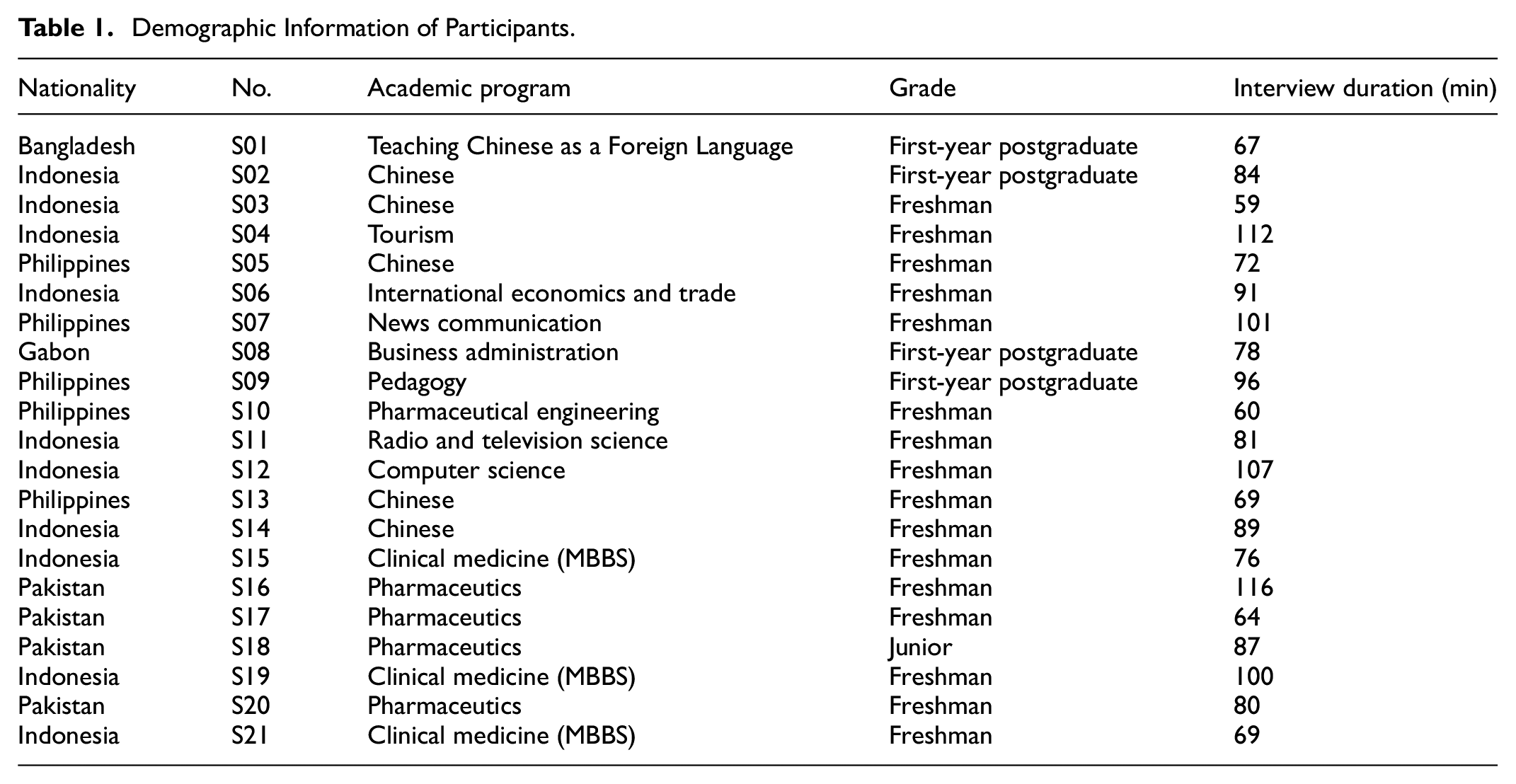
The study focused on international students studying in the Hainan Free Trade Port. Participants were recruited through various channels, including university departments, student associations, online platforms and snowball sampling. A total of 21 participants were included, reflecting a diverse range of nationalities, universities, and majors. The demographic information of the participants is detailed in Table 1.
Demographic Information of Participants.
Research Design
Employing a qualitative research design, the study aimed to explore the experiences and perspectives of the subjects. Semi-structured interviews were chosen as the primary method of data collection, allowing for an in-depth exploration of the research questions. The research sample was selected using purposive sampling, targeting data saturation as the criterion for sample size determination.
Data Collection
Individual interviews, conducted face-to-face, via telephone, or online, were utilized to gather detailed information and insights from participants. Each interview lasted approximately 1 to 2 hr, with Mandarin being the main language of communication, supplemented by English when necessary. An interview guide with open-ended questions ensured consistency and comparability across interviews. All interviews were audio-recorded with consent and transcribed for analysis.
Data Analysis
Thematic analysis was the chosen method for analyzing the interview data. The transcripts were coded and categorized into themes and sub-themes to identify patterns and key findings. To ensure intercoder reliability and reduce potential bias, the coding process was conducted by a team of researchers with specialized backgrounds. Specifically, the initial coding was independently performed by two researchers, one with a specialization in Education and the other in EFL. Following the initial phase, discrepancies in the coding were identified and discussed in a collaborative manner by a senior scholar with expertise in both Education and Intercultural Communication, who facilitated the negotiation process. Through this structured collaboration, consensus was reached on the final coding scheme, thereby enhancing the credibility and integrity of the thematic analysis.
The study adopted a Grounded Theory approach, a preferred qualitative research method that aimed to develop theories firmly rooted in empirical data. It involved a systematic process of data collection, coding, and analysis to generate concepts and theories that emerge from the data itself, thereby allowing researchers to expand the theoretical scope of their studies (Chun et al., 2019). The study employed a three-tier coding approach: (1) Open coding categorized data based on surface-level meanings without delving into deeper interpretations and abstractions. (2) Building upon open coding, codes with similar meanings or relevance were clustered, forming axial codes that established connections among various categories. (3) Subsequent to axial coding, more abstract concepts and theories were distilled through analysis. After integrating and explaining the inherent logic between coding categories, the most essential ones were selected as selective codes to precisely describe research outcomes.
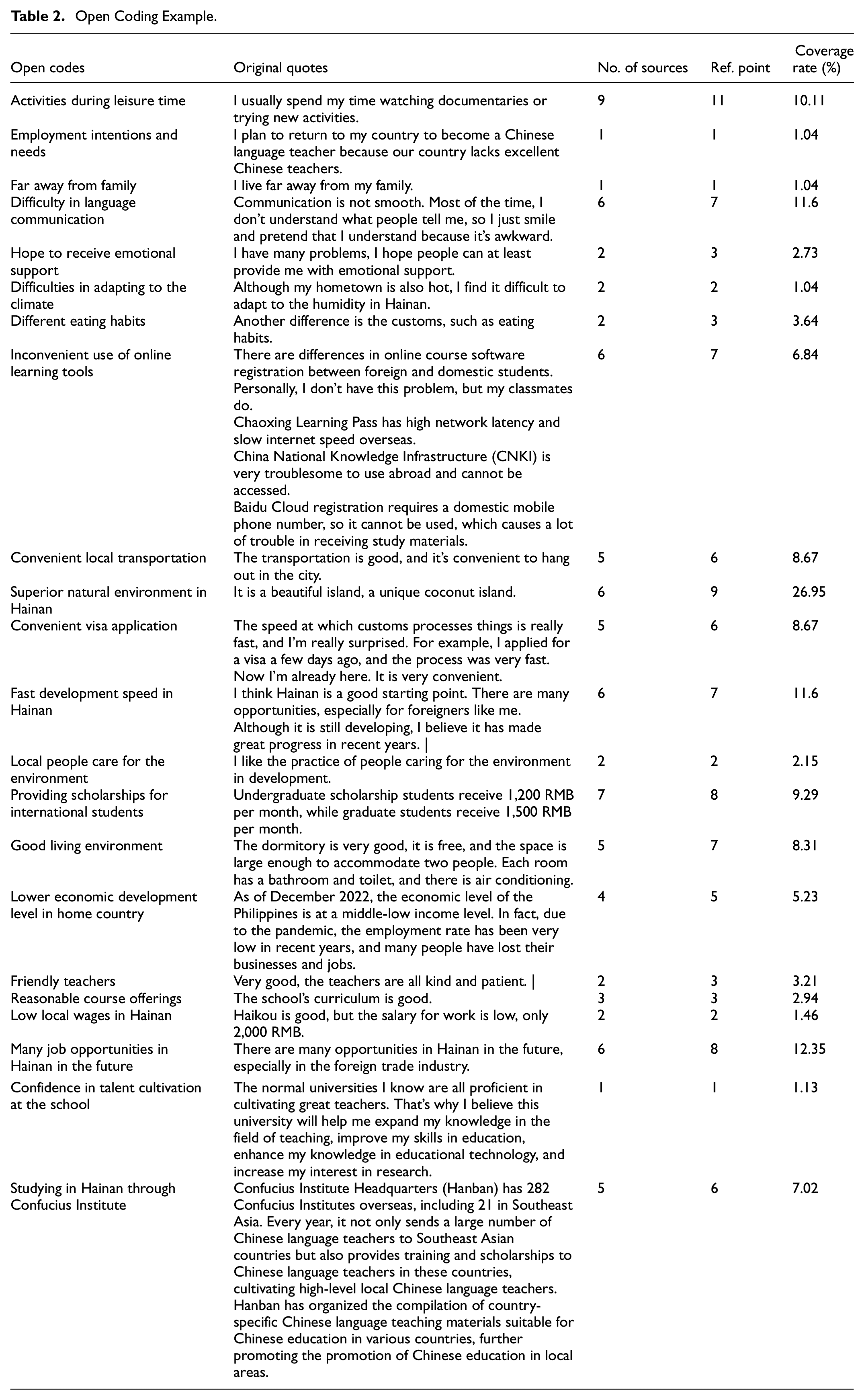
In the Open Coding stage, the researchers strove to maintain an open mindset to avoid the influence of preconceptions and biases from relevant studies. This approach necessitated the deconstruction of collected data, endowing it with novel conceptualizations, and reassembling these new concepts in innovative ways. An exemplar of open coding of the research is provided below, see Table 2.
Open Coding Example.
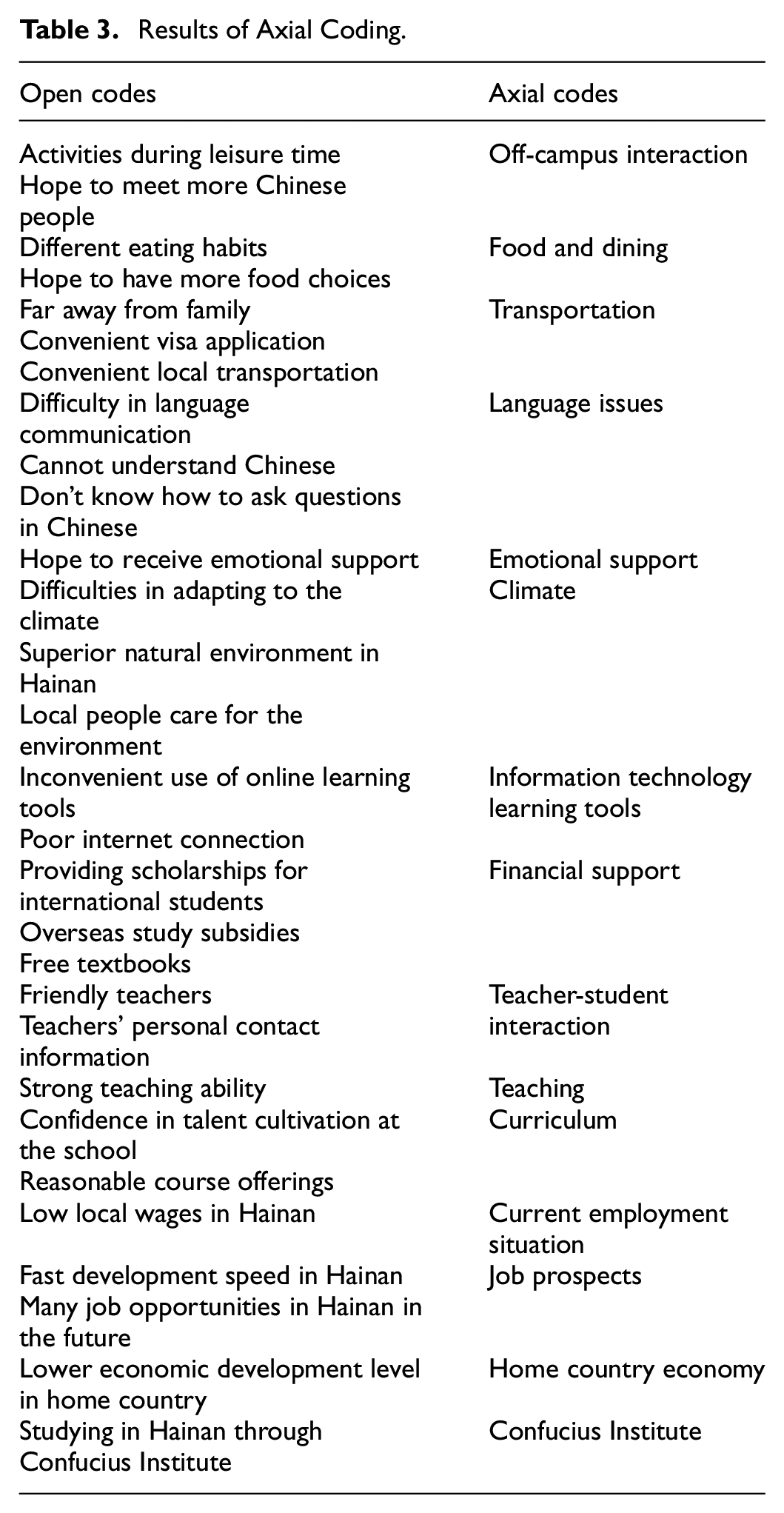
When conducting Axial Coding, the researchers further refined and deepened the classification and labeling of data, tried to elaborate on the categories established through open coding, breaking them down and recombining them to highlight more specific and correlated connections among different components. Table 3 presents the results of axial coding.
Results of Axial Coding.
During the Selective coding period, the researchers selected core categories from all the identified conceptual categories. In comparison to other categories, the core category had a dominant role and could encompass a wide range of research findings within a broader theoretical framework. The results of axial and selective coding for this study are shown in Table 4.
Results of Axial and Selective Coding.

Discussion
Integrating the analysis of the previous sections, the following discussion presents the research findings from four dimensions: learning, social interaction, accommodation, and employment.
Learning
In terms of their educational goals, international students coming to Hainan reflected their aspirations to receive a higher quality education. The majority of students expressed satisfaction with the support provided by the university, including scholarships and free access to course materials. Specifically, nearly all respondents indicated a need for financial support. Many international students mentioned that one of the primary reasons for them to study in Hainan was the scholarships offered either by the host institution or their home country, which helped alleviate financial pressures when living abroad. A student from the Philippines (S05) remarked, “In fact, my biggest concern before coming to Hainan was how to afford my college education. But now that I am provided with a scholarship, I no longer worry about it very much.” Given the relatively high cost of studying in Hainan for international students, they hope that the host institution can provide more types of scholarships, part-time work opportunities, and vocational training programs to further alleviate their financial stress, allowing them to concentrate more on their studies and research. It becomes clear that the financial challenges faced by international students in Hainan mirror those encountered by their counterparts studying in Western nations (Larbi et al., 2022). Economic pressures are a universal issue for students pursuing education across borders, as highlighted in recent research including contributions by Choudaha (2020).
International students also encountered challenges related to information technology during their academic studies. For instance, a student from Indonesia (S02) pointed out disparities in the registration procedures between domestic and international versions of educational software. The use of a Chinese phone number for registration was particularly inconvenient for international students when they were residing in their home countries temporarily. Additionally, some learning resources and tools are not as readily accessible and usable here as they are in their home countries. Furthermore, some websites may require payment for access when not connected to the campus network. All of these factors impact the learning experiences as well as the daily lives and of international students. The barriers related to information technology that international students face are supported by findings of Zhao and Mawhinney (2015).
However, Lu et al. (2007) argues that some of the obstacles international students previously faced, such as technological difficulties, may have decreased, possibly due to the younger generation’s familiarity with information technology. Furthermore, because of the changes in COVID-19 pandemic control policies, international students are already able to resume offline studies in China, reducing their reliance on online learning platforms. Consequently, it is conceivable that the technological challenges that were once a significant concern have diminished in importance.
While the primary objective of international students studying in Hainan is to attain a superior education, they frequently confront challenges associated with the educational system and academic culture throughout their research endeavors. It is worth noting, however, that Alavi and Mansor (2011) suggest that social and recreational issues are the most prevalent in international students’ learning experience, whereas this study highlights concerns related to finance and technology of learning as being more prominent.
Social Interaction
The interpersonal relationships of international students in Hainan can be primarily categorized into three distinct dimensions: teacher-student connections, university companionship, and interactions outside the university. The interaction between students and teachers is one of the most vital connections that international students seek during their study abroad experiences. Teachers play a pivotal role and hold direct cresponsibilities for students in certain aspects, and many students have formed positive connections with their teachers, who are “warm,”“friendly,” and “helpful” in nature. Most respondents felt free to seek help from their mentors or teaching assistants after class using social media applications, like WeChat, for inquiries, informal conversations, guidance and support. A student from Indonesia (S03) remarked, “Very good, the teachers are all kind and patient; they excel as educators. When we make mistakes, they correct us, and when we face difficulties, they readily provide help. This is quite different from the teachers in Indonesia; the teachers here are excellent!” These observations corresponded with the findings of previous studies that teachers, as significant “social agents,” offered substantial support to international students (Hajar, 2018).
Strong relationships with students from the same university aid international students in various aspects of their academic, personal, and cross-cultural learning experiences. The participates appreciated the university’s frequently organizing diverse social events aimed at nurturing closer bonds among students. One student from Indonesia (S03) shared insights into his usual activities, stating, “Back in Indonesia, I am a singer, so I used to perform quite often. However, there aren’t many opportunities here, so I usually just go to the mall with my Indonesian friends or play volleyball with my Filipino friends, or participate in some campus events.” Similarly, a student from the Philippines (S07) noted, “I often chat and dine with my Filipino friends. That makes life here much easier.” Apparently, interactions with school mates often involve participating in extracurricular activities, which help them gain emotional support and serve as gateways to leisure activities that offered a counterbalance to their academic obligations, thereby contributing to a more balanced university life. Still, some students expressed a desire for more bonding with local students, and hope that international students could be paired with a “study buddy” who could help them better immerse themselves in the local culture, integrate into their new lives, and acquire additional knowledge and skills.
In the realm of friendships outside the university, the participants demonstrated a strong eagerness to expand their social circles beyond the boundaries of the university. They sought to forge connections with local residents, aspiring for a better sense of belonging and empathy and mutual understanding between cultures. The participants’ wish to have more social connections outside the university is reasonable according to the findings of previous studies (Chuah & Singh, 2016; Li, 2015). Scholarly investigations have consistently demonstrated that friendships, particularly those with local students, contribute to heightened happiness and overall well-being among international students (Li, 2015; Weiley et al., 2008). These interactions offer social, psychological, and academic benefits, mitigating academic and social challenges, while simultaneously enhancing language proficiency and adaptability in everyday life. Research about the cultural adaptation among international students from Asia has found that the more international contacts students establish in their new country, the better their psychological adaptation becomes. Students with more extensive international connections also tend to have a stronger sense of identity with their traditional culture and their university (Kashima & Loh, 2006). Additionally, Hendrickson et al. (2011), through an online survey of international students in Hawaii, discovered that international students with diverse friendships in the host country tend to be more satisfied and feel a greater sense of social connection.
Friendship has long been recognized as a significant contributor to emotional well-being and the adjustment of sojourners, making the interaction patterns of international students a focal point of research. Nevertheless, for most interviewees, establishing friendships with local residents presented a complex challenge. The majority of participants identified language communication as a prominent challenge when interacting in Hainan. Upon arriving here, international students are often confronted with an entirely new linguistic environment. For instance, a student from Pakistan (S16) recounted his struggles in communicating with local teachers: “Most teachers are excellent, but some are not good in English, requiring us to invest extra effort in those subjects. Given this situation, I have no alternative. I’m making efforts to learn pinyin and new vocabulary. While we do have Chinese language classes, I find it challenging to keep pace with the curriculum. Nonetheless, I still aspire to learn Chinese.” Furthermore, language communication difficulties also surface in various daily life scenarios, such as grocery shopping or ordering food in the cafeteria. An interviewee admitted that he primarily socialize with Indonesian friends due to communication barriers. Similarly, another participant from the Philippines (S07) said, “It’s challenging for me to interact with people from other countries, especially Chinese people. But in reality, I wish I had Chinese friends so I could hang out with them. However, I’m quite shy and hesitant to approach them.”
Throughout their study abroad experience, international students often wrestled with language barriers, which had an impact not only on their everyday interactions but also extended into academic settings. These findings were consistent with previous research, emphasizing the widespread prevalence of language barriers among international students (Al-Mohsen & Al-Sawi, 2015; Elturki et al., 2019). Gomes (2015) study of 47 Asian students in Melbourne revealed that only five participants claimed that half or more of their friends were Australians. These challenges may be attributed to factors such as language barriers, cultural disparities, and potential racial biases. Nevertheless, this study suggested that the ability to foster meaningful relationships may hinge significantly on the positive attitudes and receptiveness of teachers, classmates, and other individuals within the academic community.
Accommodation
Two critical factors that profoundly influence international students’ quality of life abroad wre accommodation and dietary culture. Concerning accommodation, many international students showed their gratitude for a safe, clean, and comfortable living environment provided by the universities. Such conditions enabled them to seamlessly integrate their academic endeavors and relaxation. As one interviewee noted, “The dormitory is very good, it is free, and the space is large enough to accommodate two people. Each room has a bathroom and toilet, and there is air conditioning” (S13). The availability of top-tier accommodation and comprehensive basic amenities significantly contributed to the overall satisfaction of international students.
In terms of dietary culture, international students in China encounter unique challenges owing to their distinct dietary preferences and expectations, which may not always align with traditional Chinese culinary practices and food offerings. Several interviewees acknowledged disparities between Chinese and home country cuisines. Through these interviews, it became evident that international students’ dietary needs primarily revolve around the diversity of food choices, the disparities of taste and culture, and the ambiance and hygiene standards of the dining environment. However, they also expressed their commitment to embracing and adapting to Chinese dietary culture. In sum, international students studying in China had dietary preferences that encompassed a wider range of food choices, the adjustment to taste and cultural differences, as well as a keen eye for evaluating the overall dining environment and hygiene—findings that aligned with research by Shi et al. (2021).
Moreover, it’s worth noting that the “convenient visa application” is considered an essential aspect of the broader transportation and mobility framework, profoundly affecting students’ decisions and experiences in their international travel and study abroad. “The speed at which customs processes things is really fast, and I’m really surprised,” one participant remarked. “For example, I applied for a visa a few days ago, and the process was very fast. Now I’m already here. It is very convenient” (S08). Such efficiency is not merely logistical; it sets the tone for the entire Hainan experience, reflecting the Free Trade Port’s openness and acting as a gateway to the region’s opportunities. A streamlined visa application reduces barriers to entry, akin to efficient transportation, and is crucial for understanding the factors that influence international students’ mobility and accessibility in the region.
Employment
In the context of employment prospects, a noteworthy observation emerges from the interviews with the participants. Most of them articulated their post-graduation intentions to seek immediate employment, set against the backdrop of China’s rise as the world’s second-largest economy and its growing importance in global economic and trade dynamics. Consequently, a growing array of international job opportunities opened up for international students studying in China. Several interviewees acknowledged the increasing level of internationalization in Hainan, which has fueled their desire to explore employment opportunities within China after graduation, especially when their home countries did not offer promising career paths. For example, a student from Bangladesh (S01) shared his employment journey in Hainan, stating, “HaiKou is an attractive place to live, although the salaries tend to be on the lower side. However, working in foreign trade can offer a more lucrative income. Consequently, I am juggling my academic pursuits while working for a foreign trade company.” Clearly, the promise of employment prospects played a crucial role in motivating international students. However, it’s worth noting that the research complements this viewpoint by emphasizing the impact of international students’ mobility on their career paths. The research findings further substantiated this viewpoint through a longitudinal experimental approach (Fombona et al., 2013).
Simultaneously, there was a prevailing sense of concern regarding their chances of finding suitable employment. It was crucial to acknowledge the formidable challenges posed by China’s competitive job market. The intensified competition necessitated that international students possess distinctive advantages to effectively differentiate themselves and thrive within the employment sphere. In fact, a study conducted in 2014 indicated that the majority of international students were not inclined to seek employment or start businesses in China (Akhtar & Chen, 2014), and the COVID-9 pandemic has potentially accelerated the trend of students returning to their home countries (Jiao, 2023). However, the present study suggested that there was a shift in students’ attitudes, which may have been associated with the unique policies of Hainan. The evolving economic landscape and the growing international presence in Hainan FPT could also be contributing to this observed shift in student perspectives.
Strategies and Suggestions
In response to the practical challenges faced by international students in Hainan and to meet their multifaceted needs (RQ 1), the study put forward recommendations and measures within four key domains with the objective of addressing the concerns identified in this research (RQ 2).
Learning
Offer Diversified Courses
The quality of courses offered to international students plays a critical role in determining the overall quality of their education. Universities, while following national guidelines, can enhance their offerings by conducting surveys to identify student interests. Zeng (2021) suggests prioritizing practical skills and local characteristics in course design. Strategically, new courses should align with institutional strengths and industry needs, ensuring sustainability and relevance. An advisory committee with industry input could further align curriculum with job market demands, providing students with immediately applicable skills. Additionally, incorporating modules on local culture, history, and language can enrich students’ understanding of their host environment. By these measures, universities can offer a diverse curriculum that is both student-focused and industry-relevant, without compromising on quality or manageability.
Enhance Academic Guidance
Universities should encourage collaborative efforts among local teachers, students, and institutions to create a positive learning environment. This includes guiding international students to embrace challenges encountered during their learning journey and offering academic support to kindle their motivation and drive (Yu et al., 2023). Institutions should align teaching activities with the curriculum requirements, potentially incorporating mixed-class settings involving both local and international students to promote collaborative learning and cultural exchange. Such integration not only enriches the learning experience but also fosters a sense of community and belonging. Establishing international study groups or mentorship programs can facilitate academic exchange and guidance to assist international students in overcoming academic hurdles. Universities should continuously refine their academic advising services for international students, promoting the development of more inclusive and supportive learning communities, thus aiding both local and international students in enhancing their academic experiences and capabilities.
Provide Customized Information Technology Support
Tailored information technology support plans should be designed to address the distinct needs of students from different countries. A study of Habib et al. (2014), which calls for more user-centric design and services that accommodate diverse cultures, reveals that international students face design hurdles with ICT tools in academia, calling for more user-centric services that accommodate diverse cultures. This strategy includes providing professional guidance on selecting online course study and platforms, assisting international students in formulating personalized study plans.
Implement Multimodal Teaching Approaches
Tailored multimodal teaching methods should be devised to accommodate the cultural backgrounds and learning styles of international students from different countries. Such strategies may encompass the adoption of strategies such as flipped classrooms, micro-lessons, or the incorporation of interactive discussions and practical activities into classroom teaching. Online Learning resources should also be introduced to international students. By utilizing online educational platforms and tools, universities can help international students become familiar with commonly-used educational resources and tools in China, such as CNKI (China National Knowledge Infrastructure), Chinese MOOCs (Massive Open Online Courses), and Chaoxing Learning. The initiative aims to cultivate students’ self-directed learning abilities.
These measures are intended to enhance the learning experiences and academic achievements of international students in Hainan, thereby addressing the challenges they encounter in the realm of education.
Social Interactions
To facilitate international students in assimilating with the local society, particularly in overcoming the widespread challenge of language barriers, higher education institutions in Hainan province can implement a series of beneficial measures. These measures are aimed at enhancing international students’ language proficiency, fit into the local culture and promoting the quality of their social lives.
Innovating Chinese Language Courses
To effectively support international students in their language learning journey, higher education institutions should craft a comprehensive suite of Chinese language courses. These courses should be designed to accommodate varying levels of proficiency and should cover all critical aspects of language learning, including grammar, pronunciation, reading, writing, and oral communication.
To enhance the engagement and effectiveness of Chinese language courses, educational institutions should adopt a range of situational, task-based or problem-based learning methods that immerse students in realistic cross-cultural scenarios (S. Liu et al., 2022). Incorporating advanced technologies such as AR/VR and AI-powered conversation simulations can provide interactive and context-rich learning experiences, enabling students to practice language skills in a virtual environment that mimics real-life situations, from ordering food at a restaurant to navigating public transportation, thereby offering practical and culturally relevant language practice. In addition, Aubrey and Tsang (2022) propose viewing international students as valuable contributors to the institution’s internationalization and as generators of new knowledge. To leverage the contributions of international students, create opportunities for them to share their own cultural knowledge, such as hosting international culture days or contributing to a multicultural newsletter. This mindset fosters an inclusive learning environment where international students can thrive and contribute to the diversity and richness of the academic community.
Implement Chinese Proficiency Testing and Personalized Assessment
The application of Recognition of Prior Learning (RPL) principles indicates that the recognition and utilization of learners’ existing knowledge is crucial for promoting the learners’ language acquisition (Tuomainen, 2018). Therefore, universities can conduct regular Chinese proficiency tests to assess international students’ language levels. Based on the test results, personalized language learning plans can be developed for each student, focusing on areas that require improvement. For international students with weaker language skills, specialized language enhancement courses can be offered in small-class settings, allowing students to interact more effectively with teachers and peers and receive tailored language support.
Enhance the Language Proficiency and Teaching Competencies of Faculty
It is suggested that universities choose qualified international instructors to teach and keep enhancing their teaching competence. Instructors can guide students in better preparing for and reviewing study materials, introduce more collaborative learning activities, and emphasize activities with stronger practical components. Such an approach encourages international students to interact and communicate more with native speakers, engage in cooperative learning, and participate more effectively in communication with teachers and peers, thereby integrating more seamlessly into the learning environment.
Integrate International Students in the Local Community
Higher education institutions can organize various activities that integrate international students into the local culture. Activities such as language corners, group outings, international food festivals, cultural exhibitions, traditional holiday celebrations, and cultural workshops, allowing them to delve deeper into the local culture and traditions, cultivate mutual understanding between international and domestic students, and improve their language proficiency. Collaborating with student organizations, universities are also encouraged to orchestrate events like basketball matches and art competitions, so as to promote interaction among students from diverse cultural backgrounds. Engaging in these activities helps international students develop a sense of belonging allowing them to become part of the community, and acquire values, attitudes, skills, and knowledge necessary for effective participation in society (Weiss et al., 2004).
Pay Attention to Mental Well-being of International Students
In addition to language and culture education, universities should also prioritize the mental well-being of international students, as emphasized in a study in Australia (Marangell & Baik, 2022). Providing psychological counseling and social support is essential. Set up a mentorship program where international students are matched with faculty or peer mentors for regular check-ins. These mentors can offer guidance on academic work, cultural adjustment, and accessing campus resources. Utilize online platforms for easy scheduling and communication, and ensure the program includes cultural orientation to help students adapt quickly to the new environment.
These measures will contribute to international students’ better integration into the local community, the overcoming language barriers, the improvement of their language proficiency, and the boost of their confidence in social interactions. As a result, they will be better equipped to excel academically and enjoy a rewarding learning experience.
Accommodation and Daily Life
In the aspect of accommodation, universities can implement a series of measures to provide comprehensive support for international students to assimilate into a novel cultural setting, such as a campus farmers’ market, cooking classes, online nutrition education, and financial literacy would address student resource management limitations (Abu et al., 2022).
Diversify Dietary Options
To meet the diverse dietary requirements of international students, universities and relevant institutions can offer a broader range of food choices. These selections should take into account the students’ nationalities, religious beliefs, taste preferences and dietary habits. For instance, providing halal food to accommodate the religious needs of Muslim students or offering vegetarian and vegan choices to meet the preferences of those with specific dietary requirements.
Enhance Restaurant Hygiene Standards
Universities and food service providers should prioritize the hygiene conditions of dining establishments and implement rigorous food safety management measures. This includes regular inspections and maintenance of food handling facilities to ensure that the quality and hygiene of the food meet with relevant standards. Through these measures, international students can dine with greater confidence and reduce concerns about food safety.
Provide Dietary Advice and Support
Universities can establish dedicated dietary counseling centers to offer international students advice on health and diet. Such guidance may include recommendations on nutritionally balanced diets and strategies to meet individual needs. Furthermore, recipes and recommendations, cooking class are also considered feasible in assisting students in developing healthier eating plans (Abu et al., 2022).
Offer More Comprehensive Immigration Services
The Hainan Provincial Government is actively advancing a crucial initiative aimed at streamlining immigration procedures for international students, a policy that has already proven beneficial to the international student population according to the findings of this study. To further optimize these benefits, the government and related parties should make ongoing efforts like enhanced support services for international students, which encompass transparent visa application processes, residence permits, and other entry and renewal procedures. To facilitate this initiative, the government and educational institutions should establish assistance centers and online portals that guide students through the necessary documentation and procedures, ensuring timely access to information and assistance throughout the immigration process. Exploring innovative solutions such as electronic visas and residence permits can further simplify these procedures, reducing administrative burdens.
Promote Hainan’s Global Education Appeal
To further incentivize international students to choose Hainan Free Trade Port as their preferred destination for higher education, the government, as well as the universities and the whole society must create a more attractive, open, and hospitable environment. Close collaboration should be established among the government, educational institutions, and relevant parties to promote Hainan as an enticing destination for overseas study through targeted marketing campaigns and partnerships with international educational institutions. Implementing scholarship programs and tuition waivers specifically for international students will make studying in Hainan more financially appealing. Improve information accessibility and ensure all relevant information for international students, from admission criteria to living expenses, is readily available in multiple languages on a dedicated online portal. In this way, the Hainan FTP demonstrates its commitment to becoming a global educational leader.
These initiatives not only alleviate administrative complexities but also contribute to the creation of a vibrant, diverse, and inclusive academic community. As Hainan progresses toward greater internationalization, international students are poised to benefit from these comprehensive and pragmatic steps, ensuring that their academic and living experiences in Hainan are both enriching and transformative.
Employment
Nearly all interviewed individuals conveyed that their decision to pursue higher education in Hainan is primarily driven by a desire for personal growth and a clear vision for their future careers. In order to facilitate international students in mastering the professional skills more efficiently, universities can adopt a multifaceted approach.
Align Professional Courses with Employment Prospects
It is imperative to design professional courses in accordance with the demands of the industry and society. Currently in Hainan, there is a lack of competitive advantage in terms of salary compared to other regions in China. Consequently, students are commonly concerned that they may face challenges in securing employment opportunities that match their expected salary levels upon graduation. This disconnect can be addressed by conducting comprehensive employer research, thereby orienting academic programs toward employment prospects. Universities should introduce specialized courses tailored to international students’ cultural and academic backgrounds and employment requirements, including programs in finance, computer science, architecture, and others. It will also benefit the students if the universities collaborate with industry experts, and combine the theoretical knowledge and practical applications. Additionally, leveraging alumni networks for mentorship and initiating entrepreneurship guidance courses and competitions can also inspire international students to embrace innovation and entrepreneurship actively.
Promote Employment Internship Programs
While previous research indicates that international students encounter obstacles in securing work placements, including accessing opportunities, complying with visa regulations, and addressing cultural and proficiency disparities (Goodwin & Mbah, 2017), the legal framework in Hainan FTP offers distinct advantages. Hainan’s universities possess an advantage in the close collaboration among universities, industry, and research centers. The international students should be provided with opportunities to participate in undergraduate and postgraduate projects, especially those that require hands-on practices and intercultural background. These collaborative projects foster the growth of their cross-cultural communication and interpersonal skills with international colleagues and clients, while also enhancing their real-world problem-solving capabilities, ultimately boosting their competitiveness in the job market.
Establish Career Development Centers for International Students
To offer comprehensive support to international students, universities should consider the establishment of specialized career development centers. These centers function as one-stop hubs for career planning and employment services, offering assistance with resume crafting, interview preparation, and career guidance. It play a significant role in ensuring that international students possess the essential skills and self-assurance required for successful job searches. Furthermore, these centers can create an on-campus professional network by developing an online platform that connects international students, alumni, businesses, and recruitment agencies. This network not only opens doors to internships and job opportunities for international students but also facilitates interaction between career mentors and students. In addition, targeted career exhibitions and job fairs should be organized on a regular basis to empower international students to engage directly with potential employers, remain informed about the latest job market trends, and seize career opportunities.
Conclusion
Our study provided an in-depth look at the experiences of international students in Hainan, a region witnessing a rise in the quality of higher education and increasing international engagement. Despite the growing appeal of Hainan as a study destination, international students faced challenges in cross-cultural adaptation due to differences in social development and cultural backgrounds.
Through an interview-based methodology and a grounded theory approach, we identified the diverse needs of international students in Hainan, which included educational necessities, sociocultural demands, accommodation requirements, and vocational aspirations. In response to these identified needs, our study presented targeted recommendations aimed at enhancing the learning, living, socializing, and employment opportunities for international students in Hainan. They were designed to cultivate a more inclusive educational and social atmosphere in Hainan, thereby enriching the overall experience for international students.
While this study provided an in-depth exploration of the experiences of international students in Hainan, it acknowledged certain limitations. The modest sample size may have limited the generalizability of our findings. The qualitative nature of this research, while offering rich insights, did not capture the wider demographic variations that could have been revealed through quantitative methods.
To build upon our findings, future research could incorporate quantitative research methods to offer a broader perspective on the issues at hand and further validate our qualitative insights. Longitudinal studies could also provide valuable data on the long-term outcomes of international students’ experiences in Hainan and their ongoing contributions to the region’s multicultural landscape.
Footnotes
Acknowledgements
We would like to express our sincere appreciation to the international students who participated in this study. Their willingness to share their experiences and perspectives with us was invaluable and greatly contributed to this research. We would also like to extend our heartfelt thanks to the Hainan Normal University students for their active involvement in contacting interviewees and organizing the interview process. Their dedication, professionalism, and attention to detail were greatly appreciated and contributed to the quality of the data collected. We are grateful for their contribution and support throughout the research process.

Ethical Considerations
This study adhered to the ethical guidelines of Hainan Normal University, China.
Consent to Participate
Informed consent was obtained from all participants, who were assured of their voluntary participation and right to confidentiality.
Funding
The author(s) disclosed receipt of the following financial support for the research, authorship, and/or publication of this article: This research was supported by Hainan Provincial Philosophy and Social Science Planning Base Project, “Research on the Impact of ChatGPT on the Talent Cultivation Model of Free Trade Port and Countermeasures” (HNSK(JD)24-14), and Hainan Provincial Philosophy and Social Science Planning Base Project, “The ASEAN Basic Education Digital Transformation and Its Implications for the Education Development in Hainan Free Trade Port” (HNSK(JD)22-35).
Declaration of Conflicting Interests
The author(s) declared no potential conflicts of interest with respect to the research, authorship, and/or publication of this article.
Data Availability
Data were managed confidentially, with access limited to the research team. Participants were not subjected to any harm or discomfort, and the study’s objectives were clearly explained.