




Abstract
Entrepreneurship at the base of the pyramid has profound implications for economic development in impoverished regions. Building upon Timmons’ three-factor theory of entrepreneurship and the resource conservation theory, this study adopts the transition-persistence strategy of entrepreneurs from lower social classes as the focal point, with psychological capital and resourcefulness as dual pathways, constructing an antecedent model of entrepreneurial opportunity development. To investigate this model, the study utilized a two-phase empirical approach. The first study involved a small-scale experiment with 73 participants from specific regions to pilot the investigation, while the second study distributed 405 questionnaires to test the mechanisms of action and boundaries of influence of the shift-persist strategy. Findings revealed that cognitive interventions significantly influenced entrepreneurs’ shift-persist strategy and their levels of entrepreneurial opportunity development. Moreover, psychological capital and resourcefulness partially mediated the relationship between the shift-persist strategy and entrepreneurial opportunity development. Furthermore, market uncertainty exhibited significant positive moderating effects only in the psychological capital pathway, whereas it did not significantly impact the resourcefulness pathway. This study offers a novel perspective for understanding the entrepreneurial behavior of individuals from lower social classes and provides valuable insights for entrepreneurial policies and practices.
Plain language summary
Entrepreneurship in impoverished regions is important for improving economic conditions, especially for people in lower social classes. This study looks at how entrepreneurs in these communities can develop business opportunities, focusing on their ability to adapt and persist in the face of challenges. The study is based on two main ideas: psychological capital (traits like optimism and resilience) and resourcefulness (the ability to make the most of available resources). To explore this, the researchers conducted two parts of the study. The first part involved a small-scale experiment with 73 entrepreneurs from specific areas to test how they respond to challenges. The second part was a larger survey with 405 entrepreneurs to examine how their ability to adapt and persist affects their business success, and how factors like market uncertainty play a role. The results showed that entrepreneurs who were better at shifting their mindset and persisting despite challenges were more successful in developing business opportunities. The study also found that psychological capital (such as resilience) and resourcefulness helped explain this process. However, market uncertainty only seemed to affect entrepreneurs’ ability to adapt (psychological capital), not their ability to be resourceful. Overall, this study helps us understand the behaviors and traits that support entrepreneurship in poorer communities and offers insights that can guide policies and programs aimed at helping these entrepreneurs succeed.
Keywords
Introduction
In 2021, President Xi Jinping announced during the National Conference on Poverty Alleviation and Commendation that China had achieved comprehensive poverty eradication. According to the State Council’s publication “China’s Practice in Human Poverty Reduction,” under the prevailing criteria, the entire rural impoverished population of 98.99 million has been successfully lifted out of poverty. Moreover, 832 previously poverty-stricken counties have shed their impoverished status, and 128,000 impoverished villages have been officially removed from the poverty list. This remarkable achievement. This remarkable achievement with China along accounting for 600 million of the 1 billion people lifted out of poverty worldwide.
While these accomplishments are commendable, existing poverty alleviation strategies have primarily focused on addressing poverty through consumption-driven models. The traditional bottom-of-the-pyramid (BoP) strategy has predominantly framed individuals from the lower social class as consumers, focusing on providing them with affordable products and services (Nakata & Weidner, 2012). This consumer-centric view restricts long-term sustainable poverty alleviation by neglecting the entrepreneurial potential of impoverished populations, reinforcing the social divide between lower and upper classes, and hindering opportunities for inclusive growth and collaboration (George et al., 2012).
More recent iterations of the BoP strategy have increasingly shifted their focus to entrepreneurship within the lower social class, recognizing these individuals not only as consumers but also as potential producers and innovators (Castellanza, 2022). Despite the growing recognition of entrepreneurship’s role in poverty alleviation, there remains limited understanding of the mechanisms that drive entrepreneurial opportunity development in these communities. There is a tendency for many studies to focus primarily on “visible” resource scarcities, such as economic, human and social capital (Eniola, 2021; Kah et al., 2022). However, as evidenced by the discussion above, the support from the government and society for these “visible” resources has been relatively sufficient. The inability of individuals from lower social classes to achieve entrepreneurial success is primarily due to the lack of “invisible” resources. However, existing studies rarely examine how psychological and cognitive resources jointly influence entrepreneurial opportunity development, leaving a critical gap in understanding how these factors interact to empower lower social class entrepreneurs.
Research has traditionally focused on the lack of psychological capital among individuals from the lower social class, particularly in terms of risk-taking, entrepreneurial efficacy, and life stress—issues related to aspiration-building. However, empirical studies emphasize the critical role of psychological traits such as efficacy, hope, optimism, and resilience in entrepreneurial success. These traits help entrepreneurs overcome challenges, sustain motivation, and persist through obstacles, significantly enhancing the likelihood of entrepreneurial success (AI Issa, 2022; Liyanagamage et al., 2024). Beyond psychological traits, cognitive limitations also pose significant barriers for lower social class individuals (Ghouse et al., 2024; Morris et al., 2020). Resource scarcity and daily stressors often force individuals in lower social classes to focus on immediate survival needs, limiting their decision bandwidth—the cognitive capacity required for complex planning and strategic thinking (Banerjee, The Nature of Poverty). This constraint reduces their ability to identify entrepreneurial opportunities or develop long-term business strategies. Enhancing cognitive resources, such as knowledge acquisition and strategic thinking, can help mitigate these limitations and enable more effective decision-making. Addressing this challenge requires fostering knowledge acquisition, as cognitive resources such as entrepreneurial mindset and knowledge are critical for helping entrepreneurs adopt more flexible, inclusive, and forward-thinking approaches to opportunity development and performance (Boudreaux et al., 2023; P. C. Chen et al., 2020).
Given these challenges, our paper explores two key pathways for fostering entrepreneurship among the lower social class: building aspirations and acquiring knowledge. We provide a framework for understanding the antecedents of entrepreneurship opportunity development in the lower social class. This research contributes valuable insights into grassroots entrepreneurship and offers actionable strategies for fostering economic growth in impoverished regions. The shift-persist strategy provides a useful framework to understand how individuals cope with adversity. This strategy involves reframing stressors and emotionally adapting when direct resolution is not possible (Srivastava et al., 2023). Those who practice the shift-persist strategy develop flexibility, maintain a positive outlook, and continuously seek solutions (Kotarska et al., 2024). This emotional resilience helps mitigate the negative physiological effects of stress and improves overall well-being. Research shows that the shift-persist strategy can reduce physiological activation during adversity, promoting long-term health and resilience (Hu et al., 2022).
The psychological mechanisms behind the shift-persist strategy draw from the theory of learned helplessness and resilience. These models suggest that individuals from lower social classes often focus on adapting to their environment rather than attempting to control it, thus developing resilience through life experiences (Hu et al., 2022; Srivastava et al., 2023). Studies indicate that this adaptive strategy enhances stress management and psychological resilience, crucial traits for entrepreneurship (Christophe et al., 2022). Therefore, the shift-persist strategy may play a pivotal role in both fostering aspirations and facilitating knowledge acquisition among lower social class entrepreneurs, enabling them to thrive despite resource constraints.
Although previous research has highlighted the positive effects of the shift-persist strategy on psychosomatic health, its application to entrepreneurial activities in lower social class communities remains underexplored. For example, Zhang Hongchao, the founder of Mixue Bingcheng, started his business with minimal resources but leveraged resilience and adaptability to grow it into a nationwide franchise. His success demonstrates how psychological traits and knowledge acquisition can empower individuals from disadvantaged backgrounds to overcome barriers and achieve entrepreneurial success.
Building on Timmons’ three-factor model and resource conservation theory, our study investigates how the shift-persist strategy influences entrepreneurial opportunity development among lower social class individuals. Two studies were conducted: the first examined the intrinsic causality of the main effects, while the second explored the mediating and moderating effects. Our study contributes to the literature on positive psychology and entrepreneurial strategic management, offering actionable insights for social organizations and entrepreneurial groups working to foster business opportunities in disadvantaged communities.
Chapter 1: Theoretical Construction
Timmons’ model emphasizes that entrepreneurship is opportunity-driven, where successful entrepreneurship is closely related to correctly identifying and utilizing opportunities (McGrath & MacMillan, 2000; Timmons, 1999). Entrepreneurial opportunities are situations where individuals identify and exploit market gaps to introduce new goods, services, or methods, creating value beyond the cost of production (Shane & Venkataraman, 2000). This process involves searching for market information, recognizing potential opportunities, and selecting strategies to pursue them (Buheji & Ahmed, 2020; Gao et al., 2020). These processes are essential for entrepreneurs, particularly those operating in resource-scarce environments.
Capital is essential for funding development, overcoming initial challenges, and supporting long-term growth, with sources including government support, venture capital, microloans, and social enterprises (Eniola, 2021). Operational resources, such as equipment and raw materials, enable effective business operations, while human resources—comprising the entrepreneurial team—are critical for transforming ideas into profitable ventures (Muñoz-Bullon et al., 2015; Timmons et al., 2004). Milohnić and Madžar (2017) highlight the need for proactive, multidisciplinary teams, with funding and supportive relationships driving creativity and retention (Boudlaie et al., 2022; Sorenson et al., 2021). However, these studies often overlook the individual entrepreneur’s role in leveraging human resources.
Entrepreneurs primarily rely on three resources: capital, manpower, and operations (Wickham, 2004). Capital is essential for funding development, overcoming initial challenges, and supporting long-term growth, with sources including government support, venture capital, microloans, and social enterprises (Eniola, 2021). Operational resources, such as equipment and raw materials, enable effective business operations, while human resources—comprising the entrepreneurial team—are critical for transforming ideas into profitable ventures (Muñoz-Bullon et al., 2015; Timmons et al., 2004). Milohnić and Madžar’s (2017) highlight the need for proactive, multidisciplinary teams, with funding and supportive relationships driving creativity and retention. Unfortunately, these studies have not considered the individual entrepreneur as a key factor in human resource considerations.
Entrepreneurial success hinges on the entrepreneur (Ghee & Poerwowidagdo, 2010). Entrepreneurs play key roles in decision-making and resource mobilization to exploit opportunities (Timmons, 1999). While research has examined factors like demographics, personality traits, and work experience (Brieger et al., 2021; Drnovšek et al., 2010), the impact of social class on entrepreneurship remains underexplored.
Although nationality/ethnicity has always been central to ethnic entrepreneurship, the internal heterogeneity within groups and the resulting social class have received relatively little attention (Audretsch et al., 2013; Cederberg & Villares-Varela, 2019). As Tatli et al. (2014) point out, structurally focused entrepreneurship research assumes that external factors drive individuals and groups, while agent-focused entrepreneurship research defines this aspect loosely, emphasizing individual traits and motivations while ignoring the social context in which entrepreneurs operate, which will lead to research that fails to understand decontextualized individual entrepreneurs, which leads to an inability to understand the decontextualized individual entrepreneur.
Therefore, our paper explores the entrepreneurial issues faced by this demographic from the perspective of social class. Entrepreneurial activities among lower social classes have become an important means of self-development. Lower social class refers to individuals or groups with limited access to economic, educational, and social resources, often characterized by low income, low educational attainment, and limited upward mobility (Banerjee & Duflo, 2011; Cederberg & Villares-Varela, 2019). Entrepreneurial activities among individuals from lower social classes have become an important means of self-development, enabling them to balance their skills, social relationships, and self-worth (Upadhye, 2012). Given the challenges they face, the entrepreneurial process, as described by Timmons’ theory, offers valuable insight into how these entrepreneurs navigate resource constraints and leverage available opportunities.
Although Timmons’ three-factor model provides valuable insights into how entrepreneurs identify and utilize market opportunities, integrate limited resources, and build effective teams to drive entrepreneurial success. However, COR complements this by explaining how entrepreneurs, when faced with pressure and resource scarcity, protect, maintain, and accumulate valuable resources, such as funds, interpersonal relationships, and psychological capital (Hobfoll, 1989). As resources become scarce, individuals are more likely to experience stress and anxiety (Griskevicius et al., 2013; Mao et al., 2021), prompting them to avoid resource loss, recover lost resources, and acquire new ones.
For lower social class entrepreneurs, shift-persist strategies are crucial in managing emotional stress and maintaining resilience (Hu et al., 2022), allowing them to continue pursuing long-term goals despite challenges. This adaptive mechanism helps entrepreneurs overcome adversity by reframing stressors (shift) and persisting towards their goals (persist). When faced with market uncertainty, low social class entrepreneurs rely on these strategies to protect and grow their psychological capital, enabling them to identify and seize new entrepreneurial opportunities. Together, Timmons’ model and COR theory provide a comprehensive framework for understanding how entrepreneurs from disadvantaged backgrounds overcome limited resources and uncertainty to achieve success, primarily through “accessing education” and “building aspirations.”
Chapter 2: Hypothesis Development
Timmons’ theory emphasizes that the traits, abilities, and behaviors of entrepreneurs are crucial for entrepreneurial success. However, the shift-persist strategy enables entrepreneurs to manage stress effectively, adapt to dynamic environments, persist in the face of adversity and find innovative solutions (Dahlstrand et al., 2021; Pradies et al., 2021). The shift-persist strategy is an adaptive psychological mechanism where individuals reframe stressors to reduce their emotional impact (shift) and maintain resilience to pursue long-term goals despite challenges (persist) (E. Chen & Miller, 2012; Srivastava et al., 2023). For example, when faced with insufficient funds, entrepreneurs from the lower social class can discover new financing channels or low-cost operating methods through reassessment, thereby seizing market opportunities. From an emotional perspective, the shift strategy helps entrepreneurs adjust their emotional responses when facing stress and challenges, preventing anxiety-induced decision-making errors. Emotional stability helps entrepreneurs stay focused in a competitive market, make rational decisions, and enhance their ability to identify and seize market opportunities (Ye et al., 2020). The persist strategy, on the other hand, helps entrepreneurs remain persistent and continue to strive toward their goals even when encountering setbacks. This resilience and persistence enable entrepreneurs to continually seek and develop new entrepreneurial opportunities in a changing market environment (Baker & Nelson, 2005; Conz et al., 2023; Mair & Marti, 2009). The combination of these two strategies allows entrepreneurs to adapt and adjust in complex and dynamic market environments, thereby better identifying and seizing market opportunities.
Although there is no direct empirical research showing that the shift-persist strategy positively impacts the entrepreneurial opportunity development of lower social class entrepreneurs, existing studies indicate that entrepreneurs with high psychological capital and flexible coping strategies perform better in the entrepreneurial process (Ahmed et al., 2022; Hmieleski et al., 2015). These studies provide indirect support for the role of the shift-persist strategy in entrepreneurial opportunity development. Therefore, we propose the following hypothesis:
H1: The shift-persist strategy of lower social class entrepreneurs positively influences entrepreneurial opportunity development.
Psychological capital consists of four components: (1) having confidence(self-efficacy) to undertake and exert necessary efforts to succeed in challenging tasks; (2) making positive attributions to current and future success (optimism); (3) persisting towards goals and redirecting paths to goals when necessary (hope); and (4) maintaining resilience in the face of problems and adversity, bouncing back, and even surpassing challenges to achieve success (Luthans et al., 2007). Psychological capital is typically played a mediator role in studying factors influencing entrepreneur success, innovative behavior, and well-being. Most studies confirm its positive effects in these processes (Hmieleski & Carr, 2007; R. Wang et al., 2022; Xu & Zhao, 2020). However, the influence of an entrepreneur’s social class backgrounds on psychological capital has not been extensively explored. It is generally assumed that individuals from higher social classes possess higher psychological capital, which they may transmit it to their descendants (Garcia et al., 2019). This assumption does not imply that lower social class individuals lack or possess lower psychological capital. Psychological capital is a dynamic construct that results from the interaction of both internal traits and external factors, and can change over time through conscious effort (Luthans et al., 2007).
Resilience, an essential component of psychological capital, is particularly relevant for lower social class entrepreneurs, who often face significant resource scarcity and societal stigma. Despite these challenges, they can develop and leverage psychological capital to overcome adversity (Ummah, 2021). Entrepreneurs with high psychological capital are better equipped to maintain a positive outlook, pursue opportunities despite setbacks, and sustain their efforts over time, which is crucial for their entrepreneurial success.
While there is no direct evidence suggesting that the shift-persist strategy of lower social class entrepreneurs positively influence their psychological capital, it is likely to foster resilience and self-efficacy, key components of psychological capital (Bullough et al., 2014; Upadhye, 2012). The shift-persist strategy encourages entrepreneurs from lower social classes to adopt flexible adaptation strategies, enabling them to cope with failure and setbacks, accumulate valuable experiences, and develop skills critical for entrepreneurial success (Meressa, 2020). Building on Psychological Resilience Theory, we propose that the adoption of shift strategies will enhance psychological capital through the development of resilience and self-efficacy. Thus, we hypothesize H2a.
Sörensson and Ghannad (2024) studied how female entrepreneurs, in the context of Covid-19, prepared adequately for funding to better address entrepreneurial opportunities. Salvato et al. (2020) pointed out that after experiencing major earthquakes, family businesses excelled in converting threats into entrepreneurial opportunities compared to non-family businesses. Wei (2022) examined entrepreneurial opportunity development under government intervention. All these studies overlook the value of psychological states in entrepreneurial opportunity development. Psychological capital includes psychological attributes that predispose individuals toward entrepreneurial success or failure. While much of the literature has confirmed the association of financial, human, and social capital with entrepreneurial success (Elsafty et al., 2020; Hatak & Zhou, 2021; Mahfud et al., 2020), there is relatively less research on the role of psychological capital. The psychological state of entrepreneurs during the entrepreneurial process plays a crucial role in facing challenges and difficulties. As a core construct, psychological capital is directly related to entrepreneurial performance and satisfaction (Luthans et al., 2006). Therefore, we propose the hypothesis H2b:
H2a: The shift-persist strategies of lower social class entrepreneurs positively influence their psychological capital.
H2b: The psychological capital of lower social class entrepreneurs positively influences entrepreneurial opportunity development.
Resourcefulness has been a major focus of entrepreneurship scholars, especially in explaining how entrepreneurs creatively use available resources to pursue opportunities, regardless of ownership (Stevenson & Jarillo, 1990). It is initially proposed by economist Penrose (1959), who defined it as “wide judgment scope,” the concept has evolved through various disciplinary lenses: Levi-Strauss (1962) referred to it as “bricoleur”, while Ganz (2000) viewed it as the ability to acquire information, inspiration, and motivation from diverse sources. These interpretations are closely related, all emphasizing the ability to use available resources creatively. Resourcefulness as defined in our paper, refers to solving new problems and opportunities by combining existing resources (Baker & Nelson, 2005). This concept is particularly relevant in resource-scarce environments, where entrepreneurs overcome institutional limitations by recombining available elements to create new services and opportunities.
Several studies confirm that during turbulent social environments, entrepreneurs’ resourcefulness leads to the creation of entrepreneurial opportunities (Hertel et al., 2021; Welter & Xheneti, 2013; Welter et al., 2018). Building upon these studies, our paper considers the social class backgrounds of entrepreneurs and proposes Hypothesis H2b based on this consideration.
Entrepreneurs from lower social classes face inherent disadvantages in terms of human, financial, and social capital compared to those of higher classes. However, research has shown that resource-constrained entrepreneurs tend to adopt more proactive resource strategies to change their disadvantaged situations (Baker and Nelson, 2005). Ge et al. (2022) highlighted how social class influences entrepreneurship through two mechanisms: resource endowment and cognitive schema. While lower social class entrepreneurs face material deficiencies, they also encounter cognitive constraints that limit their entrepreneurial potential. Thus, it is crucial to address both tangible and intangible barriers to empower these entrepreneurs. It is regard, policy initiatives aimed at supporting lower social class entrepreneurs have shifted from “poverty alleviation” to “supporting education,” which includes vocational skills, financial literacy, and values training (Cho, 2024; Goel & Karri, 2021; Morris et al., 2020). However, these initiatives did not consider psychological health planning. Entrepreneurs from lower social classes develop resourcefulness by adopting shift-persist strategies, cultivating positive adversity cognition, goal orientation, and resilience, which help enhance their resourcefulness levels (Emueje et al., 2020; Lussier & Hartmann, 2017; Raja et al., 2022).
As a key mediator in our model, resourcefulness plays a significant role in helping entrepreneurs from lower social classes leverage informal networks, creatively use available resources, and find innovative solutions to challenges (Rawhouser et al., 2024; Williams et al., 2021). This ability to adapt, strategically utilize limited resources, and find novel approaches to overcoming barriers is crucial in enabling entrepreneurial success, particularly in resource-constrained environments (Zahra, 2021). By developing resourcefulness through the shift-persist strategy, lower social class entrepreneurs can better utilize their cognitive and emotional strengths to mitigate the practical and psychological challenges they face, enhancing their entrepreneurial outcomes. Thus, hypothesis H3a is proposed in our paper.
H3a: The shift-persist strategies of entrepreneurs from lower social classes positively influence their resourcefulness.
H3b: The resourcefulness of entrepreneurs from lower social classes positively influences entrepreneurial opportunity development.
The structural advantage of higher social classes enables them to accumulate more entrepreneurial facilitating resources compared to lower social classes and collectively establish barriers to resource access, preventing or hindering lower social classes entrepreneurs from “catching up” across industries (Upadhya, 1997). However, this does not imply that entrepreneurs from lower social classes lack opportunities for entrepreneurship. Real-life cases confirm that individuals from lower social classes can successfully engage in entrepreneurial activities through various means (Liu & Li, 2019; Radović-Marković & Achakpa, 2018; Upadhye & Madan, 2012). W. Chen and Wan (2022) built upon Timmons’ Theory of Entrepreneurial Success and developed an analytical model of “entrepreneurial traits-resource combination-entrepreneurial opportunity identification.” This paper further explores and investigates this model in depth. Psychological capital, as an important intangible resource for entrepreneurs, helps them maintain a competitive edge in a fiercely competitive market environment and effectively cope with various challenges and pressures, while resourcefulness is a cognitive resource that encompasses aspects such as the entrepreneur’s knowledge, wisdom, strategic thinking, and decision-making abilities (Fiedler, 1989; Q. Wang et al., 2023). Based on above, our paper proposes Hypotheses H4a and H4b. These hypotheses suggest that the shift-persist strategy of individuals from lower social classes, as a behavioral strategy of entrepreneurs, will lead to successful identification, development, and rational utilization of entrepreneurial opportunities only after the mediating effects of their psychological capital and resourcefulness.
H4a: Psychological capital of lower social class entrepreneurs mediates their shift-persist strategy and entrepreneurial opportunity development.
H4b: Resourcefulness of lower social class entrepreneurs mediates their shift-persist strategy and entrepreneurial opportunity development.
The uncertainty in the internal and external environment serves as a moderating factor in the relationship between entrepreneurial traits, resource mismatch, and entrepreneurial opportunity identification (W. Chen & Wan, 2022). Entrepreneurial opportunities often arise from changes and uncertainties in market demand, entrepreneurs capitalize on these opportunities by effectively identifying and utilizing market uncertainty to create value. Therefore, market uncertainty is a significant driver for the generation and development of entrepreneurial opportunities (De Lessio et al., 2015; Lee et al., 2022; Trimi & Berbegal-Mirabent, 2012).
Under conditions of higher market uncertainty, existing resources of entrepreneurs from lower social classes may not be sufficient to effectively respond to environmental changes, so entrepreneurs may adjust their shift-persist strategies to adapt to changes and address challenges (Figure 1). This regulatory process may be influenced by the level of psychological capital and resourcefulness of entrepreneurs, where psychological capital enhances the ability of entrepreneurs to cope with pressure and adversity, while resourcefulness enhances the understanding and utilization of market information by entrepreneurs (Baron et al., 2016; Zahra, 2021). Based on above, we propose Hypotheses H5a and H5b.
H5a: Market uncertainty positively moderates the relationship between shift-persist strategies of entrepreneurs from lower social classes and entrepreneurial opportunity development through the mediating effect of their psychological capital.
H5b: Market uncertainty positively moderates the relationship between shift-persist strategies of entrepreneurs from lower social classes and entrepreneurial opportunity development through the mediating effect of their resourcefulness.
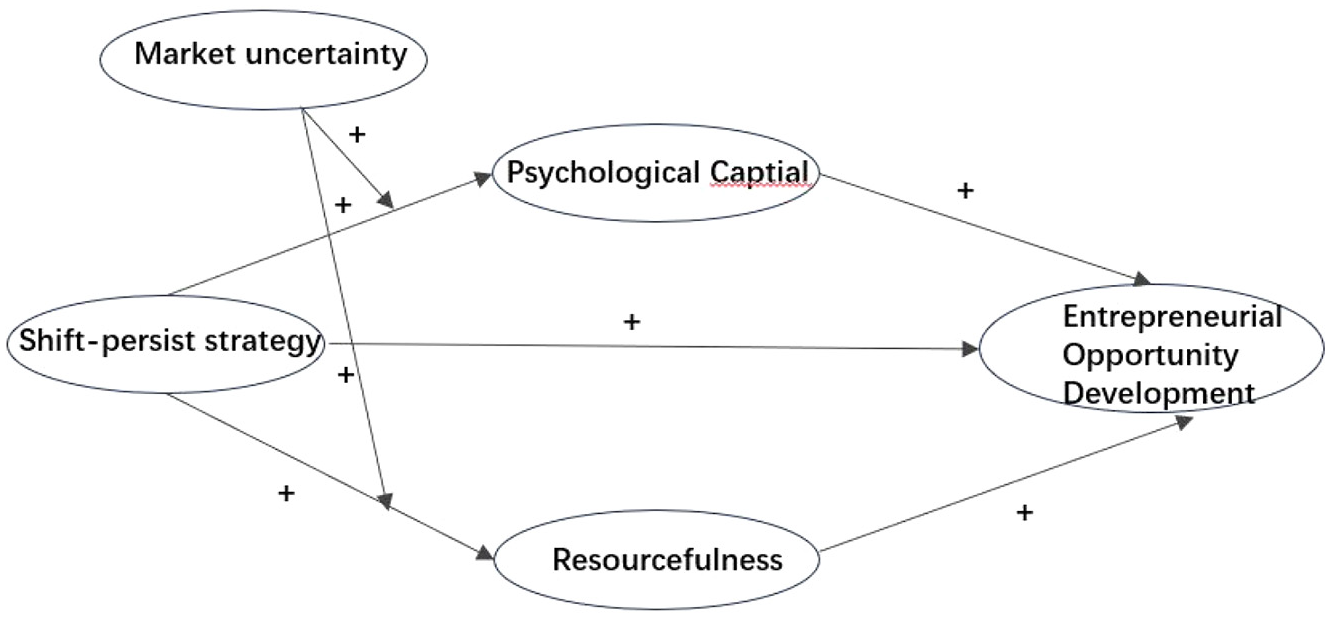
Diagram of model assumptions.
Chapter 3: Hypothesis Testing
Study 1
Our study is based on a social survey organized by the Development and Reform Commission of Lincang City, Yunnan Province, China. In 2018, Yunnan Province launched the “Yunling Entrepreneurship Plan for All,” which provided “skills entrepreneurship” training for impoverished individuals and prioritized offering entrepreneurship loans to entrepreneurial entities formed by these individuals. Since the implementation of the plan, Lincang City has encouraged and supported 900 people to return to their hometowns for entrepreneurship, established and operated 699 entrepreneurial entities, created 3,400 jobs, issued 891 loans totaling 78.36 million yuan to returnees for entrepreneurship, and provided loan interest subsidies of 2.3388 million yuan to them. Despite the successful implementation of this plan, some entrepreneurs still face challenges or setbacks in their business operations due to a lack of fundamental knowledge in areas such as marketing, finance, and human resources, as well as a lack of psychological preparation and coping abilities, making them more prone to abandoning their businesses or feeling discouraged. Against this background, our team conducted a survey experiment. This method incorporates experimental interventions into surveys to test the effects of the interventions (W. Chen & Wu, 2023).
Participants and Methods
The experiment aims to evaluate the impact of cognitive interventions based on the Shift-Persist strategy theory on entrepreneurial opportunity recognition and development. First, we clarified the specific intervention content for the experimental and control groups. The cognitive intervention content includes introducing the Shift-Persist strategy theory, explaining how this theory changes individuals’ attitudes towards difficulties and challenges, and cultivating more positive and flexible coping strategies. The control group, however, continued with regular entrepreneurship training, which included market analysis, business plan writing, and financing skills, but did not include any content related to the Shift-Persist strategy. It is important to note that regular entrepreneurship training does not cover the Shift-Persist strategy, ensuring the differentiation between the two groups.
In June 2022, with the assistance of the Development and Reform Commission of Lincang City, the research team collaborated with the “Yunling Entrepreneurship Plan for All” to provide 2 months of free cognitive intervention services to selected entrepreneurs. The selection criteria for the experimental and control groups were as follows: participants aged 25 to 45, in the early stage of entrepreneurship or already in the entrepreneurial stage but not yet in stable development; no restrictions on educational background, just requiring literacy; voluntary registration and consent to receive intervention and evaluation; no serious physical or mental health issues; and no participation in other similar entrepreneurship training or cognitive intervention programs during the experiment. Through random assignment, the participants were divided into the experimental group (32 people) and the control group (40 people), ensuring balance in other unobserved factors between the two groups.
The sample primarily consisted of entrepreneurs who had benefited from the Yunling Entrepreneurship Program. The survey mainly focused on the variables of Shift-Persist Strategy (SP) and Entrepreneurial Opportunity Development (EOD). Among the participants, 53.74% were female and 46.26% were male. The distribution of education levels was as follows: 8.73% had elementary school education, 32.75% had middle school education, 28.43% had high school or vocational education, 26.68% had college or bachelor’s degrees, and 3.41% had master’s degrees or higher. The age distribution of the participants was not balanced, with 8.15% under 25 years old, 20.57% between 26 and 30 years old, 19.36% between 31 and 40 years old, 34.08% between 41 and 50 years old, 14.70% between 51 and 60 years old, and 3.14% aged 60 or above.
Intervention Plan
During the intervention period, the participants in the experimental group received 2 months of cognitive intervention services, which included individual assessments, setting specific and feasible entrepreneurial goals, cognitive training on the Shift-Persist strategy theory through case analysis and role-playing exercises to cultivate flexible coping strategies, practical skill training such as market analysis, business plan writing, and financing skills, behavioral practice feedback to help reflect on the process and optimize plans, progress tracking and plan adjustments to dynamically adapt the intervention plan, and ongoing entrepreneurial guidance to help solve practical problems and optimize entrepreneurial ideas. One training session was held per week, lasting 40 to 60 min, for a total of eight sessions. The control group, however, only received regular entrepreneurship training on market analysis, business plan writing, and financing skills.
The final training session of the experiment included organizing activities for the members of the experimental group to participate in. Two activities were organized for this experiment. The first activity was an entrepreneurship salon, where entrepreneurs and experts from various industries shared and exchanged experiences, discussed issues and solutions encountered during the entrepreneurial process. Through these exchanges, participants could gain new inspiration and resources, enhance their entrepreneurial motivation, and stimulate their entrepreneurial passion. The second activity involved organizing a visit for the experimental group members to local science and technology parks or entrepreneurship incubators, where they could learn about the growth process of successful companies and the entrepreneurial ecosystem. They interacted with founders of incubating enterprises or successful entrepreneurs, sharing their entrepreneurial experiences and insights.
Experimental Process
First, a pre-intervention survey was conducted with both the experimental and control groups, measuring their Shift-Persist Strategy (SP) and Entrepreneurial Opportunity Development (EOD), along with related demographic variables. Next, the experimental group underwent a two-month cognitive intervention service, including training on the Shift-Persist strategy theory, while the control group continued with regular entrepreneurship training without cognitive intervention. Finally, after completing the intervention program, the experimental group members filled out the same survey again to measure the impact of the intervention on their Shift-Persist Strategy and Entrepreneurial Opportunity Development.
The Shift-Persist Strategy (SP) was measured using a Likert-4 scale developed by E. Chen et al. (2015), which includes three items, such as “I feel that my life has a sense of purpose.” The Entrepreneurial Opportunity Development (EOD) variable was based on the measurement of opportunity development by Chen (2007), Mai (2009), and Yang (2013), with adjustments to individual items to form the scale for entrepreneurial opportunity development (M. Q. Zhang, 2015). The questionnaire employed a Likert-5 scale, including three items. The collected data was analyzed using SPSS 26.0 to obtain the results.
As shown in Table 1, in the Experimental Group, pre-intervention SP01 (1.885) indicates a passive approach to challenges, while EOD01 (3.344) shows moderate entrepreneurial opportunity development. Post-intervention, SP02 rises to 3.823, reflecting improved responses to challenges, and EOD02 increases to 4.094, indicating enhanced opportunity development. In the Control Group, pre-intervention SP01 (2.658) reflects an existing mindset, and EOD values show only slight improvement (EOD01: 3.183, EOD02: 3.583), suggesting minimal impact from conventional entrepreneurship training.
Variable Measurements.

Note. 01 indicates the data obtained from the initial measurement of the variable and 02 indicates the data obtained from the measurement at the end of the experiment. SP = shift-persist strategy; EOD = entrepreneurial opportunity development.
The paired samples t-test results show that post-intervention, SP significantly improved (t = −16.934, p = .000), indicating enhanced flexibility in responding to challenges. EOD also showed significant improvement (t = −2.819, p = .008), suggesting the intervention effectively boosted entrepreneurial opportunity development (Table 2). In contrast, the control group showed a smaller but significant improvement in EOD (t = −2.285, p = .028), indicating some effect from conventional training, though less pronounced than in the experimental group.
Paired Samples t-Test.

Note. 01 indicates the data obtained from the initial measurement of the variable and 02 indicates the data obtained from the measurement at the end of the experiment. SP = shift-persist strategy; EOD = entrepreneurial opportunity development.
Overall, the cognitive intervention demonstrated a strong positive influence on entrepreneurial participants, especially in terms of their ability to identify and develop entrepreneurial opportunities, compared to those who only received regular training. While the distinction between the experimental and control groups allows for clear causal inference, the sample in the experimental design is both small (72 participants in total) and concentrated, as it includes only individuals from the Yunling Entrepreneurship Plan in Lincang City, predominantly low-income, rural entrepreneurs. This limitation restricts the generalizability of the findings to broader populations. Therefore, we propose Study 2, a large-scale survey method, to address this issue.
Study 2
Survey Process and Subjects
The questionnaire data were collected from February 2023 to February 2024, focusing on small and medium-sized enterprises (SMEs) and individual businesses, particularly within the lower social class. While the sample includes participants from the Yunling Entrepreneurship Plan, it also extends to a broader group of lower social class entrepreneurs. Individual businesses were chosen for their low entrepreneurial threshold. The electronic questionnaires were distributed through local business networks, entrepreneurial incubators, and online platforms targeting SMEs and individual businesses, ensuring a diverse sample. Data collection was conducted with participant consent, and responses were anonymized.
The data collection process was conducted electronically, with the questionnaire translated between Chinese and English. To ensure translation accuracy, back-translation was performed by bilingual experts, and no semantic discrepancies were found. The study was conducted in three stages to reduce common method bias (CMB) and ensure data accuracy. In the first stage (February–May 2023), 1,500 respondents answered questions related to the independent and control variables. In the second stage (June–September 2023), 637 respondents participated in the survey, which focused on mediating and moderating variables. The final stage (October 2023–January 2024) involved 405 valid questionnaires, which focused on the dependent variables, with an effective recovery rate of 27%.
Invalid questionnaires with obvious errors or missing information were excluded. Among the respondents, 55.75% were female, and 44.25% were male. Regarding educational attainment, the distribution was as follows: 7.82% had primary school education, 31.05% had junior high school education, 23.23% had high school or technical school education, 24.94% had junior college education, 7.58% had undergraduate education, and 5.38% had master’s degrees or above. The age distribution of respondents was as follows: 9.05% aged below 25, 18.83% aged 26 to 30, 18.83% aged 31 to 40, 16.38% aged 41 to 50, 23.23% aged 51 to 60, and 7.09% aged over 60. In terms of the location of the enterprises, 32.3% were in first-tier cities, 38.9% in second-tier cities, 15.6% in third-tier cities, and 13.1% in other cities. This distribution provides a diverse geographical representation, which helps ensure the external validity of the findings across different urban settings.
Questionnaire Design and Variable Measurement
To avoid the impact of semantic differences, a translation-back-translation procedure was adopted for the foreign research scales used in this study. Different scoring methods were used for each variable in the questionnaire, including Likert-4, Likert-6, Likert-5, and Likert scales, ranging from 1 for “strongly disagree” to 4, 5, 6, or 7 for “strongly agree,” respectively.
Shift-Persist Strategy (SP): A Likert-4 scale developed by E. Chen et al. (2015) was used, including three items such as “I feel my life has a sense of purpose.” The internal consistency Cronbach’s α coefficient for this variable was .906.
Psychological Capital (PC): A Likert-6 scale based on the Psychological Capital Scale developed by Luthans et al. (2006) was utilized. After excluding low Cronbach’s α coefficient and duplicate items, six items remained. Example items included “I believe I can analyze long-term problems and find solutions.” The internal consistency Cronbach’s α coefficient was .945.
Resourcefulness (RE): A Likert-6 scale was employed, with 28 items derived from the learned resourcefulness and social resourcefulness factors proposed by Zauszniewski et al. (2006). After selecting three items with high scores, including “When I find it difficult to make a decision, I ask someone to help me think about it” and “When I need to make a decision, I usually first identify all the possible options before making a quick decision,” the internal consistency Cronbach’s α coefficient was .901.
Entrepreneurial Opportunity Development (EOD): Based on the measurement of opportunity development by M. Q. Zhang (2015), a Likert-5 scale was used. After excluding one item with a low Cronbach’s α coefficient, the remaining three items included statements like “Developing this entrepreneurial opportunity is the first to provide such new products or services to the market.” The internal consistency Cronbach’s α coefficient was .844.
Market Uncertainty (MU): A Likert-7 scale from Priagung Hutomo and Pudjiarti (2021) was utilized, consisting of three items such as “Consumer demand is very broad.” The internal consistency Cronbach’s α coefficient was .889.
Control Variables: Gender (GD), Age (Age), Education Background (EB), Industry (Ind), and City of the Enterprise (CE) were set as control variables based on the suggestions of Ren and Shu (2014).
Data Analysis and Results
Data processing was conducted using SPSS26.0 and AMOS28.0 software. Standardized survey procedures, including item selection, anonymous filling, staged surveys, and multiple respondent filling, were adopted. To control for artificial covariance, predictor and criterion variables were assessed by different raters at different times. Harman’s single-factor test was conducted, revealing that the variance explained by the first principal component was 37.638%, indicating no significant common method bias. Variance inflation factors (VIFs) calculated using ridge regression did not exceed 1.5, indicating no multicollinearity issues. The Cronbach’s α coefficients for all variables exceeded .73, indicating good reliability. Mature scales from domestic and foreign literature were used to ensure the content validity of the questionnaire. The composite reliability (CR) and average variance extracted (AVE) of each variable exceeded 0.84 and 0.64, respectively, indicating high convergent validity.
Durbin-Wu-Hausman tests were conducted to assess endogeneity. Since psychological capital and resourcefulness were latent mediator variables, only the endogeneity of the moderator variable was evaluated. Market uncertainty (MU) was regressed on the social class’s shift-persist strategy and other control variables. The residuals of service complexity were obtained and retained. Regression analysis was then conducted with entrepreneurial opportunity development as the dependent variable and the previously obtained residuals as the coefficient. The results showed that when the dependent variable was entrepreneurial opportunity development, the coefficients of the residual variables were not significant (β = .007, p > .05; β = .043, p > .05), indicating good control of endogeneity in this study.
In our paper, we use the validated factor analysis (CFA) to test the discriminant validity among variables, and the test results are shown in Table 3. As can be seen in Table 3, the five-factor model fits the best:
Confirmative Factor Analysis.

Note. SP = shift-persist strategy; PC = psychological capital; RE = resourcefulness; EOD = entrepreneurial opportunity development; MU = market uncertainty)
As shown in Table 4, the shift-persist strategy of individuals from lower social classes is significantly positively correlated with their psychological capital (r = .397, p < .05), resourcefulness (r = .354, p < .05), entrepreneurial opportunity development (r = .404, p < .05), and market uncertainty (r = .433, p < .05). Psychological capital is significantly positively correlated with entrepreneurial opportunity development (r = .361, p < .05), resourcefulness (r = .313, p < .05), and market uncertainty (r = .431, p < .05). Resourcefulness is significantly positively correlated with entrepreneurial opportunity development (r = .351, p < .05) and market uncertainty (r = .297, p < .05). Market uncertainty is significantly positively correlated with entrepreneurial opportunity development (r = .390, p < .05).
Correlation Analysis.

Note. The coefficients in the table are standardized coefficients, the same as below. GE = gender; Age = age; EB = educational background; Ind = industry; CE = location of business; SP = shift-persist strategy; PC = psychological capital; RE = resourcefulness; EOD = entrepreneurial opportunity development; MU = market uncertainty; Var = variable.
and ** denote p < .1, and p < .05.
The main effect regression results are shown in Table 5. According to Model 2, the shift-persist strategy of individuals from lower social classes has a significant positive impact on entrepreneurial opportunity development (β = .462, p < .05). This finding is consistent with the main effect survey’s conclusions in section “Study 1,” thus confirming Hypothesis H1. Following the steps suggested by Baron and Kenny, we examine the Parallel intermediation role of psychological capital and resourcefulness. From Model 7 and Model 9, it is evident that the shift-persist strategy has a significant positive impact on psychological capital (β = .575, p < .05) and resourcefulness (β = .532, p < .05). From Model 3 and Model 4, psychological capital (β = .276, p < .05) and resourcefulness (β = .334, p < .01) both have significant positive impacts on entrepreneurial opportunity development. When adding the mediating variables into the main effect model, Model 5 indicates that the impact of the shift-persist strategy (SP) on entrepreneurial opportunity development decreases from 0.462 to 0.299 (Model 5, β = .299, p < .05). This demonstrates that psychological capital and resourcefulness partially mediate the relationship between the shift-persist strategy and entrepreneurial opportunity development.
Main Effects and Mediation Effects Test.

Note. Var = variable; CV = control variable; IV = independent variable; MV = mediator variable; GE = gender; Age = age; EB = educational background; Ind = industry; CE = location of business; SP = shift-persist strategy; PC = psychological capital; RE = resourcefulness; EOD = entrepreneurial opportunity development; MU = market uncertainty; *, ** and *** denote p < .1, p < .05, and p < .01 respectively.
To address the issue of incomplete parallel mediation effect analysis in the previous sections, the study used the Bootstrap method to test the mediation path effect as proposed by Hayes, using model 4 for mediation effect testing. The results showed that the 95% confidence intervals for Bootstrap = 5,000 did not include 0 ([0.026, 0.109], [0.033, 0.121]). The mediating effect of psychological capital accounts for 17.780%, which is less than the mediating effect of resourcefulness, which accounts for 19.957%. Both variables play partial mediating roles, further confirming Hypotheses H2 through H4 (Table 6).
Mediation Effect.

Note. SP = shift-persist strategy; PC = psychological capital; RE = resourcefulness; EOD = entrepreneurial opportunity development.
The path coefficients are shown in Figure 2. This further validates that psychological capital and resourcefulness play a parallel mediating role in the relationship between shift-persist strategy and entrepreneurial opportunity development among lower social class individuals.

Path factor diagram.
The results of the moderation effect are shown in Table 7. Model 12 indicates that the interaction term between the shift-persist strategy and market uncertainty has a significant positive impact on psychological capital (β = .251, p < .01), supporting hypothesis H5a. However, the interaction term between the shift-persist strategy and market uncertainty does not have a significant impact on resourcefulness (β = .050, p > .05), therefore, hypothesis H5b is not supported.
Moderating Effects Test.

Note. Var= variable; CV = control variable; IV = independent variable; SOI = second-order interaction; GE = gender; Age = age; EB = educational background; Ind = industry; CE = location of business; SP = switching perseverance strategy; PC = psychological capital; RE = resourcefulness; EOD = entrepreneurial opportunity development; MU = market uncertainty; *, ** and *** denote p < .1, p < .05, and p < .01 respectively.
According to the method by Aiken et al. (1991), a moderation effect plot was created (see Figure 3). The plot shows that the slope under high market uncertainty is steeper than the slope under low market uncertainty, indicating that market uncertainty positively moderates the relationship between the shift-persist strategy and psychological capital among individuals from lower social strata. Specifically, the effect is stronger under high market uncertainty, suggesting that entrepreneurs in more uncertain market environments are more likely to benefit from employing the shift-persist strategy, which enhances their psychological capital. This reinforces the argument that market uncertainty plays a significant role in shaping entrepreneurial outcomes for lower social class entrepreneurs. Therefore, hypothesis H5a is further supported, with a strong moderating effect of market uncertainty.
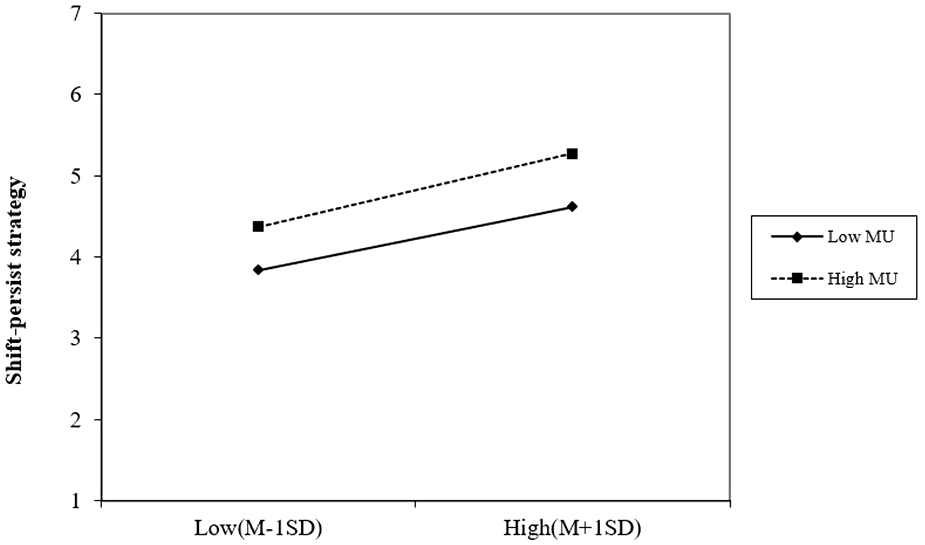
Simple slope analysis.
Chapter 4: Conclusion and Discussion
Findings
This study builds upon Timmons’ Three-Factor Theory of Entrepreneurship and the Resource Conservation Theory (COR) to explore the mechanisms underlying entrepreneurial opportunity development among individuals from lower social classes. By integrating the shift-persist strategy as a critical behavioral mechanism, the study examines the mediating roles of psychological capital and resourcefulness and the moderating effect of market uncertainty. The study was conducted in two phases: Study 1 focused on exploring the intrinsic causality of the main effects through a small-scale experiment, which allowed for a controlled examination of the direct relationship between the shift-persist strategy and entrepreneurial opportunity development. Study 2 extended these findings by examining the mediating and moderating pathways using a large-scale survey, providing broader evidence and enhancing the generalizability of the results. The key findings are summarized as follows: (1) the shift-persist strategy significantly enhances entrepreneurial opportunity development, particularly under resource-scarce and uncertain environments. This strategy involves reframing stressors (shift) and persisting toward goals despite challenges (persist), enabling entrepreneurs to adapt to adversity and seize opportunities. Resilience and adaptability—core aspects of the shift-persist strategy—serve as foundational tools for navigating the constraints faced by lower social class entrepreneurs. (2) Psychological capital and resourcefulness partially mediate the relationship between the shift-persist strategy and entrepreneurial opportunity development. Psychological capital fosters resilience and optimism, enhancing entrepreneurs’ sustained effort and adaptability. Resourcefulness, reflecting the ability to creatively utilize available resources, improves decision-making and strategic flexibility in complex environments. Together, these mediators provide complementary pathways for entrepreneurial success. However, entrepreneurial outcomes also depend on external resources, such as funding, technology, and social networks, which were beyond the scope of this study. (3) Market uncertainty significantly moderates the relationship between the shift-persist strategy and psychological capital, amplifying its positive effects under high uncertainty. However, market uncertainty does not significantly impact the resourcefulness pathway. This aligns with COR theory, which suggests that under stress, individuals prioritize avoiding resource loss over risk-taking. Resourcefulness requires substantial cognitive and strategic investments, which become riskier in uncertain environments. In contrast, psychological capital provides resilience and positivity, enabling entrepreneurs to adapt and innovate, thus facilitating entrepreneurial opportunity development.
Theoretical Contribution
(1) Our study, grounded in Timmons’ Three-Factor Theory of Entrepreneurship and the Resource Conservation Theory (COR), reveals the mechanisms through which entrepreneurs from lower social classes develop entrepreneurial opportunities in resource-scarce and uncertain environments. Timmons’ framework emphasizes the interaction between entrepreneurs, resources, and opportunities as fundamental drivers of entrepreneurial success. In this study, the theory is used to describe the dual mediating pathways—psychological capital and resourcefulness—through which lower social class entrepreneurs’ shift-persist strategy influences entrepreneurial opportunity development. These pathways illuminate the internal mechanisms that enable entrepreneurs to succeed despite resource constraints. However, Timmons’ theory does not fully account for external environmental factors such as market uncertainty. To address this gap, we incorporate COR theory, which explains how individuals adapt their behaviors to conserve and optimize resources under conditions of uncertainty and adversity. COR theory provides a critical explanation for the moderating role of market uncertainty, showing that heightened uncertainty amplifies the positive effects of the shift-persist strategy on psychological capital. Entrepreneurs increasingly rely on psychological capital, such as resilience and optimism, to navigate risks, maintain focus, and foster creativity under challenging conditions. Conversely, resourcefulness, which involves significant cognitive and strategic investment, is less utilized in high-uncertainty environments due to the increased risk of resource depletion (Hobfoll & Lilly, 1993; McMullen, 2023). This differential impact underscores the importance of understanding how psychological and cognitive resources interact with external conditions to influence entrepreneurial outcomes. By integrating these two theories, our study provides a comprehensive framework for understanding how lower social class entrepreneurs adapt and thrive in resource-scarce and uncertain environments. This integration bridges a critical theoretical gap, offering novel insights into the interaction between internal mechanisms and external conditions in grassroots entrepreneurship.
(2) Our study identifies the core components of entrepreneurship among individuals from lower social classes and clarifies the interactions between these components, laying a foundation for future research. Specifically, it highlights psychological capital and resourcefulness as critical cognitive and emotional resources that lower social class entrepreneurs rely on to develop entrepreneurial opportunities. Previous studies have emphasized the importance of opportunity recognition and utilization for entrepreneurial success (X. E. Zhang, 2014). Building on this, our research confirms that the shift-persist strategy also plays a significant role in entrepreneurial opportunity development. Our findings demonstrate that resourcefulness and psychological capital partially mediate the relationship between the shift-persist strategy and entrepreneurial opportunity development. Resourcefulness enhances entrepreneurs’ decision-making and strategic adaptability in complex environments, enabling them to respond flexibly to market changes (Michaelis et al., 2022). Meanwhile, psychological capital fosters resilience and optimism, helping entrepreneurs maintain sustained effort and adaptability in the face of challenges (Luthans et al., 2007). However, these internal resources alone do not fully explain the relationship. Successful entrepreneurial opportunity development also depends on external resources such as funding, technology, and social networks (Zimmer & Aldrich, 1987), as well as dynamic market conditions (Shane & Venkataraman, 2000). This study therefore provides a nuanced understanding of how intrinsic and extrinsic factors interact to influence the entrepreneurial processes of lower social class individuals, enriching the theoretical framework of grassroots entrepreneurship.
(3) Previous studies have largely overlooked the critical role of the shift-persist strategy in entrepreneurship among lower social class individuals. Effective behavioral strategies are essential for entrepreneurial success (Baron, 2007). However, entrepreneurs from lower social classes face significant challenges, such as resource scarcity, limited access to information, and insufficient social capital, which reduce their opportunities compared to other social groups (Aldrich & Cliff, 2003). The shift-persist strategy, combining resilience in adversity and adaptability to changing circumstances, is vital for addressing these challenges. Resilience, as noted by Ayala & Manzano (2010), is significantly associated with positive performance outcomes, including business success. This strategy enables entrepreneurs to accumulate necessary resources and information through sustained efforts (persistence) and seize new opportunities by adapting to dynamic market environments (shift). Our study identifies the shift-persist strategy as not only beneficial but also essential for lower social class individuals to achieve entrepreneurial success and social mobility. By addressing this previously overlooked behavioral strategy, the research provides valuable insights into the mechanisms enabling entrepreneurship in resource-constrained environments.
Management Insights
(1) Firstly, in the context of the digital economy, entrepreneurship serves not only as a crucial avenue for personal wealth accumulation but also as a key driver of economic development and social progress. However, entrepreneurs from the lower social class face significant challenges such as resource scarcity, limited social networks, and information asymmetry. These challenges necessitate that entrepreneurs from lower social class maintain a high sensitivity to market demands, competitive behaviors, and industry trends during the entrepreneurial process. By promptly capturing market changes, they can better seize entrepreneurial opportunities, mitigate potential risks, and thus choose suitable entrepreneurial projects that fit their needs. The shift-persist strategy can assist entrepreneurs from lower social class in maintaining patience and resilience when facing the difficulties and challenges of entrepreneurship, enabling them to possess the ability to flexibly adjust and adapt to the environment, and develop new entrepreneurial opportunities through innovative solutions. Only through their own efforts and struggle can individuals from lower social strata truly seize entrepreneurial opportunities, achieve their own development, and success.
Mi’yi County has implemented various measures to boost the confidence and abilities of low-income entrepreneurs. These include policy supports like a one-time 10,000 yuan subsidy for returning migrant workers, and the establishment of incubation parks and training centers offering vocational skills and entrepreneurship competitions. These initiatives improve practical skills, foster a positive mindset, and enhance psychological capital. Additionally, the county’s public employment services and professional staff create a supportive environment for entrepreneurs. Through competitions and project showcases, entrepreneurs are given opportunities to demonstrate their achievements and receive recognition. An example of this success is the Agritourism Development Program, which helped entrepreneurs like Xie Yongqiang, owner of the “Sunshine Wellness Resort,” transition from agriculture to health and wellness tourism (shift strategy). By leveraging the county’s natural resources and receiving government support through training and low-interest loans, Xie overcame early challenges and built a successful business (persist strategy).
(2) Secondly, it is imperative to shift and adjust the perception of resources, fostering an awareness of “building aspiration rather than poverty alleviation” and eliminating the restrictions imposed by social class. Psychological capital and resourcefulness, as cognitive and emotional resources, play crucial roles and are regarded as “psychological resources.” Entrepreneurs from lower social class should shift their thinking from focusing on tangible resources to placing greater emphasis on acquiring and utilizing intangible resources. Traditionally, they may have excessively prioritized the accumulation of material assets while neglecting resources at the cognitive and emotional levels. Presently, it is imperative for them to shift away from antiquated notions and accord primacy to psychological resources. To facilitate the cultivation of cognitive and emotional resources among entrepreneurs from lower social class, it is imperative to establish a culture that fosters encouragement and support. Such a cultural milieu should advocate for perpetual learning and personal advancement, endorse a mindset of optimism and positivity, and concurrently instigate a culture of innovation and daring exploration. By fostering such a cultural atmosphere, the positive development of cognitive and emotional resources among entrepreneurs from lower social class can be effectively promoted, providing solid support for their entrepreneurial activities. Additionally, entrepreneurs from lower social class should embrace a culture of cooperation and sharing. Through collaboration and resource and experience sharing with others, limited resources can be utilized more effectively, achieving the optimal allocation of resources. This cultural concept not only helps entrepreneurs from lower social class access more resource support but also promotes the healthy development of the entrepreneurial ecosystem, providing more people with entrepreneurial opportunities and support.
(3) Thirdly, it is crucial to maintain flexibility in the utilization of psychological resources, thereby avoiding rigid adherence to a sole reliance on such resources. Within the entrepreneurial practices of individuals from the lower social class, the ability to adapt psychological resource strategies is of paramount importance. Entrepreneurs from the lower social class must recognize that entrepreneurial success hinges not only on psychological capital and resourcefulness but also on the comprehensive integration of various resources, including interpersonal networks, professional knowledge, and technical expertise. While psychological resources play a pivotal role in the entrepreneurial journey, an excessive dependence on them may lead to the oversight of other critical resources. Therefore, entrepreneurs must possess the capacity to dynamically adjust their psychological resource strategies to address the challenges and requirements encountered across different stages and environments. For instance, several successful cases of entrepreneurship within the lower social class illustrate that entrepreneurs not only rely on psychological resources but also actively seek support from the community, governmental policies, and professional training, ultimately attaining their entrepreneurial objectives. Through the holistic utilization of diverse resources, entrepreneurs can better confront the multifaceted challenges inherent in the entrepreneurial process, thereby enhancing the probability of entrepreneurial success. Furthermore, entrepreneurs must remain adaptable in their utilization strategies of psychological resources to effectively navigate the varying challenges and requirements encountered across different stages and environments of the entrepreneurial journey. Given that different stages of entrepreneurship may necessitate varying forms of psychological resource support, entrepreneurs should possess the capability to flexibly adjust their strategies to accommodate shifting demands and maximize the efficient utilization of resources.
Future Research
Firstly, this study used cross-sectional data in the parallel inter-mediation effect analysis, without considering the temporal sequence and dynamics. Since the entrepreneurial process has a certain temporal and dynamic nature, cross-sectional data may not fully capture the changes and development trends of mediation effects. Future research could employ longitudinal tracking data to more accurately analyze the changes and evolution of mediation effects. Moreover, the “shift-persist” strategy, while offering resilience and adaptability, may have limitations that are not fully captured in cross-sectional data. For instance, entrepreneurs from lower social classes may face resource constraints, including limited access to capital, knowledge, and networks, which can limit the effectiveness of the “shift-persist” strategy. Even with persistence, the lack of necessary resources might hinder their ability to successfully implement the strategy, leading to challenges that are not easily mitigated through psychological resilience alone.
Secondly, while this study highlights the mediating roles of resourcefulness and psychological capital, it overlooks other potential mediators that could influence entrepreneurial opportunity development. Future research could explore additional factors, such as social capital or cognitive biases, to provide a more comprehensive understanding. Additionally, the “persist” aspect of the “shift-persist” strategy carries the risk of over-persisting, which can lead to resource wastage and delayed exit opportunities. Entrepreneurs who continue to persist despite unfavorable market conditions or failing business models may incur further losses. Exploring the interaction between persistence and market adaptability could offer more nuanced insights into how entrepreneurs from lower social classes navigate the complexities of entrepreneurship.
Finally, future research could also examine the impact of external factors, such as policy interventions, institutional support, and societal perceptions, on the entrepreneurial process for lower social class entrepreneurs. Investigating how these external factors interact with internal psychological resources and the “shift-persist” strategy could further enrich our understanding of the challenges and opportunities faced by marginalized entrepreneurs. Furthermore, considering the limitations of the “shift-persist” strategy, it is crucial to explore how these external factors could mitigate or exacerbate the challenges faced by entrepreneurs who may be overly reliant on persistence without adequate resources or external support.
Footnotes
Acknowledgements
We would like to thank all volunteers who have participated in this study.
Author’s Note
The first author of this paper is Gao Changchun, male, Han nationality, born in August 1964 in Huadian City, Jilin. From 1999 to 2004, he served as a Professor, Vice Dean, and Chairman of the Academic Committee of the School of Humanities at Harbin Institute of Technology. He is currently a professor, doctor of economics, and doctoral supervisor at the School of Management, Donghua University. He has co-chaired two major projects of the National Social Science Foundation, two general projects of the National Social Science Foundation, three upper-level projects of the National Natural Science Foundation of China, two first sub-projects of the major projects of the Ministry of Education of China, and one project of the Ministry of Education of China’s New Century Outstanding Talents Program. He has been engaged in the research of fashion creative industry for a long time, and has published more than 80 academic papers in this field, 12 series of monographs, and has presided over more than 20 vertical projects (including national level) and more than 40 horizontal projects. Fifteen key planning projects in social services.
Aiwen Niu and Chenhui Yu are current PhD students of Prof. Gao.
