



Abstract
The current study aims to investigate the impact of dyadic learning and digital transformation impact on knowledge exchange in the presence of CPEC as mediator and technological adaptation as moderating factor. The study underscores the critical role of dyadic learning, digital transformation, and technological adoption in optimizing the knowledge exchange dynamics under CPEC framework. The originality of this research lies in its exploration of CEPC as a mediating factor and technological adoption as a moderating factor in influencing knowledge exchange dynamics. The study collected data from 159 participants using purposive sampling through self-developed and self-administered questionnaire and survey technique respectively. As inferential statistics, the current study relied on multiple linear regression and structural equation modeling (SEM). The regression and SEM results showed that the dyadic learning has positive but insignificant impact on knowledge exchange dynamics, however the inclusion of technological adoption as moderating factor, the relationship was significant and positive. In contrast, the coefficient of digital transformation showed having significant positive impact on knowledge exchange dynamics. The CPEC played positive mediating role in the relationship between dependent and independent variables. The findings of the study provide a comprehensive policy implication as the organizations seek to have satisfied employees with high performance and retained. Therefore, organizations need to transform their selves with digital tools and techniques and promote off the job and on the job trainings to improve employee’s productivity and organizational growth.
Keywords
Introduction
The dyadic learning is a learning dynamic where individual/organization observes the other performing tasks and their roles are reversed (Jorg, 2004). It leads both parties or entities experience each other’s role. Beckmann et al. (2015) argue the dyadic learning is sometimes considered as a subcategory of reciprocal peer-assisted learning, where pairs of same level entities/groups share learning responsibilities. The dyadic learning has been observed as effective conventional learning and can lead to faster learning speed and greater behavioral improvement (Boyce & Hineline, 2002). Some of the studies (i.e., Graen et al., 2006; Lavigne & Good, 2021; Wang & Tarn, 2018) reported positively on learner experiences as dyads especially regarding social aspects of it, while some showed non-inferior learning outcomes for dyads and other showed some evidence to suggest that dyad learning outcomes might be replicable in clinical context following simulation training.
The dyadic learning in social context led to a greater behavioral performance improvement compared with a single training, which could be modulated by the performance difference among paired participants (Jorg, 2004). Moreover, the dyadic learning can be resulted in more refined orientation representation in primary visual cortex that was closely related with greater behavioral performance improvement (LeBlanc & Bearison, 2004). In international trade, dyadic data where results reflecting pairwise relationship between sampled units are of primary interest. Inter-firm learning has been proposed as a special case of international learning linked to supply chain relationship performance (Arikan et al., 2020). For instance, dyadic learning can also be applied in implementation and development of digital technologies and tools like in the creation of new software applications, where dyadic learning can occur between the software developers and end users. The software developers can learn about the preferences and need of the end-users, whereas the end users learn about the capabilities and functionalities of the software (Alamki & Korpela, 2021). By engaging in dyadic learning, participants gain a deeper understanding of industry-specific concepts and practices, often leading to more innovative and adaptable solutions.
The China-Pakistan Economic Corridor (CPEC) being an important aspect/component of Belt and Road Initiative (BRI) is a significant initiative, which aims to improve living standards of China and Pakistani people through bilateral investment, cultural exchange, trade, and economic activities (Mukhtar et al., 2022). The digital transformation under CPEC is set to revolutionize the business culture and have potentials to attract domestic and international investments. In the dyadic learning context, it can play a key role in promoting digital transformation of CPEC, because as dyadic learning involves two entities learning dynamics that can be applied at various levels within the organizations involved in CPEC (Ali & Ali, 2020). For instance, one department within an organization can learn from the practices and experiences of another and vice-versa. This reciprocal learning process can facilitate the successful implementation of digital transformation strategies in developing countries like Pakistan (Ebert & Blarel, 2018).
Both Chinese and Pakistani scholars have claimed that the establishment of CPEC Center for Digital Transformation aims to promote digitalization and transparency of CEPC Projects in Pakistan and attract more businesses and investment by using information and communication technologies to monitor and manage the progress of CPEC initiatives (Zhong et al., 2022). The use of digital tools and techniques have enabled the creation of new ideas and knowledge in CPEC collaborative environment that have promoted and helped to improve quality of the initiative (Asif et al., 2019). The creation of new ideas and knowledge plays a key role in dyadic learning as it helps to promote creativity and innovation.
There exists significant research gap that how dyadic learning in the presence of technological adoption as moderating factor influence the knowledge exchange dynamics in Pakistani CPEC based organizations. The interaction between individuals in dyadic learning settings facilitated by technology enhances the assimilation and sharing of knowledge within CPEC based organizations. The moderating role of technology amplifies the effectiveness of dyadic learning, fostering seamless collaboration and communication (De Wit-de Varies et al., 2019). The term “Digital Transformation” refers to the process by which organizations integrate digital technologies into all areas of their operations, fundamentally changing how they operate and deliver value. The synergy propels the rapid change insights and innovation contributing to a dynamic’s knowledge sharing environment. CPEC’s role as a mediator ensures that industry-specific knowledge and practices are effectively exchanged between diverse participants, while digital transformation moderates this relationship by providing advanced technological infrastructure that supports seamless knowledge sharing. The current study aims to bridge the existing research gap by comparing CPEC-based organizations that have adopted digital technologies with those that rely on more traditional knowledge exchange methods. This study will assess how dyadic learning combined with technological adoption can optimize knowledge flows, streamline processes, and encourage creativity in the workplace. Through a comparative analysis, the study will provide insight into the specific mechanisms by which technological tools moderate the relationship between dyadic learning and knowledge exchange, contributing to a more holistic understanding of how CPEC collaborations can leverage both human and technological resources to drive success.
Relevant Theories and Theoretical Framework
Theory of Dyadic Learning
The dyadic learning theory is rooted from social learning theories, which study how knowledge is acquired and exchanged through interactive relationship among two entities/individuals (Thrasher et al., 2020). Sendjaya et al. (2020) posits that Theory of dyadic learning was introduced in psychology, where the behavior of two individuals sharing and learning from each other. The core principle of this theory includes cooperating knowledge exchange, contextual learning, and mutual understanding of knowledge. This theory pose that individuals learn more effectively through interactive engagement with others moving away from conventional models, which focuses on individual cognition (Staff et al., 2020).
In economics, this theory explains that consumers and producers can enhance their understanding through interactive exchanges. This theory emphasizes contextual understanding implying that both parties gain insights not only form external forces/explicit information but also from the context in which the learning occurs (Mathews et al., 2020). This could translate to a deeper understanding by considering real world scenario and context. Theory of dyadic learning sheds light collaborative knowledge building, cognitive scaffolding, mutual engagement, and social presence (Arikan et al., 2020). By harnessing the dyads power in the globalized world; both parties can accelerate knowledge transfer, cross functional collaborative, manage changes more effectively (Wang & Tarn, 2018). Table 1 summarizes the basic principles of theory of dyadic learning.
Basic Principles of Dyadic Learning.

The dyadic learning theory posits that dyadic learning can contribute to enhancement management, knowledge acquisition and transfer, agile problem solving, and cross-functional collaboration (Urb & Jyrama, 2020). It supports collaboration through enabling individuals from different disciplines to work together ensuring a holistic understanding of digital changes and fostering innovations. Dyadic learning that involves collaborative learning between pairs of individuals or groups play an important role enhancing knowledge exchange within CPEC framework as these types of learning fosters a collaborative environment where participants can share insights (Boyce & Hineline, 2002), experiences, and best practices, where both parties can leverage their unique strength and expertise leading to more innovative solutions and strategies within the CPEC (Ahmad et al., 2019). Dyadic learning allows for customization and adaptation of shared knowledge to fit local contexts, where CPEC projects span across different regions with varying needs and conditions in Pakistan that ensures the exchanged knowledge is relevant and applicable thereby increasing its value and impact (Graen et al., 2006). It has been observed that dyadic learning leads to better performance outcomes through improved knowledge transfer innovation, which suggests that similar benefits can be realized through dyadic learning between Chinese and Pakistani stakeholders within the CPEC (Mukhtar et al., 2022).
Dyadic Learning and Digital Transformation
The digital transformation is a complex process, which revolves around the integration of digital technology into areas of business and other field and fundamentally changes how organizations operate and deliver value to customers (Pyyhtinen & Suoranta, 2020). The dyadic learning is an important aspect of digital transformation, which refers to the process of knowledge exchange between two individuals/entities, groups. In digital transformation, these groups could be different organizations, teams, or employees (Alamki & Korpela, 2021).
The dyadic learning plays an important role in digital transformation, that is, its facilities the exchange of skills and knowledge, which are necessary for navigating the digital transformation (Pyyhtinen & Suoranta, 2020). The knowledge and skill exchange can occur between different departments within an organization and between the external entities with organization such as digital consultant or technology provider (Siachou et al., 2021).
The dyadic learning foster continuous learning culture and adaption that are essential for digital transformation as it enables organizations to keep up and remain active with rapid pace of digital innovation and to leverage and adopt new technology more effectively (Bresciani et al., 2021). Additionally, it also promotes collaboration (Alamki & Korpela, 2021), which leads to more efficient and integrated operations. The resistance to change, communication barriers, and knowledge hoarding are the key challenges to the pace of dyadic learning in digital transformation (Mathews et al., 2020).
The digital transformation requires organizations to be agile in problem solving, cross functional collaboration by enabling individuals from different groups to work together, and rapid evaluation of technologies in continuous learning and skill acquisition. The successful digital transformation involves managing organizational change effectively, where dyadic learning provides and promote supportive individuals where individuals can easily navigate uncertainties together and can facilitate a smoother transition (Beckmann et al., 2015).
Digital transformation promotes use of cloud-based solutions that facilitate storage, access, and information sharing across different location, where cloud technology ensures that all stakeholders have access to latest data and documents that foster a unified approach to project management. This accessibility and transparency enhance trust and collaboration among partners as everyone is working with the same information and can contribute effectively to the knowledge exchange process (Bresciani et al., 2021). It also enables the establishment of digital repositories and knowledge management, which serve as centralized databases where all project-related information, research, and best practices are stored and easily retrievable. Organizations and individuals who embrace digital transformation tends have more effective knowledge sharing, higher innovation rates, and better project management outcome (Mubarak et al., 2019). Thus, it can be stated that digital technology adoption within CPEC can enhance the efficiency and effectiveness of knowledge exchange between Chinese and Pakistani learners.
Dyadic Learning, Digital Transformation, and Role of CPEC
As technology continue to redefine organizations, the knowledge and skills exchange between individuals/entities/organizations in dyadic partnerships become instrumental in dealing with digital transformation complexities. The China-Pakistan Economic Corridor (CPEC) is a flagship project of China’s BRI initiative provides a transformative venture, which foster economic collaboration and connectivity among Pakistan and China. CPEC serves as a catalyst by promoting improved infrastructure, facilitating the seamless information flow, and more importantly creating a conducive environment for digital transformation (Arshad et al., 2022). The CPEC not only focuses on economic development between China and Pakistan, but it also emphasizes knowledge exchange and capacity building.
The dyadic learning behavior aligns seamlessly with the collaborative educational initiatives, which CPEC seeks to promote and individuals from various field and background might leverage each other’s expertise to integrate and comprehend digital technologies effectively (Zhong et al., 2022). Moreover, CPEC include advancement in information system, logistics, and communication that are integrated components of digital transformation. The individuals/entities can collectively capitalize and adapt on the digital opportunities emerging form the infrastructure development brought by CPEC becomes a known fact for dyadic learning (Mukhtar et al., 2022).
The CPEC is evident for the collaborative efforts required for the successful execution of digital initiatives within the framework of the economic corridor aiming to promote digital transformation through dyadic learning (Kamran & Mahsood, 2021). Furthermore, dyadic learning contributes to effective communication that ensures that stakeholders in CPEC can adapt to digital changes efficiently (Ali & Ali, 2020). The dyadic learning principles promote and enhance the individual’s ability to provide feedback, and address challenges in digital landscape under CPEC initiative.
Table 2 provide a summary overview to how dyadic learning and digital transformation can be promoted through CPEC initiative.
Role of CPEC in Promoting Digital Transformation Through Dyadic Learning.

CPEC serves as a structured framework where dyadic learning can thrive that involves numerous joint ventures, infrastructure projects, and industrial collaboration between China and Pakistan that necessitate regular interactions and cooperation between both the countries (Arshad et al., 2022). It provides ample opportunities for dyadic learning where participants from both sides can share experiences, expertise, and best practices in a focused manner. CPEC require continuous communication and collaboration ensuring that learning is not just a one-time event but an ongoing process (Zhong et al., 2022). CPEC promotes use of modern technologies that are essential for dyadic learning and knowledge exchange, where technological advancement ensures that the knowledge exchanged is timely, relevant, and can be immediately applied to ongoing projects. CPEC with its well-defined goals and collaborative structure is positioned to generate similar benefits ensuing that both Chinese and Pakistani stakeholders can learn from each other (Lavigne & Good, 2021). Thus, CPEC mediates the relationship between dyadic learning and knowledge exchange by providing a structured and resource-rich environment that facilitates close collaboration.
Theoretical Framework of the Current Study
The theoretical framework of the current study is grounded in the relationship of dyadic learning, digital transformation, the collaborative context provided by the CPEC, and the adoption of digital technology. The current study recognizes the dyadic learning as a foundation for collaborative knowledge developers that emphasizes the reciprocal of knowledge exchange (Lin et al., 2023). In the digital transformation, where technology reshapes organizational culture, dyadic learning principles play key role in navigating the complexities of emerging digital transformation (Siachou et al., 2021). The digital transformation in this scenario is characterized by digital technology adoption to promote business operation and process. The theoretical framework of the current study acknowledges the collaborative nature of digital transformation where cross functional team work together to adapt and implement technological changes (Ilvonen et al., 2018). CPEC serves as the mediating environment, which posits that the cross-border collaboration and infrastructure improvement opportunities contribute to the facilitation of dyadic learning and digital transformation improvement (Ahmad et al., 2019). The technology adoption could influence how effectively dyadic learning principles are applied in a digitally transformed environment. The technology adoption refers to the degree to which organization/individuals are willing to utilize and adopt new technologies as part of their processes (De Wit-de Varies et al., 2019). In the context of dyadic learning and digital transformation, it could mediate the relationship between these two and knowledge exchange dynamics (dependent variable). Figure 1 summarizes the theoretical framework of current study.

Theoretical framework of the study.
Dyadic learning positively influences knowledge exchange within the CPEC framework by fostering collaboration, where participants share insights and best practices, enhancing innovative solutions and strategies across the region (Ahmad et al., 2019; Boyce & Hineline, 2002). This collaborative learning allows for the adaptation of shared knowledge to local contexts, ensuring its relevance and impact within CPEC projects (Graen et al., 2006).
Hypothesis 1: Dyadic learning positively influences knowledge exchange within the CPEC framework
Digital transformation significantly enhances knowledge exchange by introducing advanced technologies that facilitate efficient communication and data sharing, enabling stakeholders to collaborate more effectively (Alamki & Korpela, 2021). The integration of cloud-based solutions and digital repositories improves project management and knowledge accessibility, further enhancing collaboration and innovation (Bresciani et al., 2021; Mubarak et al., 2019).
Hypothesis 2: Digital transformation positively influences knowledge exchange within the CPEC framework
The CPEC framework mediates the relationship between dyadic learning and knowledge exchange by providing structured opportunities for continuous interaction and collaboration between Chinese and Pakistani stakeholders (Arshad et al., 2022; Zhong et al., 2022). CPEC’s collaborative environment, combined with modern technology, ensures the relevance and applicability of exchanged knowledge to ongoing projects (Lavigne & Good, 2021).
Hypothesis 3: CPEC mediates the relationship between dyadic learning and knowledge exchange.
Technological adoption moderates the relationship between dyadic learning and knowledge exchange by enhancing how individuals and organizations collaborate using advanced digital tools (Graen et al., 2006). Teams using richer digital platforms experience more significant knowledge exchange benefits from dyadic learning compared to those relying on basic tools or traditional methods (Asif et al., 2019).
Hypothesis 4: Technological adoption moderates the relationship between dyadic learning and knowledge exchange
Research Methodology
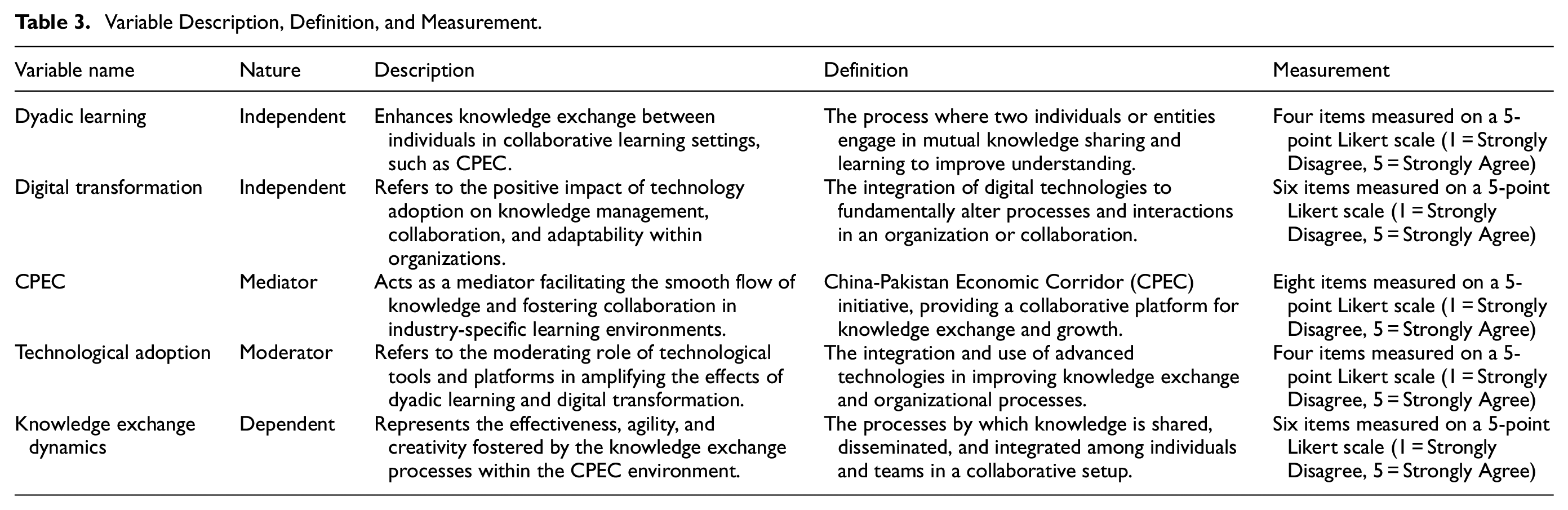
The current study was quantitative in nature as the primary data play key role in understanding and analyzing the dyadic learning in the context of digital transformation under CPEC. Because it allows for the measurement of the impact dyadic learning, digital transformation, CPEC as mediator, technological adoption (moderator) on the knowledge exchange dynamics, which assisted in determining the effectiveness of learning strategies and interventions (Surucu & Maslakci, 2020). The quantitative study allows for the comparison of different groups or conditions, which assist researchers to compare the dependent variable with independent variables in the presence of mediating and moderating factors, providing a nuanced understanding of how different factor influence the knowledge exchange dynamics (Table 3). To meet the current study’s research objectives and fulfil the research gap, the current study relied on purposive sampling collecting data from 200 participants from three different CPEC related projects in Pakistan. The purposive sampling was preferred because the current study involves complex interaction and knowledge sharing between groups or individuals, where purposive sampling allows to target participants with specific expertise or experience related with their research area (Campbell et al., 2020). This ensures that the study included participants who can provide in-depth insights into the current study’s phenomenon.
Variable Description, Definition, and Measurement.
For data collection, a self-developed and self-administered survey was initiated. It is because a self-developed survey allow researcher to tailor questions to the unique aspects of dyadic learning within the CPEC project, where customization ensures that the survey is directly relevant to the research objectives capturing nuanced that may be missed in standardized (Krosnoick, 2018). The current study designed research questions, which specifically address the key variables and objectives of the current study, which ensures that the survey focused on the data collection that are directly pertinent to understand the dynamics of dyadic learning in the context of digital transformation. The study relied on pilot testing before applying final data collection instrument.
From Figure 2, a total of 159 participants participated in the survey with 107 males and 52 females. The highest frequency for education is individuals with technical degree, that is, a total of 74 participants hold technical education, 56 were PhD degree holders, 14 bachelor degree holders, and 11 were with high school degree. The results are presented in Figure 2.
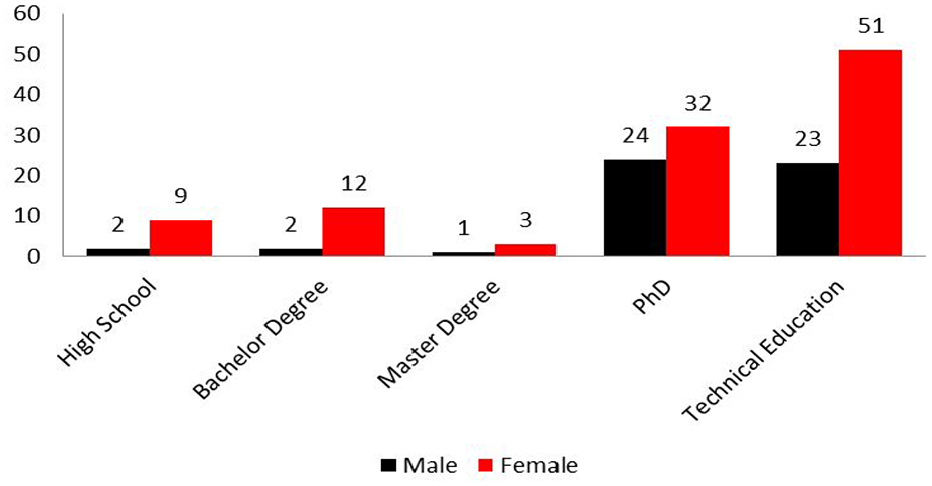
Education with respect to gender.
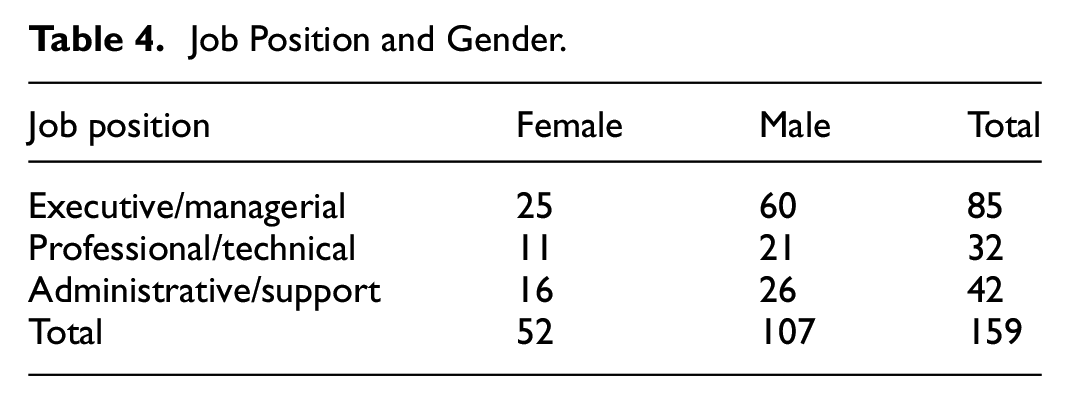
Among job positions given in Table 4, a total of 85 participants were engaged with executive/managerial positions, 32 with professional/technical, and 42 were with administrative/support position. With respect to gender, majority of the female were doing executive/managerial positions, that is, 25 followed by administrative/support 16, and professional/technical 11.
Job Position and Gender.
The current study relied on Stata for data analysis because of its versatility, robust statistical capabilities, and user-friendly interface. For data analysis technique, the current study used frequency distribution for demographic features, reliability analysis, independent sample t-test to check the possible difference of factors with respect to participant’s demographic features, Pearson’s correlation for degree of association between the factors. Finally, the study used structural equation modeling to check the mediating and moderating role of respective factors.
Data Analysis
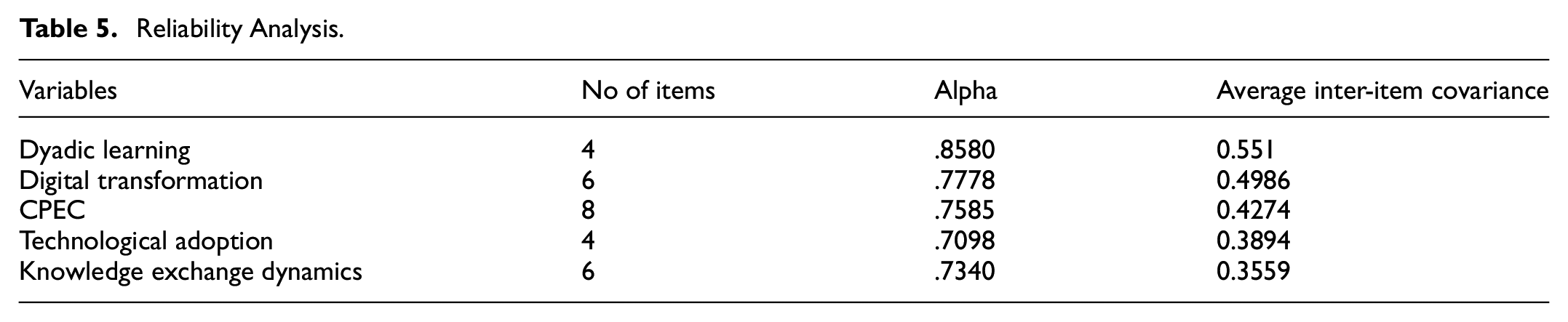
The current study relied on self-designed questionnaire after a pilot study of 10 participants randomly selected from the respective organizations. Aven and Nokland (2010) argue that the reliability analysis used to assess the stability and consistency of measurement, which is particularly use for surveyed or questionnaire to collect data. It assists researchers to determine the extent to which a measurement tool produces consistent and dependable results across different conditions (Rackwitz, 2001). The reliability analysis of current study is presented in 5.
The results from Table 5 reveals that all factors have reliability score greater than 0.70, which suggests that the items have high internal consistency and the results shows highly reliable data (Scholtes et al., 2011). The average inter-item covariance among all scale items are recorded greater than 0.30, which suggest the presence of high positive covariance among item scales representing the respective item factors (Serbetar & Sedlar, 2016). Therefore, it can be concluded that all the factors used in the current study are highly reliable and can be used for inferential simulation. For further verification of reliability Table 6, study used KMO measure and Bartlett’s test, where the Kaiser–Meyer–Olkin (KMO) measure assesses the sampling adequacy for factor analysis (Mishra et al., 2019), while Bartlett’s test evaluates whether the correlation matrix is significantly different from an identity matrix (Rochon et al., 2012), indicating suitability for factor analysis.
Reliability Analysis.
Factor Estimates.
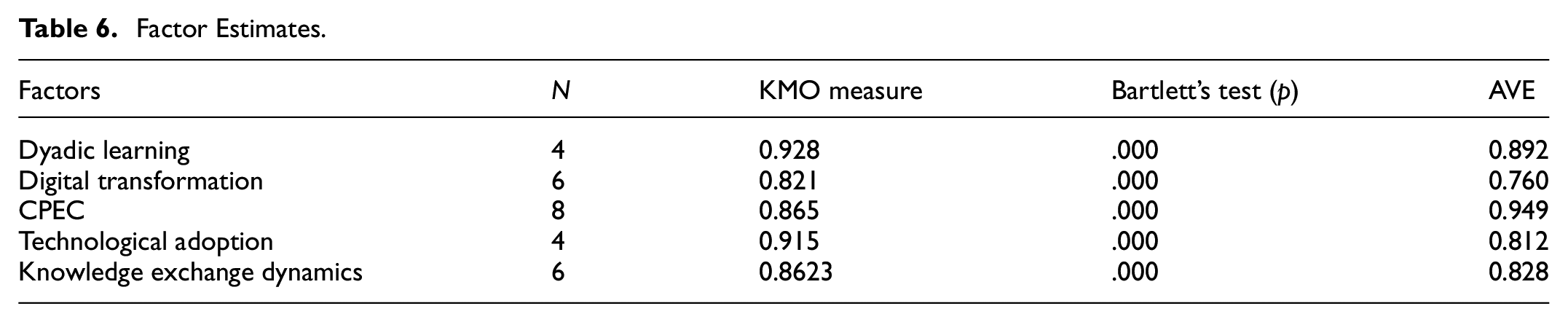
The KMO measure value for all factors recorded greater than 0.80, which reveals that all factors are suitable for final analysis. The p-value of Bartlett’s test recorded <.05 that indicates the significance of correlation matrix different from an identity matrix indicating suitability for factor analysis.
The presence of significant KMO and Bartlett’s test statistics reveals that the items used to show the respective factors are suitable for factor analysis. For finding factors, exploratory factor analysis (EFA) used, which is defined as a process of reducing data to a smaller set of summary variables to discover the factor structure of a measure and examine its internal reliability (Chatterjee, 2021). The EFA results of the current study are presented in Table 7.
EFA Estimates.

Items related to digital transformation load on both Factor 1 and Factor 5. For example, Digit-Trans2 and Digit-Trans3 have significant loadings of 0.605 and 0.627, respectively, on Factor 1, while Digit-Trans1 and Digit-Trans5 load heavily on Factor 5 with values of 0.751 and 0.736, respectively. The uniqueness for digital transformation items is relatively low, with values ranging from 0.313 to 0.744, indicating that these items are well explained by the factors. The MSA values also show an acceptable fit. The six items under CPEC primarily load on Factor 2, with loadings ranging from 0.695 to 0.905. CPEC4 has the highest factor loading at 0.905, indicating a strong association with Factor 2. The uniqueness for CPEC items is moderate, with CPEC2 showing a higher uniqueness of 0.64, while the MSA values are above 0.7, indicating good sampling adequacy. Four items related to technology adoption load heavily on Factor 3, with Tech-Adopt1 and Tech-Adopt4 having high loadings of 0.895 and 0.863, respectively. The uniqueness values for technology adoption items are relatively low, with Tech-Adopt1 showing a uniqueness of 0.234 and Tech-Adopt4 at 0.248, which implies that these items are well captured by the factor. The MSA values for these items are also high, ranging from 0.673 to 0.7. Knowledge-related items load on both Factor 1 and Factor 3. Items like Knowledge1 and Knowledge5 show high loadings of 0.866 and 0.893, respectively, on Factor 3, while Knowledge3 and Knowledge4 load on Factor 1 with values of 0.691 and 0.869, respectively. The uniqueness values are moderate, with Knowledge5 showing a low uniqueness of 0.211, suggesting that it is well represented by the factor. MSA values are adequate, with most values around 0.7, indicating a good fit for the factor analysis.
Thus, the factor loadings across the different categories suggest a meaningful structure, with most items showing high loadings on their respective factors. The uniqueness values are relatively low, indicating that the majority of variance in these items is explained by the factors. The MSA values further confirm the appropriateness of these items for factor analysis.
The correlation analysis assesses the strength and direction of relationship among two variables, which quantify that how changes in one variable correspond to the changes in another ranging from perfect positive correlation (=+1) to perfect negative correlation (=−1) (Chatterjee, 2021). In primary research, correlation is essential for understanding the inter-dependence and association between different factors and it assists researchers identify patterns, predict outcomes, and explore potential cause-and-effect relationship (Kader & Franklin, 2008). The correlation results are presented in Table 8.
Descriptive Statistics and Correlation Matrix.

, **, and *** represent significance of correlation at 1%, 5%, and 10% respectively.
The mean values from Table 8 in the above suggest almost similar mean values for all variables ranging between 3.50 to 3.75, which were measured between 3 and 4 as “Normal” and “Agree” respectively. This indicates that majority of the participants agreed with the given scales representing respective factors. The small variation reveals a very small deviation in participant’s responses. From the correlation columns, there can be seen very high positive correlation between knowledge exchange dynamics (dependent variable) with digital transformation, that is, 0.4794, which matched with the study of (Al-Khurdi et al., 2018), who claimed that it is the digital transformation which improves the knowledge exchange among students. There has been found very high positive correlation between knowledge sharing and technological adoption as the correlation coefficient was recorded 0.3477, which matched with (Lifshitz-Assaf, 2018) who argue that technological adoption accelerates the knowledge dynamics and improves the knowledge exchange. There has been found low positive correlation of dyadic learning and CPEC with knowledge exchange dynamics as the correlation coefficients are recorded 0.1098 and 0.0836 respectively. This was quite surprising because (Burmeister et al., 2018) found that knowledge exchange can be driven by dyadic learning because two heads are better than one. Similar argument was made by Wang and Tarn (2018), who probe that knowledge sharing can be promoted through dyadic learning because group study or knowledge sharing among two entities further increase the knowledge.
Models 1 to 6 each represent different stages of examining the direct impacts of various independent variables, mediators, and moderators on the dependent variable. These models gradually introduce different factors and their influence, helping to understand the relationships step by step. The results in Table 8 given below reveals that dyadic learning has positive but not significant impact on knowledge exchange dynamics as the p-value of the coefficient values for first four models are recorded greater than 5%. In contrast, digital transformation has been observed having significant positive impact on knowledge exchange dynamics as the coefficient of the respective variable is recorded .511 with p-value of the coefficient less than 1% showing a very high significant impact. The R2 of the model is recorded that dyadic learning in the presence of digital transformation is responsible for around 23.5% variation in the knowledge exchange dynamics. The inclusion of CPEC improved the R2 value in 3rd model but the coefficient value was insignificant. However, the introduction of technological adoption improved the R2 of the model and CPEC coefficient value also became significant as the coefficient of CPEC improved to .226 with p-value .011. Similarly, the coefficient of technological adoption has been observed highly significant as the p-value recorded less than 5%.
The interesting thing was the inclusion of technological adoption as moderator between dyadic learning and digital transformation with knowledge exchange dynamics as dependent variable. The coefficient of first moderator, that is, dyadic learning ** technological adoption was recorded .518 with p-value .000 showing a very high positive and significant impact of moderator on knowledge exchange dynamics. The R2 value was recorded .0881, which suggest that the moderator is responsible for 8.81% variation in knowledge exchange dynamics. Similarly, the second moderator, that is, digital transformation ** technological adoption has been observed having very high positive impact on knowledge exchange as the coefficient was recorded .350 with p-value .000.
The moderation and mediation analysis are sophisticated measures Table 9, which are used in research studies relying on primary data. The moderation analysis explores the conditions under which the relationship between two variables changes, identifying factors, which influence the strength of the relationship (Memon et al., 2019). On the other hand, the mediation analysis assesses the mechanism through that an independent variable influences a dependent variable by examining the role of an intermediate variable by providing insights into the underlying process of an observed relationship (Gunzler et al., 2013). These measures add depth to data interpretation allowing researchers to uncover the nuanced patterns and refine their understanding of causal pathways and conditional effects within primary data (Sardeshmuk & Vandenberg, 2017).
Regression Analysis.
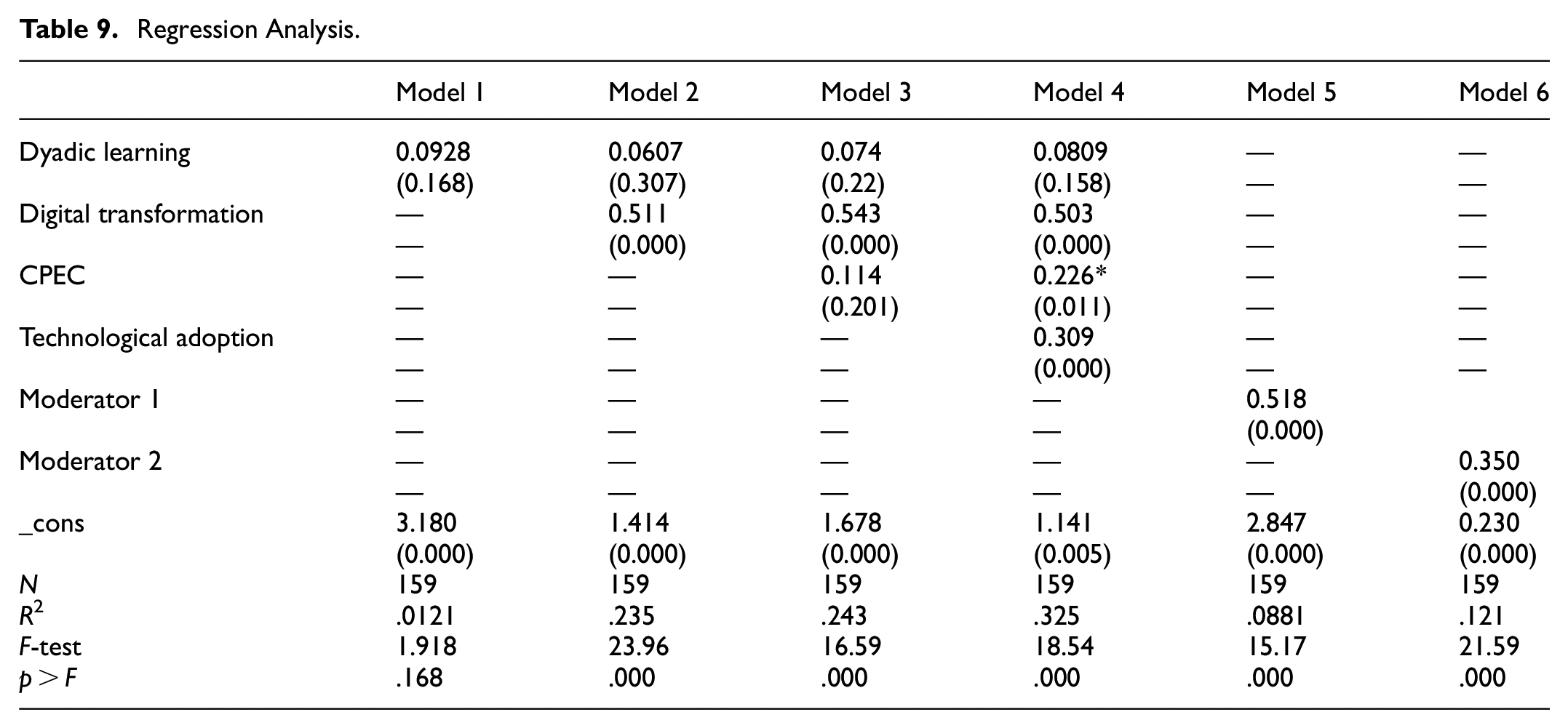
The inclusion of a mediator (CPEC) and moderator (Technological Adoption—TE) in the analysis, despite the non-significant direct path from Dyadic Learning (DL) to Knowledge Enhancement (KE), follows a structured rationale grounded in theory. While the direct effect (DL → KE) was not found to be significant, contemporary research acknowledges that indirect pathways may still exist, even when the direct relationship is weak or absent. The decision to introduce a mediator (CPEC) was based on the hypothesis that CPEC might channel the effect of DL on KE through a more complex mechanism, influencing the outcome in ways not captured by the direct path. Similarly, the inclusion of the moderator (TE) was guided by the notion that TE could potentially enhance or condition the indirect relationship between DL and KE, revealing nuanced insights into how digital transformation and technology adoption impact knowledge enhancement within the dyadic learning. In the current study, dyadic learning and digital transformation are predictors, knowledge exchange dynamics outcome variable, CPEC plays mediating role, and technological adoption plays moderating variable role. The SEM estimates are presented in Table 10.
Mediation and Moderation Analysis.

From Table 10 results, the dyadic learning can be seen having significant positive impact on CPEC with coefficient values .116 having coefficient p-value .028. The digital transformation also being observed having significant positive impact on CPEC as the coefficient value is recorded .283 with p-value < .001. The Dyadic learning has been observed have positive but insignificant impact on knowledge exchange dynamics as the p-value of coefficient is recorded .148, however the digital transformation can be seen having significant positive impact on the knowledge exchange dynamics with coefficient value .504 having coefficient p-value < .001. The CPEC can be seen having significant positive impact on knowledge exchange dynamics. The inclusion of technological adoption in the model as predictor along with dyadic learning can be causing significant positive impact of dyadic learning on knowledge exchange dynamics. Therefore, the results reveal that CPEC play positive mediating role, whereas the technological adoption plays significant positive moderating role in the relationship between dyadic learning and knowledge exchange dynamics. For the above, mediation Figure 3 and moderation analysis Figure 4, diagrammatic representation is presented as below;

Path analysis mediation.

Path analysis moderation and mediation.
Based on the empirical results, H1, stating that dyadic learning positively influences knowledge exchange within the CPEC framework, is not supported. H2, suggesting that digital transformation positively influences knowledge exchange within the CPEC framework, is strongly supported. H3, proposing that CPEC mediates the relationship between dyadic learning and knowledge exchange, is supported, as dyadic learning significantly influences CPEC, and CPEC, in turn, significantly influences knowledge exchange. Lastly, H4, which posits that technological adoption moderates the relationship between dyadic learning and knowledge exchange, is strongly supported.
The model fit indices are presented in Table 11.
Measure of Fitness.

From the above measures 11, the CFI, T-Size CFI, TLI, NNFI, NFI, RFI, IFI, and RNI values are recorded closer to 1, which reveals the model is good fitted (Sardeshmuk & Vandenberg, 2017). The other measure indices suggest that RMSEA value is less than 0.08 showing a good fit model supported by RMSEA p-value, which is recorded greater than 5%. The expected cross validation index also recorded lower than traditional 0.26, which suggest that the overall model is good fitted (Memon et al., 2019). Hence, the measure of fitness indices support that the mediation and moderation SEM estimates are good fitted and results are reliable for generalization.
Result Discussion and Conclusion
The current study aimed to explore how dyadic learning and digital transformation in the presence of CPEC as mediating factor and technological adoption as moderating factor influence the knowledge exchange dynamics. Humphrey et al. (2017) argue that dyadic learning being a group learning opportunity enhance the knowledge dynamics, where individuals/entities have more learning opportunities than practicing alone. Similarly, Tu (2020) highlighted that societies where dyadic learning exist have more opportunities to flourish as compared to those where individualism is working. The current study treated knowledge exchange dynamics in Pakistan as dependent variable, because the country is developing economy and still in the phase of digital transformation (Mubarak et al., 2019) and dyadic learning (Markos & Sridevi, 2010) might be key in the promotion of knowledge exchange (Uppal et al., 2022). The current study found that dyadic learning has no direct impact on knowledge exchange dynamics but the presence of technological adoption is key as it moderates the relationship.
About digital transformation role, Ouyang et al. (2023) probe that digital transformation accelerate the knowledge exchange as it brings new learning opportunities. The digital transformation has been observed having significant positive impact on both CPEC and knowledge exchange dynamics. Mougin et al. (2015) claims that digital transformation is first step towards Industry 4.0, which educate individuals towards the digitalization. Thus, it is necessary to have significant role in knowledge creation and promotion.
About CPEC role in promoting knowledge exchange in the presence of digital transformation, Zhong et al. (2022) highlights that CPEC is not only building infrastructure in Pakistan, rather it is opening gateway for digital transformation in Pakistan. Asif et al. (2019) probe that CPEC is crucial for promoting digital transformation influencing language and cultural changer in Pakistan, which alternatively enhance the knowledge exchange dynamics in the country.
The technological adoption plays a pivotal role in promoting knowledge exchange dynamics by facilitating seamless communication (Lee & Qualls, 2010) information dissemination (Parent et al., 2007), and collaboration (Capestro et al., 2024). Through integration of advanced platforms and tools, knowledge can transcend geographical boundaries, enabling real-time sharing of insights, expertise, and innovation. Moreover, technology driven analytics provide valuable insights into knowledge utilization patterns (Lee & Qualls, 2010). In essence, technological adoption acts as a catalyst breaking down barriers and promoting a more agile and interconnected landscape for the knowledge exchange across different (Kader & Franklin, 2008). The current study found that technological adoption in the presence of CPEC as mediating factor play significant positive moderation role in promoting knowledge exchange through dyadic learning.
The findings of current study provide comprehensive policy implications. The dyadic learning has been found having no direct impact on knowledge exchange dynamics but the presence of technological adoption moderates the relationship positively. Therefore, it is not enough to provide learning opportunities to employees rather it is important to facilitate them with digital tools and techniques (Arikan et al., 2020). The continuous on the job and off the job trainings towards technological innovation at organizational level is encouraged (Veit et al., 2015). Secondly, digital transformation has been observed significantly influence the knowledge exchange dynamics, therefore organizations relying on traditional tools and techniques should replace their selves with digital tools and techniques. This will not only enhance organizational performance but also assist the organization to retain their employees, provide satisfied employees, and positive word of mouth (Markos & Sridevi, 2010). The CPEC played pivotal role in digital transformation and dyadic learning, therefore organizations should welcome technological infrastructure in the country as the country lacks digital tools or modernizations.
Limitations and Conclusion
Though, the current study made a detailed empirical investigation to the research topic but there are some limitations that might influence the findings of current study. The study collected data from Pakistani individuals only, whereas the ignorance of Chinese worker in Pakistan might results different outcome. It is because the dyadic learning is among two entities and groups (Al-Khurdi et al., 2018), so the inclusion of Chinese and Pakistani employees might give different results. A small sample size and small number of independent variables might not assist to generalize or considering employees from different organizations involved with CPEC reduce the efficiency (Mougin et al., 2015). Thus, it is recommended for future researchers to either increase the sample size, or increase the number of exogenous variables, or to collect data from employees a large organization having both Chinese and Pakistani workforce working together.
In conclusion, while the direct path between Dyadic Learning (DL) and Knowledge Enhancement (KE) was found to be non-significant, we justified the inclusion of a mediator (CPEC) and a moderator (Technological Adoption—TE) by following established theoretical frameworks. The rationale was to explore whether indirect effects or conditional relationships could exist, despite the weak direct relationship. This approach aligns with modern research methodologies that recognize the value of identifying underlying mechanisms and conditions that may influence the outcome, even when a direct link is not strong. Therefore, the introduction of the mediator and moderator aimed to provide a more comprehensive understanding of the dynamics between DL and KE, highlighting the complexity of these interactions.
