



Abstract
This research embarks on a bibliometric journey to delineate the evolution, trends and thematic territories of artificial intelligence (AI) applications in library science from 2018 to 2022. Utilising Scopus as the foundational data source, we employed a suite of bibliometric instruments – citation analysis, collaboration network examination and thematic mapping – to dissect publication dynamics, authorship patterns, and thematic progressions within the domain. Our exploration reveals an ascending trajectory in AI research outputs, spotlighting pivotal advancements in information retrieval, knowledge organisation and user-centric services in libraries. The analysis underscores the imperative for interdisciplinary collaboration, spotlighting how it fuels the progression of AI in library science, with ethical considerations and the anticipation of longitudinal impacts forming crucial research vectors. We unearthed significant research clusters, identifying emergent themes that promise to shape the future discourse of AI applications in library contexts. Notably, our findings advocate for a paradigm shift towards integrating AI to navigate the challenges of digital information management, enhance user engagement, and foster innovative service delivery in libraries. This study, through its comprehensive bibliometric analysis, not only enriches the theoretical discourse surrounding AI’s role in transforming libraries but also delivers practical insights for librarians, researchers, and policymakers. It charts a strategic course for future investigations, emphasising the importance of embracing emerging AI technologies to sustain the relevance and efficiency of libraries in the digital age. This research contributes to the ongoing dialogue on the transformative potential of AI in libraries, offering a lens through which future research directions and strategic decisions can be discerned.
Introduction
The significance of this research lies in its exploration of the evolving landscape of artificial intelligence (AI) research within library science through a bibliometric lens. In an era characterised by rapid technological advancements and exponential growth of digital information, libraries face multifaceted challenges adapting to their patrons’ changing needs and expectations (Nie et al., 2022; Uzezi Otolo, 2021). The integration of AI presents a promising solution to these challenges, offering libraries tools to streamline operations, enhance user experiences and optimise resource management (Adetayo et al., 2024; Gupta & Gupta, 2023; Khan et al., 2023; Wójcik, 2020). This research endeavours to shed light on the trends and patterns shaping AI’s impact on libraries by conducting a comprehensive bibliometric analysis. Through quantitative insights into publication output, research themes, collaboration networks and citation patterns, this study seeks to provide valuable insights into the current state and future directions of AI research in library science. Ultimately, this research aims to inform strategic decision-making, foster interdisciplinary collaboration, and drive innovation in library services and scholarly communication by unravelling the complexities of AI’s role in libraries.
In an era marked by rapid technological advancements and an explosion of information, libraries face the daunting challenge of adapting to their patrons’ changing needs and expectations (Harisanty et al., 2022; Huang, 2022; Panda & Chakravarty, 2022; Yoon et al., 2021). This global problem is twofold: on the one hand, libraries must contend with the deluge of digital resources and the complexities of information retrieval in an increasingly digitised world (Feng et al., 2005; Fombad et al., 2023; Frederick, 2023; Moonasar & Ngoepe, 2023). On the other hand, they are tasked with enhancing user experiences and maintaining relevance in the face of evolving user preferences and behaviours. In this context, the integration of artificial intelligence emerges as a promising solution, offering libraries the tools to streamline operations, personalise services, and optimise resource management (Borgohain et al., 2022; Harisanty et al., 2023; Hussain, 2023; Wang et al., 2023).
Several contributing factors underscore the significance of studying AI’s impact on libraries (Aithal & Aithal, 2023; M. Y. Ali et al., 2022; Cox, 2023; Lund & Wang, 2023). Firstly, the exponential growth of digital information presents libraries with unprecedented challenges in effectively curating, organising, and disseminating knowledge. Traditional methods of information retrieval and management are needed to meet the diverse needs of users in today’s information ecosystem (N. Ali et al., 2023; Casselden, 2023; Catarci & Kimani, 2013; Nugroho et al., 2023; Sinha, 2023). Secondly, users’ rising expectations for seamless and personalised experiences necessitate innovative approaches to library services. AI-powered solutions, such as intelligent recommendation systems and chatbots, offer avenues for libraries to deliver tailored experiences and enhance user engagement (Adetayo, 2023b; Barsha & Munshi, 2023; Hodonu-Wusu, 2024; Lo, 2023; Michalak, 2024). Thirdly, the emergence of AI technologies has sparked a surge of research and development across various domains, including library science(Fernandez, 2023; Subaveerapandiyan et al., 2023; Zhang Zhixiong, 2023). Understanding the research landscape through bibliometric analysis enables scholars and practitioners to identify key trends, influential actors and potential collaboration areas, thereby fostering AI advancement in library settings (M. Y. Ali et al., 2020; Ding, 2010; Sharma et al., 2023; Talafidaryani et al., 2023).
In light of these contributing factors, this research seeks to investigate the multifaceted implications of AI in libraries through a comprehensive bibliometric analysis. This study aims to provide valuable insights into AI research’s current state and future directions in library science by examining publication trends, identifying research themes and mapping collaboration networks.
Framework for Bibliometric Analysis
In this research, we adopt a robust theoretical framework that synthesises principles from library science, information science, and artificial intelligence (AI) literature to comprehensively analyse the trends and patterns of AI research within library settings (Collins et al., 2021; Cox, 2023; Gibson et al., 2023; Okunlaya et al., 2022). Grounded in the rich history of library science, our framework acknowledges the evolving role of libraries as custodians of information in an increasingly digitised world. This historical perspective provides insights into the challenges libraries face amidst the proliferation of digital resources and the growing complexity of information retrieval and management. Moreover, by integrating concepts from information science, we aim to explore the intricate mechanisms through which AI technologies enhance knowledge organisation, user services, and scholarly communication within library contexts. This interdisciplinary approach allows us to examine AI’s transformative potential within libraries through a nuanced lens, considering both the technical aspects of AI implementation and the broader implications for library practice and scholarship.
Building upon this foundation, our framework draws upon the burgeoning literature on artificial intelligence to elucidate the theoretical underpinnings of AI research within library science. By situating our analysis within the broader discourse on AI, we seek to understand how libraries leverage AI technologies to address contemporary challenges and opportunities. Central to this framework is the recognition of AI’s multifaceted impact on library services, ranging from revolutionising information retrieval processes to facilitating scholarly communication and collaboration. Furthermore, our theoretical framework acknowledges the ethical, social, and practical considerations inherent in integrating AI within library contexts, underscoring the importance of responsible AI implementation and user-centred approaches. Through this comprehensive theoretical lens, our research endeavours to provide a nuanced understanding of the evolving landscape of AI research in libraries, offering valuable insights for researchers, practitioners, and stakeholders invested in the future of library science.
Objectives of the Research Paper
Building upon the identified global problem and contributing factors, this research paper sets forth the following objectives:
To analyse the publication output and growth of AI research in libraries over a specific period, providing quantitative insights into the scholarly landscape.
To identify the most common research topics or themes within AI research in libraries, elucidating the critical areas of focus and exploration.
To evaluate the high-impact journals publishing AI-related research in libraries, discerning the platforms driving scholarly discourse and dissemination.
To identify influential authors and institutions in AI research in libraries based on citation impact, recognising thought leaders and centres of excellence.
To explore the collaboration patterns among researchers and institutions in the field, uncovering synergies and opportunities for interdisciplinary collaboration.
By addressing these objectives, this research aims to contribute to a deeper understanding of AI’s impact on libraries and facilitate informed decision-making, collaboration, and innovation within the field. Through the lens of bibliometric analysis, this study endeavours to navigate the complex interplay between AI, libraries and scholarly discourse, paving the way for future advancements and transformations in library science.
Literature Review
The literature surrounding integrating artificial intelligence (AI) in libraries reflects a burgeoning field at the intersection of technology, information science and library practice. This review synthesises vital findings and trends in AI research within library settings, addressing its impact on information retrieval, knowledge organisation, user services and scholarly communication.
AI technologies have revolutionised library information retrieval processes, moving beyond traditional keyword-based search methods to more sophisticated approaches (Asadnia et al., 2023; Nugroho et al., 2023; Olusegun Oyetola et al., 2023). (Nugroho et al., 2023; Olusegun Oyetola et al., 2023; Panda, 2024) highlight the effectiveness of AI-powered search algorithms in understanding user queries, analysing content and delivering personalised search results. These advancements enhance user experiences by providing more accurate and relevant information, ultimately improving information discovery within library collections.
The exponential growth of digital information poses challenges for knowledge organisation within libraries (David-West & Ig-worlu, 2023; Panda, 2024; Vasishta et al., 2024). AI-driven techniques, such as text mining and semantic analysis(Purwandari et al., 2023; Xin et al., 2023; Yang et al., 2023), offer solutions by automating metadata generation (Maffettone et al., 2023; Narayanan, 2024), classification and indexing tasks (Friesen et al., 2023; Jha, 2023; Lowagie, 2023). By leveraging AI, libraries can efficiently organise and manage vast amounts of textual data, facilitating resource discovery and enhancing user accessibility.
AI technologies play a crucial role in enhancing user services within libraries (Adesina & Zubairu, 2024; Chen & Zhang, 2020; De Sarkar, 2023; Noh & Hong, 2022). discuss the implementation of AI-powered chatbots, which provide instant and interactive assistance to users, answering queries and guiding them through library services. Additionally, intelligent recommendation systems leverage AI algorithms to suggest relevant resources based on user preferences, enriching user experiences and promoting engagement with library collections (Shahzad et al., 2024; Wu et al., 2023; Yamson, 2023).
Integrating AI in scholarly communication has profound implications for libraries, researchers and publishers (Cabral et al., 2023; Cox, 2023; Lund et al., 2023). AI-driven analytics enable bibliometric analysis, citation tracking and trend identification, aiding researchers and institutions in evaluating research impact and identifying collaboration opportunities (Bahroun et al., 2023; Dwivedi et al., 2023; M. N. Islam & Aziz, 2023a, 2023b; M. N. Islam, Hu, et al., 2023; M. M. Islam et al., 2023; M. N. Islam et al., 2024; Kaushal et al., 2023; Kumar et al., 2023; Thayyib et al., 2023). Furthermore, AI technologies facilitate automated manuscript screening and peer review processes, expediting the publication cycle and enhancing efficiency in scholarly communication.
While AI presents numerous benefits for libraries, several challenges and opportunities must be addressed (Adetayo, 2023a; Alasadi & Baiz, 2023; Inamdar, 2023; Jarrahi et al., 2023). Ethical considerations, privacy concerns and algorithmic biases raise questions about the responsible use of AI in library settings (Abed & Anupam, 2023; Hodonu-Wusu, 2024; Lowagie, 2023; Willems et al., 2023). Additionally, the need for ongoing training and support for library staff to effectively utilise AI technologies underscores the importance of human-centred approaches to AI implementation (Aizaz & Khare, 2023; Andersen et al., 2023; Nakao et al., 2023).
The literature review highlights the transformative potential of AI in libraries, encompassing advancements in information retrieval, knowledge organisation, user services and scholarly communication. By synthesising key findings and trends from existing research, this review provides a foundation for the empirical analysis of AI’s impact on libraries within a coherent theoretical framework. In the digital age, libraries must navigate the opportunities and challenges of AI integration while ensuring equitable access, privacy protection, and user-centric services.
Methodology
Database Selection
Scopus was chosen as the primary data source for this bibliometric analysis due to its comprehensive coverage of scholarly publications across various disciplines, including library science. Scopus is widely acknowledged as one of the largest abstract and citation databases, housing a vast collection of peer-reviewed journals, conference proceedings and scholarly literature. Its extensive coverage, robust citation data and advanced search functionalities make it an ideal platform for conducting bibliometric analyses. Moreover, Scopus enjoys widespread acceptance and usage within the academic community, further enhancing its reliability as a standard data source for bibliometric studies (M. N. Islam & Aziz, 2023a, 2023b; M. N. Islam, Hu et al., 2023; M. N. Islam et al., 2024).
Search Query
A targeted search query was employed within the Scopus database to retrieve relevant publications on AI applications in libraries. The search query, executed on March 23, 2023, utilised a combination of keywords and Boolean operators to ensure comprehensive retrieval of pertinent articles. The query ‘(TITLE-ABS-KEY (ai OR artificial AND intelligence) AND TITLE-ABS-KEY (librar* OR librarianship))’ was crafted to capture articles related explicitly to AI research in libraries or librarianship.
Selection of Document Types (Conference Papers and Articles)
To ensure a focused and relevant analysis of trends and patterns in artificial intelligence (AI) applications within library science, this study delineated its scope with specific criteria for document type and publication period. The inclusion of conference papers (CP) and articles (AR) published between the years 2018 and 2022 was a deliberate decision, underpinned by the following considerations:
Comprehensiveness and Relevance: Conference papers and journal articles represent the most significant contributions to academic research and discourse in the field of library science and AI. These document types are pivotal in disseminating original research findings, theoretical advancements and practical implementations of AI within libraries. Including these sources ensures a comprehensive overview of the state-of-the-art developments and scholarly discussions during the selected timeframe.
Quality and Rigour: Both conference papers and journal articles typically undergo a rigorous peer-review process, ensuring the quality and reliability of the research presented. This study aims to analyse high-quality, peer-reviewed research outputs to provide insights into well-vetted innovations and scholarly contributions to AI applications in library settings.
Choice of Time Frame (2018–2022)
Recent Developments: The period from 2018 to 2022 marks a significant phase in the evolution of AI technologies and their adoption in library science. This timeframe allows for the examination of the most recent and relevant advancements in AI, reflecting the current landscape and emerging trends in the field. The rapid development of AI technologies during these years provides a rich dataset for analysis.
Temporal Relevance: The selection of this specific period aims to capture a snapshot of the dynamic changes and growth in AI research within libraries at a critical juncture. This timeframe is particularly relevant for understanding how the integration of AI in library science has evolved in response to the challenges and opportunities presented by digital transformation and the information age.
Exclusion of Other Sources: Other document types, such as book chapters, reviews and editorials, were excluded from this analysis to maintain a clear focus on original research contributions and developments directly relevant to AI applications in libraries. While these other document types can offer valuable insights, the goal was to concentrate on the primary vehicles of scholarly communication that most directly reflect advancements and trends in the field.
Document Filtration Process
Figure 1 shows that the execution of the search query, a systematic filtration process was implemented to refine the dataset and ensure the relevance and focus of the study. Inclusion and exclusion criteria were applied to select articles meeting predefined criteria. Inclusion criteria encompassed articles directly related to AI in libraries or librarianship, published in peer-reviewed journals or conference proceedings and written in English. Conversely, non-research articles, publications not explicitly focusing on AI in libraries, and those published in non-peer-reviewed sources or languages other than English were excluded from the analysis.

Flowchart of literature filtering, based on PRISMA and literature screening tool (rayyan.ai).
The initial search yielded a total of 5,660 documents. After applying the inclusion and exclusion criteria, a subset of 1,878 documents was selected from the initial search results.
Eligibility Screening With Rayyan.ai
To further ensure the eligibility and relevance of the selected documents, an additional screening process was conducted using Rayyan.ai. Rayyan.ai (Rayyan, 2021) is a web-based application designed to facilitate systematic reviews and screening of large volumes of literature. From the initial subset of 1,878 documents, this screening process helped narrow the selection to the final sample size of 252 documents. Rayyan.ai’s features and capabilities were instrumental in streamlining the screening process, enabling efficient identification of articles meeting the predefined criteria.
Rationale for Methodological Choices: The methodology section of this study clearly articulates the rationale behind the selection of document types and the specific timeframe. These choices were made to ensure the analysis’s relevance, comprehensiveness and focus on quality research outputs, providing a robust foundation for understanding the current state and future directions of AI applications in library science.
Bibliometric Analysis Tools
For the visualisation and analysis of the selected data, bibliometric analysis techniques employed using tools such as biblioshiny and R packages. Biblioshiny, a web-based application, allows for interactive bibliometric analysis and visualisation. At the same time, R packages provide various functions and tools for performing comprehensive bibliometric analysis, including co-authorship and for citation analysis VOSviewer is used. These tools facilitate the exploration of patterns and trends in AI applications in libraries based on the selected dataset.
Data Visualisation
Key Information
Figure 2 depicts bibliometric analysis of AI applications in libraries from 2018 to 2022 indicates a consistent growth rate of 1.23% in research output, showcasing sustained interest in this field. The documents’ average age of 2.88 years suggests a focus on current developments, and the high average citations per document (6.679) reflect the research’s impact and recognition. The dataset’s extensive keyword coverage (1,508 Keywords Plus and 740 Author’s Keywords) reveals diverse research areas within AI applications in libraries. Collaborative efforts are evident, with an average of 2.94 co-authors per document and approximately 16.27% of collaborations being international, emphasising global research engagement. This analysis highlights AI research’s significant contributions, timeliness and collaborative nature in libraries, underscoring its importance and relevance in the scholarly community.
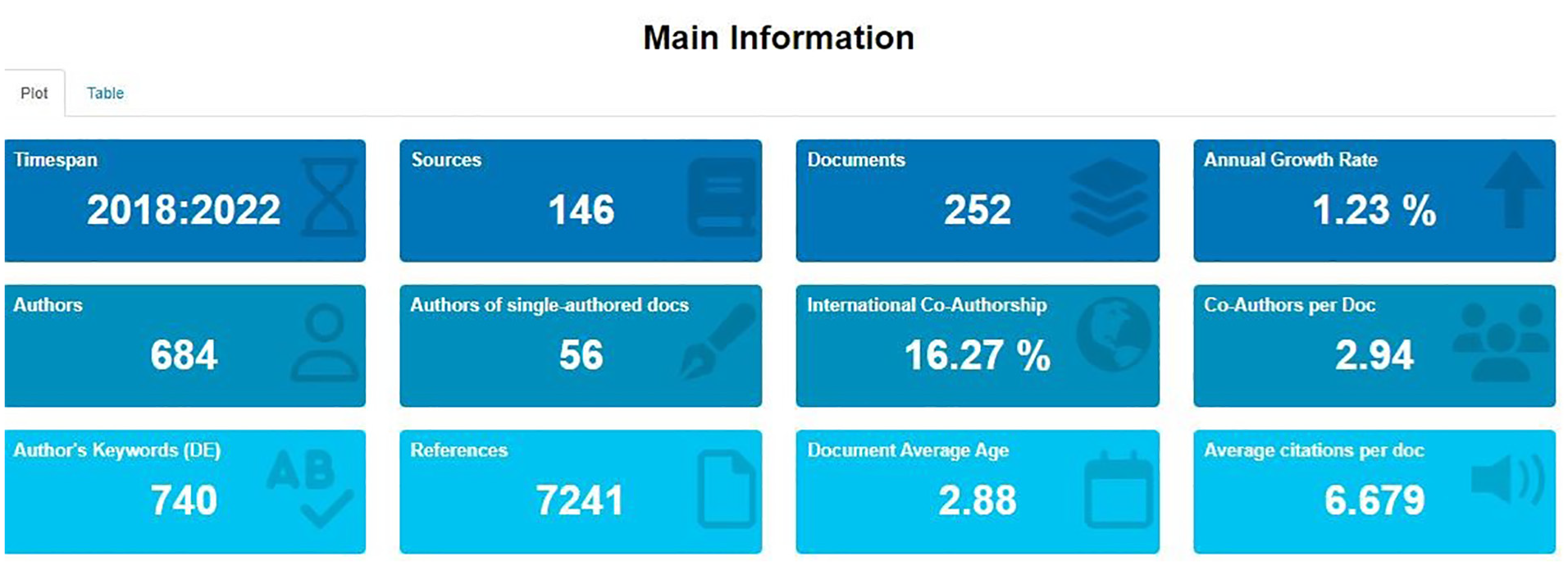
Main information.
Citation Trends
Annual Publication and Citation Trends
Table 1 presents annual publication and citation statistics (2018–2022) for library AI applications. In 2018, 60 publications had a mean citation count of 9.02/article and 1.80/year. In 2019, 35 publications were published, with a higher mean citation count of 16.80/article and 4.20/year. In 2020, 35 publications were published, with a mean citation count of 9.83/article and 3.28/year. 2021 had 59 publications but a lower mean citation count of 2.07/article and 1.03/year. In 2022, 63 publications had a mean citation count of 1.40/article and 1.40/year. The peak impact was in 2019, followed by a declining trend. The data helps assess research trends and the impact of AI applications in libraries over the past 5 years.
Annual Publication and Citation.

Most Global Cited Documents
Figure 3 reveals these papers cover various fields, such as artificial intelligence, machine learning, information science, library studies and more. Some papers have many citations, indicating their impact and influence within their respective domains. For instance, the paper by Nguyen G in 2019, published in the Artificial Intelligence Review journal, has accumulated 313 total citations, with an average of 62.6 citations per year, making it highly influential. Additionally, the paper by Batarseh FA in 2021, published in the Journal of Big Data, has gained 25 citations but stands out with a relatively higher normalised total citation value of 12.09. Overall, the list represents a diverse range of research papers and their respective citation metrics, providing insights into the scholarly impact of these publications.

Most global cited documents.
Collaboration Network
Figure 4 displays displays a collaboration network with cluster assignments, betweenness centrality, closeness centrality and PageRank scores for various nodes. Clusters 1 and 2 contain highly influential nodes, like Chakravarty R, Gupta N, Al-Aamri JH and Osman Nee, who connect collaborators and spread information efficiently. Clusters 3 to 14 have nodes with low centrality scores, but they still contribute to collaborations. This network structure provides insights into collaboration patterns and identifies vital collaborators and potential collaboration hubs, facilitating research community formation and knowledge dissemination. Researchers can leverage this information to foster future collaborations, enhance research endeavours and understand the flow of ideas in the domain.

Collaboration network, visualisation of collaborative dynamics highlighting key influencers and emerging hubs within a multifaceted scholarly network.
Publication Patterns
Top 10 Sources
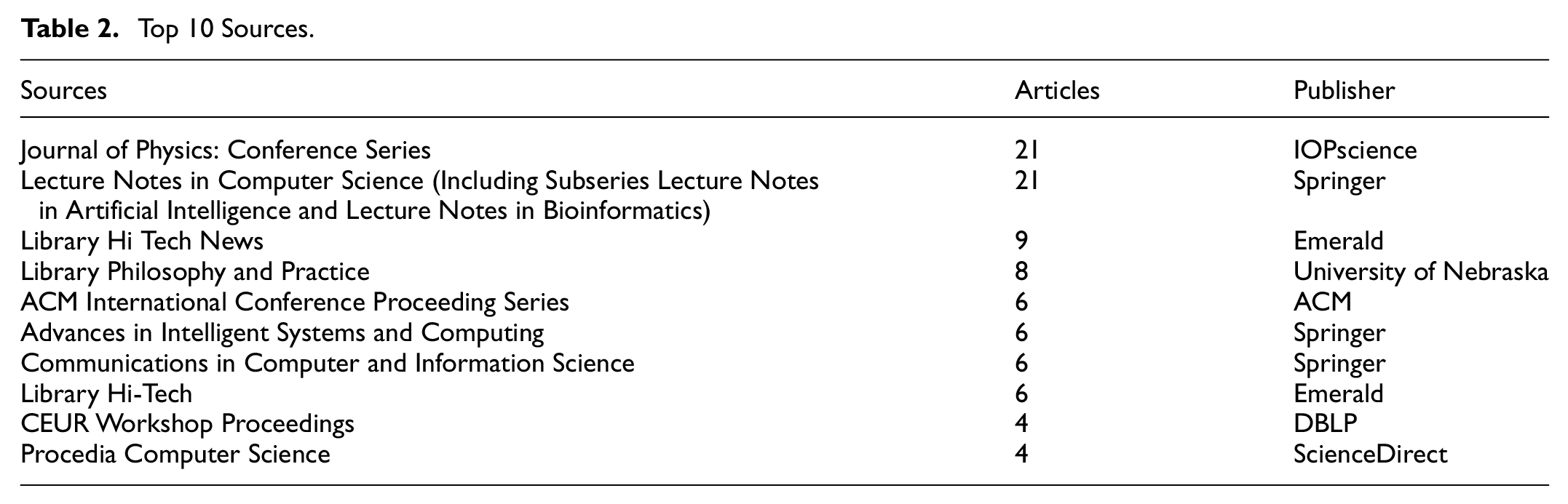
Table 2 analyse the top 10 sources in AI applications for libraries reveals prominent platforms and journals. Journal of Physics: Conference Series and Lecture Notes in Computer Science lead with 21 articles each, showcasing the interdisciplinary nature of AI in libraries. Library Hi Tech News follows with nine articles emphasising the importance of staying updated on AI advancements. Library Philosophy and Practice, ACM International Conference Proceeding Series, Advances in Intelligent Systems and Computing, Communications in Computer and Information Science and Library Hi Tech have six articles each, representing diverse topics. CEUR Workshop Proceedings and Procedia Computer Science have four articles indicating active engagement in AI research at workshops and conferences. This varied range of sources highlights the collaborative, multidimensional approach to exploring AI applications in libraries. Researchers must explore these sources to comprehensively cover AI research in this domain.
Top 10 Sources.
Three Field Plot
Figure 5 provides three-field plot consists of authors, titles and keywords containing 20 items. Analysing the authors may reveal patterns or diversity, but further context, such as affiliations or publication areas, is needed for meaningful insights. Examining the titles can offer glimpses into themes or topics covered, while keywords can reveal common themes or connections among the items. However, a more detailed analysis requires specific access to the titles and keywords. In conclusion, the available information allows for general observations, but additional context and details are necessary to draw specific conclusions about the research trends or themes within the collection.

Author-title-keyword relationship mapping of 20 items, providing an overview of thematic trends and scholarly collaboration patterns.
Sources Dynamics
The publication analysis from 2018 to 2022 reveals Figure 6 significant trends in various journals and conference proceedings. ‘Journal of Physics: Conference Series’ steadily increased interest in physics-related topics. ‘Lecture Notes in Computer Science’ experienced gradual growth, emphasising the focus on computer science, AI and bioinformatics. ‘Library Hi Tech News’ had minimal growth, while ‘Library Philosophy and Practice’ remained consistent with four publications. ‘ACM International Conference Proceeding Series’ showed a rising presence, and ‘Advances in Intelligent Systems and Computing’ remained stable. ‘Communications in Computer and Information Science’ and ‘Library Hi Tech’ steadily grew. Overall, the analysis highlights increasing interest in physics, computer science, AI, and related fields, with some journals experiencing substantial growth and others maintaining consistent publication numbers.

Trends and growth patterns in scholarly publications across diverse fields from 2018 to 2022, highlighting key journals and conferences.
Keyword Analysis
Word Cloud
Figure 7 represents the analysis of frequently mentioned words highlights the significance of artificial intelligence (AI) as the most discussed topic, with 126 mentions. Libraries, in both traditional and digital forms, follow closely behind with 50 and 47 occurrences, signifying their continued relevance in the information age. Learning systems, including machine learning, hold substantial attention with 28 mentions, emphasising the importance of education and knowledge acquisition. The rise of big data is reflected in its 20 mentions, while information services’ role in managing and disseminating knowledge is evident in 16 mentions. Human involvement, articles and research publications significantly advance AI knowledge. Natural language processing, search engines and neural networks also play crucial roles in information access. This analysis illustrates the interconnected landscape of AI, libraries and information systems, shaping our digital era.

Frequency analysis of key terminology in AI and library sciences, depicting dominant themes and concepts in recent discussions.
Most Frequent Words
Figure 8 highlights the analysis of frequently mentioned terms reveals the critical focus areas within the listed documents. ‘Artificial intelligence’ is the most frequent term (126 occurrences), emphasising its central importance in the research. ‘Libraries’ (50 occurrences) and ‘digital libraries’ (47 occurrences) underscore the significance of information management in modern digital environments. ‘Learning systems’ (28 occurrences) and ‘big data’ (20 occurrences) highlight the emphasis on technological advancements in information handling. ‘Learning algorithms’, ‘machine learning’, and ‘data mining’ (each with 15 occurrences) indicate a strong focus on data analysis methods. ‘Information services’ (16 occurrences) and ‘information use’ (15 occurrences) reflect the importance of efficient information dissemination. Other notable terms include ‘classification (of information)’ (13 occurrences), ‘human’ (12 occurrences), ‘article’, ‘computers’, and ‘information retrieval’ (each with 11 occurrences). These findings collectively represent the core themes and topics within the analysed documents, revolving around AI, libraries, digitalisation, machine learning and information management.

Most frequent words.
Word Dynamics
Figure 9 delineates a consistent upward trend in mentioning critical terms related to artificial intelligence, libraries, digital libraries, learning systems, big data and information management over the years. Starting in 2018, ‘artificial intelligence’ gradually increased from 44 to 126 mentions in 2022, showcasing its growing significance. ‘Libraries’ and ‘digital libraries’ also experienced steady growth, reaching 50 and 47 mentions, respectively, in 2022. ‘Learning systems’ and ‘big data’ followed similar patterns, with mentions increasing to 28 and 20, respectively, in 2022. Other terms also demonstrated an upward trend, indicating their relevance in the field. These trends collectively reflect a growing interest and recognition of the importance of these topics within the information management domain.

Word dynamics.
Trend Topics
Figure 10 manifests several trend topics that have gained attention over the years. In 2018, a focus was on learning systems and algorithms, indicating a growing interest in automated learning and decision-making processes. Computer science was also prominent during that year, reflecting its relevance as a subject of study and research. However, the primary trend topic that emerged over the years is artificial intelligence, with a high frequency across all analysed years. The increasing mentions of AI technologies signify its growing importance and popularity across various domains. Data mining also gained attention, reflecting the rising interest in extracting valuable insights from large datasets. Other noteworthy topics include computers, libraries, digital libraries, information management, big data, information services and information use, which have been consistently relevant. In 2021 and 2022, specific focus areas such as library services, digital libraries, and e-learning gained prominence, indicating a growing emphasis on technology-driven enhancements in information access and education. Overall, the trend topics illustrate the evolving landscape of technology and information management, emphasising artificial intelligence, learning systems, and data-driven decision-making and knowledge extraction approaches.
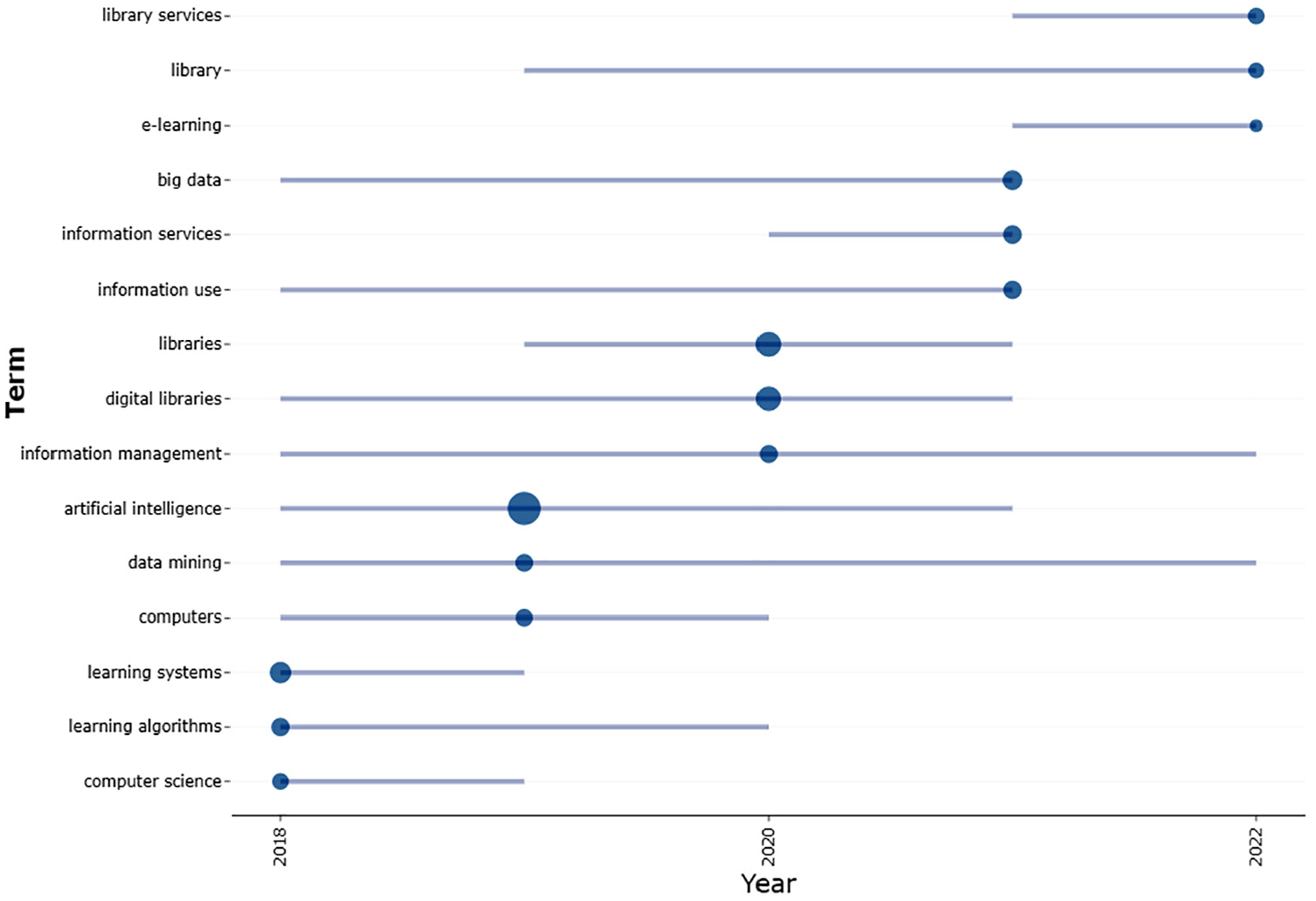
Trend topics.
Research Mapping
Thematic Map
Figure 11 clarifies the thematic map and associated data provide valuable insights into the clusters and their relevance in the dataset. Cluster 1, focused on ‘humans’, exhibits a moderate centrality and density, suggesting its significance in the context. Cluster 2, centred around ‘computers’, has a higher centrality and lower density, indicating its prominence but relatively lower interconnectivity. Cluster 3, representing ‘learning systems’, stands out with high centrality and density, signifying its central role and strong interconnectedness. Cluster 4 focuses on ‘electric power transmission networks’ with lower centrality and high density, suggesting a specific but well-connected theme. Cluster 5, revolving around ‘artificial intelligence’, displays the highest centrality, emphasising its importance, albeit with a moderate density. Cluster 6, ‘face recognition’, shows lower centrality and moderate density. Cluster 7, ‘machine learning’, has substantial centrality and density, reflecting its significant presence and interconnectedness. Clusters 8 to 10 cover ‘article’, ‘mobile applications’, and ‘data science’, respectively, each demonstrating unique characteristics and relevance. Overall, the thematic map helps identify the key themes and their relationships within the dataset, providing valuable insights for further analysis and understanding.

Thematic map.
Co-Occurrence Network
Figure 12 outlines in the bibliometric analysis of artificial intelligence (AI) research trends within library science, the co-occurrence network underscores ‘Artificial intelligence’ as the nexus of scholarly dialogue, manifesting the highest betweenness centrality (660.813) and PageRank score (0.160). This pivotal position underscores AI’s integral role in bridging diverse research areas. Adjacent to AI, ‘Libraries’ and ‘Learning systems’ emerge as substantial nodes, reflecting their significance and interconnectivity in the discourse. The graph also illuminates prominent terms like ‘Learning algorithms’ and ‘Machine learning’, highlighting their role in interlinking research themes. In contrast, emergent concepts such as ‘Internet of things’ and ‘Deep neural networks’ display nascent centrality, suggesting growing yet less established areas of research. Clusters within the network reveal thematic concentrations, signalling scholarly communities and their focal interests. This visualisation of term interrelations offers a nuanced understanding of the AI research landscape in library science, revealing key thematic pillars and evolving domains.

Co-occurrence network, graphical representation of key terms in AI library science research, highlighting centrality and emergent research directions.
Thematic Evolution
Figure 13 exhibits the thematic evolution analysis reveals dynamic shifts in word themes over time. From 2018 to 2020, the focus transitioned from ‘android (operating system)’ to ‘artificial intelligence’ in 2021 to 2022. Notably, the ‘security of data’ concept emerged as a significant topic during this transition, indicating its growing relevance. The theme of ‘artificial intelligence’ remained prominent, with evolving associated words such as ‘digital libraries’, ‘big data’, and ‘search engines’. The transition to ‘automation’ in 2021 to 2022 was accompanied by the rising importance of ‘semantics’ in this context. ‘Artificial intelligence’ also showed a direct continuity with ‘computer circuits’. Other transitions included themes like ‘data mining’ and ‘deep neural networks’ emerging from ‘artificial intelligence’. The shift from ‘human’ to ‘article’ and ‘automation’ indicated its significance in scholarly research and library services. This analysis provides valuable insights into the field’s changing trends and emerging topics.

Thematic evolution.
Factorial Analysis
Figure 14 demonstrates the results of a CoWord Factorial Analysis, where articles are grouped into clusters based on their content similarities. Each row corresponds to an article, and the columns contain attributes such as dimensions (dim1 and dim2) that indicate the articles’ positions in a two-dimensional space. The ‘contrib’ column shows the contribution value, signifying the significance of each article within its cluster. The ‘TC’ column holds the total count, possibly representing each article’s occurrences or other measures. This data analysis allows for understanding the relationships between articles, their clustering and their relative importance within their respective clusters. Additional context or information would be beneficial for further insights or specific queries about the data.
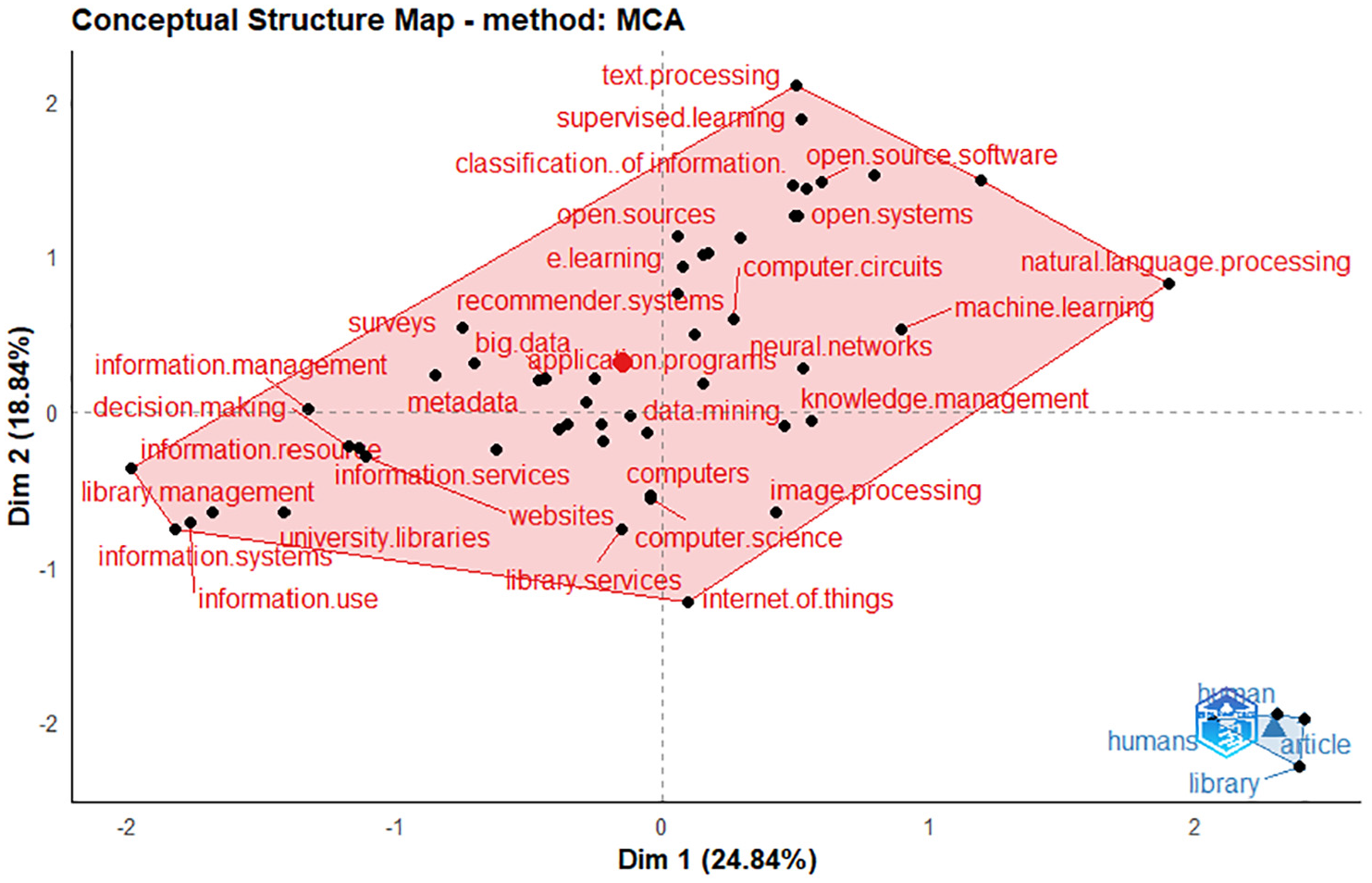
Factorial analysis, multidimensional cluster analysis of scholarly articles by content similarity, indicating influence and distribution in conceptual space.
Co-Citation Network
Figure 15 shows a co-citation network created using VOSviewer, revealing the relationships between scholarly works based on their co-citation patterns. The network is composed of nodes and edges, where each node represents an author or publication, and the edges represent the frequency of co-citations between them. The size of each node reflects the prominence of the publication or author in the scholarly community, as measured by the number of times it is cited alongside other works.

Co-citation network, strategic analysis of co-citation patterns revealing key publications and influence hierarchy within scholarly communities.
The network is divided into several clusters, each represented by different colours. These clusters indicate groups of publications that are frequently cited together, suggesting thematic similarities or shared research areas. For example, the green cluster includes authors like ‘Wu’, ‘Chen’, and ‘Liu’, while the red cluster contains ‘Lin’, ‘Cox’, and ‘Kim’. The network also shows interconnections between different clusters, highlighting influential works that bridge multiple research areas, such as ‘Li’ in the yellow cluster. By analysing these patterns, one can identify key publications and understand the influence hierarchy within the scholarly community. The visualisation helps researchers identify core works in specific fields, track the development of academic thought and discover emerging areas of research. This strategic analysis provides insights into how knowledge is disseminated and how scholarly influence is structured within the community.
Discussion
Bibliometrics, from both a library and AI perspective, serves as a crucial tool for quantitatively assessing scholarly output, collaboration networks and thematic trends, offering invaluable insights into the evolving landscape of research within library science and artificial intelligence (Borgohain et al., 2022; Kaushal et al., 2023; Kumar et al., 2023; Nugroho et al., 2023; Vasishta et al., 2024). The comprehensive analysis of AI applications in libraries from 2018 to 2022 offers valuable insights into the evolving research landscape in this domain. Each facet of the bibliometric analysis, including publication trends, citation analysis, collaboration networks, publication patterns and keyword analysis, provides a multifaceted perspective on the trends and patterns within AI research in libraries.
The analysis of annual publication and citation statistics offers a glimpse into the dynamic landscape of research. From fluctuations in publication rates to variations in citation counts, these trends provide valuable insights into the evolving scholarly recognition and interest (M. N. Islam & Aziz, 2023a, 2023b; M. N. Islam, Hu et al., 2023; M. N. Islam, Islam et al., 2023). The annual publication and citation statistics examination reveal intriguing trends over the 5 years. While the number of publications fluctuates, with peaks observed in 2018 and 2022, the mean citation count per article varies significantly. The peak impact year was 2019, with a mean citation count of 16.80 per article, indicating a substantial scholarly recognition of AI research in libraries during that period. However, a notable decline in mean citation counts in subsequent years suggests a potential shift in focus or interest within the research community. This trend prompts further investigation into the factors influencing citation rates and the enduring impact of AI research in libraries.
Analysing the most globally cited documents sheds light on seminal contributions and influential papers within the field (Borgohain et al., 2022; Nugroho et al., 2023; Vasishta et al., 2024). Papers covering diverse topics, including artificial intelligence, machine learning, information science and library studies, have garnered significant citation counts, underscoring their impact and relevance. For instance, the paper by Nguyen G in 2019 stands out with 313 total citations, indicating its widespread recognition and influence. Similarly, despite having fewer citations, the paper by Batarseh FA in 2021 boasts a relatively higher normalised total citation value, highlighting its significance within its respective domain. These findings emphasise the importance of seminal works and their enduring impact on shaping research agendas and scholarly discourse.
Furthermore, The collaboration network analysis provides invaluable insights into the interconnectedness and collaborative dynamics within the realm (Maghsoudi et al., 2023; Wibowo et al., 2023). The collaboration network analysis offers insights into the collaborative landscape within AI research in libraries. Highly influential nodes, such as Chakravarty R, Gupta N, Al-Aamri JH and Osman Nee, connect collaborators and facilitate the spread of information efficiently. Identifying collaboration clusters and vital collaborators provides valuable guidance for fostering interdisciplinary collaboration and knowledge dissemination. By leveraging the insights from the collaboration network analysis, researchers can identify potential collaboration hubs, strengthen existing partnerships and cultivate interdisciplinary research endeavours to effectively address complex library science challenges.
Regarding publication patterns, analysing top sources reveals prominent platforms and journals driving scholarly discourse (El Archi et al., 2023; Mukherjee et al., 2023) in AI applications for libraries (Vasishta et al., 2024). Journal of Physics: Conference Series and Lecture Notes in Computer Science emerge as leading sources with many articles, reflecting the interdisciplinary nature of AI research in libraries. The varied range of sources underscores the multidimensional approach to exploring AI applications in libraries. It highlights the need for comprehensive coverage across diverse platforms to capture the breadth of research in this field.
Moreover, the keyword analysis offers valuable insights into the thematic focus and interconnected landscape (Albahri & AlAmoodi, 2023; Lim et al., 2024; Wider et al., 2023) of AI research in libraries. Artificial intelligence is the most discussed topic, emphasising its central importance in research. Libraries, learning systems, big data, and information services are also prominently featured, reflecting the multifaceted nature of AI applications within library contexts. The interconnectedness of keywords underscores the complex interplay between AI, libraries and information systems, shaping the digital era’s information landscape.
Finally, the thematic evolution analysis provides a nuanced understanding of the changing trends and emerging topics (Manire et al., 2023) within AI research in libraries. The transition from Android operating systems to artificial intelligence and automation signifies evolving research priorities and technological advancements driving research agendas in library science. Themes such as digital libraries, big data and automation have gained prominence over time, reflecting the increasing emphasis on technology-driven enhancements in information access and management.
In conclusion, the comprehensive bibliometric analysis offers a holistic perspective on the trends and patterns of AI research in libraries, encompassing publication trends, citation analysis, collaboration networks, publication patterns, keyword analysis, and thematic evolution. The findings provide valuable insights for researchers, practitioners and stakeholders in understanding the evolving landscape of AI research in libraries, identifying seminal contributions, fostering collaboration, and shaping future research agendas in this dynamic field.
Implication of the Study
Theoretical Implications
The theoretical implications of this study are far-reaching, providing insights into the intersection of artificial intelligence (AI) and library science from a bibliometric perspective. By elucidating publication trends, citation patterns, collaboration networks, and thematic evolution within AI research in libraries, this study contributes to theoretical frameworks in both AI and library science domains. The findings underscore the significance of AI in transforming library services, knowledge organisation and scholarly communication. Moreover, identifying seminal contributions, influential authors, and collaboration patterns inform theoretical discussions on interdisciplinary collaboration, knowledge dissemination, and scholarly impact within library science research. This study enriches the theoretical understanding of AI’s role in libraries. It informs future research directions aimed at harnessing AI’s potential to enhance library services, optimise resource management and facilitate equitable access to information.
Practical Implications
The practical implications of this study are substantial, offering actionable insights for stakeholders in library science, academia and technology sectors. Firstly, for librarians and library professionals, the findings provide valuable guidance for leveraging AI technologies to enhance user experiences, streamline operations, and optimise resource management. By understanding publication trends, collaboration networks and thematic evolution within AI research in libraries, librarians can make informed decisions regarding technology adoption, service development, and staff training initiatives.
Secondly, for researchers and scholars, the study offers a roadmap for identifying key research themes, seminal contributions, and influential authors in AI applications for libraries. This information facilitates interdisciplinary collaboration, promotes knowledge dissemination and informs research agendas addressing emerging challenges and opportunities in library science.
Thirdly, for policymakers and funding agencies, the study highlights the growing importance of AI in libraries and underscores the need for strategic investments in research, infrastructure, and workforce development. By prioritising AI research in library settings, policymakers can support innovation, drive technological advancements and ensure equitable access to cutting-edge library services for diverse communities.
Overall, the practical implications of this study extend beyond academia, empowering stakeholders to harness the transformative potential of AI in libraries and drive positive change in information management, scholarly communication, and user engagement.
Future Research Direction
Future research in AI applications for libraries should focus on several key areas to advance knowledge and address emerging challenges. Firstly, there is a need for longitudinal studies to track the long-term impact and sustainability of AI interventions in library settings, assessing their effectiveness, scalability, and user acceptance over time. Secondly, research should explore AI adoption’s ethical, legal, and social implications in libraries, including privacy, bias, and algorithmic transparency issues. Thirdly, there is a growing need for interdisciplinary collaborations between AI researchers, librarians, and information scientists to develop innovative AI-driven solutions tailored to specific library contexts and user needs. Additionally, future research should investigate the potential of emerging AI technologies, such as natural language processing, machine learning, and deep learning, to address complex challenges in information retrieval, knowledge organisation, and user services within libraries. Overall, future research directions should prioritise interdisciplinary collaboration, longitudinal studies, and ethical considerations to maximise the societal benefits of AI in library science.
Conclusion
In conclusion, this study aimed to explore trends and patterns of artificial intelligence (AI) research in libraries through a comprehensive bibliometric analysis. The findings of this study reveal a consistent growth in AI research output within libraries, indicating sustained interest and relevance in this field. Analysis of citation patterns highlights the impact and recognition of AI research within scholarly discourse. Moreover, examining collaboration networks underscores the global engagement and knowledge dissemination efforts among researchers in this domain. The thematic analysis identifies vital research themes and emerging topics, providing valuable insights for future research directions.
Overall, the study demonstrates the significant contributions of AI to libraries, including enhanced information retrieval, knowledge organisation, and user services. The results support the importance of interdisciplinary collaboration, ethical considerations and longitudinal studies in advancing AI applications in library science. By shedding light on the evolving landscape of AI research in libraries, this study contributes to a deeper understanding of AI’s transformative potential. It informs strategic decision-making for stakeholders in academia, library professions and policymaking.
Footnotes
Acknowledgements
Both Authors contributes equally
Declaration of Conflicting Interests
The author(s) declared no potential conflicts of interest with respect to the research, authorship, and/or publication of this article.
Funding
The author(s) received no financial support for the research, authorship, and/or publication of this article.

Availability of Data
Data available upon request to corresponding author via email