




Abstract
Technology has been an indispensable tool for education following the COVID-19 pandemic. Some habits adopted during that period, such as remote learning and teaching, have not yet been wholly abandoned, even if they occur in a minor measure since they can improve learning by adopting technology and developing technological skills. The research question is: How does technology influence the improvement of remote learning? The main objective is to provide information about the influence of technological advances on education, allowing people to become “smarter” according to Transhumanist theory, despite the results of learning losses, during the pandemic. To answer the main question, we considered the Mexican case during the pandemic, and a perspective for future years will be presented by re-examining those teaching practices related to the learning acquired using technological tools during that period. Following a mixed approach, we conducted a literature review analyzing and triangulating documental and theoretical works. Furthermore, we undertook a quantitative analysis to study the possible relationship between technological advances, learning losses, and the human condition with remote learning during the pandemic. The results proposed mostly a negative relationship amongst the variables considered, as students preferred face-to-face learning over remote education.
Plain language summary
This research studies technology following the COVID-19 pandemic. We provided information about technological advances on education, particularly Transhumanism and Artificial Intelligence, as those tools allow students to become smarter.
Introduction
In this age of information overload, a nuanced understanding of how and to what extent technology impacts all aspects of life is necessary to comprehend the adjustments needed in humanity. According to Schleicher (2020), during and after the COVID-19 pandemic, the education sector was among the most affected. In a precarious context, technology has become nearly ubiquitous in fulfilling citizens’ needs (Bennett Gayle et al., 2021, p. 352).
After the decision to translocate education to digitalization via Zoom, Teams, or other technological tools, it became mandatory that students get accustomed to new digital tools and teaching modalities (Rodríguez-Galván et al., 2024, p. 1193). Simultaneously, parents, caregivers, and teachers had to be ready to support their students during this transition to digitalization (Mascheroni et al., 2021).
Overall, remote education has struggled in different aspects of life, and humankind has changed its understanding of technology (Liu Baergen, 2024, p. 166). Focusing on education, as Budhwar (2017) stated, we need to strengthen education in the most technologically advanced way. Notwithstanding, its importance has never been more apparent, and it is highly likely to continue developing in this new reality, as it is unquestionable how the pandemic forced technology (Tomei et al., 2024).
The focus of this paper is on Mexico, a country in which the adoption of new technologies is in its earliest stages, considering that some regions in the country do not have Internet services (Valle-Cruz & Sandoval-Almazan, 2020, p. 39). During the pandemic, the State directed its resources toward educational television, implemented through a public-private partnership. Although multiple efforts to set up a supportive remote learning experience took place, evidence has proved that it has resulted in actual learning losses (Barron-Rodriguez et al., 2020), creating the effect known as unfinished learning (Dorn et al., 2021). The latter refers to the reality that students did not have the same opportunities to complete a scholar year as they would in a “typical” year and did not have the exact expectations (Kelly & Cuccolo, 2024, p. 16). Consequently, the program proposed by the Mexican government could have been more efficient nationwide (Cárdenas et al., 2021).
This paper studies technology up to Transhumanism to adequately answer the research question: How does technology influence the improvement of remote learning? The limitations of this research are that it only considered 100 people from the sample, and results cannot be generalized even if it has been conducted rigorously with a 5% error margin in the quantitative analysis. It only considered Mexico as a country in which technology was implemented very abruptly during the pandemic for learning practices but it shows the role of technology at that time and in years to come.
Its relevance consists of the fact that humanity needs more efficient tools to determine how to beware of the hereafter and prepare for a catastrophe, such as a pandemic, as we will most likely not be better prepared than we were in 2020 (Lau, 2022, p. 185).
Background
Technologies are developed so that human beings can do things not otherwise possible by doing them faster, cheaper, and more accessible (Volti & Croissant, 2024, p. 5). Thus, it has a clear impact on humanity and the development of human beings. In previous decades it was mostly considered a positive effect, a tool for improvement; on the contrary, the advancements have been so immense that it is now questioned if those advances could lead to our destruction, as Lacy (2024, p. 567) stated, a “creative destruction.”
These improvements with the impulse of technology have helped define our daily lives, particularly since the creation of the Internet, and it continues to be necessary to promote the spread of new technologies around the world to address sustainability challenges (Wolff, 2021).
There have been some fundamental technological advances guided by the outbreak of the COVID-19 pandemic, particularly in a context where technology already existed, and humankind has used it. However, in the majority, it was not a necessity but rather to make lives easier (Ali, 2020). The Human Development Report (United Nations, 2021) stressed that technologies enable people to increase their incomes, be happier, live longer, have a better standard of living, and be more creative. Therefore, technology is used to sustain lives from home, promoting and enabling businesses to continue running, such as online shopping from occasional to other complex actions (Renu, 2021).
Technology has been implemented even more, and its associated challenges have been refined—for example, the issues with system security and personal privacy (Mayes et al., 2015). Simultaneously, as the pandemic spread, the barriers related to the above were diminished or eradicated. The Organization for Economic Cooperation and Development (OECD) stated three policy responses to the COVID-19 situation: pandemic preparedness, crisis management, and response and recovery (Salama, 2022), and most countries worldwide are now in the third step. Education technology must be further studied following Selwyn’s (2023, p. 186) proposal of technological “degrowth” to use digital technologies more responsibly, sustainably, and humanely.
In the case of Mexico, there are advantages and disadvantages regarding the use and extent of technology. On the positive side, Mexico’s biggest mobile subsidiary operator, Telcel, has launched a 5G network (Tomás, 2024). It predicts that by 2025, there will be over 77 million e-commerce users in the country due to all the improvements in connectivity, logistics, and financial inclusion (Van Laack, 2022). Nevertheless, from a different point of view, despite the millions of dollars invested in infrastructure for technology and education, Mexico is a disruptive innovation and an adaptive challenge (Bonilla-Rius, 2020, p. 119), meaning that students are not learning equally, primarily due to technological issues.
Educational television failed during and after the pandemic, and the main reasons should also be explored. According to Lobos et al. (2023, p. 20), strong reasons are students’ need for constant follow-up, monitoring, evaluation, and access to technology, as those are interconnected elements that create a successful education. Moreover, it is also necessary to restructure how distance education works and make a prospective analysis of how to be accurately prepared for another similar event (Topçu & Hirst, 2024).
It is uncertain if a phenomenon of this magnitude will be repeated; nonetheless, after the SARS-CoV-2 experience, humankind could be more prepared (Brüssow, 2024). This last is indispensable mainly in education, considering that learning losses are growing and artificial intelligence is also taking its space. Experts think these translate to even more significant long-term challenges, such as future declines in employment (Donnelly et al., 2021) and the establishment of different kinds of jobs.
As we will see in the next section, some theoretical frames, such as Transhumanism and newly developed tools like artificial intelligence, clarify that there is no way back in advancing and adopting technology as the best ally in daily activities.
Literature Review
This section presents two of the most notorious expressions of technology: Transhumanism, which increases people’s capacities, and artificial intelligence, which impacts daily activities. Both challenge human cognitive capacity (Neubauer, 2021, p. 1), and both are related to education as they have a common ground: they can reimagine education (Sari et al., 2024).
Transhumanism and Its Relationship With Education
Transhumanism is a broad movement focused on techno-scientific progress to achieve human development (Gómez Redondo et al., 2024, p. 179). Its primary goal has been to transcend human limitations concerning bodies and minds (Çavuş, 2021) since its beginning in 1990. Nevertheless, the concept was first introduced in Dante’s Divine Comedy. Dante Alighieri was the first person documented to define that type of change within a human being after he considered it a prophecy that a shift in humanity was approaching and leaving behind the Renaissance’s ideas (Hall, 2020).
Transhumanism is relevant in the current world as it has roots in secular humanist thinking yet is more radical. It relies not only on traditional means of improving human nature but also uses technology to overcome some of our fundamental biological limits (Bostrom, 2003).
Transhumanism is related to education on several levels, as they have the same objective of human enhancement. The proper philosophy of education comprises the desirability of using technology to enhance education and the idea of education itself as a form of technological “enhancement.” (Porter, 2023, p. 484). As More (2013, p. 4) articulated: “Humanism tends to rely exclusively on educational and cultural refinement to improve human nature, whereas transhumanists want to apply technology to overcome limits imposed by our biological and genetic heritage.”
It is important to note that Transhumanism upholds humanist ideals, with the added belief that human potential can be transcended (Grant, 2019, p. 40) by applying technology to maximize knowledge. These two aspects are not in opposition but rather complement each other; similar to Lipowicz’s (2019) proposal, the author retakes Nietzsche’s notion of educational self-overcoming and the idea that it is compatible with the idea of biotechnological self-enhancement proposed by Transhumanism. Education, driven by technology, is evolving into remote education, and one of its key advantages is its ability to transcend the limitations of traditional learning:
Many adherents of transhumanism are engaged in improving education. They critically evaluate classical education, emphasizing that in a traditional or industrial education system, there are regressive severe restrictions: certification, subject matter, limitations of cognitive ability and development, monotonous and routine presentation of information, and irrelevant knowledge (Khvastunova, 2020, p. 885).
Furthermore, Transhumanism seeks to develop longevity research, and within this purpose, education must be enforced, focused on humanity’s future, and thinking on a grand scale (Mularoni, 2024). A survey conducted by the Pew Research Center demonstrated that 40% of Americans used technology in new ways after the pandemic (McClain et al., 2021). As a solution, transhumanists pretend to solve problems with technology to a point in which we will become new humans, more advanced and more brilliant, with the objective of “attacking” human narcissism (, 2024).
In the event the world faced from March 2020 until the World Health Organization declared the end of the pandemic, society has been on the edge of survival (Alizadeh et al., 2023). To fight that, Transhumanism suggests that humans can employ new brand technology to reshape their human existence (Sharma & Makhija, 2024). For example, COVID-19 could have been anticipated with transhumanist capacities, as stated by Raymond Kurzweil, who is “a prominent and often quoted AI predictor” (Armstrong et al., 2014, p. 332).
In The Singularity is Near (2006), Kurzweil wrote about a Singularity, which is a metaphor to capture a radical shift in human intelligence, where technological change will be so rapid that life will be irreversibly transformed (Kurzweil, 2006, 2024). Although when The Singularity is Near was published almost two decades ago, Kurzweil proposed that it would occur in 2045, “In the early 2020s, we entered the sharply steepening part of the exponential curve, and the pace of innovation is affecting society like never before” (Kurzweil, 2024, p. 4).
It means that after the COVID-19 pandemic, it is necessary to rethink and anticipate everything. The pandemic proved we are stuck in biological limits, where technology was the only possible way of continuing education, even with life. The quick development of vaccines evidence this. Nevertheless, technology alone cannot transform education (Reich, 2020). However, Transhumanism can do so; consequently, it could be viable if humans are open to new technological challenges (Arakelyan et al., 2020).
Therefore, Transhumanism and education are not separated; on the contrary, the need for and use of technology will always unite these areas, particularly shortly. Vita-More (1998) views Transhumanism as a philosophy and a vision of the world that is similar to education in that both are destined for the betterment of all societies. Pokhrel and Chhetri (2021) emphasize that thanks to technology, education has found a way of moving forward in a world entire of uncertainty, chaos, and fear, such as a global pandemic, complementing Vita-More’s idea of Transhumanism helping society to move forward.
It also retakes the transhumanist idea of the importance of getting smarter, as education about humanity’s future must be expanded, simultaneously supporting individual ethics to improve humans. Kurzweil determined six upward S-curve trends, which grow faster and higher each time. Each curve represents a historical epoch, represented in Figure 1.

The six epochs of evolution according to Ray Kurzweil.
Kurzweil (2024) states we are in the Fourth epoch. After this, higher forms of life and intelligence will be formed. The last epoch can be called the one in which the universe wakes up (Klichowski, 2014). The pandemic accelerated these processes significantly, and how far along we are from Epoch 6 needs to be restructured.
That awakening will debilitate the human condition, as the more technology is incorporated, the fewer biological aspects one will have. According to Arendt (1998), the principles of the human condition are three: first, it must be related to the biological conditions in which human beings are subjects. Second, humans would exist in a natural environment (as the artificial world is durable, which is not the human reality). Finally, humans can act and communicate among themselves.
Referring to Arendt’s second principle to live in nature, nature is defined by Hauskeller (2013) as the emotions humans have and cannot be fully controlled due to our relative lack of intelligence, parting from the fact that we use a small percentage of our brain capacity and our propensity toward evil reflects our moral’s flaws. Thus, changing the human condition requires a change of human nature (Hauskeller, 2013) through accepting our fragile mortality.
Generally, technologies developed remained external to the human body (Silva Souza et al., 2020). Humans are still in the technological revolution’s transition to improve the human species’ biological and moral conditions (Grinin et al., 2024). Humankind was a vulnerable host during the pandemic, which invited robots and drones to fulfill those needs that humans were limited by their condition (Wheeler, 2024).
As commented by Le Breton (2008), human dependence on new technologies is the driving factor in the trivialization of the body. Transhumanists also refer to adopting technologies in the human condition as the necessity to enhance intellectual, physical, and psychological capacities, which define being human, going even further to overcome all fundamental limitations (Hjelm, 2020). That includes avoiding suffering from diseases, aging, and inevitable death.
The central aspect of the human condition are sentiments such as fear and uncertainty, or any feelings machines do not face and cannot compromise their jobs. An empirical study conducted by Khudaykulov et al. (2022) demonstrated a relationship between COVID-19, job insecurity, anxiety, and depression. Altogether, the aspects studied beforehand merge: the COVID-19 pandemic affected the emotional element that characterizes humans and creates negative feelings.
Other aspects affect performance and are also related to feelings. For example, social isolation can be described as a state in which there are inadequate social interactions and an absence of contacts and connections with people (Masoom, 2016). It is considered a risk factor in the development of social situations. It can be related to a lack of sense of belonging, a social construct of relatedness to people and fundamental to social well-being (Biordi & Nicholson, 2008).
Especially since the outbreak of the COVID-19 pandemic, D’Hombres et al. (2021) stated that levels of social isolation had magnified altogether, with a feeling of consequences in the long term. Aristotle (quoted in Pietrabissa & Simpson, 2020) reminded us that man is a social animal, unable to live isolated from others, even though it was necessary to limit the spread of the virus.
Moreover, D’Hombres et al. (2021) commented that feelings of social isolation may drive lonely individuals further from others, as loneliness affects behaviors. Even further, Zavaleta et al. (2014) explain that the social environment is crucial to understanding the connectivity of every human being. In this sense, it is linked to the sentimental aspect we have studied; it is part of the human condition.
There are also some psychological disorders as consequences of COVID-19, such as anxiety, panic, obsessive-compulsive symptoms, insomnia, digestive problems, depressive symptoms, and post-traumatic stress. These are not a consequence of the pandemic but prolonged social isolation (Pietrabissa & Simpson, 2020). Recently, in 2024, Brunett et al. (2023) discovered a generalized anxiety disorder in students after the COVID-19 pandemic.
To fight this, Hwang et al. (2020) proposed tips to help eradicate such feelings. For example, spend time with family and use the opportunities provided by the pandemic and isolation. Second, manage emotions, cognition, and moods appropriately; this means conscious breathing, meditation, and relaxation techniques. Finally, one proposal consists of maintaining social connections with technology, such as social media, since online connectivity helps people feel closer to each other and fulfill their emotional needs.
Technology evolves independently of the environment. One widely used tool that has been present everywhere since many years ago but has become particularly prominent in recent years, mainly in educational processes, is Artificial intelligence (AI). This element is one that we cannot ignore when discussing human and technological advancements, as we will see in the next section.
Artificial Intelligence: Uses and Impacts in Education
From the perspective of AI, a computer-controlled device can perform tasks in a human-like manner (Goksel & Bozkurt, 2019). It was a helpful driver during the COVID-19 pandemic, as AI and machine learning experts monitored and predicted using real-time data about the pandemic worldwide (Toro et al., 2021).
Before the pandemic, their use in education was minimal. AI algorithms were mainly used to detect plagiarism (Pantelimon et al., 2021), but it tends to change to have a more active role in teaching and learning processes. Balaram (2021) mentioned the importance of automation during the Coronavirus pandemic, as it increased the efficiency of resources and time. In 2018, in the Horizon report, experts anticipated that the use of AI in education would grow by 43% by 2022; however, they could not expect a global pandemic to impose it (Kengam, 2020).
In education, AI is beneficial on many levels: it can determine the factors that influence students’ performance and improve the quality of education (Pantelimon et al., 2021), curriculum design (Stolpe & Hallström, 2024, p. 7), and overall, as Chiu (2023, p. 2) states: “The entrance of generative AI has already impacted school education in at least four domains: teaching, learning, assessment, and administration.”
Particularly in the Mexican case, universities such as the Instituto Tecnológico y de Estudios Superiores de Monterrey (ITESM) have implemented Artificial Intelligence in their courses, creating immersive technology classrooms, in which teachers are able to impart classes and students follow a camera and all immersed in the experience (Treviño, 2021).
Another example is the creation of the ITESM’s Metaverse. It is a 3D virtual world created by the Institution, where students develop their avatars and can take classes and spend time together (Villanueva, 2022). The Metaverse was designed to assimilate students’ daily lives before the pandemic struck: it had gardens, conference rooms, classrooms, and cafeterias, amongst others. The use of AI, virtual and augmented reality was employed to create it, eliminating the barrier between technology and education, as it extended the learning process (Villanueva, 2022). Students could enter a virtual world and make the experience fully immersive.
Although there was an issue of privacy and responsibility that needed to be addressed, subsequently, in 2023, the Rector for Higher Education of the ITESM invited all students to use AI, but in an intelligent, careful, and ethical way, particularly technology such as Chat GPT, which can facilitate the learning process but must not be used for academic misconduct or plagiarism (Torres, 2023).
Those considerations impact two levels: teaching practices for educators and student learning acquisition. In terms of teaching practices, the concept involves a cyclical process through which the educator develops their teaching skills. The educator first engages in learning how to teach and subsequently applies this knowledge in their instructional methods (Julião et al., 2014). From one point of view, implementing distance education as a way to reciprocate teaching practices is practical and accessible but with some restrictions; for example, learners have to employ technology to communicate (Alsayed & Althaqafi, 2022), and develop technological skills to make learning a real and integrative process.
From another point of view, after the experience of the COVID-19 pandemic, guidance on distance is considered an imperfect substitute for in-person learning (Patrinos et al., 2022). Its flaws vary, but the most significant barriers are that they are only effective when students have consistent access to the Internet and computers and if teachers have enough training and support to give online instructions correctly (Zhdanov et al., 2022)—also, considering that around the world, there are essential economic disparities that are noticeable in aspects such as technology.
Nevertheless, one common ground regarding remote education is that it is possible, given the rapid developments in technology, as the term incorporates within itself the ability to use a computer connected to a network (Dhawan, 2020). That fact is particularly worrying, as a study conducted by Lera and Cantú (2024) demonstrates that in rural communities, only 4% had access to the Internet.
As a consequence, the Mexican case also had downsides in learning acquisition. Nevertheless, it is necessary to emphasize that incomplete learning and simply forgetting subjects are natural parts of teaching and learning (Quigley, 2024). That means all students are subject to an incomplete learning process in specific topics. We testify to the two faces of the same coin: Those who have the elements to learn using technology and those who don’t even have access to technology.
In addition, a study conducted by Fahle et al. (2024) revealed inconclusive results regarding whether students have reached pre-pandemic levels of achievement, suggesting that the COVID-19 pandemic had a long-lasting effect on education. The repercussions are worrying and adverse, causing learning losses, which refers to the decline in student knowledge and skills that, in the long term, can negatively affect other aspects related to their future capacities (Patrinos et al., 2022). This is also why a step behind that is learning to use technology for our current development has been visualized. Technology is not the problem; it is the skills to develop and benefit from technology.
That is why it is essential to delve into how students acquire education and how they get the information. Boose and Gaines (1989) define knowledge acquisition as how technology contributes to the development of knowledge-based systems. Generally, during the COVID-19 pandemic, all knowledge acquisition was forced to be automatized, creating “involuntary online learners” (DeFeo et al., 2024). Some of these tools to continue imparting lectures and spreading knowledge were digital workspaces, document sharing, Padlet-type collaborative walls, and multimedia creation tools, among many others (Jacques et al., 2020).
It is also important to mention that efforts were mostly made in higher education, as students are accustomed to using the Internet, consequently calling the generations after the year 2000 the “Digital Natives” (Mertala et al., 2024). Those generations are used to maximizing their chances of comprehending all possible information using massive open online courses or collaboration platforms via live video, such as Zoom or Microsoft Teams (Jacques et al., 2020).
Despite that, Damstra and Hameleers (2021) created a study in which knowledge was analyzed in traditional and digital ways. The results demonstrated that the acquisition of learning declines in remote education. Thus, there is a relevant question regarding if the tools of learning acquisition need to be improved and how to tackle them.
Method
To answer the research question: How does technology influence the improvement of remote learning? And to attain the main objective that is to provide information about the influence of technological advances on education, allowing people to become “smarter” according to Transhumanist theory, we propose establishing relationships based on the variables of technological advances, that involve a sub-variable: artificial intelligence; teaching practices linked with the learning acquired, represented by learning losses and the human condition, seen through social isolation with remote learning and analyzing them quantitatively.
To this end, our research null hypothesis (Ho) is That technological advances, teaching practices, and the human condition did not promote positive remote learning in the pandemic era but could do it further without being forced to use it abruptly but in a planned way.
The literature review helped to provide a theoretical frame considering the union between a global pandemic, a rise of technological advances (the mentioned artificial intelligence), and Transhumanism, as Nick Bostrom, -prominent transhumanist thinker with a specific vision of human enhancement (Thomas, 2024, p. 159)-, justifies that contemporary humans lack the intellectual capabilities to fully understand a qualitatively different, supra-human existential condition of the future.
Participants
The quantitative aspect was relevant to the study of these variables. We calculated the sample size of students in Mexico from the university level in 2022, which was the last year the National Institute of Statistics and Geography in Mexico presented this data, thus, that was the public involved in our research; this number was 1,165,186 (INEGI (National Institute of Statistics and Geography), 2023).
The sample size must be 384 participants to generalize results; nonetheless, we considered 100 participants with a 95% confidence level, even if the results cannot be generalized. A survey was conducted first and tested with 10 participants not considered in the sample. Three questions were changed and reformulated after the pilotage, and after the changes were provided, they were sent to the participants as part of our public target.
The participants were selected through non-probabilistic volunteer subjects. The sample answered the convenient kind with the requisite of studying at University when we collected data and studied during the pandemic, from the first to the ninth semesters. They were contacted by people from the university and students actively studying during the pandemic. Their answers were utterly anonymous, respecting ethical principles.
Design
On the one hand, our research, designed as a transactional study, aimed to explore the global experience of distance learning during the pandemic, as a worldwide experience. We collected data at a specific moment, considering the unique circumstances of students who were isolated but not constantly monitored. This approach allowed us to capture a snapshot of their distance learning experience, making our findings relevant to the paper.
A questionnaire was applied to those students accepting to participate in the survey. It was integrated by 16 questions, which included demographic variables such as age, gender, and whether they were employed or not. The variables involved with our subject were online education, kinds of technologies such as machine learning, virtual reality, and or augmented reality, their perception of knowledge or the lack of it, their preferences to learn face-to-face or at a distance away, and social isolation, their management and how hard was it as well as the use of social networks during and after the pandemic. On the other hand, we used a documental design for the qualitative part based on the triangulation of documents and authors.
Data Treatment and Analysis
Using the statistical software SPSS, we analyzed this data to find if there was a correlation between mentioned variables. In this sense, our statistical hypothesis is: There is a relationship between the independent variables: technological advances (w), Hi:Rwz ≠ 0; teaching practices (x), Hi:Rxz ≠ 0; the human condition (y) Hi:Ryz ≠ 0 and the dependent variable, remote learning (z), with their null correspondent hypothesis: There is no relationship between technological advances (w), Ho:Rwz = 0; teaching practices (x) Ho:Rxz = 0; the human condition (y), Ho:Ryz = 0, one by one, and the dependent variable, remote learning (z).
Theoretical concepts are relevant to Transhumanism and the development of technology, as well as empirical data about education and online learning behavior, especially in the past years (Queen, 2021). Nevertheless, it also needs to be considered that it is not very sure that the same results will be achieved everywhere in education. The reason is that technology and the quality of materials differ in every part of the world.
Results and Data Analysis
The following relationship map (Figure 2) provides a glance at this subject and a general panorama of our findings. It includes variables such as age, gender, the kind of technology used during the isolation period, the participants’ experience with this last condition, and their perception of learning.
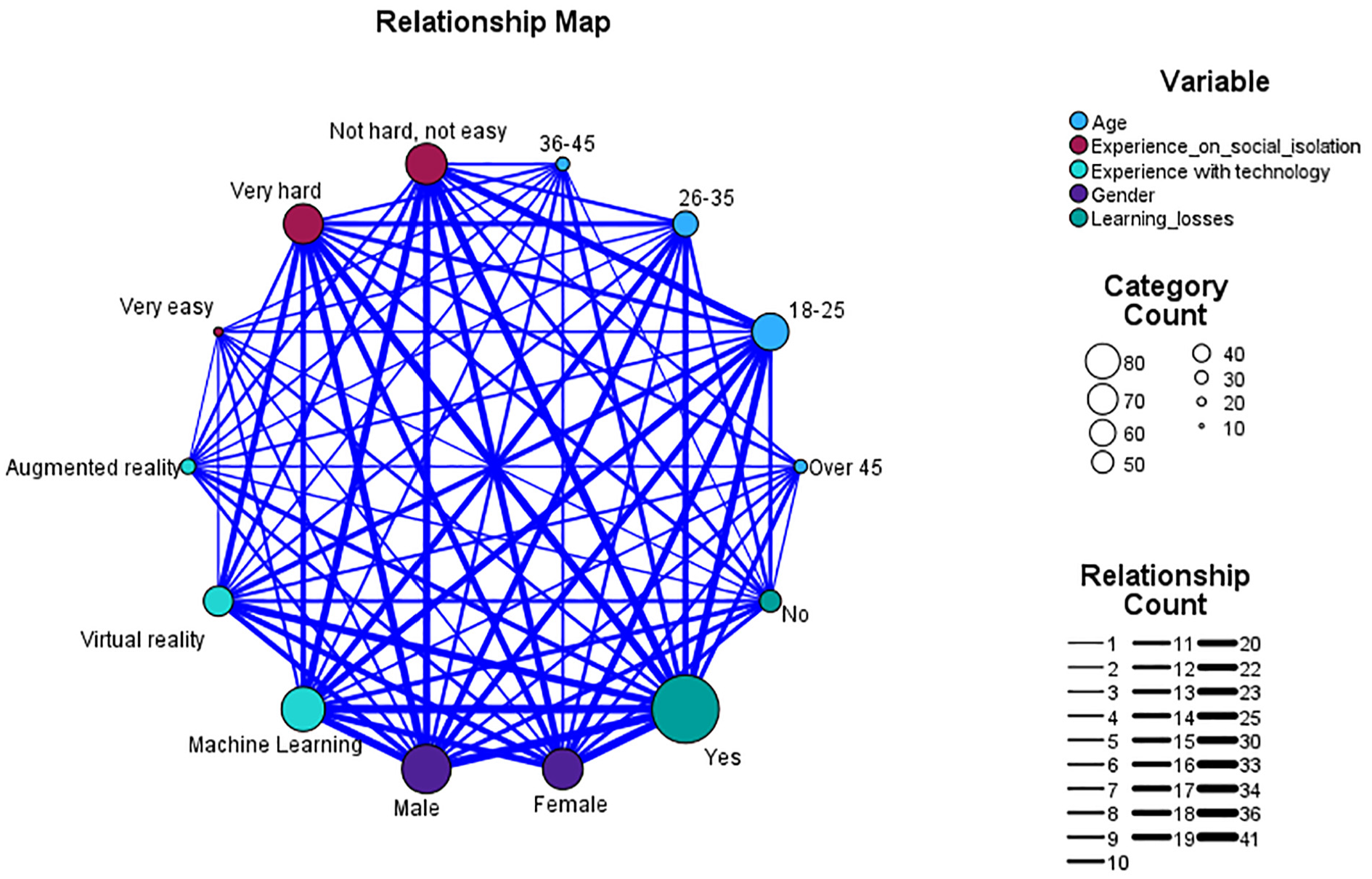
Relationship map of main variables.
We found that for males the isolation was a harder experience than for women; and regarding ages, it was harder for those between 25 and 35 years old than for other age groups. However, nobody considered isolation a “very easy” condition, even less for those over 45. That allows Aristotle’s affirmation of our zoon social nature.
Regarding their learning experience, all the groups manifested learning losses associated with social isolation and the consequent use of technology. Still, those who report higher losses used machine learning, followed by people using virtual reality. In this sense, augmented reality is more efficient to reduce those losses.
The age group using machine learning is the younger one, which confirms what we just mentioned before starting this section. Technology needs to be implemented gradually, and a teaching practice that incorporates advanced technologies remains a pending matter, preferring augmented reality over others that are more sophisticated, which simultaneously reduces the possibilities of content. Moreover, at the same time, it shows that the group that we could consider the more technologically developed one still needs to adopt and integrate technology into their current life without being as natural as we could think.
This information confirms what we can observe in Table 1: technological advances, such as machine learning, do not promote a positive experience with technology since the asymptotic significance is very high. This means that technology needs more than to be renewed to be accepted and used, at least in the educational sector.
Pearson’s Chi-Square of Experience With Technology and Acquired Learning.
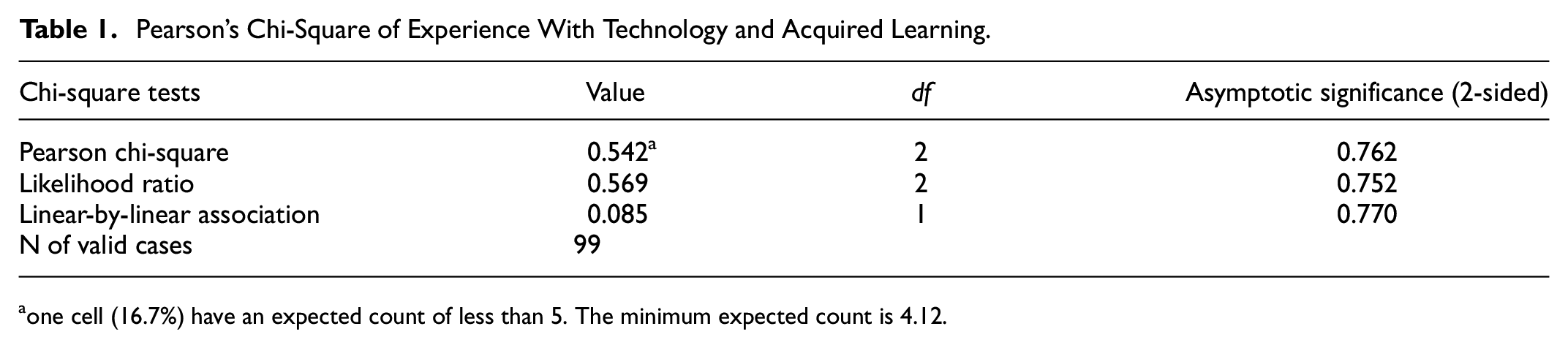
one cell (16.7%) have an expected count of less than 5. The minimum expected count is 4.12.
To establish a possible relationship between the experience during the social isolation and their current preference learning, a non-parametric chi-square analysis was carried out. Table 2 shows the asymptotic significance, whose value is 0.000, which indicates that there is no evidence to reject the null hypothesis, which implies a not possible relationship between these two variables studied.
Pearson’s Chi-Square of the Experience About Social Isolation and the Preference for Learning. Experience Social Isolation * Preference Method of Learning.
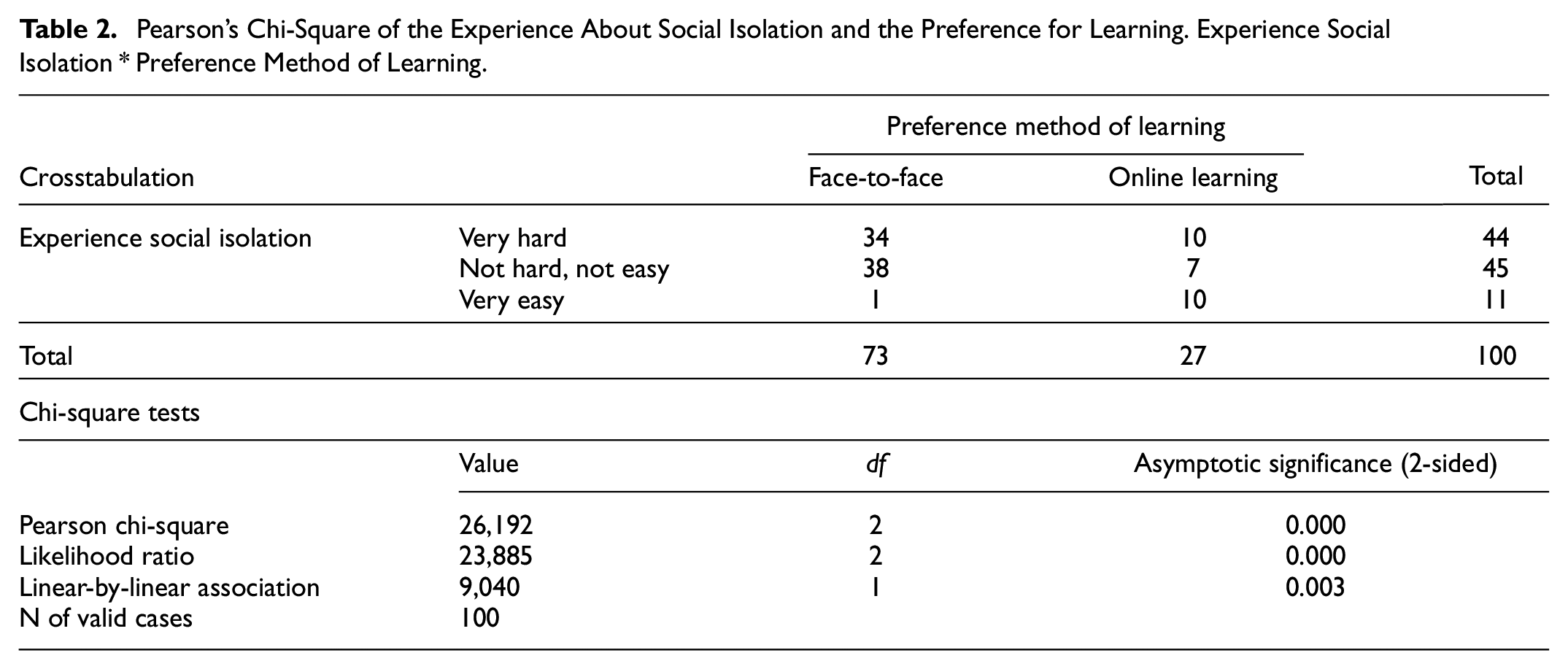
Those who consider social isolation “a very hard” condition prefer face-to-face learning; this means that people did not get used to online learning while even finding a “tolerable” state such as the assumption “not hard, not easy” resulted in 38 responses out of 100 preferring present courses. In this sense, people considering social isolation as a lousy condition found it harder to face online learning associated with that situation, which means that the human condition prevails over any other external case to the human being. And that the acquired learning during the pandemic with technological tools is not necessary due to technology. We can observe what we just described in the following map (Figure 3):

Relationship map about the experience on social isolation and their learning preference.
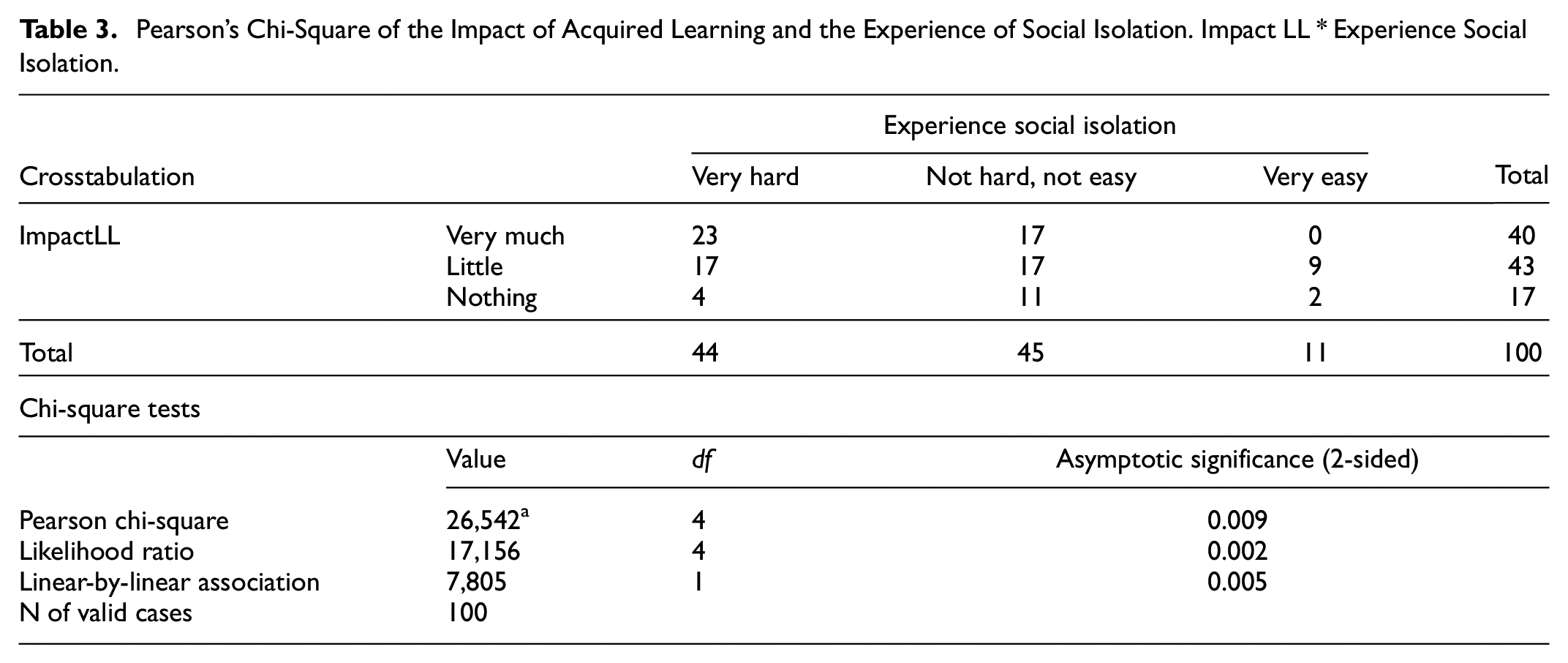
The result of studying the possible relation between the impact on learning and the experience of social isolation is 0.009, as shown in Table 3, which implies almost a relationship between these two variables. This result can be related to other conditions to explore in further research. It may be related to physical and mental issues where protecting apparent well-being is insufficient to accept social isolation. These two variables are related but negatively. It means that the human condition, in this case, promoted learning losses. In this sense, another research that considers a stable human situation related to remote education could present positive results.
Pearson’s Chi-Square of the Impact of Acquired Learning and the Experience of Social Isolation. Impact LL * Experience Social Isolation.
The results of technological advances and resented losses confirmed this. Even if people who received distance education experienced deficiencies in the teaching and learning experience, there is no relation between these two variables, as we can observe in Table 4.
Pearson’s Chi-Square of Technological Advances and Resented Losses.

Two cells (50.0%) have an expected count of less than 5. The minimum expected count is 0.73.
For the better of technology and digital education, resented losses are not an issue due only to the teaching practices, as we can observe in Figure 4.
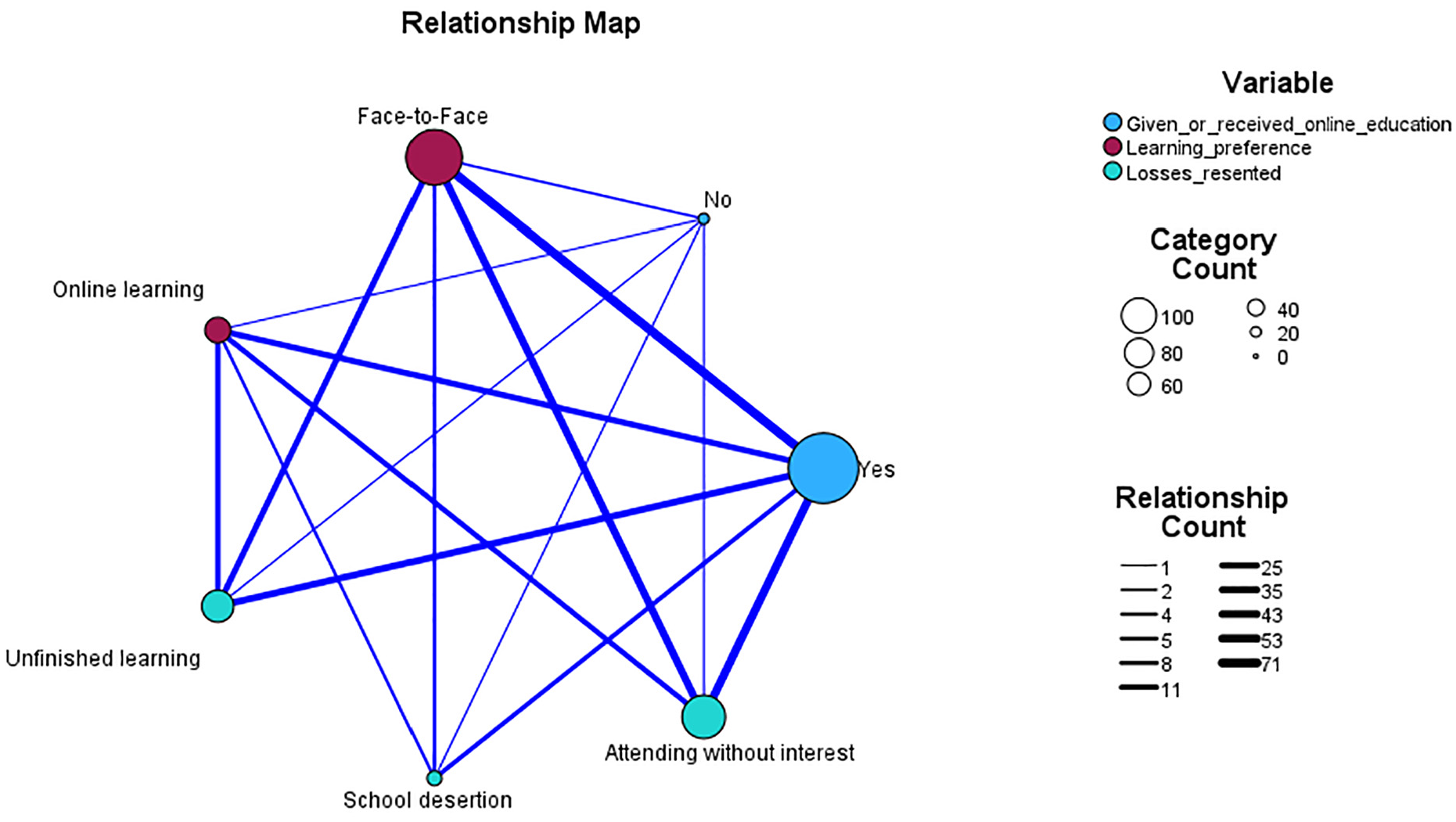
Relationship map about the losses resented, learning preference and if they have given or received online education.
It indicates that those losses also appear in face-to-face sessions, which the most important in that case is “attending without interest,” followed by “unfinished learning.” At the same time, distance education is more related to “unfinished learning,” which may be rooted in the teaching methodology and learning disposition. In this sense, we propose new methods involving students in their education and motivating them to learn through face-to-face and online experiences using the latest technologies.
Based on the instrument we created, we retook the research question and the hypothesis to the new pandemic context and the future, hoping to prevent another instability of such magnitude. Thus, considering a possible relationship between their experience in social isolation and uncertainty about the future, both variables settled in the human condition. Table 5 shows that these two variables are related and may be based on fears and the lack of a social context.
Pearson’s Chi-Square Between Social Isolation and Uncertainty About the Future. UncertaintyFuture * Experience Social Isolation.

This idea can be supported by the subsequent findings relating to uncertainty about the future and the frequency of using social networks, as we can observe in Table 6.
Pearson’s Chi-Square Between the Uncertainty About the Future and the Use of Technology. UncertaintyFuture * FrequencySocial Net.
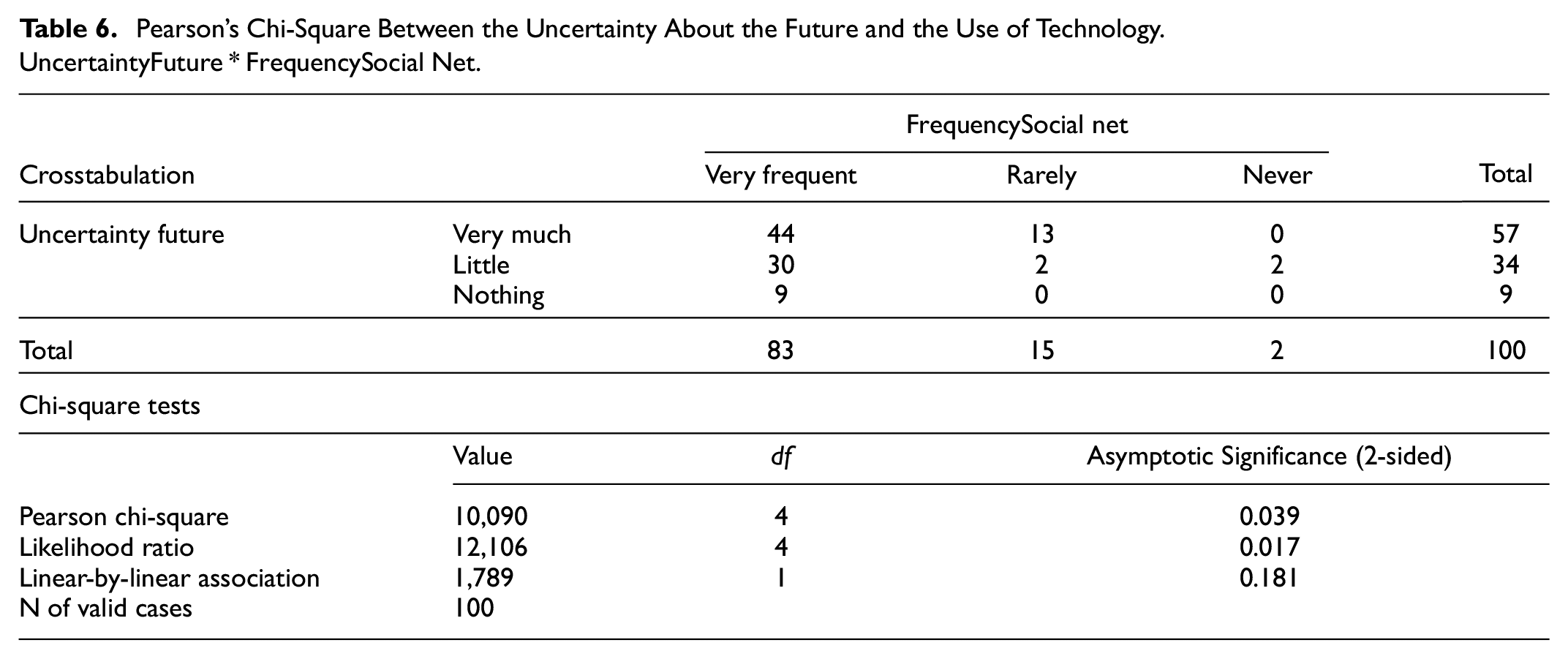
The most uncertain future is conceived, and the most frequent social networks are used.
Discussion
The pandemic experience in Mexico shows that students and teachers have not received technology well for learning during the pandemic. Nevertheless, this can be because of a prompt need to implement a way to continue learning and teaching activities without previous knowledge about virtual technologies and the attempt to continue teaching as it was in classrooms but through the computer.
The degree of technology use before the pandemic was related to developing some activities on the computer but did not represent the entire activity. We can even say it was limited to computer use, but learning did not depend on technology use. It was shown that students got bored and lost their attention, which resulted in learning losses. Something to highlight is that the participant’s perception depended on the technology implemented: machine learning, virtual reality, or augmented reality, the one most accepted amongst respondents.
That leads us to think that even if virtuality is used and a new technological environment is added to facilitate learning skills, it must be attached to reality without keeping it aside. Young people are used to technology in a higher measure than other generations. However, they are not still formed in replacing normal activities with it. And this is an opportunity area to tackle at present and in future years.
Another element to consider is that to use technology more profoundly and get advantages from it, technological competencies must be developed, such as programing and integrating it as a part of the individual, as suggested by Transhumanism. It demands to be “smarter” in its use and in getting its benefits, to become more innovative, competent, creative, imaginative, thoughtful, and competitive, no matter how we were educated, the age we have, or our gender.
In the case of the pandemic, technology cannot be solely blamed for learning loss. In the post-COVID era, it has been increasingly recognized as a crucial and ever-present element in learning processes, even being augmented by AI. This underscores the need for technology to find a new, more prominent place in education, given its continuous evolution and the potential for further growth in its role.
Another element affecting learning was isolation because people are not used to being alone for long periods and much less in uncertain and tragic events. As we said before, it demonstrated Aristotle’s statement about humans being “social entities.” The relationship between variables presented above indicates that it might be a cheerful face to stable contexts and with previous experience of working with technology. This last is also related to the attention paid during a virtual session in which respondents manifested a low interest rate with results of “unfinished learning.” However, there must be other reasons for the lack of knowledge and how it was received.
There are more possibilities that the lack of attention and the unfinished learning took place because of the uncertainty and the tragic environment, affecting the interest and attention in activities that in normality represented everything but that, during the pandemic, lost their importance face to death, health, and family. In this sense, technology remains a valuable tool for continuing current activities and makes them more accessible, not the contrary.
It is interesting that even if technology was the primary tool for learning and continuing a “normal life” in the abnormality of the environment, it was not accepted to that end, with a clear rejection. Nevertheless, technology was the primary tool for keeping in touch and recovering sociability and coexistence, as shown by the “widespread use” of social networks, which was chosen by 83% of people who answered the survey and with 95% of people considering social networks as a support during the lock period.
That shows the importance of technology in our current life as an element that makes part of it, but that does not represent everything to depend on it for our daily activities. Results confirming this last is the decrease in their use of 33%, returning to presence. Until now, technology has facilitated connection and keeping in touch with people far away, but it is not yet perceived as something to be integrated into our current lives, as Transhumanists propose. Technology still needs comprehension and knowledge to be used for the benefit of humanity.
Conclusion
We observed that the human condition, in its fragility and vulnerability to uncertain situations, takes advantage of other external aspects of the human being, such as work, studies, and technology.
The literature review provides insight into aspects that have changed due to the pandemic, such as the development of artificial intelligence, the shift from face-to-face learning toward the acquired knowledge felt as experienced learning losses, and the facts involved, such as mandatory social isolation. Having deepened the concepts, they helped us to comprehend that these are part of daily lives and will remain.
We found that each variable, such as advanced technologies, losses resented during the pandemic, and social isolation, allows one to enhance and embrace emerging technologies, question life technological advances, apparent gains to apparent losses, and adapt and experiment with the humanistic Renaissance ideal of the well-developed personality, which, retaking Plato, is a part of the human condition.
The main objective, which was to provide information about the influence of technological advances on education in the Mexican case, was fulfilled. Transhumanism and the use of technology, such as a tool such as IA, show that technology is one of many solutions to understanding remote learning, and it can provide significant benefits by knowing how to use and interact with it. Undeniably, technology provides and facilitates remote learning, allowing one to understand it, but it is only sometimes positive. It must be accompanied by other elements, such as a stable environment and a social network supporting the individual. The results presented here indicated that technology per se was not the only element intervening in learning losses; it was also the uncertain and isolated environment.
Other variables are intervening, such as the human condition that prevails over any other circumstance in a pandemic and affects remote learning. In this same line of thought, different methodologies that involve and make up part of the student’s learning need to be implemented to consider the apparent losses to promote distance learning and revert them. We found out that students are unmotivated in face-to-face and online learning since they attend without interest. In both modalities, there is also unfinished learning, which may be more noted by distance education but also manifested in face-to-face learning. Also, students are used to using technology but in a present environment without depending on it entirely.
Other lines of research and different variables, such as a certain environment and the development of technological skills could highlight the new path of education embracing techniques that positively affect distance learning. In addition, we must ask ourselves if the pandemic has been that Singularity that changed the way of acting and living in the educational sector without returning to those old before-pandemic practices or if it was just a catastrophic situation without the impulse of chaos that could allow a durable dynamic and stable change.
Technology can provide multiple advantages such as more profound knowledge, quicker learning, getting information in a shorter period, and having numerous examples of what we are studying whenever the previous understanding of its use. It can complement our development without basing it on technology at 100%. We are still facing what Transhumanism establishes, surpassing limits, and we have to deal with them since technological skills and conditions for using technology are present and will continue their evolution.
Footnotes
Acknowledgements
None.
Declaration of Conflicting Interests
The author(s) declared no potential conflicts of interest with respect to the research, authorship, and/or publication of this article.
Funding
The author(s) disclosed receipt of the following financial support for the research, authorship, and/or publication of this article: The Instituto Tecnológico y de Estudios Superiores de Monterrey provided the resources to publish this manuscript.
Ethical Approval and Informed Consent Statements
Ethical approval was not required. Informed consent was obtained from all subjects involved in the study.
