




Abstract
Scholars have suggested models proposing a variety of learning styles for humans. Human Dynamics is one such model, and it has been suggested within its model that one style of learning is enhanced by discussion among learners. While this style of learning may be accomplished relatively easily in an on-campus person-to-person situation, it is not clear how a discussion mode (online posts) of learning might be accomplished in an online format. A study of more than 9,000 posts from 240 students in 11 different online classes was conducted to determine whether differences in online discussion posts by individuals with different learning styles were evident. Results of the study suggest that discussion post activity, if managed with suitable rubrics and guiding principles, and augmented by appropriate modeling behavior, is an effective teaching mode for all dynamics, but seem to be a more successful learning mode for individuals of Physically Centered dynamics.
Keywords
Introduction
Online education continues to gain in acceptance and implementation. The Chronicle (DeSantis, 2013) reports the results of a recent Babson study that determined a 9.3% growth in online course activity from Fall 2010 to Fall 2011, and that an all-time high of 32% of students are taking at least one online course. Russ, Mitchell, and Durham (2010) reference Donnelly and others supporting the position that online education continues to grow as an important contributor to providing education for society. However, it is apparent that online instruction presents different challenges for effective teaching and learning as compared with face-to-face instruction (D. L. Baker, 2011), and it is important that the instructor recognizes these challenges to be effective. Challenges are varied and range from the multiple roles that the instructor must handle including pedagogical, social, managerial, and technical (Berge, 2008, as cited by D. L. Baker, 2011), the emergence of new technology, and the dramatic increase in student participation with the advent of MOOCs (massive open online course). An important factor that must be included in the administration of a successful online course is the variety of learning styles of the student, and as to whether an online course may adequately address that student’s learning needs.
Hawk and Shah (2007) provide a valuable service to educators in reminding them that students have different preferred styles of learning. These styles of learning are both hereditary (Seagal & Horne, 1997) and adaptive as the individual learns and adopts the norms of society. While it appears that the most frequent method for contemporary education in post secondary schooling is the lecture, other methods of teaching appear to be not as common. As Hawk and Shah note in their article, other modes of learning have been identified. Kolb (1984), Gregorc (1979), Felder and Silverman (1988), Dunn (1990), and the Visual, Aural, Reading/Writing, Kinesthetic (VARK) model of Fleming (2001) are cited as examples of models that recognize that students have different preferred means of learning. Many other scholars have noted the diversity of learning styles and preferences for humans including Allitt (2010); Antonancopoulou (2006); Antonancopoulou and Chiva (2007); Binsted (1980); Brockbank, McGill, and Beech (2002); Collin (2007); Easterby-Smith and Lyles (2003); Honey and Mumford (1992); Kaufman et al. (2010); Kolb, Rubin, and MacIntyre (1984); Macpherson, Jones, Zhang, and Wilson (2003); Pashler, McDaniel, Rohrer, and Bjork (2008); Pasupathi (2012); Perry, Samuelson, Malloy, and Schiffer (2010); H. E. Rau (2009); H. Rau (2012); Schaler (2006); and many others. From the writing of these scholars, this article takes the position that individuals have preferred styles of learning. Table 1 partially represents suggested learning styles from a sample of models.
Sample Learning Styles as Represented by Some Models Adapted From Hawk and Shah.

Interestingly, many of the learning style models identify discussion and aural learning as being distinct and potentially preferred for some learners. Table 2 identifies (in bold) where discussion fits within the elements noted in Table 1 above.
Discussion Components for Learning Styles as Represented by Some Models Adapted From Hawk and Shah.

Although the models noted above suggest that discussion and aural learning are important modes of learning for some individuals, Revere, Decker, and Hill (2012) cite the 2006 National Center for Healthcare Leadership (NCHL) model identifying lower and higher strategies for instruction. NCHL identifies 14 different modes of instruction with 7 modes identified as lower (reading, lecture, lecture with media, guest speakers, online discussion, class discussion, and web-based modules), and 7 as higher (in-class presentations, cases, team activities, simulation exercises, external field experiences, strategic consulting projects, and reflective learning).
Counter to the perspective of NCHL, many scholars suggest that discussion is critically important for learning, sharing, communicating, and building community including Palmer (1998), Nonaka (1994), Webber (1993), and Huy (1999). The position adopted in this article is that discussion is an important element for learning, and the domain of interest is represented by the bracketed portion of Figure 1. This article takes an opposing stance to the NCHL position that discussion is a lower level mode of learning. It is suggested that the manner with which engagement in discussion is initiated (specifically with regard to online forums) may be a constraining factor regarding online discussion’s impact for the student’s learning process. This article will explore the discussion learning style utilizing the Seagal and Horne (1997) model of Human Dynamics (HD). This model identifies nine “ways” (dynamics) of being, and five of these dynamics are predominant. For clarity as to the differences of the various learning styles preferred by individuals within the HD model, the following paragraphs provide more detail. The reason for including this discussion of learning styles is that in an ongoing research of 100,000+ individuals from more than 25 cultures and both genders, the HD model has garnered cumulative results from 1979 to 1997 suggesting that in the Western urban setting approximately 5% of observed individuals are of the Mental-Physical (MP) dynamic, 10% are Physical-Mental (PM), 5% are Physical-Emotional (PE), 25% are Emotional-Mental (EM), and 55% are Emotional-Physical (EP), and as noted above in Tables 1 and 2, the different dynamics have different preferred learning styles. An additional observation from the ongoing investigation of Seagal and Horne is that there appears to be cultural differences in the predominance of the dynamics, with nearly 90% of Japanese citizens being PM, and 90% of Chinese citizens being predominately PE. It should be noted that these percentages are self-determined by individuals through an experiential workshop. That is, no tests or external determination is used to determine whether an individual processes and interacts with their environment in any particular manner. Individuals self-identify through exploration with other individuals via conversation, lecture, and multimedia presentations. The above information is important because it helps instructors understand that varying combinations of different dynamics may be present within their academic classes, and these different dynamics may prefer different modes of teaching to more effectively understand course materials. In addition, instructors might wish to include within their courses a variety of elements from the different learning styles to more fully “reach” all members of their audience.

Continuum of online forum.
MP individuals tend to process in a linear manner. Likewise, they have specific requirements for learning. These requirements include the following:
A clear, logical, and structured presentation
An overview presented first, and then the parts
Key points are articulated
The value of the learning and values inherent in the subject matter are made clear
A visual emphasis is provided (reading is a very agreeable learning mode)
Opportunities for solitary work are provided
Opportunities to participate in dyads after working with the material long enough to feel ready to share and discuss are provided
Sufficient time is available to complete tasks to the individual’s satisfaction.
The preferred learning style for the PM individual is where
The purpose for the learning is made explicit
A structured outline and considerable context is provided
Clear, systematic, and concrete detailed presentation is utilized
Opportunities for “learning by doing” (kinesthetic emphasis) is available
Instruction is supported by models, diagrams, and charts
Careful pacing, with sufficient time to absorb, assimilate, and distill data, complete tasks, and formulate responses is factored into the learning “space”
Opportunities for reflection and solitary work are provided
Opportunities to work with others after assimilating details and preparing models are also provided.
The PE individual has similarities with the learning style of the PM, yet there are some differences. The preferred learning style of the PE individual includes the following:
Where the utility of the learning is made explicit
Where considerable context is provided
Clear, systematic, concrete, and detailed presentation is utilized
Clear parameters for assignments (specific instructions for what, why, where, when, and how) are provided
Kinesthetic emphasis in a “hand-on” environment (opportunities for learning by experience, demonstrations, and involvement of the whole body) are made available
Deliberate pacing
Sufficient time allowed to absorb, assimilate, and distill data; complete tasks and formulate responses (whether spoken or written)
Concentration on one topic at a time over an extended period, rather than many different things in a relatively short time frame
Periodic check to ensure that sufficient data are available
Avoidance of singling out an individual from the group
A relaxed atmosphere.
The conditions for learning for Emotionally Centered individuals differ somewhat from the other dynamics. The needs for the EM individual include the following:
A structured, though not extremely detailed, presentation that is brisk, enthusiastic, and inspirational
Diagrams and models, rather than elaborate verbal explanations
Movement forward with little repetition
The purpose of the learning is made clear
An emphasis on an auditory presentation (opportunities for discussion and debate are provided)
Opportunities for independent and small-group work, followed by sharing the results with the group are designed into the learning
Opportunities for active experimentation is provided
There is connection for active experimentation
There is a connection with the instructor through exchange of ideas and mutual respect
Open-ended problem solving is designed into the learning.
The conditions for learning for EP individuals also indicate differences with the other dynamics. The needs for this dynamic include the following:
A sense of personal comfort is provided in the learning environment
Auditory emphasis is provided and includes discussion and personal exchange
A sense of personal connection with the instructor (through his or her expressions of personal approval, consistent interest, and honest exchange of feelings)
Affective, imaginative presentations are provided (appealing to the emotions, possibly being dramatic)
Clear structure
Opportunities for communication and learning with others
Specific activities that promote the capacity for focus (because there tends to be a natural capacity for multifocus with this dynamic)
Specific time parameters are established
Opportunities for release of body tension through movement is available
Opportunities for creative expression are designed into the learning environment
Opportunities to identify and process feelings are provided.
As noted above, almost 80% of the urban Western population prefers to include aural communication (discussion, debate, brainstorming, etc.) within their learning environment. Instructors may wish to address the needs of this substantial portion of their student body with communication that either is explicitly aural in nature, or attempts to replicate the aural communication preference as closely as possible. This is a challenge for online courses, and this article attempts to investigate whether an online discussion forum may be able to replicate in at least some manner what naturally occurs within a face-to-face classroom setting.
Method
A total of 9,408 discussion posts (original submissions, and replies to those submissions) were submitted by 240 graduate students in 11 graduate classes (MBA, MS in health care administration [HCA], and MS in economic crime). Five classes were 8 weeks in duration, 3 classes were 7 weeks in length with the addition of a 2½ day residency, and 3 classes were 15 weeks in duration. All forum activity was conducted and archived on the Angel platform. Each submission (original and reply) was graded using a rubric and an example of the grading criteria was distributed to each student at the beginning of the class. Also, each class was provided with information relating to acceptable online and scholarly behavior. Each class included an ungraded introductory component that was composed of two elements: a self-introduction and a self-assessment of that student’s preferred learning style. Post submissions, for the self-introduction and preferred learning style were voluntary, and the results of the preferred learning style were used as a factor in the analysis. Regarding grading of online discussion posts, two criteria were used: a grade for the number of submissions and a grade for the quality of the submissions. If students submitted the minimum required number of posts, they were assured of a letter grade of at least a “B” for the quantity perspective, and if they at a minimum followed the Netiquette policy and the post example document, they were assured of a letter grade of “B” for quality. Therefore, grading for posts began at a letter grade of “B” for achieving minimum requirements, and increased as the activity level and quality of submissions increased. No “tardiness” penalty was imposed for post activity.
Each syllabus, as well as the rubric, instructed the student that at least one original post, and three reply posts per week were required. The reply posts could be to either “original” posts of other students or as a reply to a reply. Original posts that received at least one reply post are noted in this study as “leveraged.” Furthermore, the students were instructed that original posts were to be submitted by Sunday midnight for each week of the class. Data were captured regarding the actual post submission date as compared with the required submission date, and in this study, these data are identified as “lag.” A negative “lag” indicates that the post was submitted before the due date, while a positive number indicates it was submitted after the due date. With the exception of the three classes that included a face-to-face residency, each class was conducted (synchronously) online. Data captured by the Angel system were analyzed using JMP statistical software.
Data
Forum activity was captured from 240 students. Fourteen graduate students were enrolled in one class of the MS in Economic Crime Management program (6 were female, and 8 were male). Ninety-nine students were enrolled in four classes of the MS in HCA (78 were female students and 21 were male students). One hundred and twenty-seven students were enrolled in six classes of the MBA in Economic Crime and Fraud Management program (81 were female and 46 were male students). The classes ranged in size from a low of 11 students in one MBA course to a high of 39 in one HCA course. The average course size was approximately 22 students. Of the 240 students analyzed for this study, there were five “outliers” with high submission rates (2 EM, 1 MP, 1 PE, and 1 PM). Post submissions (original and replies) peaked in the second week of the classes. Females demonstrated a modestly higher level of “leveraged” posts (original posts that received a first round of response from other students [no data were captured as to replies of replies, or deeper levels of online activity due to limitations inherent within the Angel platform]).
Following are some representative examples of data captured from this study. Table 3 provides data on the distribution of students by dynamic. Table 4 provides data on the number and percent of students (by gender) that submitted less than the minimum required original and reply posts. Graph 1 illustrates the number of students per class who were involved in this study. Graphs 2 and 3 show the quartile distribution of original and reply posts by gender. Graph 4 shows the quartile distribution of “leveraged” original posts by dynamic. As noted above, for the purpose of this study, a “leveraged” post is an original post that received at least one reply post. The intent of identifying these posts was to ascertain the percentage of posts that provoked further discussion, and it is assumed, help to establish deeper and broader learning. Graphs 5 and 6 provide information regarding the quartile distribution by dynamic for original and reply posts. Graph 7 provides information for the third quartile distribution by dynamic for the average number of days that an original post was submitted before and after the specified assignment date. Graph 8 provides information by dynamic illustrating the change in forum activity on a weekly basis. Histograms 1 and 2 illustrate in a different format the distribution of original and reply posts by gender. Chart 1 shows the distribution, normal quantile plot, histogram, and All-Pairs Tukey–Kramer analysis for dynamic. Charts 2 and 3 focus on the composition densities and density comparison for the different dynamics, while Chart 4 illustrates a Practical Equivalence test between two different dynamics (EP and EM).
Distribution of Dynamics.
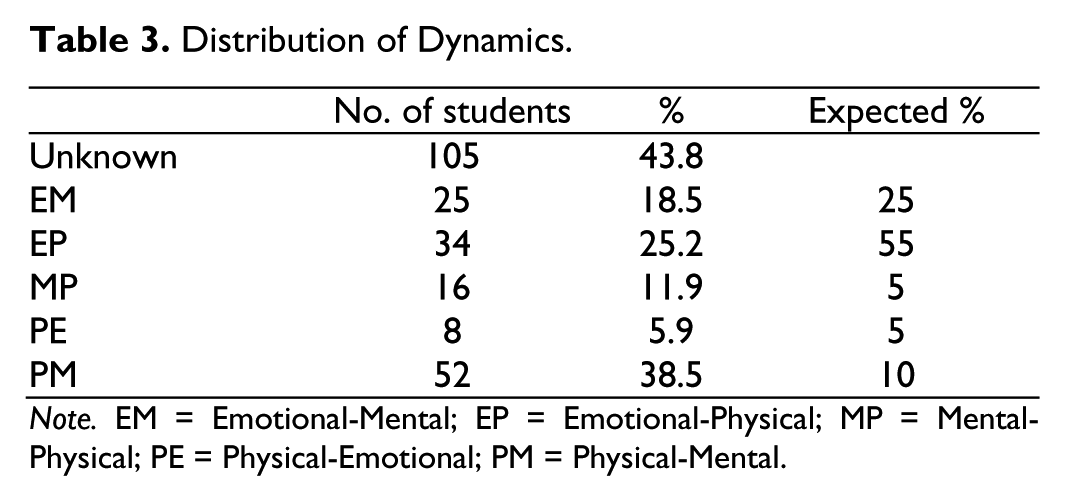
Note. EM = Emotional-Mental; EP = Emotional-Physical; MP = Mental-Physical; PE = Physical-Emotional; PM = Physical-Mental.
Distribution of Gender.

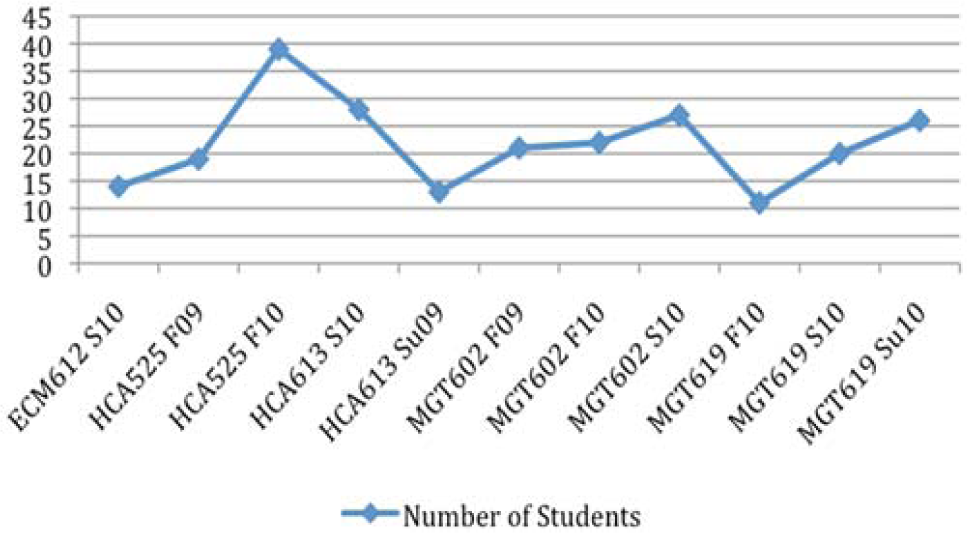
Number of students per course.

Quartile distribution of original posts by gender.

Quartile distribution of replies by gender.
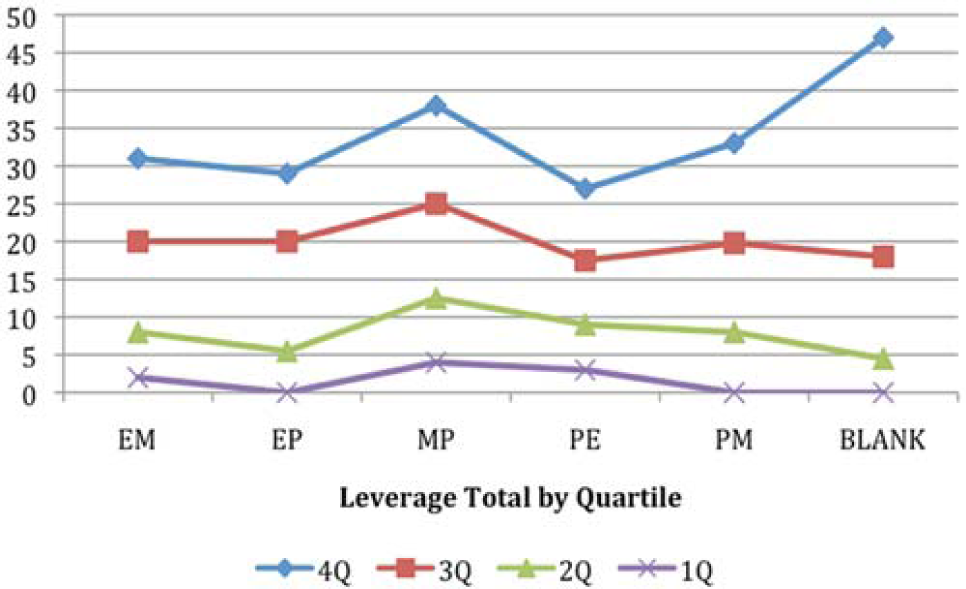
Quartile distribution of leveraged posts by dynamic.

Quartile distribution of original posts by dynamic.

Quartile distribution of replies by dynamic.

Third quartile distribution of post lag time by dynamic.

Number of posts submitted by week by dynamic.
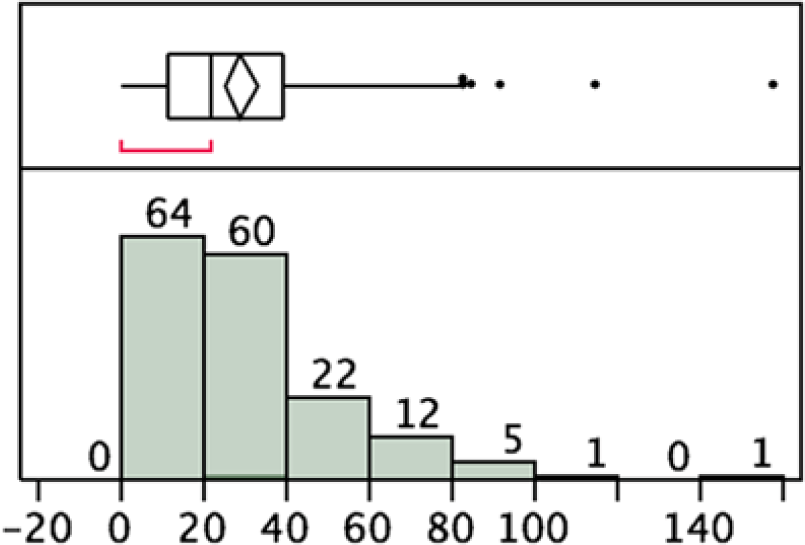
Female posts and replies.

Male posts and replies.

Distribution and histogram by dynamic.
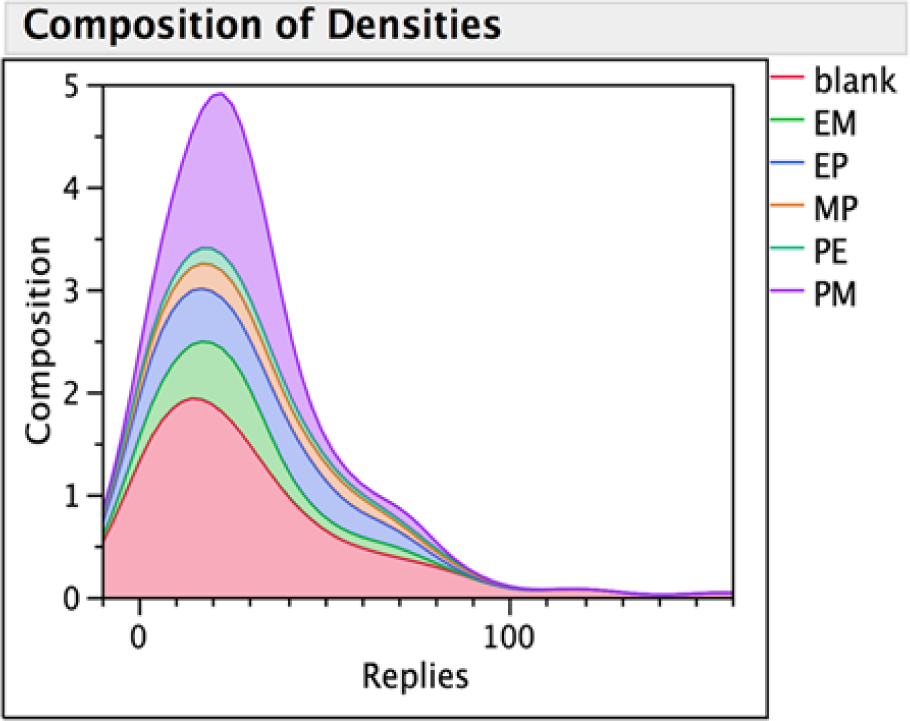
Dynamic composition density.

Dynamic densities comparison.

Example of Practical Equivalence Test (EP and EM).
Observations
A number of different observations were made from the data:
In all, 240 students comprised the study population from 11 graduate classes
A total of 2,549 Original Posts were submitted
A total of 6,859 Reply Posts were submitted
“Original” “Leveraged” Posts (posts that resulted in a first round reply post) were 2,653
Minimum required “Original” posts/student of seven resulted in 1,680 minimum expected “Original” posts for a normalized 7-week period
Minimum required “Reply” posts/student of 21 resulted in 5,040 minimum anticipated “Reply” posts for a normalized 7-week period
Fourth Quartile accumulated lag was 242 days, while the shortest cumulative lag was −37 days
In all, 75 females submitted less than the required total posts (31.3%)
In total, 32 males submitted less than the required total posts (13.3%)
Dynamics (students) submitted less than 7 total posts—Unidentified = 6, EP = 1
Dynamics (students) submitted less than 28 total posts—Unidentified = 64, EM = 10, EP = 13, MP = 3, PE = 2, PM = 16
Missing posts by dynamic—Unidentified = 5, EM = 7, EP = 5, MP = 2, PE = 0, PM = 10
Posts that generated no replies during study period by dynamic—Unidentified = 6, EM = 0, EP = 2, MP = 0, PE = 0, PM = 2
Posts that generated less than 7 replies during study period by dynamic—Unidentified = 44, EM = 6, EP = 5, MP = 1, PE = 1, PM = 10
Student “Original” Posts (Generally) Exceeded Required Minimum
Student Reply Posts (Generally) Exceeded Required Minimum
Distribution of learning styles did not match observed (HD) urban populations (56.3% of student identified learning styles were M and PM/PE)
A total of 11.7% of students did not submit required number of discussion posts
Fourth Quartile of “Leveraged” Posts indicated that the Unidentified learning dynamic was the largest, followed by MP, PM, EM, EP, PE
Fourth Quartile of “Original” Posts indicated that the Unidentified learning dynamic was the greatest followed by EP, MP, EM, PE, PM
Fourth Quartile of “Reply” Posts indicated that the Unidentified learning dynamic was the greatest followed by MP, PE, PM, EP, EM
Fourth Quartile “Numbers” were driven by 4 Unidentified, 2 EM, 2 MP, 1 PE, and 3 PM students
Five “outliers” were noted during this study: EM = 2, MP = 1, PE = 1, Unidentified = 1
Third Quartile of “Leveraged” Posts were greatest for MP learning dynamic followed by EP, EM, PM, and Unidentified
Third Quartile of “Original” Posts were greatest for Unidentified learning dynamic followed by PE, MP, PM, EP, and EM
Third Quartile of “Reply” Posts were greatest for MP learning dynamic followed by PE, EP, Unidentified, PM, and EM
Student Discussion Post submittals essentially “peaked” in the second week
First Week Discussion Postings were at lowest level for EM, EP, MP, PE, PM
Equivalence testing indicates that the greatest difference in response function for reply posts exists for EM-MP, EM-PE, PM-MP, and PM-PE
Equivalence testing indicates that the least difference in response function for reply posts exists for EM-PM, PE-MP, and EP-Unidentified
Equivalence testing for original posts (in contrast to reply posts) indicates no differences existing between the dynamics (likely due to established requirements for each course)
No useful information was generated from cluster analysis
There was a tighter correlation of “leveraged” replies to weekly original postings in Weeks 1, 2, 3 as compared with the remainder of the semesters suggesting that later weeks generated more reply to reply posts than reply to original posts
Semester grade distribution of “As” for discussion post activity for the dynamics was Unidentified 51%, EM 22%, EP 24%, MP 27%, PE 12%, and PM 32%
Semester grade distribution of “A-” for discussion post activity for the dynamics was Unidentified 29%, EM 56%, EP 71%, MP 68%, PE 74%, PM 66%
On average, the first round of reply posts were generated off of approximately one third of the original posts—therefore, the majority of reply posts were submitted to an earlier reply post
Ten students did not submit any reply posts, and the least number of original posts by any student was three
Generally, higher grades were awarded for posts that were early, and lower grades were awarded to posts submitted later—yet, no grade reductions were awarded based on a penalty for late submission.
Discussion
It should be noted that there are limitations to this study. For instance, the determination of a particular dynamic (HD model) using a proxy of “preferred learning style” is not perfect. A subset of the 240 students not only utilized the “Preferred Learning Style” segment of their courses, they also participated online with identifying their HD dynamic during the beginning of one specific course. The “Preferred Learning Style” post was conducted at the beginning of their classes, and 47 (62%) students’ “Preferred Learning Style” were in agreement with their self-determined dynamic, while 29 (38%) students’ “Preferred Learning Style” were different than what is suggested for their dynamic. Sixteen (55%) of the “mismatch” was attributed to individuals selecting a PM/PE “Preferred Style of Learning,” whereas they self-identified as being of an Emotionally Centered dynamic. It might also be noted that 44% of the students for the total study (240) did not identify a learning style. It is not clear whether this is attributed to not being aware of this voluntary element of the class, or ignored this item for personal reasons.
It might also be noted that this study was not a scientific study (hypothesis testing), but more closely aligns with being an inductive analysis from a heuristic perspective utilizing stratified purposeful sampling (Patton, 1990). The writer was personally involved with the discussion forum by submitting on average more than 140 posts per semester to clarify or enable discussion for the students, and consequently, that involvement may have a distorting effect on actual student participation. In addition, it should also be noted that the established course requirements of a minimum number of original and reply posts (along with the required submission dates) distorts the true participation behavior of the individuals (as suggested by Young, 2012). Young’s (2012) report in the Chronicle regarding the start-up company Piazza’s analysis of 3,600 courses from 545 Colleges and Universities addresses the issue of online discussion posts. Piazza’s data suggest that when instructors require a minimum number of forum posts, the participation rate is higher than in classes where participation is voluntary; however, the data suggest that student understanding is greater when the submissions are less strictly assessed. Piazza’s data also suggest that student participation is greater when a self-introductory component is included in the course (25 forum posts when self-introduction is included as compared with 9.5 comments for other courses). This study did not address the concern of whether student understanding is greater with minimal forum activity, and it also did not address the issue as to whether “leveraged” posts (those that elicited reply posts) actually enhanced learning (although that is the tacit assumption).
Curiously a greater number of Mentally Centered and Physically Centered individuals were enrolled in the total courses than might have been expected in consideration of the distribution patterns observed from HDs investigation (assuming that class distribution would mirror urban populations where the anticipated distribution should have been less than 20%; however, in the classes investigated, 56.3% of student identified learning styles were Mentally Centered or Physically Centered). It is possible that this discrepancy is due to the “mismatch” noted when “assigning” a certain dynamic to an individual utilizing their preferred learning style (noted above). It might also be due to a preference for face-to-face instruction in a classroom setting for individuals who are Emotionally Centered, and that a self-selection bias away from online courses occurs for Emotionally Centered individuals. A third potential reason for the difference between actual enrollment and anticipated enrollment may be due to the nature of the work performed by the students. As noted, all students were graduate students, and the overwhelming majority were actively employed while simultaneously pursuing their graduate degrees in a business environment requiring high attention to detail and a philosophically rationale perspective. A larger percentage of individuals of the Emotionally Centered dynamics was observed for the HCA program, as compared with the MBA and MS in Economic Crime that demonstrated a greater number of Physically Centered individuals, and it is possible that different career choices attract individuals with different dynamics.
Also of interest is that a greater number of posts and replies were received from Mentally Centered and Physically Centered students than anticipated. The writer had assumed that Emotionally Centered individuals would be significantly more engaged with online discussion posts, yet this was not the case. This may have occurred if Emotionally Centered individuals think of online discussion forum activity as a poor substitute for face-to-face exchange of ideas. It might also be due to providing a greater length of time for Physically Centered and Mentally Centered individuals (who might be considered to be normally reticent with face-to-face classroom discussion) to participate, therefore allowing individuals of these dynamics to be more engaged with online discussions.
Surprisingly, there were a greater number of students who did not actively engage with the online discussion than anticipated. All students were informed via the syllabus, information provided in the Appendix and other forms of communication regarding the minimum required participation levels, yet these students did not achieve the minimum required activity. A modestly higher number of Emotionally Centered individuals were in this category, and this may support a view noted above that online discussion activity does not achieve the same level of communication needs for some individuals as does face-to-face communication.
While explicit data were not captured during the course of this study, there was the perception by the writer that a “not insignificant” number of reply posts were leveraged off of mediocre original posts for courses that were earlier in the time horizon of this study. While it may be asserted that a number of these reply posts were from some students helping to clarify issues and questions for the other students who posted the original “mediocre” posts, it may also be that it was easier and took less work to reply to a mediocre post than to a post that was more intellectually demanding. It might also be noted, that as with the observation of the “mediocre” post discussion above, no specific data were captured regarding the change in quality of forum activity over the time frame of this study, yet the perception of the writer is that the quality of posts and replies improved during the duration of the study. It is not known whether this perception is due to a more stringent assessment of online post activity that was adopted by the writer (as noted earlier in this article), whether an “underground” word-of-mouth from students involved within the various programs had occurred informing later students of the instructor’s expectations and behavior, whether the students involved were more diligent, whether the focus on online discussion was achieving its designed and desired effect, or some other factors may have been involved.
As noted above, student Discussion Post Submittals Essentially “Peaked” in the second week of each class with a second peak in the fourth week. A decline in post activity after the midpoint of the classes was noted.
A question remains regarding the impact of class size and optimized online discussion posting activity. This element was not investigated within this study, and it is highly likely that this factor has a significant impact on the quality and quantity of post activity. The results of this study, while favorable, may have been significantly impacted by the fact that student numbers for the classes ranged between approximately 10 and 40 students. Larger number of students within a class will obviously impact time requirements for both the instructor and the students regarding discussion post activity, and maintaining a “reasonable” number of students within classes may be advisable. Obviously, the determination of a “reasonable” number must be established, and it likely varies from academic subject to academic subject.
Recommendations
It is obvious that online discussion posts are not the same as face-to-face discussion and dialogue; however, online discussions posts allow individuals to efficiently and effectively communicate with others across time and distance. The position of this article is that discussion is an important element in learning, and contrary to the position of NCHL is not a lower level mode of instruction if properly implemented. To establish a setting that is conducive to a higher level of learning, the instructor must be cognizant of the multiple roles for which he or she is responsible (pedagogical, social, managerial, and technical; D. L. wBaker, 2011). Furthermore, as D. L. Baker (2011) notes, the instructor must think carefully as to the purpose of the discussion, how the discussion will be managed, and the participation level (both of the instructor and the students). Russ et al. (2010) also note that the students must be self-motivated and able to work independently, have access to a learning environment that is free of interruptions, and possess computer literacy. Gestalt psychology observes that there are three processes in motion that must be addressed: intrapersonal (growth of the person), interpersonal (improvement in the interaction potential among people), and group level (development of the group as a social system). Edmondson (1999) and Maslow (1968) note the need for psychological safety. A. C. Baker, Jensen, and Kolb (2002) identify a number of facilitating factors including the following:
Creating and sustaining a safe, receptive conversational space and context
Listening reflectively to give voice to others, especially those who seem different
Recognizing differences and conflict as resources for learning
Recognizing and valuing both the cognitive and the emotional dimensions of learning
Making a concentrated effort to simultaneously attend to all of these characteristics while maintaining a moderate pace in the conversation in ways that are appropriate to the situation
Encourage partnership and imagination
A space for humility
Respect and well-being of others.
Furthermore, it is advisable to provide a clear understanding of acceptable online behavior:
Establish a Safe Space for Online Discussions
Establish Demanding Standards for Quality and Quantity of Participation
Be Actively Involved in Discussion Activity.
Results from this study add to the list of attributes by including that time for reflection by students is important if all learning styles will be adequately accommodated. It is also suggested that a rigorous requirement regarding the quality of posts (original and reply) be established to achieve a higher level of learning among students. It was noted during the course of the study, the posts including references and linkages to other materials received higher grades because it was evident that the students submitting those types of posts were performing additional research, and were actively engaged in creating online discussions that were more robust and insightful. It therefore is advisable to provide students with an understanding of appropriate online search methodologies which will result in referenced material that is relevant, reliable, timely, and as much as possible, unbiased.
It is important to continue to investigate the usefulness of online discussion forum activity. The results of this study suggest that online courses may be more effective for some learning styles (Mentally and Physically Centered individuals) and less desirable for Emotionally Centered individuals. Issues noted in the “Discussion” section of this article should be further explored. Further study might investigate the relationship between forum grading and the time horizon of the course—that is, whether grades improve across the time horizon of the course as students become more familiar with the requirements. Along these lines, it would be advisable to study whether the assumption that a Community of Practice that might be established with “leveraged” posts actually deepens and broadens learning. Investigation might also be conducted to determine the network effect of reply posts to other reply posts. Also, if the preliminary data from this study is correct in assuming that some individuals prefer to learn preferentially through face-to-face communication are underrepresented in online classes, and for those individuals representing dynamics preferring face-to-face communication who are engaged with online classes generating lower levels of forum activity than anticipated, then other strategies to enhance engagement might be investigated. It is suggested that additional investigation into this domain of learning be conducted, and subsequent research should address the limitations of this study that have been previously noted.
An additional observation is worth noting. This study suggests that if properly conducted, online discussion posts are a useful and important mode of instruction. However, it is obvious that if educational institutions widely and aggressively implement MOOCs, it will be impossible for instructors to be actively engaged with all students to drive higher levels of learning utilizing this mode of instruction. The instructor and the institution will need to be clear as how to best achieve student learning if MOOCs become the preferred mode of instruction. This is of immediate concern because, as DeSantis (2013) notes, only 33% of surveyed institutions state they have no plans to offer MOOCs.
Footnotes
Appendix
Discussion Rubric.
| Participating | Engaged | Significantly engaged | Superior | |
|---|---|---|---|---|
| Community of practice | 85 | 87 | 92 | 97 |
| Posting is accurate, original and relevant. | ||||
| Posting is insightful. | ||||
| Posting enriches the class understanding and knowledge. | ||||
| Posting serves as an important learning for the person who posted. | ||||
| Posting serves as a key leverage point for further exploration and discussion for others. | ||||
| As appropriate, the posting cites relevant sources. | ||||
| The posting encourages and reinforces the discussion thread and members of the discussion group. | ||||
| Posting responds to questions that have been asked. | ||||
| Reflective listening is apparent. | ||||
|
|
||||
| Mechanics | Somewhat deficient | Meets expectations | ||
|
|
||||
| Differences are recognized and valued. | ||||
| Posting might be provocative, but is not offensive. | ||||
| Posting is well written, and uses professional language. | ||||
| A safe and receptive conversational space is maintained. Respect is maintained. | ||||
|
|
||||
| Timeliness | Somewhat deficient | Meets expectations | ||
|
|
||||
| Student is adequately engaged with discussions (primary posting at least once/week). | ||||
| Student is adequately engaged with replying to postings (at least three/week). | ||||
| Postings (original and replies) are not more than one week late (to published schedule) unless following a continuing threaded conversation. | ||||
|
|
||||
| Overall assessment | 85 | 87 | 92 | 97 |
|
|
||||
| Overall, the student | ||||

Definitions
Declaration of Conflicting Interests
The author(s) declared no potential conflicts of interest with respect to the research, authorship, and/or publication of this article.
Funding
The author(s) received no financial support for the research and/or authorship of this article.