




Abstract
This study explores the realm of authentic leadership theory to examine how female teenagers can enhance relational authenticity and develop authentic leadership skills through a specialized program. Employing multigroup Structural Equation Modeling (SEM), we assess the impact of this leadership intervention on female teenagers, comparing pre- and post-intervention results. Additionally, we contrasted the outcomes of program participants with those of same-aged, non-participating students from similar backgrounds. The analysis revealed a significant increase in the scores for the four constructs of authentic leadership among the program’s participants. Notably, their academic grades also improved post-intervention. Focusing on high school females aged 16 years and above, the study addresses a critical age for developing self-perception of competence and confidence. The persistent underrepresentation of females in leadership roles underscores the necessity for early interventions like this one. These findings contribute to a deeper understanding of how a leadership program can positively influence the development of authentic leadership skills among participants, while also observing enhancements in academic achievement following this particular intervention
Keywords
Introduction
The representation of women in leadership positions remains a pressing issue. Despite efforts to promote gender equality, women continue to be underrepresented in leadership roles (McKenzie, 2018). On a global level, women in mid-market companies hold 32.4% of senior management positions, with a slightly higher percentage of 33% in the European Union (Grant Thornton, 2023). This underrepresentation of women in leadership roles highlights the importance of fostering leadership skills in female students from an early age. Research shows that female students often lag behind their male counterparts in engaging in activities that develop successful leadership skills (Mareque et al., 2022). These disparities suggest the need for interventions that can awaken and nurture leadership qualities in female teenagers.
Many studies on leadership interventions primarily rely on retrospective accounts of childhood experiences and tend to focus on selective groups, such as students actively participating in leadership programs. Unfortunately, these studies often overlook non-enrolled individuals, thereby lacking a robust control group for comparison. Consequently, the absence of such control groups limits the comprehensive understanding of the true impact of these interventions. Furthermore, existing research commonly assesses outcomes such as leadership role occupancy, leadership practice, and the development of career patterns in adulthood as indicators of effective leadership intervention (Gayles & Baker, 2015; Reitan & Stemberg, 2019). While these outcomes are valuable, they may not fully capture the multifaceted nature of leadership development. Therefore, there is a need for more inclusive methodologies that consider a broader range of participants and outcomes to provide a more nuanced understanding of the effectiveness of leadership interventions.
Our work focuses on the “Inspiring Girls” project, an Authentic Leadership Development (ALD) program designed for adolescent females aspiring to leadership positions. This program, in line with authentic leadership (AL) principles, emphasizes acting following one’s true self, and fostering integrity (Anderson & Sun, 2017; Gardner et al., 2021). Unlike conventional classroom-based approaches, the “Inspiring Girls” program includes practical executive education elements like self-reflection, peer feedback, mentoring, and networking, led by female leaders. These elements are essential for developing AL skills (Gardner et al., 2021; Gill & Caza, 2018)), which improve the satisfaction, commitment, and performance of followers, encompassing both, AL and authentic followership (Sein-Echaluce et al., 2018).
Moreover, our research delves into the impact of the ALD program among adolescent female students. By including both participants and a control group from the same locations, our study offers a comprehensive analysis of the program’s effectiveness. Through this approach, we aim to assess how participation in the program influences the development of AL skills compared to those who did not participate. Grounded in AL theory (Luthans & Avolio, 2003) and utilizing the Authentic Leadership Questionnaire (ALQ) developed by Walumbwa et al. (2008), our research seeks to elucidate the program role in fostering leadership and empowering young female adolescents to envision themselves as future leaders.
The paper is structured to begin with a comprehensive presentation of the theoretical background, including an examination of relevant literature and theoretical frameworks, followed by a clear delineation of the study’s objectives. Subsequently, the methodology section will provide a detailed account of the research design, data collection methods, and analytical techniques employed. The sample section will describe the demographic characteristics of the participants and any sampling procedures utilized. Following this, the findings section will present the results of the analysis, accompanied by relevant tables, figures, or qualitative excerpts. Finally, the paper will conclude with a synthesis of the outcomes, discussing their implications, addressing any limitations of the study, and offering suggestions for future research directions.
Theoretical Framework and Hypotheses
Leadership Theories and Gender Differences
Different theories of leadership attempt to define this complex concept and identify its drivers. The process through which a person becomes a leader, or exercises leadership, is dynamic and iterative, as indicated by a widely dispersed literature on leadership and followership (Epitropaki et al., 2017). Understanding how individuals develop their own leader identity is of great significance. Much of the literature regarding leadership addresses possible gender leadership style differences. Social role theory suggests that gender-typical roles ascribed to men and women shape both expectations and beliefs about their talents and skills (Eagly, 1987), leading to disparities in the qualities associated with women and men (Eagly & Johannesen-Schmidt, 2001; Sollberger, 2020). Agentic qualities (i.e., speaking assertively, competing for attention, influencing others, initiating activity directed to assigned tasks, or making problem-focused suggestions) usually associated with men, and communal qualities (i.e., speaking tentatively, not drawing attention to themselves, accepting others' direction, supporting and soothing others, contributing to the solution of relational and interpersonal problems), associated with women, create a misfit between female gender roles and leadership roles since agentic qualities are typically linked to successful leadership (Eagly & Carli, 2018).
ALD
Recent interest has surged in AL within the realm of positive psychology, accompanied by the emergence of authenticity training programs (Baron & Parent, 2015; Luthans & Avolio, 2003). Shamir and Eilam (2005) provide a comprehensive definition of authentic leaders, emphasizing key characteristics that distinguish them. Authentic leaders are individuals who have achieved a high level of merger between themselves and the leader role (person-role merger). They demonstrate high levels of self-resolution, which revolves around strongly held values and convictions (self-concept clarity). Additionally, authentic leaders possess a keen sense of alignment between their goals and values (self-concordance) exhibiting behavior that is consistent with their self-concept (self-expressive behavior). Numerous studies have demonstrated that AL improves the satisfaction, commitment, and performance of followers (Sein-Echaluce et al., 2018). The term AL encompasses both authentic leadership and authentic followership, reflecting interactive and authentic relationships between leaders and followers (Shamir & Eilam, 2005). This concept extends beyond traditional leadership paradigms and is evident even in the educational domain (Kiersch & Peters, 2017; Leroy et al., 2015). Walumbwa et al. (2008, p. 94) define AL as “a pattern of leader behavior that draws upon and promotes both positive psychological capacities and a positive ethical climate, to foster greater self-awareness, an internalized moral perspective, balanced processing of information, and relational transparency on the part of leaders working with followers, fostering positive self-development.” Authentic leaders, as described by Shamir and Eilam (2005), possess a deep awareness of themselves as individuals, their values, beliefs, behaviors, and, how they are perceived by others. They continually strive to serve or be useful to others through their privileged position within the group.
ALD programs refer to the developmental process model for AL by which leaders learn to serve followers with their authentic values, beliefs, and behaviors. This process focuses on the development of confidence, self-efficacy, agency in career development, optimism, and resiliency (Luthans & Avolio, 2003). Luthans and Avolio (2003) advocate for accelerating the development of authentic leaders through designed field interventions, such as transformative experiences like mentoring or exposure to alternative role models (Gardner et al., 2021). They stress the importance of proactive approaches rather than waiting for chance events to trigger AL.
Martínez-Martínez et al. (2021) demonstrated how an ALD intervention applied to female directors facilitated their growth as authentic leaders. This intervention activated and fostered their self-esteem and social capital, enhancing their agency in career advancement, and increasing their opportunities to break the glass ceiling. These authors highlight how ALD programs serve as catalysts of AL, enabling women to progress in their corporate careers (Avolio & Gardner, 2005; Eagly, 2005). To ensure the cultivation of leadership skills, these programs rely on learning a community approach that prioritizes individual growth and development. The learning experience is centered around participants to ensure maximum impact (Martínez-Martinez et al., 2021). Training programs for women have the potential to activate AL traits, such as self-confidence, self-awareness, and continuous growth. These newly acquired leadership skills serve as the foundation for women’s AL and are instrumental in their career advancement and promotions. The changes fostered by ALD programs aim to promote “authenticity as both owning one’s personal experiences (thoughts, emotions, or beliefs, “the real me inside”) and acting in accordance with the true self (behaving and expressing what you really think and believe)” (Avolio & Gardner, 2005, p. 242). Consequently, participants increase their self-knowledge and improve themselves, contributing to their development as authentic leaders (Redmond & Dolan, 2016; Martínez-Martinez et al., 2021). In this regard, and to create authentic leaders, training interventions should be a genuine program, including “trigger events” that could change careers, challenging previous skills in the search for unconventional solutions and, indeed, offering a strong ethical stand tailored to specific targeted audiences (Martínez-Martínez et al., 2021). For Avolio and Gardner (2005), AL is more generic than other types of leadership and constitutes a foundation on which other positive aspects of leadership can take place. However, the concrete behaviours (charisma, inspiration, reinforcement, etc.) through which this leadership is expressed, reinforced, etc., may vary according to the specificities of the leaders, regardless of their authenticity.
The program analysed in this research, the Inspiring Girls’ Leadership Program, is an ALD program, an experiential training program aimed at enhancing AL skills among adolescent female students (Baron & Parent, 2015). By focusing on their abilities and self-perception, this ALD program equips young women with the skills to excel in their academic careers and personal growth. It acknowledges the paradoxical aspects of authenticity, recognizing that being authentic doesn’t necessarily mean being purely transparent. Leaders must navigate challenges such as taking charge of unfamiliar roles, selling their ideas, and processing negative feedback. According to Ibarra (2015), leaders must lead amidst controversies, and programs like this can help them achieve “adaptive authenticity.” This enables them to grow by challenging themselves and their leadership style through experience.
ALD Programs for Adolescent Girls
Few studies focus on the efficacy of interventions aimed at improving the leadership abilities of young females. Karagianni and Montgomery’s (2018) analysis of leadership development programs for young individuals during the period of 2003 to 2015, highlights that the development of leadership behaviors in this demographic remains insufficiently understood, particularly in the context of gender differentiation. In this vein, Haskins (2023) studied the youth leadership experiences of eight female adolescents who participated in a girl-led leadership program in San Antonio (Texas) through semi-structured interviews. They examined how this intervention affected the perspectives and ideas of the participants concerning leadership and their leadership self-identity, concluding that all of them expanded and diversified their view of leadership in a manner that allowed for the inclusion of themselves within it. This research emphasizes the significance of global leadership development initiatives tailored for high school girls. Such programs equip them with the skills to lead their volunteer endeavors and ventures, nurturing confidence and empowering them to evolve into self-motivated learners and leaders within their communities. After the program, participants spoke with greater strength and confidence and felt better positioned and inspired to act as leaders.
A few years before, Siecinski (2020) posited that young women endeavor to lead authentically as they perceive leadership as a means to contribute to the greater good in society. In her in-depth interview study, the author suggests how interventions such as leadership or mentoring programs could foster a sense of comfort in future female leaders occupying such positions. Similar conclusions were previously drawn by Magette (2015), who documented the experiences of adolescent females engaging in an AL curriculum. Magette (2015) demonstrated how these participants enhanced their self-knowledge and their self-improvement through the program.
In this regard, Whitehead (2009) proposes that AL could be boosted among adolescents by these interventions, as simultaneously they improve their self-confidence, self-awareness, and continuous growth. According to the author, the attributes of AL could be synthesised into four mutually exclusive categories that include “self-core,” “empathetic core,” “trust building core,” and “community core.” Authentic leaders know themselves well and seek self-improvement, as they tend to be true to their inner nature, this being the essence of the “self-core” category in AL theory (Redmond & Dolan, 2016; Whitehead, 2009).
Relationship Between AL and Academic Performance
Whitehead (2009) suggests that the comprehensive enhancement of education for students engaged in AL interventions, through their pursuit of self-improvement, may positively impact their academic performance. Specifically, and following Starratt (2007), “leadership development for the adolescent interventions must be based on meaningful experiences that respect the process of discovering `who one has to be in order to fulfil one’s destiný” (p. 168). Furthermore, several authors identify a correlation between AL and grades earned, demonstrating some studies that the AL traits of instructors can impact students’ academic performance (Eyong & Rathee, 2017; Hunter, 2017; Soares & Lopes, 2020; Srivastava, 2017; Taylor, 2016).
In their analysis of engineering undergraduates using instruments such as the ALQ of Avolio and Gardner (2005) and a Learning Analytics System, Sein-Echaluce et al. (2018) showed a positive correlation between students who have AL skills and their final grades, especially in terms of self-awareness. Similarly, Alaaddin et al. (2021) investigated among undergraduate pharmacy students who indicated that those who obtained better grades had higher leadership scores in the leadership domains of internalized morals, balanced processing, and relational transparency. In this vein, Akpur (2020) has also demonstrated that emotional intelligence and leadership skills boost ’grade point averages (GPAs). Thus, according to the authors, students with AL skills positively impact their academic performance, resulting in higher grades.
Our investigation draws on this theory to investigate the extent to which a training program can facilitate the development of relational authenticity and self-improvement among adolescent females, ultimately leading to the enhancement of AL and improving academic achievement, which is one of the success gauges at this age (George & Sims, 2010). These results are also compared with those who did not enroll in the program (female adolescents of the same age and same place of residence). By leveraging relevant theoretical frameworks, this study seeks to advance understanding of how targeted interventions can develop AL in young females.
Hypothesis
In an effort to assess the efficacy of the leadership program designed for adolescents and, according to Walumbwa et al. (2008) categorization and its possible influence on academic performance, the following theoretical model and hypotheses are proposed, drawing on relevant theoretical frameworks and empirical research (see Figure 1).
H1: Self-awareness, balanced processing, relational transparency, and internalised moral perspective have a positive effect on the development of AL skills among adolescent female students.
H2: Participation of adolescent female students in leadership sessions leads to a significant improvement in their AL skills and academic performance following the intervention.
H3: Adolescent female students who engage in the AL program will exhibit a greater increase in the average value of the factors considered in the theoretical model compared to those who have not.
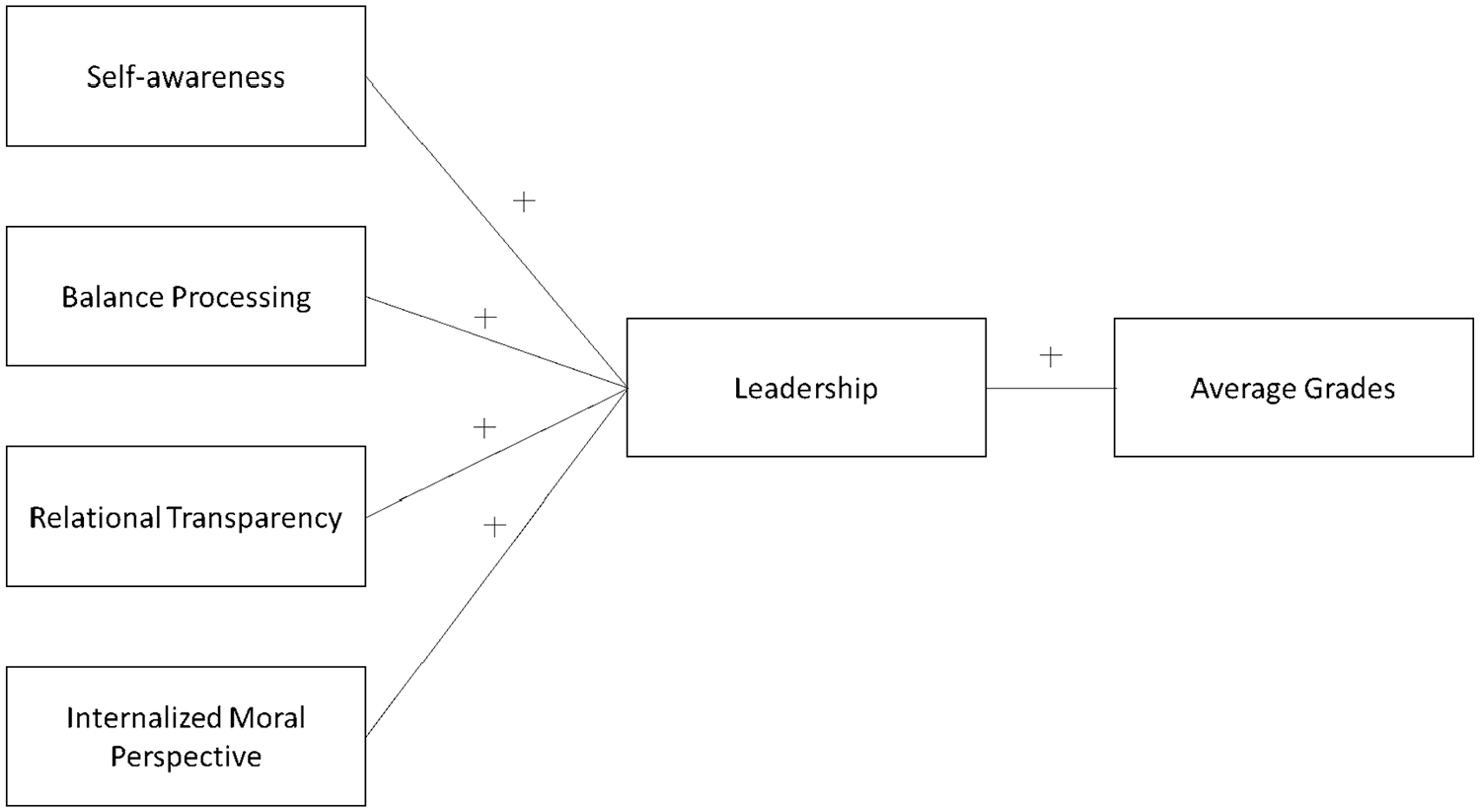
Theoretical model AL—Grades model.
Methodology
This paper shows the results of multigroup Structural Equation Modeling (SEM) to evaluate the impact of a business and leadership intervention program on teenagers.
Intervention
The program chosen as the intervention for students’ careers is the Business and Leadership Program launched in 2022 by the Inspiring Girls Foundation (IGF). Founded in 2016, Inspiring Girls is an international organization dedicated to raising the aspirations of female teenagers around the world. Through events, talks with female role models, and workshops, the organization aims to challenge prevailing stereotypes and empower girls to pursue their interests and potential, free from societal constraints. They operate across multiple countries, including Spain through its local affiliate, IGF (Inspiring Girls, 2024).
The primary purpose of this specific Leadership Program in Spain is to endow girls with the necessary tools to be the leaders of tomorrow; more specifically, it aims to (a) provide management skills for a changing and technological environment, based on the United Nations Sustainable Development Goals; (b) increase young women’s self-confidence and self-esteem so that they do not limit themselves when striving to achieve their goals (overcoming stereotypes and labels); and (c) connect them with female directors who then become their role models.
The training program included a sequence of six training sessions, each spanning a duration of two hours, and was delivered by prominent women within their field of expertise. The initiative focused on teenage girls from 16 to 19 years old and took place in four different regions in Spain (Madrid, Barcelona, Basque Country, and Sevilla) from January to March 2022. Throughout the program, a special effort was placed on the various elements of AL to enhance relevant skills for the future professional development of girls since, as Goleman (2018) states, different leadership styles and emotional intelligence can be learned with proper training and practice. This way modules including training in self-confidence and emotional intelligence and in knowing the importance of becoming aware of oneself and one’s own strengths and limitations linked up with the foremost component of AL: self-awareness. Modules related to managing personal relationships, leadership, communication, and motivation empower relational transparency; modules about developing the ability to identify room for improvement and the flexibility to solve problems connect with balance processing in AL; and finally, modules relating to sustainability and codes of conduct have to do with internalized moral perspectives.
The program also includes a module for understanding the financial world and entrepreneurship, and another one for discovering how new technologies can play an important role in the development of professional careers. Finally, participants are instructed to design an individual project to learn how to successfully execute it, secure financing, and effectively communicate it to the world. Consequently, the program also provides the necessary motivation for girls to strengthen their leadership skills through AL style, helping them inspire trusting relationships with peers and subordinates, developing their personal brand, and being deeply aware of how they think and behave and the context in which they work.
Sample and Procedure
We conducted 355 questionnaires of which 147 corresponded to teenage girls who have enrolled in the IGF’s leadership program. These girls filled in the questionnaire twice (before and after the program, on an online platform). We signed an agreement with IGF which enabled us to conduct our questionnaire to all participants and to confirm whether they had increased their leadership skills after the training program. We also conducted the questionnaire with 61 teenage girls who had not enrolled in this program to validate the differences in leadership skills.
IGF developed an informational media marketing campaign about this program with details about how to sign up on its website. All participants who enrolled in the program were volunteer girls aware of the importance of developing leadership skills, and willing to break down barriers and fight for a more inclusive society. To select the non-participants in the IGF’s program we sent an email to schools’ principals in the four regions where the program took place, explaining the aim of the study, asking for their collaboration, and with a link and a QR code to the online questionnaire. All of them were schools with similar ownership to those the participants in the leadership program attended (public, private not-for-profit, and private for-profit schools). When they agreed to participate, they distributed the questionnaire among their students, in March 2022.
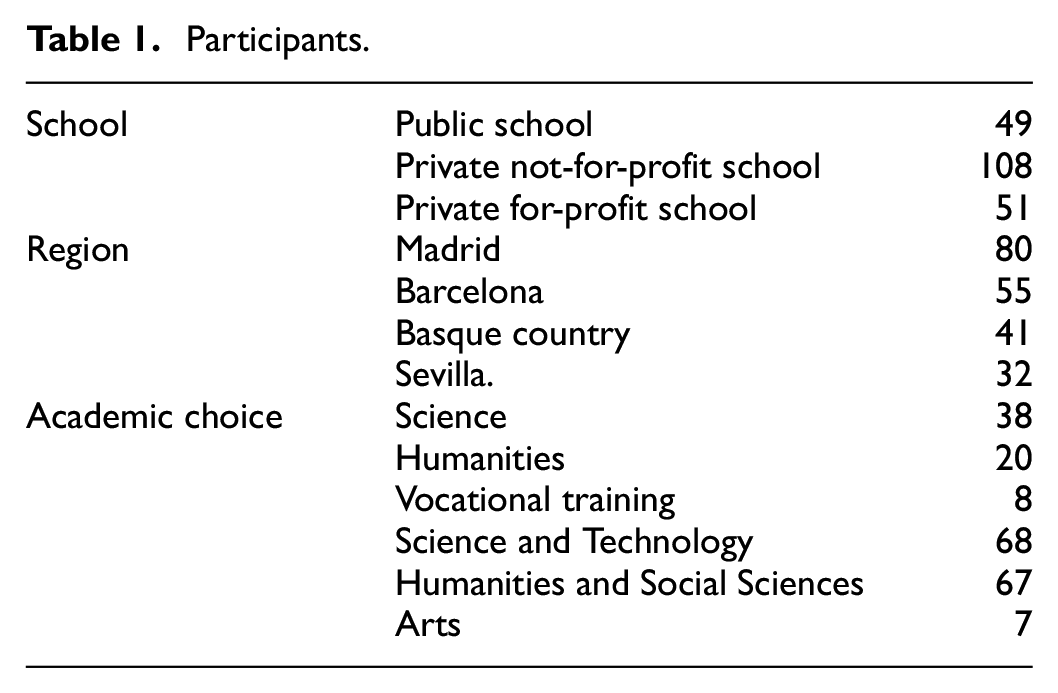
The total sample comprised young women aged 16 to 19, with diverse characteristics. Specifically, 49 students attended public schools, 108 attended private not-for-profit schools, and 51 attended private for-profit schools. In terms of geographical distribution, 80 participants were from Madrid, 55 from Barcelona, 41 from the Basque Country, and 32 from Seville. Academic pursuits varied among the participants, with 38 studying sciences, 20 focusing on the humanities, and 8 pursuing vocational training. Additionally, 68 students were enrolled in science and technology programs, 67 in humanities and social sciences, and 7 in arts disciplines (see Table 1).
Participants.
Measure
We requested permission to translate the Authentic Leadership Questionnaire (ALQ) by Walumbwa et al. (2008) into Spanish and distribute it (Avolio et al., 2007). We added questions to ask about students’ average grades and included questions to classify the respondents. Therefore, data were collected using an adapted version of the Walumbwa et al. (2008)’s ALQ. The ALQ is an empirically validated questionnaire developed to measure AL among adults.
Following the original questionnaire, all items were measured on a five-point Likert scale (where 1 indicated “Not at all” and 5 “Frequently, if not always”). The original items from the ALQ were translated into Spanish and two members of the research team made a back translation. Once this back translation was ready, to identify potential issues with the survey questionnaire design that might lead to practical problems with implementation, a pilot study was carried out in December 2021 with a group of girls who belonged to the same target group as of the main study. We adjusted the language of the questionnaire to match that used by young people of that age, enabling them to easily relate the questions to their own life contexts.
The participants completed the questionnaires on an online platform in the same way that it was completed in the main study. We found no significant problems in the questionnaire design.
The questionnaire measures four fundamental components of AL: self-awareness, relational transparency, balanced processing, and internalized moral perspective, all of which have been adapted to the circumstances of adolescents. Throughout the Inspiring Girls Leadership Program, these components are addressed systematically, with each module led by female role models who are experts in their respective fields. This ensures fidelity between the program’s intended content and the delivery of each session. By leveraging the expertise of these role models, the program provides participants with authentic learning experiences that align with the principles of ALD.
Self-Awareness (SA)
Self-awareness is a pivotal component of AL, emphasizing an individual’s understanding of their strengths, and weaknesses, and how their actions impact others. Consequently, the emotional intelligence module in the Inspiring Girls Leadership Program serves as a platform for cultivating self-awareness among participants. Through engaging activities and reflective discussions, the program aims to encourage participants to explore their emotions, strengths, and limitations. By gaining insight into how their emotions and actions influence those around them, participants can develop a deeper understanding of themselves and their leadership potential. Aligning the objectives of the emotional intelligence module with the core principles of self-awareness in AL, the Inspiring Girls Leadership Program aims to empower participants to recognize and leverage their unique qualities, laying the groundwork for effective leadership development.
This dimension of AL evaluates the participant's awareness of their strengths, limitations, and their impact on others. Questions in the questionnaire delve into whether the participant understands how others perceive them and how their actions influence those around them. For example, participants are prompted to reflect on statements like, “When I lead a team, I know perfectly well how others see me” or “Do I understand how my actions impact others when I lead a team?”
Relational Transparency (RT)
The second component of AL, Relational Transparency, underscores the leader’s capacity to promote open and honest communication within their team or group. In this regard, the Inspiring Girls Leadership Program addresses relational transparency through its module on communication. Through interactive activities and guided discussions, this module aims to encourage participants to practice transparent communication and active listening, essential elements of effective leadership. Participants have the opportunity to express their ideas, concerns, and viewpoints openly, aiming to foster an environment where individuals feel empowered to share their thoughts and feelings without fear of judgment, contributing to the development of relational transparency. Aligning the objectives of communication with the core principles of relational transparency in AL, the Inspiring Girls Leadership Program aims to equip participants with the skills and confidence to communicate effectively as leaders.
This dimension of AL evaluates the leader’s openness with others, allowing them the opportunity to express their ideas, challenges, and opinions. Questions in the questionnaire delve into whether participants emphasize on transparent communication, enhancing their ability to build trust, foster collaboration, and create inclusive team environments. For example, participants are prompted to reflect on statements like “When I lead a team, I ask others to take positions that support their core values.”
Balance Processing (BP)
The third component of AL, Balanced Processing, assesses the leader’s ability to consider diverse viewpoints and gather sufficient information before making decisions. In the Inspiring Girls Leadership Program, this concept is integrated into modules like “Your Project” and “How Technology Helps Us.” In “Your Project,” participants are encouraged to explore various perspectives and innovative solutions to real-world challenges, fostering critical thinking and decision-making skills essential for effective leadership. Additionally, the module on financial independence introduces participants to different financial options, teaching them to make informed decisions about their future, thereby instilling balance processing skills. Similarly, “How Technology Helps Us” prompts participants to critically evaluate the role of technology in their lives, encouraging balanced processing by discussing both the benefits and risks of technology use. Through these modules, the program aims to equip participants with the ability to weigh different viewpoints and make informed decisions, essential for ALD.
This dimension of AL evaluates the leader’s openness with others, assessing their tendency to seek input and consider various viewpoints before making significant decisions. Questions in the questionnaire probe whether participants engage in balanced processing, such as actively listening to different perspectives and weighing diverse viewpoints before arriving at conclusions. For instance, participants may reflect on statements like “When I lead a team, I ensure that all team members have the opportunity to contribute their ideas before reaching a decision,” demonstrating their commitment to inclusive decision-making and balanced processing.
Internalized Moral Perspective (IM)
Internalized Moral Perspective assesses the leader’s commitment to upholding moral and ethical standards in their actions and decisions. This dimension of AL evaluates the extent to which participants prioritize honesty, integrity, and accountability in their leadership roles. For example, statements in the questionnaire may prompt participants to reflect on their behavior in leadership positions, such as admitting mistakes (“When I lead a team, I admit my mistakes if I make them”) and taking responsibility for their actions. In the Inspiring Girls Leadership Program, the module on environmental sustainability and the ethical implications of technology could serve as avenues for cultivating internalized moral perspective. Through discussions on environmental ethics and sustainable practices, participants might explore their ethical responsibility to protect the planet. Similarly, discussions on the ethical implications of technology usage might prompt participants to consider the moral dimensions of their technological choices. By engaging with these topics, participants could develop a strong moral compass and a commitment to ethical behavior, aligning with the principles of internalized moral perspective in AL. Additionally, questions about the latest average grades were included, with the aim of seeing whether leadership skills were influencing academic results. Finally, other personal questions about level of education and occupations of the parents were introduced as they may play an important role in determining leadership skills, according to Duan et al. (2022) and Loci and Peterlin (2023), who saw that early parenting experiences and family atmosphere played an essential role as an incubator for leadership development.
Results
Model Fit and Measurement Reliability
SEM analyses were conducted using Stata 17, employing full information maximum likelihood to account for cases with missing data (Enders, 2010). Model fitness was assessed using various indicators, including root mean square error of approximation (RMSEA), Tucker–Lewis index (TLI), and comparative fit index (CFI). The model meets the cut-off values for these indicators (see Table 2) (RMSEA = 0.053; TLI = 0.950; CFI = 0.961), indicating a satisfactory fit (Byrne, 2010; Hu & Bentler, 1999; Raykov & Marcoulides, 2006).
Model Fit.

When evaluating construct reliability, all constructs exhibited composite reliability scores above 0.7, exceeding the acceptable threshold (Hair et al., 2011; Nunnally & Bernstein, 1994). Furthermore, each indicator’s absolute standardized loading was above the recommended cut-off of 0.70, ensuring reliable measurement. Validity assessment of reflective measurement models focused on convergent and discriminant validity. The Average Variance Extracted (AVE) values for all constructs exceeded 0.50 (Table 3), indicating sufficient convergent validity (Hair et al., 2011). Additionally, Cronbach’s α exceeded .7, demonstrating good consistency of the model.
CFA Factor Loadings, AVE, Cronbach’s Alpha Reliabilities, and Cross Loadings.

To assess the discriminant validity of the latent constructs in the structural model, we employed the Fornell-Larcker criterion (Fornell & Larcker, 1981). According to this criterion, each construct should account for more variance in its indicators than in any other construct. As such, the AVE of each construct should exceed its correlation with any other construct. Finally, no cross-loadings were present, affirming discriminant validity.
Effect of AL Factors on Adolescent ALD
To evaluate the proposed theoretical model of AL and grades, path analysis was conducted both before (T0) and after the leadership sessions (T1). The complete model, depicted in Figure 2, included all the paths among the constructs, as well as paths estimating the predictive relationships between self-awareness, relational transparency, balanced processing, internalised moral perspective, and the student's grades.

AL model with the whole dataset.
In alignment with our research objectives, we examined the impact of various factors on the development of AL skills among adolescent female students. Central to this investigation was the testing of our first hypothesis (H1), which posits that self-awareness, balanced processing, relational transparency, and internalized moral perspective play crucial roles in shaping the average development of AL skills among this demographic. Leveraging a comprehensive analysis of data collected in pre- and post-program assessments as well as from a control group, we sought to elucidate the relationship between these factors and the development of AL.
The path coefficients derived from the AL Model, as presented in Table 4, reveal compelling insights into the relationship between key factors and leadership development among participants. Internalized moral perspective, relational transparency, self-awareness, and balanced processing all exhibited strong positive associations with leadership outcomes, with coefficients ranging from 0.743 to 0.831 (all p < .001). These findings underscore the significant role played by these attributes in shaping AL skills among adolescent female students. Moreover, the results of the likelihood ratio (LR) test further affirm the overall model's goodness of fit, with a chi-square value of 127.440 (p < .001), indicating that the proposed model adequately captures the dynamics of ALD within our dataset.
Path Coefficients From the AL Model With the Whole Dataset.

b = standarised path coefficient.
Program Impact on AL Skills Development
In testing our second hypothesis (H2), we aimed to ascertain whether our leadership program had a significant impact on the development of AL skills among participants. Through a test for invariance parameters (ginvariant) to compare the scores of AL before and after the program, our objective was to assess if there was a significant change in participants' leadership capabilities following program completion.
Table 5 shows a pivotal shift in leadership constructs before and after the program, shedding light on the transformative impact of the intervention. The increase of 4.07305 units in the mean leadership score from T0 to T1 signifies an enhancement in participants’ leadership skills. This surge, coupled with a statistically significant z-value of 3.08 and a p-value of 0, underscores the program’s efficacy in fostering tangible growth in leadership capabilities among participants. Moreover, the confidence interval (ranging from 3.08505 to 5.061) assures the consistency and reliability of this improvement, highlighting the enduring impact of the program on participants’ leadership development. These findings underscore the importance of structured leadership interventions in nurturing and enhancing leadership skills among adolescent female students.
Means Difference in the Constructs Between T0 and T1.

Furthermore, we incorporated an additional metric into our analysis—the average grades across all subjects for the first and second quarters, both pre- and post-intervention. This served as an added of ALD. Table 6 illustrates a significant improvement in average grades before and after the program, indicating a positive impact on academic performance. The mean average grade increased from 8.11 before the program to 8.54 afterward. This rise is statistically significant, with a t-student value of 9.195 and a p-value of .0000, emphasizing the program’s effectiveness in enhancing students’ academic achievements. These results highlight the comprehensive benefits of the program, which not only develops leadership skills but also fosters academic success among adolescent female students.
Means Difference in Average Grades Before and After the Programme.

Program Efficacy: Participants vs Non-participants
The third hypothesis (H3) aimed to ascertain whether participation in the ALD program resulted in a higher average value of the factors compared to those who did not participate. To validate this hypothesis, a comparative analysis between the control group and the program participants was conducted. The analysis supports H3. Table 7 displays the differences in the mean scores of the leadership construct between the test group and the female control group. The coefficient indicates a substantial increase from t = 0 to t = 1, with a value of 2.392303 and a standard error of 0.3121. This increase is statistically significant, as evidenced by the z-score of 7.66 and a p-value of 0. The 5% confidence interval ranges from 1.7804557 to 3.004. These findings suggest that participation in the program led to a significant enhancement in leadership skills among adolescent female students compared to their counterparts in the control group.
Means Difference in the Constructs Between Test Group and Female Control Group.

Discussion, Conclusions and Implications
The present study’s findings make several important contributions to the existing literature on leadership, which can help future research and policies on this topic. While much of the previous research focused on adult participants, the present research uniquely addresses high-school girls aged 16 years old and above. Highlighting, this age range is significant because it marks a crucial period when girls’ perceptions of their competence and self-confidence begin to decline (Sáinz & Eccles, 2012). This research contributes to the literature on innovative ways to improve female high school students’ self-awareness, balance processing, relational transparency, and internalized moral perspective through an ALD intervention. The ALD program, designed specifically for young females, strategically aims to enhance their leadership skills. Its goal is to overcome internal barriers that hinder young females from seeking high-status positions in the future. An early intervention approach may prevent a long-term reduction in the proportion of females in leadership positions. The present study observed a significant increase in the four components of AL: self-awareness, relational transparency, balanced processing, and internalized moral perspective. These core elements are integrated into the ALD program, and they underscore coherence, analytical skills, and the ability to reconsider one’s position when necessary. The positive influence on AL potentialities of female students following the intervention was controlled by considering a group of females who did not enroll in the program as a control group.
Moreover, average grades earned by students in the first and second quarters (before and after the intervention) were included in the model, and it was observed that the average grades improved after the program. This indicator reinforces the idea of the effectiveness of the program, since not only is girls’ sense of AL skills reinforced, but this positive influence is also reflected in improved average grades, as authentic leaders know themselves well and constantly seek self-improvement (Redmond & Dolan, 2016; Whitehead, 2009). It is also important to highlight that the study was carried out using a real intervention implemented by a foundation with continuity over time. These leadership sessions were conducted by experienced knowledgeable expert women who were willing to collaborate, creating an atmosphere of closeness and warmth that was ideal for interacting directly with the students.
Thus, the conclusions of this piece of research will allow the IGF to improve the effectiveness of its leadership program. Additionally, the findings hold practical significance by showcasing the effectiveness of the leadership sessions in enhancing the various components of AL. Consequently, academic authorities are recommended to take note of these interventions as a means to bolster girls' leadership skills.
Investing in women’s leadership requires a lifecycle approach to strengthening and supporting females beginning at a young age. Results provide valuable insight for future studies and programs aimed at enhancing leadership and promoting a more inclusive future where young females are empowered to pursue high-status positions.
Limitations and Future Research
Although the paper delves deep into the impact of a leadership intervention on teenagers, we are also aware of the investigation’s limitations. First, while we have identified a connection between academic achievement and AL, more extensive research is necessary to fully understand this relationship.
Secondly, while the existing sample size is adequate for our study, expanding the sample size in future research would further bolster the quantitative results' validity. Additionally, we are eager to explore how these findings may vary across different types of school systems, leveraging a larger sample size to enhance the robustness of our conclusions and shed light on the broader implications for educational contexts.
Third, longitudinal studies with a time horizon of several years that track the evolution of these adolescents would be valuable in future research. Panel data could be utilized for that purpose. Additionally, replicating the study in more cities would help identify potential variations, and including a larger sample of young men could provide insights into whether young women reach the same levels of AL after the intervention as young men.
Moreover, to better understand the ultimate cause of these findings, future research would benefit from additional primary data. Conducting in-depth interviews with the female teenagerswho enrolled in the intervention program, would offer deeper insights into their experiences and perceptions.
Finally, the success of the intervention could be influenced by the content of the sessions or the role models who led them. Future research projects should explore the influence of both the program’s content and the role models, to understand how each contributes to shaping the leadership aspirations of the participants.
Footnotes
Acknowledgements
The author(s) thank Igor Filatotchev and Ruth Mateos de Cabo, as well as the different assistants at the EURAM 2023 in Dublin (Ireland) for their helpful comments. We also appreciate the useful comments of the anonymous reviewers which have enriched the paper.
Declaration of Conflicting Interests
The author(s) declared no potential conflicts of interest with respect to the research, authorship, and/or publication of this article.
Funding
The author(s) disclosed receipt of the following financial support for the research, authorship, and/or publication of this article: This research was funded by the project “AEI/10.13039/501100011033”, “Chair Universidad CEU San Pablo—Mutua Madrileña (060516-USPMM-02/17)” and “Chair Universidad CEU San Pablo — CEPSA Digital”
Data Availability Statement
Data sharing not applicable to this article as no datasets were generated or analyzed during the current study.
