




Abstract
Critical thinking (CT) is an essential competency for global citizens in the 21st century. Few systematic reviews have evaluated and analyzed instructional interventions to enhance CT in mathematics at the university. This study includes 15 studies on cultivating CT among undergraduate students through instructional interventions within the mathematics curriculum. Quantitative and qualitative methods were employed to provide information and feedback on study and intervention characteristics, analyze the features and effects of multiple interventional strategies, and assess instruments by coding categories. The results indicate that it is essential for instructors to identify the specific CT objectives, including features, criteria, and standards of CT, before intervention. Several teaching strategies are alternatives for developing undergraduate students’ CT abilities through the mathematics curriculum; however, flexibility and availability are necessary to allow students and instructors to adapt and coordinate. Further, multiple assessment instruments are essential for the instructional intervention.
Introduction
Critical thinking (CT) is considered an essential competency for global citizens in the 21st century (American Management Association, 2019; Harahap et al., 2020; World Economic Forum, 2020). It was listed as one of the core competencies for today’s students to thrive and shape their world in the Future of Education and Skills 2030 of OECD (Organisation for Economic Co-operation and Development, 2018). According to research publications and policy papers, higher education should not only assist college students in learning domain-specific knowledge and abilities but also promote thinking capabilities for applying CT skills in practice (Munkebye & Gericke, 2022; Pasquinelli et al., 2020; Shavelson et al., 2018). For decades, Western countries have shown concern regarding the cultivation of CT in universities, with many higher education institutions explicitly designating CT as an essential competency and learning outcome expected of students upon graduation (Fasko, 2003; Pasquinelli et al., 2020; Terblanche & De Clercq, 2021).
In contemporary China, CT education has not progressed in universities until the late 1990s (Dong, 2015; Zha, 2009). In 1995, it was the first time a Chinese university proposed cultural quality education should include teaching CT skills in the first national conference on “Cultural Quality Education” at Huazhong Technology and Science University in Wuhan (Mohrman et al., 2012). In the following years, several top universities began to promote general education programs to improve students’ capacity for CT (Jiang, 2013). In recent years, the Chinese government proposed the “Double First-class Universities program,” which aims to develop a number of world-class universities and disciplines by the end of 2050 and improve Chinese higher education power and international competitiveness. Driven by the ambitious goal of this program, the Chinese government emphasizes that universities should pay special attention to cultivating innovative talent of comprehensive quality to accelerate the construction of world-class universities and disciplines (State Council of China, 2021). “Attaching greater importance to the cultivation of scientific spirit, innovation ability, and CT ability” is an explicit requirement by the Chinese government for fostering innovative talents. Instead of giving equal importance to the development of innovation and CT ability, Chinese educational institutions consistently prioritize innovation ability over the development of students’ CT. Innovation ability is frequently emphasized as one of the objectives of talent cultivation in higher education. However, the development of students’ CT is seldom mentioned in most universities (Cui, 2022; Lan, 2010; Rong, 2018). Proactive innovation is based on creative and reflective processes that are fact-based and focused on CT (Johnson & Weiss, 2008). To move towards proactive innovation, high-quality students equipped with CT skills are required in China. Therefore, CT is essential for innovative talents (Lee & Yuan, 2018).
Several scholars claimed that most higher education institutions in China inadequately foster CT skills in students (Loyalka et al., 2021; Shun-li & Liu, 2019; L. Zhang & Kim, 2018). Most higher education institutions in China have yet to incorporate CT skills development into their teaching objective system. They do not offer specialized courses to foster CT among college students (Q. Zhang et al., 2023). Moreover, Chinese lecturers often dominate the whole class through instruction and seldom interact with students, especially at the undergraduate level, resulting in insufficient effectiveness in developing students’ CT skills (Rong, 2018). Loyalka et al. (2021) conducted a longitude study published in Nature Human Behavior that compared the CT skills of Chinese, Indian, Russian, and American undergraduate students in two disciplines, computer science and electrical engineering. The result reported that students in China make minimal gains in skills from the start of their first year to the end of their second year of university. Therefore, it is necessary to emphasize the CT development of Chinese students to meet their personal development and professional research needs in Chinese higher education and further achieve the Chinese government’s ambitious goal of cultivating high-quality talents.
What Is Critical Thinking?
The study of CT is rooted in philosophical, psychological, and educational traditions of thought. Philosophers prefer to think that CT is to decide what to believe and do (Ennis, 1987). For instance, R. W. Paul (1993) believes that CT is the intellectually disciplined process of actively and skillfully conceptualizing, applying, analyzing, synthesizing, and evaluating information gathered from or generated by observation, experience, reflection, reasoning, or communication as a guide to belief and actions. Cognitive psychologists define CT by the actions or behaviors that critical thinkers can perform (Sternberg, 1986). For example, Halpern (1998) stated that CT is purposeful, reasoned, and goal-directed. It is about thinking about solving problems, formulating conclusions, calculating probabilities, and making decisions. In the pedagogical tradition of theory building, one of the most influential representatives in this field is Bloom’s (1956) taxonomy of cognitive skills. It emphasizes analysis, synthesis, and evaluation as higher-order thinking skills and is often used to represent CT (Davies & Barnett, 2015).
Although these distinct academic stands have generated different definitions of CT, some theorists agree with its core traits. Most researchers agree on the definition of CT, including skills and disposition. For instance, the American Philosophical Association concluded CT skills involve a set of capacities including: interpretation, analysis, evaluation, inference, explanation, and self-regulation (Facione, 1990). Facione (2000) summarizes disposition towards CT as consistent internal motivation to engage in problems and make decisions using CT, including truth-seeking, open-mindedness, analyticity, systematicity, self-confidence, inquisitiveness, and maturity of judgment. Scholars have widely used this definition for further research on improving and assessing undergraduate students’ CT in different research fields.
Teaching Critical Thinking in Mathematics
Many educators view CT as a set of skills and dispositions that can be learned rather than an innate mental function (Liyanage et al., 2021). Numerous empirical investigations have shown that CT is a form of intelligence that can be taught, and students’ capacity for CT is the result of education, training, and practice (Behar-Horenstein & Niu, 2011; Bellaera et al., 2021; Styers et al., 2018). Studies have indicated that CT can be developed through instructions at all educational levels and disciplinary areas using several effective strategies (Abrami et al., 2015; Feulner, 2020; Leming, 2016; Sutiani et al., 2021; Tanujaya et al., 2021). In mathematics, some academics believe that someone talented at mathematics will be good at thinking, and someone trained in learning mathematics will become a good thinker (Cresswell & Speelman, 2020; Li & Schoenfeld, 2019), which implies a relationship between the thinking process and mathematics (Ahdhianto et al., 2020). Nevertheless, according to Jablonka (2014), students’ CT does not emerge in any mathematics curriculum but is instead fostered through teaching approaches that encourage students’ reasoning and questioning while they are engaged in intellectually challenging tasks.
Ennis (1989) categorizes different approaches to teaching CT as general, infusion, immersion, and mixed. The general approach attempts to teach the general principles of CT skills and dispositions in an isolated course. The infusion and immersion approaches embed CT into existing subjects with deep, thoughtful, and well-understood subject instruction to improve students’ CT. The distinction between the infusion and immersion approaches is based on whether the general principles of CT dispositions and skills are made explicit. The mixed approach combines the general approach with infusion or immersion (Ennis, 1989). These modes describe the methods instructors use to teach CT, and selecting the appropriate approach is a vital issue (Ahern et al., 2019). Mathematics is considered an appropriate subject for enhancing students’ critical thinking, and some empirical studies have implemented various intervention strategies to develop students’ CT and evaluate their effectiveness. Consistently positive results have been obtained in terms of improving students’ CT skills, conceptual understanding, and academic performance in mathematics (Al-Zoubi & Suleiman, 2021; Andayani et al., 2020; Hodges, 2011; Siahaan et al., 2020).
In mathematics educational research, the concept of CT varies based on philosophical, psychological, or educational perspectives. For instance, Glazer (2001) argued that CT in mathematics refers to the ability to generalize, prove, or evaluate less well-known mathematical problems that require prior knowledge, mathematical reasoning, and cognitive processes. Dolapcioglu and Doğanay (2022) claimed that CT in mathematics involves knowledge and correct solutions, understanding, interpreting, and investigating different solution paths, and reflecting in everyday life. In several studies, mathematical problem-solving skills are generally considered one of the main goals of students’ CT development and assessment objectives (Evendi et al., 2022; Jablonka, 2014; Syafril et al., 2020; Syaiful et al., 2022).
Critical Thinking Measurement
CT assessment is critical in higher education to improve students’ CT. It helps improve education by providing benchmarks or standards for faculty to assess student CT levels, outcomes, and teaching effectiveness related to CT. Thus, educators must choose an appropriate and effective measurement instrument for CT assessment (Halonen et al., 2003). With numerous measurements being developed, one or more types of instruments are usually used by researchers to evaluate students’ CT in their studies (R. Paul & Elder, 2006). These measurements can be classified into three types: commercially available standardized tests; researcher- or instructor-designed assessments for their objectives and purpose, such as rubrics; and teaching students to assess their thinking, such as self-reporting (Alfadhli, 2008).
Standardized CT assessments are one of the most commonly used tools for evaluating CT. Empirical studies use three widely used standardized measures of CT skills: the Watson–Glaser Critical Thinking Appraisal (WGCTA), the Cornell Critical Thinking Tests (CCTT), and the California Critical Thinking Skills Test (CCTST). They were developed to measure people’s CT skills and based on rigorous measurement procedures that have been proven to be highly valid and reliable (Niu et al., 2013). Nevertheless, most standardized assessment instruments consist of multiple-choice tests with general content, such as various real-world scenarios involving CT skills, and seldom with specific disciplines. This instrument can be used for summative feedback on CT levels but cannot be combined with the subject-matter context to give students formative feedback through a course (Reynders et al., 2020). The types of researcher- or instructor-designed assessments and students’ thinking reports are considered non-standardized, which could combine subject context to meet the specific needs of the researchers and provide feedback to students and researchers about their learning and instructions (Bensley & Murtagh, 2012).
Goals of This Systematic Review
Different instructional intervention strategies have been used to enhance students’ CT through mathematics curricula (Dolapcioglu & Doğanay, 2022; Peter, 2012; Syaiful et al., 2022). However, a systematic review of such instructional interventions is missing. This study analyzed various significant characteristics of instructional interventions, including study characteristics, intervention characteristics, assessment instruments, and intervention outcomes. The analysis encompassed studies published between 2018 and 2023. The present study aimed to provide information and feedback on the CT teaching and assessment methods implemented in these studies, analyze the characteristics and effectiveness of different intervention strategies using coding categories, and provide suggestions for instructors to implement efficient instructional strategies and use appropriate measurement methods when teaching CT to students. In addition, the study should provide researchers with a broader horizon and a clear reference point for further research on the development of students’ CT.
Methods
Search Strategies
This systematic literature review refers to the PRISMA 2020 flow guideline, in which the checklist items are widely applied to systematic reviews evaluating interventions (Abdullah, 2022; Page et al., 2021). The literature search was limited from 2018 to 2023 (February) in the SCOPUS and Web of Science (WoS) databases. The following three sets of keywords were used in searching the papers by combining the operators “AND” and “OR”: critical thinking; mathematics education OR mathematics teaching OR mathematics learning; and university OR college OR higher education OR postsecondary education OR tertiary education.
Screening and Eligibility Criteria
The two authors jointly conducted a systematic review of the English-language literature. We identified 264 potentially relevant articles that were available for the initial review. The authors screened the titles and abstracts using the following inclusion criteria: (1) they must relate to a study concerned with the development or improvement of CT; (2) they must involve an instructional intervention; (3) they must report on participants’ CT outcomes resulting from the treatment; (4) they must focus on students in higher education; (5) the instructional intervention must be in the field of mathematics in higher education; and (6) the articles must be publicly available or archived, and be empirical research or a program evaluation. Notably, each inclusion criterion had to be met; otherwise, the study was rejected. During the screening, relevant studies that did not meet the inclusion criteria were excluded. For instance: (1) some articles evaluated and improved the CT of pre-service math teachers through mathematics education courses focused on elementary mathematics but not related to the mathematics of higher education, (2) several studies worked on improving the CT strategies for secondary; however, not postsecondary students, and (3) many articles mentioned that CT is necessary for students to obtain mathematics achievement; nevertheless, they did not develop CT intervention strategies or relevant training.
Further screening was performed by reading the full texts of 41 studies that met the original inclusion criteria. The two authors discussed these uncertain, included, or excluded studies until they reached an agreement. Finally, 15 articles remained for data extraction and analysis. Figure 1 shows the flow diagram.

PRISMA flow diagram.
Data Analysis
All necessary data from each study report were recorded on a data sheet. The extracted data included: (1) Study characteristics: Date of publication, country, and publication outlet; (2) Population: Grade level, sample size, and college; (3) Intervention characteristics: Research design, intervention period, and main topics; and (4) Reported outcomes and main findings. The extracted data were coded into categories using a constant comparative method. A codebook was also created listing the crucial coding categories (Table 1). In addition, a mixed research method was used to provide a subjective way of looking at the data characteristics and to improve understanding of the evidence from individual studies (Siddaway et al., 2019).
Code Examples.

Results
Study Characteristics
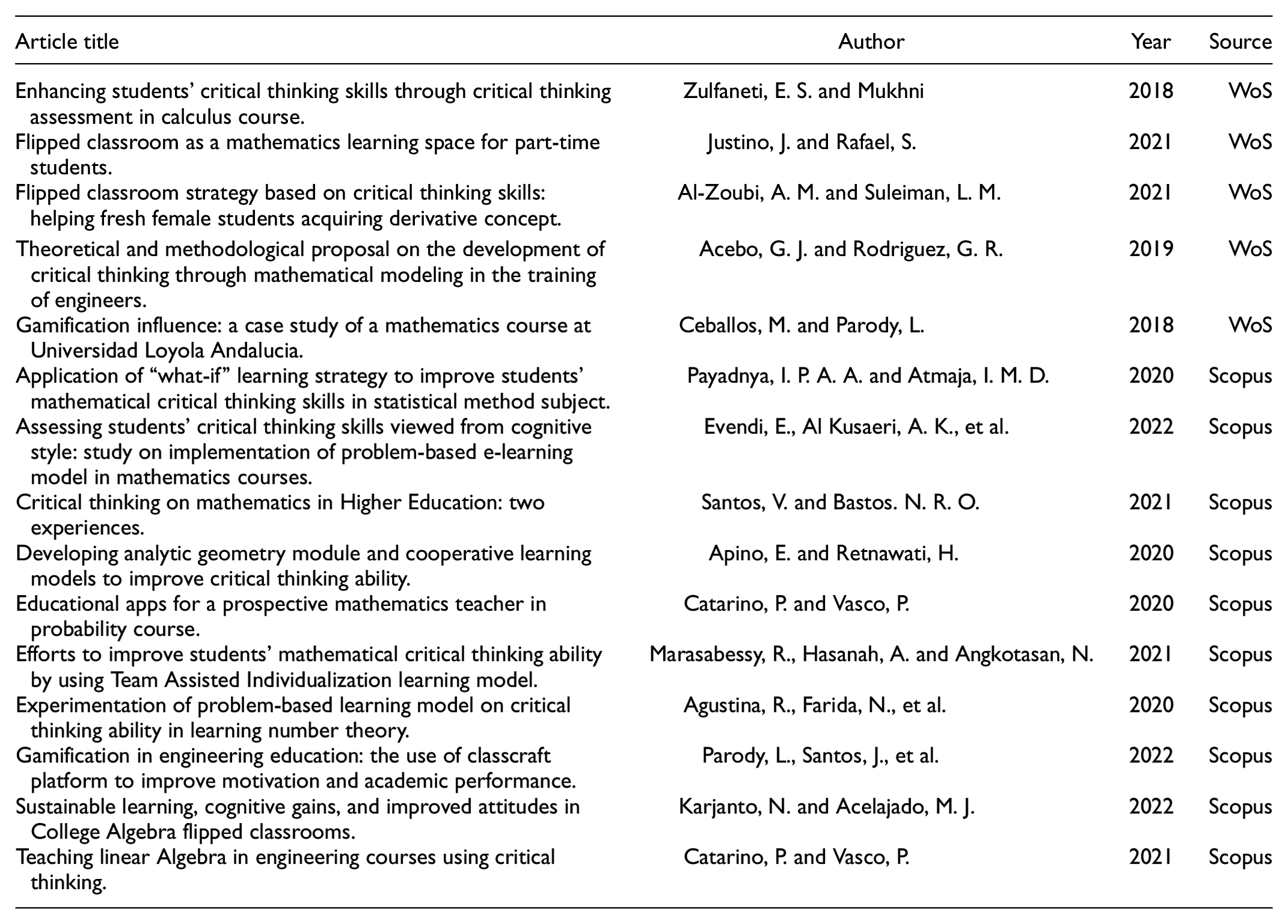
Figure 2 shows the main descriptive characteristics of the 15 studies reviewed, all indexed in SCOPUS and WoS. They were conducted in Indonesia, Portugal, Jordan, Spain and Korea. Regarding research methods, qualitative, quantitative, and mixed research methods were used in three (20%), nine (60%), and seven (47%) studies, respectively. Interviews, observation questionnaires and questionnaires were used to collect qualitative data and tests for quantitative results. Regarding research design, eight of the 15 studies examined (53%) used a quasi-experimental methodology. One study (7%) used an experimental methodology, while two (13%) used a longitudinal methodology. In addition, four (27%) were case studies. Appendix A contains the titles of the 15 studies reviewed and their authors and sources.

Study characteristics of the reviewed studies (number of studies n = 15).
Intervention Characteristics
The study sample size varied considerably and comprised 16 to 55 students. Six studies (40%) selected participants from the universities’ mathematics schools, and four (27%) designed interventions for engineering majors. In five (33%) of the 15 studies, the student’s major or college was not specified. Most participants were first-year students who had taken math courses for the first time since entering university. Four studies (27%) selected first-year students as subjects, while two studies (13%) referred to second-year students, and nine studies (60%) did not explicitly describe students’ grades. Math topics included Limit, Integral Calculus, Algebra, Geometry, Probability theory, and Equations.
The list of pedagogies or teaching modes of our 15 reviewed works of literature is as follows: assessment strategy, flipped learning model, mathematics modeling strategy, “What if” learning strategy, problem-based learning (PBL) model, dialogue strategy, cooperative learning model, educational app, team assisted individualization (TAI) learning model, and information and communications technology (ICT).
Concept and Objectives
All 15 studies described the concept or general principles of CT based on researchers’ own definitions or with reference to other studies. Nine articles (60%) referred to the definition of scientists recognized in CT. Six studies (40%) cited the general principle of CT that provides actionable guidance for applying CT skills.
Regarding the objectives of CT improvement, most reviewed studies focused on several dimensions of CT skills, such as interpretation, analysis, reasoning, decision-making, and problem-solving skills, as training goals for fostering students’ CT. Specifically, 14 studies (93%) focused their instructional intervention on practicing CT skills, and only one (7%) incorporated CT skills and disposition as the goals of CT improvement. Several studies stated that problem-solving is one of the most essential abilities of CT for students’ mathematics achievement, and some of them even equate CT skills to problem-solving skills.
Teaching Approach
Overall, four (27%) of the 15 articles used an infusion approach in which students recognized what CT is and were explicitly encouraged to think critically or apply CT skills when engaging in classroom activities or completing mathematics tasks. The remaining 11 studies (73%) used the immersion approach, where CT skills were implicit in the learning tasks and were not emphasized to students by teachers during teaching activities or problem-solving.
Intervention Strategies
The instructional intervention strategies to improve CT were extracted and consolidated from 15 reviewed studies to analyze them comprehensively and explicitly. These extracted instructional intervention strategies consist of ICT, PBL, cooperative learning model, flipped learning model, questioning, assessment, and mathematical modeling.
Of the 15 studies reviewed, four (27%) used the ICT strategy, one of the most commonly used intervention strategies in the literature reviewed. These studies used software or digital platforms with questions, group discussions, and gamification methods to train students’ CT skills. For example, Santos and Bastos (2021) claimed that ICT reflects on concepts and essential principles of mathematics and could be used to implement a collaborative strategy, which effectively places the student at the center of the activity process, providing an opportunity for all students to share their thinking with peers and instructors. They argued that a digital tool helps students’ CT skills by keeping them more engaged with learning materials and allowing them to receive immediate feedback.
Three studies (20%) employed the PBL learning model, an active learning approach that exposes students to solving a mathematics problem in the real world. By engaging with problems, students may generate new knowledge, enhance their comprehension of concepts, and improve their long-term retention of information (Evendi et al., 2022). Agustina et al. (2020) conducted an experimental design in a university to investigate the effectiveness of a PBL model on students’ CT, indicating that PBL can increase the average value proportion of each indicator of CT.
In addition, two studies (13 %) used a cooperative learning model in which students worked in small groups to discuss, collaborate, solve problems, and share ideas. Marasabessy et al. (2021) proposed a TAI learning model that combines cooperative learning with individual learning that emphasizes solving problems and completing tasks relying on the group students, which provides them training to analyze and discuss the subject matter in groups, evaluate each other, and exchange opinions to improve their CT.
Three studies (20%) proposed a reverse learning model. This is an active learning model in which students are provided materials to learn outside the classroom before the lecture. Independent learning from the materials helps them improve their understanding of the mathematical concepts and thus increases participation in interacting with classmates during the lecture. Two out of three studies were conducted, a pre- and post-experiment, to investigate the effects of the flipped learning model on improving students’ CT. They found that students’ CT improved with the flipped learning model compared to the control group, who used the traditional lecture method (Justino & Rafael, 2021; Karjanto et al., 2022).
One research (7%) stated an assessment strategy to enhance students’ CT within the mathematics curriculum. Zulfaneti et al. (2018) studied CT assessment strategies combined with Calculus learning. They argued that using an assessment instrument gives feedback to classmates and lecturers, making them more careful and accurate in understanding the problem. The result reported that students with a high level of CT improved their CT ability, and those with moderate and low CT abilities also had a positive change in their CT level. Additionally, one study (7%) used mathematical modeling as a strategy in teaching mathematics, leading students to create mathematical representations when solving real-life problems. According to Gutiérrez and Gallegos (2019), students refine and constantly develop mathematical models, including interpreting information, identifying problems, establishing models, considering solutions, and improving and validating them. As they progress from one stage to the next, students engage in mental exercises that help them improve their CT abilities.
One study (7%) used a questioning strategy called the “what-if” learning approach. In this approach, the lecturer provides worksheets with “what-if” questions for students or asks them to prepare their questions, then engages students to answer those questions in a group. The activities in which students are involved while preparing questions and the discussion process to answer questions are expected to trigger the development of CT skills (Payadnya & Atmaja, 2020).
The above instructional interventions involve multiple teaching strategies, each tailored to improve various aspects of students’ CT. To highlight practical instructional approaches for enhancing students’ CT, this study employed the more subtle classification developed by Abrami et al. (2015), including the categories of individual study, dialogue, and authentic instruction. The instructional interventions employed in the 15 reviewed studies were categorized into these three categories. In particular, the individual study is characterized by studying alone by engaging in reading, watching, listening, and reflecting on new information; the dialogue is characterized by learning through discussion, such as group discussion, questioning, and debate; authentic instruction refers to students being given genuine problems or problems that make sense to them to keep them intrigued and encourage them to inquire, such as applied problem-solving and playing games.
Figure 3 shows that the dialogue strategy is the most popular and accounts for 55% of all the teaching strategies used in instructional interventions, and the authentic instruction strategy is the second most common and accounts for 30%; the individual study accounts for 15%. For instance, Payadnya and Atmaja (2020) argued that group discussions exposed students to diverse perspectives and encouraged students to interpret and analyze information. According to Al-Zoubi and Suleiman (2021), the individual study occurs in the first stage of a flipped model, where students are prepared homework assignments for individual learning before the actual lecture time. The individual learning phases motivate students to think about the characteristics of concepts and encourage them to search for and examine the image of the concept. Parody et al. (2022) proposed a role-playing game supported by a digital platform in which students are given a real-life problem from the field of engineering. Students have to search for information about the issue, collect data from prior knowledge, and apply the techniques explained in the course to solve the problem. These techniques require students to analyze, evaluate, summarize information, and make decisions.

Categorizations of teaching strategies employed in instructional interventions.
Moreover, other coding categories were employed to classify the instructional interventions into two styles: a cooperative category, which includes the cooperative learning model and different teaching strategies that characterize cooperative learning, and a non-cooperative category, encompassing interventional strategies without the collaborative learning forms. Based on the graphs, 80% of the studies contained cooperative strategy as a component of the CT intervention to develop students’ CT, and 20% did not demonstrate collaborative elements in their teaching mode. Figure 4 shows the proportion of the instructional intervention strategies in the cooperative and non-cooperative categories.

Proportion of cooperative and non-cooperative categories.
In addition, most studies reported that active learning theories or principles were used in the studies examined. In active learning strategies such as the PBL, ICT, and flipped learning models, students are encouraged to engage in various activities and take on the challenge of finding solutions to problems. According to Ebiendele Ebosele (2012), active learning environments engage students in investigating information and applying knowledge, positively affecting their CT skills.
Critical Thinking Measures
Most of the 15 studies reviewed assessed the extent of CT improvement by creating non-standardized measures related to subject content. More specifically, non-standardized and standardized measures accounted for 95% and 5%, respectively. The former includes task-oriented approaches such as a test with rubrics, a quiz with indicators, open-ended questions, observation sheets, interviews, and questionnaires (Figure 5). As a rule, a task-oriented test is an essential part of the non-standardized measurement, and a self-assessment-oriented test is used to explain and verify the result of the task-oriented test. In several studies, only test strategies were used to assess the students’ CT after the intervention.
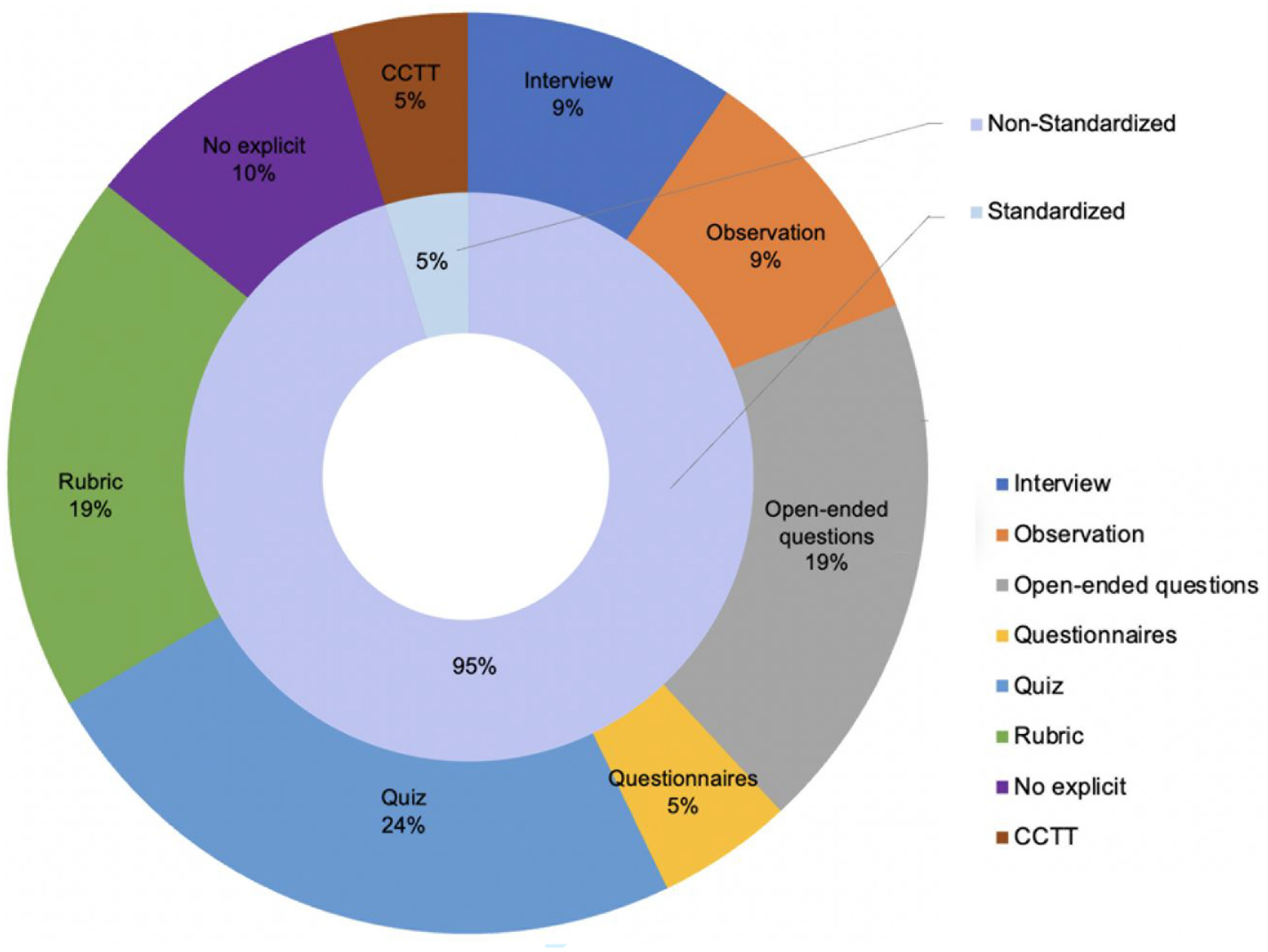
Critical thinking assessment instruments of the reviewed studies.
Reported Outcomes
All of the 15 studies reported a positive effect regarding strategies to improve CT skills. Only one of them mentioned CT disposition. Four studies (27%) found that students in the experimental group treated with the CT intervention strategies improved their CT skills significantly more than students in the control group treated with a traditional pedagogy, such as lectures. Eight studies (53%) conducted pre- and post-tests with one group and reported that students’ CT skills improved to varying degrees after treatment.
Several studies have examined math achievements, such as understanding math concepts, knowledge retention, student motivation, communication, and problem-solving of mathematics. Evendi et al.’s (2022) study serves as a cognitive bridge for comprehending and resolving mathematical issues, and there exists a substantial and connected correlation between CT and students’ academic performance.
Discussion
Differences in CT perspectives exist between academic disciplines such as education, philosophy, and psychology. Scholars tend to focus on the research purpose of defining CT, resulting in different CT concepts appearing in published studies. In the educational context, instructors’ views of CT and the information conveyed to students affect the training strategies for their CT development, instructors’ behavior in the course, and students’ understanding of CT and CT skills (Alsaleh, 2020; Fahim & Eslamdoost, 2014; Janssen et al., 2019). Accordingly, instructors need to determine the specific teaching objectives, including the characteristics, criteria, and standards of CT, before subjecting students to CT training. This aligns with the viewpoint of Hitchcock (2018), who argues that the primary educational goal of CT is for students to recognize, implement, and put into practice the criteria and standards of CT, including the knowledge, skills, and dispositions of CT.
All 15 reviewed studies report positive outcomes of instructional interventions on student CT enhancement. The researchers classify these strategies using different categorization methods and analyze them qualitatively to highlight the effectiveness and usefulness of the various techniques in promoting students’ CT. As for the instructional strategies used, dialogue and authentic instruction were the most frequently used in the papers we examined. Here, dialogue techniques, including discussions, group debates, and presentations, were often used as a helpful strategy in student-centered instruction to engage students in learning activities. They were also typically used in the design of collaborative lessons as part of an effective strategy to facilitate interaction between students and between teachers and students. This allows students to discuss in groups, express their understanding of mathematical issues, identify errors in solving problems, and evaluate their and others’ arguments (Webb et al., 2019). Authentic teaching techniques present students with real problems and engage them in inquiries, such as PBL and gamification strategies. They engage students in problem-solving, and the knowledge gained in problem-solving is better for understanding problems and more flexible in applying prior knowledge. Authentic problem-solving requires hypothesizing, finding and sorting information, and thinking critically about it (Aini et al., 2019; Dabbagh, 2019).
A percentage of 80% of the studies examined used cooperative learning strategies and achieved a positive intervention outcome. These strategies, such as group discussion, peer assessment, and group learning, increase student interaction during or outside the lecture, allow students to discuss with others, and promote active learning. According to Tran et al. (2019), such methods improved the students’ cognitive strategies on a post-test compared to a similar group who experienced lecture-based methods. This learning technique supports students in applying the learned knowledge to new situations for solving problems, decision-making, or making critical evaluations to promote students’ awareness, knowledge, and control of cognition. This finding aligns with Lai (2011), who argued that several CT researchers urge instructors to employ a collaborative or cooperative approach, which is vital for cognitive improvement when students interact with others.
In addition, active learning was frequently mentioned in the studies we examined, with instructional design based on student-centered principles. They claimed that the active learning method encourages students to engage in learning activities to promote their active thinking processes. The active thinking process helps students solve mathematical problems, including presenting relevant information, reasoning, drawing a conclusion, and reflecting and articulating their explanation, positively impacting students’ CT development.
In conclusion, several instructional intervention strategies are challenging for novice practitioners, whether instructors or students. Justino and Rafael (2021), for example, claimed that the flipped learning model is difficult, even though it is a rewarding experience. Due to its multivariable dynamics, everything in and out of the classroom must be appropriately considered and measured.
Our results suggest that most studies have used non-standardized CT measurement instruments for CT assessment. In contrast, the standardized CT assessment method is rarely used in mathematics at the postsecondary level. This may be consistent with a study by Tiruneh et al. (2014), who emphasized that studies that employed non-standardized CT measures reported a significant improvement in the post-test or between the experimental and control groups compared to those that used standardized measures. The utilization of non-standardized assessment instruments offers a degree of flexibility to accommodate the specific requirements of researchers, particularly within mathematics education. These assessments combine mathematical content to assess aspects of CT skills relevant to mathematical thinking and provide feedback to students on applying CT skills in addressing mathematical concepts and problems (Bensley & Murtagh, 2012; Ukobizaba et al., 2021).
Nevertheless, verifying the validity and reliability of these non-standardized assessments remains a challenge. According to Tsui (2002), the practical assessment tools of students’ CT skills are a significant issue for higher education, and reliable and validated measurement is crucial to assess a student’s CT level. Nevertheless, non-standardized assessments are typically tailored to specific learning objectives, instructions, or subjects’ backgrounds, rendering the construction of assessment tools intricately complex. Moreover, the flexibility associated with scoring criteria in such assessments presents challenges in ensuring the objectivity of grading. These factors collectively impede the establishment of the reliability and validity of assessment tools (Gallardo, 2020).
In contrast, most standardized assessment instruments have been shown to have good validity and reliability. Nevertheless, standardized assessments consist of multiple-choice tests with general content. They cannot be combined with the subject context to provide formative feedback to students and instructors during a course. Therefore, any assessment method is inevitably limited in its possibilities and has shortcomings. It is appropriate to suggest that a combination of standardized and non-standardized tests is a suitable alternative for researchers and instructors to evaluate the effectiveness of instructional interventions.
Conclusion
CT has been an educational goal at universities in Western countries for decades. Despite scholars having found evidence that CT was mentioned in ancient Chinese education dating back to Confucius or even earlier, CT is still in its infancy in today’s China (Kim, 2003). Nowadays, the lecture method in Chinese classrooms is commonly used, particularly in the universities. Under this teaching model, teachers play a dominant role, while students’ opportunities for expression, discussion, debate, and independent inquiry are seldom employed. This bias towards traditional teaching methods means that students rarely engage in processes such as evaluation, explanation, reasoning, reflection, and decision-making, limiting the development of their CT skills during the course (Jiang, 2013; Rong, 2018). Moreover, many instructors in China lack the awareness and proficiency to cultivate students’ CT abilities, so they rarely incorporate CT in instructional content, methods, and evaluations (Q. Zhang et al., 2023).
In recent years, a growing body of research by scholars has focused on studying CT among Chinese students (Chen, 2017; Pu & Evans, 2019; Q. Zhang et al., 2022). However, limited research is available on institutional interventions for promoting CT among Chinese undergraduates in mathematics. This study thoroughly analyzed and evaluated several critical components of instructional interventions to enhance students’ critical thinking, including establishing teaching objectives, determining instructional principles, practicality and effectiveness of teaching strategies, availability of assessment tools, and instructional outcomes. Providing systematic guidance for designing instructional interventions equips educators with a comprehensive understanding of the characteristics of the instructional intervention, enabling them to make rational and flexible choices regarding specific objectives, strategies, assessment tools, etc., to design their instructions effectively. It also provided evidence that allows them to anticipate interventional outcomes to implement interventions more effectively. Moreover, it may positively affect educators’ ability to establish and strengthen their confidence and beliefs in fostering students’ CT in mathematics courses. Furthermore, this study is expected to provide researchers and educators worldwide with a broad horizon and a clear reference point for further research on the development of students’ CT, especially in China.
Empirical studies have proven that promoting students’ CT through university disciplines is realistic. They provide a theoretical basis for the practice and innovation of lecturers’ teaching methods. However, CT is difficult to teach, and an instructional design for developing CT requires flexibility and availability for students and faculty to adapt and coordinate (Zandvakili et al., 2019). Therefore, further investigation into enhancing students’ CT through intervention strategies is warranted. This investigation should endeavor to establish principles and criteria guiding the design and implementation of diverse techniques. The objective is to augment operability and flexibility while ensuring effectiveness and adaptability across diverse environmental contexts.
The studies included in this review were searched from the SCOPUS and WoS databases associated with publication bias. In particular, our study did not include unpublished studies relevant to CT instructional interventions and studies published in other sources, such as theses, dissertations, and government and association reports.
Footnotes
Appendix A: A List of the 15 Reviewed Studies
| Article title | Author | Year | Source |
|---|---|---|---|
| Enhancing students’ critical thinking skills through critical thinking assessment in calculus course. | Zulfaneti, E. S. and Mukhni | 2018 | WoS |
| Flipped classroom as a mathematics learning space for part-time students. | Justino, J. and Rafael, S. | 2021 | WoS |
| Flipped classroom strategy based on critical thinking skills: helping fresh female students acquiring derivative concept. | Al-Zoubi, A. M. and Suleiman, L. M. | 2021 | WoS |
| Theoretical and methodological proposal on the development of critical thinking through mathematical modeling in the training of engineers. | Acebo, G. J. and Rodriguez, G. R. | 2019 | WoS |
| Gamification influence: a case study of a mathematics course at Universidad Loyola Andalucia. | Ceballos, M. and Parody, L. | 2018 | WoS |
| Application of “what-if” learning strategy to improve students’ mathematical critical thinking skills in statistical method subject. | Payadnya, I. P. A. A. and Atmaja, I. M. D. | 2020 | Scopus |
| Assessing students’ critical thinking skills viewed from cognitive style: study on implementation of problem-based e-learning model in mathematics courses. | Evendi, E., Al Kusaeri, A. K., et al. | 2022 | Scopus |
| Critical thinking on mathematics in Higher Education: two experiences. | Santos, V. and Bastos. N. R. O. | 2021 | Scopus |
| Developing analytic geometry module and cooperative learning models to improve critical thinking ability. | Apino, E. and Retnawati, H. | 2020 | Scopus |
| Educational apps for a prospective mathematics teacher in probability course. | Catarino, P. and Vasco, P. | 2020 | Scopus |
| Efforts to improve students’ mathematical critical thinking ability by using Team Assisted Individualization learning model. | Marasabessy, R., Hasanah, A. and Angkotasan, N. | 2021 | Scopus |
| Experimentation of problem-based learning model on critical thinking ability in learning number theory. | Agustina, R., Farida, N., et al. | 2020 | Scopus |
| Gamification in engineering education: the use of classcraft platform to improve motivation and academic performance. | Parody, L., Santos, J., et al. | 2022 | Scopus |
| Sustainable learning, cognitive gains, and improved attitudes in College Algebra flipped classrooms. | Karjanto, N. and Acelajado, M. J. | 2022 | Scopus |
| Teaching linear Algebra in engineering courses using critical thinking. | Catarino, P. and Vasco, P. | 2021 | Scopus |
Acknowledgements
Thanks to the support of my family who give me love and support, and thanks to the help of Prof. Abdul Halim Abdullah and his contribution to this article.
Declaration of Conflicting Interests
The author(s) declared no potential conflicts of interest with respect to the research, authorship, and/or publication of this article.
Funding
The author(s) received no financial support for the research, authorship, and/or publication of this article.
Ethical Approval
This research is not applicable.

Data Availability Statement
Data availability is not applicable to this article as no new data were created or analyzed in this study.