




Abstract
In the context of ongoing curriculum teaching reform accelerated by the COVID-19 pandemic, evaluating online logistics courses from the learners’ perspectives and identifying strategies for improvement have become critical areas of inquiry. Despite the growing body of literature on online education, existing studies often overlook the specific topics of interest and emotional tendencies of online logistics course learners. This study addresses this gap by utilizing the push-pull-mooring (PPM) theory, originally developed for human migration studies, to elucidate the transition of learners from offline to online environments, while exploring the formation process and significance of online logistics course instruction. We employ the ROST Content Mining System (ROST CM) software to conduct word frequency analysis, semantic network analysis, and sentiment analysis on review text data from two logistics courses offered on the China University massive open online courses (MOOC) platform. Our findings indicate that online learners prioritize three key aspects: “teacher,”“course,” and “learning content,” with high-frequency words revealing a hierarchical structure of “topic → transition → emotion.” While most learners expressed positive and satisfactory sentiments, a minority conveyed neutral or negative emotions. Based on these insights, this paper proposes targeted recommendations focusing on instructor guidance, enhancing online interaction, and fostering reflective teaching practices.
Plain language summary
This study aims to evaluate online logistics courses from the learners’ perspectives and identify improvement strategies in the context of curriculum teaching reform, influenced by the COVID-19 pandemic. Utilizing the push-pull-mooring theory to understand the formation process and significance of teaching online logistics courses, the study analyzed review text data from two logistics courses on the China University MOOC platform. From the analysis of the review text data, three focal points emerge as priorities for online learners: “teacher,”“course,” and “learning content.” The high-frequency words in the reviews reveal a hierarchical structure of “topic → transition → emotion.” Overall, the majority of learners expressed positive and satisfactory sentiments towards the online logistics courses. However, a subset of learners had neutral or negative emotions. Based on the findings, we put forward targeted recommendations to enhance the online learning experience for instructor guidance, online interaction, and teaching reflection. The study contributes to the understanding of online course design and offers practical recommendations for teaching improvement. Although this study provides valuable insights into the learners’ perspectives on online education, it has some limitations. Firstly, the research focuses on two courses from the China University MOOC platform, which may limit the generalizability of the findings. Secondly, the analysis relies on the review text data, without considering other factors that may influence learners’ experiences. The limitations shall be addressed in future research to get a more robust and comprehensive understanding of the evaluation of online education from learners’ perspectives.
Introduction
With the continuous integration of information technology into education, online courses and pedagogical paradigms have received significant attention from academic institutions (Kasparet al., 2024; Ma et al.,2024). In the context of recurrent localized COVID-19 outbreaks, the regular adoption of online teaching has gained prominence, enabling the widespread dissemination of high-quality educational resources. This resonates with the broader trajectory of fostering a “quality revolution” in higher education, a key aspect of China’s “learning revolution (The Ministry of Education of the People’s Republic of China, 2022a).
Under the guidance of China’s Ministry of Education, collaborative efforts among professional teaching committees at all levels, universities, and other organizations have catalyzed the establishment of comprehensive online platforms, such as the Massive Open Online Course (MOOC) and the National Higher Education Smart Education initiative. According to the Ministry of Education, by February 2022, China have over 50,000 courses online, including nearly 300 logistics-related courses), with participants exceeding 800 million. Over 300 million students have earned MOOC credits, with the number of MOOC courses and learners continuing to exhibit a sustained growth trend (The Ministry of Education of the People’s Republic of China, 2022b).
In the realm of logistics education, the evolution and integration of online courses have substantially enriched professional curriculum resources and fostered an environment conducive to “flipped learning” paradigms (Fulton, 2012). Compared to the traditional offline logistics instruction, wherein teachers and educational reform researchers relied upon time-consuming, costly, and highly subjective methodologies such as behavioral observations, experimental controls, and questionnaires to elicit learning feedback (Tian & Zhou, 2020), online platforms provide educators with more objective, accessible, and utilitarian learner behavior data (Ani & Khor, 2024; Luo & Li, 2024). These data may be used to predict students’ performance (Ani & Khor, 2024; Khor, 2022), explore educational models (Liu et al., 2022) and support curriculum revisions (Niine et al., 2021). Note that recent advancement in machine learning and information retrieval technologies has laid a stronger foundation for analyzing online learners’ course review text data and subsequently offer more scientifically sound decisions for instructional reform (e.g., Zhang et al., 2022; Jia et al., 2021;).
Studies on online logistic education primarily center on teaching strategies and techniques implemented in online instruction. In China, the current research landscape concerning the reform of teaching and learning in online logistics courses primarily focuses on hybrid teaching that combines offline and online modalities (e.g., Gan et al., 2022; Li & Chen, 2021; Sun et al., 2020; Gao, 2021). These studies predominantly employ case studies and experience summarization of teaching practice. In contrast, studies outside of China commonly emphasize specific application of online teaching and learning in logistics courses, using experimental methods (Pacheco-Velazquez & Aguilar-Avalo, 2019; Wang & Zhang, 2022) and analyse of teaching and learning literature (Lukosch et al., 2016; Miscevic et al., 2018; Morita, 2023).
Despite these contributions, a notable gap exists: these studies overlook online logistics course learners’ topics of interest and emotional tendencies. This oversight is particularly significant given the challenges posed by the virtual environment, where effectively enhancing learners’ motivation and participation in online learning becomes crucial (Ani & Khor, 2024; Terras & Ramsay, 2015). Unlike conventional teacher-led instruction, online educators cannot directly inspire or influence learners’ motivation due to their physical absence (Mishou, 2018; Tian, 2023). To prevent motivation from waning during autonomous study, it is essential to conduct topic mining and emotional analysis from the perspective of online learners to ensure continuous motivational support and quality improvement of learning outcomes.
To address this gap, the objective of this study is to explore the topics and emotional tendencies of online logistics course learners by analyzing learner-generated text data from two logistics courses on Chinese university MOOC platforms, using the Push-Pull-Mooring (PPM) theory as theoretical foundation. This theory not only explains the push, pull, and mooring factors influencing learners’ transition from offline to online learning, particularly in the context of the COVID-19 pandemic, but also provides a scientific basis for the subsequent text analysis of online comments made by logistics course learners. By applying the PPM theory, which was originally developed to explain human migration, this study identifies the factors that push, pull, and bring uncertainty (mooring) in the learners’ online learning based on the results of the text analysis, thereby broadening the theoretical scope and enriching academic discourse. This repurposing of PPM theory facilitates a deeper understanding of learner engagement and behavior, offering valuable insights into the dynamics of online learning environments.
Moreover, in contrast to previous studies, which have typically concentrated on teaching content and instructional models, often relying on qualitative methods (e.g., Sun et al., 2020; Gao, 2021; Trautrims et al., 2016), this study adopts a quantitative approach that prioritizes the perspectives of online learners through the analysis of unstructured data. By spotlighting learners’ viewpoints, the study presents a novel perspective on educational reform in logistics courses, offering a comprehensive view of how learner experiences and emotions shape educational outcomes.
Ultimately, in addition to highlighting the importance of integrating learner feedback to enhance teaching practices, the study aims to provide empirical insights and decision support for educators engaged in reforming online logistics course instruction, thereby developing more responsive and effective educational strategies that better align with the needs and preferences of online learners in the logistics field. The findings are anticipated to contribute to enhanced learner outcomes and greater satisfaction with online logistics education, fostering a more engaging and productive learning environment.
The rest of the paper is organized as follows: Section “Theoretical Foundation” presents the theoretical research basis of this study. The research methodology, the research process, and the data sources used are discussed in Section “Research Design and Methodology.” Section “Data Analysis and Results” analyzes the research data, presents the findings, and explains the results, while Section “Discussion” provides research insights, encompassing both theoretical and practical implications. In Section “Conclusions,” the research conclusions are summarized, and the study limitations are presented, along with prospects for future research.
Theoretical Foundation
Push-Pull-Mooring Theory
The Push-Pull-Mooring (PPM) theory originated from studies on human migration (Lee 1996; Moon, 1995). This theory suggests that people’s migration behavior is influenced by three main types of factors (Bansal et al., 2005; Jung et al., 2017; Huang et al., 2020): (a) push factors from the origin, typically negative, compelling people to leave and relocate; (b) pull factors from the destination, generally positive or enticing, attracting individuals to move there; (c) situational constraints or facilitating factors stemming from individuals and society, which are uncertain and need to be analyzed on a case-by-case basis.
Owing to the advancement in information communication technology, a variety of online, offline, and hybrid business models have emerged, prompting scholars to increasingly employ the PPM theory to explain the formation process and factors associated with the transition from offline to online. For example, Tang et al. (2016) applied the PPM theory to examine the factors influencing the consumers’ cross-channel behavior switching from PC to mobile usage on the Internet. In addition, in the field of logistics, Bin et al. (2019) studied the influencing factors driving enterprises to switch from traditional logistics and distribution to crowdsourcing logistics based on this theory. Huang et al. (2020) utilized the PPM theory to develop a model elucidating the factors influencing the continuous participation of the receiving party in crowdsourcing logistics. Likewise for the offline-online learning transition, as the outbreak of COVID-19 forced students to switch from offline learning to online platforms, some recent studies applied the PPM theory to analyze the factors that drive the transfer of users from conventional classroom learning to online platforms (Kang et al., 2021) or the switch between various online platforms (Xu et al., 2021). However, while these studies focused on identifying the push, pull, and mooring factors that affect the conversion of users from offline to online learning, they have not yet examined the outcomes of this transition, such as the effectiveness and satisfaction of the online learning process.
Given the shared attributes and characteristics of “offline → online” and hybrid teaching approaches in logistics online courses, this paper adopts the PPM theory to analyze the influencing factors involved in the transition from offline classrooms to the online course, from the perspective of teachers and online learners (students) (see Table 1 for details). Consequently, topic mining and sentiment analysis of logistics course reviews, based on the MOOC platform, have both theoretical and practical research significance, offering valuable reference and guidance for teachers seeking to implement reforms of online course teaching modes. This analysis would also help explain the learning and evaluation effects of online learners.
Influencing Factors of Online Logistics Courses Based on PPM Theory Framework.

Text Analysis and Online Course
Text analytics is a research method that offers an objective and quantitative depiction of explicit content, which can extend from the surface to the depths of the text, thereby maximizing the information and value of the text (Sun & Ni, 2018; Wang et al., 2015). Compared to the analysis methods for structured data (e.g., students’ academic performance, number of classroom speeches, and statistics on the number of leaves, tardiness, and early departures) commonly used in educational reform research, the text analysis method can effectively analyze unstructured interactive text data (e.g., students’ online comments and pop-ups; Tian & Zhou, 2020; Liu et al., 2016).
Given the inherent advantages of text analytics in online comment topic mining and sentiment analysis, scholars have increasingly recognized and endeavored to introduce this research approach in course teaching and learning research in recent years. For example, Liu et al. (2023) conducted a quantitative comparison and analysis of the content and methods employed in course assessment within Chinese and American universities by analyzing textual data of computer-related course syllabi. Wang and Wang (2020) conducted thematic clustering and comparative analysis based on text data of student evaluations of general education courses. Onan (2021) proposed an efficient and proficient sentiment classification scheme for catechism course reviews using integrated learning and deep learning paradigms and evaluated the efficiency of text representation schemes and word embedding strategies for sentiment analysis. Oza and Naik (2016) clustered learner reviews based on online user review texts of video lectures and predicted course popularity by analyzing the words in each cluster. In addition, Dina et al. (2021) and Nie et al. (2021) also implemented text analysis methodologies for data processing and information mining of online course review texts.
In summary, commonly used research methods in logistics education, such as case studies, empirical summaries, experimental approaches, and documentary analyses, have been the focus of teaching and learning reforms. However, there is a need to explore the perspectives of online learners through text analysis techniques, including topic analysis and sentiment evaluation. This study aims to address this gap by employing text analysis methods to examine learner review data for online courses related to logistics majors. The primary objective of the study is to gain critical insights into how online logistics courses are perceived by learners, which can then be leveraged by educators to enhance the quality of instruction in these courses.
Research Design and Methodology
Research Process and Methodology
The primary objective of this study is to examine the assessment of logistics courses provided by online learners on MOOC platforms. This exploration involves topic mining and sentiment analysis through ROST Content Mining software and curve fitting assisted analysis using SPSS software. The research process, shown in Figure 1, was developed based on a comprehensive analysis of relevant theoretical foundations. The data analysis process in this study comprises five main stages: identification of research subjects, data collection, word frequency analysis, semantic network analysis, and sentiment analysis.

Research process.
Data Sources
Considering factors such as accessibility, authenticity, and representativeness in data collection, this study focused on online review data from two professional logistics courses, namely, Logistics Management and Logistics System Engineering, offered on the reputable Chinese online learning platform MOOC in China. Specifically, the Octopus collector tool was utilized to collect the online review texts for these two courses. Table 2 presents the descriptive statistics results of the collected data. Furthermore, the collected data underwent pre-processing. For instance, in cases of repeated words such as “good, good, good, good,” a mechanical compression method was employed to compress entirely duplicated texts into single words or characters (Tian & Zhou, 2020). Similarly, for recurrent words such as “nice, henghao” and “6666,” translation substitution or extended meaning substitution was used. Additionally, meaningless words such as "12345" that could not be identified were also removed.
Descriptive Statistics Results of the Study Data.

Data Analysis and Results
To improve the accuracy and depth of text analysis, the study combines three analysis methods—word frequency analysis, semantic network analysis, and sentiment analysis—to form a multi-level text representation model. First, word frequency analysis is used to determine the basic key words by counting how often each word appears in the text. However, sole word frequency counting may not accurately reflect the actual importance of words or their contribution to the meaning of the text (Shehata et al., 2007). Semantic network analysis is then employed to distinguish between words that have the same frequency but play different semantic roles within the specific context (Shehata et al., 2007). Finally, the classification results are adjusted through sentiment analysis to better align with the actual emotional tendencies expressed in the text by analyzing the positive, negative, or neutral sentiment.
Word Frequency Analysis
Word frequency analysis focuses on the frequency of occurrence of individual words in a text. It can be used to identify key words in the text, which leads to a deeper analysis of the text (Razzaq et al., 2019), and help identify an application user’s emotional tendencies by counting the frequency of occurrences of a particular word or phrase(Hutto & Gilbert, 2015). In this study, the ROST CM software was used to conduct the word frequency analysis of online learner review texts for both the Logistics Management and Logistics Systems Engineering courses, as well as their respective course summaries. This analysis would generate the frequency ranking of the vocabulary found in the review texts. The resulting top 20 high-frequency keywords are presented in Table 3.
Results of Word Frequency Analysis.

The terms that were more frequently mentioned in the online comments from learners in both courses include “teacher,”“courses,”“learning” and “knowledge,” while the less frequent terms pertain mainly to the learners’ emotional experience, such as “detailed,”“easy to understand,”“clear,”“systematic,” and “comprehensive.” This result indicates that online learners generally exhibited a positive and supportive tendency toward the instructor and their course. Moreover, the terms “logistics,”“cases,” and “lectures” being on the list of most frequently mentioned words suggest that the respondents were concerned with the content of the course.
To gain insight into the distribution of topics among online learners of logistics courses, curves were fitted to the top 20 words of the two courses and the overall review text (see Figure 2). The results demonstrate that the high-frequency words all followed a power exponential distribution, with an R2 above 0.90, indicating a very good curve fit. This observation reinforces the notion that high-frequency words like “teacher,”“course,”“learning” and “knowledge” constitute the central themes in online discussions. Conversely, the less frequently mentioned words may serve as descriptive and modifying words for the predominant keywords.
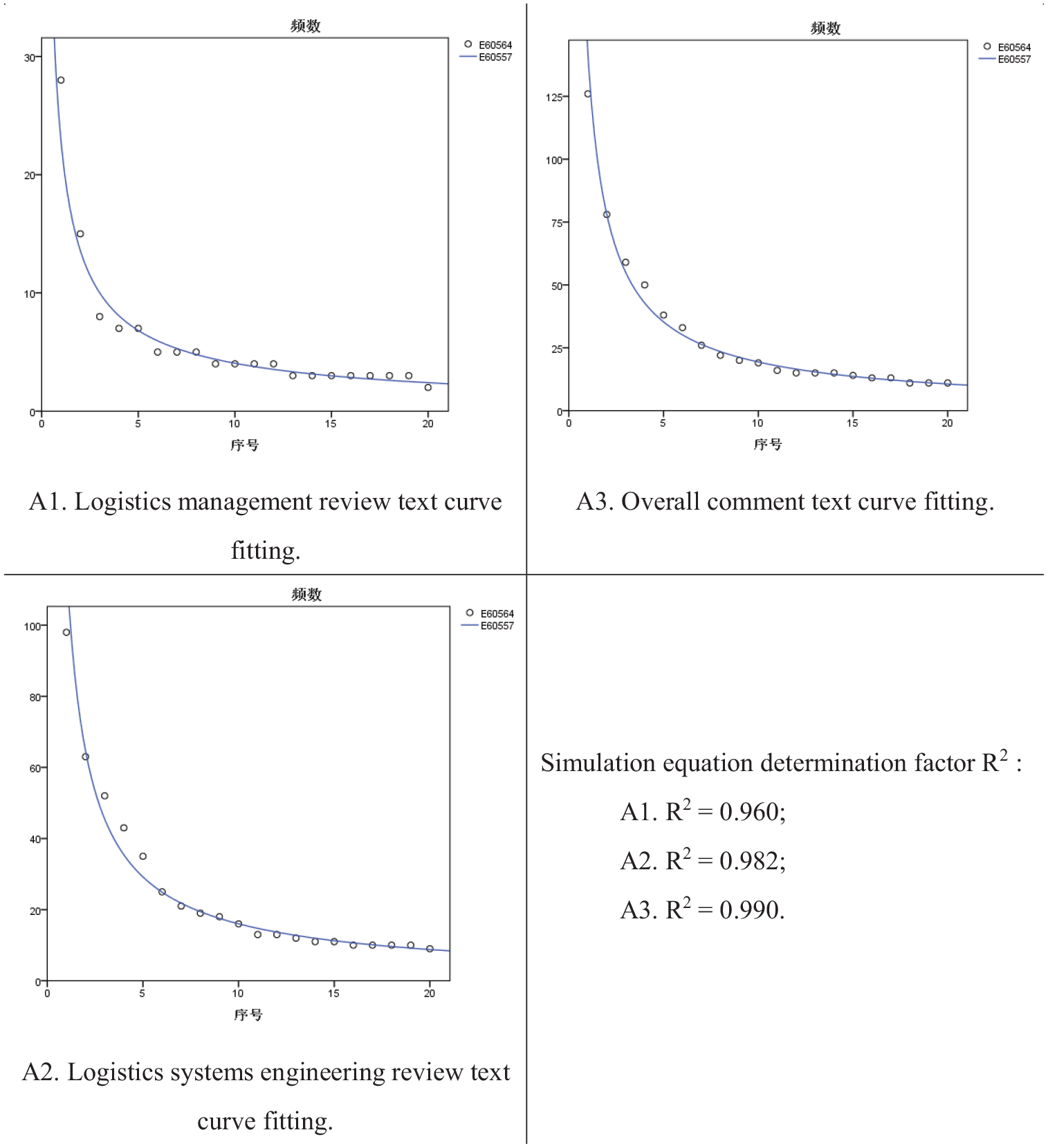
Curve fitting results of the top 20 high-frequency words.
Semantic Network Analysis
Similar to conventional network analysis, semantic network analysis functions both as a research methodology and a theoretical framework, However, it distinguishes itself from traditional network techniques by focusing on the structure of the system through shared meanings rather than merely examining the relationships between communication partners. In a semantic network, two nodes are connected based on the extent to which their conceptual meanings overlap (Majumder & Khanra, 2018). As a powerful tool that reveals key features and evolutionary trends in complex networks by analyzing the structure of systems based on shared meaning, this analytical method has a wide range of applications in a number of fields, including linguistics, artificial intelligence, information extraction, and social network analysis (Downes, 2005; Ereteo et al., 2011).
Compared to word frequency analysis, the advantage of semantic network analysis is its ability to further illustrate the connections and structural relationships between word frequencies (Sun & Ni, 2018). Utilizing the social network and semantic network analysis functions of ROST CM software, this study generated the semantic network relationship maps for each of the courses, as well as the amalgamation of both two courses, as depicted in Figure 3. Drawing on insights from Sun and Ni (2018) and Zheng (2016) regarding semantic network structure graphs (where closer proximity between the words signifies a stronger connection; the denser lines indicate higher co-occurrence frequency), and considering the features of the obtained semantic network graph, the resulting hierarchical structure presented a “topic→transition→emotion” layout pattern.
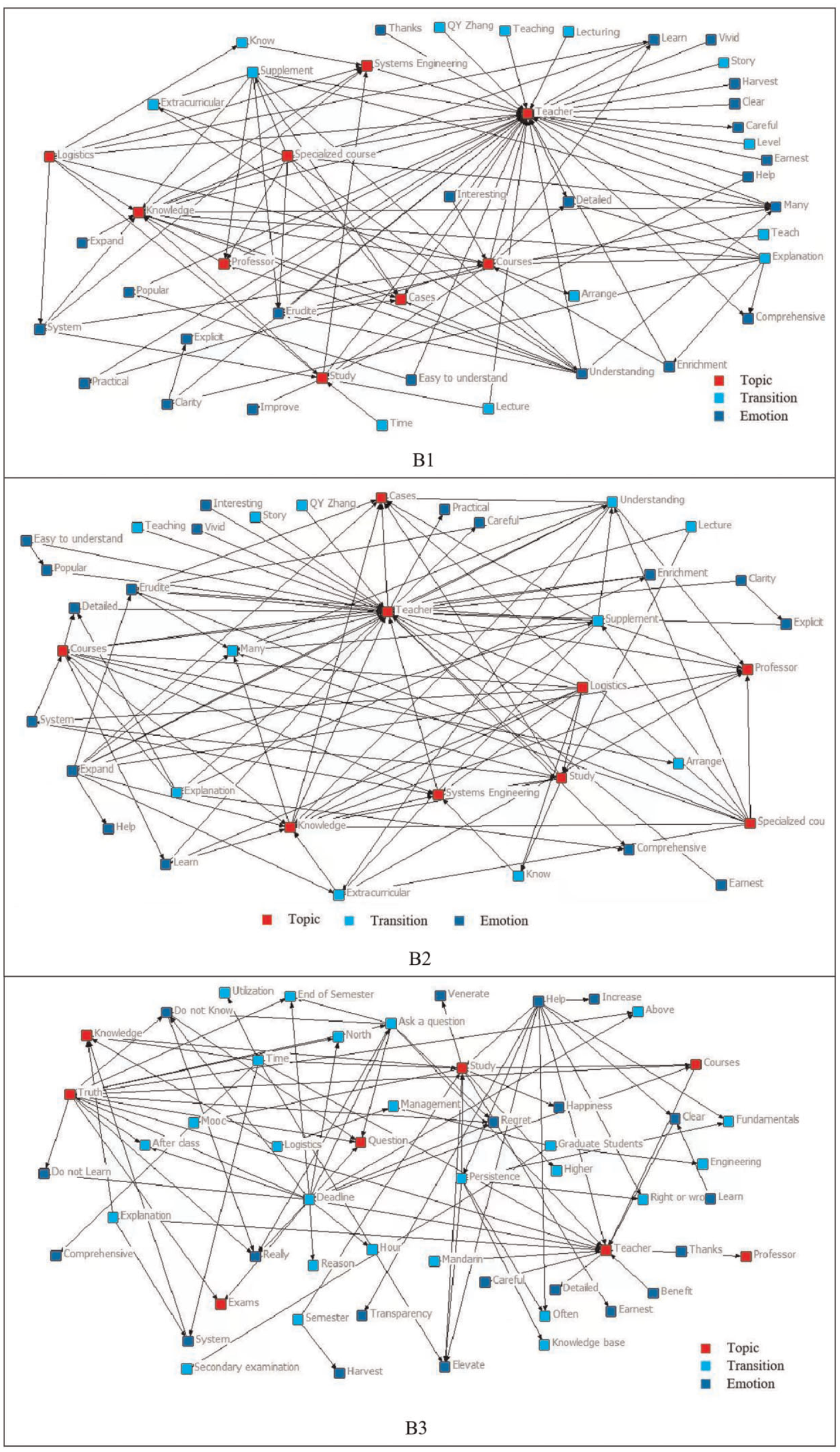
Semantic network analysis diagram.
The distribution pattern of “topic → transition → emotion" in the semantic network diagram corresponds to three structural levels. The first level constitutes the core vocabulary’s topic level, encompassing terms such as “teacher,”“course,”“knowledge,” and “learning,” related mainly to the instructor, the course content, and the course format. These factors represent the primary focus of online learners. The second level represents the transition level, consisting of words like “outside the classroom", “supplement,”“explain,” and “recognize.” This level serves as a supplement to the vocabulary of the topic level. The third level involves the emotional evaluation of the core vocabulary, including terms such as “comprehensive", “vivid,”“systematic,”“enhanced,” and “practical,” reflecting online learners’ emotional evaluation of the course, its content, and instructors. The resulting semantic network graph analysis of online learners would be beneficial for gaining insights into their inner thoughts.
Sentiment Analysis
The development of the internet has generated a vast amount of textual data, as people share their opinions and feelings on the web. This wealth of information needs to be analyzed to understand the efficacy of products or services. Sentiment analysis, also referred to as emotion extraction or opinion mining, is a widely studied application of natural language processing that aims to address this need. The primary objective of sentiment analysis is to determine the polarity of given text, categorizing it as positive, negative, or neutral (Stine, 2019). This information can be invaluable for organizations, as it can help them improve the quality of their products or services and support human decision-making processes. Text mining has become a prominent field of research, with sentiment analysis playing a crucial role in understanding and interpreting human emotions and opinions expressed in textual data (Kaur et al., 2017).
In this study, the sentiment analysis function of ROST CM software was employed to assess the sentiment of online logistics course reviews, as shown in Figure 4. The results show that the majority of learners conveyed predominantly positive emotions (around 70% positive emotions) in the overall sentiment evaluation of courses. Note, however, that approximately 20% of sentiments were either neutral or negative, suggesting that some online learners feel dissatisfied with these logistics courses, underscoring the necessity and potential for further enhancement in such online course offerings.

Results of sentiment analysis.
Discussion
In this paper, we conducted a study based on the analysis of the importance of “offline → online” or online/offline hybrid teaching in university courses, drawing insights from the PPM theory to explore the topics and emotional tendencies of online logistics course learners. The research involved an examination of teaching reform through the analysis of text data extracted from online learners’ reviews of logistics courses. The findings demonstrate that online learners exhibited significant interest in three main topics: teacher, course, and learning content. The analysis of high-frequency words shows a hierarchical structure characterized by “topic → transition → emotion.” In addition, most of the learners expressed positive and satisfying emotions, while a smaller subset had neutral and negative sentiments. These findings align to some extent with existing literature while also yielding distinct and notable results. Based on these findings, this study offers several theoretical contributions and practical insights.
Theoretical Implications
This study presents three main theoretical contributions. Firstly, it expands the application of the PPM theory to the investigation of teaching reform in logistics courses, thereby enriching the research literature within this domain. Originally developed to explain human migration (e.g., Huang et al., 2020), the PPM theory has subsequently been employed to explore the behaviors of “offline → online” consumers (e.g., Tang, 2016) and businesses (e.g., Bin et al., 2019), in response to the development of information technology. In contrast to prior studies, this paper introduces the theory to the realm of teaching reform within logistics courses. This not only expands the boundaries of its utilization but also enriches the research literature in the field. Specifically, we first utilize the concept of the Push-Pull-Mooring (PPM) theory to elucidate the potential for learners to transition from offline to online learning as a result of the COVID-19 pandemic. Furthermore, the dimensions of push, pull, and mooring correspond to the categories of negative, positive, and neutral emotions in emotional analysis. This alignment not only enriches our understanding of learner experiences but also provides a theoretical framework for the classification of high-frequency vocabulary within semantic network analysis.
Secondly, this paper introduces a quantitative research method that centers on the perspective of online learners and focuses on unstructured data to examine teaching reform in logistics courses. While existing literature on teaching reform in professional logistics courses, both domestically and internationally, primarily emphasizes teaching content (e.g., Lukosch et al., 2016; Miscevic et al., 2018) or teaching models (e.g., Gan et al., 2022; Li & Chen, 2021), it often overlooks the perspectives of online learners. Furthermore, qualitative studies, such as case studies, summaries of experiences, and literature reviews dominate the research landscape (e.g., Sun et al., 2020; Gao, 2021; Trautrims et al., 2016). By examining unstructured data through quantitative methods, this paper addresses the gap in quantitative analysis within existing literature, thereby contributing a fresh perspective to the field.
Finally, the semantic network analysis of learners’ online text reveals that high-frequency words are organized in a hierarchical structure characterized by “topic → transition → emotion.” In this framework, “topic” identifies the aspects online learners most concerned about, such as teachers, cases, and courses. The “transition” component specifies these topics (e.g., course arrangements and the teaching of teachers). Meanwhile, the “emotion” component captures learners’ emotional evaluations (e.g., vivid, careful) to matters of their concerns. This vocabulary structure which focuses on people, things and specific details may enhances our ability to reflect on the effectiveness of course instruction and identify potential areas for improvement. Furthermore, this approach addresses the limitations associated with analyzing single high-frequency words (Sun & Ni, 2018) and holds promise for broader applications in emotional analysis beyond online logistics courses.
Practical Implications
The practical takeaways derived from this study encompass three key points. Firstly, the word frequency analysis conducted in this study, which revealed frequent occurrences of terms like “teacher,”“course,”“;earning,” and “knowledge” in online learner review texts, suggests that these aspects are of paramount importance to students in the online learning environment. This underscores the need for a learner-centered approach that prioritizes effective instructional design, engaging course content, robust learner support and guidance from instructors, and a focus on facilitating knowledge acquisition and application. By closely aligning online learning with these key priorities reflected in learner feedback, educational institutions can better meet the needs and expectations of their online student, fostering greater learner engagement, satisfaction, and overall success in the online education, which is increasingly becoming a vital component of higher education and professional development.
Secondly, the semantic network analysis performed in this study reveals a hierarchical structure in the learners’ comments, following a pattern of “topic → transition → emotion.” By analyzing this structure and the affective vocabulary used by learners, instructors can gain valuable insights into the cognitive and emotional dimensions of the learning process. This allows them to better understand learners’ emotional tendencies towards specific subjects, identify potential pain points or areas of confusion, and adapt their instructional approaches accordingly. Utilizing this emotional mapping, instructors can design more responsive, learner-centered online courses that foster deeper engagement, better knowledge retention, and more positive emotional experiences for students, thereby enhancing learner engagement, satisfaction, and overall learning outcomes.
Finally, the sentiment analysis showed that while the majority of learners expressed positive and satisfactory sentiments, a smaller proportion held neutral or negative perceptions. The presence of neutral and negative sentiments highlights the need for further investigation into the factors contributing to these less favorable outcomes, and allows educators to pinpoint areas for improvement. Addressing the underlying issues behind the neutral and negative sentiments is crucial for fostering an inclusive and successful online learning experience. Based on continuous feedback and monitoring of learner sentiments, instructors can implement targeted changes, such as adjustments to course design, and modifications to teaching approaches. This iterative process of course refinement based on learner feedback and sentiment analysis, leads to continuous improvement in the quality and effectiveness of online education, ultimately creating a more inclusive and satisfactory learning environment for all learners.
Conclusions
Amid the backdrop of various developments in new liberal arts construction, curriculum teaching reform, and the challenges posed by the COVID-19 pandemic, the need for developing and offering online courses has become increasingly evident. On one hand, this situation has ushered in new opportunities and challenges for academic reform institutions and educators in exploring online teaching models. On the other hand, it has also raised concerns among both teachers and students concerning the effectiveness of online learning and the assessment of online courses.
To address questions related to the evaluation of online logistics courses from the learners’ perspectives and the valuable insights educators can gain from analyzing the results of learners’ online text analysis to improve their instructional methods, this paper undertakes a quantitative analysis of learners’ text data from two logistics courses on the China University MOOC platform. The empirical result reveals that
(1) teacher, course, and learning content are topics of interest to online learners;
(2) a hierarchical structure of "topic → transition → emotion" observed in the examination of the high-frequency words underscores the interconnected nature of the learners’ experiences; and
(3) the predominance of positive and satisfying emotions suggests a generally successful online learning process.
While this study contribute theoretical and practical insights that can be beneficial for entities like university academic departments and instructors in the field of logistics, it does have certain research limitations that should be addressed in future research. Firstly, the research data used in this study comprises review texts from Logistics Management and Logistics Systems Engineering courses on the MOOC platform; thus, the conclusions drawn may have a limited scope and not be universally applicable. Future studies could compare different courses or encompass multiple disciplines. Secondly, course reviews submitted by online learners can be either anonymous or under real names, introducing the possibility of malicious intent or exaggeration in the reviews. This could potentially affect the study’s conclusions to a certain extent. In subsequent studies, strategies to identify and mitigate the influence of such comments on the study results could be explored. Finally, the relevant documentation from the Steering Committee for Teaching Logistics Management and Engineering in Higher Education Schools of the Ministry of Education emphasizes the need to recognize shifts and pursue changes to cultivate well-rounded applied logistics professionals in the new era. Many courses in the field of logistics may be better suited for offline simulation, experimental teaching, or in-depth practical training within enterprises. This means that the research method proposed in this paper may have particular limitations in evaluating such instructional approaches.
Footnotes
Acknowledgements
The authors would like to thank Dr. Guojie Xie of Xiamen University of Technology for his constructive suggestions related to the preparation and revision of this paper, and thank the editor and anonymous reviewers for their numerous constructive comments and encouragement that have improved our paper greatly.
Author Contributions
Methodology, M.Z. and B.D.; software, M.Z., B.D. and Y.Z.; validation, M.Z. and Y.Z.; formal analysis, Y.Z.; resources, Y.Z. and X.L.; data curation, Y.Z., M.Z. and B.D.; writing—original draft preparation, Y.Z. and M.Z.; writing—review and editing, Y.Z., M.Z., H.B. and F.L.; supervision, Y.Z., X.L. and M.Z. All authors have read and agreed to the published version of the manuscript.
Declaration of Conflicting Interests
The author(s) declared no potential conflicts of interest with respect to the research, authorship, and/or publication of this article.
Funding
The author(s) disclosed receipt of the following financial support for the research, authorship, and/or publication of this article: The research was supported by Guangxi Philosophy and Social Science Foundation (23FYJ034) and Capacity Enhancement Project for Young and Middle-aged Teachers in Guangxi Colleges and Universities (2022KY0777, 2022KY0776 and 2024KY0795).

Data Availability Statement
If interested scholars have data requirements, please contact the author by email (