



Abstract
Forensic linguistics is a specialised discipline within the field of applied linguistics, it critically examines language use across diverse modalities. Its fundamental objective is to provide a rigorous legal framework for carefully analysing linguistic patterns. This study aims to identify the publishing trends in forensic linguistics by investigating the research constituents including authors, countries, affiliations, journals, and keywords. In contemporary society, there is a rapid proliferation of ignorance concerning copyrights and the rights of others. Therefore, it is crucial to raise awareness among the public about these rights. This study endeavours to present a comprehensive bibliometric analysis of the existing research landscape within Forensic Linguistics. The data for this research was extracted from the Web of Science database, analysed using Microsoft spreadsheet, and visualized using network data visualisation software, VOS Viewer (1.16.9). The major findings include the identification of commonly used keywords in forensic linguistics, such as legal language, linguistic, language policy, language, law, legal translation, speech recognition, authorship attribution, and discourse. This paper also draws attention to the absence of Forensic Linguistics specialisation programs and endorses their establishment considering published research and the global crime rate. Moreover, it aims to stimulate a passion for research in the said field by providing several recommendations for different stakeholders around the world. This paper also highlights forensic linguistics as a significant field of research, education, and professional practice worldwide as this study has implications for researchers, linguists, lawyers, higher education policymakers, and university administrations.
Plain language summary
This study presents a comprehensive bibliometric analysis of the existing research landscape within Forensic Linguistics. Forensic linguistics is a specialized discipline within the field of applied linguistics. The purpose of this study is to identify the publishing trends in the field of forensic linguistics by investigating the research constituents including authors, countries, affiliations, journals, and keywords. In contemporary society, there is a rapid proliferation of ignorance concerning copyrights and the rights of others. Therefore, it is crucial to raise awareness among the public about these rights. The data for this research was extracted from the Web of Science database, analysed using Microsoft spreadsheet, and visualized using network data visualization software, VOS Viewer (1.16.9). This paper also draws attention to the absence of Forensic Linguistics specialisation programs and endorses their establishment considering published research and the global crime rate. Moreover, it aims to stimulate a passion for research in the said field by providing several recommendations for different stakeholders around the world. This paper also highlights forensic linguistics as a significant field of research, education, and professional practice worldwide as this study has implications for researchers, linguists, lawyers, higher education policymakers, and university administrations.
Introduction
Forensic linguistics is the bridge between language, law, and crime, where the law incorporates matters of judiciary, legislation, and law proceedings (Olsson, 2014). It may be interpreted as the analysis, measurement, and in-depth study of language in a criminal context, procedures of the judiciary, legal matters, provision, and announcement of evidence either written or oral, justifying the scope of Forensic Linguistics as applying linguistic knowledge in criminal matters and legal settings. Considering the centrality and cruciality of language in legal settings and its importance in Social Justice and Law, it is surprising that forensic linguistics is still a relatively emerging field globally.
The relationship among individuals, companies, and institutions is governed by the language of the law, the law itself is enforced, conducted, and certainly created into existence through language. Furthermore, the diverse aspects in which the social order organises vital fragments of its manoeuvre, concerns of life, death, retaliation, pain, harm, vengeance, and evolution are all illuminated with such research. One critical reason for the hypothesis that language is significant to law is that linguists are permitted to create affirmative contributions to the conduct of law and society by studying language in the legal systems. It has been reiterated that “the law is the profession of words” (Mellinkoff, 1963) and “Our law is a law of words” (Tiersma, 1999).
Moreover, our personal and professional lives are pervaded by law in ways that language is an integral component of it. The frequency with which language has become a fragment of the activities that are legally sanctioned has made language indispensable to law. Language is used to plan and execute offences, which makes the audio archives of suspected offences an issue for linguistic analysis, similarly written or typed text composed by the perpetrators. In the law of civil and crime, persuasion, misrepresentation acts, and deception can fortify such felonies as blackmail, bribery, perjury, threatening, defamation, slander and libel, which renders them to forensic linguistic analysis (Shuy, 2010). Linguists specialized in phonetics and pragmatics can accomplish tasks as central as enlightening decisions regarding the occurrence of illegal activity, whether it has happened or not (Simpson, 2013).
Simpson (2011) argues that the scope of this area will linger to transfer and modify as academics will take up modernistic foci and orientations through labels of forensic linguistics, the evolution of societies and the scope of legal notions will be of influence additionally. Forensic Linguistics is a significant domain for research professional education development, and practice as it can provide safety and legal framework at the individual, organizational, societal, national, international, and global level to people both in physical and virtual spaces. Justice law and governance, are important criteria to not only assess communities and societies but also provide the factors that help countries and communities grow, progress, and improve their standing on global indices.
Forensic linguistics is now moving toward becoming a recognised and distinct field, expanding globally in scope and application across various jurisdictions and contexts. (Perkins, 2021). Moreover, recently published book “Language as Evidence: Doing Forensic Linguistics” (2022), provides a comprehensive exploration of how forensic linguistic methods are applied in legal settings. This book covers various aspects of forensic linguistics, including the use of linguistic evidence in courts, authorship identification, and the detection of deception and cybercrimes (Guillén-Nieto & Stein, 2022). However, there is still a significant gap in the published research in the area as the field has recently expanded across various disciplines. A bibliometric analysis of 101 years of linguistics research done by Ahmed et al. (2021) discussed that the interaction of linguistics with other fields such as law is productive in the establishment of interdisciplinary fields such as Forensic Linguistics among other fields.
Literature Review
The field of Forensic Linguistics is contemporary as its history is still being documented and diverse as its historical evidence can be traced from many different directions. In 1968, the publishing of “The Evans Statements: A Case for Forensic Linguistics” by Svartvik (1968) confirmed the disputed and convicting parts of a series of four statements. Interestingly, twenty years later, Philbrick (1949) introduced the term ‘Forensic English’ in his book titled Language and the Law: The Semantics of Forensic English. However, the term remained largely unused by most authors until much later. In the beginning, forensic linguistics had a slow growth (Coulthard et al., 2016). Over the period, there has been a swift growth in the need for linguistic experts in the courts for forensic analysis of texts in several different countries (Coulthard et al., 2016). As a consequence, the development of methodologies started growing and many linguists began to appear as expert witnesses. Additionally, two professional associations were launched; the IAFL (International Association of Forensic Linguists) and the IAFPA (International Association for Forensic Phonetics and Acoustics), and in 1994, a devoted journal was also launched, “Forensic Linguistics.” However, in 1993, the journal was renamed “The International Journal of Speech, Language and the Law” to capture readers’ attention toward the extensive explanation of forensic linguistics with which the work was done by the authors and editors. Furthermore, the International Journal for the Semiotics of Law discusses the role of semiotics in forensic linguistics, particularly in analyzing legal texts and language used in legal processes. This approach helps in understanding how language functions as a system of signs within legal contexts and its implications for power dynamics and access to justice (Tiefenbrun, 2023).
In the early stages of Forensic Linguistic Research, it began to originate in various disciplines including law, linguistics, anthropology, psychology, and sociology and topics as varied as forensic phonetics, analysis of handwriting, linguist’s role in a court as an expert, since 1990, all these disciplines have contributed to the research of forensic linguistics as a multi and cross-disciplinary field. Initially, articles, book chapters and edited collections were the main research publications in the field except for O’Barr (2014). Furthermore, it should be noted that several book-length studies have also been published since the millennium, specifically having the term “forensic” in the title. Studies on legal language (Solan & Tiersma, 2004; Tiersma, 1999), courtroom interaction (Archer, 2005; Ehrlich, 2001; Heffer, 2002; Matoesian, 2001, 2003; Solan, 1993; Stygall, 1994), language and power (Conley & O’Barr, 1998; Cotterill, 2003), and the linguist as expert witness in court (Berk-Seligson, 2002; Shuy, 2006) are the areas of interest of the researchers. In addition to producing book-length studies, the use of language in police and law enforcement has also been examined from a case study: Rock in Press (Shuy, 2005), psychological (Gudjonsson, 2003), and conversational analytics (Heydon, 2005) perspective. These studies have focused particularly on interviews and interrogation. Four volumes have been written using forensic phonetics as their main subject (Baldwin & French, 1990; Hollien, 1990, Hollien et al., 2001; Rose, 2006).
One of the significant factors in forensic linguistics is that several linguistics theories are applied in the criminal and legal fields that inquire into the analysis of language in different aspects. Therefore, forensic linguists may use observations and various research frameworks from fields as diverse as sociolinguistics, corpus linguistics, Discourse Analysis, Conversation Analysis, Pragmatic Analysis, Semantic Analysis, phonetics and phonology, theory of Grammar, Speech Act Theory, etc. It can be said that linguistic knowledge and techniques can be applied by forensic linguists in (a) Legal Case Proceedings. (b) Private Disputes between Parties can result in legal proceedings (Olsson, 2008). Furthermore, Forensic linguistics is an interdisciplinary field that involves the application of linguistic knowledge, theories, and methods to legal and criminal investigations (Gibbons, 2003). It aims to uncover and analyse language-related evidence to aid in legal proceedings. There are several key dimensions within forensic linguistics, each contributing to the analysis of language in legal contexts. These dimensions include forensic phonetics and linguistics fingerprinting, forensic stylistics analysis, forensic pragmatic analysis, forensic corpus linguistic analysis, forensic graphology, sociolinguistic profiling, and author identification. Furthermore, Advancements in technology also opened up new avenues for research in digital computing and the use of large data sets relevant to the population being studied. (MacLeod & Wright, 2020). Similarly, recent publications in forensic linguistics have focused on various new challenges and applications of linguistic analysis in legal contexts. For example, a special issue titled “New Challenges in Forensic and Legal Linguistics” highlights the significant growth in applying linguistic methods to justice, security, and law. This publication discusses topics such as authorship attribution, language as evidence, and the analysis of courtroom discourse, emphasizing the diversity of approaches used in forensic linguistics, including corpus linguistics and discourse analysis (Languages, 2023). This benefits investigators and forensic linguists by allowing them to collect and analyse large linguistic data as evidence in various linguistic forms. However, there is still a substantial lacuna in the documented research in the field. This research aims to explore the research patterns to identify the published research and future directions of the field. This research aims to perform a bibliometric analysis of forensic linguistic research which has not been done previously. The research rationale rests in the fact that the exigencies of the era we live in stimulate us to practice majors that can practically serve the current and future society. This research aims to answer the following research question:
What are the major trends, authorship patterns, influential papers and publications, and emerging themes in forensic linguistics research globally?
Methodology
Bibliometric analysis is the focus of this research to discover incipient trends in the journal, exploring the patterns of collaborations of constituents of research, and studying the scholarly structure of a particular domain in the existing body of literature (Donthu et al., 2021; Verma & Gustafsson, 2020). This method is selected to categorize the tendencies and movements in the prevailing forensic linguistics articles. The bibliometric analysis techniques involve two broad categories: Performance analysis and science mapping. This research entails carrying out performance analysis as the scope of this study which is used to study the contributions of the constituents of research such as authors, institutions, countries, and journals within a particular domain (Cobo et al., 2011). For conducting performance analysis, numerous measures exist. The most well-known measures are the number of citations and publications per year or per research constituent, where publications represent productivity, while citation is a measure of impact and influence (Donthu et al., 2020a, b).
The quantity and identity of the data used are based on the availability and focus on the Web of Science database. It is necessary to mention that this database is the utmost reliable, authentic, and accurate abstracting and indexing database of peer-reviewed literature (Ahmed et al., 2021). As the criteria used to collect data influence the results, several efforts were made to reduce the corruption to precisely reflect the research in forensic linguistics. Based on the preliminary analysis, the search was limited to the selected keywords including: “Forensic Linguistics,” “Language and Law,” “English for legal purposes,” “English for Academic Legal Purposes,” “Legal English,” and “Legal Writing.” In this present study, the data was analysed using the Microsoft Excel spreadsheet. The application of bibliometric analysis is frequently supplemented by network visualisation software. Therefore, the data files were exported, and visualized by using VOS viewer (1.6.19) data visualization software.
Results/Findings
This paper was aimed at quantitatively studying the research carried out in this area since its advent (Amsler, 1982; Georgas & Cullars, 2005). The results gained by analysing the data extracted from the Web of Science show the beginning of publication in the field marked in 1985 which has continued to date with an increase in publication. A total of 2,061 results were found on the Web of Science database when the search was limited to the selected keywords. These documents were cited 6,364 times with a 3.31 Average citation per item with 34 h-index. Furthermore, A complete summary of the obtained data is presented below in Table 1:
Summary of Data Obtained.

After cleaning and sorting, a total of 1,924 unique documents were used for analysis. Among these 1,924 documents, there were 1,397 Articles, 224 Proceeding Papers, 206 Book Chapters, 185 Book Reviews, 76 Editorial Materials, 44 Review Articles, 21 Early Access, 5 Books, 04 Letters, 02 Bibliographies, and 1 Note. Table 2 shows the overview of the data.
Overview of Extracted Data.
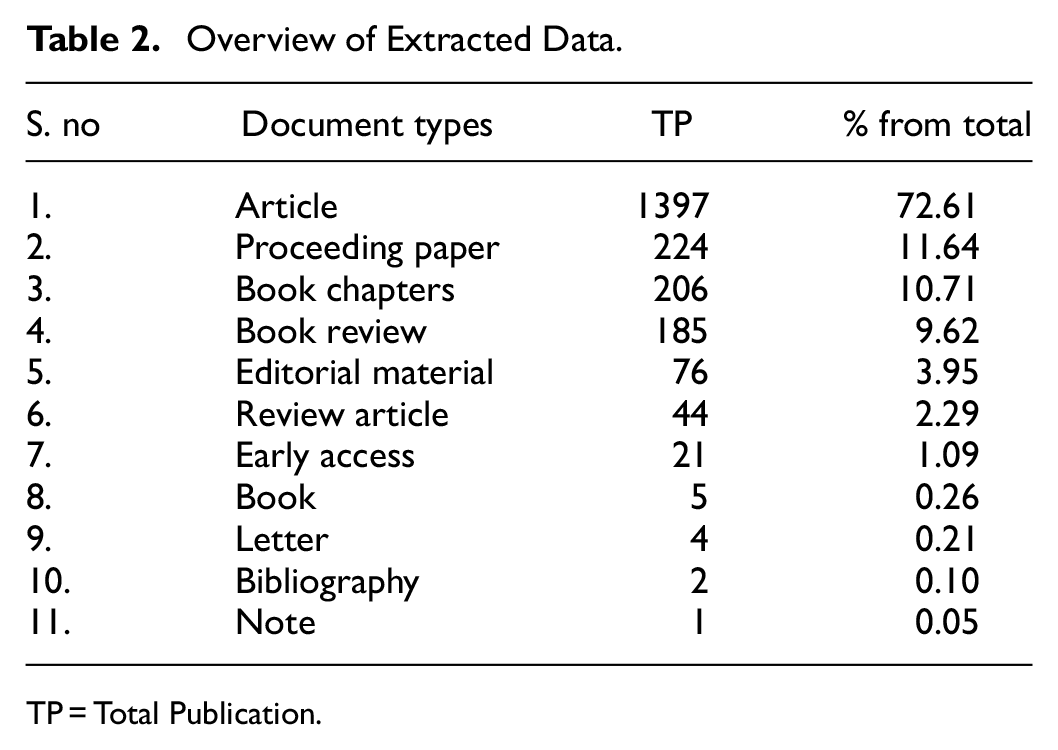
TP = Total Publication.
Publication Pattern
Figure 1 shows the publication pattern record of Web of Science, the first document came in the year 1985 which was followed by different publication counts each subsequent year till 2023. Moreover, the Citation pattern is similar to the publication pattern, the maximum number of citations was made in 2021 and 2022. Interestingly, there was a slight interest in the field in the year 2002 but the momentum was not strong until the year 2015. It can be viewed in the graph below, that a noteworthy interest in the field began in 2015 and significantly rose till 2021.
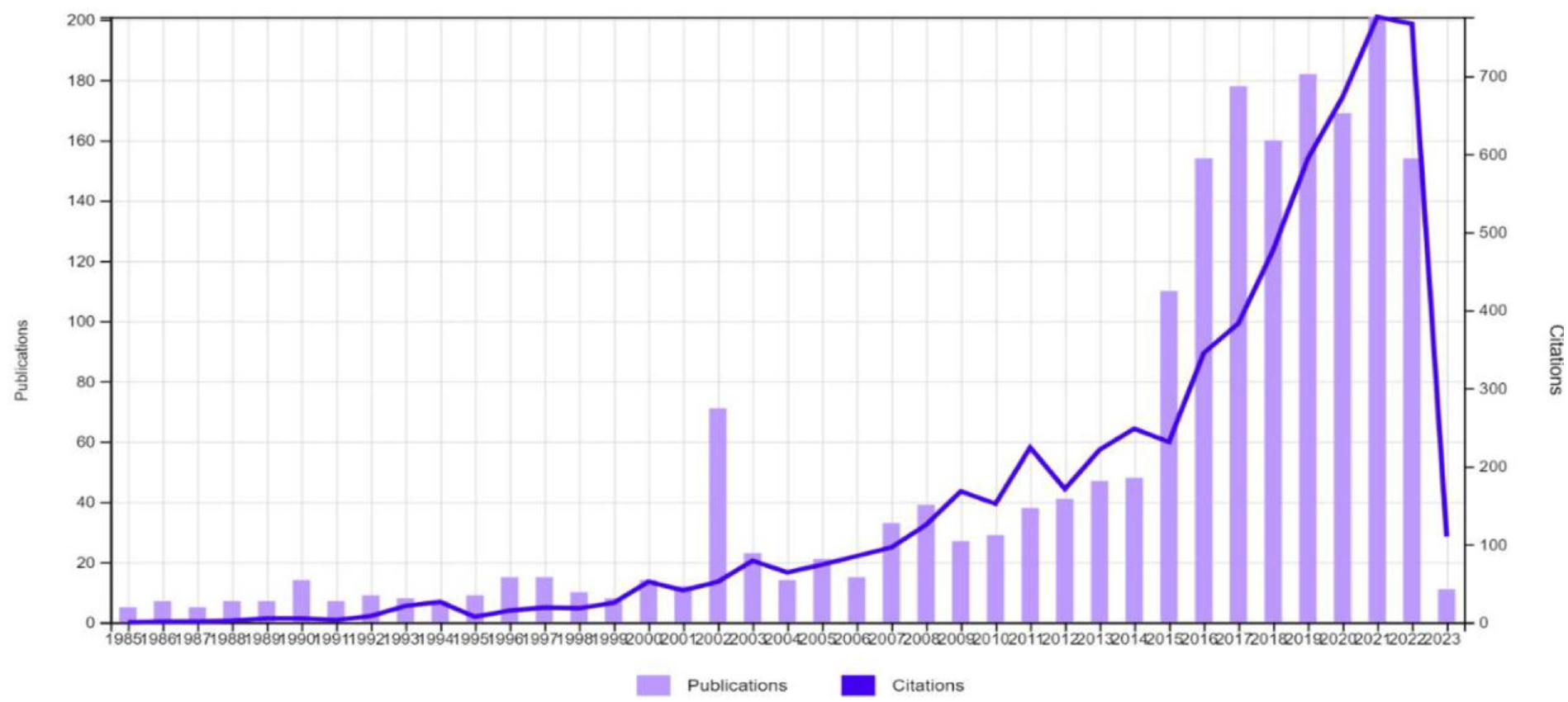
Publication pattern.
The analysis of language preferences in publications can be seen in Table 3 which reveals that English is used for 68.9% of publications which is more than half of the total publications, even though Spain leads in publications but only 11% of publications are made in Spanish.
Major Language Preferences for Publications.

TP = Total Publication, the last column shows the percentage out of total publications.
Contributing Countries, Authors, Institutions, Publishers, Funding Agencies
Country-wise productivity in the publication as in Figure 2 shows that the greatest contribution out of 78 countries is made by Spain (402) followed by the USA (398). England (156), China (103), and Italy (97) have also noticeable contributions.

Contributing countries.
The results of the author analysis reveal interesting insights which can be seen in Table 4, as the authors who produced the most publications Parera (29) and Pujolras (28) have received negligible citations. (1) and (0) respectively. On the other hand, the authors with the maximum citations Lafortune (241), Sampath (177), and Teneketzis (177) have made the least publications (3), (2), and (2) respectively. Such kind of data shows that the quality of publication creates an impact instead of the number of publications.
Contributing Authors in the Field.

TP = Total Publication; TC = Total Citation.
A total of 1,146 Affiliations/Universities were found in the database, The analysis shows that of the top ten universities that have contributed the most, 5 of them are located in Spain further major affiliations are displayed in Figure 3.
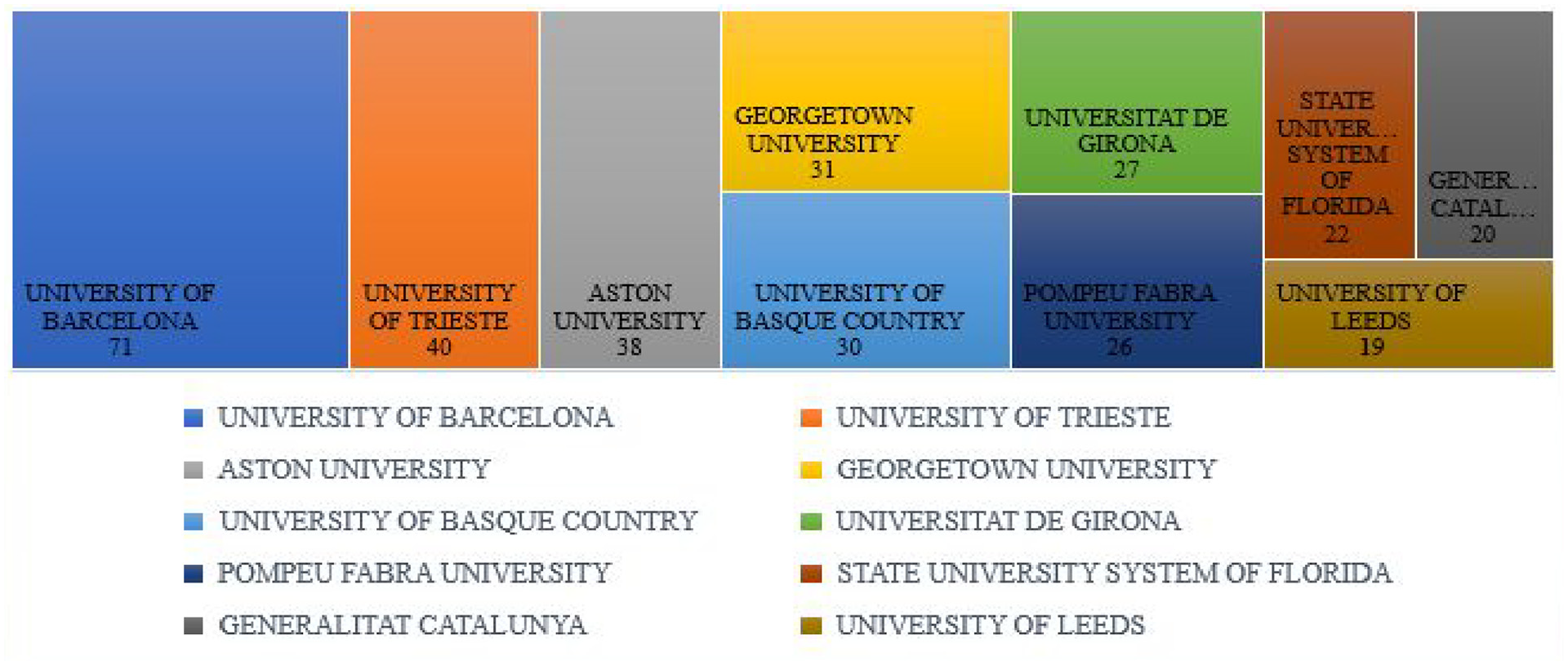
Major affiliations/ Universities.
The following Table 5 shows these universities’ ranking in Times Higher Education Ranking:
Universities Ranking in Times Higher Education Ranking.

Note. University of Basque Country was not listed in the Times Higher Education Ranking but was ranked 621 to 630 in the QS ranking, similarly, State University System of Florida was not listed in the Times Higher Education ranking but is ranked number 01 in US Higher Education Rankings.
TP = Total Publication.
Moreover, Figure 4 shows that 361 Publishers were discovered, among which Escola Adm Publica Catalunya topped the list as it has published (425 records), that is 22% of the documents analysed.
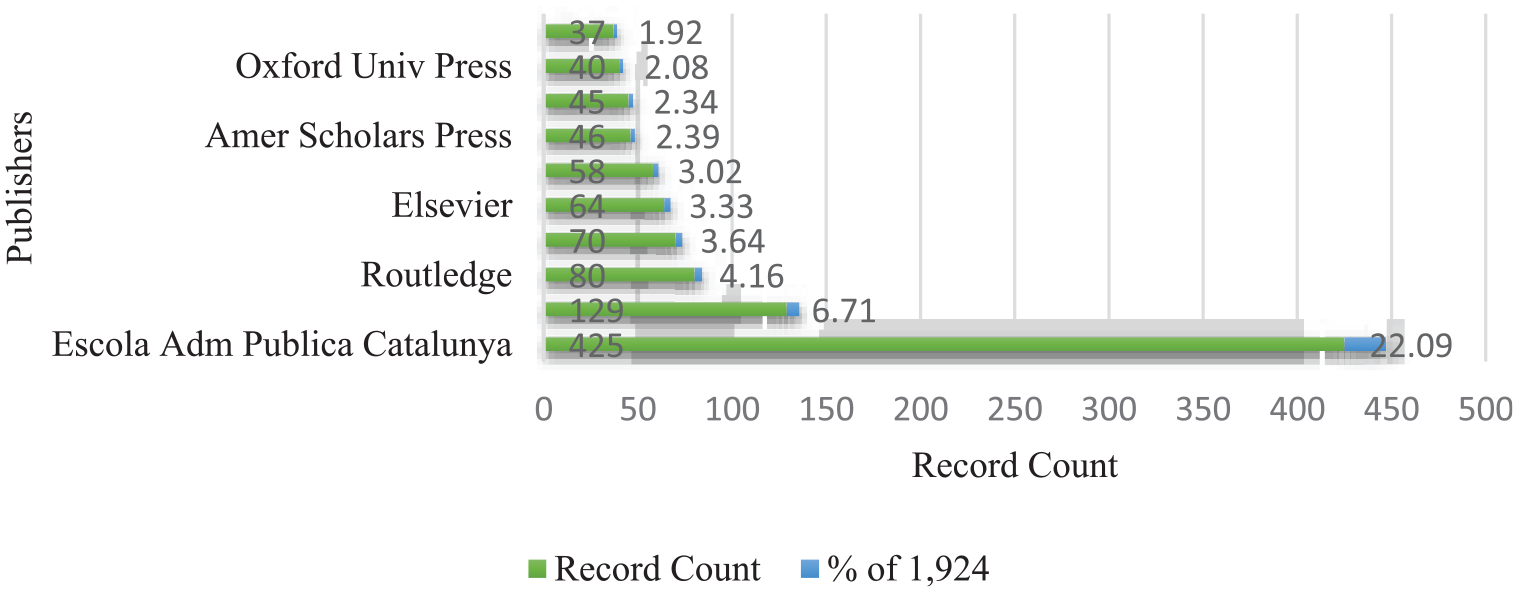
Key publishers.
In addition to this, a very negligible contribution has been made by the funding agencies as 90.8% of the records were not funded by any funding agencies, 252 Funding Agencies were uncovered in the database, among which UK Research Innovation Ukri was the top-ranked with 12 record counts. Furthermore, other funding agencies in the top ten list are shown below in Table 6:
Funding Agencies.

Note. The last column shows the percentage of total publications.
Co-authorship Analysis
Co-authorship based on countries was analysed with a threshold set of a minimum of 3 papers produced by a country and each paper must have received a minimum of three citations, out of 78 countries, only 47 meet the set criteria. For every 47 countries, the total strength of the co-authorship links with other countries was calculated, and 43 countries with the greatest total strength link were discovered as shown in Figure 5. Notably, Spain and the USA have the greatest number of links. which is then followed by England, China, Germany, Italy and Australia. From the greatest networking of two countries, Spain has links with England, the USA, Germany, Scotland, Austria, Australia, Italy, Poland, Switzerland, Canada, and Greece and the USA has links with Spain, England, China, Germany, Canada, Hungary, New Zealand, the Czech Republic, Israel, Finland, Scotland, Australia, and Russia.
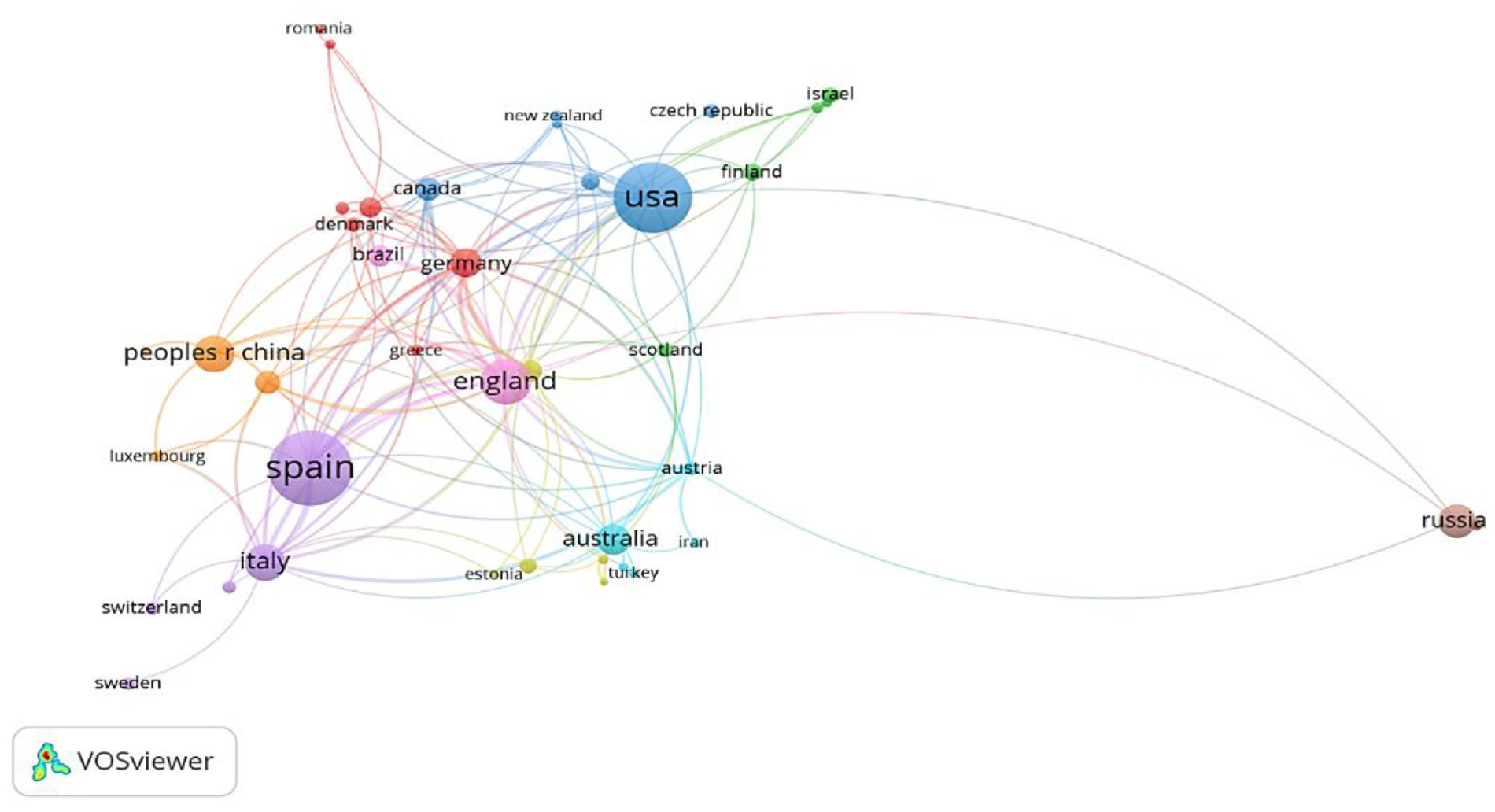
Co-authorship analysis based on Countries.
Co-authorship based on authors was analysed with a threshold set of a minimum of three papers produced by the authors and each paper must have received a minimum of three citations, out of 2,184 authors, only 47 meet the set criteria. For every 47 authors, the total strength of the co-authorship links with other authors was calculated, and only five authors with the greatest total strength link were discovered as shown in Figure 6. The five authors that have done the most collaborative work are livio robaldo, luigi di caro, guido boella, Ilio Humphreys, and xin sun. The findings reveal that there is limited collaborative research work done in the field which is a similar pattern as in linguistics (Ahmed et al., 2021). The results of this analysis are in line with preceding studies (Ezema & Asogwa, 2014) that deduce that single authorship dominates in linguistics as compared to authorship collaboration.

Based on authors.
Citation Analysis
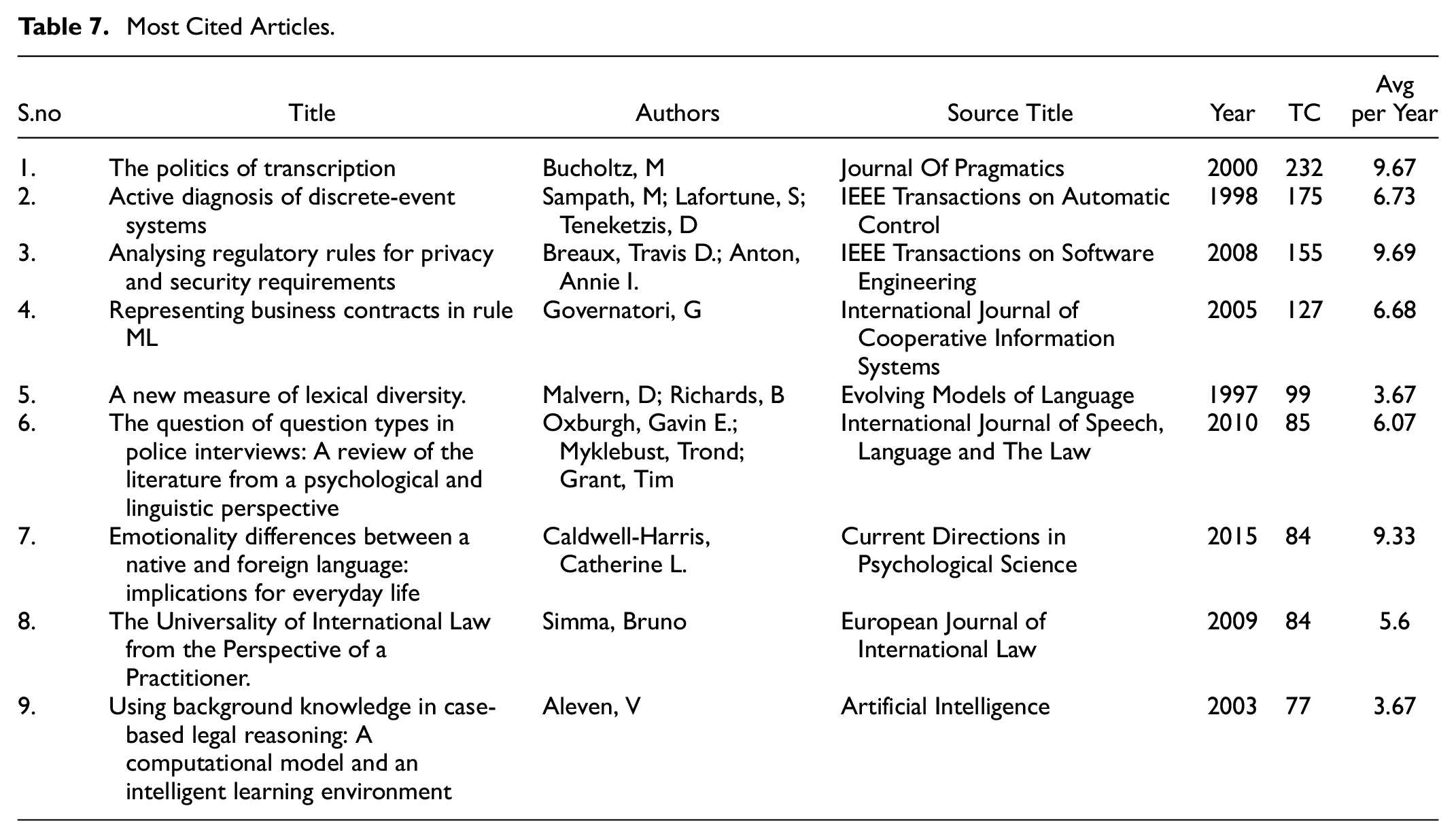
The overall analysis of most cited articles indicates that practical application of the field in pragmatics and computer science is leading as the most highly cited articles belong to these fields. The bibliographic information of the most cited articles is displayed in Table 7 below. There is a variation in the citations each has received ranging from 232 to 77. The top most cited articles are mentioned below along with author information, source title, publication year, and citation record:
Most Cited Articles.
The bibliographic coupling of countries reveals that the USA has produced the most impactful work as it has received the highest citation (2,712 citations from only 353 documents) Given that Spain topped the list in publications but is in 4th rank concerning citations received as it has received a total of 398 citations which is less than the number of documents it has produced (402) (Table 8).
Bibliographic Coupling of Countries.

TP = Total Publication; TC = Total Citation.
To analyse the Bibliographic coupling among the authors, The threshold was set for a minimum of three documents produced by the author with a minimum of three citations of the author; of the 2,184 authors, 47 authors met the threshold. For each of the 47 authors, the total strength of bibliographic coupling with other authors was calculated. Robaldo Livio has the greatest link strength of 1,067. Moreover, Humphreys, Ilio has the second-highest total link strength of 682. Both authors are not top-ranked in publication or citation, but their work has the greatest link strength in the bibliographies of the documented articles. Other top ten authors with the greatest link strength are listed in Table 9 below:
Bibliographic Coupling of Authors.

Note. TP = Total Publication, TC = Total Citations
Figure 7 shows the bibliographic coupling of journals, To analyse the bibliography of journals, a threshold of a minimum of five documents from each journal with a minimum of three citations each was set. Out of 751, 26 met the set threshold. For each of the total strengths of the bibliographic coupling links with other sources were calculated. Furthermore, sources that have the maximum number of documents produced include Revista de llengua i dret-journal of language and law (425), International Journal of the Semiotics of law-revue (45), Routledge Handbook of Forensic Linguistics, 2nd edition (44), and Journal of Legal Education (35). Correspondingly, the bibliographic coupling of sources/journals displays that “Routledge Handbook of Forensic Linguistics, 2nd edition” (1925) has the greatest link strength with other sources/journals followed by “The International Journal of Speech, Language, and Law” (1537) Additionally, the journals that have created an impact by gaining maximum citation include the Journal of Pragmatics, the International Journal of Speech, Language and the Law, IEEE Transactions on automatic control, Revista de llengua I dret-journal of Language and Law, and Forensic Linguistics-The International Journal of Speech, language and law. As can be seen, there is a multidisciplinary involvement from pragmatics to computer science to linguistics and law. Such multi-dimensional interest is due to the extensive scope of forensic linguistics (Seyari & Bagheri, 2019).
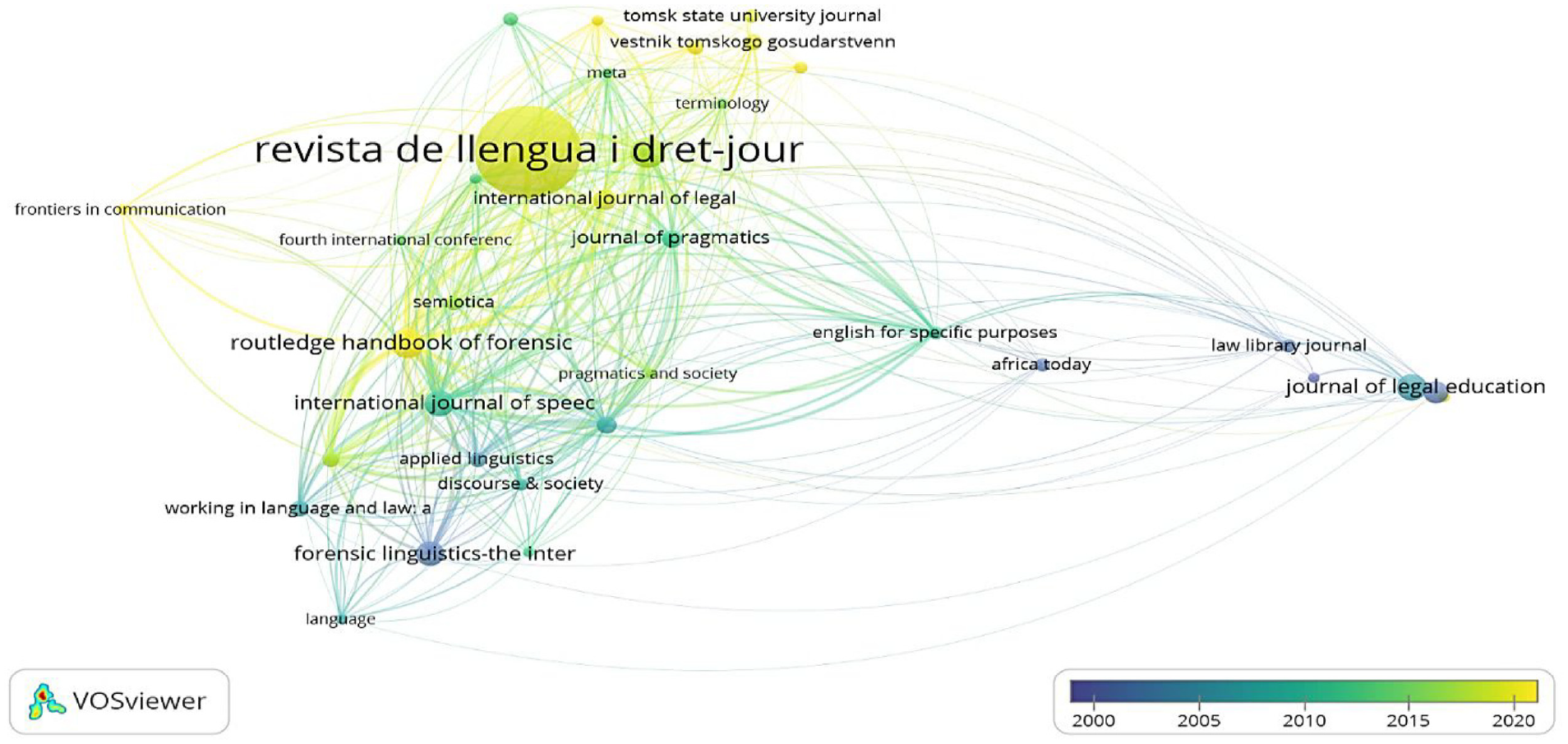
Bibliographic coupling of journals.
Linked Research Areas
Out of 26 Research Areas, Government Law topped the list with a total of 927 publication records with a percentage of 48.1%. Moreover, the top ten list for research areas also included the following displayed in Figure 8.
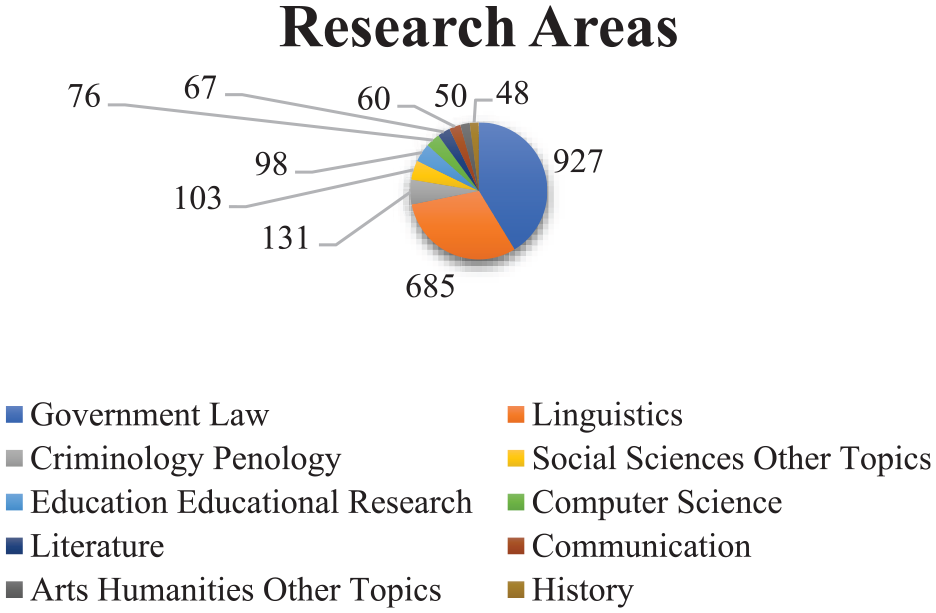
Research areas.
Keyword Analysis
The co-occurrence of all keywords was analysed with a threshold of a minimum of 10 times the occurrence of each keyword. Out of 4,527 keywords, 60 meet the threshold. For each of the 60 keywords, the total link strength of the co-occurrence links with other keywords was calculated, the keywords with the greatest link strengths are shown in Figure 9. With attention to the analysis of keywords and as displayed in Figure 10, it was observed that “Legal Language” (occurred 183 times) has the greatest link strength (122) with other keywords which means the legal aspect of the language is the core focus of most research. However, it is followed by “Forensic Linguistics” (occurred 114 times, link strength of 85), “Linguistic Law” (occurred 101 times, link strength of 183), “Language Policy” (occurred 62 times, link strength of 147), and “Language” (occurred 84 times, link strength of 143). Moreover, the keyword “Forensic Linguistics” co-occurred with linguistics, legal language, terminology, legal discourse, legal translation, language policy, power, English, authorship attribution, sociolinguistics, genre, gender, race, bilingualism, ambiguity, and pragmatics that explains the explored associations of the field. All the mentioned areas fall into three main categories: language of the law, language of the judicial process, and language as evidence (Siyari, 2019; MacLeod & Wright, 2020).

Future trends in publications.
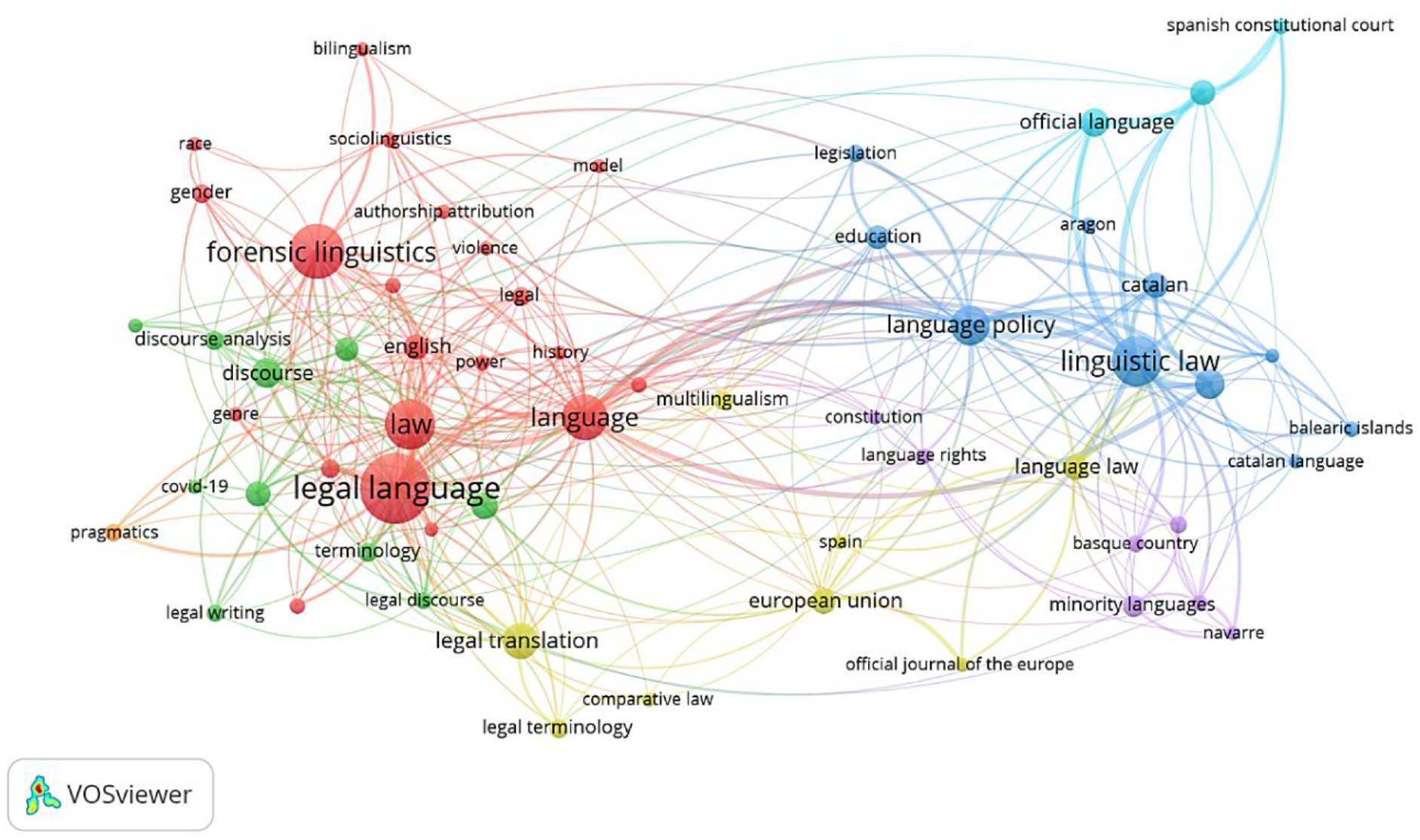
Keyword analysis.
Past, Present and Future Trends in the Field
In line with this, an investigation of publishing trends in past, present and future divulges that, in the initial years of the field, the focus was more toward government law, linguistics, and education as it is a derived field from these disciplines. With the emergence and initiation of publications, the researchers developed the curiosity to explore the fields of communication, computer science, psychology, sociology, women’s studies, anthropology, and archaeology to mention a few.
In the initial years of publication in the field, the major interests of the researchers lay in Government law, linguistics, Education and Educational Research. Moreover, from the period of 1985 to 1990, the research interests in the field were in Criminology, Literature, Information science and Library Sciences, Legal Medicine, Philosophy, History, Penology, Sociology, Business and Economics. Furthermore, from 2000 till 2012, the major research interests have been found in Linguistics, Criminology and Penology, Government and Law, Computer Science, Psychology, Sociology, and Information Science and Library science. Other areas of interest found in the same period include Women’s Studies, Anthropology, International Relations, Education, Archaeology, History, Ethnic studies, Family studies, and Public Administration.
In the last ten years, from the period of 2012 to 2023, major research interests were in Government and law, Linguistics, Computer Science, Communication, Social Science, Science and Technology, International Relations, Arts and Humanities, Education and Educational Research and Philosophy. Other new areas discovered in this duration include Paediatrics, Neurosciences and neurology, Rehabilitation, Obstetrics, Legal Medicine, Religion, Veterinary Sciences, Women’s Studies, Film, radio and television, Engineering, Cultural studies, Asian studies, Telecommunications, Robotics, Business and Economics, Automation and Control Systems, Audiology and Speech-Language Pathology, Acoustics, and Agriculture. Similarly, the present trends in the field are more inclined toward government law, linguistics, and a greater increase in computer science and information technology.
Discussion
This study was aimed at quantitatively studying the research done in the arena of Forensic Linguistics by providing meaningful insights regarding research productivity in this field since its advent. Forensic linguistics is the subfield of linguistics that deals with the association between language and law (Amsler, 1982; Klien, 2015; Georgas & Cullars, 2005). The results gained by analysing the data extracted from the Web of Science show the beginning of publication in the field in 1985 which has continued to date with an increase in publication. Interestingly, there was a slight interest in the field in 2002 but the momentum was not strong until the year 2015. However, a noticeable interest in the field was witnessed in the year 2015 which significantly rose till 2021, the reason could be the significant interest noted in the exploration of emerging fields under applied linguistics including corpus linguistics, forensic linguistics, cognitive linguistics, translation, and computational linguistics as pointed out by Ahmed et al. (2021) because of the interdisciplinary nature of Forensic Linguistics, it has been explored in different areas. This finding also correlates with an upsurge in publications in social sciences and humanities after 2005 (Arık, 2005).
Moreover, country-wise productivity in the publication shows that the greatest contribution is made by Spain followed by the USA, England, China, and Italy, there can be several reasons for such statistics however the major one could be the economic state of these countries as additional funds are allocated to research for all specialities in comparison to other countries like ours (Pakistan) where funding is quite limited. As it has been observed that Pakistan has recorded only three publications in the investigated field of this research in the selected database, this argument correlates with the study of Liu et al. (2015), a comparative study of four countries uncovering that economic growth plays a vital role in the general research growth of a country. Another reason could be the increasing crime rate and the exigencies of the new era that have stimulated developed countries to study the disciplines that will provide both theoretical and practical solutions in the modern world. Most compelling evidence for this is also revealed in the co-authorship analysis based on countries as it has been noted that Spain and USA have the greatest collaborative networks established. At the same time, the bibliographic coupling reveals that the USA has produced the most impactful work as it has received the highest citation (2712 citations from only 353 documents). Given that Spain topped the list in publications but is in 4th rank concerning citations received 398 citations which is less than the number of documents it has produced (402). It is to be noted here that Pakistan did not make it into the list of citations, the reason for this is a lacuna in the documented research done in the investigated field of this study. Furthermore, globalization and its influence have given ultimate rise and power to English all over the world (Jalal, 2020), the analysis of language preferences in publications reveals that English is used for 68.9% of publications which is more than half of the total publications, even though Spain leads in publications but only 11% of publications are made in Spanish.
This study has revealed yet another interesting insight into the publication and citation pattern of studies that the quality of publication creates the impact, not the number of publications only seeing that the authors who produced the most publications Parera (29) and Pujolras (28) have received negligible citations. 1 and 0 respectively while the authors with the maximum citations Lafortune (241), Sampath (177), and Teneketzis (177) have made the least publications 3, 2, and 2 respectively. Such kind of data shows that. A researcher with quality publications can create a massive impact in the field even with a very small number of publications. Similarly, both authors with the greatest bibliographic coupling; Robaldo, Livio (1067) and Humphreys, Ilio (682) are not the top-ranked in publication or citation but their work has the greatest link strength in the bibliographies of the documented articles.
Correspondingly, of the top ten universities that have contributed the most, five of them are located in Spain which also explains it to be the most publishing country as the universities are also performing a vigorous role in the promotion and advancement of this field. Even though the US has ranked second greatest producing country, the contribution from its universities is surpassed by the aforementioned. The reason for these universities’ domination could be the quality of education, productivity and encouragement in research, and adequate faculty in these institutions. Further, Spanish publisher Escola Adm Publica Catalunya topped the list for publishing 22% of the documents analysed from Web of Science. This again shows the utmost contributions made by Spain in forensic linguistics studies. One of the significant factors is the inclusion of distinguished publishers such as Springer Nature, Routledge, Taylor and Francis, Elsevier, Walter De Gruyter, Amer Scholar Press, Oxford University Press, and Cambridge University Press because the appearance of these eminent publishers in the top ten list also shows that this emerging field is also acknowledged by them (Larivière et al., 2015).
In addition, single authorship dominates in forensic linguistics like in linguistics as compared to authorship collaboration (Ahmed et al., 2021; Ezema & Asogwa, 2014; Das et al., 2019). There is limited collaborative research work done in the field as there were only five researchers found who have done the most collaboration including Livio Robaldo, Luigi di Caro, guido boella, Ilio Humphreys, and Xin Sun. The reason for such findings could be the dearth of funding dedicated to collaborative projects (Social Science Research Council, 2023; UK Research and Innovation, 2023).
In addition to this, 90.8% of the records were not funded by any funding agencies which is a very negligible contribution has been made by the funding agencies which also explains the limited research done across the world, especially in less developed and under-developing countries. Lyall et al. (2013) argued that there is a strong influence of national funding agencies on the relationship and advancement of disciplines and these funding bodies are responsible for an excessive deal of implicit knowledge and awareness regarding the organization of interdisciplinary research ventures as they play a key role in shaping extensive interdisciplinary initiatives. As discussed above, Forensic linguistics is an interdisciplinary field of Language and law (Coulthard, 2010) that necessitates support from funding agencies. The top-ranked funding agency, UK Research Innovation Ukri has a record of 12 publications only. As previously discussed, forensic linguistics has a multidisciplinary nature, it has the greatest link with Government Law among all linked research areas which is followed by linguistics as expected. Other exceedingly linked research areas also lie in the corresponding trajectories of language and law such as criminology, social sciences, education, computer science, and communication. Corresponding to this, there is a multidisciplinary involvement from pragmatics to computer science to linguistics and law because of the extensive scope of forensic linguistics (Seyari & Bagheri, 2019). In addition to this, the overall analysis of most cited articles indicates that practical application of the field in pragmatics and computer science is leading as the most highly cited articles belong to these fields. It is important to mention that computer science is ahead in the top-ranked articles which also endorse the rise of computer science and artificial intelligence around the globe (Pikhart, 2019) that is directly associated with computational linguistics hence all the legal affairs of such endeavours are deeply connected to forensic linguistics. The reason for such inclination is evident because (a) firstly from the fact that law and linguistics both fields are the fundamentals for forensic linguistics and this pattern is also expected to dominate the future trends as well, secondly, (b) the rise and power computer science has gained over the last decade is impeccable, not only this field but it has marked its position across all fields as the world is getting more and more digitized each day (Mirbabaie et al., 2021).
In line with this, an investigation of publishing trends in past, present and future divulges that, in the initial years of the field, the focus was more toward government law, linguistics, and education as it is a derived field from these disciplines. The reason is that in the early stage of emergence, no work was directed to formulate the methodology for such kind of analysis let alone to establish a discipline for such study was a farfetched idea. The work in those days was primarily an outcome of intellectual challenge and was mostly created rather than the application of predefined theories (Coulthard et al., 2016). With the emergence and initiation of publications, the researchers developed the curiosity to explore the fields of communication, computer science, psychology, sociology, women’s studies, anthropology, and archaeology to mention a few.
Moreover, the present trends in the field are more inclined toward government law, linguistics, and a greater increase in computer science and information technology. In the preceding decade forensic linguistics has been found to link with diverse and distinct areas including Paediatrics, Neurosciences and Neurology, Rehabilitation, Obstetrics, Legal Medicine, Religion, Veterinary Sciences, Women’s Studies, Film, radio and Television, Engineering, Cultural studies, Asian studies, Telecommunications, Robotics, Business and Economics, Automation and Control Systems, Audiology and Speech-Language Pathology, Acoustics, and Agriculture. Such discoveries are also hinted to be observed in the future trends but with the domination in law, linguistics, education, and computer science. The results of this research are in line with the study of Suzhen (2002) in which he argued that the subject orientation of linguistics should take the basic point of its studying object, the relationship between language and law.
Implications
As the world progresses, our lives are getting more influenced by linguistic and legal matters from individual to collective levels, forensic linguistics is one such field where language meets the law. As the literature has suggested, the exploration of the applications, scope, and usefulness of the field is enormously increasing in the present world. Some considerations must be taken by the researchers while interpreting the bibliometric data, the quantitative aspect of the productivity of the discipline should be focused rather than the qualitative aspect. Moreover, more collaborative work by authors requires investment as well by countries and funding agencies is essential for the advancement of research. Importantly, researchers and linguists need to step up and contribute in the field considering the crime ratio around the globe as well as the need to secure the legal systems which often seem to be manipulated and exploited through language.
Moreover, there are implications for higher education policymakers, university, administrations, and educators as this research pinpoints the significance of forensic linguistics in human life as well as academic settings. Additionally, there are implications for all sorts of people connected or associated with legal matters as in the current day world there is a swift propagation of ignoring copyrights and other rights concerned. Hence, it is the need of the hour to create awareness among the public for such crucial routine matters.
Recommendations
Forensic Linguistics goes beyond individual cases to impact legal systems, policies, communication strategies, and even broader societal issues. Its multidisciplinary nature continues to evolve as technology advances and legal systems adapt to changing linguistic landscapes. Considering the comprehensive analysis conducted within this research, a set of prudent recommendations emerges, poised to guide and enhance the course of action in the field of Forensic Linguistics. By integrating these recommendations into their decision-making processes, individuals and organizations can substantially contribute to the advancement and refinement of both theory and practice in Forensic Linguistics.
Enhancing Forensic Linguistic Analysis Methods
Forensic linguistics is a dynamic field, and it’s imperative that researchers and practitioners continually refine language analysis techniques. Collaboration between linguists, psychologists, and legal professionals should be actively encouraged to develop more accurate and reliable methodologies. This could involve regular interdisciplinary workshops, research partnerships, and the establishment of online platforms for knowledge sharing.
Standardized Guidelines for Linguistic Evidence
To ensure the consistency and validity of language evidence presented in legal cases, it’s essential to establish standardized guidelines. These guidelines should encompass the entire process, from the collection of language data to its analysis and presentation in court. Collaboration with legal experts in drafting and implementing these guidelines will help increase the credibility of language analysis as evidence.
Expert Witness Training
Expert witnesses play a crucial role in conveying complex linguistic concepts to non-expert audiences, such as judges and jurors. Recognizing this, specialized training programs should be developed to equip linguists and language experts with effective communication skills. These programs could focus on simplifying technical language, utilizing visual aids, and practising testifying in simulated courtroom environments.
Ethical Considerations
As language analysis can have profound implications, particularly in cases involving sensitive matters, ethical considerations must be paramount. Researchers and practitioners should actively engage in discussions surrounding potential harm, consent, and bias when dealing with language evidence.
Interdisciplinary Collaboration
The complexity of legal language and the nuances of linguistic analysis require collaboration between linguists, law enforcement, legal professionals, and related disciplines. Encouraging interdisciplinary collaboration through joint research projects, shared databases, and collaborative conferences can lead to comprehensive and accurate language analyses that better serve the legal system.
Continued Research
Forensic linguistics is a rapidly evolving field, and there are numerous unexplored areas ripe for investigation. Researchers are encouraged to delve into emerging topics, such as analysing language in online interactions, examining language variation within legal contexts, and investigating the role of linguistic biases in legal outcomes. Funding agencies and academic institutions should prioritize and support such research endeavours.
Language in Legal Contexts
Forensic Linguistics extends its influence beyond criminal cases. It also involves civil cases, immigration proceedings, intellectual property disputes, and more. Language analysis aids in understanding contracts, uncovering plagiarism, and deciphering ambiguous language that could lead to legal conflicts. This field plays a critical role in bridging the gap between language and law, offering insights and expertise that enhance legal proceedings, language policy, and communication strategies.
Language Policy and Legislation
Language policy and legislation often require linguistic expertise. Forensic linguists should contribute by analysing the implications of legal language, identifying areas of vagueness or ambiguity, and ensuring that laws are linguistically clear and enforceable.
Societal Impact
Forensic Linguistics has a broader societal impact as well. By analysing language in hate speech, propaganda, and extremist communication, linguists can aid in understanding radicalization processes and contribute to counterterrorism efforts. Additionally, linguistic analysis can shed light on issues of discrimination, bias, and fairness in legal proceedings.
Technology and Cyber-Crime
The digital age has introduced new challenges and opportunities for Forensic Linguistics. Experts in this field should analyse online communication, including social media interactions, cyberbullying, and online fraud. The analysis of digital language data contributes to solving cyber-crimes and understanding the psychological aspects of online communication.
Language Evolution and Change
Forensic linguists also contribute to the study of language evolution and change, particularly within legal contexts. They should examine how language shifts impact the interpretation of laws and contracts over time, ensuring that these documents remain relevant and effective.
International Applications
Forensic Linguistics is not limited by geographic boundaries. Language analysis must play a significant role in international law, including translating legal documents accurately, understanding language-related cultural nuances, and aiding in cross-border communication between legal professionals.
Linguistic Expertise in Policymaking
Policymakers benefit from the insights of forensic linguists when crafting legislation that involves language use. Whether it’s drafting consumer protection laws or regulations for clear communication in healthcare, linguistic experts should ensure that legal language is accessible and comprehensible to the public.
Deception and Truthfulness
Linguistic analysis should also be employed to detect deception or truthfulness. Techniques like statement analysis, voice analysis, and linguistic profiling contribute to investigations by assessing the credibility of statements and identifying potential signs of deception.
Educational Outreach
Forensic linguists must play a role in educational outreach. They should contribute to training law enforcement officers, legal professionals, judges, and linguists to understand the linguistic dimensions of their work. Workshops, seminars, and educational materials promote a better understanding of linguistic evidence.
To implement these recommendations, it is suggested that a consortium of linguists, legal professionals, and representatives from relevant fields be formed. This association can oversee the creation of guidelines, training programs, and collaborative initiatives. Additionally, academic institutions and professional organizations can support these efforts by integrating forensic linguistic principles into their curricula and hosting regular conferences on the subject.
Limitations and Future Research
This study is limited to the data extracted from the Web of Science only. This research represents an initial endeavour to investigate the growth and progression of forensic linguistics from a quantitative bibliometric perspective. Although the study provided a brief overview of the history and development of the field, followed by a review of existing literature, a scoping review would entail a more detailed examination of the types of sources and methods employed in forensic linguistics.
Future researchers may use another database or more databases to perform the same analysis. Moreover, Future research can be done to perform more extensive analysis such as text analysis or content analysis to examine the field more extensively. In addition to this, language and law are matters essential for all countries, hence other developed, developing, and underdeveloped also need to focus on this emerging research area.
Conclusion
The findings of this study reveal that forensic linguistics research has gained substantial growth in the last two decades. Using bibliometric analysis indicators, the most influential countries, authors, sources, universities/affiliations, publishers, and funding agencies in the field have been located. Considering the major findings of the study, it is recommended that higher education policymakers include forensic linguistics courses in the relevant undergraduate and postgraduate programmes and invest in this research area. Future research directions were pointed out as a means of expanding this study to a greater level exploring in-depth knowledge by performing content analysis and other qualitative analysis which will unleash more about the work done in forensic linguistics. Lastly, considering the circumstances discussed in this research, it is advised to the governments, institutions, funding agencies, and researchers to take necessary steps to promote the field taking into consideration the crime rate and judicial systems which are in critical need of all kinds of experts to bring the crime rate down and prevail legitimate justice all over the world.
Footnotes
Declaration of Conflicting Interests
The author(s) declared no potential conflicts of interest with respect to the research, authorship, and/or publication of this article.
Funding
The author(s) received no financial support for the research, authorship, and/or publication of this article.

Data Availability
Will be available on request.
Code Availability
VOS Viewer (1.16.9) and Microsoft Excel.