




Abstract
The study combines the social cognitive theory and the theory of planned behavior to predict the effects of media exposure and behavior of customers on intentions to gamble and problem gambling. Based on the 1,777 observations of Lithuanian gamblers, a robust path analysis procedure revealed that media exposure can strengthen attitudes, subjective norms, and perceived control. In turn, attitude and perceived control can increase the intention to gamble. However, subjective norms were found to have a negative impact on gambling intention. The study also found that gambling intention directly affects problem gambling severity. By combining social cognitive theory and theory of planned behavior, the study provides a clearer understanding of how gambling exposure in various forms of media can affect attitudes, subjective norms, and perceived behavioral control. These findings enhance the discussion on gambling behavior and have important implications for policymakers, health organizations, and marketers.
Plain language summary
A study was conducted to predict how media exposure and customer behavior affect people’s intentions to gamble and problem gambling. The study used the social cognitive theory and the theory of planned behavior to analyze 1,777 observations of Lithuanian gamblers. The results showed that media exposure can strengthen attitudes, subjective norms, and perceived control. This, in turn, increases the intention to gamble. However, subjective norms had a negative impact on gambling intention. The study also found that gambling intention directly affects problem gambling severity. By combining social cognitive theory and theory of planned behavior, the study provides a clearer understanding of how gambling exposure in various forms of media can affect attitudes, subjective norms, and perceived behavioral control. These findings have important implications for policymakers, health organizations, and marketers, and enhance discussions on gambling behavior
Keywords
Introduction
The gambling industry has developed extensively in the past few years and has become a part of people’s social lives (Leung, 2019). Advances in technologies, such as the diffusion of apps and smartphones, debit and credit cards, fueled the expansion of the industry. Moreover, the firms’ marketing efforts, such as promoting gambling products both online and offline, and constant spending on advertising, have evidently contributed to the growth of the industry. The gambling market in the EU-27 and the UK reached €108,5bn gross gaming revenue (8% increase compared to the pre-pandemic) in 2022. Meanwhile, online gambling revenue increased by 8% to €38,2bn gross gaming revenue, comprising 35% of total gambling revenue (EGBA, 2021). The substantial expansion of the industry has attracted the attention of policymakers and academia seeking to address the harms of gambling on individuals and society in general.
Although some people who gamble do not face problems, some tend to develop severe addiction (Tanner et al., 2017). Problem gambling has become a common term in the scientific literature, describing gambling-related health problems of customers. Furthermore, the term is used interchangeably with pathological gambling or addictive disorder, according to similarities with other addictions, such as alcohol and drugs (American Psychiatric Association, 2013). Therefore, the term as such captures the negative impact of gambling (Kerr et al., 2021) and, subsequently, in the academic literature, is linked to health, social, cultural, and financial consequences (Langham et al., 2016). The different levels of problem gambling, ranging from 0.3% to 6.4%, have recently been traced in Europe (Carran, 2022). Moreover, the studies suggest that only 10% of individuals attributed to the problem gamblers seek treatments (Tanner et al., 2017) and apparently justify prevailing public health issue. Therefore, the attempts of scholars to disclose the reasons related to different levels of problem gambling have been observed in the scientific literature (Langham et al., 2016).
The studies revealed that increased exposure to addictive products such as alcohol use in the media is interrelated to positive attitudes, intentions to use, and problematic use (Bouguettaya et al., 2020; Hing et al., 2015). Moreover, the reinforcing impact of media effect and media selectivity impacting risky behavior has been observed (Tucker et al., 2013). Although gambling advertising has been increasing along with industry expansion, the effects of advertising on undesirable outcomes appear to be less investigated (Gainsbury et al., 2016). Thus, the scholars call for further studies investigating the effect of gambling marketing on behavior (Newall et al., 2019). Moreover, gambling advertising has become more aggressive and highly individualized especially in social media (Kerr et al., 2021), influencing the most vulnerable groups (Newall et al., 2019). To avoid undesirable outcomes, such as gambling problems, it is necessary to understand the effects of media exposure on individual-level factors (de Vreese & Neijens, 2016). In this study, media exposure is defined as “the extent to which audience members have encountered specific messages or classes of messages/media content” (Slater, 2004), which leads to adverse consequences (i.e., a higher level of problem gambling). Although links between gambling advertising and attitudes were established in previous studies (Hing et al., 2015; Pitt et al., 2017), the effect of media exposure on perceived control and perceived social approval or disapproval toward gambling is less clear. Notably, compulsive behavior such as the urgency to gamble is difficult to change (Orazi et al., 2015) and thus, the feeling of urgency hinders self-control. The media appears to be an important channel to propagate preventive behavior. However, the opposite effect can be traced, that is, exposure to the media content increases perceived norms related to addictive products (Davis et al., 2019). Therefore, exposure to gambling related content shapes positive perceptions of customers on social approval and believe in self-control.
Drawing on social learning (Bandura, 1986) and the theory of planned behavior (TPB) (Ajzen, 1991), we investigate how media exposure affects attitude, subjective norms and perceived control, intentions to gamble, and the level of problem gambling among the general population in Lithuania. In particular, gambling has been expanding as a business sector since legalization in 2001, along with liberalization of the economy in the post-communist countries (Fiedor et al., 2019) and total economic growth in Lithuania (Simberova et al., 2020). Though the EU countries adopted different policies of gambling regulation, national regulation is based on EU policy (Spångberg & Svensson, 2020). Land-based and online gambling appear to be popular among Lithuanian customers, although the popularity of online gambling is constantly increasing. Statistical data suggest that being small in size, Lithuania occupies the third place among European countries with the highest share of online gambling activity (EGBA, 2021).
Referring to mental disorder, which can be diagnosed by specialists in health care institution, pathological gambling is defined in the statute in the definition section of the Republic of Lithuania Gaming Law (Lietuvos Respublikos azartiniu̧ lošimu̧ i̧statymas, 2001). Although the recent studies traced the underage gambling among all adolescents (Spångberg & Svensson, 2020), Lithuania is attributed to countries that do not conduct nationally driven surveys related to the problem gambling among the general population (Carran, 2022).
This research contributes to the existing literature on gambling behavior in three ways. Firstly, it enhances the understanding of the relationship between media exposure and problem gambling severity by providing a clearer insight into how exposure to gambling in different forms of media affects attitude, perceived behavioral control, and subjective norms. Secondly, it advances our understanding of how subjective norms are linked to gambling intention. Additionally, the study suggests that gambling intentions can lead to problem gambling. Therefore, policymakers, healthcare professionals, social marketers, media content creators, and other stakeholders should take measures to reduce and prevent problem gambling and provide support to those who are at risk.
The remainder of the paper is laid out as follows. Section “Literature Review” clarifies the theoretical background and path based on the existing literature. Section “Methods” presents details on the sample, procedure, variables, and measures. The analytical approach and results are presented in Section “Results,” and Section “Discussion” initiates a discussion.
Literature Review
Social Cognitive Theory and Theory of Planned Behavior
Social cognitive theory (SCT) proposed by Bandura (1986) assumes that both personal and environmental factors are significant components shaping the behavior of individuals. The theory suggests the learning effect by observing the behaviors of others and, subsequently, the expected negative or positive consequences. Accordingly, observations of other behaviors allow one to construct outcomes and the outcomes produced by behavior (Bandura, 2001). Moreover, the media contribute to disseminating ideas, values, and behavior styles (Bandura, 2001). The theory has been widely applied in various fields aiming to disclose the impact of individual behavior. For instance, the theory was especially relevant in explaining how media advertising influences personal changes directly and indirectly through informing, modeling, and guiding behavior (Bandura, 2009). The media influences the development of new behavior by teaching new behavior and encouraging the motivation of adopters to perform what has been observed or indirectly influencing others through the behavior of the adopters. In the context of gambling, information and increased visibility of gambling content in the media are attributed to the external environment, which influences individual behavior. Moreover, current media channels create the possibilities to observe and learn from others what finally shapes the behavior that affects intentions to gamble. Thus, the theory appears to be relevant for this study.
The theory of planned behavior (TPB; Ajzen, 1991), attributed to the social cognition theories, relies on the assumption that individuals demonstrate rationality in the decision-making process and, thus, the intentions of individuals to perform behaviors are grounded in the available information. Therefore, the theory assumes that the intentions of individuals are interrelated with motivated action and mediate the relationships between belief-based constructs, such as attitude, subjective norm, and perceived behavioral control, and a target behavior in the future (Hagger and Hamilton, 2023). Although the theory was applied in various contexts, attempts to explain the behavior of gamblers attracted more attention from researchers only in the last decade. The theory is pertinent to this study as the positive or negative attitudes, perceptions of social approval or disapproval toward gambling, and perceptions of behavioral control predict intentions to gamble.
Media Exposure and Attitude, Subjective Norms, and Perceived Control
Technological changes have transformed gambling practices and created opportunities for consumers to gamble from different locations and in real-time (Newall et al., 2019). Accordingly, the customers are exposed to media advertising, a crucial part of marketing efforts taken by gambling firms. Notably, different forms of media create preconditions for consumers to engage with various media channels, and the time of engagement is constantly increasing (King et al., 2017). Furthermore, the longer the time spent, the higher the likelihood of exposure of various ads related to addictive products. These trends are especially pertinent for investigating how engagement with media increases the harmful behavior of individuals or groups of society, such as youth or problem gamblers (Parke et al., 2015). Therefore, exposure to the media related to gambling encourages the interest of consumers in gambling and contributes to increased participation (Hing et al., 2015). To conclude, media frequency and content appear to be essential factors stimulating gambling behavior.
The scholars suggest that media exposure influences positive attitudes toward gambling and, subsequently, intentions and harmful behavior of people (Sirola et al., 2021). These insights are not surprising considering the presentation of gambling in the media as an enjoyable leisure activity and an increase in social acceptance. Furthermore, mainstream cinema has been portraying images of gamblers as self-controlling and competent personalities (Egerer & Rantala, 2015). Accordingly, exposure to gambling through the media increases perceptions of individuals on behavioral control or, put simply, the personal capacity to gamble. However, the media contributes to awareness of gambling issues, especially by highlighting negative consequences. The awareness campaigns led by former gamblers have changed society’s perceptions of gambling as a compromise between economic benefits and harmful effects. These tendencies are especially evident in post-communist countries, where negative stereotypes toward gambling are common among the older generation (Fiedor et al., 2019). Hence, we expect that the media affect the perceived social influence of those who are close or not as close to the individuals. Based on the above discussion, the following hypotheses are proposed:
H1 Media exposure has a positive impact on attitude.
H2 Media exposure has a positive impact on subjective norms.
H3 Media exposure has a positive impact on perceived control.
Attitude, Subjective Norms, Perceived Control, and Intentions to Gamble
The theory of planned behavior suggests that beliefs about behavior and perceptions about the costs and benefits of participation in it shape attitudes. In contrast, subjective norms are determined by views of what others think about a particular behavior and the individual’s motivation. Considering gambling, attitudes toward gambling, perceptions of social approval or disapproval, and perceptions of how much control the individual has over the behavior explain intentions to gamble (Flack & Morris, 2017). In other words, people who associate gambling with positive characteristics are expected to gamble, while others who associate gambling with negative aspects will dislike gambling. Therefore, the willingness to take a risk is influenced by perceived consequences such as excitement or a chance to win a large sum of money. Considering gambling, people are influenced by influential people and groups of people. Therefore, individuals may believe how others view the visits to the casino. Finally, perceived behavior control represents the belief in own abilities to gamble. Thus, individuals who feel confident in their ability to win a large sum of money will likely be engaged in gambling. Previous studies stress that some groups of the general population, who usually have free time, desire, and proximity, tend to be involved in gambling activities such as playing the lottery, betting on sports, playing cards for money, etc. (Caldeira et al., 2017; Dahl et al., 2018). Moreover, gambling is assumed to be a repetitive process and consequently, the developed habit appears to be significant for the expected behavior (St Quinton, 2022). Therefore, attitude and perceived behavior predict gambling intention, while gambling intention and perceived behavioral control predict gambling behavior (St Quinton, 2022). Notably, the researchers believe that the subjective norm is the weakest factor that predicts intentions to gamble (Bagot et al., 2021). However, investigating harmful behavior requires tracing the occurrence of gambling in all population, which let subsequently understand the prevailing phenomena (Salonen et al., 2017). Therefore, we propose the following hypotheses:
H4 Attitude has a positive impact on gambling intention
H5 Subjective norms have a positive impact on gambling intentions
H6 Perceived control has a positive impact on gambling intentions
Based on the theory of planned behavior, we can expect that intentions are likely driving the involvement of individuals in gambling. In addition, intentions to gamble influence potential outcomes, such as gambling problems and frequency of gambling (Bagot et al., 2021, Flack & Morris, 2017). Scholars believe that the intention to gamble has a direct path with gambling problems and attitudes toward gambling frequency (Flack & Morris, 2017). The gambling experience of individuals appears to be a significant construct and shows a greater effect on gambling intentions (León-Jariego et al., 2020). Based on cognitive behavior models, scholars suggest that the habit of gambling leads to a tendency to accept false beliefs in personal skills and overestimate the own chances of winning (Buen & Flack, 2022) at the same time denying the application of contextual knowledge in a productive way (Armstrong et al., 2020). Therefore, complex interactions of perception to win, emotional erosion, and amelioration of negative emotions increase the urgency to gamble. Not surprisingly, experienced gamblers exhibit a higher severity of problem gambling. They tend to participate in risky activities and exhibit more risky behavior (Mills & Nower, 2019). Therefore, it is safe to assume that intentions to gamble predict negative consequences, such as a higher level of problem gambling. Thus, the following hypothesis is proposed:
H7 Gambling intention has a positive impact on problem gambling severity.
Figure 1 depicts the conceptual model.
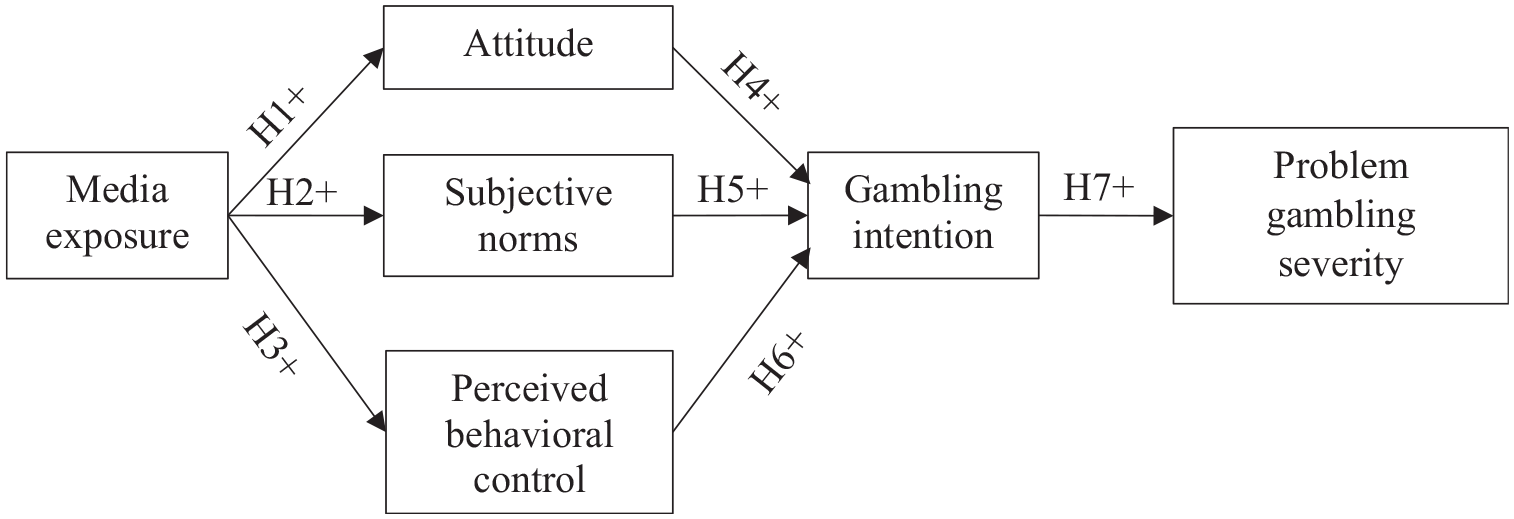
Conceptual model of the study.
Methods
Sample and Procedure
The data was collected for the purpose to test the model empirically. The legal age for gambling is 18 in Lithuania, and the age limit for gambling in casinos is 21 years. Thus, a sample comprised individuals aged 18 or older from Lithuania who participated in lotteries and gambling at least once in the past year, as recommended in previous studies (Buen & Flack, 2022).
A questionnaire was designed using previously validated scales. Referring to the recommendations (Brislin, 1976), we followed the back-translation process. First, the items were translated into Lithuanian language and compared to the original version. Second, six experts approved the relevance of the questions in the context of the country. Third, to reveal the appropriateness of the questions, a pilot test was conducted among 35 individuals who gambled in the last year. Notably, the questionnaire did not include any significant changes. Moreover, the questionnaire included the following demographic-related questions: gender, age, education, occupation, and family status.
For the purpose of data collection, the agency was recruited in support of Health Improvement Fund under a grant agreement with the Ministry of Health of the Republic of Lithuania. Questionnaires were distributed by e-mail using a database of the agency. A sample of 1,804 was chosen, aiming to collect representative data. The questionnaires were distributed among individuals from all 10 counties of Lithuania, taking into consideration the population of the counties. The participants did not receive any incentives for participation in the survey. The survey was conducted in October 2022–March 2023. After screening all questionnaires, 27 were deleted as the most extreme cases or completed very fast. The final sample consisted of 1,777 participants. The questionnaire included information about the voluntary nature and anonymity of the data.
Women predominated in our survey (n = 1,110; 62.46%) (Table 1). About 51% of the respondents were aged between 18 and 39, and the rest were 40 and 65 years or older. Most respondents had college or higher education (n = 1,168; 65.73%) and were employed in companies (n = 1261; 70.96%).
Socio-demographic Characteristics of Participants.

Variables and Measures
Media Exposure
Media exposure scale is adopted from Tucker et al. (2013). The media exposure scale comprises seven items ranging from 1 (not at all) to 7 (every day). The scale was used to determine how often, during the past period, individuals were exposed to media related to alcohol (Tucker et al., 2013). For the purpose of this study, the questions were adapted and aimed to reveal how often the respondents had seen or heard about gambling during the past year. A sample item is “How often have you noticed videos online of people participating in lotteries and/or gambling?” Cronbach alpha for the scale is .928.
Problem Gambling
The problem gambling severity index (PGSI), adopted from Ferris & Wynne (2001), is a relevant measure for determining problem gambling in the general population. PGSI comprises nine self-reported questions provided for the respondents to reveal whether they experienced any issues within 12 months due to gambling, for example, going back another day to try to win back money lost (“chasing losses”). PGSI was measured by a four-point scale ranging from (0) never to (3) almost always. The calculated score ranged from 0 to 27. Based on previous studies (Raisamo et al., 2015), the following categories were distinguished: non-problem gambler (PGSI score = 0), low-risk gambler (PGSI score = 1–4), moderate-risk gambler (PGSI score = 5–7) and problem gambler (PGSI > 7). The scale showed good internal consistency, reflecting a Cronbach alpha of .928.
Gambling Intention
Gambling intention scale is adopted from Scott et al. (2019). The gambling intention scale comprises four items ranging from 1 (strongly disagree) to 7 (strongly agree). The scale was used to determine consumers’ intentions to gamble more or less in the next year. A sample item is “I intend to gamble more money in the next year.” The internal consistency of the scale was found to be high. Cronbach’s alpha for the scale was .926.
Gambling Attitude
The gambling attitude scale is adopted from Scott et al. (2019). The gambling attitude scale comprises three items ranging from 1 (strongly disagree) to 7 (strongly agree). The scale was used to determine consumers’ evaluations of prior experiences, personal guilt, and ethical beliefs. A sample item is “My prior experiences with gambling have been positive.” Cronbach alpha for the scale is .690. Even though the value is lower than for other measurement constructs, the internal consistency for the measurement scale is reasonable (Hair et al., 2010).
Subjective Norms
The subjective norms scale is adopted from Scott et al. (2019). The scale included six items covering subjective norms from close and social circles with respect to not gambling. Subjective norms (close) comprise three-item scale ranging from 1 (strongly disagree) to 7 (strongly agree). The scale was used to determine social pressure by those close to the consumers (e.g., family, friends, and employers) (Ajzen, 1991) on gambling behavior. A sample item is “I would rather that my family did not know that I enjoy gambling.” Meanwhile, subjective norms (social) comprise three-item scale ranging from 1 (strongly disagree) to 7 (strongly agree). The scale was used to determine social pressure by those not close to the consumers (e.g., peer evaluations and word-of-mouth marketing). A sample item is “I know others that have had bad experiences with gambling.” Cronbach alpha is .818.
Perceived Control
We adopted a perceived control scale from (Scott et al. 2019). The perceived control scale comprised three items with response options from 1 (strongly disagree) to 7 (strongly agree). The scale was used to determine consumers’ confidence in their ability to achieve the desired outcomes of the act (Ajzen, 1991). A sample item is “I would rate my gambling skill as advanced.” The scale showed a reasonable internal consistency with Cronbach alpha of .700.
Controlling for Common Method Bias
To check for common method bias, we used Harman’s single-factor test and followed statistical guidelines proposed by Podsakoff et al. (2003). The un-rotated factor solutions showed that the single factor explained only 34.60% of the variance in the variables, which is below the threshold value of 50%. As a result, we determined that the data was unlikely to be affected by common method bias.
Controlling for Non-response Bias
To assess the non-respondent bias, we compared the responses from early (N = 898) and last waves (N = 879). Using an independent sample t-test to compare the means of both groups, we found no significant differences. Therefore, we state that non-response bias is not present, and there is no need to collect further data to test the model.
Results
The data collected in the study were analyzed via structural equation modeling (SEM) with SPSS AMOS 21.0. First, we conducted Confirmatory Factor Analysis (CFA) to examine the factor structures of the latent variables. Then, we performed a structural model and path analysis to assess how well the model explains the data and assesses the hypothesized relationships among the researched variables.
Validity of the Measurement Model
Aiming to assess the measurement model, we subjected all the constructs to a CFA. Following the guidelines of Hair et al. (2010), we had to eliminate any items with standardized factor loadings (FL) below 0.5 (ideally 0.7 or lower) to confirm convergent validity. One statement from attitude (i.e., “I feel gambling is unethical”) was dropped. Additionally, we eliminated two items from subjective norms (i.e., “I would rather that my family did not know that I enjoy gambling” and “I would rather that my colleagues/boss did not know that I enjoy gambling”) because of poor loadings. We also had to drop one item (i.e., “I understand the statistical odds of winning the games I play”) from perceived control. While having at least three statements for a construct is preferable, the literature suggests that even one item can provide sufficient reliability and validity (Heggestad et al., 2019; Lee, 2013). After the removal procedure, all CFA factor loadings were acceptable (Table 2), confirming the unidimensionality of the constructs.
Measures and Properties.

FL = standardized factor loading; M = mean; SD = standard deviation; α = Cronbach’s alpha; CR = composite reliability; AVE = average variance extracted.
We evaluated the model fit using standard fit indices. The hypothesized six-factor model (media exposure, attitude, subjective norms, perceived behavioral control, gambling intention, and problem gambling severity) yielded an excellent fit to the data (CFI = 0.967, TLI = 0.962, AGFI = 0.924, RMSEA = 0.046).
As shown in Table 2, all the AVE values that surpassed the threshold of 0.50. It indicated convergent validity (Hair et al. 2010).
Table 3 shows that the square root of the AVE for each measure was higher than its bivariate correlation coefficients with other constructs. This indicates that discriminant validity was confirmed.
Correlations and Discriminant Validity.

The diagonal value is the square root of the AVE of a construct.
Structural Model and Hypothesis Testing
We used SEM to test the proposed hypotheses. The resultant model fit statistics demonstrated a good fitting model (CFI = 0.951, TLI = 0.944, AGFI = 0.897, RMSEA = 0.056). The results presented in Table 4 indicate that media exposure has a significant impact on attitude, as evidenced by a positive path coefficient (β = .364, p < .001). This finding supports H1, which posits that media exposure leads to attitude. In addition, the results revealed that media exposure has a positive impact on subjective norms. The relationship between these factors was buttressed by a significant path coefficient (β = .432, p < .001), thereby supporting H2. These findings suggest that individuals’ perception of the social norms surrounding gambling may be significantly influenced by media exposure. Furthermore, the results showed that media exposure significantly influences perceived control (β = .441, p < .001), providing support for H3. This finding highlights the importance of media exposure in shaping individuals’ perceived control over their gambling behavior.
Results and Hypothesis Testing.
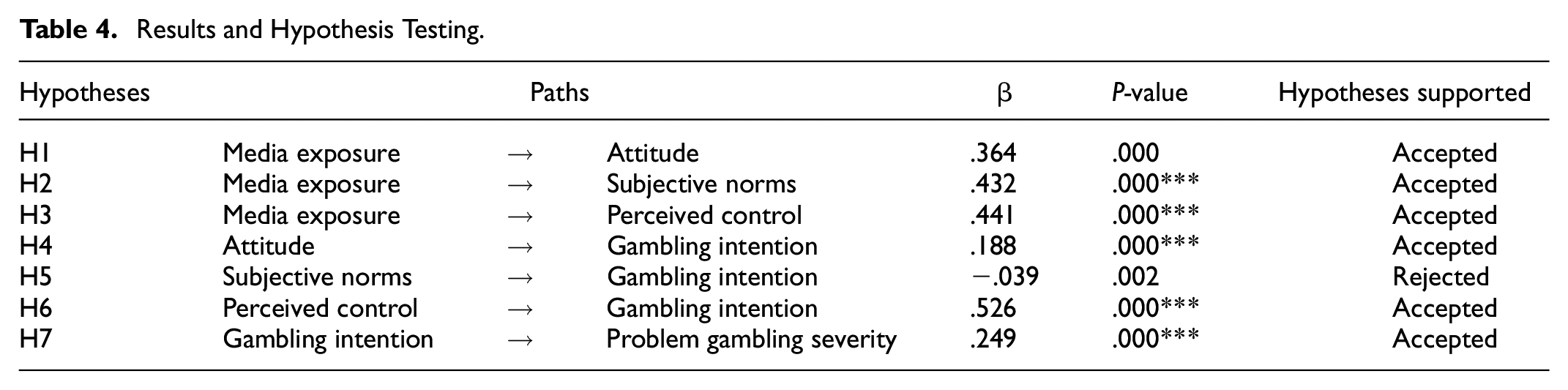
Our findings indicate that maintaining a positive attitude toward gambling can lead to a greater likelihood of gambling (β = .271, p < .001), supporting H4. Conversely, subjective norms showed a negative relationship with intention, leading to the rejection of H5. As for H6, we predicted that perceived control would positively impact gambling intention, which our results support, with a significant and positive direct impact (β = .526, p < .001). This lends support to H6. The study also examined H7, which proposed that gambling intention would positively impact problem gambling severity. Our findings confirm that intention does indeed have a positive impact on the severity of problem gambling, thus supporting H7. In summary, the conceptual model offers a logical explanation for problem gambling severity.
Discussion
This study has explored the applicability of a combination of the theory of planned behavior and social cognitive theory to discern the media exposure effect on problem gambling severity through the mediation of attitude, subjective norms, perceived control, and intentions among the general population in a growing gambling market. The results endeavor to extend the extant literature by incorporating various facilitators associated with gambling.
Consistent with prior studies (Lee, 2013, Lee et al., 2014, Scott et al., 2019, St-Pierre et al., 2015), we examined the gambling phenomenon using the theory of planned behavior due to its popularity within the consumer behavior realm. To do so, we expanded the theory with the media exposure construct, as it has been identified as a crucial factor in shaping individuals’ gambling behaviors (Lee, 2013). In this study, media exposure was considered as one of the factors of social cognitive theory. According to this theory, external factors can have an impact on person’s behavior. In this particular study, the researchers hypothesized that media exposure could influence the development of gambling intentions, through various components of the theory of planned behavior. The theory of planned behavior suggests that a person’s behavior is influenced by their intention to perform a particular action, which is shaped by attitude, subjective norms, and perceived behavioral control. Therefore, media exposure could play a significant role in shaping a person’s intentions toward gambling by affecting their attitude, subjective norms, and perceived behavioral control.
According to our study, exposure to gambling-related content on the Internet, social network sites, movies, television programs, magazines, newspapers, songs, and video games plays a pivotal role in shaping attitudes among individuals. Through various channels of media individuals are exposed to depictions of gambling as exciting, and potentially lucrative, contributing to the perception of gambling as normal behavior. This indicates that gamblers are sensitive to the information they receive from the media. Additionally, our results show that media exposure also affects subjective norms and, interestingly, positively influences perceived behavioral control. This implies, that trough various channels of media, individuals are presented with implicit or explicit messages about the social acceptability of gambling. These messages contribute to the formation of subjective norms, influencing perceptions of individuals about gambling as a behavior endorsed by those around them. Furthermore, media content can positively influence beliefs of individuals in their ability to control their gambling behavior by providing information about the perceived ease of engaging in gambling activities. This perceived control may stem from the depictions of successful gamblers, for example in the movies. Therefore, the results stress the importance of various media channels in disseminating information linked to gambling and confirm the relevance of social cognitive theory in explaining gambling behavior.
Our study uncovers the underlying mechanism of how the theory of planned behavior is capable of explaining gambling intentions. Thus, we measured the impact of attitude, subjective norms, and perceived behavioral control on an individual’s intention to gamble. Furthermore, the light is shed on how positive attitudes toward gambling and perceived control over one’s behavior collectively contribute to an increased desire to gamble. This disclose the directions through which psychological dispositions can be altered to mitigate the desire to engage in gambling activities.
A striking finding is the absence of a positive association between subjective norms and gambling intentions. Contrary to expectations, subjective norms, which represent individuals’ perceptions of social pressures and expectations regarding gambling behavior, do not seem to significantly influence intentions to gamble. Instead, they have a negative influence, reducing gambling intentions. There are two possible explanations for this finding. Firstly, a gambler may deny the problem and resist help (Riley et al., 2020), leading him to respond contrary to the advice of his close or social connections. Secondly, people may keep their gambling behavior secret to avoid social shame (Fulton, 2022). Suppose gamblers do not expose their behavior or gamble anonymously (what becomes expedient in online gambling) without even talking about it. In that case, they may not receive feedback or get mixed opinions about gambling from significant others. Although our finding contradicts previous studies (Lee, 2013, Scott et al., 2019, St-Pierre et al., 2015), it does not diminish the importance of subjective norms in gambling. The negative impact of subjective norms on gambling intentions highlights the complexity of the gambling phenomenon. It also suggests that the traditional theory of planned behavior may be outdated and cannot fully explain addictive behaviors because the theory evolved when media, social networking, and knowledge were not as accessible as they are now. Combining the theory of planned behavior with social cognitive theory, provides deeper insights into gambling intentions.
Expanding previous research, which simply argues that attitude, subjective norms, and perceived control are indicators of gambling intention, this study unfolds that intention interacts with problem gambling severity. This finding is consistent with contiguous studies that also concentrated on problem gambling severity. For instance, St-Pierre et al. (2015) discovered that the relationship between intention to gamble and perceived gambling problems is significant in the adolescent sample. Likewise, Haagsma et al. (2013) demonstrated that video gaming intention considerably affects playing time, which in turn impacts problematic game use.
Altogether, the current evidence corroborates the importance of media exposure in the gambling context and the expediency of combining the theory of planned behavior with social cognitive theory when explaining gambling behavior. In fact, it has previously been argued that media exposure, attitude, subjective norms, and perceived behavioral control drive the intention to bet on sports (Hing et al., 2015). However, the current findings extend the extant understanding by demonstrating that media exposure uniquely affects gambling intentions through the mediating effects of attitude, subjective norms, and perceived behavioral control. Additionally, the results confirm that gambling intention subsequently leads to problem gambling. This finding advances the literature by uncovering the mechanism through which media exposure leads to problem gambling.
Theoretical Contribution
This study makes three key contributions to the existing literature on gambling behavior. Firstly, it adds to the ongoing discussion on the factors that influence gambling behavior by exploring the factors that can either encourage or discourage gambling intentions. For the purpose of this study, we have espoused the integration of the theory of planned behavior and social cognitive theory and included media exposure as a determinant of attitude, subjective norms, and perceived control. Our research expands the understanding of gambling behavior by revealing various opportunities for gambling prevention or promotion of responsible gambling across different forms of media such as the Internet, social network sites, movies, television programs, magazines, newspapers, songs, and video games. Secondly, and most importantly, our findings highlight that subjective norms were negatively linked to gambling intention in the structural model. This finding suggests that researchers should consider the significant role of closer and social circles in gambling prevention. Thirdly, we examined the problem gambling severity, thus contributing to the literature on gambling behavior by revealing that intentions are a significant predictor of problem gambling severity.
Practical Implications
The insights gained from this study have several practical implications. The current research informs policymakers, health organizations, and marketers about problem gambling predictors in several ways. Firstly, our findings demonstrate that media exposure induces attitudes toward gambling. It is, therefore, of the utmost importance that media managers and content creators understand that overall media exposure manipulates attitudes toward gambling. Secondly, the negative impact of subjective norms on gambling intention calls for actions to prevent gambling to some extent, counting on significant others from close and social environments. Recognizing that negative perceptions of gambling from others can decrease gambling intentions may impel gamblers to view their significant others as resources that can help. Therefore, social norms campaigns aimed at changing perceptions of family, friends, and coworkers’ appraisals of gambling may be helpful. Lastly, increased knowledge of the severity of problem gambling can augment the effectiveness of excessive gambling and gambling-related harm prevention efforts, which can greatly assist policymakers.
Limitations and Future Research
Some limitations of this study should be noted. First, the data were restricted to Lithuanian citizens who had gambled at least once in the last 12 months. As a result, the conclusions drawn from this study may not be generalized to adults from outside the country. Therefore, future studies can be conducted in other Central and Eastern European countries for the purpose to compare the data.
Second, even though gambling intention was measured, the assessments did not differentiate between legal or illegal physical locations and online gambling. Possibly certain locations may be more closely associated with severe problem gambling. Therefore, future research should investigate any differences in gambling problems that may be linked to various locations.
Third, although the current research was appropriately powered, it is essential to note that the sample was mainly composed of females. This overrepresentation of females reflects the specifics of the Lithuanian population, but it may limit the generalizability of the findings to other populations. Thus, further investigation with a more balanced gender split is desirable.
Furthermore, it would be expedient to conduct a longitudinal study examining changes in gambling intentions and how the intentions transform into problematic gambling. Considering the complexity of consumer behavior toward gambling products, future studies could also test modified models incorporating relationships between media exposure and problem gambling severity. Additionally, it appears to be worth identifying the impact of exposure in different media types. Moreover, some moderating factors such as gender, education, or income can be investigated.
Footnotes
Declaration of Conflicting Interests
The author(s) declared no potential conflicts of interest with respect to the research, authorship, and/or publication of this article.
Funding
The author(s) received no financial support for the research, authorship, and/or publication of this article.
An Ethics Statement
Not applicable.

Data Availability Statement
The research data is accessible at: https://midas.lt/public-app.html#/research/dataObjects?resourceId=209214&uuid=01e4895c-d419-4a9c-90bc-a19c839387c0&lang=en