




Abstract
This study aims to review the existing research on public procurement efficiency related to the evaluation criteria in the bid process. These can be grouped into two main approaches based on the lowest price criterion (LP) or via a multi-criteria assessment (MC). To this end, a bibliometric analysis was carried out, including an advanced search by topic and content analysis. The results of the analysis were documents published from 2006 to the beginning of May 2024 by authors from 47 countries. Of these, 79 were related to the LP criterion and 125 to the MC assessment. The main findings of this study show that the research on efficiency in public procurement has evolved towards the use of both monetary and non-monetary criteria. This trend is more prevalent in countries with high economic performance. Despite public procurement efficiency being an international topic, more collaboration among researchers from different countries is necessary. Moreover, this study shows the focus on research on metrics and initiatives for implementing environmental criteria and the need to pay more attention to social efficiency.
Keywords
Introduction
Public procurement is the process by which public authorities, such as government departments or local authorities, purchase goods, services or works from companies. This function is essential to the national and economic development of many countries worldwide. In this sense, among its diverse benefits to society, public procurement accounts for approximately 11% of the GDP of most countries (Changalima et al., 2022) and contributes to achieving the United Nations Sustainable Development Goals (Siwandeti et al., 2023).
Efficiency is one of the main principles of public procurement (OECD, 2015). Nowadays, this concept refers to the ability of government entities to obtain goods, services or works in a cost-effective and timely manner while ensuring transparency, fairness and value for money (J. Nemec et al., 2021; P. Nemec et al., 2023). Value for money means deriving maximum benefits from procuring goods, services, or works at a lower cost without compromising quality (Kipo-Sunyehzi et al., 2024). Consequently, public procurement efficiency during the bid evaluation process has evolved from purely economic considerations to incorporating additional non-economic criteria that ensure value for money (Kumar et al., 2015; OECD, 1987, 2010, 2021a).
Efficiency plays a pivotal role during the tender phase (OECD, 2021a, 2021b). At this phase, usually, all the received offers have already been preliminary evaluated in terms of eligibility and compliance with norms (Dotoli et al., 2020). From there, the contracting authority awards the tender to the best bidder based on defined evaluation criteria (Niewerth et al., 2022). In line with previous studies and OECD guiding principle on public procurement (Dotoli et al., 2020; Kipo-Sunyehzi et al., 2024; Manta et al., 2022; OECD, 2015; Onur & Tas, 2019; Zhang & Liao, 2022), this study identified two main approaches regarding awards criteria: unique (LP) or multi-criteria assessment (MC). In the unique criteria assessment approach (LP), price is the sole competitive factor used when comparing offers. In this approach, the best tender (most competitive) is the one with the lowest price/lowest bid, albeit abnormally low offers may be rejected by the contracting authority. Its main strengths are its easy and straightforward implementation, enhanced competition, and a transparent selection process (Grzyl et al., 2018; Tran et al., 2016). However, low-bid procurement does not always offer the best performance (Grega et al., 2019) and limits the possibility of awarding specific features of the order, such as the possibility of applying modern technological solutions (Titl et al., 2021). This approach is generally suitable for simple procurements of short-term, low-level services/goods with a standard specification or when mandatory considerations only permit the selection of the lowest price (Dotoli et al., 2020).
The multi-criteria assessment approach (MC) aims to select the tender considering not only price but other criteria such as those related to qualifications, experience, technical approaches, and innovative solutions, thus ensuring acceptable levels of quality for the public services described in the tender. In the legislation of the European Union (EU), this approach is referred to as the “most economically advantageous tender” (MEAT), (also known as the best price-quality ratio) (European Parliament, Council of the EU, 2014; Marinelli & Antoniou, 2019). Non-EU countries can also use this or other similar terms, such as best value tender, to refer to this approach (Kipo-Sunyehzi et al., 2024; Manta et al., 2022; Onur & Tas, 2019; Zhang & Liao, 2022). It is worth noting the increasing attention paid to the inclusion of social and environmental clauses to meet the end-user’s needs (European Parliament, Council of the EU, 2014; OECD, 2015, 2022; United Nations, 2006). Including environmental criteria can offer savings such as cost reduction and waste elimination, as well as reducing environmental pollution and climate change, among other aspects (Bibire et al., 2023). Moreover, including social criteria in public procurement helps guarantee a state of welfare for people by promoting social, economic and political justice, creating healthy communities and fostering diversity and democracy (Montalbán-Domingo et al., 2022). Due to the diversity of quantitative and qualitative criteria, the efficiency of a tender is assessed using multicriteria decision-making methods. The most commonly used methods are the analytic hierarchy process, the preference ranking organization method for enrichment of evaluations, the multi-attribute utility theory, and the data envelopment analysis (Dotoli et al., 2020; Falagario et al., 2012). In practice, the preparation and submission process of bids under the lens of the MC approach can be complex, time consuming and costly. Moreover, when MC is used, public officers can favor a given bidder by assigning a high weight to a criterion that only that competitor is expected to meet fully. Consequently this method is characterized by some subjective choices which make corrupt behaviors possible (Montalbán-Domingo et al., 2022; Sciancalepore et al., 2011; Titl et al., 2021).
Research on efficiency in public procurement generates considerable interest (McDonald et al., 2022; Niewerth et al., 2022; Rodionova et al., 2022) since both the awarding authority and contract provider face immense challenges at the awarding stage (Krieger & Zipperer, 2022). It is an international and complex topic due to the differences in the public procurement systems of countries worldwide. In some countries, like Japan or Russia, procurement systems are more oriented to the lowest price criterion. Others, like UE countries, are more focused on the multi-criteria assessment, albeit there is not a common model for this type of assessment among countries (Balaeva et al., 2022; Manta et al., 2022; Mendoza-Jiménez et al., 2022; Yoon, 2023; Zhang & Liao, 2022).
The research has analyzed, among other aspects, questions regarding public procurement efficiency, such as case studies on the procurement of public goods, services or works, as well as examining the efficiency of procurement at a country level (e.g., Bratt et al., 2013; Falagario et al., 2012; França et al., 2021; Milosavljevic et al., 2016; Terman & Smith, 2018; Testa et al., 2016; Witjes & Lozano, 2016). However, it would also be useful to examine the evolution of this field of study to determine the level of attention paid in the literature to efficiency in public procurement during the bid evaluation process, not only in economic terms but also considering other factors such as environmental (Krieger & Zipperer, 2022; Rosell, 2021) and social criteria (Uribarrena, 2020). It is crucial for scholars to reflect on the knowledge created and gathered to inspire contributions, comprehend which subjects are covered and identify potential topics for future research in a specific field (Rejeb, Rejeb, Appolloni, et al., 2023). In this regard, relatively few bibliometric studies have been conducted on the role played by considerations of efficiency in public procurement related to the tender evaluation criteria. Instead, most bibliometric studies of public procurement have focused on issues such as corruption (Rakhel & Putera, 2021), public-private partnerships (Pu et al., 2021) as well as general trends in green procurement research (Galán-Valdivieso et al., 2024; Masudin et al., 2022; Rejeb, Rejeb, Kayikci, et al., 2023).
Given these considerations, in the present paper, we analyze the research literature on efficiency in public procurement related to the tender evaluation criteria, seeking to identify general trends in LP and MC assessment studies. In particular, we address the following research questions:
(1) What is the scope and impact of research on public procurement efficiency, according to the LP and MC approach adopted?
(2) What are the most influential studies on public procurement efficiency, according to the LP and MC approach adopted?
(3) What are the most important issues analyzed in research studies on public procurement efficiency, according to the LP and MC approach adopted?
The study aims to provide valuable contributions to academics and policymakers practitioners in the field of public procurement. For academics, the results aim to guide authors on public procurement research by providing insights on influencing authors and articles and pointing out where more research is needed to help governments and institutions carry out efficient procurement. Likewise, it aims to show the degree of international research collaboration and whether high-quality journals pay the same attention to both approaches. Moreover, for practitioners and policymakers, it is worth noting that the advancement in the implementation of adequate award criteria is essential for attaining a successful tendering process. The results of this study will expand the knowledge frontiers in public procurement efficiency since the research outcomes reflect the concerns and interests of researchers regarding better implementation of award criteria for the most efficient tender (e.g., legislation, corruption, market competition, metrics, technology).
Methodology
In this study, bibliometric analysis is used to identify trends in published studies of public procurement efficiency (Rakhel & Putera, 2021; Waltman et al., 2010) in view that this scientific method is widely accepted and employed in high-impact publications (Masudin et al., 2022; Pu et al., 2021). In particular, we apply statistical techniques to evaluate the evolution of a given line of research from various perspectives (country, author(s), year of publication, journal in which the article is published, etc.), extracting the necessary data from the citation network.
The information was exported from the Web of Science Core Collection (WOS) in May 2024. The WOS was selected as the search engine since its database is internationally recognized for owning the highest quality standards and is most widely accepted and used for scientific publication analysis (Yan & Zhiping, 2023). The content in the WOS Core Collection is organized into three major indexes (i.e., Science Citation Index Expanded, Social Sciences Citation Index, and Arts & Humanities Citation Index), making it an ideal resource for in-depth analysis of specialized fields in research within the three major disciplines of Sciences, Social Sciences, and Arts & Humanities (Tomaszewski, 2023).
The search strategy carried out was a two-stage process. The first stage aims to extract relevant information that directly or indirectly refers to the efficiency of the awarding process of public procurement. To this end, the authors selected two keywords that encompass the whole essence of the topic, “efficiency” and “public procurement.” Hence, the topic search (TS) queries applied were TS = (“public procurement”) and TS = (“efficiency”), and the first eligibility criterion was that the study should contain the required search terms in the title, abstract, or keywords. Using “public procurement” and “efficiency” this search obtained 645 documents. From that sample, we selected 513 that belonged to the main WOS collection. The source types were journal articles, book chapters, and conference proceedings. The authors did not filter the results any further as all the above-mentioned documents have an adequate level of quality and have been considered in bibliometric studies of public procurement (Rakhel & Putera, 2021). Likewise, previous bibliometric research on efficiency in local government suggested the inclusion of proceedings and books in future studies (Rueda-López et al., 2020).
Given that this research aims to cover worldwide trends, we did not exclude any publication based on its primary language (Galán-Valdivieso et al., 2024). However, it is worth noting that the results presented very few documents written in any language other than English, and in all these cases, the documents provided an English version of the title, abstract, and keywords. The study period encompasses the period from the first article registered in the database. Data gathering was performed in May 2024.
In the second stage of this process, a content analysis was performed to ensure the final sample’s validity and avoid errors (White & Marsh, 2006). The second criterion was that the content of the abstracts should deal with efficiency and the bid evaluation process of public procurement. To this end, three research team members worked separately and reviewed each of the abstracts obtained. When an abstract did not provide sufficient information for a determination, the complete article was scrutinized. The authors had several meetings to discuss and resolve minor differences. Studies were included as part of the LP approach if they focused on awarding the most efficient offer in favor of the tender with the lowest price and related aspects such as policies to increase price competition, mathematical methods proposed for more competitive price bids or lessons on inefficient practices for overpricing public procurement. If the paper was related to strategies, methodologies and policies for the selection of the most efficient offer considering various criteria such as emphasizing quality, the optimal participation of SMEs, the promotion of innovation, and clauses with environmental and social content or included terms such as MEAT, best price-quality ratio, best value tender or multi-criteria decision-making methods, then they were categorized as MC approach. This filter ensured the validity of the research data considered in terms of the content analyzed, thus complying with the primary purpose of this study.
The research team discarded 309 of the documents initially retrieved, leaving a final sample of 204 for analysis. The result was documents published between 2006 and 2024. Of these, 79 were related to the LP criterion and 125 to MC. Bibliometrix, a proven statistical R software package for quantitative research in scientometrics and bibliometrics, is a leading software tool for analyzing and visualizing bibliometric data, providing a comprehensive overview of scientific maps. R packages are an invaluable aid to scientific research (Derviş, 2019; Li & Yan, 2018), and their open-source nature facilitates ongoing improvements. Bibliometrix and its “Biblioshiny” package provide several routines for importing bibliographic data from different databases for further analysis and mapping.
Results
This section addresses the results of the analysis regarding the research questions of this study, which are the following: (1) What is the scope and impact of research on public procurement efficiency, according to the LP and MC approach adopted?; (2) What are the most influential studies on public procurement efficiency, according to the LP and MC approach adopted?; (3) What are the most important issues analyzed in research studies on public procurement efficiency, according to the LP and MC approach adopted?
What Is the Scope and Impact of Research on Public Procurement Efficiency?
Publications on Efficiency in Public Procurement
The majority of the documents included in our analysis are published scientific articles. This line of research emerged strongly in 2006. Of the 204 documents considered, 79 correspond to the LP approach and 125 to MC. Regarding the LP approach, there are 75 articles, one book chapter and three conference proceedings, while for the MC approach, there are 116 articles, three book chapters, and six conference proceedings (Table 1). In addition, those classified as MC contained more citations than those identified with the LP approach. Similarly, the average number of references per article under the MC approach was 6,055 compared to 2,790 for the LP approach.
Distribution of Publications According to the Type of Document.

Source. Elaborated by the authors.
The annual production of scientific research reflects the growing interest in public procurement efficiency from 2015 and the fact that the majority of recent publications in this field have adopted the MC approach (Figures 1 and 2).

Research design.

Annual scientific production.
Analysis of Publications on Public Procurement Efficiency According to National Economic Indicators
For the analysis of publications, we have studied the correlations between the volume of publications and the authors’ country of origin, considering country factors related to changing forms of public management such as corruption (Malyniak et al.2019), economic performance (Pollitt & Bouckaert, 2017) and the level of public spending (Jung, 2006). The following factors were considered for each country: (1) corruption, measured by the Transparency International index; (2) economic performance, measured by the country’s GDP; (3) the relative weight of public spending, measured by the relationship between public spending and GDP (Table 2).
Correlation Between the Number of Publications and Economic Indicators of Authors’ Country.

Source. Elaborated by the authors, based on data from Transparency International (2023 Corruption Perceptions Index: Explore the results: https://www.transparency.org/en/cpi/2023) and International Monetary Fund (https://www.imf.org/en/Publications/WEO/weo-database/2024/April). China’s GDP is collected from World Bank (https://www.worldbank.org).
N = number of publications; C = corruption index; GDP = thousands of
From the data thus obtained, we can observe that, in general, the authors who publish the most on public procurement efficiency from the LP perspective are based in countries with relatively high corruption levels and low public spending per GDP, although there are exceptions to this pattern. In the case of the MC approach, the data also indicate a significant relationship between the volume of publications and the GDP of the researchers’ country of origin. Hence, the authors who publish the most articles on public procurement efficiency, adopting an MC perspective, tend to come from countries with a higher GDP. This finding might be explained by the fact that in countries that are more highly developed and have larger public administrations, the tendering process is more likely to incorporate economic, technical and environmental concerns and hence can be considered more efficient (Rosell, 2021).
Analysis of Publications by Journal Type
Most of the research articles on public procurement efficiency from the LP perspective are published in business, economics and public administration journals. In contrast, the articles based on the MC perspective appear in a broader range of disciplines, including environmental sciences and ecology, business and economics, science and technology (other) and engineering (Table 3).
Distribution of Publications by Areas of Knowledge.

Source. Elaborated by the authors.
Note. Documents may belong to more than one area of knowledge.
To determine the level of impact of the journals that publish articles addressing each approach, we examined the JCR ranking position and quartile of each journal. Findings showed that approximately 60% of the studies under the LP approach are published in journals positioned in the Q3 and Q4 quartiles. In contrast, more than half of the studies concerning public procurement efficiency through the lens of the MC approach are published in journals ranked in the Q1 and Q2 quartiles (Table 4).
Ranking by JCR Quartiles.

Source. Elaborated by the authors.
By country of origin, most of these journals were based in European countries or the USA (Table 5).
Distribution of Publications by Country Origin of the Journal.

Source. Elaborated by the authors.
Our analysis shows that a wide range of journals publish articles on public procurement efficiency (Table 6). Among the 10 most prolific in this respect, Sustainability and Journal of Public Procurement include research from both the LP and the MC perspectives.
Top 10 Journals by Volume of Articles Published.

Source. Elaborated by the authors.
The journals focusing more on the LP approach were the International Journal of Public Administration, the Lex Localis-Journal of Local Self-Government and Ekonomicky Casopis. The MC approach was more likely to be present in the Journal of Cleaner Production, CIRIEC-España Revista de Economía Publica Social y Cooperativa, the Journal of Purchasing and Supply, Public Money & Management and Energy Policy.
What Are the Most Influential Research Studies on Public Procurement Efficiency?
The most influential authors are analyzed by considering the following parameters: the duration of their research career, the volume of publications they contributed to, the number of citations obtained, the h-index, and the contemporary hc-index.
Scientific production was calculated according to the number of articles contributed to by each author, as shown in Figures 3 and 4, where the data are represented by the size of the bubble, the intensity of the color and the author’s timeline. The size of the bubble is proportional to the number of documents, the color intensity represents the number of citations, and the timeline indicates the author’s chronology (Figures 5 and 6).

Scientific production over time of the top authors—LP approach.
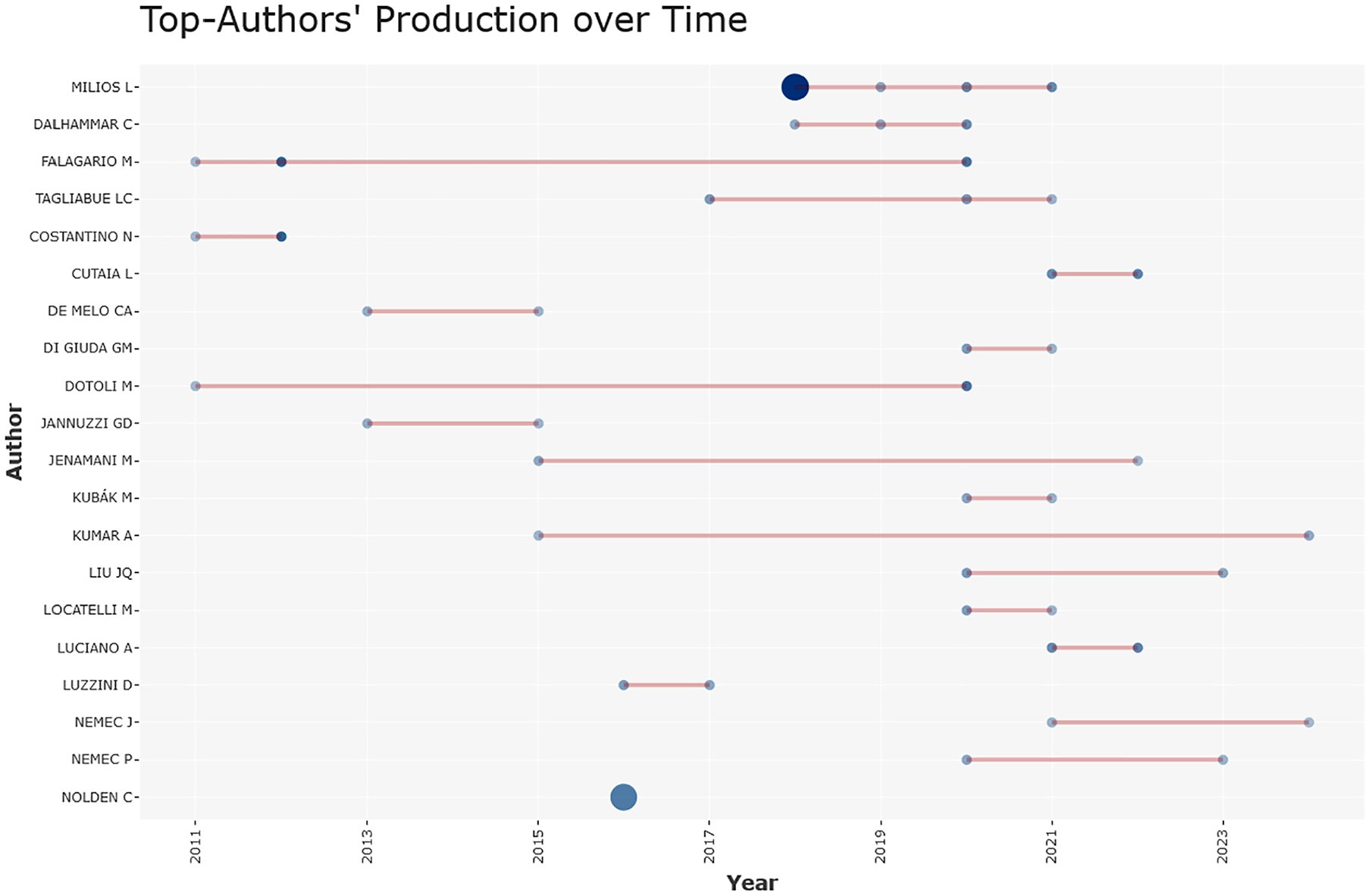
Scientific production over time of the top authors—MC approach.

International collaboration between authors—LP approach.
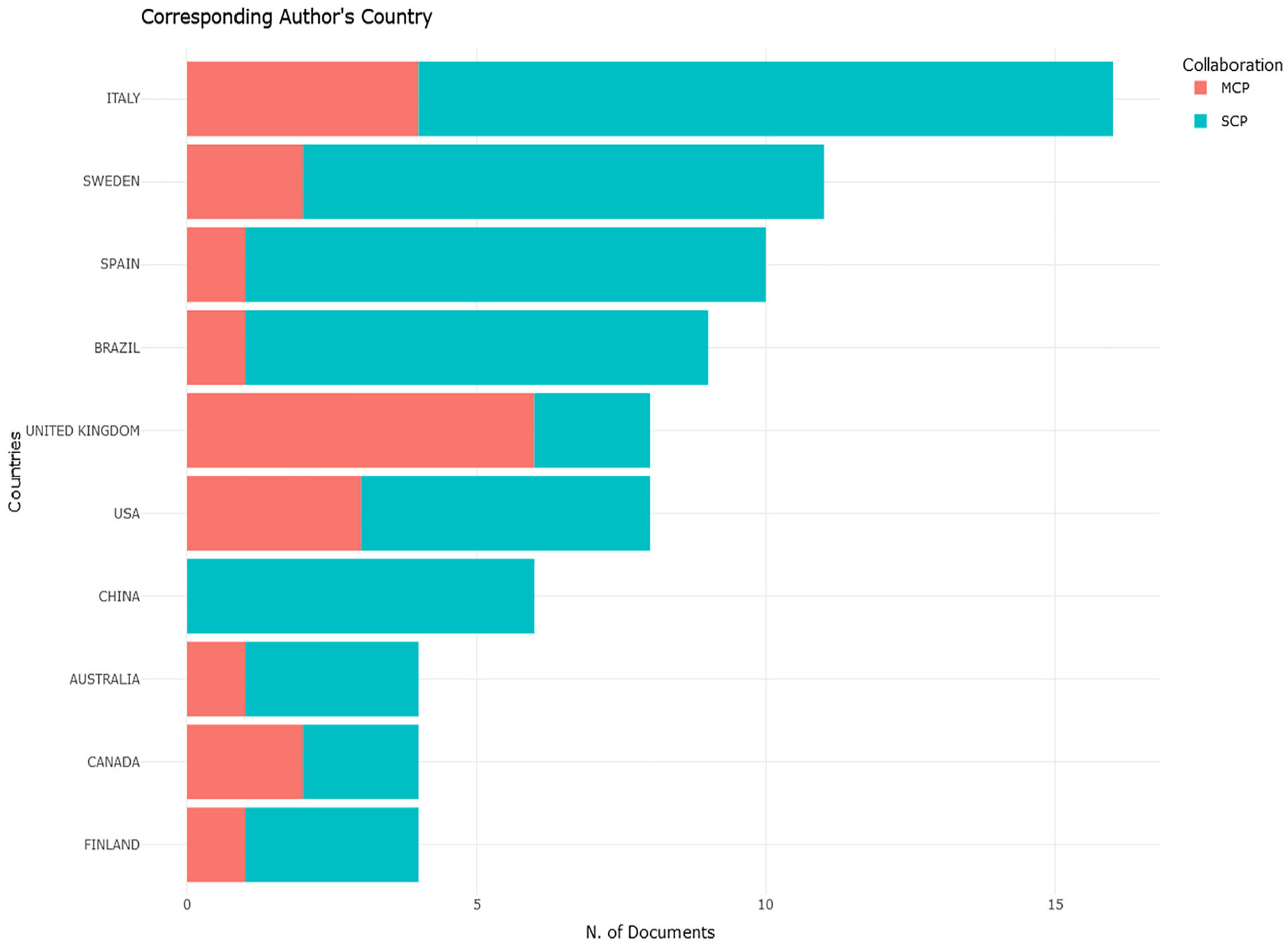
International collaboration between authors—MC approach.
Among the authors adopting the LP approach, Plaček was the most productive, followed by Nemec, Ochrana, and Pucek. With the exception of Nemec, the majority of the mentioned authors examine public procurement efficiency through the lens of LP from 2016 to 2020 (Figure 3). Concerning the MC approach, Milios was the most productive author, followed by Dalhammar, Falagario, and Tagliabue (Figure 4). In general, the authors who adopted the MC approach presented greater continuity in their scientific production than did those who used LP and the greater production is since 2015.
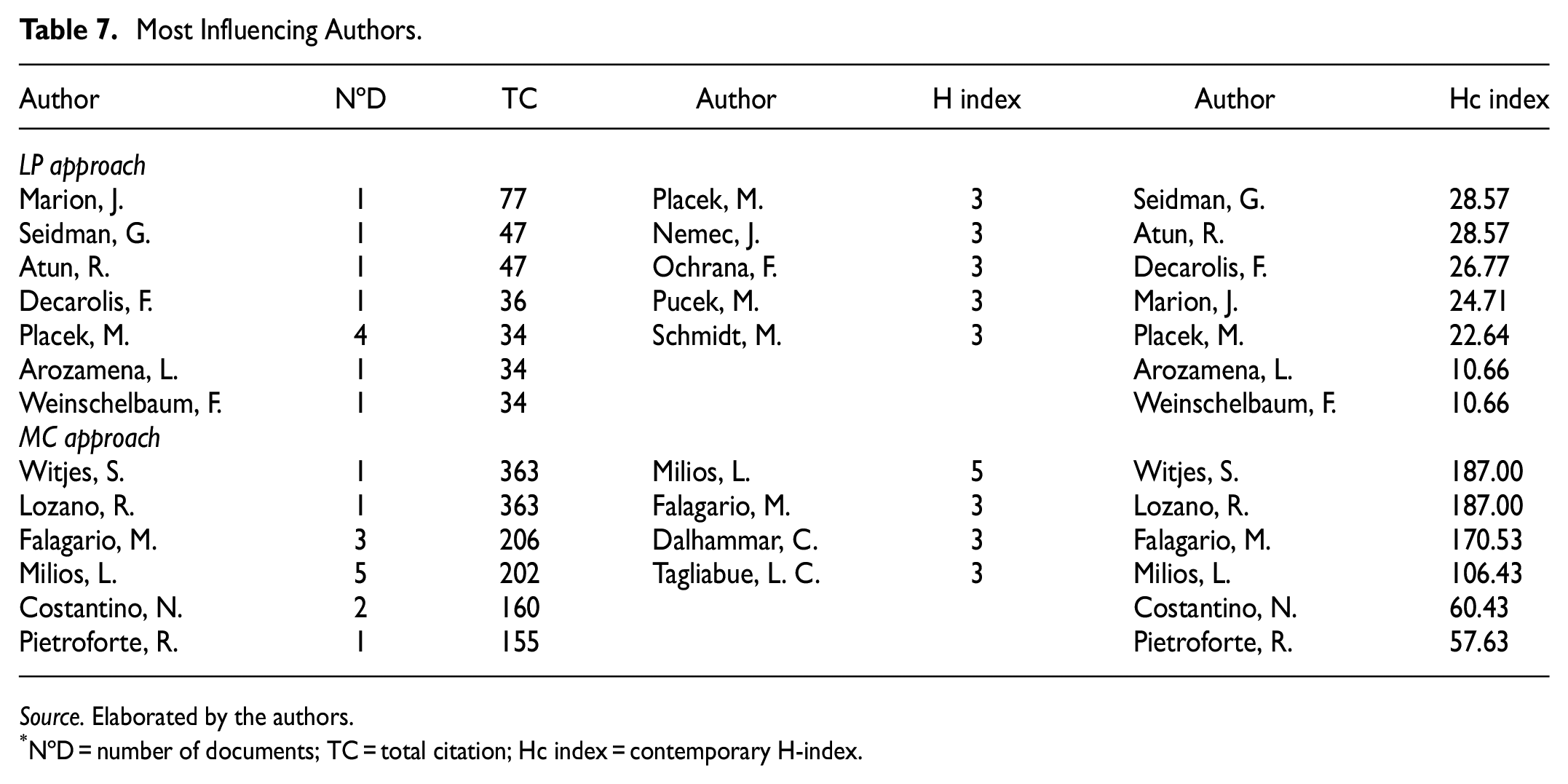
The influence of each author is shown in Table 7. Regarding the number of citations obtained, Marion is the most cited author of the LP approach, while Witjes, Lozano and Falagario are the most often cited using the MC approach.
Most Influencing Authors.
Source. Elaborated by the authors.
NºD = number of documents; TC = total citation; Hc index = contemporary H-index.
This study also uses the h-index, which is defined as the number “x” of articles with a total number of citations ≥ “x” so that those articles have been cited at least “x” times (Hirsch, 2005). According to the h-index, Milios is the most influential author in public procurement efficiency research (h-index = 5). As recent papers may be as influential or become more influential than older papers, given sufficient time (Mokhtarpour & Khasseh, 2020), we also use the contemporary h-index (Sidiropoulos et al., 2007). This index allocates more value to citations of more recent articles than older ones by multiplying the citations by four and dividing the product by the number of years since the article was published. Regarding the contemporary hc-index, the most influential authors are Atun and Seidman for the LP approach and Witjes and Lozano for the MC approach.
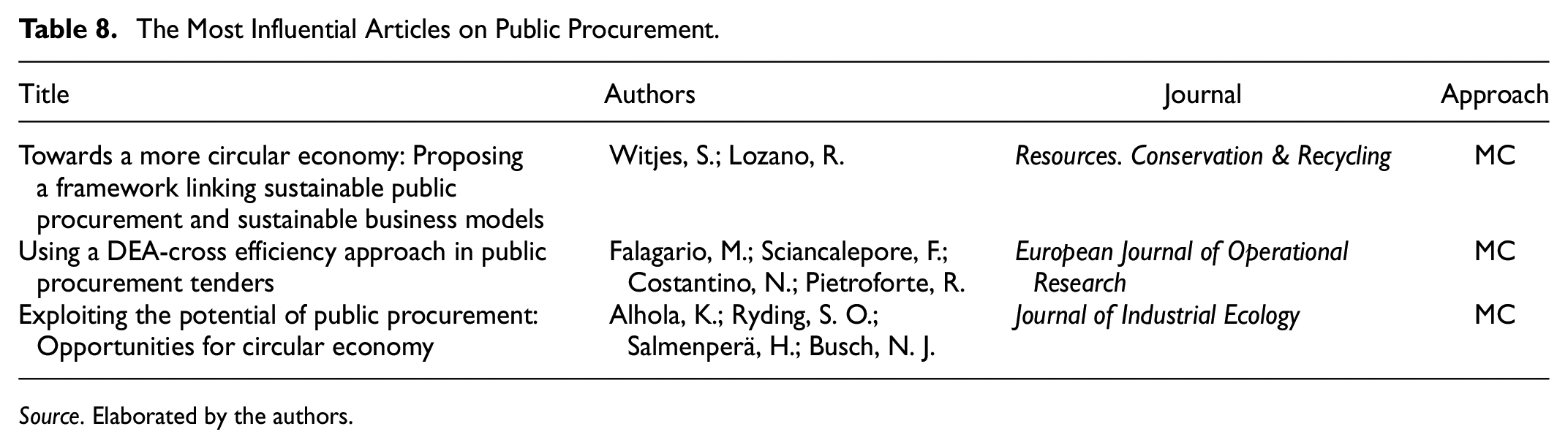
The three most influential articles on public procurement efficiency are described in Table 8, which aligns with the total citations. The first of these studies proposes that the tendering authority and the suppliers concerned should collaborate to reduce raw material use and waste generation and promote the development of more sustainable business models. To this end, the authors propose a framework to include technical and non-technical specifications to improve efficiency in the use of resources, for example, through the recovery of materials in the production process. This framework also considers socio-cultural specifications and the value of physical and social proximity between the stakeholders in the tendering process. In the second article, the authors propose a cross-efficiency evaluation technique using Data Envelopment Analysis (DEA) to select the best supplier among the eligible candidates according to the most economically advantageous tender criterion. The third article analyzes public procurement opportunities to promote a circular economy, highlighting the importance of setting criteria and requirements for the extension of product life spans, efficiency and/or intensity of use, and efficient cycling of biological or technical materials, as well as for securing clean and nonrisky cycles. In this sense, the study suggests using specific tools to select the best supplier, such as performance-based procurement, life cycle approach, and life cycle costing, as well as criteria concerning the reuse and recycling of materials to promote circular procurement.
The Most Influential Articles on Public Procurement.
Source. Elaborated by the authors.
Level of Collaboration in Research into Public Procurement Efficiency
Single-author publications are more numerous in articles based on the MC approach than in those using the LP approach, but the difference is slight. According to the collaboration index obtained (Table 9), there is a higher degree of co-authorship in publications of studies based on the MC approach (3.35 authors per publication) than in those using the LP approach (2.80 authors per publication).
Descriptive Data on the Authors and Their Level of Collaboration.

Source. Elaborated by the authors.
What Are the Most Important Issues Analyzed in Research on Public Procurement Efficiency?
To identify the main issues addressed in research into public procurement efficiency, under the LP and MC approaches, keywords co-occurrence network graphs and thematic maps are carried out for each perspective (Sharma et al., 2023). The keyword co-occurrence network of author keywords shows how frequently keywords appear together, thus helping to identify research fields of studies within public procurement efficiency. A node denotes each keyword, and the magnitude of the node is proportionate to the number of occurrences found for that particular keyword. The co-occurrence of two keywords is represented by a connexion flanked by two nodes, with the density of the line indicating the frequency with which the two keywords occur together. The color denotes a thematic cluster where the nodes and links are used to describe the cluster’s description of themes and the relationships between them (Figures 7 and 8).

Keyword co-occurrence network of author’s keywords—LP approach.

Keyword co-occurrence network of author’s keywords—MC approach.
Concerning the studies on public procurement efficiency under the LP approach, only one cluster shows “procurement” and “efficiency “ as the most linked and repeated keywords. These are related to the research on EU countries (“Czech Republic,”“Slovakia,”“European Union”), “competition,”“decentralization,”“regulation,”“corruption,” and “transparency” and pointing to the “health sector” and in “municipalities” context.
Pertaining to the public procurement efficiency using the MC approach, the top five keywords with the highest co-occurrence strength are “public procurement,”“energy “efficiency,”“circular economy,” and “green public procurement.” A total of four clusters are identified. The red cluster is headed by the keyword “public procurement” and the network is formed by studies on “contractor selection,”“efficiency,” DEA methodology (“dea”) and “innovation” and “waste management.” In the blue cluster, “energy efficiency” presents the highest co-occurrence and is linked with energy service companies “esco” and the “building” sector. In the green cluster, the largest nodes are “circular economy” and “green public procurement” which are linked to “resource efficiency,”“minimum environmental criteria” and “sustainable public procurement.” The orange cluster is composed of studies regarding “multicriteria analysis”“decision analysis” and “auction/bidding.”
The thematic map helps identify the degree of development of the themes, specifically, whether topics are well-developed (or not); or considered important (or not). To this end, this method identifies clusters of research topics, highlighting them by centrality and density. The centrality of a cluster measures the intensity of its links with other clusters and reflects a topic’s relevance. The density refers to the strength of the links that unite the keywords within the cluster and represents the development potential of the topic in question (Callon et al., 1991; Cobo et al., 2011). Each thematic group is associated with a circle and a label. The size of the circle is proportional to the cumulative frequency of the keywords. Labels are selected according to the most significant keyword in the thematic networks. By centrality and density, this map groups topics into four quadrants: motor, basic, emerging/declining, or niche.
The topics located in the upper right quadrant, the motor themes, present high centrality and high density. Their position is relevant, and they are actively developing. In other words, researchers are currently engaged with these topics. The topics in the lower right quadrant are termed basic because these research areas present high centrality but relatively low density. The lower left quadrant contains emerging/declining topics, that is, they present low centrality and density. Finally, the upper left quadrant corresponds to niche topics, which show low centrality and high density, that is, the topics addressed are peripheral and less developed. The thematic maps identify 9 and 13 clusters, corresponding to the LP and MC approaches, respectively (Figures 9 and 10; Table 10).

Thematic map—LP approach.

Thematic map—MC approach.
Descriptive Data on Clusters.

Source. Elaborated by the authors.
Based on Callon’s theory.
With regards to the LP approach, the motor themes are “e-procurement” and the ability of “public-private partnerships” to increase efficiency in public procurement and in the context of “municipalities.” In this sense, current research has focused on technologies, such as artificial intelligence, for extracting useful information, both structured and unstructured, that facilitates data analysis. These technologies allow to analyze aspects such as the relative tender value, calculated as the ratio of the winning bid to the price estimated in the tender, as well as information on the contracts awarded, with the corresponding values, among other aspects (Siciliani et al., 2023).
The themes identified as basic and thus important but underdeveloped are those related to “public procurement,”“corruption,”“procurement,” and “outsourcing.” The group called “public procurement” is the largest and includes, among its associated words, “regulation,” the “Czech Republic” and “Slovakia.” We must point out that in the context of EU countries, EU directives are binding and must be incorporated into the national laws of member countries; however, the same “common” rules are also applied differently by countries. In this sense, the literature points out that in Central and Eastern European countries, the use of LP criterion is excessive, highlighting that institutional factors of these countries, such as excessive bureaucracy and the limited quality of procurement regulations, are influencing factors in the overpricing of public contracts (Plaček et al., 2020). Likewise, current research has identified statistical associations between instances when a contract is not made public and the outcome of the procurement (price efficiency), indicating that the unavailability of contracts is linked to reduced price savings and an increased frequency of single-bid outcomes in public procurements of the Czech Republic (Bolcha et al., 2023).
The cluster labeled “procurement” presented words associated with competition and savings. In this cluster, studies are focused on exploring the importance of competition and market structure, evidencing the significant relationship of rate competition with public procurement savings since a higher number of offers generates a lower final price. These works highlight the drawbacks of the LP criteria, pointing to its negative effect on the quality of services (Gavurova & Kubák, 2021; J. Nemec et al., 2020).
Regarding the cluster of “corruption,” scholars are increasingly paying attention to methodologies for measuring the risk of corruption at the contract level, such as the indicator proposed by Lisciandra et al. (2022), based on the Italian context, in which the award price is used as an “output” of its DEA analysis. Moreover, other studies have evidenced that corruption, depending on its type and intensity, can distort price criteria by affecting the efficiency and transparency of public procurement processes in Vietnam (Nguyen Chau et al., 2024). Finally, among the niche themes, we can highlight the studies concerning the studies on awarding contracts through the “competitive tendering” system.
Concerning the studies that apply the MC criterion (Figure 10), the motor themes are formed by studies related to “circular economy,”“sustainable public procurement,”“sustainable development,”“green public procurement,” and “procurement.” The cluster labeled “circular economy” is the second largest in the number of associated documents and has the highest density. This topic, therefore, has excellent potential for development and amongst its associated keywords, we can highlight “resource efficiency,”“local authorities,”“policy,” and “minimum environmental criteria.” In this sense, the existing literature is focused on the design and application of platforms that facilitate authorities checking compliance with technical standards and the minimum environmental criteria (MEC) (Luciano et al., 2021). In addition, there is a growing concern for identifying barriers to selecting efficient tenders, such as authorities’ inability to verify compliance with minimum environmental criteria or end of waste criteria or the need to improve the communication and collaboration between the public and private sectors in the tendering process (Luciano et al., 2022).
The cluster on “sustainable public procurement” is formed by studies concerning decision-making by awarding criteria focused on life-cycle assessment to foster waste management as well as noting the role of regulation in the context of developed economies (“Sweden”). In this sense, we found case studies focused on implementing criteria that promote minimizing waste in construction procurement processes using building information modeling methodologies. Along with the importance of using technology for the awarding process, researchers also encourage implementing current technologies, such as blockchain and smart contracts, to enhance the transparency of the public procurement process (Pellegrini et al., 2020).
The cluster labeled “green public procurement” contains the associated word “meat,” referring to studies developed under the concept of “most economically advantageous tender” (MEAT) introduced by Directive 2014/24/EU on public procurement. In this sense, current studies examine factors that influence the adoption of green criteria, highlighting the importance of the organizational size of the municipality and the centralization of procurement (Bryngemark et al., 2023). Likewise, there is potential in the research to advance on the lack of metrics to evaluate the environmental impacts of materials used by the building industry based on life cycle assessment (Timm et al., 2023).
Pertaining to the basic themes, the following are identified: “public procurement,”“energy efficiency,”“Data Envelopment Analysis,” and “sustainable procurement.” The cluster labeled “public procurement” addresses the importance of procurement efficiency, whose associated keywords are linked to innovation, value for money, and the importance of including social clauses ( social efficiency, social impact, social metrics). In this sense, the authors call for the importance of defining procedures and actions for socially efficient public procurement, such as objectivizing procedures and incorporating information and communication technologies (Bernal et al., 2019), the inclusion of social value in public tenders with the social accounting model (Uribarrena, 2020) or developing and validating a composite indicator for assessing social performance (Montalbán-Domingo et al., 2022).
The “energy efficiency” cluster is located between the basic and motor themes. It addresses multi-criteria assessment (“mca”) and policy mechanisms for fostering source renewable electricity and the use of low carbon materials (e.g., “carbon footprint,”“co2 emissions,” and “renewable energy sources”) in energy service companies “esco” and the “building” sector and in emerging economies, “Brazil.” Some studies aim to exemplify the most efficient purchasing in procurements on public transport with the application of criteria that consider costs over a product’s lifetime and CO2 emissions (Bibire et al., 2023). Other research papers analyze the role of public procurement in stimulating the development of sustainable business models that propose innovations that meet environmental criteria and focus on energy service companies. Indeed, the literature points to the lack of experience, knowledge and funding constraints for participating in public tenders that promote energy efficiency, especially for small and medium-sized enterprises (Peñate-Valentín et al., 2021). Moreover, in Brazil, there is research aiming to encourage suppliers to disclose the carbon footprint of their offerings and align selection criteria with lower carbon footprint value, such as studies focused on methods and approaches for calculating carbon footprint using the compound method based on financial accounts and bookfeel tool (Das Virgens et al., 2020).
Finally, the keywords associated with the cluster on “Data Envelopment Analysis” are “multiple criteria analysis,”“social sustainability,”“auctions/bidding,”“contractor selection,” and “decision analysis.” Here, we find studies focused on DEA methodology to determine the winner that supports the legislation that prescribes the need for transparent and objective procedures for public procurement. In particular, current research integrates the advantages of both the traditional DEA (evaluating efficiencies of bidders and avoiding data normalization) and cross-efficiency DEA (optimizing the weight set to shift from a self-evaluation to a peer evaluation) (Zhang & Liao, 2022). Other studies extend DEA by introducing the decisional theoretical framework of Nervolian efficiency to promote a more client-centric approach to tender evaluation in public procurement processes in construction companies (Niewerth et al., 2022).
Conclusions
Our analysis of efficiency in public procurement highlights the evolution of the criteria applied to the tendering process. The scientific production in this field increased from 2015, with a greater emphasis on public procurement, developed under the MC approach lens. This could be due to the promulgation of the recommendations and principles from international organizations and regulatory frameworks such as in the context of the European Union, Directive 2014/24/EU and the OECD Recommendation of the Council on Public Procurement.
The data reveal a significant relationship between the authors who publish more articles from the MC perspective and conduct their research in countries with a higher GDP. While previous studies show that the degree of economic development of the country is positively associated with the application of MC criteria in evaluating tenders for public purchases (Rosell, 2021), our analysis further shows that researchers from these countries are also more likely to investigate public procurement efficiency in terms of MC.
As for analyzing the production by journals, studies focused on the LP perspective studies are mainly published in business and economics, and public administration journals. In contrast, the studies taking an MC approach are published not only in the journals mentioned above but also in publications covering environmental sciences and ecology, science and technology and engineering. In addition, the studies focused on the MC approach are published in journals with a higher impact in their category compared to those developed under the LP approach, which have a medium-low impact in their category. Despite not detecting a significant concentration of studies in any specific journal, the results show that Sustainability, the Journal of Cleaner of Production and the Journal of Public Procurement publish the most substantial number of articles regarding public procurement efficiency during the bid evaluation process.
Moreover, the most influential scientific production is linked to the MC approach. Despite the low level of international collaboration among researchers from different countries, it is worth noting that researchers from the United Kingdom are most likely to collaborate with colleagues from other countries.
Concerning the implications of this study for researchers, in general, there is a clear trend in advancing and exploring technologies that help procurers in their decision-making and transparency of the awarding process. Focusing on future research on LP, new insights to improve the quality of legislation in developing countries that present an excessive use of price criterion would be very welcome. Future studies could recommend possible legislative changes to ensure efficiency in the awarding process, transparency, and fair competition. It can also advance on metrics that help to identify corruption cases due to the misuse of the price criterion and analyze influencing factors, such as those institutional ones that help explain the use of price criterion for selecting the most efficient tender.
Regarding the MC approach, there is great interest in studies exploring the public policies, barriers, initiatives and tools for the implementation of award criteria that foster the use of recycled products and encourage more sustainable use of natural resources from a global perspective as well as focusing on specific aspects such as zero waste or energy efficiency. Particular attention should be focused on promoting public-private partnerships with small and medium-sized enterprises, as these organizations can provide efficient, innovative and environmentally sustainable products or services. Despite the research focusing on polluting sectors such as construction, health and transport, future studies could explore other sectors such as universities or cleaning services. Finally, a strong field of research is still waiting to be explored regarding initiatives and metrics for implementing objectivizing procedures to assess the social impact of offers.
Regarding the implication of the results to policymakers and practitioners in the field of public procurement, in general terms, this paper highlights the need for policymakers to be aware of the importance of the bidding criteria to select the most efficient tender and thus attain their objectives (e.g., foster innovation, minimization of waste etc.) supporting previous studies that highlight the need for enhanced public procurement process and develop efficient policies in the future (P. Nemec et al., 2023; Yoon, 2023). To this end, policymakers can use the findings of this paper to identify the challenges of implementing the evaluation criteria. For a start, there is a need for more clarity in the regulatory framework on how to address the most advantageous offer from an economic, environmental, and circular economy and social point of view. Likewise, in developing countries, policymakers could develop stricter legislation that avoids inefficient practices in the public procurement processes. In this sense, practitioners such as top civil servants should foster a managerial culture based on transparency and fair competition values.
Regarding the use of technologies in the awarding process, policymakers and practitioners could encourage the development of online platforms to ensure transparency, objectivity and efficiency in selecting the best offer. Likewise practitioners should not dismiss the advantages of artificial intelligence, which can analyze large data sets, identify the patterns followed by suppliers/bidders, and predict the most optimal results.
Regarding the limitations of this research, it should be noted that this study has been restricted to WOS databases and limited keywords, thus future studies could include other influential academic databases like Scopus or Google Scholar. This bibliometric analysis has been made using quantitative data and the content analysis of the documents’ abstract. Hence, further research could deepen the understanding of the efficiency of public procurement in the bid evaluation process via a systematic literature review. Despite this paper addressing various aspects of the research field on public procurement efficiency, other analyses, such as institutional and country co-citations can be analyzed in future bibliometric works. Moreover, a bibliometric analysis cannot replace critical analysis and judgment based on a working knowledge of a field, hence we also encourage more qualitative studies in relevant aspects such as deepening how different countries approach the use of multi-criteria assessment in public procurement to select the most efficient tender and focusing on a specific sector such as construction, health, education and defence.
Footnotes
Declaration of Conflicting Interests
The author(s) declared no potential conflicts of interest with respect to the research, authorship, and/or publication of this article.
Funding
The author(s) disclosed receipt of the following financial support for the research, authorship, and/or publication of this article: This research has been supported by the Mediterranean Research Center for Economics and Sustainable Development (CIMEDES) and the proyect “Incrementar la confianza en la gestión de la contratación en las universidades públicas en la era digital: percepción, evidencias y efectos económicos.” Funder: Junta de Andalucía-FEDER, Ayudas I+D+I en universidades y centros de investigación públicos, UALFEDER 2020. Grant number: ID.UAL2020-SEJ-D2077.

Data Availability Statement
The data supporting this study’s findings are available from the corresponding author upon request.