




Abstract
The adoption of electric vehicles (EVs) is a critical component of transitioning toward sustainable transportation systems. Understanding public sentiment and engagement regarding EVs is essential for policymakers, industry participants, and scholars to address challenges and opportunities in the EV market effectively. This study conducted a comprehensive analysis of public sentiment and engagement concerning EVs on social media platforms. One thousand posts from Facebook, Instagram, and X were analyzed to provide a cohesive narrative encompassing public opinion toward EVs and offering a roadmap for this disruptive technology’s future. The results indicate a significant level of user engagement, supported by 7,000 collective interactions and an impressive 4,300 shares. Predominantly positive sentiments, comprising 83.2% of the analyzed posts, highlight the widespread optimism regarding EV technology. The discourse encompasses various subjects, including brand preferences, financial implications, infrastructure, and environmental aspects. The insights gleaned from these results are of immense value to policymakers, industry participants, and scholars as they navigate the ever-changing terrain of electric mobility.
Plain Language Summary
Adopting electric cars (EVs) is key to making transportation systems more environmentally friendly. Policymakers, industry players, and researchers need to know how the public feels and how involved they are with electric vehicles (EVs) to successfully deal with challenges and opportunities in the EV market. This study looked at how people felt about EVs and how they interacted with each other on social media sites. One thousand posts from Facebook, Instagram, and X were looked at to make a story that shows how people feel about EVs and what the future holds for this new technology. The 7,000 interactions and 4,300 shares show that users were very involved, which is substantial engagement. 83.2% of the posts looked at had mostly positive feelings, which shows how optimistic most people are about EV technology. The conversation covers various topics, such as brand tastes, the effects on finances, infrastructure, and environmental issues. The information in these results is very helpful for policymakers, people working in the business, and researchers trying to understand how electric mobility is changing constantly.
Keywords
Introduction
Background
Electric vehicles (EVs) have undergone significant transformations from conceptual ideas to practical applications, occupying a prominent position within the automotive sector as a sustainable and progressively favored transportation option worldwide (Costa et al., 2021; Hong, 2023). This evolution has been driven by technological advancements and the urgent need to address environmental concerns, particularly the adverse effects of greenhouse gas emissions on climate change (Juan et al., 2016; D. C. Wu et al., 2022). In response, governments globally have implemented initiatives and regulations to expedite the adoption of EVs, aiming to reduce carbon footprints and lessen dependence on fossil fuels (Azadnia et al., 2021; Lamb et al., 2021).
Technological breakthroughs, especially in battery technology, have played a pivotal role in enhancing the viability and accessibility of EVs (Yong et al., 2015). Improved energy density, durability, and decreased costs of batteries have addressed initial concerns about range and price, while advancements in charging infrastructure have enhanced accessibility and convenience (Arpilleda, 2023). Additionally, modern EV designs prioritize aesthetics, performance, and efficiency, appealing to a broader consumer base and offering long-term economic benefits such as reduced fuel costs and maintenance expenses (Yong et al., 2015). Today, a diverse range of EV models is available, spanning from compact city cars to luxury vehicles, buses, and trucks, offering consumers various options to suit their preferences and needs (Cihat Onat et al., 2020; Khan et al., 2020; Omahne et al., 2021).
Despite the promising advantages of EVs, several challenges persist, hindering their widespread adoption (J. Wu et al., 2020). Range anxiety is one of the most significant barriers, representing the fear of running out of battery charge before reaching a charging station (Durmus Senyapar & Akil, 2023). While modern EVs boast increasingly longer ranges, the fear of being stranded without access to charging infrastructure remains a valid concern for many potential buyers (Chakraborty et al., 2022; Pevec et al., 2020). Additionally, the limited availability of charging infrastructure, particularly in rural and remote areas, exacerbates range anxiety and limits the practicality of EVs for long-distance travel (Kumar et al., 2021; Metais et al., 2022).
Moreover, the longer charging times associated with EVs compared to the quick refueling process of gasoline vehicles pose another challenge to widespread adoption (Higueras-Castillo et al., 2021). Although advancements in charging technology have reduced charging times significantly, it still takes considerably longer to recharge an EV than to fill up a gas tank (Krishna, 2021). Broader systemic concerns have been emphasized, like the possible strain that an increase in electric vehicles could impose on current electrical networks, hence resulting in challenges related to grid stability and capacity (Pevec et al., 2020; Sanguesa et al., 2021). Furthermore, the higher upfront cost of EVs remains a significant deterrent for many consumers, primarily attributed to the expensive battery technology used in EVs (Rapson & Muehlegger, 2023).
EVs also encounter challenges in Turkey, hindering their widespread adoption and integration into the transportation system. One primary challenge stems from consumer perceptions, with concerns over a limited range compared to traditional petrol and diesel cars impeding EV acceptance (Coban et al., 2022). The transition to EVs in Turkey presents socio-technical challenges across policies, institutions, market dynamics, technological infrastructure, and social limitations, requiring a comprehensive approach to address (İmre et al., 2021).
Infrastructure development is crucial to support the increasing electricity demand from EVs, with proposals for an electric road system on significant highways in Turkey highlighting the need for enhanced infrastructure (Coban & Lewicki, 2022; Durmus Senyapar et al., 2023b). Challenges arise concerning managing increased load consumption during peak hours and developing an efficient network to provide load, emphasizing the necessity of effective grid integration (Çolak & Irmak, 2023).
The lack of adequate charging infrastructure further hampers EV adoption, with accessibility and availability of charging stations playing pivotal roles (Ekici et al., 2021). High costs associated with charging infrastructure, particularly for commercial electric vehicles, present additional hurdles, including limited energy transfer distance and reliability issues (Al-Hanahi et al., 2021). Additionally, efforts to establish a domestic battery electric vehicle (BEV) automaker in Turkey signify a strategic shift in the automotive industry yet pose economic and production-related challenges (Mordue & Sener, 2022).
Overcoming these hurdles demands a multi-faceted approach involving stakeholders from government, industry, academia, and the public to foster effective EV adoption and integration, thereby comprehensively addressing the diverse challenges facing EVs in Turkey. Infrastructure development, including a comprehensive charging network, consumer awareness about EV benefits, domestic production of lithium-ion batteries for reducing dependence on imports and sustaining EV manufacturing, and also economic incentives, regulatory frameworks, and supportive policies are pivotal for accelerating Turkey’s widespread electric vehicle adoption (Durmus Senyapar & Tur, 2023).
Despite the challenges, the EV market continues to proliferate, driven by technological advancements, government incentives, and shifting consumer preferences (Durmus Senyapar et al., 2023a). Understanding consumer perceptions and attitudes toward EVs is crucial for their widespread adoption. While numerous studies have explored consumer attitudes toward EVs, there is a gap in understanding public sentiment, specifically in the context of Turkey, focusing on the main themes. Existing literature highlights the importance of charging infrastructure, cost considerations, and policy incentives in influencing EV adoption. However, there is very limited research on how these factors influence public sentiment in Turkey, mainly through sentiment analysis of social media data (Demirer & Büyükeke, 2022; Polatgil, 2024).
Sentiment analysis, often known as opinion mining, is a core area of natural language processing that identifies any text’s underlying sentiment or emotion, including social media postings, reviews, and comments (Wankhade et al., 2022). Sentiment analysis transforms unstructured data into structured insights, laying the groundwork for informed strategy and response (Chu et al., 2020; Z.-Q. Wu et al., 2022). Given the widespread use of social media platforms and the vast amount of user-generated content they host, sentiment analysis offers a powerful tool for gaining insights into the prevailing attitudes, perceptions, and emotions surrounding EVs within the digital community (Gorodnichenko et al., 2021).
Social media is pivotal in shaping public discourse on electric vehicles (EVs), influencing consumer behavior, and driving adoption. It is a dynamic platform for sharing updates, news, and insights about EV technology, charging infrastructure, and policy developments, fostering a more informed and engaged public discourse (Jena, 2020). Moreover, social media platforms facilitate dialogue, allowing users to exchange ideas, share experiences, and address concerns related to EV ownership (Austmann & Vigne, 2021). User-generated content, such as reviews and testimonials, is a powerful endorsement influencing purchasing decisions. Influencers with substantial followings utilize their platforms to advocate for EV ownership, dispel myths, and guide potential buyers (Cattapan et al., 2023). However, the influence of social media on EV discourse also presents challenges. The spread of misinformation and biased narratives can undermine efforts to promote accurate information and educate the public about electric mobility (Obadă & Dabija, 2022). The echo chamber effect further complicates matters by reinforcing existing biases and hindering constructive dialogue surrounding EVs.
Scope of the Study
By critically examining existing literature, several knowledge gaps are identified, including the lack of comprehensive research on public sentiment toward EVs in Turkey, the limited understanding of the factors shaping EV perceptions among Turkish social media users, and the need for more nuanced analyses of the intersection between social media engagement and EV adoption behavior. This study aims to provide a comprehensive analysis of public attitudes toward EVs within the Turkish market, focusing specifically on understanding sentiment trends and drivers shaping consumer perceptions. It encompasses sentiment analysis to evaluate prevailing sentiments expressed in social media posts related to EVs, shedding light on the overall sentiment landscape and identifying key themes and factors influencing public attitudes. The study utilizes sentiment analysis techniques to analyze a dataset comprising social media posts from the three most popular platforms used in Turkey, namely Facebook, Instagram, and X. Through this analysis; the research aims to assess the sentiment toward electric mobility among users and uncover prevailing attitudes and emotions. Additionally, the study conducts a thematic analysis of posts and hashtags to identify common themes, topics, and narratives discussed in social media conversations about EVs, aiming to gain insights into the dynamics of online discourse surrounding electric mobility.
Purpose and Research Questions
This study aims to elucidate the multifaceted factors shaping public perception of EVs by transcending a superficial examination of emotions associated with them. It seeks to gain insight into EVs’ objective advantages and obstacles and the broader fabric of human beliefs, emotions, and values surrounding this revolutionary technology. By providing a comprehensive perspective on the elements shaping and being shaped by the increasing integration of EVs into the mainstream, this research aims to understand the current landscape of public opinion on EVs and their implications. Through sentiment and thematic analysis of social media discourse, the study aims to uncover prevailing attitudes, emotions, motivations, and concerns among consumers, ultimately providing valuable insights for stakeholders in the EV industry, policymakers, and researchers to facilitate well-informed decision-making processes. To reach these objectives, the Research Questions defined for each subsection are as follows:
Significance of the Study
This research provides crucial insights for stakeholders promoting and adopting EVs in Turkey and globally. Analyzing social media sentiment trends reveals nuanced consumer attitudes and behaviors toward EVs, offering actionable insights for industry players and policymakers. These insights inform communication strategies, product development, and policy interventions, enhancing the prospects of successful EV adoption. Policymakers can utilize the findings to design targeted interventions and regulatory frameworks promoting EV adoption, contributing to the broader goal of reducing greenhouse gas emissions and combating climate change. Additionally, the study empowers consumer education initiatives by debunking myths and addressing common concerns about EVs, fostering a more informed public discourse on electric mobility. This research lays the groundwork for a more sustainable transportation future by providing valuable insights into public attitudes toward EVs, driving positive change, promoting innovation, and contributing to a cleaner and greener world.
Literature Review
The literature on EV adoption and consumer behavior reveals several key findings. Factors such as incentives, charging infrastructure, and environmental concerns significantly influence public sentiment toward EVs. While fears of cost and infrastructure persist, potential adopters are motivated by long-term savings and reducing their carbon footprint. These findings can be categorized as follows.
Hardware and Infrastructure
EVs have become a significant transportation solution, offering a sustainable alternative to traditional vehicles (Clairand et al., 2019; Muratori et al., 2021). However, one significant source of apprehension regarding the adoption of EVs is the perception that they incur higher costs than conventional vehicles (Shang et al., 2024). Additionally, concerns extend beyond mere financial considerations, emphasizing the perceived inadequacy of individual and public charging infrastructure influencing purchase decisions (TEB Cetelem, 2020).
Environmental Factors
Advancements in EV technology, such as battery efficiency and motor performance improvements, have improved their environmental benefits (Muratori et al., 2021). Climate change and air pollution concerns have revitalized interest in EVs, with initiatives like the Paris Agreement incentivizing their development (Clairand et al., 2019). Furthermore, integrating renewable energy sources into the electricity grid further enhances their environmental benefits.
Political and Financial Factors
Policy interventions, such as those outlined in the European Green Deal and Adaptation Policies of the Turkish Economy, aim to bolster the development of EVs and charging infrastructure (Ecer et al., 2021). As observed in regions like California, tax incentives and subsidies have succeeded in making EVs more economically attractive. However, limited incentives in other regions, such as Turkey, may hinder adoption rates (Cengiz & Yavuz, 2020; Kırmızıgül & Baykal, 2023).
Service and Design
The accessibility of individual or shared charging points is an essential motivator for EV acquisition (TEB Cetelem, 2020). Studies have shown that the proliferation of EVs in Turkey is mirrored by a commensurate expansion of individual charging stations (TEHAD, 2017). However, Turkey needs to make significant progress in charging infrastructure to catch up with other European countries (Köksal et al., 2024).
Brands and Models
Social media sentiment analysis provides insights into consumer perceptions and attitudes toward EVs, such as the positive reception of Turkey’s domestically produced EVs (Durmus Senyapar & Tur, 2023). Studying social media platforms like YouTube and Facebook can reveal consumer sentiments toward EV-related issues, informing policymakers and stakeholders (Polatgil, 2024).
Overall, the current state of research underscores the importance of understanding consumer perceptions and attitudes toward EVs, particularly within the Turkish market, to inform strategies and tailor policies to promote their widespread adoption.
Research Gap
The primary factor influencing the societal adoption of EVs lies in comprehending consumer expectations, examining their attitudes and actions, and formulating suitable tactics for EV producers, sellers, and policymakers. While the global EV market is expanding rapidly, a need exists to comprehend the nuanced factors affecting consumer perceptions and adoption rates, necessitating an understanding of local contexts and preferences (Costa et al., 2021). Previous studies have highlighted the significance of social media in shaping public opinion and influencing consumer behavior, making it a valuable resource for gaining insights into prevailing attitudes and sentiments toward EVs (Gorodnichenko et al., 2021).
This study addresses the complexities surrounding public attitudes toward EVs, particularly within the Turkish market, by conducting sentiment analysis on social media posts related to EVs (Ren et al., 2021). This research aims to contribute to evidence-based decision-making and advocacy efforts to promote EV adoption in Turkey by evaluating sentiment trends and identifying critical drivers shaping public perceptions and attitudes toward electric mobility. Through providing actionable insights and recommendations tailored to industry stakeholders, policymakers, and researchers, this study seeks to bridge the gap between public attitudes and the imperative for sustainable transportation solutions (Pan et al., 2023). Despite its focus on the Turkish market, the findings of this research are expected to resonate with broader discussions on EV adoption and public sentiment globally. By shedding light on the factors influencing public perceptions and attitudes toward EVs, this study aims to support efforts to accelerate the transition toward a more sustainable transportation future in Turkey and beyond.
Methodology
To delve into the prevailing perceptions of EVs within the Turkish digital discourse, three prominent social media platforms, Facebook, Instagram, and X, were selected as the primary sources for data gathering (Oladipo, 2024). These channels, which enjoy significant popularity among Turkish individuals (Inbusiness, 2023), may function as a reflective medium, showcasing the sentiments of a diverse range of individuals due to their extensive user base and cultural relevance.
To underscore precision and cultural pertinence, the dataset was selectively curated to encompass exclusively Turkish postings, with the keyword “Elektrikli Araçlar” (The phrase “Electric Vehicles” in Turkish) serving as the criterion for determining the thematic orientation of the posts. A dataset of random 1,000 posts selectively extracted based on their distribution across the mentioned platforms on October 20, 2023, at 22.35, was generated at no cost utilizing the BrandMentions platform equipped with API-driven functionalities (Karyukin et al., 2022). Combining targeted keyword searches with state-of-the-art API-focused extraction tools, it is aimed to provide an overview of Turkey’s digital sentiment toward EVs and to pave the way for academics and enthusiasts to conduct even deeper research.
This methodology aligns with the themes discussed in the literature review, mainly focusing on hardware and infrastructure and political and financial factors. By selecting social media platforms popular among Turkish users and curating a dataset of Turkish postings, the research ensures relevance and precision in capturing sentiments regarding EVs within the Turkish context.
Following data collection, several analyses were conducted to provide comprehensive insights into the digital discourse surrounding EVs in Turkey. These analyses included:
User Engagement and Sentiment Analysis: Examine user interactions (shares, likes) and sentiment analysis of the posts to gage engagement and prevailing sentiments toward EVs.
Platform Distribution: Analysis of the distribution of EV-related discussions across Facebook, Instagram, and X to understand the prominence of each platform in the discourse.
Emotional Analysis: Evaluation of the emotional tone of posts to assess public sentiment regarding EVs and identify prevailing attitudes within the online community.
Context Analysis: Comprehensive examination of the prevalent discussion topics surrounding EVs on the selected social media platforms to illustrate the depth and breadth of public engagement with the EV narrative.
Hashtag Analysis: Meticulous analysis of related hashtags associated with discussions on EVs to identify patterns, priorities, and concerns within the digital community.
These analyses aimed to provide a nuanced understanding of Turkey’s digital sensitivity toward EVs and lay the groundwork for further research in this domain.
Results
User Engagement and Sentiment Analysis
The aggregated data revealed significant user engagement with EVs on social media platforms, with 7,000 interactions across the analyzed posts. This extensive interaction suggests a deep resonance and engagement with discussions about EVs, as evidenced by the high number of shares and likes. Specifically, the posts were shared 4,300 times, indicating perceived value, relatability, or ability to spark interest. The posts received 6,500 likes, demonstrating agreement or appreciation and emphasizing users’ favorable disposition toward the information or perspectives presented about EVs.
Sentiment analysis revealed that 832 out of 1,000 posts, accounting for 83.2%, exhibited a positive sentiment toward EVs. This majority signifies a prevalent optimism and acceptance of EV technology and its potential benefits among social media users. Conversely, 168 posts, 16.8% of the total posts, conveyed negative sentiments or expressed reservations about EVs. While these concerns were in the minority, they provide valuable insights into potential challenges or misconceptions that may need to be addressed in the broader discourse.
All data about user engagement and sentiment analysis that answers the first research question (R.Q.1. How does the level of user engagement, as evidenced by shares and likes, correlate with the sentiment expressed in social media posts about EVs?) are visually presented in Figure 1.

Primary data on mentions.
Platform Distribution
When collating and analyzing 1,000 posts related to EVs from social media platforms, it was observed that the distribution of these posts was not uniform across all platforms. Instead, a noticeable inclination toward specific platforms was evident. Facebook emerged as the most dominant source of EV-related discussions, accounting for 62.81% of the total analyzed posts. This highlights Facebook’s influential role in shaping and reflecting public sentiment regarding EVs within the scope of the study. Following Facebook, Instagram contributed significantly to the EV discourse, representing 27.67% of the posts. Despite being primarily known for visual content, Instagram’s engagement in EV conversations was substantial, albeit secondary to Facebook. While integral to the research, platform X had a relatively minor contribution, responsible for only 9.52% of the posts. This suggests a comparatively limited involvement in the EV conversation. These results answer the second research question (R.Q.2. What is the distribution of EV-related posts across different social media platforms, and how does this distribution reflect the level of engagement and depth of conversation concerning EVs?)
Upon reflection of this distribution, it is evident that different social media platforms exhibit varying levels of engagement and depth of conversation concerning EVs. With its extensive user base and engagement metrics, Facebook is the primary hub for discussing, debating, and disseminating EV-related information within the explored sample.
Emotional Analysis
An emotional analysis was conducted on posts gathered from specific social media platforms to assess public sentiment regarding the designated topic. The results of this analysis provide a compelling overview of the prevailing sentiment. It is observed that 83% of the posts conveyed positive sentiments, indicating a substantial favorable inclination toward the subject within the online community. This positivity may stem from favorable experiences, perceived benefits, or alignment with personal values or beliefs.
Conversely, the remaining 17% of posts expressed negative sentiments, suggesting reservations, concerns, or dissatisfaction related to the topic. Despite constituting a smaller percentage, this negativity underscores the presence of dissenting viewpoints and highlights areas that may warrant further investigation or attention. Stakeholders must acknowledge the prevalent positive sentiments and the nuanced concerns articulated by the minority. A comprehensive understanding of these emotional dispositions can inform the development of strategies, policies, or interventions tailored to the subject matter.
This emotional analysis, which answers the third research question (R.Q.3 How do the prevailing sentiments expressed in social media posts about EVs, both positive and negative, contribute to the overall discourse and public perception of electric mobility?) provides valuable insights into public perceptions and serves as a foundation for future research and action in the field.
Context Analysis
To discern the prevalent topics of discussion surrounding EVs on prominent social media platforms such as Facebook, Instagram, and X, a comprehensive context analysis was conducted, with the findings presented in Figure 2. This analysis offers a detailed overview of the multifaceted conversations about EVs on social media. The breadth of subjects addressed, from technical intricacies to broader environmental and economic implications, illustrates the depth and breadth of public engagement with the EV narrative. These insights hold significant value for industry stakeholders, policymakers, and researchers as they navigate the evolving electric mobility landscape.

WordCloud analysis of posts (translated from Turkish).
The utilization of category analysis to examine commonly mentioned phrases in posts facilitates the identification of recurring themes in social media discussions concerning electric vehicles. These thematic divisions encompass a diverse array of societal discourses. Specifically, out of the total analyzed posts, 1,523, constituting 46%, focus on Hardware and Infrastructure. Political and Financial Factors posts comprise 24% of the discourse, while Environmental Factors posts constitute 15%. Service and Design posts account for 10%, while posts on brands and models make up 5%. The thematic analysis results that answer the fourth research question (R.Q.4. What are the prevalent topics of discussion surrounding EVs on prominent social media platforms, and how do these topics reflect the multifaceted nature of public engagement with electric mobility?) are visually represented in Figure 3.

Thematic analysis of the posts.
Table 1 provides a comprehensive tabulation of the category analysis of posts and their corresponding frequencies.
Categorized Themes of the Posts on EVs.

Hashtag Analysis
In the current social media landscape, hashtags have become pivotal tools for content categorization and search optimization. Several noteworthy patterns and emphases have surfaced through a meticulous analysis of related hashtags associated with discussions on EVs. This analysis of “related hashtags” mirrors the multifaceted nature of conversations surrounding EVs on social media platforms. From technical specifications and brand preferences to broader environmental and economic considerations, the analysis provides a comprehensive insight into the digital community’s prevailing sentiments, priorities, and concerns. Such understanding is essential for stakeholders in the industry, policymakers, and academic researchers as they strive to advance the cause of electric mobility.
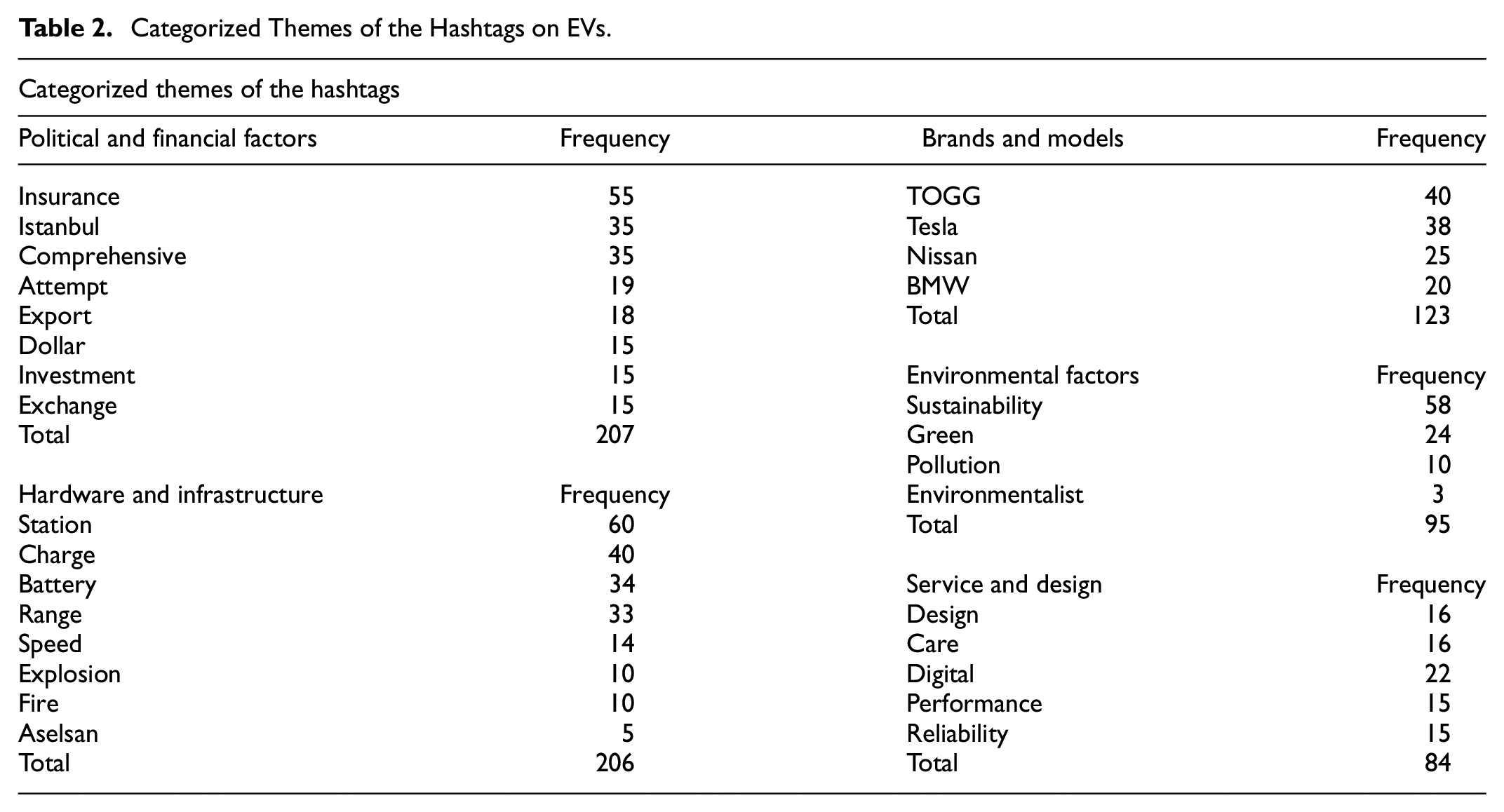
Upon scrutinizing the hashtags within the dataset obtained for this study, it has been established that the categories of “Hardware and Infrastructure” and “Political and Financial Factors” occupy the top two positions, each representing approximately 29% of the dataset. This finding resonates with the outcomes derived from the thematic analysis conducted on the posts. Conversely, while discussions about “Brands and Models” are relatively infrequent in the post content, they are more commonly employed as tags, accounting for 17% of their usage. The topics of “Environmental Factors” and “Service and Design” are comparatively less explored, constituting 13% and 12% of the discussion, respectively, as illustrated in Figure 4.

Thematic analysis of the hashtags.
The “related hashtags” analysis reflects the diverse elements comprising discussions on EVs across social media platforms. From technical intricacies and brand preferences to broader environmental and economic considerations, this analysis furnishes a comprehensive perspective on the digital community’s prevailing sentiments, priorities, and concerns. Such insight is indispensable for stakeholders in the industry, policymakers, and academic researchers as they strive to advance the agenda of electric mobility. Table 2 presents the category analysis of hashtags alongside their corresponding frequencies.
Categorized Themes of the Hashtags on EVs.
Several notable themes emerged in discussions on EVs across social media platforms, reflecting diverse perspectives and considerations. On Facebook, the discourse encompasses the rapid growth of the electric vehicle market in Turkey, evidenced by a substantial increase in EV sales. Corporate entities such as TEB Arval actively promoting electric mobility through events like “The Way of the Future for Your Fleet: Electric,” highlighting the growing significance of EVs in corporate circles. Safety concerns regarding EV charging stations and vehicles are also addressed, emphasizing the need for a comprehensive adoption strategy. Allianz Turkey’s introduction of “Electric Vehicle Comprehensive Insurance” signifies proactive measures to support EV infrastructure. User experience, exemplified by real-world testing of the Hyundai Kona Electric, further enriches the discourse by providing practical insights.
Conversely, on Instagram, discussions revolve around personal experiences with EVs like the BMW i3S, highlighting features such as single-pedal driving and instant torque. Questions about the EV’s design, affordability, and infrastructure readiness indicate public interest in EV adoption. Collaborations between companies like Astor Energy and Siemens to expand charging infrastructure underscore efforts to address barriers to EV adoption despite concerns about high purchase prices and charging facilities. Debates on the eco-friendliness of EVs emphasize the need for a gradual transition and highlight the role of renewable energy sources in reducing emissions.
On platform X, localized efforts to promote sustainable transportation are exemplified by introducing new EV models like the “Adamini.” Global advancements in EV technology are showcased by unveiling vehicles like the IM Motors L6, highlighting superior performance and affordability. Tesla’s strategy of offering software-limited versions of its Model S and Model X reflects adaptability to diverse market demands. Collaborations between Petrol Ofisi and Borusan EnBW Enerji aim to bolster charging infrastructure, addressing concerns about charging accessibility. However, tax disparities for EVs raise equity concerns, necessitating a review of existing tax structures to alleviate burdens on EV owners. This analysis answers the fifth research question (R.Q.5. How do the categories and frequencies of hashtags associated with EV discussions on social media platforms mirror or diverge from the thematic analysis of posts, and what insights do they provide into prevailing sentiments and priorities?). Table 3. cites the five most mentioned content by platform.
The Five Most Mentioned Content by Platform.

Social media posts’ theme and sentiment analysis reveal a notable correlation with analyzing the most frequently referenced posts. Thematic analysis of the five most popular posts indicates a concentration of discussions on Hardware and Infrastructure, Political and Financial Factors, and Environmental Factors.
Among the fifteen most popular posts across all platforms, eight (six positive) focused on Hardware and Infrastructure, four (three positive) on Political and Financial Factors, and three (two optimistic) on Environmental Factors. Figures 5 and 6 present the Themes and Sentiments of the Five Most Mentioned Contents, providing further insights into the prevailing topics and sentiments within the discourse on electric vehicles.

Themes of the five most mentioned content.

Sentiments of the five most mentioned content.
Discussion
User Engagement and Sentiment Analysis
The high level of user engagement with EV-related posts on social media platforms, as evidenced by the significant number of interactions, underscores the growing interest and importance of electric mobility within the Turkish digital discourse. The substantial number of shares and likes indicates the content’s relevance and relatability and users’ willingness to participate actively in discussions about EVs. This extensive engagement suggests a positive reception of EV-related content among social media users, aligning with the findings of the sentiment analysis, which revealed that most posts exhibited a positive sentiment toward EVs (Afifah et al., 2023; Ashari et al., 2023). This widespread optimism and acceptance of EV technology among Turkish social media users signify a promising outlook for the future of electric mobility in Turkey.
Platform Distribution
The non-uniform distribution of EV-related posts across different social media platforms highlights the varying levels of engagement and depth of conversation concerning EVs within the Turkish digital landscape. Facebook emerged as the most dominant platform for EV discussions, followed by Instagram and X (Cho, 2021). This distribution reflects the preferences and behaviors of Turkish social media users, with Facebook serving as the primary hub for discussions, debates, and dissemination of information about EVs. The substantial engagement on Facebook underscores its influential role in shaping and reflecting public sentiment regarding EVs. Despite its primary focus on visual content, Instagram’s significant contribution to the EV discourse emphasizes the platform’s relevance as a secondary source of EV-related discussions. Conversely, while integral to the research, X had a relatively minor contribution, suggesting a comparatively limited involvement in the EV conversation. These findings highlight the importance of platform-specific strategies when engaging with audiences and disseminating information about EVs in Turkey.
Emotional Analysis
The emotional analysis of EV-related posts revealed a predominant positive sentiment among Turkish social media users, with most posts expressing optimism and appreciation toward EVs. This positivity may stem from favorable experiences, perceived benefits, or alignment with personal values or beliefs regarding sustainability and environmental responsibility (Ashari et al., 2023). However, it is essential to acknowledge the presence of negative sentiments expressed in a minority of posts, which indicate areas of concern or reservations that may need to be addressed. While the prevalence of positive sentiments is encouraging, understanding and addressing the underlying concerns expressed by the minority is crucial for fostering a more inclusive and informed discourse on electric mobility in Turkey.
Context Analysis
The comprehensive context analysis provided valuable insights into the multifaceted discussions surrounding EVs on social media platforms (Cho, 2021). The analysis revealed diverse themes, including hardware and infrastructure, political and financial factors, environmental considerations, service and design, and brands and models (Sachan et al., 2020). The prominence of discussions related to hardware and infrastructure underscores the importance of charging infrastructure, battery technology, and vehicle performance in shaping public perceptions and attitudes toward EVs. Political and financial factors, such as policy incentives and affordability, emerged as significant determinants of EV adoption, reflecting the influence of external factors on consumer decision-making (Bryła et al., 2022). Environmental considerations highlighted the role of EVs in mitigating climate change and promoting sustainability, emphasizing the alignment of EV adoption with broader environmental goals. Discussions related to service and design and brands and models provided insights into consumer preferences and priorities, indicating diverse considerations beyond technical specifications. These findings underscore the complexity of the EV narrative and the need for holistic approaches to address the various factors influencing public perceptions and attitudes toward electric mobility in Turkey.
Hashtag Analysis
Analyzing related hashtags associated with EV discussions further elucidated the Turkish digital community’s prevailing sentiments, priorities, and concerns. The categories of hardware and infrastructure and political and financial factors emerged as the most frequently referenced themes, reflecting the significance of these topics in the EV discourse. Discussions surrounding hardware and infrastructure underscored the importance of charging infrastructure and technological advancements in driving EV adoption (Hamdare et al., 2023). At the same time, political and financial factors highlighted the role of policy incentives and affordability in shaping consumer behavior (Jaiswal et al., 2021). The relatively lower frequency of discussions related to environmental factors, service and design, and brands and models suggests an increased emphasis on these aspects to promote a more comprehensive understanding of electric mobility among Turkish social media users (Li et al., 2021). Overall, the hashtag analysis provided valuable insights into the thematic priorities and discussions surrounding EVs on social media platforms, offering guidance for stakeholders in the industry, policymakers, and researchers as they seek to advance the agenda of electric mobility in Turkey.
Positive Sentiment and Platform Influence on EV Discourse
The current study’s findings align with previous research, indicating a positive sentiment toward EVs among social media users and the significant role of platforms like Facebook in shaping public discourse on EVs (Krishna, 2021; Sathyan et al., 2023). Similar to previous studies that emphasized the importance of incentives and environmental motivations in driving EV adoption, this study identified a prevalent optimism and acceptance of EV technology among Turkish social media users (Axsen & Kurani, 2013; Breschi et al., 2020; Egbue & Long, 2012; Sierzchula et al., 2014). However, this study adds to the existing literature by examining the Turkish context, providing insights into the factors influencing public perceptions and attitudes toward EVs in Turkey. Despite variations in platform distribution and thematic priorities, the findings corroborate previous research highlighting the importance of hardware and infrastructure, political and financial factors, and environmental considerations in shaping public discourse on EVs.
The high level of user engagement and positive sentiment toward EVs observed in the study can be attributed to several factors (Singh et al., 2020). The growing awareness of environmental issues and the need for sustainable transportation solutions likely contributed to the positive reception of EVs among Turkish social media users. Additionally, the active involvement of corporate entities and policymakers in promoting EV adoption through incentives and infrastructure development may have bolstered public confidence in EV technology. The non-uniform distribution of EV-related posts across different platforms can be attributed to platform-specific preferences and demographics. Facebook is the primary hub for EV discussions due to its extensive user base and engagement metrics. However, the relatively limited involvement of X suggests a need for further investigation into the platform’s role in shaping public discourse on EVs in Turkey.
Theoretical and Practical Implications
The study’s findings contribute to theoretical understanding in the field by highlighting the importance of social media in shaping public perceptions and attitudes toward EVs. The study offers insights into the complex dynamics of digital discourse surrounding EVs in Turkey by comprehensively analyzing user engagement, sentiment, and thematic priorities across different platforms. The findings underscore the need for a nuanced understanding of EV adoption factors, including hardware and infrastructure, political and financial factors, and environmental considerations. This contributes to developing theoretical frameworks that account for the multifaceted nature of public engagement with electric mobility.
The practical implications of the findings are manifold, particularly for stakeholders such as policymakers, practitioners, and industry professionals involved in promoting EV adoption in Turkey. Turkish social media users’ widespread optimism and acceptance of EV technology highlight the potential for targeted communication strategies to enhance public awareness and engagement with EVs. Additionally, identifying thematic priorities such as hardware and infrastructure, political and financial factors, and environmental considerations can inform policy decisions and industry initiatives to address barriers to EV adoption. Furthermore, the findings emphasize the importance of platform-specific approaches in engaging with diverse audiences and disseminating information about EVs effectively.
Limitations and Future Directions
Despite its contributions, it is essential to acknowledge the study’s limitations. The reliance on limited social media data introduces potential biases related to sample representativeness and data reliability. Moreover, the focus on a specific demographic may limit the generalizability of the findings to broader populations. Furthermore, the reliance on automated sentiment analysis techniques may not accurately capture the full spectrum of user sentiments. Future research should address these limitations by employing diverse methodological approaches and expanding the scope of analysis to include a more varied range of platforms and user demographics.
Future research endeavors should address the limitations by employing diverse methodological approaches and expanding the scope of analysis to include a wider range of platforms and user demographics. Building upon the study’s findings, future research could explore additional factors influencing public perceptions and attitudes toward EVs, such as cultural norms, societal values, and individual preferences. Longitudinal studies tracking changes in social media discourse over time could provide valuable insights into the evolution of public sentiment toward EVs and the effectiveness of interventions promoting EV adoption. Comparative studies across different countries or regions could elucidate cross-cultural variations in the digital discourse surrounding EVs and inform global strategies for advancing electric mobility. By addressing these avenues for future research, scholars can further enhance the understanding of the complex dynamics of public engagement with electric mobility.
Conclusion
This study sheds light on public sentiment toward EVs in Turkey through a comprehensive analysis of social media discourse. The findings reveal a pervasive positive sentiment among Turkish social media users toward EVs, underscoring a promising attitude toward EV technology and its potential societal benefits. The high level of user engagement observed underscores the importance of tailored communication strategies and targeted policy interventions in fostering EV adoption and advancing sustainable transportation solutions within Turkey.
The study’s practical implications are manifold. Stakeholders promoting electric mobility can leverage Turkish social media users’ optimistic outlook toward EVs to craft effective communication campaigns and policy initiatives to increase awareness and adoption. By addressing concerns and highlighting the benefits of EV technology, policymakers, industry professionals, and advocacy groups can play a pivotal role in shaping public perceptions and attitudes toward electric mobility in Turkey.
This study contributes to theoretical understanding in the field by highlighting the role of social media in shaping public perceptions and attitudes toward EVs. By conducting a nuanced analysis of user engagement and sentiment, insights are offered into the complex interplay of factors influencing the adoption of electric mobility solutions in Turkey. Furthermore, the findings underscore the need for a holistic approach to promoting EV adoption, considering factors such as hardware and infrastructure, political and financial incentives, and environmental considerations.
Fostering a more inclusive, informed, and sustainable discourse on electric mobility will help create a greener and more resilient future for all. This study serves as a stepping stone toward understanding and addressing the challenges and opportunities associated with the transition to electric vehicles in Turkey and beyond. Moving forward, collaborative efforts between researchers, policymakers, industry stakeholders, and civil society are essential for realizing the full potential of electric mobility and driving toward a more sustainable transportation ecosystem.
Footnotes
Declaration of Conflicting Interests
The author declared no potential conflicts of interest with respect to the research, authorship, and/or publication of this article.
Funding
The author received no financial support for the research, authorship, and/or publication of this article.
Ethical Approval
Since no studies have been conducted on humans or animals within the scope of the research, an ethical approval process is not required.
I accept that this study is an original research article prepared using scientific, ethical rules, and the scientific method; it has not been published or presented in any other journal.

Data Availability Statement
Data sharing does not apply to this article as no datasets were generated or analyzed during the current study.