



Abstract
Caregiver support is necessary for many long-term ill or disabled people to enable them to live at home. However, the impact of this care relationship on the caregiver is still partly unknown. This article focuses on the process of achieving personal growth in spousal caregiving. The aim of our study was to conduct an integrative literature review to describe the aspects associated with achieving personal growth as well as to analyze the relationship between the aspects involved. The thematic analysis method was used with inductive content classification to modify the themes. The analysis highlighted three main aspect categories connected with achieving personal growth: the means, coping styles, and personal or caregiving resources. In addition, the path from adversities and challenges towards personal growth and positive experiences in spousal caregiving was revealed by analyzing the relationship between the identified aspects. We found that the means, based on social support and self-care, help caregivers to adopt positive coping strategies, reframing, and resilience, which are associated with achieving personal growth. Also, personal or caregiving resources, such as meaningful caring experiences, religiosity, and spirituality, hope, positive personality characteristics, family functioning, and disease severity of the care recipient, were associated with achieving growth. Finally, our findings suggest that it is important to further study the path towards personal growth in spousal caregiving and to find the best possible ways to support caregivers in difficult moments and periods of caregiving.
Plain language summary
Caregivers help many long-term ill or disabled people to live at home. In this article our we aim is to clarify how the spouse caregivers achieve personal growth. Our research was an integrative literature review and based on 25 research articles. In our research we described the aspects associated with achieving personal growth. We also analyzed the relationship between the aspects involved. The analysis highlighted three main categories connected with achieving personal growth. These were the means, coping styles, and personal or caregiving resources. In addition, we described the path from adversities towards personal growth in spousal caregiving. We found that social support and self-care are important for caregivers to adopt positive coping styles, reframing, and resilience. Also, personal or caregiving resources, such as for example meaningful caring experiences, hope, and disease severity of the care recipient, were associated with achieving growth. Family members and friends, as well as professionals such as nurses, doctors, social workers, and therapists, can help caregivers to successfully confront adversities. Finally, it is important to further study the path towards personal growth in spousal caregiving and to find the best possible ways to support caregivers in difficult moments of caregiving.
Keywords
Background
Many people who have a long-term disease or disability can live at home with the support of a caregiver. Often, caregivers themselves are older and care for their old spouses. Previous research has shown that there has been a considerable number of studies concerning the strain and burden experienced by caregivers (Mackenzie & Greenwood, 2012; McLennon et al., 2011). However, gradually positive experiences, such as personal growth, have received more attention in research (Mackenzie & Greenwood, 2012).
Quite often, informal caregivers are forced into providing care, and their positive or negative interpretation of the current situation has an influence on their own as well as on the care recipient’s well-being. This article is based on the concepts of personal growth and post-traumatic growth as well as on the ideas of positive psychology, which highlight the positive aspects of life events instead of merely the negative consequences (e.g., Fredrickson, 2001; Fredrickson & Cohn, 2010; Seligman, 2002, 2011). Folkman (2008) underlined that positive emotions have essential functions in the stress process. We propose that spousal caregiving is a challenging life situation that can, at best, produce experiences of personal growth through the processing of both negative and positive emotions.
In this article, the concepts of personal growth and post-traumatic growth are considered concurrently, and literature searches conducted have partly the same results, regardless of which of these two concepts is used as a search keyword.
In an earlier literature review, we studied interpretations of the experiences of personal growth in spousal caregiving research (Autio & Rissanen, 2020). The review indicated that personal growth is a comprehensive concept and is manifested as experiences such as valuing human contacts and life, finding new skills, and feeling one’s own strengths and confidence in personal coping. Human relations are generally felt to be important and meaningful, which leads to compassion towards other people as well as positive caregiving experiences. Also, one’s perspective on death can change to being seen as a normal part of life. Growth may also mean changing goals in life or finding more positive aspects in life. For example, Tedeschi and Calhoun (1996) studied this phenomenon and formally conceptualized it as post-traumatic growth (PTG), which refers to a positive self-change experienced by individuals in coping with major life crises. Growth does not mean returning to the basic state but rather reaching a better permanent state (Tedeschi & Calhoun, 2004).
In this article, the focus is on how this positive change occurs. In our previous research review, we clarified the concept of personal growth, and based on that, we concluded that more research is needed on the process and means of achieving personal growth (Autio & Rissanen, 2020). The purpose of this review article is to describe the social and emotional aspects associated with achieving personal growth in spousal caregiving as well as to analyze the relationship between these aspects and personal growth. In our review study, we accepted that there is a large variation in the included studies. Our approach was exploratory and based on a meta-analysis of the selected articles and the answers they provide to our research tasks. The content of this article has both theoretical and practical applications. Theoretically, the article aims to gather current research results to clarify what kind of perception is formed about the themes addressed in research tasks. Practically, the aim is to gather information on support for caregivers who are going through the difficult moments of caring and, at the same time, attempting to achieve personal growth.
Family caregiving is seen as an important way to produce valuable and humane care in the care system. Caregiving is also crucial for the social and health sector as well as for the wider society (Eurocarers, 2009; Ministry of Social Affairs and Health, 2014). In many countries, the health and social sector is suffering from a serious personnel shortage (McGrath, 2021), and it is therefore necessary to find new ways of supporting family caregivers in facing their everyday challenges and being able to give care at home. Consequently, there is a need for knowledge of the best means for reducing personal suffering. In addition, knowledge that relates to the increased well-being of caregivers is also needed.
In the following sections, we first clarify the research tasks and the process of the integrative literature review and analysis. Next, we present the results of the literature analyses in respect to the research tasks. Finally, the results are discussed with the support of additional research literature.
Research Tasks and Literature Review
Based on the assumptions of previous studies, the specific research tasks of this review article are as follows:
To describe the aspects associated with achieving personal growth in spousal caregiving.
To analyze the relationship between these aspects and personal growth in spousal caregiving.
In the review, we especially focused on the social and emotional aspects related to the research tasks. This article was based on electronic literature search conducted in October 2021. The starting point of the time span was based on the accumulation of sufficient material for the review. The search keywords used were personal growth, post-traumatic growth, and spouse caregiver.
Other search criteria were as follows: (a) peer-reviewed articles; (b) articles published from January 1, 2019 to October 31, 2021; (c) articles published in the English language; and (iv) full-text articles. The electronic searches were conducted in the following databases: EBSCOhost EJS, Scopus, Web of Science, IngentaConnect Journals, Social Sciences Citation Index (Web of Science), Ovid Full Text Journals, Academic Search Premier, DOAJ Directory of Open Access Journals, Social Science Premium Collection, Science Citation Index Expanded (Web of Science), SpringerLink Contemporary, Taylor & Francis Online 2020—CAUL, Sociological Abstracts, Free Medical Journals, Wiley Online Library All Journals, ScienceDirect Journals, Wiley-Blackwell Full Collection, PubMed Central, Publicly Available Content Database, and Taylor & Francis: Master.
The purpose was to find the latest research for the review. These searches generated a total of 174 article returns, of which 62 addressed expressions of aspects of achieving growth or positive experiences. Articles that did not clearly target the analysis and description of aspects or means of achieving personal growth or positive experiences in caring were excluded. In total, 25 articles were found to be valid for analysis and review. In some studies, positive experiences were discussed in the context of personal growth, and in the analysis, these were interpreted as a part of the personal growth. The search process is described in detail in Figure 1.
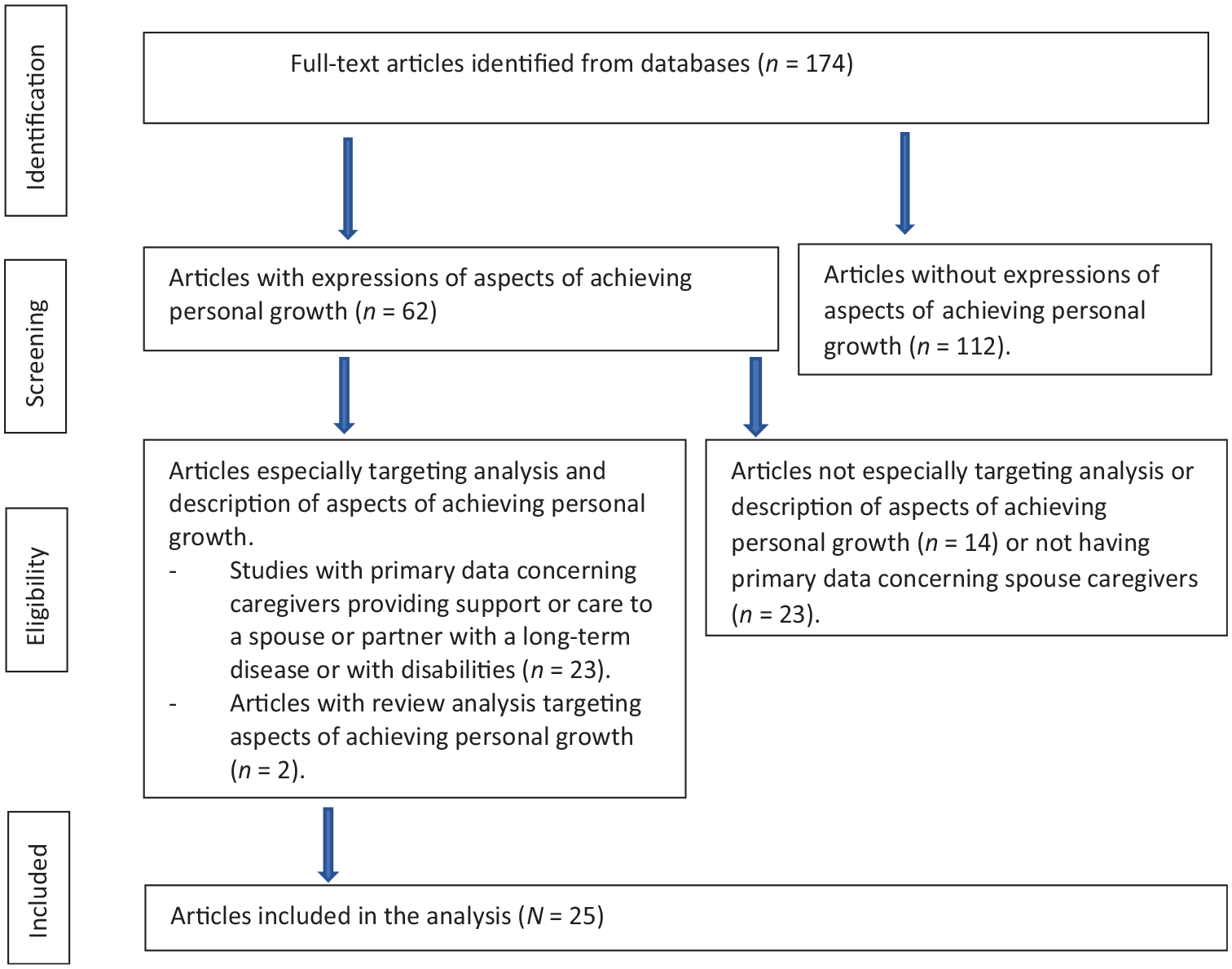
The search process for the review.
Data and Analysis Method
All articles, according to the search process, were included in the research material. Our study was not a systematic literature review, and it was accepted that there was a large variation in the included studies. The quality of the studies was not evaluated per se, and the research applied a narrative approach. This type of approach was specific and based on a meta-analysis of the selected articles and the information they provide. The selected articles of our review are listed in Supplementary Table 1. The articles were geographically published as follows: USA (6/25), China (5/25), China and USA (1/25), China and Thailand (1/25), Japan (1/25), Europe (4/25) (the Netherlands, Poland, Spain), Spain and Colombia (1/25), Australia (1/25), India and UK (1/25), Taiwan (1/25), Iran (1/25), Turkey (1/25), and Indonesia (1/25).
The reasons for the caring relationship in the articles varied: n = 8 focused on memory disorder, n = 10 on cancer, n = 5 on schizophrenia, and n = 2 on other diseases. The caring relationship of the review articles focused on memory disorder (57 studies) and cancer (26 studies). While we were studying personal growth, it is understandable that such disease groups as cancer and schizophrenia were common in the data. The method of data collection deployed in the articles consisted of interviews (n = 6), surveys/questionnaires (n = 13), writing (n = 1), interviews and questionnaires (n = 1), and mixed methods (n = 2). The two review articles returned featured mixed methodologies. The versatile methods diversified the information produced by the articles.
The analysis method in this review was thematic analysis of the included articles. Inductive content classification was used to identify the themes. For the first research task, we identified and classified the aspects associated with achieving personal growth. These aspects were based on the main results described in the articles. We named the aspect categories as means, coping styles, and personal or caregiving resources. There was an overlap between the categories, but by naming them, we highlighted the focus of the category. The means category focused on means that increased caregivers’ experiences of achieving personal growth or positive experiences (Table 1). The category of coping styles focused on the orientation of caregivers in achieving personal growth (Table 2). Finally, the personal or caregiving resources category focused on other aspects associated with achieving personal growth (Table 3).
The Means Associated With Achieving Personal Growth in Spousal Caregiving.
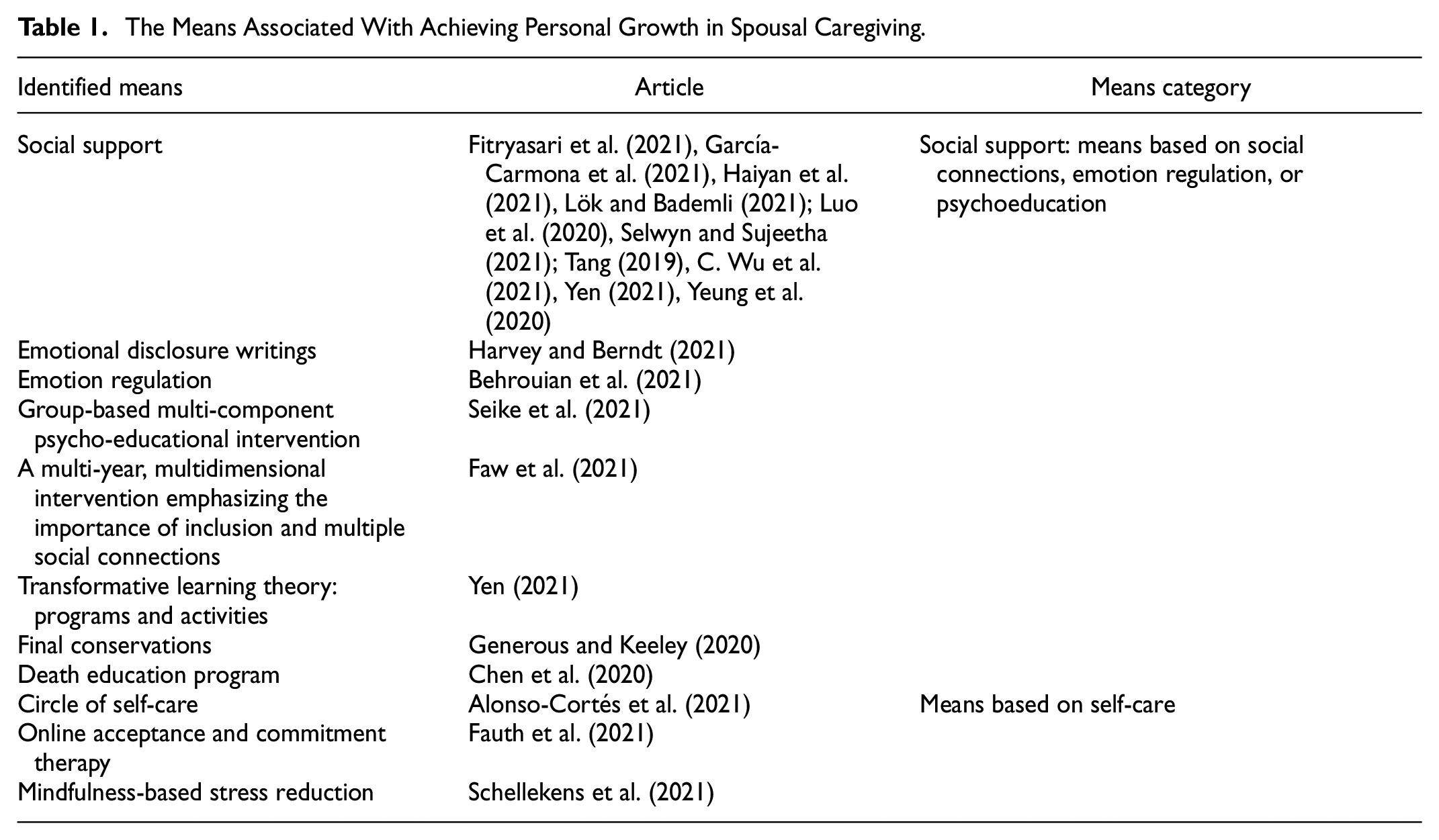
Coping Styles Associated With Achieving Personal Growth in Spousal Caregiving.
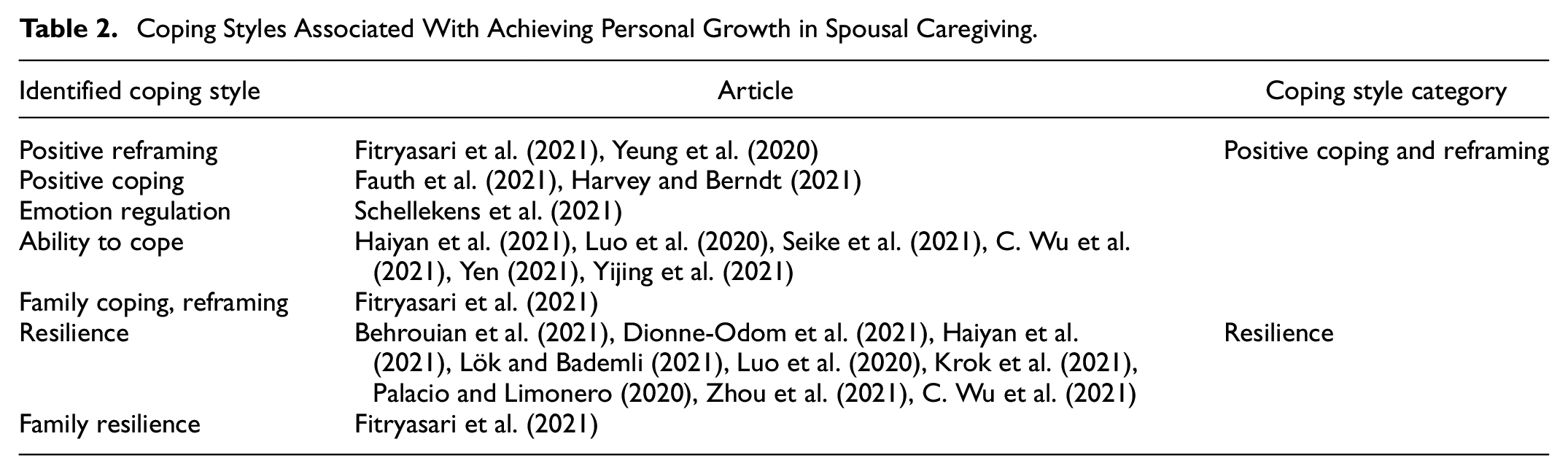
Personal or Caregiving Resources Associated With Achieving Personal Growth in Spousal Caregiving.

For the second task, we analyzed the relationship of previous aspects with personal growth. For this purpose, we used the figures in the data (Fitryasari et al., 2021; Luo et al., 2020; Selwyn & Sujeetha, 2021; C. Wu et al., 2021; Yeung et al., 2020; Yijing et al., 2021; Zhou et al., 2021). Three articles offered a comprehensive figure (Luo et al., 2020; Zhou et al., 2021; C. Wu et al., 2021) which described the entire process of achieving personal growth. The figures in other articles were based on correlational analyses focusing on certain parts of the process. We created a summary figure by using comprehensive figures as well as figures based on correlational analyses (Figure 2). The summary figure was also complemented by the results of the inductive content analyses of the articles. The summary figure was named as the path towards personal growth in spousal caregiving.

Elements of the path towards personal growth in spousal caregiving.
The consensus on the results of the review was reached through a common process adopted by all three researchers. The preliminary themes and aspects of the inductive phase were discussed together, and based on the discussion, a common vision was reached for the categorizing and the naming of the themes and aspects. A similar process was repeated for the second research task. First, a sketch was made to describe the process, and it was refined based on a joint discussion.
Results
Aspects Associated With Achieving Personal Growth
The analysis highlighted three main aspect categories: means, coping styles, and personal or caregiving resources as part of personal growth. The research approach was narrative, and aspects based on the results which were obtained from the articles.
Means
The articles introduced several studies of means that increased experiences of achieving personal growth in caregiving (Table 1). These were categorized as means based on social support and on self-care. Overall, it could be said that these means make it possible for caregivers to adopt positions of positive coping, positive reframing, or resilience. They also make it more possible for the caregiver to confront and manage challenging and heavy emotions and to go through moments of adversity and achieve experiences of growth or positive experiences in caregiving.
Social Support
In many articles of our review, social support was introduced as a means which was associated with personal growth or the positive experiences of spouse caregivers. Social support can be provided by relatives, acquaintances, and professionals. It can be realized in everyday life, in counseling, or in special group or individual sessions of caregivers. Articles also introduced means based on emotion regulation, such as allowing and accepting difficult thoughts and feelings, finding positivity, reducing depression, and improving self-appraisal and coping skills. Family members and friends, as well as professionals such as nurses, doctors, social workers, and therapists, can be sources of social support for caregivers. Professional social support is an important part of holistic caregiver support (Tang, 2019).
Selwyn and Sujeetha (2021) noticed in their study of 75 caregivers of patients with schizophrenia that both perceived social support and hope significantly predicted the caregivers’ reward perception. In Luo et al.’s (2020) study, it was also discovered that post-traumatic growth was positively associated with resilience, social support, and a positive coping style.
According to García-Carmona et al. (2021) caregivers who obtained support from family members, friends, or medical staff reported lower levels of depression. In their study of 67 informal caregivers of cancer patients it was shown that anxiety, depression, and perceived emotional support were related to quality of life. They suggest that, as care is prolonged, perceived emotional support is more important because the need to express emotions to other people increases due to the changes that adaptation to the disease requires.
In Harvey and Berndt’s (2021) study, 22 caregivers of cancer patients submitted emotional disclosure writings. The researchers discovered that all of the areas of post-traumatic growth tended to arise because of socially dependent processes, signifying the relevance of social connections in the raising of PTG. Also, Lök and Bademli (2021) found in their study concerning caregivers of schizophrenia patients that resilience and perceived social support were positively and significantly correlated. An emotion regulation training group of schizophrenia patients’ caregivers was discovered to be an effective means of support. According to the results of Behrouian et al.’s (2021) study, cognitive and metacognitive skills of emotion regulation can be used for increasing the psychological well-being of caregivers. It’s likely that an increase in the mental well-being and resilience of caregivers can help them better manage the challenging situations in daily caregiving.
Our analysis revealed that some programs had multiple effects for caregivers of dementia patients (e.g., Faw et al., 2021; Seike et al., 2021). In the study of Seike et al. (2021), a group-based multi-component psycho-educational intervention was found to reduce depression, improve self-appraisal, and enhance coping skills in caregivers of dementia patients. Faw et al. (2021) explored the psychosocial outcomes experienced by dementia caregivers who participated in a multi-year, multidimensional intervention aimed at promoting the well-being of the caregiver and the care recipient. Across 3 years of participation, caregivers reported, for example, relationship building with other participants, as well as within the broader community, and experiencing positive emotions during the program.
In some studies, the aim was to find a means for caregivers coping with the death of a family member (e.g., Chen et al., 2020; Generous & Keeley, 2020; Tang, 2019). The purpose of Chen et al.’s (2020) study research was to study the effectiveness of a structured death education program both for older people with chronic illness and for their family caregivers. They found that the program improved death attitudes, death competence, as well as patient satisfaction. The study emphasized the importance of palliative care, introduced the benefits of death education in hospitals and created an implementation plan for nursing professionals. Tang’s (2019) research concerning caregivers of terminally ill cancer patients found that both formal support and informal social support are important for emotional needs of caregivers. Emotional support affirms the valuable contributions of caregivers and supports them in finding positive meaning in their experiences. The research found also that oncology social workers have a significant role in helping caregivers manage the multiple emotional and other burdens and demands they face during the caregiving process.
In the study of Generous and Keeley (2020), a total of 236 individuals who had previously engaged in final conversations (FCs) with a deceased loved one participated in an online survey. In the study it was found significant, positive connections between the six FC factors (i.e., messages of love, messages of spirituality/religion, messages of identity, everyday talk and routine interactions, difficult relationship talk, and instrumental death talk) and the post-traumatic factors.
Self-Care
Taking care of oneself has also been associated with personal growth or the positive experiences of spouse caregivers. The needs of the care receiver often dominate the caregiver’s life. Thus, it is especially important for caregivers to learn how to take care of themselves. For example, Alonso-Cortés et al. (2021) studied the caregivers of relatives with dementia and found “that greater involvement in self-care is related to higher psychological well-being, which in turn is related to greater self-care.” Thus, they found, there exists a circle of self-care.
Fauth et al. (2021) described how acceptance and commitment therapy (ACT) decreased for example depressive symptoms and burden and increased the positive aspects of caregiving and quality of life. Also, Schellekens et al. (2021) studied the effects of mindfulness on the grieving process of partners of deceased lung cancer patients. Their findings showed that mindfulness helped partners to deal with difficult thoughts and feelings, encouraged partners to take loving care of themselves, and gave them faith in the future.
Coping Styles
Based on the analysis, we found that coping styles, including positive coping and reframing, as well as resilience as an orientation of caregivers, were associated with achieving personal growth (Table 2).
Some studies of our review analyzed the association of positive coping styles to personal growth (Haiyan et al., 2021; Luo et al., 2020; C. Wu et al., 2021; Yen, 2021; Yijing et al., 2021), and the phrase of positive reframing was raised (Fitryasari et al., 2021; Yeung et al., 2020). Positive reframing can be interpreted as a positive coping style and as a means for creating a positive perception of stressors (Fitryasari et al., 2021). In Yeung et al.’s (2020) research, the connection of positive reframing to post-traumatic growth was studied through research on 176 husbands of breast cancer survivors. It was noticed that positive reframing was only associated with higher post-traumatic growth among those with a higher caregiving burden.
Positive coping styles were defined in the research of Yijing et al. (2021) by the positive dimension in the Simple Coping Style Questionnaire. The dimension was assessed by many questions that addressed issues such as seeking social support and advice from families, friends, and relatives, learning from others’ experiences, changing negative thoughts, and taking a positive view of stress. Also, self-controlling hopelessness, sadness, and anger and participating in physical and recreational activities were assessed in the questionnaire (Y. Wu et al., 2020, C. Wu et al., 2021; Xie, 1998).
Yijing et al. (2021) mentioned that positive coping strategies are important mediating factors between family functioning and post-traumatic growth. C. Wu et al. (2021) studied the post-traumatic growth of the caregivers of 365 schizophrenic patients and found both the simple and more complex mediative roles of positive coping style and resilience in the relationship between social support and post-traumatic growth. It was earlier noticed in the research by Luo et al. (2020) concerning 314 caregivers of cancer patients, that post-traumatic growth was positively associated with resilience, social support, and positive coping style. The researchers articulated that a positive coping style and resilience had intermediary roles between social support and post-traumatic growth.
In the integrative review of Haiyan et al. (2021) concerning spousal caregivers of cancer patients, the authors noted that resilience plays a key role in promoting positive adaptation despite adversity.
It's understandable that coping styles are connected to resilience. Resilience is the process and outcome of successfully adapting to difficult or challenging life experiences. It can be described as a “bounce back” or return to prior or normal functioning after facing difficulties in life (Chesler, 2004). Resilience can be specified as a positive adaptation despite adversity, and the concept is close to positive reframing or coping. Resilience contains thoughts, behaviors, and actions that anyone can learn, and it is not a permanent personality trait that one either has or does not have (see American Psychological Association, n.d.; Farran, 1991).
Dionne-Odom et al. (2021) studied 112 family caregivers of patients with newly diagnosed advanced cancer. The researchers found that resilience may be important for the abilities of caregivers to manage stress and tasks of caregiving and to be a source of support to patients. Fitryasari et al. (2021) introduced the family resilience model, which focuses on family strength. The researchers describe how stimulating family strength increases family resilience. The model also describes how the process of family stress management (called reframing) helps create a positive perception of stressors. In particular, families can recover from stressful situations, and it’s possible for professionals to help families transform their perceptions of stressors.
Krok et al.’s (2021) study of 241 cancer spouse caregivers found that hope mediated the association between the religious meaning system and resilience. Specifically, they found, that the religious meaning system was connected to higher hope, which again was connected to a higher level of resilience. The researchers also explored the critical role of goals and goal-directed behavior in adapting to challenges.
A scoping review by Zhou et al. (2021) investigated dementia caregivers. The researchers presented a comprehensive model of dementia care partners’ resilience that included four components. These were adversity in caregiving, internal and external resources, a process through which care partners utilize the internal and external resources to overcome the challenges, and outcomes related to the adversity and to the personal growth.
To sum up, we found, that coping styles, including positive coping, and reframing, and resilience were partly overlapping concepts. The focus in positive coping was on a holistic view for coping measures promoting positive conclusions when facing stressors and challenges. Reframing focused on creating a positive perception of the stressors and challenges and finally the focus of resilience was on an orientation style when confronting adversities.
Personal or Caregiving Resources
The articles introduced several other aspects, which were categorized as personal or caregiving resources (Table 3). These included meaningful caring experiences, religiosity and spirituality, hope, positive personality characteristics, family functioning, and disease severity of the care recipient, among others.
The analysis of the research of Palacio and Limonero (2020) on family caregivers of patients with advanced oncological illness showed that as resilience, spirituality, and the positive aspects of care increased, so did post-traumatic growth. The research described how promoting the recognition of advantages in caregiving, the value of resilience, and the identification of meaning of the caregiving can be protective aspects. These aspects favor adaptation and reduce negative moods. Hope has been found to predict reward perception and have a connection to resilience of caregivers (Krok et al., 2021; Selwyn & Sujeetha, 2021).
When the caregivers feel that caring is meaningful, it is obvious that this has a positive effect on the handling of the challenges in caring as well as the strategies of coping. The review of Haiyan et al. (2021) proposed that resilience was associated with positive personality characteristics, such as self-efficacy, self-confidence, and self-esteem.
In the survey of Yijing et al. (2021) for 124 caregivers of dementia patients, it was indicated that positive coping strategies are important mediating factors between family functioning and post-traumatic growth. Additionally, the researchers described that the gender of the caregiver, the relationship with the patient, and the disease severity are predictors of post-traumatic growth. In the study of Yeung et al. (2020) it was also discovered that higher caregiving burden, marital satisfaction, challenge appraisal, and social support seeking were associated with higher post-traumatic growth.
The Path Towards Personal Growth
We have introduced several aspects connected to achieving personal growth and positive experiences in caregiving. Positive coping, reframing meaning-focused coping, and resilience make it possible to experience growth and positive experiences. The relationship between the identified aspects and personal growth is described in Figure 2. For this, we used the figures of seven articles featured in our data to create a summary figure (Fitryasari et al., 2021; Luo et al., 2020; Selwyn & Sujeetha, 2021; C. Wu et al., 2021; Yeung et al., 2020; Yijing et al., 2021; Zhou et al., 2021). We complemented the summary figure with the results of the inductive content analyses and described the path towards personal growth in spousal caregiving.
Adversities and challenges are usual in the life of spouse caregivers, and difficulties in caring, loneliness, and experiences of loss are common. According to the results of the review, positive coping, resilience, and positive reframing are associated with achieving personal growth (e.g., Fitryasari et al., 2021; Haiyan et al., 2021; Luo et al., 2020; C. Wu et al., 2021; Yijing et al., 2021). We describe these elements as coping styles. In addition, certain aspects, which are described as personal and caregiving resources, are associated with achieving personal growth. Both the coping styles and the personal and caregiving resources can also act as mediating aspects on the path towards personal growth (see e.g., Haiyan et al., 2021; Palacio & Limonero, 2020; Yeung et al., 2020).
The means identified from the articles are also described in Figure 2. These means help caregivers adopt positive coping strategies, reframing, and resilience. It seems that social support is a crucial means when attempting to attain positive coping and reframing (see e.g., Fitryasari et al., 2021; Harvey & Berndt, 2021; Lök & Bademli, 2021; Selwyn & Sujeetha, 2021). Social support can derive from either formal or informal sources and from family members, friends, and professionals (Tang, 2019). They can give advice to caregivers in challenging situations and help them to overcome their negative thoughts and achieve a positive view and self-adjustment in times of stress (Yen, 2021). Social support also has a positive connection to resilience (Luo et al., 2020; C. Wu et al., 2021), as family members and professionals can empower caregivers and help them bounce back when confronting challenges in caring. Good relationships with family members, spouses, and friends understandably influence social support (Fitryasari et al., 2021; Yeung et al., 2020). However, professionals also have an important task in encouraging caregivers to take care of themselves and regulate their emotions as well as preparing them to successfully cope with the inevitable adversities they will face.
Self-care is also an important aspect of the path towards personal growth. In the study of Alonso-Cortez et al. (2021), it was found that caregivers who were highly involved in self-care got higher scores on purpose in life and personal growth survey scales.
Hope has been found to predict reward perception and has a connection to the resilience of caregivers (Krok et al., 2021; Selwyn & Sujeetha, 2021). When caregivers feel that caring is meaningful, it is obvious that this has positive effects for handling challenges in caring, as well as developing and adopting strategies of coping. As earlier presented resilience and the identification of the meaning of the caregiving experience can be considered protective aspects which favor adaptation and reduce negative moods (Palacio & Limonero, 2020).
Our analysis produced a holistic view of the process of how the spouse caregiver can experience personal growth. This view emphasizes the social support of the caregiver and taking care of their own well-being. It is important for professionals to maintain a dialogue and emotionally supportive methods with caregivers. From the point of view of society, it is important to make sure that, in addition to the support system, the necessity of emotional support for family care is understood and that resources are allocated to it.
Limitations and Quality of the Study
Certain aspects should be taken into consideration in the quality assessment of this literature review (see Petticrew & Roberts, 2006). First, the two research tasks were defined to achieve the purpose of the study. Based on these tasks, we determined the keywords and databases through which the search for data was conducted, along with certain inclusion criteria. For example, only refereed articles were included, but the method of analysis employed in the reviewed articles was not a criterion for inclusion or exclusion. The search data contained 174 articles from the new research.
After that, we narrowed down the returns with the help of more detailed inclusion and exclusion criteria. This phase insured the identification of 25 articles highly relevant to the research purpose. All results, according to the search process, were included in the research material. Our goal was a meta-analysis of existing research and examining the multidimensionality of the topic. The versatile methods diversified the information produced by the articles. In two articles, it was not possible to verify that the data contained experiences of spouse caregivers. However, the method for collecting the data, as well as the background information of the data in these articles, made it possible to conclude that the primary data also pertained to spouse caregivers.
The basic information of the research data is described in the tables included in this article. The research results were verified with references to the articles. It is possible that having English-language publications as an inclusion criterion might have led to some appropriate articles in other languages being overlooked. However, the research data collected was international and of sufficient depth, meaning that it can be assumed that a methodologically relevant degree of information was gathered. Furthermore, the searches used for the review succeeded in finding numerous articles during the time frame that was chosen. Moreover, our data were increased with two review studies, including 83 articles with highly multinational research data. This shows that the themes of the research are seen as important by the academic and professional communities and that the results have provided us with a good holistic picture of modern research conducted in the area of interest.
The research data were analyzed in detail, first using a content analysis approach and then proceeding to thematic analysis. Our aim was to produce a comprehensive picture of the phenomenon introduced by the research tasks. We were aware that empirical research would be valuable in testing the results and the path described in this research and would help to further verify and complement our results.
Discussion and Implications
In this review, we managed to address the theoretical and practical aims of the research. At the same time, the path towards personal growth was conceptualized, and the central points of the process were identified. The path that led from adversities and challenges towards personal growth and positive experiences in spousal caring was introduced. This path encompassed means, personal and caregiving resources, and certain coping styles.
To sum up, we found that through various means of social support, it is possible for the caregiver to adopt positions of positive coping, positive reframing, and resilience. Social and emotional support also makes it more possible for the caregiver to confront and manage challenging and heavy emotions and to successfully overcome moments of adversity. As well, means of self-care promote the caregiver’s well-being, self-esteem, and ability to cope with difficult emotions.
Positive coping, positive reframing, and resilience were also introduced as important mediating aspects in achieving personal growth in this context. As concepts, positive coping styles, positive reframing, resilience, and social support partly overlap and have a connection to each other. Personal growth is a comprehensive concept, and it is difficult to specify how the aspects relate to each other. One of our goals was an exploratory examination of the topic, and another was to map and conceptualize the phenomenon.
Gladman (2019) stated that aging is usually associated with the undesirable issues of physical decline and social loss. However, some studies exploring the experience of aging also describe that positive processes can occur, and personal growth and development in old age are possible, even in the face of physical decline and social loss. Personal growth includes the acceptance of decline and loss and the development of a sense of competence in life. Therefore, the key role of health and social care professionals is not only in dealing with the negative issues of aging but also in promoting personal growth, even in the face of these negative aspects (see also Nivala, 2019).
Spouse caregivers themselves are mostly older adults, and the challenges and continuous changes in caregiving may bring with them experiences of relinquishing, mourning, and even depression. In this research, we introduced several important concepts, such as positive coping, positive reframing, and resilience, which can help people find positive experiences and growth in caregiving and avoid the risk of depression and anxiety (see e.g., Andrews et al., 1978; Y. Wu et al., 2020). These concepts also make it more possible to confront and handle challenging and heavy emotions and to navigate through the hard moments and losses towards achieving experiences of growth and positivity. In this regard, positive reframing is introduced as a positive way of thinking in a challenging situation and can be described as seeing the benefits in a negative situation, being grateful for challenges, learning something while caring, or being grateful for the relationship with the care recipient and the time spent together (Harvard University, n.d.).
Social support was found to be a crucial aspect in adopting positive coping strategies as well as resilience. Family members and friends can be sources of social support. Informal support to caregivers provided by relatives, friends, and neighbors, as well as by the wider community, can be significant. Professionals also have an important task in supporting caregivers in finding new ways of coping with the inevitable challenges involved in caregiving. Professionals provide access to social and health sector services for the caregiver family. However, besides this important task, they should also pay more attention to family functioning as well as supporting caregivers in adopting positive coping strategies to promote their possibilities to find ways towards personal growth (see Yijing et al., 2021). Professionals can also help families modify their perceptions of stressors so that they are seen more as challenges. It is important to listen to and ask about the concerns of the family and have a constant dialogue with the caregiver and the care receiver. More generally, the stimulation the development of family strength is seen as important for increasing family resilience (Fitryasari et al., 2021). Thus, in the future, attention should be directed towards developing supporting services to optimize the strengths of caregivers (see Yu et al., 2021).
In this research, we identified some of the means that are associated with achieving personal growth in spousal caregiving. Stemming from this, it will be important for future research to further examine positive coping styles, positive reframing, and resilience as well as the means that increase the possibilities for them to be achieved. Caregivers of different disease groups could also be compared to specify the possible differences in support needs. It would be good to carry out empirical studies to determine what kind of social support and self-care methods promote positive coping styles and have effects on the caregiver’s process towards personal growth. Research could be strengthened, for example, with Mezirow’s (1991) theory of transformative learning in order to clarify the phases of the process (see Yen, 2021).
It is understandable that spouse caregivers may describe caregiving as a “personal growth experience.” However, spousal caregiving is a challenging experience, and finding ways of coping, being supported by other people, and seeing the meaning of caregiving are important aspects in strengthening the caregiver. So, while the more negative aspects of caregiving may be obvious, finding positive viewpoints in spousal caregiving helps caregivers endure the hard times as well as re-evaluate their own life path. Change concerning these viewpoints can start, for example, in joint conversations with professionals, when difficult emotions can be recognized and faced, and their meanings understood.
It has been widely acknowledged that caregivers need, for example, information, advice, and guidance as well as respite care options. In some countries, the legislation concerning official caregivers differs and may contain supportive measures for financial issues, care leave, care and service planning, and care assessment. But besides these practical and necessary measures, caregivers need, for example, dialogic encounters with professionals as well as guided peer groups. More attention should be paid to the emotional support that is needed for confronting the adversities in caring as well as to the other people, especially professionals, who play a key role in walking side by side with caregivers through the trying times of caring (Eurocarers, 2016). Here, the caregiver’s professional social network, made up of workers from the social and health sector, organizations, and parishes, has a significant role to play.
Supplemental Material
sj-docx-1-sgo-10.1177_21582440241294137 – Supplemental material for The Path Towards Personal Growth in Spousal Caregiving
Supplemental material, sj-docx-1-sgo-10.1177_21582440241294137 for The Path Towards Personal Growth in Spousal Caregiving by Tiina Autio, Sari Rissanen and Juha Hämäläinen in SAGE Open
Footnotes
Author Contributions
Tiina Autio, Sari Rissanen and Juha Hämäläinen have all made substantial contributions to conception, design and drafting the manuscript. Tiina Autio was responsible for acquisition of data and analysis. All authors have read and approved the analysis and final manuscript.
Declaration of Conflicting Interests
The author(s) declared no potential conflicts of interest with respect to the research, authorship, and/or publication of this article.
Funding
The author(s) received no financial support for the research, authorship, and/or publication of this article.
Ethical Approval
Ethical approval was not needed.

Supplemental material
Supplemental material for this article is available online.
References
Supplementary Material
Please find the following supplemental material available below.
For Open Access articles published under a Creative Commons License, all supplemental material carries the same license as the article it is associated with.
For non-Open Access articles published, all supplemental material carries a non-exclusive license, and permission requests for re-use of supplemental material or any part of supplemental material shall be sent directly to the copyright owner as specified in the copyright notice associated with the article.
