




Abstract
Aiming at the problems such as scattered subjects, static mode and single function, this paper explores a dynamic synergistic risk prevention mode of agricultural crowdfunding that adapts to the age of data intelligence. Based on multiple prevention subjects, the blockchain technology and cohesion principle are introduced into agricultural crowdfunding prevention, and then a risk prevention dynamic model of “blockchain + agricultural crowdfunding” is constructed from the synergistic perspective. Fuzzy cognitive map model and its reasoning mechanism are used to simulate four scenarios of 1-subject, 2-subjects, 3-subjects, and 4-subjects respectively in the dynamic model and the static model. The results show that: as the number of risk prevention subjects increases, so does the cohesion, and the cohesion of multi-subjects reaches a higher state in less time and the steady-state faster, even though the fluctuation range reduces. The risk value for the multi-agent reduces rapidly and reaches a lower risk value in a shorter period of time. Overall, cohesion increases while risk reduces. In the same scenario, dynamic mode cohesion is stronger than static mode cohesion, and it takes less time to attain the steady-state value. Under various scenarios, the dynamic model’s cohesiveness steady-state value increases with the number of subjects, which is stronger than the static model’s. This study not only enriches and develops the theory of risk management of agricultural crowdfunding, but also provides a decision-making basis for the enterprises and the government, etc., to formulate, adjust, and implement risk prevention measures.
Plain language summary
Research purpose: In order to reduce these problems such as scattered subjects, static mode and single function, this study explores a dynamic synergistic risk prevention mode of agricultural crowdfunding. Research methods: Based on multiple prevention subjects, the blockchain technology and cohesion principle, a risk prevention dynamic model of “blockchain + agricultural crowdfunding” is constructed from the synergistic perspective. using the fuzzy cognitive map model and its reasoning mechanism to simulate four scenarios of 1-subject, 2-subjects, 3-subjects, and 4-subjects respectively. Research conclusions: As the number of risk prevention subjects increases, so does the cohesion, and the cohesion of multi-subjects reaches a higher state in less time and the steady-state faster, even though the fluctuation range reduces. The risk value for the multi-agent reduces rapidly and reaches a lower risk value in a shorter period of time. In the same scenario, dynamic mode cohesion is stronger than static mode cohesion, and it takes less time to attain the steady-state value. Under various scenarios, the dynamic model’s cohesiveness steady-state value increases with the number of subjects, which is stronger than the static model’s. Research implications: This study not only develops the theory of agricultural crowdfunding risk, but also provides a decision-making basis for the enterprises and the government to formulate and implement risk prevention measures. Research limitations: The agricultural crowdfunding only considers the agricultural products. As the risk complexity increases, the accuracy and speed of this model will be affected. Other emerging technology tools does not been applied into this model.
Introduction
Agricultural crowdfunding in the era of digital intelligence is popular as a new financing method that can effectively alleviate the dilemma of agricultural financing in China, but the growing risk problem hinders the stable development of agricultural crowdfunding, resulting in its development far below expectations (Zhang & Hou, 2021). On the other hand, blockchain technology can greatly improve the efficiency and security of the internet financial model due to its decentralization, immutability and no third party (Ji et al., 2020), so agricultural crowdfunding as a typical internet financial activity shows a strong fit with blockchain technology, and the embedding of blockchain technology can alleviate the trust, security and other risk problems in agricultural crowdfunding. Therefore, to prevent risks in the integrated and innovative development of “blockchain + agricultural crowdfunding,” it is crucial problem to establish an effective risk prevention model.
Although the existing research has obtained certain results from different perspectives, there are few studies on risk identification from the subject of agricultural crowdfunding, and a practical prevention model has not been formed, and the specific questions to be solved are as follows: the subjects of crowdfunding is divided into two, which affects the synergy within and between the subjects. There is a lack of selection of the subject and its risk from the angle of risk prevention, and the means and measures adopted etc. are not targeted; risk prevention is a process of continuous adjustment and optimization, and there is a lack of effective dynamic models; there are few in-depth studies combining blockchain technology and agricultural crowdfunding.
In order to promote the integration and innovative development of “blockchain + agricultural crowdfunding,” an effective risk prevention model has become the most important thing. Therefore, this paper starts from the perspective of synergy of multiple subjects, based on the principle of cohesion and comprehensively considers the prevention of agricultural crowdfunding own risk. The risk caused by the integration of blockchain into agricultural crowdfunding, in order to construct a dynamic model of risk prevention of “blockchain + agricultural crowdfunding” under the synergy perspective, and to promote the integration and innovative development of “blockchain + agricultural crowdfunding.”
Literature Review and Related Theories
Literature Review
The current research on agricultural crowdfunding risk prevention mainly analyzed the main risk factors and put forward relevant suggestions from its operation process and industry characteristics. Huang et al. (2015) concluded that the risks of agricultural crowdfunding are mainly natural disaster and market risks, financial and credit risks, and proposed corresponding development countermeasures; He et al. (2018) took agricultural crowdfunding in Beijing as an example, analyzed the risks of agricultural crowdfunding from multiple perspectives and the subjects involved based on the operation process, and proposed a risk prevention mechanism for agricultural crowdfunding applicable to Beijing; Zhou and Shi (2017) classified agricultural crowdfunding risk into natural environmental risk, operational risk, legal risk, and information asymmetry risk and proposed countermeasures; Cui, Guo, Ma (2019) classified risk into legal, product quality, operational operation and credit risk based on the rural strategy perspective, and used the grey fuzzy comprehensive evaluation method to evaluate agricultural crowdfunding risks and put forward risk prevention and control suggestions. Some scholars also identified risk from the constituent elements of agricultural crowdfunding. Meng and Jiang (2017) took agricultural-related micro and small enterprises as the research object, analyzed the main risk factors affecting financing from the perspectives of initiators, platforms and investors through cases, and proposes preventive measures; Feng (2016) considered information asymmetry as the main cause of agricultural crowdfunding risks, and proposed preventive measures for policy uncertainty risk, industry business risk, natural disaster and market risk and cost issue from the perspective of stakeholders. With the development of blockchain technology, some scholars have combined it with the crowdfunding industry, mainly focused on the construction of a decentralized platform (Zhou et al., 2019) and smart contract design (Zhang et al., 2019) for crowdfunding under blockchain technology to alleviate the information asymmetry problem and capital security problem in the crowdfunding process. Xue and Li (2022) constructed an evaluation model of agricultural crowdfunding risk prevention cohesion, and analyzed its influence factors based on the Gray-Rough set and FAHP-TOPSIS.
Related Theories
Synergy Theory and Cohesion Related Research
In recent years, the synergistic relationship with the new Internet crowdfunding has unique advantages. F. Yang (2019) proposed that Internet crowdfunding itself is highly virtual and arbitrary, which has produced a series of unstable factors in the process of operation, and puts forward corresponding normative countermeasures for the healthy and stable development of Internet personal help crowdfunding under the perspective of synergistic governance theory. Z. Yang (2019) used a multidisciplinary approach to prove the objectivity and necessity of synergistic relationship. And drew on the coupling coordination model to quantitatively measure the level of synergy, to provide an analytical framework with the theoretical logic and economic reality for the synergistic evolution of financial development and scientific and technological innovation, with a view to better realizing the policy objective of innovation-driven internal economic growth. By increasing the economic cohesion for the promotion of agricultural economic development, Luo (2012) not only improved the rural education and scientific and technological training system, but also improved the construction of rural infrastructure. Based on the perspective of synergy theory of agricultural economy. Xu (2023) analyzed the development status of farmers’ cooperatives in Huai’an area, explored the problems existing therein, and the specific paths to enhance their development potential, with a view to improve the development potential of farmers’ cooperatives. Based on the synergy theory perspective, Xue et al. (2023) promote the healthy integration and development of digital economy and rural industry, suggesting optimization in terms of policy support, financial input, talent support and risk control. Wang (2012) coordinated the investment behaviors of different subjects in the process of agricultural modernization, and enhanced the synergy level of agricultural diversified investment is both theoretically important and practically urgent at the same time.
Blockchain Technology Related Research
The rise of blockchain and other financial technologies has accelerated financial innovation. Lin and Wu (2022) proposed that the integration of blockchain technology and Internet of Things (IoT) technology promotes the innovative development of the agricultural industry, constructed an agricultural crowdfunding framework model under the technology of “blockchain + IoT,” reshaped the whole process of agricultural crowdfunding projects, and explored new ideas and new methods to help effectively solve the problem of the “Three Rural Issues” in China. Tan (2023) built a medical crowdfunding system based on blockchain technology, with asymmetric encryption to meet the needs of users’ privacy. Qiu and Xu (2022) in order to solve the defects of the traditional crowdfunding platform with high intermediary fees, high capital risk, low efficiency and small and medium-sized enterprises financing difficulties, blockchain smart contracts have been introduced into the field of view of crowdfunding practitioners. Zhao et al. (2022) proposed four major application paths of distributed ledger, consensus mechanism and smart contract in blockchain to further promote the construction of rural finance and help new agricultural business entities finance. Zhang and Hou (2021) proposed that blockchain-based crowdfunding provides an innovative and inclusive financing method for blockchain startup projects, but it also brings new challenges to the protection of investor rights and interests and financial regulation.
The Theoretical Analysis of “Blockchain + Agriculture Crowdfunding” Risk Prevention Model Based on the Multiple Subjects’ Synergy
The Selection of Risk Prevention Subject
According to the components of agricultural crowdfunding (He & Li, 2018), the risk prevention subjects are selected from the perspective of risk prevention: initiators, agricultural crowdfunding platforms, investors and governments. Details are shown in Figure 1 and illustrated below.
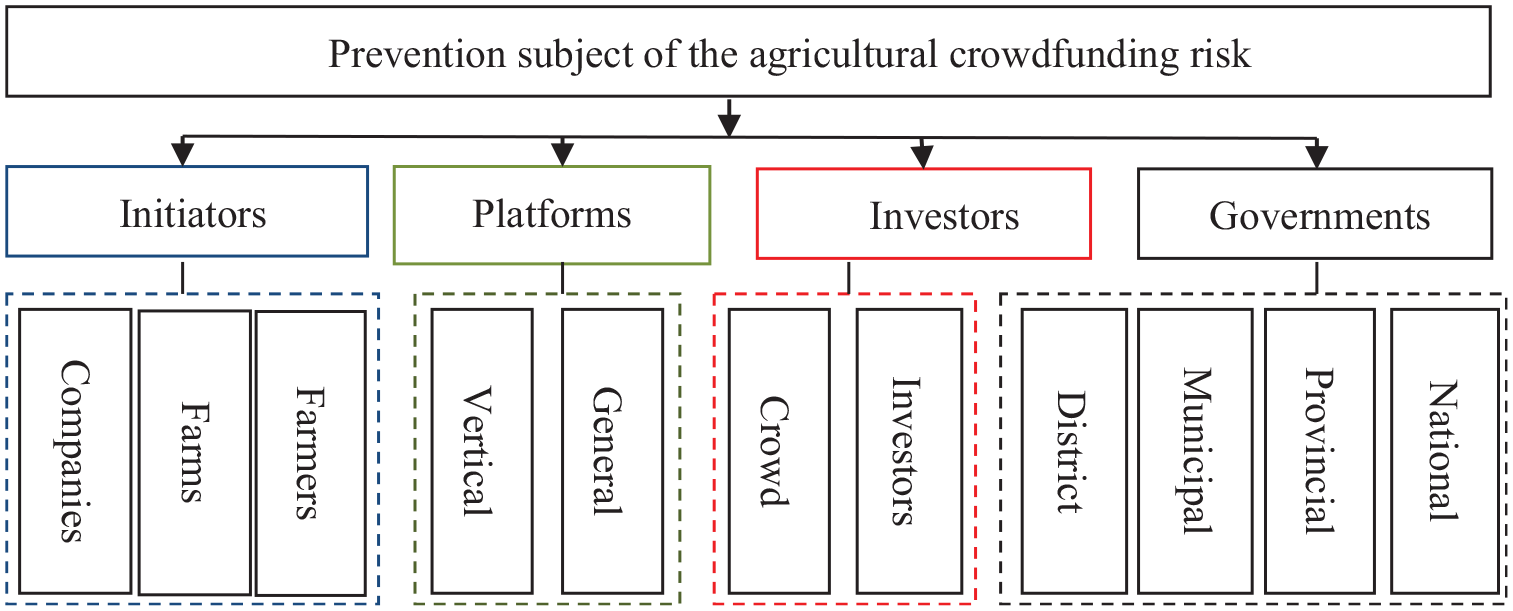
Multiple subjects of agricultural crowdfunding risk prevention.
(1) Initiators. As the driving factor of agricultural crowdfunding, the initiator is naturally the first subject of risk prevention. In agricultural crowdfunding, the initiator includes professionals with experienced knowledge and skills or agricultural companies, farms with considerable economic strength. However, ordinary farmers with low qualifications, lack of experience and ordinary farmers and inexperienced farms and companies occupy a significant proportion. Such promoters are severely bound by traditional thinking and subconsciously unwilling to accept new financing methods under the Internet perspective, which undoubtedly brings greater risk to the smooth implementation of the agricultural crowdfunding process. Therefore, to prevent agricultural crowdfunding risks, it is important to start with farmers, farms, agricultural companies and other preventive subjects.
(2) Agricultural crowdfunding platforms. As a bridge between project sponsors and investors, agricultural crowdfunding platforms play a key role in guaranteeing successful financing, mainly including vertical crowdfunding platforms that mainly focus on agriculture and comprehensive crowdfunding platforms including the agricultural field. Large comprehensive crowdfunding platforms are better than other platforms in terms of operational stability, return rate, and risk control ability, but there are great uncertainties in ensuring the legitimate interests of investors, restrictions on investors’ conditions, and identity checking, thus agricultural crowdfunding platforms are also the subject of risk prevention and require concerted efforts from all the platforms.
(3) Investors. Investors are mainly divided into the general public and professional investors, as the economic guarantee for the success of projects. Also influenced by the traditional model of operation and the lack of knowledge of Internet finance, investors lack sufficient trust in the operation model of paying first and then harvesting, which leads to the stagnation of some agricultural crowdfunding projects, resulting in financing failure. Therefore, investors are another subject for risk prevention, agricultural crowdfunding risk prevention requires all investors to concentrate on.
(4) Governments. The relevant policies and regulations regarding the supervision of agricultural crowdfunding platforms, the qualification review of fundraisers, and the guarantee of returns for investors are still not complete, which hinders the development of agricultural crowdfunding and increases financing risks. Therefore, in order to prevent risks of agricultural crowdfunding, it is necessary for government departments at the district, city, provincial, and national levels to work together, clarify the responsible entities, and carry out strict supervision.
Risk Identification of Agricultural Crowdfunding Based on Multiple Subjects
In order to effectively prevent agricultural crowdfunding risks, it is necessary to clarify the main risks faced by each risk prevention subject. Therefore, the following summarizes (see Table 1) and analyzes the main risks that may occur during the operation of agricultural crowdfunding projects by the project initiators, agricultural crowdfunding platforms, investors, and governments.
Maximum Risks Faced by Different Entities at Different Stages of the Operational Process.

(1) Project initiators perspective. The main risks faced by the initiators at the beginning of the project crowdfunding phase are decision risk and credit risk, and project execution risk during the project funding phase. (a) Decision risk: The initiators need to carefully consider the feasibility of the project before releasing the crowdfunding project and a reasonable choice of crowdfunding platform, so as to make the most favorable decision. (b) Credit risk: the credit risk faced by initiators is mainly the successful financing for a reasonable the choice of agricultural crowdfunding platform (Chen & Cheng, 2014). (c) Implementation risk: After the project is successfully financed, how to operate to ensure the quality of the product, even if it is affected by factors such as natural disasters and implementation costs.
(2) Agricultural crowdfunding platforms perspective. The main risk faced by agricultural crowdfunding platforms in the beginning and funding stages of the project is the platform credit risk, and in the operation and completion stages is the risk of capital security. (a) Platform credit risk: A series of factors such as whether the platform is qualified, whether the operational capacity is appropriate, and whether the promoter access mechanism is well set can affect the success of the financing. (b) Capital security risk: Agricultural crowdfunding platform should not only ensure that the initiator raises enough funds at a certain time, but also make the investors’ investment worthwhile and get the due return. However, it operates on the open and inclusive Internet, which makes it difficult to guarantee the safety of funds.
(3) Investors perspective. The main risks faced by investors during the project funding stage include investor credit risk, information asymmetry risk, and capital security risk, while the risk during the project operation and completion stage is capital security risk. (a) Investor credit risk: Investors’ concerns about the agricultural crowdfunding model and agricultural products, and whether the crowdfunding platform is reliable may trigger investors’ credit risk. (b) Information asymmetry risk: Investors learn about projects mainly through crowdfunding platforms and mostly focused on the initial stage of the project. The real-time information such as the flow of funds and the safety of agricultural products from the execution to the completion stage cannot be understood in a timely and effective manner. There is information asymmetry risk. (c) Capital security risk: The vulnerability of agricultural products, the high-risk nature of the Internet, the lack of expertise of the promoters and the imperfect access mechanism of the platform will all aggravate the risk of investors’ lack of funds.
(4) Governments perspective. Risks associated with the government include legal and regulatory risks that will be present throughout the operation of agricultural crowdfunding projects. (a) Legal risk: Agricultural crowdfunding relevant legal system is not perfect, the industry access qualification review system is not perfect, the guidance documents to support agricultural crowdfunding projects is insufficient. (b) Regulatory risk: The regulatory system for all aspects of agricultural crowdfunding is not yet complete, and it is impossible to carry out strict quality supervision of agricultural products and effectively protect the legitimate interests of all parties (Cui, Guo & Dai, 2019).
Blockchain Technology Integration into Agricultural Crowdfunding Risk Prevention
Incorporating Blockchain Technology to Mitigate the Risks of Agricultural Crowdfunding Itself
Agricultural crowdfunding is a new type of financing method that has emerged along with the “Internet+” and the difficulty of financing agriculture itself. The process includes the releasing agricultural projects requiring financing by initiators an crowdfunding platforms, where interested members invest certain funds and receive a pre-agreed return from the initiators upon the success of the project (Zhang & Sun, 2016). Blockchain technology can optimize the agricultural crowdfunding operation process and mitigate the risks of agricultural crowdfunding itself with its unique technical characteristics (Arun and Mathiyalagan, 2021). In view of this, this paper introduces blockchain technology into agricultural crowdfunding risk prevention based on the agricultural crowdfunding operation process, and the specific incorporation process is as follows.
(1) Project start stage. It mainly includes two stages: the initiator submits the project application on the crowdfunding platform, and the crowdfunding platform reviews the initiator’s qualification, credit and details of the applied crowdfunding project. Blockchain technology can store personal information in encryption after desensitization and financial information after tagging, and upload a blacklist accessible, so that prevent information tampering. In addition, cryptography is used to encrypt and store promoter qualifications and project information, while build a database of promoters and investors integrity, establish an agricultural crowdfunding credit union chain, improve the access and the audit mechanism, and control the risk from the source.
(2) Project funding stage. Through the crowdfunding platform’s display and promotional materials for crowdfunding projects, investors understand, screen, and choose projects for investment that suit their needs. The crowdfunding platform is also accountable of managing funds. The decentralized crowdfunding platform, with the blockchain peer-to-peer storage method can accelerate the success rate of financing (Zhou et al., 2019). At the same time, the information stored on the blockchain is immutable and remains unique in the process of operation, which improves the exhaustiveness of project information disclosure and fund management mechanism to ensure the safety of funds. In addition, blockchain technology makes digital supervision possible to prevent data falsification to improve the effectiveness of supervision.
(3) Project operation phase. The vulnerability of agricultural production, the impact of natural disasters, the irregular operation of the promoters, the timeliness of logistics and transportation and many other factors can affect the production and transportation of agricultural products. A perfect agricultural Internet of Things system with the help of blockchain technology can realize the visual monitoring of the whole process of production, storage and transportation of agricultural products (Gavina et al., 2021). It can not only ensure the smooth production and timely transportation of agricultural products, etc., but also enable investors to have real-time and full understanding of agricultural products. In addition, based on the blockchain distributed system, the use of cryptographic means to ensure secure transactions, prevent irregularities and curb the occurrence of capital security risks.
(4) Project completion stage. It mainly includes the initiators giving the investors the pre-agreed return, and if it cannot be given, the appropriate liquidated damages are required. Blockchain technology on the chain of smart contracts in the completion of the project to automatically give investors pre-agreed returns, data open and transparent, tampering and not easily lost. In addition, the application of blockchain depository technology to agricultural crowdfunding contract signing deposition to reduce the impact of individual default, human intervention and other factors.
Risks Arising From Integration and Means to Prevent Them
This section draws on the relevant research results on the identification and prevention of Internet financial risks under blockchain technology (Chen, 2019; Huang et al., 2015) to identify the risks caused by the integration.
(1) System security risk. If the design of blockchain technology encryption algorithm is flawed or the private key is stolen, it will bring huge risks and challenges to the security of agricultural crowdfunding system. If there are loopholes in the design technology, it may lead to problems such as the code not reflecting, the will of some subjects or network hacking. The fundamental reason for the existence of system security risks is the imperfect development of blockchain technology and its restricted application scenarios. Therefore, relevant government departments should increase investment in technology research and development, improve key management, and build a professional technical application risk prevention system. At the same time, the deep integration of blockchain technology and new generation information technology was promoted, in order to prevent the integration risk (Ouyang and Li 2021).
(2) Legal regulation risk. As the development of blockchain technology is not yet perfect, laws and regulations, rights and responsibilities are not yet clearly defined, the integration of the two will increase the possibility of legal regulatory risks; Although the anonymity feature of blockchain technology helps to protect privacy, it may bring criminal acts, weaken the current stage of law enforcement and increase the difficulty of investigating and dealing with financial crimes (Wang & Xia, 2018). According to the functional characteristics involved in agricultural crowdfunding, regulators with different functions can be integrated for professional regulation to achieve cross-organizational and cross-sectoral synergistic regulation. The legal boundaries and relationships of blockchain are clarified, while taking into account the appropriateness of legal norms, so as to avoid hindering technological innovation due to excessive legal constraints, while providing suitable legal guarantees for the application of blockchain technology (Chen & Zhou, 2020).
(3) Trust risk. Blockchain technology mitigates credit risks, information asymmetry risks and capital security risks in facing the “online trust and offline trust” connection problem. To achieve the automatic unity of blockchain trust and physical world trust, which ensures the one-to-one correspondence between online credentials and offline physical objects, and to achieve the synergy between on-chain governance and off-chain governance, blockchain can realize the automated connection with physical entities through IoT facilities.
(4) Business risk. The design and business of “blockchain + agriculture crowdfunding” system is still in the exploration stage. So not yet able to develop a targeted and specialized system for business learning. The division of labor, the refinement and clarification of authority and responsibility are still problematic. In addition, the business is extremely complex, and the knowledge of blockchain technology is limited, which affects the normal operation of the system. Therefore, need to establish and improve the talent training system according to the business needs after “blockchain + agriculture crowdfunding,” introduce a team of highly sophisticated experts and train professional talents to provide talent reserve and intellectual support, application and promotion of the integration of the two, so as to reduce business risks.
In summary, the integration of blockchain technology leads to integration risk while mitigating the risk of agricultural crowdfunding itself, which is collectively referred to as “blockchain + agricultural crowdfunding” risk in this paper, and the corresponding prevention measures at different stages are summarized in Figure 2.

“Blockchain + agricultural crowdfunding” risk and means of prevention.
Integration of Cohesion Fundamentals into “Blockchain + Agricultural Crowdfunding” Risk Prevention
The risk prevention of “blockchain + agriculture crowdfunding” requires each risk prevention subject to firstly achieve cohesion within their own, secondly, effective communication and collaboration among each subject to maximize the use of available resources, to resist risks to the greatest extent. Therefore, based on the basic principle of cohesion (Shi et al., 2014), this paper analyzes the risk prevention of “blockchain + agricultural crowdfunding” from four aspects: synergistic tolerance, synergistic constraint, synergistic amplification and synergistic dispersion.
(1) Synergistic tolerance interpretation. When the process of “blockchain + agriculture crowdfunding” is abnormal, no matter risk prevention subject or its components should show a different tolerance than usual, which will make them more risk resist and resilient in the face of risk, reducing the failure rate of crowdfunding projects. For example, natural disasters lead to problems in the quality of agricultural products, investors and initiators should improve their own tolerance, and crowdfunding platforms actively improve the chain IoT system to give investors better financial assurance, while investors give more trust to the initiator, and the initiators maximize the quality of agricultural products. In addition, government departments strengthen the combination of technology and legal supervision to effectively mitigate risks.
(2) Synergistic Constraint interpretation. In the face of risks each subject and its constituent elements are subject to their own resources available constraints, but as long as the subjects cooperate with each other, not only can enhance their own risk prevention capabilities, but also enhance the overall risk prevention ability. It will discourage program initiators, but increase the possibility that the program will run successfully.
(3) Synergistic amplification interpretation. When the initiators, crowdfunding platforms, investors and governments work together to resist risks, they coordinate and communicate with each other, which can enhance the positive coupling effect among subjects through synergistic mechanism. For example, the government’s increased support policies and supervision of “blockchain + agriculture crowdfunding” will have a positive impact on initiators, crowdfunding platforms and investors. Then the effect of synergistic amplification is generated through the gathering of forces, so that the limited preventive resources can play the best risk control effect.
(4) Synergistic dispersion interpretation. Abnormalities in any of the risk prevention subjects and their constituent elements may generate a chain reaction and lead to systemic risk, resulting in the interruption of the crowdfunding project, while co-diversification is to transfer the local risk and share it through each risk prevention subject. For example, in agricultural crowdfunding, investors pay their money first, if the government encourages the integration of “blockchain+,” crowdfunding platforms and initiators actively promote the development of integration, the risk of the safety of investors’ funds will be mitigated, so that each risk prevention subject shares the risk and reduces losses.
Theory Construction of the Cohesion Model
The main risks faced by each subject are both independent and relevant. For any one risk, the risk prevention measures taken by a single subject alone are insignificant in terms of efficiency, effectiveness and benefits. For example, credit risk exists in “blockchain + agriculture crowdfunding.” To ensure the successful operation of crowdfunding projects, the initiators, investors, crowdfunding platforms and government departments should trust and cooperate with each other in the process of project development and operation, in order to effectively prevent it. Therefore, it is necessary to enhance the synergistic effectiveness in order to reduce all kinds of risks. How to give full play to the synergy within and between subjects? The details are as follows:
(1) The synergistic effectiveness within each subject. First of all, it is necessary for all subjects of the sub-body to “concentrate” in their respective dimensions. Common awareness of the need for risk prevention and the shortcomings of individual strength, the use of various means of continuous optimization and adjustment, so that their own risk prevention capabilities can be enhanced. Secondly, through effective communication and exchange, each sub-body reaches a consensus, further coordinates and collaborates to form a “aggregation” and resists risks together with the help of blockchain technology. Finally, the synergy within the subject is enhanced through the “concentration” within the substrates and the “aggregation” between the substrates, that is, the subject cohesion is enhanced.
(2) The synergy between the effectiveness of the subject. First of all, the subjects of the “concentration”: in the process of risk prevention to recognize their own limited capacity, it is difficult to achieve results in the rate and effect of prevention by themselves, each subject to use a variety of means to optimize the adjustment to better adapt to other subjects to enhance their own effectiveness in resisting risk. Secondly, each risk prevention subject through effective communication, coordination, cooperation, common construction, the use of blockchain technology to maximize the use of existing resources, that is, the “aggregation” between the subject. In the end, all the entities work in concert to resist risks, so that the overall risk prevention capability can be improved, risks can be further reduced, and common development can be achieved.
In summary, the cohesion model of risk prevention of “blockchain + agriculture crowdfunding” is shown in Figure 3 (the size of the circle and the thickness of the line in the figure indicate the size of the risk and the cohesion formed respectively).

Cohesive model of “blockchain + agricultural crowdfunding” risk prevention.
Construction of a Dynamic Model for Risk Prevention of “Blockchain + Agricultural Crowdfunding” From a Collaborative Perspective
The core of cohesion is embodied in “synergy,” and the essence of synergy is to enhance the cohesion of the whole process of agricultural crowdfunding through the cohesion of each risk prevention subject and its sub-bodies, and then maximize the overall risk prevention ability. The formation of the synergy process must be based on the optimal adjustment of each subject’s own structure and function, and this is based on what means and measures are taken between each subject, but the measures benefit from the adjustment of the policy, which in turn is derived from the feedback information of the implementation of the measures. In addition, the risk of “blockchain + agriculture crowdfunding” is constantly changing with the change of both its natural and social attributes. Therefore, based on the risk prevention cohesion model of “blockchain + agriculture crowdfunding” in Figure 3, its dynamic model is constructed in terms of the adopted risk prevention means, achievement goals, internal adaptation measures, and external policy adjustments.
Means and Objectives
Knowned from the above two sections, the risk of “blockchain + agriculture crowdfunding involves the risk of agricultural crowdfunding itself and the risk caused by the integration of blockchain and agricultural crowdfunding. Therefore, this subsection discusses the means to be implemented and the objectives to be achieved based on the synergistic perspective from the perspective of preventing the main subjects and the risk caused by the integration of agricultural crowdfunding itself.
Agricultural crowdfunding risk aspects: (a) Optimize the project to maximize market value. The decision making and execution risks faced by the promoters require optimization of the crowdfunding project, that is, maximizing the novelty of the project, and conducting sufficient market research. The necessary arguments and feasibility analysis should be conducted for the financing method and term of the project. (b) Build a subject credit union chain to improve the access mechanism. By virtue of its openness and transparency and non-tamperability characteristics, it can curb credit risk. Introducing a blacklist mechanism to achieve credit evaluation, blacklist public data using a form with a mask to be published in the whole chain can be used to credit evaluation of transaction subjects (Wang et al., 2021). (c) Build a decentralized crowdfunding platform to reduce capital security risks. It ensures that project information is open to any subject. Blockchain node technology is introduced as a means to realize real-time online supervision, realizing that the data is real and effective and cannot be falsified, and building a technology-driven agricultural crowdfunding supervision system. (d) Create on-chain agricultural internet of things system to improve product quality and safety traceability system. The on-chain agricultural internet of things system realizes the monitoring of the whole process of agricultural products production, storage and transportation to ensure the normality of crowdfunding. Under the blockchain distributed bookkeeping model, data information is encrypted and stored with time stamps, which helps to supervise the funds and make the flow of funds transparent to ensure the safety of transactions. (e) Design smart contracts to mitigate the risk of capital security faced by investors and platforms. The subjects can accurately obtain the time of the contract, avoiding human intervention; in addition, smart contracts make every fund traceable, and guarantee the security of the funds. The blockchain depository adopts multi-party depository to ensure the openness, integrity and authenticity.
As for the risks caused by the integration: (a) Increase the research and development of blockchain technology, reduce technical security risks and enhance the security of system operation. Promote the integration of blockchain and new generation information technology, give full play to the advantages of technology integration, and realize the innovative practice of blockchain agricultural crowdfunding. (b) Strengthen functional regulation, design regulatory models, and enhance synergistic effectiveness. Formulate blockchain laws, improve corresponding laws and regulations, clarify blockchain legal boundaries and legal relationships, and balance the relationship between technological innovation and legal constraints. (c) Through collaborative governance between on-chain and off-chain, the blockchain and the physical world are organically integrated and then automatically unified, solving the trust problem between online and offline and realizing the automatic connection between the blockchain and the physical world. (d) Improve the talent training system, introduce and train professional and technical personnel, integrate technological innovation talents, and reduce business risks.
However, the realization of any means to the goal requires the cooperation of other subjects in addition to the most direct subject in order to ensure high efficiency. For example, the construction of the credit union chain means that the government leads, platform supports, and initiators and investors cooperate to achieve the goal of improving the access mechanism. Therefore, the responsiveness and execution of each subject will have a direct impact on the project itself, and only through the synergy between each subject can the goal be better achieved.
Internal Adaptation Measures
The formation of synergistic and the achievement of goals require internal adaptation measures to change and adjust the functions of each risk prevention subject. The four stages of agricultural crowdfunding: start, funding, operation and completion, corresponding adaptation measures are prevention preparation, real-time monitoring, emergency management and recovery stop, each of which requires the cohesion of all subjects and synergistic effectiveness. For example, for the prevention preparation stage, it requires careful preparation of crowdfunding projects by the promoters beforehand, accurate identification and judgment of project feasibility by the investors and capital preparation, and the platform’s own characteristic propaganda preparation to attract chip investment subjects, etc.
External Policy Adjustments
In order to give full play to the synergistic effectiveness of risk prevention subjects and achieve the goals, reasonable policy adjustments and reforms need to be promoted on a sustainable basis. Within the scope of China’s relevant policies, feasible policy adjustment methods and reasonable reform paths should be adopted to provide support for the healthy operation of agricultural crowdfunding projects. For example, for initiators, the government should increase support, introduce policies to benefit agriculture, promote enthusiasm and protect legal rights and interests; for investors, the government should increase the publicity of agricultural crowdfunding, popularize basic knowledge and operation model, so that investors are fully aware and actively participate; for crowdfunding platforms, establish and improve the system of laws and regulations, regulate the internal construction of platforms, establish regulatory bodies and protect the interests of all parties; government departments at all levels should establish a feedback loop where policies and regulations are passed down from higher levels and implementation information is provided by lower levels. Through this process of bottom-up communication, continuous improvement and adjustment can be achieved.
In summary, from the perspective of multiple prevention subjects, based on synergistic tolerance, synergistic constraint, synergistic amplification and synergistic dispersion, the risk of agricultural crowdfunding and the risk caused by the integration of blockchain are considered comprehensively, and the target is to build credit union chain and blacklist mechanism, improve access mechanism and realize credit evaluation. At the same time, internal adaptation measures and external policy adjustments are needed to form a dynamic model of “blockchain + agricultural crowdfunding” risk prevention, as shown in Figure 4.

“Blockchain + agricultural crowdfunding” risk prevention dynamic model.
Scenario Simulation of Dynamic Model of Risk Prevention Based on Fuzzy Cognitive Map
Whether the proposed model is effective against risk is yet to be proven, so this paper intends to prove it in terms of effectiveness and superiority with the help of the fuzzy cognitive graph model and its inference mechanism, that is, whether the risk situation is improved with the increase of cohesion, and superiority, that is, whether the dynamic model is better than the static model.
Fuzzy Cognitive Map Model of the Dynamic Model of Risk Prevention of “Blockchain + Agricultural Crowdfunding”
Fuzzy Cognitive Map Model

where
Fuzzy Reasoning Mechanism

where
Direct Correlation Matrix
The three-valued relationships −1, 0, and 1 are used to represent the negative direct relationship (association weight of 1), no direct relationship (association weight of 0), and positive direct relationship (association weight of 1) among the indicator nodes, respectively. For example, for subject

Construction of a Fuzzy Cognitive Map Model for the Dynamic Model of Risk Prevention of “Blockchain + Agricultural Crowdfunding”
According to Figure 4 and Equations (1) to (3), the fuzzy cognitive model of the dynamic model of risk prevention of “blockchain + agricultural crowdfunding” is obtained as shown in Figure 5 below.

Fuzzy cognitive map model of the dynamic model of risk prevention of “blockchain + agricultural crowdfunding.”
Scenario Simulation for Effectiveness
From the conceptual model of risk prevention cohesion of “Blockchain + Agriculture Crowdfunding”Figure 3 shows that the size of cohesion is directly related to the number of risk prevention subjects, so cohesion can be divided into four types: single, double, triple and quadruple. The risk prevention subject is the driving factor for the effective operation of the model, in order to make the model start to operate need to activate the cohesion of the relevant subject of the corresponding type, that is, in Figure 4 model will be activated by the initial state value of the subject set to 1, the rest is 0, and the activation of the subject state value 1 repeatedly cyclic input to reflect its dynamic nature. It is important to note that whether for single, double or triple bodies, there are multiple scenarios, but different scenarios under the same type have the same effect on the whole model (the initial state value is 1 regardless of which subject is activated, the difference is only the number of activated subjects), so only the following four scenarios will be discussed.
For example, let
For example, let
For example, let
Set the iteration accuracy
Cohesion and Risk Under Different Scenarios.

Note. K is the number of iterations.
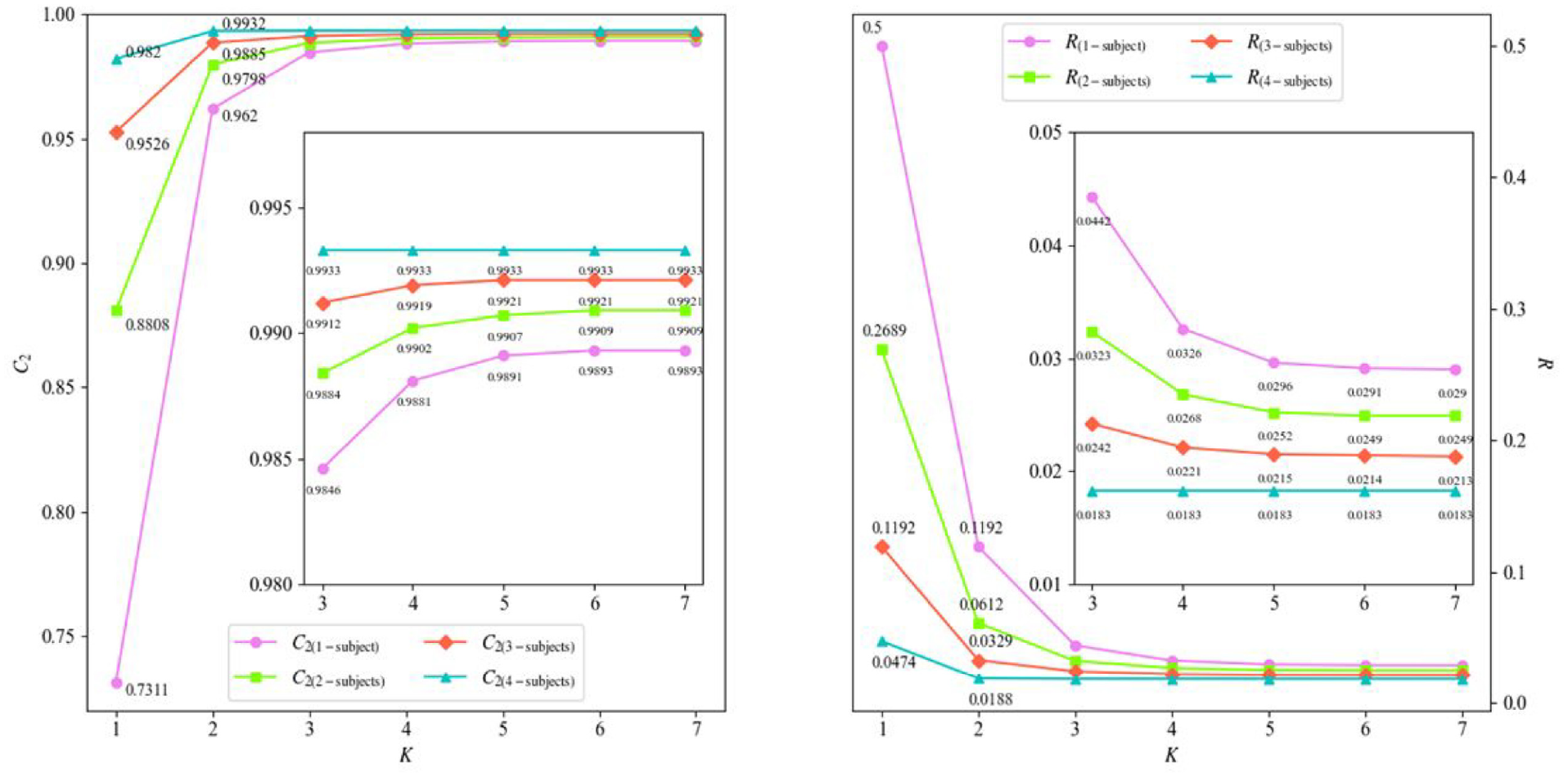
Variation of cohesion and value-at-risk under different scenarios.
As can be seen from Table 2 and Figure 6:
(1) The cohesion change process shows that: cohesion increases with the number of guarded subjects, and the cohesion of multiple subjects (

(2) The process of risk value change shows that, again, as the number of prevention subjects increases, the risk value under multiple subjects decreases rapidly and reaches a lower risk value in a shorter period of time, always maintaining
(3) A longitudinal comparison of cohesion degree and risk values shows that as the number of risk prevention agents increases, cohesion increases and risk tends to decrease, which is a reflection of the effectiveness of the dynamic model of “blockchain + agricultural crowdfunding” risk prevention from the perspective of synergy.
Superiority of Scenario Simulation
From the proof of effectiveness, it is clear that the improvement of cohesion can effectively reduce the risk, so in this paper, a comparative analysis of cohesion in static and dynamic models will be performed to prove its superiority. The static model, that is, using the pattern in Figure 4 to run a single subject, ends with the whole process from:

so that the corresponding subject only needs to be activated once for either scenario, while the dynamic model is repeatedly activating the corresponding subject for iteration. The same four scenarios are divided into single, double, triple, and quadruple subjects for the analysis, and the simulation results are shown in Table 3 and Figure 7.
Cohesion in Static and Dynamic Models Under Different Scenarios.


Cohesion of dynamic and static models under different scenarios.
From Table 3 and Figure 7, the following results are:
(1) The state values of cohesion in dynamic and static models are the same after the first iteration as long as they are in the same scenario, whether for a single, double, triple, or quadruple subjects, as shown in the first row of Table 3, that is, K = 1.
(2) The static model shows that in either scenario its reached cohesion steady state value is roughly the same, but always

indicating that multiple subjects can make cohesion reach higher values in a short period of time (in the case of single and four bodies, for example, before steady state, the first single subject only reached 0.7311, while the four bodies reached 0.9820 in the first time), and more timely in taking relevant measures in response to risks. This is where the advantage of cohesion lies.
(3) The cohesion in the dynamic model is stronger than that in the static model throughout the process, and reaches a higher peak in a shorter period of time. When K = 3,
Conclusions and Countermeasures
From the perspective of multi-subject cohesion, this paper firstly clarifies the subjects of agricultural crowdfunding risk prevention, and identifies the most direct risks faced by each of them. Secondly, the basic principles of blockchain technology and cohesion are integrated into the risk prevention of agricultural crowdfunding, and the cohesion model of “blockchain + agricultural crowdfunding” risk prevention from the perspective of synergy of multiple subjects is constructed. Finally, a scenario simulation using fuzzy cognitive map theory led to the following conclusions.
(1) By analyzing the cohesion and risk value under the four scenarios of single, double, triple, and quadruple, it was found that the cohesion increased with the number of risk prevention subjects and the risk value decreased with the increase of cohesion, which verified the effectiveness of the model.
(2) The comparative analysis with the static model reveals that for the same scenario, the cohesion in the dynamic model is stronger than that in the static model throughout the formation process and can reach a higher peak in a shorter period of time, in addition to the cohesion increases with the increase in the number of risk subjects, fully reflecting the advantages of dynamism.
The risk dynamic prevention model constructed in this paper not only includes the risk of agricultural crowdfunding itself, but also takes into account the risk caused by the integration of blockchain technology; the synergistic effect within and between subjects can be manifested, which has certain scientific and commercial impacts on the field of agricultural crowdfunding and provides a decision-making basis for the risk prevention management of numerical intelligence agriculture. The dynamic risk prevention model of “blockchain + agriculture crowdfunding” under the perspective of synergy is a dynamic cycle and self-improvement and adjustment process, in which the initiator, platform, investor and government collaborate to achieve the goals of perfecting the access mechanism, credit evaluation and capital supervision mechanism by means of constructing a credit alliance chain through the blockchain, introducing the blacklisting mechanism, and constructing a decentralized crowdfunding platform. For the risks caused by the integration, they will optimize the development of technology, improve the defects of technology application, and enhance the effectiveness of collaborative supervision by means of increasing the investment in research and development technology, strengthening the integration of blockchain and the new generation of information technology, and enhancing the functional supervision, etc. In connection with the internal adaptive measures and the adjustment of the external policies, each process is realized by other than themselves. In addition to itself, each process is realized by other main bodies in cooperation, constantly optimized and adjusted to maximize the risk prevention capability.
Based on the above theoretical analysis and the scenario simulation, targeted preventive countermeasures are proposed according to the participating subjects at each stage of the operation process of agricultural crowdfunding projects:
(1) At the beginning, the initiators need to fully investigate and analyze the necessity and implementability of the project to facilitate its implementation. Crowdfunding platforms need to review the initiators’ qualifications and project applications, and introduce blockchain technology to build a credit union chain to control the risk at the beginning of the project from the source. Government departments should increase support for initiators, call for more companies and farmers to participate in agricultural crowdfunding, improve laws and regulations, and standardize platform construction and auditing mechanisms.
(2) In the funding stage, the initiators prepare the crowdfunding project carefully, play their own advantages to promote the preparation and attracts investors. After fully understanding the project information, investors invest in crowdfunding projects that meet their needs. The introduction of blockchain technology to build a decentralized crowdfunding platform can ensure the openness and transparency of project information and financing information, and improve the fund supervision mechanism of the crowdfunding platform. Government departments increase the publicity of agricultural crowdfunding, popularize the operation model of agricultural crowdfunding projects and knowledge about blockchain, promote the enthusiasm of investors, establish corresponding regulators to protect the interests of all parties, cooperate with crowdfunding platforms to make data on the chain, build a “legal chain” to prevent data forgery, and combine blockchain with project supervision.
(3) In the operation stage, the initiators face numerous uncertainties such as the vulnerability of agricultural products production, instability of natural environment and timeliness of logistics and transportation, etc. The initiators should have emergency management ability and awareness of prevention, and improve management and service level. The crowdfunding platform builds a perfect on-chain agricultural Internet of Things system with the help of blockchain to realize the visualization of the production, storage and transportation of agricultural products and to update and maintain the crowdfunding project in real time. Investors actively pay attention to the operation of the project and play a certain regulatory role in the operation of the project. The government increases emergency publicity and education activities, strengthens the popularization of science in agricultural production, disaster prevention and mitigation, introduces technologized regulation, introduces regulatory technology in legal regulation, and promotes the realization of technologized regulation, while establishing and improving blockchain-related Internet regulatory laws.
(4) At the completion stage, the initiators promote the project settlement in time, do a good job of closing the project, fulfill the contractual agreement to the investors, review the whole process of project implementation, conduct systematic analysis of the project, provide reference for the subsequent project operation, and achieve a good project management effect. Investors are fully informed of the project operation results, get their due returns, and make good use of legal weapons to protect their legitimate rights and interests. The crowdfunding platform ensures the legal validity of the contract and plays a binding role on both sides of the contract, and introduces on-chain smart contracts to guarantee the performance ability of both sides and ensure the smooth operation of the project. The government strengthens contract management, regulates and binds both sides of the contract signed, and at the same time feeds back implementation information to superiors to continuously improve and adjust relevant policies.
Discussion
The research has some limitations. Firstly, the agricultural crowdfunding only considers the agricultural products in crowdfunding agriculture, while in fact, agricultural crowdfunding can cover almost all agricultural fields. Secondly, there are more complicated risks in actual agricultural crowdfunding projects, and this risk dynamic prevention model cannot solve more complicated situations more accurately and quickly. Finally, for the digital intelligence era, this model lacks the comprehensive application of various emerging technology tools. Therefore, the directions of the further research are: (a) Identify and analyze the risks in different areas of agricultural crowdfunding projects as well as the new risks generated by combining with various emerging technologies, and construct a more effective risk dynamic prevention model. (b) Integrated various emerging technology tools to reduce different risks in the crowdfunding process.
Footnotes
Declaration of Conflicting Interests
The author(s) declared no potential conflicts of interest with respect to the research, authorship, and/or publication of this article.
Funding
The author(s) disclosed receipt of the following financial support for the research, authorship, and/or publication of this article: This work was supported by the “Humanities and Social Sciences Research Program Foundation of Ministry of Education of China” (20YJAZH116) and “National Science Foundation for Young Scholars of China” (41101507).

Data Availability Statement
The data presented in this study are available on request from the corresponding author.