




Abstract
In the context of big data, pricing discrimination in global tourism expands the potential for reputational harm due to readily available information influencing tourists’ decision-making processes. This phenomenon also impacts the selection tactics of market entities, raising concerns about shared market value loss. By applying the value co-creation theory, wherein consumers and businesses collaborate to generate value, understanding the dynamics between businesses and tourists, as well as the motivations behind price discrimination, becomes more accessible. Furthermore, this study explores price discrimination behavior in the tourism market through the lens of value co-creation, employing a combination of prospect theory and mental accounting theory (PT-MA). Through the development of an evolutionary game model encompassing tourists, tourism enterprises, and the government, strategic decisions made by these stakeholders are analyzed. Besides, simulation and the in-depth examination of the model’s evolution using Matlab software reveal several key findings: (1) tourists tend to opt for compromise strategies due to their aversion to transactional costs associated with complaints; (2) reputational loss and sensitivity to loss aversion are inversely related to the likelihood of enterprises engaging in price discrimination; and (3) proactive and effective regulatory measures by the government prove successful in curtailing price discrimination in the tourism market, whereas fine policies demonstrate less efficacy. This study contributes to establishing a theoretical framework for selecting strategies aimed at achieving value co-creation in tourism.
Introduction
The cornerstone of tourism development hinges on the quality of market services, crucial for enhancing visitors’ quality of life (Pasaco-González et al., 2023), bolstering industry competitiveness (Liu & Yen, 2010), and fostering sustainable growth (Alsiehemy, 2023). While efforts to improve tourism service quality often concentrate on factors like personnel (X. Chen & Yu, 2023; Shang, 2020), and technological integration (Azis et al., 2020; de Kervenoael et al., 2020), pricing dynamics wield significant influence. Nevertheless, rampant irrational pricing, marked by excessive discrimination, fuels practices like “revenge rip-offs,” triggering public backlash and exacerbating concerns over value co-destruction. These factors inevitably influence tourists’ destination choices, thereby exacerbating concerns regarding value co-destruction. Research indicates that 56% of foreign visitors and 48% of all tourists think they have encountered pricing discrimination when traveling (Harris, 2012), with complaints soaring by 197.9% in the first half of 2023, according to the China Electronic Chamber of Commerce (CECC). This surge underscores growing discontent and eroding trust, particularly as internet technology facilitates transparent price information dissemination and review through social media (Fang et al., 2024). To maximize profits, tourism companies often adopt price discrimination strategies. However, excessive pricing hurts tourists’ tourism experience (Bar-Gill, 2021; X. Xu et al., 2024).
The essence of tourism is a social psychological phenomenon (Pearce & Stringer, 1991). Tourists with higher price elasticity of demand are particularly sensitive to changes in the prices of consumer tourism goods. Consequently, they are more likely to assess destinations negatively when confronted with instances of irrational pricing (Bigné et al., 2001). The development of Internet technology facilitates the dissemination and exchange of information (Gao & Huang, 2020), more transparent price information (M. Y. Wang & Chou, 2024)and the review of information on social media or online marketplaces can influence the decision-making of tourists (Chung & Koo, 2015; Dolan et al., 2019; Tsai & Bui, 2021). Amidst dwindling confidence in self-regulation, stakeholders seek government intervention to bolster local reputation and public trust (J. Wang et al., 2022), thereby enhancing the reputation of the local area and the public trust in the government. Balancing interests among tourists, tourism enterprises, and the government to foster value co-creation emerges as a pressing research imperative, with previous studies failing to adequately probe value co-creation within pricing contexts. Previous research has utilized the value co-creation theory in tourist-related fields like historical tourism (Lan et al., 2021), culinary tourism (Qian et al., 2023), and cosmetic tourism (Majeed et al., 2020). Yet, there are very few research investigations concerning value co-creation about pricing concerns in the tourism industry.
Common approaches to studying price discrimination behavior typically rely on static analysis methods such as interviews (Jacques et al., 2014), spatial models (Massoud & Bernhardt, 2002), and econometric models (Q. Chen et al., 2023) overlooking the dynamic interplay among enterprises, tourists, and the government in tourism markets. However, to dynamically infer the game process involving enterprises, tourists, and the government in the tourism market regarding price discrimination behavior, this study adopts an evolutionary game model to dynamically infer the strategic dynamics surrounding price discrimination. The choice of players’ strategies can only be determined by a series of endless conflicts in the evolutionary games model (Vincent, 1985), and this evolutionary process is more suitable than traditional games for solving multiple equilibrium problems. Also, tourists (S. Li et al., 2022; Tosun et al., 2022), enterprises (Cui & Ma, 2022), and the government (Xi & Zhang, 2020) in the tourism market exhibit bounded rationality in decision-making. However, the majority of earlier research has presumed that participants are completely rational. Recognizing the bounded rationality inherent in decision-making processes, this study integrates behavioral economic concepts like mental accounting and prospect theory to explore equilibrium in price discrimination among stakeholders.
Addressing existing research gaps, this study aims to rectify the skewed focus on enterprises and consumers, incorporate qualitative methods to capture the dynamic nature of price discrimination, and account for participants’ limited rationality. Yet it has the following shortcomings: (1) The focus of research on price discrimination predominantly revolves around enterprises and consumers, with limited exploration into the regulatory role of the government (Cohen et al., 2022). (2) Several scholar’s investigations into price discrimination largely rely on qualitative research methods (J. Wang et al., 2022), which may not adequately capture the dynamic nature of price discrimination behavior. (3) There is a dearth of studies in the market price discrimination discourse that take into account the limited rationality of market participants (Cohen et al., 2022). The study therefore aims to address the abovementioned shortcomings. By doing so, it seeks to answer pivotal questions: Should tourism enterprises persist with price discrimination strategies from a value co-creation standpoint? Should the government intensify regulations on price discrimination? Do tourist complaints effectively improve perceptions of tourism amidst price discrimination?
Consequently, this study introduces several innovations compared to earlier related studies: Firstly, it integrates psychological insights and prospect theory into the evolutionary game model, acknowledging the limited rationality of participants in the tourism market—travelers, government officials, and enterprise subjects—based on real-world behavior. Unlike previous models focusing on two-party interactions, such as visitors and firms or enterprises and the government, this research adopts a three-party game model to comprehensively analyze price-discriminating behavior in the tourism sector. Secondly, it employs an evolutionary game model, effectively capturing the dynamic nature of price-discriminating behavior in the travel industry.
The remainder of the study is structured as follows. The second part provides a comprehensive review and analysis of relevant research. Following that, the third part establishes a tripartite evolutionary game model grounded in reality. Subsequently, the fourth part delves into the analysis and resolution of the model. The fifth part presents a simulation analysis based on the developed model. Finally, the study concludes by summarizing the research findings and offering conclusions and recommendations.
Literature Review
Price Discrimination
Price discrimination, the practice of selling the same good at different prices, is prevalent in various industries, including tourism (Abrate et al., 2019). It occurs when a company sells two “similar” products at different prices that have the same marginal costs (Armstrong, 2006). Thus, price discrimination is prevalent in the tourism industry. For instance, Marsden’s study revealed three tiers of price discrimination in the pricing strategies of Tasmanian short-term lodging companies within the distribution channels (Marsden & Sibly, 2017). Based on variables including distribution channels (He & Zheng, 2020)and ticket purchase time (Puller & Taylor, 2012), airlines employ price discrimination tactics, based on factors such as distribution channels and time of ticket purchase, utilizing big data analysis to algorithmically adjust ticket prices for visitors (Shang et al., 2023). This practice impacts tourists, enterprises, and governmental bodies. Firstly, tourists’ perceptions suffer from price discrimination, as constant pricing is generally preferred over differentiation (Huang et al., 2005). Experimental findings of studies carried out by Hufnagel et al. (2022) reveal that customers react negatively to customized pricing when they perceive prices as unfair. Moreover, it has been argued by Xu that the perceived spillover pricing can lead to a sense of relative deprivation among tourists, discouraging ticket purchases for tourist attractions (X. Xu et al., 2024). However, some studies suggest that price discrimination can benefit markets and consumers (Y. Wang, 2022). Secondly, governments can influence price discrimination positively by implementing policies.
For instance, discriminatory pricing of national park entrance fees can increase revenues and support ecological conservation efforts (Alpízar, 2006). Nevertheless, regulatory interventions are necessary to address price discrimination in tourism, with suggestions including the use of big data for price regulation and the improvement of antitrust laws. Woodcock (2017) suggested that the government could use big data to regulate prices, and Knudson (2022) argued that price discrimination can be improved by perfecting antitrust laws. Finally, while adopting price discrimination strategies can lead to higher revenues for tourism enterprises like hotels (Abrate et al., 2019) and cruise ships (Namin et al., 2020), concerns persist about potential negative impacts on revenue (Emang et al., 2016). However, some scholars are of the view that the implementation of a price discrimination strategy will harm hotel revenue (Leoni & Nilsson, 2021). In response to these adverse effects, Choi et al. (2023) argued that informing tourists in advance that pricing is algorithmically formulated can reduce the negative reaction to price discrimination. Strategies such as informing tourists in advance about algorithmic pricing aim to mitigate adverse reactions to price discrimination making some noteworthy conversions to the industry.
Finding a balanced strategic solution to address price discrimination is a pressing issue for current research. In summary, price discrimination is widespread in the tourism market, with hotels, airlines, and other tourism enterprises employing such strategies to boost revenue. The emergence of big data algorithms has made tourists susceptible to personalized pricing, which can tarnish their experience. Governmental bodies play a crucial role in regulating the market, although previous research has often focused on individual aspects without comprehensive analysis. Therefore, this study selects tourism businesses, travelers, and governmental bodies as research subjects to thoroughly evaluate pricing discrimination phenomena in the tourism sector.
Prospect Theory and Mental Accounting
Behavioral economics highlights the significance of prospect theory and mental accounting in decision-making processes. Prospect theory, proposed by Kahneman and Tversky (1979), offers a departure from traditional expected utility theory by incorporating psychological factors based on extensive experimental data (Tversky & Kahneman, 1974). Kahneman and Tversky (1979) posited that individuals, when faced with complexity and uncertainty, tend to prioritize certain factors in decision-making, often placing greater weight on potential losses than equivalent gains. This emphasizes the role of intuition and emotions in shaping decisions, particularly under risk. Prospect theory’s insights into bounded rationality provide a more nuanced understanding of decision-making under uncertainty, addressing the limitations of expected utility theory. It also offers better explanations for phenomena that the expected utility theory fails to account for. Kahneman’s receipt of the Nobel Prize in Economics in 2002 underscores the theory’s profound impact, with its application increasingly prevalent in tourism research to enhance decision precision amid risk and uncertainty (Lin et al., 2024).
Initially introduced informally by Thaler in 1985 (R. Thaler, 1985), mental accounting elucidates the psycho-cognitive processes individuals employ to categorize and value outcomes in their minds (R. H. Thaler, 1999). Accordingly, R. H. Thaler (1999) later formalized mental accounting as a cognitive mechanism for coding, categorizing, and valuing outcomes, with “non-substitutability” distinguishing mental accounts from traditional economic accounts. This concept highlights individuals’ mental processes in managing and budgeting wealth, offering insights into how they perceive and allocate resources. Mental accounting’s understanding of how individuals compartmentalize financial decisions enriches our comprehension of economic behavior, providing valuable insights for various domains, including tourism research.
Researchers have utilized prospect theory and mental accounting to analyze various aspects of tourism, including travelers’ purchasing decisions (S. Li et al., 2022; Y. Li et al., 2022) and hotel operations management (S. Li et al., 2022). For example, Kreeger et al., (2023) employed prospect theory to compare business traveler preferences for lodging features between conventional hotel rooms and accommodations affiliated with the London School of Economics and Political Science. This study provided insights into how prospect theory influences travelers’ preferences in different lodging settings. Additionally, Zou and Petrick (2022) investigated the impact of price framing on nonresidents’ perceptions of dual pricing in state parks, using prospect theory to understand how pricing strategies affect tourists’ decision-making processes. Furthermore, Nicolau et al. (2023) explored the effects of declining sensitivity and loss aversion on airline income, shedding light on how prospect theory concepts can be applied to revenue management strategies in the airline industry. While prospect theory and mental accounting have been utilized in tourism decision-making research, their application in this field is still developing (Lin et al., 2024), with ample opportunities for further exploration and analysis (S. Li et al., 2022).
Acknowledging the limited rationality inherent in market participants’ behavior, this study integrates prospect theory and mental accounting into their decision-making traits in the context of price discrimination in the tourism market. By incorporating prospect theory to model behavioral tendencies and segmenting the value function into potency accounts and cost accounts using mental accounting theory, this research aims to offer more realistic insights into the dynamics of price discrimination. By adopting a behavioral economics perspective, this study contributes to a deeper understanding of how psychological factors influence pricing strategies and decision-making processes in the tourism industry.
Value Co-creation
Since the emergence of service marketing as a distinct discipline, scholars have persistently explored concepts and models (Grönroos, 2006) facilitating and regulating interactions between businesses and customers (Shostack, 1977). Building on this research, Vargo and Lusch (2008) developed the concept of service as a value-creating process, emphasizing the role of interactions between “resource integrators” and “subjects,” formerly known as suppliers and customers. Central to this concept is “value co-creation,” which asserts that enterprises and consumers collaborate to generate value. At its core, value co-creation involves the joint construction of consumer experiences, with interpersonal interactions serving as the primary mechanism for this collaborative process (Prahalad & Ramaswamy, 2004). Contrary to the notion of businesses as sole producers of value, Vargo and Lusch (2014) contend that value is always co-created through participant interactions. Consequently, value co-creation has gained widespread adoption in marketing (Rubio et al., 2020), management (Payne et al., 2008), healthcare (McColl-Kennedy et al., 2012), and various other domains. In the tourism industry, scholars have applied the theory of value co-creation to initiatives, such as tourism service innovation (Buhalis et al., 2019), brand marketing (Pham et al., 2022), and enhancing the tourist experience (Sugathan & Ranjan, 2019), contributing to the industry’s sustainable development. For instance, Jain et al.’s (2023) study examined how robotic services impact patron experience and satisfaction within a value co-creation paradigm, while Shoukat and Ramkissoon (2022) proposed a conceptual framework demonstrating the relationship between customer engagement, place identity, and revisit intention, highlighting the role of value co-creation in enhancing customer satisfaction and loyalty. Furthermore, value co-creation practices have a positive impact on loyalty and consumer satisfaction (Chiu et al., 2019). Price discrimination in the tourism industry involves multiple stakeholders and requires a thorough examination of their interactions. Tourism enterprises, as implementers of pricing autonomy, are subject to regulation and bear the consequences of discriminatory pricing practices (Opata et al., 2021). Therefore, this study adopts the value co-creation perspective, which specifies that tourists are not merely passive recipients of value within the tourism market but also active creators of value through collaborative efforts with companies.
Additionally, price discrimination impacts the rights and interests of tourists, who play a role in monitoring and addressing discriminatory pricing. Hence, researching the phenomena requires defining the subjects, responsibilities, and authorities. First, as implementers of pricing autonomy, tourism enterprises are subject to regulation (Soebbing et al., 2017) and incur the consequences of discriminatory pricing practices. Second, the occurrence of price discrimination affects the rights and interests of tourists, who also have an external role in effectively monitoring price discrimination (Dolan et al., 2019). This implies that governments, on the other hand, can intervene effectively by establishing regulatory frameworks conducive to fair pricing practices and value co-creation realization (Cox & Chavas, 2001). Understanding the dynamics between these stakeholders is crucial for devising effective countermeasures against price discrimination. Therefore, investigating the mechanisms of price discrimination in the tourism market through the lens of value co-creation using a three-party evolutionary game provides theoretical insights for the development and implementation of relevant strategies.
The Model
Model Assumption
This study delves into the phenomenon of price discrimination within the tourism sector, with a focus on the primary stakeholders: tourism enterprises, tourists, and the government. Conceptualizing the interaction among these entities as a three-party evolutionary game, the parameters are detailed in Table 1. The game players encompass tourists, tourism enterprises, and the government. Incorporating the limited rationality of these entities, we introduce prospect theory and mental accounting theory. Prospect theory posits that decision-makers assess gains and losses relative to a reference point (Kahneman & Tversky, 1979). Their risk attitudes and sensitivity to losses influence their evaluations, thereby shaping behavioral decisions. The disparity between perceived value and the reference point is denoted as

Summary of Notation and Descriptions.

Mental accounting involves the cognitive process through which decision-makers categorize and manage wealth at a mental level (R. H. Thaler, 1999). In this study, mental accounting is categorized into utility and cost accounts.


Correspondingly, the decision weight function subjectively assesses the decision maker’s inclination toward particular events or strategies, with the decision sensitivity coefficient denoted by a ranging from 0 to 1. It is expressed as follows (Kahneman & Tversky, 1979):

In this framework, tourism enterprises (E) have two strategies: practicing price discrimination (PD) or implementing regular prices(NPD). Besides, tourists (T) can either compromise (NC) or complain (C) about unreasonable price discrimination by tourism enterprises, while the government (G) can choose between active regulatory (R) or passive regulatory (NR) strategies against price discrimination. Congruently, the strategy spaces of tourism enterprises, tourists, and the government are denoted as:

The tripartite logical relationship between tourists, tourism enterprises, and the government.
Hotelling Model
In the travel industry, we assume the presence of two types of merchants: those engaging in price discrimination and those adhering to uniform pricing. Both types offer identical products at equivalent prices (Hotelling, 1929). However, the impact of merchants defrauding tourists on tourist perceptions is particularly significant in the tourism market, prompting this study to focus exclusively on merchants’ price discrimination practices. Furthermore, enterprises employing price discrimination strategies typically set higher product prices compared to those following uniform pricing, denoted as


At market equilibrium,

The market shares of PD and NPD.
Substituting the market equilibrium price into the profit functions for both types of merchants yields the profits of the two types of merchants at equilibrium, as specified below:


Borrowing from the Hotelling model, enterprises engaging in pricing discrimination witness lower earnings compared to companies that do not. In the oligopolistic market game involving tourists and enterprises, businesses should opt not to engage in price discrimination to maximize their earnings, without considering the government’s role.
Payoff Matrix
Tourism enterprises, tourists, and the government have two pure strategies each. Table 1 clarifies the symbolic representations, while Table 2 presents the payment matrices for the three parties. These matrices offer a clear representation of the benefits obtained by each participant across every possible combination of strategies. In each set of payoffs, the first function represents the benefits to tourists, the middle function signifies the benefits to tourism firms, and the last function denotes the benefits to the government.
Payoff Matrix for Players.
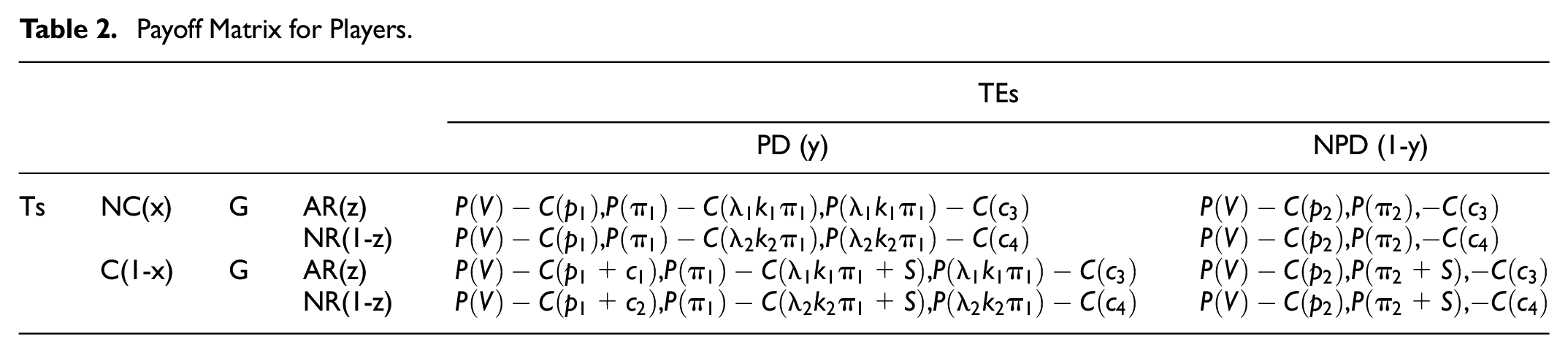
Let’s consider the first scenario outlined in Table 2, where travelers accept a trade-off, travel agencies adopt pricing discrimination, and the government opts for proactive regulatory action. In this instance, the tourists’ benefit is calculated as:
Model Analysis
Local Stability Analysis of Dynamic Systems
In accordance with evolutionary game theory, the probabilities of tourists selecting compromise and complaint strategies are denoted as x and
Firstly, the perceived value of tourists opting for a compromise strategy is calculated as follows:

Afterward, the perceived value of tourists choosing to complain is determined as:
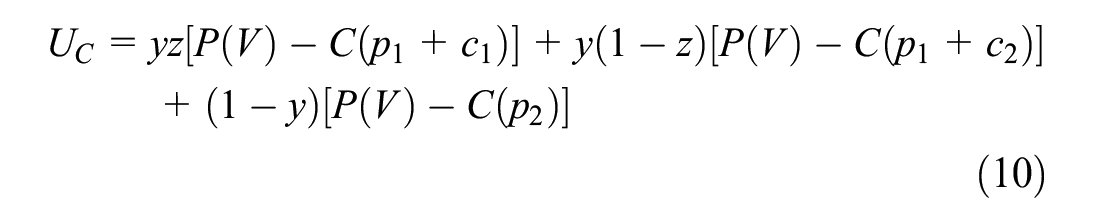
Next, the expected payoff of mixed strategies for tourists can be expressed as:

Using the Malthusian equation, the replication dynamic equation for tourists is stated as:

Likewise, the perceived value of tourism enterprises deciding to implement a price discrimination strategy is

While the perceived value of tourism companies choosing not to implement a price discrimination strategy can be formulated as:

The expected payoff of mixed strategies for tourism companies is given by:

Following the Malthusian equation, the replication dynamic equation for tourism enterprises is expressed as

Lastly, the perceived value of the government opting for active regulation is calculated as:

Equally, the perceived value of the government opting for passive regulation is determined as:

Likewise, the expected payoff of mixed strategies for the government can be represented as:

Based on the Malthusian equation, the replication dynamic equation for the government is expressed as:

By solving the replication dynamic equation, t, the system’s equilibrium point can be obtained as:

Among the first eight equilibrium points,

Jacobian Matrix and Equilibrium Points
The equilibrium points derived from the dynamic equation system may not necessarily coincide with the system’s evolutionary stable strategies (ESSs). When a population’s dynamics are described by a set of differential equations, analyzing the stability of the system’s equilibrium points can be achieved through the Jacobian matrix. Based on the replicator dynamic equations

Employing Lyapunov’s first law, an equilibrium is considered asymptotically stable if all eigenvalues of the Jacobian matrix possess a negative real part. Conversely, if all eigenvalues exhibit a positive real part, the equilibrium is deemed unstable. In cases where the stability of the equilibrium cannot be conclusively determined, further analysis is warranted. Table 3 presents the eigenvalues and stability assessments for each equilibrium point.
Stability Analysis of Evolutionary Equilibrium Points.

ESS Analysis Between Tourists, Enterprises, and the Government
Table 3 indicates potential values for the ESS points, including (0,1,0), (1,1,0), (0,1,1), and (1,1,1), corresponding to strategy combinations (C, PD, NR), (NC, PD, NR), (C, PD, R), and (NC, PD, R) respectively. Considering the associated transaction costs
Scenario 1.
Scenario 2.
Numerical Simulation Analysis
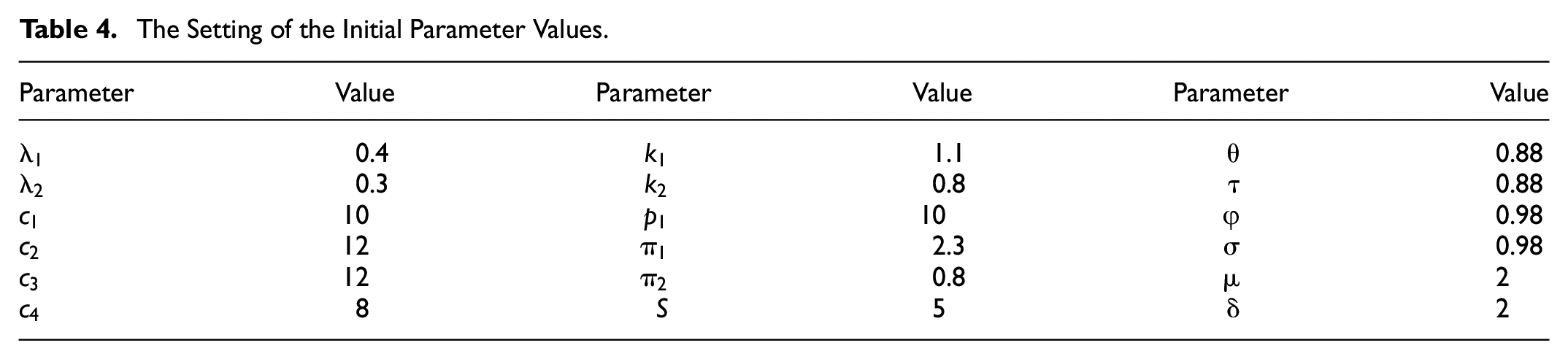
Data and Parameters
Drawing from previous research on prospect theory, the risk preference coefficient is set at
The Setting of the Initial Parameter Values.
Analysis of Primary Influential Factors in Decision Evolution
Analyzing the Impact of Reputation S on Evolutionary Outcomes
With all other conditions held constant, we examine how changes in reputation affect the strategic evolution of each entity. The reputation variable S is taken to be 1, 3, 5, 7, and 9, and simulations are conducted, with the results depicted in Figure 3. The findings reveal that S represents the critical threshold for tourism enterprises, with a reputation level lying between 7 and 9 representing a critical threshold for tourism enterprises. When S reputation falls below this threshold, the likelihood y of tourism enterprises adopting price discrimination, the probability x of tourists opting for compromise, and the probability z of the government choosing active regulation all converge to 1. However, as S reputation surpasses this threshold, the inclination of tourism enterprises to abstain from price discrimination strategies gradually strengthens, leading to the convergence of y toward 0. Meanwhile, the probability
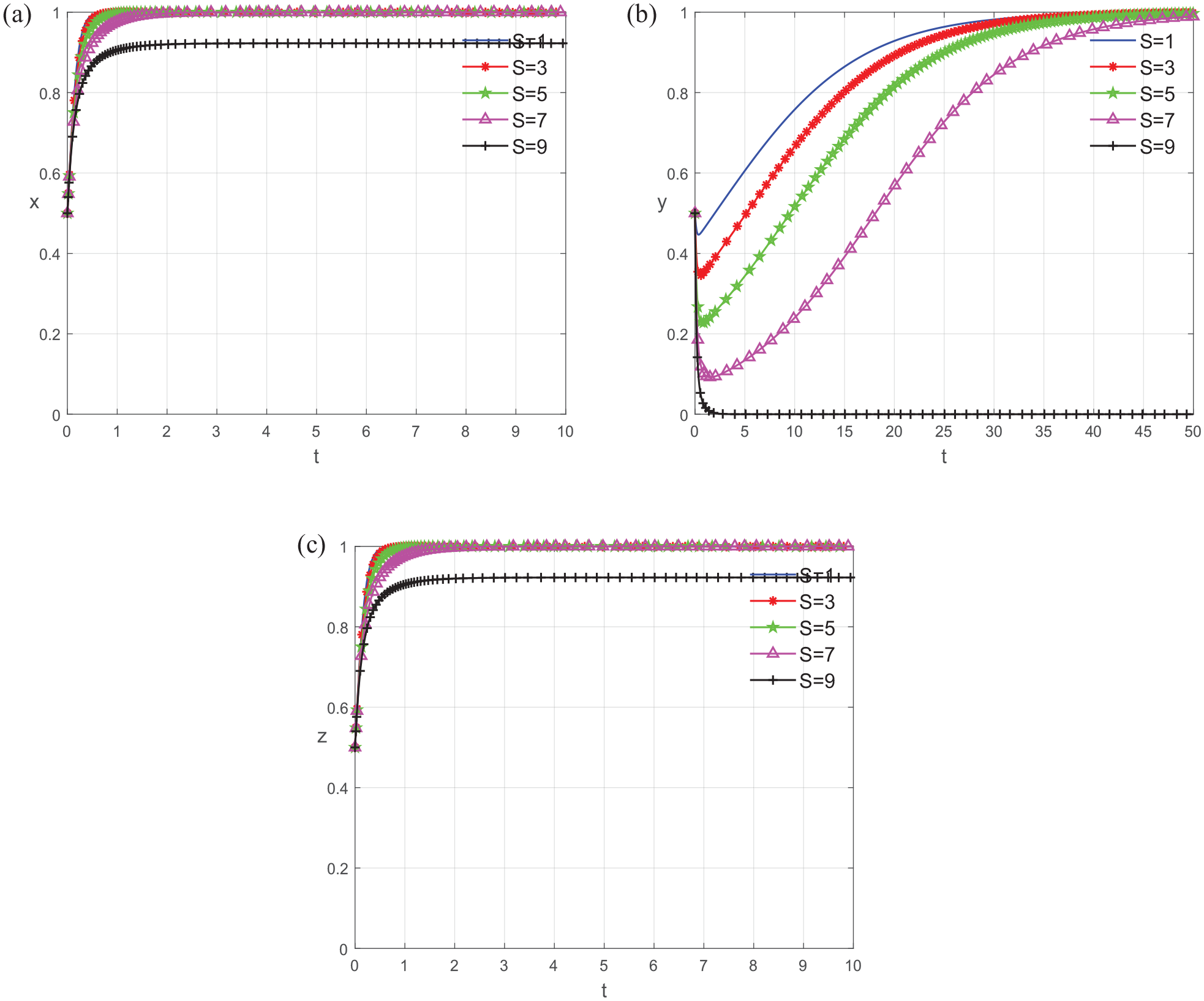
Simulation graph depicting the evolution of reputation S for the game players: (a) tourists, (b) tourism enterprises, and (c) the government.
This underscores the significant role of reputation in shaping the strategic decisions of entities involved in price discrimination within the tourism market. As reputational loss increases, businesses are more inclined to refrain from implementing price discrimination strategies. Concurrently, heightened tourist awareness of lodging complaints and reduced governmental vigilance in regulation further accentuate this trend. The primary rationale behind this lies in the fact that when reputation holds minimal sway over enterprises, the profits derived from price discrimination strategies outweigh the impact of reputational damage. Consequently, enterprises tend to opt for price discrimination strategies. However, with the continuous improvement of evaluation mechanisms and policies, coupled with the amplified speed and scope of social media propagation, the long-term perspective suggests a gradual rise in the influence exerted by reputation. Therefore, this imposes a restraining effect on tourism enterprises employing price discrimination strategies. As the number of enterprises implementing such strategies dwindles in the market, tourists become more willing to report enterprises engaging in them. Moreover, due to the heightened influence of reputation, the government gradually reduces regulatory efforts to mitigate regulatory costs.
Analyzing the Impact of Government Regulatory Costs c on Evolutionary Outcomes
With all other conditions held constant, we scrutinize the effects of varying active regulatory costs

Simulation graph depicting the evolution of active regulatory costs
Simulation graph depicting the evolutionary impact of the government’s passive regulatory costs
The results reveal that
This underscores the significant impact of active regulatory costs borne by the government on the strategic decisions of entities involved in price discrimination within the tourism market. Lower costs of active regulatory oversight prompt businesses to refrain from price discrimination strategies. Simultaneously, heightened tourist awareness of lodging complaints and increased governmental vigilance in regulation amplify this trend. The primary reason behind this trend lies in the escalated cost expenditure, such as additional workforce, associated with active regulatory strategies by the government. As costs escalate, the government’s inclination toward active regulation diminishes. When the government’s probability of opting for active regulation exceeds .5, tourism enterprises tend to avoid government penalties by abstaining from price discrimination strategies. On the flip side, when government regulatory costs are high, leaning toward passive regulation to mitigate time costs, tourists are more inclined to opt for a compromise strategy.
The results reveal that
This underscores the influence of passive regulatory oversight costs by the government on the strategic decisions of entities involved in price discrimination within the tourism market. Furthermore, the higher the costs associated with passive regulatory oversight, the more likely businesses are to abstain from implementing price discrimination strategies. Consequently, heightened tourist awareness of lodging complaints and increased governmental vigilance in regulation become more pronounced. This trend arises from the government’s tendency to opt for active regulation when the cost of passive regulation exceeds that of active regulation, the government tends to opt for active regulation. In response, tourism enterprises avoid government penalties by refraining from price discrimination strategies. Simultaneously, tourists perceive that under active government regulation, the time cost incurred from complaints reduces, thus increasing their willingness to file complaints. These simulation results emphasize the significant role of active government regulation in restraining the phenomenon of price discrimination by tourism enterprises. Efforts to promote active regulation should focus on enhancing work efficiency, optimizing policy structures, and reducing regulatory costs.
Analyzing the Impact of Penalty Ratio k on Evolutionary Outcomes
While maintaining all other factors constant, we examine the consequences of altering the penalty ratio for enterprises involved in price discrimination under active government regulation

Simulation graph depicting the evolutionary impact of the penalty ratio

Simulation graph depicting the evolutionary dynamics of the fine ratio
Figure 6 illustrates the simulation graph portraying the evolutionary ramifications of the penalty ratio for enterprises engaging in price discrimination under active government regulation among the game players. The outcomes reveal that as the government reduces the penalty ratio
This indicates that the proportion of fines levied on price-discriminating enterprises under active regulatory oversight significantly influences the strategic decisions of the actors involved in the phenomenon of price discrimination within the tourism market. Moreover, as the proportion of fines increases, businesses become more inclined to abstain from implementing price discrimination strategies. Hence, there is a strengthening of tourist awareness regarding lodging complaints, and the government becomes more cognizant of the necessity for active regulatory supervision. The primary rationale behind this lies in the fact that when the penalty ratio is low, tourists perceive a diminished negative repercussion of lodging complaints against enterprises, thereby reducing their motivation to report. Additionally, with the penalty amount being relatively low, enterprises perceive the benefits of price discrimination outweighing the penalties, thus enhancing their propensity to adopt such strategies. While the penalties contribute to government revenue to some extent, policy inadequacies and implementation challenges, coupled with uncertain cost projections, prompt the government to lean toward a passive regulatory approach in a bid to address this phenomenon through market mechanisms. Nevertheless, it is undeniable that an increase in the penalty ratio to a certain threshold would bolster the government’s inclination toward active regulation while simultaneously boosting tourists’ willingness to report incidents and enterprises’ likelihood to maintain standard pricing strategies.
Figure 7 above illustrates the evolutionary dynamics of the fine ratio for enterprises engaging in price discrimination under active government regulation. Our findings reveal indicate that the critical threshold for tourism enterprises, concerning the penalty ratio
These findings suggest that under passive regulatory oversight, the fine ratio imposed on price-discriminating enterprises impacts the strategic decisions of actors involved in the phenomenon of price discrimination within the tourism market. Moreover, higher fines increase the likelihood of businesses refraining from implementing price discrimination strategies. Consequently, tourist awareness of lodging complaints strengthens, and the government tends to adopt a passive regulatory stance. The primary driver behind this lies in the balance of the perceived benefits and penalties for tourism enterprises. When the perceived fines outweigh the perceived benefits, enterprises abstain from implementing price discrimination. Over and beyond, when the perceived costs for tourists exceed penalties post-reporting, tourists are more inclined to report incidents. Additionally, under passive regulatory conditions, an increase in the fine ratio diminishes the government’s enthusiasm for active regulation, reinforcing its preference for passive regulation.
Analyzing the Impact of Loss Aversion Sensitivity δ on Evolutionary Outcomes
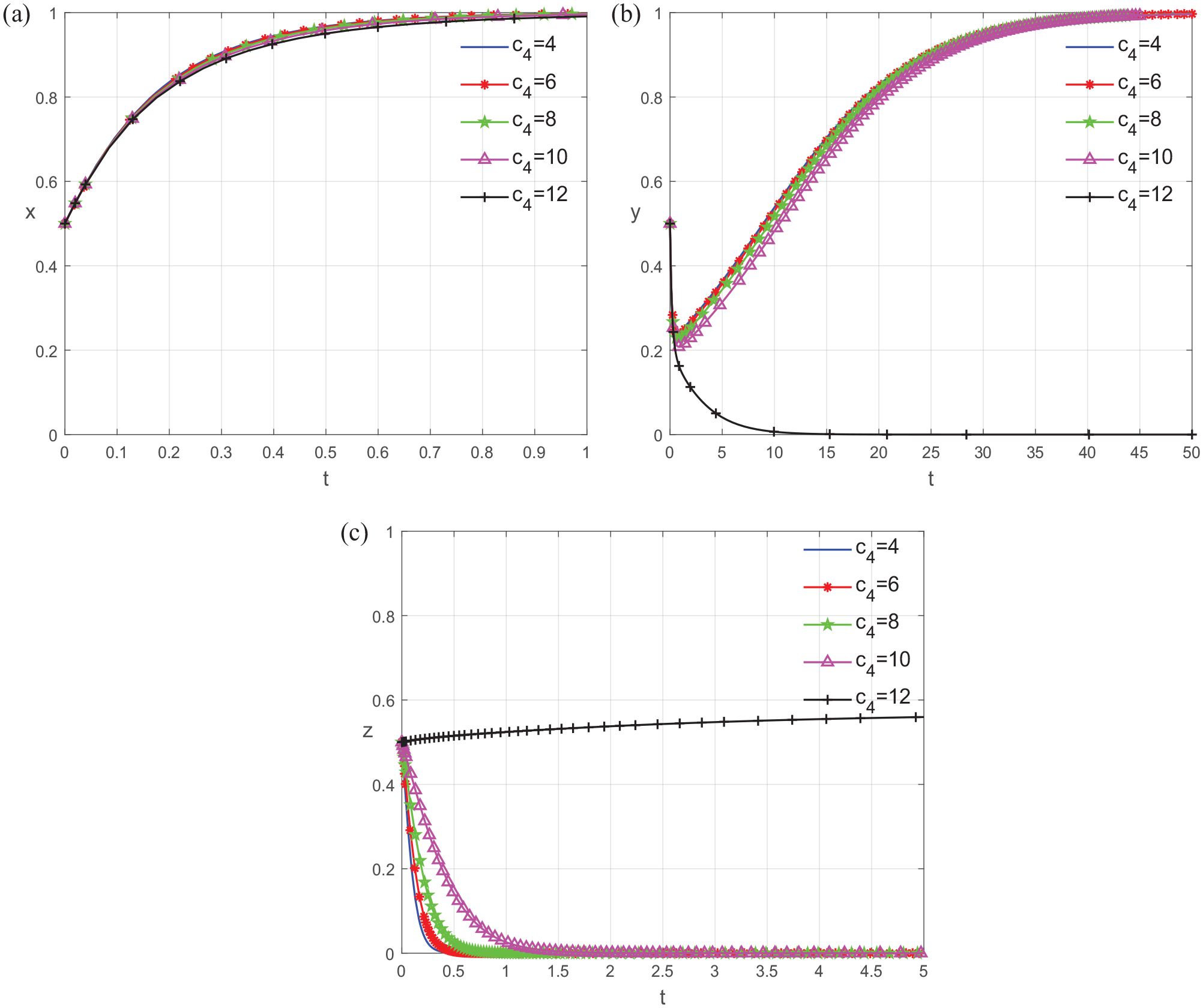
While maintaining all other conditions, we examine the influence of loss aversion sensitivity δ on the strategic evolution of each entity. Afterward, we set δ as 1.6, 1.8, 2, 2.2, and 2.4 before conducting simulations, with results depicted in Figure 8. Our findings reveal a critical threshold for the sensitivity parameter δ among tourism enterprises, ranging from 2.2 to 2.4. When a falls below this threshold, the probability of tourism enterprises opting for price discrimination y converges to 1. Conversely, as δ surpasses this threshold, enterprises increasingly abstain from implementing price discrimination, leading y to converge toward 0. Furthermore, with heightened loss aversion sensitivity δ, tourists tend to compromise, resulting in x converging toward 1. Meanwhile, the government leans toward a passive regulatory approach, causing z to approach 0.

Simulation graph illustrating the evolutionary impact of loss aversion sensitivity δ on the game players: (a) tourists, (b) tourism enterprises, and (c) the government.
Figure 8 depicts the evolutionary impact of loss aversion sensitivity on the game players, illustrating how varying levels of sensitivity influence their strategic decisions. These results highlight the profound impact of loss aversion sensitivity on the strategic decisions of actors involved in price discrimination within the tourism market. A greater sensitivity to loss aversion corresponds to a higher likelihood of businesses refraining from price discrimination strategies. Therefore, tourists are more inclined to compromise, and businesses are predisposed toward passive regulatory approaches. This trend stems from an increased awareness among participants of the potential costs associated with price discrimination. Enterprises become more attuned to fines and reputation losses, leading them to avoid such strategies. Similarly, tourists, seeking to mitigate transaction costs, opt for compromise. Ultimately, the government, seeking to minimize regulatory expenses, opts for a passive regulatory strategy.
Simulation Conclusion
Based on the analysis of factors such as reputation (S), government regulatory costs (
Similarly, for tourism enterprises, these factors significantly impact strategic decisions. Specifically S,
Finally, addressing price discrimination within the tourism market falls under the government’s regulatory purview, crucial for upholding value co-creation in the tourism sector. The results indicate that factors such as
In summary, the influence of reputation loss plays a pivotal role in shaping the strategic decisions of market participants. Heightened reputation loss prompts tourists to lodge complaints, encourages businesses to adopt fair pricing practices, and triggers proactive regulatory measures by the government, thus fostering an environment conducive to value co-creation within the tourism market despite the prevalence of price discrimination. Furthermore, an increase in the fine proportion under passive regulatory oversight also contributes to maintaining strategic decisions aligned with the principle of value co-creation.
Conclusions and Implications
Unreasonable pricing practices, often observed as excessive price discrimination in the tourism market, negatively affect tourists’ destination choices, governmental governance, and business reputations, leading to concerns about shared value destruction and hindering sustainable development in tourism service quality. This study aims to investigate price discrimination in the tourism market from a value co-creation perspective, utilizing evolutionary game theory, prospect theory, and mental accounting theory to systematically analyze businesses’ pricing discrimination strategies, government regulation leniency, and tourists’ likelihood of reporting such practices. By delving into the long-term dynamic game between tourism enterprises, tourists, and government entities, conclusions are drawn based on evolutionary simulation results, yielding the following key findings:
Firstly, the system exhibits two evolutionary stable strategies, namely, NC, PD, R and NC, PD, NR. The underlying driver for businesses adopting price discrimination in profit maximization is that implementing such strategies can boost short-term company revenue, incentivizing businesses to persistently choose these strategies to maximize profits. In the current scenario, tourists typically opt for compromise strategies when faced with price discrimination due to the high cost associated with reporting. Within the evolutionary model, tourists and enterprises select compromise and price discrimination strategies, while the government opts for either active or passive regulation strategies under varying conditions. In the short term, adopting an active regulation strategy is crucial for governments to mitigate pricing discrimination in tourism enterprises. The government’s readiness to enforce active regulation positively correlates with the profits of price-discriminating tourism enterprises. This is because the higher the profit increase resulting from price discrimination strategies implemented by tourism enterprises, the greater the benefits derived from active government regulation, prompting a preference for proactive regulatory measures. As a result, governments continually refine pricing systems to steer sustainable development in the tourism market. Previous research has underscored the significant impact of government measures such as taxation on mitigating tourism price discrimination (Gu & Tam, 2014), highlighting the critical role of governments in managing such value-discriminatory practices in the tourism market. Hence, governments should holistically consider the values of tourists, tourism enterprises, and themselves in the regulatory process, systematically governing the phenomenon of price discrimination in the tourism market.
Secondly, based on the findings of the Hotelling model, tourism enterprises ultimately achieve higher profits by refraining from implementing price discrimination strategies under equilibrium conditions, fostering a scenario of value co-creation where reputation and profits coincide. This is driven by the fact that tourism enterprises face reputation loss due to negative information such as price discrimination, resulting in declining profits as demand decreases. As profits dwindle to a level comparable to that of not implementing price discrimination strategies, enterprises transition to regular pricing approaches, prioritizing the reasonable opinions of tourists. Consequently, they continuously enhance service quality and bolster their reputation to boost demand. Moreover, at market equilibrium, the government trims regulatory costs. While prior research has predominantly focused on the positive impact of price discrimination on profit escalation from the enterprise standpoint (Abrate et al., 2019; Narangajavana et al., 2014) it has overlooked the adverse influence of negative publicity on enterprise reputation. From the vantage point of value co-creation, tourism enterprises are encouraged to abandon price discrimination strategies to foster sustainable development.
Thirdly, as per the simulation results, reputation emerges as a pivotal factor in deterring price discrimination by enterprises and in raising awareness among tourists and the government regarding complaint and regulatory actions, respectively. Prior studies have evidenced that online reputation positively influences hotel pricing (Rodríguez-Díaz et al., 2018) and tourist consumption behavior (Z. Wang et al., 2021), bolstering the conclusions of this study. Furthermore, the findings of our study suggest that reputation positively influences government passive regulation, indicating that an improved reputation helps in reducing government management costs. Therefore, it becomes imperative for society and businesses to establish effective communication channels, boost media exposure and public relations, and harness social media for information dissemination to heighten awareness of corporate reputation. Additionally, while enhancing service quality, enterprises should actively address tourist complaints to foster collaborative value co-creation in reputation.
Apart from that, the likelihood of tourism enterprises refraining from price discrimination strategies is inversely correlated with government active management costs and positively correlated with passive management costs. Essentially, the likelihood of tourism enterprises eschewing price discrimination strategies and government regulatory costs roughly follows an inverted U-shaped curve. To curb price discrimination in the tourism market, the government should adopt proactive regulatory policies, refine efficiency mechanisms and regulatory frameworks, and bolster proactive management. Over time, as reputation loss mounts and price discrimination wanes in the market, the government will gradually shift toward passive regulatory strategies. Above and beyond, given that government fines exhibit minimal efficacy in curbing price discrimination in the tourism market, advocating for hefty fines on tourism enterprises is not recommended. With scant discussion in the existing literature on government regulatory measures targeting price discrimination phenomena, this study furnishes theoretical recommendations for government regulation in addressing price discrimination in the tourism market.
Finally, simulation results reveal a positive correlation between entities’ sensitivity to loss aversion and tourism enterprises’ propensity to refrain from implementing price discrimination strategies. In essence, heightened aversion to losses corresponds to diminished willingness among enterprises to employ price discrimination strategies. Previous research suggests that factors like pressure (Nicolau et al., 2023) can influence sensitivity to loss aversion. To foster value co-creation in the tourism market, the government should intensify cultural and ethical advocacy, leverage the roles of supervisors and managers in the tourism sector, and regulate the operations of tourism enterprises. Thus, prioritizing reputation management is crucial for achieving value co-creation in the tourism market, encompassing aspects such as tourist grievances, fair enterprise pricing, and government regulation. Contemporaneously, maintaining entities’ strategic alignment with value co-creation can be facilitated by augmenting the fine proportion under passive regulation.
Taken together, this study’s main contribution lies in its utilization of evolutionary game theory, prospect theory, and mental accounting theory to investigate the mechanisms shaping the strategic decisions of the three-party game entities in the context of price discrimination, viewed through the lens of value co-creation. It therefore establishes the requisite conditions for evolution toward a stable state, elucidates the primary drivers of price discrimination, and delineates how factors like reputation influence game outcomes. These insights offer valuable guidance for enhancing pricing mechanisms in the tourism market and furnish theoretical and practical implications for governing price discrimination phenomena across other markets. However, the study’s limitations primarily stem from two factors: firstly, the absence of accessible empirical data may introduce randomness in the values used within simulation models. Secondly, with the rise of digital economy platforms, the influence of internet platforms on pricing in the tourism market is burgeoning. Future research endeavors could contemplate integrating internet platforms and scrutinizing the four-party evolutionary game within the context of price discrimination in the tourism market.
In conclusion, this study sheds light on the dynamics of price discrimination in the tourism market, emphasizing the importance of value co-creation among tourists, enterprises, and governmental entities. By employing evolutionary game theory, prospect theory, and mental accounting theory, the research elucidates the factors influencing strategic decisions and reveals pathways to mitigate price discrimination while fostering fair pricing and regulatory efficacy. Through simulation analyses, the study underscores the pivotal role of reputation management, loss aversion sensitivity, and government regulation in shaping market dynamics. Moving forward, efforts to curb price discrimination and promote value co-creation must prioritize reputation enhancement, regulatory finesse, and sensitivity to loss aversion, to address emerging challenges posed by digital platforms in the tourism sector.
Footnotes
Acknowledgements
The authors would like to thank the National Social Science Fund of China for funding this study. We also acknowledge the reviewers and editors of the SAGE Open for helping improve this study.
Declaration of Conflicting Interests
The author(s) declared no potential conflicts of interest with respect to the research, authorship, and/or publication of this article.
Funding
The author(s) disclosed receipt of the following financial support for the research, authorship, and/or publication of this article: The National Social Science Fund of China (No. 23BTQ025).
Ethics Statement
Not applicable.

Data Availability Statement
Data sharing not applicable to this article as no datasets were generated or analyzed during the current study.