




Abstract
Food and nutrition security is a critical issue for Pakistan, with over half of the population living in deprivation. Poor nutrition is one of the primary reasons for morbidity and mortality, particularly among children and women. This research compared food and nutrition security in Pakistan by examining three key dimensions: food quantity, quality and economic accessibility using Household Integrated Economic Survey 2015 to 2016 and 2018 to 2019. A study found that dietary intake had decreased by 2% in rural areas and 0.8% in urban areas between 2015 to 2016 and 2018 to 2019. Additionally, 2.1% of households had increased food insecurity during this period, with a greater impact in rural areas. The second most pressing problem of food insecurity is diet quality. Protein deficiency has been observed across the country. A large portion of the population in Sindh, KP, and Balochistan are deprived in micronutrients intake such as calcium, iron, zinc, and vitamins B1, B2, B3, C, and A. The cost of food has also risen due to inflation between 2015 to 2016 and 2018 to 2019, meaning that households have less access to nutritious food. The governments of Sindh, KP, and Balochistan need to do more to combat food insecurity and ensure that rural areas have enough healthy food for low and medium-socioeconomic households. Provincial-level efforts play a crucial role in mitigating the catastrophic loss of life and achieving sustainable development goals, especially the goal of zero hunger.
Plain language summary
In Pakistan, many people deprived to get enough food, and this is causing serious health problems, especially for children and women. A study estimate that how much food people have, how healthy the food is, and whether people can afford it. It found that between 2015-16 and 2018-19, the amount of food intake down by 2% in rural and 0.8% in urban areas. During this time, 2.1% more households had trouble getting enough food, especially in rural areas. The healthy food like protein and important vitamins and minerals analysis shows that lot of people are missing nutrients like protein, calcium, iron, and vitamins. Food prices also went up, making it harder for households to buy healthy food. The governments of Sindh, KP, and Balochistan need to do more to help, especially in rural areas. Provincial governments are important in preventing more health issues and helping the country achieve the goal of ending hunger.
Introduction
Food and nutrition insecurity are a growing concern in Pakistan, contributing to widespread health deprivation in the country. According to the World Food Program, one-third of the population is food insecure, and this figure is likely to increase due to climate change, population growth, and economic instability. Poor nutrition is also a major problem in the country, with more than half of the population suffering from deficiencies in essential vitamins and minerals (WFP, 2018). Food and nutrition deficiencies harm health, reduce productivity, and increase medical costs (Berry et al., 2015).
By 2030, the world is committed to achieving Sustainable Development Goal-2 (SDG-2): “End hunger and ensure that all people, especially the poor and vulnerable, have access to safe, nourishing, and enough food” (UN, 2022). It is vital to remember that hunger and food insecurity are different (Dudek et al., 2021). The common concept of food security is a state in which all people have physical, social, and economic access to enough, safe, and nutritious food that meets their dietary needs and food preferences for an active and healthy life. This includes access to food that is enough, safe, nutritious, and quality (Clay, 2002). Hunger in sustainable development refers to the ability to ensure adequate nutrition and access to food for everyone in a society. It is an important part of ensuring that all people have access to the resources necessary to lead healthy and productive lives. Improving access to nutritious and affordable food is an essential part of any strategy to end poverty and promote sustainable development, as well as access to clean drinking water, adequate sanitation, and access to health care, which are all necessary for a person or household to be healthy (Gallagher & Morel, 2016; Hameed et al., 2020).
Food and nutrition security cause malnutrition and hunger. Growth obstruction in childhood is significantly associated with loss of productivity (Cook & Frank, 2008; World Bank, 2006). Many people in low- and middle-income countries still experience severe hunger and malnutrition. Most undernourished people live in developing countries (Mutisya et al., 2015). Stunting is much more common in developing countries, with Asia having the highest rate of stunted children (FAO et al., 2018). There are numerous constraints to meeting the required level of dietary intake and balanced diet with adequate micronutrients and minerals, including affordability of food and healthy diet, sustainable and inclusive production and supply, income inequality, and environmental challenges to achieve SDG-2. Furthermore, natural disasters, like earthquakes, floods, and COVID-19, will compound these difficulties by interfering with food supply networks and people’s access to healthy food (FAO et al., 2018)
Pakistan is among the nation’s most susceptible to food insecurity. The 2018 National Nutrition Survey reported 36.9% of households as food insecure. The Pakistan Demographic and Health Survey (PDHS) of 2017 to 2018 reported 37.8% of children under 5 years as stunted, with stunting being slightly higher in boys (38.2%) than in girls (37.1%). Sindh had the highest rate of stunted children, at 50%, followed by Balochistan (47%), Khyber Pakhtunkhwa (KP; 40%), and Punjab (30%) (National Institute of Population Studies (NIPS) [Pakistan] and ICF, 2019). The government of Pakistan has recognized the need to address food and nutrition insecurity, and has taken steps to improve the situation. The government has put in place several programs aimed at providing food assistance to those in need, as well as nutrition education and counselling for at-risk populations (Figure 1). Additionally, the government has implemented various agricultural policies, such as subsidized fertilizers and improved access to irrigation, to increase food production. Unfortunately, despite all these attempts, a sizable portion of children continue to suffer from acute malnutrition, and 20.3% of the population is still undernourished. With a score of 26.1 on the Global Hunger Index in 2019, Pakistan was ranked 99th, out of 121 countries. Pakistan, among other places, has severe scarcity and malnutrition, which results in stunting, wasting, and deficiencies in important micronutrients, including calcium, iron, zinc and Vitamins B1, B2 and B3 von Grebmer et al., 2019.

Pakistan implemented programs.
On the supply side, Pakistan is facing a shortage of agricultural food commodities due to various factors. These include low agricultural productivity, high post-harvest losses, and inadequate storage and transportation infrastructure. The rising population and increasing demand for food have further exacerbated the existing resource constraints (Salam & Hameed, 2022). The government is taking several measures to address the situation, such as increasing agricultural productivity, improving storage and transportation infrastructure, and providing subsidies to farmers.
This study discusses alarming patterns in macro and micronutrients, which show that stunting and malnutrition deficiencies have been rising in Pakistan over time. Most studies in the literature that is currently available concentrate on calorie consumption (Ahmed et al., 2015; Aziz et al., 2020, 2021; Bashir et al., 2012; Haider & Zaidi, 2017; Hussain et al., 2014; Malik et al., 2014; Mudassar et al., 2012), often ignoring macronutrients including protein, fats and fiber in addition to micronutrients. This method is antiquated and does not include a current assessment of macro- and micronutrient deficiency. To maintain excellent health and a balanced diet, food must satisfy the various needs of carbohydrates, proteins, minerals, vitamins, and vital macro and micronutrients (Jones et al., 2013).
The goals of this research include a thorough empirical analysis of food and nutrition security. It uses the metabolizable energy (ME) framework to compute calories with calorie intakes for urban regions of 2,230 and rural areas of 2,550 per adult equivalent. The study also explores calorie intake patterns, encompassing macro and micronutrients, and establishes a balanced diet according to World Health Organization (WHO) and Food and Agriculture Organization (FAO) criteria. Using Food and Drug Administration (FDA) guidelines, the study also takes nutritional deficiencies into account. This research is important because it offers comprehensive insightful information to political parties, government agencies, legislators, and community organizations to achieve zero hunger. This is the significance of our work
Abbreviations
ME: Metabolizable Energy, EP: Edible Portions, FAO: Food and Agriculture Organization, FCT: Food Composition Table, FDA: Food and Drug Administration, GDP: Gross Domestic Product, HHs: Households, HIES: Household Integrated Economic Survey, Kcal: kilocalories, KG: Kilogram, KP: Khyber Pakhtunkhwa, MPI: Multidimensional Poverty Index, NNS: National Nutrition Survey, PDHS: Pakistan Demographic and Health Survey, SDG: Sustainable Development Goal, WHO: World Health Organization.
Literature Review
Food and nutrition security is made up of four components: availability, accessibility, utilization, and stability. These four dimensions are related to various indicators, including agricultural production, food prices, per capita income, poverty, trade, clean drinking water, sanitation, and health services. This section provides a brief overview of these dimensions.
Food Availability
Pakistan’s food availability is mainly determined by local agricultural production, climate change, arable land, and international trade. Wheat, rice, maize, and other cereals make up the majority of the country’s caloric intake. Agriculture is essential to ensure food security and support the rural population’s well-being. Wheat and rice are mainly produced in Punjab and Sindh, and while the yield per acre of wheat and rice has increased over time, it has yet to reach its potential. Maize crops, however, have seen a more substantial increase in productivity (Figure 2). The availability of inputs, access to agricultural credit, rural infrastructure, and research programs are key factors that affect crop production. Small-scale farming on less than five hectares of land is a major challenge to food and nutrition security, but it is essential to accelerate agricultural productivity and value-added growth (Mellor & Malik, 2017) as well as administrative structure to enhance the efficiency within the industry (Ali, Jiang et al., 2022). To achieve these objectives, it is essential to restructure and improve agricultural research and extension services, build institutional capacity, develop regionally relevant crop production technology packages, and educate farmers on adopting these packages. Additionally, an agricultural policy is necessary to ensure growth and food security.

Food grain yield (kg/per acre) and Kcal/capita/day.
Over the past 13 years, the wheat crop productivity trend has fluctuated, with an initial yield of 992 kg per acre in 2007-08 increasing to 1,146 kg in 2010 to 2011, decreasing to 1,125 kg in 2015 to 2016, increasing to 1,203 kg in 2016 to 2017, and then decreasing again in 2017 to 2018. However, actual yields remain below potential yields.
The increasing population in Pakistan is a major constraint on overcoming and achieving zero hunger, as agricultural production and efficiency have decreased while the population has increased by 207.8 million (GOP, 2021). Agriculture is a leading field for Pakistan’s basic food requirements, with 915 kcal/day food supplies of wheat in 2001 and 903 kcal/day in 2013. Over time, the rice crop has been the same as the wheat crop, with 153 kcal/day and 125 kcal/day respectively. However, the food supply of maize and its products increased from 2001 to 2013, with 60 kcal in 2011 and 129 kcal/day in 2013.
Food Trade
Trade policy is essential for achieving zero hunger and economic growth, enabling people to have access to food security and a better quality of life. Pakistan has remained a food-exporting country throughout the last decade, but imports basic food commodities due to political instability and internal inability. Before 2010, the import of food commodities was greater than the export, but from 2010 to 2016, the export quantity index was higher. In 2017, however, the import quantity index surpassed the export (FAO, 2017). To increase agriculture and exports, Pakistan needs political and financial stability, as well as the internal potential to boost domestic income-generating activities.
Food Access
Food access in Pakistan is both economic and physical, requiring an appropriate and healthy diet to be accessible without reducing other basic needs. Income and consumer prices play a crucial role in determining economic access, but real household incomes have not increased in comparison to the highest quintile classes, indicating that Pakistan’s economic development has been neither inclusive nor equitable (Khan et al., 2021).
Wheat’s contribution to calorie intake is higher in Pakistan, and over time, the cost of food has increased faster than wages. To understand the increase in food prices and daily wages, we will examine the purchasing power of skilled and unskilled workers and how much food they can afford from their daily wages in Table 1. In 2001-02, skilled workers were able to purchase 28 kg and unskilled workers 14.4 kg of food with their daily wages, while in 2013-14 they could only purchase 22.3 and 13.8 kg respectively. This caused more damage to skilled workers than unskilled workers, as the decline in their actual purchasing power was greater than that of unskilled workers.
Comparison of Average Price of Wheat and Daily Wages of Skilled and Unskilled workers.

Source. Haider and Zaidi (2017).
However, poverty in Pakistan decreased by 64.3% from 2001 to 2015, but multidimensional poverty is estimated to be 44%. This poverty considers several sustainable development factors, including education, the environment, health, housing, sanitation, and wealth, among others. The poorest of the poor in the area are deprived of clean drinking water, adequate housing and sanitation, as well as financial security (Padda & Hameed, 2018).
Food Utilization
Food utilization is determined by eating habits, access to safe drinking water, hygiene and sanitation services, and access to healthcare (Ergando & Belete, 2016). The analysis revealed that over 40% of intake was derived from wheat, while the second main proportion was from other cereals. Protein sources such as chicken, mutton, beef, dairy products, and fish are limited. Dietary diversity is a major obstacle to food security and micronutrient deficiency in Pakistan, due to the nation’s diet consisting of a single meal package and limited amounts of other items. A small increase in the price of basic foodstuffs decreases the demand for nutritious food (Haider & Zaidi, 2017).
WASH and Care Practices
Food security is essential for a variety of reasons, such as economic growth, health, and human rights. Poor nutrition, however, can lead to a lack of productivity and hinder economic development. In addition, health problems, such as malnutrition, infant mortality, and infectious illnesses, can all be linked to inadequate diets and a lack of access to clean drinking water and proper sanitation (Hawkes et al., 2017). The 2017 to 2018 Pakistan Demographic and Health Survey showed that only 7% of households had access to safe drinking water, 13% lacked toilet facilities, and 46.9% used wood, straw, agricultural crops, and animal dung as cooking fuel, leading to an increased risk of infectious diseases and malnutrition (National Institute of Population Studies (NIPS) [Pakistan] and ICF, 2019).
According to the empirical investigation, households with access to clean drinking water and sanitary facilities experience less food insecurity than those without (Ejaz Ali Khan et al., 2012). In healthcare, breastfeeding protects the mother and newborn from infectious diseases and decreases the risk of breast cancer (Aguiar et al., 2020). Pakistan’s National Nutrition Survey (NNS) reported a significant increase in early breastfeeding from 26% to 45% in the 18 years from 2001 to 2018. The goal of improving breastfeeding practices is to improve the health of women and children, and ensure they are healthy enough to feed their children (GOP & UNICEF, 2019).
Food and Nutrition Security Status
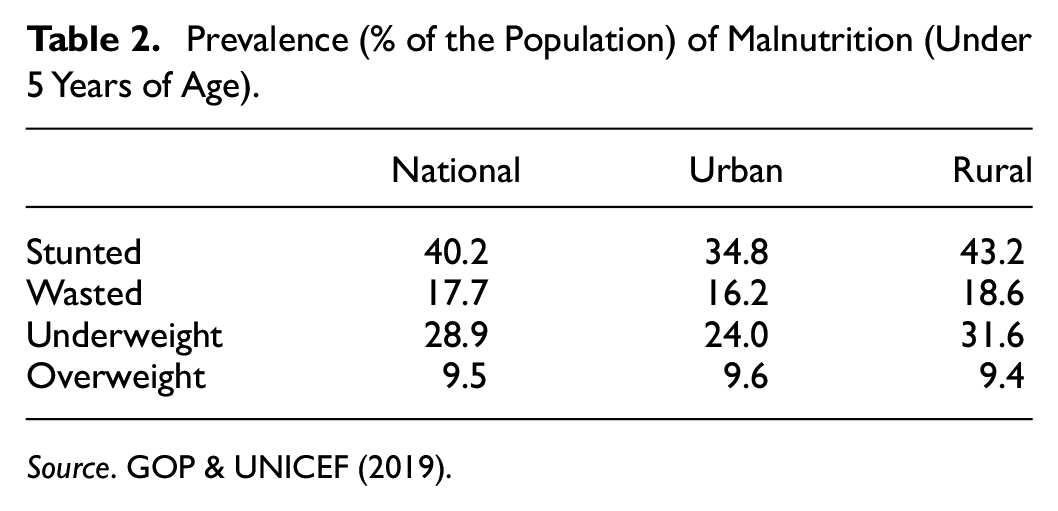
The nutritional status of children under five in Pakistan is alarming, with around 40% being stunted, 17.7% wasted, 28.9% underweight, and 9.5% overweight. This is particularly true for those living in rural areas, with boys being more likely to be stunted, wasted, and underweight than girls, although the difference is not significant (Tables 2 and 3).
Prevalence (% of the Population) of Malnutrition (Under 5 Years of Age).
Source. GOP & UNICEF (2019).
Prevalence (% of the Population) of Malnutrition (Under 5 Years of Age) by Gender.

Source. GOP & UNICEF (2019).
Stunting decreased from 48% in 1965 to 36.3% in 1990, but increased to 41.6% in 2001, showing only an 8% decrease in four decades. Wasting has also increased from 11% to 17.7% over the same period (Figure 3).

Trend of stunting and wasting.
The other most important predictor for micronutrient deficiency is anaemia in women of productive age (15–49). More than 50% of women in productive lives suffer from anaemia deficiency in Pakistan. From 2012 to 2016, 25.3 million women had anaemia deficiency (GOP & UNICEF, 2019).
Materials and Methods
Data
This study used the Household Integrated Economic Survey (HIES) 2015 to 2016 and 2018 to 2019 to analyse food and nutrition security in Pakistan, which is conducted by the Pakistan Bureau of Statistics. The HIES 2015 to 2016 included 24,783 households, whereas the HIES 2018 to 2019 had 24,809 households. It covers national and provincial statistics on income, expenditures, and other socioeconomic aspects, as well as urban and rural areas. This study used data from 24,238 households from the 2015 to 2016 dataset and 24,753 households from the 2018 to 2019 dataset (Table 4).
Covered Number of Households During HIES 2015 to 2016 and 2018 to 2019.

Source. Pakistan Bureau of Statistics (2015–2016 and 2018–2019).
Methodology Procedure
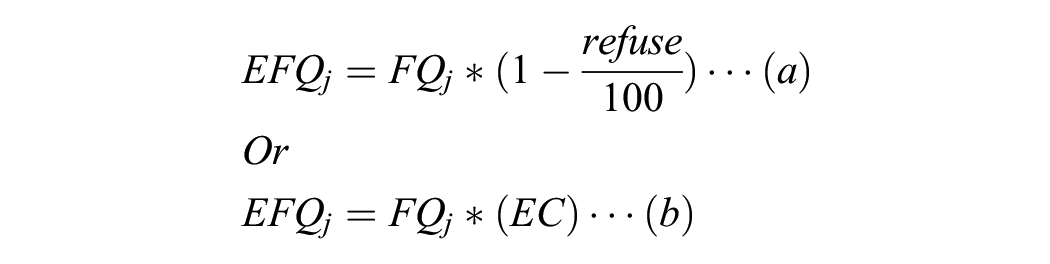
This research used methodology from two well-renewed textbooks, Maxwell and Smith (1992) and Moltedo et al. (2014) to quantify food and nutrition security. The three basic indicators including diet quantity, quality and economic vulnerability are calculated by the given steps by using the Indian Food Composition Table (2017) and Bangladesh Food Composition Table (2013) conversion and refusal factors (Longvah et al., 2017; Shaheen et al., 2013). The Pakistan Food Composition Table 2001 is missing the refusal factor of Pakistan.
Diet Quantity

Where
Where

Where

Where,

Where
Estimation of Missing Diet Quantity


Where


Where


Where
Diet Quality
Various measurements related to average protein, carbohydrate, and fat consumption per person per day, as well as the share of dietary energy consumption from these nutrients. It also includes balanced diet analysis according to WHO/FAO standards and the average of micronutrient deficiencies by national and regional levels as per FDA guidelines.
Economic Vulnerability
Measures food expenditure variation between expenditure quantiles and the average price of 100 calories, which can provide insights into economic vulnerability related to food consumption.
Therefore, all the prepared food quantity was converted into macro and micro nutrients such as proteins, fats, carbohydrates, and vitamins. These nutrients were also used in calorie conversion. Finally, the following modified Atwater formulation was used to calculate caloric intake by macronutrients such as protein, fats, and carbs:

Alcohol consumption is not permitted in Pakistan, and surveys do not gather data on this matter, so it is excluded from the above equation and our calculations. The concept used in this study is based on metabolizable energy, which is the energy that is available for producing heat and for the body’s needs. Following previous research on poverty and food security, the recommended calorie intakes of 2,230 and 2,550 per day per adult equivalent were used to decide whether household food is secure or insecure in Pakistan (Hameed et al., 2021a).
For nutrition security analysis, this study used micronutrient and balanced diet deficiencies criteria. For micronutrient deficiency the FDA recommended maximum daily nutrients for adults and children over 4 years of age based on a 2000- calorie diet employed.
For the balanced diet deficiency, it has relied on the WHO and FAO combined expert opinion on macronutrient deficiency. A balanced diet is achieved when the following parameters are met:
Caloric intake supplies 10% to 15% of protein.
Fats account for 15% to 30% of caloric consumption.
Carbohydrates account for 55% to 75% of total calorie intake.
Results
Diet Quantity
The empirical analysis of 2015 to 2016 and 2018 to 2019 indicates in Table 5 that the average per capita daily caloric intake varies greatly by province. Households experiencing a deficit in caloric intake in Balochistan and Sindh are comparatively higher. At the national level, average per capita caloric intake was estimated at 2,533 kcal/person/day from 2015-16 and 2,620 kcal/person/day from 2018-19. There is a 3.4% caloric intake change during previous 3 years at the national level. In Punjab, the country’s most agricultural province, the average per capita caloric intake had increased 10% from the previous years, while Sindh remained insignificant change and Balochistan had increased 11.4% compared to the previous years. However,KP province had decreased by 6.4% per capita caloric intake due to the addition of newly merged districts. In the previous 2015-16 survey, KP reported 2,674 kcal/person/day which was greater than the national level.
Average Per Capita (Median) Calorie Intake by Province and Region.

Source. Author’s calculations.
The regional level analysis indicates in Table 6 that rural areas people consumed more caloric intake compared to urban areas. The average caloric intake at the national level was reduced by 2.0% in rural areas and 0.8% in urban areas from 2015 -16 to 2018 -19. The provincial analysis illustrates that in KP it reduced by 10.9% in rural areas, followed by 1.9% in rural Punjab and 1.4% in rural Sindh. The significantly caloric intake increased in the urban (10.0%) and rural (8.3%) in Balochistan from 2015 -16 to 2018 -19. Food insecurity analysis found that 40.2% of households reported being deprived of caloric intake from 2018-19 which was 38.1% from 2015-16. This deprivation is more pronounced in urban and rural areas, where 41.5% and 39.5% of households suffer from food insecurity in 2018-19. The percentage was 40.5% and 36.7% from 2015-16 and currently has increased 2.8% in rural areas and 1.0% in urban areas. Additionally, provincial-level analysis shows that provinces Punjab and Balochistan reduced food insecurity at the regional level, but Sindh and KP increased food insecurity significantly.
Households (%) Suffering Inadequate Caloric Intake (Urban = 2,230 and Rural = 2,550).

Source. Author’s calculations.
Diet Quality
Protein, fats, and carbs are essential macronutrients for a well-balanced diet. Although the calories ingested are still required, they are inadequate. The food that we consumed contained calorie requirements and varying requirements of carbs, proteins, minerals and vitamins. These nutrients are all necessary for maintaining excellent health (Jones et al., 2013). The deficiency of these nutrients causes malnutrition, poor health and low productivity which will become the economic loss at the aggregate level. Stunting and wasting are two serious effects of underfeeding in children (WHO, 2020). The assessment of various macro and micronutrients and their deficits in food intake is a distinctive aspect of this study. These evaluations have also been done for both urban and rural populations. This study employed the WHO threshold criteria of carbs, proteins and fats in daily intakes, including, 15% to 30% proteins, 10% to 15%, of fats and 55% to 75% of carbs (Moltedo et al., 2014). These all are important nutrients for a balanced diet.
According to the analysis presented in Table 7, 44.6% of households in the 2018-19 data and 39.7% of households in the 2015-16 data were found to be protein deficient. At the national level, the percentage of households with a protein deficiency has risen over time to 4.9%. From 2015-16 to 2018-19, the use of fats fell across Pakistan, whereas small amounts of carbs increased. In Pakistan, 62% of total calorie consumption is derived from wheat, oils, and sugar. These meals don’t have enough protein. The rural areas of Pakistan remain more deprived of protein compared to the urban areas. The number of households increased by 3.4% in rural and 2.4% in urban areas between 2015-16 and 2018-19, respectively. According to the provincial analysis, the proportion of protein-poor households increased by 14.8% and 21.4%, respectively, Balochistan has much more rural areas than the rest of Pakistan. It was 0.4% in Punjab and 5.7% in Sindh.
Average HHs (%) Suffering Deficiencies of Macronutrients by Province and Region.

Source. Author’s calculations.
According to data on the country-level caloric intake composition shown that cereals, such as wheat, maize, rice, and other cereals, accounted for 58.4% of total caloric intake. Following this in 2018-19 were dairy products (9.6%), sugar (9.0%), and oils and fats (13.4%). Cereals and grains make up most of the food in Pakistan. Because fruits, meats, and vegetables make up a very tiny portion of the diet, most calories come from carbohydrates and fats rather than from meat, milk, fruits, and vegetables (Figure 4). A significant obstacle to a healthy lifestyle in Pakistan is the quality of the national diet patterns.
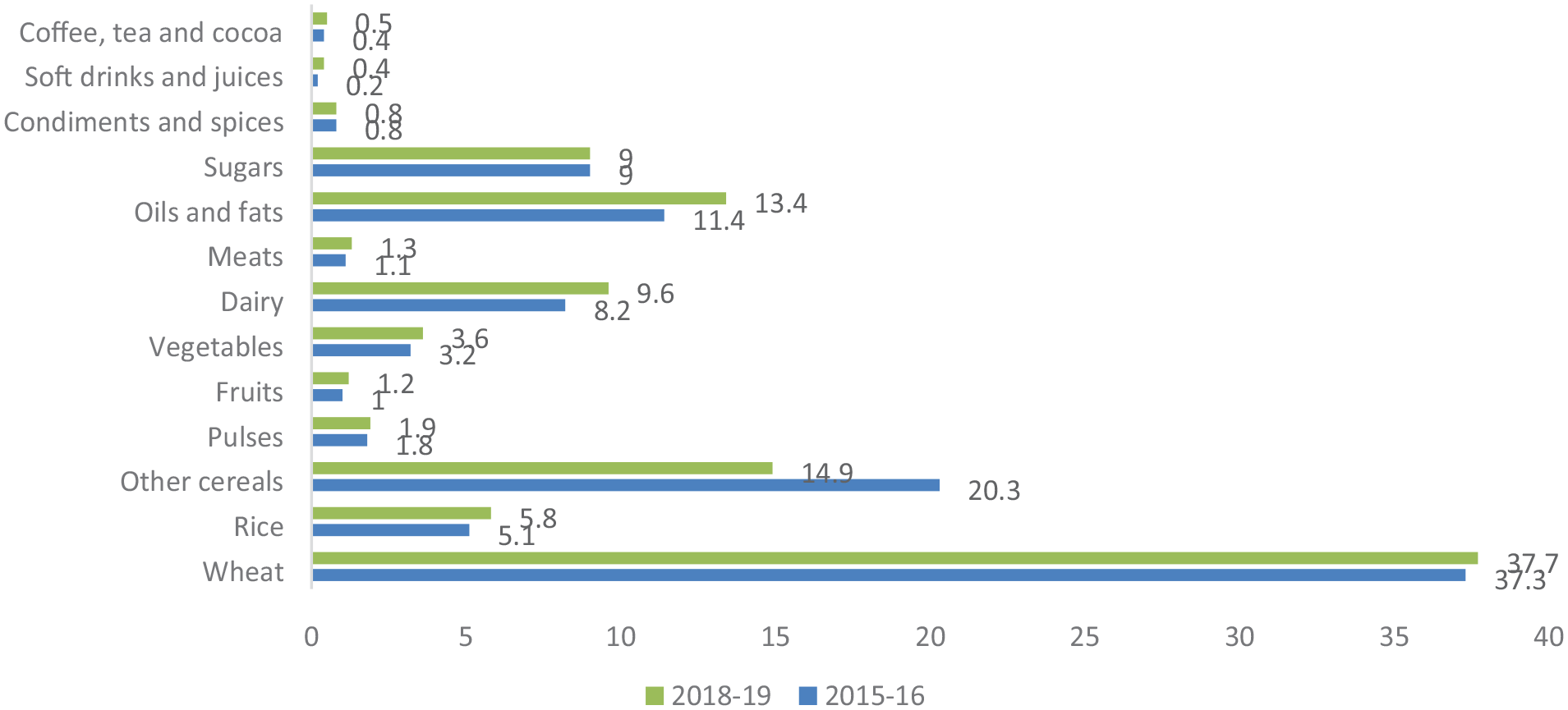
Share of caloric intake.
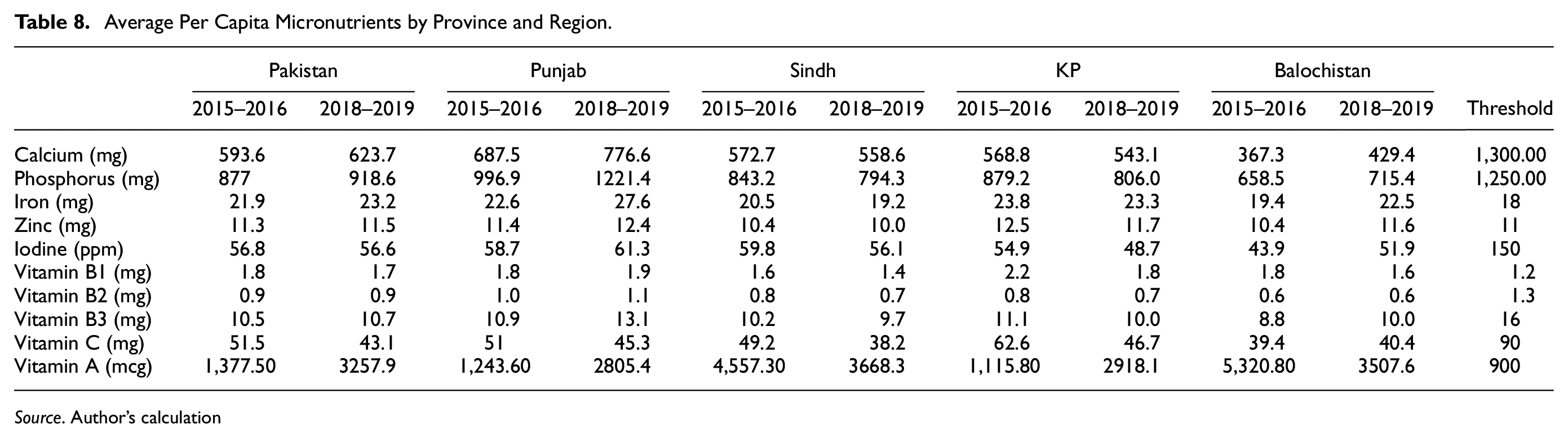
Micronutrients are also necessary for good physical and mental health, as well as to reduce the risk of chronic and infectious diseases. Between 2015-16 and 2018-19, in Pakistan, average per capita increases in calcium, phosphorus, iron, vitamin C, and vitamin A, but not in zinc, vitamin B1, B2, or B3. Punjab has similarly largely followed the national pattern, whereas Sindh and KP had a decline in average per capita micronutrients from 2015-16 to 2018-19. Per capita micronutrients in Balochistan rose from 2015-16 to 2018-19. In Pakistan, most of household’s lack of adequate levels of calcium, phosphorus, iron, zinc, vitamin B1, vitamin B2, vitamin B3, vitamin C, and vitamin A, 93%, 64%, 23%, 40%, 12%, 74%, 70%, 86%, and 38%, respectively. The provincial and regional levels analysis estimated a similar picture, with small variation (Table 8).
Average Per Capita Micronutrients by Province and Region.
Source. Author’s calculation
Economic Vulnerability
Food economic vulnerability is a term used to describe a population’s vulnerability to food price increases and instability in the food system. It is a measure of a population’s ability to secure enough food to meet their dietary needs at an affordable price. It is composed of factors such as income and inequality levels, access to markets, poverty levels, and the availability of food. Food economic vulnerability is a serious issue in many developing countries, where most of the population is unable to access enough food and nutrition due to poverty and lack of access to markets (Hameed et al., 2021b).
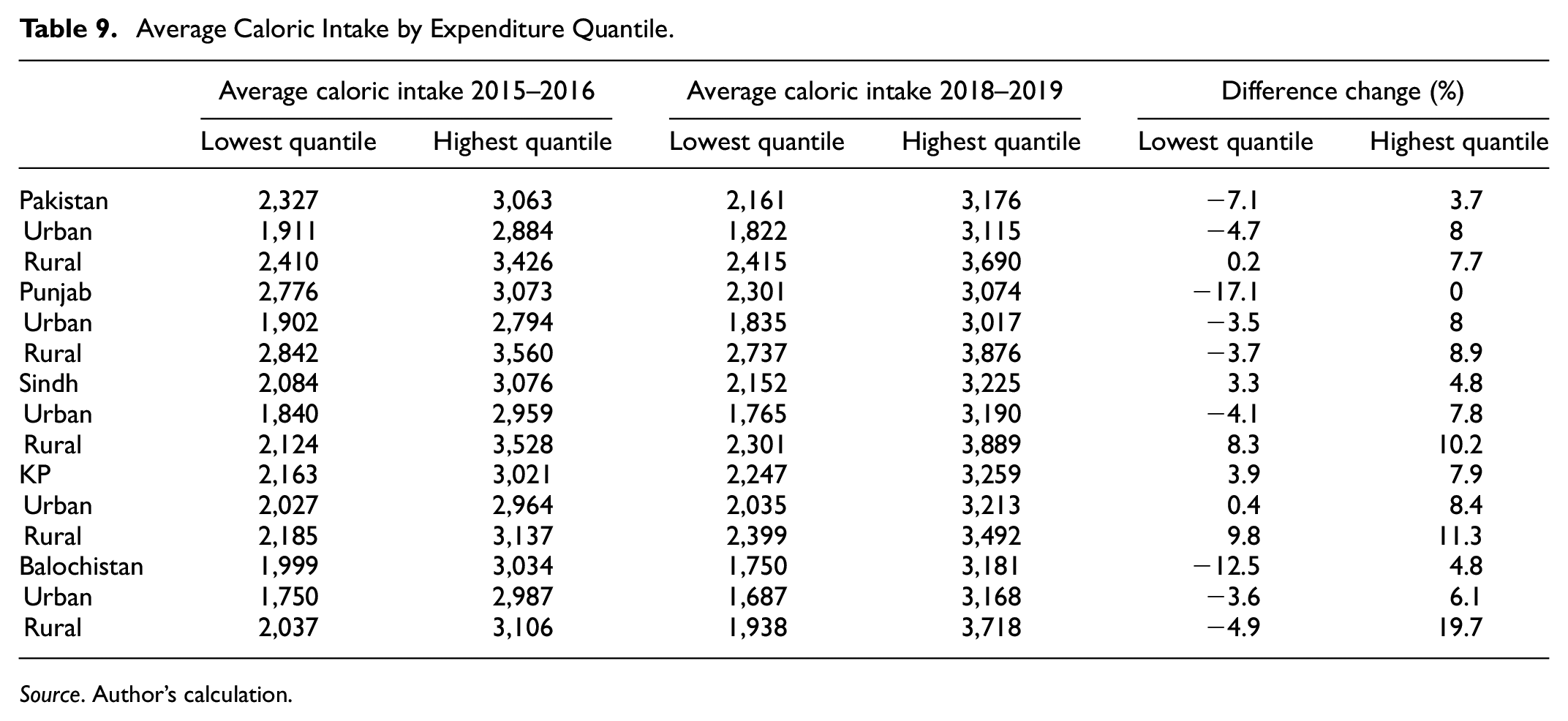
Food prices are often volatile and can easily increase, resulting in a decrease in food intake and an increase in malnutrition. The lack of adequate storage and transportation infrastructure means that food availability is often limited and unreliable. The average caloric intake by expenditure quantile shows that the deprived or lowest quantile consumed less per capita compared with the highest or wealthiest quantile. Over time, the lowest quantile per capita food consumption has decreased because of the low income, high food price, unemployment and a slowdown of the economy, particularly in the urban areas of the country affected significantly. On the other hand, during the studied periods, the highest quantile of per capita food consumption was raised. At the national level, the average declined by 7.1%, and in urban areas, it decreased by 4.7%. Compared to Sindh and KP, Punjab and Balochistan’s lowest quantile households experienced a considerable impact (Table 9).
Average Caloric Intake by Expenditure Quantile.
Source. Author’s calculation.
Prices of food commodities are intimately linked to their acquisition, particularly for poor and deprived households. Because low-income and socioeconomically challenged people and households have limited alternatives for food replacement and purchase, price volatility is a big worry for them in developing nations.
According to a self-reported household food price survey in Table 10, the cost of 100 calories increased nationwide by 3.3% between 2015-16 and 2018-19, as well as by 11.8% in urban regions and 16.7% in rural areas. Compared to the country’s urban and rural area’s price fluctuation, the price explosion had a major effect on Punjab province’s rural and urban communities. In Sindh, the rural areas had a price change rate of 11.5% and the urban areas 5.4%. Comparably, KP had urban price change rates of 3.0% and rural 19.2%, while Balochistan had urban price change rates of 9.7% and rural 15.4%. While purchasing 2,550 calories will cost Rs. 2,371 per month/capita. Purchasing 2,230 calories per day will cost urban households Rs. 2,542 per month/capita, and purchasing 2,550 calories per day will cost rural households Rs. 1,890 per month/capita.
Average (Median) Price of 100 Calories by National and Regional Levels.

Source. Author’s calculations.
Discussion
The discussion section of this paper has made an in-depth analysis of food and nutrition security in Pakistan. The analysis has identified various factors that have contributed to food and nutrition insecurity in the country. The findings of this study show that Pakistan is facing an alarming level of food insecurity, with a large majority of its population facing food and nutrition insecurity. There is a 3.4% caloric intake change from 2015-16 to 2018-19 at the national level. The average caloric intake at the national level was reduced by 2.0% in rural areas and 0.8% in urban areas. The provincial analysis illustrates that in KP it reduced by 10.9% in rural areas, followed by 1.9% in rural Punjab and 1.4% in rural Sindh. The decrease in KP is more noticeable due to the addition of newly merged tribal areas. Food insecurity analysis found that 40.2% of households reported being deprived of caloric intake from 2018-19 which was 38.1% from 2015-16. This deprivation is more pronounced in urban and rural areas, where 41.5% and 39.5% of households suffer from food insecurity in 2018 to 2019. However, the 2018 national nutrition survey of Pakistan revealed that 36.9% of Pakistanis experience food insecurity (GOP & UNICEF, 2019). According to the UN World Food Program (WFP), almost 45% of children under the age of five are stunted (USAID, 2020). According to Shair et al. (2023), results from the food insecurity experience scale survey module indicate that approximately 36% of households reported experiencing food insecurity. The study suggests that households receiving safety net support are more likely to face food insecurity.
Pakistan is mostly a farming nation. The agricultural business, especially in rural regions, is vital to the country’s economic development, food security, employment generation, and poverty alleviation. It accounts for 19.2% of GDP and employs 38.5% of the workforce (GOP, 2021). As a result, Pakistan’s food supply is volatile and entirely dependent on local agricultural output, climate change, arable land, and international trade (GOP, 2020). Cereals are the primary food source for Pakistan’s growing population, and agriculture is the country’s dominant industry for meeting basic food needs (WFP, 2015). The cereals production in Pakistan has decreased over time, facing various challenges. The increased prices of inputs, substandard inputs, water shortage, climate changes, lack of technology, lack of market infrastructure, and small land holdings are all major factors contributing to the decrease in cereal production in Pakistan (Chandio et al., 2021).
The high prices of inputs, such as fertilizers and seeds, are a major challenge for small-scale farmers in Pakistan. This is because most farmers have limited access to these inputs and are unable to afford them. Moreover, the quality and availability of inputs are also a major concern, as there is often a lack of access to quality inputs which can lead to decreased per-acre yield (Salam & Hameed, 2022). Water shortage is also a major challenge for cereal production in Pakistan, as there is limited access to water and irrigation services in many parts of the country (Rahut et al., 2016). Furthermore, the lack of market infrastructure is also an issue, as many farmers are unable to access markets to sell their products due to a lack of roads, storage and transportation facilities. Finally, small land holdings are a major challenge for farmers in Pakistan, as they are unable to grow enough crops to make a profit (Azam & Shafique, 2017).
Pakistan imports important food crops such as wheat, despite an expanding population and diminishing agriculture sector production and efficiency because of a lack of political stability and internal competency (Kirby et al., 2017). On the other side, there has been a significant decrease in employment and income-generating activities. The decrease in employment and income-generating activities in Pakistan has had a significant impact on the economic and social well-being of the population and the acquisition of food for families. The lack of jobs and incomes has led to increased poverty, inequality and insecurity. It has also hurt the country’s economic growth, as there is less capital available to invest in productive activities (Iqbal et al., 2021). Pakistan is grappling with long-term socio-economic, environmental, and geopolitical challenges and instability that are directly or indirectly associated with food and nutrition insecurity. High currency devaluation, stringent fiscal and monetary policies, political instability, conflicts between political parties, soaring inflation rates, particularly food inflation exceeding 40%, skyrocketing petrol prices, declining agricultural productivity, and rising poverty levels are among the challenges highlighted in studies by Zaman (2023), Salam and Hameed (2022), Farooq and Naz (2023) and Ali, Jiang et al. (2022) and Ali, Naseem, et al. (2022). These challenges directly or indirectly exacerbate food and nutrition insecurity.
According to recent data, Balochistan and Punjab remain well compared to Sindh and KP. It meant that the Government of Sindh and KP must do more to combat food insecurity. Rural areas in Pakistan, except for Punjab, are not as good as in food security. The government needs to act to make sure that rural districts in Sindh and KP have enough food. Poverty, unemployment and living standards are the most significant economic issues facing the people of Sindh, KP and Balochistan provinces of Pakistan. These provinces are among the most impoverished and underdeveloped areas of the country, and the high level of poverty and unemployment present has a significant impact on the quality of life of the people in these regions (Padda & Hameed, 2018).
Poverty in Pakistan was estimated at 21.5% from 2018-19. In the same year, Balochistan had the highest poverty rate in the country at 40.7%, followed by KP at 27%, Sindh at 24.6% and Punjab at 16.3% (Haque et al., 2021). Unemployment is another major problem facing the people of Sindh, KP, and Balochistan. According to the Pakistan Bureau of Statistics, the unemployment rate in Pakistan was estimated at 5.9% in 2019. However, the unemployment rate in Balochistan (13.2%) was much higher than the national average, followed by Sindh (9.3%) and KP (7.1%) (GOP, 2019). The lack of access to basic services, such as health, education, and water, has also contributed to deprivation. In terms of MPI, Punjab has the lowest poverty rate at 26.1%. Sindh has the second highest rate at 50.5%, followed by KP at 34.5%. Balochistan has the highest rate at 61%. Therefore, Balochistan is the most affected province in terms of poverty (Pakistan Poverty Alleviation Fund [PPAF], 2020).
In Pakistan, the second most pressing problem of food insecurity after diet quantity, is diet quality. The right caloric intake must be followed even though a diet is nutritious. The results show that cereals make up to 60% entire caloric intake of households. The macronutrients protein, fats, and carbs are all essential for a balanced diet. In terms of calories, the quantity of food eaten is still essential, but it is inadequate. Protein deficiency was observed across the country. Wheat, oils, and sugar accounted for more of the total calorie intake at the national level. Nonetheless, these meals are protein-deficient. A considerable proportion of Pakistani families have a protein shortage in their diets. A multitude of illnesses and health issues are more prone to occur in malnourished people (FAO, 2015). A protein deficiency in youngsters may prevent them from reaching their full potential (World Bank, 2006). Insufficient protein intake is linked to a variety of illnesses including, malnourishment, fatigue, muscle wasting, and a weakened immune system. Protein is an essential nutrient for growth and repair, and not getting enough of it can have serious consequences (Sato et al., 2020). In addition, a protein deficiency can lead to anaemia, which is caused by a lack of iron in the blood and osteoporosis, which is the weakening of the bones, which can make everyday activities more difficult. It can also increase the risk of infections and make it hard to heal from surgery or an injury (Takeuchi et al., 2020). The consumption of nutritious foods such as fruits, meats, and milk in Pakistan is highly responsive to changes in prices or consumer income (Hameed et al., 2021a). Income elasticities show that fluctuations in household income significantly impact dietary patterns, leading to increased demand for all nutritional inputs except thiamine and cholesterol (Hayat et al., 2022).
Micronutrients are also important for maintaining excellent physical and mental health, as well as lowering the risk of chronic and infectious illnesses. Between 2015-16 and 2018-19, average per capita increases in calcium, phosphorus, iron, vitamin C, and vitamin A, but not in zinc, vitamin B1, B2, or B3. Punjab has similarly largely followed the national pattern, whereas Sindh and KP had a decline in average per capita micronutrients from 2015-16 to 2018-19. Per capita micronutrients in Balochistan grew from 2015-16 to 2018-19. These are essential to produce enzymes and hormones necessary for body development and appropriate working (Burchi et al., 2011). Mineral deficiency or insufficient availability may have major health repercussions. Micronutrient deficiencies are a major public health concern, especially among children. These deficiencies can have a significant impact on a child’s health-related quality of life, including physical and mental health outcomes. Studies have shown that children who suffer from micronutrient deficiencies are more likely to experience stunted growth, impaired cognitive development, weakened immune systems, and an increased risk of chronic diseases later in life (Aguiar et al., 2020; Stevens et al., 2022).
Thirdly, economic instability at the household or public level increases the likelihood that households or individuals won’t be able to achieve their nutritional needs due to income gaps, food shortages, and expensive food items (FAO, IFAD, UNICEF. WFP and WHO, 2018). It is often believed that deprived people in poor countries spend a disproportionate amount of their money on basic food (FAO, IFAD, UNICEF. WFP and WHO, 2018). To assess households’ financial situation and ascertain the purchasing power, this study examines the cost of food. According to a self-reported household food price, the cost of 100 calories grew nationwide by 3.3% between 2015-16 and 2018-19, as well as by 11.8% in urban regions and 16.7% in rural ones. The country’s rural areas suffer compared to its urban parts. Pakistan is facing a severe food crisis over time, with prices of essential food items skyrocketing. Prices of wheat, rice, and other food items have been rising uncontrollably, causing severe hardship for the people of Pakistan (Hameed et al., 2021a). This has been caused by a combination of factors, including increased global demand for food, decreased production due to unfavourable weather conditions, and a weakening of the Pakistani rupee against the US dollar. The rise in food prices is having a devastating effect on the people of Pakistan. Many families are finding it difficult to make ends meet, and are unable to buy enough food to feed their families.
The high expenditure and low income, over half of the population is concerned about the price of food. The price of food has gone up in Pakistan due to inflation. However, real wages cannot increase at the same rate as inflation (Shabnam et al., 2016) Food inflation lowers customers’ real income as well as their purchasing power. Families will have less access to nourishing food, health care, and education because of the higher spending on basic meals, which will worsen their food insecurity. A recent study used price utility functions and indirect expenditure to estimate Pakistan’s food demand. It was shown that in Pakistan’s urban and rural areas, the healthiest foods—such as fruits, milk, and meat—are viewed as complementary goods when compared to wheat, pulses, and vegetables. In addition, the cross-price elasticity absolute values in both the compensated and uncompensated scenarios point to a low cross-price elasticity, suggesting that Pakistani diets are primarily composed of a single commodity food bundle with little variation in the options available to consumers. There is a decrease in demand for nutrient foods when the costs of vegetables, pulses, and wheat rise slightly (Hameed et al., 2021b). Conversely, Pakistani dietary patterns demonstrate a notable inclination toward carbs on a broad front. The fact that most Pakistanis incorporate carbohydrates in their meals is proof of this predilection. According to the analysis of caloric intake at the national level, cereals such as wheat, maize, rice, and other grains made up 58.4% of total caloric consumption. Furthermore, 9.6% of calories in 2018 to 2019 came from dairy products, 9.0% from sugar, and 13.4% from oils and fats. Notably, fruits, meats, and vegetables make up a small component of the Pakistani diet, which is dominated by cereals and grains. As a result, fats and carbs account for a larger percentage of calories in the Pakistani diet than proteins, dairy products, fruits, and vegetables.
Conclusion and Policy Recommendations
It is crucial to address the numerous issues related to food insecurity and attain hunger-free status as soon as feasible to stop catastrophic losses and the waste of human capital in the nation. The high prevalence of food and nutrition insecurity is shown in this study. Governments, social organizations, and international organizations need to implement a short-term strategy that involves educating the public through all forms of media about the importance of human loss because of inadequate nutritious food. Also, they must prepare a strategy to use an emergency assistance program to distribute meals enriched with micronutrients to the population’s most vulnerable groups, such as those at the school base, community level, and basic health unit levels. Programs to distribute free vitamin supplements on an annual basis, comparable to national immunization programs, can be developed because most of the population is micronutrient deficient.
The main barriers to ending hunger, according to experience with these efforts, have been institutional restrictions in national and local governance. However, these restrictions or structural flaws might be lessened or remedied by non-governmental organizations. Additionally, the national social protection system’s targeted food programs in conjunction with external observation, can help the Pakistani government significantly contribute to the goal of eradicating hunger.
There is a long-term requirement for sustainable growth in agriculture and industry to combat poverty, reduce malnutrition, and stunting and promote nutritious foods in the country. Pakistan’s food and nutritional security situation requires concerted and cooperative efforts from all the relevant stakeholders, including government agencies, political parties, and non-profit organizations, to create long-term policies and strategies for the benefit of local communities. This will help to improve the current situation and meet the needs of the people.
This can be accomplished by pursuing inclusive growth strategies that involve different groups of communities, with a focus on sectors that produce goods for trade, activities that generate income, and enabling links between these sectors and the rest of the economy. However, this will necessitate paying closer attention to social areas like social capital, health, and education. To increase regional and community level well-being, the focus of the federal and provincial governments should be on creating opportunities for economic growth, educational opportunities, and health services. Moreover, if the Pakistani government gives substantial attention to the agriculture sector segments—which includes horticulture, fisheries, poultry, and livestock—can change the game. This is especially crucial because a sizable rural population depends on these segments, and the outputs produced by these segments can help the urban population as well as the country level.
More importantly, to address the catastrophic food insecurity and zero hunger, the Government of Pakistan, along with national and international organizations operating in the field of combating the effects of climate change, should reconsider climate-resilient strategies. These strategies should incorporate women empowerment programs alongside youth employment, income-generating activities, and the promotion of financial literacy, as well as health and hygiene literacy through the safety nets program.
Footnotes
Authors’ Contributions
All authors equally involved in this study contributed to its completion.
Declaration of Conflicting Interests
The author(s) declared no potential conflicts of interest concerning the research, authorship, and/or publication of this article.
Funding
The author(s) received no financial support for the research, authorship, and/or publication of this article.
Ethics Approval and Consent to Participate
Not applicable.
Consent for Publication
Not applicable.

Data Availability Statement
All relevant data are within the paper.