




Abstract
The aims of the present work were to examine the effect of food insecurity on food consumption among children/adolescents in Uruguay and to explore the moderating effect of socio-economic and demographic characteristics. The design consisted of an analysis of secondary data from a telephone survey (n = 1,504), applied to parents or tutors of children and adolescents living in Uruguay (September–October, 2020). Data were analyzed using logistic regression models and moderation analyses were run considering household socioeconomic and demographic characteristics. Food insecurity reduced the likelihood of having consumed all food groups except for carbohydrate-based foods, whereas it increased the likelihood of consuming pulses. Age of the child/adolescent, being beneficiary of income transfers and state-provided food baskets significantly moderated the effect of food insecurity on the consumption of several food groups. Results suggest that a combination of cash transfers, subsidies and marketing restrictions hold potential to reduce food insecurity and its negative effects on diet.
Plain language summary
We aimed to examine the effect of food insecurity, understood as the lack of regular access to safe and nutritious food, on food consumption among children/adolescents in Uruguay. In addition, we explored the existence of moderation or interaction effects of socio-economic and demographic households’ characteristics in the former relationship. We analyzed data from a telephone survey applied to 1,504 households with children and adolescents of Uruguay from September-October 2020. The methods used included logistic regression models and moderation analyses for binary outcomes. Logistic regressions are used to predict the probability of success of an event based on the values of explanatory or independent variables. Moderation analyses assess if the strength or sign of the effect of an independent variable is predicted by another variable, the moderator. Results showed that children/adolescents living in food insecure households had lesser odds of having consumed all food groups except for carbohydrate-based foods and pulses. For this last group the opposite effect was found. Other socio-economic and demographic characteristics moderated the effect of household food insecurity on various food groups consumption (e.g., age of the child/adolescent, household being beneficiary of income transfers and state-provided food baskets). The discussion and conclusions of our work suggest that a combination of cash transfers, subsidies and marketing restrictions constitute a promising approach towards reducing food insecurity and its negative effects on the diet of children and adolescents.
Introduction
Food insecurity can be defined as lack of regular access to safe and nutritious food (FAO, 2022). It can be conceptualized as a series of food access challenges that start with uncertainty about the ability to obtain enough food, followed by sacrifices in the quality of the diet (FAO, 2016; Pérez-Escamilla et al., 2020). As the severity of food insecurity increases, people start reducing the quantity of food consumed (moderate food insecurity) (FAO, 2016). When food insecurity reaches its most severe form, people run out of food and are likely to go entire days without eating (FAO, 2022).
Despite global commitment to end hunger and ensure access to food (United Nations, 2020), the prevalence of moderate and severe food insecurity has increased worldwide in the last 2 years as a consequence of the COVID-19 pandemic, conflict, climate shocks and the rising cost of food (FAO et al., 2022; WFP, 2022). In 2021, nearly 30% of the global population experienced moderate or severe food insecurity, mainly affecting people living in low- and middle-income countries (FAO et al., 2022). This situation poses short- and long-term consequences for health and wellbeing worldwide (Butler & Barrientos, 2020). Food insecurity has been negatively associated with several health outcomes, including undernutrition, overweight and obesity, diet-related non-communicable diseases and poor mental health (Gundersen & Ziliak, 2015; Leddy et al., 2020).
The effect of food insecurity on health strongly depends on the behavioral strategies individuals use to cope with food access difficulties (Ansah et al., 2021; Hadley & Crooks, 2012). Several studies have shown that people living in economically disadvantaged households tend to prioritize price and satiation over healthiness when making their food purchases (Folta et al., 2022; Magano et al., 2023; Puddephatt et al., 2020). The current evidence suggests that food insecurity leads to a reduced consumption of nutrient-rich foods such as fruit and vegetables (Kaiser et al., 2003; Lee et al., 2019; Leung et al., 2014; Mendes et al., 2021; Sharkey et al., 2012; Vega-Macedo et al., 2014). However, the evidence is not conclusive regarding how food insecurity influences consumption of ultra-processed products with excessive content of sugars, fat and sodium. Studies have reported both an increase and a decrease in consumption of ultra-processed products, such as sugar-sweetened beverages, processed meats and confectionary (Fernández et al., 2020; Kaiser et al., 2003; Lee et al., 2019; Leung et al., 2014; Sharkey et al., 2012). The lack of agreement of these results suggests that the effect of food insecurity on diet quality may be moderated by contextual and socio-demographic variables. In this sense, recent studies have reported heterogeneity in the dietary patterns of people living in food insecure households, ranging from patterns based on natural and minimally processed foods to patterns based on convenience ultra-processed foods (de Castro et al., 2022; Lee et al., 2019; Mendes et al., 2021). This suggests the need to deepen the understanding of the factors that moderate the effect of food insecurity on diet quality.
The effects of food insecurity on diet quality are not evenly distributed among the members of the households. Children and adolescents are usually shielded from reduced food intake by their caregivers by reducing their own diet quality or limiting their food intake (Pérez-Escamilla & Pinheiro de Toledo Vianna, 2012). However, children and adolescents also experience the negative consequences of food insecurity (Hanson & Connor, 2014). Empirical research on the effects of food insecurity on dietary quality of children and adolescents is still limited, particularly in high-income countries in specific regions (Zaçe et al., 2020), including Latin America and the Caribbean. The available evidence suggests that children and adolescents living in food insecure households have a lower diet quality compared to those living in food secure households (Eicher-Miller & Zhao, 2018; Fernández et al., 2020; Fram et al., 2011; Graham et al., 2023; Hanson & Connor, 2014; Nord & Hanson, 2012; Vega-Macedo et al., 2014; Yeh et al., 2021; Zaçe et al., 2020).
Households are expected to differ in their ability to effectively protect children and adolescents from food insecurity according to its severity as well as other socio-demographic characteristics (Eicher-Miller & Zhao, 2018; Hanson & Connor, 2014). So far, the moderators of the effect of food insecurity on children and adolescents’ food consumption have not been systematically identified. Some studies have considered socioeconomic and demographic characteristics of children, their caregivers or households as covariates in models assessing the influence of food insecurity on children’s food consumption or nutritional status (Buscemi et al., 2011; Chaparro & Lopez, 2022; Leyna et al., 2010; Shariff & Khor, 2005). Particularly, Buscemi et al. (2011) used a moderation hypothesis of the effect of acculturation on the relationship between food insecurity and children’s nutritional status among immigrant families. However, most studies have not been focused on the discussion and assessment of specific hypotheses regarding how demographic, economic, and social aspects of children and their households moderate the effect of food insecurity on eating habits. In this sense, it is necessary to understand the contextual factors that shape individuals’ responses to food insecurity experiences (Hadley & Crooks, 2012). A more in-depth understanding of these moderators can contribute to the design of effective strategies to reduce its impact on health and wellbeing (Hampton, 2007; Pérez-Escamilla et al., 2020).
In this context, the aims of the present work were: (i) to examine the effect of food insecurity on food consumption among children and adolescents in Uruguay, and (ii) to explore the moderating effect of socio-economic and demographic characteristics of the households. The study relies on moderation analysis, which consists of the assessment of the influence of a third variable on the size, sign, or strength of the effect of an independent variable on a dependent variable (Hayes, 2022). Moderation hypotheses have been tested in health-related studies that assess the influence of working conditions on the effect of socioeconomic status on health outcomes (Hoven & Siegrist, 2013), as well as the impact of the interaction of ecological systems on children’s diets and physical activity (Gubbels et al., 2014).
Context of the Study
The study was conducted in Uruguay, a high income South American country (Gross Domestic Product US$ 20,795 per capita). It stands out in the region due to its high Human Development Index (0.804), low inequality (Gini Index 0.408) and low poverty (9.9% of the population below the poverty line) (INE, 2023a; The World Bank, 2023b; United Nations Development Program, 2023). However, the country also presents generational inequities: poverty has historically been concentrated in households with children and adolescents (De Armas, 2017; INE, 2023a). In 2022, 19.7% of children from 0 to 5 years old were living in households below the poverty line (INE, 2023a).
The COVID-19 pandemic occurred in a context of deterioration of GDP, employment, and fiscal space indicators in the country (Brum & De Rosa, 2020; International Monetary Fund, 2020; The World Bank, 2023b). GDP per capita decreased 13.5% from 2019 to 2020 (The World Bank, 2023b), central government debt increased from 51.6% of the GDP from 2019 to 62.4% of the GDP in 2020 (The World Bank, 2023a), whereas unemployment increased from 8.5% in January 2020 to 11.2% in October 2020 (INE, 2023b). From the detection of the first COVID-19 cases in the country, in March 2020, national and subnational governments adopted a series of measures to mitigate the negative economic and social effects of the pandemic in the country (Brunet et al., 2020).
Some of the most relevant actions implemented by the national government were increases in cash transfer programs and the creation of an initiative of food baskets provision. The amount of two of the most relevant cash transfer programs targeted at households with socio-economic vulnerabilities (“Tarjeta Uruguay Social” and “Asignaciones Familiares del Plan de Equidad”) was duplicated twice between March and July 2020 (Brunet et al., 2020). In addition, the Ministry of Social Development provided baskets composed of minimally processed foods (rice, lentils), culinary ingredients (oil, sugar, maizemeal), and processed foods (powdered milk, canned tomato, dried pasta, canned tuna) to every person over 18 years of age who was unemployed and not receiving unemployment insurance (Brunet et al., 2020).
Civil society organizations also developed actions to contribute to food security in the country. A total of 1,220 civil society organizations developing actions to improve access to food were identified in the country, which developed one or more of the following three main actions: provision of food baskets, community pots, and logistics (e.g., receiving donations) (Brunet et al., 2021). Seventy six percent of the organizations provided food baskets, mainly consisting of minimally processed foods, culinary ingredients, and processed foods (e.g., flour, rice, maizemeal, lentils, oil, dried pasta, and canned vegetables) (Brunet et al., 2021). In addition, 62% of the organizations organized community pots, which consisted of improvised self-managed popular dining rooms that provided hot meals and snacks to the most vulnerable sectors of the population (Brunet et al., 2021). Between March and July 2020, community pots served approximately 43,800 portions of food per day (Rieiro et al., 2020).
It was hypothesized that the effect of food insecurity in children and adolescent food consumption is moderated by demographic characteristics and socio-economic characteristics of the households (Figure 1). An exploratory approach was adopted to evaluate the moderation effect of the selected characteristics. The age of the child/adolescent was regarded as a key potential moderator given developmental changes with age. Based on parents’ tendency to shield the most vulnerable members of the households (Hanson & Connor, 2014), it was hypothesized that the effect of food insecurity would be lower for children compared to adolescents. In addition, it was hypothesized that the negative effect of food insecurity on the diets of children and adolescents living of households with Black or afro ancestry would be greater. This is the second most prevalent ethnic group that comprises Uruguayan population, and it is exposed to several social inequalities (Cabella et al., 2013). Educational climate of the household was also included as previous studies have associated poorer educational indicators with adult, children, and adolescents’ lower quality diets, and vice versa (Hinnig et al., 2018; Knudsen et al., 2014; Nilsen et al., 2010). People with higher education level were expected to have more competencies to cope with budgetary restrictions (Begley et al., 2019). Therefore, the influence of food insecurity on children and adolescents’ food consumption was expected to decrease as education level increases.

Diagram of moderation hypotheses of this work.
Additionally, participation of the household in different policies or interventions aimed directly or indirectly at reducing food insecurity were considered. This is in line with studies conducted in high-income countries that show that social protection policies tend to reduce household food insecurity (Loopstra, 2018). It was expected that participation in policies or interventions from both the state and civil society would reduce the effect of food insecurity on children and adolescents’ food consumption. Three income transfers were considered: “Asignaciones Familiares” (AFAM) and “Asignaciones Familiares-Plan de Equidad” (AFAM-PE), two income transfer programs targeted at households that include either a pregnant woman or a child under 18 years old (AFAM-PE is targeted specifically at households in vulnerable socioeconomic conditions), and “Tarjeta Uruguay Social” (TUS), an income transfer targeted at households in extreme vulnerable socioeconomic conditions. Being beneficiary of state-provided food baskets, created during the pandemic in 2020, household attendance at community pots or public kitchens and being beneficiary of other type of support from civil society organizations were also considered.
Methods
This study is based on a secondary analysis of data collected through a telephone survey about health, home care and social assistance in Uruguayan households with children and adolescents of Uruguay, developed by UNICEF Uruguay through a local consulting agency in September to October 2020. Data (n = 1,504) were nationally representative of households with children and adolescents. Households were recruited by trained interviewers using random digit dialing to cellphones. This methodological decision was based on the high coverage of cellphones in the Uruguayan population (90%) (D’Almeida & Margot, 2018). Only respondents living in households with children and adolescents were included. Quotas were set based on the proportion of households with children and adolescents located in different geographic areas of the country. The minimum sample size was determined based on calculations for estimating the proportion of the population with food insecurity, for the most conservative scenario (50% prevalence). The required sample size was estimated in 1,514 for a confidence level of 95% and an expected maximum margin of error of ±2.5 percentage points.
Measurement Instruments
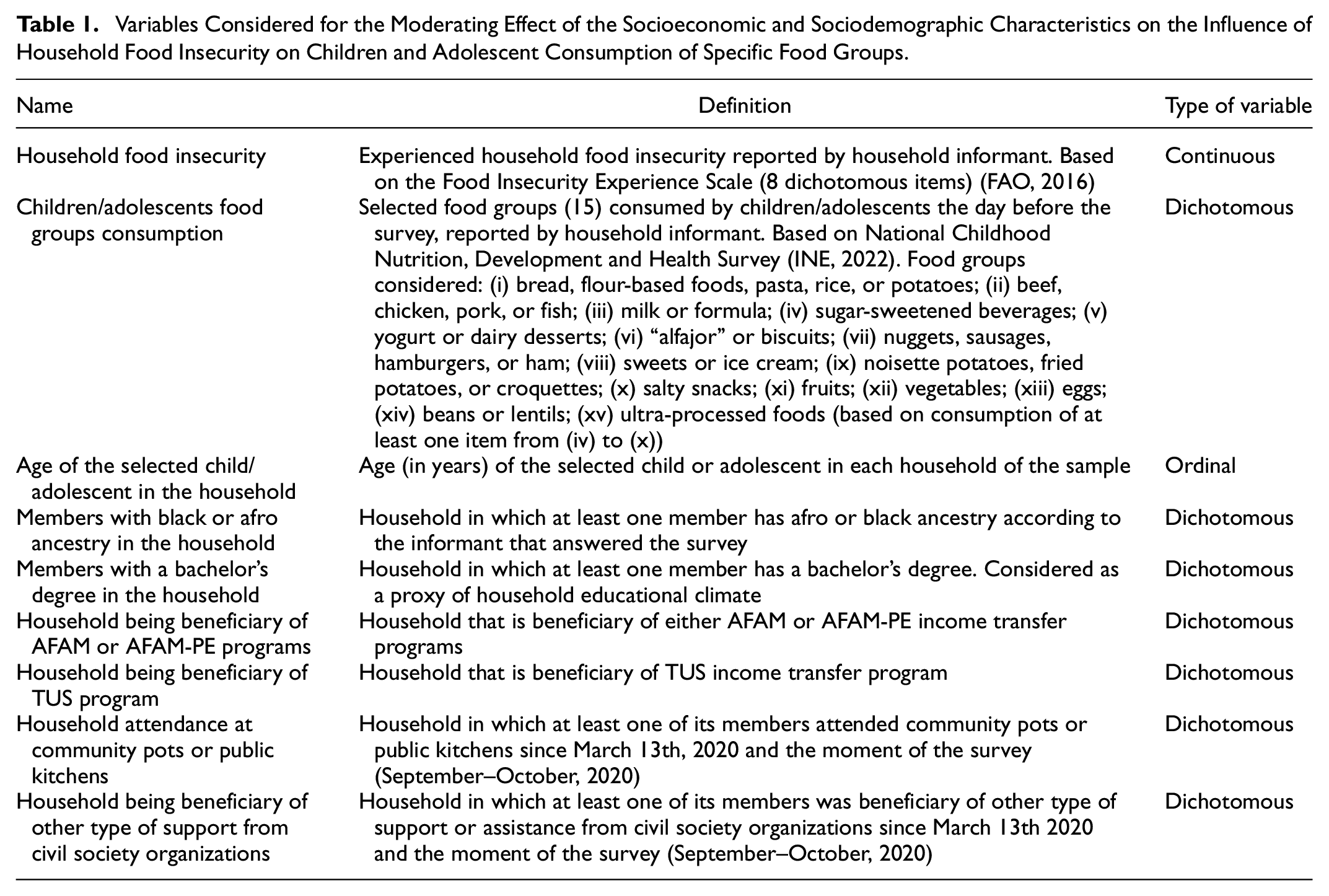
The questionnaire was applied to parents or tutors of children or adolescents living in the household and included questions about the household and the child/adolescent. When more than one child/adolescent lived in the household, questions referred to the one whose next birthday was closest to the date of the survey. The questions were related to: (i) health care; (ii) household food insecurity using the Food Insecurity Experience Scale (FIES; FAO, 2016); (iii) children and adolescent consumption of selected food groups the day before the survey, based on the questionnaire of the National Childhood Nutrition, Development and Health Survey (INE, 2022); (iv) receipt of assistance from state or civil society initiatives to improve access to food before and/or since the beginning of the pandemic in Uruguay (March 13th 2020); (v) socioeconomic and demographic characteristics of the household. Table 1 presents names, definitions and levels of measurement for the variables included in the present study.
Variables Considered for the Moderating Effect of the Socioeconomic and Sociodemographic Characteristics on the Influence of Household Food Insecurity on Children and Adolescent Consumption of Specific Food Groups.
Data Analysis
Household Food Insecurity
The eight items of the FIES scale were analyzed following methodological and theoretical assumptions of Rasch models and Item Response Theory, respectively (Hambleton, 1991). Responses to each of the items were coded as dichotomous variables (0 = “No,” 1 = “Yes”). Model quality was assessed using infit and outfit statistics, correlation analysis and the reliability of the model, which complied with the criteria suggested by FAO (Supplemental Table S1; FAO, 2016). A numeric variable that corresponded to the household food insecurity severity was created based on the respondent parameters estimated by the Rasch model. Households with parameters equal or above the severity of the first item indicating a reduction in the food consumed (item 5, “skipped”) were classified as having experienced moderate or severe food insecurity, whereas those with parameters equal or above the severity of the last item “whole day” were classified as having experienced severe food insecurity. Analysis of FIES scale was performed using eRm R package (Mair et al., 2009).
Descriptive Statistics
Descriptive unweighted (Table 2) and weighted (Supplemental Table S1) statistics of different characteristics of the household were estimated: (i) food insecurity status of the household, (ii) socioeconomic and demographic characteristics of the household and selected child/adolescent; (iii) participation of household (members) in state or civil society actions related to food security; (iv) consumption of different food groups on the previous day by the selected child/adolescent. No considerable differences were found between unweighted and weighted data.
Unweighted Descriptive Statistics of the Sample (n = 1,504).

Logistic Regressions and Moderation Analyses
Logistic regression models were conducted considering child/adolescent consumption of different food groups on the previous day as a binary dependent variable (0 = “No,” 1 = “Yes”) and household food insecurity as the independent variable (treated as continuous) with and without covariates. In models that included covariates analyses of model fit were performed. Hosmer–Lemeshow tests were conducted to test goodness of fit of the models (p > .05) using ResourceSelection R package (Lele et al., 2022). Other assumptions were assessed using car R package (Fox & Weisberg, 2019). Linearity of the relation between numeric predictors (food insecurity) and logits of each model was checked using scatter plots and Box Tidwell power transformations of numeric predictors (food insecurity) (p > .05). Multicollinearity was assessed using variance inflation (VIF values were between 1.01 and 1.45, approximately). Influential observations were explored using Cook’s distance, but no potentially problematic observations were deleted to avoid biasing the results.
Analyses of residuals distribution were performed graphically plotting residuals versus fitted values and residuals versus each of the predictors and lack-of-fit tests were conducted for each numeric regressor (p > .05). In addition, marginal model plots were created to graphically assess the conditional distribution of the response given each predictor and to examine the conditional distribution of the response according to the fit of the model. When assessing linearity of the relation between food insecurity and the logits of outcome variables, the first was transformed adding a constant value “10” to work only with positive values. The regression models for “yogurt or dairy desserts” and “fruits” as dependents variables were run considering food insecurity raised to the power of 2 and 3, respectively, to satisfy residuals versus predictors distribution assumptions and lack-of-fit tests significance. Moderation analyses were performed using PROCESS macro for R software (Bao, 2023).
All moderators were included in the models and models for all food groups were performed, maintaining the rest of the covariates as control variables. Due to the similarities between weighted and unweighted data and the lack of information about the construction of the weight variable, multivariate analyses were conducted with unweighted data. A significance level of 5% was considered. All analyses were performed using R software (R Core Team, 2022).
Results
Descriptive statistics of the sample (n = 1,504) are presented in Table 2. Households where the selected child/adolescent aged 0 to 5 or 13 to 17 were similarly distributed among the sample, while those with children aged 6 to 12 represented a greater proportion (40.1%). Medium socioeconomic status households represented 64.3% of the sample, while low socioeconomic status represented 14.7% of the sample. Most of the households were composed by three (33.2%) or four members (35.4%). Regarding food insecurity, the prevalence of moderate household food insecurity was 12.7%, whereas the prevalence of severe food insecurity accounted for 4.5%.
Consumption of Selected Food Groups
Regarding food consumption, carbohydrate-based foods (bread, flour, pasta, rice, potatoes), meat (beef, chicken, pork, fish), milk or formula were the most frequently consumed food groups. They were consumed by 80% or more of children/adolescents the day before the survey. Fruits and vegetables were consumed by 77% and 63.6% of children/adolescents, respectively. On the other hand, consumption of ultra-processed foods the day before the survey was reported for 79.3% of children/adolescents. Sugar-sweetened beverages was the most frequently consumed product within this category (42.2%). Finally, eggs (51.4%), and beans or lentils (23.7%) were the least consumed food groups (Table 2).
Effect of food Insecurity on Consumption of Selected Food Groups
Except for carbohydrate-based foods, all models exploring the effect of household food insecurity on food consumption were statistically significant (p < .05). The percentage of children and adolescents consuming almost all food groups the day before the survey decreased with an increase in the severity of household food insecurity. The largest effects were observed for meat and ultra-processed foods. The odds of children/adolescent consuming these food groups decreased 21% and 23% with one unit increase in food insecurity severity of the household, respectively. Within ultra-processed foods, the odds of consuming yogurt or dairy desserts and sweets or ice-creams decreased 21% with 1 unit increase in food insecurity severity. On the contrary, the odds of consuming beans or lentils increased in 12% with 1 unit increase in the severity of household food insecurity severity (Table 3).
Beta Coefficients (Logits), Standard Errors and p-Values for Logistic Regression Models of Children and Adolescents Consumption of Selected Food Groups by Household Food Insecurity Severity.

p < .1.
Logistic regressions that accounted for the effects of covariates were computed for all food groups (Supplemental Table S2). The significance of household food insecurity did not change, except for beans or lentils, where the effect was no longer statistically significant. Some covariates had significant effects in the models: the age of the child/adolescent, household being beneficiary of income transfer programs (TUS and AFAM or AFAM-PE), attendance at community pots/public kitchens and members with black or afro ancestry in the household.
In models where the effect of food insecurity was significant, children aged 6 to 12 had significantly greater odds of having consumed milk or formula (p < .05), sugar-sweetened beverages (p < .01), and marginally higher odds of having consumed meat (p < .1) than those aged 0 to 5. Also, they presented lower odds of consuming yogurt or dairy desserts (p < .001) than the reference group. On the other hand, adolescents (13–17 years old) had lower odds of having consumed vegetables, fruits (p < .05), yogurt or dairy desserts (p < .001) and sweets or ice cream (p < .05) and greater odds of having eaten eggs (p < .001), nuggets, sausages, hamburgers or ham (p < .01), and drunk sugar-sweetened beverages (p < .001) than children aged 0 to 5 (Supplemental Table S2).
Children/adolescents living in TUS income transfer program beneficiary households had marginally greater odds of having consumed fruits and nuggets, sausages, hamburgers or ham than those living in non-beneficiary households (p < .1) (Supplemental Table S2). Children/adolescents living in AFAM or AFAM-PE beneficiary households had lower odds of having consumed yogurt or dairy desserts (p < .01) than those living in non-beneficiary households. Finally, attendance at community pots/public kitchens was associated with a decrease in yogurt or dairy desserts (p < .01) and nuggets, sausages, hamburgers, or ham (p < .1) consumption and living in households with black or afro ancestry represented a decrease in nuggets, sausages, hamburgers or ham consumption (p < .05).
Moderation Analyses
Full results of the moderation analyses are presented in Supplemental Table S3. Only results for models in which interaction terms between moderator variables and food insecurity were statistically significant are presented, with interaction term’s p-value between brackets.
The age of the child/adolescent was a significant moderator of the effect of household food insecurity on the odds of having consumed beans or lentils (p < .01). Adolescents aged 13 to 17 living in food insecure households had lower odds of having eaten legumes (p < .01, Figure 2a) and lower odds of having eaten “alfajor” or biscuits the day before the survey than children aged 0 to 5 (p < .05, Figure 2b). Evidence to support the influence of age as a moderator of the effect of food insecurity on meat, milk or formula, vegetables, nuggets, sausages, hamburgers or ham, yogurt or dairy desserts, and salty snacks consumption was not conclusive (Supplemental Table S3).

Estimated moderation effects of household socioeconomic and demographic characteristics on the influence of food insecurity on children/adolescent consumption of different food groups; (a) Moderator: Age of the child/adolescent. Food group: Beans or lentils; (b) Moderator: Age of the child/adolescent. Food group: Alfajor or biscuits; (c) Moderator: AFAM beneficiary household. Food group: Beef, chicken, pork or fish; (d) Moderator: AFAM beneficiary household. Food group: Ultra-processed foods; (e) Moderator: AFAM beneficiary household. Food group: Vegetables; (f) Moderator: AFAM beneficiary household. Food group: Yogurt or daily desserts; (g) Moderator: TUS beneficiary household. Food group: Beef, chicken, pork or fish; (h) Moderator: TUS beneficiary household. Food group: Fruits; (i) Moderator: TUS beneficiary household. Food group: Nuggets, sausages, hamburgers or ham; (j) Moderator: State-provided food baskets beneficiary household/members. Food group: Beef, chicken, pork or fish; (k) Moderator: State-provided food baskets beneficiary household/members. Food group: Milk or formula; (l) Moderator: Household/members attendance at community pots/public kitchens. Food group: Ultra-processed foods; (m) Moderator: Household/members attendance at community pots/public kitchens. Food group: Sweets or ice cream; (n) Moderator: Household members with bachelor’s degree. Food group: Alfajor or biscuits.
Participation in AFAM, AFAM-PE, or TUS income transfer programs were significant moderators of the effect of household food insecurity on the children’s/adolescents’ consumption of several food groups. In AFAM or AFAM-PE beneficiary households, the negative effect of household food insecurity on the odds of having consumed meat (p < .01, Figure 2c) and ultra-processed foods (p < .1, Figure 2d) tended to be lower than in households that were not part of any of these programs. AFAM or AFAM-PE participation also moderated vegetables (p < .1, Figure 2e) and yogurt or dairy desserts (p < .05, Figure 2f) consumption, although conditional effects were only statistically significant for non-beneficiary and beneficiary households, respectively. Contrary to this, in TUS beneficiary households, the negative effect of food insecurity on the odds of having consumed meat (p < .05, Figure 2g) and fruits (p < .1, Figure 2h) tended to increase compared to non-beneficiary households. Additionally, the odds of consuming nuggets, sausages, hamburgers or ham consumption were higher for beneficiary households (p < .05, Figure 2i), but this was not confirmed by conditional effects tests significance (Supplemental Table S3).
Being beneficiary of state-provided food baskets was a significant moderator of the effect of food insecurity on children’s/adolescents’ likelihood of having consumed meat (p < .05, Figure 2j) and milk or formula (p < .1, Figure 2k). Although results suggested a reduction in the negative effects of food insecurity on meat and milk or formula consumption, conditional effects were not statistically significant when analyzed separately for the two categories of the moderator (food baskets beneficiary/not beneficiary households).
Attendance at community pots or public kitchens were significant moderators of the effect of food insecurity on the likelihood of having consumed ultra-processed foods. Although results suggest that attending a community pot reduced the effect of household food insecurity on consumption of ultra-processed foods (Figure 2l) and increased the odds of consuming sweets or ice-cream (Figure 2m), effects were not confirmed by the p values of conditional effects tests at the two categories of the moderator (attendance/no attendance at community pots/public kitchens).
Households compounded of members with bachelor’s degree had higher odds of consuming “alfajor” or biscuits on the previous day to the survey (Figure 2n), but conditional effects were only significant for households with lower educational climate. Finally, although afro or black ancestry was a statistically significant moderator of the effect of food insecurity on the likelihood of having consumed vegetables, findings were not conclusive as the effect of food insecurity’s coefficient was not statistically significant in the model (Supplemental Table S3).
Discussion
Results from the present work showed that moderate and severe food insecurity affected 17.2% of households with children and adolescents in 2020. This evidenced that food insecurity among children and adolescents is a relevant problem in Uruguay, although it is classified as a high-income country according to the criteria of The World Bank (2022). Although children and adolescents have been reported to be shielded from reduced food intake by adults (Hanson & Connor, 2014), this work showed that household food insecurity led to a reduction in children and adolescent likelihood of having consuming nutrient-rich foods, such as fruits, vegetables, meat, milk, and eggs (Table 3). These results provide additional information to the emerging body of evidence examining the effects of food insecurity on the diet of children and adolescents in different regions of the world. Similar findings have been reported by studies conducted in developed and developing countries in different regions of the world, which report a reduction in the consumption of nutrient-rich foods, such as fruits, vegetables, and meat, among children in adolescents living in food insecure households compared to those living in food secure households (Graham et al., 2023; Kaiser et al., 2003; Lee et al., 2019; Leung et al., 2014; Mendes et al., 2021; Sharkey et al., 2012; Vega-Macedo et al., 2014; Yeh et al., 2021; Zaçe et al., 2020). In addition, previous studies conducted in Uruguay have shown that fruits, vegetables, meat and fish are perceived as expensive compared to unhealthy foods, which may explain why the likelihood of having consumed them decreased with food insecurity (Ares et al., 2017, 2018).
Results from the present work provide additional evidence on the effect of food insecurity on the consumption of ultra-processed products, for which the available evidence is not conclusive yet (Fernández et al., 2020; Kaiser et al., 2003; Lee et al., 2019; Leung et al., 2014; Sharkey et al., 2012). Food insecurity reduced the likelihood of children and adolescents having consumed ultra-processed products, particularly sweets or ice creams, “alfajor” or biscuits and sugar sweetened beverages. Consumption of these products is mainly motivated by pleasure, which tends to be left aside under budgetary restrictions (Ares et al., 2017; Vidal et al., 2022). In this regard, Bourdieu’s work on food space arrived the conclusion that individuals from lower social strata are determined, by their conditions of existence (i.e., economic resources, educational level, cultural consumption, knowledge and goods, etc.), to food “tastes of necessity,” which are opposed to upper social strata food “tastes of luxury/freedom” (Bourdieu, 1984). On the contrary, Fernández et al. (2020), Yeh et al. (2021), Graham et al. (2023), and Sharkey et al. (2012) reported that household food insecurity was positively associated with the consumption of foods with an unfavorable nutritional composition, such as sweetened beverages. Differences in the direction of the effect of food insecurity on children and adolescents consumption of such categories may be explained by contextual differences in food availability and affordability. This stresses the importance of expanding knowledge on the effect of food insecurity on diety quality across different settings.
Food insecurity did not have a significant effect on children and adolescents consumption of legumes and carbohydrate-based foods when controlling for covariates. This result can be explained considering that the food choices of Uruguayan citizens living in low-socioeconomic households tend to be oriented toward the satisfaction of basic needs, prioritizing cheap energy-dense foods (particularly carbohydrate-based foods) to satisfy energy requirements (Ares et al., 2017). These foods have been reported to be the most cost-effective in terms of energy density (Drewnowski, 2004; Drewnowski & Darmon, 2005).
Moderators of the Effect of Food Insecurity on Children and Adolescent Food Consumption
The evidence is still scarce on the contextual factors that shape individuals’ responses to food insecurity experiences and the effect of food insecurity on diet quality and health. In this sense, one of the main contributions of the present work was the analysis of the moderators of the effect of food insecurity on children and adolescent food consumption. Moderation analyses showed that the effect of food insecurity on food consumption was not uniform across households with different socioeconomic and demographic characteristics. Age did not emerge as a clear moderator of the effect of food insecurity on the likelihood of having consumed the evaluated food groups the day before the survey, although previous studies have reported caregivers tendency to protect younger children from the negative consequences of food shortages within the household (Hanson & Connor, 2014; McIntyre et al., 2003). The only food group where such effect was observed was beans or lentils. This result suggests that parents and caregivers tend to protect children and adolescents similarly, regardless of their age.
One of the most relevant findings of the present work was that state income transfer programs were significant moderators of the effect of household food insecurity on children and adolescents’ consumption of several food groups. Although the likelihood of children/adolescents having consumed meat and ultra-processed foods tended to decrease at more severe levels of household food insecurity, AFAM or AFAM-PE income transfer programs reduced the negative effect of food insecurity. Despite not being statistically significant, a trend was observed for the effect of state-provided food baskets on meat and milk or formula consumption. Therefore, it can be suggested that cash transfers have both positive and negative effects on diet quality, increasing the likelihood of consuming healthy foods (meats) and unhealthy foods (ultra-processed products). These results partially agree with previous studies showing that cash transfers tend to increase diet quality (Downs & Demmler, 2020). Assessments of cash and near-cash or voucher transfer programs impacts and income effects implemented in United States, Mexico and Brazil have shown that beneficiary households have reported higher levels of food purchase and/or total energy available (Hoddinott & Skoufias, 2004; Hoynes & Schanzenbach, 2015; Hymans & Shapiro, 1976; Martins & Monteiro, 2016), as well as more acquisition of calories from meat, tubers, fruits, and vegetables, compared to non-beneficiary households (Hoddinott & Skoufias, 2004; Martins & Monteiro, 2016). Moreover, studies conducted in United States have concluded that Supplemental Nutrition Access Program (SNAP) voucher transfer tends to reduce household income and consumption volatility (Blundell & Pistaferri, 2003; Gundersen & Ziliak, 2003).
The moderator effect of state cash transfers on the likelihood of children and adolescents having consumed ultra-processed products can be explained considering that AFAM and (mainly, AFAM-PE) are cash transfers not conditioned to unhealthy eating as a risky behavior. Therefore, they do not involve nutrition education components. For this reason, it is not surprising to observe increases in both healthy and unhealthy foods consumption among children/adolescents living in beneficiary households. In this sense, studies conducted in high and middle-low-income countries have shown increases in the purchase of fats and sweets in households with children and adolescents recipient of cash transfer programs (Leroy et al., 2009).
The moderation effect of the income transfer programs AFAM or AFAM-PE on children and adolescent consumption of ultra-processed foods could be also related to the positive health, hedonic and emotional associations raised by some of these products on the Uruguayan population (Vidal et al., 2021). A similar effect may be at the root of the moderation effect of AFAM or AFAM-PE on children and adolescent meat consumption, as it mainly elicits positive associations related to culinary, cultural, hedonic and nutritional aspects among Uruguayan inhabitants (Realini et al., 2022).
Taken together, these results suggest the need to implement multicomponent approaches to reduce food insecurity and improve children and adolescents diets (Hawkes et al., 2020; Morris et al., 2020). Increases in resources provided to welfare policies (i.e., cash transfers, care policies, and job training programs) as well as improving the coverage and quality of the educational system, accompanied by sustained economic growth of the country, are among the essential strategies to overcome childhood poverty (De Armas, 2017). Cash transfers should be combined with fiscal measures and marketing restrictions to promote increases in the consumption of healthy foods. Subsidies on healthy foods have been shown to increase their consumption in adults and children (Niebylski et al., 2015), whereas marketing restrictions can contribute to reduce the positive associations raised by ultra-processed products and consequently their consumption (Boyland et al., 2022).
Strengths and Limitations
To our knowledge, this is the first study analyzing moderation effects of socioeconomic and demographic variables on the effect of food insecurity on children/adolescents food consumption. One important strength of the study was that the data were representative of households with children/adolescents at a national scale. However, a series of limitations need to be acknowledged. First of all, food consumption was only evaluated as a binary variable related to the day before the survey. More powerful food consumption instruments (e.g., 24 hours dietary records) should be applied to collect more precise and reliable information to assess the effect of food insecurity on consumption (Leclercq et al., 2019). In addition, other important aspects that were not available in the present data should be considered to obtain an in-depth understanding of the effect of food insecurity on children and adolescents food consumption, such as demographic, anthropometric, physiological, socioeconomic, and psychological characteristics of children, adolescents, caregivers and their households.
Conclusion
The present study contributed to the limited body of evidence addressing the effect of food insecurity on children and adolescents’ food consumption. Food insecurity had a significant effect on children and adolescents’ food consumption, reducing consumption of nutrient-rich foods. This stresses the need to conduct further research to obtain an in-depth understanding of the effects of food insecurity on diet quality and health across age groups and settings. A novel contribution of the present work was related to the identification of variables that moderate the effect of household food insecurity on children and adolescents’ food consumption. The reported information can contribute to the design of effective strategies to reduce the negative effects of food insecurity on children and adolescents’ health and wellbeing. In this sense, results suggest the need to implement multicomponent approaches to reduce food insecurity and improve children and adolescents’ diets. State cash transfers, combined with strategies to encourage consumption of healthy foods and discourage consumption of unhealthy foods, play a key role in this respect given that the findings of the present work showed that the derived income effects from these programs may cause an increase in consumption of both healthy and unhealthy foods. Further search should strengthen and expand assessments of the effects of cash and voucher transfer programs on healthy and unhealthy food availability and consumption in households with children and adolescents.
Supplemental Material
sj-docx-1-sgo-10.1177_21582440241281843 – Supplemental material for Moderators of the Effect of Household Food Insecurity on Food Consumption Among Uruguayan Children and Adolescents
Supplemental material, sj-docx-1-sgo-10.1177_21582440241281843 for Moderators of the Effect of Household Food Insecurity on Food Consumption Among Uruguayan Children and Adolescents by Gerónimo Brunet, Alejandra Girona, Gabriela Fajardo and Gastón Ares in SAGE Open
Footnotes
Acknowledgements
The authors are indebted to UNICEF Uruguay for sharing the database for secondary analysis.
Declaration of Conflicting Interests
The author(s) declared no potential conflicts of interest with respect to the research, authorship, and/or publication of this article.
Funding
The author(s) disclosed receipt of the following financial support for the research, authorship, and/or publication of this article: Financial support was obtained from Comisión Sectorial de Investigación Científica and Espacio Interdisciplinario (Universidad de la República, Uruguay).
Ethics and Informed Consent
Approval not needed because of the study type or article type. This article does not contain any studies with human or animal participants. There are no human participants in this article and informed consent is not applicable.

Data Availability Statement
The data that support the findings of this study are available from UNICEF Uruguay. Restrictions apply to the availability of these data, which were shared for the current study and are not publicly available.
Supplemental Material
Supplemental material for this article is available online.
References
Supplementary Material
Please find the following supplemental material available below.
For Open Access articles published under a Creative Commons License, all supplemental material carries the same license as the article it is associated with.
For non-Open Access articles published, all supplemental material carries a non-exclusive license, and permission requests for re-use of supplemental material or any part of supplemental material shall be sent directly to the copyright owner as specified in the copyright notice associated with the article.
