




Abstract
In spite of COVID-19 struck tourism industry, the trend of yachting tourism is steadily increasing and provides a way for the tourism industry to resume after the epidemic. Marinas, a vital component of yachting tourism, deeply effects the yacht owners’ satisfactions and the coastal destinations attraction. Since the marina industry in Taiwan is still in its early stages, this study aims to identify ideal service quality standards to enhance competitiveness. With a limited cohort of 69 yacht owners in Taiwan possessing yachts exceeding 20 gross register tonnage (GRT), insights from our research, which engaged perspectives from 50 yacht owners, provide valuable understanding into their satisfaction regarding marina services in Taiwan. As the first study to explore key factors of marina service experience among yacht owners, this study applies importance-performance analysis (IPA) and Euclidean distance to provide the development strategy and improvement priority of Taiwan marina service. Overall, the result from improving IPA technique which adopted Euclidean distance reveal that yacht owners generally thought that the improvement priority of marina service quality is sewage, bilge water, and oil sludge treatment facilities, fueling facilities, high-voltage shore power facilities, land storage space. It is noteworthy that marina managers should embark on improving marina physical facilities as development strategy which highlight the performance of marina service quality for yacht owners and the improvement in those facilities can be developed to either increase the marina competition or to resume tourism industry.
Plain language summary
This study examined Taiwanese marina service quality and how it affects the development of the overall yacht tourism and the marina selection from the perspectives of yacht owners using importance-performance analysis (IPA) and adopted Euclidean distance is proposed to rank the improvement priority of service attributes located in the critical quadrant.
Introduction
Although COVID-19 brought many negative impact on the majority of industries in the economy, the global development of yachting tourism has been unexpected (Ajagunna & Casanova, 2022; CCYIA, 2020). The nature of luxury yachting is especially suited to small groups of travelers known to each other, affording a form of movement with an anchored site that is either exclusive or limited to isolated beaches usually far removed from crowded holiday islands (Young, 2018). Because the safety, privacy, leisure, sports, and other attributes of yachts are more and more favored (CCYIA, 2020; Yao et al., 2022), yacht destinations with highly developed local markets. In spite of COVID-19 restricted leisure activities, yachting tourism obviously provides a way for the tourism industry to resume after the epidemic.
Yachting tourism comprises four different subindustries: yacht management, yacht owners, yacht manufacturing, and marina services (Sariisik et al., 2011). Marinas are a preferred alternative to berthing in open waters for three main reasons: convenience, safety, and security (Swanson & Spaulding, 1990). In other words, marinas that provide convenient and high-quality services are preferable for yacht owners (Sari et al., 2016). Yacht owners not only can enjoy multiple recreation and leisure services in marina where nearby shore-side and coastline, particularly island hopping, but also make yachts replenished, repaired, and maintained.
Taiwan has been well-known for its substantial yacht production industry, which accounted for approximately 1% of gross domestic product in 2006 (Yan, 2008). The development of marina is starting and emerging in Taiwan, and furthermore the trend of yachting tourism has been raising. The luxury yacht industry responded well to its market from the onset of the pandemic, and will continue on this path in both luxury and sporting yacht categories (Ajagunna & Casanova, 2022). By the timing after the epidemic is coming, yachting tourism as a pivotal avenue for the post-pandemic resurgence of the tourism industry, coinciding with the flourishing stage of Taiwan’s yachting sector. The crux aspect of this research is the application of Importance-Performance Analysis (IPA) in conjunction with Euclidean distance to assess the service quality of marinas. Through a survey of a limited pool of yacht owners, the study adopts a user perspective, aiming to assist marina management entities in enhancing service quality of marinas, thereby propelling the further development of Taiwan’s yachting industry.
Besides the demand of yachting services is expanding, research on marine leisure tourism is steadily increasing recently, but the service quality has been a gap between the supply of marinas and the demands of yachts owners and potential consumers. Despite the abundance of related research on marinas, understanding how yacht owners select marinas has been neglected in the literature. Thus, the purpose of this study is to investigate the marina service needs of yachts owners to suggest an improving strategy of marina service quality in the post pandemic era. Incorporating the study findings acquired, an attempt was made to develop a set of marina service that meet the yachts owners’ demand using IPA with Euclidean distance. This study provides an ideal marina service context with high satisfactions is proposed for possible adoption to gain competitiveness, and it is very important to examine the factors that may influence choices in marina.
This paper first provides a general discussion of yacht and marina leisure and a review of satisfaction and service quality in the context of marina services. Next, the sample, methods, and measures are described, after which the data analysis and results are presented. The implications of this study’s findings are subsequently discussed. Finally, this paper concludes with the main limitations and recommendations for future research.
Literature Review
Yachting and Yacht Tourism
Yachts are defined as floating objects, watercraft, sailing sport vessels, or tourist ships; in other words, both sailing vessels and motorized boats can be classified as yachts (Bilski, 2015). Yachting is an excursive, entertaining, restful, and sporting tourism activity undertaken by both amateur and commercial sailors in boats that are typically of medium size (Sariisik et al., 2011). On the basis of the purposes of their use, yachts can be divided into tourist yachts, cruising yachts, and motor yachts, and that can be described as commercial yachts or private yachts in their tonnage certifications.
Marine tourism encompasses coastal tourism but also includes ocean-based tourism activities such as deep-sea fishing and yacht cruising (C. M. Hall, 2001). Yachting is defined as a special interest marine tourism or niche tourism activity that involves the use of vessels for recreation, sports, enjoyment, and the related activities of sea lovers and independent global travelers (Rhoden & Kaaristo, 2020; Sari et al., 2016). Yachting is an activity that evokes the feeling of freedom among its participants, but it is a relatively expensive recreational activity. However, increasing wealth in certain countries has enabled yachting to become an important component of marine tourism (Sariisik et al., 2011).
Yachting tourism, as a part of the overall maritime sector, boosts overall tourism industry revenues and provides critical resources for the general economy (Łapko & Panasiuk, 2019). In the conventional sense thought of yachting services, it was not as an industry (Tucker & Sundberg, 1998). Yachting services consist of marinas, boat yards, and maintenance and repairs, so the production of yachting services is multiple, individual and worldwide. Furthermore, yachting may be defined as provider-located services characterized by cross-border flows of consumers with their purchasing power (Quildona & Punb, 2011). Moreover, sailing tourism is different from other types of outdoor recreation and tourism based on the complexity of its influential factors and distinctive characteristics of sailing tourists (Shen et al., 2021).
Marinas
A marina should be located in a port that is suitable for yachts and should feature complementary residential, retail, club, and port buildings; hotels, stores, bars, cafes and restaurants; and other facilities that are required by temporary or permanent residents (Bilski, 2015). The overall structure of a marina is influenced by direct human-related aspects and is characterized by its buildings, equipment, and other elements related to yachting. A marina should be socially friendly and service oriented and not only serve as a physical storage facility for yachts (Favro et al., 2008). Within practical limitations, the location and layout of the marina should be based on the surrounding area’s natural, social, and economic conditions. Marinas are characterized by their leisure-driven nature, so ensuring a pleasant environment is crucial for marina operators (Martín & Piqueras, 2017; Yao et al., 2021).
The International Marina Institute (IMI) defines a destination resort marina as a place that is “accessible by land and by water, including berth places for visitors, accommodation, dining facilities, swimming pool, and other entertainment and leisure facilities that provide a resort atmosphere” (IMI, 1998). The demand for marina services varies depending on the season. Specifically, leisure craft traffic typically increases in summer, resulting in higher seasonal demand for marina and port services (Sariisik et al., 2011).
Marinas should engage in substantial investment in additional services such as sports, hospitality, and entertainment services to satisfy the demands of nautical tourists, a segment of individuals who have high spending power but who tend to seek greater value for money and superior service quality (Gracan et al., 2016). Martín and Yepes (2019) demonstrated that ports are unique elements of the landscape; ports have been highly attractive since ancient times, and a port’s position on the coastline represents a superb base for observing its surrounding area. Moreover, marinas are port facilities that specialize in pleasure craft and thus have tremendous potential for leisure activities. Despite the abundance of related research on marinas, understanding how yacht owners select marinas has been neglected in the literature.
Marina Service Satisfaction
As crucial components of marine tourism, marinas are complex organizations that have highly heterogeneous business structures in which multiple companies provide the various services that together comprise “marina services” (Sariisik et al., 2011). Diakomihalis and Lagos (2008) argued that harbor infrastructure and the availability of yacht services in marinas are critical factors in the development of yachting. As such, marinas are crucial for the global leisure yachting industry.
Marinas have numerous essential elements, and the human factor is among the most critical. According to Bilski (2015) elements of marina design that must be considered include the site’s natural conditions and topography, the relationship between the marina and adjacent urban areas, and the marina’s connections with communication networks, construction, and equipment. Furthermore, marina facilities that offer to serve yacht owners should include piers, media services and utilities, sewage and waste management, mooring equipment and fenders, and port structures.
In addition, a marina’s location and design should ensure easy access to all yacht operators and navigational safety at the entrance. Sariisik et al. (2011) used a hospital service quality measurement method to assess marina services; several dimensions comprising tangibles, reliability, responsiveness, credibility, understanding of customers, competence, courtesy, security, access, and communication were adopted. A marina’s layout should be designed to ensure high-quality services in mooring, loading, and unloading of goods and supplies, and onboarding, and offboarding of passengers (Bilski, 2015).
According to Martín & Piqueras (2017), Martín and Yepes (2019), the landscaping of a marina integrates numerous elements. The most valued criteria are related to the marina’s compatibility with its surroundings and include elements that embrace the area’s historic and cultural resources. A. Wilson et al. (2016) proposed five dimensions of the SERVQUAL methodology to measure service quality level: tangibility, reliability, responsiveness, assurance, and empathy. The SERVQUAL method can also be used to measure marina service quality (Sari et al., 2016). On the basis of a survey of 35 yacht owners, Durukan (2004) discovered that yacht owners prioritize reliability, price, berth availability, and the degree of name recognition when choosing a marina.
Multiple factors affect marina service quality, including location; availability of adequate and clean showers and toilets; general social life around the marina (Akaltan & Nas, 2014; Sariisik et al., 2011); security, hygiene, and cleanliness of shared areas; social activities geared toward yacht owners; living area (Coşar & Nas, 2014); yachting facilities; destination opportunities; other activities and services around the marina (Sipahi et al., 2015); physical conditions; eagerness; amenability; trust; accessibility; boat services; security; empathy; and professionalism (Arlı, 2012). The marina service quality deeply effects the development of yachting industry, and therefore this study aims at providing an ideal service context with high satisfactions to raise competitiveness for marina.
Status of Marina Services in Taiwan
Taiwan’s coastline provides attractive cruising opportunities and safe natural shelters; therefore, yacht-related tourism should be evaluated strategically as a component of the overall tourism industry. According to the official statistics, Taiwan has 37 marinas, of which 19 are exclusively reserved for yachts and 18 are used by yachts and other vessels. These facilities provide 1,004 berths, 533 floating docks, and 342 quay walls. Figure 1 presents a distribution map of Taiwanese marinas. The main island of Taiwan and outlying islands have 1,200 km of coastline and cover an area of 36,193 km2.
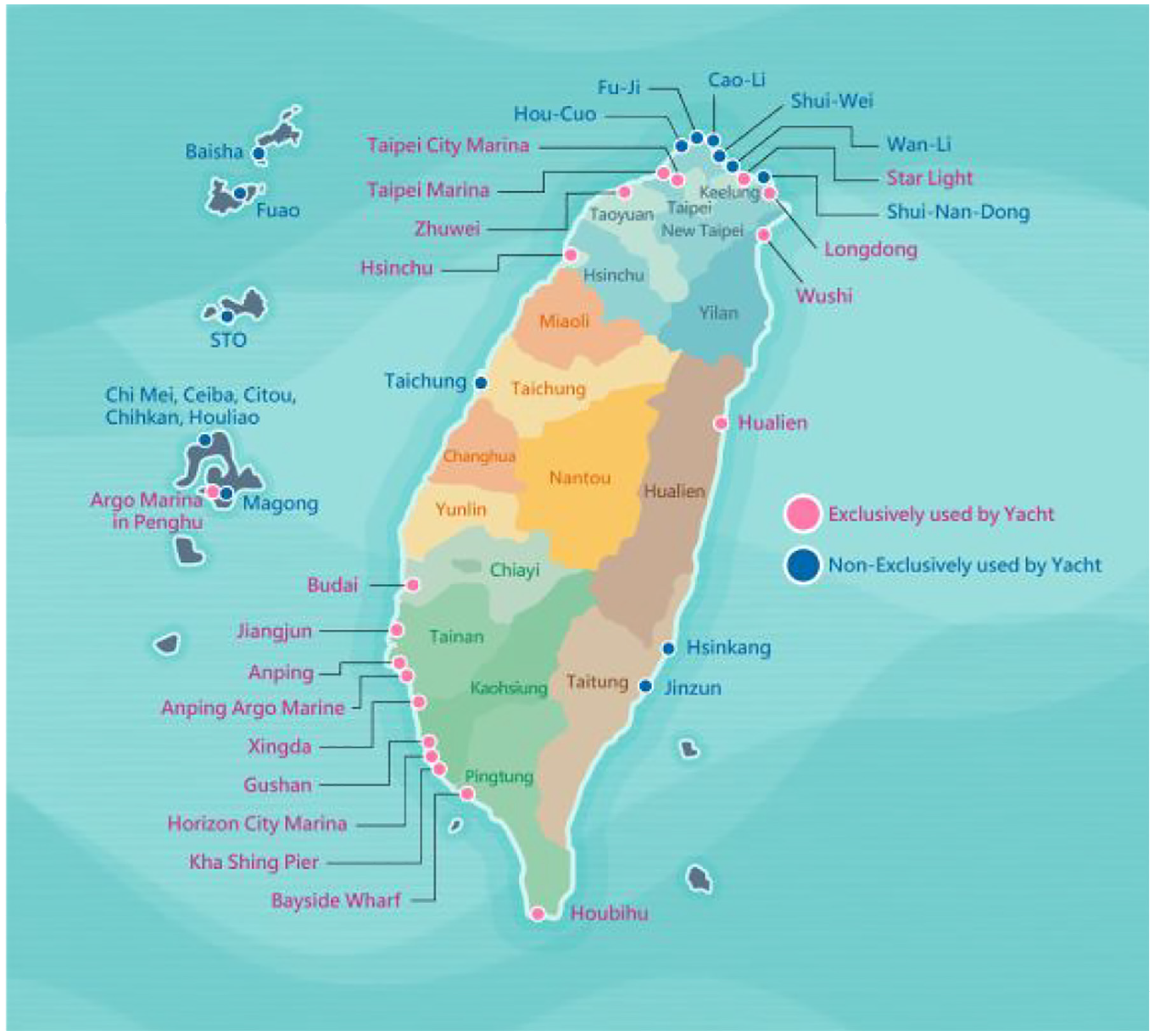
Map of Taiwan marinas
In recent years, Taiwan’s government has developed yacht tourism by transforming old fishing ports into marinas, renovating outdated marinas, and promoting the yacht industry through legal and policy reforms. Taiwan’s yacht building industry, which started in the 1950s, is now very well developed and globally competitive. Taiwan now ranks as number one in Asia and is among the top four nations globally in terms of yacht building. Taiwan currently has 33 yacht builders, 17 of which are located in Kaohsiung, contributing more than 80% of total market value. Realizing the huge potential of yachting tourism, the Taiwanese Government and private sector have invested heavily in yacht tourism and marinas in recent years. As such, numerous private and state-owned marinas have either been constructed recently or are currently under construction.
Method
Importance-Performance Analysis (IPA) and Euclidean Distance
Importance-performance analysis (IPA) is one of the most common methodological tools used in hospitality and tourism research because of its simplicity (Lai & Hitchcock, 2015; Oh, 2001). IPA was a method for developing effective marketing programs (Martilla & James, 1977). However, in the recent studies related to service quality or service quality and customer satisfaction, importance-performance analysis (IPA) is widely used in the field of transportation (Cullen et al., 2021; Esmailpour et al., 2020; Gkiotsalitis & Cats, 2021; Mandal et al., 2020; Yu et al., 2020), hospitality and tourism(Hao & Chon, 2022; Lai & Wong, 2020; Ju et al., 2019; Nunkoo et al., 2020; Rahayu, 2019), and other areas, including education (Kumar & Bervell, 2019; Menon & Suresh, 2020; Phadermrod, Crowder & Wills, 2019; Ramírez-Hurtado et al., 2021), etc. This sophisticated technology has also captured the attention of marina management researcher and IPA has emerged out as a powerful tool in prioritizing marina services based on the qualitative judgment of yacht owners (Boley et al., 2017; D. H. Jang & Cho, 2018; D. Jang et al., 2020; Mimbs et al., 2020; Shen et al., 2021).
IPA is an easily applied technique for measuring the attributes and performance of effective marketing programs. Researchers can use the same set of attributes to measure the performance and importance of other services. The current analysis involved the generation of an IPA grid using the mean values of the IPA scores as the crosshair point. If the amount of variance is insufficient or the importance ratings exhibit a non-normal distribution, the crossing point of the importance axis can use median values instead of mean values. As such, IPA results in the graphic display of an easily interpreted, two-dimensional grid.
Traditional IPA mapping partitions were compromised by serious reliability and validity issues because of a lack of critical statistical analyses. However, numerous researchers have since addressed this problem, and a comprehensive framework to guide scholars through the various stages of IPA has been developed. Due to the lack of comprehensive guidelines of IPA, researchers over the years have pursued the method in various ways that were verified with Cronbach’s alpha, CFA, EFA, t-test (Lai & Hitchcock, 2015; Oh, 2001), improvement factor (IF) (Tzeng & Chang, 2011), changed IPA grid crosshairs by actual means, scale means (Oh, 2001), Kano’s Model (Shen et al., 2021), mixed with FAHP (Nguyen et al., 2022), Impact-Asymmetry Analysis (IAA) (Mikulić et al., 2015), DEA (Dabestani et al., 2016).
In this section, this paper discusses the latest research on the modified IPA model and use it to refine the system using a combination of IPA model and Euclidean distance. Euclidean distance was calculated by the distance from the axes of origin point, the ranking of the relative distance value could provide the priority for all each attributes (Danielsson, 1980). Based on the above mentioned reference, concerning about the reliability and validity of each attributes, this study adopts Cronbach’s alpha that was utilized from Lai and Hitchcock (2015) and Oh (2001). This paper then makes extended use of IPA to develop a new IPA model to examine yacht owners’ satisfaction and management strategies in the marina. However, as the first study which utilize Euclidean distance to improve IPA technique, the outcome of this study could further provide a rather result. The improving technique is proposed to rank the improvement priority of service attributes located in the critical quadrant.
From the perspective of yacht owners, marinas are perceived as destinations integral to yachting tourism, particularly emphasizing berth-related services crucial for yacht docking. Evidently, marina managers have diligently catered to the demands for berth services, berth rating systems, and marina software services. Conversely, there are numerous factors that influence the satisfaction with marina services. This study employs a comprehensive perspective to thoroughly examine the software and hardware service components of yacht marinas. Through a literature review of six dimensions and 53 attributes, we conduct an in-depth analysis of these aspects. Furthermore, utilizing the Importance-Performance Analysis (IPA) methodology from the perspective of yacht owners enhances the understanding of the characteristics of each indicator. This approach aids marina operators in more effectively allocating corresponding resources, strategically emphasizing areas of utmost concern to yacht owners, ultimately elevating overall service performance.
IPA Mapping Partitions
In IPA mapping (Figure 2), the four quadrants are “Keep up the good work” (Q1), “Possible overkill” (Q2), “Low priority” (Q3), and “Concentrate here” (Q4). On the basis of these categories, IPA generates four management strategies and the priority attributes for allocating limited resources (Martilla & James, 1977; Matzler et al., 2004; Sever, 2015).
(1) “Keep up the good work” represents the major strengths and potential competitive advantages of a product or service.
(2) “Possible overkill” depicts attributes that are of low importance to customers but that are performing strongly. These attributes are possibly a waste of limited resources.
(3) “Low priority” comprises attributes that rank low in terms of both satisfaction and importance. Focusing additional effort on this category is unnecessary.
(4) “Concentrate here” components are rated low in satisfaction but high in importance. Attributes in this quadrant are underperforming and demand immediate attention. These attributes have the highest priority in terms of investment.

IPA grid.
Development of IPA Questionnaire and Survey Administration
This study adopted the IPA (Importance-Performance Analysis) methodology to empirically investigate the research topic by analyzing importance and performance attributes. The initial step involved a comprehensive review of relevant literature to identify the dimensions and attributes for assessing marina service quality. The study primarily relied on the SERVQUAL scale (Parasuraman et al. 1988), which has been adapted in numerous studies, including those by Sari et al. (2016) for evaluating marina services.
Numerous studies have focused on marine service quality and its impact on customer perceptions. Notable dimensions and attributes proposed by researchers such as, Benevolo and Spinelli (2020) Sari et al. (2016), Sariisik et al. (2011), Skaržauskienė et al. (2022), and Yao et al. (2022) were adopted, taking into account the unique supply and demand characteristics of marinas compared to other services. The Permanent International Association for Navigation Congresses (PIANC) highlighted that the most desired marina services include potable water, lavatories, waste disposal, and safety equipment, followed by electricity supply, fire-fighting equipment, and fuel supply.
To refine the selection of dimensions, three experts were consulted, resulting in six dimensions and 53 attributes for the marina service quality questionnaire. Given the absence of relevant investigations in Taiwan and the need for cultural and linguistic adaptation, the survey instruments developed in other countries were translated and tested face-to-face with six yacht owners, two marina managers, and two yacht captains.
The IPA dimensions and attributes were further refined through content and expert validity. According to Sari et al. (2016), necessary services include showers, Internet/TV service, VHF communication, mooring security, and access. Benevolo and Spinelli (2020) identified additional services such as mooring assistance, water cleaning, refueling, night-time dock surveillance, tax-free fuel, environmental services, Wi-Fi, yacht clubs, laundry, shipyards, restaurants, bars, coffee shops, stores, supermarkets, sport training for children, social activities, and organized excursions. Shen et al. (2021) emphasized the importance of clean sanitary facilities, marina employee service attitudes, water and electrical connections, clean marina grounds, berth width and functionality, personal safety, and tourist information centers.
In terms of sustainability, marina services should offer not only boatyard facilities but also catering, accommodation services, safe infrastructure for children, entertainment, and public events (Skaržauskienė et al. 2022). Yao et al. (2022) developed an evaluation index system for marinas’ potential in yachting tourism, focusing on regional tourist markets, traffic conditions, and the yacht industry foundation. Mikulić et al. (2015) identified key drivers of maritime yachting tourism in Croatia, including berths, sanitary facilities, water supply, catering services, marina grounds tidiness, shopping facilities, and overall nautical destination experience.
Based on literature and expert recommendations, the IPA dimensions and attributes were selected, though the lack of reliability and validity of each attribute is a noted deficiency. Lai and Hitchcock (2015) and Oh (2001) recommended using Cronbach’s alpha for reliability and validity verification. Euclidean distance was utilized to propose service quality improvement strategies and prioritize service attributes in the critical quadrant.
The assessment dimensions for the IPA attributes of service quality for marinas include berth service, accessibility, berth rating system, marina software service, marina physical facilities, and leisure service, as illustrated in Table 1.
Assessed IPA Dimensions and Attributes of Marina Service Quality.

Based on the six dimensions and 53 attributes of marina service quality as presented in Table 1, a questionnaire was developed with two questions for each quality characteristic. A 5-point Likert-type scale was adopted for the questionnaire to determine the values for the marina service importance and performance measures (Likert, 1932). The questionnaire’s responses for measuring the performance of marina service quality attributes were: “excellent” (5), “good” (4), “fair” (3), “poor” (2), and “very poor” (1). For the importance of each service quality attribute, the responses were: “very important” (5), “important” (4), “moderately important” (3), “slightly important” (2), and “unimportant” (1).
Sample
The yacht industry in Taiwan is currently in its nascent stages, resulting in a limited number of yacht owners. However, these owners constitute a primary clientele for marinas. In 2020, there were 69 private yacht owners in Taiwan with yachts exceeding 20 gross register tonnage (GRT). To gather insights into their satisfaction with marina services, this study surveyed 50 valid samples from this population, achieving a 90% confidence level with a 5% margin of error. During the 5-month data collection period, 54 individuals responded to the questionnaire, and after excluding 4 invalid or incomplete responses, 50 valid surveys were included in the final data set. Thus, this study attained a commendable response rate of 72.5%, with 50 valid questionnaires collected from the 69 private yacht owners approached, underscoring the robust engagement of the participants. Despite the modest sample size, the high response rate and rigorous statistical standards ensure that the sample is representative of the overall population of yacht owners in Taiwan. The insights gathered from these yacht owners are particularly valuable for an industry that is in its early developmental stages, as such critical feedback is essential for its growth and development.
Table 2 demonstrates the key characteristics of the sample. The sample is from 19 yacht marinas that are representative of Taiwan’s overall marina services. The sample respondents were predominantly Taiwanese citizens. Respondents included substantially more male (78.0%) than female (22.0%) participants, 88.0% owned just one yacht, and 86% reported owning yachts with a length of less than 50 ft. Most of the respondents reported per-yacht maintenance costs of less than $20,000 USD per year. Age classification was also undertaken in this analysis because the majority of respondents (about 76% of the total sample) were under the age of 50 years at the time of the survey. Most did not prefer to hire long-term paid stewards or captains (70%), and most of them tended to buy hull insurance (74%). In addition, most of the respondents reported that they engaged in cruising activities 11–30 times per year on average (64%).
The Key Characteristics of the Sample.

Results
IPA Results for the Six Dimensions of Marina Service Quality
An overview of examined dimensions along with respective indicators of performance and standard deviations is given in Table 3. The location of the IPA map’s crosshair was determined by the mean value of the importance scores and the performance scores. Accordingly, the crosshair point of IPA map is 3.78 and 3.40, respectively. To assess the reliability of the responses to the questionnaire, a reliability analysis was conducted. This study focused on both the “Importance” and “Satisfaction” sections, each comprising 53 items. Cronbach’s α coefficient of .7 was used as the threshold for reliability. The results of the analysis are summarized in Table 4. As shown in Table 4, the Cronbach’s α values for all constructs exceed .7, indicating that the questionnaire demonstrates good internal consistency and the reliability of this study is satisfactory.
Results for Service Quality Dimensions Related to Marinas.

Reliability Analysis Related to the Internal Consistency of the Dimensions.

The results of the six dimensions of marina service quality are presented in Figure 3 and are as follows: the dimensions of berth service, marina software service, and berth ratings system fall into the quadrant of “Keep up the good work”; the dimension of accessibility falls into Possible overkill”; the dimension of leisure service falls into the “Low priority”; and the dimension of marina physical facilities falls into “Concentrate here.”
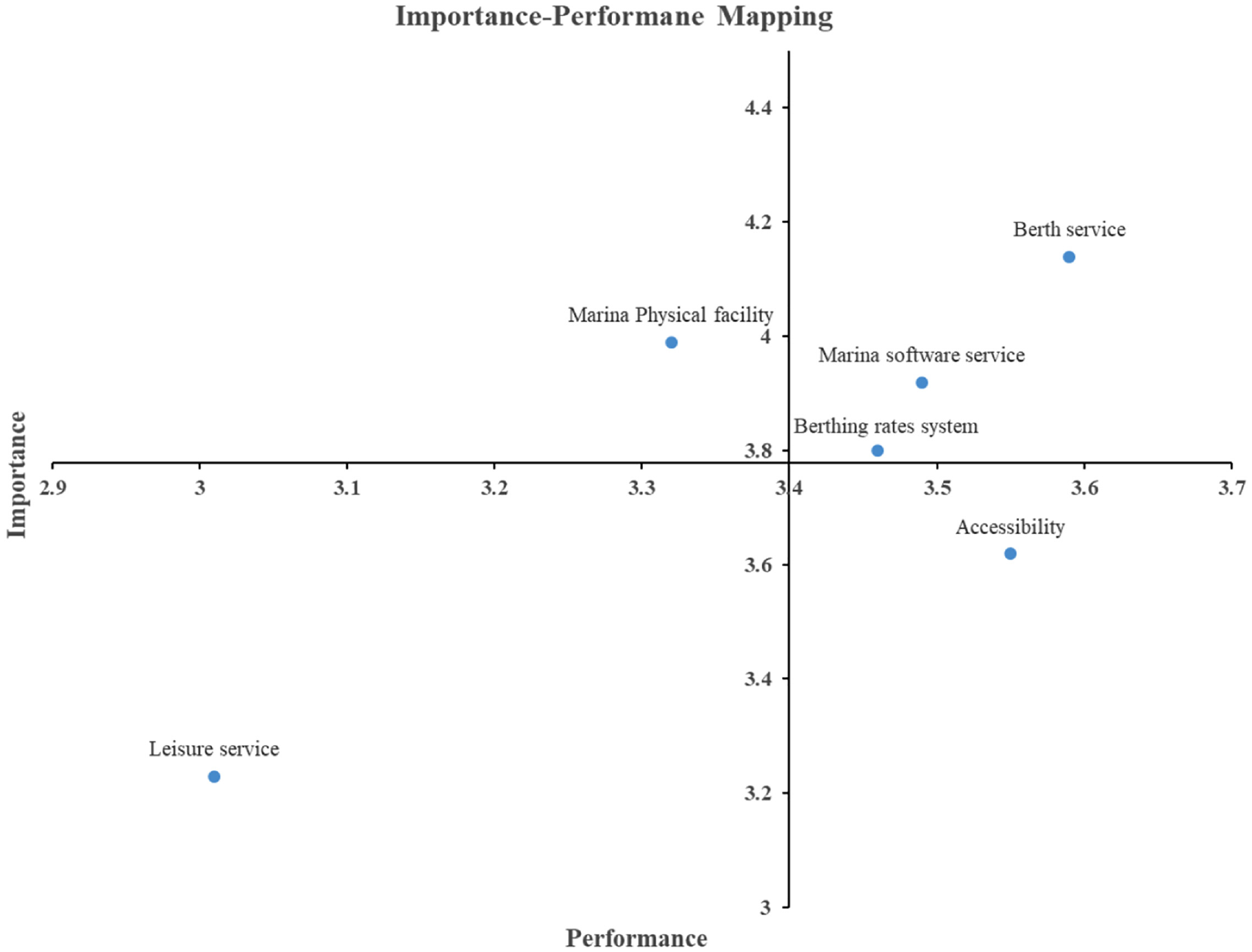
IPA map of marina service quality dimensions.
IPA Results for the 53 Attributes of Marina Service Quality
This study investigated the 53 attributes of marina service quality to measure the marina service quality from the perspective of the IPA questionnaire respondents (see Table 5). Subsequently, the IPA map crosshair position was determined and the IPA map of marina service quality attributes was drawn. Because the number of attributes was 53, each attribute was assigned a code, as presented in the IPA map.
Results Related to Marina Service Quality Attributes.

As presented in Figure 4, the results of the 53 attributes of marina service quality from the respondents view are as follows: the attributes of A1, A3, A4, B1, B9, C1, C6, C7, D2, D3, D4, D5, D9, D10, E4, E8, E9, E13, E14, E16, and E17 fell into “Keep up the good work”; B2, B3, B4, B5, B8, C3, C4, D1, and E6 fell into “Possible overkill”; B6, B7, C5, D6, D7, E1, E2, E3, E5, E7, F1, F3, F4, and F5 fell into “Low priority”; and A2, C2, C8, D8, E10, E11, E12, E15, and F2 fell into “Concentrate here.”

IPA map of marina service quality attributes.
Euclidean Distance Results
The primary contribution of this study is to propose an improving IPA technique which adopted Euclidean distance, and to rank the improvement priority of service attributes located in the “Concentrate here” quadrant. In mathematics, the Euclidean distance between two points in Euclidean space is the length of a line segment between the two points. Our research utilized this concept to calculate the distance between each attributes located on “Concentrate here” quadrant and the mean importance and performance as the origin point. The value of distance from the axes from max to min can rank the priority for all each attributes (See Table 6). In terms of specific attributes, the results from Table 6 emphasize the significance of C8 and E15. These two service attributes are ranked first and second in priority, respectively, and exhibit relatively large Euclidean distances on the IPA map. This suggests that improving these two attributes may have a significant impact on enhancing overall customer satisfaction. In particular, the high priority and larger Euclidean distance of C8 indicate potential improvements in providing discounted berth ratings between sister marinas. This not only enhances yacht owners’ satisfaction but also contributes to strengthening collaboration and connectivity among different marinas. Similarly, the high priority and larger Euclidean distance of E15 indicate opportunities for improvement in providing sewage, bilge water, and oil sludge treatment facilities. This directly influences the environmentally friendly aspects of marina services, thereby elevating yacht owners’ satisfaction with the marina.
The Euclidean Distance Between the Nine Critical Service Attributes and the Axes of the IPA Map.

With regard to the Euclidean distance of IPA in the study, the main physical facilities should be improved first were E15, E12, E10, and E11 among the 17 attributes. While both F2 and D8 attributes fall within the “Concentrate here” quadrant, their proximity to the axes and relatively smaller Euclidean distances suggest a performance alignment with the mean level of customer expectations. However, given their lower positions in the priority ranking, we contend that, within the constraints of limited resources in marinas, addressing improvements in these two attributes may not warrant high-priority consideration. This implies that other service attributes might exert a more substantial impact on overall yacht owners’ satisfaction. It is recommended, therefore, to prioritize improvement initiatives in areas deemed more influential, allowing for a judicious allocation of resources to maximize the enhancement of yacht owners’ satisfaction within the given constraints.
In terms of methodology, the Euclidean distances were calculated based on the geographical positions of each attribute in the “Concentrate here” quadrant concerning the mean importance and performance as the origin point. The values obtained for each attribute’s distance from the axes, presented in Table 6, provide a quantifiable indication of improvement priority.
Implications
Theoretical Implications
This study significantly contributes to the theoretical landscape by advancing our comprehension of marina service quality determinants within yachting tourism. The innovative application of an enhanced IPA technique, incorporating Euclidean distance, not only sheds light on improvement priorities but also refines existing theoretical frameworks. Our findings provide a robust framework for targeted improvements, offering valuable insights for enhancing maritime service quality in professional contexts. The integration of Euclidean distance into the IPA framework represents a methodological advancement, providing a more nuanced understanding of service quality improvement priorities. This novel approach contributes to the methodological discourse within service quality research, offering a refined tool for prioritizing attributes within the critical quadrant. Scholars in related fields can leverage this methodology to enhance the precision of their analyses.
This innovative approach strategically prioritized service attributes in the “Concentrate here” quadrant. Key priorities, such as “discounted berth ratings between sister marinas” and “improvements to sewage, bilge water, and oil sludge treatment facilities,” are identified with substantial Euclidean distances, signaling impactful enhancements. IPA highlights specific areas for physical facility improvements, including sewage facilities, fueling stations, high-voltage shore power facilities, and land storage space. While “Providing Catering, beverage, food, and banquet services” and serving as the “official website for presenting information to the public” align with customer expectations in the target quadrant, resource constraints necessitate a lower priority. Strategic resource allocation is essential to optimize overall yacht owners’ satisfaction.
Practical Implications
For industry practitioners, particularly marina managers, our results offer actionable insights into strategically enhancing marina competitiveness. The emphasis on improving physical facilities aligns with the expectations of yacht owners engaged in yachting tourism. Implementing targeted improvements in sewage treatment, fueling facilities, and land storage space can significantly elevate overall customer satisfaction, positioning marinas as preferred destinations.
In the broader context of post-epidemic tourism recovery, our study provides strategic directions for the yachting tourism sector in Taiwan. The identified improvement priorities not only respond to the immediate needs of yacht owners but also align with environmental and sustainability considerations. Stakeholders in the tourism industry can utilize these findings to shape development strategies, fostering collaboration and connectivity among marinas.
While our study advances the understanding of marina service quality, certain limitations warrant consideration. Methodological biases and a relatively small sample size underscore the need for caution in generalizing findings. Future research avenues should delve deeper into the causes of perception-performance gaps and explore holistic solutions. Additionally, expanding the participant pool to encompass diverse stakeholders will provide a more comprehensive understanding of marina satisfaction in the Taiwanese context.
In conclusion, the theoretical, methodological, and practical implications presented in this study offer a multifaceted contribution to the discourse on marina service quality within yachting tourism. The refined IPA technique, coupled with Euclidean distance analysis, not only enriches academic discussions but also provides valuable guidance for strategic decision-making in the dynamic landscape of the tourism industry.
Conclusion
Numerous studies have extensively explored the multifaceted impacts of marinas and yacht tourism, emphasizing economic, environmental, ecological, and social dimensions, yet the determinants guiding yacht owners’ marina selection have received limited attention (L. W. Hall et al., 2009; Mikulić et al., 2015; A. M. W. Wilson et al., 2015). In the unique context of Taiwan’s yacht tourism, this pioneering study delves into the factors influencing marina selection based on the experiential aspect of marina service quality. Employing Importance-Performance Analysis (IPA) across six dimensions and 53 attributes, coupled with Euclidean distance calculations, this research unveils both practical and theoretical implications for practitioners and scholars alike.
The IPA results delineate four distinct quadrants for marina service, namely “Keep up the good work,”“Possible overkill,”“Low priority,” and “Concentrate here.” Notably, only the dimension of marina physical facilities is situated in the “Concentrate here” quadrant. This signals a dual message—the urgent need for attention to underperforming attributes within marina physical facilities and a potential lack of awareness among marina managers regarding the impact of these deficiencies on yacht owners’ satisfaction and the strategic utilization of high-quality physical facilities for attracting yacht owners.
This study introduces a novel approach to enhance Importance-Performance Analysis (IPA) by employing Euclidean distance, prioritizing service attributes in the “Concentrate here” quadrant. Utilizing Euclidean space principles, distances from each attribute to the mean importance and performance determine improvement priority. Notably, “discounted berth ratings between sister marinas” and “improvement to sewage, bilge water, and oil sludge treatment facilities” emerge as top priorities, with significant Euclidean distances, suggesting impactful enhancements for discounted berth ratings and environmental facilities. IPA reveals sewage, bilge water, and oil sludge treatment facilities, fueling facilities, high-voltage shore power facilities, and land storage space as key physical facility improvements. “Providing Catering, beverage, food, and banquet services” and “official website for presenting information to the public,” while in the target quadrant, show alignment with customer expectations but warrant lower priority due to constrained resources. This necessitates a strategic allocation to optimize overall yacht owners’ satisfaction. The methodological innovation lies in quantifiable Euclidean distances, guiding targeted improvements.
As the pioneering investigation into determinants guiding marina selection among yacht owners, our study aligns with prior research, emphasizing the profound impact of physical facilities, infrastructure, and the availability of yacht services on marina choice (Bilski, 2015; Sari et al., 2016; Sariisik et al., 2011). Significantly, our study elucidates the harmonization of selection criteria between Taiwanese and European yacht owners, emphasizing dimensions that hold substantial potential for satisfaction. Moreover, this research makes a distinctive contribution by delineating precise areas for enhancement in Taiwan’s yacht marina services, grounded in the perspectives of yacht owners. Not only does it pinpoint critical domains for improvement, but it also establishes a prioritized sequence, furnishing invaluable insights for the augmentation of service quality in Taiwanese marinas.
In a departure from traditional IPA theory, our research extends the model by introducing a methodology to rank improvement priorities within the critical quadrant using Euclidean distance. Recognizing the nuances between traditional IPA and our Euclidean distance-enhanced IPA, we assert that while traditional IPA identifies attributes within the “Concentrate here” quadrant, our method provides a more nuanced approach for selecting attributes with the highest improvement priority in marina selection.
Acknowledging the inherent limitations of this study, including potential biases in crosshair position determination and the relatively small sample size, we propose avenues for future research. Subsequent investigations should delve into the causes of perception gaps and offer solutions, expanding the understanding of the dynamics influencing yacht owners’ marina selection. Additionally, broadening the participant pool to include marina visitors, government officials, and entrepreneurs will enrich future studies, providing a comprehensive overview of satisfaction with marinas in Taiwan.
Supplemental Material
sj-docx-1-sgo-10.1177_21582440241281634 – Supplemental material for Enhancement of Marina Service Quality of Yacht Tourism in Taiwan: A Euclidean Distance of Importance-Performance Analysis
Supplemental material, sj-docx-1-sgo-10.1177_21582440241281634 for Enhancement of Marina Service Quality of Yacht Tourism in Taiwan: A Euclidean Distance of Importance-Performance Analysis by Hui-Chiao Wang and Taih-Cherng Lirn in SAGE Open
Footnotes
Acknowledgements
This work was financially supported by the National Science and Technology Council, Taiwan (grant numbers 113-2621-M-019 -005 - and 112-2621-M-019 -006 -). We extend our gratitude to the experts for their invaluable insights into marina service quality and management, and express our appreciation to National Taiwan Ocean University for providing the essential academic resources necessary for this research.
Declaration of Conflicting Interests
The author(s) declared no potential conflicts of interest with respect to the research, authorship, and/or publication of this article.
Funding
The author(s) disclosed receipt of the following financial support for the research, authorship, and/or publication of this article: Furthermore, the authors acknowledge the generous funding support from the National Science and Technology Council, Taiwan, R.O.C. (Grant Numbers 112-2621-M-019 -006 -).

Data Availability Statement
Data sharing not applicable to this article as no datasets were generated or analyzed during the current study.
Supplemental Material
Supplemental material for this article is available online.
References
Supplementary Material
Please find the following supplemental material available below.
For Open Access articles published under a Creative Commons License, all supplemental material carries the same license as the article it is associated with.
For non-Open Access articles published, all supplemental material carries a non-exclusive license, and permission requests for re-use of supplemental material or any part of supplemental material shall be sent directly to the copyright owner as specified in the copyright notice associated with the article.
