




Abstract
A systematic review of the literature (up to September 2023) has been conducted according to the Preferred Reporting Items for Systematic Reviews and Meta-Analysis (PRISMA) guidelines and following the checklist for reporting systematic reviews of PRISMA 2020. The research objective is related to the ethical issues of the Social Work profession associated with the use of digital technologies in professional practice. Increasing ethical challenges arising from the integration of digital technologies in Social Work practice underscore the necessity of this study. Thematic Synthesis Analysis was used to analyze the studies (n = 15), extracted from five databases: Scopus, Web of Science, ProQuest, EBSCOhost, and Dialnet Plus. The analysis of documents was carried out with the support of the CADIMA web tool. The results have been grouped into three categories: the effects of digitization on professional practice; education, research and engagement; and ethical challenges in digital professional practice. This article evidences the need to adopt ethical principles and regulatory standards that support the application framework of the profession, and within this framework the right to the protection of digital personal data and the regulation in which they converge.
Introduction
The integration of Information and Communication Technologies (ICT) has transformed the landscape of the Social Work profession, impacting both practitioners and service users. This technological shift has precipitated a spectrum of ethical challenges, spanning from boundary issues to dual relationships. These challenges manifest in various forms, including ethical judgments, non-misconduct ethical errors, and ethical misconduct (Reamer, 2024). This study seeks to elucidate the contemporary ethical implications stemming from technological advancements within the realm of Social Work practice.
The human ability to choose is deeply ingrained in our lives (Sanabria, 2008), shaped by our experiences, values, and environment (Bauzá & Morañóm, 2019), ultimately leading to personal growth and change (Bermejo & De la Red, 1996). This concept aligns with the Ethical Principles of Social Work (International Federation of Social Workers [IFSW], 2018), which emphasize the professional duty to navigate ethical dilemmas. Recognizing the potential threats posed by digital technologies and social media, the International Federation of Social Workers (IFSW, 2018) underscores the importance of safeguarding confidentiality, privacy, and informed consent, as well as promoting inclusivity in online services. Thus, professional duty encompasses the pursuit of professional goals and values (Bermejo & De la Red, 1996), ensuring ethical practice in the digital age.
The study of the human-machine relationship spans over half a century (Burton et al., 2019). In recent years, particularly amid the COVID-19 pandemic, technology has rapidly integrated into our lives, prompting little consideration of its impact (Almeida et al., 2020). The prioritization of technological resources over human relationships has been evident, necessitating a deeper understanding of this dynamic (Lindgren et al., 2019). This trend has garnered attention across various disciplines, including social sciences (Ranerup & Henriksen, 2020), significantly impacting not only social work professionals but also citizens. Ultimately, this shift in societal dynamics fundamentally alters processes, interventions, and outcomes (Uriarte & Acevedo, 2018).
Analytics Information Management, involving data collection, storage, and analysis for informed decision-making, and Business Intelligence, using data analysis for actionable insights, are essential tools for organizational processes (O’Keefe & Brien, 2018). However, their evolution to integrate social data responsibly is crucial for better decision-making (Franquesa & López, 2011), while ensuring compliance with legal and professional obligations (Rodríguez Alcázar, 2017).
ICTs enable intervention strategy definition, information collection, and processing in digital formats, serving as vital research tools for program design, management, and evaluation in social work (Caravaca Llamas, 2014; Pérez-Lagares et al., 2012). Understanding ethical implications within social work and ICT integration requires familiarity with various theoretical frameworks (Reamer, 2013, 2015, 2017, 2018, 2024). Deontological ethics prioritize moral duties over consequences, guiding ethical decision-making. Ethical principles safeguard professional-client relationships, emphasizing rights protection and ethical conduct. Adherence to evolving ethical standards, including confidentiality and informed consent, is vital in digital practice. Ethical decision-making frameworks offer guidance in addressing emerging challenges in digital communication and relationships, ensuring ethical integrity (Reamer, 2013, 2015, 2017, 2018, 2024).
Building upon the aforementioned rationale, a systematic literature review was conducted to comprehensively explore contemporary ethical dilemmas within the Social Work profession, particularly those arising from the integration of technology. This review aims to elucidate the evolving landscape of ethical challenges and issues, navigating the transition toward a digitized yet human-centered professional practice.
This article is structured as follows. The introduction section sets the context and importance of addressing ethical challenges in social work practice in the digital era. The Methodology section outlines the systematic review process, including search strategies and data analysis methods. Results are presented categorically, focusing on the effects of digitization on professional practice, educational implications, and ethical challenges. The Discussion section analyzes these findings in the context of current ethical dilemmas and proposes recommendations for ethical decision-making. Finally, the Conclusion summarizes the key insights and suggests future research directions in the field of technology and ethics in social work practice.
Materials and Methods
The methodology employed in this study adheres to the PRISMA 2020 standards (Preferred Reporting Items for Systematic Reviews and Meta-Analyses), established in 2009 (Moher et al., 2009) to enhance transparency in reporting the rationale, procedures, and outcomes of systematic reviews (Page et al., 2021). These standards aim to ensure clarity regarding why a review was conducted, how it was conducted, and what its findings entail.
To ensure a comprehensive and updated overview of the literature pertaining to ethical dilemmas and challenges in the field of Social Work, particularly those associated with the increasing integration of digital technologies, specific eligibility criteria were established. These criteria were formulated in alignment with the study’s objectives and aimed to encompass a wide range of relevant literature sources.
Key considerations in the methodology included defining the objectives of the review, establishing selection criteria for inclusion of studies, devising a robust search strategy to identify relevant literature, determining the process for selecting studies from the identified sources, outlining the method for extracting data from selected studies, and synthesizing the extracted data. It is worth noting that adjustments were made to the data synthesis process to accommodate the nuances of the selected references (Gough et al., 2012). This methodology includes evaluation of the methodological quality of the analyzed studies to ensure robustness and reliability.
The systematic review process adhered closely to the checklist outlined in the PRISMA 2020 guidelines (Page et al., 2021). This involved a methodical approach encompassing various elements, as previously stated, including a research approach tailored to address specific objectives. These methodological steps were meticulously followed to ensure rigor and transparency in the conduct of the systematic review, thereby enhancing the credibility and validity of the study findings.
Research Approach Based on a Specific Objective
The objective of this systematic review is to understand the current situation regarding the ethical dilemmas and problems that arise in the Social Work profession over time and as a result of the use of technology.
Eligibility Criteria
Studies published in scientific journals up to September 1, 2023 are considered, including the terms “Social Work,”“Information and Communication Technologies,”“Ethic,” and related terms such as “deontology” or “data protection” among others, in the title, abstract and keywords. Searches were performed for all databases using English terms. Exclusion criteria were applied for studies that did not carry out research on social ethics related to digital technologies. Monographs, reviews, editorials, unpublished manuscripts and conference abstracts were also excluded. We thought to exclude those studies that refer to a specific area of Social Work, such as Clinical Social Work (a specialized area of Social Work that focuses on providing mental health and social services to individuals, families, and groups in a clinical setting). However, after consensus among the researchers, these works studies included due to the fact that Clinical Social Work is one of the areas in which research related to professional ethics has been developed to a greater extent, considering the framework in which the practice is carried out.
Sources of Information
The databases consulted to identify the records analyzed were Scopus, Web of Science, ProQuest (for all databases), EBSCOhost (for all databases) and Dialnet plus. The searches were carried out in the most widely used databases, both in the field of technology (ICT) and in the Social Sciences, including relevant databases such as CINAHL, Psychology Database and APA Phsycinfo. Other databases such as MedLine and Emerald which were consulted did not yield results due to the subject matter.
Search Strategy
Terms related to “social work,”“ethics,”“information and communication technologies,” and “data protection” with their synonymous forms were used. Initially, terms such as “data protection” were used obtaining very few results, it being necessary to expand to terms such as “digital” and “networking” in addition to “ICT.” These terms may possibly include studies not associated with the context of the intended search, but are necessary in order not to exclude relevant studies. The first searches were performed only by title. However, it was necessary to expand the search to terms included in abstract or keywords in order to include studies not found in the initial search, since it is complex for the title alone to include all the terms that make up the subject under investigation. At first, the temporal scope was limited to the period from 2010 to September 2023. On extending the search without time limitation, it was seen that for the period prior to 2010 there was not a large volume of studies in relation to those obtained in the period 2010 to 2023 (around 25% more). Table 1 shows the search strategies.
Search Strategy Carried Out on September 1, 2023.
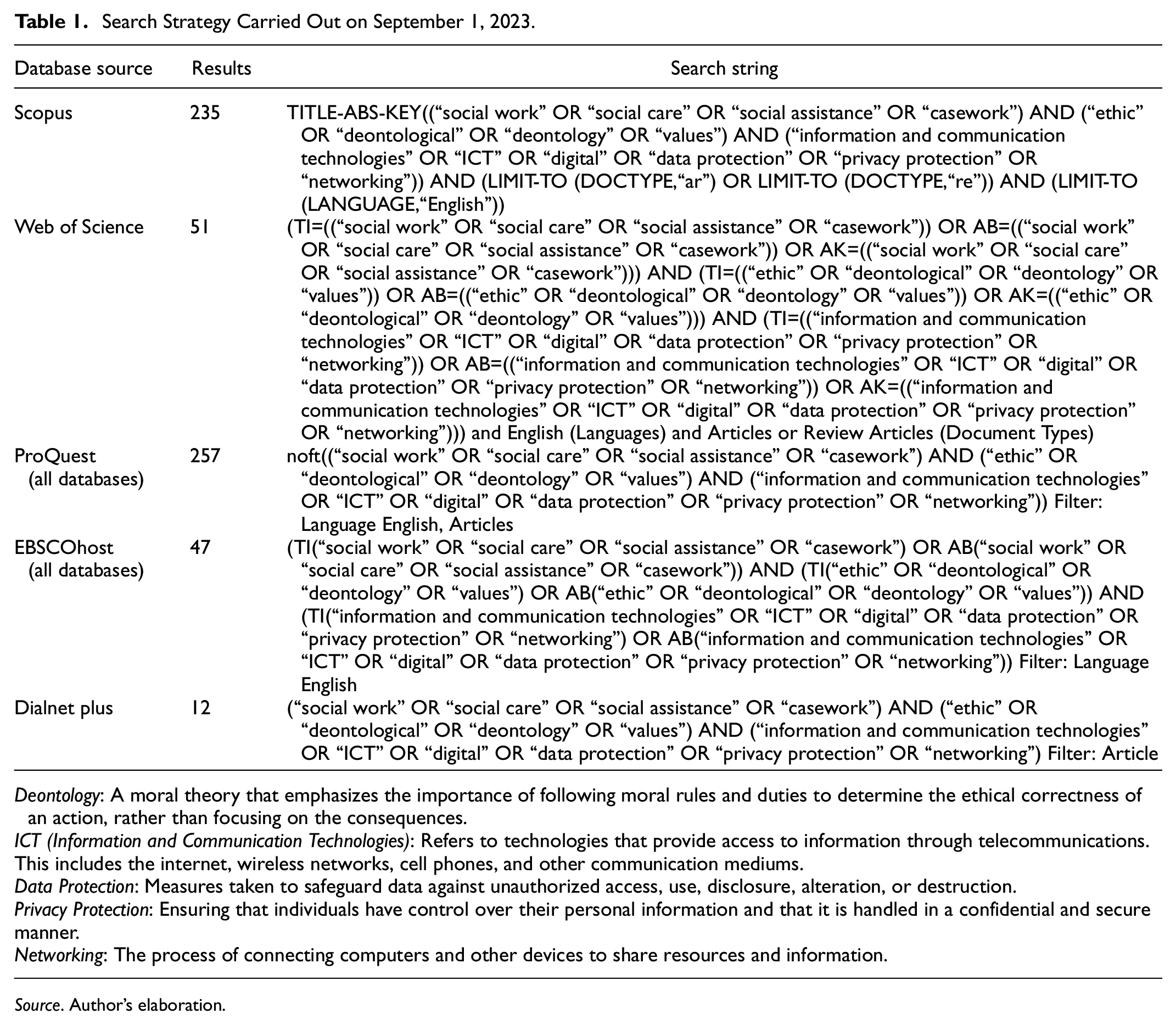
Source. Author’s elaboration.
An adaptation of the PICO (Population, Intervention, Comparison, Outcome) tool (Riesenberg & Justice, 2014a, 2014b) was used to design the search strategy. Therefore, the use of PICo (Population, Phenomenon of Interest, Context) is proposed for obtaining the research objective (Stern et al., 2014). The research objective is related to the ethical dilemmas and problems that arise in the Social Work profession over time and the current influence resulting from the use of technology. The definition of the PICo is as follows: Population = Social Work Professionals; Phenomenon of Interest = Ethics in the development of professional practice; Context = Technological.
Study Selection Process
Two authors independently examined the titles and abstracts of the studies proposed for inclusion in this systematic review. If only one of the authors selected a study, it passed to the full text review. In the full text review, a third researcher intervened in case of discrepancies in order to reach consensus between authors.
The selection process was carried out on the basis of the following inclusion criteria: (1) studies in which an analysis is performed from the perspective of Social Work; (2) studies that evaluated the use of information and communication technologies in Social Work; (3) studies that highlight the value of professional ethics in Social Work. As exclusion criteria, the authors proposed: (1) studies that do not report on the three aspects of the study topic analyzed (“Social Work,”“ICT,” and “Ethic”); (2) studies in which it has not been possible to locate the full text; (3) research not published in journals.
The open access web tool CADIMA was used in the process (Kohl et al., 2018). The data resulting from the searches in the different databases were entered into CADIMA and processed by two reviewers online, following the protocol of the web tool.
Data Collection Process
In this phase the researchers independently collected the characteristics of the studies analyzed and the main results of each study selected. To complete this stage of the study the authors generated a data compilation form following the methodological recommendations proposed by Butler et al. (2016). Specifically, the information extracted was: Title, authors, publication data, country, language, research design, study population, method, sample, objective/s and main results. As in the previous phases, discrepancies were resolved by consensus, through a joint review process among the authors.
Content Synthesis
A narrative synthesis was used to identify the main findings of the studies included in the review. Once selected, a thematic analysis was conducted using the “Thematic Synthesis” protocol (Thomas & Harden, 2008) to identify the main themes and sub-themes related to ethical practices in the professional development of Social Work, and how it is affected by digital environments. “Thematic Synthesis” utilizes three stages: line-by-line coding of findings according to the meaning and content of the studies; structuring codes for descriptive themes and grouping themes hierarchically; and gaining deeper understanding by generating new analytic themes. In each of these stages, consensus was reached on the generation and subdivision of the thematic lines. This process was executed independently and simultaneously by the authors and any discrepancies that arose were resolved by consensus.
Assessment of the Methodological Quality of the Studies Analyzed
The methodological quality of the studies that met eligibility criteria and the assessment of their quality was performed following the CASP Qualitative Checklist (Butler et al., 2016), recommended by the Cochrane Group (Noyes et al., 2018). One of the authors performed the assessment of the methodological quality of the studies, and the assessment procedure was verified by a second reviewer. Discrepancies that arose in the scoring of the studies were resolved by consensus.
The CASP assessment consists of 10 questions that address the rigor of the research methodology, its credibility based on the ability of the results to represent the study phenomenon and the relevance of the main findings (Butler et al., 2016). Following this system, for each item evaluated the following scores were assigned: “Yes” (1 point), “I cannot say” (0.5 points) and “No” (0 points). Consequently, when the result was a “Yes” in two thirds of the CASP items, it was rated as “High”; it was considered “Moderate” quality when the score was between four and six “Yeses”; and finally, if in more than two thirds the answer is “No,” the work is recorded as “Low” quality, as it has been used in previous qualitative review studies (Fullen et al., 2008).
In this research, a total of 8 of the 15 studies included in this systematic review were evaluated, since the rest (n = 7) obtained negative results in the first three questions of the CASP Qualitative Checklist. They were theoretical analysis studies for which it does not make sense to perform a quality assessment following the CASP Qualitative Checklist. However, in the studies analyzed (n = 8), the result was high quality for all of the studies (see Table 3).
Results
Study Selection
The literature search and study selection process are shown in the PRISMA flowchart (Figure 1). The initial literature search resulted in 602 references, of which 197 were duplicated. Two reviewers independently analyzed the remaining 405 references based on the title and abstract of the studies proposed for inclusion in this systematic review. After reaching a consensus on the results in the case of discrepancies, 371 references were excluded. The full text of the remaining 34 references was analyzed in a second selection process independently by the researchers, resulting in the exclusion by consensus of 19 studies. Two of them were excluded because the full text was not available, obtaining in this manner a total of 15 studies for this systematic review (n = 15).
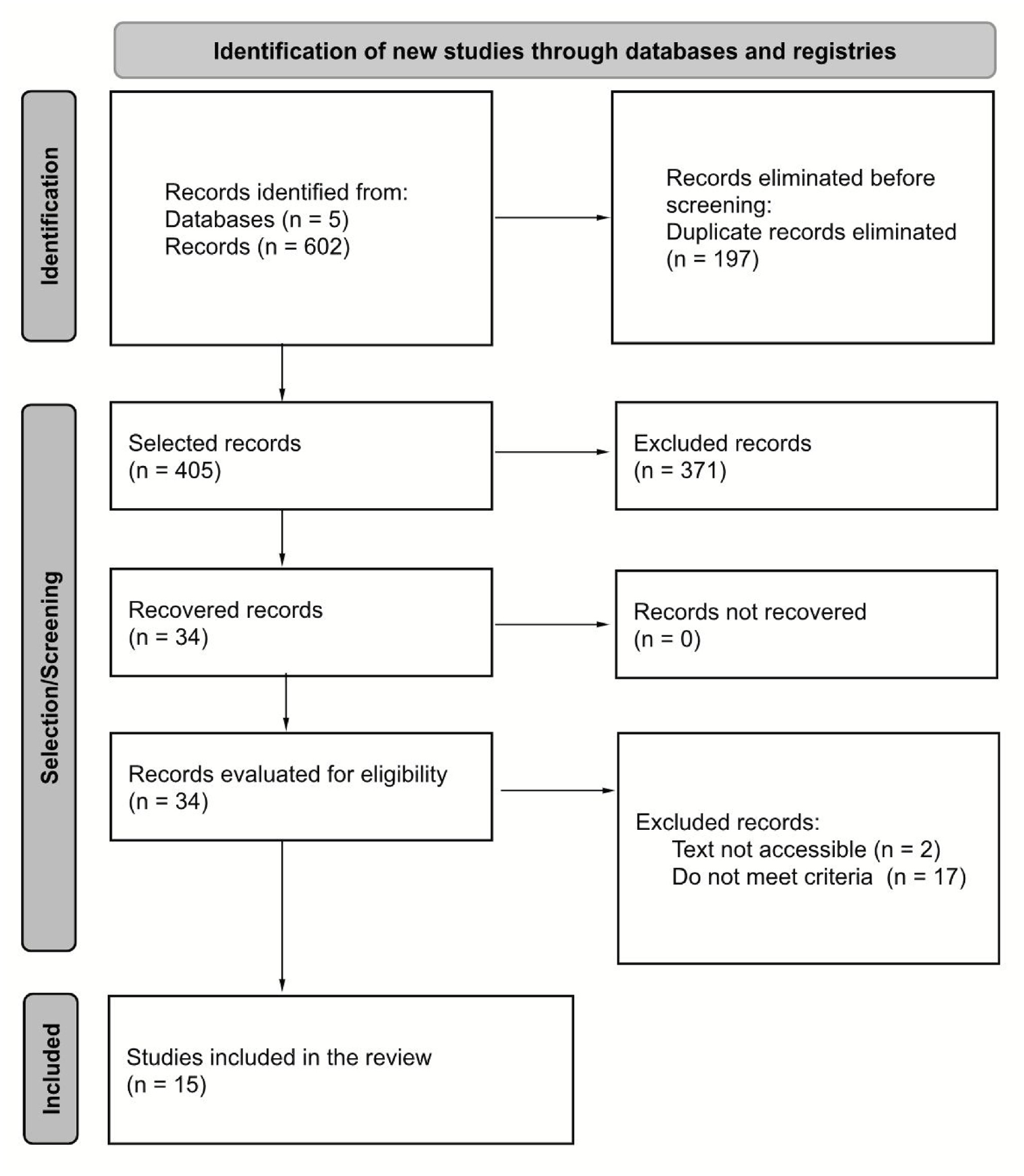
Flowchart of the literature selection process.
Study Characteristics
Table 2 lists the 15 studies included in this systematic review. Although it does not contemplate temporal limitations in the searches performed, the references included cover a period of 9 years (from 2012 to 2020). It is noteworthy that there is no relevant publication in the period prior to 2012, with publications every year from 2012 to 2020, and 2014 being the year with the highest number of publications (n = 4). The geographical distribution of the publications includes Sweden, USA, Australia, Ireland, Canada, and the United Kingdom. It is important to note that the studies are limited to mostly English-speaking geographic areas, such as countries in North America, Europe (Ireland), and Australia. This leads us to think about the importance given to this issue in mainly developed countries. No studies were found in Africa, Asia or South America. Mainly, there are publications in journals on Social Work, with the Journal of Social Work Values and Ethics and Australian Social Work the main supporters of research in this field. The aspects that are mostly dealt with are those that refer to “the effects of digitization on professional practice,”“ethical challenges in digital professional practice,” and finally “education, research, and commitment.”
Included Studies.

Source. Author’s elaboration.
Assessment of the Methodological Quality of the Included Studies
In general, the methodological quality of the studies included in this systematic review was high (mean quality = 8.5). Of the 15 studies analyzed the 8 that met the criteria to be analyzed for their methodological quality showed High quality (Baker et al, 2018; Boddy & Dominelli, 2017; Joiner, 2019; Kirwan & McGuckin, 2014; Mishna et al., 2012; Ranerup & Henriksen, 2020; Reamer, 2017; Young et al., 2018), representing 53% of the total studies comprising this systematic review.
The remaining studies (n = 7) were not evaluated for methodological quality since they are dissertations or theoretical analyses which, although relevant to the topic of study and analysis, do not meet the criteria to be evaluated for methodological quality. Table 3 shows the evaluation of the quality of the included studies.
Quality Assessment of Included Studies.

Source. Author’s elaboration.
Thematic Analysis
This section provides an overview of the studies included in this systematic review, where a classification into three large groups was performed based on the main research topics: Effects of digitization on professional practice (Boddy & Dominelli, 2017; Mishna et al., 2012; Ranerup & Henriksen, 2020); Education, research and commitment (Baker et al., 2018; Goldingay & Boddy, 2016; Joiner, 2019; Kirwan & McGuckin, 2014; Young et al., 2018); and Ethical challenges in digital professional practice (Dombo et al., 2014; Halabuza, 2014; Reamer, 2013, 2015, 2017, 2018; Strom Gottfried et al., 2014).
Effects of Digitization on Professional Practice
Currently, the adoption and use of ICTs are unquestionable worldwide. Along with these transformations concerning digital technologies, there is an accelerated change that creates new challenges and opportunities in all professions that does not neglect the professional practice of Social Work in all its interventions. It facilitates decisions and simplifies complex theoretical problems (Boddy & Dominelli, 2017; Ranerup & Henriksen, 2020). In addition, it also limitates personal relationships (Mishna et al., 2012). In practice, regarding the public sector the shift to digital technologies and the understanding of new technological performances requires efforts from professionals and public policies. A greater importance to digital discretion and to ethical, democratic and professional values is given (Ranerup & Henriksen, 2020). Social Work professionals need to link their knowledge of practical interaction with the spaces created in social networks, maintaining their commitment to ethical values and the critical reflective practice of the profession (Boddy & Dominelli, 2017). The profession of Social Work is a living profession, in continuous movement and change, that adapts and reinvents itself to continue serving the social needs of the nation, currently aided by technology.
Education, Research, and Commitment
Research that posits practical and ethical education in the use of digital technologies has been grouped under this heading (Baker et al., 2018; Goldingay & Boddy, 2016; Joiner, 2019; Kirwan & McGuckin, 2014; Young et al., 2018). In this regard they highlight the need for continued research and engagement to ensure that technological advances are implemented in a manner consistent with the ethics and philosophy of the profession (Baker et al., 2018). They place special emphasis on educating new professionals in the use of digital technologies that help promote competent and ethical practice based on Social Work values (Goldingay & Boddy, 2016; Joiner, 2019), encouraging new professionals to become ethically competent practitioners in a modern digital world (Young et al., 2018) with special incidence in the completion of relationships that are generated in the network (Kirwan & McGuckin, 2014).
Ethical Challenges in Digital Professional Practice
The ethical challenges facing professionals in Social Work today include; tracing the global evolution of ethical standards in Social Work, focusing on current challenges posed by the digital age; analyzing changes over time in relation to confidentiality, informed consent, professional limits, conflicts of interest, documentation, professionalism; helping to manage the emerging ethical challenges of this time (Reamer, 2017). The debate must also be addressed on whether digital relationships alter Social Work professionals’ ability to intervene and whether a truly therapeutic environment is provided (Reamer, 2015).
Social Work now exists in a more complex reality, with people and social workers interacting on multiple platforms and sometimes even unintentionally and without being noticed by others. The rapid and ubiquitous advent of networks has created unique challenges in the application of familiar ethical concepts such as user privacy, professional boundaries, social worker self-disclosure, conflicts of interest, and informed consent, acquiring new forms and complexities thanks to technological advances (Halabuza, 2014; Strom Gottfried et al., 2014). It is essential that today’s social workers become thoroughly familiar with these significant developments to ensure that their practice meets current ethical standards (Reamer, 2018).
Discussion
This systematic review was carried out with the objective of understanding the current situation regarding ethical dilemmas and problems in the Social Work profession over time and up to the present, derived from the use of technologies and the incorporation of new digital methodologies in the development of professional practice. The findings indicate that the scientific literature on the combination of these terms: “Social Work,”“ICT,” and “Ethics,” is scarce. However, contributions show the importance of a model that combines technology and personnel in the development of professional practice, since the use of technologies facilitates decisions and simplifies complex processes that would otherwise be excessively tedious (Ranerup & Henriksen, 2020).
It’s important to acknowledge that our research may be subject to certain constraints. One potential limitation lies in the scope of our data collection, which may not encompass all relevant sources due to constraints such as time, resources, or access to certain databases. Additionally, there could be inherent biases in the selection criteria or methodology employed, which might affect the generalizability of our findings. To mitigate these limitations, future studies could consider expanding the scope of data collection, employing more rigorous selection criteria, or utilizing alternative research methodologies to corroborate our results. Moreover, ongoing efforts to enhance transparency and rigor in data collection and analysis can help mitigate potential biases and strengthen the validity of our conclusions. We must consider that the omission of grey literature in the initial search strategy could potentially introduce publication bias by favoring published studies and overlooking relevant unpublished or non-peer-reviewed materials. Grey literature, including reports, theses, and conference proceedings, often contains valuable data and diverse viewpoints that may not be captured in traditional academic publications.
Regardless of the limitations, the key strengths of the approach outlined in the study include a systematic review methodology that provides a comprehensive overview of the current landscape. By synthesizing existing literature and categorizing findings into themes, the study offers a structured analysis of the ethical challenges posed by technology integration that can guide future research and practice in the field of social work ethics. Additionally, the study may highlight the importance of adopting ethical principles and regulatory standards to support ethical decision-making in technology-mediated social work settings.
The effects of digitization on professional practice are deeply linked to the ethical challenges in digital professional practice, as in the age of technologies cybercommunication has drastically changed the nature of professional relationships (Mishna et al., 2012) and the nature of the professions with their environment. Therefore, in the development of Social Work novel ethical challenges related to privacy, confidentiality, and conflicts of interest arise for professionals, it being necessary to develop and implement new ethical standards designed to help the professional to manage the ethical challenges that arise in a changing digital environment (Reamer, 2017; Strom Gottfried et al., 2014). An example of this would be to consider whether the use of technology alters the nature of professional intervention and the capacity of professionals (Reamer, 2015). In this sense new areas of concern are raised in professional practice (Halabuza, 2014).
Regarding the ethical challenges, we can state that the world in which social work operates is no longer defined by traditional physical limits and environments, but extends into a much more complex reality, interacting on multiple platforms (Dombo et al., 2014). This must be considered in the light of standards and Codes of Ethics designed to guide professional practice. The present technologies make it easier to offer advice online or by telephone and conduct cybertherapy through the electronic social networks. In short, the introduction of various forms of digital electronic social services, comes with a wide range of complex ethical problems related to risk management in the profession (Reamer, 2013). It is essential that today’s social workers be familiar and comfortable with these developments to ensure that their practice meets current ethical standards (Reamer, 2018). Regarding the benefits and challenges of adopting a practice-based approach, we need to highlight the requirement for continued research and engagement, ensuring that technological advances be implemented in a manner consistent with the enduring ethics and philosophies of the Social Work profession (Baker et al., 2018).
Regardless of the types of conflicts or dilemmas that Social Work professionals encounter in professional practice, the scientific literature reflects the idea that the main problem is to discern which discrepancies belong to professional ethics and which are ethical dilemmas (Banks, 2020; Healy & Thomas, 2020). Another different question would be to apply one method or another in the resolution of conflicts that are strictly ethical.
Finally, education, research and commitment are the basic pillars for ethical professional practice. Ethics education is necessary, however it is not specified how digital ethics should be integrated into Social Work values (Goldingay & Boddy, 2016; Joiner, 2019). It is necessary to encourage and invite educators to incorporate digital skills in order to prepare students to become morally competent professionals in a modern digital world (Young et al., 2018). In this sense, ethics, morality, rigor and respect for privacy arouse great interest in the social, economic and political spheres and impregnate all actions in life with great value, determining the principles which govern any personal and/or professional intervention. For social intervention in this environment, an evolution in the conceptual and methodological approach is required in the attention to social needs and a renewal of practical tools based on recycling and constant updating (Caravaca Llamas, 2014). For this reason, it is essential to establish a reference framework for the development and evaluation of desirable digital skills in Social Work professionals (Regalado López, 2021)
In general, public administration has oriented its objectives based on economic interests (Montero Carrión, 2013) as opposed to person-centered values. From these premises the generalized conception in Social Work has been derived of maintaining the principle of professional, aseptic neutrality apart from religious, political or moral convictions. This attitude, in addition to being impossible in daily practice, is being profoundly modified.
This is where the coexistence and interrelationship that is generated in the trinomial ICT, Social Work and professional ethics has a place. The Social Work profession and its practitioners have been faced with the dilemma of exercising an ethical professional practice that does not violate the human rights of the population. The approach to professional praxis to which the technological transformation has led raises the need to introduce social and technical innovations in professional practice (Binimelis Espinoza et al., 2021; Castillo de Mesa et al., 2018). A gradual process of ICT adoption is necessary in the different forms of social intervention (Chan, 2016; Chan & Holosko, 2016; Goldkind et al., 2016; López Peláez & Marcuello Servós, 2018), considering the ethical challenges that this transformation produces (Boddy & Dominelli, 2017; López, 2014). These issues must be taken into account in the application of social policies.
In the reality that we are living in these strange years, Social Work is the unifying factor in a politicized society dismembered by a health crisis that has saturated all economies. Social Work, at this time, knows that its priority is the acquisition and management of digital skills and a need for professional action, which implies moral and ethical responsibility. Therefore, it is necessary to rethink Social Work and consider digital skills, both for Social Work professionals and citizens, as one of the essential transversal axes that must be incorporated with equal opportunities into today’s technological and digitized society. These new factors influence the quality of life of the population and that identify digital literacy as a fundamental human right necessary for the development of people’s well-being, determined by the capacity and quality of access to technology and digital resources. Therefore, it is necessary to develop a detailed understanding of ethical issues and behaviors in digital environments. Social workers must link their practical knowledge to the new areas that are developing in the profession (Boddy & Dominelli, 2017).
In the dynamic landscape of contemporary social work, the intersection of technology, cultural competence, and inclusivity serves as a pivotal focal point for understanding and addressing ethical implications. Technology has revolutionized the practice of social work, offering unprecedented opportunities for outreach, intervention, and service delivery. However, this digital transformation brings forth a host of ethical considerations that necessitate careful navigation.
Technology has blurred the lines between personal and professional domains, presenting social workers with unique ethical dilemmas (Lindgren et al., 2019). While online platforms offer avenues for increased accessibility and engagement with clients, they also pose risks to the traditional social work-client relationship. The informality of online communication channels can inadvertently erode professional boundaries, leading to the potential for dual relationships or conflicts of interest (Dombo et al., 2014; Reamer, 2024). Navigating these challenges requires a nuanced understanding of ethical principles and a proactive approach to setting clear boundaries. Social workers must be vigilant in maintaining a distinction between their personal and professional identities online, refraining from engaging in dual relationships or interactions that may compromise client confidentiality or trust. Furthermore, the impact of technology on the traditional social work-client relationship extends beyond boundary issues. Virtual communication platforms have altered the dynamics of interpersonal interactions, potentially diminishing the depth of rapport and therapeutic alliance that can be established in face-to-face encounters. While technology facilitates convenience and accessibility, it may hinder the development of genuine connections and emotional intimacy, particularly with clients from diverse populations who may face barriers to accessing digital services.
Globally, professional associations and other regulatory bodies are working together to identify ethical issues and develop guidelines for the profession’s use of technology, such as informed consent, privacy, confidentiality, conflicts of interest, documentation records, etc. (ASWB International Technology Task Force, 2015; Campbell & Gordon, 2003; Grimm et al, 2009, Hu et al, 2010, Reamer, 2013, 2015). The new challenges facing the profession arise from the growing use of technology to provide information, communication and care to citizens (Reamer, 2015). Therefore, training is important as a source of well-being in professional practice.
The applicability and generalizability of the results obtained would be in their potential to provide insights and recommendations for social work professionals, educators, policymakers, and researchers working at the intersection of technology, ethics, and social work practice (Boddy & Dominelli, 2017). By understanding the ethical dilemmas and challenges arising from the use of technology in social work, practitioners can adapt their approaches to better navigate these complexities while upholding ethical standards. The findings can inform the development of guidelines, training programs, and policies that address the ethical implications of technology integration in social work across different contexts. Additionally, the results can contribute to the ongoing dialogue on the ethical considerations related to privacy, confidentiality, and professional relationships in the digital age, offering valuable guidance for promoting ethical practice in a rapidly evolving technological landscape.
The integration of technology into social work practice presents both opportunities and challenges that have significant implications for practitioners (Reamer, 2015, 2017, 2024). Understanding these implications is crucial for ensuring ethical and effective service delivery. Practitioners must prioritize the establishment and maintenance of professional boundaries in online interactions. This entails setting clear guidelines for communication and ensuring that online platforms are used in a manner consistent with ethical standards. Practitioners should undergo training to develop digital literacy skills and proficiency in navigating online spaces while upholding professional integrity. Furthermore, practitioners should leverage technology to enhance accessibility and inclusivity in service delivery. They must remain mindful of the digital divide and ensure that technological solutions are accessible to all clients, regardless of their socioeconomic status or technological literacy. By emphasizing the importance of ethical standards and professional values in the digital age, the study contributes to the ongoing dialogue on ethical decision-making in technology-mediated social work practice.
Decision-makers and policy implementers can benefit from this study by gaining insights into the evolving ethical challenges in social work due to technological advancements. Understanding the implications of digital environments on professional practice can inform the development of policies and guidelines that promote ethical conduct and responsible use of technology in social work settings. By addressing these questions and providing a clear comparison with other approaches, the study enhances its quality and impact, offering valuable contributions to the field of social work ethics and technology integration.
Conclusions
The United Nations declares access to the Internet as a human right, and calls for all states to guarantee freedom and security on the Internet. However, we know that this is not always the case, that there are many digital gaps in different environments and contexts, especially for vulnerable groups, and especially in those in which Social Work intervenes. Despite this, users approve and accept the relationship with professionals because they trust in the guarantee of their rights in the process and that no ethical principle will be violated (Verde Diego & Cebolla Bueno, 2017), considering that science, politics and ethics are the three components of the intervention from the social disciplines (Clemente, 2000; Salcedo, 1998).
Currently, the profession is immersed in a process of reflection towards a critical and active Social Work that is postulated in the fight for social policies that comply with the duty to respect, protect and enforce human rights, as indicated from professional associations, highlighting that this approach is based on the “duty of social change, expressed by the International Federation of Social Workers” (Verde Diego & Cebolla Bueno, 2017, p. 84).
The ethics of Social Work and the morality of professionals must be the subject and object of the profession, increased by daily practice. A profession that grows and evolves from the structures created for this purpose. However, given the new and emerging needs of citizens, new commitments and social actions are forged for professionals and all public and private agents.
Social Work professionals must be people who question, reflect and fight for transformation and change, who act based on their thoughts and feelings, without fear that their position will be questioned due to the ethical validity of their professional interventions (García Álvarez, 2007). The profession of Social Work must be impregnated with reflective and transformative professionals, where the central objective is the social integration and well-being of citizens, prioritizing the right to respect and privacy. Even in a digital network, with new problems and social needs, we must make a profound effort to identify them and cultivate ethical principles and standards in order to implement reasonable practices and meet the challenges of the digital age.
Future research avenue in the intersection of technology, ethics, and social work practice could explore several promising directions to advance knowledge and practice in the field. These include investigating the ethical implications of emerging technologies like artificial intelligence, virtual reality, or blockchain, and how they impact ethical decision-making and client interactions. Additionally, research could delve into integrating cultural competence into digital interventions to ensure inclusivity and responsiveness to diverse cultural backgrounds, as well as exploring the relationship between digital literacy skills and ethical practice (IFSW, 2018). Furthermore, exploring how intersectionality influences ethical considerations in technology use and evaluating existing ethical decision-making models in the context of technology integration are important areas for further study.
As previously mentioned, it would be pertinent to explore how technology plays a dual role in shaping cultural competence and accessibility in social work services, while also influencing inclusivity in diverse populations. On one hand, technology has the potential to enhance cultural competence by facilitating access to resources, information, and support tailored to specific cultural backgrounds. For instance, digital platforms can offer multilingual services, culturally relevant educational materials, and virtual support groups that cater to the needs of diverse communities. This expanded access to culturally sensitive resources can improve social workers’ understanding of clients’ cultural contexts, thereby enhancing the effectiveness of interventions and promoting culturally competent practice.
Footnotes
Declaration of Conflicting Interests
The author(s) declared no potential conflicts of interest with respect to the research, authorship, and/or publication of this article.
Funding
The author(s) disclosed receipt of the following financial support for the research, authorship, and/or publication of this article: This work has been partially funded by the XI Edition of Projects for the Promotion of Entrepreneurial Culture, 2023/2024 academic year, under the Vice-Rectorate for Students and Employability of the University of Jaén.
Ethical Approval
This study did not need ethical approval as it performs a systematic review.

Data Availability Statement
Data sharing not applicable to this article as no datasets were generated or analyzed during the current study.