



Abstract
Resilience and efficiency are the key elements of sustainable development. Their synergistic advancement promotes the sustainable growth of the urban tourism economy. The study measures the resilience and efficiency of the urban tourism economy in 11 cities of Hebei Province, China, employing a weighting method and super-efficiency SBM model. Additionally, the study investigates the synergistic effects and evolutionary characteristics of resilience and efficiency using the Haken model. The research shows that the efficiency of the urban tourism economy acts as the order parameter, governing the evolutionary trajectory and direction of the urban tourism economy in Hebei Province. This parameter facilitates the dynamic transformation of the urban tourism economy from disorder to order and from low efficiency to high efficiency. The synergistic development of urban tourism economic resilience and efficiency in Hebei Province has gone through a benign evolution from a primary stage to a high stage, presenting a stable and sustained positive trend. However, significant spatial differences exist between cities, forming an “east-central-west” concave spatial pattern, and there is a “Matthew effect” among cities.
Keywords
Introduction
Urban tourism has become a vital component of the tourism industry due to the rapid global economic development and improved living standards. This sector, integral to urban economies, not only generates direct economic benefits but also enhances a city’s image and fosters cultural exchange. It has emerged as a key driver of local economies worldwide, contributing to regional economic development, job creation, and improved quality of life for residents. Since China’s reform and opening-up policy, urban tourism has been strategically significant in the national economy, driving substantial economic growth (A. M. Deng et al., 2022), and has long been the focus of academic attention and discussion. Nonetheless, the urban tourism economy also faces numerous challenges, including global financial crises, turbulence in foreign trade environments, escalating protectionism, unilateralism, and shifts in industrial structures. The COVID-19 pandemic, in particular, dealt a severe blow to the global urban tourism industry, with China experiencing a year-on-year decrease of 61.1% in tourism revenue in 2020, amounting to 322.069 billion U.S. dollars. In light of the ever-changing external environment, the recovery and sustainable development of the tourism economy have become crucial strategies to overcome current developmental challenges.
Resilience and efficiency are two critical aspects in the realm of sustainable development research, as highlighted by several studies (S. Li et al., 2022; Lu et al., 2022; S. M. Wang et al., 2020a). Economic resilience is defined as a regional economic system’s capacity to resist, recover, adapt, and modify its developmental path amid external risks (Martin, 2012; Wei et al., 2022). Efficiency, on the other hand, emphasizes achieving “low input, high output” to enhance resource allocation and production efficiency, thereby fostering sustainable economic growth (Sheng et al., 2022). Relying solely on a single perspective in research is inadequate for the evolving model of urban tourism economic development. An exclusive focus on efficiency may hinder the urban tourism economic system’s ability to navigate complex changes in the external environment. Conversely, a sole focus on resilience could lead to redundant tourism resources and lagging tourism development. Currently, there is a lack of comprehensive research into the synergistic development of urban tourism economic resilience and efficiency.
A holistic approach is crucial to maintaining both resilience and efficiency in a city’s tourism economy, which is instrumental in advancing sustainable development. Therefore, it is urgent to clarify the synergistic development relationship between the two and to steadily enhance the resilience of the urban tourism economy while steadily improving its efficiency, to promote sustainable development of the urban tourism economy, and to provide important theoretical and practical references for the sustainable development of urban tourism economy.
Presently, global research on economic resilience primarily delves into areas such as industrial structure (Cheng et al., 2020; Jiang et al., 2022; Z. Wang & Wei, 2021), institutional influence (Ezcurra & Rios, 2019), and technological innovation (Bristow & Healy 2018). Quantitative research methods, including the core variable method (Martin & Sunley, 2015), the adaptive cycle model (Peters & Zimmermann, 2017), and comprehensive evaluation (Cheng et al., 2020), are commonly employed. These studies primarily explore the concept, evolutionary patterns, and influencing factors of tourism economic resilience. International foreign scholars have made substantial progress in researching tourism economic resilience, particularly in terms of theory, measurement, and policies, often from the perspective of crisis events (Bhati et al., 2016; Terhorst & Erhus-Ozturk, 2019; Watson & Deller, 2021; P. Zhang, Huang, Pan, et al., 2022).
Chinese scholars have conducted relatively few studies on the overall measurement and path optimization of tourism economic resilience, and only a few scholars have conducted quantitative research on the provincial scale of tourism economic resilience. For example, Q. Wang et al. (2020b) constructed a tourism economic resilience evaluation system from four dimensions of resistance, recovery, reconstruction, and renewal, analyzing the spatial-temporal changes and influencing factors of China’s tourism economic resilience.
Conversely, research on tourism economic efficiency is relatively mature, encompassing various aspects such as hotels (Z. Deng et al., 2020), tourist attractions (L. Yang et al., 2021), travel agencies (Ramón, 2011), tourism transportation (Zha et al., 2019), and tourism regions (Pan et al., 2021; Z. Wang & Liu, 2021). These research often involves the establishment of efficiency measurement models (Cracolici et al., 2008), estimation of efficiency levels (Mitra, 2019), identification of influencing factors (R. Tang, 2022), and utilization methods like stochastic frontier analysis (Ubay & Federico, 2021) and data envelopment analysis (Gómez-Vega et al., 2022) to conduct multidimensional analyses of tourism economic efficiency.
However, there is a notable scarcity of research outcomes regarding the synergy between resilience and efficiency. Existing studies mainly discuss the coupling coordination of urban resilience and land use efficiency (Bai et al., 2022), the relationship between water resource system resilience and efficiency (Sun & Meng, 2020), and the synergistic evolution of marine fishery economic resilience and efficiency (Han et al., 2022). Against the backdrop of sustainable development, most scholars have traditionally studied resilience and efficiency as separate perspectives, warranting a more comprehensive exploration of their synergistic development. This approach entails a stronger correlation analysis between the two dimensions, ultimately facilitating a deeper understanding of the sustainable development of urban tourism economies.
Hebei Province, with its 11 prefecture-level cities, each boasting unique tourism resources, provides an ideal context for this study. In 2020, the province’s tourism sector faced severe challenges, experiencing a 60.5% year-on-year decrease in tourism revenue and a 51.5% year-on-year decline in the total number of tourist receptions. Hence, this paper aims to measure the tourism economic resilience and efficiency of the 11 cities in Hebei Province spanning from 2011 to 2020. It introduces the Haken model to explore the synergistic relationship and evolutionary characteristics of urban tourism economic resilience and efficiency, offering both theoretical insights and practical guidance for the sustainable development of the urban tourism economy in Hebei Province. This research provides a novel perspective to aid in the recovery and sustainable growth of urban tourism economies.
Theoretical Framework
Resilience theory initially applied in the field of physics, was adapted by Holling (1973) to describe the capacity of ecosystems to absorb disturbances and still maintain their basic function and structure. This concept has been extensively applied in urban tourism economy studies to describe how destinations withstand and recover from various shocks, such as economic downturns or natural disasters (Bristow & Healy, 2018; Martin, 2012). Moreover, recent studies by Martin and Sunley (2015) expanded on this by exploring economic resilience, highlighting the capability of urban economies to adapt to and evolve following shocks, thereby ensuring sustainable development. This broader interpretation of resilience is crucial in understanding the complexities of urban tourism economies, which are often subjected to varied and unpredictable external pressures.
Drawing from the concepts of evolutionary resilience theory (R. W. Tang & Guo, 2018), this paper defines urban tourism economic resilience as the capacity of the urban tourism economic system to respond to external disruptions and shocks effectively. This response involves resistance, recovery, recombination, and other means. The aim is to maintain equilibrium within the urban tourism economic system and steer it toward a more optimal state. In parallel, urban tourism economic efficiency is defined based on the principles of efficiency and economic output maximization. It is an assessment method that seeks to minimize resource input while maximizing economic output within certain economic constraints.
Resilience underscores the ability to withstand external interference, while efficiency emphasizes achieving “low input, high output.” Urban tourism economic resilience and efficiency are interrelated variables within the urban tourism economic system. As proposed by Lu et al. (2022) and Wei et al. (2022), integrating the concepts of resilience and efficiency provides a robust framework for analyzing the sustainability of urban tourism economies. Following the theory of synergy, the urban tourism economic system can dynamically shift from disorder and inefficiency to order and efficiency. In stable operating conditions, efficiency takes precedence, driving urban tourism economic growth with a focus on “low input, high output.” This forms the foundation for resilience, promoting the sustainable development of the urban tourism economy.
However, in unstable, complex, and chaotic conditions, resilience takes the lead. With its strong resistance, recovery, and recombination capabilities, the urban tourism economy enhances urban tourism efficiency. This results in a balanced interplay between resilience and efficiency, facilitating the sustainable development of the urban tourism economy. Both resilience and efficiency are crucial dimensions for promoting sustainable development in the tourism economy. Achieving a dynamic equilibrium between the two is essential to adapt to both stable and unpredictable conditions and environments (Figure 1).

Theoretical framework of synergistic development of urban tourism economic resilience and efficiency.
Methodology
Measurement of Urban Tourism Economic Resilience
Resilience in the context of regional tourism economies is often assessed across four key dimensions: resistance, recovery, reconstruction, and regeneration, as indicated by various studies (Tan et al., 2020; S. M. Wang et al., 2020a; Xie et al., 2022). These dimensions are pivotal in establishing a multi-stakeholder resilience framework, geared toward sustainable development and equipped with a multi-tier crisis response capacity. This framework forms the basis of an urban tourism economic resilience development system. Drawing from the research findings of scholars like Xie et al. (2022), urban tourism economic resilience is categorized into three levels: resistance, recovery, and recombination capabilities. A total of 21 indicators have been selected to construct the urban tourism economic resilience indicator system in Hebei Province, with the specific indicators detailed in Table 1 based on the theoretical framework.
Indicator System for Measuring the Resilience of the Urban Tourism Economy in Hebei Province.

The resilience ability index places significant emphasis on the urban tourism economy’s ability to withstand risks. It is comprehensively assessed from three perspectives: the local economic foundation, tourism economy scale, and tourism resource endowment, drawing inspiration from the works of relevant scholars. The local economic foundation is primarily represented by three indicators: regional gross domestic product (GDP), per capita GDP, and per capita disposable income of urban residents (Gao et al., 2022). To characterize the tourism economy’s scale, tourism income is utilized (Cui et al., 2022), with domestic tourism income, inbound tourism income, and total tourism income serving as indicators to gauge the tourism economy’s development status (Cai et al., 2024). The role of resource endowment in tourism economy risk resilience is acknowledged by considering factors such as the number of A-level scenic spots and the abundance index of tourism resources (Guo et al., 2021).
The recovery ability assesses how swiftly and effectively the urban tourism economy can bounce back after significant shocks. This dimension is evaluated from two angles: economic vitality and reception capacity. Economic vitality reflects economic growth potential and rate, with the GDP growth rate serving as a direct indicator (Z. F. Wang and Li, 2022). Additionally, the number of tourists and per capita tourism consumption levels are used to gauge the tourism economy’s recovery degree. Fiscal self-sufficiency levels and total social consumer goods further characterize economic vitality. To measure the reception capacity of tourism cities, indicators like the number of travel agencies and star-rated hotels are selected (Guo et al., 2021).
The recombination ability underscores the tourism economy’s capacity to undergo industrial transformation and upgrade after experiencing disruptions and achieve stable growth. The proportions of the tertiary industry, tourism income, and total tourist reception reflect the industrial structure and development potential (Jiang et al., 2022; Z. L. Li & Wang, 2020; Zheng et al., 2022). Indicators such as the proportion of the tertiary industry to GDP and the proportion of total tourism income to regional GDP are employed to measure this dimension. Additionally, the composition of the tourism workforce is related to the self-adjusting reorganization capacity of urban tourism economic resilience when facing environmental impacts (L. Yang et al., 2021).
Several commonly employed objective weighting methods include the entropy method, principal component analysis method, coefficient of variation method, and CRITIC method. However, it’s worth noting that while the entropy method places importance on the magnitude of indicator information for weighting, it tends to overlook the interrelationships or correlations between these indicators, as highlighted by Krishnan et al. (2021). In contrast, the improved CRITIC method is an objective weighting approach specifically designed for handling multiple criteria (Y. Q. Zhang, Liu, & Li, 2022).
The resilience of urban tourism economies is quantified across three dimensions: resistance, recovery, and recombination. This study employs an enhanced CRITIC method and entropy method to assign weights to the resilience indicators of urban tourism economies, ensuring that the weighting is more objective and comprehensive. The study posits that both weighting methods are of equal importance and uses the enhanced CRITIC-entropy method to derive the weights, with the specific formula as follows:


In this study, “
Measurement of Urban Tourism Economic Efficiency
In the investigation of urban tourism economic efficiency, this study focuses on capital and labor input as critical factors, building upon prior research (Z. F. Wang and Li, 2022; Zheng et al., 2022). Capital input indicators primarily encompass the count of star-rated hotels, travel agencies, A-level scenic spots, and investment in tourism fixed assets. In contrast, labor input is exemplified by the number of professionals engaged in the tourism sector. Since official statistical data for investment in tourism fixed assets and the number of tourism practitioners is unavailable, this research employs methodologies proposed by Z. L. Li and Wang (2020), L. Yang et al. (2021), S. N. Zhang et al. (2017) to estimate investment in tourism fixed assets (fixed asset investment * (tourism income/regional GDP)), while the number of tourism practitioners is determined by aggregating the total employees in accommodation, catering, and cultural, sports, and entertainment industries, as outlined by Hu and Zhang (2022). As for output indicators, the primary focus is on total tourism income and the overall number of tourists received, with specific indicators detailed in Table 2.
Index System for Measuring the Efficiency of Urban Tourism Economy in Hebei Province.

The DEA model encompasses various methodologies, including the CCR, BCC, SBM, and EBM, as well as advanced techniques such as Super-Efficiency DEA, Super-Efficiency SBM, and the DEA-Malmquist index, among others (Cracolici et al., 2008). Tone (2020) extended the CCR and BCC models to develop the Super-SBM model. After comparing various models’ strengths and characteristics, this study selects the Super-SBM model as the methodology for assessing the efficiency of urban tourism economies. This model enhances the standard DEA framework by evaluating units deemed efficient under traditional DEA and identifying those that are “super-efficient.” This research utilizes MATLAB R2020a software to compute the efficiency of urban tourism economies. The formula for the Super-SBM model is as follows:

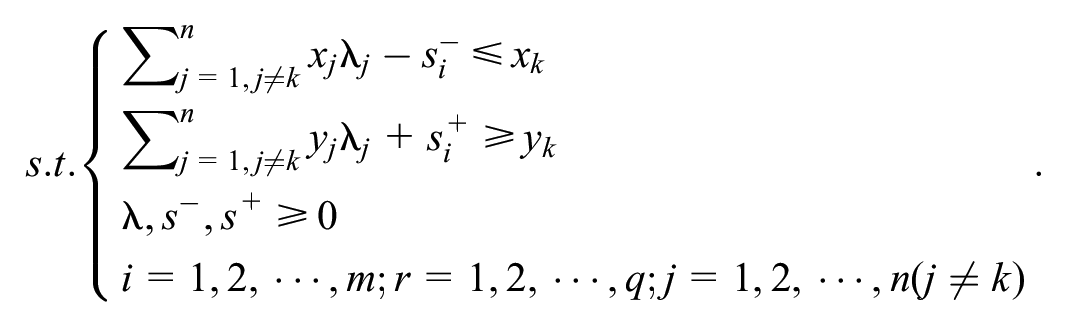
In the formula, “j≠k” represents that when measuring and evaluating the efficiency of decision unit “j,” only the linear combination of this decision unit with all other decision units in the sample is compared, and the decision unit “j” itself is not considered.
Synergistic Development of Urban Tourism Economic Resilience and Efficiency
The urban tourism economic system exhibits characteristics of a self-organizing system, continually evolving while manifesting attributes such as openness, non-equilibrium, nonlinearity, and inherent fluctuations. Consequently, it aligns with the principles of dissipative structures theory. In light of this, the investigation into the interconnected advancement of urban tourism economy resilience and efficiency draws upon the synergy theory and dissipative structures theory.
The Haken model, developed by Hermann Haken in the 1970s, is a mathematical framework used to describe the dynamics within self-organizing systems. This model is rooted in the principles of synergetics, which is the study of how individual components of a system cooperate to produce collective behaviors that are complex and often unpredictable. The Haken model employs mathematical formalism to elucidate the evolutionary trajectory of self-organizing systems, employing the mathematical concept of “adiabatic approximation” to mitigate the impact of rapidly changing parameters on the system’s dynamics (Zhong et al., 2019; C. Yang et al., 2019). This approach facilitates the identification of order parameters and the formulation of the system’s governing equations. In a hypothetical dynamic system involving two subsystems with state variables q1 and q2, the motion equations of the system are subsequently derived.


In the formula,

By substituting equation (7) into equation (5), we can obtain the evolution equation of the order parameter:

Integrating the negative of the evolution equation for the order parameter yields the potential function of the system:

When

Since the data in this paper is annual data, to facilitate the application of the Haken model, the model is discretized:


In the study, by applying the Haken model to urban tourism economies, efficiency and resilience serve as order parameters. Their interactions dictate the transition of the urban tourism economy from a state of low efficiency and resilience to one of higher efficiency and enhanced resilience. This transition is quantitatively analyzed through the model’s equations, which describe how changes in one variable affect others, providing insights into potential leverage points for policy interventions.
Data Source
This research centers its investigation on a comprehensive dataset encompassing 11 cities located within Hebei Province. The dataset was meticulously curated from a diverse array of reputable sources, including but not limited to the “China Tourism Statistical Yearbook,”“China City Statistical Yearbook,”“China Regional Economic Statistical Yearbook,”“Hebei Economic Yearbook,” individual statistical yearbooks of each city within Hebei Province, and the national economic and social development statistical bulletins of each city for the years spanning from 2011 to 2020. Additionally, relevant data were cross-referenced and extracted from various official local government websites. Missing data for some years were supplemented by mean interpolation.
Results and Discussion
Results of Measuring Urban Tourism Economic Resilience and Efficiency
Using the improved CRITIC-entropy method and the super-efficiency SBM model, we measured the tourism economic resilience and efficiency of 11 cities in Hebei Province respectively from the time series, and the measurement results are shown in Figure 2. We also plotted the trend of each city’s tourism economic resilience and efficiency based on the measurement results, as shown in Figure 3. According to the classification criteria (Giannakis & Bruggeman, 2017) based on the average value M and standard deviation SD of the measurement results, the city tourism economic resilience values were divided into low resilience [0, 0.17], moderately low resilience (0.17, 0.3], moderately high resilience (0.3, 0.43], and high resilience (0.43, 0.65]. The city tourism economic efficiency values were divided into low efficiency (0, 0.69], moderately low efficiency (0.69, 0.92], moderately high efficiency (0.92, 1.15], and high efficiency (1.15, 1.27].

Interval chart of measurement levels of urban tourism economic resilience and efficiency in Hebei Province from 2011 to 2020.
From 2011 to 2020, the resilience level of the urban tourism economy in Hebei Province ranged from 0.07 to 0.65, with an average of 0.30, indicating a moderate resilience level overall. From 2011 to 2019, the resilience of the urban tourism economy in Hebei Province showed a slow upward trend, which suggested that the tourism resources were being developed in multiple directions, tourism facilities were continuously optimized, and tourism policies were being improved. As a result, the risk resistance, functional recovery, and structural reorganization capabilities of each city’s tourism economy were continuously enhanced. However, the impact of the COVID-19 pandemic resulted in a significant decrease in the resilience of the urban tourism economy in 2020. All cities showed a declining trend in resilience, indicating weak risk resistance of their tourism economy. This dependence on existing industrial conditions allowed the urban tourism economy to withstand the impact temporarily, but it could not adapt quickly to the changing risks after the crisis for a long period. Overall, the trend of changes in the resilience of each city’s tourism economy was consistent, with fluctuations of first rising and then falling due to the influence of the epidemic.
From 2011 to 2020, the efficiency level of the urban tourism economy in Hebei Province ranged from 0.39 to 1.27, with an average of 0.92, showing a declining trend overall. A decline in the efficiency of the urban tourism economy suggests that there is either “input redundancy” or “output deficiency” in the cities. Conversely, an increase in efficiency indicates that this situation has been improved. From 2011 to 2015, the downward trend in tourism economic efficiency was evident. The total number of A-level scenic spots in Hebei Province increased from 265 to 307, the number of travel agencies increased from 1,164 to 1,380, and the investment in tourism fixed assets increased from 82.216 billion yuan to 297.272 billion yuan. However, the growth rates of total tourism revenue and the number of visitors were not high, indicating the phenomenon of input increasing but output not keeping up. With the introduction of the “13th Five-Year Plan” for the development of the tourism industry in Hebei Province and the call for the construction of a strong tourism province in 2016 by the Secretary of the Hebei Provincial Committee, cities responded actively to promote the development of tourism in surrounding areas. As a result, tourism economic efficiency improved from 2016 to 2017, showing an upward trend. However, since 2017, the efficiency of the tourism economy has shown a downward trend. The main reason for this is that most cities have developed tourism blindly by focusing on scale expansion and disorderly development, resulting in a large number of tourism input elements but less output, leading to a decrease in tourism economic efficiency.

Trends in the changes of tourism economic resilience and efficiency in various cities in Hebei Province from 2011 to 2020.
The resilience of the tourism economy in each city showed a trend of first increasing and then decreasing. Only Shijiazhuang city had high resilience, with a resilience value of 0.49 in 2020 under the impact of the COVID-19 pandemic, indicating that it could quickly adapt and adjust to external shocks and had a certain ability to withstand risks, recover functions, and restructure. This is because Shijiazhuang, as the provincial capital city, has a good industrial foundation, rich tourism resources such as Xibaipo, and a certain scale of tourism revenue that increases year by year. It also has a strong reception capacity with an increasing number of travel agencies and hotels, and its industrial proportion is increasing year by year, indicating a strong development potential. Cities with medium-high resilience include Tangshan, Qinhuangdao, Baoding, Zhangjiakou, and Chengde, indicating that these areas have a good industrial foundation, but their ability to adapt and adjust to external shocks needs to be improved. In particular, under the impact of the COVID-19 pandemic in 2020, the resilience levels of Qinhuangdao, Zhangjiakou, and Chengde decreased to medium-low levels. Qinhuangdao is a coastal tourist city, while Chengde is a tourist summer resort. Tourism is the pillar industry of the two cities, with inbound tourism revenue ranking first and second in the province. However, due to the impact of COVID-19, inbound tourism revenue plummeted, and the two cities lacked the ability to withstand risks, resulting in a decrease in resilience levels. Cities with medium-low resilience include Handan, Cangzhou, and Langfang, indicating that their tourism industry has a poor ability to resist risks and shocks due to a single industrial structure and insufficient tourism resources. Cities with low resilience include Xingtai and Hengshui, indicating that their tourism industry is small in scale, has a backward industrial structure, and has a low ability to resist risks and adapt to changes. In terms of spatial pattern, cities with medium-high and higher resilience are mainly concentrated in the northern part of Hebei Province, presenting a development pattern of “high in the north and low in the south.”
There is little difference in the level of tourism economic efficiency among different cities, with most cities at a moderately high efficiency level and very few at a low efficiency level. Shijiazhuang, Qinhuangdao, and Baoding have shown an overall upward trend in tourism economic efficiency due to their rich tourism resources, active introduction of advanced technology and management experience relying on a strong economic foundation, and solid support in terms of human and financial resources. By relying on their own advantages and precise positioning, they have promoted the development of the tourism industry and achieved a relatively high level of resource utilization efficiency. Tangshan, Handan, Zhangjiakou, Chengde, and Hengshui have experienced a trend of initially increasing and then decreasing tourism economic efficiency. The reason for this development in Tangshan is that, in the early stages of tourism development, it relied heavily on its strong economic power to invest in resources, improving the quality of tourism production factors and resource utilization efficiency. However, in the later stages, tourism enterprises could not meet production needs due to inadequate technology and management, leading to a decline in tourism efficiency. Handan, Zhangjiakou, and Chengde, despite having abundant natural, historical, and cultural tourism resources, have weak economic foundations, insufficient tourism infrastructure and resource development, and inadequate tourism services and promotion, resulting in a decrease in tourism economic efficiency. Xingtai, Cangzhou, and Langfang have low tourism economic efficiency, with insufficient tourism resources, low investment in tourism factors, a lack of scientific planning for the tourism industry, and untapped potential in resources and technology, leading to low tourism economic efficiency. In terms of spatial pattern, the tourism economic efficiency of cities in Hebei Province shows a “high in the periphery and low in the center” pattern with Langfang and Cangzhou as the center of a circular development pattern. At present, most cities in Hebei Province have reached a moderately high level of quality development in tourism, but there is still a large gap to reach the standard of high-quality development.
Results of the Synergistic Development of Economic Resilience and Efficiency in Urban Tourism
Model Construction and Order Parameter Identification
Based on the basic principles of the Haken model, this paper takes urban tourism economic resilience (RX) and urban tourism economic efficiency (XL) as variables. First, it is assumed that RX and XL are two variables, and the equations of motion between the two variables are established. Secondly, the equation is tested to determine if the parameters of the equation satisfy the adiabatic approximation rule. Finally, the order parameters of the model are determined. The model equation is obtained by panel data regression using Eviews 10.0, and the results are shown in Table 3.
Regression Results of the Haken Model.

Note. The t-statistic is shown in parentheses, with *, *** indicating significance at the 10%, 1% levels respectively. No * indicates insignificance.
According to the regression results in Table 3, urban tourism economic efficiency (XL) is the leading parameter, and the motion equation for the synergistic development of urban tourism economic efficiency (XL) and urban tourism economic resilience (RX) is as follows:

The evolutionary equation of the order parameter is
The potential function is
If we let
Through the motion equation of the synergistic development of resilience and efficiency in urban tourism economy, the interaction relationships between variables can be determined. (a) By controlling parameter
Overall, the efficiency of the urban tourism economy is the order parameter for the development of the urban tourism economic system. The efficiency parameter reflects the optimization of resource allocation and its conversion into tourism output, which is crucial for driving the transformation of urban tourism from an inefficient to an efficient industry. As efficiency improves, cities can utilize their tourism resources more effectively, enhance service quality, and reduce costs. This not only strengthens the city’s tourism appeal but also promotes economic growth and employment. However, the resilience of the urban tourism economy cannot yet fully complement the development of tourism economic efficiency and remains at a moderate level. Therefore, when the resilience and efficiency of the urban tourism economy in Hebei Province interact, emphasis should be placed on improving the efficiency of the urban tourism economy to ensure the synergistic operation of the urban tourism economic system, generate synergistic effects, and promote the synergistic evolution of the urban tourism economy from the primary to the advanced stage.
Furthermore, to facilitate this process, the resilience of the urban tourism economy should be enhanced by establishing a positive feedback mechanism for resilience improvement. By strengthening positive interactions with tourism economic efficiency, urban tourism economic rilience and efficiency can cooperate together to advance sustainable tourism economic development in an orderly and effective manner. This positive feedback mechanism will ensure that, when facing economic fluctuations and external shocks, the urban tourism industry can not only remain stable but also continually improve efficiency, achieving long-term prosperity. In this way, tourism economic efficiency and resilience will jointly drive the urban tourism industry toward greater efficiency and sustainability.
Analysis of the Synergistic Development Level of Urban Tourism Economic Resilience and Efficiency
Based on the stable solution, further calculations can be performed to obtain the stable point, and the distance between the stable point and the system is the synergy value d:

The analysis of the synergistic development level between urban tourism economic resilience and efficiency in Section “Analysis of the Synergistic Development Level of Urban Tourism Economic Resilience and Efficiency” can be conducted by calculating the distance between the stable point and the system, which is represented by the synergy value “d.” A larger value of “d” indicates lower synergy level. After positive normalization of “d,” the synergy score of urban tourism economic resilience and efficiency can be obtained for the period of 2011 to 2020. Referring to the classification standards of urban tourism economic resilience and efficiency mentioned earlier in the text, the synergy value is divided into four levels: primary synergy [0, 0.158], intermediate synergy (0.158, 0.285], higher synergy (0.285, 0.412], and advanced synergy (0.412, 0.500]. The synergy score and level classification of urban tourism economic resilience and efficiency are shown in Table 4 for Hebei Province.
Shows the Synergy Scores and Level Classifications of Urban Tourism Economic Resilience and Efficiency in the Cities of Hebei Province.

During the research period, the resilience and efficiency synergy of the urban tourism economy in Hebei Province showed a positive evolution trend. The advanced synergy city evolved from the monocentric pattern of Baoding in 2011 to the multipolar pattern of Shijiazhuang, Baoding, and Zhangjiakou in 2019. Among them, the synergy effect of Zhangjiakou changed the most significantly, showing a gradual increase, and evolved from intermediate synergy, higher synergy to advanced synergy. Baoding has the characteristics of high resilience and high efficiency in tourism economy, which are manifested in efficient and stable synergy features, low fluctuation in synergy evolution, and long-term stay in the advanced synergy stage. Due to the efficient allocation of tourism resources, market, and industry foundation, as well as the benign interaction between resilience and efficiency, the tourism economy is vibrant, achieving stable, orderly, and advanced development. Tangshan, Qinhuangdao, and Handan have been in the higher synergy stage of the resilience and efficiency synergy evolution for a long time, but in 2020, due to the impact of COVID-19, the resilience of the tourism economy in Tangshan was insufficient, the efficiency of the tourism economy declined, and the synergy effect showed a leapfrog decline trend. Unable to adapt and adjust quickly after being impacted, its total tourism revenue and the number of visitors have significantly decreased, resulting in a situation of “output inadequacy.” Xingtai and Langfang have relatively low resilience and efficiency synergy in the tourism economy, which has long been in the primary synergy stage, but the synergy effect has increased slightly. Due to the insufficient endowment of tourism resources, uneven development of the tourism economy, and inadequate policy support for tourism, Xingtai, and Langfang do not have the impetus to enhance the resilience and efficiency synergy development of the tourism economy, and the urban tourism economy system develops in a disordered manner. Shijiazhuang and Chengde showed an upward trend in the evolution of the synergy effect from 2011 to 2019 but showed a downward trend in 2020 due to the impact of COVID-19. Cangzhou and Hengshui have dropped from the intermediate synergy to the primary synergy stage, indicating that the resilience and efficiency synergy of the urban tourism economy during the research period showed a strong conflict and incompatibility. Although the number of advanced synergy cities in Hebei Province has increased, the number of intermediate synergy and higher synergy cities still accounts for a large proportion, and the synergy effect of each city shows different evolutionary trends. In the unstable external environment, future urban tourism still needs to rely on existing advantages, scientifically adjust the tourism economy structure, and promote the development of the tourism economy toward orderly and advanced stages.
To thoroughly examine the spatial patterns of urban tourism economic resilience and efficiency, ArcGIS 10.8 was employed to visualize the levels of collaboration in 2011, 2015, 2019, and 2020, as illustrated in Figure 4.

Illustrates the spatial pattern of collaborative development between urban tourism economic resilience and efficiency in Hebei Province: (a) 2011, (b) 2015, (c) 2019, and (d) 2020.
Based on the observation of Figure 4, it is evident that there were significant spatial differences in the collaborative development of urban tourism economic resilience and efficiency between 2011 and 2019, forming an “east-central-west” concave spatial pattern. This pattern indicates that cities in the eastern part of Hebei Province, such as Qinhuangdao and Tangshan, enjoy a higher level of tourism economic resilience and efficiency, largely due to their developed infrastructure and proximity to economic hubs like Beijing and Tianjin. In contrast, cities in the central part, like Langfang Cangzhou and Hengshui, show lower levels of both resilience and efficiency, reflecting their industrial backgrounds and slower economic transitions. The western cities, including Zhangjiakou Baoding and Shijiazhuang, display moderate levels of resilience and efficiency, benefiting from recent investments in tourism and recreational facilities due to geographical advantages such as mountainous landscapes. This spatial pattern is crucial for understanding regional disparities in development and targeting interventions that can promote more balanced economic growth and sustainable development across the province.
The number of primary collaborative cities decreased while the number of advanced collaborative cities gradually increased, indicating an overall trend toward higher collaboration. In terms of city comparison, in 2011, the central region had more primary and intermediate collaborative cities, while more advanced and high-level collaborative cities were concentrated in the east and west regions, exhibiting a “concave” distribution. The distribution pattern of collaborative development between urban tourism economic resilience and efficiency from 2011 to 2019 did not fundamentally change. The level of collaboration in most eastern cities remained stable, while one city in the central region moved from intermediate to advanced collaboration, and more cities in the western region shifted toward advanced and high-level collaboration. By 2019, the collaboration level in all cities in the western region had improved, and Handan City had also advanced from primary to intermediate collaboration. However, in 2020, the collaborative effect of cities in the eastern and central regions showed a decreasing trend, with overall clustering in the lower value range, mainly due to the impact of the COVID-19 pandemic on the tourism industry. Insufficient resilience and declining efficiency of urban tourism economic systems caused imbalances, resulting in reduced levels of collaborative development. The spatial distribution trend was presented as centered around Baoding City, with the collaboration level gradually increasing toward the north and south.
There is a “Matthew effect” among cities, taking Baoding and Langfang as examples, Baoding has abundant tourism resources and a certain industrial foundation, and the synergistic effect is maintained at a high level. While Langfang has insufficient tourism resources, and the synergistic effect is still in the primary stage. This indicates that the bipolar pattern of the synergistic effect evolution still exists, and the cooperation among cities is insufficient. Such imbalances challenge the notion of sustainable development, which aims for inclusive growth across all regions. Addressing this “Matthew effect” requires targeted policies that ensure resource distribution is more equitable and that developmental initiatives are designed to uplift the less advantaged cities, thus fostering a more harmonious regional development landscape.
There was a clear relationship between the collaborative development level of urban tourism economic resilience and efficiency and the tourism industry foundation and economic level. The advantages brought by a solid industrial foundation, abundant tourism resources, and high economic level were gradually apparent, thereby achieving effective collaborative development of urban tourism economic resilience and efficiency.
Analysis of the Dynamic Evolution of the Synergistic Level Between Urban Tourism Economic Resilience and Efficiency
To further investigate the differences in the co-evolution of resilience and efficiency in the urban tourism economy, based on the analysis of synergy levels, a kernel density perspective is employed to depict the overall pattern and evolutionary rules of the absolute differences in the synergy effects between resilience and efficiency in tourism economy (refer to Figure 5).

Ridgeplot of the synergy effects between resilience and efficiency in the urban tourism economy in Hebei Province from 2011 to 2020.
In terms of the shape evolution, the distribution curve of the synergy effects between resilience and efficiency in tourism economy during the research period shows a “long-tailed peak,” indicating that high values of kernel density correspond to low values of synergy level. The overall trend of the synergy effects shifts to the right, indicating that the synergy level between urban tourism resilience and efficiency is continuously improving. The shape of the curve changes greatly in different years, evolving from a bimodal to a unimodal distribution, with a weakened polarization trend. As the width of the curve increases, the peak becomes lower and flatter, indicating that the differences between cities with high and low synergy levels of urban tourism resilience and efficiency still exist and are gradually widening. The uneven development of the coordination level among cities shows that although the synergy development level between tourism resilience and efficiency in various cities has been improved, the differences in the synergy level among cities are still significant.
Conclusion and Implication
The study investigates the resilience and efficiency of the tourism economy in 11 cities in Hebei Province using the weighted method, super-efficiency SBM model, and Haken model. The following conclusions are drawn:
(1) Regarding the resilience and efficiency of the tourism economy in Hebei Province: (a) The resilience of the urban tourism economy shows a fluctuating trend of first rising and then falling under the influence of the pandemic. Cities with medium to high resilience are mainly concentrated in the northern part of Hebei Province, presenting a “north high, south low” development pattern; (b) The overall efficiency of the urban tourism economy is declining and presents a “high around the four edges and low in the middle” development pattern centered on Langfang and Cangzhou. This is in stark contrast to the research results of Z. Deng et al. (2020) in the Yangtze River Delta and other regions. This disparity may be attributed to different levels of governmental intervention and the varying maturity of tourism markets across these regions. Our study highlights the need for targeted interventions in Hebei to counteract the declining trend and leverage its tourism potential.
(2) Regarding the synergistic development of resilience and efficiency of the tourism economy in Hebei Province: (a) The order parameter is the efficiency of the urban tourism economy, which controls the evolution path and direction of the urban tourism economy system, realizing the transformation of the urban tourism economy toward ordered and efficient development. Improving the efficiency of the urban tourism economy can optimize the allocation of tourism resources and promote sustainable development of the urban tourism economy; (b) It has undergone a benign evolution from the primary to advanced stages, showing a stable and sustainable evolution trend. At the beginning of the study, the level of synergistic development was not high. Under the synergistic action of resilience and efficiency of the urban tourism economy, the level of coordination has been continuously improved, evolving from a unipolar pattern to a multipolar pattern, and shifting from emphasizing development speed to emphasizing development quality; (c) There are significant spatial differences, forming an “east-central-west” concave spatial pattern, and there is a “Matthew effect” among cities, which is consistent with findings from Bai et al. (2022), who observed similar patterns in urban development dynamics across different provinces in China. However, our study uniquely demonstrates that the “Matthew effect” in Hebei is predominantly influenced by proximity to Beijing and Tianjin, leading to an uneven distribution of tourism benefits. This factor is less evident in studies from regions that lack significant central economic hubs. Addressing this requires a nuanced approach to regional policy-making to ensure equitable development across all cities in Hebei.
This study establishes a theoretical framework grounded in synergy theory for the harmonized development of resilience and efficiency in Hebei Province’s tourism economy. It further crafts an evaluation index system for assessing the resilience of the local tourism economy, guided by this theoretical framework, thereby enhancing the methodological rigor and standardization of the evaluation process. The paper innovatively employs the Haken model to delve into the synergistic effects and evolutionary dynamics of urban tourism economy resilience and efficiency, broadening the research perspective and offering inspiring insights into the study of sustainable urban tourism economic development.
The findings of this study provide critical insights for policymakers aiming to enhance sustainable urban tourism. By identifying the efficiency and resilience levels across different cities, policymakers can tailor specific strategies to address the unique challenges and opportunities within each city. For instance, resource allocation can be optimized based on the demonstrated need for infrastructure improvements or marketing initiatives aimed at boosting tourism in lagging areas. Furthermore, the concave spatial pattern and the “Matthew effect” highlighted in our findings are particularly informative for urban planners and stakeholders. These insights encourage a more equitable development approach, promoting investments in less developed areas to balance the regional tourism economy and prevent overconcentration of resources in more developed areas. This strategic insight can help mitigate the risks of unsustainable tourist numbers that can lead to over-tourism and environmental degradation, aligning development with long-term sustainability goals.
While this research provides a macro-level view of the synergistic development of resilience and efficiency in the urban tourism economy based on city-level analysis, further exploration is warranted at the county level and over extended research periods. Moreover, understanding the influencing factors, driving mechanisms and optimization pathways for the synergistic development of resilience and efficiency remains an important avenue for future investigation, as this synergy plays a pivotal role in fostering the sustainable development of the tourism economy.
Footnotes
Author Contributions
Declaration of Conflicting Interests
The author(s) declared no potential conflicts of interest with respect to the research, authorship, and/or publication of this article.
Funding
The author(s) disclosed receipt of the following financial support for the research, authorship, and/or publication of this article: This work was supported by [Key Research Base of Humanities and Social Sciences of Colleges and Universities in Hebei Province] (Grant numbers [JJ2204]).
Ethical Approval
Not applicable.
Consent details
Not applicable.

Data Availability Statement
The data from this study are available upon request.