




Abstract
Accepting physical, psychological, and economic violence is a very common practice in developing countries like Pakistan, which not only adds to the sufferings of women but also strengthens the taboos about violence in society. In this regard, a multimethod study was conducted to identify key socio-economic and legal reasons that lead to violence-accepting behavior among women in Pakistan. In the first phase, a survey of 308 women was conducted to identify 23 critical domestic violence cases. In the second phase, these critical cases were further explored using in-depth interviews to identify reasons that forced these women to accept physical, psychological, and economic violence throughout their marital life. Emerging themes included social taboos, trust deficit in legal authorities, financial dependency on parents, fear of losing children, the threat of divorce, sympathies for men, and concern for children’s rights and welfare as reasons that do not let women raise their voices against the violent behavior of their spouses. In the third phase, a focus group discussion with nine member legal and social experts was done to seek solutions to the identified reasons. Based on a detailed thematic analysis of the focus group discussion, six themes emerged, context-specific conflict resolution mechanisms, creating awareness about laws, strengthening socio-cultural and family institutions, educational reforms, awareness about rights and duties, and the role of government. The research provides indigenous reasons leading to violence-accepting behaviors and context-specific legal and social remedies to these for women in Pakistan, which is the contribution of the study.
Plain language summary
The present study was conducted to identify key socio-economic and legal reasons that lead to violence-accepting behavior among women in Pakistan. We used three methods to conduct the study including a survey of 308 women, interviews from 23 critical cases, and focus group discussion with legal and other stakeholders. Results indicated that social taboos, trust deficit in legal authorities, financial dependency on parents, fear of losing children, the threat of divorce, sympathies for men, and concern for children’s rights and welfare as reasons that do not let women raise their voices against the violent behavior of their spouses. Solutions to these issues were also identified during the focus group discussion. These included context-specific conflict resolution mechanisms, creating awareness about laws, strengthening socio-cultural and family institutions, educational reforms, awareness about rights and duties, and the role of government. The research identified several implications for policy-makers and social and educational institutions to incorporate awareness about available legal and social remedies for domestic violence and violence-accepting behavior, which leads to several well-being complications for women and society.
Keywords
Introduction
Domestic violence is a reality that exists in all types of societies in one or the other way. However, its perception varies dramatically across the world due to several socio-economic and cultural reasons. In some parts of the world, women have access to social, governmental, and non-governmental institutions to seek help in case of such incidents and are, therefore, relatively considered more protected. However, as indicated by Raley and Sweeney (2020) such societies face a higher degree of divorce rate and fail to maintain a stable family system, which is an important element for building a sustainable society. On the other hand, in developing countries like Pakistan people tend to avoid divorce, therefore, the level of accepting violence as a routine matter is very common (Munir et al., 2021; Naveed et al., 2022). However, it causes serious damage to the family system and affects the well-being of present and future generations. Previous research (T. S. Ali et al., 2012; Kim & Ferraresso, 2022) has tried to explore the causes of this “violence-accepting” behavior in different contexts and found that these reasons largely vary from culture to culture.
Recently, Akram (2021) found several household-level reasons leading to violence-accepting behavior in Pakistan, based on secondary data analysis. These causes included age, education, wealth, urbanization, use of media, relationship with a spouse before marriage, number of children, employment status, age of marriage, and, women’s decision-making autonomy. However, socio-economic and legal reasons that force women to stay in abusive relationships were not identified. Previously, in a study by Amir-ud-Din et al. (2021), the mediating role of violence-accepting behavior was studied, however, what reasons shape these behaviors, were not identified. Other researchers (Bari et al., 2021; Gearhart et al., 2018; Mitra et al., 2021; Nadeem & Malik, 2021; Sikweyiya et al, 2020), also tried to explore the perception of men and women toward violence, however, why it is accepted in the society, and especially among women was not explored, especially from the legal perspective. As contended by Qadir et al. (2005) divorce is highly stigmatized in Pakistan, therefore women remain silent and never think of going for this option. Therefore, a context-specific conflict resolution strategy is the need of the hour. Ashraf et al. (2017) pointed out another fact women are reluctant to seek help against the violent behavior of their spouses in Pakistan as they remain under some external or internal pressure (Afrouz et al., 2020). However, it is very important to identify these reasons and devise strategies accordingly to resolve these issues. In the same backdrop, we have designed this study to find out the context-specific reasons that force a woman to accept domestic violence in Pakistan. Additionally, we have also explored context-specific remedial measures in light of existing legal and social interpretations and issues hampering the implementation of related governmental policies. Specific research questions are as follows:
What is the magnitude of different forms of domestic violence on women’s well-being in Pakistan?
What are the indigenous reasons for domestic violence accepting behavior among women in Pakistan?
What are context specific remedies to ensure effective implementation of domestic violence laws in Pakistan?
Literature Review
Women in Pakistan are not only exposed to a higher level of domestic violence (DV), but they also take it as a part of their destiny, which is beyond their immediate control (Iftikhar & Awan, 2019). This indicates that the Pakistani culture portrays domestic violence as a part of routine matters and therefore, is not taken seriously (Buriro et al., 2020). Recently R. Ali and Khalid (2021) have claimed that with the emergence of human rights movements across the world and the interference of NGOs in societies, the social behavior against physical violence has slightly changed, especially among educated strata of society. However, other forms of domestic violence like psychological, mental, verbal, economic, and sexual violence are still ignored as there are no specific mechanisms to identify and gauge the intensity of such cases (Bano, 2021). Hence, the consequences of such behaviors are devastating for the socio-cultural growth and well-being of present as well as future generations.
Researchers have been trying to answer the question as to why domestic violence-accepting behavior exists within society and what reasons lead to such behavior. However, as argued by Gearhart et al. (2018), these reasons are very much context and time-specific, and therefore, call for tailor-made solutions. People do not have awareness of the laws and policies on women’s rights in marital relationships. The social norms and values are blindly followed and people feel reluctant to even know about their rights. However, there is a need to explore the link between these taboos and the violence accepting behavior of women.
In the same context, Saeed et al. (2022) draw the attention of researchers to another societal reality that women in Pakistan prefer to keep living with their husbands despite their violent behaviors as divorce is considered a taboo in the society. Society tends to blame women for breaking the family without even knowing the reason behind it. Khan et al. (2019) add another important point that divorced women do not get an easy chance to remarry, especially when they already have children. Even if they do so, their ex-husbands stop financing their kids and their second husband will never take the responsibility for someone else’s kids. Therefore, as indicated by Qamar and Faizan (2021) such women prefer not to go for another marital contract. In case of any dispute or divorce between husband and wife, women are left with no option but to come back to their parent’s home, where they are not welcomed. Khalid and Rana (2021) further explain that contrary to legal and religious directions, the parents’ house of a woman is taken as the sole property of their brothers in society who never like their sisters to share it. This could be one of the reasons that women tend to tolerate the toxic behavior of their spouses and never think of going back to their parents (Asghar et al., 2021).
Women are more attached to their children in comparison to men. The intensity of this attachment varies from culture to culture. Eastern culture portrays the role of mother in a much more sensitive way where women go out of the way in love with their children. Therefore, they also accept violence for the sake of the future of their children and want to see them happy in a complete family. However, it is another fact that children living in an abusive environment develop several psychological issues. Generally, they lack self-confidence and may not be able to pursue their dreams (Drill, 2021).
Similarly, Anjum et al. (2020) draw attention to another issue that the legal system of Pakistan is not efficient enough to give speedy justice to the oppressed and therefore, is not trusted by the people at large. Previously Hadi (2018) had also indicated that the legal system of Pakistan is perceived as biased toward the powerful sects of the society where socially weak people/gender face difficulty in getting justice. However, according to him, it is only a perception. The constitution of Pakistan provides significant support for women against domestic violence and consequential matters including child custody, maintenance, and shelter homes. Hadi’s study (2018) indicates that there are implementation flaws. However, it has to be explored in detail involving the law experts. As a consequence of this immoral silence of women, domestic violence is increasing in society (Jamil, 2020; Naveed et al., 2022; Shahzad & Qasim, 2021). Therefore, in the current study, we tend to explore causes that force women to accept this crime and identify the context-specific remedial measures in line with the legal and social provisions of the country.
Research Methods
The study was conducted in three phases for which a multi-method data collection and analyses approach was adopted. The data was collected from August to September 2021. During phase I, we conducted a survey of purposively selected 308 women through a research questionnaire to identify the overall level of domestic violence in the area. The required sample size of 398 was calculated using Yamane’s formula from a population of 78,186 women, living in the research area (www.resdev.org). However, only 343 women responded through partially or completely filled questionnaires, out of which 308 were useable for the final descriptive analyses. For this purpose, lady health workers working for a local non-government organization were used to identify and collect the data. These lady health workers had 15 years of experience working in the targeted area and also had close relationships with the target participants as well. Before the data collection, a detailed session was arranged with these lady health workers. This session was held to apprise them of the purpose of the study and also to ensure the confidentiality of the participants. These health workers accompanied the data enumerators and indicated cases from whom information could be gathered.
We managed to collect data using 26-item tools taken from the study of Chitashvili et al. (2010). The comprehensive instrument was originally developed by the World Health Organization (WHO) for the “Multi-Country Study on Women’s Health on Domestic Violence against Women” in 2007.
Sample items included “To what extent did you have fractures or broken bones due to violent behavior of your spouse.” These items were measured against a five-point Likert scale where 1 denotes “never happened”, 4 “It’s a routine matter” and 5 represents respondents who did not reply to questions. To identify the physical and psychological health of participants, we adapted 27 well-being-related items from the same questionnaire, which depict physical and psychological health conditions. Sample items included “How often do you have sleep problems.” The quantitative data were analyzed using frequency analysis in Statistical Package for Social Sciences (SPSS) software version 26.
Results and Interpretation of Survey (Phase I)
Phase I—Level of Domestic Violence in the Study Area
The demographics confirm that 89% of the participants were currently married, 5% were widows, and 6% were divorced. Similarly, 2% of married women indicated that it was their second marriage. The average age of participants was 34.47 years, (Range 24–56 years). The average married life was 15 years (Range 10–35 years). The majority (89%) of the women could read and write (Montoya, 2018), however, only 13% received a university education (Bachelor’s and master’s). 24% of women were working in various public and private sector organizations including those working as maids in various houses. Detailed results and analyses are discussed in the next section.
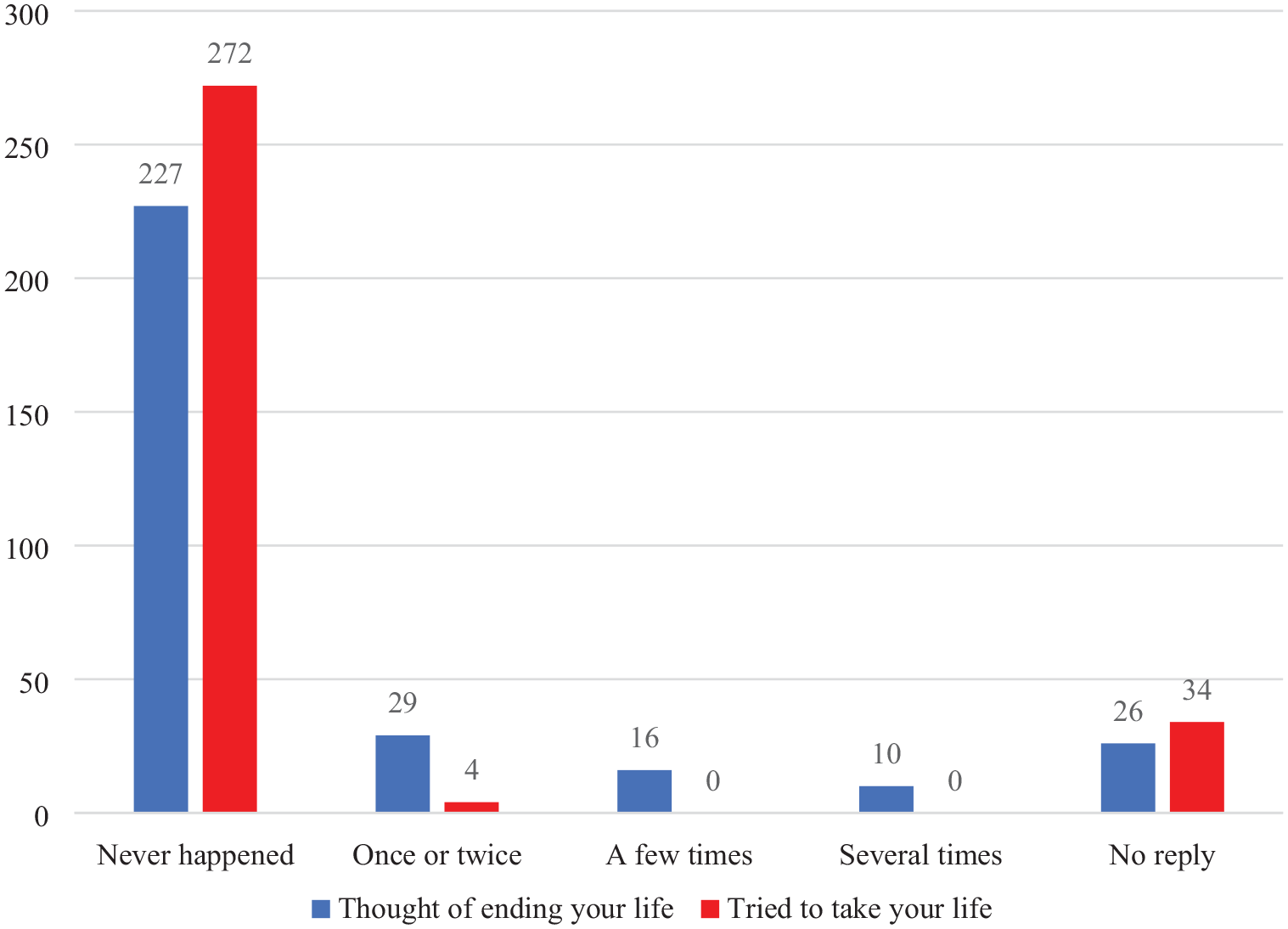
Tables 1 and 2 and Figure 1 indicate the frequency analysis of domestic violence and well-being among participants. In Table 1, different types of physical, economic, and psychological violence-related items are listed. Results indicate that in psychological violence, the highest number is of verbal abuse showing that almost 71% of women had been verbally abused throughout their lives. Similarly, the second-alarming score (60%) was linked with the threatening behavior of men to hurt and threats of snatching kids (55%) and divorce (46%). On the physical violence side, 265 women reported that their husbands have a habit of hitting them with their fists. Two percent of women also reported that their husbands had been trying to burn them. When asked about economic violence, the highest number goes to cases where 35% of women were not allowed to work for money. Moreover, 34% of women reported that their spouses refused to pay household bills and it is considered a routine matter.
Frequency of Domestic Violence.

Respondent’s Wellbeing.

Critical issues of psychological wellbeing.
Table 2 indicates the current physical and psychological health of respondents. On the physical well-being side, 41% reported serious problems with walking and 31% reported headaches. Some life-threatening diseases like hypertension (9%), heart pains/diseases (7%), and diabetes (15%) were also reported by respondents. On the psychological well-being dimension, 76% of women reported that they find it difficult to enjoy their lives. Similarly, 65% feel they are unable to play a useful role, and 60% show that they have lost interest in things they used to enjoy in the past. Alarmingly, 9.4% of women also indicated that they had been continuously thinking about ending their lives, and four of them had attempted suicide (Figure 1).
The results of the survey identified 39 critical cases of women who had been facing domestic violence during their marital life. The next section includes the methods and results of in-depth interviews, conducted with these women to identify reasons for accepting violence.
Phase II—In-Depth Interviews
Research Methods
Based on the quantitative analysis we identified 39 critical cases who had been a victim of domestic violence (economic, psychological, physical) throughout their marital life (at least 5 years) and consequently had developed some sort of physical or mental issues like walking disability, heart diseases, hypertension, insomnia, memory loss, etc. Those women were approached for in-depth interviews in the second phase. However, 16 respondents refused to provide information as they were not willing to share details of their family matters with anyone outside the family. As indicated by Sattar et al. (2022) it is a cultural norm in this part of the world. The remaining 23 respondents were approached for interviews.
In compliance with the cultural values of the respondents, the female researcher personally approached them at their homes during the daytime after fixing an appointment. The researcher holds Ph.D. degree in social sciences and has more than 10 years of research and teaching experience. A purposive sampling technique was adopted to select the respondents who had been victims of domestic violence throughout their marital life. It was ensured that the respondent was alone at home so that she felt comfortable sharing the information. The lady health worker also remained present during the interview and helped the researcher write important points.
In line with the recommendations of Arifin (2018), we ensured the respondents of complete anonymity and secrecy of the information obtained during our interaction. We also obtained their prior permission to record their interviews and relied on note-taking if not allowed. These interviews were conducted in Urdu (the national language of the country) and Punjabi (the local language of the area). These interviews were later transcribed into the English language. All three researchers were fluent and comfortable in speaking, reading, writing, and translating three languages.
The average interview duration was 1 hr 34 min with a maximum of 2 hr 10 min and a minimum of 50 min. Although a 10-question interview guide (attached in Supplemental Appendix 2) was available to keep the interview discussion on track, however, respondents were allowed to speak freely about their experiences of abusive behaviors of their spouses and of other relatives. Additionally, several probing questions that surfaced during the discussions were also posed for deeper understanding. After transcribing the interviews, seven respondents were again visited to validate their answers. The 14 women who were able to read the contents (Matric and above) and were technology savvy, were approached through email to validate their answers, however, eight replied to confirm the contents. Overall, 15 out of 23 women validated the contents of their interviews after transcription which is 65% of the overall sample.
Data Analyses—Causes of Accepting Domestic Violence
During this phase, the average age of respondents was 34 years (Supplemental Appendix 1), ranging from 24 years to 56 years. The current marital status of responding women represents 75% married and 25% divorced cases. All the divorced and 15% of married women were living with their parents. 50% of divorced and 45% of married women were earning to run their families. The educational status of respondents ranged from primary to master’s level. After the preliminary analysis, the identified issues were converted into an agenda for discussion with experts.
The data collected through in-depth interviews was analyzed using a grounded theory perspective (Glaser & Strauss, 1967) and thematic analysis, where open codes were extracted from the transcript using line-by-line coding methods. Initially, eight interviews were conducted and analyzed for emerging themes and the interview guide was refined based on these themes. In the second phase, eight more interviews were conducted and analyzed. Results indicated saturation of themes and women were found repeating similar reasons for accepting domestic violence. To further validate these results, we visited seven more respondents, who were available as per our inclusion criteria and had given consent to participate.
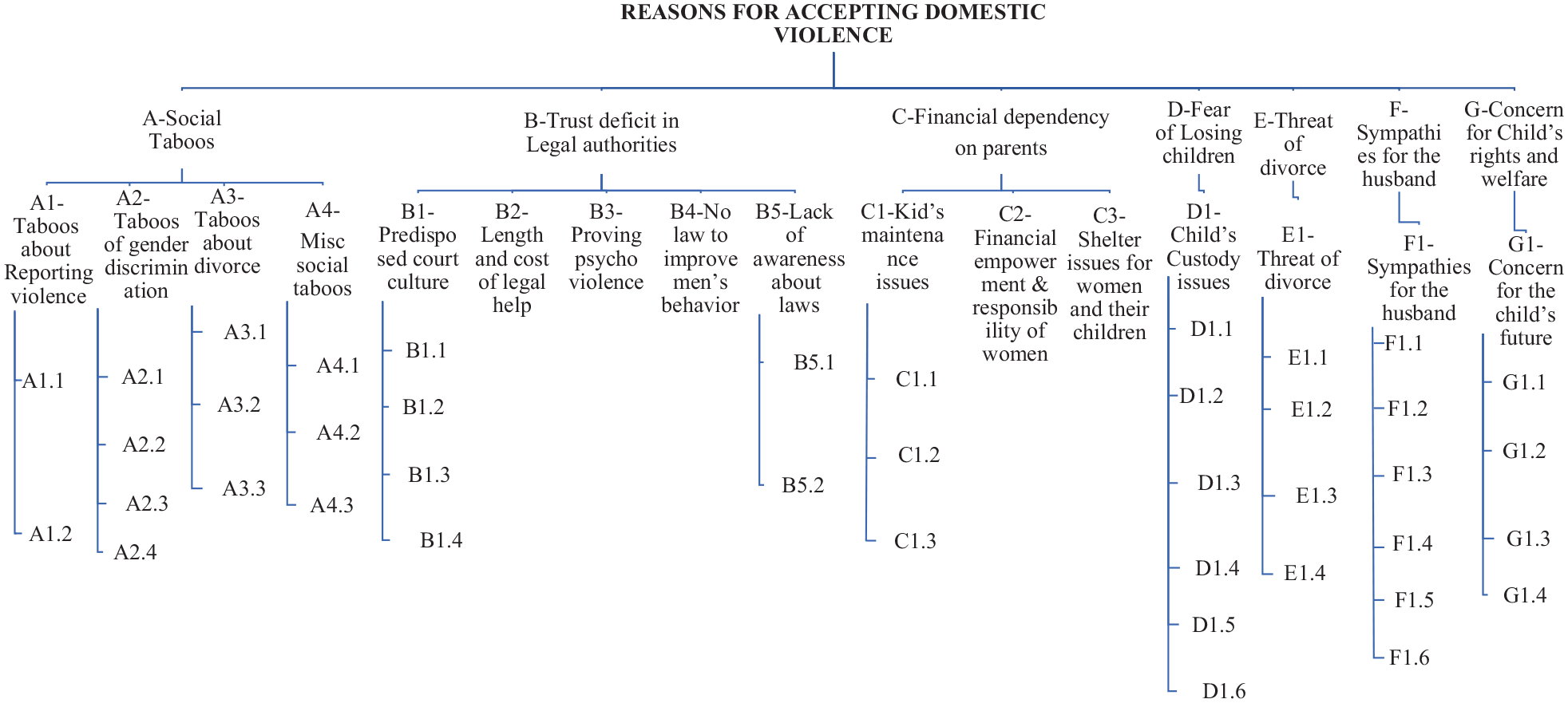
In line with the recommendations of Corbon and Strauss (2008), we adopted a three-step coding mechanism. In the first step, all the words and statements spoken by the respondents were highlighted in different colors to represent open codes. We identified 47 such statements (Coded as A1.1–G1-1.4) that were given as reasons for accepting domestic violence by the respondents. In the second step all the codes, giving similar meanings were grouped under an axial code/category (Coded as A1–G1). The research team comprised of three members developed a codebook after thoroughly reviewing the interview guide. In this regard, protocols were established for each theme based on code name, brief and full definition of the code, and statements about when to use and when not to use the code with examples for clarification were developed. After achieving an agreement on the selection of codes with corresponding themes team members were assigned eight, eight, and seven interview transcripts for coding using the developed codebook. Online and physical meetings were held frequently during the process to ensure the reconciliation of codes among the team members. The coding process took one week and the team had five physical and five online meetings to discuss issues arising during the process that included expanding the definitions of codes, any ambiguity in matching the text to a specific code, or in some cases deciding which of the related codes explain the statement in a better way. After completion of the process, the team had two (3 hr each) face-to-face meetings to discuss each of the codes and corresponding themes in detail. We used multiple coder techniques to ensure reliability and validity through inter-coder agreement. The final code list comprised of 47 open codes explaining 16 axial codes and seven main categories/themes (Coded as A–G) as shown in Figure 2.
Thematic analyses of in-depth interviews.
These 16 axial codes/categories included taboos about reporting violence, taboos of gender discrimination, taboos about divorce, misc social taboos, predisposed court culture, issues in proving psychological violence, length and cost of legal help, no law to improve men’s behavior, lack of awareness about laws, kid’s maintenance issues, financial responsibility of women and their empowerment, shelter issues for women and their children, child’s custody issues, threat of divorce, sympathies for the husband and concern for the child’s future. During the third step of coding, we again grouped substantive categories under a more general central theme. The whole procedure was conducted during multiple sittings where all three researchers discussed the minute details of each code and category and created a consensus on grouping these into generic themes. Using these methods, we derived eight themes explaining reasons that lead to violence accepting behavior of women against economic, physical, and psychological violence. These themes are social taboos, trust deficit in legal authorities, financial dependency on parents, fear of losing children, threat of divorce, sympathies for men, and concern for children’s rights and welfare. These themes are discussed in the next section.
Social Taboos
All respondents had a consensus that social taboos play a critical role in transforming peoples’ behavior. Divorce is considered bad and commonly divorced women are blamed for bringing shame to their family. Almost all of them informed that it was against the social norms to report economical, emotional and even physical violence to anyone outside the walls of their home. As explained by a respondent (Blq, 36 years old): “When I was getting married, I was advised by my mother that I must obey my husband. Whatever the circumstances are, I should not even think of going back to my parent’s home as these doors are permanently closed for me”
They also reported several physical and psychological well-being issues due to the violence from their husbands however, it was also against the norms to consult the doctor as they were afraid of being tagged as mental patient (Pagal). As mentioned by Nsm (29 years old), “I am having sleeplessness for the last several years but I can’t take medicines for that. I even can’t visit a psychologist. It’s not considered good in our family as it will portray my mental health as doubtful in front of my in-laws.”
Some other social taboos reflecting gender stereotyping and discrimination were also highlighted by these respondents as society allows men to show their superiority and masculinity against women. Therefore, loud shouts, threats, and stressful abusive talks are considered normal in the society. As confirmed by a respondent (Hsn, 29 years old), “It’s an established taboo in our society that only those men are considered MEN (having masculinity traits), who manage to control their wives.”
Participants also indicated that these taboos are followed blindly and therefore, women are taught from their school age that they will have to obey their husbands and never discuss home matters in public therefore, they tend to remain silent and bear the consequences.
Trust Deficit in Legal Authorities
All the respondents had a consensus that people do not trust legal authorities and the court system. Additionally, they also lack awareness of existing laws and policies. Pointing out another common perception, 14 women indicated that going to court to seek any sort of legal help against violence was not possible for them and such an act would bring a bad name to their family. Some women also indicated that they are not able to pay the court and lawyer’s fees and also it will take a lot of time. Additionally, courts have no specific mechanism to prove psychological violence, therefore it becomes a challenge for women to prove it in court. As indicated by Sab (33 years old), “They ask for visible wounds on your body. It’s everywhere. My own family asks me to show proof of violence. How can I tell them about the wounds on my soul that he gives me every day? No one takes it seriously.”
Another important point raised by a majority of these women is the absence of a mediating mechanism or law to improve men’s behavior. Most of the time they need a peaceful settlement among themselves as they don’t want their kids to suffer. As confirmed by a young lady Bin (28 years old), “I know that I can never go to court against my man. As soon as I enter the court, he will divorce me, and I don’t want it. I just want someone to fix him as he is the father of my kids”.
Financial Dependency on Parents in Case of Divorce
The respondents highlighted another point that they don’t want to raise their voices against their men as they are not able to manage their own and their kids’ financial matters. In case of any dispute between husband and wife, a woman is left with no other option but to live with her parents and brothers who are not willing to take her responsibility. They also added that most of the time, women are not aware of the Shelter Homes Act, inheritance, or maintenance law, therefore they keep suffering. As mentioned by 37 years old Sha, who was divorced by her husband: “My kids are not my parents’ responsibility. My parents are old and are not in any position to earn for me or my kids. My brother has his own family. Why should he take my responsibilities? I try my best not to put them all under stress.”
Fear of Losing Kids and Managing Their Expenses
Fear of losing kids emerged as another important reason that does not allow women to take any action against the violent behaviors of their men. Their husbands threaten them of snatching their kids if divorce or separation happens between them. In most cases it also emerged that women hardly know anything about the child custody law. As informed by Ruq (age: 36 years) with extreme pain and sorrow, “I am not sure about the child custody law. My husband always threatened me that he would divorce me and snatch my child. He knows my kids are my weakness and I can’t live without them.”
Women who were divorced or separated indicated that they could not apply for maintenance as their ex-husbands threatened them to snatch their kids. On the other hand, men blackmail them by denying maintenance in case of any dispute. Since the maintenance rights of women are not specifically written in the marriage contract, therefore, men misuse it.
Threat of Divorce
Research also found that divorce is considered a stigma in society and women try to avoid it at any cost. Men use the threat as a weapon against their wives and try to control them. However, this threat of divorce acts as a continuous mental and psychological torture. Therefore, social and cultural measures are required to deal with this issue. As mentioned by Mra (age: 39 years): “This is the most lethal weapon of men, which they frequently use against their wives. I wish they could understand how painful these words are for us.”
These women also gave their perception that as soon as they try to seek help against the violence, their husbands will divorce them and then they will have no future. People blame them for breaking their families. Their kids also suffer badly no matter if they live with their father or mother. As told by a divorced respondent (Jam, age:34 years), “ My relatives including my real sisters keep telling my daughters (9 and 7 years old) that they will never be able to have a respectful life. Their mother got divorced and nobody will marry them ever. Whenever they go to meet their father, his family members also say the same. My kids are nervous and do not talk much. It all hurts me badly. I wish their father had thought of them at least.”
These women also informed that due to strong negative perceptions about divorce, they try to tolerate violence and stay in the same relationship. In case of divorce, there would be very few chances to get married again. Another important point raised by respondents was that going to court would lead to divorce only as there are no mechanisms available within the law for improving men’s behavior toward their wives other than divorce. Whenever they apply to a court or any other person for an amicable resolution between them, men start feeling insulted and they divorce them immediately while women don’t want it. Therefore, they keep living in a bad relationship and never complain about their husbands.
Sympathies for the Husband
Another important reason for tolerating a violent relationship emerged from the discussion was the love, care, and sympathy for the husband. Several women indicated that it is their cultural value that they have to be faithful and loyal to their men. However, their altruistic behavior is taken as a weakness in society, and men start taking it as their right to manipulate them. They also informed that they develop a very emotional attachment with their husbands and take them as their masters on earth (Majazi Khuda)”. As a 46 years old Mdh put forward: “As an Eastern wife, it’s my primary duty to love and respect my husband and care for all his needs no matter how he treats me. After all, he is the father of my kids and the head of my family (Sartaj). I would rather prefer to die than to even think of leaving or cheating him ever.”
During two cases women indicated that their husbands were drug addicts and they were not paying even a single penny at home. They were working to manage their own and their kid’s expenses but they had never thought of leaving the person. In one case she had to pay for his expenses also or he would physically and emotionally torture him badly to get money for drugs. In most cases, these women had no money to pay for rehabilitation centers. When she was asked as to why she was tolerating all this, she responded (Sma, age: 38 years), “It’s my fate, and I have to live with it. I can’t leave him to die in these circumstances. He is not bad by himself, it’s the drugs that made him bad. He does not have control over himself and does all this un-intentionally.”
Concern for Kids’ Rights and Welfare
The majority of the interviewees showed deep concern for their children. They pointed out the tolerance toward abusive behaviors of husbands for the sake of children. They wanted to give them a complete family and love. Their children need both parents for love and care, hence, parting ways would badly affect children’s psychological upbringing. As mentioned by Sba (age: 34 years),
They are also concerned about self-respect, especially in the case of female children, that people tag them as daughters of a broken family and will not prefer marrying them. In a few cases, women also indicated that their husbands love their children, and children also have a strong bond with both mother and father. Therefore, despite all the difficulties they would prefer to live in the relationship. Thr (age: 29 years), mentioned in this regard, “I have not lived with my husband for the last two years, but it’s a decision within our family. I will never apply for divorce. It’s important for me and my kids to have his name attached to us. My children need both of us, and especially for my daughters, it is important that people look at us as a complete family. I want to give my daughters a happy and respectful marital life that was not in my fate.”
These women indicated that they prefer scarifying their pleasures and happiness for the sake of their children, who are considered the priority of a family in society.
The second phase of the study highlighted seven main reasons why women accept domestic violence and keep living in a toxic. Therefore, a need emerged to find out remedial measures to address these issues. Therefore, a comprehensive focused group discussion (FGD) was held with the law and social experts to identify context-specific solutions to these problems. The next section describes the methods and results of the discussion.
Phase III—Focus Group Discussion
Context Specific Remedies to Domestic Violence Issues in Pakistan
A focus group discussion (FDG) was held with legal and community specialists, which is an effective tool to obtain experts’ opinions and address academic arguments effectively in a single sitting (Mishra, 2016). In this regard, three eminent family lawyers and six social workers were invited for a detailed discussion (Supplemental Appendix 3). The lawyers (age: 40–57 years) had vast family law practicing experience (average: 18 years) at the level of high and supreme courts of Pakistan. Similarly, three social workers represented two NGOs, which have been actively working for human rights and health awareness issues in the area for more than 10 years. These social workers (Ages: 34–45 years) were senior-level managers and research analysts and had educational backgrounds in psychology and sociology. Whereas, three lady health workers (Aged 35–50 years), who had been working in the area for the last 10 years, were also included in the group discussion. These health workers were also present during the in-depth interviews in the second phase of the study.
The 16 FGD points (developed on the basis of axial codes in the second phase) were posed in front of a nine-member group of law and social experts. Unlike the second phase, all three researchers participated and helped the first author in moderating the discussion. Two research assistants (PhD students) were also present in the discussion to take photographs, record the discussion, and take notes wherever required. Researchers also arranged working tea with snacks to keep the participants motivated and involved in the discussion.
Data collected from FGD was transcribed by researchers and again shared with six participants of the FGD for validation of contents. After that line-by-line coding method was used to identify open and axial codes leading to themes. Initially, we identified 51 statements providing solutions to the causes of domestic violence. These codes were grouped into 17 axial codes/categories (Figure 3) namely, introducing family and community-based conflict resolution systems, the role of masjid committees and religious leaders, the role of NGOs and other social organizations, creating a sense of responsibility among people, public awareness about inheritance laws, domestic violence law, child custody law, maintenance law, creating focus on strong family systems, focusing women education, women empowerment, role of print, electronic and social media, role of educational institutions, role of social institutions, strengthening court and justice system, legal, physical and psychological help for women and rehabilitation centers for drug addicts.

Thematic analysis (FGD).
These 17 axial codes were again merged to form six themes that provide a framework to deal with issues leading to domestic violence accepting behavior among women in Pakistan. These included the need for context-specific conflict resolution mechanisms, creating awareness about laws, strengthening socio-cultural and family institutions, educational reforms, awareness about rights and duties, and the role of government. Detailed thematic analyses are provided below:
Need for Context Specific Conflict Resolution Mechanism
All respondents had a consensus that social taboos play a critical role in transforming people’s behavior. People follow these baseless taboos blindly in social matters, especially in family matters. The majority of them also agreed that generally these taboos are linked with religious teachings, however, no religion allows or promotes domestic violence. They all had an agreement that such matters need a total transformation of social systems in which people need to be persuaded to change their thinking patterns. Since people do not want to take their matters in public or court, therefore, family and community need to intervene. While discussing these issues, Sjd, a 45 years old male member of an NGO argued: - “Generally, these pathetic social norms are linked to our religion, but it’s not true. We have examples in Islamic history that our Prophet PBUH, himself married divorced women and gave them equal respect, love, and care. Our religion has granted permission to women to initiate “Khulla (Islamic right of women to get a divorce from her husband)” if they think their relationship is not working properly. There is no such reason to spend your life like animals. However, to maintain the sanctity of a family, divorce is not a preferred choice in Islam.”
They all agreed that an effective mediating mechanism is required in which tailor-made solutions should be introduced. Four of the respondents were in favor of courts playing a more effective role in resolving these matters. Since as a cultural norm, the elders of a family have a say in decision-making, in-laws can make the couple realize the positive and negative consequences of their disputes as well. Especially the parents of a man can help change his behavior toward his wife. The members of FGD also highlighted the important role of Masjid committees and religious leaders. Since people trust them and take their family issues to them for religious advice, they can play an extended role with better mediating responsibilities. They also argued that NGOs can play a significant role if they focus on contextualized solutions primarily focusing on conflict resolution. Discussing the matter, Mrs. Hfz (57), a lawyer explained that, “Although courts try to create a patch-up between the couple, however in more than 95% of cases the result is a divorce. Especially whenever a woman approaches the court against violence, men divorce them immediately. Since the right of divorce lies with them in 99.99% of cases, it is easy for them to do so. Therefore, we also prefer out-of-the-court resolution of the conflict”.
They (FGD members) also argued that women themselves can play a critical role in dealing with social taboos as they are mothers of future men. Therefore, they must create a sense of responsibility and care among their kids who are the future of the society.
Need for Creating Awareness About the Existing Laws
All the group members of the discussion had a consensus that people lack awareness of existing laws and policies. Lawyers also agreed along with other members that there are serious flaws in the legal system of Pakistan, especially in terms of providing efficient and timely justice. Lawyers also informed that due to excessive pressures from human rights organizations, these systems have been fairly active nowadays. However, people need to be educated. As Hfz, a 57 years old lawyers, added while responding to a related question “I do agree that our justice system is faulty and slow but this is less applicable in family law cases. International human rights organizations, NGOs, and media have played a significant role in this regard. Now courts generally don’t take risks in family disputes and decide on merit. More preference is given to women in comparison with men. Just recently I successfully pleaded a case where a woman applied for maintenance from her third husband. Interestingly she had kids from all her marriages and was getting maintenance for all of them.”
These experts agreed that the parents of a woman are not responsible for taking any responsibility for her kids. However, in case of any dispute between husband and wife, a woman is left with no other option but to live with her parents who are also expected to take care of her kids. In response to a question regarding maintenance law and its minimum amount, Mr. Lng (45) indicated that: According to the maintenance law, the father is responsible for providing maintenance for his kids. If such a case is filed, there is no reason that it is not awarded. Courts make it mandatory for a father to provide maintenance in any case, no matter whether the child is living with the mother. When the case is filed, courts immediately pass an interim order and fix the minimum amount of maintenance which is Rs. 7500/- as per the recent amendment.
All members of NGOs and health workers agreed that common people have a misperception about the caustody of children in case of divorce. They think it goes to the father who is the legal heir of kids. On the other hand, the father, himself cannot raise his kids so he marries again and puts the responsibility for his kids on his second wife. This is never a desirable arrangement for both the real and the stepmother of these kids. As Hfz, a lawyer explained during the FGD: “The new Inheritance Act 2022, has made it mandatory for all to give sisters and daughters. There is a need to create awareness about the law among people. On the other hand, kids’ finances are solely the father’s responsibility in any case. In case of divorce, courts set the maintenance amount in accordance with the income of a man. They have the authority to contact the employer organization where he is working and make it mandatory for them to transfer a certain fixed percentage of money to the account of the mother for their kids’ maintenance. A few years back I successfully pleaded a case, where I managed to get Rs. 70,000/- fixed as a maintenance amount for the child. Remember the daughter’s custody was given to her mother. Additionally, the amount keeps increasing at the rate of 10% per year to compensate for the inflation.”
They also informed that generally courts do not give custody to their father, especially when he brings a stepmother for them. Overall, it was an agreement that laws are available to address all sorts of issues, however there is a need for effective implementation. Moreover, rigorous campaigns are needed to create awareness among people especially among women about these laws.
Strengthening Socio-Cultural and Family Institutions
Since divorce is considered a stigma in society, women try to avoid it at any cost. Men use the threat as a weapon against their wives and try to control them. The lawyers informed that the Punjab Protection of Women against Violence Act has included clauses regarding mental violence, however, it’s an abstract phenomenon unless the mental pressure is visible in the shape of psychological or physical disease. Therefore, social and cultural measures are required to deal with this issue. As Mr. Jnd, a lawyer (40 years old), added while responding to the question during the FGD, “There is no set mechanism or legal binding on men to stop them from using threatening language. Families and society as a whole can play a significant role in dealing with such situations. I think women should take a stand against these and never show men that they can be threatened or blackmailed. I think they should be trained for this.”
Respondents were also forced to strengthen family systems by focusing on human rights, especially the rights and duties of a mother, father, children, husband, and wife. They also indicated that in most cases people are not aware of their religious, social, and legal rights and duties toward others and therefore they are not able to defend themselves. Another important point was raised by the members of the NGO and seconded by lawyers that our society needs to promote women’s education as well as their empowerment. In this regard, women themselves have to come forward. They also agreed that financial empowerment will give them self-confidence and they would have more say in household decision-making. Additionally, by giving opportunities to get the desired type and level of education, girls would be able to get better job opportunities and therefore can participate effectively in sociocultural transformation.
Educational Reforms
All the members of FGD had a consensus that educational institutions can play a significant role in the cultural transformation which is direly needed. Two respondents were also in favor of introducing courses on legal awareness among students, especially about their marital rights and duties. Such courses can be introduced at higher educational levels so that students are aware of their legal, religious, and social duties as well as their rights toward others. They can be taught about the rights and duties of men and women in society and how they can effectively perform their roles as a good husband, wife, father mother, student, or a citizen. Additionally, respondents had a consensus that more research and development activities with a focus on social transformation should be carried out and tailor-made solutions to such social problems should be ensured. As mentioned by the lawyer Hfz (age: 57 years), “If you want to bring social change in society you have to focus on educational institutions and curriculum. I don’t understand why we are reluctant to give legal education to our children. I feel it should be mandatory for all to know the basic laws that may protect their rights and define their duties.”
Awareness About Rights and Duties
The members of NGOs informed with sheer concern that society takes drug addicts as miserable and their wives are supposed to suffer. The government needs to intervene as such men are not miserable but sick and need medical help and therapies. Here the responsibility of various institutions becomes very important to play an effective role in creating awareness and educating people about their roles, responsibilities, and rights.
Respondents also stressed the need to create awareness and launch media campaigns about these social issues. In this regard, electronic, print, and social media can play a critical role by holding talk shows, discussing and giving related news items, launching dramas, movies, and even formal advertisements, etc. Similarly, educational and social institutions can also play an important role in creating awareness about the rights and duties of men and women in society. As indicated by a lawyer (lng, age: 45 years), “I don’t understand why we can’t unite on this one-point agenda that we will stand for the rights of people. Our lawyer association is strong enough to take the initiative and ensure maximum information dissemination about the issues among the general masses as well as at higher forums. I think we must take the lead.”
GFD respondents also highlighted the role of educational institutions in creating awareness and dissemination of violence-related knowledge. Children studying in these institutions take these messages home and therefore can play a significant role in promoting the cause. Similarly political parties and their leaders can also play critical roles by making human rights issues critical agenda points and highlighting issues in meetings.
Role of the Government
The respondents had a firm belief that the government, if loyal to people can play a significant role in social transformation and dealing with critical social issues including domestic violence against women. According to them, not only the legislation but enactment and implementation of the law is also the duty of the government. The social workers had an opinion that implementation of the law is the most important issue and called for strengthening to ensure speedy justice for the people. As indicated by a social worker (Mus, age: 38 years), “There are issues in the legal system and the government is not able to implement the violence-related law as it is made. They also get influenced by social taboos and let things happen the way they are. After all, they are also part of the same social system”
They also highlighted the need for financial, legal, and medical support for women in case especially in cases of psychological violence government can ensure the provision of psychologists or psychiatrists for consultation. The provision of rehabilitation centers can also help women get treatment from their husbands against drug addiction. Government must ensure that people have access to such centers and these are effective as well.
Discussion
Domestic violence is a global phenomenon, but social behaviors toward violence drastically differ across societies. It has been reported in previous research (F. Ahmad et al., 2009; Hadi, 2017) that domestic violence is accepted as a part of the culture in Pakistan. We conducted this study to identify causes that lead to this violence-accepting behavior, especially among women. We found that social taboos, trust deficit in legal authorities, financial dependency on parents, fear of losing kids, threat of divorce, sympathies for the husband, and concern for kids’ rights and welfare emerged as key causes that force women to stay in an abusive relationship, against all odds. Although some of these elements were identified in the previous research (F. Ahmad et al., 2009; Hadi, 2017; Koss, 2000; Naveed et al., 2022), however, we additionally analyzed the relevant legal and social perspectives to identify context-specific solutions during a focus group discussion with legal and social experts.
The most important reason identified in this regard was social taboos prevailing in society. Girls are trained to remain suppressed in front of men and never try to disobey them in any way, no matter how difficult it is for them. As maintained by Shahid (2018) they are taught from their childhood that men are supreme and they have the right to implement their will even through physical violence. Verbal and emotional abuse is part of daily life and is not even considered violence (Pervez & Saleem, 2021). Generally, these taboos are perceived as part of the religion and are, therefore, followed blindly. However, as maintained by T. S. Ali et al. (2020) these taboos have nothing to do with the true spirit of any religion. These are fallaciously followed as such a system supports men in a patriarchal society where men are decision-makers in the family (Shahid, 2018). Therefore, they would never like their power and position to be challenged and use religion as a shield. In line with the findings of Fernandez-Gimenez et al. (2022), the current study also asserts that women should be educated on their rights and duties from their childhood so that the future generations do not suffer.
Legal institutions in Pakistan are rapidly going through a transition. The older system has created mistrust in society and people have been reluctant to consult them, especially for family matters (Rai et al., 2022). Additionally, it is considered shameful in society that people take their family matters outside the home, especially to the court. Generally, it is perceived as a plea for “khulla” (Islamic right of divorce to a woman) if a woman contacts the court for settlement of her dispute with her husband. Additionally, the settlement process is so lengthy and complicated that people tend to avoid it (Jaraba, 2020). However, things are drastically changing now and even the legal system is under immense pressure from human rights organizations to transform. Most people are not aware of their legal rights and the procedures to secure them. It is evident from the research that laws and policies are available, however, there is a gap in implementation that requires a collaborative effort from all stakeholders. In this regard creating awareness is the most important task for which social and legal institutions, NGOs, and the government must put synergetic efforts to bring a cultural change in the society.
In Pakistani culture, for a single woman, living alone is never a desirable choice even with kids. Therefore, in case of divorce or family dispute, they come back to their parent’s house where they are never welcomed (Saeed et al., 2022). This is one reason; why women try to stay with their husbands despite having abusive relations. Now once again the inheritance and maintenance laws can come to rescue women. However, as indicated by P. A. Ali et al. (2021) there is a lack of awareness among people and specifically among women about their legal rights. This is another fact that women are expected to sacrifice all their rights in the favor of men. In this regard, the role of institutions becomes very important to reduce inequality and miseries of women in society. Pakistani women are extremely emotional about their kids and can resist anything for their sake. Instead of acknowledging it as a woman’s noble trait, men use it as a controlling strategy. They are told time and again that their kids will be snatched if they ever opt for separation or think of disobeying them (Sattar et al., 2022). As maintained by Zulfiqar (2022), most people especially women are kept away from legal education, especially regarding their kids’ legal rights toward their fathers. Mostly the child custody and maintenance laws are misinterpreted by the society in favor of men. Since women are not allowed or given access to legal platforms, they hardly get clarity on their legal rights (Cheema et al., 2020).
The role of social and legal institutions becomes critical in these circumstances. As indicated by lawyers, child custody is mostly given to mothers and courts are sympathetic about it. As agreed by Sabreen (2020a, b), after the implementation of the amendments (2002), the child maintenance law has become more effective while earning and feeding the family remains the responsibility of a man. Even in the case of a divorce or separation, kids remain legal heirs of their father, no matter whether they are living with him or not (Qureshi et al., 2021). Divorce is a psychological weapon used by the majority of men to pressure their wives. In line with the findings of Asim et al. (2022), it was found that divorced women are not treated respectfully in society and are blamed for breaking the relationship without going into the depth of the case. Therefore, as maintained by Rai et al. (2022), women remain under pressure throughout their lives and try to compromise with all sorts of unfavorable situations and tolerate the misbehavior of their husbands.
When the question was placed afore experts, they opined that once again it is an issue of bogus social and cultural taboos which are led by religious and social illiteracy. It’s a fact that our institutional system focuses on teaching how to earn and not how to live in society. Therefore, human rights and tolerance need to be inculcated. Using abusive and threatening language against women creates mistrust and hatred in relationships and can lead to major social issues (Naveed et al., 2022). However, they also suggested that our social and legal system must have mechanisms to protect women against threatening and verbal abuse. It’s a collective responsibility of legal, social, educational, religious, and governmental institutions to play their role in developing a culture of tolerance.
The Eastern family system is based on paternalistic principles, where men are taken as legal and traditional heads of the family (Siraj, 2010). This role is not by force all the time. In most cases, women enjoy being subordinate to their husbands and the family system runs smoothly (A. Ahmad & Anwar, 2018). In an ideal situation, this relationship should be reciprocal, but it does not happen in the same way. The family institution can run smoothly and happily if both men and women play their roles effectively (Sharafutdinova & Normuminova, 2022). However, the social and governmental institutions must come forward to develop a strong culture of care and concern for each other, especially in marital relations. The traditional love for children is the most important and influential reason that weakens a woman to make any decision in case of domestic violence. Therefore, most men misuse their emotional attachment to kids and use it as a controlling strategy. The current study also endorses the findings of Zafeer et al. (2022) that a Pakistani woman is kept under persistent socio-psychological pressure of losing kids in case of divorce. However, the constitution does not support any such presumption and allows women to keep the custody of kids, at least for the first 7 years. The role of government is very important in disseminating the policies and creating awareness among people facilitating the required social transformation in society.
Conclusion
We conducted the current study to identify context-specific reasons that lead to domestic violence-accepting behavior among women in Pakistan. Social taboos, trust deficit in legal authorities, financial dependency on parents, fear of losing children, threat of divorce, sympathies for men, and concern for child’s rights and welfare emerged as reasons limiting the decision-making power of a woman. Therefore, they have no option but to live in a bad relationship, which can go up to their lifetime. We also found that context-specific conflict resolution mechanisms, creating awareness about laws, strengthening socio-cultural and family institutions, educational reforms, awareness about rights and duties, and the role of government can help address these issues. Additionally, we found that legal remedies to most of these issues are available in the Constitution however, people lack awareness. Social and governmental institutions need to come forward and help society to resolve these issues, which are rapidly increasing with time and causing damage to family structures as well as the well-being of people in the society.
Supplemental Material
sj-docx-1-sgo-10.1177_21582440241268358 – Supplemental material for “Can’t Fight With My Fate”: Reasons Explaining Violence-Accepting Behavior of Women in Pakistan
Supplemental material, sj-docx-1-sgo-10.1177_21582440241268358 for “Can’t Fight With My Fate”: Reasons Explaining Violence-Accepting Behavior of Women in Pakistan by Nazia Habib, Shaheryar Naveed and Chaudhry Shoaib Akhtar in SAGE Open
Footnotes
Acknowledgements
We hereby acknowledge the kind cooperation of Mrs. Hifza Bukhari, Family Lawyer, Supreme Court of Pakistan, Mr. Junaid Akhtar, and Mr. Shahid Langrial Family Lawyer High court of Pakistan. We also acknowledge the kind help provided by Akhtar Hameed Research Center and ROZAN NGO for their kind cooperation in collecting data and participation in the research process.
Declaration of Conflicting Interests
The author(s) declared no potential conflicts of interest with respect to the research, authorship, and/or publication of this article.
Funding
The author(s) disclosed receipt of the following financial support for the research, authorship, and/or publication of this article: The funds for data collection and research process were provided by Fatima Jinnah Women University (FJWU), Rawalpindi.

Data Availability Statement
Data is available with the corresponding author, however it is confidential. It can be shared on a reasonable request only
Supplemental Material
Supplemental material for this article is available online.
References
Supplementary Material
Please find the following supplemental material available below.
For Open Access articles published under a Creative Commons License, all supplemental material carries the same license as the article it is associated with.
For non-Open Access articles published, all supplemental material carries a non-exclusive license, and permission requests for re-use of supplemental material or any part of supplemental material shall be sent directly to the copyright owner as specified in the copyright notice associated with the article.
