



Abstract
We examine the prevalence of economic abuse in all demographics. Previous research primarily considers female victims within heterosexual relationships characterized by other forms of intimate partner violence (“IPV”). Consequently, economic abuse may appear to be a less widespread societal issue than it is. Relying on theory that IPV is not a gendered phenomenon, we collected primary data of the prevalence of economic abuse in the Alberta general population and analyzed the influence of demographic variables on the likelihood of experiencing economic abuse. We surveyed 300 random adults in every demographic on what economically abusive behaviors they have experienced and used univariate and regression analysis to determine the effect of different demographic variables on those experiences. We found that 36% of all adults in the sample experienced economic abuse, with 17% experiencing severe economic abuse. Being male or female had no statistical impact on the likelihood of experiencing such abuse, and the effect of income is contrary to previous assumptions. Women are more vulnerable to Economic Control, a subtype of economic abuse. Economic abuse is a broader problem than research to date has considered. Though it is not a gendered phenomenon, different behaviors are more prevalent or severe for different genders. The prevalence of economic abuse in all demographics suggests that further awareness and advocacy is necessary to reduce its incidence. Additional research on a national level is needed to determine patterns and motivations for economic abuse and its correlations with other forms of IPV.
Introduction
Intimate Partner Violence (“IPV”) is an umbrella term, capturing any form of abuse against a current or former intimate partner. As understanding of IPV increases, there is growing recognition of a particular type of IPV, called economic abuse, in which abusers deliberately “interfere with their partner’s ability to acquire, use, and maintain economic resources” (Adams et al., 2008, p. 564). 1 To date, most studies explore the phenomenon in the context of male violence against women. For example, studies describe economic abuse as a “patriarchal phenomenon” intended to “wage war on women’s growing equality” (Littwin, 2012, p. 981); as a tool of “abusive men to exert coercive control over/limit the options of women that they are/or have previously been in a relationship with” (Sharp-Jeffs, 2015, p. 4); or as encompassing behaviors that control “a woman’s ability to acquire, use and maintain financial resources” (Anitha, 2019, p. 1855). In this context, leading attempts to explain economic abuse use Coercive Control Theory (“CCT”) to focus on female victimization in heterosexual relationships and the proposition that societal norms encourage males to control their partners (Voth Schrag, 2019).
Such an approach ignores the possibility that economic abuse occurs outside of male abuse of females in heterosexual relationships, including homosexual relationships and female victimization of males. Based on theory that IPV is not a gendered phenomenon, we forgo assuming that economic abuse is predominantly used by males against females alongside other forms of abuse to study the incidence of economic abuse, across society, as an independent form of abuse. In particular, we address two issues:
(1) Is economic abuse a gendered phenomenon (i.e., primarily perpetrated by males against females), or is it prevalent against other genders?
(2) What are the patterns of economic abuse across different demographics, and how do they compare to current theories of economic abuse?
The next section of this paper reviews relevant literature to provide context for our study. That is followed by an explanation of our method for collecting data and the survey used and a summary of the data. We then provide the results of our analysis and a discussion of those results. The conclusion summarizes what this study means for our understanding of economic abuse and further directions for research and action.
Literature Review
There are several streams of research that provide context for this study. In this section, we briefly review relevant research on economic abuse as a form of IPV, the consequences of economic abuse, the reasons for economic abuse, and concerns with focusing on male victimization of females to the exclusion of other abuse patterns.
IPV is now well-accepted as a significant societal concern, representing close to thirty percent of police-reported crime in Canada (Conroy et al., 2019). Its severity stems from the variety of abusive tactics available—not just physical, sexual, psychological, and emotional abuse, but also economic (Stylianou, 2018a). Such economic abuse is a lesser-known issue, but recognition of its part in IPV is gaining momentum. Research now identifies three subsets of economic abuse (Postmus et al., 2016):
(1) Economic Control, defined as monitoring and restricting the victim’s use of and ability to acquire economic resources;
(2) Employment Sabotage, defined as restricting or preventing the victim’s ability to obtain and maintain employment; and,
(3) Economic Exploitation, defined as appropriating the victim’s economic resources, including coercively or fraudulently obtaining debt for which the victim is liable.
Previous research notes that the correlations between these subsets of economic abuse are not high enough to imply multicollinearity, meaning that these subsets identify distinct but related abusive behaviors (Stylianou et al., 2013). All three subtypes can be used to coerce a victim to remain in the relationship.
The range of economic abuse spans many behaviors, and the consequences are broad and severe. Firstly, when perpetrated in relationships with other forms of IPV, economic abuse compounds the victim’s economic insecurity by restricting victim autonomy and financial stability, forcing the victim to remain in the abusive relationship (Postmus et al., 2020). Secondly, economic abuse, on its own, causes health problems such as gastrointestinal issues, depressive symptoms, psychological distress, and a higher risk of suicide (Postmus et al., 2012; Voth Schrag, 2019; Voth Schrag et al., 2019); reduced employment and housing opportunities (Littwin, 2012); and destroyed credit (Littwin, 2012). Compounding this with recognition that the majority of economically abusive behaviors are legal makes economic abuse a significant societal concern in its own right.
Several scholarly works have examined economic abuse among low-income women who are victims of IPV (Adams et al., 2020; Anitha, 2019; Christy & Valandra, 2017; Postmus et al., 2020; Postmus et al., 2012; Stylianou et al., 2013; Stylianou, 2018a; Voth Schrag, 2019). Adams et al. (2008) developed the Scale of Economic Abuse to study the phenomenon among female victims of physical, sexual, and emotional abuse. They found 99% of such women suffered economic abuse. Postmus et al. (2012) found that 94.2% of 120 participants in a financial literacy program for females experiencing IPV or otherwise needing support services experienced economic abuse. In interviewing female survivors of IPV, Postmus et al. (2016) found that 92% experienced Economic Control, 88% Employment Sabotage, and 79% Economic Exploitation.
In this context, current theory proposes that institutional barriers cause, or at least reinforce, economic abuse. Cross-sectional studies of female IPV survivors propose women have fewer educational and employment opportunities, leading to lower income and greater financial instability, which, in turn, makes them vulnerable to economic abuse (Postmus et al., 2012; Weissman, 2020). Voth Schrag (2019) uses CCT to demonstrate how various abusive tactics enable an abusive male to control a female victim in such circumstances. The study found that micro-control of the victim led to a pattern of economically abusive behavior. Voth Schrag concluded that social norms, in addition to gender and financial roles, encourage and justify male control of women’s finances in heterosexual relationships as society more strongly accepts power to be vested in the man. This is a compelling theory, but only within its narrow context.
Though existing literature generally assumes that sex is a significant predictor of vulnerability to economic abuse, there is disagreement on which other demographic characteristics are important. For example, Christy and Valandra (2017) propose racial minorities are more at risk, because minority women are more likely to be in poverty, have fewer employment opportunities, and are more vulnerable to IPV. In contrast, Postmus et al. (2016) found that in their sample of females who had experienced other forms of IPV, 55% were Caucasian, and 94% of the total sample had experienced economic abuse, meaning at least half of females in that sample who experienced other forms of IPV and economic abuse were Caucasian. Although most of the women in the study were Caucasian, indicating that race is not necessarily a reliable indicator of economic abuse, this does not detract from racial minorities being at a higher risk for adverse life outcomes due to systemic racism, institutional barriers and discrimination (Bender et al., 2003; Fraser et al., 2021; Henry et al., 2021; Watson-Singleton et al., 2020).
In summary, research to date provides excellent progress in understanding economic abuse in the context of male victimization of females in abusive heterosexual relationships. But this ignores the potential that economic abuse has a broader prevalence. Continuing to assume that economic abuse is perpetrated primarily against female abuse victims ignores the possibility that individuals from all demographics can experience economic abuse.
There is comparatively little research on IPV perpetrated against men compared to that on female victims (Eckstein, 2019). Similarly, economic abuse is overwhelmingly studied in the context of male abuse against females, particularly in relationships characterized by other forms of IPV (Stylianou, 2018b). However, there is growing research suggesting IPV as a whole is not a gendered issue, but rather that its potential symmetry across sexes is masked in studies by sample characteristics, the definition of IPV used, the method of measuring IPV used, and confusion about whether IPV includes both current and former relationships (Ahmadabadi et al., 2017). With research in economic abuse to date focused on female victims of other forms of domestic violence, economic abuse may erroneously appear to be predominantly perpetrated by men against women. As a recent survey of literature on economic abuse acknowledged, “more research is needed to determine whether economic abuse . . . is a gendered phenomenon as well as to determine the prevalence of economic abuse with a wide range of samples. . .” (Postmus et al., 2020, p. 278).
Research proposes several potential explanations for why male abuse victims are not being heard. Official references to domestic abuse tend to construct it as predominantly physical and a gendered, heterosexual phenomenon (Donovan & Hester, 2010). That is, therefore, what people expect when hearing about or being cautious of abuse. Further, gendered stereotypes may be driving the focus on women as victims (Eckstein, 2019). For example, research on victims’ reasons for staying in an abusive relationship traditionally engage the stereotype that biological females exhibit traits such as self-sacrifice, passivity, and masochism (Langley & Levy, 1977; Wood, 2001). Such reliance on stereotypes in official and academic descriptions of IPV discourage male victims from seeking help. This is partly because of concerns of being labelled as “weak” or “feminine” (Eckstein & Cherry, 2015). More problematically, it is commonly believed that any violence by a woman against a man is in self-defence. As a result, men who report abuse to police are treated with suspicion and even arrested (George & Yarwood, 2004).
Limiting study of economic abuse to female victims of male violence may be improperly restricting identification of its scope and causes. For example, based on current data, the following questions remain open: Is economic abuse primarily a heterosexual phenomenon or are sexual minorities at risk? To what extent does economic abuse victimize both men and women in general? Which demographics are most at risk? If economic abuse is a broader problem than for female victims of other forms of IPV, then the legitimacy of using CCT, societal norms, and institutional barriers as a general explanation for economic abuse becomes questionable. Unfortunately, few studies investigate the victimization of members of other demographics. Those that do are limited in that their participants are solely victims of other forms of IPV, they use secondary data from research focused on other issues, and they severely limit exploration into different economically abusive behaviors. 2
This research departs from using CCT to explain economic abuse, and instead builds on the growing understanding that IPV is not a gendered phenomenon. Instead of measuring the prevalence of economically abusive behaviors among female victims of other forms of IPV, we measure its prevalence across all demographics.
Methodology and Data
We interviewed 300 adults by telephone during the months of May and June 2020. Our institutional research ethics board approved the survey, the manner of conducting it, and the resources provided to participants. Research on the prevalence of economic abuse has focused on the use of survey questions with Likert-type answers. The questions used have been refined over time, with the Revised Scale of Economic Abuse being one of the most recent iterations (see Postmus et al., 2016 for details on the survey’s reliability and validity). Collecting data by survey through live telephone interviews is a common methodology for studying the prevalence of other forms of IPV, 3 as it is effective at obtaining responses from a broad, random sample.
Our intent was to collect data on the prevalence of economic abuse among the adult population as a whole rather than focus on a particular demographic. We conducted the study in Alberta. We had two reasons for this choice. The first is practical—results from Alberta will assist us in promoting legal reforms in that jurisdiction. The second is that Alberta has demographic features that make a sample from this province important for the issues at hand. Alberta is highly diverse, composed of two large cities (each with population greater than 1 million), several small to mid-sized cities, and rural areas of diverse geography. The province has a broad education and income range. Alberta has the second highest population growth of the Canadian provinces, with international migration being the largest contributor to that growth. This creates the potential for a diverse sample of participants from different backgrounds and lifestyles.
We obtained a sample of telephone numbers from across Alberta, composed of approximately 50% cell phone numbers and 50% landline numbers, in accordance with statistics on the proportion of Albertans who only have a cell phone. Telephone numbers were called at random from this sample, with regional quotas for the City of Calgary, the City of Edmonton, Southern Alberta, Central Alberta, and Northern Alberta.
We screened potential participants so that only those at least 18 years old who had been in a relationship with an intimate partner that lasted at least 6 months could participate (for the remainder of this paper, we define an “Adult” as an individual who meets these criteria). Potential participants were told that the information they provided would be used to help determine the prevalence of different behaviors regarding the management and use of finances between intimate partners in Alberta. The interviewer explained that the potential participant would be asked questions about their relationship with their partner, relevant to finances, and that some of the questions are sensitive and may make them uncomfortable. To minimize the potential for bias, potential participants were not told the survey would have anything to do with IPV or abuse. Participants orally provided consent.
Participants were read 11 behaviors from the Revised Scale of Economic Abuse, 4 and asked to rate how often any of their partners exhibited each stated behavior on a scale of 1 (none of my partners ever exhibited this behavior) to 5 (I had at least one partner exhibit this behavior very often) (see Table 1 for the survey). We also asked demographic questions to determine participants’ sex, sexuality, ethnicity, and annual household income.
Survey.

We did not define these choices for participants, but rather let them identify which answer they chose to identify as. Nor did we make a distinction between race and ethnicity. Participants were permitted to give only one answer. We chose this list to make the coverage as broad as possible while allowing participants to express their own views about themselves.
From the 300 participants, we reduced the sample to 270 Adults. We removed 30 participants for not completing all the survey questions regarding economically abusive behavior. If a participant did not answer a demographic question, we did not include the participant with any of the demographic groups available for that question (e.g., if the participant declined to tell ethnicity, that participant was not included with Caucasians or with Ethnic Minorities). We define a “Male” as someone who is biologically male and identifies with the male gender. We define a “Female” as someone who is biologically female and identifies with the female gender. We define someone as a “Sexual Minority” if that person identifies as transgender, has a gender identity different than their biological sex, or is in a homosexual relationship.
Table 2 provides a summary of the number of participants in each demographic. There were two more male participants than female participants. This matches Alberta’s demographics well, as the 2016 Statistics Canada Census found slightly more men than women in the province (50.1% vs. 49.9%). In the sample, 93.0% are Caucasian and only 7.0% are from an ethnic minority. This is a slight over-representation of Caucasians, as approximately 89% of Albertans have a Caucasian ethnic origin. The sample over-represents people in the $75,000—$100,000 household income range (18.9% of the sample vs. 14.4% of Alberta households) while under-representing people in the less than $30,000 income range (7.4% of the sample vs. 11.6% of Alberta households). As intended, a large majority of the participants are from Alberta’s two major cities, Calgary and Edmonton. Just over 4% of the sample identifies as a sexual minority. The 2016 Census does not have comparable data on sexual minorities for Alberta as a whole.
Number of Participants by Demographic.
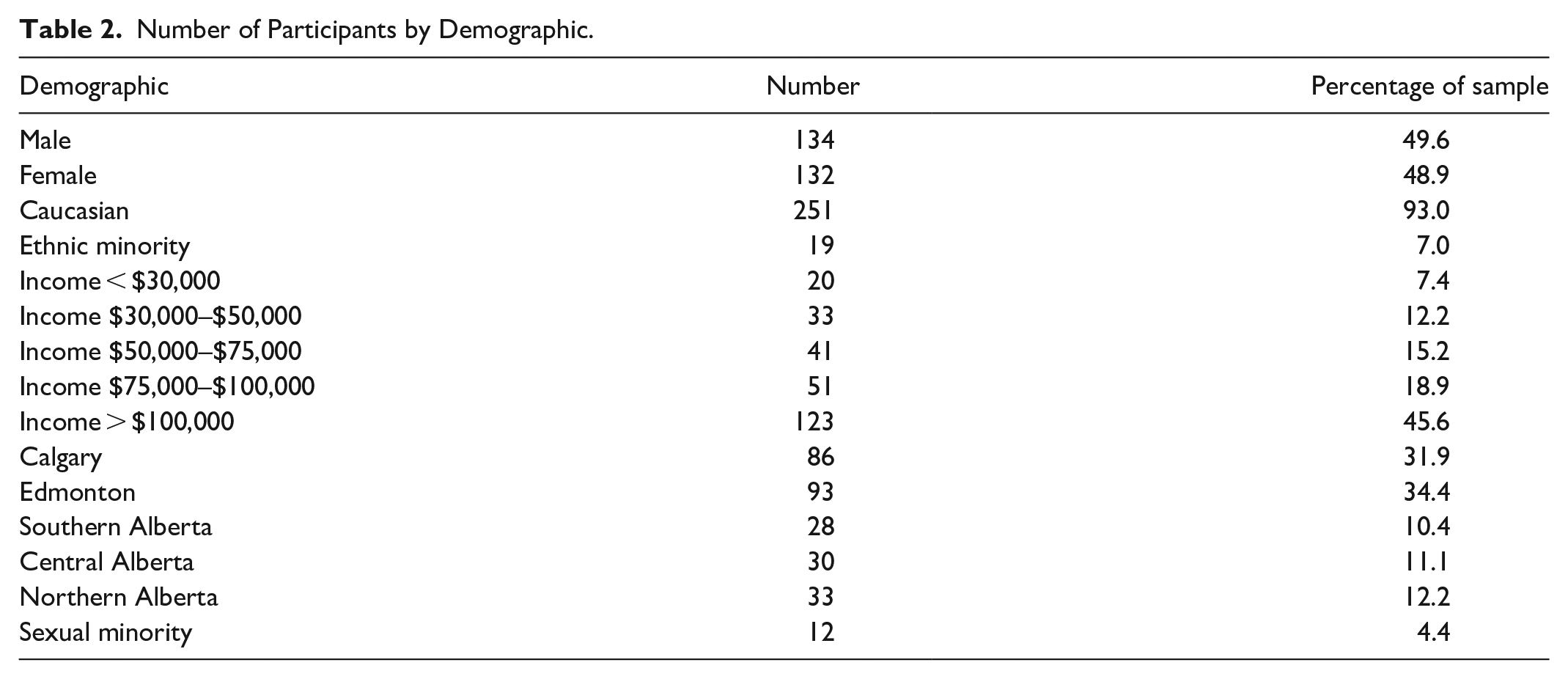
Table 3 provides the mean score for each abusive behavior. Of the sample, 56.30% reported experiencing economically abusive behavior (i.e., reporting at least a two in at least one behavior). But, because economic abuse is regarded as a pattern of abusive behavior, and because some of the identified behaviors could represent carelessness rather than an intent to abuse, we defined a participant as a victim of economic abuse if that person scored at least a three in at least one abusive behavior (i.e., experienced that abusive behavior with regularity) or scored at least a two in at least four abusive behaviors (i.e., experienced several abusive behaviors). We defined a participant as a victim of moderate economic abuse if that person scored at least a four in at least one abusive behavior or scored at least a three in at least four abusive behaviors. 5 Finally, we defined a participant as a victim of severe economic abuse if that person scored a five in at least one abusive behavior or scored at least a four in at least four abusive behaviors.
Mean Score (M) and Standard Deviation (SD) for Each Economically Abusive Behavior.

We isolated victimization in each subtype of economic abuse by calculating each participant’s average score for the behaviors associated with each subtype. We identified participants with average scores of at least two in a given subtype and those with an average score of at least three.
Results
We used univariate analysis to measure the prevalence of economic abuse and its subtypes among different demographics. We used regression analysis to estimate the effect of different demographic characteristics on the likelihood of experiencing economic abuse and each of its subtypes.
Table 4 provides 95% confidence intervals using a standard t-test for the incidence of victims of economic abuse, of moderate economic abuse, and of severe economic abuse (definitions are in the previous section) across all demographic variables. Table 5 provides the incidence of each subtype of economic abuse, again using 95% confidence intervals.
Prevalence of Economic Abuse (EA), Moderate Economic Abuse (MA), and Severe Economic Abuse (SA).

Prevalence of the Subtypes of Economic Abuse.
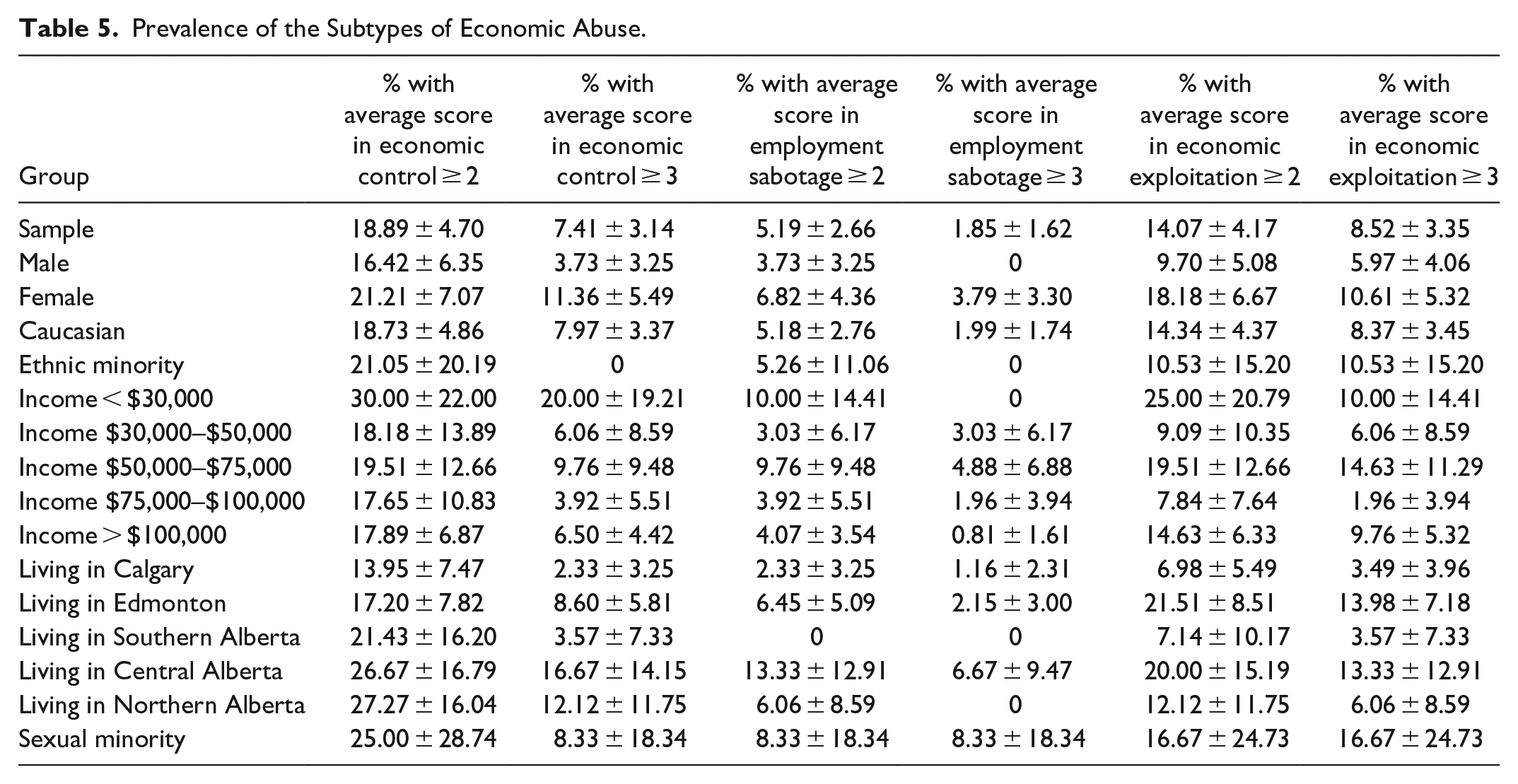
The results show that about 35% of participants have experienced economic abuse, while almost 17% have experienced severe economic abuse. Based on mean scores, it appears to be more prevalent among females than males, and among ethnic minorities than among Caucasians. About 50% of those with household income less than $30,000 have experienced economic abuse. The other income ranges are roughly equivalent at between 31% and 36%. Edmonton and Central Alberta also seem to have a much higher incidence than other parts of the province.
Economic Control is the most prevalent subtype of economic abuse, with almost 19% of participants being victims. Using the more serious measure (average score greater than or equal to three), however, we find that Economic Exploitation is slightly more prevalent. Females have a higher incidence of each subtype than males; however, the difference in prevalence between Economic Control and Economic Exploitation is larger for males than for females.
Comparing the demographics of those who have experienced economic abuse with the demographics of the entire sample reveals interesting differences. While 3% of male participants are in a homosexual relationship and 3% of female participants are in a homosexual relationship, 8.9% of female victims and only 2.5% of male victims are in such a relationship. Further, a significantly larger proportion of female victims than male victims have income between $30,000 and $75,000 (34% of female victims vs. 15% of male victims). Conversely, a larger proportion of male victims than female victims have income less than $30,000 or greater than $75,000 (85% vs. 66%). Thirty-three percent of female participants have income between $30,000 and $75,000, while 22% of male participants do.
For our regression analysis, we used the following dependent variables:
(a) Whether a participant has experienced economic abuse
(b) Whether a participant has experienced moderate economic abuse
(c) Whether a participant has experienced severe economic abuse
(d) Whether a participant has an average score ≥2 in Economic Control
(e) Whether a participant has an average score ≥3 in Economic Control
(f) Whether a participant has an average score ≥2 in Employment Sabotage
(g) Whether a participant has an average score ≥3 in Employment Sabotage
(h) Whether a participant has an average score ≥2 in Economic Exploitation
(i) Whether a participant has an average score ≥3 in Economic Exploitation
We created dummy variables for each of these dependent variables, with a participant scoring “1” if the condition is satisfied and “0” otherwise. We can thus use Probit analysis to determine the significance and direction of the impact of each demographic variable on these outcomes.
The explanatory variables in each regression are: 6
EDM, a dummy variable for whether the participant resides in Edmonton
SOUTH, a dummy variable for whether the participant resides in Southern Alberta
CENT, a dummy variable for whether the participant resides in Central Alberta
NORTH, a dummy variable for whether the participant resides in Northern Alberta
FEM, a dummy variable for whether the participant is Female
EMIN, a dummy variable for whether the participant is an ethnic minority
SMIN, a dummy variable for whether the participant is a Sexual Minority
30–50, a dummy variable for whether the participant’s household income is between $30,000 and $50,000
50–75, a dummy variable for whether the participant’s household income is between $50,000 and $75,000
75–100, a dummy variable for whether the participant’s household income is between $75,000 and $100,000
>100, a dummy variable for whether the participant’s household income is greater than $100,000
Each regression also used a constant. The results, including the standard errors for each coefficient, are reported in Table 6. 7
Determinants of the Different Severities and Forms of Economic Abuse.

Coefficient is significant at 10%.
Coefficient is significant at 5%.
Coefficient is significant at 1%.
It is immediately apparent that sex is not a significant explanator of experiencing economic abuse in general. However, being female is slightly significant in increasing the likelihood of significant economic control and of economic exploitation. Being a sexual minority or an ethnic minority is insignificant on all measures of economic abuse. Income is significant only for significant economic control and for economic exploitation—those with income between $30,000 and $50,000 or $75,000 and greater are less likely to experience significant economic control, and those with income between $75,000 and $100,000 are less likely to experience economic exploitation. Residing in Edmonton or Central Alberta has a significant positive impact on almost every measure of economic abuse and its subtypes. Residing in Northern Alberta is slightly significant for moderate and severe economic abuse and for economic control.
Discussion
Each subtype of economic abuse has a different incidence, and the significance and impact of the explanatory variables differ for each. This result supports the findings in previous studies that Economic Control, Employment Sabotage, and Economic Exploitation are distinct subtypes of economic abuse (Postmus et al., 2016). As in Postmus et al. (2012), we also find that ethnicity is an insignificant explanatory variable for the occurrence of economic abuse.
Our primary interest is in whether economic abuse is a gendered issue. CCT is a leading theory explaining the use of economic abuse by male abusers of females. If economic abuse is prevalent in other demographics, then further theory is needed to explain its incidence.
Whether or not a person is a Sexual Minority has no significant impact on the likelihood of being a victim of economic abuse. This suggests economic abuse is not a heterosexual phenomenon. However, it must be recognized that this study had a small number of Sexual Minority participants. Further research is needed, preferably focused on these groups. It will be particularly important to consider differences between female homosexuals and male homosexuals. The percentage of male victims who are homosexual is similar to the percentage of male participants. However, the percentage of female victims who are homosexual is much higher than the percentage of female participants who are homosexual (8.9% vs. 3.0%). This suggests that homosexual females may be more at risk of experiencing economic abuse.
We find that economic abuse is a much broader problem than male victimization and control of females. The likelihood of being a victim of economic abuse is affected by where a person resides, but not by a person’s sex, ethnicity, or income. These findings confirm that economic abuse is a significant problem for every demographic, not just women, nor ethnic minorities, nor low-income individuals. Economic abuse, as a general phenomenon, is not a gendered issue.
Similarly, the likelihood of being a victim of Economic Control (i.e., having an average score of at least two in experiencing these behaviors) is unaffected by all demographic variables (except for those living in Northern Alberta, which is mildly significant). This supports the conclusion that the incidence of Economic Control is not restricted to women. However, the likelihood of being a victim of significant Economic Control (i.e., having an average score of at least three in experiencing these behaviors) is higher if one is female or has an income less than $30,000. Given that research in IPV suggests low-income women are at higher risk for experiencing IPV (Adams et al., 2020; Thompson et al., 2006), this may mean Economic Control is a more significant problem for victims of other forms of IPV than for the rest of the population. This finding lends support to using CCT to explain Economic Control within relationships characterized by male abuse of female partners.
The likelihood of being a victim of Economic Exploitation is higher if one lives in Edmonton or Central Alberta; is female; or has an income less than $75,000, or greater than $100,000. The impact of different income ranges is contrary to assumptions about the relationship between income and economic abuse in previous research (i.e., that it is a particular problem for lower incomes). Previous research has proposed that those with higher income have greater financial stability and more access to education, making them less vulnerable to economic abuse (Postmus et al., 2012; Weissman, 2020). Stability and education increase capacity to leave an abusive relationship. Our results suggest Economic Exploitation is sensitive to sex, location, and income in a manner that cannot be explained by a correlation to other forms of IPV alone or to financial stability. We may need to consider that Economic Exploitation is not only about control; it may be that higher income means there are more economic resources to exploit.
The significance of where one resides on the likelihood of experiencing economic abuse, its different subtypes, and its severity was a surprising result. We lack sufficient information to explain why locality would be so important. This problem is compounded by a lack of data on whether the abuse occurred in the participant’s locality or whether the victim moved there after the abuse. It does not appear to be due to a correlation with income. Edmonton has a lower proportion of participants in the $30,000–$50,000 income range and a higher proportion of participants in the $75,000–$100,000 income range. Central Alberta has a higher proportion of participants in the $30,000–$50,000 income range and a lower proportion of participants in the greater than $100,000 income range.
We speculate place of residence may be significant because of factors such as different educational demographics and different employment opportunities. According to the 2016 Census, Edmonton has lower income than Calgary ($113,082 median income in Edmonton vs. $117,385 median income in Calgary). Calgary’s population is slightly more educated (60.4% of Calgarians have a postsecondary certificate, diploma or degree compared to 56.5% of Edmontonians). Though Sales and Service Occupations is the largest category of occupation in both cities, Business, Finance, and Administration Occupations is the second largest in Calgary whereas Trades, Transport and Equipment Operators and Related Occupations is the second largest in Edmonton (Statistics Canada, 2017). These differences in demographics should be investigated to explain the difference in likelihood of experiencing economic abuse.
In summary, the results indicate that economic abuse is not targeted predominately against women. It is a broader problem than previous studies have allowed for. Given its extremely high incidence against female victims of other forms of IPV, and the evidence in this study that other demographics are also at significant risk, economic abuse is much more widespread than current research has considered. The implication is that IPV as a whole is more common than currently believed. Research into the motivations for and causes of economic abuse needs to expand to consider situations other than male control of women in abusive heterosexual relationships. In particular, the demographic variability in explaining the three subtypes of economic abuse suggests that each subtype deserves independent study, as each may have different motivations and underlying causes. Additionally, social programs developed to assist survivors of economic abuse need to address the unique needs of victims of different genders.
We emphasize that this does not detract from the significance of the abuse perpetrated mainly against women or the need for continued action to address the marginalization of and discrimination against women and minorities. Women, especially racial minorities and those of low-income, are particularly disadvantaged (Christy & Valandra, 2017; Postmus et al., 2012; Weissman, 2020). We must continue to emphasize these groups in discussions of all forms of IPV, even if they do not represent the entire victim demographic. Instead, this analysis finds that economic abuse is a universal phenomenon rather than a gendered issue, while still recognizing the additional disadvantage of certain demographics in other respects. Examples of additional disadvantages are not limited to but include poverty, discrimination, marginalization and limited educational and employment opportunities.
Qualitative studies are particularly important for follow up. Such studies involving female victims of IPV have revealed reasons for this type of abuse and its place in relationship dynamics. Detailed understanding of the experiences of victims in other demographics will similarly assist in building a theory as to the cause and impact of economic abuse. These findings will be vital for building support programs.
Several limitations must be considered regarding this study. Firstly, insufficient data was collected for Sexual Minorities and Ethnic Minorities and focused research should be conducted for such groups. Secondly, the incidence of economic abuse is higher among women in the sample than among men. Though statistically insignificant in this sample, this difference may be significant in a larger sample size. Further research with a larger sample, and ideally national in scope, may provide further insight into the impact of an individual’s sex and will assist in explaining the importance of location on occurrences of economic abuse. In this study, the demographic characteristics of the participants does not fully align with those of Alberta’s population as a whole. A broader study should include further sample restrictions to ensure a more representative sample. Thirdly, a higher number of participants from racial minorities would enable further exploration into all characteristics of diversity, especially the issue of prevalence among Indigenous populations.
A key limitation in this study is that it did not also ask questions about other forms of IPV. This limits the ability to draw inferences about the correlation between economic abuse and other forms of IPV. While we can conclude that female victims of male abuse are not the only victims of economic abuse, we cannot make any certain conclusions about the extent to which economic abuse occurs apart from other forms of IPV. The national study should be expanded to include questions that will enable testing such correlations.
Conducting the survey by telephone interview is a final limitation that should be considered. We have no data on whether the pool of Alberta telephone numbers is a representative sample of Alberta as a whole. There is likely bias in this pool from which the sample for this study was drawn. If an abuser is willing to restrict a partner’s access to and use of economic resources, that abuser may also be willing to restrict access to and use of a telephone. It is possible, then, that our results understate the prevalence of economic abuse.
Conclusion
We conclude that economic abuse is a broader phenomenon than male control of females in abusive heterosexual relationships. Research into its use to trap female victims needs to continue and strategies are needed to resolve it. However, a new line of research is needed to understand and explain the broader incidence of economic abuse. It is a significant problem across all demographics.
These findings are important because, though research indicates male and female victims of domestic abuse have similar experiences (George & Yarwood, 2004), they have very different needs when seeking help. Different treatment programs are needed for those of different genders (Josolyne, 2011). Understanding the prevalence of different economically abusive behaviors in different demographics can help in structuring those programs.
More research is needed to identify patterns of economic abuse to use in developing a general theory of its motivations. This study lacked sufficient data for sexual minorities and ethnic minorities, and more demographic information is needed to determine why place of residence is so significant a factor. We can identify, however, that each subtype of economic abuse displays different patterns of incidence, suggesting that each may have different motivations. Understanding would likely benefit from focused research on each subtype.
Our findings imply support to using CCT to explain economic abuse in heterosexual relationships experiencing other forms of male violence against females. However, more research is needed to develop theory explaining the motivations for economic abuse in other relationships. Economic abuse devastates the lives of both male and female victims from all demographics. Though the consequences of economic abuse are likely greater for low-income individuals and others, such as women, for whom institutional barriers create financial instability, it is a widespread issue that affects victims of all income levels, ethnicities, and sexes.
Therefore, we do not recommend that all study of economic abuse should be detached from other forms of IPV nor from its impact on women. The use of economic abuse by males to perpetrate other forms of IPV against women is an important line of study, and this research should continue. We do propose, however, that the significance of economic abuse outside of that context needs to be addressed. The results suggest significant economic abuse is perpetrated against men and other groups traditionally thought not to be vulnerable to abuse. Further research is needed to develop theories explaining each subtype of economic abuse, whether there are differences in motivation when women are the abusers as opposed to men, and reasons why certain localities have a higher incidence than others. Theories are central to understanding and subsequently addressing economic abuse on a broader scale, to discontinue the cycle of abuse.
Finally, as economic abuse continues to entangle its victims in unsafe circumstances and threatens their financial security, action must be taken to address this problem. This study’s victim data enables us to view economic abuse as a significant and broad-based issue that necessitates action. We should begin immediately by raising awareness of the specific wrongful behaviors included in economic abuse and its incidence independently of other forms of IPV. Once we acquire sufficient understanding of the nature of economic abuse, not only in relation to IPV perpetrated against women but also outside that context, we can implement strategies to reduce its incidence and lessen its impact. These strategies will likely include social programs, legal reform, and altered credit reporting.
There is a recognized need for more financial education for youth. In a report to Alberta’s Minister of Education, an advisory panel recommended enhancing students’ learning of life skills by teaching financial literacy (Government of Alberta Curriculum Advisory Panel, 2019). This could be a key method of raising awareness of economic abuse and preventing it—by teaching proper financial behaviors as an individual and in a relationship, and how to identify abusive behaviors.
As recommended in research of male victims of IPV, there need to be economic abuse support programs targeting victims of each gender, and training provided for identifying such abuse in every demographic (Josolyne, 2011; Wright, 2016). As with other forms of IPV, these support programs should be designed to raise awareness, educate people on how to prevent economic abuse, and provide assistance in leaving abusive relationships. Such programs will need government funding, but will have the advantage of reducing the social cost (including financial cost) of IPV (Voth Schrag et al., 2019).
Footnotes
Declaration of Conflicting Interests
The author(s) declared no potential conflicts of interest with respect to the research, authorship, and/or publication of this article.
Funding
The author(s) disclosed receipt of the following financial support for the research, authorship, and/or publication of this article: Funding for this project was provided by the School of Business at MacEwan University.
Ethics Statement
This research study was approved by the MacEwan Research Ethics Board, File Number 101628.
